

In the business vocation, “God invites the entrepreneur to assist in his creation, to improve it, and to make it more habitable for humanity,” noted Luis Fernando Calvo.

In the business vocation, “God invites the entrepreneur to assist in his creation, to improve it, and to make it more habitable for humanity,” noted Luis Fernando Calvo.

| Picture of the day |
|---|

|
|
Chief Joseph of the Wallowa band of Nez Perce, an American Native American tribe in the Pacific Northwest. This photo was taken by Edward Sheriff Curtis. Chief Joseph died on this day in 1904.
|
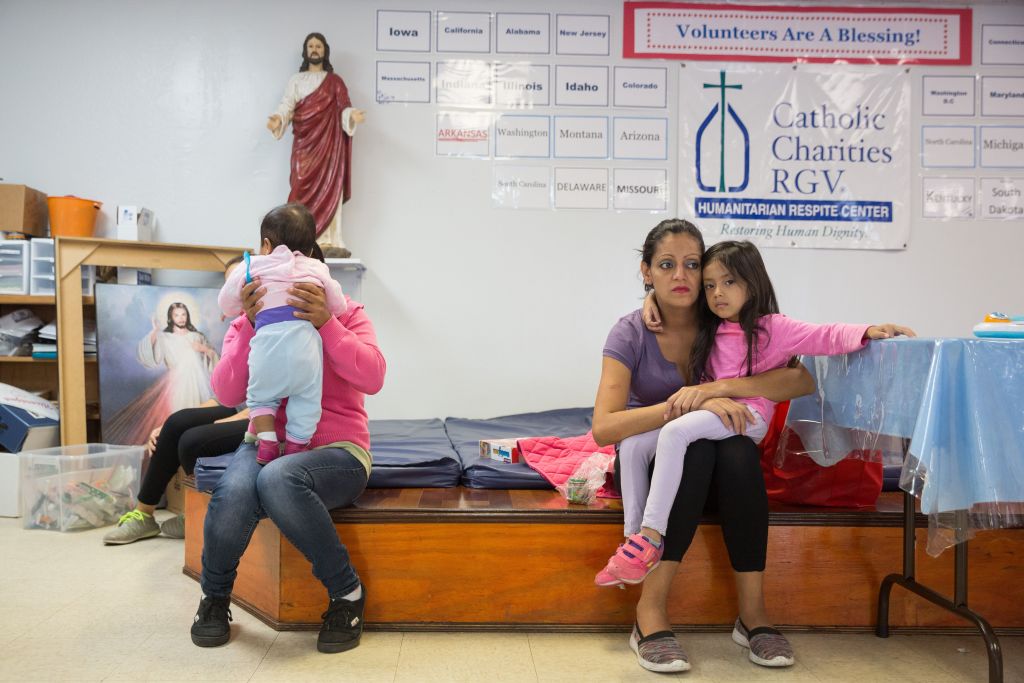
Suspended federal funding made the refugee‑resettlement program grants financially unsustainable and forced staff cuts, the U.S. bishops’ financial report said.
Pope’s words in France are encouragement to not give up the fight against ‘deadly laws’ #Catholic – 
PARIS (OSV News) — Pope Leo XIV’s forceful defense of human life during his Sept. 25-27 visit to France has reignited debate over the country’s newly approved assisted-dying law, which lawmakers had largely considered settled after its passage in July.
The pope’s words are now interpreted by pro-life movements as a call to protect life despite the new law, which took effect in August.
For Lucie Pacherie, a lawyer and spokesperson for the Jérôme Lejeune Foundation, the pope’s words are a “great encouragement to continue raising awareness among the French people that this law is not good, even though it has been passed.”
“The pope spoke in extremely firm terms,” she told OSV News. “He really made it clear that what is legal is not necessarily moral.”
Jerome Trillard, one of the six altar servers with Down syndrome who served papal Mass at Place de la Concorde Sept. 26, told French channel C News that people like him should not be “excluded” from society. “Instead, we need inclusion for people with disabilities,” he urged.
The presence of these altar servers at the papal Mass in mainstream television channels and viral papal blessings of the sick and disabled from Paris, through Lourdes to Metz, sent a signal that life is sacred, pro-life advocates and bishops underlined following the trip.
Pope Leo used his first visit to France to deliver a forceful defense of human life at every stage, condemning abortion, surrogacy and assisted dying while urging lawmakers and caregivers to protect the vulnerable.
At the Élysée Palace in Paris Sept. 25, the pope told French civil authorities that “the protection of the right to life constitutes the indispensable foundation of every other human right,” warning against “trends in society that risk turning science and technology into profit-driven ventures promoting genetic manipulation, surrogacy, the trade in human organs or the possibility of arranging one’s own death.”
The pope called for a conversion of minds and hearts “to welcome life unconditionally, to support frailty with loving care, to accompany every stage of life with respect and mutual trust, and to defend with courage and compassion those unable to make their voices heard and those who feel ignored or overlooked.”
Two days later in Lourdes, speaking to patients and caregivers at the Accueil Notre Dame, Pope Leo applied that appeal particularly to those who are sick, elderly or disabled.
“Dear brothers and sisters who are sick, I want to tell you that you are not a burden,” he said. “You are the beating heart of our humanity and a precious treasure for the Church.”
He rejected the idea that human worth can be determined by utility, technology, or under legal decisions. “No one ever has the right, on the basis of laboratory algorithms, to decide the life of a given embryo or elderly person!” he said. “Medicine must never become the servant of programmed death.”
“No human law should ever make you lose the certainty of your dignity,” the pope told the sick and disabled. “It is impossible to regard causing death as something normal. What is legal is not necessarily moral.”
The papal words caused an avalanche of reactions in France. While his address at the Élysée Palace was considered to be delivered “peacefully,” France’s top-rated television channel TF1 noted the pope took a “tougher stance” in Lourdes.
“The pope must still respect the laws of our country,” Jean-Luc Romero, a former deputy mayor of Paris known for actively campaigning in favor of the assisted-dying law, commented on France Info TV.
Olivier Falorni, who served as the principal architect of the bill on assisted dying while he was a member of parliament opposed any “interference by the Church” in French law, speaking on France Info, a public news radio station.
The pope, asked about the hot button issue on a plane from Metz to Rome, said he “didn’t cross” the line of separation between the state and the Church, and encouraged to “read or re-read” his first encyclical “Magnifica Humanitas.”
“When it speaks about questions of social doctrine, we’re not entering into politics,” the pope told journalists. “We’re applying the Gospel to people’s lives.”
While noting there “can be politicians” who say “no, religion should only be in the private sphere. Let people do what they want on their own,” the pope underlined, “That is a state.”
But in the Church, “we have to be separate,” he said.
“I went to France … primarily to preach the Gospel, to preach the good news, to reaffirm what Jesus Christ himself says when he says: ‘I am the way and the truth and the life.’”
The defense of life, the pope said, “is something that, as you all know, the Church teaches and believes very deeply.”
While acknowledging laws similar to the French assisted-dying bill are spreading in Europe, Pope Leo said his encounter with the sick in the sanctuary of Lourdes carried a different kind of message.
In Lourdes, he said, people who are sick are “searching for something much deeper,” for “understanding that their lives, even in the midst of sickness or disability or pain of different kinds … has meaning.”
The Church, the pope said, “because of Jesus himself, wants to be close to those people and to affirm the values that that life itself … holds for all of us. So … I would say if that’s politics, I did that, but it was not to get involved in French politics. It was to teach what the Church really believes.”
Many French journalists and politicians, from all corners of politics, reacted positively to the papal appeals for the protection of life.
French weekly Journal du Dimanche hailed a “vibrant speech against euthanasia.” “It is true that the pope sounded the charge against this law,” Rokhaya Diallo, a left-wing activist, commented on France Info.
“But this is not just a right-wing opinion.” “This issue transcends the left-right divide,” she emphasized, referring to the Franco-Chilean lawyer Élisa Rojas, an left-wing activist opposed to euthanasia, who published a book in April titled “To Die, Press One” to oppose this law.
For Pacherie, spokeswoman at the Lejeune Foundation, the remarks of the pope were shaped by the June 22 audience with members of the Lejeune Foundation to mark the centennial of Jérôme Lejeune’s birth.
“It was on that very same day that young boys and men with Down syndrome asked the pope if they could serve at his Mass during his visit to France,” Pacherie said. When the pope agreed, “it was a beautiful symbol to honor them and bless them in this way on that occasion,” Pacherie told OSV News.
The Lejeune Foundation carries on the work of the French scientist, professor of genetics who discovered that an extra chromosome in human DNA causes Down syndrome. What he hoped would be a breakthrough in protecting people with Down syndrome became a reason to eliminate them by abortion. In France, the abortion rate in cases of a prenatal diagnosis of Down syndrome is 68%.
“Professor Lejeune understood that while technology can assist medicine, it can never replace it. He also knew that technology can be used against medicine — which by its very nature is at the service of life — whenever it escapes essential ethical oversight and is governed instead by calculations of efficiency, profitability, or utility,” Pope Leo told Lejeune Foundation representatives on June 22.
“But the value of the human person does not depend on what he or she accomplishes or produces. For this reason, a physician should never be allowed to decide on the life of a particular embryo or a particular elderly person, on the basis of laboratory algorithms! Medicine must never become the servant of programmed death!” Pope Leo added in what was a preludium to the papal address in Acceuil Notre Dame in Lourdes.
Pacherie believes that “the pope’s statement has not come too late,” even though the law has already been passed.
“On June 22, the pope had already told us that neither he nor the Church as such was in a position to halt the ongoing process that would lead to the passage of this law,” she explained.
“Even if he had come to France earlier, he would not have been able to stop this measure, which was orchestrated by activists deeply involved in French politics.”
But for Pacherie, “the pope’s remarks in Lourdes come at just the right time to ensure we do not give up the fight against these deadly laws.”
She said the pope shed a light on people who are fragile and vulnerable in face of legislation and “our task is to continue caring for them, so that they do not have the weight of this law on their shoulders, and to raise awareness among the French public that just because something is legal does not mean it is a good thing.”
Caroline de Sury writes for OSV News from Paris.
– PARIS (OSV News) — Pope Leo XIV’s forceful defense of human life during his Sept. 25-27 visit to France has reignited debate over the country’s newly approved assisted-dying law, which lawmakers had largely considered settled after its passage in July. The pope’s words are now interpreted by pro-life movements as a call to protect life despite the new law, which took effect in August. For Lucie Pacherie, a lawyer and spokesperson for the Jérôme Lejeune Foundation, the pope’s words are a “great encouragement to continue raising awareness among the French people that this law is not good, even though it
Papal trip showed miracle of rebirth out of tragedy is possible, pope says #Catholic – 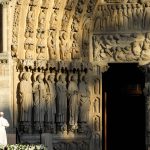
VATICAN CITY (CNS) — Pope Leo XIV’s journey to France aimed to show that a joyful or serene rebirth is always possible even after tremendous tragedy or terrible suffering, he said.
By visiting the newly restored Notre Dame Cathedral, meeting with survivors of abuse and praying at Lourdes, and celebrating the Christian faith openly in the public square of a secular nation, the pope highlighted how the miracle of new life can happen when everyone comes together out of love for one’s neighbor and the common good, he said during his weekly general audience Sept. 30.
As has been customary, Pope Leo used his first general audience after his Sept. 25-28 trip to Paris, Lourdes and Metz in France to tell people about the purpose of his visit and to thank all those who made the journey possible.
He also repeated an appeal he made in France: asking the faithful worldwide to pray the rosary throughout October, “dedicating it in a special way to ending wars and achieving peace.”
The motto of the journey, “That the world may have life,” the pope said in English, “characterized the Gospel-centered nature of my meetings throughout the visit. For God alone, through his grace, can restore the Church and renew humanity, and it was evident to me that this is precisely what is occurring.”
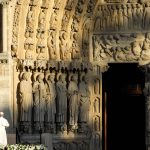
The Cathedral of Notre Dame of Paris, which was restored after a fire destroyed its wooden spire and most of its roof in 2019, “can symbolically shed light on this entire apostolic journey, offering a perspective that I would summarize in one word: rebirth,” he said in his main catechesis in Italian to thousands of people gathered in St. Peter’s Square.
Rebuilt and “more splendid than ever, the cathedral’s restoration “was a test of the possible collaboration between the Church, the state, public institutions and civil society,” Pope Leo said.
“The synergy for the common good should be the norm for institutions, political and social forces, and all those with civil and economic responsibilities,” he said.
“This is the message I wished to convey” to secular leaders and organizations, he said, “highlighting the fundamental criterion upon which such collaboration must be based: the dignity of the human person.”
According to France’s National Institute of Demographic Studies, the percentage of 18 to 49-year-olds who reported not belonging to any religion grew from 45% in 2009 to 53% in 2020, and 29% of the entire population reported being Catholic.
However, the pope said, there is also “a sign of renewal within the Church in France that has been evident for some years now, namely the remarkable and growing number of young people and adults seeking baptism.”
A tangible and visible sign of rebirth “appeared in a surprising way” during Mass Sept. 26 in Place de la Concorde, which, he said, was a highpoint of his visit. “Priests, the choir and a remarkable crowd extended all the way along the Avenue des Champs Élysées up to the Arc de Triomphe and beyond.” An estimated 800,000 people filled the streets, according to the Vatican.
Despite the vast crowds, “everyone was able to receive the Eucharist,” he said, “This is the true reconstruction, the restoration of the Church that only God can bring about, through the intercession of the Virgin Mary.”
Turning to his visit to Lourdes, he said the shrine dedicated to Our Lady also represents “a message of hope and rebirth,” especially for those who are sick “in body and spirit.”
This was another message “that I wished to openly reaffirm: every human life, in whatever condition, even in the most extreme frailty, retains its inviolable dignity and deserves to be cared for, accompanied and relieved of suffering with human compassion and with the aid of the means offered by science,” he said.
Because Lourdes “represents for the entire world a sanctuary of the civilization of love,” he said this was context for his meeting with a group of people who had experienced abuse by members of the church.
“I asked them to help me express to other victims too my own wish, and that of the whole Church, to listen to them and walk alongside them as they seek healing, acknowledging the pain inflicted upon their lives and working to prevent abuse,” he said.
Lastly, visiting the city of Metz, he said, helped symbolize its role in the process of unifying Europe “as a project for peace in the wake of the destruction wrought by war.”
After two devastating world wars, “Europe was reborn, founded on those principles of democracy, solidarity and fraternity amongst peoples, which owe much to its Christian roots,” Pope Leo said.
“Dear brothers and sisters, may the public witness of love for Jesus Christ that we have seen in France be an inspiration to the whole Church. Let us not hide our faith!” he told Portuguese-speaking pilgrims.
– VATICAN CITY (CNS) — Pope Leo XIV’s journey to France aimed to show that a joyful or serene rebirth is always possible even after tremendous tragedy or terrible suffering, he said. By visiting the newly restored Notre Dame Cathedral, meeting with survivors of abuse and praying at Lourdes, and celebrating the Christian faith openly in the public square of a secular nation, the pope highlighted how the miracle of new life can happen when everyone comes together out of love for one’s neighbor and the common good, he said during his weekly general audience Sept. 30. As has been customary,
Pope Leo sends letter to White Sox, encouraging team to ‘foster friendship, solidarity’ #Catholic – 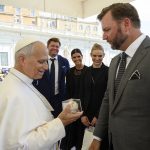
(OSV News) — The Chicago White Sox have headed into the post-season with a bit of inspiration from one of their best-known fans — Pope Leo XIV.
In a Sept. 29 X post, the team shared images of a Sept. 9 letter from the Chicago-born pope, who expressed his hope that the White Sox would promote peace and goodwill among people.
The letter was addressed to White Sox chairman Jerry Reinsdorf, who had written to Pope Leo following the team’s pope-themed Aug. 11 game against the Cincinnati Reds at Chicago’s Rate Field.
The evening saw more than 38,000 “pope hats” — stylized black-and-gold miters — distributed to fans, with Dominican Sister Mary Jo Sobieck of Springfield, Ill., throwing out the first pitch and fans giving each other the “sign of peace” during the fifth inning.
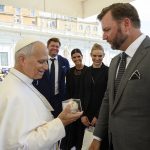
Pope Leo was reported to have watched the game and lamented the team’s loss to the Reds, according to Democratic Rep. Raja Krishnamoorthi of Illinois, who had an Aug. 12 audience with the pope.
In his Sept. 9 message, Pope Leo said he was “pleased” to receive Reinsdorf’s “kind letter” and “most grateful for this thoughtful gesture.”
The pope quoted from “Life in Abundance,” his Feb. 6 letter on the value of sport, saying that “sport can truly become a school of life, where all can learn that abundance does not come from victory at any cost, but from sharing, respecting others and from the joy of walking together.”
In his letter to Reinsdorf, Pope Leo added, “In this spirit, it is my hope that the White Sox will continue to foster bonds of friendship and solidarity among people, and thus bear hopeful witness to the possibility of living and working together in peace.”
The pope concluded his letter to Reinsdorf by saying, “I willingly invoke the Almighty’s abundant blessings upon you and your loved ones.”
The White Sox posted the letter the same day the team was in Houston to play the Astros in Game 1 of the American League’s wild card series.
The post-season spot was hard-won after the team, having clinched the American League Central Division in 2021, began what Catholic sports journalist and OSV News contributor John Knebels described as a “stunning descent.”
“They slipped to 81-81 in 2022, then fell to 61-101 in 2023,” Knebels told OSV News. “Things somehow became considerably worse in 2024, when Chicago finished an almost unfathomable 41-121.”
Knebels said those 121 losses were a record that surpassed “the 120 losses of the expansion New York Mets in 1962.”
He said a combination of White Sox manager Will Venable, “shrewd off-season additions,” player development and roster improvement have “produced one of baseball’s most remarkable turnarounds.”
Some Sox fans may be hoping the papal blessing evokes the team’s victory over the Astros in Game 1 of the 2005 World Series.
Video footage of then-Father Robert Prevost at the match went viral soon after Pope Leo’s election. The Sox swept the 2005 series 4-0, ending a decades-long drought known as the “Curse of the Black Sox,” a reference to a 1919 scandal over alleged match-fixing by several players who were later acquitted.
Reflecting on this season’s wild card series, Knebels said the White Sox had, in a sense, already won.
“For an organization that appeared historically lost only two years earlier, simply becoming respectable would have represented significant progress,” he said. “Instead, the Chicago White Sox became a playoff team.”
The Sox certainly played like one in the Sept. 29 wild card game, besting the Astros 6-3.
Gina Christian is a multimedia reporter for OSV News. Follow her on X @GinaJesseReina.
– (OSV News) — The Chicago White Sox have headed into the post-season with a bit of inspiration from one of their best-known fans — Pope Leo XIV. In a Sept. 29 X post, the team shared images of a Sept. 9 letter from the Chicago-born pope, who expressed his hope that the White Sox would promote peace and goodwill among people. The letter was addressed to White Sox chairman Jerry Reinsdorf, who had written to Pope Leo following the team’s pope-themed Aug. 11 game against the Cincinnati Reds at Chicago’s Rate Field. The evening saw more than 38,000 “pope hats”
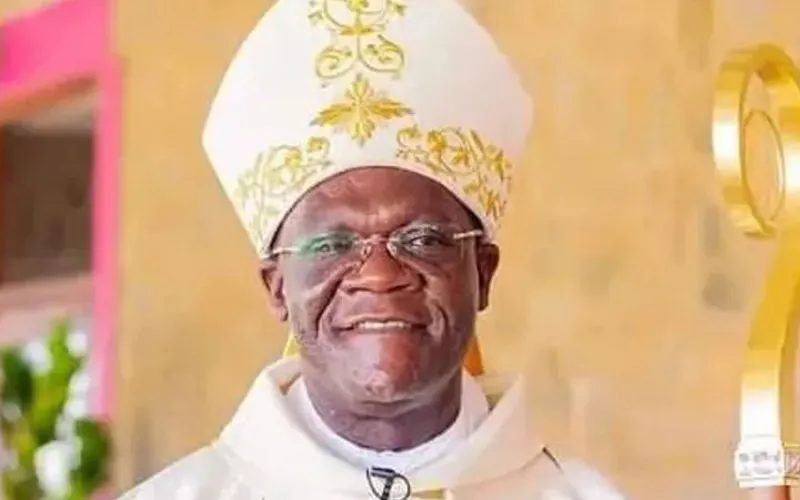
Archbishop Alick Banda of the Lusaka Archdiocese was arrested over the alleged possession of a vehicle suspected to have been unlawfully obtained.
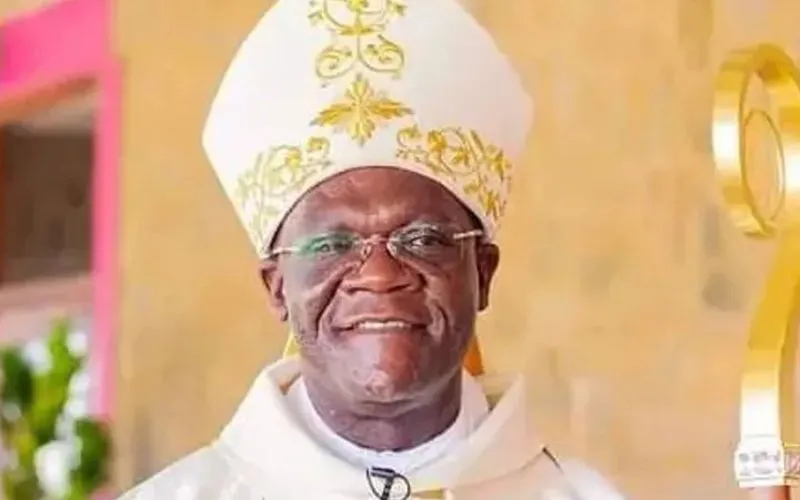
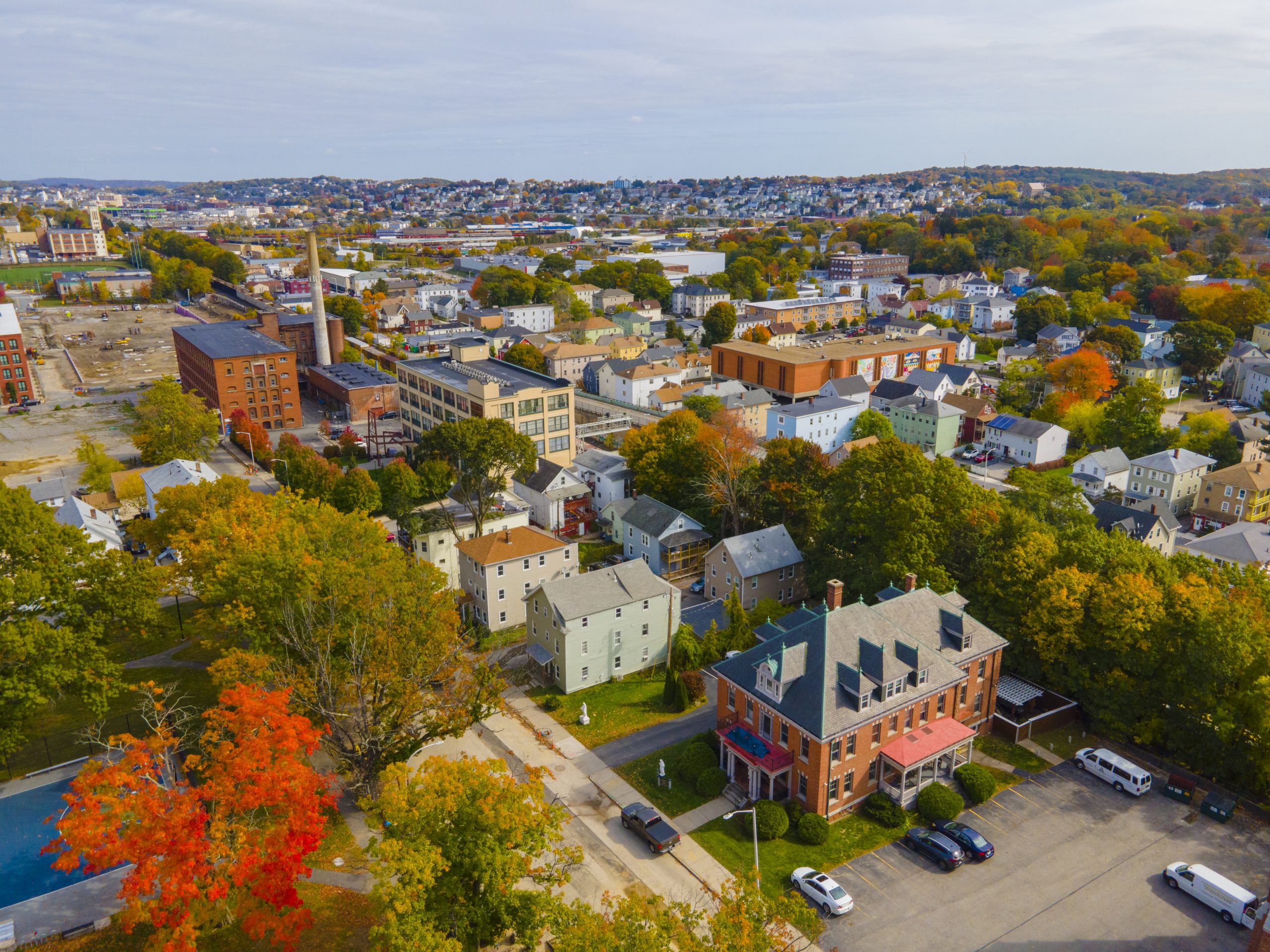
A “culture of reverence” in decades past helped priests avoid scrutiny for abuse, the lengthy report found.
Mission Highlight: Starship Flight 14 After 13 previous suborbital test flights, Starship finally reached orbit on test flight 14. SpaceX’s launch window opened at 8:15 a.m. EDT on Monday, Sept. 28, and the rocket cleared the tower at Starbase, Texas, at 8:48 a.m. EDT. Just over three hours later, the flight ended in a fireballContinue reading “Starship reaches orbit on 14th test flight”
The post Starship reaches orbit on 14th test flight appeared first on Astronomy Magazine.
Read More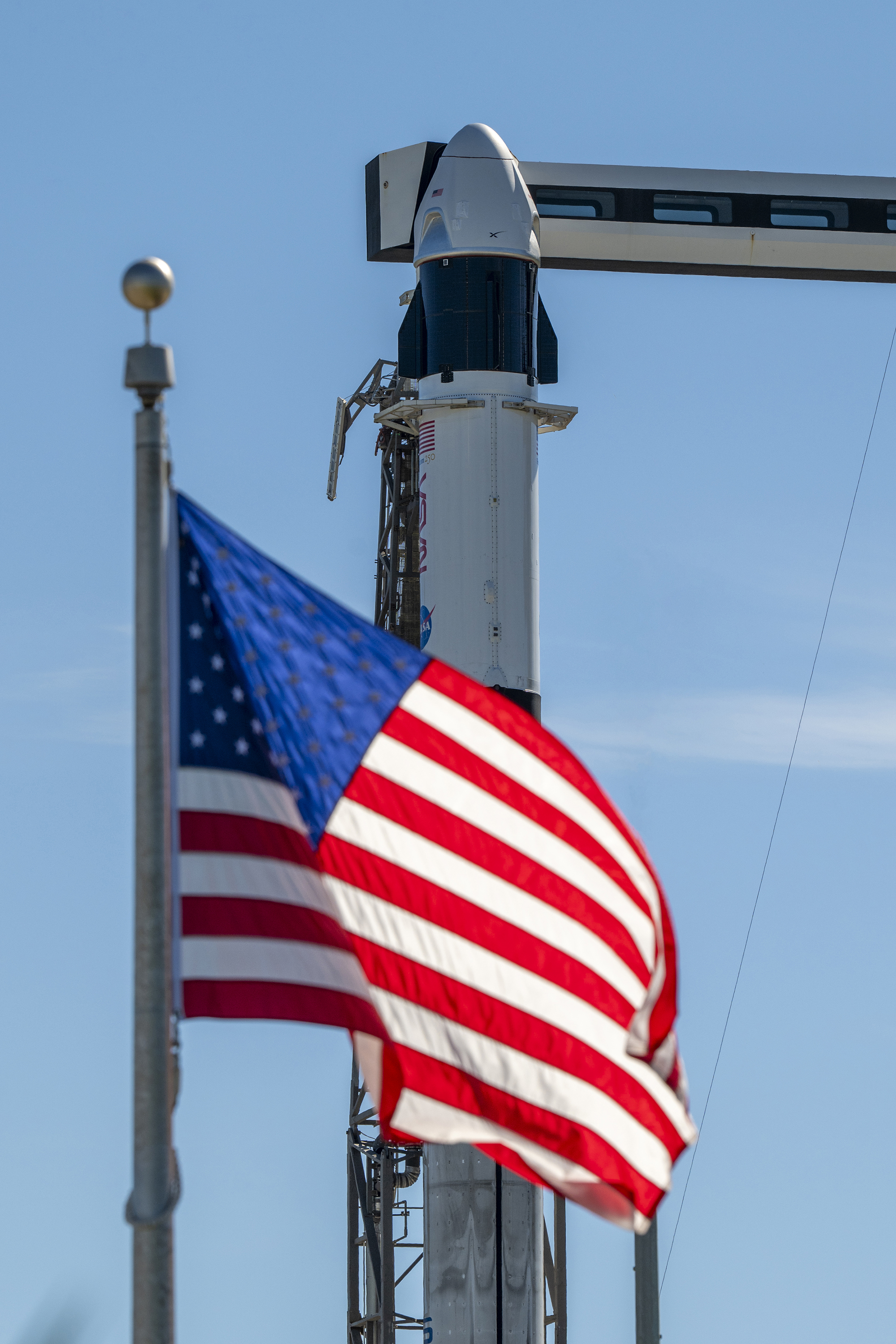
Ahead of launch of NASA’s SpaceX Crew-13 mission, a SpaceX Falcon 9 rocket, with the Dragon spacecraft atop, is vertical at the launch pad of Space Launch Complex 40 at Cape Canaveral Space Force Station in Florida on Sunday, Sept. 27, 2026.
Read More(This is an old Guardian Angel Prayer)
O Holy Angel,
attendant of my wretched soul
and of mine afflicted life,
forsake me not, a sinner,
neither depart from me for mine inconstancy.
Give no place to the evil demon to subdue me
with the oppression of this mortal body;
but take me by my wretched and outstretched hand,
and lead me in the way of salvation.
Yea, O holy Angel of God,
the guardian and protector
of my hapless soul and body,
forgive me all things …
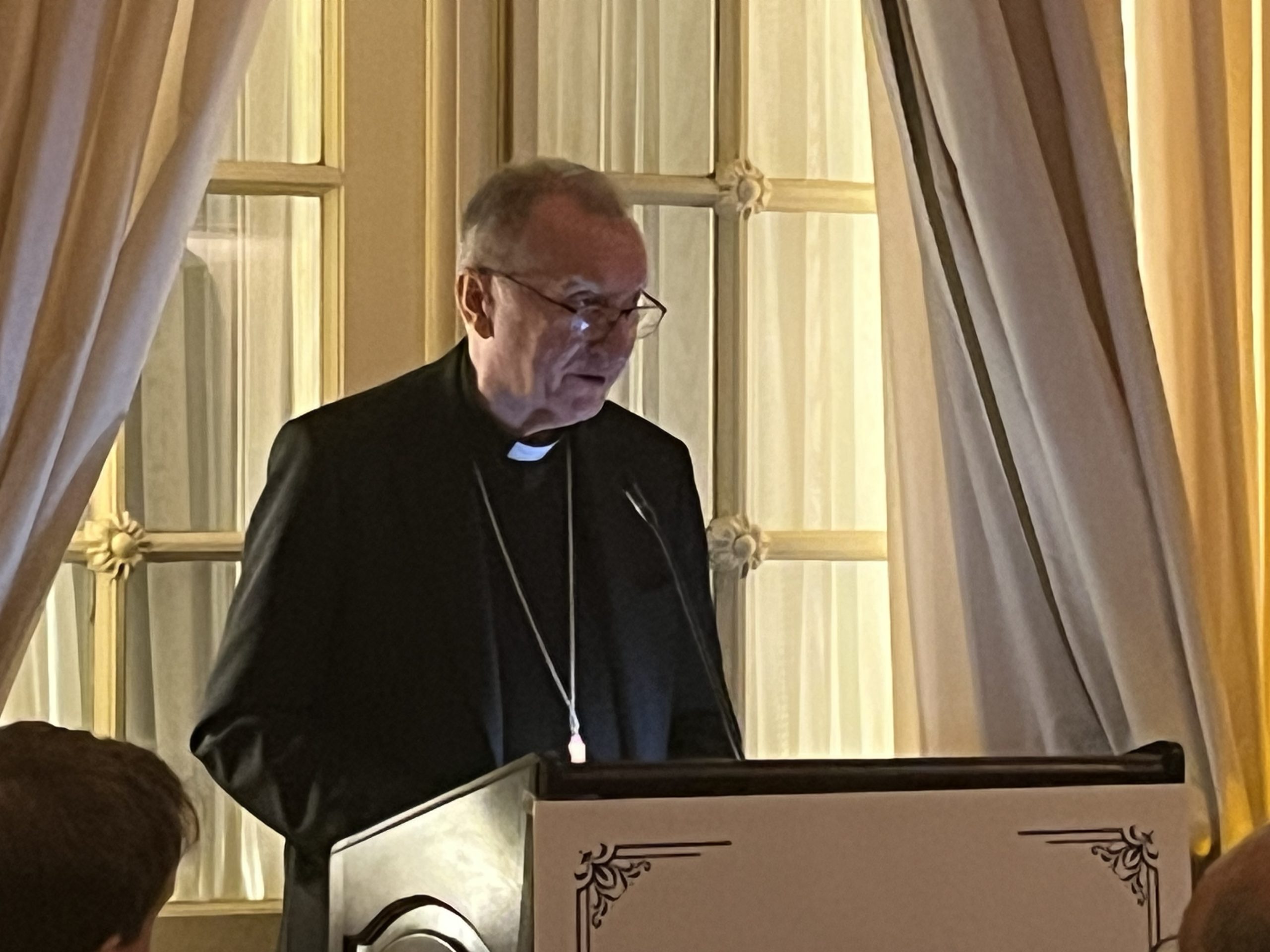
“In a world connected online and disconnected offline, be people of presence,” Cardinal Pietro Parolin said. “In a world asking whether we can remain human, answer with the witness of your lives.”
A reading from the Book of Job
9:1-12, 14-16
Job answered his friends and said:
I know well that it is so;
but how can a man be justified before God?
Should one wish to contend with him,
he could not answer him once in a thousand times.
God is wise in heart and mighty in strength;
who has withstood him and remained unscathed?
He removes the mountains before they know it;
he overturns them in his anger.
He shakes the earth out of its place,
and the pillars beneath it tremble.
He commands the sun, and it rises not;
he seals up the stars.
He alone stretches out the heavens
and treads upon the crests of the sea.
He made the Bear and Orion,
the Pleiades and the constellations of the south;
He does great things past finding out,
marvelous things beyond reckoning.
Should he come near me, I see him not;
should he pass by, I am not aware of him;
Should he seize me forcibly, who can say him nay?
Who can say to him, "What are you doing?"
How much less shall I give him any answer,
or choose out arguments against him!
Even though I were right, I could not answer him,
but should rather beg for what was due me.
If I appealed to him and he answered my call,
I could not believe that he would hearken to my words.
From the Gospel according to Luke
9:57-62
As Jesus and his disciples were proceeding
on their journey, someone said to him,
"I will follow you wherever you go."
Jesus answered him,
"Foxes have dens and birds of the sky have nests,
but the Son of Man has nowhere to rest his head."
And to another he said, "Follow me."
But he replied, "Lord, let me go first and bury my father."
But he answered him, "Let the dead bury their dead.
But you, go and proclaim the Kingdom of God."
And another said, "I will follow you, Lord,
but first let me say farewell to my family at home."
Jesus answered him, "No one who sets a hand to the plow
and looks to what was left behind is fit for the Kingdom of God."
The Evangelist presents us three characters — three cases of vocation, we could say — that shed light on what is required of those who wish to follow Jesus to the end, completely. The first character promises him: “I will follow you wherever you go” (v. 57). Generous! But Jesus replies that the Son of man, unlike foxes that have holes, and birds that have nests, “has nowhere to lay his head” (v. 58). (…) The second character Jesus meets receives the call directly from him, but replies: “Lord, let me first go and bury my father” (v. 59). (…) Nevertheless, Jesus responds: “Leave the dead to bury their own dead” (Lk 9:60). With these deliberately provocative words, he intends to emphasize the primacy of following and of proclaiming the Kingdom of God, even over and above the most important realities, such as the family. (…) The third character also wants to follow Jesus but on one condition: he will do so after bidding farewell to his relatives. And this is the response he receives from the Teacher: “No one who puts his hand to the plow and looks back is fit for the kingdom of God” (v. 62). Following Jesus excludes regrets and backward glances but requires the virtue of decision. Jesus wants us to be passionate about him and about the Gospel. A heartfelt passion which translates into concrete gestures of proximity, of closeness to the brothers and sisters most in need of welcome and care. Precisely as he himself lived. (Pope Francis, Angelus, 30 June 2019)
Read More
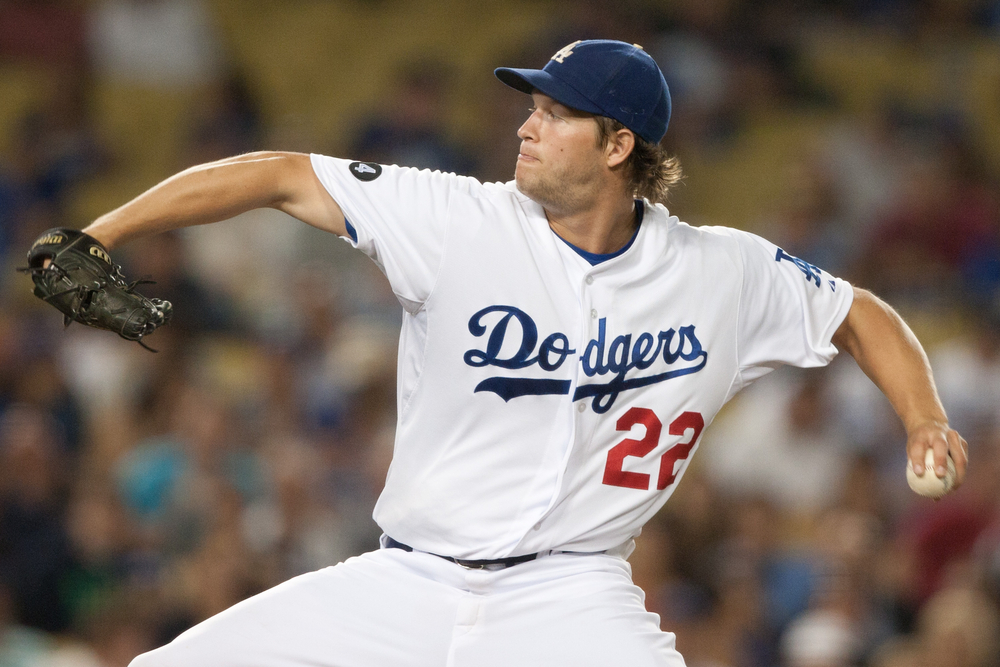
Retired Los Angeles Dodgers pitcher Clayton Kershaw is set to give the keynote address at the Jan. 22, 2027, rally.
| Picture of the day |
|---|
.jpg)
|
|
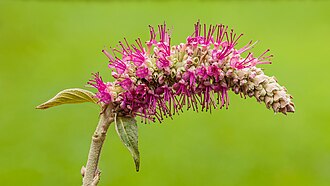
Inflorescence of a Rostrinucula dependens. This subshrub is native to China and blooms from August to October. Focus stack of 54 photos.
|
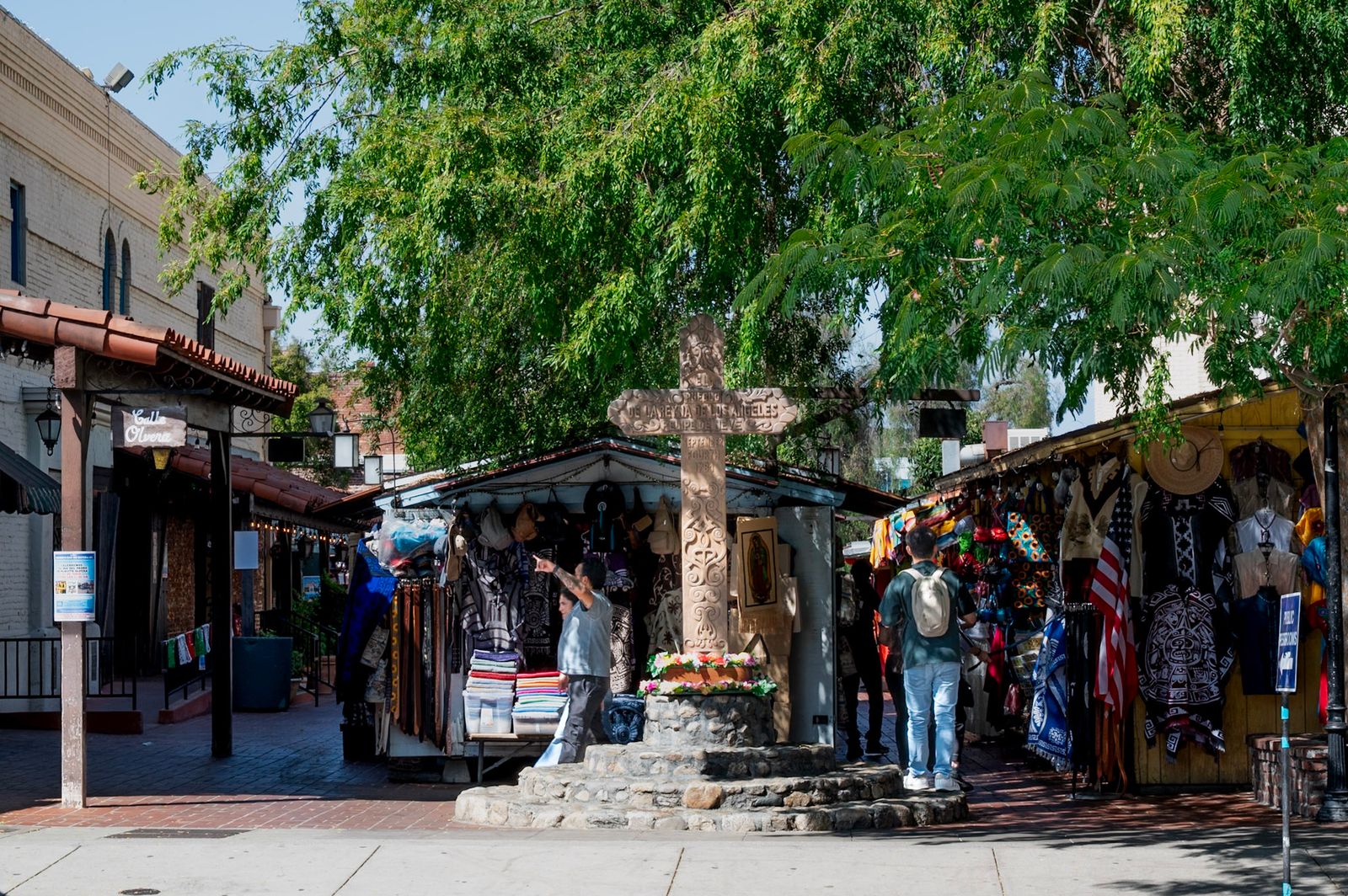
![Federal appeals court says historic cross, Nativity can remain in Los Angeles public square – #Catholic – A cross and Nativity will remain in a Los Angeles public plaza after a U.S. appeals court ruled against an atheist who brought a lawsuit to have the displays removed. The two monuments are located at El Pueblo de Los Angeles, the historical center of the Southern California city, marking its founding in 1781. Los Angeles resident Jack Gerritsen sued the city government claiming that the displays violate the establishment clause of the U.S. Constitution. Gerritsen identifies himself as a “nonbeliever” in the suit and claims the monuments make him feel “excluded” in the public space. A U.S. district court ruled against Gerritsen, after which he appealed to the U.S. Court of Appeals for the 9th Circuit. On Sept. 29, the religious liberty law firm Becket announced that the appeals court had also ruled against Gerritsen. The plaintiff “failed to establish the requirements” to justify removing the monument, the appeals court said, including failing to establish that he would “suffer irreparable harm” if the monuments were left in place. He further failed to affirm that removing the monuments would be “in the public interest,” the court noted. The ruling comes after a group of merchants located on Olvera Street near the monuments asked to join the lawsuit in defense of the public displays. Among them was cafe owner Edward Flores, who said that a cultural display such as the cross and Nativity helps “[ennoble] Americans across all ethnicities, faiths, cultures, and generations to take pride in their own contributions and to see more clearly their future potential.”The appeals court ultimately ruled against the efforts of the merchants to join the suit, arguing that their participation in the legal proceeding was moot given the court’s dismissal of Gerritsen’s request. But Andrea Butler, a lawyer at Becket who represented the merchants in their request, said in a news release that the ruling was “common sense.” “Los Angeles belongs to people of every faith and none, and its public square naturally bears the marks of that diversity,” Butler said. The case will be sent back to lower district court following the appeals ruling, according to Becket. The law firm said the monuments will remain “while courts move toward a final decision in the case.”](https://unitedyam.com/wp-content/uploads/2026/09/federal-appeals-court-says-historic-cross-nativity-can-remain-in-los-angeles-public-square-catholic-a-cross-and-nativity-will-remain-in-a-los-angeles-public-plaza-after-a-u-s-appeals-court-rule.jpg "Federal appeals court says historic cross, Nativity can remain in Los Angeles public square – #Catholic – A cross and Nativity will remain in a Los Angeles public plaza after a U.S. appeals court ruled against an atheist who brought a lawsuit to have the displays removed. The two monuments are located at El Pueblo de Los Angeles, the historical center of the Southern California city, marking its founding in 1781. Los Angeles resident Jack Gerritsen sued the city government claiming that the displays violate the establishment clause of the U.S. Constitution. Gerritsen identifies himself as a “nonbeliever” in the suit and claims the monuments make him feel “excluded” in the public space. A U.S. district court ruled against Gerritsen, after which he appealed to the U.S. Court of Appeals for the 9th Circuit. On Sept. 29, the religious liberty law firm Becket announced that the appeals court had also ruled against Gerritsen. The plaintiff “failed to establish the requirements” to justify removing the monument, the appeals court said, including failing to establish that he would “suffer irreparable harm” if the monuments were left in place. He further failed to affirm that removing the monuments would be “in the public interest,” the court noted. The ruling comes after a group of merchants located on Olvera Street near the monuments asked to join the lawsuit in defense of the public displays. Among them was cafe owner Edward Flores, who said that a cultural display such as the cross and Nativity helps “[ennoble] Americans across all ethnicities, faiths, cultures, and generations to take pride in their own contributions and to see more clearly their future potential.”The appeals court ultimately ruled against the efforts of the merchants to join the suit, arguing that their participation in the legal proceeding was moot given the court’s dismissal of Gerritsen’s request. But Andrea Butler, a lawyer at Becket who represented the merchants in their request, said in a news release that the ruling was “common sense.” “Los Angeles belongs to people of every faith and none, and its public square naturally bears the marks of that diversity,” Butler said. The case will be sent back to lower district court following the appeals ruling, according to Becket. The law firm said the monuments will remain “while courts move toward a final decision in the case.”")
Local merchants had rallied to save the historic monument alongside a Nativity display in Los Angeles’ 300-year-old historic center.
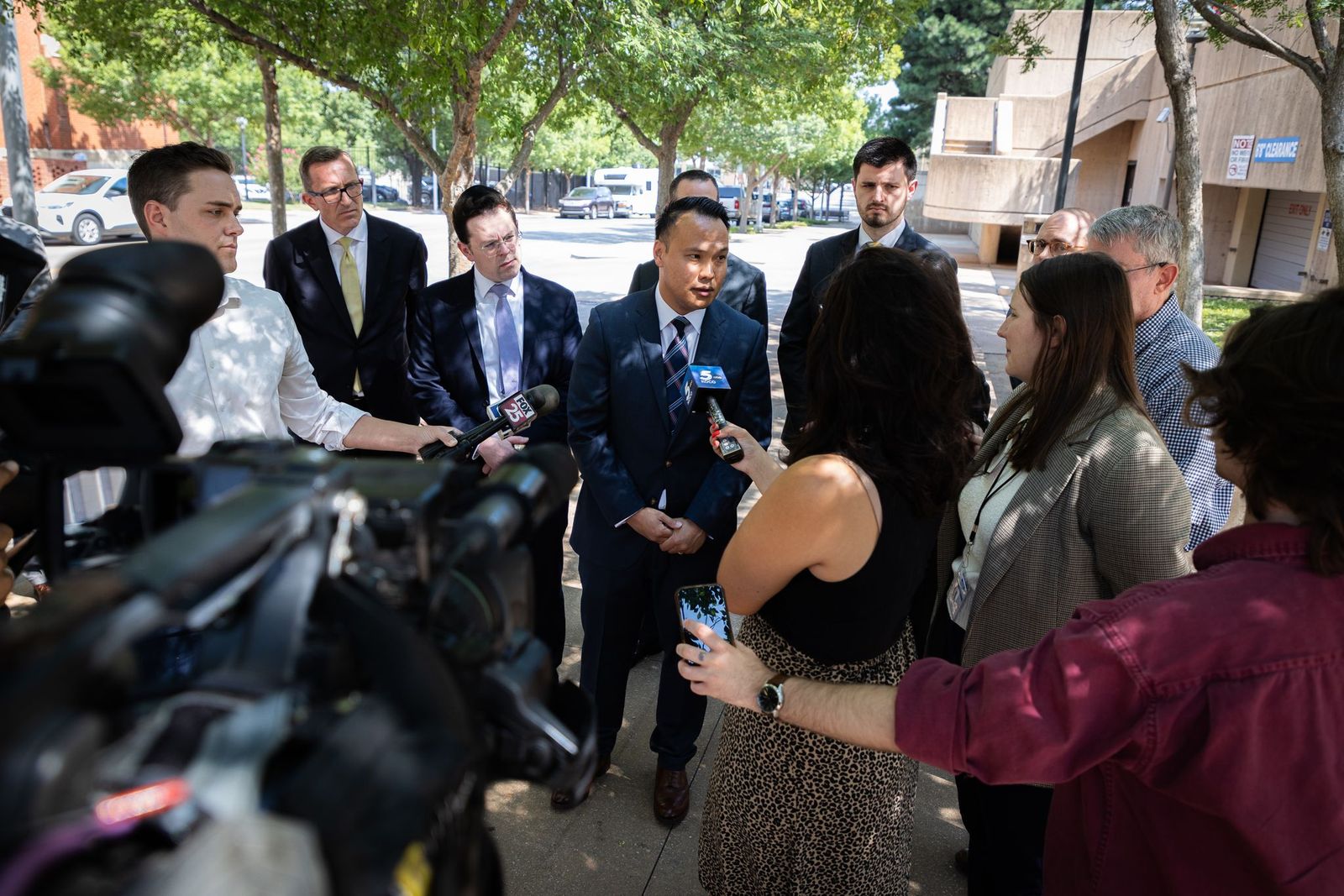
A Catholic charter school had previously brought a similar lawsuit against the state but had failed to secure a ruling from the Supreme Court.
From troubadour to God’s juggler #Catholic – 
“May the Lord give you peace!” This was a favorite greeting of Saint Francis of Assisi. He said it to rich and poor alike, to soldiers and statesmen, to those who were sick and suffering, and he even said it to the birds. It’s a greeting that reflects the radical transformation that took place in his life. He even shared this greeting in a letter to a close friend while suffering from the illness that took his life on October 3rd, 1226.
We celebrate the Feast of Saint Francis of Assisi on October 4th, and the Franciscan Jubilee honoring the 800-year anniversary of his passing continues until January 10th, 2027. In life, Saint Francis sparked a renewal of faith in Christ. In the 800 years that have passed since his death, he has been a powerful intercessor, and he continues to inspire people to discover the peace of God in their lives.
In his “Saint Francis of Assisi” biography, G.K. Chesterton draws a comparison between the troubadour poets with whom Francis identified prior to his conversion and the title he gave his wandering band of ascetics, the “Jongleurs de Dieu” (“Jugglers of God”). Associating troubadours with knights and jongleurs with jesters, Chesterton writes, “The jester could be free when the knight was rigid…This parallel of the two poets or minstrels is perhaps the best preliminary and external statement of the Franciscan change of heart.”
This change of heart, Chesterton observes, is “the reason why the Franciscan, ragged, penniless, homeless and apparently hopeless, did indeed come forth singing such songs as might come from the stars of morning; and shouting, a son of God.” It was a leap that enabled Francis and his followers to empty themselves of worldly cares to arrive at a deep appreciation for God’s creation. As Chesterton writes, “The mystic who passes through the moment when there is nothing but God does in some sense behold the beginningless beginnings in which there was really nothing else.”
Arriving at this starting point, Francis was able to see God’s gift in the simplest things and the humblest of people, an outlook that has inspired saints from Clare of Assisi in his own time to one of our most recent saints, Carlo Acutis, who was so inspired by Saint Francis that the medieval Umbrian town of Assisi became his favorite pilgrimage site.
Francis, Clare, and Carlo are all buried at churches very near to each other in Assisi. Though Carlo was from Milan in northern Italy, he asked to be buried in Assisi shortly before dying of leukemia in 2006 at the age of 15. It is a testament to the enduring appeal of the detachment preached by Francis that Carlo would make this request while facing his own death.
“Transitus” is the word Franciscans use for the death of Saint Francis. It is a Latin word meaning “a passing,” “going,” or “moving through,” and it is used to refer with confidence to the time when Francis passed from this life into the next. It’s a confidence rooted in that change of heart from Troubadour to Jongleur de Dieu, when Francis started to choose to be a jester for God rather than a king on earth. He was choosing heaven even then, which is why saints like Carlo and Clare and so many others are inspired by Saint Francis of Assisi to live in appreciation for the gift of life itself, in the hope of rising together again in Christ.
For free copies of the Christopher News Note “The Seven Heavenly Virtues,” write: The Christophers, 264 West 40th Street, Room 603, New York, NY 10018; or e-mail: mail@christophers.org
– “May the Lord give you peace!” This was a favorite greeting of Saint Francis of Assisi. He said it to rich and poor alike, to soldiers and statesmen, to those who were sick and suffering, and he even said it to the birds. It’s a greeting that reflects the radical transformation that took place in his life. He even shared this greeting in a letter to a close friend while suffering from the illness that took his life on October 3rd, 1226. We celebrate the Feast of Saint Francis of Assisi on October 4th, and the Franciscan Jubilee honoring the
The Edge of Space-Time: Particles, Poetry, and the Cosmic Dream Boogie The Knopf Doubleday Publishing GroupNew York, New York In The Edge of Space-Time: Particles, Poetry, and the Cosmic Dream Boogie, Chanda Prescod-Weinstein — professor of physics at the University of New Hampshire and the first Black woman to earn tenure in theoretical cosmology —Continue reading “New astronomy products to fall for this month”
The post New astronomy products to fall for this month appeared first on Astronomy Magazine.
Read More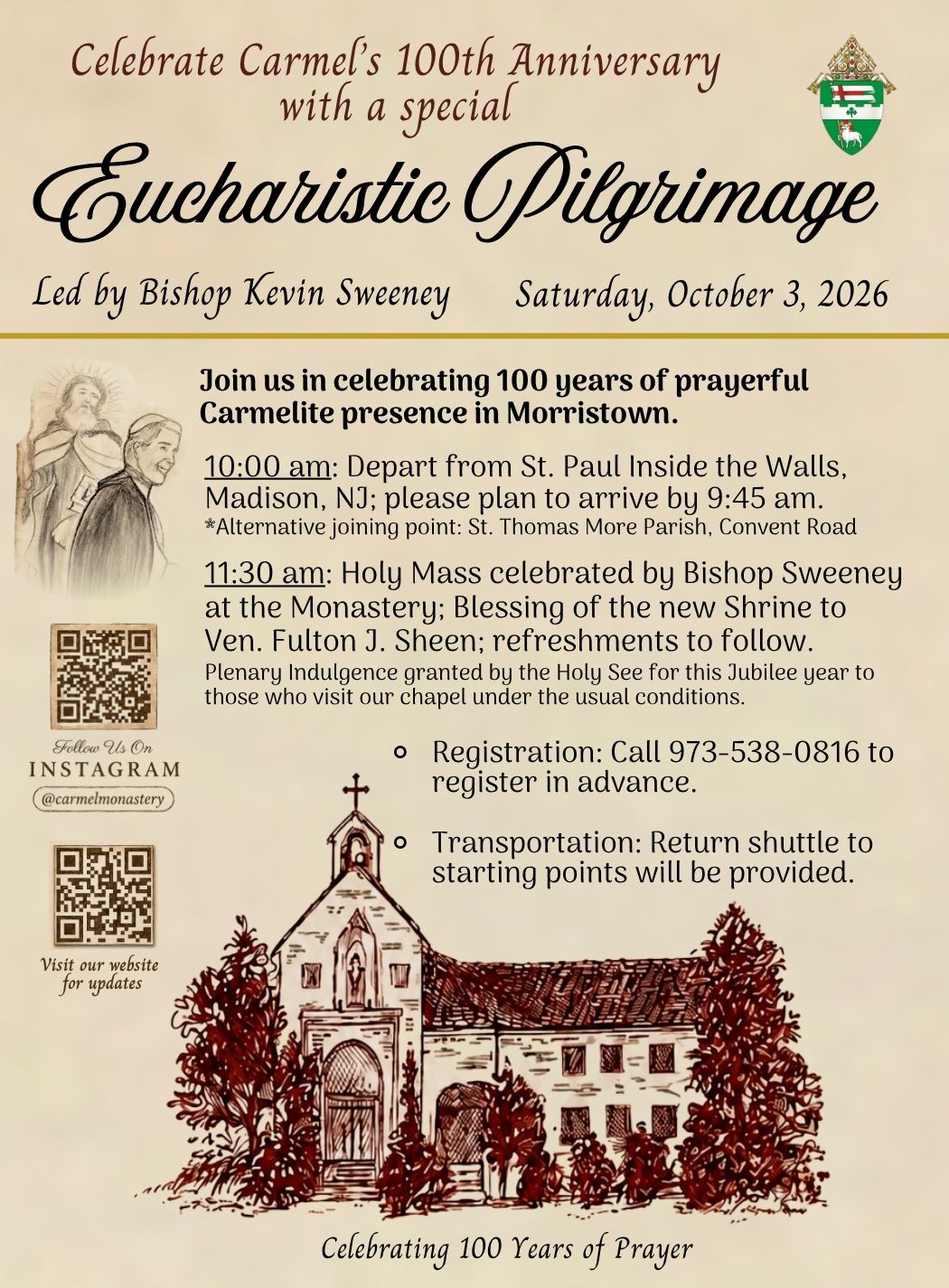
Celebrating, with gratitude, 100 Years of the Carmel in Morristown … The Month of the Holy Rosary and Respect Life Month #Catholic – 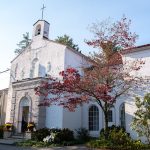
“In the very last days of 1926, a very different religious presence came to Morris County in the person of Mother Mary Magdalene of Jesus Crucified Potts, O.C.D. A native of the Washington area and the daughter of an admiral, Sister Mary Magdalene had entered the cloistered Carmelites at Philadelphia in 1911 and then had a bequest from her mother to establish a Carmel at Wheeling, West Virginia in 1913. Feeling a desire to found a Carmel ‘in poverty,’ she was looking for a site for another foundation. The desire of Bishop O’Connor to ‘do something for Our Lady’ in the waning years of his episcopate, and the invitation of a Mrs. Walsh, a woman from Morristown who belonged to a Carmelite third order group in New York City, brought Mother Mary Magdalene to Morristown. On Dec. 30, 2026, four sisters took up residence in a small house on South Street…”
— From Living Stones by Msgr. Raymond J. Kupke, pgs. 198-99
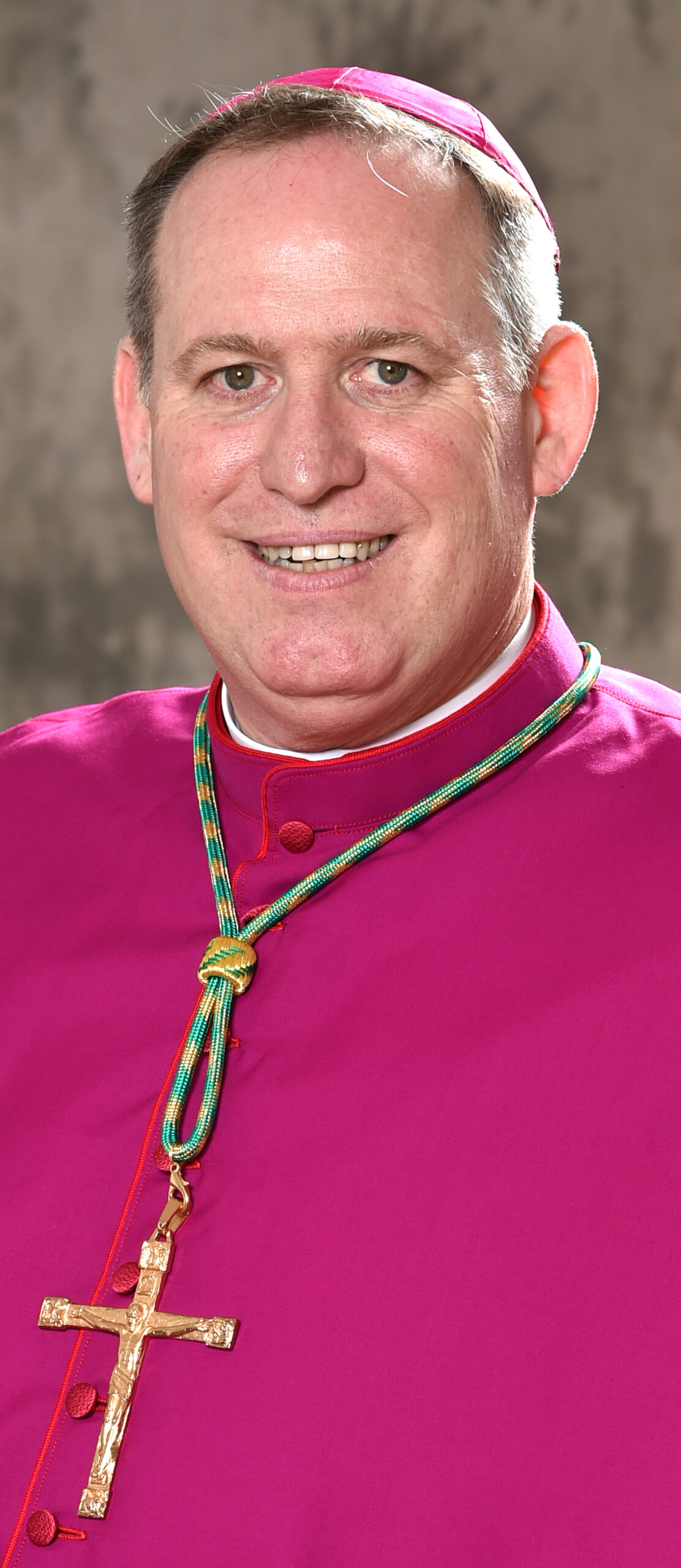
“The rest,” as we say, “is history.” When “history” concerns the Diocese of Paterson, I am always grateful to Msgr. Raymond Kupke and his wonderful book, Living Stones, written on the occasion of our Diocese’s 50th anniversary (in 1987). For those who are familiar with Living Stones, its subtitle, “A History of the Catholic Church in the Diocese of Paterson,” could be misleading and cause one to think that it “only” covers the “first 50 years,” 1937 to 1987. The first half of the book is a history of the Catholic Church in northern New Jersey from before the Revolutionary War, beginning in 1764.
So, I was not surprised when I wanted to share some background on how a Carmelite Monastery came to our Diocese (11 years before the foundation of the Diocese of Paterson); I was quickly able to find a compelling account, as cited above, on pages 198-99 of Living Stones. When I was appointed as bishop of the diocese, six years ago, I was very happy to learn that we had a Carmelite Monastery in our diocese. Like millions of others during the past 100-plus years, I was “introduced” to the Carmelites and Carmelite Spirituality when I first heard, in high school, about St. Therese of Lisieux, the “Little Flower,” and her autobiography (spiritual diary), Story of a Soul.
If you are not yet familiar with the Carmelites, their spirituality, and their saints (Therese of Lisieux, Theresa of Avila, John of the Cross, Theresa Benedicta of the Cross, St. Simon Stock, and many, many more — personally, I think that St. Pope John Paul II could be considered an “honorary” Carmelite, because his personal spirituality and vocation were so strongly influenced by the Carmelites, especially John of the Cross and Theresa of Avila), you could Google “Carmelite Saints” or any one of the above. You could also go to the website of the Carmelite Monastery in Morristown where you can learn a great deal about the sisters, their vocation and mission, including their “Vision” and “What (they) Do.”
“Through self-sacrifice, silence, penance and prayer, the Carmelite Sisters offer their very lives as a prayer to God for all humanity … The Carmelites have a rigorous schedule consisting each day of eight hours of prayer, manual labor, some recreation, as well as contemplation. They are always striving to make themselves more pleasing to God. The Carmelite Sisters adhere to strict silence so that their prayers may be more continuous.”
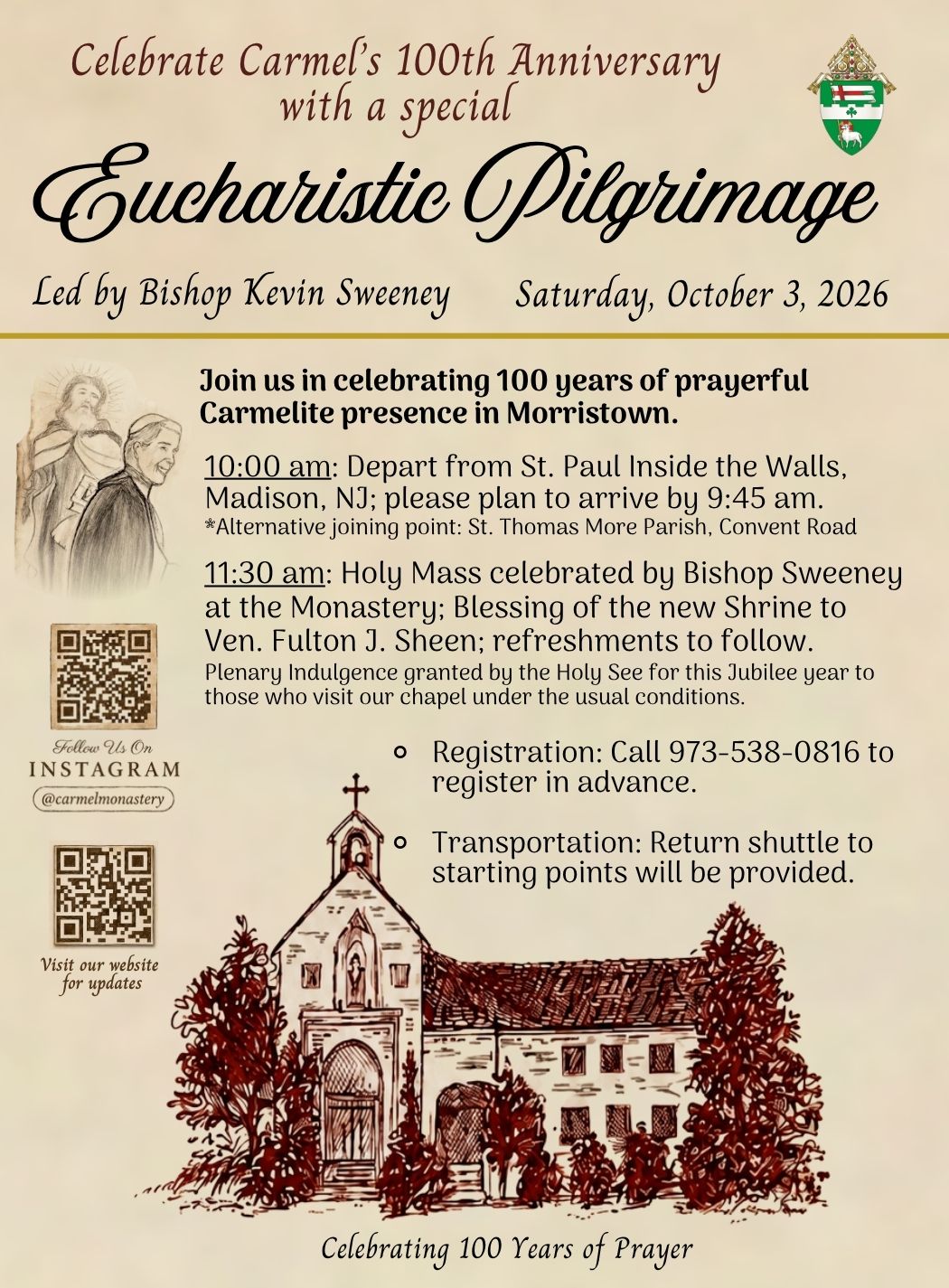
I am very much looking forward to being with the Carmelite Sisters, many of our priests, seminarians, consecrated religious, and faithful from our diocese and beyond, as we celebrate and give thanks for “100 Years” with a Eucharistic Pilgrimage and Mass on Saturday, Oct. 3, beginning at our St. Paul Inside the Wall Evangelization Center in Madison (at 10 a.m.) and concluding with Mass at the monastery at 11:30 a.m. Click here for more information and to register or see the flyer at right.
St. Therese of Lisieux died at the age of 24, on Sept. 30, 1897. She was canonized as a saint (very quickly) on May 17, 1925, during the Jubilee Year, by Pope Pius the XI. From 1927 to 1969, her feast day was celebrated on Oct. 3, before changes in the Church’s liturgical calendar, caused her Feast Day to be “moved” to Oct. 1. Personally, I find it meaningful and appropriate that we begin the month of October, the “Month of the Holy Rosary,” with the Feast of St. Therese, who in addition to being a role model for a life of prayer and contemplation, is also, along with St. Francis Xavier, the patron saint/s of missionaries, and one of only four women recognized (by St. Pope John Paul II in 1997) as a “Doctor of the Church.”
Last year, I wrote a column about the end of September and October as a beautiful (and prayerful) time of year, focusing on “The Saints of Late September and October, Respect Life Month and the Month of the Holy Rosary.” I hope that you might take the time to go back and review it. In this year of 2026, as we celebrate 100 years of the Carmel in Morristown, we are also in a “Jubilee Year of St. Francis of Assisi,” whose Feast we will remember on Sunday, Oct. 4. We will celebrate the Feast of Our Lady of the Rosary (Our Lady of Victories) on Wednesday, Oct. 7, and the next day, Thursday, Oct. 8, will be the New Jersey Mass and March for Life in Trenton.
This time of year can be beautiful and prayerful; it can also be very busy. You have probably already heard or will be hearing in the coming weeks about our annual Diocesan Ministries Appeal. We will have a very busy (full) “diocesan weekend” from Friday, Oct. 16 through Sunday, Oct. 18, when we will have our Diocesan Marian Pilgrimage to Washington, DC on Friday and Saturday, and then mark the 100th “World Mission Sunday” and host our Diocesan Vivere Christus awards on Sunday, Oct. 18. It is comforting to know that the Carmelite Sisters in Morristown will be praying for us on each step of our journey.
Celebrating this significant anniversary for the Carmel of Morristown and considering the special moments that we have to be united in prayer during the month of October, the month of the Holy Rosary, encourages us to remember that we can always unite our efforts to build up God’s Kingdom through prayer. I think of those who may be homebound, sick, or suffering. The prayers of the homebound and the ill are a source of grace for many. St. Therese, the Little Flower, spent the most significant portion of her brief life in a Carmelite monastery, but she is the co-patroness of the missions because of her commitment to pray for others. No matter where we are, our prayers are a sharing in the Lord’s work. Just as Carmel is a powerhouse of prayer, so too the prayers of those who are homebound or limited in mobility can powerfully contribute to the good of others through prayer. I thank all of the homebound, particularly, for your commitment to pray for so many worthy intentions.
– “In the very last days of 1926, a very different religious presence came to Morris County in the person of Mother Mary Magdalene of Jesus Crucified Potts, O.C.D. A native of the Washington area and the daughter of an admiral, Sister Mary Magdalene had entered the cloistered Carmelites at Philadelphia in 1911 and then had a bequest from her mother to establish a Carmel at Wheeling, West Virginia in 1913. Feeling a desire to found a Carmel ‘in poverty,’ she was looking for a site for another foundation. The desire of Bishop O’Connor to ‘do something for Our Lady’ in
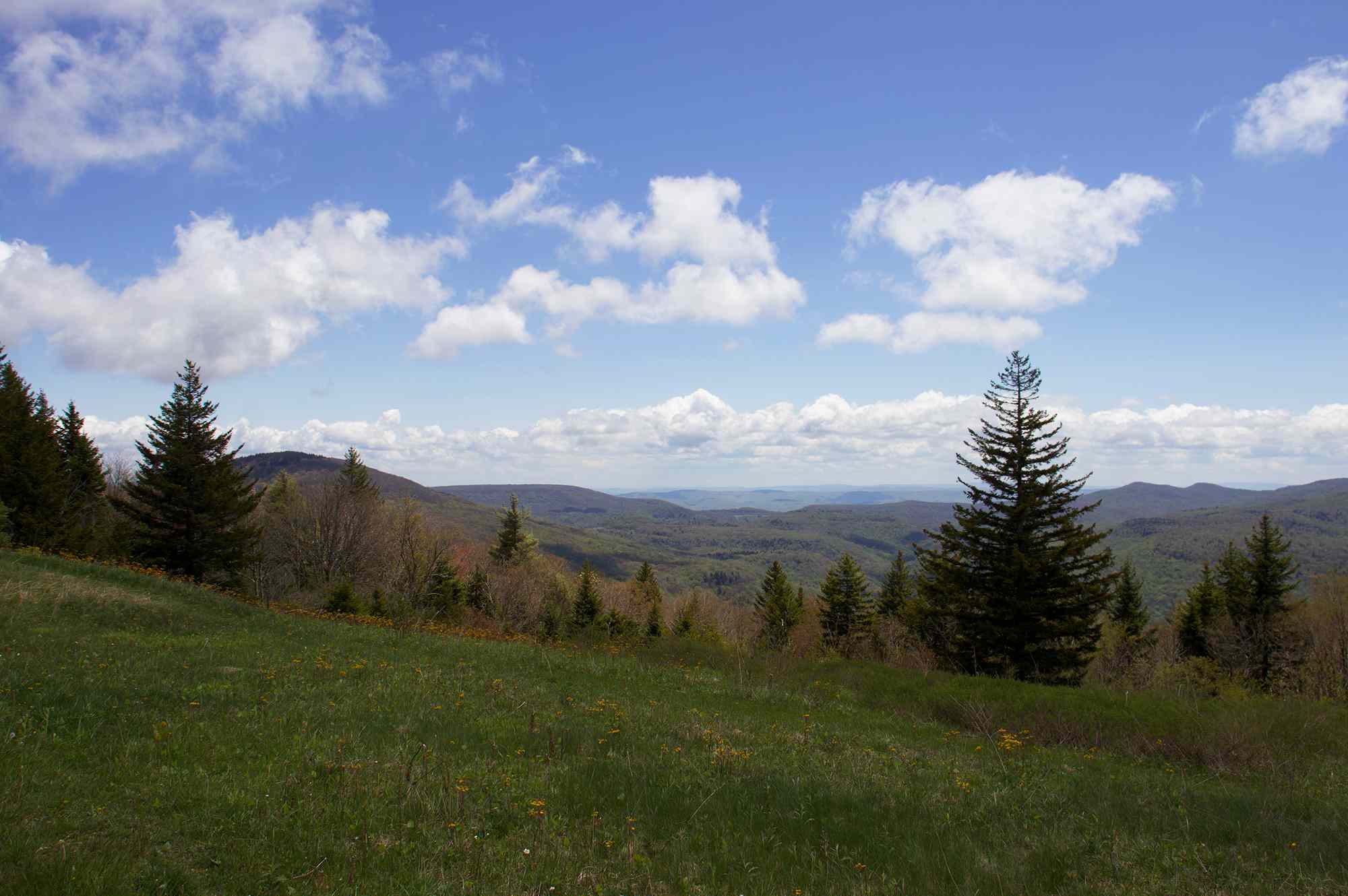
Beautiful in every season, the Cranberry Wilderness offers miles of hiking trails and waterfalls.
:max_bytes(150000):strip_icc():format(jpeg)/TAL-scenery-cranberry-wilderness-west-virgina-CRANBERRYWILD1025-e4720a15eb6d44858fe7d69c45734aeb.jpg)
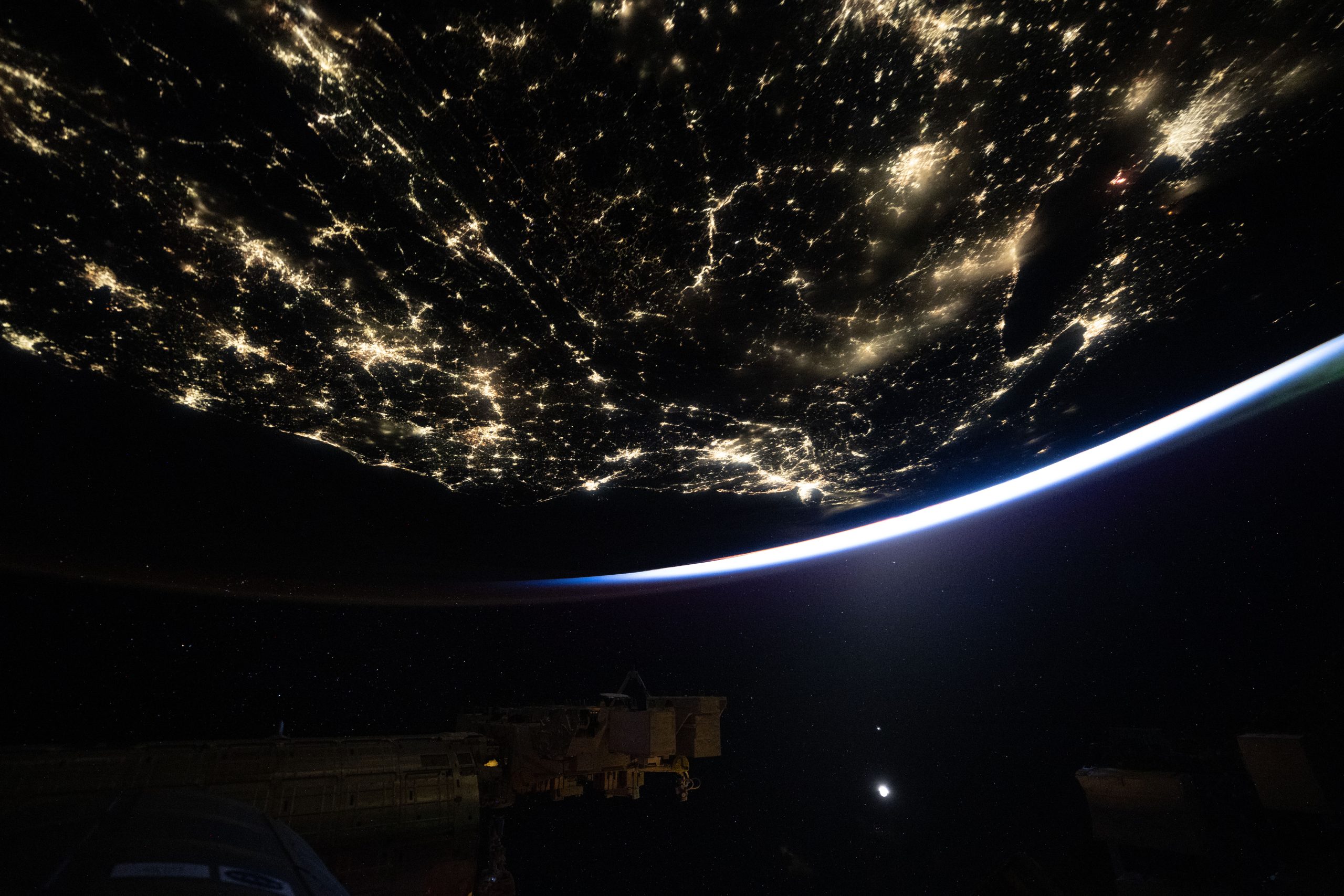
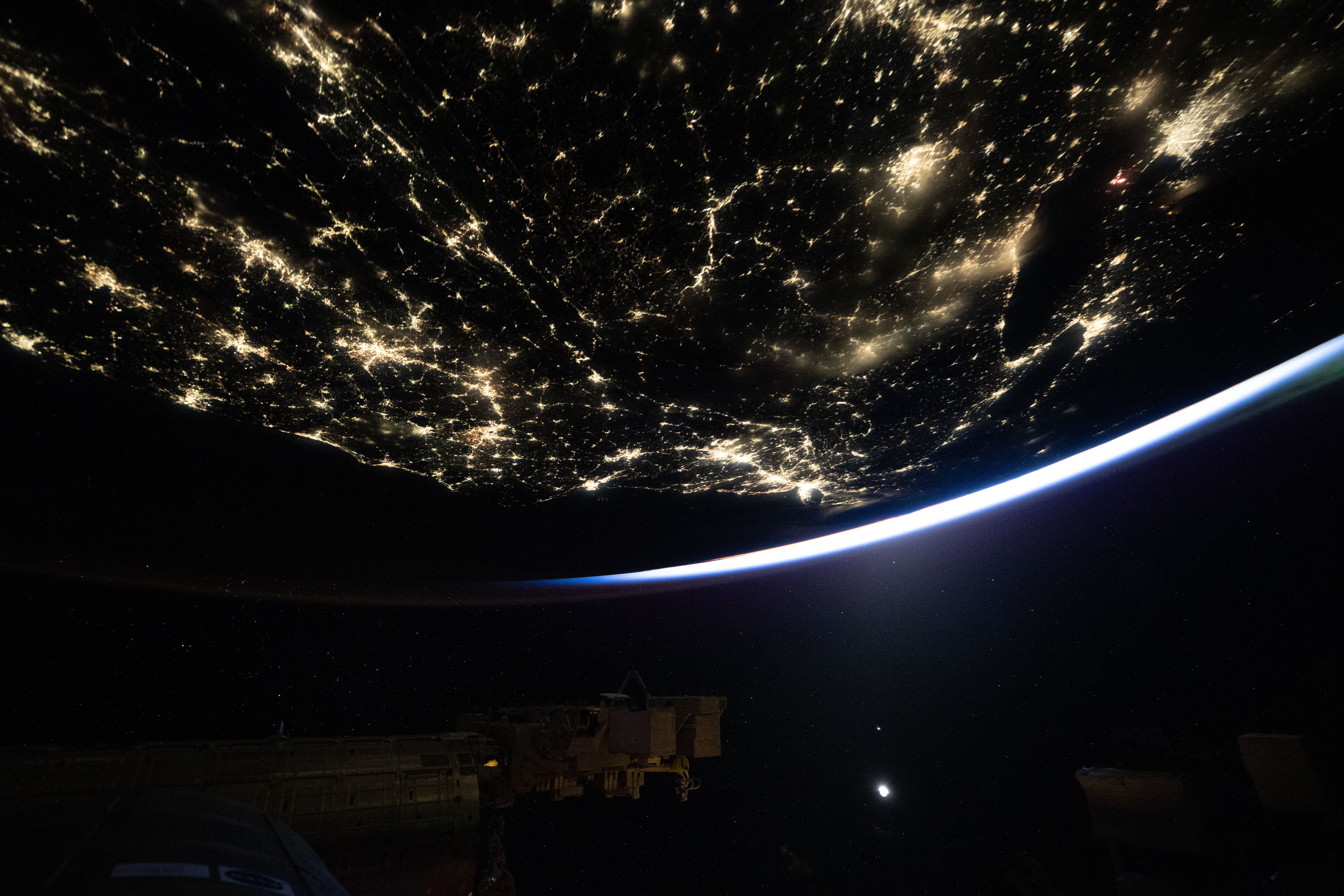
This nighttime view of the United States, dotted with city lights looking toward New York City (center), was taken at approximately 3:40 a.m. local time from the International Space Station as it orbited 259 miles above Earth.
Read More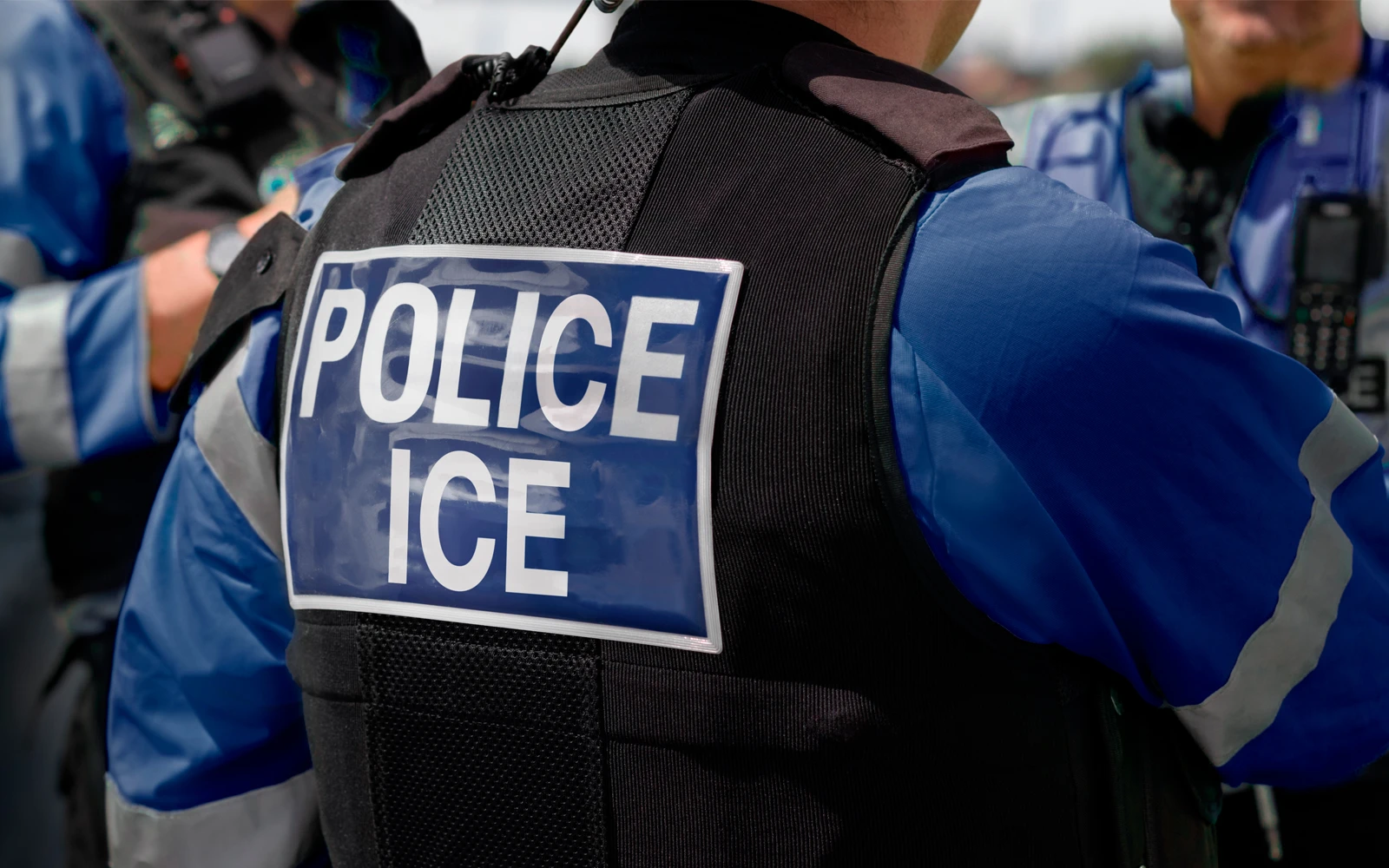
Pope Leo XIV titled this year’s observance of World Day of Migrants and Refugees “Even Just One of These Children,” citing Matthew 18:5: “Whoever welcomes one such child in my name welcomes me.”
A reading from the Book of Daniel
7:9-10, 13-14
As I watched:
Thrones were set up
and the Ancient One took his throne.
His clothing was bright as snow,
and the hair on his head as white as wool;
His throne was flames of fire,
with wheels of burning fire.
A surging stream of fire
flowed out from where he sat;
Thousands upon thousands were ministering to him,
and myriads upon myriads attended him.
The court was convened, and the books were opened.
As the visions during the night continued, I saw
One like a son of man coming,
on the clouds of heaven;
When he reached the Ancient One
and was presented before him,
He received dominion, glory, and kingship;
nations and peoples of every language serve him.
His dominion is an everlasting dominion
that shall not be taken away,
his kingship shall not be destroyed.
From the Gospel according to John
1:47-51
Jesus saw Nathanael coming toward him and said of him,
"Here is a true child of Israel.
There is no duplicity in him."
Nathanael said to him, "How do you know me?"
Jesus answered and said to him,
"Before Philip called you, I saw you under the fig tree."
Nathanael answered him,
"Rabbi, you are the Son of God; you are the King of Israel."
Jesus answered and said to him,
"Do you believe
because I told you that I saw you under the fig tree?
You will see greater things than this."
And he said to him, "Amen, amen, I say to you,
you will see heaven opened
and the angels of God ascending and descending on the Son of Man."
The Evangelist tells us that when Jesus sees Nathanael approaching, he exclaims: "Behold, an Israelite indeed, in whom there is no guile!" (Jn 1: 47). This is praise reminiscent of the text of a Psalm: "Blessed is the man… in whose spirit there is no deceit" (32[31]: 2), but provokes the curiosity of Nathanael who answers in amazement: "How do you know me?" (Jn 1: 48). Jesus’ reply cannot immediately be understood. He says: "Before Philip called you, when you were under the fig tree, I saw you" (Jn 1: 48). We do not know what had happened under this fig tree. It is obvious that it had to do with a decisive moment in Nathanael’s life. His heart is moved by Jesus’ words, he feels understood and he understands: "This man knows everything about me, he knows and is familiar with the road of life; I can truly trust this man". And so he answers with a clear and beautiful confession of faith: "Rabbi, you are the Son of God! You are the King of Israel!" (Jn 1: 49). In this confession is conveyed a first important step in the journey of attachment to Jesus. (Benedict XVI, General Audience, 4 October 2006)
Read More
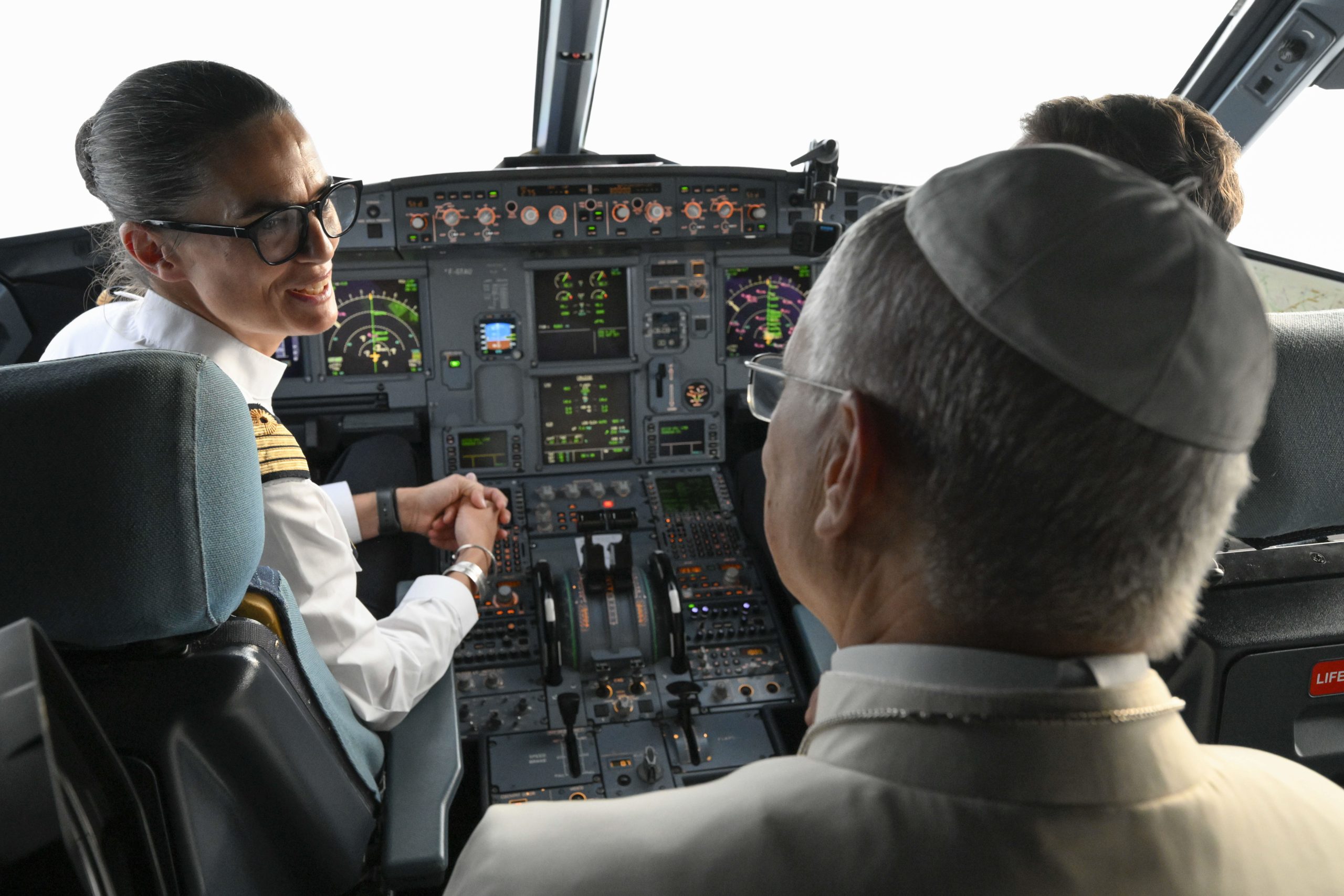
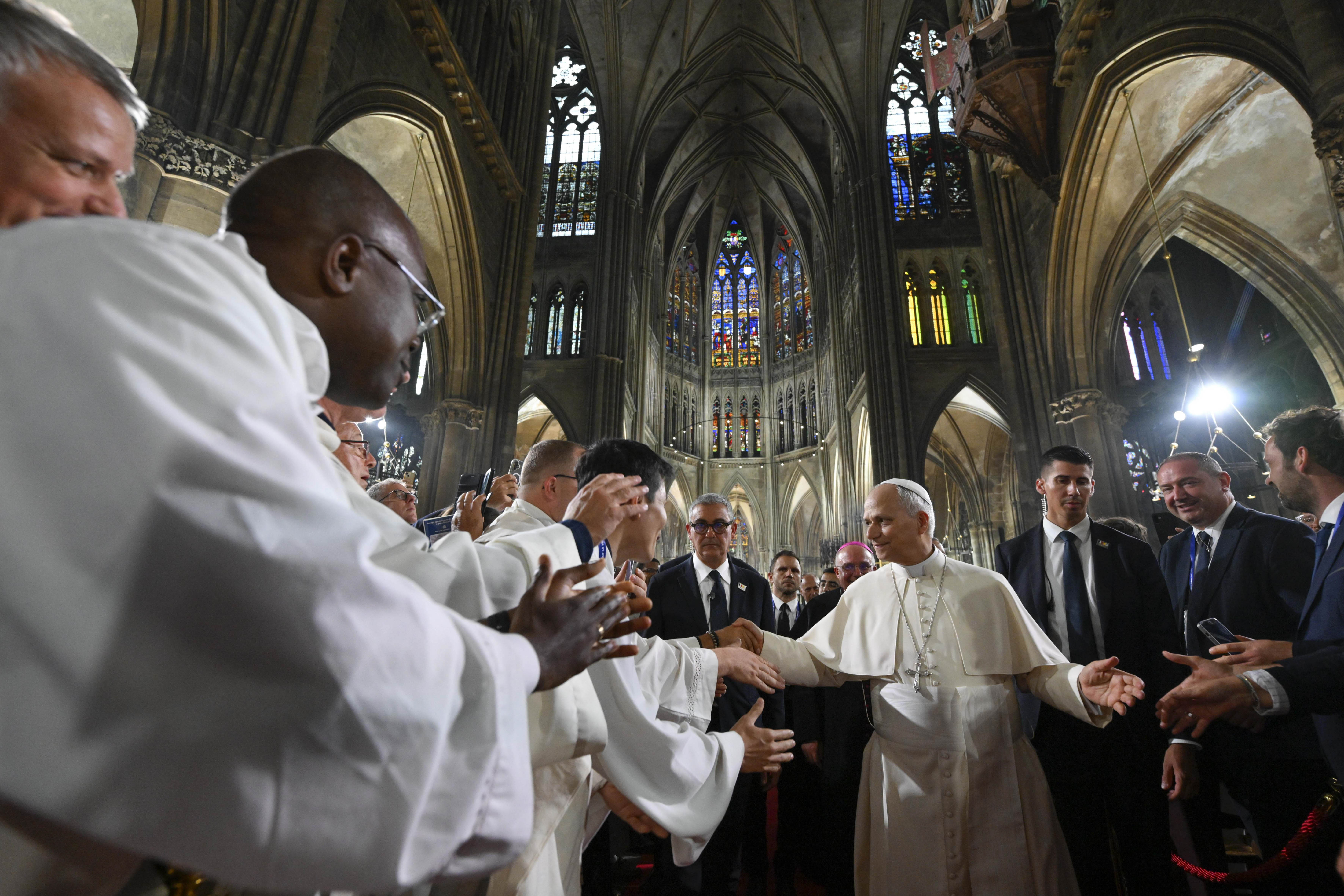
On the fourth and final day of his apostolic journey to France, the pope addressed European leaders at the Robert Schuman Conference Center and celebrated Mass at the Cathedral of St. Stephen in Metz.
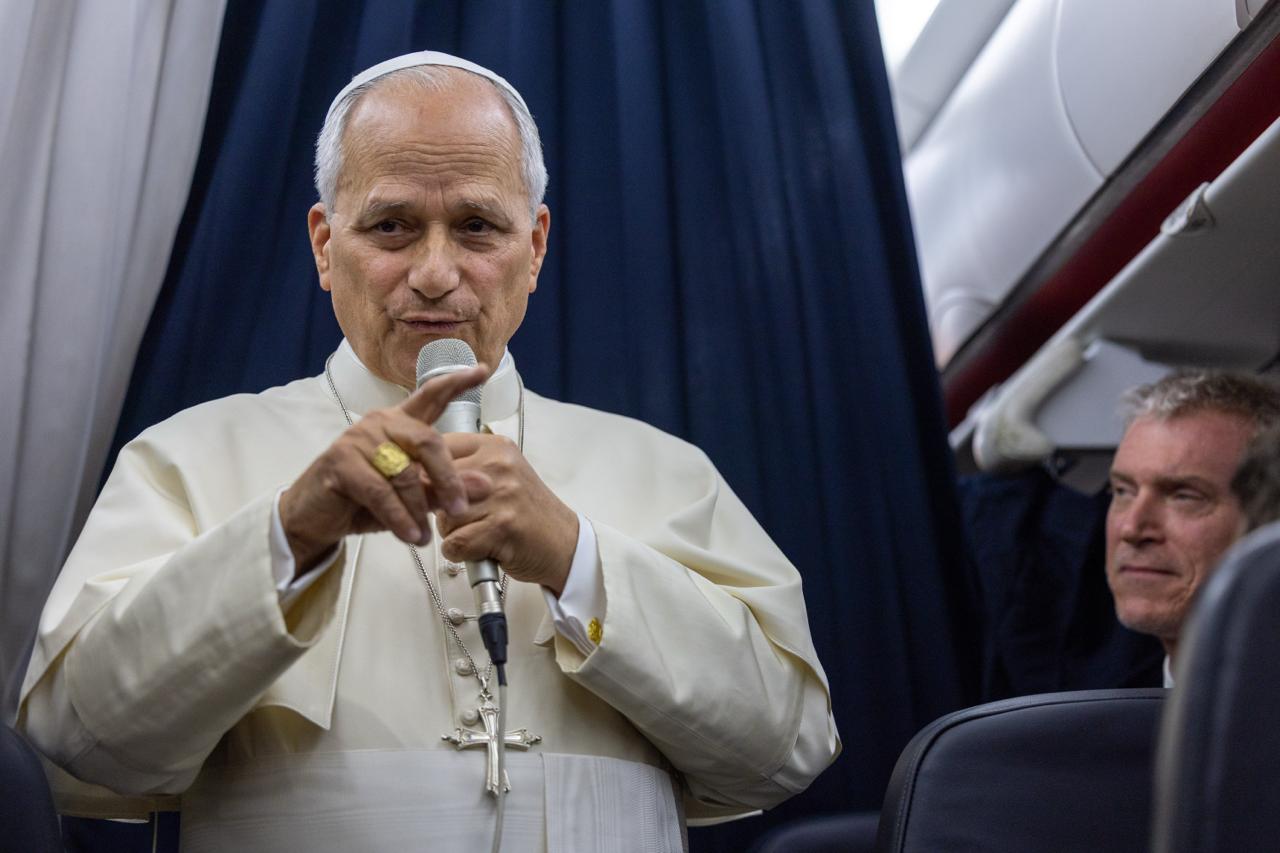
![Pope Leo says he is not ‘in panic mode’ over AI dangers – #Catholic – ABOARD THE PAPAL FLIGHT — Pope Leo XIV said he takes seriously the warnings raised by tech experts about the dangers of AI — including risks to humanity — but he is not panicking over dire predictions.“If someone were to ask me, am I in panic mode, no I’m not, I sleep at night. I do think the concerns raised by many experts in AI should be taken seriously,” the pope told reporters accompanying him on his flight to Rome from Metz, France, Sept. 28.“I don’t think that is fake news, as some have said, to try and cause … financial or some other kind of benefit,” he added.A former safety researcher at the AI company Anthropic warned earlier this month that he believes the technology’s rapid advancement could mean there’s a more than 10% chance that AI could “could kill all humans” within a decade.Anthropic CEO Dario Amodei responded by calling on the AI industry to slow down the pace of advanced model development to address risks, and other industry leaders publicly supported his call.That drew criticism of Amodei from President Donald Trump, who dismissed dire scenarios and said restrictions on AI development in the U.S. would benefit China. The two men dined together on Sunday in an apparent attempt to address their differences.The pope’s encyclical on AI, Magnifica Humanitas, published just four months ago, included a broad call for regulation of the technology.In recent months, concerns have grown over AI’s risks of creating advanced cyberattacks and autonomous agents that will get past human control and threaten humanity.Pope Leo told journalists on Monday that the Vatican has organized its own commission on AI, both to coordinate its own use of the technology and to “continue to promote dialogue, study, investigation to find ways to make sure that AI doesn’t get to a point where it destroys humanity.”“But we have to keep working. We can’t just sit back and pretend nothing is going to happen,” he said.Leo was returning to Rome after a four-day trip to France.In response to another reporter’s question, the pope said it was vital for the Church to proclaim Catholic social doctrine even on controversial matters such as end-of-life issues and political extremism.Asked if he had “crossed a line” in France, where there is a strict separation of church and state, by speaking against the recent legalization there of euthanasia and assisted suicide, he said: “I didn’t cross it,” because “we’re not entering into politics; we’re applying the Gospel to people’s lives.”“The defense of life is something that, as you all know, the Church teaches, believes very deeply,” the pope said.“Being in a place especially like Lourdes, where people are searching for something much deeper and understanding that their lives, even in the midst of sickness or disability or pain of different kinds, that their life has meaning, the Church, because of Jesus himself, wants to be close to those people and to affirm the values that that life itself I think holds for all of us,” the pope said.Asked whether he thought clerical sexual abuse was “systemic” in the Church, Leo said he preferred “to express it in a different way.”He said some organizations within the Church have, at times, “as a system, been abusive.”“But I think itʼs important to make the distinction. Sexual abuse is first and foremost a human problem. … When it happens within the Church it actually has another whole dimension added to it, because peopleʼs lives of faith are deeply wounded and sometimes even destroyed,” the pontiff said.“The Church, in certain ways, has been seen as being responsible, but in the same way, the Church, I think, is an important part of helping [victims] to find healing.”](https://unitedyam.com/wp-content/uploads/2026/09/pope-leo-says-he-is-not-in-panic-mode-over-ai-dangers-catholic-aboard-the-papal-flight-pope-leo-xiv-said-he-takes-seriously-the-warnings-raised-by-tech-experts-about-t.jpg "Pope Leo says he is not ‘in panic mode’ over AI dangers – #Catholic – ABOARD THE PAPAL FLIGHT — Pope Leo XIV said he takes seriously the warnings raised by tech experts about the dangers of AI — including risks to humanity — but he is not panicking over dire predictions.“If someone were to ask me, am I in panic mode, no I’m not, I sleep at night. I do think the concerns raised by many experts in AI should be taken seriously,” the pope told reporters accompanying him on his flight to Rome from Metz, France, Sept. 28.“I don’t think that is fake news, as some have said, to try and cause … financial or some other kind of benefit,” he added.A former safety researcher at the AI company Anthropic warned earlier this month that he believes the technology’s rapid advancement could mean there’s a more than 10% chance that AI could “could kill all humans” within a decade.Anthropic CEO Dario Amodei responded by calling on the AI industry to slow down the pace of advanced model development to address risks, and other industry leaders publicly supported his call.That drew criticism of Amodei from President Donald Trump, who dismissed dire scenarios and said restrictions on AI development in the U.S. would benefit China. The two men dined together on Sunday in an apparent attempt to address their differences.The pope’s encyclical on AI, Magnifica Humanitas, published just four months ago, included a broad call for regulation of the technology.In recent months, concerns have grown over AI’s risks of creating advanced cyberattacks and autonomous agents that will get past human control and threaten humanity.Pope Leo told journalists on Monday that the Vatican has organized its own commission on AI, both to coordinate its own use of the technology and to “continue to promote dialogue, study, investigation to find ways to make sure that AI doesn’t get to a point where it destroys humanity.”“But we have to keep working. We can’t just sit back and pretend nothing is going to happen,” he said.Leo was returning to Rome after a four-day trip to France.In response to another reporter’s question, the pope said it was vital for the Church to proclaim Catholic social doctrine even on controversial matters such as end-of-life issues and political extremism.Asked if he had “crossed a line” in France, where there is a strict separation of church and state, by speaking against the recent legalization there of euthanasia and assisted suicide, he said: “I didn’t cross it,” because “we’re not entering into politics; we’re applying the Gospel to people’s lives.”“The defense of life is something that, as you all know, the Church teaches, believes very deeply,” the pope said.“Being in a place especially like Lourdes, where people are searching for something much deeper and understanding that their lives, even in the midst of sickness or disability or pain of different kinds, that their life has meaning, the Church, because of Jesus himself, wants to be close to those people and to affirm the values that that life itself I think holds for all of us,” the pope said.Asked whether he thought clerical sexual abuse was “systemic” in the Church, Leo said he preferred “to express it in a different way.”He said some organizations within the Church have, at times, “as a system, been abusive.”“But I think itʼs important to make the distinction. Sexual abuse is first and foremost a human problem. … When it happens within the Church it actually has another whole dimension added to it, because peopleʼs lives of faith are deeply wounded and sometimes even destroyed,” the pontiff said.“The Church, in certain ways, has been seen as being responsible, but in the same way, the Church, I think, is an important part of helping [victims] to find healing.”")
In a 23-minute in-flight news conference, the pontiff also answered questions about end-of-life issues and sexual abuse.
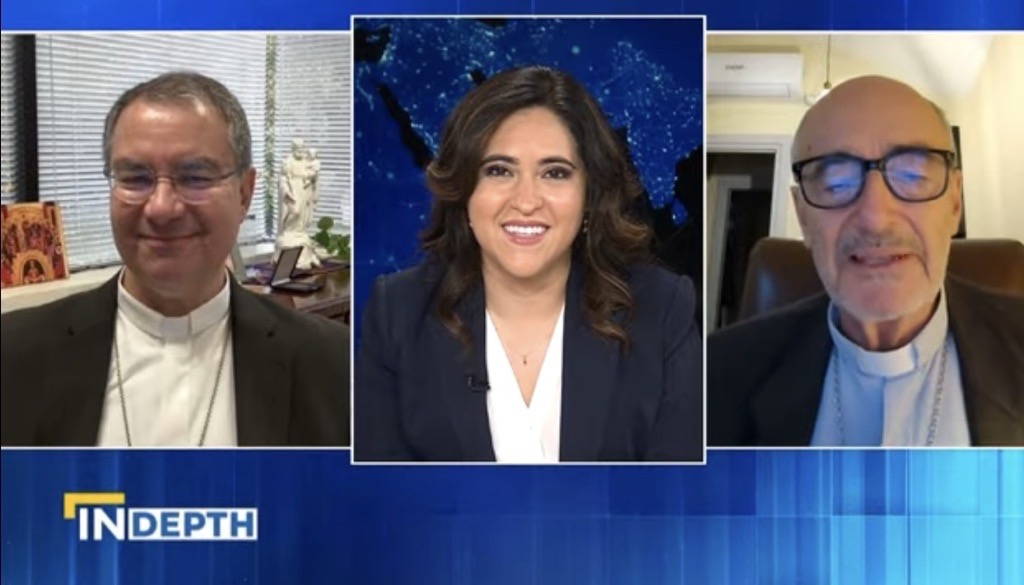
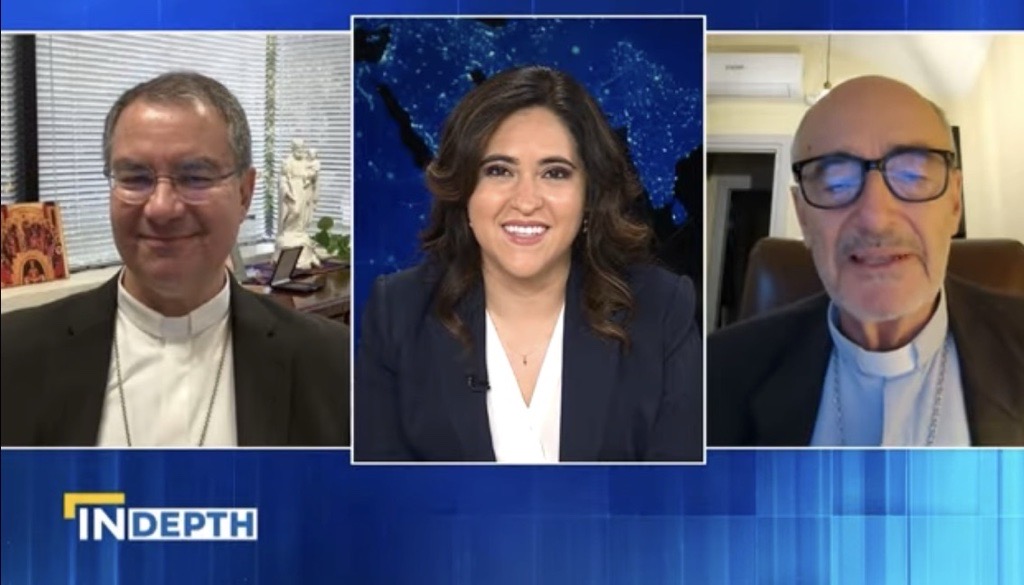
“Catholic social teaching says that companies, that investors and management, owe care to the workers,” said Cardinal Michael Czerny, head of the Vatican’s Commission on AI.
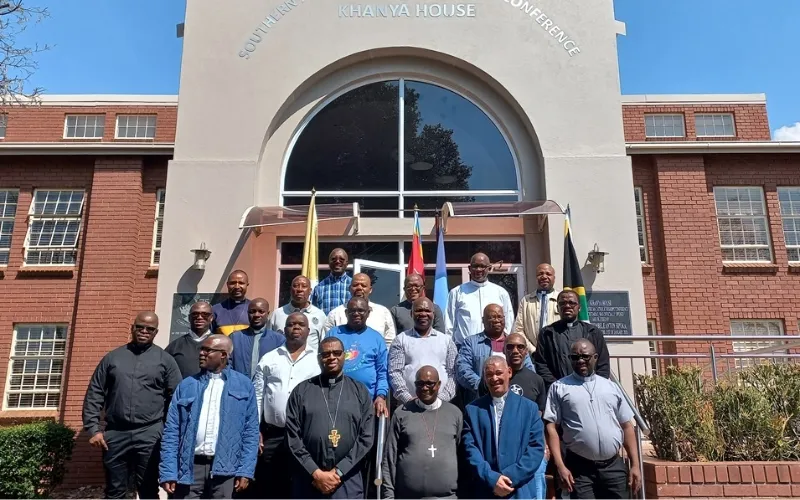
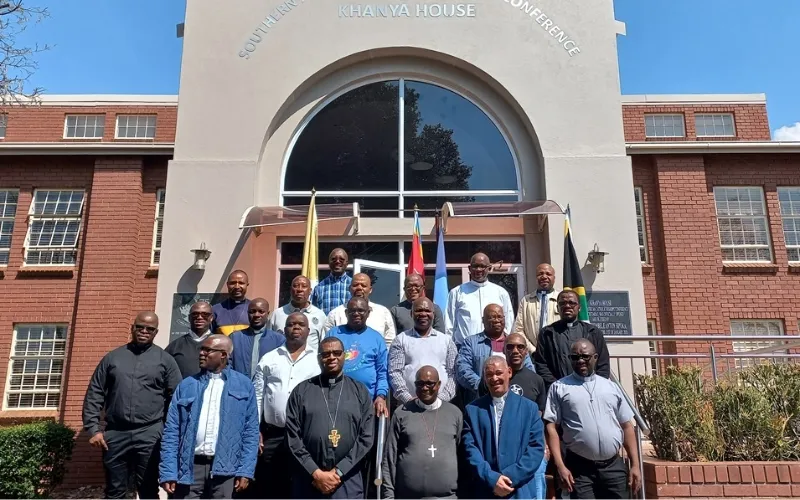
The meeting highlighted the need to strengthen the bond between bishops and priests as well as among priests themselves.
Retreat readies Assumption College board for new academic year #Catholic – 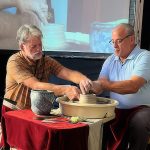
Assumption College for Sisters (ACS) in Denville, N.J., kicked off its new board year on Sept. 16, by gathering at Villa Pauline Retreat and Spiritual Center in Mendham, N.J., for its Annual Board of Trustees Retreat. Board members and ACS staff participated in a reflective day titled “Spirit into Matter – Receiving, Accepting, Being, Reflecting,” led by potter, artist, teacher, and retreat presenter, Ray Boswell.
With a renewed sense of purpose and community, the ACS Board of Trustees steps into the new academic year ready to guide the mission and growth of the college.
Using his potter’s wheel, clay, and the power of storytelling, Boswell guided attendees in exploring the powerful biblical imagery of God as the potter and humanity as the clay. Through his artistry, he illustrated profound messages of divine love, gentleness, and the ongoing call to a deeper spiritual relationship.
Making the retreat a truly interactive experience, each participant designed a personal vigil light mold. These pieces will be fired in a kiln and later returned to the trustees as tangible mementos of the day’s spiritual reflections.
The retreat concluded with a liturgy celebrating the spiritual foundation of the college, alongside a special recognition ceremony honoring several key leaders for their steadfast service: Angelo Sansano, board chair; Anthony Sturla, board secretary; and Father Martin Glynn, pastor of St. Mary’s Parish, also in Denville. Ellen Sandman, new board chair, expressed sincere gratitude to them.
– Assumption College for Sisters (ACS) in Denville, N.J., kicked off its new board year on Sept. 16, by gathering at Villa Pauline Retreat and Spiritual Center in Mendham, N.J., for its Annual Board of Trustees Retreat. Board members and ACS staff participated in a reflective day titled “Spirit into Matter – Receiving, Accepting, Being, Reflecting,” led by potter, artist, teacher, and retreat presenter, Ray Boswell. With a renewed sense of purpose and community, the ACS Board of Trustees steps into the new academic year ready to guide the mission and growth of the college. Using his potter’s wheel, clay, and
| Picture of the day |
|---|

|
|
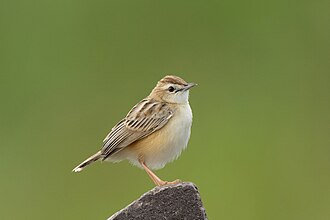
A fan-tailed warbler (Zitting cisticola) in Bhigwan, Maharashtra, India.
|
![St. Joseph’s Health honors contributions of Hispanics during Mass #Catholic – St. Joseph’s Health in Paterson, N.J., commemorated Hispanic Heritage Month, observed nationally from Sept. 15 to Oct. 15, during a bilingual Mass celebrated by Bishop Kevin J. Sweeney on Sept. 16 in the chapel of St. Joseph University Medical Center in Paterson, N.J.
Hispanic Heritage Month celebrates Hispanic and Latino history and culture. It recognizes he many contributions made to the history and culture of the United States, including advocacy work, art, food, sports, entertainment, business, science, and public service.
Father Krzysztof Liwarski, a hospital chaplain at St. Joseph’s, concelebrated the Mass with Bishop Sweeney. Deacon Lawrence Duffy, pastoral care director of St. Joseph’s Health, assisted with the liturgy.
“From rich traditions to inspiring stories of resilience and achievement, St. Joseph’s is grateful for the lasting impact these communities have made and continue to make,” St. Joseph’s said.
BEACON PHOTOS | JOE GIGLI
[See image gallery at beaconnj.org]
Click here to subscribe to our weekly newsletter.](https://unitedyam.com/wp-content/uploads/2026/09/st-josephs-health-honors-contributions-of-hispanics-during-mass-catholic-st-josephs-health-in-paterson-n-j-commemorated-hispanic-heritage-month-observed-nationally-from-sept.jpg "St. Joseph’s Health honors contributions of Hispanics during Mass #Catholic – St. Joseph’s Health in Paterson, N.J., commemorated Hispanic Heritage Month, observed nationally from Sept. 15 to Oct. 15, during a bilingual Mass celebrated by Bishop Kevin J. Sweeney on Sept. 16 in the chapel of St. Joseph University Medical Center in Paterson, N.J.
Hispanic Heritage Month celebrates Hispanic and Latino history and culture. It recognizes he many contributions made to the history and culture of the United States, including advocacy work, art, food, sports, entertainment, business, science, and public service.
Father Krzysztof Liwarski, a hospital chaplain at St. Joseph’s, concelebrated the Mass with Bishop Sweeney. Deacon Lawrence Duffy, pastoral care director of St. Joseph’s Health, assisted with the liturgy.
“From rich traditions to inspiring stories of resilience and achievement, St. Joseph’s is grateful for the lasting impact these communities have made and continue to make,” St. Joseph’s said.
BEACON PHOTOS | JOE GIGLI
[See image gallery at beaconnj.org]
Click here to subscribe to our weekly newsletter.")
St. Joseph’s Health honors contributions of Hispanics during Mass #Catholic – 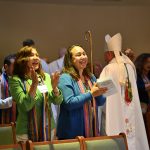
St. Joseph’s Health in Paterson, N.J., commemorated Hispanic Heritage Month, observed nationally from Sept. 15 to Oct. 15, during a bilingual Mass celebrated by Bishop Kevin J. Sweeney on Sept. 16 in the chapel of St. Joseph University Medical Center in Paterson, N.J.
Hispanic Heritage Month celebrates Hispanic and Latino history and culture. It recognizes he many contributions made to the history and culture of the United States, including advocacy work, art, food, sports, entertainment, business, science, and public service.
Father Krzysztof Liwarski, a hospital chaplain at St. Joseph’s, concelebrated the Mass with Bishop Sweeney. Deacon Lawrence Duffy, pastoral care director of St. Joseph’s Health, assisted with the liturgy.
“From rich traditions to inspiring stories of resilience and achievement, St. Joseph’s is grateful for the lasting impact these communities have made and continue to make,” St. Joseph’s said.
– St. Joseph’s Health in Paterson, N.J., commemorated Hispanic Heritage Month, observed nationally from Sept. 15 to Oct. 15, during a bilingual Mass celebrated by Bishop Kevin J. Sweeney on Sept. 16 in the chapel of St. Joseph University Medical Center in Paterson, N.J. Hispanic Heritage Month celebrates Hispanic and Latino history and culture. It recognizes he many contributions made to the history and culture of the United States, including advocacy work, art, food, sports, entertainment, business, science, and public service. Father Krzysztof Liwarski, a hospital chaplain at St. Joseph’s, concelebrated the Mass with Bishop Sweeney. Deacon Lawrence Duffy, pastoral care
At 10:58 AM on Sept. 28, 1969, residents of the small Australian farming community of Murchison, Victoria, heard a series of loud booms. The noise was accompanied by a strong smell and a streak of smoke in the sky. A carbonaceous chondite meteorite, the Murchison Meteorite broke up as it entered the atmosphere, and thusContinue reading “Sept. 28, 1969: The Murchison Meteorite explodes over Australia”
The post Sept. 28, 1969: The Murchison Meteorite explodes over Australia appeared first on Astronomy Magazine.
Read MoreA reading from the Book of Job
1:6-22
One day, when the angels of God came to present themselves before the LORD,
Satan also came among them.
And the LORD said to Satan, "Whence do you come?"
Then Satan answered the LORD and said,
"From roaming the earth and patrolling it."
And the LORD said to Satan, "Have you noticed my servant Job,
and that there is no one on earth like him,
blameless and upright, fearing God and avoiding evil?"
But Satan answered the LORD and said,
"Is it for nothing that Job is God-fearing?
Have you not surrounded him and his family
and all that he has with your protection?
You have blessed the work of his hands,
and his livestock are spread over the land.
But now put forth your hand and touch anything that he has,
and surely he will blaspheme you to your face."
And the LORD said to Satan,
"Behold, all that he has is in your power;
only do not lay a hand upon his person."
So Satan went forth from the presence of the LORD.
And so one day, while his sons and his daughters
were eating and drinking wine
in the house of their eldest brother,
a messenger came to Job and said,
"The oxen were ploughing and the asses grazing beside them,
and the Sabeans carried them off in a raid.
They put the herdsmen to the sword,
and I alone have escaped to tell you."
While he was yet speaking, another came and said,
"Lightning has fallen from heaven
and struck the sheep and their shepherds and consumed them;
and I alone have escaped to tell you."
While he was yet speaking, another messenger came and said,
"The Chaldeans formed three columns,
seized the camels, carried them off,
and put those tending them to the sword,
and I alone have escaped to tell you."
While he was yet speaking, another came and said,
"Your sons and daughters were eating and drinking wine
in the house of their eldest brother,
when suddenly a great wind came across the desert
and smote the four corners of the house.
It fell upon the young people and they are dead;
and I alone have escaped to tell you."
Then Job began to tear his cloak and cut off his hair.
He cast himself prostrate upon the ground, and said,
"Naked I came forth from my mother’s womb,
and naked shall I go back again.
The LORD gave and the LORD has taken away;
blessed be the name of the LORD!"
In all this Job did not sin,
nor did he say anything disrespectful of God.
From the Gospel according to Luke
9:46-50
An argument arose among the disciples
about which of them was the greatest.
Jesus realized the intention of their hearts and took a child
and placed it by his side and said to them,
"Whoever receives this child in my name receives me,
and whoever receives me receives the one who sent me.
For the one who is least among all of you
is the one who is the greatest."
Then John said in reply,
"Master, we saw someone casting out demons in your name
and we tried to prevent him
because he does not follow in our company."
Jesus said to him,
"Do not prevent him, for whoever is not against you is for you."
After having spoken of the primacy of service, Jesus does something precisely to illustrate this. We have seen that Jesus’ actions are stronger than the words he uses. And what is that action? He takes a child and puts him in the midst of the disciples, at the center, in the most important place (cf. v. 36). In the Gospel, the child does not symbolize innocence so much as littleness. For like children, the little ones depend on others, on adults, they need to receive. Jesus embraces those children and says that those who welcome a little one, a child, welcome him (cf. v. 37). The ones who are to be served above all are: those in need of receiving who cannot give anything in return. (…) In welcoming those on the margins, the neglected, we welcome Jesus because He is there. And in the little one, in the poor person we serve, we also receive God’s tender embrace. Dear brothers and sisters, challenged by the Gospel, let us ask ourselves: Am I, who follow Jesus, interested in the one who is neglected? Or am I rather seeking personal gratification, like the disciples that day? Do I understand life in terms of competing to make room for myself at others’ expense, or do I believe that being first means serving? And, concretely: do I dedicate time to a “little one”, to a person who has no means to pay me back? Am I concerned about someone who cannot give me anything in return, or only with my relatives and friends? (Pope Francis, Angelus, 19 September 2021)
Read More
![Pope Leo meets French abuse victims in Lourdes #Catholic LOURDES, France — Pope Leo XIV met seven French victims of clerical sexual abuse on Sunday, making a gesture of solidarity and reconciliation at a shrine world-famous for its healing waters.The nearly two-hour encounter took place at the residence of the local bishop, where Leo is staying for his two nights at the Sanctuary of Our Lady of Lourdes.Speaking to journalists after the meeting, one of the victims, Jérôme Guillement, said, “There was something sincere about [Pope Leo]. With him, every word was carefully chosen; every word had meaning. … There were a lot of emotions.”According to the Holy See Press Office, Leo spent an hour and a half speaking to the four men and three women individually, before addressing them as a group for about 20 minutes and “thanking them for their painful testimony and reaffirming his commitment to ensuring that the harm they experienced is not repeated for others.”He “expressed his solidarity with them and, through them, with all those who have suffered and continue to suffer from the wounds of abuse,” the statement said.Leo also prayed with some of the victims.“I sensed that he was a man of commitment and also a man of resolve,” Olivier Mardi, one of the participants, said after the meeting. “He’s not fooled and knows that these events will continue and that we must remain vigilant… There was an emotional side to it, and at the same time something very powerful when he speaks.”Five of the seven involved in the meeting revealed their identities ahead of the pope’s trip. Among them was Bertrand Virieux, a victim of ex-priest Bernard Preynat, who in 2020 was sentenced to five years in prison for assaults on young scouts in the Archdiocese of Lyon. Preynat died in 2024.The Church in France has been grappling with the repercussions of abuse in the wake of an independent commission’s report that hundreds of thousands of children had been abused by clergy and religious over the past 70 years.The Independent Commission on Sexual Abuse in the Church (CIASE) published a nearly 2,500-page final report in October 2021, estimating that 216,000 children were abused by priests, deacons, monks, or nuns in France from 1950 to 2020.It added that when abuse by lay Church workers was also taken into account, “the estimated number of child victims rises to 330,000 for the whole of the period.”The victims were accompanied by Bishop Gérard Le Stang of Amiens, president of the Council for the Prevention and Combating of Pedophilia within the French bishops’ conference.Guillement said Leo “felt that the Church in France still had a great deal of work to do” to prevent abuse.“We talked about prevention as part of a cultural shift at all levels … There are different opinions, but from his perspective, there’s still a systemic dimension at play,” the man added.According to Mardi, the pontiff “responded well to our very concrete proposals; he knows he has to work with us… He said we need to rekindle hope, and it takes serious commitment to make that happen.”Pope Leo spoke about the clerical sexual abuse of minors in his address to the French bishops on the morning of Sept. 27.“In recent years, you have faced with determination the painful scourge of abuse committed against minors by members of the clergy or in an ecclesial context,” he said.The pontiff praised them for their courageous measures to listen, search for truth, justice, forgiveness, and making amends, as well as “a firm commitment to a culture of prevention and protection against these crimes.”“You must continue along the path you have begun, maintaining the greatest vigilance,” he said.Before addressing the bishops, Leo stopped in front of a memorial for victims of child sexual abuse, featuring the brief reflection of an anonymous victim.“[The victim] will come to understand that it was the entire culture of a system that sought to protect itself rather than protect him,” an inscription on the memorial reads. “And his turmoil continues to deepen around this question: Why can’t justice be done for him? It is so vital to him that he may finally find peace and that the tears of his childhood may cease to flow.”At an open-air Mass later on Sunday morning, the pope seemed to allude to the clerical abuse crisis, saying in his homily that “In order to heal the deep wounds, infidelities and painful errors that have occurred within [the Church], we must humbly place ourselves under the Lord’s purifying gaze. Recognizing our own faults is essential to our spiritual growth.”The pope’s plans for a private conversation with victims ignited controversy among several abuse support groups in France who criticized the format of the meeting and the exclusion of victims’ organizations.Asked about the criticism, Bishop Pierre-Antoine Bozo, the spokesman of the French bishops’ conference, told journalists that “there are many survivor groups … If all of them had been included or brought together, it would have been a very large format, and it would not have had the same impact.”“What helps us most in accompanying victims is listening to them. And to do that, you cannot have 50 people sitting in front of you. That is really what the pope wanted,” Bozo said.The Lourdes shrine was an evocative backdrop for the meeting with abuse victims, since it is among the first shrines to cover artwork by the accused sexual abuser Father Marko Rupnik, currently on trial at the Vatican.Mosaics by Rupnik on the façade of the Basilica of the Rosary were covered ahead of Leo’s visit and will remain indefinitely hidden.“It had come to carry such a symbolic burden for victims that, even though many of the people who come to Lourdes are not abuse victims, for those who are, something had to be done,” Bishop Bozo said.“If it becomes so difficult for people to come to Lourdes, people who should have a privileged place there because they are suffering, then the situation is no longer acceptable,” the spokesman added. “So I think covering the mosaics is a first step. Afterward, something new will have to be proposed, perhaps a new work of art.”](https://unitedyam.com/wp-content/uploads/2026/09/pope-leo-meets-french-abuse-victims-in-lourdes-catholic-lourdes-france-pope-leo-xiv-met-seven-french-victims-of-clerical-sexual-abuse-on-sunday-making-a-gesture-of-solidarity-and-reconcil-scaled.jpg "Pope Leo meets French abuse victims in Lourdes #Catholic LOURDES, France — Pope Leo XIV met seven French victims of clerical sexual abuse on Sunday, making a gesture of solidarity and reconciliation at a shrine world-famous for its healing waters.The nearly two-hour encounter took place at the residence of the local bishop, where Leo is staying for his two nights at the Sanctuary of Our Lady of Lourdes.Speaking to journalists after the meeting, one of the victims, Jérôme Guillement, said, “There was something sincere about [Pope Leo]. With him, every word was carefully chosen; every word had meaning. … There were a lot of emotions.”According to the Holy See Press Office, Leo spent an hour and a half speaking to the four men and three women individually, before addressing them as a group for about 20 minutes and “thanking them for their painful testimony and reaffirming his commitment to ensuring that the harm they experienced is not repeated for others.”He “expressed his solidarity with them and, through them, with all those who have suffered and continue to suffer from the wounds of abuse,” the statement said.Leo also prayed with some of the victims.“I sensed that he was a man of commitment and also a man of resolve,” Olivier Mardi, one of the participants, said after the meeting. “He’s not fooled and knows that these events will continue and that we must remain vigilant… There was an emotional side to it, and at the same time something very powerful when he speaks.”Five of the seven involved in the meeting revealed their identities ahead of the pope’s trip. Among them was Bertrand Virieux, a victim of ex-priest Bernard Preynat, who in 2020 was sentenced to five years in prison for assaults on young scouts in the Archdiocese of Lyon. Preynat died in 2024.The Church in France has been grappling with the repercussions of abuse in the wake of an independent commission’s report that hundreds of thousands of children had been abused by clergy and religious over the past 70 years.The Independent Commission on Sexual Abuse in the Church (CIASE) published a nearly 2,500-page final report in October 2021, estimating that 216,000 children were abused by priests, deacons, monks, or nuns in France from 1950 to 2020.It added that when abuse by lay Church workers was also taken into account, “the estimated number of child victims rises to 330,000 for the whole of the period.”The victims were accompanied by Bishop Gérard Le Stang of Amiens, president of the Council for the Prevention and Combating of Pedophilia within the French bishops’ conference.Guillement said Leo “felt that the Church in France still had a great deal of work to do” to prevent abuse.“We talked about prevention as part of a cultural shift at all levels … There are different opinions, but from his perspective, there’s still a systemic dimension at play,” the man added.According to Mardi, the pontiff “responded well to our very concrete proposals; he knows he has to work with us… He said we need to rekindle hope, and it takes serious commitment to make that happen.”Pope Leo spoke about the clerical sexual abuse of minors in his address to the French bishops on the morning of Sept. 27.“In recent years, you have faced with determination the painful scourge of abuse committed against minors by members of the clergy or in an ecclesial context,” he said.The pontiff praised them for their courageous measures to listen, search for truth, justice, forgiveness, and making amends, as well as “a firm commitment to a culture of prevention and protection against these crimes.”“You must continue along the path you have begun, maintaining the greatest vigilance,” he said.Before addressing the bishops, Leo stopped in front of a memorial for victims of child sexual abuse, featuring the brief reflection of an anonymous victim.“[The victim] will come to understand that it was the entire culture of a system that sought to protect itself rather than protect him,” an inscription on the memorial reads. “And his turmoil continues to deepen around this question: Why can’t justice be done for him? It is so vital to him that he may finally find peace and that the tears of his childhood may cease to flow.”At an open-air Mass later on Sunday morning, the pope seemed to allude to the clerical abuse crisis, saying in his homily that “In order to heal the deep wounds, infidelities and painful errors that have occurred within [the Church], we must humbly place ourselves under the Lord’s purifying gaze. Recognizing our own faults is essential to our spiritual growth.”The pope’s plans for a private conversation with victims ignited controversy among several abuse support groups in France who criticized the format of the meeting and the exclusion of victims’ organizations.Asked about the criticism, Bishop Pierre-Antoine Bozo, the spokesman of the French bishops’ conference, told journalists that “there are many survivor groups … If all of them had been included or brought together, it would have been a very large format, and it would not have had the same impact.”“What helps us most in accompanying victims is listening to them. And to do that, you cannot have 50 people sitting in front of you. That is really what the pope wanted,” Bozo said.The Lourdes shrine was an evocative backdrop for the meeting with abuse victims, since it is among the first shrines to cover artwork by the accused sexual abuser Father Marko Rupnik, currently on trial at the Vatican.Mosaics by Rupnik on the façade of the Basilica of the Rosary were covered ahead of Leo’s visit and will remain indefinitely hidden.“It had come to carry such a symbolic burden for victims that, even though many of the people who come to Lourdes are not abuse victims, for those who are, something had to be done,” Bishop Bozo said.“If it becomes so difficult for people to come to Lourdes, people who should have a privileged place there because they are suffering, then the situation is no longer acceptable,” the spokesman added. “So I think covering the mosaics is a first step. Afterward, something new will have to be proposed, perhaps a new work of art.”")
The pontiff “expressed his solidarity with them and, through them, with all those who have suffered and continue to suffer from the wounds of abuse,” the Vatican said.
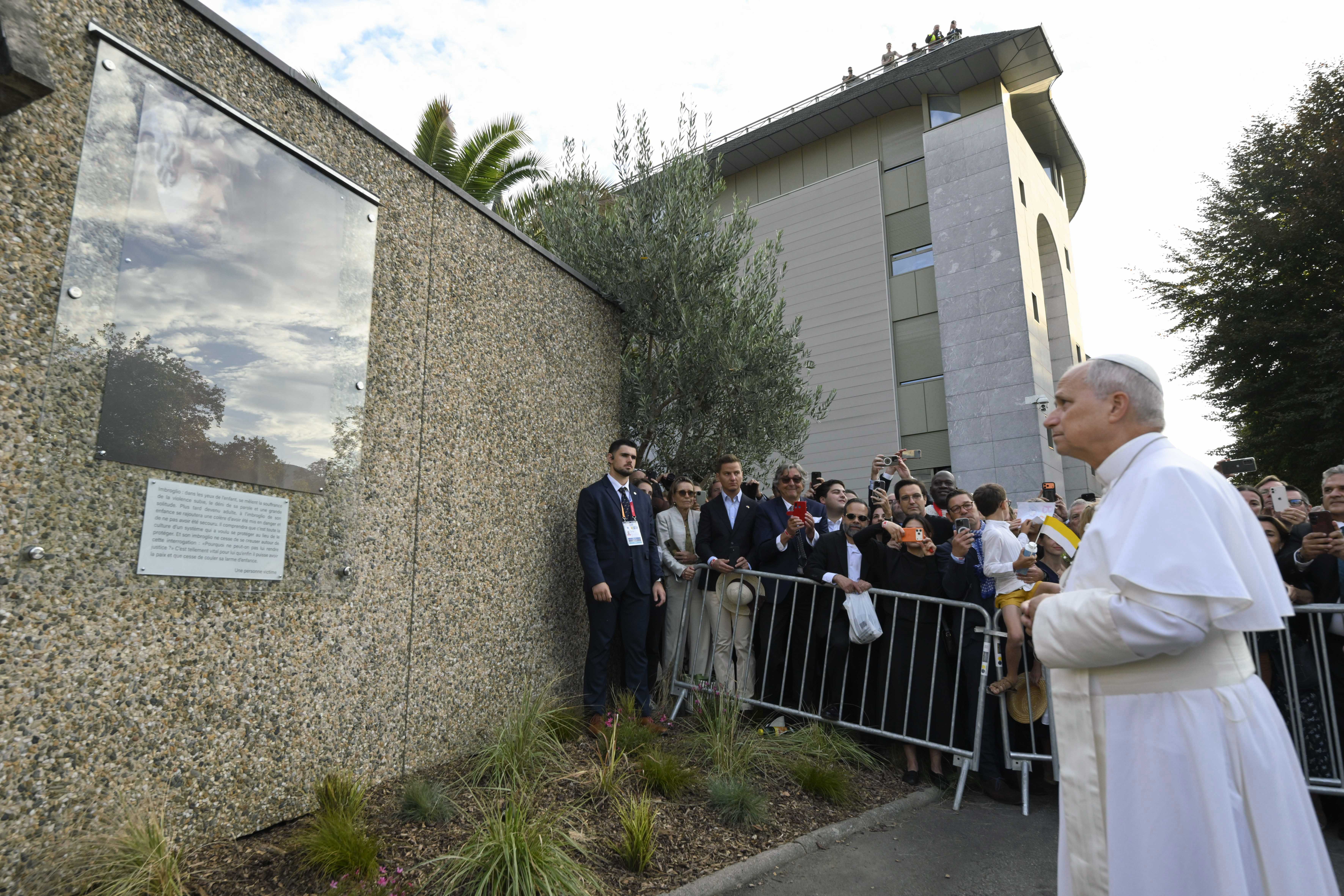
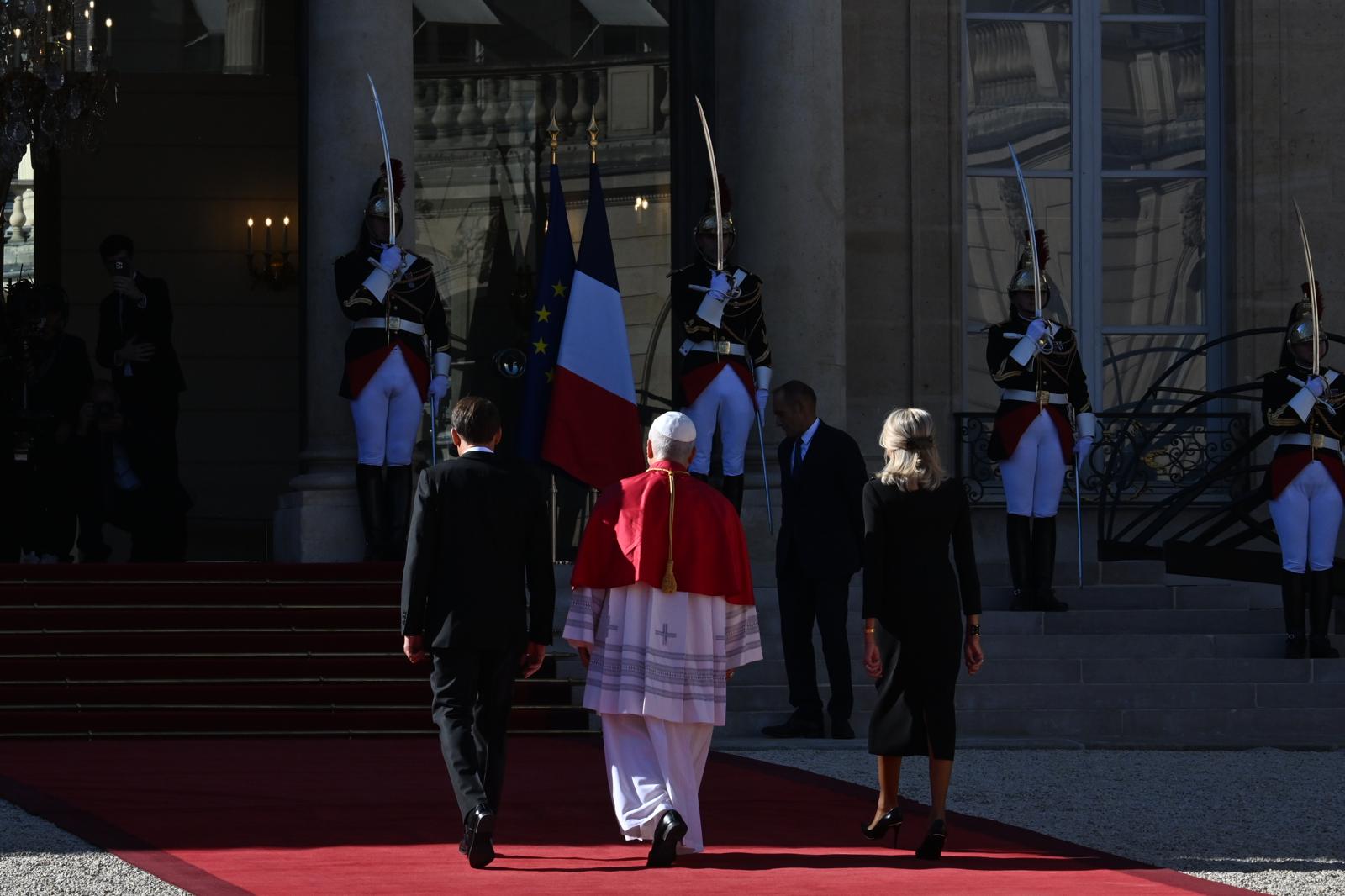
As Leo prepares to reach Metz, at the crossroads of France, Germany, and Luxembourg, what message will he offer about welcoming the stranger and the consequences of mass immigration?
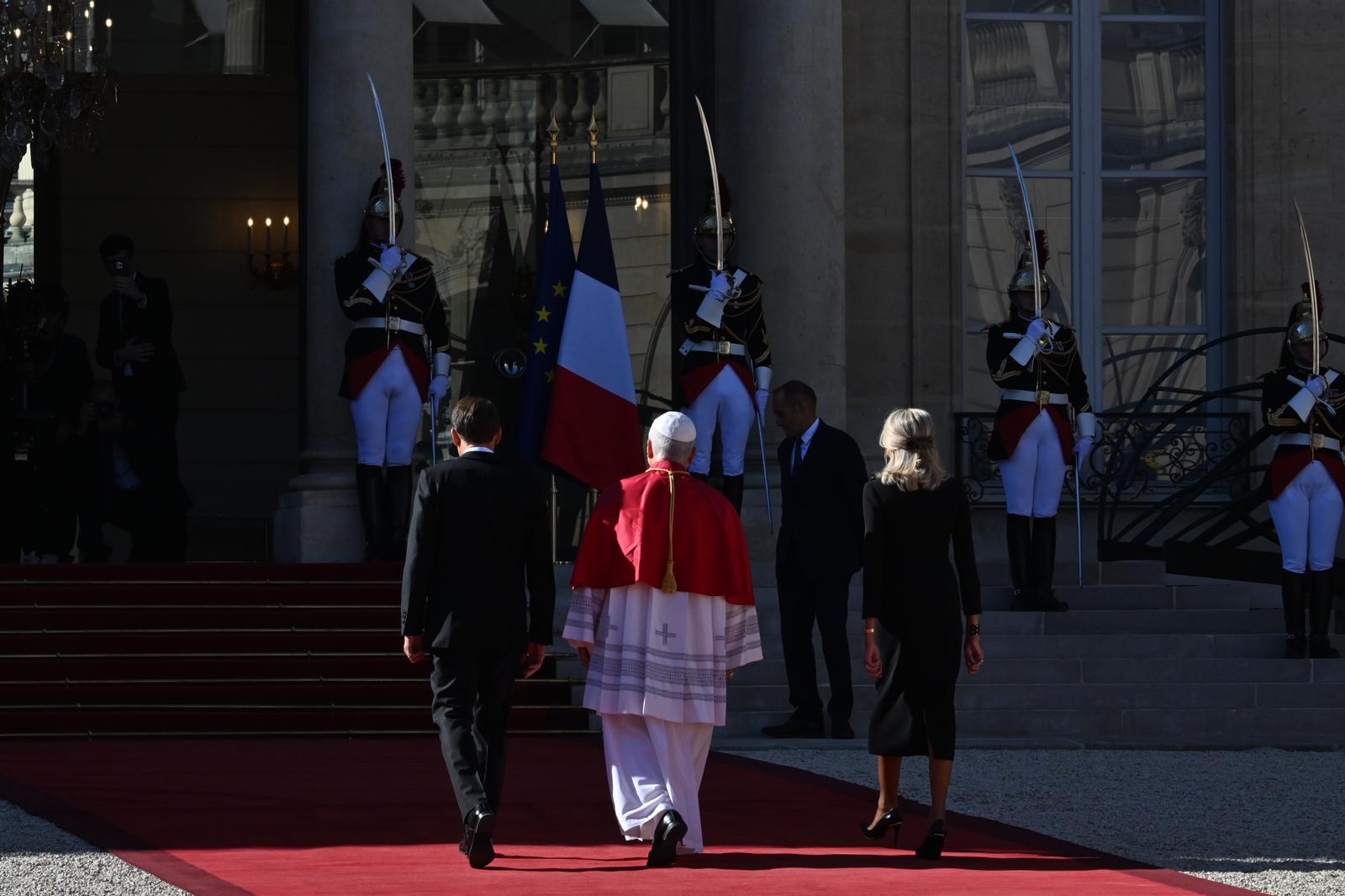
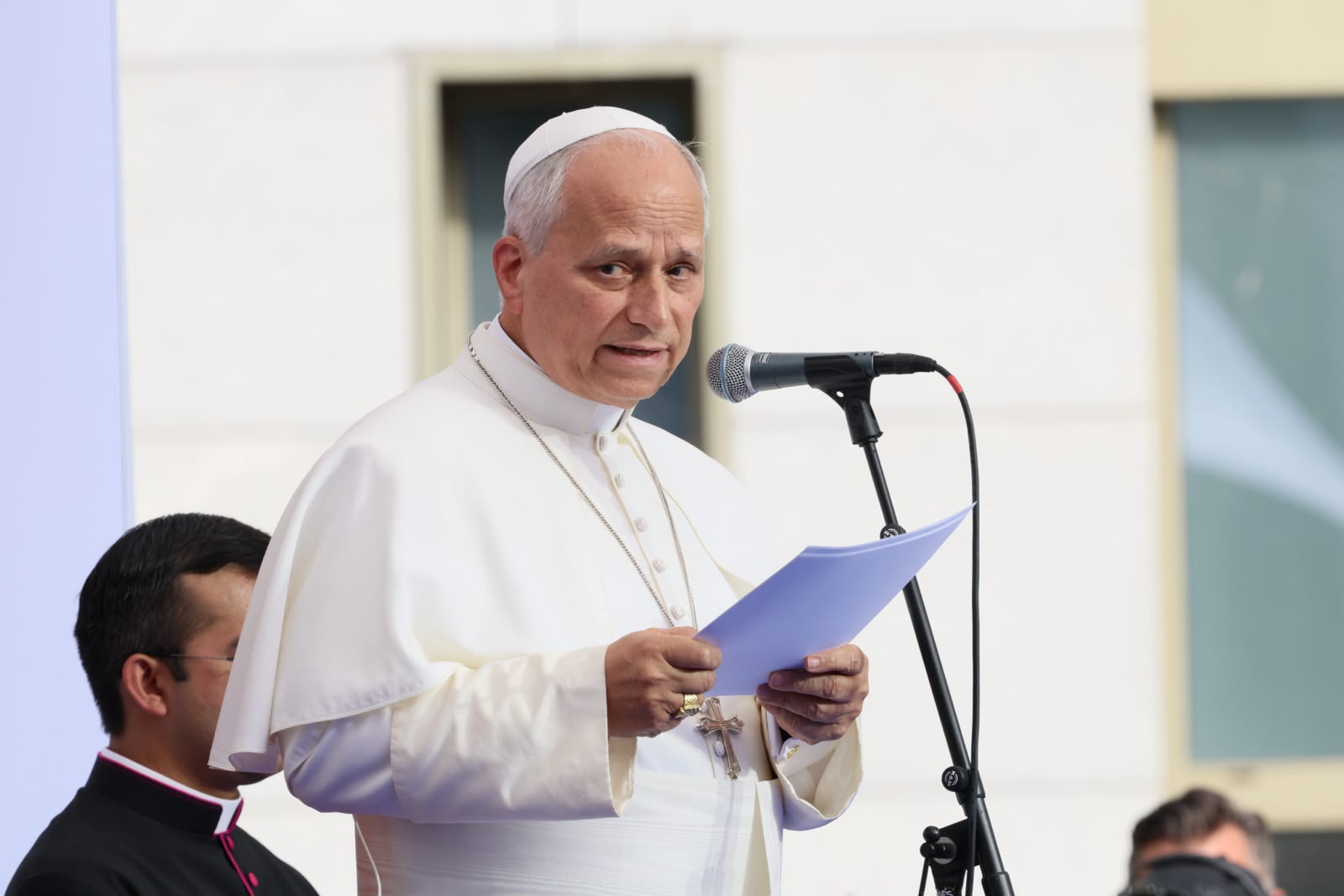
In a speech to sick people and caregivers, the pope denounced France’s recent legalization of euthanasia and assisted suicide.
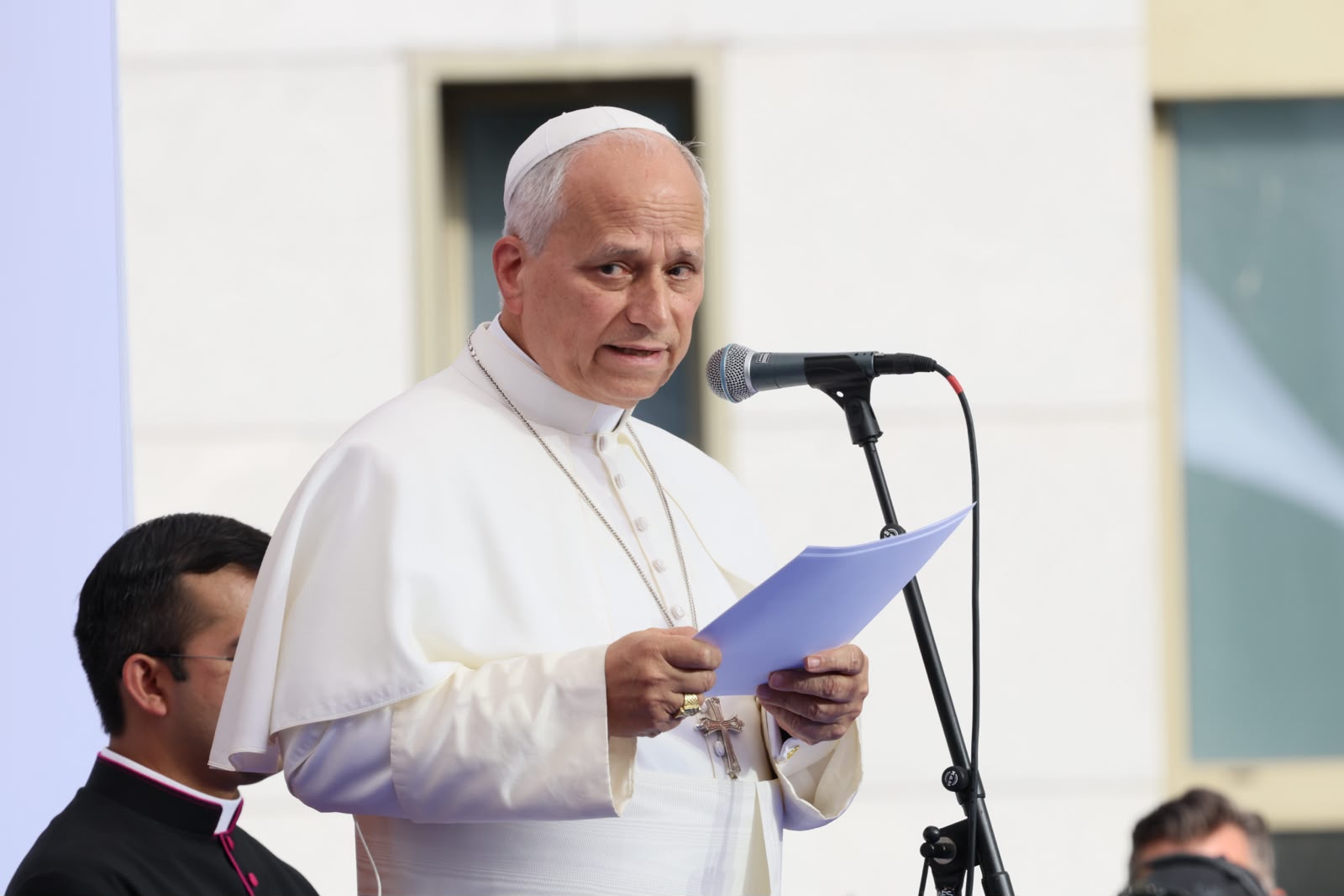
![Diocese honors retired priests for service during autumn luncheon #Catholic – The Ministry for Retired Priests of the Paterson Diocese in New Jersey held an Autumn Luncheon for Retired Priests on Sept. 15 at St. Ann Parish in Parsippany, N.J., with Bishop Kevin J. Sweeney.
Several active priests joined the retired priests, among them several diocesan officials, including Father Michael Parisi, vicar general and pastor of St. Catherine of Siena Parish in Mountain Lakes, N.J.; Msgr. John Hart, director of priest personnel and pastor of Assumption Parish in Morristown, N.J.; Father Nico Quintos, minister to retired priests and St. Ann’s pastor; and Father Richard Bay, a retired priest and minister to senior priests.
BEACON PHOTOS | JOE GIGLI
[See image gallery at beaconnj.org]
Click here to subscribe to our weekly newsletter.](https://unitedyam.com/wp-content/uploads/2026/09/diocese-honors-retired-priests-for-service-during-autumn-luncheon-catholic-the-ministry-for-retired-priests-of-the-paterson-diocese-in-new-jersey-held-an-autumn-luncheon-for-retired-priests-on-sept.jpg "Diocese honors retired priests for service during autumn luncheon #Catholic – The Ministry for Retired Priests of the Paterson Diocese in New Jersey held an Autumn Luncheon for Retired Priests on Sept. 15 at St. Ann Parish in Parsippany, N.J., with Bishop Kevin J. Sweeney.
Several active priests joined the retired priests, among them several diocesan officials, including Father Michael Parisi, vicar general and pastor of St. Catherine of Siena Parish in Mountain Lakes, N.J.; Msgr. John Hart, director of priest personnel and pastor of Assumption Parish in Morristown, N.J.; Father Nico Quintos, minister to retired priests and St. Ann’s pastor; and Father Richard Bay, a retired priest and minister to senior priests.
BEACON PHOTOS | JOE GIGLI
[See image gallery at beaconnj.org]
Click here to subscribe to our weekly newsletter.")
Diocese honors retired priests for service during autumn luncheon #Catholic – 
The Ministry for Retired Priests of the Paterson Diocese in New Jersey held an Autumn Luncheon for Retired Priests on Sept. 15 at St. Ann Parish in Parsippany, N.J., with Bishop Kevin J. Sweeney.
Several active priests joined the retired priests, among them several diocesan officials, including Father Michael Parisi, vicar general and pastor of St. Catherine of Siena Parish in Mountain Lakes, N.J.; Msgr. John Hart, director of priest personnel and pastor of Assumption Parish in Morristown, N.J.; Father Nico Quintos, minister to retired priests and St. Ann’s pastor; and Father Richard Bay, a retired priest and minister to senior priests.
– The Ministry for Retired Priests of the Paterson Diocese in New Jersey held an Autumn Luncheon for Retired Priests on Sept. 15 at St. Ann Parish in Parsippany, N.J., with Bishop Kevin J. Sweeney. Several active priests joined the retired priests, among them several diocesan officials, including Father Michael Parisi, vicar general and pastor of St. Catherine of Siena Parish in Mountain Lakes, N.J.; Msgr. John Hart, director of priest personnel and pastor of Assumption Parish in Morristown, N.J.; Father Nico Quintos, minister to retired priests and St. Ann’s pastor; and Father Richard Bay, a retired priest and minister to
Born Sept. 27, 1918, and educated at Bradfield College and Oxford University in the U.K., Martin Ryle would go on to be the first astronomer royal (1972-1982) with a background in radio astronomy. During World War II, Ryle worked in radio systems and countermeasures for the RAF. He was strongly antiwar, though, and had noContinue reading “Sept. 27, 1918: The birth of Martin Ryle”
The post Sept. 27, 1918: The birth of Martin Ryle appeared first on Astronomy Magazine.
Read More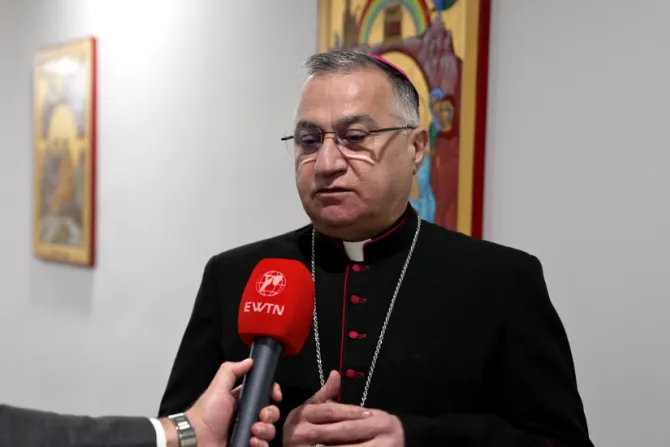
Archbishop Bashar Warda of Erbil called for investment in the future of young Christians in Iraq, pointing to the structure of the country’s economy as part of the problem.
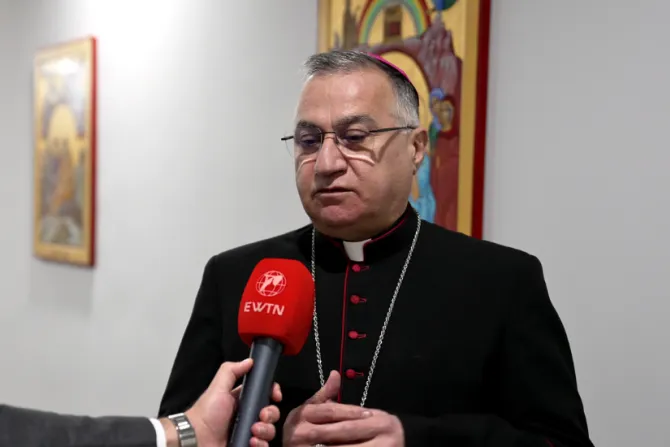
![Pope Leo in Lourdes: The Church must heal her ‘wounds, infidelities, and painful errors’ #Catholic LOURDES, France — Pope Leo XIV issued a firm call to conversion from sin and error in the Church, and invited all to repent and do penance, at the Sanctuary of Our Lady of Lourdes on Sunday.Mary’s call to conversion in her message to St. Bernadette “also concerns the Church herself as she makes her earthly journey. She must have the courage to begin with herself,” he said at Mass on Sept. 27.“In order to heal the deep wounds, infidelities and painful errors that have occurred within her, we must humbly place ourselves under the Lord’s purifying gaze. Recognizing our own faults is essential to our spiritual growth,” the pontiff said.In 2021, the Independent Commission on Sexual Abuse in the Church (CIASE) published a nearly 2,500-page final report, estimating that 216,000 children were abused by priests, deacons, monks, or nuns in France from 1950 to 2020.TweetLeo is scheduled to meet later on Sunday with seven victims of clerical sexual abuse in France.Lourdes is an evocative backdrop to the private meeting, since it is among the first shrines to cover artwork by the accused sexual abuser Father Marko Rupnik, currently on trial at the Vatican.Rupnik’s mosaics decorating the front of the Basilica of the Rosary were covered ahead of Leo’s visit and will remain covered indefinitely, according to the local bishop.The pope celebrated Mass on a prairie across the river Gave de Pau from the grotto of the apparitions on the third day of his Sept. 25-28 visit to France.Pilgrims from France and around the world gathered on the grassy hill and along the streets of the shrine. Some waved flags or held banners of sacred images. A number of pilgrims arrived in wheelchairs. Around 150,000 people attended the Mass, according to the Vatican.Claire Banks, a nurse from the UK, said she has traveled over 100 times to Lourdes.“It was too good of an opportunity to miss coming here and seeing the pope. I think he’s wonderful,” she told EWTN News. She described an “electric atmosphere” at the shrine since Leo’s arrival.Libby Frank, another Mass attendee, is also from the UK, but has lived in Lourdes for 40 years. She recently retired after working for a charity that brings sick people to the shrine.“I worked for three papal visits and now I’ve come to one papal visit to enjoy it with my family and friends and just be part of the community,” she said, referencing two visits by St. Pope John Paul II in 1983 and 2004, and one by Pope Benedict in 2008.“There’s been a phenomenal amount of excitement locally waiting for Leo to come visit. The town [of Lourdes] has really gotten behind everything that’s happening,” she said.TweetThe Sanctuary of Our Lady of Lourdes is among the most popular Catholic shrines in the world, built on the site of Mary’s apparitions to St. Bernadette in 1858. It is particularly visited by the sick, who come to bathe in or drink its healing spring water.In his homily, Pope Leo noted that a “call to conversion, both tender and urgent,” was a central part of the message the Virgin Mary entrusted to Bernadette, and that “it is today, not tomorrow, that we must repent.”He said Jesus is quite direct about the call to repentance: “As St. Luke tells us, ‘Unless you repent, you will all perish.’ But he also extends our horizon beyond this earthly life to the horizon of eternal life.”“Did not the Virgin Mary say to St. Bernadette, ‘I do not promise to make you happy in this world but in the next’?” Leo said.The pope noted that we can often forget this in an age and society focused on progress and material wellbeing.Eternal life is already won for us by Jesus’ sacrifice, he continued, but “the obstacle to grace and eternal life — the only obstacle to this love — is sin.”The Holy Father called everyone to do penance, an act of love for God and for our brothers and sisters, “who do not heed this call to conversion, and whose sins lead them towards death.”“We want to make amends for the wounds our sins have dealt to [God’s] heart,” he said.Addressing the many sick, elderly, and disabled people present at the Mass, Leo said their suffering, if lived in a “spirit of offering,” can take part “in the redemptive work that the world so greatly needs.”“In this way, you are truly at the heart of the Church, and your role is irreplaceable,” he said.“In the face of current trends that seek to redefine the value of human life in illness, suffering and old age, the grotto of Massabielle stands as a place of Christian hope,” he said. “Here, no one is turned away due to their frailty.”Earlier in the morning, Leo met with France’s bishops at the shrine, where he praised their courage in opposing the recent legalization of euthanasia and assisted suicide in the country.“I encourage you to persevere, together with all people of good will who uphold the same values,” he told the bishops’ conference.At the end of Mass, before praying the Angelus, the pope invited those present to pray the rosary for peace, and to offer concrete acts of penance and mercy.“It was here that the Immaculate Virgin appeared to St. Bernadette with the rosary and, as it were, guided her in prayer,” he said. “For this reason, today I invite all the faithful and all Christian communities to pray the holy rosary throughout the coming month of October, with the particular intention that wars may cease and that peace may be established among peoples in conflict.”Elliot Hartley contributed to this report.This story was updated at 7:14 a.m. ET with more information about the Mass and the pope’s meeting with bishops.](https://unitedyam.com/wp-content/uploads/2026/09/pope-leo-in-lourdes-the-church-must-heal-her-wounds-infidelities-and-painful-errors-catholic-lourdes-france-pope-leo-xiv-issued-a-firm-call-to-conversion-from-sin-and.jpg "Pope Leo in Lourdes: The Church must heal her ‘wounds, infidelities, and painful errors’ #Catholic LOURDES, France — Pope Leo XIV issued a firm call to conversion from sin and error in the Church, and invited all to repent and do penance, at the Sanctuary of Our Lady of Lourdes on Sunday.Mary’s call to conversion in her message to St. Bernadette “also concerns the Church herself as she makes her earthly journey. She must have the courage to begin with herself,” he said at Mass on Sept. 27.“In order to heal the deep wounds, infidelities and painful errors that have occurred within her, we must humbly place ourselves under the Lord’s purifying gaze. Recognizing our own faults is essential to our spiritual growth,” the pontiff said.In 2021, the Independent Commission on Sexual Abuse in the Church (CIASE) published a nearly 2,500-page final report, estimating that 216,000 children were abused by priests, deacons, monks, or nuns in France from 1950 to 2020.TweetLeo is scheduled to meet later on Sunday with seven victims of clerical sexual abuse in France.Lourdes is an evocative backdrop to the private meeting, since it is among the first shrines to cover artwork by the accused sexual abuser Father Marko Rupnik, currently on trial at the Vatican.Rupnik’s mosaics decorating the front of the Basilica of the Rosary were covered ahead of Leo’s visit and will remain covered indefinitely, according to the local bishop.The pope celebrated Mass on a prairie across the river Gave de Pau from the grotto of the apparitions on the third day of his Sept. 25-28 visit to France.Pilgrims from France and around the world gathered on the grassy hill and along the streets of the shrine. Some waved flags or held banners of sacred images. A number of pilgrims arrived in wheelchairs. Around 150,000 people attended the Mass, according to the Vatican.Claire Banks, a nurse from the UK, said she has traveled over 100 times to Lourdes.“It was too good of an opportunity to miss coming here and seeing the pope. I think he’s wonderful,” she told EWTN News. She described an “electric atmosphere” at the shrine since Leo’s arrival.Libby Frank, another Mass attendee, is also from the UK, but has lived in Lourdes for 40 years. She recently retired after working for a charity that brings sick people to the shrine.“I worked for three papal visits and now I’ve come to one papal visit to enjoy it with my family and friends and just be part of the community,” she said, referencing two visits by St. Pope John Paul II in 1983 and 2004, and one by Pope Benedict in 2008.“There’s been a phenomenal amount of excitement locally waiting for Leo to come visit. The town [of Lourdes] has really gotten behind everything that’s happening,” she said.TweetThe Sanctuary of Our Lady of Lourdes is among the most popular Catholic shrines in the world, built on the site of Mary’s apparitions to St. Bernadette in 1858. It is particularly visited by the sick, who come to bathe in or drink its healing spring water.In his homily, Pope Leo noted that a “call to conversion, both tender and urgent,” was a central part of the message the Virgin Mary entrusted to Bernadette, and that “it is today, not tomorrow, that we must repent.”He said Jesus is quite direct about the call to repentance: “As St. Luke tells us, ‘Unless you repent, you will all perish.’ But he also extends our horizon beyond this earthly life to the horizon of eternal life.”“Did not the Virgin Mary say to St. Bernadette, ‘I do not promise to make you happy in this world but in the next’?” Leo said.The pope noted that we can often forget this in an age and society focused on progress and material wellbeing.Eternal life is already won for us by Jesus’ sacrifice, he continued, but “the obstacle to grace and eternal life — the only obstacle to this love — is sin.”The Holy Father called everyone to do penance, an act of love for God and for our brothers and sisters, “who do not heed this call to conversion, and whose sins lead them towards death.”“We want to make amends for the wounds our sins have dealt to [God’s] heart,” he said.Addressing the many sick, elderly, and disabled people present at the Mass, Leo said their suffering, if lived in a “spirit of offering,” can take part “in the redemptive work that the world so greatly needs.”“In this way, you are truly at the heart of the Church, and your role is irreplaceable,” he said.“In the face of current trends that seek to redefine the value of human life in illness, suffering and old age, the grotto of Massabielle stands as a place of Christian hope,” he said. “Here, no one is turned away due to their frailty.”Earlier in the morning, Leo met with France’s bishops at the shrine, where he praised their courage in opposing the recent legalization of euthanasia and assisted suicide in the country.“I encourage you to persevere, together with all people of good will who uphold the same values,” he told the bishops’ conference.At the end of Mass, before praying the Angelus, the pope invited those present to pray the rosary for peace, and to offer concrete acts of penance and mercy.“It was here that the Immaculate Virgin appeared to St. Bernadette with the rosary and, as it were, guided her in prayer,” he said. “For this reason, today I invite all the faithful and all Christian communities to pray the holy rosary throughout the coming month of October, with the particular intention that wars may cease and that peace may be established among peoples in conflict.”Elliot Hartley contributed to this report.This story was updated at 7:14 a.m. ET with more information about the Mass and the pope’s meeting with bishops.")
The pontiff spoke about the urgency of repentance and conversion at a Mass on the third day of his visit to France.
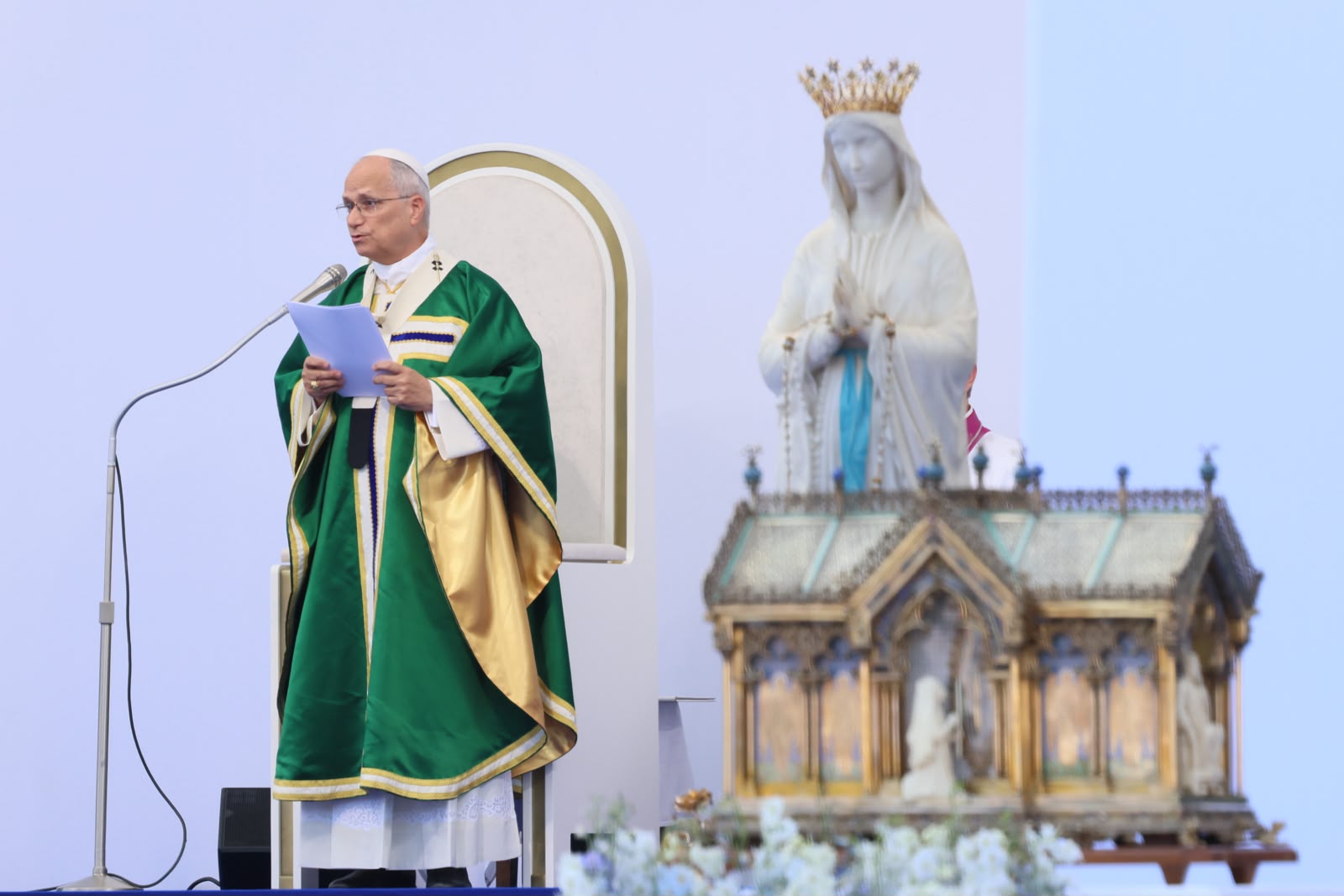
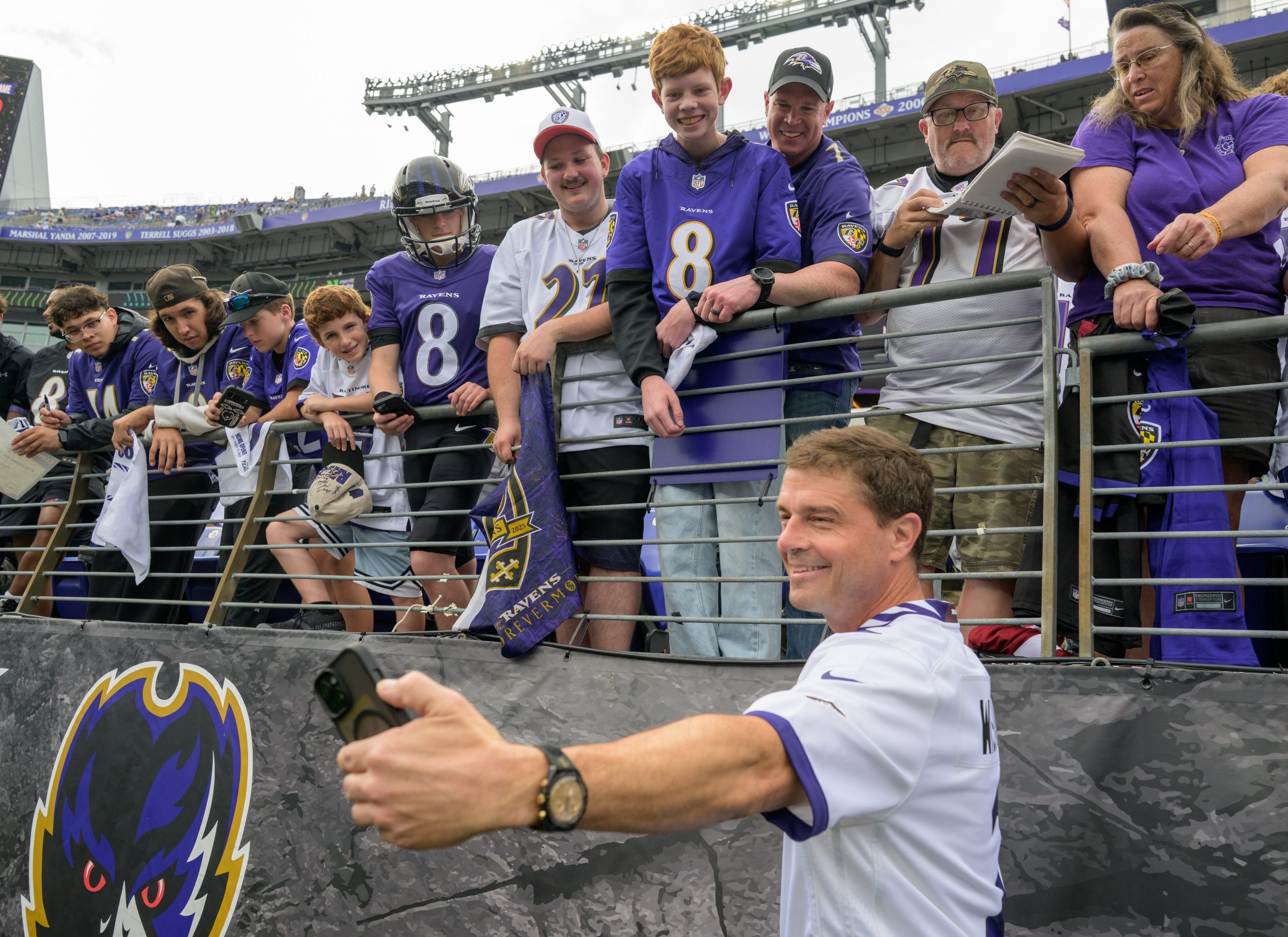
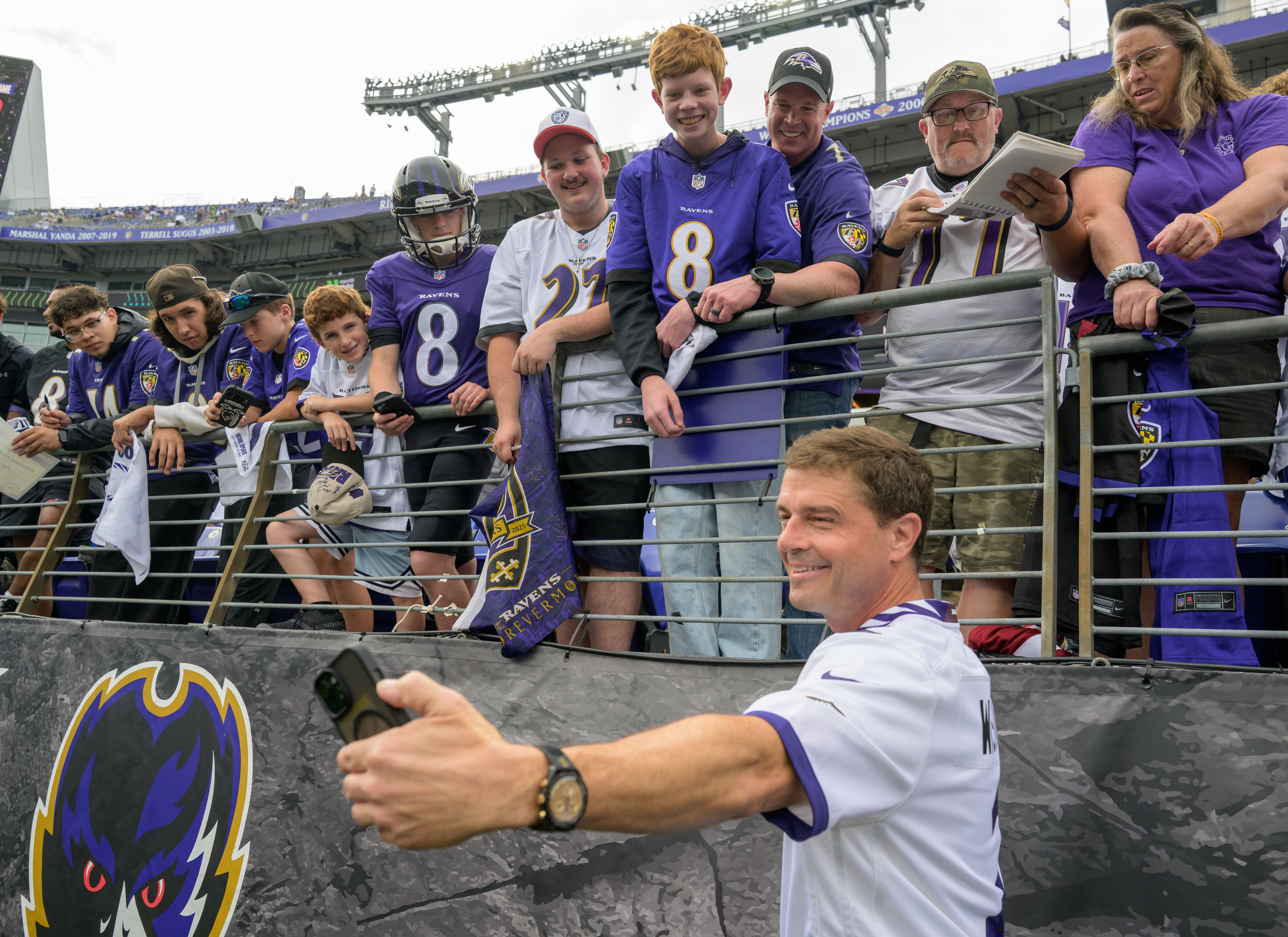
NASA astronaut and commander of the agency’s Artemis II mission, Reid Wiseman, a Baltimore native, takes a selfie with fans at an NFL game between the New Orleans Saints and the Baltimore Ravens at M&T Bank Stadium, Sunday, Sept. 20, 2026, in Baltimore.
Read More
HEAVEN — After his recent earthly passing, Rev. Richard O’Hara was surprised to find out that heaven is mostly filled with Amish people.
Read More
KEARNEY, NE — The tide turned this morning in the upcoming national midterm elections after Beverly Franks from Nebraska put a political sign in her front yard.
Read More
Archbishop Fulton J. Sheen declared ‘Blessed’ at beatification Mass in St. Louis #Catholic – 
ST. LOUIS (OSV News) — Archbishop Fulton J. Sheen — the 20th-century theologian, evangelizer, Catholic communications pioneer, teacher and preacher — is now Blessed Fulton J. Sheen.
Cardinal Luis Antonio Tagle, a pro-prefect for the Holy See’s Dicastery for Evangelization and papal delegate, pronounced the Church’s declaration on Archbishop Sheen’s holiness of life and witness to Jesus Christ at a Sept. 24 Mass celebrated in The Dome at America’s Center in St. Louis.
To the applause of pilgrims, Cardinal Tagle described Archbishop Sheen as a “son of Illinois, son of the United States of America” and “indeed, son of the world.”
Hundreds of clergy, including dozens of bishops and cardinals, had processed into the arena for the Mass as choirs, accompanied by an orchestra, performed a succession of hymns. The priests’ vestments were embroidered with “JMJ,” Archbishop Sheen’s signature dedication to Jesus, Mary and Joseph.
The location had been selected by Archbishop Sheen’s home Diocese of Peoria, Illinois, to accommodate the number of pilgrims who arrived for the beatification and its surrounding events. Around 50,000 people were in attendance, according to organizers.
During a press conference a few hours prior to the Mass, Bishop Louis Tylka of Peoria said that almost every U.S. state and several additional nations were represented by pilgrims. A number of the faithful hailed from Italy, Poland and Brazil, he said.
Close to 90 bishops, some 1,000 priests, an estimated 1,600 men and women religious, and almost 250 deacons were present, added Bishop Tylka, who wore Archbishop Sheen’s pectoral cross. Among the concelebrating prelates was Archbishop Gabriele G. Caccia, apostolic nuncio to the United States.
The beatification — a papal act affirming an individual’s presence in heaven is worthy of belief — officially occurred between the liturgy’s Penitential Rite and the Gloria. Bishop Tylka made a formal request for Archbishop Sheen’s beatification to Cardinal Tagle.
A short biography of Archbishop Sheen, who was born in El Paso, Illinois, in 1895 and died in New York in 1979, was read by Archbishop Sheen’s great-nephew, Paul Cunningham, after which Cardinal Tagle proclaimed the apostolic letter from Pope Leo XIV declaring the beatification in Latin. Bishop Tylka then read the letter in English, as applause followed both.
With the papal decree’s public proclamation, Archbishop Sheen became formally counted among the Church’s “beati,” from the Latin word for “blessed.”
James Fulton Engstrom — whose revival from stillbirth in 2010, attributed to Archbishop Sheen’s intercession, was formally declared the miracle that moved Archbishop Sheen to beatification — processed with his parents and siblings to present a major relic of Archbishop Sheen during the liturgy.
Enclosed in a special case called a reliquary, the relic is Archbishop Sheen’s mandible, or jawbone, chosen because it represents the archbishop’s tremendous gifts as an orator, teacher and evangelist.
As part of the beatification, a portrait of a haloed Blessed Fulton Sheen was also unveiled. In the image, he is notably holding a piece of chalk, which he famously used — along with a blackboard — during his Emmy-winning television show, “Life Is Worth Living.”
The image was also simultaneously unveiled in the Diocese of Peoria at the Cathedral of St. Mary of the Immaculate Conception.
The first reading from the beatification Mass, Isaiah 52:7-10, was delivered in Spanish, with the second reading, 2 Corinthians 4:1-2, 5-7, proclaimed in Portuguese, while the Gospel taken from Mark 16:15-20 was proclaimed in English. The prayers of the faithful were offered in a variety of other languages, illustrating both the universal character of the Church and also the missionary mindset of Blessed Fulton J. Sheen, who served as the U.S. director for the Society for the Propagation of the Faith.
In his homily, Cardinal Tagle praised Archbishop Sheen as a “storyteller of Jesus” and “a “missionary who digs deep into the heart of the poor to meet Jesus there.”
The cardinal noted then-Bishop Sheen’s passionate advocacy for the poor during the Second Vatican Council. During the 1964 discussions on the document “Ad Gentes,” on the missionary activity of the Church, then-Bishop Sheen asked his brother bishops to “affirm” the notion of poverty and the bishops who came from poor and suffering parts of the Church.
“As only a wounded Christ could convert a doubting Thomas, so only a Church wounded by poverty can convert a doubting world,” he said.
Cardinal Tagle commended Archbishop Sheen for making genuine connections with the people he met and to whom he preached and ministered.
“The missionary evangelizer is blessed by the communion with persons and peoples, especially the poor and vulnerable, and this is communion in the name of Jesus Christ,” he said.
Cardinal Tagle shared how Archbishop Sheen told a friend, who asked why he became a priest, that he was called to share the Gospel and tell the story of Jesus.
“I never tire of telling it; I never tire of improving my telling of it. I love my calling,” Archbishop Sheen said, as Cardinal Tagle recounted.
In remarks after Communion, Bishop Tylka urged all attendees to pray for Archbishop Sheen’s canonization, leading them together in a prayer for that intention.
“It is God who has given the Church the extraordinary witness of the man we may now call Blessed Fulton J. Sheen,” he said.
Thanking the many prelates involved in the Mass, including Archbishop Mitchell T. Rozanski, whose archdiocese hosted the beatification, and representatives from the Archdiocese of New York, Diocese of Rochester and the Pontifical Mission Societies, Bishop Tylka noted, “Your presence today is a beautiful reminder that while Peoria is incredibly proud to call Fulton Sheen one of our own, he is a gift to the whole Church.”
Bishop Tylka also expressed his gratitude to Archbishop Sheen’s family, individuals and benefactors involved in preparations and liturgy, and the faithful who made the pilgrimage to attend the beatification.
“Fulton Sheen has left us a great legacy,” he said. “He fearlessly proclaimed the Gospel in challenging cultural times. He supported the Church’s missions throughout the world. He won tens of thousands of converts and preached to millions. His time of prayer before the Blessed Sacrament was the source of his insight into the Son of God. He used every gift God gave him for one purpose: to bring people to Christ. And his legacy is now ours.”
Following the Mass, attendees were invited to remain in prayer to venerate Archbishop Sheen’s relics.
Gina Christian is a multimedia reporter for OSV News. Follow her on X @GinaJesseReina. Maria Wiering, senior managing editor of OSV News, contributed to this article.
– ST. LOUIS (OSV News) — Archbishop Fulton J. Sheen — the 20th-century theologian, evangelizer, Catholic communications pioneer, teacher and preacher — is now Blessed Fulton J. Sheen. Cardinal Luis Antonio Tagle, a pro-prefect for the Holy See’s Dicastery for Evangelization and papal delegate, pronounced the Church’s declaration on Archbishop Sheen’s holiness of life and witness to Jesus Christ at a Sept. 24 Mass celebrated in The Dome at America’s Center in St. Louis. To the applause of pilgrims, Cardinal Tagle described Archbishop Sheen as a “son of Illinois, son of the United States of America” and “indeed, son of the
![New pastor unites Paterson parish during historic merger #Catholic – Two Catholic churches in the Stoney Road section of Paterson and Woodland Park, N.J., became one parish on Divine Mercy Sunday this year, on April 12, when Our Lady of Pompei (OLP) and St. Bonaventure parishes were merged into the newly formed Padre Pio Parish.
Father Manuel Cuellar, Padre Pio’s pastor since that day, knew that bringing distinct, bilingual parish communities into one cohesive Catholic parish wouldn’t happen immediately.
Bishop Kevin J. Sweeney officially installed Father Cuellar as pastor of Padre Pio on Sept. 12. The new pastor used the last few months to weave the parish communities into a tapestry of God’s presence among the faithful. Padre Pio has been providing three Masses at each of the parish’s two churches, while also helping connect each former parish into the shared ministries of the singular Padre Pio Parish.
“We are one now,” Father Cuellar said. “Instead of two or four, we are one.”
Click here to subscribe to our weekly newsletter.
The newly formed parish is officially named for St. Pio of Pietrelcina, also known as “Padre Pio. With the merger streamlining the administration of St. Bonaventure’s and OLP parishes, each with its own histories and traditions, both churches have remained open with adjusted Mass schedules to ensure the parish continues to meet people’s spiritual and pastoral needs.
During this merger, Father Cuellar has encountered people who often want to hold onto their traditions. Yet he sees the steps his parishioners have taken to embrace each other and unify.
“People were attached to their own buildings. People were attached to their own cultures. They wanted the same Mass times at the beginning. Now, I think they understand it in a better way.” Father Cuellar said. “Instead of two different communities, I see one now trying to be together, trying to celebrate together, trying to get to know each other,” he said.
Father Cuellar’s installation Mass provided an impactful example of how two parishes with a combined 260 years of distinct traditions have become one.
The installation Mass for Father Cuellar was held at the St. Bonaventure Church site and celebrated in English and Spanish. The liturgy utilized two different sets of lectors and music ministries working together to create one unified faith experience.
“It was such a beautiful Mass. You really felt the love,” said Raysa Gonzalez, a parishioner who came from OLP and assists with Mass planning and the team of lectors.
Gonzalez added, “We had goosebumps because the music is a combination of the Spanish and the English. I had people from the English Mass that do not speak any Spanish come up to me and tell me that even though they didn’t obviously understand the words in the readings that I was saying because it was in a different language that they don’t speak, they were able to feel the readings.”
Father Cuellar says the installation Mass also connected people whose exposure to fellow parishioners usually comes only from attending the same liturgy every week, which doesn’t normally increase the chance of meeting other church members.
“If they come to the 10 a.m. Mass, they know the people there, but they don’t know the other people from the 7.30 a.m. Mass, from the noon Mass or the 5.30 Mass on Sunday,” he said. “But now this event helped everybody to be together,” he said.
A Colombian-born, bilingual priest, Father Cuellar has especially helped bridge the gap between the English- and Spanish-speaking members of the combined parish. As parochial vicar at OLP in 2024, he helped establish a Spanish-speaking Mass, which St. Bonaventure already had for about 10 years.
Father Cuellar has also helped combine ministries across parishes and languages, often turning important Masses involving the sacraments of initiation into bilingual experiences that touch every parishioner’s faith journey.
“We had a lot of kids do their first Holy Communion. Some of them even got baptized, and it was a mix because it was in Spanish and English,” Gonzalez said.
Father Cuellar has also encouraged members of both parishes, representing both languages, to come together in ministries like the lectoring. Gonzalez has joined a bilingual Liturgy Committee from both former church communities that is helping shape people’s experiences of faith in both languages.
“A parish becomes truly alive when its members recognize that each of us has a unique role to play in the mission of the Church,” Father Cuellar wrote in a bulletin announcement about forming the Liturgy Committee.
He has also used a pilgrimage and mission to help earthquake victims in his native Colombia as a chance to unite the parish. They raised more than ,600, which helped empower those in need during the trip he and 22 others took in early September.
While Father Cuellar credits the countless parishioners who have embraced two parishes becoming one, those parishioners feel the newly installed pastor has been the main force that God has used to connect these parishes as one body of Christ.
“Father Manuel has such a blessing to guide us through the change, through the combination, through the different languages of the different communities and putting it together,” Gonzalez said. “Father Manuel has a good balance in respecting everyone’s ways in a way that no one feels excluded. It makes you really want to be part of this parish, this community,” she said.
BEACON PHOTOS | JOE GIGLI
[See image gallery at beaconnj.org]](https://unitedyam.com/wp-content/uploads/2026/09/new-pastor-unites-paterson-parish-during-historic-merger-catholic-two-catholic-churches-in-the-stoney-road-section-of-paterson-and-woodland-park-n-j-became-one-parish-on-divine-mercy-sunday-this.jpg "New pastor unites Paterson parish during historic merger #Catholic – Two Catholic churches in the Stoney Road section of Paterson and Woodland Park, N.J., became one parish on Divine Mercy Sunday this year, on April 12, when Our Lady of Pompei (OLP) and St. Bonaventure parishes were merged into the newly formed Padre Pio Parish.
Father Manuel Cuellar, Padre Pio’s pastor since that day, knew that bringing distinct, bilingual parish communities into one cohesive Catholic parish wouldn’t happen immediately.
Bishop Kevin J. Sweeney officially installed Father Cuellar as pastor of Padre Pio on Sept. 12. The new pastor used the last few months to weave the parish communities into a tapestry of God’s presence among the faithful. Padre Pio has been providing three Masses at each of the parish’s two churches, while also helping connect each former parish into the shared ministries of the singular Padre Pio Parish.
“We are one now,” Father Cuellar said. “Instead of two or four, we are one.”
Click here to subscribe to our weekly newsletter.
The newly formed parish is officially named for St. Pio of Pietrelcina, also known as “Padre Pio. With the merger streamlining the administration of St. Bonaventure’s and OLP parishes, each with its own histories and traditions, both churches have remained open with adjusted Mass schedules to ensure the parish continues to meet people’s spiritual and pastoral needs.
During this merger, Father Cuellar has encountered people who often want to hold onto their traditions. Yet he sees the steps his parishioners have taken to embrace each other and unify.
“People were attached to their own buildings. People were attached to their own cultures. They wanted the same Mass times at the beginning. Now, I think they understand it in a better way.” Father Cuellar said. “Instead of two different communities, I see one now trying to be together, trying to celebrate together, trying to get to know each other,” he said.
Father Cuellar’s installation Mass provided an impactful example of how two parishes with a combined 260 years of distinct traditions have become one.
The installation Mass for Father Cuellar was held at the St. Bonaventure Church site and celebrated in English and Spanish. The liturgy utilized two different sets of lectors and music ministries working together to create one unified faith experience.
“It was such a beautiful Mass. You really felt the love,” said Raysa Gonzalez, a parishioner who came from OLP and assists with Mass planning and the team of lectors.
Gonzalez added, “We had goosebumps because the music is a combination of the Spanish and the English. I had people from the English Mass that do not speak any Spanish come up to me and tell me that even though they didn’t obviously understand the words in the readings that I was saying because it was in a different language that they don’t speak, they were able to feel the readings.”
Father Cuellar says the installation Mass also connected people whose exposure to fellow parishioners usually comes only from attending the same liturgy every week, which doesn’t normally increase the chance of meeting other church members.
“If they come to the 10 a.m. Mass, they know the people there, but they don’t know the other people from the 7.30 a.m. Mass, from the noon Mass or the 5.30 Mass on Sunday,” he said. “But now this event helped everybody to be together,” he said.
A Colombian-born, bilingual priest, Father Cuellar has especially helped bridge the gap between the English- and Spanish-speaking members of the combined parish. As parochial vicar at OLP in 2024, he helped establish a Spanish-speaking Mass, which St. Bonaventure already had for about 10 years.
Father Cuellar has also helped combine ministries across parishes and languages, often turning important Masses involving the sacraments of initiation into bilingual experiences that touch every parishioner’s faith journey.
“We had a lot of kids do their first Holy Communion. Some of them even got baptized, and it was a mix because it was in Spanish and English,” Gonzalez said.
Father Cuellar has also encouraged members of both parishes, representing both languages, to come together in ministries like the lectoring. Gonzalez has joined a bilingual Liturgy Committee from both former church communities that is helping shape people’s experiences of faith in both languages.
“A parish becomes truly alive when its members recognize that each of us has a unique role to play in the mission of the Church,” Father Cuellar wrote in a bulletin announcement about forming the Liturgy Committee.
He has also used a pilgrimage and mission to help earthquake victims in his native Colombia as a chance to unite the parish. They raised more than ,600, which helped empower those in need during the trip he and 22 others took in early September.
While Father Cuellar credits the countless parishioners who have embraced two parishes becoming one, those parishioners feel the newly installed pastor has been the main force that God has used to connect these parishes as one body of Christ.
“Father Manuel has such a blessing to guide us through the change, through the combination, through the different languages of the different communities and putting it together,” Gonzalez said. “Father Manuel has a good balance in respecting everyone’s ways in a way that no one feels excluded. It makes you really want to be part of this parish, this community,” she said.
BEACON PHOTOS | JOE GIGLI
[See image gallery at beaconnj.org]")
New pastor unites Paterson parish during historic merger #Catholic – 
Two Catholic churches in the Stoney Road section of Paterson and Woodland Park, N.J., became one parish on Divine Mercy Sunday this year, on April 12, when Our Lady of Pompei (OLP) and St. Bonaventure parishes were merged into the newly formed Padre Pio Parish.
Father Manuel Cuellar, Padre Pio’s pastor since that day, knew that bringing distinct, bilingual parish communities into one cohesive Catholic parish wouldn’t happen immediately.
Bishop Kevin J. Sweeney officially installed Father Cuellar as pastor of Padre Pio on Sept. 12. The new pastor used the last few months to weave the parish communities into a tapestry of God’s presence among the faithful. Padre Pio has been providing three Masses at each of the parish’s two churches, while also helping connect each former parish into the shared ministries of the singular Padre Pio Parish.
“We are one now,” Father Cuellar said. “Instead of two or four, we are one.”
The newly formed parish is officially named for St. Pio of Pietrelcina, also known as “Padre Pio. With the merger streamlining the administration of St. Bonaventure’s and OLP parishes, each with its own histories and traditions, both churches have remained open with adjusted Mass schedules to ensure the parish continues to meet people’s spiritual and pastoral needs.
During this merger, Father Cuellar has encountered people who often want to hold onto their traditions. Yet he sees the steps his parishioners have taken to embrace each other and unify.
“People were attached to their own buildings. People were attached to their own cultures. They wanted the same Mass times at the beginning. Now, I think they understand it in a better way.” Father Cuellar said. “Instead of two different communities, I see one now trying to be together, trying to celebrate together, trying to get to know each other,” he said.
Father Cuellar’s installation Mass provided an impactful example of how two parishes with a combined 260 years of distinct traditions have become one.
The installation Mass for Father Cuellar was held at the St. Bonaventure Church site and celebrated in English and Spanish. The liturgy utilized two different sets of lectors and music ministries working together to create one unified faith experience.
“It was such a beautiful Mass. You really felt the love,” said Raysa Gonzalez, a parishioner who came from OLP and assists with Mass planning and the team of lectors.
Gonzalez added, “We had goosebumps because the music is a combination of the Spanish and the English. I had people from the English Mass that do not speak any Spanish come up to me and tell me that even though they didn’t obviously understand the words in the readings that I was saying because it was in a different language that they don’t speak, they were able to feel the readings.”
Father Cuellar says the installation Mass also connected people whose exposure to fellow parishioners usually comes only from attending the same liturgy every week, which doesn’t normally increase the chance of meeting other church members.
“If they come to the 10 a.m. Mass, they know the people there, but they don’t know the other people from the 7.30 a.m. Mass, from the noon Mass or the 5.30 Mass on Sunday,” he said. “But now this event helped everybody to be together,” he said.
A Colombian-born, bilingual priest, Father Cuellar has especially helped bridge the gap between the English- and Spanish-speaking members of the combined parish. As parochial vicar at OLP in 2024, he helped establish a Spanish-speaking Mass, which St. Bonaventure already had for about 10 years.
Father Cuellar has also helped combine ministries across parishes and languages, often turning important Masses involving the sacraments of initiation into bilingual experiences that touch every parishioner’s faith journey.
“We had a lot of kids do their first Holy Communion. Some of them even got baptized, and it was a mix because it was in Spanish and English,” Gonzalez said.
Father Cuellar has also encouraged members of both parishes, representing both languages, to come together in ministries like the lectoring. Gonzalez has joined a bilingual Liturgy Committee from both former church communities that is helping shape people’s experiences of faith in both languages.
“A parish becomes truly alive when its members recognize that each of us has a unique role to play in the mission of the Church,” Father Cuellar wrote in a bulletin announcement about forming the Liturgy Committee.
He has also used a pilgrimage and mission to help earthquake victims in his native Colombia as a chance to unite the parish. They raised more than $3,600, which helped empower those in need during the trip he and 22 others took in early September.
While Father Cuellar credits the countless parishioners who have embraced two parishes becoming one, those parishioners feel the newly installed pastor has been the main force that God has used to connect these parishes as one body of Christ.
“Father Manuel has such a blessing to guide us through the change, through the combination, through the different languages of the different communities and putting it together,” Gonzalez said. “Father Manuel has a good balance in respecting everyone’s ways in a way that no one feels excluded. It makes you really want to be part of this parish, this community,” she said.
– Two Catholic churches in the Stoney Road section of Paterson and Woodland Park, N.J., became one parish on Divine Mercy Sunday this year, on April 12, when Our Lady of Pompei (OLP) and St. Bonaventure parishes were merged into the newly formed Padre Pio Parish. Father Manuel Cuellar, Padre Pio’s pastor since that day, knew that bringing distinct, bilingual parish communities into one cohesive Catholic parish wouldn’t happen immediately. Bishop Kevin J. Sweeney officially installed Father Cuellar as pastor of Padre Pio on Sept. 12. The new pastor used the last few months to weave the parish communities into a
![Carmelite sister professes final vows before Bishop in Morristown #Catholic – On Sept. 8, Carmelite Sister Faustina Gloria of the Merciful Heart of Jesus made solemn vows at the Monastery of the Most Blessed Virgin Mary of Mount Carmel in Morristown, N.J., before Bishop Kevin J. Sweeney during a Mass he celebrated.
Born in Ghana, Sister Faustina Gloria moved to the United States with her family at age eight.
Concelebrating the Mass were Father Brendan Murray, a retired priest of the Paterson Diocese, N.J., who regularly celebrates Mass at the monastery, and other priests who are close to Sister Faustina Gloria. Friends and family also attended.
The Discalced Carmelites are a cloistered order with a schedule that includes eight hours of prayer each day, manual labor, some recreation, and contemplation. The sisters observe strict silence so their prayers may be more continuous.
BEACON PHOTOS | JOE GIGLI
[See image gallery at beaconnj.org]
Click here to subscribe to our weekly newsletter.](https://unitedyam.com/wp-content/uploads/2026/09/carmelite-sister-professes-final-vows-before-bishop-in-morristown-catholic-on-sept-8-carmelite-sister-faustina-gloria-of-the-merciful-heart-of-jesus-made-solemn-vows-at-the-monastery-of-the-most.jpg "Carmelite sister professes final vows before Bishop in Morristown #Catholic – On Sept. 8, Carmelite Sister Faustina Gloria of the Merciful Heart of Jesus made solemn vows at the Monastery of the Most Blessed Virgin Mary of Mount Carmel in Morristown, N.J., before Bishop Kevin J. Sweeney during a Mass he celebrated.
Born in Ghana, Sister Faustina Gloria moved to the United States with her family at age eight.
Concelebrating the Mass were Father Brendan Murray, a retired priest of the Paterson Diocese, N.J., who regularly celebrates Mass at the monastery, and other priests who are close to Sister Faustina Gloria. Friends and family also attended.
The Discalced Carmelites are a cloistered order with a schedule that includes eight hours of prayer each day, manual labor, some recreation, and contemplation. The sisters observe strict silence so their prayers may be more continuous.
BEACON PHOTOS | JOE GIGLI
[See image gallery at beaconnj.org]
Click here to subscribe to our weekly newsletter.")
Carmelite sister professes final vows before Bishop in Morristown #Catholic – 
On Sept. 8, Carmelite Sister Faustina Gloria of the Merciful Heart of Jesus made solemn vows at the Monastery of the Most Blessed Virgin Mary of Mount Carmel in Morristown, N.J., before Bishop Kevin J. Sweeney during a Mass he celebrated.
Born in Ghana, Sister Faustina Gloria moved to the United States with her family at age eight.
Concelebrating the Mass were Father Brendan Murray, a retired priest of the Paterson Diocese, N.J., who regularly celebrates Mass at the monastery, and other priests who are close to Sister Faustina Gloria. Friends and family also attended.
The Discalced Carmelites are a cloistered order with a schedule that includes eight hours of prayer each day, manual labor, some recreation, and contemplation. The sisters observe strict silence so their prayers may be more continuous.
– On Sept. 8, Carmelite Sister Faustina Gloria of the Merciful Heart of Jesus made solemn vows at the Monastery of the Most Blessed Virgin Mary of Mount Carmel in Morristown, N.J., before Bishop Kevin J. Sweeney during a Mass he celebrated. Born in Ghana, Sister Faustina Gloria moved to the United States with her family at age eight. Concelebrating the Mass were Father Brendan Murray, a retired priest of the Paterson Diocese, N.J., who regularly celebrates Mass at the monastery, and other priests who are close to Sister Faustina Gloria. Friends and family also attended. The Discalced Carmelites are a
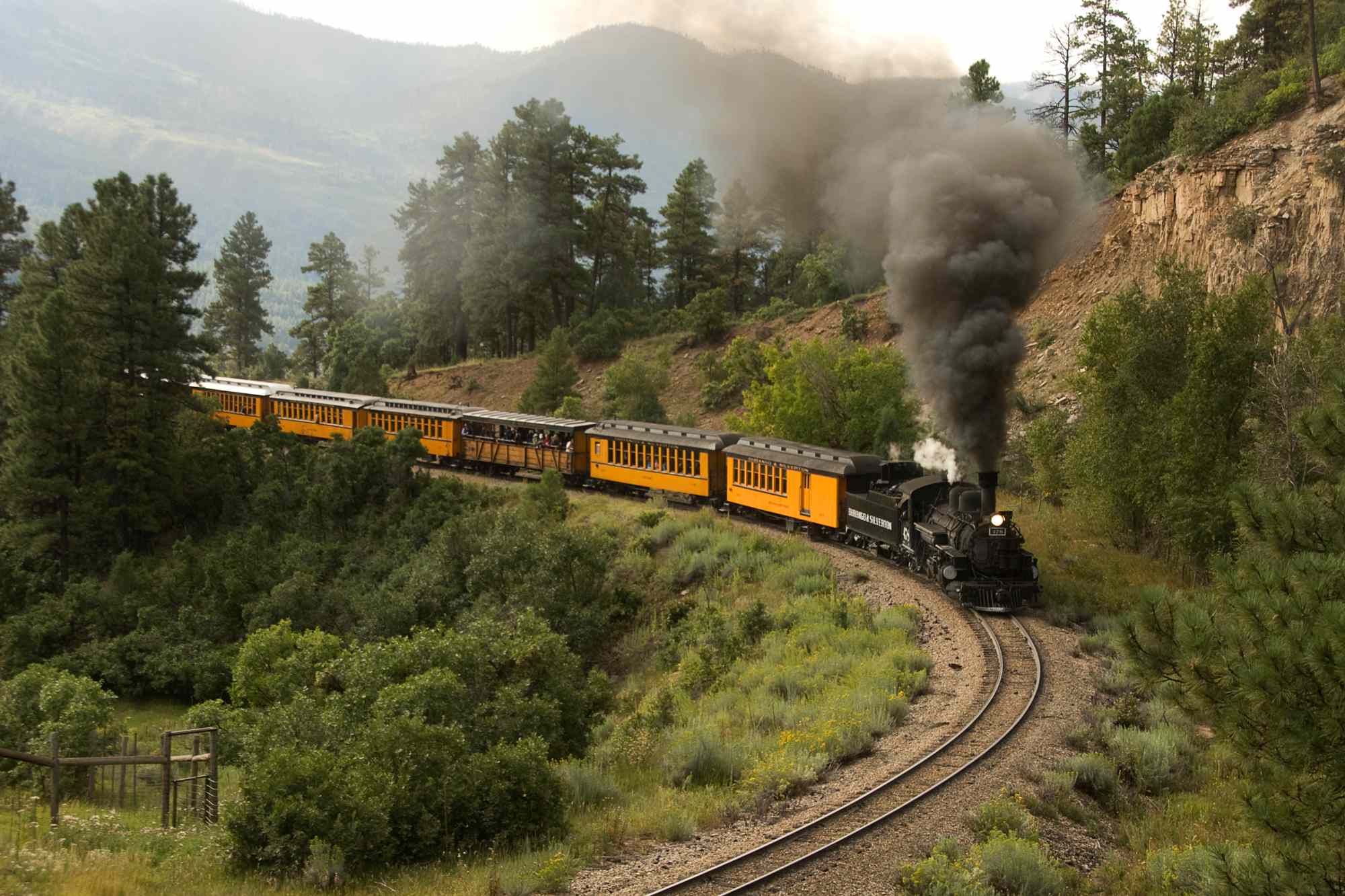
:max_bytes(150000):strip_icc():format(jpeg)/TAL-lead-image-NARROWGAUGERR0326-79d0655975e94c859951a17133e63b0a.jpg)
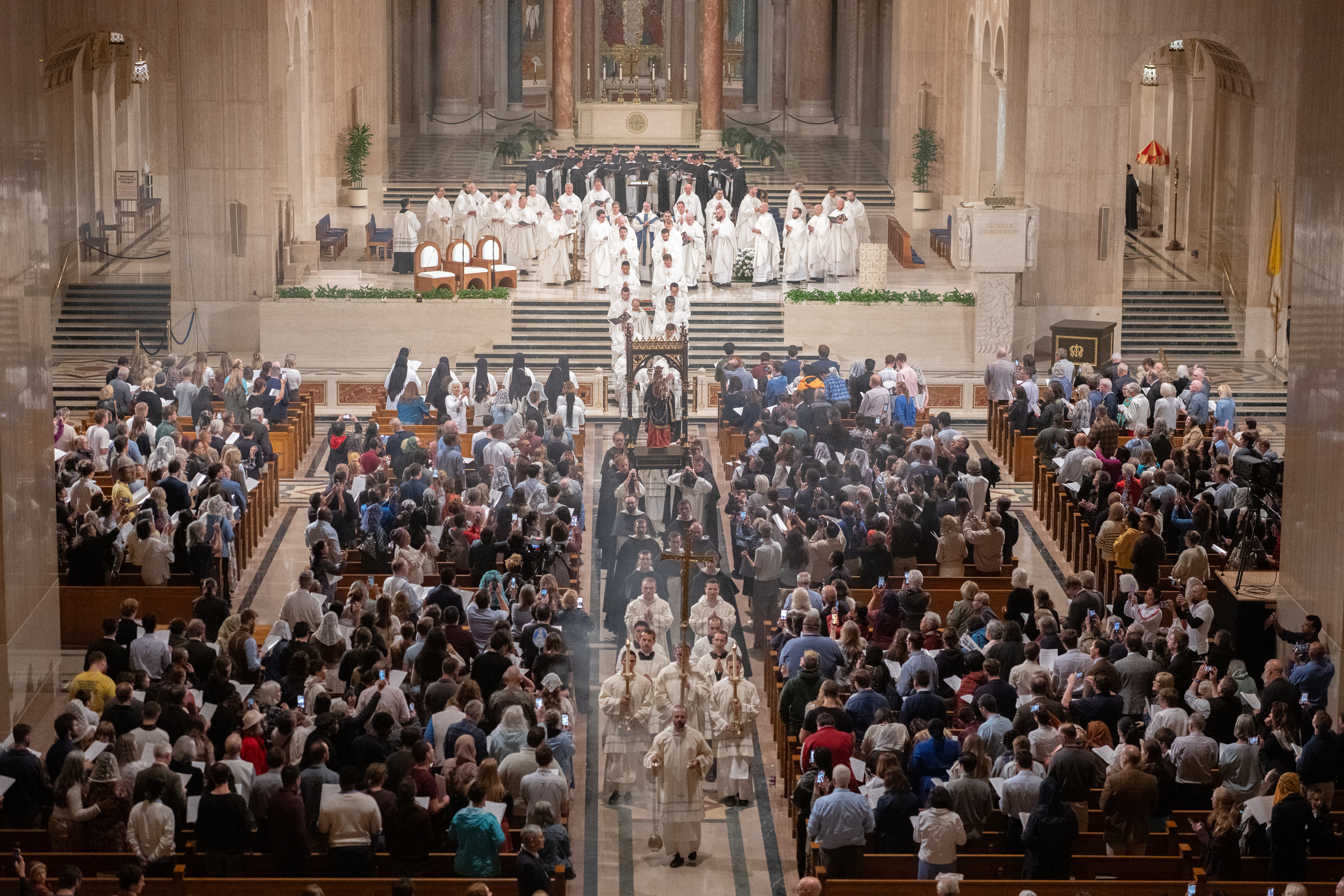
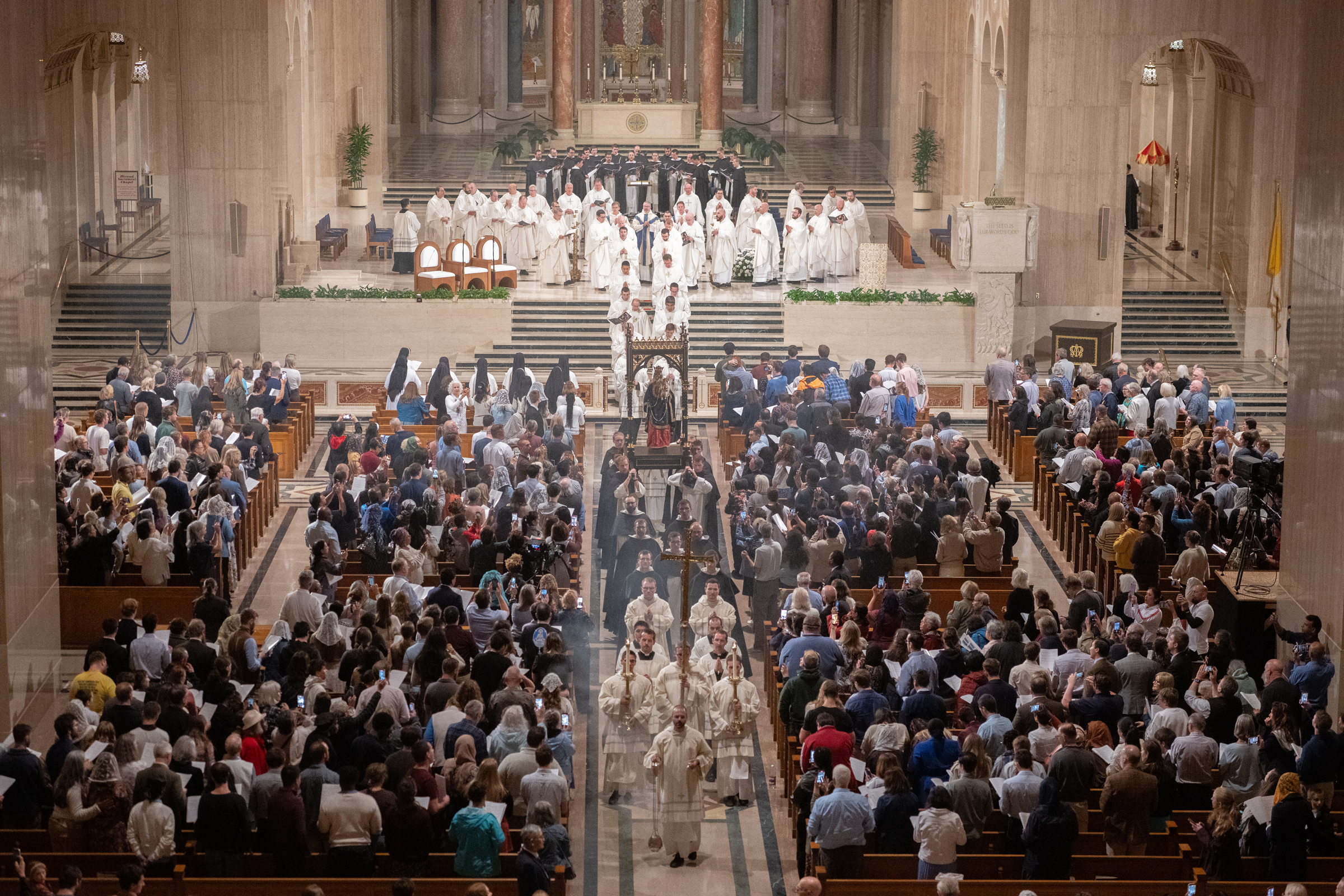
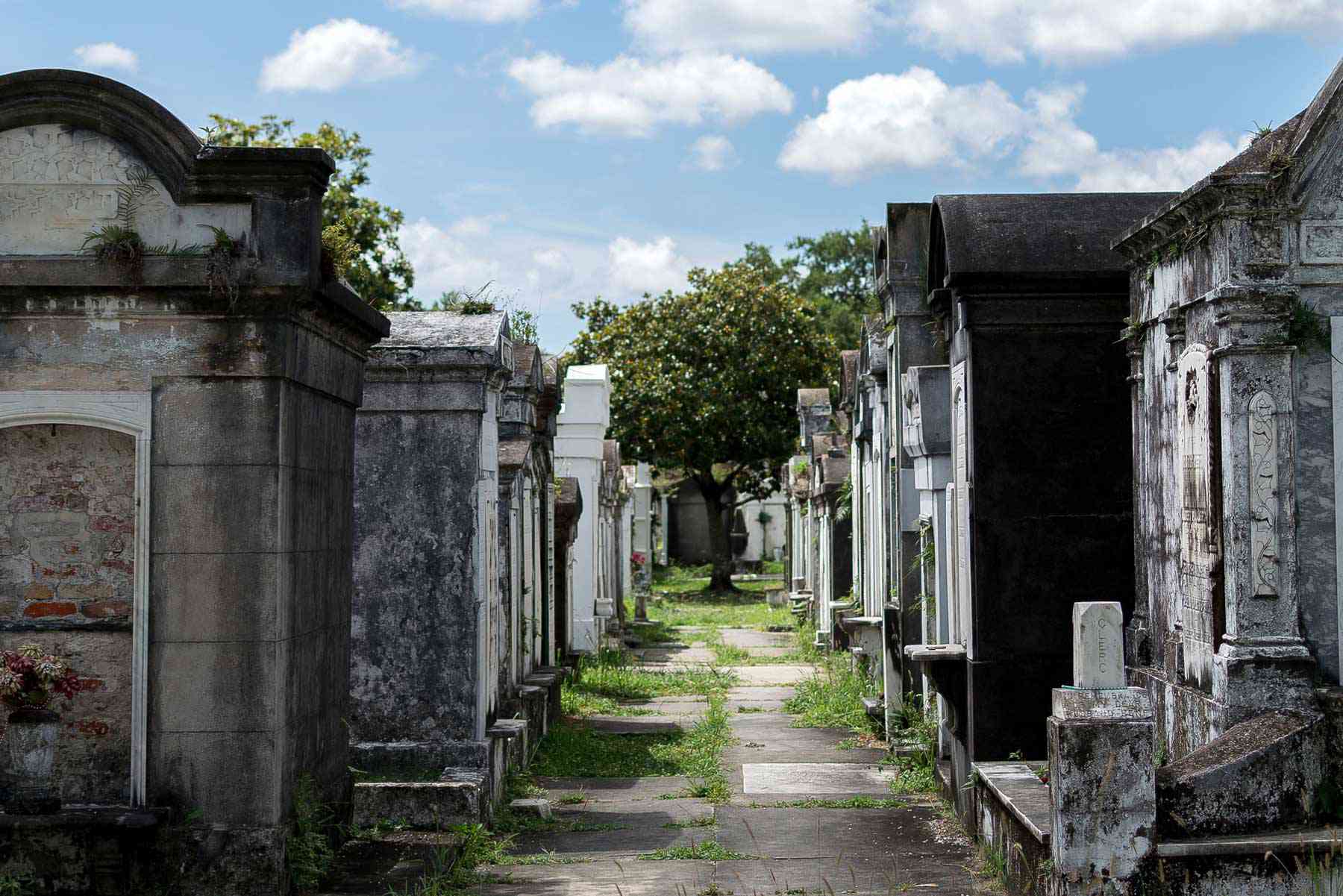
:max_bytes(150000):strip_icc():format(jpeg)/new-orleans-louisiana-lafayette-cemetary-HAUNTAMERICA0920-8f6e5dd8f60b49f1b9271ef745be447c.jpg)
