![Human rights group calls Nicaragua’s constitutional reforms a ‘usurpation of power’ #Catholic Nicaragua’s National Assembly, controlled by the dictatorship of President Daniel Ortega and his wife and co-president, Rosario Murillo, “unanimously” approved a constitutional reform barring “traitors to the homeland” (the term the regime uses for its political opposition) from participating in elections. The measure has sparked widespread domestic and international condemnation.The reform was “unanimously approved in general terms,” Assembly President Gustavo Porras stated on Sept. 1 during a special session held in the city of León, according to the Nicaraguan newspaper La Prensa.The reform amends the constitution, which extends the presidential term, as well as those of other high-ranking officials, from six to seven years, with the possibility of renewal.Ortega has governed Nicaragua for about 30 years: since 2007, and previously, from 1979 to 1990. On July 19, he stated that there would be no further elections in Nicaragua, and on July 31, he proposed the reform — set to take effect in 2027 — that excludes “coup plotters” and “terrorists,”, terms he uses to refer to the political opposition, from participating in elections.Reforms are a ‘formalization of the usurpation of power’Ruta del Cambio (Pathway for Change), an organization which defends human rights and the rule of law, declared in a Sept. 2 statement that it “categorically rejects and and gives no legal recognition to the partial reform to the Political Constitution [of the Republic of Nicaragua] approved during the first legislative session on Sept. 1, 2026, by a National Assembly stripped of all independence and reduced to a mere rubber stamp for the will of Daniel Ortega and Rosario Murillo.”Ruta del Cambio counts among its leaders Félix Maradiaga, a former presidential candidate and former political prisoner now living in exile.“What has been approved is not a constitutional reform. It is the formalization of the usurpation of power through a text drafted in secret, approved without opposition, and voted for with unanimous obedience by those who owe their positions, privileges, and impunity to the couple that has hijacked the state,” Ruta del Cambio charged.“Daniel Ortega and Rosario Murillo have turned the constitution into a family’s title deed. They have transformed the state into personal property, the law into an instrument of vengeance, and the republic’s [law enforcement apparatus] into tools of terror against the very people they swore to serve,” the organization emphasized.Ruta del Cambio called for “rejecting the legal validity of this reform and of any act, mandate, extension, or appointment derived from it, and formally declaring it without force under international law.”Elections ‘without legitimacy’“What we are seeing in Nicaragua right now is a reform attempting to hold elections without competition, without legitimacy, and without any possibility of change. In other words, Ortega controls the judges and the playing field, and seeks to firmly establish his authoritarian model without any competition,” stated Arturo Mcfields Yescas, Nicaragua’s former ambassador to the Organization of American States (OAS), in a Sept. 3 interview with EWTN Noticias, the Spanish-language edition of EWTN News.“This further undermines not only civil and political freedoms but also another fundamental freedom: religious freedom,” he pointed out.McFields explained that when the regime speaks of “traitors to the homeland,” it is referring to those who dissent from its rule. “People who questioned Ortega’s authority immediately became traitors to the homeland,” as did those who “simply thought differently” or called for “international mediation.”“This means,” he charged, “that anyone who does not applaud Ortega becomes a traitor to the homeland.”U.S. reactionOn Wednesday, U.S. Secretary of State Marco Rubio stated on X that “the Murillo-Ortega’s National Assembly gutted what remained of Nicaragua’s democracy in the second constitutional rewrite in two years. The U.S. will implement measures at the next @OAS_official [meeting of foreign ministers] to ensure that our hemisphere stops business as usual with this dictatorship.”Regarding the United States’ call for countries to sever diplomatic and commercial ties with Nicaragua, McFields called it “an extraordinary start.” “For the first time, Ortega is facing pressure of this nature. For the first time, the OAS has approved a resolution on Nicaragua almost unanimously,” by convening a meeting of foreign ministers to address the situation, McFields said.Likewise, neighboring Costa Rica expressed its “deep concern regarding the ongoing deterioration of democracy in Nicaragua, exacerbated by the recent constitutional reform that further limits political and electoral participation,” and stated that it “will support a firm and coordinated response” with the OAS.The government of Peru, led by President Keiko Fujimori, also rejected the approval of the constitutional reform. In a Sept. 2 statement, it declared that it “will stand with the Nicaraguan people, their political prisoners, their exiles, and all those who are currently persecuted for dreaming of free elections.”Persecution of the Catholic Church in NicaraguaMcFields questioned the stance of countries like Brazil and Mexico, which did not support the resolution against Nicaragua, stating that “it’s surprising, painful, and something that ought to change. There should be empathy for the suffering of the Nicaraguan people, for persecuted politicians, for priests who have been imprisoned, exiled, or banished, and for the churches that have, at times, been burned down. It is truly grotesque, yet ideology seems to be prevailing over democracy.”Since 2018, the Ortega-Murillo dictatorship has waged a fierce campaign of persecution against the Catholic Church in Nicaragua. Its latest known victim is the bishop emeritus of Estelí, Abelardo Mata (80), who suffers from diabetes, a heart condition, and vision problems. His condition remains uncertain, despite the regime’s claim that he is at home. In mid-August, the regime released a video of an interview with the prelate, who recently celebrated his 50th anniversary as a priest, without specifying when the footage was recorded.This story was first published by ACI Prensa, the Spanish-language sister service of EWTN News. It has been translated and adapted by EWTN News English.](https://unitedyam.com/wp-content/uploads/2026/09/human-rights-group-calls-nicaraguas-constitutional-reforms-a-usurpation-of-power-catholic-nicaraguas-national-assembly-controlled-by-the-dictatorship-of-president.jpg "Human rights group calls Nicaragua’s constitutional reforms a ‘usurpation of power’ #Catholic Nicaragua’s National Assembly, controlled by the dictatorship of President Daniel Ortega and his wife and co-president, Rosario Murillo, “unanimously” approved a constitutional reform barring “traitors to the homeland” (the term the regime uses for its political opposition) from participating in elections. The measure has sparked widespread domestic and international condemnation.The reform was “unanimously approved in general terms,” Assembly President Gustavo Porras stated on Sept. 1 during a special session held in the city of León, according to the Nicaraguan newspaper La Prensa.The reform amends the constitution, which extends the presidential term, as well as those of other high-ranking officials, from six to seven years, with the possibility of renewal.Ortega has governed Nicaragua for about 30 years: since 2007, and previously, from 1979 to 1990. On July 19, he stated that there would be no further elections in Nicaragua, and on July 31, he proposed the reform — set to take effect in 2027 — that excludes “coup plotters” and “terrorists,”, terms he uses to refer to the political opposition, from participating in elections.Reforms are a ‘formalization of the usurpation of power’Ruta del Cambio (Pathway for Change), an organization which defends human rights and the rule of law, declared in a Sept. 2 statement that it “categorically rejects and and gives no legal recognition to the partial reform to the Political Constitution [of the Republic of Nicaragua] approved during the first legislative session on Sept. 1, 2026, by a National Assembly stripped of all independence and reduced to a mere rubber stamp for the will of Daniel Ortega and Rosario Murillo.”Ruta del Cambio counts among its leaders Félix Maradiaga, a former presidential candidate and former political prisoner now living in exile.“What has been approved is not a constitutional reform. It is the formalization of the usurpation of power through a text drafted in secret, approved without opposition, and voted for with unanimous obedience by those who owe their positions, privileges, and impunity to the couple that has hijacked the state,” Ruta del Cambio charged.“Daniel Ortega and Rosario Murillo have turned the constitution into a family’s title deed. They have transformed the state into personal property, the law into an instrument of vengeance, and the republic’s [law enforcement apparatus] into tools of terror against the very people they swore to serve,” the organization emphasized.Ruta del Cambio called for “rejecting the legal validity of this reform and of any act, mandate, extension, or appointment derived from it, and formally declaring it without force under international law.”Elections ‘without legitimacy’“What we are seeing in Nicaragua right now is a reform attempting to hold elections without competition, without legitimacy, and without any possibility of change. In other words, Ortega controls the judges and the playing field, and seeks to firmly establish his authoritarian model without any competition,” stated Arturo Mcfields Yescas, Nicaragua’s former ambassador to the Organization of American States (OAS), in a Sept. 3 interview with EWTN Noticias, the Spanish-language edition of EWTN News.“This further undermines not only civil and political freedoms but also another fundamental freedom: religious freedom,” he pointed out.McFields explained that when the regime speaks of “traitors to the homeland,” it is referring to those who dissent from its rule. “People who questioned Ortega’s authority immediately became traitors to the homeland,” as did those who “simply thought differently” or called for “international mediation.”“This means,” he charged, “that anyone who does not applaud Ortega becomes a traitor to the homeland.”U.S. reactionOn Wednesday, U.S. Secretary of State Marco Rubio stated on X that “the Murillo-Ortega’s National Assembly gutted what remained of Nicaragua’s democracy in the second constitutional rewrite in two years. The U.S. will implement measures at the next @OAS_official [meeting of foreign ministers] to ensure that our hemisphere stops business as usual with this dictatorship.”Regarding the United States’ call for countries to sever diplomatic and commercial ties with Nicaragua, McFields called it “an extraordinary start.” “For the first time, Ortega is facing pressure of this nature. For the first time, the OAS has approved a resolution on Nicaragua almost unanimously,” by convening a meeting of foreign ministers to address the situation, McFields said.Likewise, neighboring Costa Rica expressed its “deep concern regarding the ongoing deterioration of democracy in Nicaragua, exacerbated by the recent constitutional reform that further limits political and electoral participation,” and stated that it “will support a firm and coordinated response” with the OAS.The government of Peru, led by President Keiko Fujimori, also rejected the approval of the constitutional reform. In a Sept. 2 statement, it declared that it “will stand with the Nicaraguan people, their political prisoners, their exiles, and all those who are currently persecuted for dreaming of free elections.”Persecution of the Catholic Church in NicaraguaMcFields questioned the stance of countries like Brazil and Mexico, which did not support the resolution against Nicaragua, stating that “it’s surprising, painful, and something that ought to change. There should be empathy for the suffering of the Nicaraguan people, for persecuted politicians, for priests who have been imprisoned, exiled, or banished, and for the churches that have, at times, been burned down. It is truly grotesque, yet ideology seems to be prevailing over democracy.”Since 2018, the Ortega-Murillo dictatorship has waged a fierce campaign of persecution against the Catholic Church in Nicaragua. Its latest known victim is the bishop emeritus of Estelí, Abelardo Mata (80), who suffers from diabetes, a heart condition, and vision problems. His condition remains uncertain, despite the regime’s claim that he is at home. In mid-August, the regime released a video of an interview with the prelate, who recently celebrated his 50th anniversary as a priest, without specifying when the footage was recorded.This story was first published by ACI Prensa, the Spanish-language sister service of EWTN News. It has been translated and adapted by EWTN News English.")

The Ortega-Murilla regime has approved reforms that bar the opposition from participating in elections, drawing strong opposition from exiled leaders, the United States, Costa Rica and Peru.
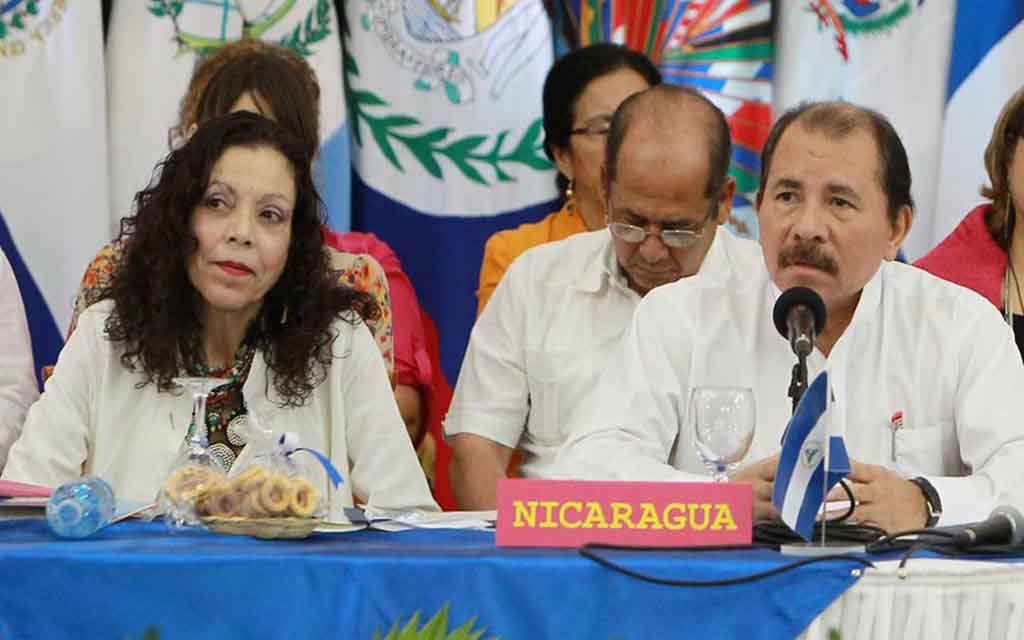
The Ortega-Murilla regime has approved reforms that bar the opposition from participating in elections, drawing strong opposition from exiled leaders, the United States, Costa Rica and Peru.
A reading from the First Letter of St. Paul to Corinthians
4:1-5
Brothers and sisters:
Thus should one regard us: as servants of Christ
and stewards of the mysteries of God.
Now it is of course required of stewards
that they be found trustworthy.
It does not concern me in the least
that I be judged by you or any human tribunal;
I do not even pass judgment on myself;
I am not conscious of anything against me,
but I do not thereby stand acquitted;
the one who judges me is the Lord.
Therefore, do not make any judgment before the appointed time,
until the Lord comes,
for he will bring to light what is hidden in darkness
and will manifest the motives of our hearts,
and then everyone will receive praise from God.
From the Gospel according to Luke
5:33-39
The scribes and Pharisees said to Jesus,
?The disciples of John the Baptist fast often and offer prayers,
and the disciples of the Pharisees do the same;
but yours eat and drink.?
Jesus answered them, ?Can you make the wedding guests fast
while the bridegroom is with them?
But the days will come, and when the bridegroom is taken away from them,
then they will fast in those days.?
And he also told them a parable.
?No one tears a piece from a new cloak to patch an old one.
Otherwise, he will tear the new
and the piece from it will not match the old cloak.
Likewise, no one pours new wine into old wineskins.
Otherwise, the new wine will burst the skins,
and it will be spilled, and the skins will be ruined.
Rather, new wine must be poured into fresh wineskins.
And no one who has been drinking old wine desires new,
for he says, ?The old is good.??
?For new wine, new wineskins?. This ?is the newness of the Gospel?. ?What does the Gospel bring us? Joy and newness?. However, ?these doctors of the law were locked up in their commandments, in their rules?. So much that ?St Paul, speaking about them, tells us that before faith came ? that is, Jesus ? we were all held as prisoners under the law?. (?) When Jesus reproaches these people, these doctors of the law, He admonishes them for not having safeguarded the people with the law but for having made them ?slaves of so many little laws, of so many little things that they had to do?. (?) St Paul ?makes a good distinction: sons of law and sons of faith. To new wine, new wineskins?. This is why ?the Church asks us, all of us, for a few changes. She asks us to leave aside fleeting structures; they aren?t necessary! And get new wineskins, those of the Gospel?. It is not possible to understand the mentality, for example, of these doctors of the law, these Pharisee theologians, with the spirit of the Gospel. They are different things?. In fact, ?the Gospel?s approach is a different approach, which leads to the fulfillment of the law?. But ?in a new way: it is the new wine in new wineskins?. (Pope Francis, Santa Marta, 5 September 2014)
Read More
| Picture of the day |
|---|

|
|
Belle Tout lighthouse and chalk cliffs by the English Channel. Captain Matthew Webb made the first observed and unassisted swim across the channel, reaching France on 25 August 1875.
|
![Maine high court says father can prevent daughter from attending mother’s church – #Catholic – A Maine father will be allowed to prevent his daughter from attending a local Christian church with her mother, the Maine Supreme Judicial Court said in a ruling this week. The decision from the high court upheld a lower court ruling in favor of Matthew Bradeen that found it was “psychologically unsafe” for Emily Bickford to take their daughter to Calvary Chapel in the Portland region. The young girl reportedly suffered from panic attacks and psychological distress after attending the church; she reportedly became fixated on the rapture (an end-times belief held by some Christians) as well.The Maine high court said in its ruling that at one point the church’s pastor openly prayed about the dispute between Bickford and Bradeen, including referencing both the parents and the child “by name almost 30 times.” The court dismissed Bickford’s constitutional claims in the dispute. The father “is better suited to determine whether certain religious activities are in the child’s best interest,” it held. In a press release, the legal group Liberty Counsel, which represented Bickford in the dispute, said it would appeal to the U.S. Supreme Court to consider the case. Mat Staver, the group’s chair, said the ruling “rejects the First Amendment right” of Bickford and goes against U.S. court precedent. “Depriving one parent their right to instill their religious views into their child and granting sole authority to the other parent fails to give proper protection to parental rights and religious freedom under the First Amendment,” Staver argued. He claimed that the ruling “pose[s] a serious threat to religious freedom” in the U.S.](https://unitedyam.com/wp-content/uploads/2026/09/maine-high-court-says-father-can-prevent-daughter-from-attending-mothers-church-catholic-a-maine-father-will-be-allowed-to-prevent-his-daughter-from-attending-a-local-christian-church-wi.jpg "Maine high court says father can prevent daughter from attending mother’s church – #Catholic – A Maine father will be allowed to prevent his daughter from attending a local Christian church with her mother, the Maine Supreme Judicial Court said in a ruling this week. The decision from the high court upheld a lower court ruling in favor of Matthew Bradeen that found it was “psychologically unsafe” for Emily Bickford to take their daughter to Calvary Chapel in the Portland region. The young girl reportedly suffered from panic attacks and psychological distress after attending the church; she reportedly became fixated on the rapture (an end-times belief held by some Christians) as well.The Maine high court said in its ruling that at one point the church’s pastor openly prayed about the dispute between Bickford and Bradeen, including referencing both the parents and the child “by name almost 30 times.” The court dismissed Bickford’s constitutional claims in the dispute. The father “is better suited to determine whether certain religious activities are in the child’s best interest,” it held. In a press release, the legal group Liberty Counsel, which represented Bickford in the dispute, said it would appeal to the U.S. Supreme Court to consider the case. Mat Staver, the group’s chair, said the ruling “rejects the First Amendment right” of Bickford and goes against U.S. court precedent. “Depriving one parent their right to instill their religious views into their child and granting sole authority to the other parent fails to give proper protection to parental rights and religious freedom under the First Amendment,” Staver argued. He claimed that the ruling “pose[s] a serious threat to religious freedom” in the U.S.")
The mother will appeal to the U.S. Supreme Court over the ruling from the state court, attorneys said.

![Cardinal Cupich, Catholic religious sisters sue Illinois to halt assisted suicide law – #Catholic – A coalition of religious sisters has joined Chicago’s Cardinal Blase Cupich in suing the state of Illinois to prevent enforcement of its assisted suicide law.The law, which was signed by Democratic Gov. JB Pritzker in December 2025, allows doctors in the state to prescribe lethal doses of medication to patients in order to help them end their own lives. Among other rules, patients must have a terminal illness in order to qualify for receiving help to kill themselves. The rule has received strong criticism from Catholic bishops in the state. On Sept. 3, meanwhile, the religious liberty law firm Becket announced that Cupich and two orders of religious sisters had filed a lawsuit against the state seeking to halt enforcement of the law against the Catholic plaintiffs. The suit, filed in U.S. district court, argues that the sisters — who belong to the Carmelite Sisters for the Aged and Infirm and the Little Sisters of the Poor — will be forced to either “abandon their religious beliefs regarding the sanctity of life or face significant fines and penalties” if they refuse to participate in the suicide regime. The suit notes that by Sept. 12, healthcare providers in Illinois, including the sisters through their care homes, will have to proactively discuss the “option” to commit suicide with those in their care. Caregivers will also “have to allow patients to commit suicide in their facilities,” the suit says. The suit argues that the First Amendment prohibits the state from requiring the Catholic caregivers to violate their faith by participating in the suicide regime. In a statement announcing the filing, Cupich said the Catholic Church “oppose[s] efforts to undermine human dignity by pushing our brothers and sisters toward suicide.” “We pray that the courts will protect our freedom to continue advocating and caring for the sick and dying as our faith demands,” he said. Mother Mary Rose Heery, O. Carm., prioress general of the Carmelite Sisters for the Aged and Infirm, said patients in their care “come to us at one of the most vulnerable moments of their lives” and that the sisters have a vocation “to give witness to them, through everything we do, that their lives remain precious and that they will never be abandoned.” “Illinois cannot ask us to replace that promise with help ending their lives,” she said. Becket President Mark Rienzi described the suicide law’s provisions as “awful.” “The state should stop trying to make Catholic nuns help patients kill themselves,” he said, arguing that sick patients “deserve the freedom to seek healing, hope, and accompaniment without the government forcing suicide into the conversation.” This is not the first lawsuit filed against a state assisted suicide measure, nor the first in Illinois. In August, Springfield Bishop Thomas Paprocki joined a Lutheran nursing home and a group of doctors to sue the state over the assisted suicide law, with the coalition arguing that the state’s suicide regime abandons “nearly two millennia of medical practice” while requiring objectors to participate in it. The state agreed to a temporary block of the law later in the month, though the block only applied to the plaintiffs in that suit. In July, meanwhile, Rockville Centre Bishop John Barres joined several communities of New York religious sisters in suing the state over its own assisted suicide law. Those plaintiffs also won a temporary block of the state’s suicide law.Separately, groups of disability advocates have filed lawsuits against the suicide laws in New York and Illinois, as well as in Colorado and Delaware, alleging that those laws discriminate against people with disabilities.](https://unitedyam.com/wp-content/uploads/2026/09/cardinal-cupich-catholic-religious-sisters-sue-illinois-to-halt-assisted-suicide-law-catholic-a-coalition-of-religious-sisters-has-joined-chicagos-cardinal-blase-cupich-in-suing-the-sta.jpg "Cardinal Cupich, Catholic religious sisters sue Illinois to halt assisted suicide law – #Catholic – A coalition of religious sisters has joined Chicago’s Cardinal Blase Cupich in suing the state of Illinois to prevent enforcement of its assisted suicide law.The law, which was signed by Democratic Gov. JB Pritzker in December 2025, allows doctors in the state to prescribe lethal doses of medication to patients in order to help them end their own lives. Among other rules, patients must have a terminal illness in order to qualify for receiving help to kill themselves. The rule has received strong criticism from Catholic bishops in the state. On Sept. 3, meanwhile, the religious liberty law firm Becket announced that Cupich and two orders of religious sisters had filed a lawsuit against the state seeking to halt enforcement of the law against the Catholic plaintiffs. The suit, filed in U.S. district court, argues that the sisters — who belong to the Carmelite Sisters for the Aged and Infirm and the Little Sisters of the Poor — will be forced to either “abandon their religious beliefs regarding the sanctity of life or face significant fines and penalties” if they refuse to participate in the suicide regime. The suit notes that by Sept. 12, healthcare providers in Illinois, including the sisters through their care homes, will have to proactively discuss the “option” to commit suicide with those in their care. Caregivers will also “have to allow patients to commit suicide in their facilities,” the suit says. The suit argues that the First Amendment prohibits the state from requiring the Catholic caregivers to violate their faith by participating in the suicide regime. In a statement announcing the filing, Cupich said the Catholic Church “oppose[s] efforts to undermine human dignity by pushing our brothers and sisters toward suicide.” “We pray that the courts will protect our freedom to continue advocating and caring for the sick and dying as our faith demands,” he said. Mother Mary Rose Heery, O. Carm., prioress general of the Carmelite Sisters for the Aged and Infirm, said patients in their care “come to us at one of the most vulnerable moments of their lives” and that the sisters have a vocation “to give witness to them, through everything we do, that their lives remain precious and that they will never be abandoned.” “Illinois cannot ask us to replace that promise with help ending their lives,” she said. Becket President Mark Rienzi described the suicide law’s provisions as “awful.” “The state should stop trying to make Catholic nuns help patients kill themselves,” he said, arguing that sick patients “deserve the freedom to seek healing, hope, and accompaniment without the government forcing suicide into the conversation.” This is not the first lawsuit filed against a state assisted suicide measure, nor the first in Illinois. In August, Springfield Bishop Thomas Paprocki joined a Lutheran nursing home and a group of doctors to sue the state over the assisted suicide law, with the coalition arguing that the state’s suicide regime abandons “nearly two millennia of medical practice” while requiring objectors to participate in it. The state agreed to a temporary block of the law later in the month, though the block only applied to the plaintiffs in that suit. In July, meanwhile, Rockville Centre Bishop John Barres joined several communities of New York religious sisters in suing the state over its own assisted suicide law. Those plaintiffs also won a temporary block of the state’s suicide law.Separately, groups of disability advocates have filed lawsuits against the suicide laws in New York and Illinois, as well as in Colorado and Delaware, alleging that those laws discriminate against people with disabilities.")
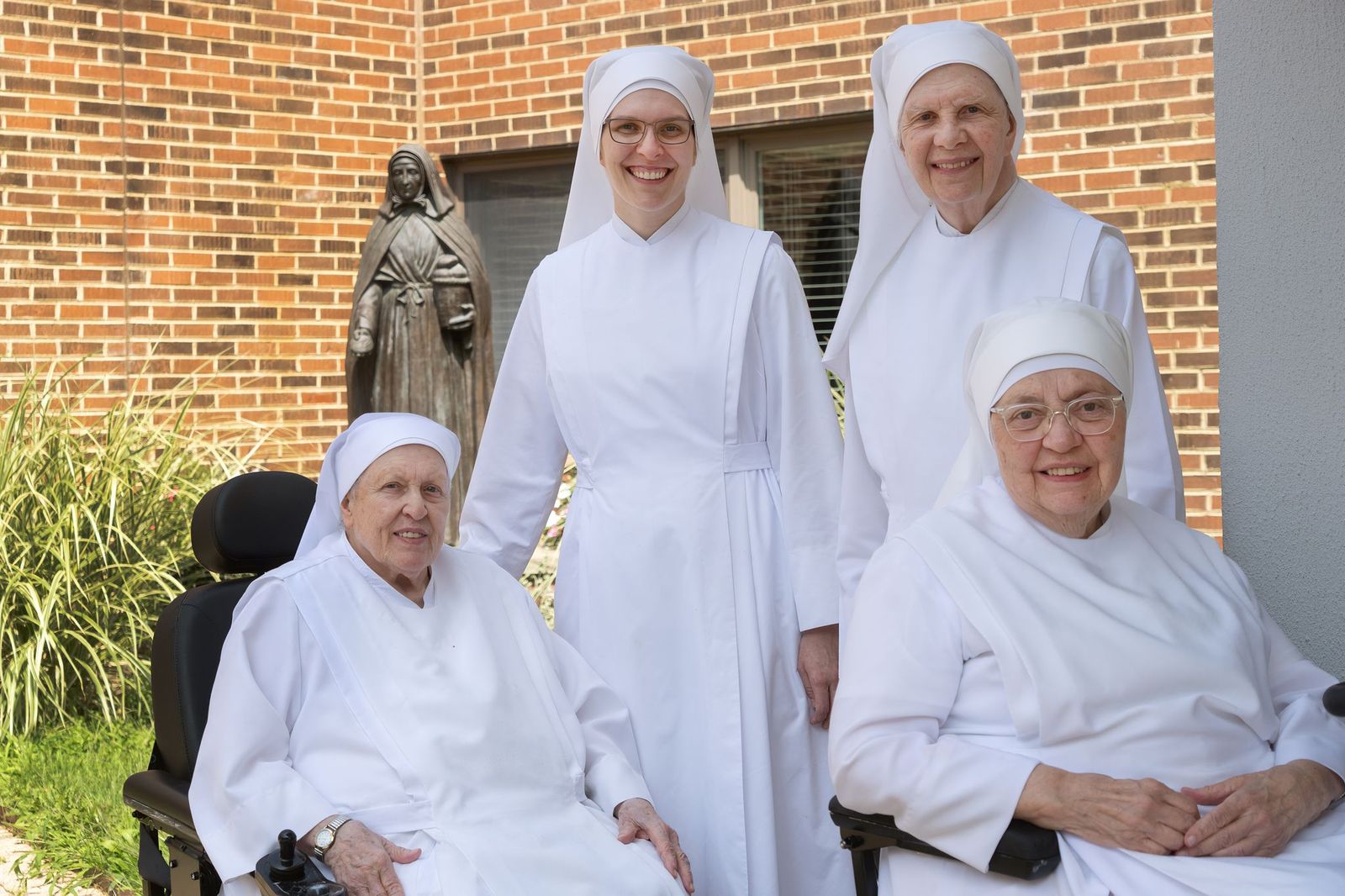
The state recently began allowing doctors to help patients kill themselves by prescribing lethal doses of medication.
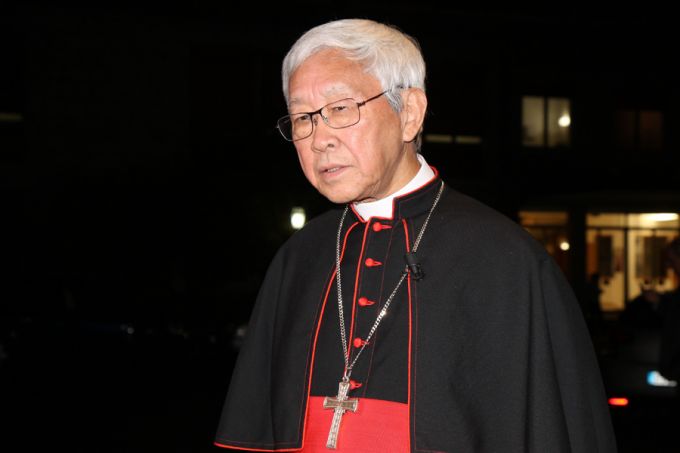
Zen and four others face monetary fines, but it’s unclear whether they will face further prosecution.

The program has been a fixture of the Church calendar since 2000, when it was launched by St. John Paul II.
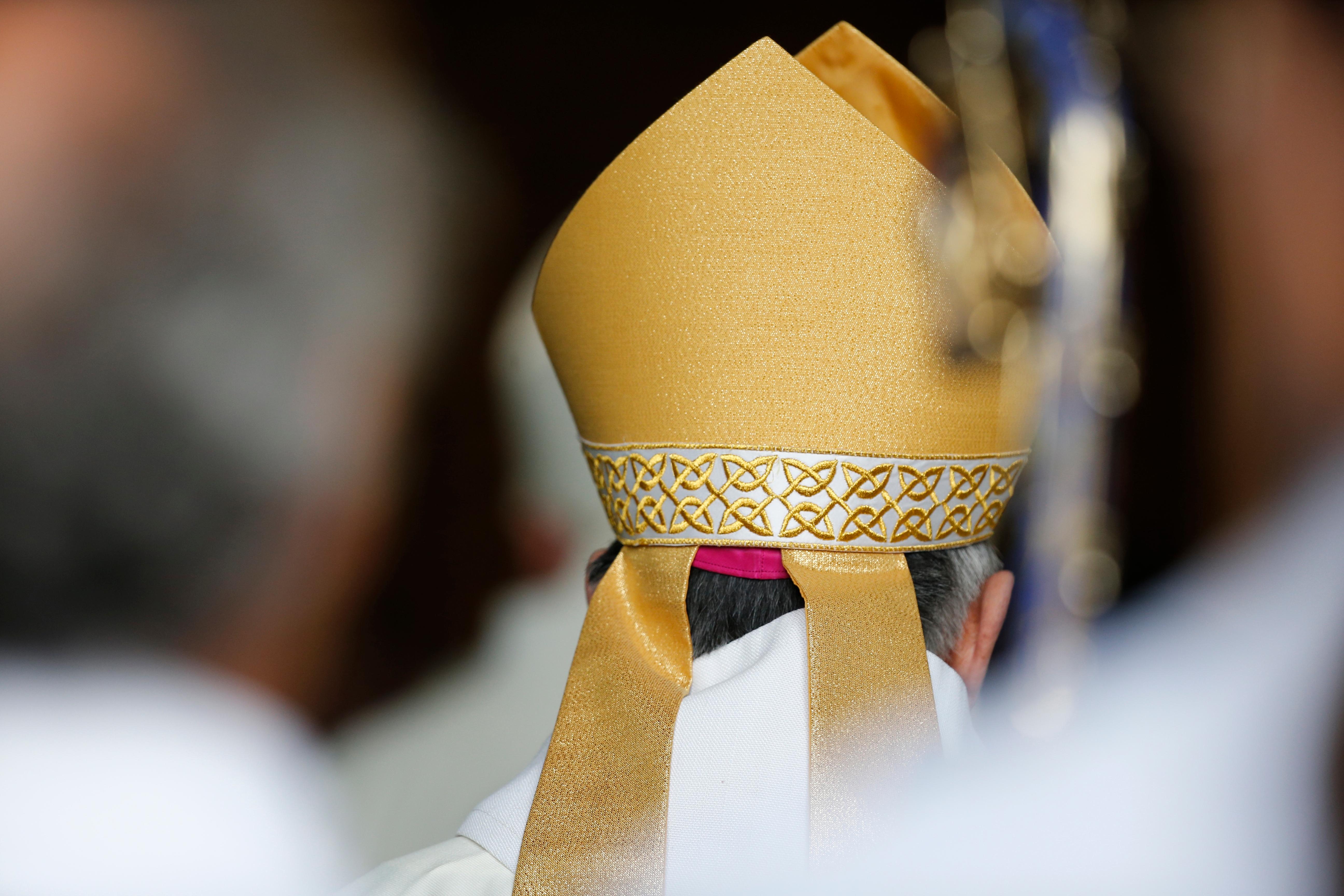
Catholics cannot be ‘unengaged spectators’ amid current events, pope says #Catholic – 
VATICAN CITY (CNS) — The faithful are called to leave behind “all passivity and indifference” toward current events and the lives of others, especially amid the “rapid and profound changes we are experiencing today,” Pope Leo XIV said at his weekly general audience.
“We cannot remain as unengaged spectators; rather, we must listen with our hearts, allow ourselves to be challenged, and become involved,” the pope said Sept. 2 in St. Peter’s Square.
“With Christ and sustained by the power of His Spirit, believers are called to take on the burdens of their brothers and sisters, especially those who are crushed by injustice, discrimination and violence,” he said.
Pope Leo began a new series of reflections on the Second Vatican Council’s pastoral constitution “Gaudium et Spes,” which examines the relationship between the Church and the modern world.
Recalling St. John XXIII’s warning against the “prophets of doom,” who regarded their own times as worse than the past, Pope Leo said Christians are instead called to share in the life of humanity as Christ did.
Such closeness to humanity, the pope said, also opens the way to a deeper understanding of events and of Revelation itself.
“This is not, in fact, merely a moral imperative,” he said.
Addressing English-speaking pilgrims, Pope Leo said it is the Church’s pastoral responsibility to engage with the contemporary world, share in its joys and sorrows and advocate for the poor and marginalized.
The Church, he said, also must remain “attentive to the signs of the times,” confronting “pressing issues such as the technological progress that benefits only some and the persistence of widespread poverty.”
His remarks came months after the publication of his first encyclical, “Magnifica Humanitas,” which detailed his account of the global implications of artificial intelligence and warned against allowing technological development to proceed without prioritizing human dignity.
“In our own day, marked by profound change and much injustice, each of us, then, is called to play our part in welcoming and listening to the deepest questions and longings of the human heart, making present to all the merciful love of Christ our Savior,” the pope told English speakers.
During a period of profound change that is producing “worrying imbalances,” Pope Leo said the Church is called to serve the human person by listening to “the deepest questions of their heart and the longings that dwell within them.”
The Church must point people toward Christ, he said, as “the key, the focal point and the goal of all human history.”
– VATICAN CITY (CNS) — The faithful are called to leave behind “all passivity and indifference” toward current events and the lives of others, especially amid the “rapid and profound changes we are experiencing today,” Pope Leo XIV said at his weekly general audience. “We cannot remain as unengaged spectators; rather, we must listen with our hearts, allow ourselves to be challenged, and become involved,” the pope said Sept. 2 in St. Peter’s Square. “With Christ and sustained by the power of His Spirit, believers are called to take on the burdens of their brothers and sisters, especially those who are
Pope Leo says, ‘It is not yet too late’ to care for creation #Catholic – 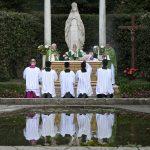
VATICAN CITY (CNS) — Pope Leo XIV began the five-week Season of Creation by calling on the faithful to step away from the frenzy of daily life to “hear the melodious voice of creation,” stressing that “it is not yet too late” to repair humanity’s relationship with the environment.
Celebrating Mass on the World Day of Prayer for the Care of Creation in the gardens of the papal villa and the Borgo Laudato Si’ ecology project in Castel Gandolfo, Sept. 1, the pope said contemplating creation and its Creator should lead people to recognize their responsibility for protecting it.
“Thus, as we become conscious of our shortcomings and failures, we can renew our commitment to restoring the relationships among all creatures according to the will of their Creator,” he said.
The theme chosen for the 2026 World Day of Prayer for the Care of Creation echoes the biblical call to “beat swords into plowshares” and connects armed conflict with environmental destruction.
In a June 2 statement, the Dicastery for Promoting Integral Human Development said that “the now widespread awareness of the impact of war on natural resources has not led to the creation of adequate institutions or to responsible decisions aimed at preventing conflicts and resolving disputes peacefully.”
In his homily during the Mass, Pope Leo said the call to transform weapons into instruments that sustain life remains urgent.
“What has been used for destruction can be redirected toward life, toward the care of the poor, the nourishment of the hungry, and the safeguarding of creation,” he said, quoting his message for the day.
Militaries account for about 5.5% of global greenhouse gas emissions and contribute to water pollution, soil contamination and waste generation, according to a joint study by the UK-based Scientists for Global Responsibility and the Conflict and Environment Observatory. The World Wide Fund for Nature estimated that the first three years of the Russia-Ukraine war alone generated the equivalent of about 230 million metric tons of carbon dioxide — a greenhouse gas that traps heat from sunlight, warming the planet.
Pope Leo also focused on access to clean water in his September prayer intention, released Sept. 1 by the Pope’s Worldwide Prayer Network.
Thanking God for the gift of water, the pope prayed for the “right of every brother and sister to drink without fear and without inequality.”
“Forgive us for turning it into a commodity, forgetting that it is a universal gift, a right without borders, meant for all your children,” he prayed. “We see with pain so many brothers and sisters who lack clean water, who walk for miles to find it, who become ill due to its scarcity.”
During the Mass, Pope Leo said passages from the Book of Wisdom and Psalm 18 encourage Christians to recognize God through the “beauty and power of creation.”
“All creation speaks to us of the greatness of its Creator, if only our eyes and hearts remain open to such a great mystery,” he said.
By looking with wonder at the birds of the air and the flowers of the field, the pope said, Christians can better understand the greatness of God’s love for humanity.
“If the Lord does not fail to bestow such splendid beauty upon plants and animals and provide for all their needs, how much more attentive will he be to the needs of his beloved sons and daughters,” he said.
The Season of Creation runs from Sept. 1 through Oct. 4, the feast of St. Francis of Assisi. The Catholic Church’s observance of the World Day of Prayer for the Care of Creation was established by Pope Francis in response to an initiative of Orthodox Ecumenical Patriarch Bartholomew of Constantinople. The Orthodox Church has observed Sept. 1 as a day of prayer for creation since 1989.
The 2026 season will conclude as the Church marks the 800th anniversary of the death of St. Francis of Assisi, who is the patron saint of ecology.
Pope Leo closed his homily by reciting portions of St. Francis’ Canticle of the Creatures:
“Praised be you, my Lord, with all your creatures, especially Sir Brother Sun… Praised be you, my Lord, through Sister Moon and the stars… Praised be you, my Lord, through Brother Wind… Praised be you, my Lord, through Sister Water… Praised be you, my Lord, through Brother Fire… Praised be you, my Lord, through our Sister Mother Earth, who sustains and governs us.”
– VATICAN CITY (CNS) — Pope Leo XIV began the five-week Season of Creation by calling on the faithful to step away from the frenzy of daily life to “hear the melodious voice of creation,” stressing that “it is not yet too late” to repair humanity’s relationship with the environment. Celebrating Mass on the World Day of Prayer for the Care of Creation in the gardens of the papal villa and the Borgo Laudato Si’ ecology project in Castel Gandolfo, Sept. 1, the pope said contemplating creation and its Creator should lead people to recognize their responsibility for protecting it. “Thus,
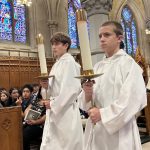
A dream, strong faith and a health struggle inspire teen’s winning essay on priesthood #Catholic – 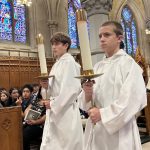
NEWARK, N.J. (OSV News) — Dominic Auricchio was 4 when he said he heard God’s voice in a dream telling him to become a priest.
The now-13-year-old does not remember the dream too well, but he has felt drawn to the Catholic priesthood ever since.
That dream, his strong faith and a struggle with a life-threatening health issue in recent months inspired his winning essay on the priesthood.
When Dominic decided to enter the Archdiocese of Newark’s Cardinal Joseph Tobin Essay and Video Contest — which asks seventh graders to explain why priests are important — he knew exactly what to say: Priests are important because they share God’s Word, celebrate the sacraments, and love everyone as Jesus did.
The archdiocesan Office of Priestly Vocations, which administers the contest, said the judges stated Dominic’s work stood out among the 49 submissions they reviewed. He won first place, receiving a plaque and $1,500, presented to him this summer by Father Patrick Seo, director of priestly vocations, at a gathering attended by family and classmates.
“I was really happy when I won,” Dominic told Jersey Catholic, Newark’s archdiocesan news outlet. “Becoming a priest is important to me, so I worked hard on everything. Accepting the award in front of so many people made me feel very accomplished.”
Dominic’s achievement came during a particularly trying time in his life. In December, he began experiencing seizures for which he is still seeking treatment. In fact, when he first learned about the contest, he was in the hospital.
Despite these struggles, Dominic was determined to do his best, writing and polishing his essay over a few weeks until he was sure every one of his 642 words conveyed his admiration for the priesthood. He even drew on his health issues to offer a unique perspective on the subject.
“(My medical problems) helped me understand how other people feel when they are scared, different, or going through something difficult,” Dominic wrote. “Because of this, I feel called to help people who are hurting. … A priest walks with people during sickness, grief and fear, and I want to be someone who brings comfort and hope.”
As required by the contest, Dominic, with the help of his mother, Maria, and brother Vincenzo, also crafted a four-minute video in which he shared that he was 9 years old when a mass developed on his brain.
While his doctors and parents contemplated the best treatment options, he says he experienced an apparition. Dominic believes that the woman who appeared in his bedroom, wearing blue and a head covering, was the Virgin Mary.
According to Dominic, she told him not to worry and that everything would be OK. Soon thereafter, a CAT scan revealed that his brain mass had begun to shrink.
Today, Dominic’s mass has shrunk to a tiny size. While his recovery cannot be confirmed as miraculous — because he was taking medication that may have caused the improvement — Maria believes God healed her son. She said the mass began shrinking immediately after Mary’s visit, a timing she believes is too remarkable to be mere coincidence.
Dominic, too, believes that something more than medicine was at work. He also feels fortunate to be able to share his experience with the world.
“I like telling other people because it reminds them that God is always there,” Dominic said. “It gives them hope.”
In his essay, he also explained how his time as an altar server at St. Helen’s Parish in Westfield has brought him close to the Eucharist and helped him “see how important the priest’s role is.”
He also talks about experiences such as giving alms during Lent and serving as a “buddy” to a young girl with autism during St. Helen’s inclusive Masses, which have taught him “patience and kindness,” qualities he believes all priests should possess.
“I think a priest should always make people feel like they belong,” Dominic wrote in his essay.
His pastor, Msgr. Thomas Nydegger, said that Dominic certainly possesses the empathy that is an essential quality of priests.
“From what I’ve seen of Dominic and the way he lives, he’d bring some very special gifts and talents to the priesthood,” Msgr. Nydegger said. “With his sensitivity and unique perspective, I think he’d be able to truly touch people’s lives in a deep way that we don’t often see in the world.”
Maria — who works in multiple roles at St. Helen Parish and Holy Trinity School — said she would feel “honored” to be the mother of a priest. At the same time, she said her son is the only one who can decide whether the priesthood is right for him. She has told him he should not feel obligated to become a priest if he ever changes his mind.
“I just want him to be happy and find where God is calling him to be,” said Maria, who noted that there are many ways to serve God.
Dominic, who also loves hockey and hopes to one day follow in his father’s and great-grandfather’s footsteps by enlisting in the Marines, wrote in his essay that “I do not know exactly where God will lead me, but I trust that He is guiding me step by step.”
Still, he strongly feels that he will ultimately fulfill his dream of becoming a priest.
“The Roman Catholic priesthood is a life of service, sacrifice, and joy centered on Jesus,” he writes. “That is why I believe God is calling me to become a priest, and why I hope to answer that call one day.”
Sean Quinn is on the communications staff of the Archdiocese of Newark and contributes to Jersey Catholic, the archdiocese’s news site.
– NEWARK, N.J. (OSV News) — Dominic Auricchio was 4 when he said he heard God’s voice in a dream telling him to become a priest. The now-13-year-old does not remember the dream too well, but he has felt drawn to the Catholic priesthood ever since. That dream, his strong faith and a struggle with a life-threatening health issue in recent months inspired his winning essay on the priesthood. When Dominic decided to enter the Archdiocese of Newark’s Cardinal Joseph Tobin Essay and Video Contest — which asks seventh graders to explain why priests are important — he knew exactly what
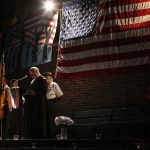
‘I remember like it was yesterday’: Catholics describe ministering in aftermath of 9/11 #Catholic – 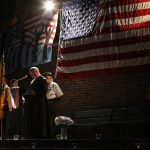
(OSV News) — On Sept. 11, 2001 — the date of the worst terrorist attack in American history, when four hijacked jets became deadly weapons — there was no shortage of heroic first responders who confronted danger instead of avoiding it.
Many Catholic clergy and religious ministered among them — including priests, friars and sisters. Some of their stories are perhaps less well known — but the help and healing they also brought to those who experienced the devastating losses of 9/11 are worth remembrance as the 25th anniversary approaches.
“I remember like it was yesterday,” Father Brian Jordan told OSV News.
A Franciscan friar of his order’s Province of Our Lady of Guadalupe, the priest is the current pastor of the Church of St. Francis of Assisi on West 31st Street in New York City.
That morning, Father Jordan was at New York Presbyterian Hospital. Hearing of the strike, he returned to the Franciscan friary on 31st Street — attached to St. Francis of Assisi Parish — where he lived, determined to go to the disaster site.
Uncertain what he might find — but expecting both victims and perpetrators — he retrieved holy water and a pair of brass knuckles. “I said, ‘I’ll bless them with one hand, and just in case there’s any bad guys, I’ll bless them with the other hand.”
Before he left, another friar had devastating news: Their fellow Franciscan, Father Mychal Judge, was dead. Still, Father Jordan knew what Father Judge would want him to do — go help.
After stopping at Manhattan’s St. Vincent’s Hospital — the only patients were those being treated for dust inhalation after the Twin Towers collapsed — Father Jordan headed to ground zero, encountering a police captain he knew.
“He gave me a mask; he gave me a pair of gloves. He said, ‘Father, put the mask on, put on the gloves and go to work.’ And so I went up and down for a couple blocks, and there were bodies and body parts. I just blessed them all.”
On Sept. 16, Father Jordan said his first Mass at ground zero; he would continue to have Mass there for nearly 10 months.
Then on Sept. 23, there was a surprise.
“A big burly construction worker from Local 731 comes up to me and says, ‘Hey, Father, you want to see God’s house?’”
“So we go into the ruins of 6 World Trade Center,” recalled Father Jordan. “I had like 25 fighters next to me, and the construction worker says, ‘What do you see there, Father, right in the middle?’ I said, ‘I can’t believe this … I see a cross.’”
Two intersecting steel beams had been sheared into a crucifix, as 6 WTC was struck by debris from the collapse of the North Tower.
The stunning artifact became known as the “Cross at Ground Zero” and eventually became part of the 9/11 Memorial & Museum collection.
It was excavated, placed on a concrete abutment, and blessed. On Oct. 7, a Mass was celebrated near it, at the corner of Vesey and West streets.
“It gave a boost of energy to people at the time,” explained Father Jordan, who wrote his own memoir — “The Ground Zero Cross” (Xlibris) — and was given the distinction of being its unofficial guardian.
On 9/11, Sister Margaret O’ Brien, a Sister of Charity working in the Sisters of Charity Health Care System, was in her office at the Bayley Seton Hospital on Staten Island, briefing a colleague just returned from vacation.
“Her secretary came in and said, ‘I just got a call. A plane went into the World Trade Center,’” Sister Margaret remembered. “We went down the hall to a window we could see from, and we realized, this is going to be bad.”
The sisters quickly prepared to go to St. Vincent’s Hospital “to set up the emergency and trauma response,” explained Sister Margaret. “And the doctors were there, the stretchers were there, all waiting at the entrance — but after a short while, nobody came.”
Sister Margaret worked the hotline in the sisters’ hospital command center, taking calls from people searching for loved ones.
“The telephone was really hard,” she reflected. “Because people would give you a name and you’d check your list, and you didn’t have them. … It was very, very emotional the whole time — and for the first couple of days, the phone just kept ringing.”
Nonetheless, she found a reason to be thankful.
“I remember being so grateful I had something to be part of, to help,” said Sister Margaret, now assistant to the president of the Sisters of Charity New York.
Trauma was a persistent feature of the sisters’ shifts — especially for one colleague who assisted first responders sent for care from recovery work at ground zero.
“Sometimes people would talk, but most of the time they just couldn’t,” Sister O’Brien explained. Her colleague “remembered one person — he was very quiet — and then he said, ‘I can take the arms and the legs. But when I turned over a stone and saw a face, just a head, flattened into the ground.’”
“He lost it,” said Sister O’Brien.
Father Stephen McGraw — at the time a priest in the Diocese of Arlington, Virginia, just outside of Washington — also saw unspeakable sights.
On the morning of 9/11, he had just concluded a school Mass — and was on his way to Arlington National Cemetery for a burial when he missed the appropriate exit.
“I remember about 9:35, I’m just sitting in this traffic, right in front of the Pentagon.”
He was distressed that he would now almost certainly be late for the burial.
“And then without warning, the plane came roaring right over the tops of our cars — very, very low,” Father McGraw said. “I can’t say which of my senses was most impacted — there was the vibration and roar of the plane, and a light pole was clipped and fell over on a taxi driver’s car just a few cars away.”
Looking to his right, he watched as American Airlines Flight 77 plowed into the Pentagon.
“I saw it crashing, disappearing, with a huge fireball billowing out from the building in the moment after the crash.”
Because his radio wasn’t on to hear what was happening in New York City, “I just assumed it was a terrible, tragic accident.”
Commuters came to a frozen stop, and Father McGraw leapt from his car — stole, anointing oils and prayer book in hand — vaulting the highway guardrail to the lawn of the Pentagon to reach the victims.
“Basically, my message to them was, ‘Jesus is with you.’ That’s what I kept saying to the several victims I attended,” said Father McGraw.
One victim who identified himself as Catholic — Juan Cruz, the civilian accounting division manager in the Office of the Administrative Assistant for the Secretary of the Army — was given the sacraments.
Another — Antoinette Sherman, an Army budget analyst, who later died — lay face down on the grass, severely burned on her back, a single shoe on one foot. Father McGraw gently removed it at her request.
“Then she just said, to perhaps whomever could hear her, ‘Tell my mother and father that I love them.’ And so I assured her that I would.”
Father McGraw — now a missionary priest and church pastor in the Diocese of Arlington’s Bánica Mission in the Dominican Republic — doesn’t think his unplanned detour was a coincidence.
“I had a strong sense of divine providence,” he told OSV News. “I was meant to be there.”
The attacks killed 2,977 people and injured thousands more: 2,753 people died in the Twin Towers collapse, brought down by two hijacked commercial airliners; 184 people died when a third hijacked airliner flew into the Pentagon; and 40 people died in Shanksville, Pennsylvania, when passengers and crew fought back against hijackers on a fourth airliner, forcing it to crash in a field near Shanksville. Officials believe the fourth plane was headed for the U.S. Capitol or the White House.
The 25th anniversary of 9/11 will not only be a time of solemn remembrance — it also leaves some longing for the national unity Americans once demonstrated.
“We saw evil at its worst,” declared Father Jordan. “But we also saw goodness at its best. New York City came together. The country came together. The world came together.”
Kimberley Heatherington is an OSV News correspondent. She writes from Virginia.
– (OSV News) — On Sept. 11, 2001 — the date of the worst terrorist attack in American history, when four hijacked jets became deadly weapons — there was no shortage of heroic first responders who confronted danger instead of avoiding it. Many Catholic clergy and religious ministered among them — including priests, friars and sisters. Some of their stories are perhaps less well known — but the help and healing they also brought to those who experienced the devastating losses of 9/11 are worth remembrance as the 25th anniversary approaches. “I remember like it was yesterday,” Father Brian Jordan told
Pope prays for dead, missing following catastrophic mudslides, floods in Nepal #Catholic – 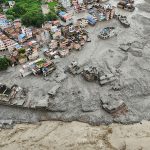
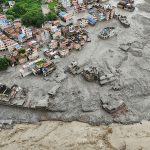
(OSV News) — Pope Leo XIV expressed his sadness by the devastation wrought by a glacial collapse in the Nepal-China border, causing a deadly wave of floods and mudslides that killed 168 people with hundreds more feared dead.
In a telegram sent on the pope’s behalf Aug. 27, Cardinal Pietro Parolin, Vatican secretary of state, expressed the pontiff’s condolences upon learning “of the loss of life and devastation caused by the flash floods in Nepal.”
“Commending the souls of the deceased to the clemency of the Almighty, His Holiness sends heartfelt sympathies to the bereaved, together with the assurance of his spiritual closeness to those affected by this tragedy,” Cardinal Parolin wrote.
“Likewise offering prayers for the emergency personnel engaged in the ongoing rescue efforts, he invokes upon all divine assistance and protection,” he added.
According to The Associated Press, the U.S. Geological Survey initially reported an earthquake 41 miles north of Kathmandu Aug. 26. However, further analysis revealed that the seismic event was caused by a 5.2 magnitude glacial collapse.
The disaster was a grim confirmation of warnings given earlier this year regarding the effects of climate change on nearby glaciers.
In March, researchers from the International Centre for Integrated Mountain Development (ICIMOD) released a report revealing that glaciers across the Himalayas were melting at an accelerating rate and warned that concrete action was needed to avoid further disasters to communities in the area.
“This isn’t a distant problem; it’s a crisis unfolding in real-time, with new disasters every summer and monsoon,” said Pema Gyamtsho, the director general of ICIMOD. “The fact that ice loss rates have doubled this century should shock us all into action.”
In an interview with the Vatican’s missionary news agency, Fides, published Aug. 27, Father Silas Krishna Bogati, the apostolic administrator of Nepal, called the catastrophic event as “the worst disaster in the country’s history.”
“It was terrible. A flood coming from the mountains, and directed violently towards the valley, overwhelmed everything: people, homes, bridges, structures. Villages, markets, and roads were swept away. It is a serious wound for the nation,” Father Bogati told Fides.
Father Bogati told Fides he was “shocked” and offered prayers for the dead, the missing, and “those suffering because of this catastrophe.”
“We have about 25 Catholic families in the disaster area; they appear to be safe, but we are very worried about them,” he said. “We entrust them to God, we pray for their safety, and we will do everything we can to help them.”
The apostolic administrator of Nepal also said that a priest of the vicariate, Father James Britto, was stranded after “he had gone to celebrate Mass on the other side of the river and was stranded.” According to Father Bogati, the bridge the priest had crossed was swept away by the floods.
As of Aug. 27, more than 1,300 people are missing in Nepal and Tibet, more than a hundred of whom were visiting Mount Kailash, a pilgrimage site sacred to several Eastern religions, including Hinduism and Buddhism, AP reported.
“There are Nepalese, but also foreigners and tourists who were in these areas on an excursion: it is a pilgrimage route to Mansarovar, a sacred Hindu site that is also a trail for hikers and trekkers,” Father Bogati explained.
The priest told Fides this was “the second time a disaster of this kind has occurred in that area, but this time it is of enormous proportions.”
He also said the local Church’s Caritas office was launching an appeal “to partners around the world” for assistance.
“We will do our part,” Father Bogati said.
Catholic Relief Services (CRS), the U.S. Catholic Church’s international aid agency, said it was closely monitoring the situation in Nepal and announced it was “coordinating with Caritas Nepal and local partners to assess urgent needs and determine how best to support affected communities.”
Junno Arocho Esteves is an international correspondent for OSV News. Follow him on X @jae_journalist.
– (OSV News) — Pope Leo XIV expressed his sadness by the devastation wrought by a glacial collapse in the Nepal-China border, causing a deadly wave of floods and mudslides that killed 168 people with hundreds more feared dead. In a telegram sent on the pope’s behalf Aug. 27, Cardinal Pietro Parolin, Vatican secretary of state, expressed the pontiff’s condolences upon learning “of the loss of life and devastation caused by the flash floods in Nepal.” “Commending the souls of the deceased to the clemency of the Almighty, His Holiness sends heartfelt sympathies to the bereaved, together with the assurance of
Los católicos no pueden ser ‘espectadores desinteresados’ ante los acontecimientos actuales, dice el Papa León #Catholic – 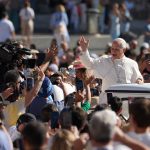
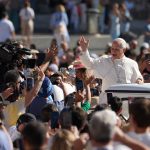
CIUDAD DEL VATICANO (CNS) — Los fieles están llamados a dejar atrás “toda pasividad e indiferencia ante los acontecimientos que se producen, ante la historia y la vida de las personas, sobre todo ante el cambio rápido y profundo que experimentamos hoy”, dijo el Papa León XIV en su audiencia general.
“No es posible permanecer como espectadores desinteresados, es necesario, en cambio, escuchar con el corazón, dejarse interpelar, involucrarse”, dijo el Papa el 2 de septiembre en la Plaza de San Pedro.
“Con Cristo y sostenidos por la fuerza de su Espíritu, los creyentes están llamados a hacerse cargo de las dificultades de los hermanos, sobre todo de aquellos que se ven oprimidos por la injusticia, por la discriminación, por la violencia”, afirmó durante su catequesis principal.
El Papa León inició una nueva serie de reflexiones sobre la constitución pastoral del Concilio Vaticano II “Gaudium et Spes”, que examina la relación entre la Iglesia y el mundo moderno.
Recordando la advertencia de San Juan XXIII contra los “profetas de calamidades”, quienes consideraban que su propia época era peor que el pasado, el Papa León afirmó que, por el contrario, los cristianos están llamados a compartir la vida de la humanidad tal como lo hizo Cristo.
Esa cercanía a la humanidad, señaló el Papa, también abre el camino a una comprensión más profunda de los acontecimientos y de la propia Revelación.
“No se trata, de hecho, de una disposición simplemente moral”, afirmó.
Dirigiéndose a los peregrinos de habla inglesa, el Papa León afirmó que es responsabilidad pastoral de la Iglesia relacionarse con el mundo contemporáneo, compartir sus alegrías y tristezas, y defender a los pobres y marginados.
La Iglesia, dijo, también debe escrutar a fondo los signos de la época, enfrentando “problemas urgentes como el progreso tecnológico que solo beneficia a unos pocos y la persistencia de la pobreza generalizada”.
Sus comentarios se produjeron meses después de la publicación de su primera encíclica, “Magnifica Humanitas”, en la que detallaba su visión sobre las implicaciones globales de la inteligencia artificial y advertía contra permitir que el desarrollo tecnológico avance sin dar prioridad a la dignidad humana.
“En nuestros días, marcados por profundos cambios y mucha injusticia, cada uno de nosotros está llamado, pues, a desempeñar su papel al acoger y escuchar las preguntas y anhelos más profundos del corazón humano, haciendo presente ante todos el amor misericordioso de Cristo nuestro Salvador”, dijo el Papa a los angloparlantes.
Durante un período de profundos cambios que está generando “desequilibrios preocupantes”, el Papa León afirmó que la Iglesia está llamada a servir a la persona humana al escuchar “los interrogantes más profundos de su corazón y los anhelos que lo habitan”.
La Iglesia debe orientar a las personas hacia Cristo, dijo, como “la clave, el centro y el fin de toda la historia humana”.
– CIUDAD DEL VATICANO (CNS) — Los fieles están llamados a dejar atrás “toda pasividad e indiferencia ante los acontecimientos que se producen, ante la historia y la vida de las personas, sobre todo ante el cambio rápido y profundo que experimentamos hoy”, dijo el Papa León XIV en su audiencia general. “No es posible permanecer como espectadores desinteresados, es necesario, en cambio, escuchar con el corazón, dejarse interpelar, involucrarse”, dijo el Papa el 2 de septiembre en la Plaza de San Pedro. “Con Cristo y sostenidos por la fuerza de su Espíritu, los creyentes están llamados a hacerse cargo de
Only a little over a month after Viking 1 landed on Mars, Viking 2 followed suit. Though the two Viking landers touched down in different locations, they used identical spacecraft and had the same mission: to create global maps of Mars, observe weather patterns, investigate the surface, measure temperatures, and search for life. Viking 2Continue reading “Sept. 3, 1976: Viking 2 reaches Mars”
The post Sept. 3, 1976: Viking 2 reaches Mars appeared first on Astronomy Magazine.
Read More
Renovación Carismática Católica de la Diócesis de Paterson celebra el tercer módulo de la formación nacional en su escuela de formación de líderes #Catholic – 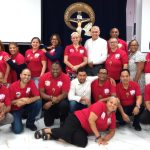
La Renovación Carismática Católica de la Diócesis de Paterson celebró con alegría el tercer módulo de la formación nacional, impartido en su Escuela de Formación de Líderes (EFL), con la participación de coordinadores, servidores de los grupos de oración y miembros del público en general.
La jornada contó con la presencia de Don Enrique Méndez, Coordinador Nacional de Formación de la Renovación Carismática Católica de Estados Unidos y Canadá y miembro del Comité Nacional, quien impartió este módulo dedicado a los Seminarios de Vida en el Espíritu.
Esta formación complementó el proceso desarrollado en los módulos anteriores, en los que se abordaron temas fundamentales como el amor de Dios, el pecado y la promesa del Padre. En esta ocasión, el énfasis estuvo en comprender el Seminario de Vida en el Espíritu como una experiencia de encuentro con Dios que debe continuar mediante el acompañamiento, los cursos de crecimiento, la formación y la vida de servicio dentro de la Iglesia.
Teresa Amparo, coordinadora de la Renovación Carismática Católica de la Diócesis de Paterson, destacó el ambiente de oración, alabanza, fraternidad y aprendizaje vivido durante la jornada, que incluyó ejercicios pastorales y momentos de encuentro fraterno entre coordinadores y servidores.
Con este tercer módulo, la Renovación Carismática Católica de la Diócesis de Paterson continúa fortaleciendo su compromiso con una formación integral que ayude a sus miembros a crecer espiritualmente y a servir con mayor madurez en sus parroquias y comunidades.
Para conocer los próximos encuentros, actividades e informaciones de la Renovación Carismática Católica de la Diócesis de Paterson, visite su sitio web oficial:
www.rccpatersonnj.com.
– La Renovación Carismática Católica de la Diócesis de Paterson celebró con alegría el tercer módulo de la formación nacional, impartido en su Escuela de Formación de Líderes (EFL), con la participación de coordinadores, servidores de los grupos de oración y miembros del público en general. La jornada contó con la presencia de Don Enrique Méndez, Coordinador Nacional de Formación de la Renovación Carismática Católica de Estados Unidos y Canadá y miembro del Comité Nacional, quien impartió este módulo dedicado a los Seminarios de Vida en el Espíritu. Esta formación complementó el proceso desarrollado en los módulos anteriores, en los que
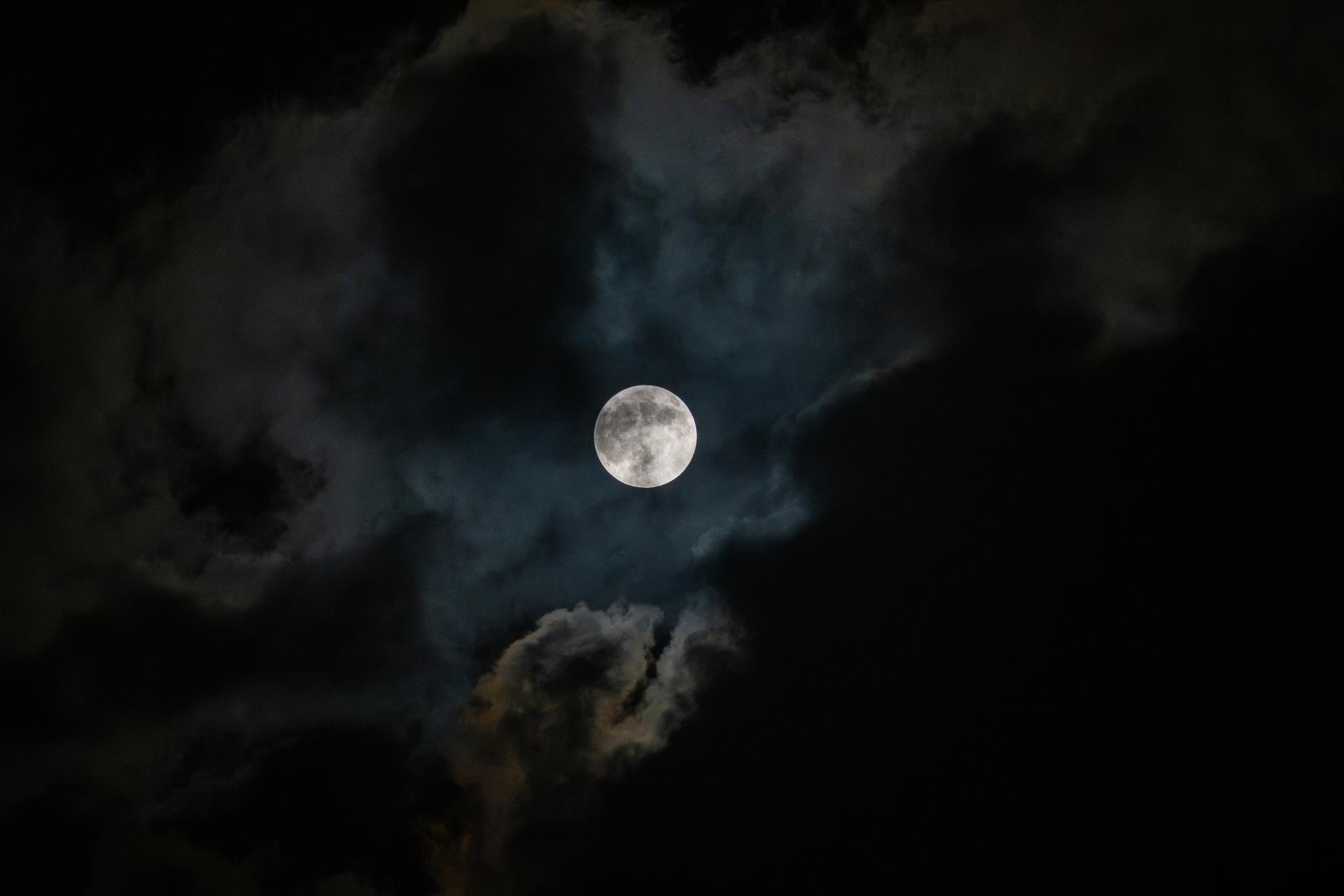
A lunar eclipse is visible over southern Louisiana. The lunar eclipse was visible throughout much of North and South America and part of Europe and Africa between Aug. 27-28. The Full Moon slipped through Earth’s shadow on Aug. 27, continuing into Aug. 28 for some parts of the world, resulting in the lunar eclipse. At maximum eclipse, the Moon takes on a dramatic dark, ruddy or coppery tint along the covered edge. New Orleans is home to NASA’s Michoud Assembly Facility, where stages for NASA’s SLS (Space Launch System) rocket and structures for Orion spacecraft are produced for the Artemis missions.
Read More