Day: September 7, 2026

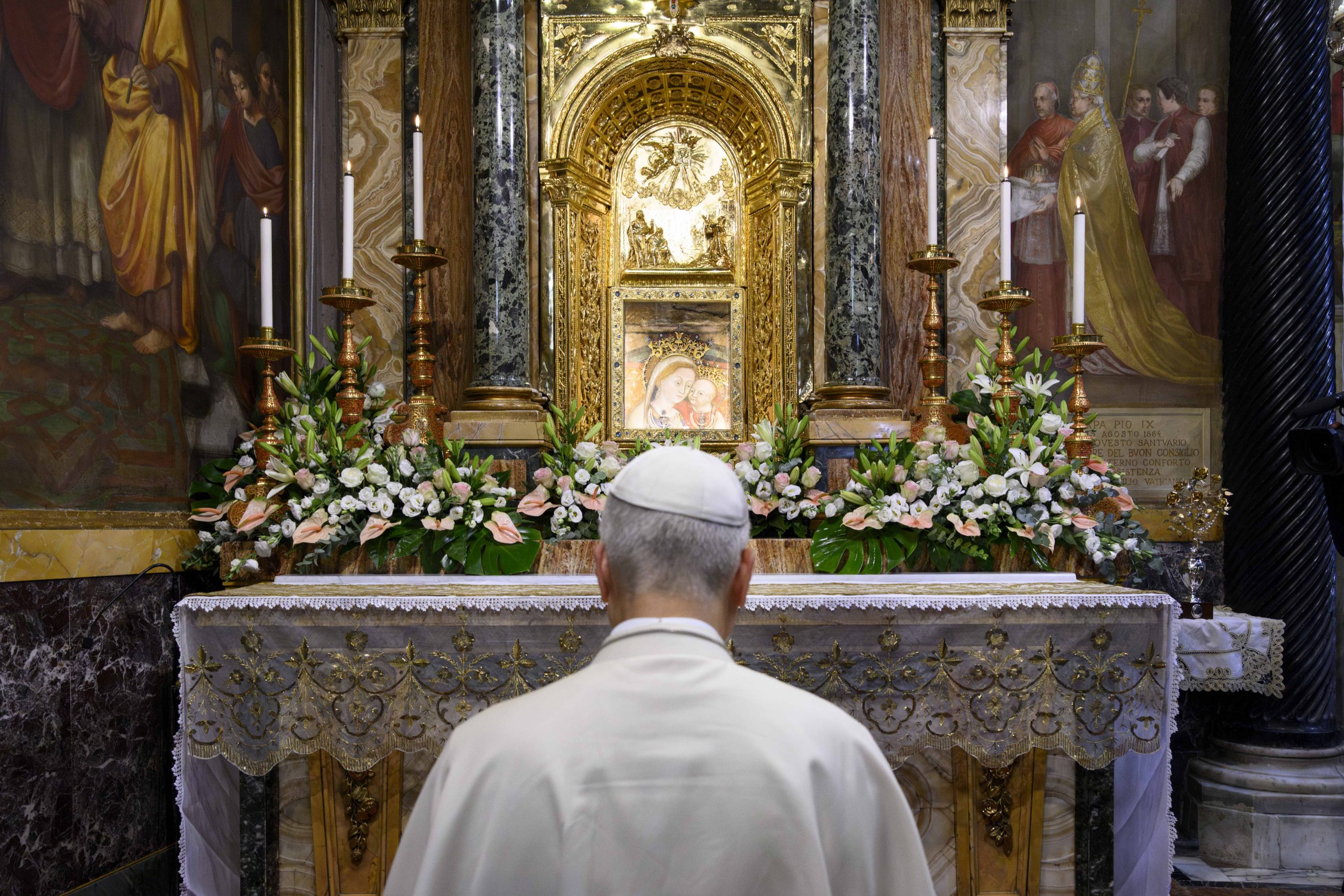
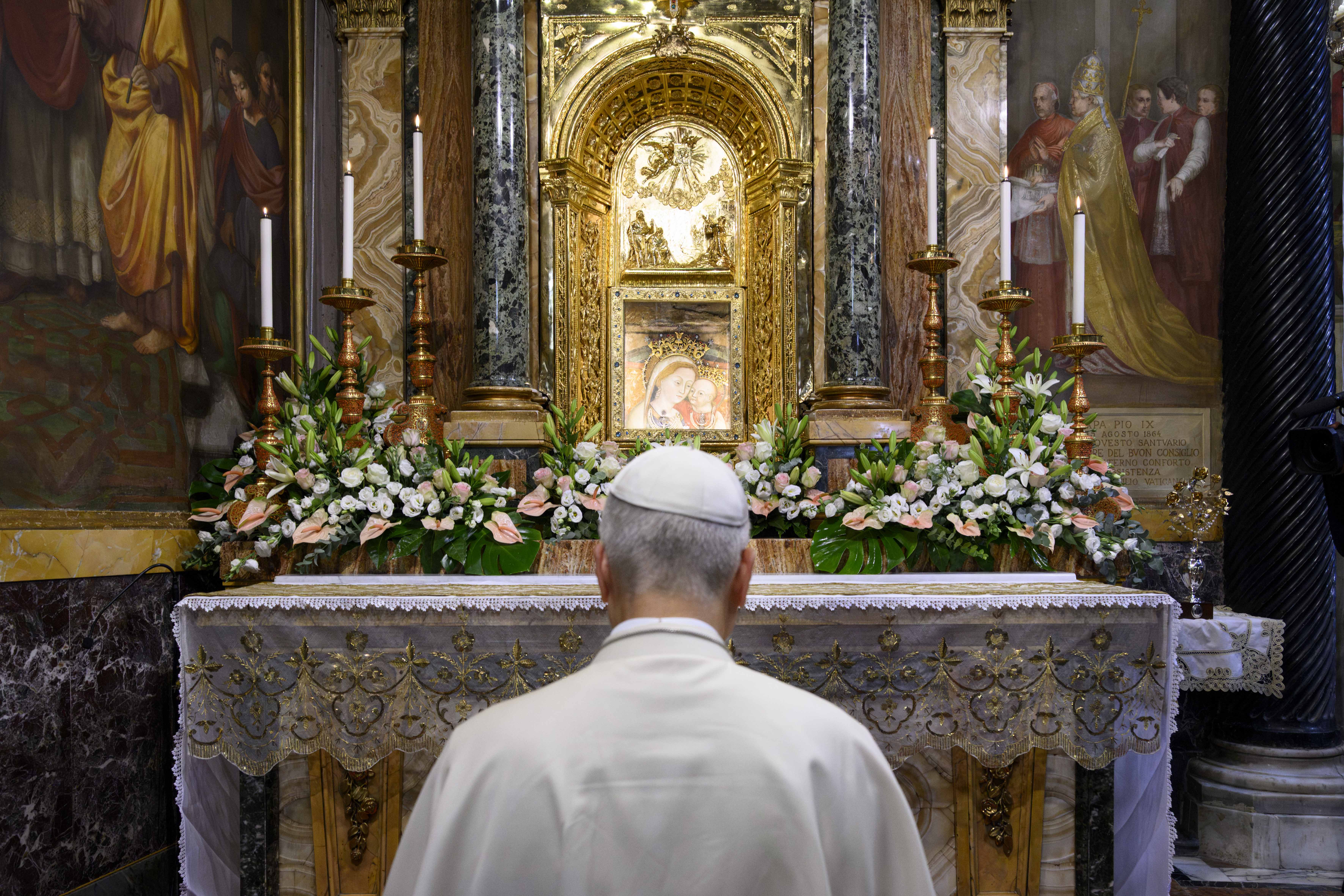
Leo XIV: Mary’s simple presence — and her Son within her — moves all of history – #Catholic – ROME — It was shortly after 5 p.m. local time when Pope Leo XIV arrived at the Shrine of Our Lady of Good Counsel, awaited by thousands of people along the road and welcomed by his fellow Augustinians.Not everyone could fit inside the church, and the streets of Genazzano, about 30 miles east of Rome, were packed. The pope chose to celebrate the Nativity of Mary at this shrine so dear to his heart. He brought a Golden Rose to place at Mary’s feet, and the rector thanked him, saying, “Our affection for you is true and genuine,” because “we all love you immensely.”The maternal presence of Our Lady of Good Counsel, the pope said, had “accompanied me throughout my entire life, with her wisdom, and with the example of her love for her Son, the Son who is always at the center of my faith,” as he wrote in the shrine’s guest book on May 10, 2025.The pope quoted the Augustinian St. Thomas of Villanova, who asked the Evangelists: “Why, I wonder, were we not told about the manner of her conception, her birth, her upbringing, her habits, the virtues that adorned her, what human relationship she had with her Son, how she related to him, how she lived with the apostles after his ascension? All these things were important, and the faithful would have read them with singular devotion, and ordinary people would have delighted in them. O Evangelists, I appeal to you! Why have you deprived us of such great joy by your silence? Why have you left out details so joyful, so eagerly awaited, so pleasing?”From this open dialogue with Scripture, the pope reflected: “Mary’s presence creates something like a leap in the genealogy, an unexpected newness capable of changing not only expectations but also the predictable behavior of a man. What Joseph hears, what he decides and what he does, in fact, is a response to God and to Mary’s presence, to her absolute difference, which surpasses every possible discourse and narrative. In Mary, salvation finds a home: God with us!”Faced with this mystery, the pope explained, “we feel a kind of vertigo.”After all, “God’s way has been and remains simpler and quieter, yet no less powerful and transformative.” Those humble historical circumstances that lead to the birth of Jesus reveal “the originality of his Kingdom, in which arrogance has no place and omnipotence is creation, service and care for life.”Continuing to draw on the teaching of the Augustinian saint, the pope spoke about prayer, because it is in contemplative prayer that “what the world does not tell us, but already exists, takes shape; what is still invisible, but already possesses a new kind of strength. This is not fantasy, but prophecy. We need it, in times of destruction and uncertainty, to see God’s work and serve it.”May the feast of Mary’s birth, the pope concluded, increase peace within us: “Yes, dear friends, we want to imagine peace — to broaden the boundaries of our understanding and paint it in our souls — in order to recognize that it already exists, to welcome it and to serve it. It is the gift of God, the breath of the Risen One, the work of the Holy Spirit. Let us allow peace to grow within us. It will blossom in the world. And the Mother of Good Counsel will accompany us in this mission.”The pope also expressed appreciation for the fresco depicting him at prayer, commemorating his visit to the shrine on May 10, 2025, two days after his election.The final hymn to Our Lady of Good Counsel brought consolation to all:“Protect our people, who hopein your counsel and live in your love.Receive their fervent prayer,O daughter, O bride, O Mother of the Lord.Holy Virgin of Genazzano,turn your serene gaze upon us;stretch out your hand to your children,strengthen the just, save the sinner.”This story was first published by ACI Stampa, the Italian-language sister service of EWTN News. It has been translated and adapted by EWTN News English.

Leo XIV: Mary’s simple presence — and her Son within her — moves all of history – #Catholic – ROME — It was shortly after 5 p.m. local time when Pope Leo XIV arrived at the Shrine of Our Lady of Good Counsel, awaited by thousands of people along the road and welcomed by his fellow Augustinians.Not everyone could fit inside the church, and the streets of Genazzano, about 30 miles east of Rome, were packed. The pope chose to celebrate the Nativity of Mary at this shrine so dear to his heart. He brought a Golden Rose to place at Mary’s feet, and the rector thanked him, saying, “Our affection for you is true and genuine,” because “we all love you immensely.”The maternal presence of Our Lady of Good Counsel, the pope said, had “accompanied me throughout my entire life, with her wisdom, and with the example of her love for her Son, the Son who is always at the center of my faith,” as he wrote in the shrine’s guest book on May 10, 2025.The pope quoted the Augustinian St. Thomas of Villanova, who asked the Evangelists: “Why, I wonder, were we not told about the manner of her conception, her birth, her upbringing, her habits, the virtues that adorned her, what human relationship she had with her Son, how she related to him, how she lived with the apostles after his ascension? All these things were important, and the faithful would have read them with singular devotion, and ordinary people would have delighted in them. O Evangelists, I appeal to you! Why have you deprived us of such great joy by your silence? Why have you left out details so joyful, so eagerly awaited, so pleasing?”From this open dialogue with Scripture, the pope reflected: “Mary’s presence creates something like a leap in the genealogy, an unexpected newness capable of changing not only expectations but also the predictable behavior of a man. What Joseph hears, what he decides and what he does, in fact, is a response to God and to Mary’s presence, to her absolute difference, which surpasses every possible discourse and narrative. In Mary, salvation finds a home: God with us!”Faced with this mystery, the pope explained, “we feel a kind of vertigo.”After all, “God’s way has been and remains simpler and quieter, yet no less powerful and transformative.” Those humble historical circumstances that lead to the birth of Jesus reveal “the originality of his Kingdom, in which arrogance has no place and omnipotence is creation, service and care for life.”Continuing to draw on the teaching of the Augustinian saint, the pope spoke about prayer, because it is in contemplative prayer that “what the world does not tell us, but already exists, takes shape; what is still invisible, but already possesses a new kind of strength. This is not fantasy, but prophecy. We need it, in times of destruction and uncertainty, to see God’s work and serve it.”May the feast of Mary’s birth, the pope concluded, increase peace within us: “Yes, dear friends, we want to imagine peace — to broaden the boundaries of our understanding and paint it in our souls — in order to recognize that it already exists, to welcome it and to serve it. It is the gift of God, the breath of the Risen One, the work of the Holy Spirit. Let us allow peace to grow within us. It will blossom in the world. And the Mother of Good Counsel will accompany us in this mission.”The pope also expressed appreciation for the fresco depicting him at prayer, commemorating his visit to the shrine on May 10, 2025, two days after his election.The final hymn to Our Lady of Good Counsel brought consolation to all:“Protect our people, who hopein your counsel and live in your love.Receive their fervent prayer,O daughter, O bride, O Mother of the Lord.Holy Virgin of Genazzano,turn your serene gaze upon us;stretch out your hand to your children,strengthen the just, save the sinner.”This story was first published by ACI Stampa, the Italian-language sister service of EWTN News. It has been translated and adapted by EWTN News English.

The pope celebrates Mass at the Shrine of Our Lady of Good Counsel in Genazzano

Read More
Mother Teresa documentary premieres in Kolkata on her feast day – #Catholic – An international documentary tracing the life, legacy, and “prophetic path of compassion” of St. Teresa of Kolkata premiered Saturday on her feast day in Kolkata, India, drawing more than 200 people, including dozens of Missionaries of Charity (MC) nuns and novices.“Mother Teresa – Prophet of Compassion,” produced by journalist and author Anto Akkara, was screened at the Auditorium of St Xavier’s College, Park Street, with Archbishop Elias Frank of Kolkata presiding over the premiere.In his introductory remarks, the archbishop praised Akkara’s determination to bring lesser-known aspects of Mother Teresa’s life and work to a global audience.“We are here, dear friends, not just to see what he has done, but to be inspired by Mother’s work,” Frank said, commending the journalist’s “passion” for making Mother Teresa known through the documentary.“There are things that we may not even know yet,” Frank said, pointing to the film’s journalistic examination of events surrounding the Missionaries of Charity. 
 
 Archbishop Elias Frank of Kolkata sits beside journalist and author Anto Akkara during the premiere of the new documentary “Mother Teresa – Prophet of Compassion,” at the Auditorium of St Xavier’s College on Sept. 5, 2026. | Credit: Farrell Shah, Communications Director, Calcutta Archdiocese
 
 Akkara, who is also a contributor to EWTN News, said his association with Mother Teresa began in 1995, when, at the age of 33, he was granted what he described as a “comprehensive” interview with her.“Since then, I pursued the Missionaries of Charity on crucial occasions, frequenting Kolkata often from the funeral of the Mother in 1997,” he said. Akkara has visited Kolkata more than two dozen times for international reporting.He said he proposed the documentary as the Missionaries of Charity approached their 75th anniversary, and the congregation agreed to the project. Atmadarshan TV, Indore, provided support for the production.The new 66-minute documentary builds on an earlier version produced for the congregation’s 75th Foundation Day in October 2025. Akkara subsequently reworked the film, adding more than a dozen new episodes and international accounts.The documentary traces Mother Teresa’s journey from her early work in India to the worldwide expansion of the Missionaries of Charity, highlighting episodes in Patna in 1948, Jharkhand in 1959, and New Delhi in 1961.It also examines the congregation’s work amid conflict, including the killings of MC sisters in Yemen in 1998 and 2016, the expulsion of the congregation from Nicaragua, and the decision of sisters to remain in Gaza and Ukraine amid bombardment.
 
 Journalist and author Anto Akkara speaks at the premiere of his new documentary, “Mother Teresa – Prophet of Compassion,” at the Auditorium of St Xavier’s College on Sept. 5, 2026., hosted by the Archdiocese of Kolkata. | Credit: Farrell Shah, Communications Director, Calcutta Archdiocese| Credit: Farrell Shah, Communications Director, Calcutta Archdiocese
 
 Among those featured in the film is legendary photographer Raghu Rai. The documentary also recalls appreciation expressed for Mother Teresa by Prime Minister Jawaharlal Nehru when inaugurating a new Shishu Bhavan building in New Delhi.Akkara said the film challenges allegations that Mother Teresa’s charitable work was primarily a vehicle for religious conversion and highlights her service to people living in extreme poverty, children, orphans, people with disabilities and mental illness, and those affected by leprosy.Several lesser-known stories included in the film illustrate the breadth of her work. The documentary notes that the distinctive blue-striped white cotton saris worn by MC sisters are woven by people affected by leprosy at the congregation’s Titagarh centre, dedicated to Mahatma Gandhi.
 
 Archbishop Elias Frank speaks at the premiere of the new documentary “Mother Teresa – Prophet of Compassion,” at the Auditorium of St Xavier’s College on Sept. 5, 2026, hosted by the Archdiocese of Kolkata. | Credit: Farrell Shah, Communications Director, Calcutta Archdiocese
 
 The film also recounts Mother Teresa’s efforts to persuade the Indian Air Force to plant trees at the MC leprosy home in Delhi and her decision to decline a papal invitation to the 1993 World Youth Day in Denver so that she could travel to Borduria in Arunachal Pradesh to intervene against the killing of infants born with deformities.Another story describes a raffle organized to raise funds for the leprosy hospital at Shanti Nagar by selling a popemobile reportedly donated to Mother Teresa following the 1964 World Eucharistic Congress in Mumbai.The documentary also recalls Mother Teresa’s request that the Nobel Committee cancel the customary banquet accompanying the Nobel Prize and use the money instead to help orphans in Kolkata.The film highlights the respect Mother Teresa received across religious and political lines, including appreciation from former President A.P.J. Abdul Kalam and former Prime Ministers Inder Kumar Gujral and Atal Bihari Vajpayee.The film also recounts Mother Teresa’s relationship with Jyoti Basu, the longtime Marxist chief minister of West Bengal. Basu, a friend of Mother Teresa, reportedly once remarked: “This lady makes me a bad Marxist, making me believe in Godliness.”
 
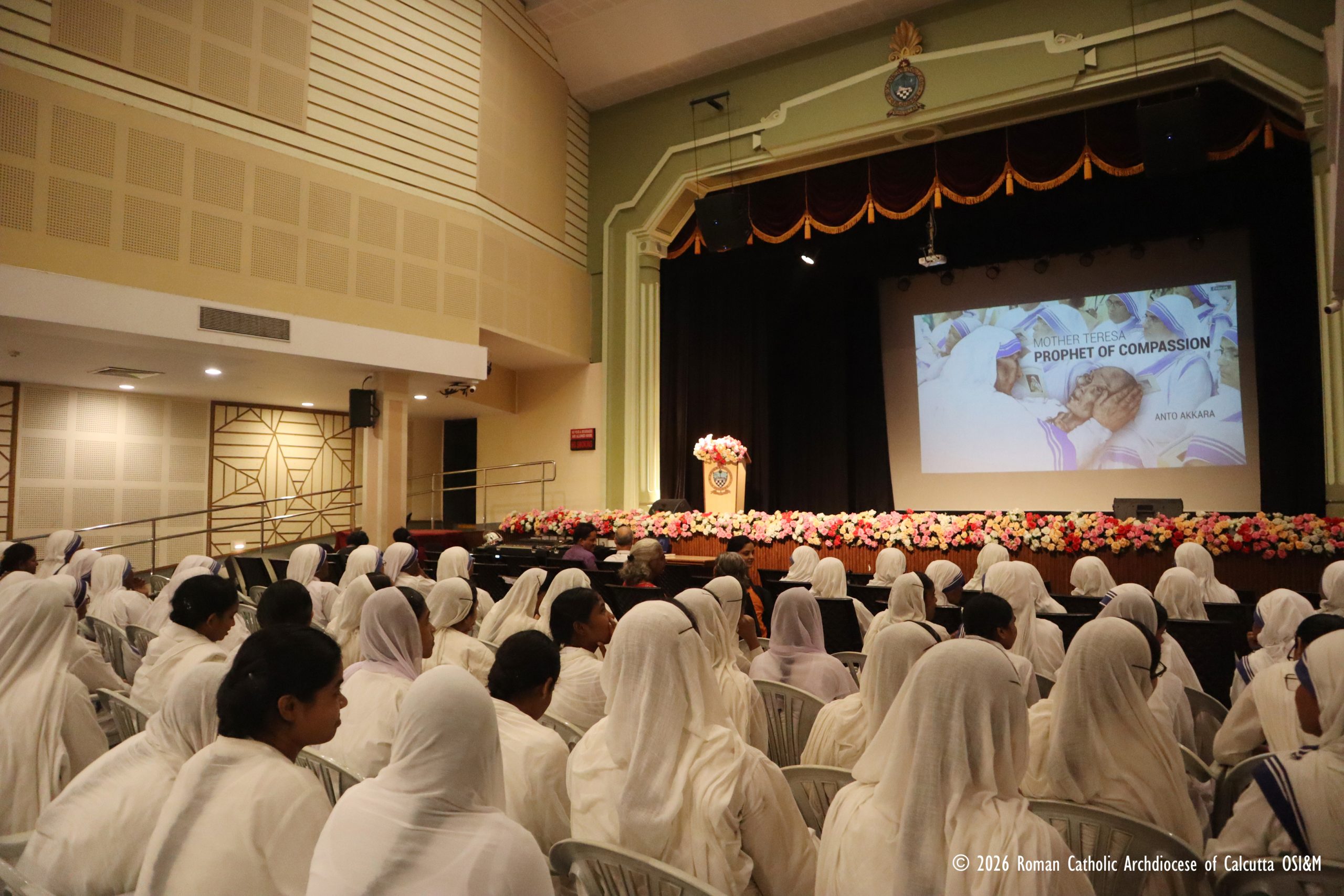
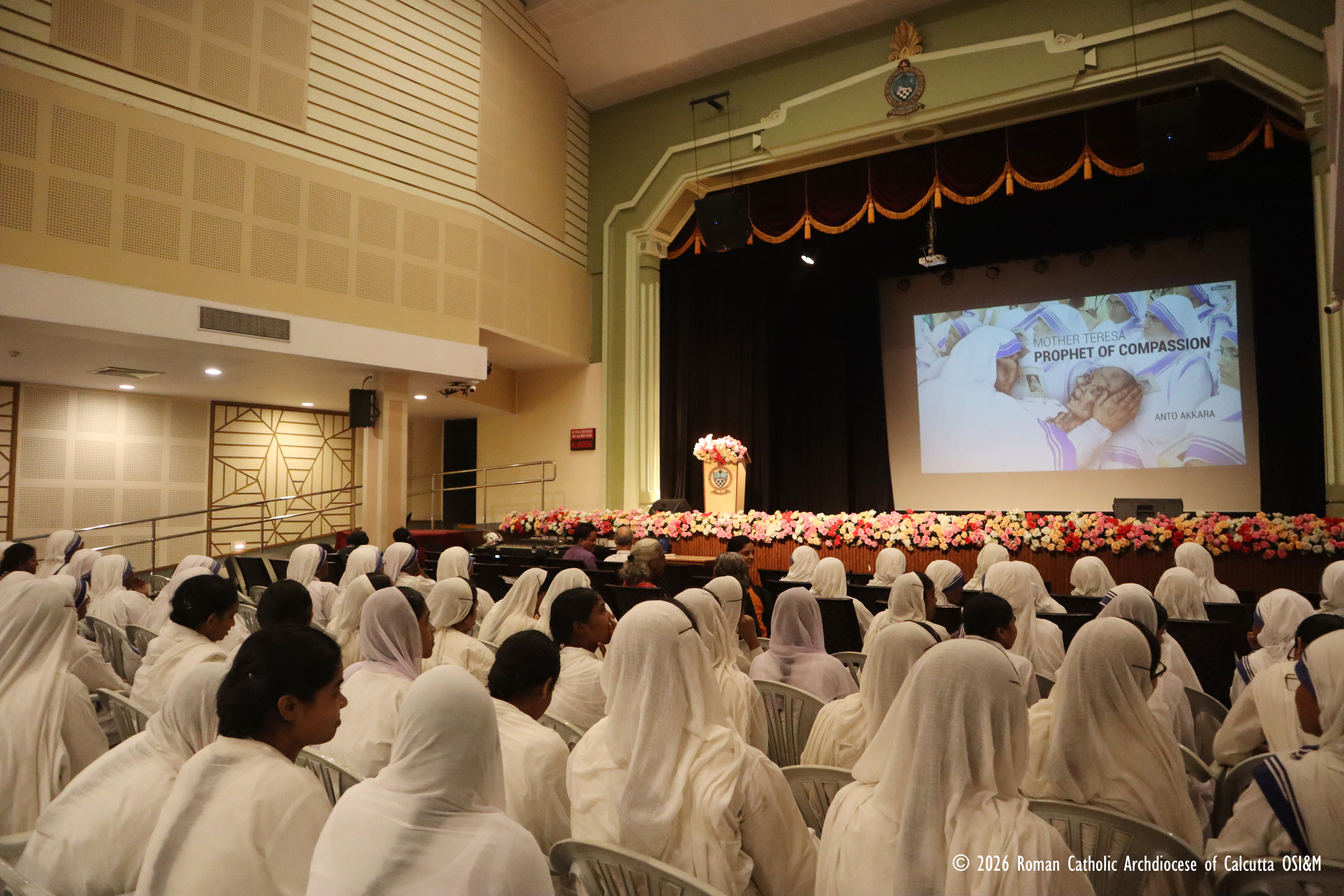
 Over 200 people, including many Missionaries of Charity nuns and novices, attended the premiere of the new documentary “Mother Teresa – Prophet of Compassion” on Sept. 5, 2026, hosted by the Archdiocese of Kolkata. | Credit: Farrell Shah, Communications Director, Calcutta Archdiocese
 
 In another example of her outreach across religious boundaries, Mother Teresa named an MC centre near Ranchi “Radharani Convent” in honor of a Hindu woman who donated land for a leprosy home in 1973.Born Anjezë Gonxhe Bojaxhiu in 1910 in present-day North Macedonia, Mother Teresa came to India in 1929 as a Loreto Sister and founded the Missionaries of Charity in 1950. The congregation has since expanded across the world, serving some of the poorest and most vulnerable communities. The new documentary presents that expansion as the story of a movement that seeks to “globalize compassion and care” while remaining rooted in the founder’s commitment to the destitute.

Mother Teresa documentary premieres in Kolkata on her feast day – #Catholic – An international documentary tracing the life, legacy, and “prophetic path of compassion” of St. Teresa of Kolkata premiered Saturday on her feast day in Kolkata, India, drawing more than 200 people, including dozens of Missionaries of Charity (MC) nuns and novices.“Mother Teresa – Prophet of Compassion,” produced by journalist and author Anto Akkara, was screened at the Auditorium of St Xavier’s College, Park Street, with Archbishop Elias Frank of Kolkata presiding over the premiere.In his introductory remarks, the archbishop praised Akkara’s determination to bring lesser-known aspects of Mother Teresa’s life and work to a global audience.“We are here, dear friends, not just to see what he has done, but to be inspired by Mother’s work,” Frank said, commending the journalist’s “passion” for making Mother Teresa known through the documentary.“There are things that we may not even know yet,” Frank said, pointing to the film’s journalistic examination of events surrounding the Missionaries of Charity. Archbishop Elias Frank of Kolkata sits beside journalist and author Anto Akkara during the premiere of the new documentary “Mother Teresa – Prophet of Compassion,” at the Auditorium of St Xavier’s College on Sept. 5, 2026. | Credit: Farrell Shah, Communications Director, Calcutta Archdiocese Akkara, who is also a contributor to EWTN News, said his association with Mother Teresa began in 1995, when, at the age of 33, he was granted what he described as a “comprehensive” interview with her.“Since then, I pursued the Missionaries of Charity on crucial occasions, frequenting Kolkata often from the funeral of the Mother in 1997,” he said. Akkara has visited Kolkata more than two dozen times for international reporting.He said he proposed the documentary as the Missionaries of Charity approached their 75th anniversary, and the congregation agreed to the project. Atmadarshan TV, Indore, provided support for the production.The new 66-minute documentary builds on an earlier version produced for the congregation’s 75th Foundation Day in October 2025. Akkara subsequently reworked the film, adding more than a dozen new episodes and international accounts.The documentary traces Mother Teresa’s journey from her early work in India to the worldwide expansion of the Missionaries of Charity, highlighting episodes in Patna in 1948, Jharkhand in 1959, and New Delhi in 1961.It also examines the congregation’s work amid conflict, including the killings of MC sisters in Yemen in 1998 and 2016, the expulsion of the congregation from Nicaragua, and the decision of sisters to remain in Gaza and Ukraine amid bombardment. Journalist and author Anto Akkara speaks at the premiere of his new documentary, “Mother Teresa – Prophet of Compassion,” at the Auditorium of St Xavier’s College on Sept. 5, 2026., hosted by the Archdiocese of Kolkata. | Credit: Farrell Shah, Communications Director, Calcutta Archdiocese| Credit: Farrell Shah, Communications Director, Calcutta Archdiocese Among those featured in the film is legendary photographer Raghu Rai. The documentary also recalls appreciation expressed for Mother Teresa by Prime Minister Jawaharlal Nehru when inaugurating a new Shishu Bhavan building in New Delhi.Akkara said the film challenges allegations that Mother Teresa’s charitable work was primarily a vehicle for religious conversion and highlights her service to people living in extreme poverty, children, orphans, people with disabilities and mental illness, and those affected by leprosy.Several lesser-known stories included in the film illustrate the breadth of her work. The documentary notes that the distinctive blue-striped white cotton saris worn by MC sisters are woven by people affected by leprosy at the congregation’s Titagarh centre, dedicated to Mahatma Gandhi. Archbishop Elias Frank speaks at the premiere of the new documentary “Mother Teresa – Prophet of Compassion,” at the Auditorium of St Xavier’s College on Sept. 5, 2026, hosted by the Archdiocese of Kolkata. | Credit: Farrell Shah, Communications Director, Calcutta Archdiocese The film also recounts Mother Teresa’s efforts to persuade the Indian Air Force to plant trees at the MC leprosy home in Delhi and her decision to decline a papal invitation to the 1993 World Youth Day in Denver so that she could travel to Borduria in Arunachal Pradesh to intervene against the killing of infants born with deformities.Another story describes a raffle organized to raise funds for the leprosy hospital at Shanti Nagar by selling a popemobile reportedly donated to Mother Teresa following the 1964 World Eucharistic Congress in Mumbai.The documentary also recalls Mother Teresa’s request that the Nobel Committee cancel the customary banquet accompanying the Nobel Prize and use the money instead to help orphans in Kolkata.The film highlights the respect Mother Teresa received across religious and political lines, including appreciation from former President A.P.J. Abdul Kalam and former Prime Ministers Inder Kumar Gujral and Atal Bihari Vajpayee.The film also recounts Mother Teresa’s relationship with Jyoti Basu, the longtime Marxist chief minister of West Bengal. Basu, a friend of Mother Teresa, reportedly once remarked: “This lady makes me a bad Marxist, making me believe in Godliness.” Over 200 people, including many Missionaries of Charity nuns and novices, attended the premiere of the new documentary “Mother Teresa – Prophet of Compassion” on Sept. 5, 2026, hosted by the Archdiocese of Kolkata. | Credit: Farrell Shah, Communications Director, Calcutta Archdiocese In another example of her outreach across religious boundaries, Mother Teresa named an MC centre near Ranchi “Radharani Convent” in honor of a Hindu woman who donated land for a leprosy home in 1973.Born Anjezë Gonxhe Bojaxhiu in 1910 in present-day North Macedonia, Mother Teresa came to India in 1929 as a Loreto Sister and founded the Missionaries of Charity in 1950. The congregation has since expanded across the world, serving some of the poorest and most vulnerable communities. The new documentary presents that expansion as the story of a movement that seeks to “globalize compassion and care” while remaining rooted in the founder’s commitment to the destitute.

“Mother Teresa – Prophet of Compassion” premiered Sept. 5 in Kolkata, India, drawing more than 200 people, including dozens of Missionaries of Charity (MC) nuns, and novices.
Read More

James Van Allen, who was born in Iowa on Sept. 7, 1914, showed talent and interest in science and math from an early age. A major in physics from Wesleyan College in 1935 was followed by a Ph.D. in nuclear physics in 1939. Before and after World War II – during which he developed antiaircraftContinue reading “Sept. 7, 1914: The birth of James Van Allen”

The post Sept. 7, 1914: The birth of James Van Allen appeared first on Astronomy Magazine.

Read More
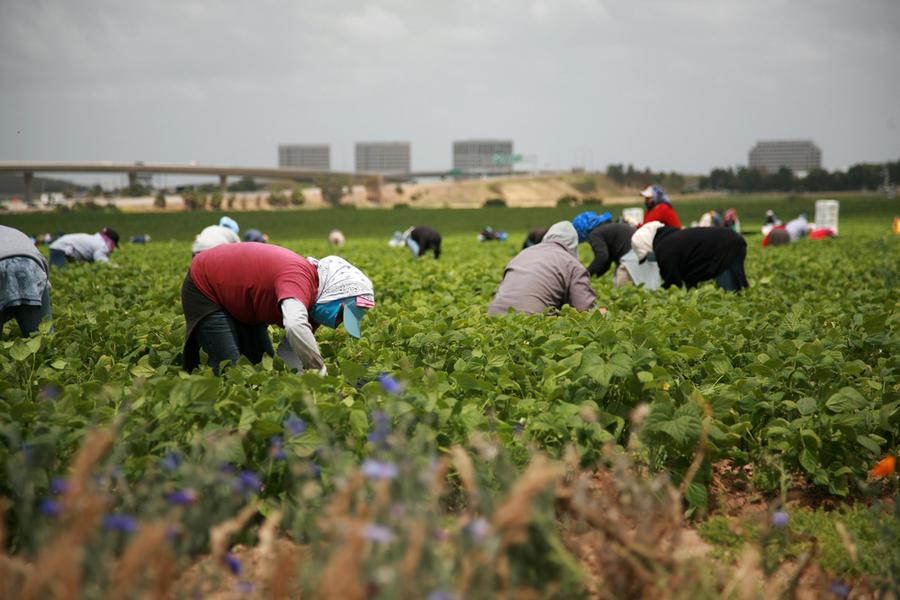
The Catholic Church has a lot to say about Labor Day — why? #Catholic As the U.S. celebrates Labor Day, Catholics have a wealth of resources in biblical interpretation, Church teaching, and social thought that address the nature of work and the place of the worker in society and in God’s creation.But are Catholics, and others, aware of these resources?One Catholic leader considering such questions is Father Sinclair Oubre, a priest of the Diocese of Beaumont, Texas. He is the spiritual moderator of the Catholic Labor Network, a Catholic association that promotes Catholic teaching about work and labor unions. It also supports labor organizing.“All work, no matter what the work is, is essential,” Oubre likes to say. In his view, if a woman in janitorial work at a major software company does not show up to clean the toilets and empty the trash, all production in the office will nosedive.Centuries of Catholic teaching about labor can be found compiled in the Compendium of the Social Doctrine of the Church, published in 2004 by the Pontifical Commission for Justice and Peace. It dedicates its entire sixth chapter to human work and labor, its place in God’s plan, its role in society, and the rights and duties of workers.“The Compendium gathers together in one place those rights that are found in Catholic social teaching, whether it’s Rerum Novarum, or Quadragesimo Anno, or Centesimus Annus, and synthesizes them,” Oubre told EWTN News, referring to the respective encyclicals of popes Leo XIII, Pius XI, and John Paul II.“It’s a beautiful reflection on human work in the world and a very mature and in-depth discussion of the place of work, the place of labor, and the communal nature of it,” Oubre said.Labor, politics, and spiritualityOubre said Catholic teaching is a challenge regardless of people’s political views.“It’s a challenge to the right, but it’s also a challenge to the left,” he said. Catholicism encourages those on the political right not simply to pray novenas and commit themselves to spiritual actions. It is a challenge not to leave other questions about work and labor to the market.For the political left, Catholic social teaching “means you have to enter into a more intimate relationship with your Church and your relationship with Jesus and not just be as a social justice person by throwing a couple of little quotes around. It requires you to enter into that deeper spiritual relationship.”Oubre stressed the importance of starting from the view of Catholic spirituality, not only social justice, because if we don’t, our approach “becomes ideological and polemic.” The spiritual approach “brings us closer to Jesus Christ.”“No matter how dirty, how uncomfortable, how awful the job is, we are participating in God’s ongoing creation. It’s important that we do that job in a way that gives glory to God,” Oubre said.God and man at workThe Compendium’s reflection on work begins with its biblical aspects: There is a human duty to “cultivate and care for the earth” and other good things created by God, it says. Work existed before the fall of Adam and Eve, and it is not a punishment or curse until the break with God transforms it into “toil and pain.” However, God’s rest on the seventh day of creation is the sign of the “fuller freedom” of the “eternal Sabbath.”The life of Jesus Christ is a mission of work, from his early life helping St. Joseph in the work of a carpenter to his ministry of preaching and healing, and most of all in his redemptive labors on the cross.The Compendium presents human labor as a way of supporting oneself and one’s loved ones but also a way to serve those in need. Work is a way to make God’s creation more beautiful, since humankind shares in God’s art and wisdom.“Human work, directed to charity as its final goal, becomes an occasion for contemplation, it becomes devout prayer, vigilantly rising towards and in anxious hope of the day that will not end,” the Compendium says.The rights of laborGod’s rest on the seventh day of creation, the Compendium says, means men and women must enjoy “sufficient rest and free time that will allow them to tend to their family, cultural, social, and religious life.”The Compendium outlines and explains the many rights of workers: the right to rest from work; the right to a working environment that is not harmful to a worker’s health or moral integrity; the right to unemployment protections; the right to a pension and insurance for old age, disability, and work-related accidents; the right to social security for working mothers; and the right to assemble and form associations; the right to just wages and remuneration; and the right to strike.Labor unions play a “fundamental role” in serving the common good and promoting social order and solidarity, though they must not abuse their role in society or become simply arms of a political party.“The recognition of workers’ rights has always been a difficult problem to resolve because this recognition takes place within complex historical and institutional processes, and still today it remains incomplete,” the Compendium says. “This makes the practice of authentic solidarity among workers more fitting and necessary than ever.”A challenge for Catholics and institutionsCatholic teaching has a lengthy paper record. But as in other areas, there is a challenge to practice it.“What I find over and over again that the Church — our Church — gives us wonderful documents of guidance… and we never go back and read them,” Oubre told EWTN News.He cited the U.S. Conference of Catholic Bishops’ 1996 pastoral letter “Economic Justice for All,” which says the Church should be a model for labor rights and treating workers justly.However, Oubre said that in his experience Catholic parishes often neglect to provide unemployment insurance to employees if the law allows them to opt out. Catholic institutions often act as “at-will” employers in which management can fire employees for any reason. They may show preferences for nonunion labor over unionized labor when planning and funding construction projects.“You’re going to undercut the guy who has actually followed the Church’s teachings in regards to work by hiring somebody who may be not offering medical insurance for his employees,” the priest lamented.For Labor Day, Oubre encouraged parishes, dioceses, and other institutions to make sure to adopt policies that put Catholic labor teaching into practice.This story was first published on Sept. 4, 2023, and has been updated.

The Catholic Church has a lot to say about Labor Day — why? #Catholic As the U.S. celebrates Labor Day, Catholics have a wealth of resources in biblical interpretation, Church teaching, and social thought that address the nature of work and the place of the worker in society and in God’s creation.But are Catholics, and others, aware of these resources?One Catholic leader considering such questions is Father Sinclair Oubre, a priest of the Diocese of Beaumont, Texas. He is the spiritual moderator of the Catholic Labor Network, a Catholic association that promotes Catholic teaching about work and labor unions. It also supports labor organizing.“All work, no matter what the work is, is essential,” Oubre likes to say. In his view, if a woman in janitorial work at a major software company does not show up to clean the toilets and empty the trash, all production in the office will nosedive.Centuries of Catholic teaching about labor can be found compiled in the Compendium of the Social Doctrine of the Church, published in 2004 by the Pontifical Commission for Justice and Peace. It dedicates its entire sixth chapter to human work and labor, its place in God’s plan, its role in society, and the rights and duties of workers.“The Compendium gathers together in one place those rights that are found in Catholic social teaching, whether it’s Rerum Novarum, or Quadragesimo Anno, or Centesimus Annus, and synthesizes them,” Oubre told EWTN News, referring to the respective encyclicals of popes Leo XIII, Pius XI, and John Paul II.“It’s a beautiful reflection on human work in the world and a very mature and in-depth discussion of the place of work, the place of labor, and the communal nature of it,” Oubre said.Labor, politics, and spiritualityOubre said Catholic teaching is a challenge regardless of people’s political views.“It’s a challenge to the right, but it’s also a challenge to the left,” he said. Catholicism encourages those on the political right not simply to pray novenas and commit themselves to spiritual actions. It is a challenge not to leave other questions about work and labor to the market.For the political left, Catholic social teaching “means you have to enter into a more intimate relationship with your Church and your relationship with Jesus and not just be as a social justice person by throwing a couple of little quotes around. It requires you to enter into that deeper spiritual relationship.”Oubre stressed the importance of starting from the view of Catholic spirituality, not only social justice, because if we don’t, our approach “becomes ideological and polemic.” The spiritual approach “brings us closer to Jesus Christ.”“No matter how dirty, how uncomfortable, how awful the job is, we are participating in God’s ongoing creation. It’s important that we do that job in a way that gives glory to God,” Oubre said.God and man at workThe Compendium’s reflection on work begins with its biblical aspects: There is a human duty to “cultivate and care for the earth” and other good things created by God, it says. Work existed before the fall of Adam and Eve, and it is not a punishment or curse until the break with God transforms it into “toil and pain.” However, God’s rest on the seventh day of creation is the sign of the “fuller freedom” of the “eternal Sabbath.”The life of Jesus Christ is a mission of work, from his early life helping St. Joseph in the work of a carpenter to his ministry of preaching and healing, and most of all in his redemptive labors on the cross.The Compendium presents human labor as a way of supporting oneself and one’s loved ones but also a way to serve those in need. Work is a way to make God’s creation more beautiful, since humankind shares in God’s art and wisdom.“Human work, directed to charity as its final goal, becomes an occasion for contemplation, it becomes devout prayer, vigilantly rising towards and in anxious hope of the day that will not end,” the Compendium says.The rights of laborGod’s rest on the seventh day of creation, the Compendium says, means men and women must enjoy “sufficient rest and free time that will allow them to tend to their family, cultural, social, and religious life.”The Compendium outlines and explains the many rights of workers: the right to rest from work; the right to a working environment that is not harmful to a worker’s health or moral integrity; the right to unemployment protections; the right to a pension and insurance for old age, disability, and work-related accidents; the right to social security for working mothers; and the right to assemble and form associations; the right to just wages and remuneration; and the right to strike.Labor unions play a “fundamental role” in serving the common good and promoting social order and solidarity, though they must not abuse their role in society or become simply arms of a political party.“The recognition of workers’ rights has always been a difficult problem to resolve because this recognition takes place within complex historical and institutional processes, and still today it remains incomplete,” the Compendium says. “This makes the practice of authentic solidarity among workers more fitting and necessary than ever.”A challenge for Catholics and institutionsCatholic teaching has a lengthy paper record. But as in other areas, there is a challenge to practice it.“What I find over and over again that the Church — our Church — gives us wonderful documents of guidance… and we never go back and read them,” Oubre told EWTN News.He cited the U.S. Conference of Catholic Bishops’ 1996 pastoral letter “Economic Justice for All,” which says the Church should be a model for labor rights and treating workers justly.However, Oubre said that in his experience Catholic parishes often neglect to provide unemployment insurance to employees if the law allows them to opt out. Catholic institutions often act as “at-will” employers in which management can fire employees for any reason. They may show preferences for nonunion labor over unionized labor when planning and funding construction projects.“You’re going to undercut the guy who has actually followed the Church’s teachings in regards to work by hiring somebody who may be not offering medical insurance for his employees,” the priest lamented.For Labor Day, Oubre encouraged parishes, dioceses, and other institutions to make sure to adopt policies that put Catholic labor teaching into practice.This story was first published on Sept. 4, 2023, and has been updated.

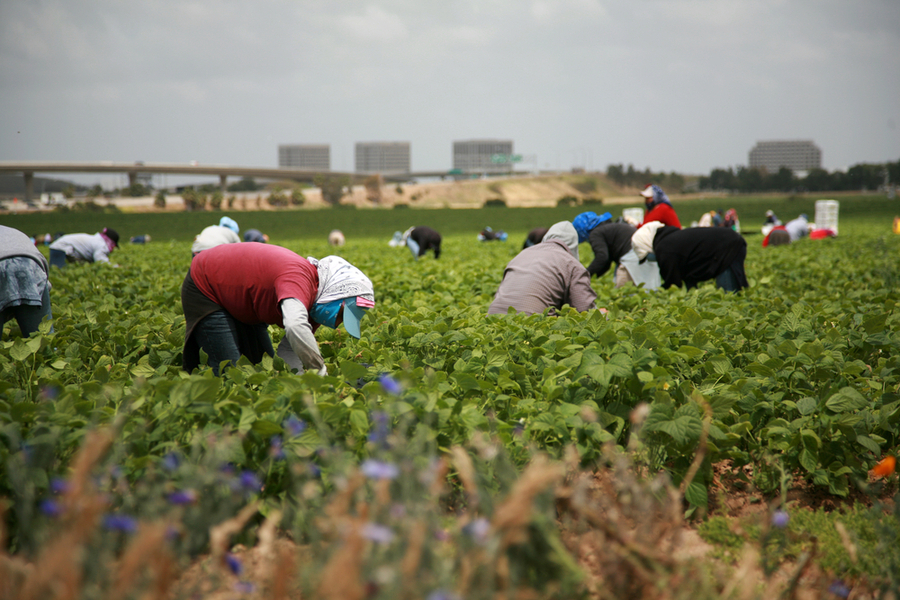
“All work, no matter what the work is, is essential,” said Father Sinclair Oubre, spiritual moderator of the Catholic Labor Network.

Read More