


Using the James Webb Space Telescope, an international team of astronomers have discovered that dust and water can form and survive surprisingly close to the supermassive black hole at the center of our Milky Way galaxy.
Read MoreUsing the James Webb Space Telescope, an international team of astronomers have discovered that dust and water can form and survive surprisingly close to the supermassive black hole at the center of our Milky Way galaxy.
Read More![Florida firm accused of failing to pay Catholic military catechists – #Catholic – Orlando-based military contractor Idemma has failed to meet payment obligations for some of its subcontractors who worked in Catholic ministry positions at U.S. military bases, according to three people who say they are still owed thousands of dollars by the company.Three people who spoke with EWTN News reported that Idemma was routinely late in paying them for their work and missed payments that have still not been fulfilled. In some cases, late payments are more than a year overdue, subcontractors said. Each person said Idemma initially promised to make them whole and then eventually stopped responding to emails or phone calls.Michael Aldeguer, administrative assistant for Idemma, told EWTN News “the overwhelming majority” of obligations were paid, and acknowledged “a limited number of contractor accounts that remain under review or resolution.”He said the company is “firmly committed to honoring our contractual obligations and resolving legitimate outstanding amounts.” He said Idemma plans to “make substantial progress toward resolving the remaining matters by year-end.”On Sept. 10, Aldeguer said Idemma would reach out to every subcontractor “today” to “ensure they have received our recent communications and are aware of the latest updates.”The Pentagon referred an inquiry by EWTN News to the military service departments, which oversee the contracts.Contractor describes worsening payment lagPaulette Padua began working as a Catholic religious education coordinator at Beale Air Force Base in California in 2013, initially as an independent contractor. In 2020, Padua was underbid by Idemma, which took over the contract but kept her in the role.Initially, Padua said payments came as agreed upon, but “something happened” in 2025 and “payment became later and later and every month.” Her contract ended in September, and she said there is still more than $8,000 in outstanding payments owed to her.“I kept having to beg for my pay,” she said, and was “sending constant, constant emails” to the company to receive her payments. An email chain that Padua shared with EWTN News shows an Idemma employee repeatedly promising to complete the payments, but with her responding that only partial payments were being made.Padua said Idemma promised to pay her back in increments in 2026, but she only received a $200 check. She said the company no longer responds to her emails about payments, complaining that “they just ghost [me].”“It was causing me so much stress that it was making me sick so at a certain point I had to let go and let God have his way,” Padua said. “I can’t let them give me a heart attack.”Padua, who was crying when recalling the situation, said losing payments “was very difficult physically, emotionally, and financially,” adding: “I worked for them for so long and I love that military community and I was good at my job and just to be done so dirty it feels terrible.”She said she was “counting on” those payments and was reassured “you’re going to get paid.”“Should I tell that to my mortgage company? For my car loans? For my bills?” she asked.Another subcontractor who said she faced similar issues is Dianne Hodges, who had two contracts with Idemma, one of which was paid late and the other which is still not paid off. She said most of it was paid off by June 2026, about a year after she’d completed the initial contract.Hodges said they still owe her $3,200 for the other contract she worked but that Idemma did not respond to her most recent emails in August about the remaining balance, saying “they’ve gone radio silent on me” and worrying “I guess I’ll never see it.”“It’s been a nightmare,” Hodges said. “It’s been an absolute nightmare.”Hodges said the delayed payments led to trouble with creditors and late fees on credit cards that she couldn’t pay off. She had to pull money out of her 401K to pay her bills and shop for Christmas gifts in 2024.“It was tough for me sometimes to make ends meet,” she said, adding that when she called Idemma about the financial struggles she faced that year, “I broke down in tears, I was telling them this is not how a business works.”Morgan Loftis, who worked as a director of religious education at the Marine Corps Air Station New River from September 2025 through May 2026, told EWTN News she is also still owed thousands of dollars in payments from Idemma.Loftis said she was owed $12,300 but was only paid $4,875, which leaves $7,425 unpaid.In May 2026, before she left the role, she said Idemma “offered to pay me in full … if I stayed onto the next year because they were about to lose the contract.” She said she considered the offer and requested “an actual payment plan in writing” but never received one. Now, she said “they won’t take my calls.”“I think they know our numbers and they’re just not going to respond,” she said, referring to the subcontractors who are still owed money.Loftis said she took the role even though she heard other subcontractors were not getting paid, but “I wanted there to be a faith formation program and it looked like there wasn’t going to be one.”Yet, as she and her husband are expecting their fifth child and bought a new car, she said, “it would be really nice to have had the full pay. That could really alleviate how hard that car payment hits.”Archbishop Broglio: Allegations ‘deeply troubling’Archbishop Timothy Broglio of the Archdiocese for the Military Services, USA, expressed concern about the lack of payments.“The archdiocese … has no contractual or business relationship with Idemma, which operates under direct contract with the federal government,” Broglio said in a statement to EWTN News.“Even so, the allegations of late or missed payments, if true, are deeply troubling,” he said. “Idemma has a moral responsibility to meet its payroll obligations in a timely fashion. I strongly encourage the company to do so.”In email exchanges about the missed payments, Idemma responded to the specific cases of the three subcontractors who spoke with EWTN News.For Hodges, Aldeguer noted that one contract was “recently cleared and paid in full” and said “payments have continued to be made toward the remaining balance, and we have also added interest.”For Padua, he said Idemma has “agreed to pay interest, which we also confirmed to her in writing.” He said in her situation, “we agreed to pay her more than what we received under the contract” because she was the chaplainʼs first choice. He said: “This arrangement worked until our other live music business was essentially wiped out by COVID.”For Loftis, Aldeguer said “we are still verifying the amounts owed” and “she should have received a request to upload her invoices related to the contract.”“Each situation is different, and we are making our best efforts to get everything cleared as soon as possible, with interest being applied to the final remaining balances where agreed,” Aldeguer said. “Ultimately, we are a small team that is extremely dedicated to getting these matters resolved, even in situations where we ourselves sustained significant losses on the underlying contracts.”He said Idemma has implemented a centralized invoice-submission process for contractors with unresolved accounts to collect outstanding invoices and documents in one place to compare them to their records, identify discrepancies, and resolve outstanding balances.Aldeguer requested that EWTN News delay publication while the company worked to resolve outstanding contractor accounts, saying recent progress wasnʼt being reflected.](https://unitedyam.com/wp-content/uploads/2026/09/florida-firm-accused-of-failing-to-pay-catholic-military-catechists-catholic-orlando-based-military-contractor-idemma-has-failed-to-meet-payment-obligations-for-some-of-its-subcontractors-who-wor.jpg "Florida firm accused of failing to pay Catholic military catechists – #Catholic – Orlando-based military contractor Idemma has failed to meet payment obligations for some of its subcontractors who worked in Catholic ministry positions at U.S. military bases, according to three people who say they are still owed thousands of dollars by the company.Three people who spoke with EWTN News reported that Idemma was routinely late in paying them for their work and missed payments that have still not been fulfilled. In some cases, late payments are more than a year overdue, subcontractors said. Each person said Idemma initially promised to make them whole and then eventually stopped responding to emails or phone calls.Michael Aldeguer, administrative assistant for Idemma, told EWTN News “the overwhelming majority” of obligations were paid, and acknowledged “a limited number of contractor accounts that remain under review or resolution.”He said the company is “firmly committed to honoring our contractual obligations and resolving legitimate outstanding amounts.” He said Idemma plans to “make substantial progress toward resolving the remaining matters by year-end.”On Sept. 10, Aldeguer said Idemma would reach out to every subcontractor “today” to “ensure they have received our recent communications and are aware of the latest updates.”The Pentagon referred an inquiry by EWTN News to the military service departments, which oversee the contracts.Contractor describes worsening payment lagPaulette Padua began working as a Catholic religious education coordinator at Beale Air Force Base in California in 2013, initially as an independent contractor. In 2020, Padua was underbid by Idemma, which took over the contract but kept her in the role.Initially, Padua said payments came as agreed upon, but “something happened” in 2025 and “payment became later and later and every month.” Her contract ended in September, and she said there is still more than $8,000 in outstanding payments owed to her.“I kept having to beg for my pay,” she said, and was “sending constant, constant emails” to the company to receive her payments. An email chain that Padua shared with EWTN News shows an Idemma employee repeatedly promising to complete the payments, but with her responding that only partial payments were being made.Padua said Idemma promised to pay her back in increments in 2026, but she only received a $200 check. She said the company no longer responds to her emails about payments, complaining that “they just ghost [me].”“It was causing me so much stress that it was making me sick so at a certain point I had to let go and let God have his way,” Padua said. “I can’t let them give me a heart attack.”Padua, who was crying when recalling the situation, said losing payments “was very difficult physically, emotionally, and financially,” adding: “I worked for them for so long and I love that military community and I was good at my job and just to be done so dirty it feels terrible.”She said she was “counting on” those payments and was reassured “you’re going to get paid.”“Should I tell that to my mortgage company? For my car loans? For my bills?” she asked.Another subcontractor who said she faced similar issues is Dianne Hodges, who had two contracts with Idemma, one of which was paid late and the other which is still not paid off. She said most of it was paid off by June 2026, about a year after she’d completed the initial contract.Hodges said they still owe her $3,200 for the other contract she worked but that Idemma did not respond to her most recent emails in August about the remaining balance, saying “they’ve gone radio silent on me” and worrying “I guess I’ll never see it.”“It’s been a nightmare,” Hodges said. “It’s been an absolute nightmare.”Hodges said the delayed payments led to trouble with creditors and late fees on credit cards that she couldn’t pay off. She had to pull money out of her 401K to pay her bills and shop for Christmas gifts in 2024.“It was tough for me sometimes to make ends meet,” she said, adding that when she called Idemma about the financial struggles she faced that year, “I broke down in tears, I was telling them this is not how a business works.”Morgan Loftis, who worked as a director of religious education at the Marine Corps Air Station New River from September 2025 through May 2026, told EWTN News she is also still owed thousands of dollars in payments from Idemma.Loftis said she was owed $12,300 but was only paid $4,875, which leaves $7,425 unpaid.In May 2026, before she left the role, she said Idemma “offered to pay me in full … if I stayed onto the next year because they were about to lose the contract.” She said she considered the offer and requested “an actual payment plan in writing” but never received one. Now, she said “they won’t take my calls.”“I think they know our numbers and they’re just not going to respond,” she said, referring to the subcontractors who are still owed money.Loftis said she took the role even though she heard other subcontractors were not getting paid, but “I wanted there to be a faith formation program and it looked like there wasn’t going to be one.”Yet, as she and her husband are expecting their fifth child and bought a new car, she said, “it would be really nice to have had the full pay. That could really alleviate how hard that car payment hits.”Archbishop Broglio: Allegations ‘deeply troubling’Archbishop Timothy Broglio of the Archdiocese for the Military Services, USA, expressed concern about the lack of payments.“The archdiocese … has no contractual or business relationship with Idemma, which operates under direct contract with the federal government,” Broglio said in a statement to EWTN News.“Even so, the allegations of late or missed payments, if true, are deeply troubling,” he said. “Idemma has a moral responsibility to meet its payroll obligations in a timely fashion. I strongly encourage the company to do so.”In email exchanges about the missed payments, Idemma responded to the specific cases of the three subcontractors who spoke with EWTN News.For Hodges, Aldeguer noted that one contract was “recently cleared and paid in full” and said “payments have continued to be made toward the remaining balance, and we have also added interest.”For Padua, he said Idemma has “agreed to pay interest, which we also confirmed to her in writing.” He said in her situation, “we agreed to pay her more than what we received under the contract” because she was the chaplainʼs first choice. He said: “This arrangement worked until our other live music business was essentially wiped out by COVID.”For Loftis, Aldeguer said “we are still verifying the amounts owed” and “she should have received a request to upload her invoices related to the contract.”“Each situation is different, and we are making our best efforts to get everything cleared as soon as possible, with interest being applied to the final remaining balances where agreed,” Aldeguer said. “Ultimately, we are a small team that is extremely dedicated to getting these matters resolved, even in situations where we ourselves sustained significant losses on the underlying contracts.”He said Idemma has implemented a centralized invoice-submission process for contractors with unresolved accounts to collect outstanding invoices and documents in one place to compare them to their records, identify discrepancies, and resolve outstanding balances.Aldeguer requested that EWTN News delay publication while the company worked to resolve outstanding contractor accounts, saying recent progress wasnʼt being reflected.")
A spokesman for the company, Idemma, acknowledged “a limited number of contractor accounts that remain under review or resolution.”
A reading from the First Letter of St. Paul to Corinthians
9:16-19, 22b-27
Brothers and sisters:
If I preach the Gospel, this is no reason for me to boast,
for an obligation has been imposed on me,
and woe to me if I do not preach it!
If I do so willingly, I have a recompense,
but if unwillingly, then I have been entrusted with a stewardship.
What then is my recompense?
That, when I preach, I offer the Gospel free of charge
so as not to make full use of my right in the Gospel.
Although I am free in regard to all,
I have made myself a slave to all
so as to win over as many as possible.
I have become all things to all, to save at least some.
All this I do for the sake of the Gospel,
so that I too may have a share in it.
Do you not know that the runners in the stadium all run in the race,
but only one wins the prize?
Run so as to win.
Every athlete exercises discipline in every way.
They do it to win a perishable crown,
but we an imperishable one.
Thus I do not run aimlessly;
I do not fight as if I were shadowboxing.
No, I drive my body and train it,
for fear that, after having preached to others,
I myself should be disqualified.
From the Gospel according to Luke
6:39-42
Jesus told his disciples a parable:
"Can a blind person guide a blind person?
Will not both fall into a pit?
No disciple is superior to the teacher;
but when fully trained,
every disciple will be like his teacher.
Why do you notice the splinter in your brother’s eye,
but do not perceive the wooden beam in your own?
How can you say to your brother,
‘Brother, let me remove that splinter in your eye,’
when you do not even notice the wooden beam in your own eye?
You hypocrite! Remove the wooden beam from your eye first;
then you will see clearly
to remove the splinter in your brother’s eye."
The Gospel of Luke has once again put before us Jesus’ question: “Can a blind man lead a blind man?” (Lk 6:39). The Lord means to say that a guide cannot be blind; he must see clearly, if he is not to risk causing harm to those entrusted to his care. Jesus thus calls the attention of all those who have educational or leadership responsibilities (…) to feel a sense of responsibility, to ask themselves what the right path is, and to walk it themselves first. (…) In today’s passage, we find another very significant phrase, which exhorts us not to be presumptuous and hypocritical. “Why do you see the speck that is in your brother’s eye, but do not notice the log that is in your own eye?” (Lk 6:41). How easy it is to notice the faults and sins of others whilst failing to see our own! And how can we tell whether our eye is clear or obstructed by a log? The answer lies in our actions. It is Jesus who tells us this once more: “Each tree is known by its own fruit” (Lk 6:44). The fruit consists of our actions, but also our words. (…) Indeed, a good person brings forth good things from the heart and the mouth, whilst an evil person brings forth evil things. (…) Feel a sense of responsibility and take pride in offering a Christian witness capable of renewing society both inwardly and outwardly. (John Paul II, homily of 1 March 1992)
Read More
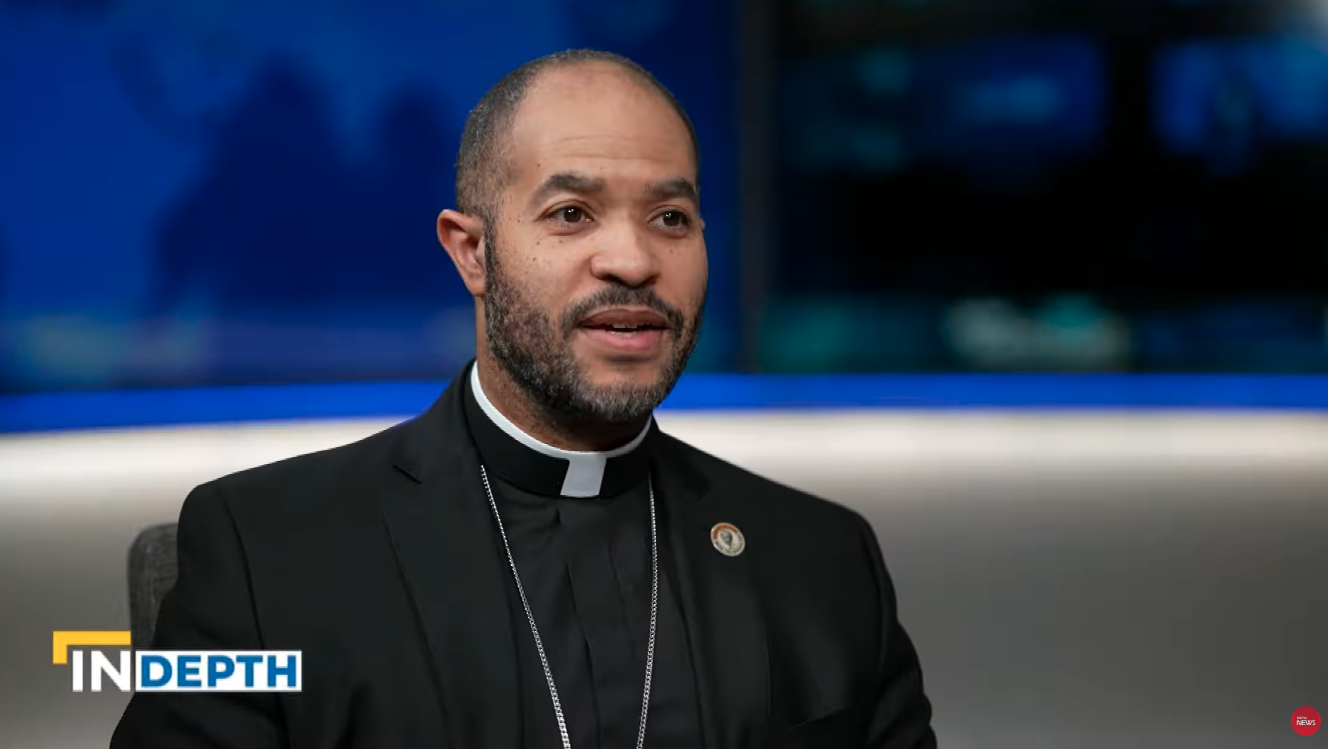
“I really enjoy the gift of a Black Catholicism, Black Catholic spirituality, and it certainly does have a place in the universal Church,” Bishop Robert Boxie said.

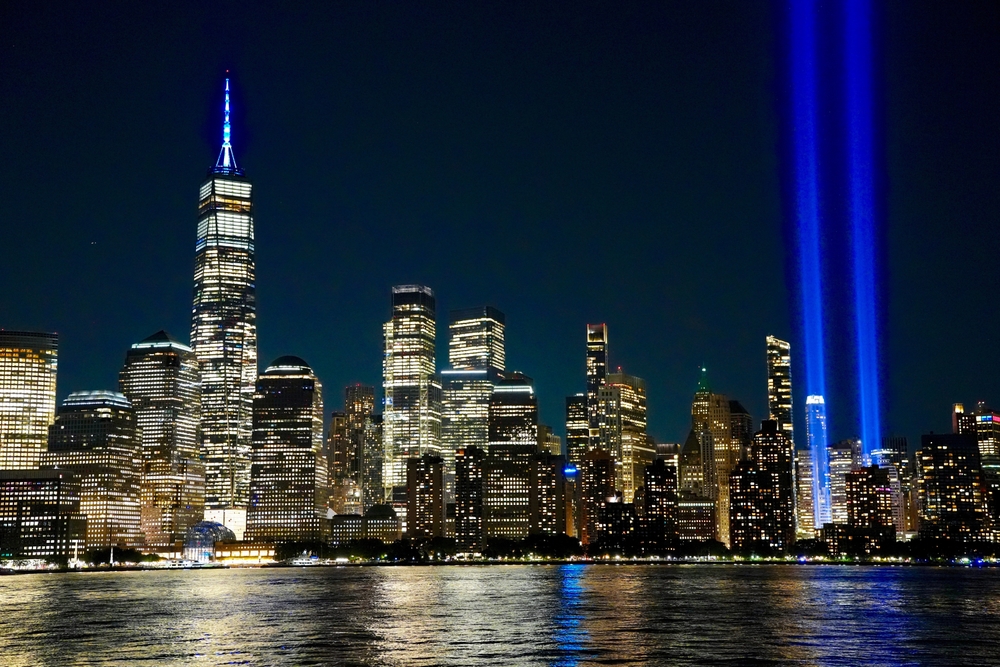
“We remember those who died and the extraordinary courage, service, sacrifice, and compassion that followed,” New York Archbishop Ronald Hicks said.

Chad Pecknold, a longtime professor at The Catholic University of America, has begun working for the government agency that oversees immigration enforcement.

TENERIFE, Canary Islands, Sept. 8, 2026 — Fifteen years after STARMUS brought together the legends who defined the first age of human space exploration, the Festival will welcome the explorers who have opened its newest chapter. Artemis II Commander Reid Wiseman, Pilot Victor Glover and Mission Specialist Jeremy Hansen will attend STARMUS VIII — TheContinue reading “Artemis 2 crew lands at Starmus VII — 15 years after Armstrong, Aldrin, and Leonov launched its lengacy”
The post Artemis 2 crew lands at Starmus VII — 15 years after Armstrong, Aldrin, and Leonov launched its lengacy appeared first on Astronomy Magazine.
Read More
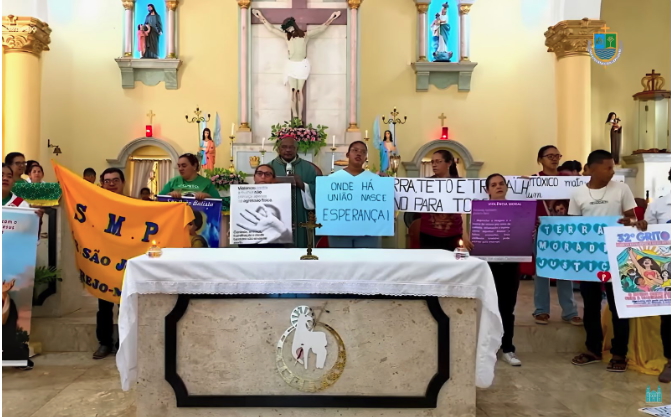
This past Sept. 7, the “Creed of the Ecclesial Base Communities” was included as part of a Mass marking Brazil’s annual “Cry of the Excluded” event.

| Picture of the day |
|---|

|
|
The shipwreck of Cabo de Santa Maria in Boa Vista, Cape Verde as it appeared in December 2010. The Spanish cargo ship ran aground at Praia de Atalanta beach on this date in 1968.
|

Obituary: Erin Guiltinan Piacenti, 32, Chester #Catholic – 
A Mass of Christian Burial was held on Sept. 9 at St. Joseph Church in Mendham, N.J., for Erin Guiltinan Piacenti of Chester, N.J., who died on Aug. 31 in New York City. She was 32.
Born in 1994 in New York City, Piacenti was raised in Chester, N.J. She attended St. Joseph School in Mendham and Villa Walsh Academy in Morristown, N.J. She earned a bachelor’s degree in political science from the University of Pennsylvania. While at Penn, Piacenti served as a member, soloist, and eventually music director of Dischord A Cappella.
Piacenti began her career as a buyer at Bloomingdale’s, but always knew her true ambition was to be an attorney. She graduated magna cum laude and earned induction into the Order of the Coif and law review from Fordham University School of Law. Thereafter, she began her legal career at Davis Polk & Wardwell in Manhattan and later became a vice president at Bank of America.
At Fordham Law School, Piacenti met her husband, Frank, who also grew up in Chester. They quickly formed an inseparable bond, grown through shared interests, frequent travel, and deep trust. After four years together, they were married in 2024 at St. Francis of Assisi Parish on Long Beach Island, N.J.
In March of 2026, the couple welcomed their daughter, Madison. Piacenti effortlessly transitioned into her role as Madison’s devoted mother. Each morning, she sang Disney songs to Madison and danced with her. The joy they brought to one another was overwhelming.
The family notes their heartbreak that Piacenti will not be able to participate in Madison’s future milestones, holidays, and life events. Yet Madison will grow up knowing how much she loved her and how much her parents loved one another.
Piacenti was the big sister to her two sisters, Megan and Kelly, and her two brothers, Edward and William. She doted on her siblings, and they, in turn, adored and looked up to her. They were all best friends. Piacenti’s family members are heartbroken at her untimely, unfair, and tragic passing but are thankful she was and will always be in their lives and hearts.
Piacenti loved singing, running, traveling, Broadway musicals, Harry Potter, and Disney World, and she enjoyed spending time at her family home on Long Beach Island and playing with the family golden retrievers. She will be remembered for her intelligence, warmth, loyalty, generosity, and, above all, her love for her family. She was a devoted wife, mother, daughter, sister, and friend.
Survivors include her husband, Frank Piacenti; her daughter, Madison Piacenti; her devoted parents, Edward and Barbara Guiltinan; her siblings, Megan Guiltinan Sneden and her husband, Riley, Edward Guiltinan, Jr., Kelly Guiltinan, and William Guiltinan; her father-in-law and mother-in-law, Frank and Kelly Piacenti; her sisters-in-law, Alexandria and Olivia; and many other family members and friends.
Please make memorial donations to Supporting Madison’s Future, a GoFundMe established to provide Piacenti’s daughter the future she dreamed of building with her.
– A Mass of Christian Burial was held on Sept. 9 at St. Joseph Church in Mendham, N.J., for Erin Guiltinan Piacenti of Chester, N.J., who died on Aug. 31 in New York City. She was 32. Born in 1994 in New York City, Piacenti was raised in Chester, N.J. She attended St. Joseph School in Mendham and Villa Walsh Academy in Morristown, N.J. She earned a bachelor’s degree in political science from the University of Pennsylvania. While at Penn, Piacenti served as a member, soloist, and eventually music director of Dischord A Cappella. Piacenti began her career as a buyer

Peruvian city to unveil world’s tallest statue of Pope Leo for trip to South America #Catholic – 
BUENOS AIRES, Argentina (OSV News) — The Peruvian city of Callao announced an unusual tribute to Pope Leo XIV ahead of his November visit to the South American country: the largest statue of the pontiff in the world.
The 45.9-foot-tall statue of Pope Leo will grace a seafront park overlooking the Pacific Ocean in Callao, located in the northern suburbs of Lima, the national capital.
“This work will be a source of pride for all the residents of Callao and a new space for us to come together as a community,” said Mayor César Pérez, according to the newspaper El Comercio. “May the (statue) be a place that transmits faith, hope, and unity, and may this sculpture become a symbol that accompanies families.”
The mayor added that the local government donated park space, while a private firm provided funding for the statue.
The steel and marble statue of the pope with open arms is expected to be installed prior to his arrival in Peru Nov. 11. Pérez expressed hope that the statue would be inaugurated during the pope’s five-day trip to Peru. The visit — a homecoming for Pope Leo, who became a Peruvian citizen while serving as bishop of Chiclayo — will cap an 11-day journey to South America, which includes visits to Uruguay and Argentina.
Pope Leo is expected to arrive in Callao, site of Lima’s international airport, but not spend time in the city, despite serving as apostolic administrator of the Diocese of Callao for 13 months, ending in May 2021.
Pérez remembered Pope Leo driving some 475 miles from Chiclayo to Callao during the COVID-19 pandemic, where, the mayor told EFE, “he oversaw food donations, helping those who have the least and need the most. That was Robert Prevost’s way of working when he was administrator of the Callao Diocese.”
The statue being built in Callao reflects the stature and popularity of Pope Leo in his adopted home country, where Catholic observers say he has emerged as the world’s most prominent Peruvian since his May 2025 election. Observers say excitement for the papal trip is especially strong in northern Peru, where Pope Leo served as an Augustinian missionary and later bishop of Chiclayo from 2015 to 2023.
“What’s being promoted,” by Peruvian church leaders “is how important it is to have a Peruvian pope and how good it is that he’s returning,” Jesuit Father José Luis Gordillo, told OSV News.
Church leaders have promoted Pope Leo’s teachings ahead of the visit, with “the result being an emphasis on (Pope) Leo’s role as someone who will be a relevant leader, a leader relevant to the world, and who will say something relevant to the country,” Father Gordillo said. “I do believe that the archdiocese (of Lima) and probably the episcopal conference are also expecting that.”
Pope Leo is expected to visit Lima, Chiclayo, Pucallpa and Cusco between Nov. 11 and Nov. 17. Observers say the trip incorporates the three regions of Peru: the coast, mountains and jungle — each representing different cultures and socioeconomic realities.
The official agenda of the pope’s trip to Peru is to be published shortly after Vatican confirmation is received around Sept. 15, Bishop Carlos García Camader of Lurín, president of the Peruvian bishops’ conference, told Agencia Andina.
Pope Francis visited Peru in 2018. The late pope never visited his native Argentina after being elected in 2013. He never voiced his reasons for not visiting his homeland, but Church observers cite deep political divisions in Argentina as a possible motive. Church officials hope Pope Leo’s visit can encourage unity among Argentines.
“It’s a very polarized country,” Bishop Dante Braida of La Rioja, Argentina, told OSV News. “There are two opposing political sectors, which are vying for power. … They’ve had great difficulty finding common ground to build a country together.
“On the other hand, there’s a Church that tries to accompany a process of dialogue, of openness, and that tries to be close to the grassroots,” he continued. “It’s a country with a certain degree of complexity, but the pope will always be welcome, and we trust that his presence will be a presence of unity. And of dialogue. That’s what’s needed.”
Pope Leo arrives in Buenos Aires Nov. 8. Archbishop Jorge García Cuerva of Buenos Aires has provided details of the pope’s proposed itinerary, which, in the Argentine capital, includes celebrating Mass at the Monumento a los Españoles; an encounter with labor leaders, workers and public and private officials at the Pontifical Catholic University of Argentina; and a visit to the Pequeño Cottolengo Don Orione, which serves people with developmental disabilities. Pope Leo is also expected to visit a prison in Buenos Aires.
The pope will spend Nov. 10 in the city of Cordoba, roughly 425 miles northwest of Argentina, where he will celebrate Mass and later meet with priests, religious and seminarians at the local cathedral. He will celebrate Mass the next day at the Basilica of Our Lady of Luján near Buenos Aires — a shrine to the namesake patroness of Argentina — before flying onward to Peru. No pope has visited Argentina since St. John Paul II in 1987.
Pope Leo’s first trip to South America begins Nov. 6 in Uruguay, the least religious country in Latin America. The pope is scheduled to visit the cities of Montevideo, the capital, along with Paysandú on the border with Argentina and Florida. His visit to Florida on Nov. 8 coincides with celebrations of Our Lady of the 33, the national patroness.
Official details of the pope’s itinerary in Uruguay are expected to be released sometime after Sept. 21, said Gabriela Gómez, press director for the Archdiocese of Montevideo.
David Agren writes for OSV News from Buenos Aires, Argentina.
– BUENOS AIRES, Argentina (OSV News) — The Peruvian city of Callao announced an unusual tribute to Pope Leo XIV ahead of his November visit to the South American country: the largest statue of the pontiff in the world. The 45.9-foot-tall statue of Pope Leo will grace a seafront park overlooking the Pacific Ocean in Callao, located in the northern suburbs of Lima, the national capital. “This work will be a source of pride for all the residents of Callao and a new space for us to come together as a community,” said Mayor César Pérez, according to the newspaper El
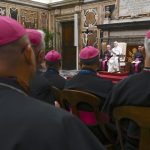
Pope Leo XIV says ‘giving witness to unity’ is close to his heart #Catholic – 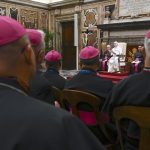
VATICAN CITY (OSV News) — Pope Leo XIV explained why “giving witness to unity” is something close to his heart in a Sept. 9 audience with bishops associated with the Focolare movement.
The pope, whose motto is “In the One, we are one,” underlined the urgent need “to give witness to both the sense and service of unity” in an age “sadly marked by increasing polarization.”
The answer to the divisions that plague our world, he said, lies “not in forming more committees or launching more projects, but in going back to the source of our unity in the Holy Trinity.”
The once-stable networks of family, friends and community in the West are now giving way to “to greater fragmentation … where freedom is increasingly presented as absolute autonomy,” he explained, detached from moral or natural human limits.
Yet, he noted, “for all the emphasis on individual freedom, people today frequently feel less free to be their genuine selves or follow their highest ideals, out of a hidden fear of being judged or of not fitting in.”
The source of true unity is the Holy Trinity, Pope Leo emphasized, explaining that disunity “deprives us of the happiness for which we were created, since we are made in the image of the Triune God, who is himself a communion of persons — Father, Son and Holy Spirit.”
“In revealing the heart of the Father, Christ shows us the deepest meaning of our existence, of our relationships, and the path to happiness,” the pope said.
Pope Leo called the Church “a mystery of communion” and “sign and leaven of unity for our world.”
“Through the gift of the Spirit, we have become children of God, sharers in the divine life, and from this communion with God flows our communion with one another as brothers and sisters in Christ,” he said.
Pope Leo pointed to Servant of God Chiara Lubich, who founded the Focolare movement in Italy in 1943 and made “giving witness to unity” an essential element of the movement inspired by Jesus’ prayer in the Gospel of John, “May they all be one.”
The Focolare movement, whose official name is the “Work of Mary,” has grown to have more than 2 million people in 183 countries who participate in the life of the movement and its “spirituality of unity.”
Among those present at the papal audience were South Korean Cardinal Lazarus You Heung-sik, the prefect of the Dicastery for the Clergy, who has long been associated with the movement, and Margaret Karram, who has served as its president since 2021.
“As sharers in the spiritual legacy of Chiara Lubich, and as ministers of Christ’s Church in a fragmented world, you are called to give witness to this longed-for unity of the human family,” he told the bishops who are gathered in Rome as “friends of the Focolare Movement.”
“I hope you will take the opportunity to nourish your interior life: with generous and sustained prayer before our Lord in the Tabernacle, with a calm and attentive celebration of the Office and Holy Mass, and finally by frequent contemplation of the indwelling of the Persons of the Trinity in the depth of our being,” he said. ” In this way, you will be witnesses to each other and to those you serve of that unity which builds lasting peace.”
Courtney Mares is Vatican editor for OSV News. Follow her on X @catholicourtney.
– VATICAN CITY (OSV News) — Pope Leo XIV explained why “giving witness to unity” is something close to his heart in a Sept. 9 audience with bishops associated with the Focolare movement. The pope, whose motto is “In the One, we are one,” underlined the urgent need “to give witness to both the sense and service of unity” in an age “sadly marked by increasing polarization.” The answer to the divisions that plague our world, he said, lies “not in forming more committees or launching more projects, but in going back to the source of our unity in the Holy
At Labor Day Mass, cardinal warns AI will transform work, urges protection of workers’ dignity #Catholic – 
WASHINGTON (OSV News) — As artificial intelligence accelerates changes in the workplace, Cardinal Robert W. McElroy said the coming transformation of labor raises a fundamental question about the future of human work.
“Will there be meaningful work left?” the archbishop of Washington asked during his homily at a Labor Day Mass celebrated Sept. 6 at the Cathedral of St. Matthew the Apostle in Washington.
“And the answer to that is: No one knows,” he said.
The Mass, organized by the Catholic Labor Network and celebrated a day ahead of the federal Labor Day holiday, brought together parishioners, workers and representatives of organized labor for a celebration focused on the dignity of human labor, economic justice and workers’ rights.
The prayers of the faithful included prayers for those unable to find work, people facing unsafe conditions or inadequate wages, workers in agriculture, manufacturing and public service and union leaders representing workers.
Cardinal McElroy began his homily by reflecting on the Scripture reading at the Mass from the Book of Genesis, telling worshippers the created world is a gift from God entrusted to humanity and people participate in its continuing development through their labor.
“When we are workers, we are co-creators with God,” he said.
The cardinal described work as a way people participate in creation, contribute to their communities and express something of themselves, even when the work itself can be difficult.
“Work is given to us as a way of self-expression, of our need, of our human need, to create, to contribute to, to build up here on this earth,” he said.
There is a dignity to human work that should never be damaged or undermined, the cardinal said.
That dignity, he said, became a defining concern of modern Catholic social teaching during the Industrial Revolution, when Pope Leo XIII issued his 1891 encyclical “Rerum Novarum” in response to low wages, dangerous working conditions, economic insecurity and the exploitation of workers.
Cardinal McElroy said the world is now approaching another economic transformation.
“Today, we are on the cusp of another revolution that will dramatically affect work in our world and the dignity of labor,” he said.
The cardinal said he recently joined other U.S. cardinals for discussions in Silicon Valley with leaders of artificial intelligence teams at companies on the cutting edge of the technology.
Among the topics they discussed, he said, was the effect AI may have on the workforce, particularly when paired with increasingly capable robotics.
“The labor market is going to radically change in the next 20 years,” Cardinal McElroy said. He predicted “tremendous dislocations of workers,” saying “millions of workers who have jobs now will not have those jobs 10 years from now.”
Cardinal McElroy said workers must have a voice as governments, businesses and society confront decisions about artificial intelligence and automation.
“We, as a society, have to be at the table, seeking this vision of work and seeking to make sure that exploitation does not grow, and that the wealth of the country doesn’t increasingly go to fewer and fewer at the expense of the working class,” the cardinal said.
The challenge for labor, he said, is to prepare for changes with “tremendous repercussions for all workers.”
Preparation, he added, should include thoughtful structures to preserve “continued creation through labor” and help build up the human family.
“Let us do everything that we can to vindicate workers in this moment in which we live, and in the years which are going to come, which will transform human labor, that we might have a labor force and a labor opportunity that truly reflects the gift of God to us all, the call of God to us all, and the wonderful talents we have to build up the creation that God gave us in the Book of Genesis,” Cardinal McElroy said.
Nicole Olea is a reporter at the Catholic Standard, the news outlet of the Archdiocese of Washington. This story was originally published by the Catholic Standard and distributed through a partnership with OSV News.
– WASHINGTON (OSV News) — As artificial intelligence accelerates changes in the workplace, Cardinal Robert W. McElroy said the coming transformation of labor raises a fundamental question about the future of human work. “Will there be meaningful work left?” the archbishop of Washington asked during his homily at a Labor Day Mass celebrated Sept. 6 at the Cathedral of St. Matthew the Apostle in Washington. “And the answer to that is: No one knows,” he said. The Mass, organized by the Catholic Labor Network and celebrated a day ahead of the federal Labor Day holiday, brought together parishioners, workers and representatives
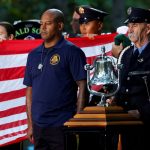
‘Lo recuerdo como si fuera ayer’: Católicos describen su labor pastoral después de los atentados del 11 de Septiembre #Catholic – 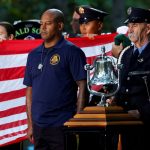
(OSV News) — El 11 de septiembre de 2001 — la fecha del peor ataque terrorista en la historia de Estados Unidos, cuando cuatro aviones secuestrados se convirtieron en armas mortales — no faltaron heroicos equipos de emergencia que enfrentaron el peligro en lugar de huir de él.
Entre ellos se encontraban numerosos miembros del clero y religiosos católicos, incluyendo sacerdotes, frailes y religiosas. Algunas de sus historias quizá sean menos conocidas, pero la ayuda y el consuelo que también brindaron a quienes sufrieron las devastadoras pérdidas del 11 de Septiembre (11-S) merecen ser recordados a medida que se aproxima el 25.º aniversario.
“Lo recuerdo como si fuera ayer”, declaró el padre Brian Jordan a OSV News.
Fraile franciscano de la Provincia de Nuestra Señora de Guadalupe de su orden, el sacerdote es actualmente párroco de la Iglesia de San Francisco de Asís, ubicada en West 31st Street, en la ciudad de Nueva York.
Aquella mañana, el padre Jordan se encontraba en el Hospital Presbiteriano de Nueva York. Al enterarse del ataque, regresó al convento franciscano de la calle 31 –anexo a la parroquia de San Francisco de Asís– donde vivía, decidido a dirigirse al lugar del desastre.
Sin saber con certeza qué encontraría –aunque esperaba hallar tanto víctimas como responsables del ataque– tomó agua bendita y un par de nudillos de bronce. “Dije: ‘Los bendeciré con una mano y, por si acaso hay algunos malos, los bendeciré con la otra’”.
Antes de partir, otro fraile le dio una noticia devastadora: su compañero franciscano, el padre Mychal Judge, había muerto. Aun así, el padre Jordan sabía lo que el padre Judge habría querido que hiciera: ir a ayudar.
Después de detenerse en el Hospital St. Vincent de Manhattan –donde los únicos pacientes eran personas que recibían tratamiento por inhalación de polvo tras el colapso de las Torres Gemelas– el padre Jordan se dirigió a la Zona Cero, donde se encontró con un capitán de policía al que conocía.
“Me dio una mascarilla; me dio un par de guantes. Me dijo: ‘Padre, póngase la mascarilla, póngase los guantes y vaya a trabajar’. Y así recorrí arriba y abajo varias cuadras, y había cuerpos y partes de cuerpos. Simplemente los bendije a todos”.
El 16 de septiembre, el padre Jordan celebró su primera Misa en la Zona Cero; continuaría celebrando Misa allí durante casi 10 meses.
Luego, el 23 de septiembre, ocurrió algo inesperado.
“Un gran y corpulento trabajador de construcción del sindicato Local 731 se acercó a mí y me dijo: ‘Oiga, padre, ¿quiere ver la casa de Dios?’”.
“Entonces entramos en las ruinas del edificio 6 del World Trade Center”, recordó el padre Jordan. “Tenía como a 25 bomberos a mi lado, y el trabajador de construcción me preguntó: ‘¿Qué ve allí, padre, justo en el medio?’. Le dije: ‘No puedo creerlo … veo una cruz’”.
Dos vigas de acero que se cruzaban habían quedado cortadas de tal manera que formaban un crucifijo, después de que el edificio 6 del World Trade Center fuera alcanzado por los escombros del colapso de la Torre Norte.
Este impresionante hallazgo pasó a conocerse como la “Cruz de la Zona Cero” y, con el tiempo, pasó a formar parte de la colección del Memorial y Museo del 11 de Septiembre.
Fue excavada, colocada sobre una base de concreto y bendecida. El 7 de octubre se celebró una Misa cerca de ella, en la esquina de las calles Vesey y West.
“Aquel momento dio esperanza y ánimo a la gente”, explicó el padre Jordan, quien escribió sus propias memorias — “The Ground Zero Cross” (Xlibris) — y recibió la distinción de ser su guardián no oficial.
El 11 de septiembre, la hermana Margaret O’Brien, una Hermana de la Caridad que trabajaba en el Sistema de Atención Médica de las Hermanas de la Caridad, se encontraba en su oficina del Hospital Bayley Seton, en Staten Island, informando a una colega que acababa de regresar de vacaciones.
“Su secretaria entró y dijo: ‘Acabo de recibir una llamada. Un avión se estrelló contra el World Trade Center’”, recordó la hermana Margaret. “Fuimos por el pasillo hasta una ventana desde donde podíamos ver, y nos dimos cuenta de la gravedad de la situación”.
Las hermanas se prepararon rápidamente para ir al Hospital St. Vincent “a organizar la respuesta de emergencia y atención de traumas”, explicó la hermana Margaret. “Y los médicos estaban allí, las camillas estaban allí, todos esperando en la entrada, pero después de un corto tiempo, nadie llegó”.
La hermana Margaret atendió la línea telefónica de emergencia en el centro de operaciones del hospital de las hermanas, recibiendo llamadas de personas que buscaban a sus seres queridos.
“El teléfono fue realmente difícil”, reflexionó. “Porque las personas te daban un nombre y tú revisabas tu lista, y no los encontrabas. … Todo fue muy, muy emotivo, y durante los primeros días el teléfono no dejaba de sonar”.
Sin embargo, encontró una razón para sentirse agradecida.
“Recuerdo haber estado muy agradecida de tener algo en lo que pudiera colaborar, de poder ayudar”, expresó la hermana Margaret, actualmente asistente de la presidenta de las Hermanas de la Caridad de Nueva York.
El trauma fue una característica constante de los turnos de las hermanas, especialmente para una colega que atendía a los equipos de primera respuesta enviados a recibir atención después de participar en los trabajos de recuperación en la Zona Cero.
“A veces las personas hablaban, pero la mayoría de las veces simplemente no podían hacerlo”, explicó la hermana O’Brien. Su colega “recordaba a una persona: era muy callada y luego dijo: ‘Puedo levantar los brazos y las piernas. Pero cuando levanté una piedra y vi un rostro, solo una cabeza, aplastada contra el suelo …’”.
“Se derrumbó”, agregó la hermana O’Brien.
El padre Stephen McGraw –por entonces sacerdote de la Diócesis de Arlington, Virginia, justo en las afueras de Washington– también presenció escenas indescriptibles.
La mañana del 11 de septiembre acababa de concluir una Misa escolar y se dirigía al Cementerio Nacional de Arlington para un entierro cuando se equivocó y no tomó la salida correspondiente.
Le preocupaba que ahora casi con certeza llegaría tarde al entierro.
“Y entonces, sin previo aviso, el avión pasó rugiendo justo por encima de nuestros automóviles, muy, muy bajo”, relató el padre McGraw. “No puedo decir cuál de mis sentidos fue el más impactado: estaban la vibración y el rugido del avión, y un poste de luz fue golpeado y cayó sobre el automóvil de un taxista que estaba a pocos vehículos de distancia”.
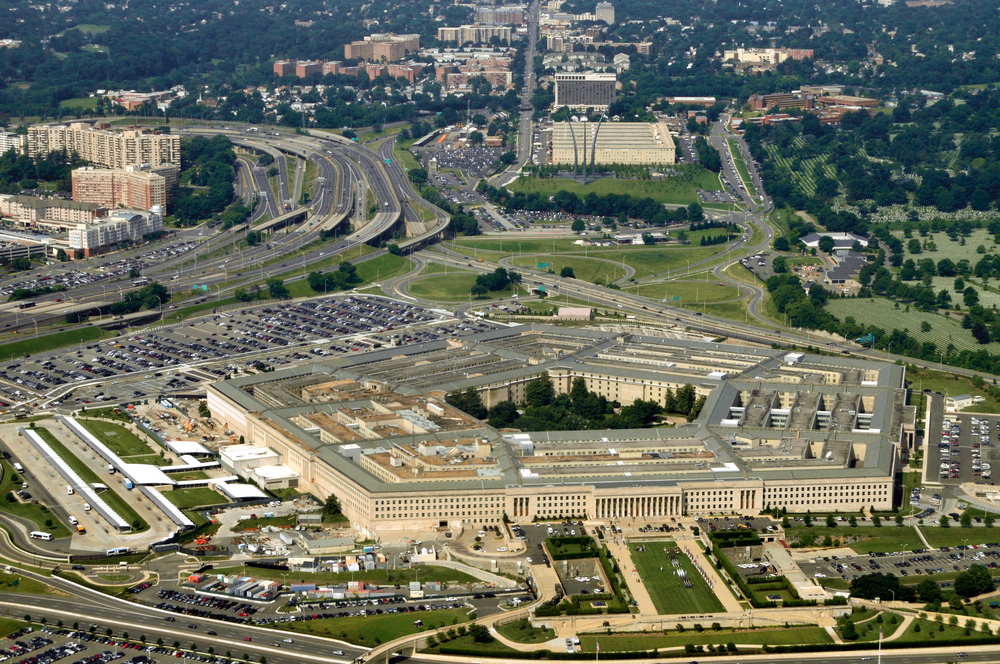
Al mirar hacia su derecha, vio cómo el vuelo 77 de American Airlines se estrellaba contra el Pentágono.
“Lo vi chocar y desaparecer, mientras una enorme bola de fuego salía del edificio en el instante posterior al impacto”.
Como su radio no estaba encendida y no escuchó lo que estaba ocurriendo en la ciudad de Nueva York, “simplemente supuse que se trataba de un terrible y trágico accidente”.
Los viajeros quedaron paralizados, y el padre McGraw saltó de su automóvil –con la estola, los óleos para la unción y un libro de oraciones en las manos– cruzó la barrera de seguridad de la carretera y se dirigió al césped del Pentágono para llegar hasta las víctimas.
“Básicamente, mi mensaje para ellos era: ‘Jesús está con ustedes’. Eso era lo que repetía a las varias víctimas a las que atendí”, declaró el padre McGraw.
A una de las víctimas, que se identificó como católica –Juan Cruz, gerente de la división civil de contabilidad de la Oficina del Asistente Administrativo del Secretario del Ejército– se le administraron los sacramentos.
Otra víctima –Antoinette Sherman, analista de presupuesto del Ejército, quien falleció posteriormente– yacía boca abajo sobre el césped, con graves quemaduras en la espalda y un solo zapato en un pie. El padre McGraw se lo quitó suavemente a petición de ella.
“Entonces simplemente añadió, quizá a quien pudiera escucharla: ‘Díganles a mi madre y a mi padre que los amo’. Y yo le aseguré que lo haría”.
El padre McGraw –actualmente sacerdote misionero y párroco en la Misión de Bánica de la Diócesis de Arlington, en la República Dominicana– no cree que su desvío inesperado haya sido una coincidencia.
“Tuve una fuerte sensación de la providencia divina”, declaró a OSV News. “Estaba destinado a estar allí”.
Los ataques causaron la muerte de 2.977 personas e hirieron a miles más: 2.753 personas murieron en el colapso de las Torres Gemelas, derribadas después de que dos aviones comerciales secuestrados se estrellaran contra ellas; 184 personas murieron cuando un tercer avión secuestrado impactó contra el Pentágono; y 40 personas murieron en Shanksville, Pensilvania, cuando los pasajeros y la tripulación se enfrentaron a los secuestradores de un cuarto avión, obligándolo a estrellarse en un campo cerca de Shanksville. Las autoridades creen que el cuarto avión se dirigía al Capitolio de Estados Unidos o a la Casa Blanca.
El 25.º aniversario del 11 de septiembre no solo será un momento de solemne recuerdo, sino que también despierta en algunos el anhelo por la unidad nacional que los estadounidenses demostraron en aquel entonces.
“Vimos la maldad en su peor expresión”, afirmó el padre Jordan. “Pero también vimos la bondad en su máxima plenitud. La ciudad de Nueva York se unió. El país se unió. El mundo se unió”.
Kimberley Heatherington es corresponsal de OSV News. Escribe desde Virginia.
– (OSV News) — El 11 de septiembre de 2001 — la fecha del peor ataque terrorista en la historia de Estados Unidos, cuando cuatro aviones secuestrados se convirtieron en armas mortales — no faltaron heroicos equipos de emergencia que enfrentaron el peligro en lugar de huir de él. Entre ellos se encontraban numerosos miembros del clero y religiosos católicos, incluyendo sacerdotes, frailes y religiosas. Algunas de sus historias quizá sean menos conocidas, pero la ayuda y el consuelo que también brindaron a quienes sufrieron las devastadoras pérdidas del 11 de Septiembre (11-S) merecen ser recordados a medida que se aproxima
![Memory of brother killed on 9/11 still inspires priest #Catholic – On Sept. 11, 2001, Father Daniel Murphy and his family were dealt pain almost too agonizing to bear. His brother, Edward, 42, was killed in the terrorist attacks on the World Trade Center (WTC) in Manhattan, leaving his entire family distraught.
Shortly after the attacks, Father Murphy, then pastor of Blessed [now St.] Kateri Tekakwitha Parish in Sparta, N.J., found Jesus’ comfort in the following Sunday’s Gospel: Luke 15. It tells the parables of the Lost Coin, Lost Sheep, and Prodigal Son.
EDWARD MURPHY
As the 25th anniversary of 9/11 approaches on Friday, Father Murphy is again reflecting on Luke 15 and what he has lost — and found —in his life since the attacks that changed the United States — and the world — forever. Today, he is a retired priest of the Paterson Diocese, N.J.
“I lost knowing a brother as an older adult, which I would have liked, and my mother, Evelyn, lost her youngest son and struggled with that,” said Father Murphy, the oldest of three Murphy brothers. In the tragedy’s aftermath, he has been meditating on the saving “Paschal Mystery of Jesus’ death and resurrection celebrated at Mass that leads us Christians from death to life.”
That’s because Father Murphy has gained much in the wake of his brother Edward’s tragic death on 9/11. For example, the priest had become Evelyn’s caregiver after the death of Edward, who lived in Clifton, N.J., and cared for her.
FATHER DANIEL MURPHY
“In caring for my mother, I learned more about who she is — her humor, strength and faithfulness — despite her great loss,” said Father Murphy, noting that Evelyn died five years after 9/11.
Along with Father Murphy, the faithful of the Paterson Diocese will unite with all Americans on Friday to commemorate the 25th anniversary of the attacks. Faith communities across the diocese will hold memorial Masses and prayer services to pray for the victims, their families, first responders, and world peace.
The 25th anniversary is especially difficult for people in the diocese and the wider Tri-State area. Many of them had loved ones — or knew people — who were murdered in the attacks on that tragic day. All those who witnessed the brutality of 9/11 will never forget it.
In the attacks, Father Mychal Judge, a Franciscan friar and former pastor of St. Joseph Parish in West Milford, N.J., was killed while serving with the N.Y. Fire Department at Ground Zero. He is buried at Holy Sepulcher Cemetery in Totowa, N.J. Several priests ministered to law enforcement, fire departments, and recovery workers at Ground Zero.
In his recent column on BeaconNJ., Bishop Kevin J. Sweeney gives a personal reflection on 9/11. He urges Americans to remember the courage, kindness, gratitude, unity and prayer that were fostered during that dark time. He praises first responders, who arrived at the disaster zones at the WTC, the Pentagon, and Shanksville, Penn., including many who died. Bishop Sweeney also commends those who inspired these “ordinary citizens,” many of whom were formed in Catholic schools and parishes.
“If we remember and if we continue to learn the lessons taught to us by the Heroes of Sept. 11, 2001, I believe we can be stronger, kinder, more united, grateful, and prayerful as individuals and families, as communities, as a nation, and as a Church,” Bishop Sweeney writes in his column.
Father Murphy’s brother, Edward, 42, was managing director of Cantor Fitzgerald, which occupied several upper floors in WTC’s North Tower. That morning, Father Murphy was having breakfast in the Sparta Diner and overheard people talking about a plane that hit one of WTC’s towers. Fortunately, the priest’s nephew, Ryan, who worked on a lower floor at WTC, managed to escape.
“Priests often feel that they need to be the ones supporting their parishes. But after the attacks, I learned that priests also need the support of their parish families,” Father Murphy said. “My Blessed Kateri parishioners carried my family and me with their kindness and compassion. It’s important that priests learn to be vulnerable,” he said.
Also, Father Murphy discovered a passion for initiating interfaith dialogues in parishes, especially among Catholics, Jews and Moslems.
“I was determined to remember the pain and loss of my brother’s violent death and make sure it did not become a source for more violence, division and animosity in our world,” Father Murphy said. “I know that my faith life and the lives of many others have been deepened by better understanding and appreciating the faith lives of people different from Christians,” he said.
Deeply affected by the pain of 9/11, Father Murphy had the opportunity to be present in 2015 when Pope Francis visited the WTC site for an interfaith prayer service. Father Murphy said, “I was very touched by the simple gesture of his lighting a candle at the site as a sign of our call to find light in the midst of darkness.”
Together, the Murphy family found some comfort in Edward’s death by establishing a scholarship in his name for a deserving student at Xavier High School in Manhattan. Father Murphy serves there as a part-time chaplain and is a graduate.
On Friday, the day of the 25th anniversary, Father Murphy will not celebrate Memorial Masses or speak. He will concelebrate a Mass at Xavier High School the day before. Instead, he will travel to Boston, Mass., to visit Richard, the middle of the Murphy brothers, and his family.
They will inevitably share memories of Edward, a lifelong Clifton resident. He was chairman of the township’s Traffic Safety Commission and a former Supreme Knight of the Regina Mundi Council of the Knights of Columbus.
Edward was also an avid golfer and a marathon runner who competed in the New York and Boston marathons.
“Ed was quiet — an introvert. He was intense about his interests like running, golf, or finances. I still miss him,” Father Murphy said.
To read Bishop Sweeney’s column, “Remembering Sept. 11, 2001: What do we Remember?” click here.
Click here to subscribe to our weekly newsletter.](https://unitedyam.com/wp-content/uploads/2026/09/memory-of-brother-killed-on-9-11-still-inspires-priest-catholic-on-sept-11-2001-father-daniel-murphy-and-his-family-were-dealt-pain-almost-too-agonizing-to-bear-his-brother-edward-42-was-kil.jpg "Memory of brother killed on 9/11 still inspires priest #Catholic – On Sept. 11, 2001, Father Daniel Murphy and his family were dealt pain almost too agonizing to bear. His brother, Edward, 42, was killed in the terrorist attacks on the World Trade Center (WTC) in Manhattan, leaving his entire family distraught.
Shortly after the attacks, Father Murphy, then pastor of Blessed [now St.] Kateri Tekakwitha Parish in Sparta, N.J., found Jesus’ comfort in the following Sunday’s Gospel: Luke 15. It tells the parables of the Lost Coin, Lost Sheep, and Prodigal Son.
EDWARD MURPHY
As the 25th anniversary of 9/11 approaches on Friday, Father Murphy is again reflecting on Luke 15 and what he has lost — and found —in his life since the attacks that changed the United States — and the world — forever. Today, he is a retired priest of the Paterson Diocese, N.J.
“I lost knowing a brother as an older adult, which I would have liked, and my mother, Evelyn, lost her youngest son and struggled with that,” said Father Murphy, the oldest of three Murphy brothers. In the tragedy’s aftermath, he has been meditating on the saving “Paschal Mystery of Jesus’ death and resurrection celebrated at Mass that leads us Christians from death to life.”
That’s because Father Murphy has gained much in the wake of his brother Edward’s tragic death on 9/11. For example, the priest had become Evelyn’s caregiver after the death of Edward, who lived in Clifton, N.J., and cared for her.
FATHER DANIEL MURPHY
“In caring for my mother, I learned more about who she is — her humor, strength and faithfulness — despite her great loss,” said Father Murphy, noting that Evelyn died five years after 9/11.
Along with Father Murphy, the faithful of the Paterson Diocese will unite with all Americans on Friday to commemorate the 25th anniversary of the attacks. Faith communities across the diocese will hold memorial Masses and prayer services to pray for the victims, their families, first responders, and world peace.
The 25th anniversary is especially difficult for people in the diocese and the wider Tri-State area. Many of them had loved ones — or knew people — who were murdered in the attacks on that tragic day. All those who witnessed the brutality of 9/11 will never forget it.
In the attacks, Father Mychal Judge, a Franciscan friar and former pastor of St. Joseph Parish in West Milford, N.J., was killed while serving with the N.Y. Fire Department at Ground Zero. He is buried at Holy Sepulcher Cemetery in Totowa, N.J. Several priests ministered to law enforcement, fire departments, and recovery workers at Ground Zero.
In his recent column on BeaconNJ., Bishop Kevin J. Sweeney gives a personal reflection on 9/11. He urges Americans to remember the courage, kindness, gratitude, unity and prayer that were fostered during that dark time. He praises first responders, who arrived at the disaster zones at the WTC, the Pentagon, and Shanksville, Penn., including many who died. Bishop Sweeney also commends those who inspired these “ordinary citizens,” many of whom were formed in Catholic schools and parishes.
“If we remember and if we continue to learn the lessons taught to us by the Heroes of Sept. 11, 2001, I believe we can be stronger, kinder, more united, grateful, and prayerful as individuals and families, as communities, as a nation, and as a Church,” Bishop Sweeney writes in his column.
Father Murphy’s brother, Edward, 42, was managing director of Cantor Fitzgerald, which occupied several upper floors in WTC’s North Tower. That morning, Father Murphy was having breakfast in the Sparta Diner and overheard people talking about a plane that hit one of WTC’s towers. Fortunately, the priest’s nephew, Ryan, who worked on a lower floor at WTC, managed to escape.
“Priests often feel that they need to be the ones supporting their parishes. But after the attacks, I learned that priests also need the support of their parish families,” Father Murphy said. “My Blessed Kateri parishioners carried my family and me with their kindness and compassion. It’s important that priests learn to be vulnerable,” he said.
Also, Father Murphy discovered a passion for initiating interfaith dialogues in parishes, especially among Catholics, Jews and Moslems.
“I was determined to remember the pain and loss of my brother’s violent death and make sure it did not become a source for more violence, division and animosity in our world,” Father Murphy said. “I know that my faith life and the lives of many others have been deepened by better understanding and appreciating the faith lives of people different from Christians,” he said.
Deeply affected by the pain of 9/11, Father Murphy had the opportunity to be present in 2015 when Pope Francis visited the WTC site for an interfaith prayer service. Father Murphy said, “I was very touched by the simple gesture of his lighting a candle at the site as a sign of our call to find light in the midst of darkness.”
Together, the Murphy family found some comfort in Edward’s death by establishing a scholarship in his name for a deserving student at Xavier High School in Manhattan. Father Murphy serves there as a part-time chaplain and is a graduate.
On Friday, the day of the 25th anniversary, Father Murphy will not celebrate Memorial Masses or speak. He will concelebrate a Mass at Xavier High School the day before. Instead, he will travel to Boston, Mass., to visit Richard, the middle of the Murphy brothers, and his family.
They will inevitably share memories of Edward, a lifelong Clifton resident. He was chairman of the township’s Traffic Safety Commission and a former Supreme Knight of the Regina Mundi Council of the Knights of Columbus.
Edward was also an avid golfer and a marathon runner who competed in the New York and Boston marathons.
“Ed was quiet — an introvert. He was intense about his interests like running, golf, or finances. I still miss him,” Father Murphy said.
To read Bishop Sweeney’s column, “Remembering Sept. 11, 2001: What do we Remember?” click here.
Click here to subscribe to our weekly newsletter.")
Memory of brother killed on 9/11 still inspires priest #Catholic – 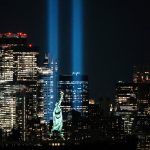
On Sept. 11, 2001, Father Daniel Murphy and his family were dealt pain almost too agonizing to bear. His brother, Edward, 42, was killed in the terrorist attacks on the World Trade Center (WTC) in Manhattan, leaving his entire family distraught.
Shortly after the attacks, Father Murphy, then pastor of Blessed [now St.] Kateri Tekakwitha Parish in Sparta, N.J., found Jesus’ comfort in the following Sunday’s Gospel: Luke 15. It tells the parables of the Lost Coin, Lost Sheep, and Prodigal Son.
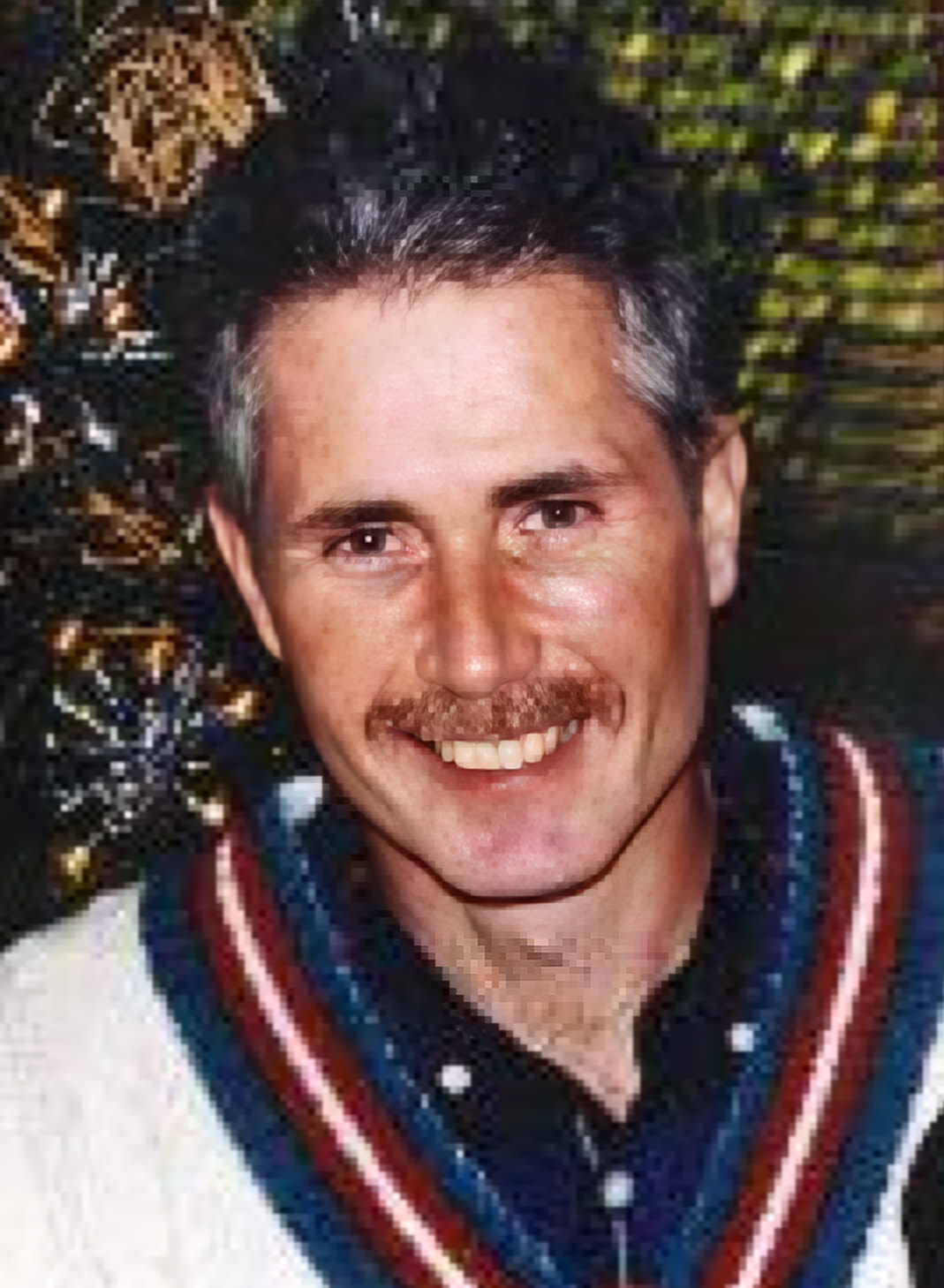
As the 25th anniversary of 9/11 approaches on Friday, Father Murphy is again reflecting on Luke 15 and what he has lost — and found —in his life since the attacks that changed the United States — and the world — forever. Today, he is a retired priest of the Paterson Diocese, N.J.
“I lost knowing a brother as an older adult, which I would have liked, and my mother, Evelyn, lost her youngest son and struggled with that,” said Father Murphy, the oldest of three Murphy brothers. In the tragedy’s aftermath, he has been meditating on the saving “Paschal Mystery of Jesus’ death and resurrection celebrated at Mass that leads us Christians from death to life.”
That’s because Father Murphy has gained much in the wake of his brother Edward’s tragic death on 9/11. For example, the priest had become Evelyn’s caregiver after the death of Edward, who lived in Clifton, N.J., and cared for her.
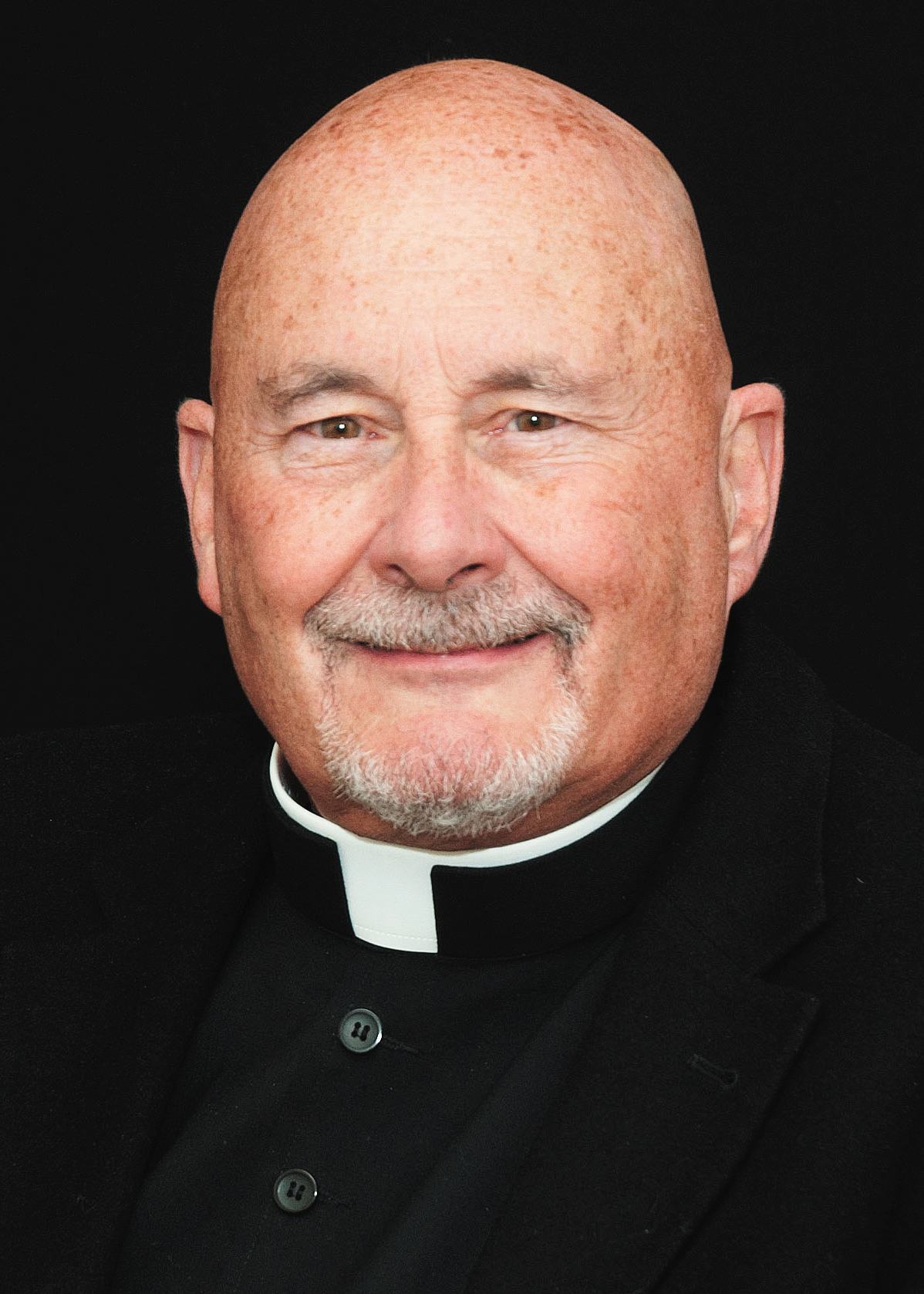
“In caring for my mother, I learned more about who she is — her humor, strength and faithfulness — despite her great loss,” said Father Murphy, noting that Evelyn died five years after 9/11.
Along with Father Murphy, the faithful of the Paterson Diocese will unite with all Americans on Friday to commemorate the 25th anniversary of the attacks. Faith communities across the diocese will hold memorial Masses and prayer services to pray for the victims, their families, first responders, and world peace.
The 25th anniversary is especially difficult for people in the diocese and the wider Tri-State area. Many of them had loved ones — or knew people — who were murdered in the attacks on that tragic day. All those who witnessed the brutality of 9/11 will never forget it.
In the attacks, Father Mychal Judge, a Franciscan friar and former pastor of St. Joseph Parish in West Milford, N.J., was killed while serving with the N.Y. Fire Department at Ground Zero. He is buried at Holy Sepulcher Cemetery in Totowa, N.J. Several priests ministered to law enforcement, fire departments, and recovery workers at Ground Zero.
In his recent column on BeaconNJ., Bishop Kevin J. Sweeney gives a personal reflection on 9/11. He urges Americans to remember the courage, kindness, gratitude, unity and prayer that were fostered during that dark time. He praises first responders, who arrived at the disaster zones at the WTC, the Pentagon, and Shanksville, Penn., including many who died. Bishop Sweeney also commends those who inspired these “ordinary citizens,” many of whom were formed in Catholic schools and parishes.
“If we remember and if we continue to learn the lessons taught to us by the Heroes of Sept. 11, 2001, I believe we can be stronger, kinder, more united, grateful, and prayerful as individuals and families, as communities, as a nation, and as a Church,” Bishop Sweeney writes in his column.
Father Murphy’s brother, Edward, 42, was managing director of Cantor Fitzgerald, which occupied several upper floors in WTC’s North Tower. That morning, Father Murphy was having breakfast in the Sparta Diner and overheard people talking about a plane that hit one of WTC’s towers. Fortunately, the priest’s nephew, Ryan, who worked on a lower floor at WTC, managed to escape.
“Priests often feel that they need to be the ones supporting their parishes. But after the attacks, I learned that priests also need the support of their parish families,” Father Murphy said. “My Blessed Kateri parishioners carried my family and me with their kindness and compassion. It’s important that priests learn to be vulnerable,” he said.
Also, Father Murphy discovered a passion for initiating interfaith dialogues in parishes, especially among Catholics, Jews and Moslems.
“I was determined to remember the pain and loss of my brother’s violent death and make sure it did not become a source for more violence, division and animosity in our world,” Father Murphy said. “I know that my faith life and the lives of many others have been deepened by better understanding and appreciating the faith lives of people different from Christians,” he said.
Deeply affected by the pain of 9/11, Father Murphy had the opportunity to be present in 2015 when Pope Francis visited the WTC site for an interfaith prayer service. Father Murphy said, “I was very touched by the simple gesture of his lighting a candle at the site as a sign of our call to find light in the midst of darkness.”
Together, the Murphy family found some comfort in Edward’s death by establishing a scholarship in his name for a deserving student at Xavier High School in Manhattan. Father Murphy serves there as a part-time chaplain and is a graduate.
On Friday, the day of the 25th anniversary, Father Murphy will not celebrate Memorial Masses or speak. He will concelebrate a Mass at Xavier High School the day before. Instead, he will travel to Boston, Mass., to visit Richard, the middle of the Murphy brothers, and his family.
They will inevitably share memories of Edward, a lifelong Clifton resident. He was chairman of the township’s Traffic Safety Commission and a former Supreme Knight of the Regina Mundi Council of the Knights of Columbus.
Edward was also an avid golfer and a marathon runner who competed in the New York and Boston marathons.
“Ed was quiet — an introvert. He was intense about his interests like running, golf, or finances. I still miss him,” Father Murphy said.
To read Bishop Sweeney’s column, “Remembering Sept. 11, 2001: What do we Remember?” click here.
– On Sept. 11, 2001, Father Daniel Murphy and his family were dealt pain almost too agonizing to bear. His brother, Edward, 42, was killed in the terrorist attacks on the World Trade Center (WTC) in Manhattan, leaving his entire family distraught. Shortly after the attacks, Father Murphy, then pastor of Blessed [now St.] Kateri Tekakwitha Parish in Sparta, N.J., found Jesus’ comfort in the following Sunday’s Gospel: Luke 15. It tells the parables of the Lost Coin, Lost Sheep, and Prodigal Son. EDWARD MURPHY As the 25th anniversary of 9/11 approaches on Friday, Father Murphy is again reflecting on Luke

:max_bytes(150000):strip_icc():format(jpeg)/GettyImages-873050052-1b17771a90e9422f9ce9b7c12569c439.jpg)