Day: September 11, 2026

NASA’s Chandra Spots Galactic Gem – Galaxies are like cosmic gems, each with characteristics including size and shape that make them distinct. A gallery from NASA’s Chandra X-ray Observatory and other telescopes displays a collection of galactic images that showcase this variety.

Galaxies are like cosmic gems, each with characteristics including size and shape that make them distinct. A gallery from NASA’s Chandra X-ray Observatory and other telescopes displays a collection of galactic images that showcase this variety.

Read More
Catholic tech leaders urge ethical boundaries for AI – #Catholic – Catholic leaders discussed rising benefits and concerns of technology and how faith and ethics apply when using artificial intelligence.Bringing together leading technological officers from around the globe, Montse Alvarado, president and chief operating officer of EWTN News, spoke with industry professionals about the growing use of AI in a Sept. 9 special, “Beyond Fear: A Catholic Vision for Artificial Intelligence.”Pope Leo XIV framed the intensifying debate over AI with the May 25 launch of his first encyclical, Magnifica Humanitas. Tech leaders said AI is rapidly reshaping society and the Church, offering powerful tools for ministry while also requiring firm ethical boundaries, human‑centered leadership, and faith‑guided discernment to ensure the technology strengthens human dignity.“There’s a good side to that exponential innovation because it helps us get to the most vulnerable people faster,” said Joel Chakra, president of Tim Tebow Foundation and venture capitalist in AI technology companies.“It can it can really rob us of our true humanity, or it can enhance our lives. And the choice is ours,” said Arthur C. Brooks, American author and academic who wrote the foreword to Magnifica Humanitas.Brooks said the technology can either diminish or deepen human dignity, depending on how it is used. He added that despite real concerns about job loss and disruption, he remains optimistic because humans are “unbelievably ingenious” and made to solve problems.
 
 Arthur Brooks speaks on “EWTN News in Depth” on Friday, April 10, 2026. | Credit: “EWTN News in Depth”/Screenshot
 
 “Iʼm not a pessimist. Iʼm an optimist. I do realize that thereʼs displacement. I do realize that thereʼs a lot to be concerned about. But I also know that humans are unbelievably ingenious that the Lord made us to solve problems,” Brooks said.Vic Gundotra, former senior vice president at Google and a Catholic convert, said: “AI helped in my conversion to becoming Catholic. I was raised as a Jehovahʼs Witness and I had never read the early Church Fathers, but AI showed me what the Catholic Church taught was mirrored in the early Church Fathers.” While AI shaped his own path to Catholicism, Gundotra also cautioned that the same technology can magnify human failings, noting that “any tool can be used to amplify the worst in human capability” and “augment and worsen the worst human characteristics as well.”Gundotra warned that AI carries real risks for young people and said parents still need to guide how it’s used, noting that the technology is powerful but comes with clear downsides.Sara Anderson of Pushpay, a digital‑giving and church‑management platform, said her team uses AI to streamline parish administration so staff can spend more time on ministry. The goal is not to replace human connection but to free priests, volunteers, and parish workers from tedious data entry and outdated systems, she said.“There’s a moment in our Catholic Church where there’s so many people wanting to to join the Church to learn about the Church and … the tools are outdated,” Anderson said. “Technology is making their lives better.”Chakra and Anderson are encouraging faith-filled individuals to hold more technological leadership positions as artificial intelligence becomes more apparent in our daily lives.“I think for too long, we have taken a back seat to some of the highest leadership positions and taken a back seat to innovation, when in reality, our faith and our heritage is driven by some of the smartest people to ever exist in the world,” Chakra said.“That is one of the things I try to help the parish admins and the office staff learn to be brave. We need them to explore; we need them to meet the moment of technology and faith. We need them to be leaders,” Anderson said.As AI spreads, speakers said the Church needs more leaders engaged in technology while also setting clear limits to ensure digital tools support, not replace, human ministry.“Boundaries are needed to help create the best use [of] technology. And the other way is through AI policies, ethics, and framework,” Anderson said.

Catholic tech leaders urge ethical boundaries for AI – #Catholic – Catholic leaders discussed rising benefits and concerns of technology and how faith and ethics apply when using artificial intelligence.Bringing together leading technological officers from around the globe, Montse Alvarado, president and chief operating officer of EWTN News, spoke with industry professionals about the growing use of AI in a Sept. 9 special, “Beyond Fear: A Catholic Vision for Artificial Intelligence.”Pope Leo XIV framed the intensifying debate over AI with the May 25 launch of his first encyclical, Magnifica Humanitas. Tech leaders said AI is rapidly reshaping society and the Church, offering powerful tools for ministry while also requiring firm ethical boundaries, human‑centered leadership, and faith‑guided discernment to ensure the technology strengthens human dignity.“There’s a good side to that exponential innovation because it helps us get to the most vulnerable people faster,” said Joel Chakra, president of Tim Tebow Foundation and venture capitalist in AI technology companies.“It can it can really rob us of our true humanity, or it can enhance our lives. And the choice is ours,” said Arthur C. Brooks, American author and academic who wrote the foreword to Magnifica Humanitas.Brooks said the technology can either diminish or deepen human dignity, depending on how it is used. He added that despite real concerns about job loss and disruption, he remains optimistic because humans are “unbelievably ingenious” and made to solve problems. Arthur Brooks speaks on “EWTN News in Depth” on Friday, April 10, 2026. | Credit: “EWTN News in Depth”/Screenshot “Iʼm not a pessimist. Iʼm an optimist. I do realize that thereʼs displacement. I do realize that thereʼs a lot to be concerned about. But I also know that humans are unbelievably ingenious that the Lord made us to solve problems,” Brooks said.Vic Gundotra, former senior vice president at Google and a Catholic convert, said: “AI helped in my conversion to becoming Catholic. I was raised as a Jehovahʼs Witness and I had never read the early Church Fathers, but AI showed me what the Catholic Church taught was mirrored in the early Church Fathers.” While AI shaped his own path to Catholicism, Gundotra also cautioned that the same technology can magnify human failings, noting that “any tool can be used to amplify the worst in human capability” and “augment and worsen the worst human characteristics as well.”Gundotra warned that AI carries real risks for young people and said parents still need to guide how it’s used, noting that the technology is powerful but comes with clear downsides.Sara Anderson of Pushpay, a digital‑giving and church‑management platform, said her team uses AI to streamline parish administration so staff can spend more time on ministry. The goal is not to replace human connection but to free priests, volunteers, and parish workers from tedious data entry and outdated systems, she said.“There’s a moment in our Catholic Church where there’s so many people wanting to to join the Church to learn about the Church and … the tools are outdated,” Anderson said. “Technology is making their lives better.”Chakra and Anderson are encouraging faith-filled individuals to hold more technological leadership positions as artificial intelligence becomes more apparent in our daily lives.“I think for too long, we have taken a back seat to some of the highest leadership positions and taken a back seat to innovation, when in reality, our faith and our heritage is driven by some of the smartest people to ever exist in the world,” Chakra said.“That is one of the things I try to help the parish admins and the office staff learn to be brave. We need them to explore; we need them to meet the moment of technology and faith. We need them to be leaders,” Anderson said.As AI spreads, speakers said the Church needs more leaders engaged in technology while also setting clear limits to ensure digital tools support, not replace, human ministry.“Boundaries are needed to help create the best use [of] technology. And the other way is through AI policies, ethics, and framework,” Anderson said.

Technology innovators said the faithful must harness AI for human dignity.

Read More
Aparecida shrine in Brazil set to unveil more artwork linked to Rupnik – #Catholic – On Sept. 12, Brazil’s National Shrine of Aparecida is set to unveil the mosaics on the basilicaʼs west façade. The artwork was created by the Aletti Center, a school dedicated to promoting sacred art that was founded in Rome by the former Jesuit priest and artist Father Marko Ivan Rupnik. The artwork, which bears the unmistakable hallmarks of Rupnik’s style, completes the “Biblical Journey” project, an initiative that covered the shrineʼs four façades with mosaics depicting biblical scenes.Rupnik faces accusations of spiritual, psychological, and sexual abuse against dozens of nuns — incidents that, in some cases, occurred within the context of his artistic work. He was expelled from the Society of Jesus in June 2023 for disobeying a superiorʼs order not to preach publicly and is currently facing a canonical trial before the Dicastery for the Doctrine of the Faith.In contrast to the basilicaʼs decision to retain Rupnikʼs art, the Sanctuary of Our Lady of Lourdes in France plans to cover all of Rupnikʼs mosaics on the façade of the Basilica of Our Lady of the Rosary ahead of the visit by Pope Leo XIV, scheduled for Sept. 26–27.The bishop of Tarbes and Lourdes, Jean-Marc Micas, stated that the measure was taken out of consideration for abuse victims and that the mosaics will remain covered following the popeʼs visit.Works by Rupnik and the Aletti Center can be found in various religious sites, such as the Redemptoris Mater Chapel in the Vaticanʼs Apostolic Palace as well as the shrines of St. Pio of Pietrelcina in Italy and Fátima in Portugal.Biblical Journey ProjectWork on the Brazil shrineʼs exterior began in 2019. The north façade, inaugurated in 2022, depicts the Exodus and the liberation of the people of Israel; the south façade, completed in 2024, portrays the incarnation, death, and resurrection of Christ; and the east façade, inaugurated in 2025, presents scenes of creation from the Book of Genesis.The west façade, set to be inaugurated Sept. 12, is dedicated to the Book of Revelation, the Second Coming of Christ, and the Last Judgment. According to the shrine, the scenes represent “Godʼs victory over evil.”The most recent façade work began in 2025. It features nearly 4,000 square meters of mosaics designed and executed by 39 artists associated with the Aletti Center. The stones used in the project come from countries such as Brazil, Italy, Greece, and Afghanistan.Rupnik remains listed as part of the team on the Aletti Center’s website. The institution identifies him as the director of the Spiritual Art Atelier since 1995 and head of the Theology Atelier since 2008.The project was funded by the “Devotees' Campaign,” consisting of donations from Our Ladyʼs devotees across Brazil. The shrine announced that the unveiling of the façade would take place during a “catechetical celebration,” featuring a special program and a live broadcast by the Rede Aparecida media network.In 2024, when ACI Digital, the Portuguese-language sister service of EWTN News, asked the National Shrine about the projectʼs continuation following the allegations against Rupnik, the institution did not directly answer the questions but issued a statement noting that the “work on the façades of the Basilica of Our Lady of Aparecida continues under the leadership and execution of the Aletti Center."The shrine went on to indicate that since 2020, the project has been directed by Italian artist and theologian Maria Campatelli. “Its leadership team comprises 12 women and nine men, alongside dozens of artists of various nationalities who are directly involved in the project,” the shrine added in a statement.In addition, the shrine noted that the Vicariate of Rome — to which the Aletti Center is accountable — issued “a finding following a canonical visitation, attesting ‘clearly to a healthy community life at the Aletti Center, free from specific issues.’”ACI Digital contacted the shrine’s press office to request information regarding the inauguration and to inquire about Rupnik’s role in creating the mosaics as well as the criteria that led Aparecida to retain the artwork, whereas Lourdes decided to cover them out of consideration for abuse victims.The press office stated that coverage would be restricted to the shrine’s official channels and requested that questions be submitted via email. However, no response was received by the time of publication.This story was first published by ACI Digital, the Portuguese-language sister service of EWTN News. It has been translated and adapted by EWTN News English.

Aparecida shrine in Brazil set to unveil more artwork linked to Rupnik – #Catholic – On Sept. 12, Brazil’s National Shrine of Aparecida is set to unveil the mosaics on the basilicaʼs west façade. The artwork was created by the Aletti Center, a school dedicated to promoting sacred art that was founded in Rome by the former Jesuit priest and artist Father Marko Ivan Rupnik. The artwork, which bears the unmistakable hallmarks of Rupnik’s style, completes the “Biblical Journey” project, an initiative that covered the shrineʼs four façades with mosaics depicting biblical scenes.Rupnik faces accusations of spiritual, psychological, and sexual abuse against dozens of nuns — incidents that, in some cases, occurred within the context of his artistic work. He was expelled from the Society of Jesus in June 2023 for disobeying a superiorʼs order not to preach publicly and is currently facing a canonical trial before the Dicastery for the Doctrine of the Faith.In contrast to the basilicaʼs decision to retain Rupnikʼs art, the Sanctuary of Our Lady of Lourdes in France plans to cover all of Rupnikʼs mosaics on the façade of the Basilica of Our Lady of the Rosary ahead of the visit by Pope Leo XIV, scheduled for Sept. 26–27.The bishop of Tarbes and Lourdes, Jean-Marc Micas, stated that the measure was taken out of consideration for abuse victims and that the mosaics will remain covered following the popeʼs visit.Works by Rupnik and the Aletti Center can be found in various religious sites, such as the Redemptoris Mater Chapel in the Vaticanʼs Apostolic Palace as well as the shrines of St. Pio of Pietrelcina in Italy and Fátima in Portugal.Biblical Journey ProjectWork on the Brazil shrineʼs exterior began in 2019. The north façade, inaugurated in 2022, depicts the Exodus and the liberation of the people of Israel; the south façade, completed in 2024, portrays the incarnation, death, and resurrection of Christ; and the east façade, inaugurated in 2025, presents scenes of creation from the Book of Genesis.The west façade, set to be inaugurated Sept. 12, is dedicated to the Book of Revelation, the Second Coming of Christ, and the Last Judgment. According to the shrine, the scenes represent “Godʼs victory over evil.”The most recent façade work began in 2025. It features nearly 4,000 square meters of mosaics designed and executed by 39 artists associated with the Aletti Center. The stones used in the project come from countries such as Brazil, Italy, Greece, and Afghanistan.Rupnik remains listed as part of the team on the Aletti Center’s website. The institution identifies him as the director of the Spiritual Art Atelier since 1995 and head of the Theology Atelier since 2008.The project was funded by the “Devotees' Campaign,” consisting of donations from Our Ladyʼs devotees across Brazil. The shrine announced that the unveiling of the façade would take place during a “catechetical celebration,” featuring a special program and a live broadcast by the Rede Aparecida media network.In 2024, when ACI Digital, the Portuguese-language sister service of EWTN News, asked the National Shrine about the projectʼs continuation following the allegations against Rupnik, the institution did not directly answer the questions but issued a statement noting that the “work on the façades of the Basilica of Our Lady of Aparecida continues under the leadership and execution of the Aletti Center."The shrine went on to indicate that since 2020, the project has been directed by Italian artist and theologian Maria Campatelli. “Its leadership team comprises 12 women and nine men, alongside dozens of artists of various nationalities who are directly involved in the project,” the shrine added in a statement.In addition, the shrine noted that the Vicariate of Rome — to which the Aletti Center is accountable — issued “a finding following a canonical visitation, attesting ‘clearly to a healthy community life at the Aletti Center, free from specific issues.’”ACI Digital contacted the shrine’s press office to request information regarding the inauguration and to inquire about Rupnik’s role in creating the mosaics as well as the criteria that led Aparecida to retain the artwork, whereas Lourdes decided to cover them out of consideration for abuse victims.The press office stated that coverage would be restricted to the shrine’s official channels and requested that questions be submitted via email. However, no response was received by the time of publication.This story was first published by ACI Digital, the Portuguese-language sister service of EWTN News. It has been translated and adapted by EWTN News English.

The artwork, which bears the unmistakable hallmarks of Rupnik’s style, completes the shrine’s “Biblical Journey” project, which covers its four façades with mosaics depicting biblical scenes.

Read More

Gospel and Word of the Day – 12 September 2026 – A reading from the First Letter of St. Paul to Corinthians  10:14-22 My beloved ones, avoid idolatry. I am speaking as to sensible people; judge for yourselves what I am saying. The cup of blessing that we bless, is it not a participation in the Blood of Christ? The bread that we break, is it not a participation in the Body of Christ? Because the loaf of bread is one, we, though many, are one Body, for we all partake of the one loaf. Look at Israel according to the flesh; are not those who eat the sacrifices participants in the altar? So what am I saying? That meat sacrificed to idols is anything? Or that an idol is anything? No, I mean that what they sacrifice, they sacrifice to demons, not to God, and I do not want you to become participants with demons. You cannot drink the cup of the Lord and also the cup of demons. You cannot partake of the table of the Lord and of the table of demons. Or are we provoking the Lord to jealous anger? Are we stronger than him?From the Gospel according to Luke 6:43-49 Jesus said to his disciples: “A good tree does not bear rotten fruit, nor does a rotten tree bear good fruit. For every tree is known by its own fruit. For people do not pick figs from thornbushes, nor do they gather grapes from brambles. A good person out of the store of goodness in his heart produces good, but an evil person out of a store of evil produces evil; for from the fullness of the heart the mouth speaks. “Why do you call me, ‘Lord, Lord,’ but not do what I command? I will show you what someone is like who comes to me, listens to my words, and acts on them. That one is like a man building a house, who dug deeply and laid the foundation on rock; when the flood came, the river burst against that house but could not shake it because it had been well built. But the one who listens and does not act is like a person who built a house on the ground without a foundation. When the river burst against it, it collapsed at once and was completely destroyed.”“The Rock. That’s what the Lord is. Those who entrust themselves to the Lord will always remain safe, because their foundations are sunk into the Rock. That’s what Jesus says in the Gospel. He speaks about a wise man who built his house on rock, that is, on trust in the Lord and on serious things. And this trust is a noble thing, because the foundation of this building of our lives is sure and strong.”  “Even in our own lives it can happen, when my foundations are not strong. The storm comes – and we all have storms in our lives, all of us – and we are unable to stand firm. Many say: ‘No, I’ll change my life.’ They think making life changes is like putting on makeup. Changing my life requires changing the foundations of my life, that is, finding the Rock that is Christ. ‘I would like to renovate this building because it’s extremely ugly, so I would like to make it a little more beautiful and strengthen the foundation.’ But if all I do is put on makeup, then things won’t go far; it will fall. Christian life falls.” We cannot build our lives on passing things, on appearances, on acting like everything is going fine. We go to the rock, where our salvation awaits. And there we will all – each one of us – be happy.”  (Pope Francis, Santa Marta, 5 December 2019)  

A reading from the First Letter of St. Paul to Corinthians 
10:14-22

My beloved ones, avoid idolatry.
I am speaking as to sensible people;
judge for yourselves what I am saying.
The cup of blessing that we bless,
is it not a participation in the Blood of Christ?
The bread that we break,
is it not a participation in the Body of Christ?
Because the loaf of bread is one,
we, though many, are one Body,
for we all partake of the one loaf.

Look at Israel according to the flesh;
are not those who eat the sacrifices participants in the altar?
So what am I saying?
That meat sacrificed to idols is anything?
Or that an idol is anything?
No, I mean that what they sacrifice,
they sacrifice to demons, not to God,
and I do not want you to become participants with demons.
You cannot drink the cup of the Lord and also the cup of demons.
You cannot partake of the table of the Lord and of the table of demons.
Or are we provoking the Lord to jealous anger?
Are we stronger than him?

From the Gospel according to Luke
6:43-49

Jesus said to his disciples:
“A good tree does not bear rotten fruit,
nor does a rotten tree bear good fruit.
For every tree is known by its own fruit.
For people do not pick figs from thornbushes,
nor do they gather grapes from brambles.
A good person out of the store of goodness in his heart produces good,
but an evil person out of a store of evil produces evil;
for from the fullness of the heart the mouth speaks.

“Why do you call me, ‘Lord, Lord,’ but not do what I command?
I will show you what someone is like who comes to me,
listens to my words, and acts on them.
That one is like a man building a house,
who dug deeply and laid the foundation on rock;
when the flood came, the river burst against that house
but could not shake it because it had been well built.
But the one who listens and does not act
is like a person who built a house on the ground
without a foundation.
When the river burst against it,
it collapsed at once and was completely destroyed.”

“The Rock. That’s what the Lord is. Those who entrust themselves to the Lord will always remain safe, because their foundations are sunk into the Rock. That’s what Jesus says in the Gospel. He speaks about a wise man who built his house on rock, that is, on trust in the Lord and on serious things. And this trust is a noble thing, because the foundation of this building of our lives is sure and strong.”  “Even in our own lives it can happen, when my foundations are not strong. The storm comes – and we all have storms in our lives, all of us – and we are unable to stand firm. Many say: ‘No, I’ll change my life.’ They think making life changes is like putting on makeup. Changing my life requires changing the foundations of my life, that is, finding the Rock that is Christ. ‘I would like to renovate this building because it’s extremely ugly, so I would like to make it a little more beautiful and strengthen the foundation.’ But if all I do is put on makeup, then things won’t go far; it will fall. Christian life falls.” We cannot build our lives on passing things, on appearances, on acting like everything is going fine. We go to the rock, where our salvation awaits. And there we will all – each one of us – be happy.”  (Pope Francis, Santa Marta, 5 December 2019)


Read More
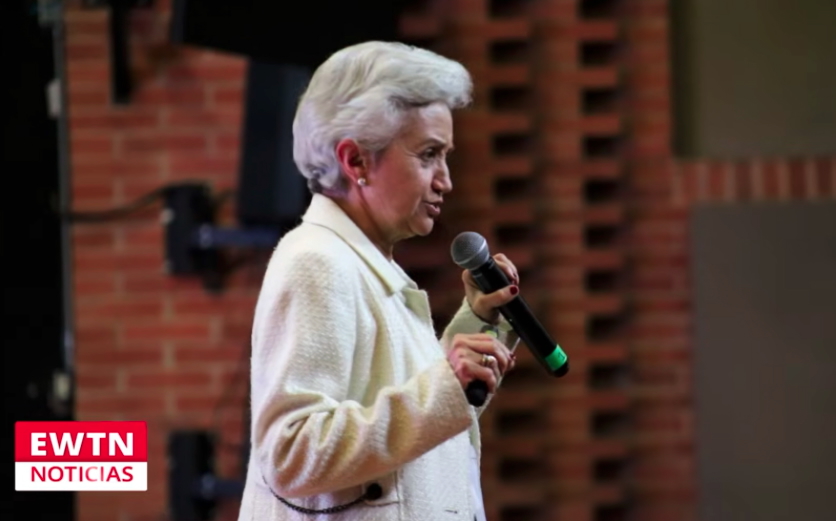
Pro-life, pro-family champion takes helm of Colombia’s Education Ministry – #Catholic – Ilva Myriam Hoyos Castañeda has been tapped to lead Colombiaʼs Ministry of Education following the resignation of Vivian Morales for personal reasons.The announcement was made by President Abelardo de la Espriella, who thanked the outgoing minister and stated that Hoyos is distinguished by “her talent, strength, integrity, and steadfast defense of values.”In her new role, Hoyos will have to make decisions regarding the measures left by her predecessor, including the review of school textbooks to remove “woke” ideology from schools and a draft decree that would allow private entities — including religious organizations — to support the provision or administration of educational services in areas with limited state presence.The proposal sparked a debate regarding the role of churches in public education and the secular nature of the state.“We are interested because religious education, moral education, and ethical aspects have not received due attention in recent years,” Father Edilberto Estupiñán, director of the Bishops' Conference Department of Education, told EWTN News.However, the appointment of Hoyos has drawn criticism from feminist and leftist circles, including former President Gustavo Petro, due to her past work with former Inspector General Alejandro Ordóñez, Colombiaʼs current ambassador to the Organization of American States (OAS) and a staunch opponent of abortion.The new minister also faces the challenge of improving educational quality, particularly following recent national test results that showed Colombian youth regressing in reading and mathematics, with only slight improvement in science.Additionally, she will face the challenge of restoring infrastructure damaged by the Aug. 10 earthquake, which affected more than 3,500 educational centers and left nearly 400,000 students without classrooms.Who is Ilva Hoyos CastañedaHoyos was born in Bogotá on Oct. 19, 1959. A lawyer who also holds a doctorate in law, she previously served as dean of the law school and director of the Institute of Humanities at the University of La Sabana. She has also taught at various higher education institutions in Colombia and abroad.Between 2009 and 2016, Hoyos served as the delegate inspector general for the defense of the rights of children, adolescents, and the family. She also served as an adviser to the Pontifical Council for the Family, participating as a lay expert in the fifth general conference of the bishops of Latin America and the Caribbean held in 2007 in Aparecida, Brazil. In addition, she served as an auditor at the first Synod on the Family convened by Pope Francis in 2014.In Colombia, Hoyos chaired the Episcopal Conference’s National Council for the Culture of Care for seven years, participating in the design and implementation of strategies for the prevention of and response to abuse and violence, as well as in the training of diocesan teams and religious communities.Hoyos is the author of books such as “Religious Freedom in the 1991 Constitution,” “Freedom and Fidelity in University Education,” “On Dignity and Human Rights,” and “The Legal Dimension of the Human Person,” among others.Stance on family and abortionMore than a decade ago, during the legal debate regarding same-sex unions, Hoyos stated before the Constitutional Court that “marriage and the family, as institutions and fundamental units of society, are central pillars of the legal system.”On the subject, she noted that “the characteristics of heterosexuality and procreation — which have been heavily criticized here and which define marriage in Colombia both constitutionally and legally — should not be viewed as grounds for suspecting unjust discrimination against the fundamental rights of individuals or couples with a homosexual orientation.”Hoyos has consistently expressed opposition to the decriminalization of abortion and defended the right to freedom of conscience, noting that it is “expressly recognized in Article 18 of the Constitution.”Throughout her career, both academically and professionally, she has been closely linked to the defense of the rights of children and the family as a central part of society.This story was first published by ACI Prensa, the Spanish-language sister service of EWTN News. It has been translated and adapted by EWTN News English.

Pro-life, pro-family champion takes helm of Colombia’s Education Ministry – #Catholic – Ilva Myriam Hoyos Castañeda has been tapped to lead Colombiaʼs Ministry of Education following the resignation of Vivian Morales for personal reasons.The announcement was made by President Abelardo de la Espriella, who thanked the outgoing minister and stated that Hoyos is distinguished by “her talent, strength, integrity, and steadfast defense of values.”In her new role, Hoyos will have to make decisions regarding the measures left by her predecessor, including the review of school textbooks to remove “woke” ideology from schools and a draft decree that would allow private entities — including religious organizations — to support the provision or administration of educational services in areas with limited state presence.The proposal sparked a debate regarding the role of churches in public education and the secular nature of the state.“We are interested because religious education, moral education, and ethical aspects have not received due attention in recent years,” Father Edilberto Estupiñán, director of the Bishops' Conference Department of Education, told EWTN News.However, the appointment of Hoyos has drawn criticism from feminist and leftist circles, including former President Gustavo Petro, due to her past work with former Inspector General Alejandro Ordóñez, Colombiaʼs current ambassador to the Organization of American States (OAS) and a staunch opponent of abortion.The new minister also faces the challenge of improving educational quality, particularly following recent national test results that showed Colombian youth regressing in reading and mathematics, with only slight improvement in science.Additionally, she will face the challenge of restoring infrastructure damaged by the Aug. 10 earthquake, which affected more than 3,500 educational centers and left nearly 400,000 students without classrooms.Who is Ilva Hoyos CastañedaHoyos was born in Bogotá on Oct. 19, 1959. A lawyer who also holds a doctorate in law, she previously served as dean of the law school and director of the Institute of Humanities at the University of La Sabana. She has also taught at various higher education institutions in Colombia and abroad.Between 2009 and 2016, Hoyos served as the delegate inspector general for the defense of the rights of children, adolescents, and the family. She also served as an adviser to the Pontifical Council for the Family, participating as a lay expert in the fifth general conference of the bishops of Latin America and the Caribbean held in 2007 in Aparecida, Brazil. In addition, she served as an auditor at the first Synod on the Family convened by Pope Francis in 2014.In Colombia, Hoyos chaired the Episcopal Conference’s National Council for the Culture of Care for seven years, participating in the design and implementation of strategies for the prevention of and response to abuse and violence, as well as in the training of diocesan teams and religious communities.Hoyos is the author of books such as “Religious Freedom in the 1991 Constitution,” “Freedom and Fidelity in University Education,” “On Dignity and Human Rights,” and “The Legal Dimension of the Human Person,” among others.Stance on family and abortionMore than a decade ago, during the legal debate regarding same-sex unions, Hoyos stated before the Constitutional Court that “marriage and the family, as institutions and fundamental units of society, are central pillars of the legal system.”On the subject, she noted that “the characteristics of heterosexuality and procreation — which have been heavily criticized here and which define marriage in Colombia both constitutionally and legally — should not be viewed as grounds for suspecting unjust discrimination against the fundamental rights of individuals or couples with a homosexual orientation.”Hoyos has consistently expressed opposition to the decriminalization of abortion and defended the right to freedom of conscience, noting that it is “expressly recognized in Article 18 of the Constitution.”Throughout her career, both academically and professionally, she has been closely linked to the defense of the rights of children and the family as a central part of society.This story was first published by ACI Prensa, the Spanish-language sister service of EWTN News. It has been translated and adapted by EWTN News English.

Ilva Myriam Hoyos Castañeda is a former adviser to the Pontifical Council for the Family.

Read More
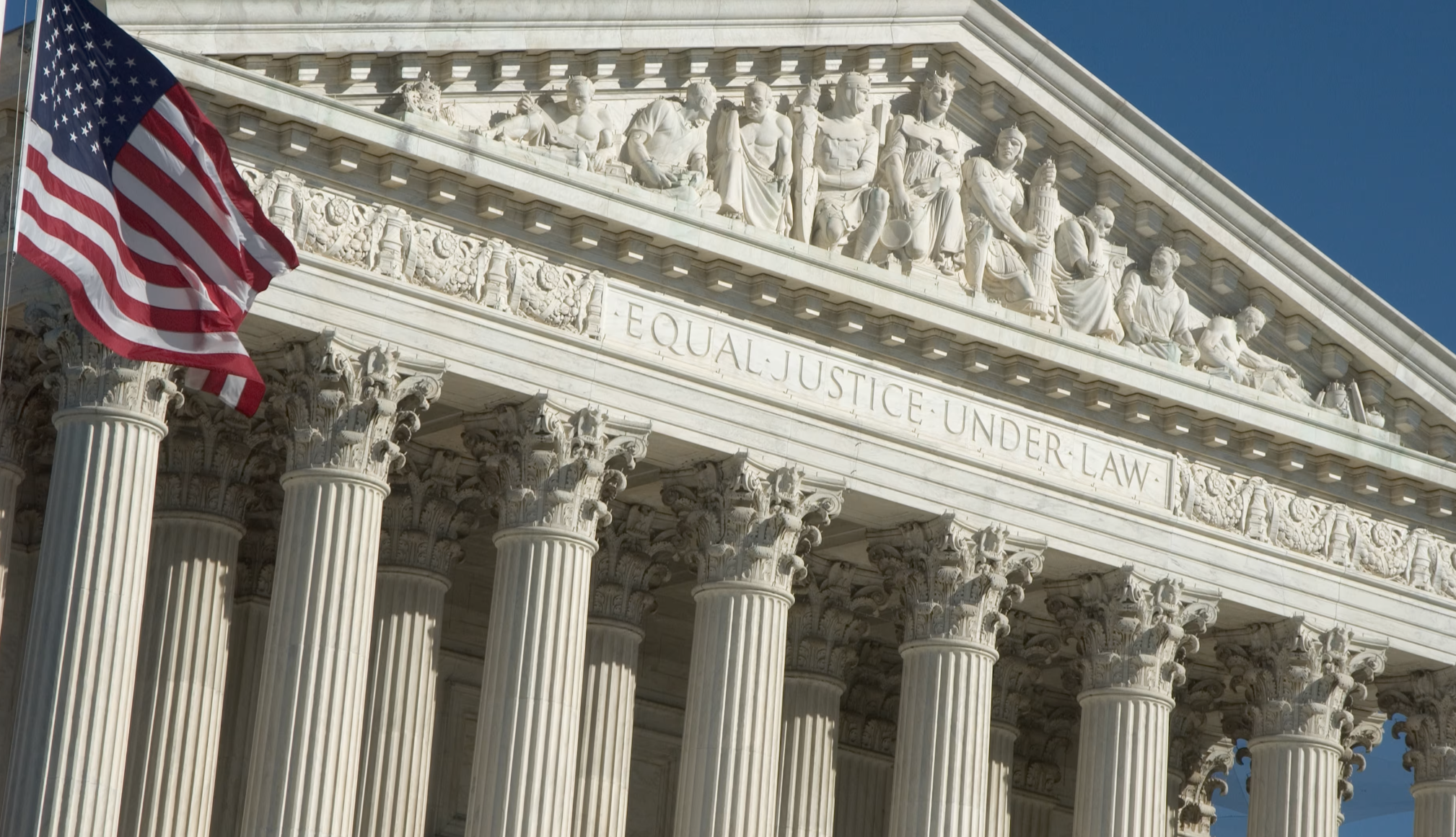
Surrogate mother petitions Supreme Court to ensure lifesaving care for newborn #Catholic A surrogate mother filed an emergency appeal to the U.S. Supreme Court to ensure a newborn baby will have access to lifesaving treatment for a heart condition amid her concerns that the biological parents may not continue treatment.McKenna West, an Alaska nurse and surrogate mother, gave birth to the baby boy on Aug. 12. She is asking the U.S. Supreme Court to block a court order that recognized the boy’s biological parents as having full custody and being the authority in medical decisions.The unborn child was diagnosed with a treatable heart defect at about 20 weeks into pregnancy. His biological parents demanded West abort the child because of the defect and threatened her with financial penalties if she did not, according to the petition filed by West’s lawyers at Alliance Defending Freedom.West refused and fled to Texas because the state’s pro-life laws prohibit most abortions. The boy is receiving lifesaving medical treatment at this time due to a court order in Texas. However, the petition states the biological parents “refused to commit to authorizing any life-saving care” for as long as needed to treat the condition.“Since [West] is now completely excluded from the life of the medically fragile infant she brought into the world, much less from the ability to make critical health decisions that protect him, time is of the essence,” the petition states.The petition warns that without immediate Supreme Court action, “the child could be removed from the Texas hospital and taken to California for hospice — despite his treatable condition — around September 17, if not sooner.”“Relief is all the more warranted here, given that the stakes involve the child’s life,” the petition adds.

Surrogate mother petitions Supreme Court to ensure lifesaving care for newborn #Catholic A surrogate mother filed an emergency appeal to the U.S. Supreme Court to ensure a newborn baby will have access to lifesaving treatment for a heart condition amid her concerns that the biological parents may not continue treatment.McKenna West, an Alaska nurse and surrogate mother, gave birth to the baby boy on Aug. 12. She is asking the U.S. Supreme Court to block a court order that recognized the boy’s biological parents as having full custody and being the authority in medical decisions.The unborn child was diagnosed with a treatable heart defect at about 20 weeks into pregnancy. His biological parents demanded West abort the child because of the defect and threatened her with financial penalties if she did not, according to the petition filed by West’s lawyers at Alliance Defending Freedom.West refused and fled to Texas because the state’s pro-life laws prohibit most abortions. The boy is receiving lifesaving medical treatment at this time due to a court order in Texas. However, the petition states the biological parents “refused to commit to authorizing any life-saving care” for as long as needed to treat the condition.“Since [West] is now completely excluded from the life of the medically fragile infant she brought into the world, much less from the ability to make critical health decisions that protect him, time is of the essence,” the petition states.The petition warns that without immediate Supreme Court action, “the child could be removed from the Texas hospital and taken to California for hospice — despite his treatable condition — around September 17, if not sooner.”“Relief is all the more warranted here, given that the stakes involve the child’s life,” the petition adds.

The surrogate mother says the biological parents previously pressured her to abort the child and hold full medical authority under a lower‑court order, prompting her emergency appeal.

Read More
Bishop to Catholics: let 9/11 heroes energize your vocations #Catholic – On the 25th anniversary of the Sept. 11, 2001 terrorist attacks, Bishop Kevin J. Sweeney urged Catholics to find inspiration from the “ordinary heroes” of that terrible day as they live their faith and the vocation to which Christ has called them. He said these heroes “were filled with the gifts of the Holy Spirit,” courageously sacrificing their lives to save others that day.
Bishop Sweeney offered those reflections on Friday as the main celebrant and homilist of a Memorial Mass for the 9/11 anniversary for the staff of the Paterson Diocese, N.J., in the chapel of St. Paul Inside the Walls in Madison, N.J. The faithful joined their fellow Americans across the country to “never forget” a quarter-century since that horrible day that shocked and changed the United States and the world.
Today, parishes around the diocese are prayerfully holding Memorial Masses and prayer services. They will pray for the souls of the victims, God’s continued comfort for their families and friends, the safety of first responders, and for God’s peace for the world.
In his homily, Bishop Sweeney praised the 9/11 heroes: first responders who assisted at the catastrophic disaster sites, including those who perished in the line of duty, and airline passengers who tried to stop the hijackers. Almost 3,000 people perished at the World Trade Center that day, but 17,000 were saved thanks to people who laid down their lives, he said.
“These ordinary people showed extraordinary courage, generosity, and wisdom, and the gifts of the Holy Spirit in the most challenging moments,” said Bishop Sweeney, who mentioned the 250th birthday of the nation this year. “We saw our country at our best on that day [9/11]. We saw citizens who were grateful for the freedoms that they received, because others were willing to sacrifice for previous generations,” he said.
These heroes modeled how Catholics should live their faith and “try to be open to God’s will and respond to our vocation” in their various roles in life, Bishop Sweeney told the congregation at St. Paul’s. In our vocations, Jesus calls all Catholics to become “servant leaders,” he said.
“We remember those who were lost 25 years ago. They gave so much. We remember them with gratitude, and we pray that we might be the disciples that Jesus is calling us to be, asking that we would be filled with the gifts of the Holy Spirit,” he said.
Concelebrating the Memorial Mass with Bishop Sweeney were Msgr. T. Mark Condon, diocesan vicar general and moderator of the Curia and pastor of Our Lady of the Holy Angels Parish in Little Falls, N.J.; Father Jared Brogan, director of the diocesan Worship Office and pastor of St. Brendan and St. George Parish in Clifton, N.J.; Father Pawel Tomczyk, diocesan vicar for evangelization at St. Paul’s; Father Charles Lana Jr., director of the diocesan Vocations Office; and Msgr. Joseph Anginoli, a retired diocesan priest and adjutant judicial vicar for the diocesan Tribunal.
On social media, Bishop Sweeney added, “As we remember, we pray and, as Archbishop Hicks reminded us in a powerful homily yesterday, ‘healing takes time, Hope is Eternal.’ May they rest in Peace as we continue to pray and work for Peace on Earth.”

Click here to subscribe to our weekly newsletter.

Bishop to Catholics: let 9/11 heroes energize your vocations #Catholic – On the 25th anniversary of the Sept. 11, 2001 terrorist attacks, Bishop Kevin J. Sweeney urged Catholics to find inspiration from the “ordinary heroes” of that terrible day as they live their faith and the vocation to which Christ has called them. He said these heroes “were filled with the gifts of the Holy Spirit,” courageously sacrificing their lives to save others that day. Bishop Sweeney offered those reflections on Friday as the main celebrant and homilist of a Memorial Mass for the 9/11 anniversary for the staff of the Paterson Diocese, N.J., in the chapel of St. Paul Inside the Walls in Madison, N.J. The faithful joined their fellow Americans across the country to “never forget” a quarter-century since that horrible day that shocked and changed the United States and the world. Today, parishes around the diocese are prayerfully holding Memorial Masses and prayer services. They will pray for the souls of the victims, God’s continued comfort for their families and friends, the safety of first responders, and for God’s peace for the world. In his homily, Bishop Sweeney praised the 9/11 heroes: first responders who assisted at the catastrophic disaster sites, including those who perished in the line of duty, and airline passengers who tried to stop the hijackers. Almost 3,000 people perished at the World Trade Center that day, but 17,000 were saved thanks to people who laid down their lives, he said. “These ordinary people showed extraordinary courage, generosity, and wisdom, and the gifts of the Holy Spirit in the most challenging moments,” said Bishop Sweeney, who mentioned the 250th birthday of the nation this year. “We saw our country at our best on that day [9/11]. We saw citizens who were grateful for the freedoms that they received, because others were willing to sacrifice for previous generations,” he said. These heroes modeled how Catholics should live their faith and “try to be open to God’s will and respond to our vocation” in their various roles in life, Bishop Sweeney told the congregation at St. Paul’s. In our vocations, Jesus calls all Catholics to become “servant leaders,” he said. “We remember those who were lost 25 years ago. They gave so much. We remember them with gratitude, and we pray that we might be the disciples that Jesus is calling us to be, asking that we would be filled with the gifts of the Holy Spirit,” he said. Concelebrating the Memorial Mass with Bishop Sweeney were Msgr. T. Mark Condon, diocesan vicar general and moderator of the Curia and pastor of Our Lady of the Holy Angels Parish in Little Falls, N.J.; Father Jared Brogan, director of the diocesan Worship Office and pastor of St. Brendan and St. George Parish in Clifton, N.J.; Father Pawel Tomczyk, diocesan vicar for evangelization at St. Paul’s; Father Charles Lana Jr., director of the diocesan Vocations Office; and Msgr. Joseph Anginoli, a retired diocesan priest and adjutant judicial vicar for the diocesan Tribunal. On social media, Bishop Sweeney added, “As we remember, we pray and, as Archbishop Hicks reminded us in a powerful homily yesterday, ‘healing takes time, Hope is Eternal.’ May they rest in Peace as we continue to pray and work for Peace on Earth.” Click here to subscribe to our weekly newsletter.

Bishop to Catholics: let 9/11 heroes energize your vocations #Catholic –

On the 25th anniversary of the Sept. 11, 2001 terrorist attacks, Bishop Kevin J. Sweeney urged Catholics to find inspiration from the “ordinary heroes” of that terrible day as they live their faith and the vocation to which Christ has called them. He said these heroes “were filled with the gifts of the Holy Spirit,” courageously sacrificing their lives to save others that day.

Bishop Sweeney offered those reflections on Friday as the main celebrant and homilist of a Memorial Mass for the 9/11 anniversary for the staff of the Paterson Diocese, N.J., in the chapel of St. Paul Inside the Walls in Madison, N.J. The faithful joined their fellow Americans across the country to “never forget” a quarter-century since that horrible day that shocked and changed the United States and the world.

Today, parishes around the diocese are prayerfully holding Memorial Masses and prayer services. They will pray for the souls of the victims, God’s continued comfort for their families and friends, the safety of first responders, and for God’s peace for the world.

In his homily, Bishop Sweeney praised the 9/11 heroes: first responders who assisted at the catastrophic disaster sites, including those who perished in the line of duty, and airline passengers who tried to stop the hijackers. Almost 3,000 people perished at the World Trade Center that day, but 17,000 were saved thanks to people who laid down their lives, he said.

“These ordinary people showed extraordinary courage, generosity, and wisdom, and the gifts of the Holy Spirit in the most challenging moments,” said Bishop Sweeney, who mentioned the 250th birthday of the nation this year. “We saw our country at our best on that day [9/11]. We saw citizens who were grateful for the freedoms that they received, because others were willing to sacrifice for previous generations,” he said.

These heroes modeled how Catholics should live their faith and “try to be open to God’s will and respond to our vocation” in their various roles in life, Bishop Sweeney told the congregation at St. Paul’s. In our vocations, Jesus calls all Catholics to become “servant leaders,” he said.

“We remember those who were lost 25 years ago. They gave so much. We remember them with gratitude, and we pray that we might be the disciples that Jesus is calling us to be, asking that we would be filled with the gifts of the Holy Spirit,” he said.

Concelebrating the Memorial Mass with Bishop Sweeney were Msgr. T. Mark Condon, diocesan vicar general and moderator of the Curia and pastor of Our Lady of the Holy Angels Parish in Little Falls, N.J.; Father Jared Brogan, director of the diocesan Worship Office and pastor of St. Brendan and St. George Parish in Clifton, N.J.; Father Pawel Tomczyk, diocesan vicar for evangelization at St. Paul’s; Father Charles Lana Jr., director of the diocesan Vocations Office; and Msgr. Joseph Anginoli, a retired diocesan priest and adjutant judicial vicar for the diocesan Tribunal.

On social media, Bishop Sweeney added, “As we remember, we pray and, as Archbishop Hicks reminded us in a powerful homily yesterday, ‘healing takes time, Hope is Eternal.’ May they rest in Peace as we continue to pray and work for Peace on Earth.”


Click here to subscribe to our weekly newsletter.

– On the 25th anniversary of the Sept. 11, 2001 terrorist attacks, Bishop Kevin J. Sweeney urged Catholics to find inspiration from the “ordinary heroes” of that terrible day as they live their faith and the vocation to which Christ has called them. He said these heroes “were filled with the gifts of the Holy Spirit,” courageously sacrificing their lives to save others that day. Bishop Sweeney offered those reflections on Friday as the main celebrant and homilist of a Memorial Mass for the 9/11 anniversary for the staff of the Paterson Diocese, N.J., in the chapel of St. Paul Inside

Read More
Apostolic nuncio calls for ‘moral voice’ in AI development #Catholic Archbishop Gabriele Giordano Caccia, apostolic nuncio to the United States, discussed the need for a “moral voice” in artificial intelligence (AI) development during a panel discussion hosted by Georgetown University on Sept. 9.The panel, titled “AI, Catholic Social Teaching, and Pope Leoʼs Invitation to Dialogue with the World,” examined Pope Leo XIV’s encyclical Magnifica Humanitas and its call for a shared human effort to develop technology that serves the common good rather than harms it.Speakers noted that the Holy Father’s encyclical stopped short of prescribing specific policy ideas for addressing the moral and ethical concerns, but the nuncio said “there is the perception that we need a moral voice” on the subject.“A moral voice is what?” he said. “Not everything which is possible to be done should be done. Not everything that technology offers should be taken. This is a moral choice.”Caccia stressed that decisions affecting human lives should not be handed over to AI, citing distinctions between AI algorithms and the human conscience, as the Holy Father discussed in Magnifica Humanitas.Leo drew a distinction between artificial intelligence and human intelligence in the encyclical, focusing on how each approaches moral questions. The pope wrote that he rejected ideas of “artificial moral agents” and the notion that a machine can “distinguish between right and wrong with greater consistency than a human being.”“Moral judgment cannot be reduced to calculation, for it involves conscience, personal responsibility and the recognition of the other as a person,” Leo wrote. “Therefore, it is not permissible to entrust lethal or otherwise irreversible decisions to artificial systems.”Caccia said during the panel discussion that, as a society, “we have to keep the value of the human relationship.”“The problem is that [if] life and death is decided by a machine, not by the human being, who is accountable?” he said. “So these are very important, important questions. But I am confident, as I said, that together we can face this situation and find a way.”The nuncio said he has similar concerns about the use of AI in other types of decision-making that impacts humans.“I hear very troubling accounts of algorithms that can block access to healthcare, employment, and security on the basis of data tainted by prejudice and injustice,” he said. “And Iʼve heard the silence of those who have no voice. When decisions are made, decisions [are] likely to generate new forms of exclusion and suffering.”Quoting the encyclical, Caccia affirmed the pope’s call that AI “needs to be disarmed.”
 
 Archbishop Gabriele Caccia, the Holy See’s permanent observer to the United Nations in New York, speaks on Aug. 29, 2025, the International Day Against Nuclear Tests. | Credit: Holy See Mission to the United Nations
 
 “The word is strong, I know, but deliberately chosen because this moment needs words capable of attracting attention, awakening consciences, and indicating paths forward for humanity,” he said. “This is more or less a framework in which we can go on with the conversation.”Speaking to EWTN News after the panel, Caccia said the pope’s call to address moral concerns of AI is not just a call to Church leadership but to every Catholic.“There is, of course, the voice of the bishops,” he said. “But there is also the voice of Catholic people who are in the business or are engineers who are in the economy, who are in the field. So itʼs not just for those who have pastoral responsibility, but for the bigger community.”Pope’s impact on AI discussionSeveral panelists discussed the importance of Magnifica Humanitas in providing a type of moral guidance on AI development that focuses on the common good of humanity.Jasmine Sun, a journalist who writes about AI and Silicon Valley, said she “was actually surprised by how much folks I knew in Silicon Valley, in the AI industry did pay attention to Magnifica Humanitas.”“It was a lot more engagement, I think, than I expected,” she said. “And once again, I think itʼs because there is this sense that the profit motive that has driven Silicon Valley, that continues to drive Silicon Valley, is not enough.”Molly Kinder, CEO of the Breakwater Initiative, said the Church provides “wisdom and moral leadership” and believes its broad focus on humanity is why people listened.“Iʼm struck that in the opening pages of the Bible, there is a discussion of Adam and Eve being put on Earth to till the land as our fundamental reason for existing,” she said. “And it feels to me sometimes when Iʼm in Silicon Valley … they almost talk about almost a new Garden of Eden that AI is going to bring about, that maybe our purpose is not to work, or maybe itʼs leisure or a check and a hobby.”Caccia too said he was “positively surprised” by the reaction to the encyclical, saying “it seems that there was a need to do something about this.”“It didnʼt pretend to have the answers,” he said, “but he put questions, common questions that we have to tackle together to decide where we want to go.”

Apostolic nuncio calls for ‘moral voice’ in AI development #Catholic Archbishop Gabriele Giordano Caccia, apostolic nuncio to the United States, discussed the need for a “moral voice” in artificial intelligence (AI) development during a panel discussion hosted by Georgetown University on Sept. 9.The panel, titled “AI, Catholic Social Teaching, and Pope Leoʼs Invitation to Dialogue with the World,” examined Pope Leo XIV’s encyclical Magnifica Humanitas and its call for a shared human effort to develop technology that serves the common good rather than harms it.Speakers noted that the Holy Father’s encyclical stopped short of prescribing specific policy ideas for addressing the moral and ethical concerns, but the nuncio said “there is the perception that we need a moral voice” on the subject.“A moral voice is what?” he said. “Not everything which is possible to be done should be done. Not everything that technology offers should be taken. This is a moral choice.”Caccia stressed that decisions affecting human lives should not be handed over to AI, citing distinctions between AI algorithms and the human conscience, as the Holy Father discussed in Magnifica Humanitas.Leo drew a distinction between artificial intelligence and human intelligence in the encyclical, focusing on how each approaches moral questions. The pope wrote that he rejected ideas of “artificial moral agents” and the notion that a machine can “distinguish between right and wrong with greater consistency than a human being.”“Moral judgment cannot be reduced to calculation, for it involves conscience, personal responsibility and the recognition of the other as a person,” Leo wrote. “Therefore, it is not permissible to entrust lethal or otherwise irreversible decisions to artificial systems.”Caccia said during the panel discussion that, as a society, “we have to keep the value of the human relationship.”“The problem is that [if] life and death is decided by a machine, not by the human being, who is accountable?” he said. “So these are very important, important questions. But I am confident, as I said, that together we can face this situation and find a way.”The nuncio said he has similar concerns about the use of AI in other types of decision-making that impacts humans.“I hear very troubling accounts of algorithms that can block access to healthcare, employment, and security on the basis of data tainted by prejudice and injustice,” he said. “And Iʼve heard the silence of those who have no voice. When decisions are made, decisions [are] likely to generate new forms of exclusion and suffering.”Quoting the encyclical, Caccia affirmed the pope’s call that AI “needs to be disarmed.” Archbishop Gabriele Caccia, the Holy See’s permanent observer to the United Nations in New York, speaks on Aug. 29, 2025, the International Day Against Nuclear Tests. | Credit: Holy See Mission to the United Nations “The word is strong, I know, but deliberately chosen because this moment needs words capable of attracting attention, awakening consciences, and indicating paths forward for humanity,” he said. “This is more or less a framework in which we can go on with the conversation.”Speaking to EWTN News after the panel, Caccia said the pope’s call to address moral concerns of AI is not just a call to Church leadership but to every Catholic.“There is, of course, the voice of the bishops,” he said. “But there is also the voice of Catholic people who are in the business or are engineers who are in the economy, who are in the field. So itʼs not just for those who have pastoral responsibility, but for the bigger community.”Pope’s impact on AI discussionSeveral panelists discussed the importance of Magnifica Humanitas in providing a type of moral guidance on AI development that focuses on the common good of humanity.Jasmine Sun, a journalist who writes about AI and Silicon Valley, said she “was actually surprised by how much folks I knew in Silicon Valley, in the AI industry did pay attention to Magnifica Humanitas.”“It was a lot more engagement, I think, than I expected,” she said. “And once again, I think itʼs because there is this sense that the profit motive that has driven Silicon Valley, that continues to drive Silicon Valley, is not enough.”Molly Kinder, CEO of the Breakwater Initiative, said the Church provides “wisdom and moral leadership” and believes its broad focus on humanity is why people listened.“Iʼm struck that in the opening pages of the Bible, there is a discussion of Adam and Eve being put on Earth to till the land as our fundamental reason for existing,” she said. “And it feels to me sometimes when Iʼm in Silicon Valley … they almost talk about almost a new Garden of Eden that AI is going to bring about, that maybe our purpose is not to work, or maybe itʼs leisure or a check and a hobby.”Caccia too said he was “positively surprised” by the reaction to the encyclical, saying “it seems that there was a need to do something about this.”“It didnʼt pretend to have the answers,” he said, “but he put questions, common questions that we have to tackle together to decide where we want to go.”

Speakers at a Georgetown University event said Magnifica Humanitas offers moral guidance without policy steps, and the nuncio noted rising concern that debates over AI need a moral voice.

Read More
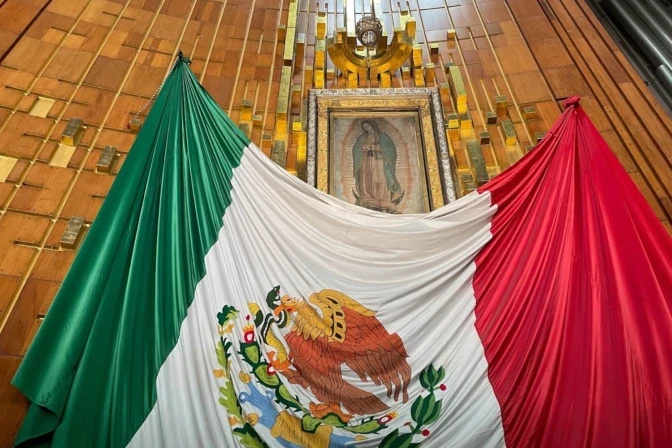
Pope Leo XIV grants jubilee year for 50th anniversary of new Basilica of Guadalupe #Catholic Pope Leo XIV granted a Guadalupan jubilee year to mark the 50th anniversary of the dedication of the new Basilica of Our Lady of Guadalupe in Mexico City and the transfer of the image of the Virgin to the current shrine on Oct. 12, 1976.Cardinal Carlos Aguiar Retes, primate archbishop of Mexico, announced that the grant was issued by the pontiff through the Apostolic Penitentiary.The jubilee year will begin on Oct. 12, 2026, and end on Oct. 12, 2027. Aguiar indicated that this celebration will also coincide with the 131st anniversary of the pontifical coronation of the image of Our Lady of Guadalupe.
 
 The original image of Our Lady of Guadalupe with the Mexican flag. | Credit: David Ramos/ACI Prensa
 
 The cardinal invited the faithful to attend the Mass officially marking the start of this “time of jubilee grace,” which will take place on Oct. 12 at noon at the Basilica of Guadalupe.Plenary indulgence during the jubilee yearThe archbishop explained that the plenary indulgence will be granted to the faithful who visit “with devotion and a contrite spirit the aacred house of St. Mary of Guadalupe and participate in a liturgical act or spend time in prayer at the basilica.”To receive it, they must also fulfill the usual conditions established by the Church: sacramental confession, Eucharistic Communion, recitation of the Creed, and prayer for the intentions of the Holy Father.The primate archbishop of Mexico encouraged Catholics to use this period as an opportunity for “spiritual renewal and conversion” under the protection of the Virgin of Guadalupe.“May St. Mary of Guadalupe, mother of the true God through whom we live, help us to make the most of this jubilee and accompany us on this journey of spiritual renewal and conversion,” he said.The ‘new basilica’According to the Nican Mopohua account recording the apparitions of St. Mary of Guadalupe, the Virgin chose St. Juan Diego to convey a request to the first bishop of Mexico, Fray Juan de Zumárraga: the construction of a church “on the plain of Tepeyac.”Following the miraculous appearance on Juan Diego’s tilma (cloak), de Zumárraga took the image to his private oratory, but a few days later, he placed it out for the veneration of the Mexican people.By 1695, a simple hermitage had been established; its structure can still be seen today beside the altar of the Old Parish Church of the Indians. The tilma remained there until 1709, when it was moved to what is now called the Expiatory Temple of Christ the King — also known as the Old Basilica of Guadalupe.By the 20th century — as Father Guillermo Schulenburg Prado, the former abbot of the Basilica of Guadalupe who championed the construction of the new church, explains in his memoirs — the “inadequacy of the old temple to meet liturgical, pastoral, and administrative needs” was evident.
 
 Expiatory Temple of Christ the King, also known as the Old Basilica. | Credit: Diego Grandi/Shutterstock
 
 Construction of the new basilica began in 1974, and on Oct. 12, 1976, the image of the Virgin was transferred to its new home.This is how the Guadalupan jubilee year will beginCelebrations will commence on Sunday, Oct. 11. Morning prayer (Lauds) and Mass will be celebrated at 8:30 a.m. local time, while Aguiar will celebrate the Sunday Mass at noon. Vespers for the dedication of the new basilica of Guadalupe will take place at 5 p.m.On Monday, Oct. 12 — the day the jubilee begins — activities will start at 8:30 a.m. with morning prayer and the celebration of Mass.At 11 a.m., a commemorative video regarding the transfer of the image of St. Mary of Guadalupe to the New Basilica and its dedication will be shown.At noon, Aguiar will celebrate the traditional Mass of the roses and the opening of the Holy Door, formally marking the beginning of the Guadalupan jubilee year.The day’s events will continue at 5 p.m. with the archdiocesan rosary; at 6 p.m., a commemorative concert marking the 50th anniversary of the New Basilica will take place; and at 7 p.m., the rosary of Guadalupan love will be held.This story was first published by ACI Prensa, the Spanish-language sister service of EWTN News. It has been translated and adapted by EWTN News English.

Pope Leo XIV grants jubilee year for 50th anniversary of new Basilica of Guadalupe #Catholic Pope Leo XIV granted a Guadalupan jubilee year to mark the 50th anniversary of the dedication of the new Basilica of Our Lady of Guadalupe in Mexico City and the transfer of the image of the Virgin to the current shrine on Oct. 12, 1976.Cardinal Carlos Aguiar Retes, primate archbishop of Mexico, announced that the grant was issued by the pontiff through the Apostolic Penitentiary.The jubilee year will begin on Oct. 12, 2026, and end on Oct. 12, 2027. Aguiar indicated that this celebration will also coincide with the 131st anniversary of the pontifical coronation of the image of Our Lady of Guadalupe. The original image of Our Lady of Guadalupe with the Mexican flag. | Credit: David Ramos/ACI Prensa The cardinal invited the faithful to attend the Mass officially marking the start of this “time of jubilee grace,” which will take place on Oct. 12 at noon at the Basilica of Guadalupe.Plenary indulgence during the jubilee yearThe archbishop explained that the plenary indulgence will be granted to the faithful who visit “with devotion and a contrite spirit the aacred house of St. Mary of Guadalupe and participate in a liturgical act or spend time in prayer at the basilica.”To receive it, they must also fulfill the usual conditions established by the Church: sacramental confession, Eucharistic Communion, recitation of the Creed, and prayer for the intentions of the Holy Father.The primate archbishop of Mexico encouraged Catholics to use this period as an opportunity for “spiritual renewal and conversion” under the protection of the Virgin of Guadalupe.“May St. Mary of Guadalupe, mother of the true God through whom we live, help us to make the most of this jubilee and accompany us on this journey of spiritual renewal and conversion,” he said.The ‘new basilica’According to the Nican Mopohua account recording the apparitions of St. Mary of Guadalupe, the Virgin chose St. Juan Diego to convey a request to the first bishop of Mexico, Fray Juan de Zumárraga: the construction of a church “on the plain of Tepeyac.”Following the miraculous appearance on Juan Diego’s tilma (cloak), de Zumárraga took the image to his private oratory, but a few days later, he placed it out for the veneration of the Mexican people.By 1695, a simple hermitage had been established; its structure can still be seen today beside the altar of the Old Parish Church of the Indians. The tilma remained there until 1709, when it was moved to what is now called the Expiatory Temple of Christ the King — also known as the Old Basilica of Guadalupe.By the 20th century — as Father Guillermo Schulenburg Prado, the former abbot of the Basilica of Guadalupe who championed the construction of the new church, explains in his memoirs — the “inadequacy of the old temple to meet liturgical, pastoral, and administrative needs” was evident. Expiatory Temple of Christ the King, also known as the Old Basilica. | Credit: Diego Grandi/Shutterstock Construction of the new basilica began in 1974, and on Oct. 12, 1976, the image of the Virgin was transferred to its new home.This is how the Guadalupan jubilee year will beginCelebrations will commence on Sunday, Oct. 11. Morning prayer (Lauds) and Mass will be celebrated at 8:30 a.m. local time, while Aguiar will celebrate the Sunday Mass at noon. Vespers for the dedication of the new basilica of Guadalupe will take place at 5 p.m.On Monday, Oct. 12 — the day the jubilee begins — activities will start at 8:30 a.m. with morning prayer and the celebration of Mass.At 11 a.m., a commemorative video regarding the transfer of the image of St. Mary of Guadalupe to the New Basilica and its dedication will be shown.At noon, Aguiar will celebrate the traditional Mass of the roses and the opening of the Holy Door, formally marking the beginning of the Guadalupan jubilee year.The day’s events will continue at 5 p.m. with the archdiocesan rosary; at 6 p.m., a commemorative concert marking the 50th anniversary of the New Basilica will take place; and at 7 p.m., the rosary of Guadalupan love will be held.This story was first published by ACI Prensa, the Spanish-language sister service of EWTN News. It has been translated and adapted by EWTN News English.

The jubilee year will begin on Oct. 12 and extend until Oct. 12, 2027.

Read More
Picture of the day
Red Sea bannerfish (Heniochus intermedius), Red Sea, Egypt. The Red Sea bannerfish attains as maximum total length of 18 centimetres (7.1 in) and is native to the western Indian Ocean where it is found in the Red Sea and the Gulf of Aden. It’s associated with coral reefs where it is most frequently recorded as a solitary fish or in pairs, although large schools have been recorded. The juveniles form large schools, particularly in areas of deep reef where there is a low density of corals. They feed on both zooplankton and benthic invertebrates but the extent to which they feed on live coral has still to be determined. It is an oviparous species which forms monogamous pairs for spawning. It’s collected for the aquarium trade but its collection is of a limited scale and is not believed to be a threat to the species population.
Read More
Bishop visits joyful Paterson parish to celebrate Spanish Mass #Catholic – St. Therese Parish in Paterson, N.J., welcomed Bishop Kevin J. Sweeney on Sept. 6, who celebrated a Spanish Mass. Deacon Luis A. Ramirez of St. Therese assisted with the liturgy.
BEACON PHOTOS | JOE GIGLI
 [See image gallery at beaconnj.org]  


Click here to subscribe to our weekly newsletter.

Bishop visits joyful Paterson parish to celebrate Spanish Mass #Catholic –

St. Therese Parish in Paterson, N.J., welcomed Bishop Kevin J. Sweeney on Sept. 6, who celebrated a Spanish Mass. Deacon Luis A. Ramirez of St. Therese assisted with the liturgy.

BEACON PHOTOS | JOE GIGLI

Click here to subscribe to our weekly newsletter.

– St. Therese Parish in Paterson, N.J., welcomed Bishop Kevin J. Sweeney on Sept. 6, who celebrated a Spanish Mass. Deacon Luis A. Ramirez of St. Therese assisted with the liturgy. BEACON PHOTOS | JOE GIGLI   Click here to subscribe to our weekly newsletter.

Read More

Launched as the International Sun-Earth Explorer-3 in 1978, a joint NASA-ESA mission, the ISEE-3 probe studied the solar wind and Earth’s magnetic field from the L1 Lagrange point. When its mission was complete in 1981, NASA proposed repurposing the craft by using it to intercept a comet; such reuse would save the money and timeContinue reading “Sept. 11, 1985: The ICE probe encounters Comet Giacobini-Zinner”

The post Sept. 11, 1985: The ICE probe encounters Comet Giacobini-Zinner appeared first on Astronomy Magazine.

Read More