Great is the wisdom of the Lord!
God Almighty, Your Wisdom includes
An understanding of what is fair,
What is logical, what is true,
What is right and what is lasting.
It mirrors Your pure intellect!
I entreat You to grant me such Wisdom,
That my labours may reflect Your insight.
Your Wisdom expands in Your creations,
Displaying complexity and multiplicity.
Your Wisdom is an eternity ahead of man.
May Your wisdom flourish forever!

From quiet beach strolls to leaf-peeping and stargazing, these destinations offer ample ways to appreciate the season.
:max_bytes(150000):strip_icc():format(jpeg)/manchester-vermont-SMALLTOWNFALL0821-cf6252d8a7db46fb8733a517d7dde244.jpg)
A reading from the Book ok Sirach
27:30—28:7
Wrath and anger are hateful things,
yet the sinner hugs them tight.
The vengeful will suffer the LORD’s vengeance,
for he remembers their sins in detail.
Forgive your neighbor’s injustice;
then when you pray, your own sins will be forgiven.
Could anyone nourish anger against another
and expect healing from the LORD?
Could anyone refuse mercy to another like himself,
can he seek pardon for his own sins?
If one who is but flesh cherishes wrath,
who will forgive his sins?
Remember your last days, set enmity aside;
remember death and decay, and cease from sin!
Think of the commandments, hate not your neighbor;
remember the Most High’s covenant, and overlook faults
A reading from the Letter to theRomans
14:7-9
Brothers and sisters:
None of us lives for oneself, and no one dies for oneself.
For if we live, we live for the Lord,
and if we die, we die for the Lord;
so then, whether we live or die, we are the Lord’s.
For this is why Christ died and came to life,
that he might be Lord of both the dead and the living.
From the Gospel according to Matthew
18:21-35
Peter approached Jesus and asked him,
“Lord, if my brother sins against me,
how often must I forgive?
As many as seven times?”
Jesus answered, “I say to you, not seven times but seventy-seven times.
That is why the kingdom of heaven may be likened to a king
who decided to settle accounts with his servants.
When he began the accounting,
a debtor was brought before him who owed him a huge amount.
Since he had no way of paying it back,
his master ordered him to be sold,
along with his wife, his children, and all his property,
in payment of the debt.
At that, the servant fell down, did him homage, and said,
‘Be patient with me, and I will pay you back in full.’
Moved with compassion the master of that servant
let him go and forgave him the loan.
When that servant had left, he found one of his fellow servants
who owed him a much smaller amount.
He seized him and started to choke him, demanding,
‘Pay back what you owe.’
Falling to his knees, his fellow servant begged him,
‘Be patient with me, and I will pay you back.’
But he refused.
Instead, he had the fellow servant put in prison
until he paid back the debt.
Now when his fellow servants saw what had happened,
they were deeply disturbed, and went to their master
and reported the whole affair.
His master summoned him and said to him, ‘You wicked servant!
I forgave you your entire debt because you begged me to.
Should you not have had pity on your fellow servant,
as I had pity on you?’
Then in anger his master handed him over to the torturers
until he should pay back the whole debt.
So will my heavenly Father do to you,
unless each of you forgives your brother from your heart.”
In the parable we find two different attitudes: God’s — represented by the king who forgives a lot, because God always forgives — and that of the man. In the divine attitude justice is pervaded with mercy, whereas the human attitude is limited to justice. Jesus exhorts us to open ourselves with courage to the strength of forgiveness, because in life not everything can be resolved with justice. We know this. There is a need for that merciful love, which is also at the basis of the Lord’s answer to Peter’s question, which precedes the parable. (…) Today’s parable helps us to grasp fully the meaning of that phrase we recite in the Lord’s Prayer: “And forgive us our trespasses, as we forgive those who trespass against us” (cf. Mt 6:12). These words contain a decisive truth. We cannot demand God’s forgiveness for ourselves if we in turn do not grant forgiveness to our neighbour. It is a condition: think of your end, of God’s forgiveness, and stop hating. Reject resentment, that bothersome fly that keeps coming back. If we do not strive to forgive and to love, we will not be forgiven and loved either. Let us entrust ourselves to the maternal intercession of the Mother of God: May she help us to realise how much we are in debt to God, and to remember that always, so that our hearts may be open to mercy and goodness. (Pope Francis, Angelus, 13 September 2020)
Read More
| Picture of the day |
|---|

|
|
Anna, with Max supporting his mother, decorates a sign for the Almabtrieb. Freiburger Alpe, Bavaria, Germany, September 2024.
|
![Chicago Archdiocese to pay $5.5 million to 9 abuse victims, attorneys say – #Catholic – The Archdiocese of Chicago will pay out more than $5 million to a small number of abuse victims after a recent settlement, attorneys said this week. Lawyers with Jeff Anderson & Associates, a law firm that specializes in abuse cases, announced at a press event on Sept. 10 that they had settled with the archdiocese for $5.5 million to be paid out to nine survivors of abuse in the Church. Attorney Jeff Anderson describe the development as a “tipping point and a turning point” regarding allegations of abuse in the archdiocese. He said the settlements were a matter of both “reckoning” and “accountability.” “It is about the courage of every survivor with whom we and others have had the privilege to work to bring about change, change in the Archdiocese of Chicago and change across the state of Illinois and change across this country,” the lawyer said. The Chicago Archdiocese did not immediately respond to a request for comment on the settlement. But the archdiocese has paid out major settlements to abuse victims numerous times in recent years. In 2022 leaders settled multiple cases with abuse victims, one totaling $1.2 million and another $1.75 million. In 2024, meanwhile, the archdiocese settled one abuse case for $950,000. Multiple settlements by the archdiocese have involved allegations regarding disgraced former priest Daniel McCormack, who pleaded guilty to abusing numerous children years ago and who spent more than a decade in prison on those charges. In 2025 the archdiocese filed a lawsuit alleging a “racketeering enterprise” against multiple plaintiffs who had reportedly filed fake abuse lawsuits regarding McCormack. Archdiocesan attorney James Geoly said at the time that the lawsuit was meant to protect “the interests of legitimate victims.”“We do not want [the racketeering lawsuit] to deter any legitimate victim from coming forward. I would encourage anybody who’s had a problem with a priest or cleric to do that,” he told the archdiocesan news outlet.](https://unitedyam.com/wp-content/uploads/2026/09/chicago-archdiocese-to-pay-5-5-million-to-9-abuse-victims-attorneys-say-catholic-the-archdiocese-of-chicago-will-pay-out-more-than-5-million-to-a-small-number-of-abuse-victims-after-a-recent-s-scaled.jpg "Chicago Archdiocese to pay $5.5 million to 9 abuse victims, attorneys say – #Catholic – The Archdiocese of Chicago will pay out more than $5 million to a small number of abuse victims after a recent settlement, attorneys said this week. Lawyers with Jeff Anderson & Associates, a law firm that specializes in abuse cases, announced at a press event on Sept. 10 that they had settled with the archdiocese for $5.5 million to be paid out to nine survivors of abuse in the Church. Attorney Jeff Anderson describe the development as a “tipping point and a turning point” regarding allegations of abuse in the archdiocese. He said the settlements were a matter of both “reckoning” and “accountability.” “It is about the courage of every survivor with whom we and others have had the privilege to work to bring about change, change in the Archdiocese of Chicago and change across the state of Illinois and change across this country,” the lawyer said. The Chicago Archdiocese did not immediately respond to a request for comment on the settlement. But the archdiocese has paid out major settlements to abuse victims numerous times in recent years. In 2022 leaders settled multiple cases with abuse victims, one totaling $1.2 million and another $1.75 million. In 2024, meanwhile, the archdiocese settled one abuse case for $950,000. Multiple settlements by the archdiocese have involved allegations regarding disgraced former priest Daniel McCormack, who pleaded guilty to abusing numerous children years ago and who spent more than a decade in prison on those charges. In 2025 the archdiocese filed a lawsuit alleging a “racketeering enterprise” against multiple plaintiffs who had reportedly filed fake abuse lawsuits regarding McCormack. Archdiocesan attorney James Geoly said at the time that the lawsuit was meant to protect “the interests of legitimate victims.”“We do not want [the racketeering lawsuit] to deter any legitimate victim from coming forward. I would encourage anybody who’s had a problem with a priest or cleric to do that,” he told the archdiocesan news outlet.")
The settlement was hailed as a “tipping point and a turning point” regarding allegations of abuse in the archdiocese.


The Catholic objectors will be shielded from the law while a federal lawsuit plays out against the state policy.

Less than two years after the successful launch of Sputnik 1, the Soviet Union put a spacecraft on the Moon. Launched Sept. 12, 1959, Luna 2 traveled over 30 hours to crash-land on the lunar surface. The impact happened at a speed of about 1.9 miles (3 kilometers) per second, and represented the first contactContinue reading “Sept. 12, 1959: Luna 2 launches”
The post Sept. 12, 1959: Luna 2 launches appeared first on Astronomy Magazine.
Read More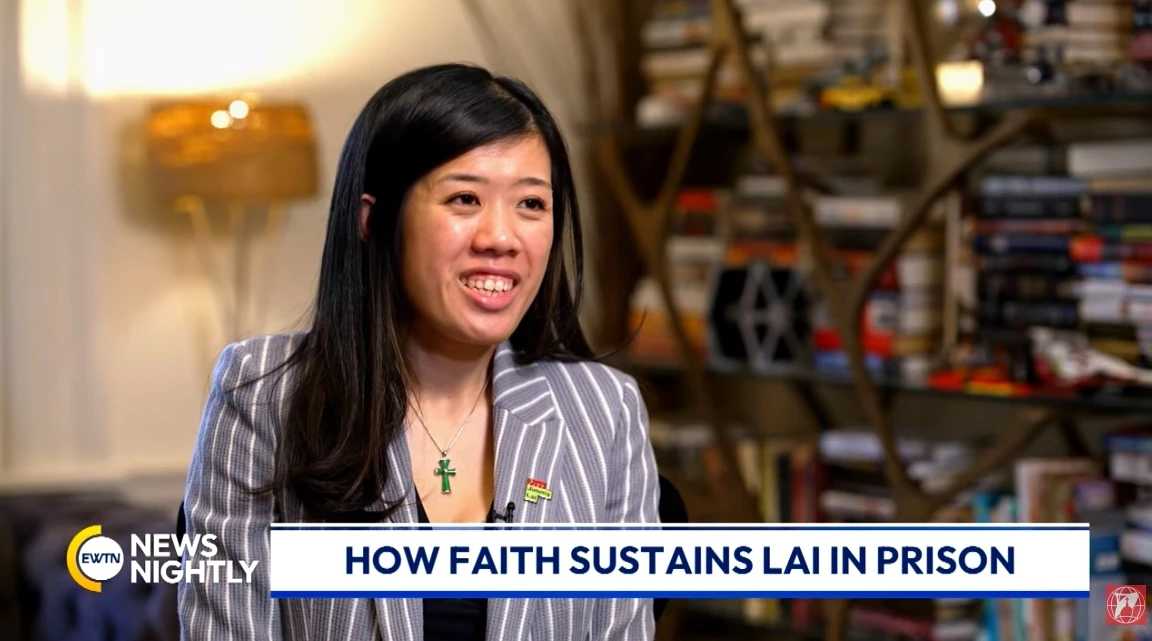
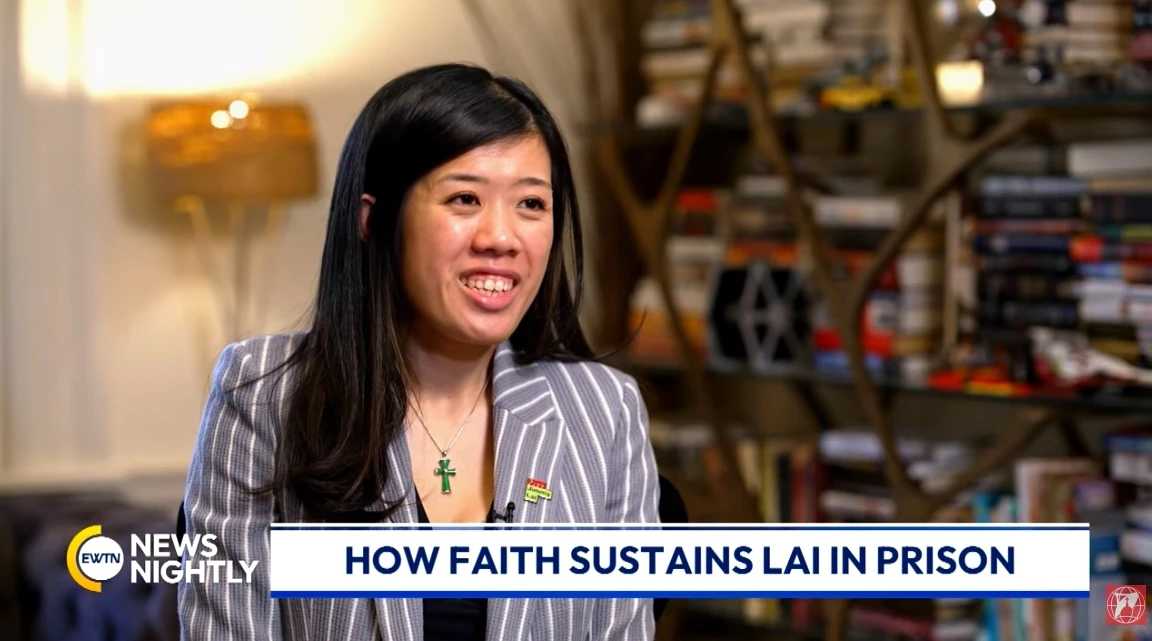
Catholic activist Jimmy Lai’s daughter enters treatment for cancer, Iraq to build largest Marian shrine, canonization cause opens for Belfast priests, and more in this week’s world news roundup.
![Catholic professor calls families to reclaim the home in a technological age #Catholic John Cuddeback, a professor of philosophy at Christendom College, says families today don’t often know how to achieve what they desire in their homes and family life. As a remedy, drawing from both ancient and modern thinkers, he has released "The Intentional Household: Living as if People Matter,” a book that outlines eight pillars for reclaiming the home as a place of human flourishing. “Families today are struggling to achieve what they so badly want: to have the kind of relationships we’re made for, beginning in the home, especially between spouses and between parents and children,” Cuddeback said. “They know they want something different, something better, but they feel hamstrung. In a culture that works against them in many ways, they are frustrated because they lack clear vision and examples to pattern themselves after.”
“The Intentional Household: Living as if People Matter” by Christendom College professor John Cuddeback. | Credit: Ken Oliver-Méndez/EWTN News
Cuddeback, who teaches a course on family and household and is also the author of “True Friendship,” spoke to EWTN News about how he hopes his book conveys that “[a]nyone can choose to be intentional about their household and make real progress with dramatic fruits in the lives of those we love most.” EWTN News: What do you see as the biggest challenge to building and maintaining an intentional home?Cuddebach: It all begins with priorities. As a society we have turned away from the intense focus that our household requires — and this is evident in how we struggle in marriage, raising children, and relating to the elderly. Even many traditionally-minded folks struggle to realize and enact the demanding, even while ordinary, aspects of God’s plan for our homes.Aristotle says that a society tends to produce the kind of people it honors. We do not honor those who prioritize home life — either women or men. This means that many of the structures, practices, and assumptions of our age are at odds with the real good of home life. This is especially evident in our obsession with the latest technologies.This book is a call to all of us to do something radically different and profoundly better — while always recognizing we must be people of our time and place. It calls us to discover that looking first to what our children and our elderly really need is the high road to deeper fulfillment for all of us.How has Pope Leo XIV’s encyclical Magnifica Humanitas influenced your thought on how technology should be incorporated in the home?Pope Leo makes clear that we have come to a crisis point. The time is now to be honest, serious, and persistent in examining our use of technology in view of real human flourishing. This must start in the home. No one else is going to do this for us.But as the pope makes clear, right practice must flow from an understanding of who we are and what we’re made for. “The Intentional Household” offers the rich and positive view of daily life in the home that grounds such an examination. It gives the “yes” that strengthens the “nos” we need to say. It gives direction for rising to the challenges of our age, including how to channel technology to true human flourishing.Approaching homelife intentionally — especially attending to the ordinary in good work and true leisure as essential to our relationships — we can take real steps to become those biblical good stewards so honored by the Lord.How does this apply to those across all walks of life, including single people, married couples without children, those who are divorced or separated?The principles of a vibrant home life are both perennial and flexible. Wherever we find ourselves we can discover how the plan that God wrote into human nature is much better than we have realized.Brokenness and suffering today are widespread. God’s plan encompasses these realities. By the grace of God, anyone who is humble and willing to take an intentional approach can affect real, and indeed dramatic change by applying the book’s eight principles. We can all take real steps to make our homes a place of vibrant life, with deep belonging, connection, and presence.One of the thinkers you cite in your book is Wendell Berry. In light of his recent passing can you speak to his influence on your life and thinking?Wendell Berry saw clearly how the loss of activities of work and leisure in the home has led to our experience of disconnection and isolation. Home should be a place of deep connection: between us and loved ones and neighbors, between soul and body, between us and the earth.One of Berry’s pivotal insights is the key role of a certain kind of work in the home. Berry has pointed out that the work of traditional home arts is much more important than we have realized. He argues that as the breakdown of home life came especially through the loss of good work, the renewal will likewise come through a rediscovery of work that connects us to one another as it connects us to our bodies and to the earth, and ultimately to God.Wendell Berry was a prophet of the extraordinary beauty and importance of the ordinary. Making our home an intentional household means rediscovering the power of ordinary things, such as mealtimes with the whole household, shared work in the kitchen and other home arts, and “porch time” and other such leisure times. Attention to these things can transform our marriage, parenting, and other key relationships.](https://unitedyam.com/wp-content/uploads/2026/09/catholic-professor-calls-families-to-reclaim-the-home-in-a-technological-age-catholic-john-cuddeback-a-professor-of-philosophy-at-christendom-college-says-families-today-dont-often-know-ho.jpg "Catholic professor calls families to reclaim the home in a technological age #Catholic John Cuddeback, a professor of philosophy at Christendom College, says families today don’t often know how to achieve what they desire in their homes and family life. As a remedy, drawing from both ancient and modern thinkers, he has released \"The Intentional Household: Living as if People Matter,” a book that outlines eight pillars for reclaiming the home as a place of human flourishing. “Families today are struggling to achieve what they so badly want: to have the kind of relationships we’re made for, beginning in the home, especially between spouses and between parents and children,” Cuddeback said. “They know they want something different, something better, but they feel hamstrung. In a culture that works against them in many ways, they are frustrated because they lack clear vision and examples to pattern themselves after.”
“The Intentional Household: Living as if People Matter” by Christendom College professor John Cuddeback. | Credit: Ken Oliver-Méndez/EWTN News
Cuddeback, who teaches a course on family and household and is also the author of “True Friendship,” spoke to EWTN News about how he hopes his book conveys that “[a]nyone can choose to be intentional about their household and make real progress with dramatic fruits in the lives of those we love most.” EWTN News: What do you see as the biggest challenge to building and maintaining an intentional home?Cuddebach: It all begins with priorities. As a society we have turned away from the intense focus that our household requires — and this is evident in how we struggle in marriage, raising children, and relating to the elderly. Even many traditionally-minded folks struggle to realize and enact the demanding, even while ordinary, aspects of God’s plan for our homes.Aristotle says that a society tends to produce the kind of people it honors. We do not honor those who prioritize home life — either women or men. This means that many of the structures, practices, and assumptions of our age are at odds with the real good of home life. This is especially evident in our obsession with the latest technologies.This book is a call to all of us to do something radically different and profoundly better — while always recognizing we must be people of our time and place. It calls us to discover that looking first to what our children and our elderly really need is the high road to deeper fulfillment for all of us.How has Pope Leo XIV’s encyclical Magnifica Humanitas influenced your thought on how technology should be incorporated in the home?Pope Leo makes clear that we have come to a crisis point. The time is now to be honest, serious, and persistent in examining our use of technology in view of real human flourishing. This must start in the home. No one else is going to do this for us.But as the pope makes clear, right practice must flow from an understanding of who we are and what we’re made for. “The Intentional Household” offers the rich and positive view of daily life in the home that grounds such an examination. It gives the “yes” that strengthens the “nos” we need to say. It gives direction for rising to the challenges of our age, including how to channel technology to true human flourishing.Approaching homelife intentionally — especially attending to the ordinary in good work and true leisure as essential to our relationships — we can take real steps to become those biblical good stewards so honored by the Lord.How does this apply to those across all walks of life, including single people, married couples without children, those who are divorced or separated?The principles of a vibrant home life are both perennial and flexible. Wherever we find ourselves we can discover how the plan that God wrote into human nature is much better than we have realized.Brokenness and suffering today are widespread. God’s plan encompasses these realities. By the grace of God, anyone who is humble and willing to take an intentional approach can affect real, and indeed dramatic change by applying the book’s eight principles. We can all take real steps to make our homes a place of vibrant life, with deep belonging, connection, and presence.One of the thinkers you cite in your book is Wendell Berry. In light of his recent passing can you speak to his influence on your life and thinking?Wendell Berry saw clearly how the loss of activities of work and leisure in the home has led to our experience of disconnection and isolation. Home should be a place of deep connection: between us and loved ones and neighbors, between soul and body, between us and the earth.One of Berry’s pivotal insights is the key role of a certain kind of work in the home. Berry has pointed out that the work of traditional home arts is much more important than we have realized. He argues that as the breakdown of home life came especially through the loss of good work, the renewal will likewise come through a rediscovery of work that connects us to one another as it connects us to our bodies and to the earth, and ultimately to God.Wendell Berry was a prophet of the extraordinary beauty and importance of the ordinary. Making our home an intentional household means rediscovering the power of ordinary things, such as mealtimes with the whole household, shared work in the kitchen and other home arts, and “porch time” and other such leisure times. Attention to these things can transform our marriage, parenting, and other key relationships.")
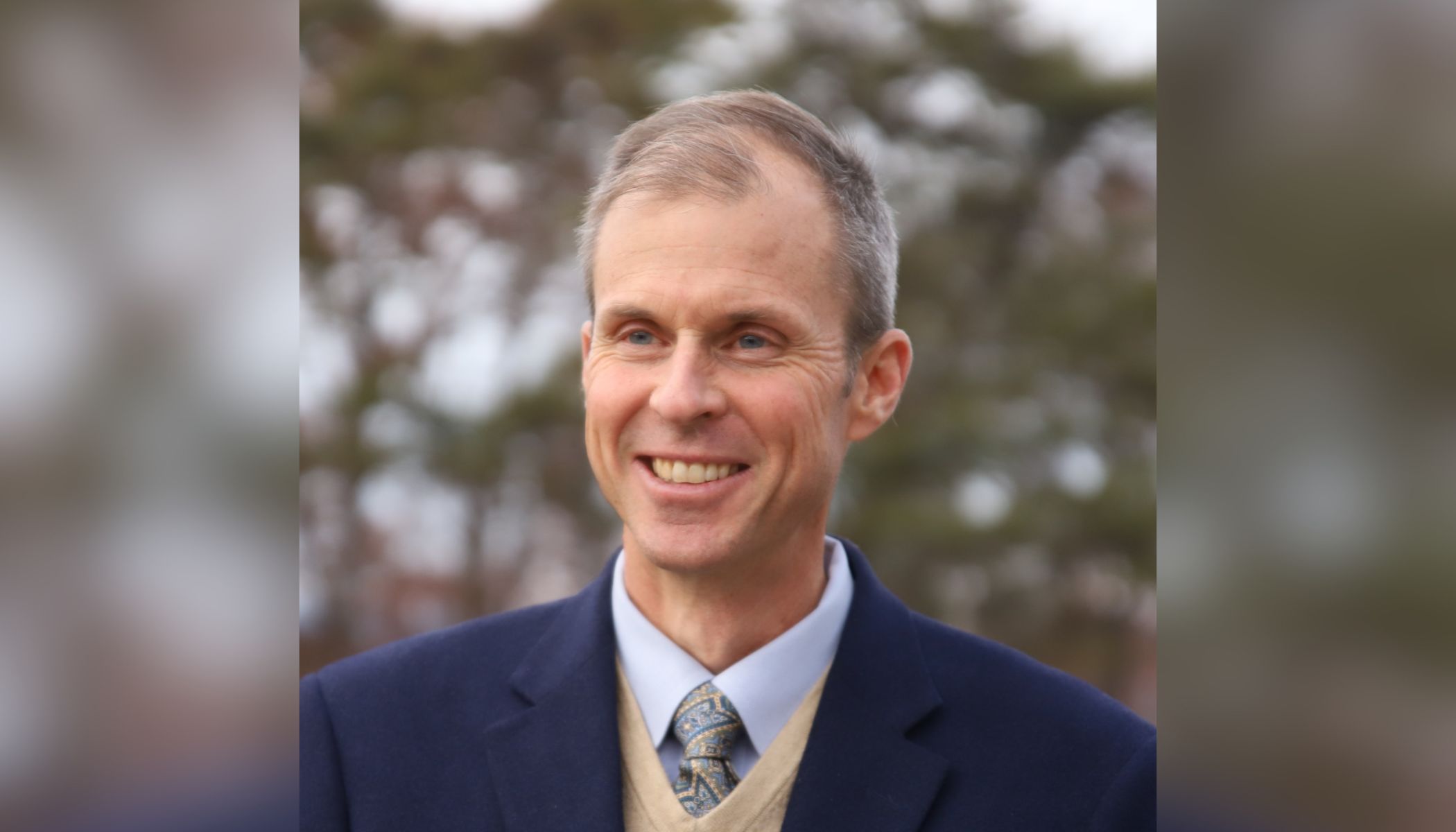
Christendom College professor John Cuddeback spoke to EWTN News about his new book “The Intentional Household: Living as if People Matter,” and treating our homes as places of human flourishing.

The easy-to-follow loop offers high-altitude passes, historic sites, and dazzling foliage views.
:max_bytes(150000):strip_icc():format(jpeg)/TAL-general-tips-ENCHANTEDCIRCLEDR1025-0407f02d6a424d0eb683bf6e0da06c43.jpg)

Director Benjamin Tanaka, executive producer Gabriel Patrick, and composer Ethan Hsu call the project “The Francis Chronicles.”