Day: September 24, 2026

Blessed Fulton J. Sheen: His beatification in photos – #Catholic – The beatification Mass for Archbishop Fulton J. Sheen took place at The Dome at America’s Center in St. Louis on Sept. 24 with tens of thousands of the faithful in attendance. Pope Leo XIV issued a papal decree granting that Fulton Sheen “may henceforth be called blessed.” Cardinal Luis Antonio Tagle, acting as the pope’s legate, read the apostolic letter at the Mass in St. Louis.Blessed Fulton Sheen’s feast day will be Dec. 9, the anniversary of his death. That date also marks the first apparition of Our Lady of Guadalupe to St. Juan Diego in 1531.
 
 Clouds pass behind the twin towers of the Cathedral of St. Mary of the Immaculate Conception in Peoria, Illinois, on Sept. 23, 2026, the day before the beatification in St. Louis of Archbishop Fulton J. Sheen. Sheen is buried at the cathedral. | Credit: Jeffrey Bruno


 A young woman prays with her hands clasped near the covered tomb of Archbishop Fulton J. Sheen in
the cathedral at Peoria, Illiniois. The visit took place on Sept. 23, 2026, the eve of Venerable Archbishop
Fulton J. Sheenʼs beatification in St. Louis. | Credit: Jeffrey Bruno


 A display at the Archbishop Fulton Sheen Museum recalls Sheenʼs pioneering work in television evangelization, with images of the archbishop beside a vintage television camera. | Credit: Jeffrey Bruno


 An overhead view shows the procession and the congregation filling the Cathedral Basilica of St. Louis for solemn vespers on Sept. 23, 2026, the eve of Sheenʼs beatification. | Credit: Jeffrey Bruno


 The vaulted ceiling and sanctuary of the Cathedral of St. Mary of the Immaculate Conception in Peoria. Sheen was ordained here in 1919. | Credit: Jeffrey Bruno


 Pilgrims kneel in prayer before the covered tomb of now Blessed Fulton J. Sheen in a side chapel of the
Cathedral of St. Mary of the Immaculate Conception in Peoria, Illinois, on Sept. 23, 2026, the eve of Venerable Archbishop Fulton J. Sheenʼs beatification in St. Louis. | Credit: Jeffrey Bruno


 Cardinal Timothy Dolan speaks at the beatification Mass for Archbishop Fulton Sheen on Sept. 24, 2026 in St. Louis. | Credit: Jeffrey Bruno


 Priests process into the beatification Mass for Archbishop Fulton Sheen in St. Louis on Sept. 24, 2026. | Credit: Jeffrey Bruno


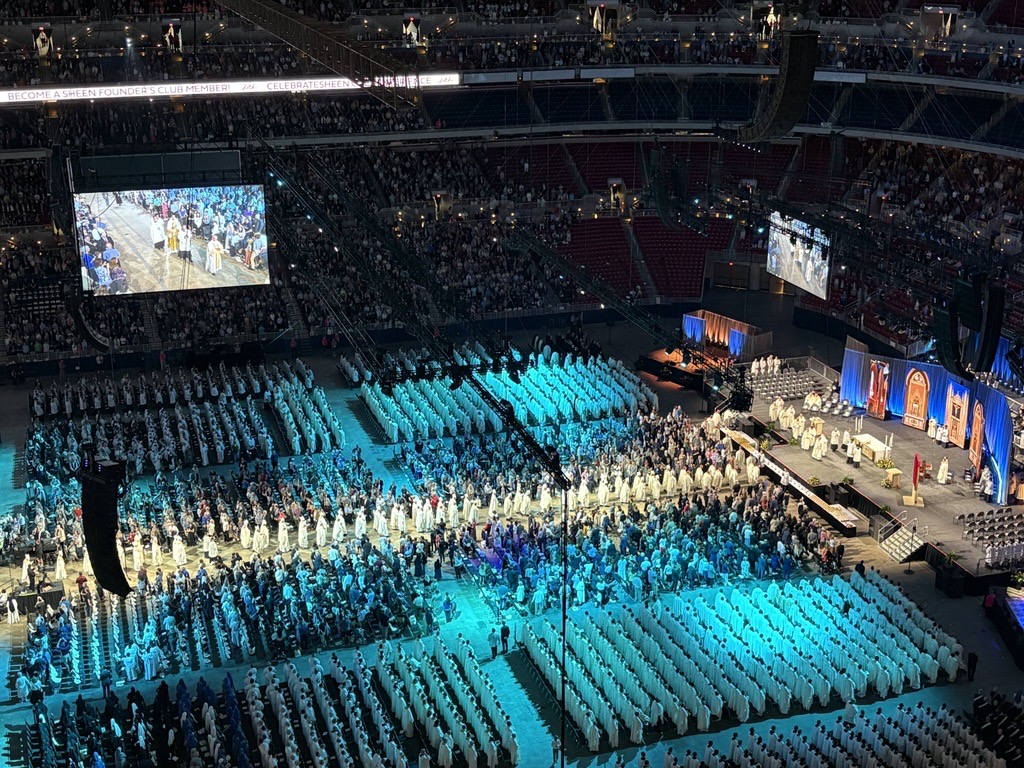
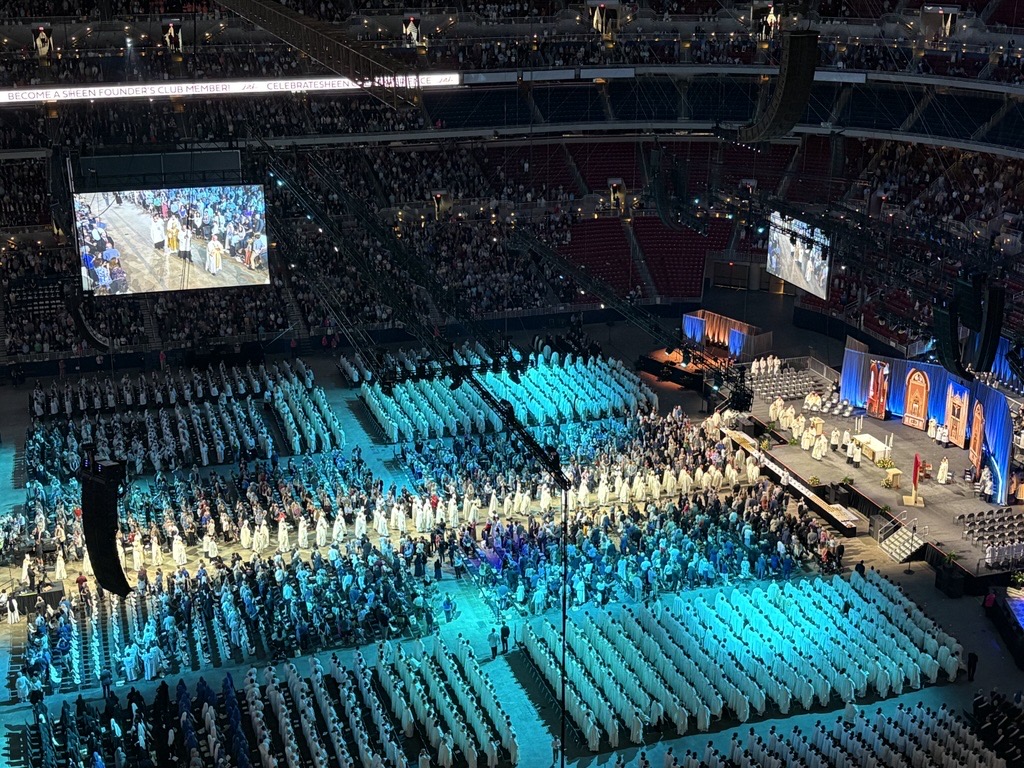
 The Mass was held at the Dome at Americaʼs Center in St. Louis on. Sept. 24, 2026. | Credit: Jeffrey Bruno


 Priests, religious, and laypeople attended the beatification Mass for Archbishop Fulton Sheen on Sept. 24, 2026. | Credit: Jeffrey Bruno


 Bishops process into the beatification Mass for Archbishop Fulton Sheen on Sept. 24, 2026. | Credit: Jeffrey Bruno


 Cardinal Luis Antonio Tagle delivers the homily at Sheenʼs beatification Mass. | Credit: Jeffrey Bruno


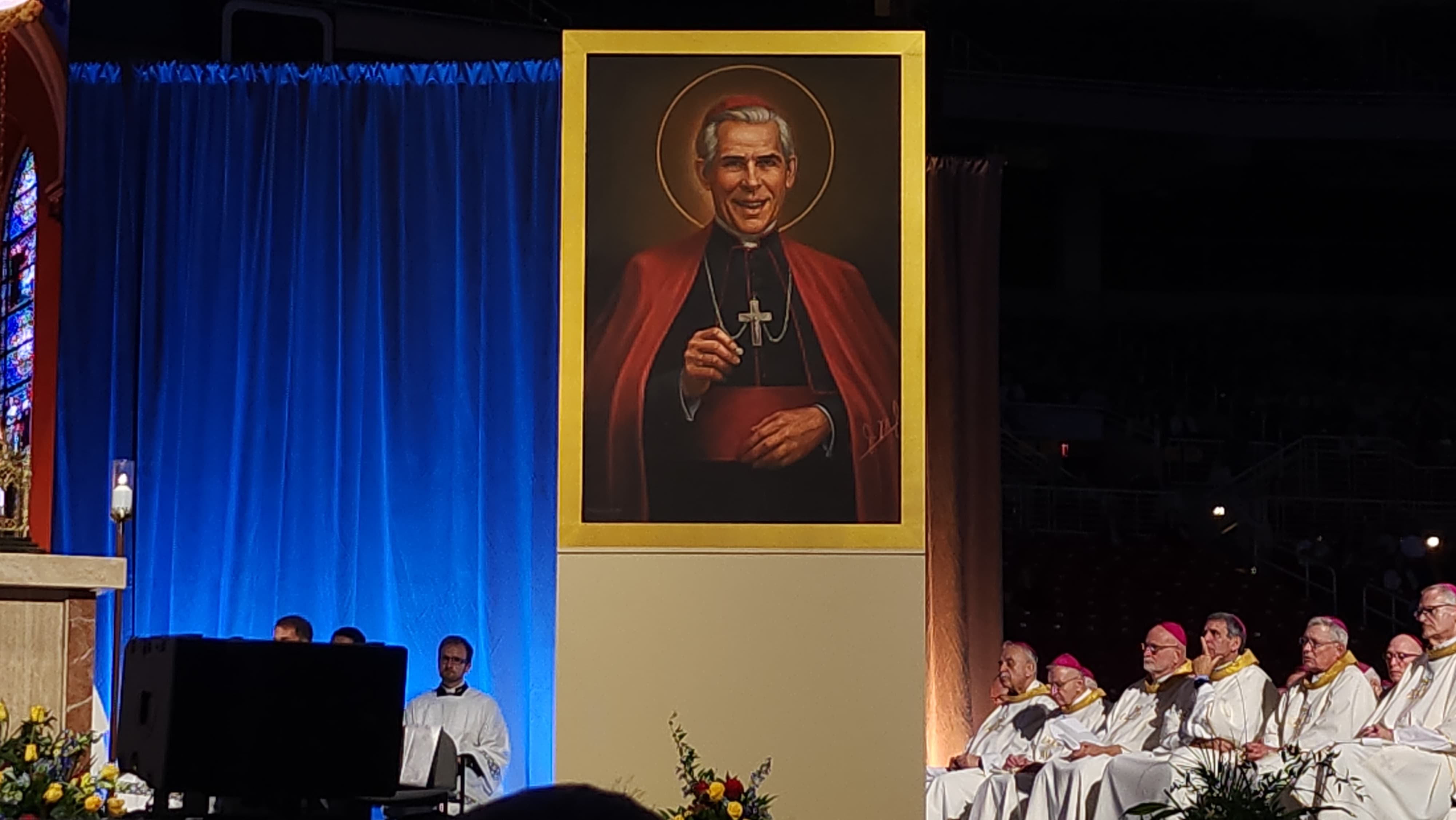
 A new image of Blessed Fulton Sheen is displayed after he is declared “blessed” at the Mass for his beatification on Sept. 24, 2026, at The Dome at America’s Center in St. Louis. | Credit: Jeffrey Bruno


 Cardinal Tagle elevates the Host at the beatification Mass for now Blessed Fulton Sheen. | Credit: Jeffrey Bruno


 A young girl looks pensive during the beatification Mass for Archbishop Fulton Sheen on Sept. 24, 2026. | Credit: Jeffrey Bruno


 Cardinal Tagle stands before the new image of Blessed Fulton Sheen during the beatification Mass in St. Louis on Sept. 24, 2026. | Credit: Jeffrey Bruno

Blessed Fulton J. Sheen: His beatification in photos – #Catholic – The beatification Mass for Archbishop Fulton J. Sheen took place at The Dome at America’s Center in St. Louis on Sept. 24 with tens of thousands of the faithful in attendance. Pope Leo XIV issued a papal decree granting that Fulton Sheen “may henceforth be called blessed.” Cardinal Luis Antonio Tagle, acting as the pope’s legate, read the apostolic letter at the Mass in St. Louis.Blessed Fulton Sheen’s feast day will be Dec. 9, the anniversary of his death. That date also marks the first apparition of Our Lady of Guadalupe to St. Juan Diego in 1531. Clouds pass behind the twin towers of the Cathedral of St. Mary of the Immaculate Conception in Peoria, Illinois, on Sept. 23, 2026, the day before the beatification in St. Louis of Archbishop Fulton J. Sheen. Sheen is buried at the cathedral. | Credit: Jeffrey Bruno A young woman prays with her hands clasped near the covered tomb of Archbishop Fulton J. Sheen in the cathedral at Peoria, Illiniois. The visit took place on Sept. 23, 2026, the eve of Venerable Archbishop Fulton J. Sheenʼs beatification in St. Louis. | Credit: Jeffrey Bruno A display at the Archbishop Fulton Sheen Museum recalls Sheenʼs pioneering work in television evangelization, with images of the archbishop beside a vintage television camera. | Credit: Jeffrey Bruno An overhead view shows the procession and the congregation filling the Cathedral Basilica of St. Louis for solemn vespers on Sept. 23, 2026, the eve of Sheenʼs beatification. | Credit: Jeffrey Bruno The vaulted ceiling and sanctuary of the Cathedral of St. Mary of the Immaculate Conception in Peoria. Sheen was ordained here in 1919. | Credit: Jeffrey Bruno Pilgrims kneel in prayer before the covered tomb of now Blessed Fulton J. Sheen in a side chapel of the Cathedral of St. Mary of the Immaculate Conception in Peoria, Illinois, on Sept. 23, 2026, the eve of Venerable Archbishop Fulton J. Sheenʼs beatification in St. Louis. | Credit: Jeffrey Bruno Cardinal Timothy Dolan speaks at the beatification Mass for Archbishop Fulton Sheen on Sept. 24, 2026 in St. Louis. | Credit: Jeffrey Bruno Priests process into the beatification Mass for Archbishop Fulton Sheen in St. Louis on Sept. 24, 2026. | Credit: Jeffrey Bruno The Mass was held at the Dome at Americaʼs Center in St. Louis on. Sept. 24, 2026. | Credit: Jeffrey Bruno Priests, religious, and laypeople attended the beatification Mass for Archbishop Fulton Sheen on Sept. 24, 2026. | Credit: Jeffrey Bruno Bishops process into the beatification Mass for Archbishop Fulton Sheen on Sept. 24, 2026. | Credit: Jeffrey Bruno Cardinal Luis Antonio Tagle delivers the homily at Sheenʼs beatification Mass. | Credit: Jeffrey Bruno A new image of Blessed Fulton Sheen is displayed after he is declared “blessed” at the Mass for his beatification on Sept. 24, 2026, at The Dome at America’s Center in St. Louis. | Credit: Jeffrey Bruno Cardinal Tagle elevates the Host at the beatification Mass for now Blessed Fulton Sheen. | Credit: Jeffrey Bruno A young girl looks pensive during the beatification Mass for Archbishop Fulton Sheen on Sept. 24, 2026. | Credit: Jeffrey Bruno Cardinal Tagle stands before the new image of Blessed Fulton Sheen during the beatification Mass in St. Louis on Sept. 24, 2026. | Credit: Jeffrey Bruno

Archbishop Fulton J. Sheen was declared “blessed” by Pope Leo XIV on Sept. 24.

Read More

An Alta-X drone flies an advanced guidance and navigation system known as the Safe and Precise Landing – Integrated Capabilities Evolution (SPLICE) experiment near NASA’s Armstrong Flight Research Center in Edwards, California, on Thursday, Aug. 27, 2026.

Read More
A ‘porter’ who led others to Christ: Archbishop Fulton Sheen declared ‘blessed’ – #Catholic – ST. LOUIS — Archbishop Fulton Sheen, despite his humble origins in small-town Illinois, aspired to great things as an academic and as a communicator of the Catholic faith. On Sept. 24, before a crowd of tens of thousands at The Dome at America’s Center, the farm-boy-turned-mass-media star was declared “blessed” after the reading of a decree signed by Pope Leo XIV, a fellow Midwesterner.Via his decree, Pope Leo announced Blessed Sheen’s feast day will be on Dec. 9, the anniversary of his death. His feast day is expected to be on the calendar of the Catholic Church in the United States.Cardinal Luis Tagle, the pope’s representative and the principal celebrant of the beatification Mass, reflected on the meaning of “blessed” during his homily — noting that throughout history many who shared the Christian faith suffered persecution, yet their lives were still marked by joy. It is Sheen’s deep, humble relationship with Jesus Christ and his radical solidarity with the poor and vulnerable that characterized his life as a missionary, one that all Catholics should emulate, Tagle said.Despite his massive worldly popularity and the fact that he personally accompanied countless converts in their journey to become Catholic, Tagle noted that Sheen did not “claim” the converts as his own but rather described himself as a mere “porter” who led people to the “open door of the house of God.”
 
 Cardinal Luis Tagle serves as the pope’s representative and the principal celebrant of the beatification Mass on Sept. 24, 2026, in St. Louis. | Credit: Jeffrey Bruno
 
 “It is for being a zealous and creative evangelizer, an advocate for mission that Fulton Sheen is called ‘blessed’ or ‘fortunate’ or ‘happy’… Blessed is the Evangelizer, converted by beholding and touching the wounds of the risen Christ in wounded brothers and sisters, blessed is the missionary who digs deep into the heart of the poor to meet Jesus there. Blessed Fulton J. Sheen!” Tagle proclaimed.Jam-packed crowds of Catholics of all ages — from the elderly who were around when Sheen’s shows first aired, to numerous families with small children — had descended on the stadium for the Mass, which began with a lengthy procession of some 1,000 priests, 89 bishops, and hundreds of seminarians and deacons.The actual moment when Sheen became “blessed” happened early in the proceedings, following the proclamation of a decree signed by Pope Leo XIV. As is customary at beatifications, the decree was read first in Latin by Tagle, the pope’s representative and the pro-prefect of the Dicastery for Evangelization, and afterward in the vernacular — in this case English — by Bishop Louis Tylka of Peoria, Illinois, in whose diocese Sheen was born.Immediately following the reading, a portrait of Blessed Sheen was revealed showing him with a halo, to thunderous applause. The same portrait was simultaneously unveiled at his tomb at the Cathedral St. Mary of the Immaculate Conception in Peoria.
 
 A new image of Blessed Fulton Sheen is displayed after he is declared “blessed” at the Mass for his beatification on Sept. 24, 2026, at The Dome at America’s Center in St. Louis. | Credit: Jeffrey Bruno
 
 Earlier in the day, Monsignor Jason Gray, executive director of the Archbishop Fulton J. Sheen Foundation, announced that six purported miracles are attributed to the intercession of Sheen as part of the process that could lead to his canonization. Any purported miracle attributed to Sheen’s intercession that has taken place since Pope Francis announced his beatification in July 2019 can count toward his eventual canonization, which typically requires a second miracle to move forward.James Fulton Engstrom, recipient of the confirmed miracle that cleared the way for Sheen’s beatification, survived in spite of having spent 61 minutes without a heartbeat. The healthy 16-year-old presented several of Sheen’s relics during the beatification Mass today.Catholics from all over the world hailed Sheen’s example as a highly creative and effective missionary, who used every means available to him to share the love of Christ.Father Solomon Patrick Zaku, national director of the Pontifical Mission Societies in Nigeria, flew to the U.S. for his first-ever visit to the country to attend the beatification of Sheen, who previously served as the Pontifical Mission Societies’ national director for the U.S.“While I was in the seminary, I read about his book and about his life, and I was somewhat touched by his life. One of the things I have learned from him is the Holy Hour, spending an hour daily, and that has been part of my daily routine, which has been my source of inspiration,” Zaku said. “As the national director of the Pontifical Mission Societies in Nigeria, [we] promote the Mission Rosary, which Archbishop Fulton Sheen introduced … I pray it daily.”

A ‘porter’ who led others to Christ: Archbishop Fulton Sheen declared ‘blessed’ – #Catholic – ST. LOUIS — Archbishop Fulton Sheen, despite his humble origins in small-town Illinois, aspired to great things as an academic and as a communicator of the Catholic faith. On Sept. 24, before a crowd of tens of thousands at The Dome at America’s Center, the farm-boy-turned-mass-media star was declared “blessed” after the reading of a decree signed by Pope Leo XIV, a fellow Midwesterner.Via his decree, Pope Leo announced Blessed Sheen’s feast day will be on Dec. 9, the anniversary of his death. His feast day is expected to be on the calendar of the Catholic Church in the United States.Cardinal Luis Tagle, the pope’s representative and the principal celebrant of the beatification Mass, reflected on the meaning of “blessed” during his homily — noting that throughout history many who shared the Christian faith suffered persecution, yet their lives were still marked by joy. It is Sheen’s deep, humble relationship with Jesus Christ and his radical solidarity with the poor and vulnerable that characterized his life as a missionary, one that all Catholics should emulate, Tagle said.Despite his massive worldly popularity and the fact that he personally accompanied countless converts in their journey to become Catholic, Tagle noted that Sheen did not “claim” the converts as his own but rather described himself as a mere “porter” who led people to the “open door of the house of God.” Cardinal Luis Tagle serves as the pope’s representative and the principal celebrant of the beatification Mass on Sept. 24, 2026, in St. Louis. | Credit: Jeffrey Bruno “It is for being a zealous and creative evangelizer, an advocate for mission that Fulton Sheen is called ‘blessed’ or ‘fortunate’ or ‘happy’… Blessed is the Evangelizer, converted by beholding and touching the wounds of the risen Christ in wounded brothers and sisters, blessed is the missionary who digs deep into the heart of the poor to meet Jesus there. Blessed Fulton J. Sheen!” Tagle proclaimed.Jam-packed crowds of Catholics of all ages — from the elderly who were around when Sheen’s shows first aired, to numerous families with small children — had descended on the stadium for the Mass, which began with a lengthy procession of some 1,000 priests, 89 bishops, and hundreds of seminarians and deacons.The actual moment when Sheen became “blessed” happened early in the proceedings, following the proclamation of a decree signed by Pope Leo XIV. As is customary at beatifications, the decree was read first in Latin by Tagle, the pope’s representative and the pro-prefect of the Dicastery for Evangelization, and afterward in the vernacular — in this case English — by Bishop Louis Tylka of Peoria, Illinois, in whose diocese Sheen was born.Immediately following the reading, a portrait of Blessed Sheen was revealed showing him with a halo, to thunderous applause. The same portrait was simultaneously unveiled at his tomb at the Cathedral St. Mary of the Immaculate Conception in Peoria. A new image of Blessed Fulton Sheen is displayed after he is declared “blessed” at the Mass for his beatification on Sept. 24, 2026, at The Dome at America’s Center in St. Louis. | Credit: Jeffrey Bruno Earlier in the day, Monsignor Jason Gray, executive director of the Archbishop Fulton J. Sheen Foundation, announced that six purported miracles are attributed to the intercession of Sheen as part of the process that could lead to his canonization. Any purported miracle attributed to Sheen’s intercession that has taken place since Pope Francis announced his beatification in July 2019 can count toward his eventual canonization, which typically requires a second miracle to move forward.James Fulton Engstrom, recipient of the confirmed miracle that cleared the way for Sheen’s beatification, survived in spite of having spent 61 minutes without a heartbeat. The healthy 16-year-old presented several of Sheen’s relics during the beatification Mass today.Catholics from all over the world hailed Sheen’s example as a highly creative and effective missionary, who used every means available to him to share the love of Christ.Father Solomon Patrick Zaku, national director of the Pontifical Mission Societies in Nigeria, flew to the U.S. for his first-ever visit to the country to attend the beatification of Sheen, who previously served as the Pontifical Mission Societies’ national director for the U.S.“While I was in the seminary, I read about his book and about his life, and I was somewhat touched by his life. One of the things I have learned from him is the Holy Hour, spending an hour daily, and that has been part of my daily routine, which has been my source of inspiration,” Zaku said. “As the national director of the Pontifical Mission Societies in Nigeria, [we] promote the Mission Rosary, which Archbishop Fulton Sheen introduced … I pray it daily.”

Pope Leo XIV announced Blessed Sheen’s feast day will be on Dec. 9, the anniversary of his death.

Read More
Bishops ask Supreme Court for Catholic inclusion in Colorado universal preschool program – #Catholic – The U.S. Conference of Catholic Bishops (USCCB) petitioned the U.S. Supreme Court on behalf of Catholic schools in Colorado that want to be included in the state’s universal preschool program.Two parents, two Catholic parishes, and the Archdiocese of Denver are suing the Colorado Department of Early Childhood and the state’s Universal Preschool Program. The USCCB’s amicus brief argues Catholic schools should be allowed to participate without compromising their faith.Although Colorado permits secular and faith-based schools to participate in the program, schools are prohibited from discrimination based on gender identity and sexual orientation in the admissions process. The schools argue that this prevents them from only admitting children if their parents agree with Church teachings on those issues.The USCCB’s amicus brief said the case was the latest example of states and cities using nondiscrimination rules to quietly pressure or sideline certain religious beliefs.“If this trend continues, it will impair the ability of Catholic organizations and other faith-based service providers to partner with state and local governments to serve the public,” it adds. “The resulting harm to the nation’s social support infrastructure would be immense.”The bishops urged the court to rule in favor of the Catholic schools and provide “clear instruction to courts across the country that religious organizations cannot be barred from participation in public life merely because they live out their sincerely held religious beliefs.”“[This] will ensure that these organizations can continue providing vital, irreplaceable services in partnership with the states while freely exercising their faith,” the court filing adds.Benedictine College gets candidate status for medical schoolBenedictine College in Atchison, Kansas, announced that its proposed School of Osteopathic Medicine received candidate status by the Commission on Osteopathic College Accreditation.“Achieving Candidate Status is a significant milestone for Benedictine College. It reflects the dedication and hard work of many people who have helped bring this vision forward,” Dr. Marla Golden, the founding dean, said in a statement. “Our attention now turns to the next major step of achieving Pre-Accreditation Status.”According to a news release, receiving candidate status allows the college to move forward toward the process of being accredited.Study shows economic impact of Franciscan UniversityA study by the analytics company Lightcast found that Franciscan University of Steubenville generates $81.2 million in its annual economic impact and supports 1,146 jobs in the Ohio Valley.According to a news release from the university, Franciscan’s economic impact was equal to about 1.6% of the Ohio Valley’s gross regional product. It found the university and its students supported 1 in every 45 regional jobs.“Franciscan University’s first mission is to form men and women in Christ and prepare them to serve God and others through their families, professions, and communities,” Father Dave Pivonka, university president, said in a statement.“This study gives us a remarkable glimpse at another dimension of that mission,” he said. Franciscan is also an economic anchor for the Ohio Valley — providing jobs, supporting businesses, bringing students and visitors to the region, and sending graduates into the world prepared to contribute and serve.”New Catholic head of Intercollegiate Studies InstituteThe Intercollegiate Studies Institute (ISI) — founded by William F. Buckley and Frank Chodorov to support conservative college students — named Christopher Fisher, who has a background in Catholic education, as its new president.Fisher serves as superintendent of Catholic schools at the Archdiocese of San Francisco and previously worked as the executive director of the Portsmouth Institute for Faith and Culture at Portsmouth Abbey, a Catholic monastery and boarding school.“Chrisʼs deep commitment to the enduring ideas of the Western tradition, his record of institutional leadership, and his passion for forming the next generation of thoughtful, engaged citizens make him exceptionally well-suited to lead ISI into its next chapter,” read an ISI post on X.In a post on X, Fisher said he is “honored and humbled to be chosen as the next President of ISI, and am deeply grateful to the Board for the opportunity to lead an institution that shaped my own education and vocation.”Tennessee school district adds Ten Commandments in schoolsThe Hamilton County School Board in Tennessee voted 6-4 to require all public schools in the county to display the Ten Commandments, joining at least five other counties that have adopted similar rules.These mandates come less than three months after a state law became effective, which expressly allows public schools and charter schools to display the Ten Commandments alongside the Declaration of Independence and the Constitution.

Bishops ask Supreme Court for Catholic inclusion in Colorado universal preschool program – #Catholic – The U.S. Conference of Catholic Bishops (USCCB) petitioned the U.S. Supreme Court on behalf of Catholic schools in Colorado that want to be included in the state’s universal preschool program.Two parents, two Catholic parishes, and the Archdiocese of Denver are suing the Colorado Department of Early Childhood and the state’s Universal Preschool Program. The USCCB’s amicus brief argues Catholic schools should be allowed to participate without compromising their faith.Although Colorado permits secular and faith-based schools to participate in the program, schools are prohibited from discrimination based on gender identity and sexual orientation in the admissions process. The schools argue that this prevents them from only admitting children if their parents agree with Church teachings on those issues.The USCCB’s amicus brief said the case was the latest example of states and cities using nondiscrimination rules to quietly pressure or sideline certain religious beliefs.“If this trend continues, it will impair the ability of Catholic organizations and other faith-based service providers to partner with state and local governments to serve the public,” it adds. “The resulting harm to the nation’s social support infrastructure would be immense.”The bishops urged the court to rule in favor of the Catholic schools and provide “clear instruction to courts across the country that religious organizations cannot be barred from participation in public life merely because they live out their sincerely held religious beliefs.”“[This] will ensure that these organizations can continue providing vital, irreplaceable services in partnership with the states while freely exercising their faith,” the court filing adds.Benedictine College gets candidate status for medical schoolBenedictine College in Atchison, Kansas, announced that its proposed School of Osteopathic Medicine received candidate status by the Commission on Osteopathic College Accreditation.“Achieving Candidate Status is a significant milestone for Benedictine College. It reflects the dedication and hard work of many people who have helped bring this vision forward,” Dr. Marla Golden, the founding dean, said in a statement. “Our attention now turns to the next major step of achieving Pre-Accreditation Status.”According to a news release, receiving candidate status allows the college to move forward toward the process of being accredited.Study shows economic impact of Franciscan UniversityA study by the analytics company Lightcast found that Franciscan University of Steubenville generates $81.2 million in its annual economic impact and supports 1,146 jobs in the Ohio Valley.According to a news release from the university, Franciscan’s economic impact was equal to about 1.6% of the Ohio Valley’s gross regional product. It found the university and its students supported 1 in every 45 regional jobs.“Franciscan University’s first mission is to form men and women in Christ and prepare them to serve God and others through their families, professions, and communities,” Father Dave Pivonka, university president, said in a statement.“This study gives us a remarkable glimpse at another dimension of that mission,” he said. Franciscan is also an economic anchor for the Ohio Valley — providing jobs, supporting businesses, bringing students and visitors to the region, and sending graduates into the world prepared to contribute and serve.”New Catholic head of Intercollegiate Studies InstituteThe Intercollegiate Studies Institute (ISI) — founded by William F. Buckley and Frank Chodorov to support conservative college students — named Christopher Fisher, who has a background in Catholic education, as its new president.Fisher serves as superintendent of Catholic schools at the Archdiocese of San Francisco and previously worked as the executive director of the Portsmouth Institute for Faith and Culture at Portsmouth Abbey, a Catholic monastery and boarding school.“Chrisʼs deep commitment to the enduring ideas of the Western tradition, his record of institutional leadership, and his passion for forming the next generation of thoughtful, engaged citizens make him exceptionally well-suited to lead ISI into its next chapter,” read an ISI post on X.In a post on X, Fisher said he is “honored and humbled to be chosen as the next President of ISI, and am deeply grateful to the Board for the opportunity to lead an institution that shaped my own education and vocation.”Tennessee school district adds Ten Commandments in schoolsThe Hamilton County School Board in Tennessee voted 6-4 to require all public schools in the county to display the Ten Commandments, joining at least five other counties that have adopted similar rules.These mandates come less than three months after a state law became effective, which expressly allows public schools and charter schools to display the Ten Commandments alongside the Declaration of Independence and the Constitution.

U.S. bishops are arguing Catholic schools should be allowed to participate in Colorado’s preschool program without compromising their faith, and more in this week’s Catholic education news roundup.

Read More
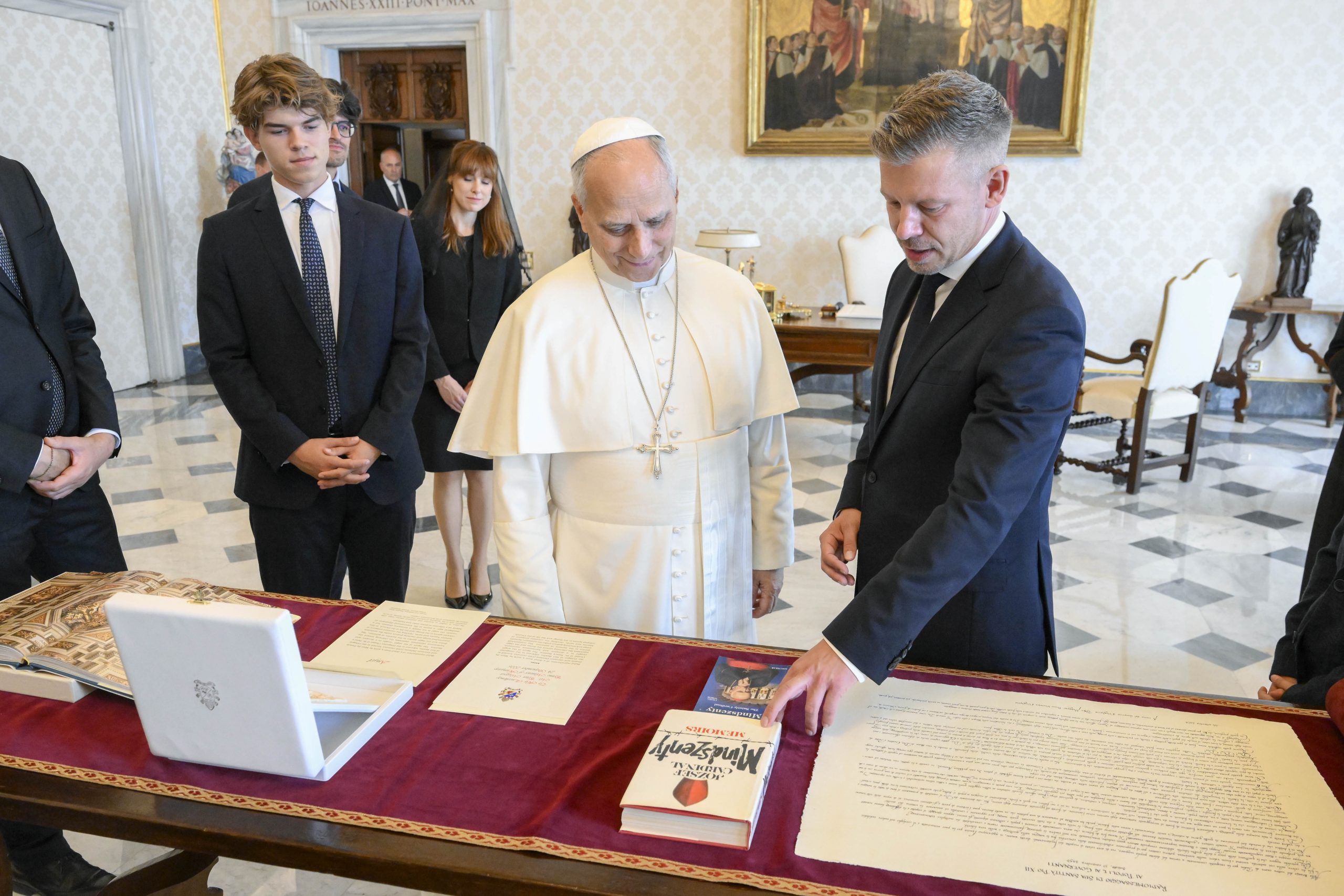
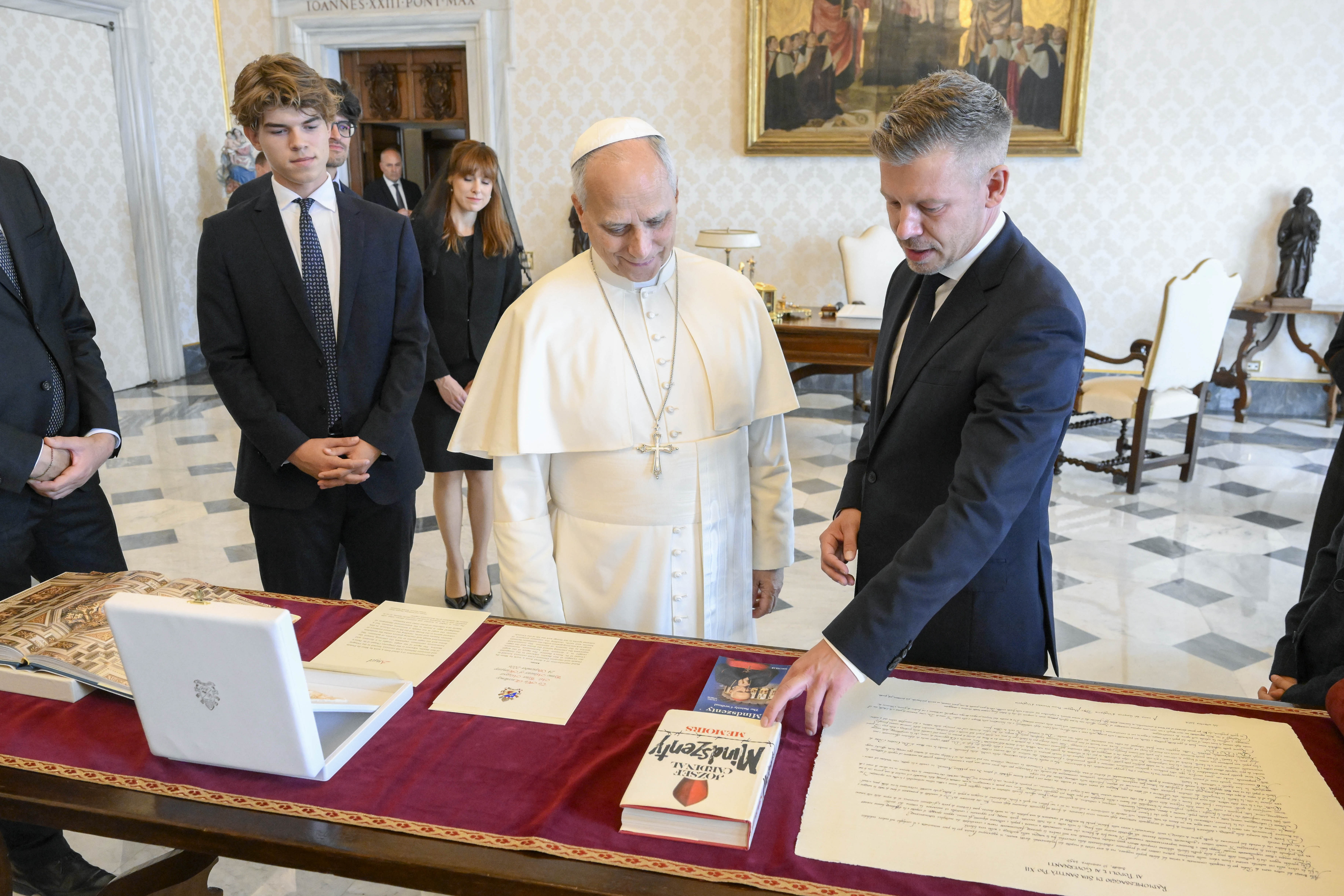
Pope Leo, Hungarian prime minister discuss Ukraine, Middle East, and AI – #Catholic – VATICAN CITY — Pope Leo XIV and Hungarian Prime Minister Péter Magyar discussed the wars in Ukraine and the Middle East, the impact of artificial intelligence, and other challenges facing Europe during a private audience at the Vatican on Thursday.Magyar also formally invited the pope to visit Hungary and presented him with a book of memoirs by Cardinal József Mindszenty, the former archbishop of Esztergom and primate of Hungary who resisted both fascism and communism.Following the audience, Magyar, who won Hungary’s April 12 parliamentary elections, ending Viktor Orbán’s 16 consecutive years in power, described the meeting on social media as “an honor” and “inspiring.”Magyar said the two spoke about the situation in Hungary, challenges facing Europe, the growing impact of artificial intelligence on society, and loneliness among young people.He also explained his approach to politics, which he said is based on “honesty, genuine human connection, and hard work.”“At the end of our meeting, I asked for a papal blessing for our country and invited the Holy Father to visit Hungary,” Magyar said.The Vatican said the discussions covered Hungary’s socioeconomic situation as well as education and “the protection of the most vulnerable Christian communities in various regions of the world.”The two sides also exchanged views on Ukraine and the Middle East and expressed hope for greater international efforts to promote peace and negotiated solutions to ongoing conflicts.Magyar gave the pope a book of memoirs by Mindszenty, one of the most prominent figures in 20th-century Hungarian Catholicism. The cardinal, who lived from 1892 to 1975, faced imprisonment and persecution for his opposition to both fascism and Hungary’s communist regime.Portuguese president meets Pope LeoPope Leo also received Portuguese President António José Seguro on Thursday in their first official meeting since Seguro became head of state.
 
 Pope Leo XIV with Portuguese President António José Seguro at the Vatican on Sept. 24, 2026. | Credit: Vatican Media
 
 Seguro subsequently met with Archbishop Paul Richard Gallagher, the Vatican’s secretary for relations with states. Cardinal Pietro Parolin, the Vatican secretary of state, was in New York for the United Nations General Assembly.The Holy See said the talks covered Portugal’s socioeconomic situation, the promotion of the common good, and international affairs.“Some regional and international issues were addressed, with particular reference to the repercussions of conflicts around the world, migration, the importance of multilateralism and respect for international law, as well as the urgent need for a constant commitment to peace,” the Vatican said.The private audience lasted about 40 minutes. Seguro presented the pope with a porcelain sculpture of the crucified Christ made by Portuguese manufacturer Vista Alegre and designed by architect Álvaro Siza Vieira.Seguro had said Wednesday that he planned to convey “the friendship of the Portuguese people” and renew an invitation for Pope Leo to visit Portugal in 2027, when the country will mark the 500th anniversary of the apostolic nunciature.Pope Francis visited Portugal twice during his pontificate: in 2017 for the centenary of the Marian apparitions at Fátima and in 2023 for World Youth Day in Lisbon.This story was first published by ACI Prensa, the Spanish-language sister service of EWTN News. It has been translated and adapted by EWTN News English.

Pope Leo, Hungarian prime minister discuss Ukraine, Middle East, and AI – #Catholic – VATICAN CITY — Pope Leo XIV and Hungarian Prime Minister Péter Magyar discussed the wars in Ukraine and the Middle East, the impact of artificial intelligence, and other challenges facing Europe during a private audience at the Vatican on Thursday.Magyar also formally invited the pope to visit Hungary and presented him with a book of memoirs by Cardinal József Mindszenty, the former archbishop of Esztergom and primate of Hungary who resisted both fascism and communism.Following the audience, Magyar, who won Hungary’s April 12 parliamentary elections, ending Viktor Orbán’s 16 consecutive years in power, described the meeting on social media as “an honor” and “inspiring.”Magyar said the two spoke about the situation in Hungary, challenges facing Europe, the growing impact of artificial intelligence on society, and loneliness among young people.He also explained his approach to politics, which he said is based on “honesty, genuine human connection, and hard work.”“At the end of our meeting, I asked for a papal blessing for our country and invited the Holy Father to visit Hungary,” Magyar said.The Vatican said the discussions covered Hungary’s socioeconomic situation as well as education and “the protection of the most vulnerable Christian communities in various regions of the world.”The two sides also exchanged views on Ukraine and the Middle East and expressed hope for greater international efforts to promote peace and negotiated solutions to ongoing conflicts.Magyar gave the pope a book of memoirs by Mindszenty, one of the most prominent figures in 20th-century Hungarian Catholicism. The cardinal, who lived from 1892 to 1975, faced imprisonment and persecution for his opposition to both fascism and Hungary’s communist regime.Portuguese president meets Pope LeoPope Leo also received Portuguese President António José Seguro on Thursday in their first official meeting since Seguro became head of state. Pope Leo XIV with Portuguese President António José Seguro at the Vatican on Sept. 24, 2026. | Credit: Vatican Media Seguro subsequently met with Archbishop Paul Richard Gallagher, the Vatican’s secretary for relations with states. Cardinal Pietro Parolin, the Vatican secretary of state, was in New York for the United Nations General Assembly.The Holy See said the talks covered Portugal’s socioeconomic situation, the promotion of the common good, and international affairs.“Some regional and international issues were addressed, with particular reference to the repercussions of conflicts around the world, migration, the importance of multilateralism and respect for international law, as well as the urgent need for a constant commitment to peace,” the Vatican said.The private audience lasted about 40 minutes. Seguro presented the pope with a porcelain sculpture of the crucified Christ made by Portuguese manufacturer Vista Alegre and designed by architect Álvaro Siza Vieira.Seguro had said Wednesday that he planned to convey “the friendship of the Portuguese people” and renew an invitation for Pope Leo to visit Portugal in 2027, when the country will mark the 500th anniversary of the apostolic nunciature.Pope Francis visited Portugal twice during his pontificate: in 2017 for the centenary of the Marian apparitions at Fátima and in 2023 for World Youth Day in Lisbon.This story was first published by ACI Prensa, the Spanish-language sister service of EWTN News. It has been translated and adapted by EWTN News English.

The pontiff also met Portugal’s president to discuss conflicts, migration, multilateralism, and international law.
Read More
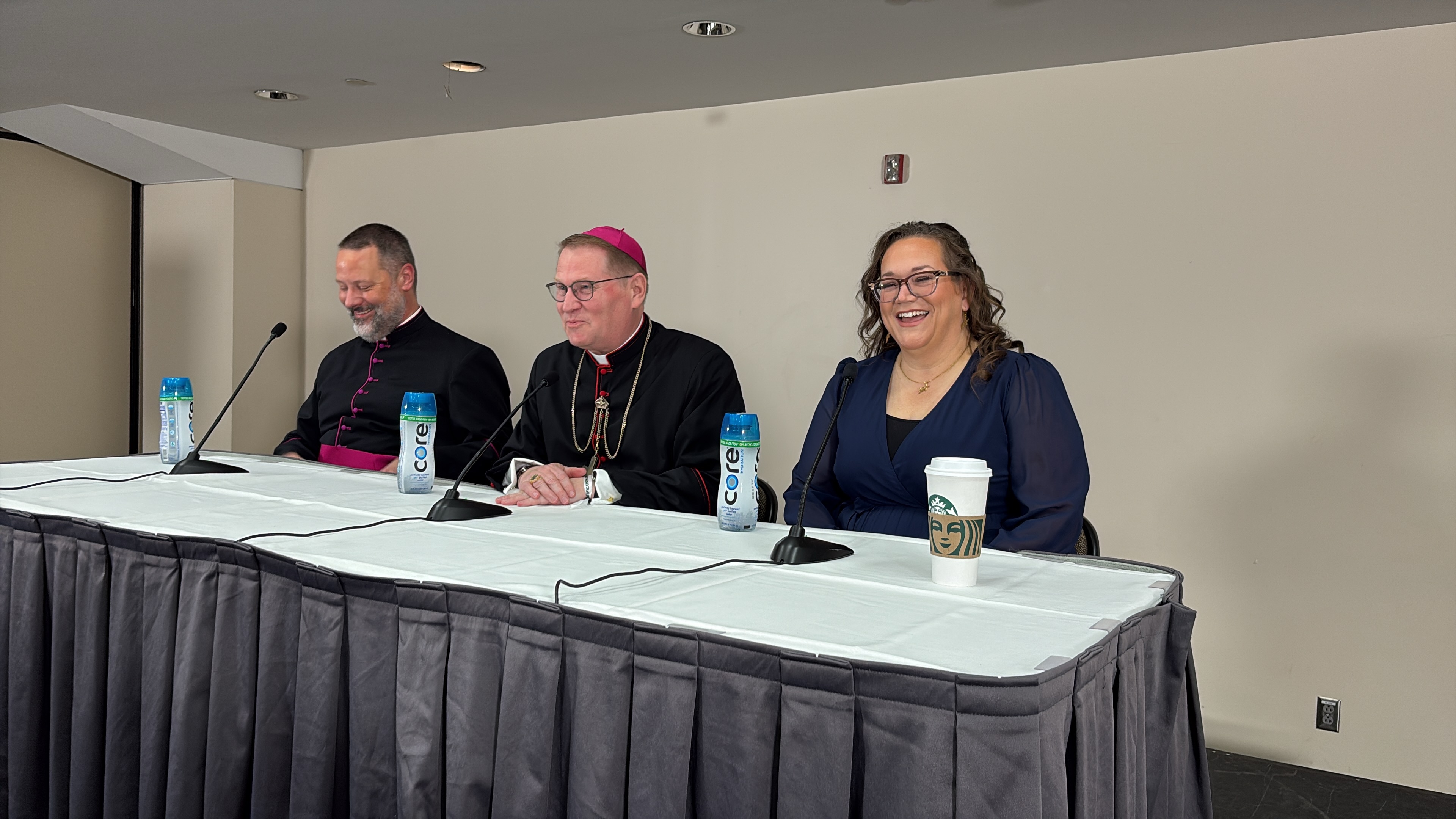
‘A foretaste of heaven’: Sheen beatification organizers eager for Mass – #Catholic – ST. LOUIS — For Bonnie Engstrom, who witnessed her newborn child miraculously healed through the intercession of soon-to-be Blessed Archbishop Fulton Sheen, the journey to the prelate’s beatification has been an “emotional roller coaster.”The Sept. 24 Mass will be “a foretaste of heaven,” she predicted, “where we are all going to be worshipping God together and celebrating the Church as a whole, and the power of the body of Christ and every good grace that God has given us. I am so looking forward to it,” Engstrom said at a Thursday morning press conference.Engstrom spoke to the media along with Bishop Louis Tylka of the Diocese of Peoria, Illinois, and Monsignor Jason Gray, executive director of the Archbishop Fulton J. Sheen Foundation in Peoria. Gray said it is a relief, after years of technical investigations and paperwork, to see their work finally come to fruition and be able to join in the celebration of Sheen with the faithful.That said, Gray admitted he has been surprised during the process at how much attention Sheen has attracted, particularly among young people.“One question that came up early on [was]: Whoʼs going to care? All the people who knew him when his program was on are very old. But weʼve discovered young people are inspired by Sheen, because heʼs a voice of integrity that inspires people who did not know him in life, that have discovered him in the years since,” Gray said. “So itʼs just exciting to see how much enthusiasm there is,”Tylka agreed, highlighting the fact that Sheen pioneered “new media” in his day — attracting wide attention, including from non-Catholics — serving as an inspiration to those looking to do the same in 2026. He also showed how to bridge divisions in the Church and in the world because he “always spoke with the truth of the Gospel, with charity and with clarity.”“Sheenʼs message is timeless because he spoke the truth and he spoke the truth with clarity and charity. I think a lot of people in the world, especially young people, are searching for purpose and meaning and to have a voice that so convicted, he presents the truth of our faith, our belief in Jesus Christ, the truth that God loves us and that life is worth living. I think thatʼs very appealing,” Tylka said.‘Local boy’The beatification Mass Thursday afternoon will include 89 bishops, about 1,000 priests, about 850 each of seminarians and religious, and 250 deacons, along with about 50,000 total attendees, Gray said. The Mass, which can be viewed live on EWTN with coverage beginning at 2:30 p.m. ET, will be celebrated by Cardinal Luis Antonio Tagle, Pope Leo XIV’s representative.James Fulton Engstrom, the third of Bonnie and Travis’ eight children and the recipient of the confirmed miracle that led to Sheen’s beatification, will play a part in the Mass by presenting several relics of Sheen onstage. Gray and Tylka both displayed two of the relics during the press conference: one of Sheen’s zuchettos — the reddish-purple skullcap worn by archbishops — and Sheen’s pectoral cross.
 
 One of Archbishop Fulton Sheen’s zuchettos, the reddish-purple skullcap worn by archbishops, is displayed during a press conference ahead of Sheenʼs beatification on Sept. 24, 2026. | Credit: Jonah McKeown/EWTN News
 
 James Fulton, who was born in 2010, spent 61 minutes without a heartbeat while his mother prayed fervently to Sheen to help her child — whom she and her husband had already named after the famous archbishop. Almost exactly 16 years later, James is a happy and healthy teenager. The fact that James’ healing was a miracle was attested to unanimously by the medical experts, cardinals and others at the Vatican tasked with investigating it. In a later on-air interview with EWTN on Thursday, his mother said she sees a connection between Sheen’s devotion to spending an hour before the Blessed Sacrament every day and the 61 minutes her son lie lifeless.“As a laywoman, I was so impressed with how thorough the investigation was. And Travis and I felt very reassured that, wow, when the Catholic Church says something is a miracle, it is a miracle,” Engstrom commented during the press conference.When asked why she chose to call upon Sheen specifically in such a dire moment, Engstrom noted that Sheen had been a favorite of their family for years — a “local boy” with a down-to-earth Midwestern air, a “warm character” who reminded Engstrom of her own grandfather and great-grandfather. In that context, calling on Sheen during the worst hour of her and her husband’s life made complete sense, she said.Despite his highly unusual birth story, James himself is an ordinary kid, a “punk teenage boy,” Engstrom joked, who didn’t ask to be thrust into the spotlight. Nevertheless, he is also a “delightful young man” who is excited — albeit a little nervous — to play a part in the beatification Mass for the intercessor who helped save his life, Engstrom continued.“For all of our children, weʼve put all of our kids under the patronage of a saint and have really built a culture where we are celebrating feast days. We are calling on their intercession. I want all of my kids to feel like they have a squad that surrounds them, that is following them through life, praying for them, interceding, cheering them on,” she said.Gray noted that because the late Pope Francis originally announced Sheen’s beatification in July 2019, any purported miracle attributed to his intercession that has taken place since then can count toward his eventual canonization, which typically requires a second miracle to move forward. Gray said the Vatican is considering six different potential miracles involving Sheen’s intercession, including an alleged instantaneous healing from cancer and a healing of another newborn from a condition similar to James’. Pope Leo, a native of Illinois like Sheen, is well aware of the archbishop’s cause, Tylka added.Both Tylka and Gray said they have no doubt that Sheen will one day be canonized.“Americaʼs bishop, as Sheen was known, is being beatified during the 250th anniversary of our nation,” Tylka said. “And we have a pope from Chicago, a native son of Illinois, who gave the green light for this to move forward. So I think all of those things say itʼs pretty opportune … I hope that the time between now and actual canonization wonʼt be that long.”

‘A foretaste of heaven’: Sheen beatification organizers eager for Mass – #Catholic – ST. LOUIS — For Bonnie Engstrom, who witnessed her newborn child miraculously healed through the intercession of soon-to-be Blessed Archbishop Fulton Sheen, the journey to the prelate’s beatification has been an “emotional roller coaster.”The Sept. 24 Mass will be “a foretaste of heaven,” she predicted, “where we are all going to be worshipping God together and celebrating the Church as a whole, and the power of the body of Christ and every good grace that God has given us. I am so looking forward to it,” Engstrom said at a Thursday morning press conference.Engstrom spoke to the media along with Bishop Louis Tylka of the Diocese of Peoria, Illinois, and Monsignor Jason Gray, executive director of the Archbishop Fulton J. Sheen Foundation in Peoria. Gray said it is a relief, after years of technical investigations and paperwork, to see their work finally come to fruition and be able to join in the celebration of Sheen with the faithful.That said, Gray admitted he has been surprised during the process at how much attention Sheen has attracted, particularly among young people.“One question that came up early on [was]: Whoʼs going to care? All the people who knew him when his program was on are very old. But weʼve discovered young people are inspired by Sheen, because heʼs a voice of integrity that inspires people who did not know him in life, that have discovered him in the years since,” Gray said. “So itʼs just exciting to see how much enthusiasm there is,”Tylka agreed, highlighting the fact that Sheen pioneered “new media” in his day — attracting wide attention, including from non-Catholics — serving as an inspiration to those looking to do the same in 2026. He also showed how to bridge divisions in the Church and in the world because he “always spoke with the truth of the Gospel, with charity and with clarity.”“Sheenʼs message is timeless because he spoke the truth and he spoke the truth with clarity and charity. I think a lot of people in the world, especially young people, are searching for purpose and meaning and to have a voice that so convicted, he presents the truth of our faith, our belief in Jesus Christ, the truth that God loves us and that life is worth living. I think thatʼs very appealing,” Tylka said.‘Local boy’The beatification Mass Thursday afternoon will include 89 bishops, about 1,000 priests, about 850 each of seminarians and religious, and 250 deacons, along with about 50,000 total attendees, Gray said. The Mass, which can be viewed live on EWTN with coverage beginning at 2:30 p.m. ET, will be celebrated by Cardinal Luis Antonio Tagle, Pope Leo XIV’s representative.James Fulton Engstrom, the third of Bonnie and Travis’ eight children and the recipient of the confirmed miracle that led to Sheen’s beatification, will play a part in the Mass by presenting several relics of Sheen onstage. Gray and Tylka both displayed two of the relics during the press conference: one of Sheen’s zuchettos — the reddish-purple skullcap worn by archbishops — and Sheen’s pectoral cross. One of Archbishop Fulton Sheen’s zuchettos, the reddish-purple skullcap worn by archbishops, is displayed during a press conference ahead of Sheenʼs beatification on Sept. 24, 2026. | Credit: Jonah McKeown/EWTN News James Fulton, who was born in 2010, spent 61 minutes without a heartbeat while his mother prayed fervently to Sheen to help her child — whom she and her husband had already named after the famous archbishop. Almost exactly 16 years later, James is a happy and healthy teenager. The fact that James’ healing was a miracle was attested to unanimously by the medical experts, cardinals and others at the Vatican tasked with investigating it. In a later on-air interview with EWTN on Thursday, his mother said she sees a connection between Sheen’s devotion to spending an hour before the Blessed Sacrament every day and the 61 minutes her son lie lifeless.“As a laywoman, I was so impressed with how thorough the investigation was. And Travis and I felt very reassured that, wow, when the Catholic Church says something is a miracle, it is a miracle,” Engstrom commented during the press conference.When asked why she chose to call upon Sheen specifically in such a dire moment, Engstrom noted that Sheen had been a favorite of their family for years — a “local boy” with a down-to-earth Midwestern air, a “warm character” who reminded Engstrom of her own grandfather and great-grandfather. In that context, calling on Sheen during the worst hour of her and her husband’s life made complete sense, she said.Despite his highly unusual birth story, James himself is an ordinary kid, a “punk teenage boy,” Engstrom joked, who didn’t ask to be thrust into the spotlight. Nevertheless, he is also a “delightful young man” who is excited — albeit a little nervous — to play a part in the beatification Mass for the intercessor who helped save his life, Engstrom continued.“For all of our children, weʼve put all of our kids under the patronage of a saint and have really built a culture where we are celebrating feast days. We are calling on their intercession. I want all of my kids to feel like they have a squad that surrounds them, that is following them through life, praying for them, interceding, cheering them on,” she said.Gray noted that because the late Pope Francis originally announced Sheen’s beatification in July 2019, any purported miracle attributed to his intercession that has taken place since then can count toward his eventual canonization, which typically requires a second miracle to move forward. Gray said the Vatican is considering six different potential miracles involving Sheen’s intercession, including an alleged instantaneous healing from cancer and a healing of another newborn from a condition similar to James’. Pope Leo, a native of Illinois like Sheen, is well aware of the archbishop’s cause, Tylka added.Both Tylka and Gray said they have no doubt that Sheen will one day be canonized.“Americaʼs bishop, as Sheen was known, is being beatified during the 250th anniversary of our nation,” Tylka said. “And we have a pope from Chicago, a native son of Illinois, who gave the green light for this to move forward. So I think all of those things say itʼs pretty opportune … I hope that the time between now and actual canonization wonʼt be that long.”

The Sept. 24 beatification Mass will include 89 bishops, about 1,000 priests, about 850 each of seminarians and religious, and 250 deacons, along with about 50,000 total attendees, organizers said.
Read More
Sheen beatification ‘a gift’ and a call to mission, say pilgrims in St. Louis #Catholic – ST. LOUIS (OSV News) — From across the United States and around the world, faithful of all ages have traveled to St. Louis for the Sept. 24 beatification of Archbishop Fulton J. Sheen — and several pilgrims described the occasion as both a “gift” and a call to be missionary disciples.
Dominique Abagi of Sydney traveled 12 hours from her vacation lodgings in Colombia to attend the celebration, which she described as a “must-go” opportunity.
“I love his writing and I love his videos,” she said, speaking to OSV News after a Sept. 23 scheduled midday Mass at the Basilica of St. Louis, King of France, located near the iconic Gateway Arch.
Pilgrims filled both the pews and the confessionals at the basilica, prompting basilica rector and celebrant Father Nicholas W. Smith to quip that had he anticipated such a crowd, he would have “called in reinforcements.”
Abagi said that she particularly appreciated Archbishop Sheen’s ability to make the truths of the Catholic faith accessible.

Click here to subscribe to our weekly newsletter.

“I love that he explains things that seem complex, but when he says them, I’m like, ‘Oh no, that’s just true,’” she said.
Fellow pilgrim and Mass attendee Carolyn Kwapich of Ave Maria, Florida, echoed that view.
“I think he speaks so clearly that he’s almost a man for the common man,” she told OSV News. “He’s not speaking at a level that’s so high that people can’t relate to him. I think that you could always take something away from any of his preaching.”
Archbishop Sheen’s keen awareness and spiritual foresight made him “a man of our times,” she said, noting that “Life of Christ” was one of her favorite books by Archbishop Sheen.
Kwapich, a self-described Catholic “revert,” fought back tears as she said, “I love Fulton Sheen.”
Kathleen Hastings of Phoenix, who was also at the Sept. 23 Mass, told OSV News she had an additional reason for being on hand.
“He and my grandmother are second cousins. Their grandmothers were sisters,” she explained. “So I’m on the Fulton side; that’s why I came.”
Hastings described the beatification as “very exciting.”
“We hope he becomes a saint fairly soon,” she said.
Ukrainian Catholic pilgrims attending the beatification pointed to Archbishop Sheen’s closeness to Eastern Catholics.
Yuriy Melnik, a western Ukrainian native who along with his wife, Helena, now lives in Chicago, noted that Archbishop Sheen had priestly faculties in the Byzantine Catholic rite.
“He was bi-ritual,” said Melnik, citing St. John Paul II’s metaphor of the “two lungs,” Eastern and Western, which both enable Jesus Christ’s Catholic Church to breathe fully.
In a homily during a 1960 Melkite Divine Liturgy in Birmingham, Alabama, Archbishop Sheen pointed to the Byzantine rite as “the door” through which the Russian Orthodox Church would enter if it ever sought full communion with Rome.
Melnik, who spoke with OSV News Sept. 23 following pre-beatification vespers at the Cathedral Basilica of St. Louis, also stressed Archbishop Sheen’s passionate opposition to communism.
“He was a fierce fighter against communism, and that’s exactly what we (in Ukraine) experience in our life,” said Melnik, referencing Russia’s war on Ukraine. Initiated in 2014 and accelerated by Russia’s 2022 full-scale invasion, the conflict has been classified as genocidal in multiple human rights reports.
“We share so much in common with Fulton Sheen,” said Melnik. “That’s why he is so dear to our Ukrainian heart as well.”
Fellow Ukrainian Catholic Olga Salheska — originally from Ternopil, Ukraine, and currently living in Chicago — said that Archbishop Sheen’s passion for the Gospel inspired hearts everywhere to become missionary disciples.
“We need to evangelize as much as we can,” Salheska told OSV News. “It doesn’t matter where we live; it doesn’t matter what language you speak.”
Archbishop Sheen’s beatification and its surrounding events have provided pilgrims renewed energy for their own missionary journey as fellow followers of Christ.
“It’s a gift to be able to come,” Abagi said.
Gina Christian is a multimedia reporter for OSV News. Follow her on X @GinaJesseReina.
 

Sheen beatification ‘a gift’ and a call to mission, say pilgrims in St. Louis #Catholic – ST. LOUIS (OSV News) — From across the United States and around the world, faithful of all ages have traveled to St. Louis for the Sept. 24 beatification of Archbishop Fulton J. Sheen — and several pilgrims described the occasion as both a “gift” and a call to be missionary disciples. Dominique Abagi of Sydney traveled 12 hours from her vacation lodgings in Colombia to attend the celebration, which she described as a “must-go” opportunity. “I love his writing and I love his videos,” she said, speaking to OSV News after a Sept. 23 scheduled midday Mass at the Basilica of St. Louis, King of France, located near the iconic Gateway Arch. Pilgrims filled both the pews and the confessionals at the basilica, prompting basilica rector and celebrant Father Nicholas W. Smith to quip that had he anticipated such a crowd, he would have “called in reinforcements.” Abagi said that she particularly appreciated Archbishop Sheen’s ability to make the truths of the Catholic faith accessible. Click here to subscribe to our weekly newsletter. “I love that he explains things that seem complex, but when he says them, I’m like, ‘Oh no, that’s just true,’” she said. Fellow pilgrim and Mass attendee Carolyn Kwapich of Ave Maria, Florida, echoed that view. “I think he speaks so clearly that he’s almost a man for the common man,” she told OSV News. “He’s not speaking at a level that’s so high that people can’t relate to him. I think that you could always take something away from any of his preaching.” Archbishop Sheen’s keen awareness and spiritual foresight made him “a man of our times,” she said, noting that “Life of Christ” was one of her favorite books by Archbishop Sheen. Kwapich, a self-described Catholic “revert,” fought back tears as she said, “I love Fulton Sheen.” Kathleen Hastings of Phoenix, who was also at the Sept. 23 Mass, told OSV News she had an additional reason for being on hand. “He and my grandmother are second cousins. Their grandmothers were sisters,” she explained. “So I’m on the Fulton side; that’s why I came.” Hastings described the beatification as “very exciting.” “We hope he becomes a saint fairly soon,” she said. Ukrainian Catholic pilgrims attending the beatification pointed to Archbishop Sheen’s closeness to Eastern Catholics. Yuriy Melnik, a western Ukrainian native who along with his wife, Helena, now lives in Chicago, noted that Archbishop Sheen had priestly faculties in the Byzantine Catholic rite. “He was bi-ritual,” said Melnik, citing St. John Paul II’s metaphor of the “two lungs,” Eastern and Western, which both enable Jesus Christ’s Catholic Church to breathe fully. In a homily during a 1960 Melkite Divine Liturgy in Birmingham, Alabama, Archbishop Sheen pointed to the Byzantine rite as “the door” through which the Russian Orthodox Church would enter if it ever sought full communion with Rome. Melnik, who spoke with OSV News Sept. 23 following pre-beatification vespers at the Cathedral Basilica of St. Louis, also stressed Archbishop Sheen’s passionate opposition to communism. “He was a fierce fighter against communism, and that’s exactly what we (in Ukraine) experience in our life,” said Melnik, referencing Russia’s war on Ukraine. Initiated in 2014 and accelerated by Russia’s 2022 full-scale invasion, the conflict has been classified as genocidal in multiple human rights reports. “We share so much in common with Fulton Sheen,” said Melnik. “That’s why he is so dear to our Ukrainian heart as well.” Fellow Ukrainian Catholic Olga Salheska — originally from Ternopil, Ukraine, and currently living in Chicago — said that Archbishop Sheen’s passion for the Gospel inspired hearts everywhere to become missionary disciples. “We need to evangelize as much as we can,” Salheska told OSV News. “It doesn’t matter where we live; it doesn’t matter what language you speak.” Archbishop Sheen’s beatification and its surrounding events have provided pilgrims renewed energy for their own missionary journey as fellow followers of Christ. “It’s a gift to be able to come,” Abagi said. Gina Christian is a multimedia reporter for OSV News. Follow her on X @GinaJesseReina.  

Sheen beatification ‘a gift’ and a call to mission, say pilgrims in St. Louis #Catholic –

ST. LOUIS (OSV News) — From across the United States and around the world, faithful of all ages have traveled to St. Louis for the Sept. 24 beatification of Archbishop Fulton J. Sheen — and several pilgrims described the occasion as both a “gift” and a call to be missionary disciples.

Dominique Abagi of Sydney traveled 12 hours from her vacation lodgings in Colombia to attend the celebration, which she described as a “must-go” opportunity.

“I love his writing and I love his videos,” she said, speaking to OSV News after a Sept. 23 scheduled midday Mass at the Basilica of St. Louis, King of France, located near the iconic Gateway Arch.

Pilgrims filled both the pews and the confessionals at the basilica, prompting basilica rector and celebrant Father Nicholas W. Smith to quip that had he anticipated such a crowd, he would have “called in reinforcements.”

Abagi said that she particularly appreciated Archbishop Sheen’s ability to make the truths of the Catholic faith accessible.


Click here to subscribe to our weekly newsletter.

“I love that he explains things that seem complex, but when he says them, I’m like, ‘Oh no, that’s just true,’” she said.

Fellow pilgrim and Mass attendee Carolyn Kwapich of Ave Maria, Florida, echoed that view.

“I think he speaks so clearly that he’s almost a man for the common man,” she told OSV News. “He’s not speaking at a level that’s so high that people can’t relate to him. I think that you could always take something away from any of his preaching.”

Archbishop Sheen’s keen awareness and spiritual foresight made him “a man of our times,” she said, noting that “Life of Christ” was one of her favorite books by Archbishop Sheen.

Kwapich, a self-described Catholic “revert,” fought back tears as she said, “I love Fulton Sheen.”

Kathleen Hastings of Phoenix, who was also at the Sept. 23 Mass, told OSV News she had an additional reason for being on hand.

“He and my grandmother are second cousins. Their grandmothers were sisters,” she explained. “So I’m on the Fulton side; that’s why I came.”

Hastings described the beatification as “very exciting.”

“We hope he becomes a saint fairly soon,” she said.

Ukrainian Catholic pilgrims attending the beatification pointed to Archbishop Sheen’s closeness to Eastern Catholics.

Yuriy Melnik, a western Ukrainian native who along with his wife, Helena, now lives in Chicago, noted that Archbishop Sheen had priestly faculties in the Byzantine Catholic rite.

“He was bi-ritual,” said Melnik, citing St. John Paul II’s metaphor of the “two lungs,” Eastern and Western, which both enable Jesus Christ’s Catholic Church to breathe fully.

In a homily during a 1960 Melkite Divine Liturgy in Birmingham, Alabama, Archbishop Sheen pointed to the Byzantine rite as “the door” through which the Russian Orthodox Church would enter if it ever sought full communion with Rome.

Melnik, who spoke with OSV News Sept. 23 following pre-beatification vespers at the Cathedral Basilica of St. Louis, also stressed Archbishop Sheen’s passionate opposition to communism.

“He was a fierce fighter against communism, and that’s exactly what we (in Ukraine) experience in our life,” said Melnik, referencing Russia’s war on Ukraine. Initiated in 2014 and accelerated by Russia’s 2022 full-scale invasion, the conflict has been classified as genocidal in multiple human rights reports.

“We share so much in common with Fulton Sheen,” said Melnik. “That’s why he is so dear to our Ukrainian heart as well.”

Fellow Ukrainian Catholic Olga Salheska — originally from Ternopil, Ukraine, and currently living in Chicago — said that Archbishop Sheen’s passion for the Gospel inspired hearts everywhere to become missionary disciples.

“We need to evangelize as much as we can,” Salheska told OSV News. “It doesn’t matter where we live; it doesn’t matter what language you speak.”

Archbishop Sheen’s beatification and its surrounding events have provided pilgrims renewed energy for their own missionary journey as fellow followers of Christ.

“It’s a gift to be able to come,” Abagi said.

Gina Christian is a multimedia reporter for OSV News. Follow her on X @GinaJesseReina.


– ST. LOUIS (OSV News) — From across the United States and around the world, faithful of all ages have traveled to St. Louis for the Sept. 24 beatification of Archbishop Fulton J. Sheen — and several pilgrims described the occasion as both a “gift” and a call to be missionary disciples. Dominique Abagi of Sydney traveled 12 hours from her vacation lodgings in Colombia to attend the celebration, which she described as a “must-go” opportunity. “I love his writing and I love his videos,” she said, speaking to OSV News after a Sept. 23 scheduled midday Mass at the Basilica
Read More
800 years after St. Francis’ death, Franciscans to mark his ‘Transitus’ — so what is it? #Catholic – (OSV News) — Each year on Oct. 3, the followers of St. Francis of Assisi (1181-1226) — friars; nuns; laypeople — mark the globally popular saint’s own journey from life to death, his “Transitus” as it is known in Latin, through special community commemorations.
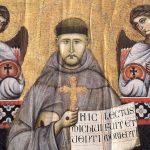
But what meaning does the Transitus hold — especially on this 800th anniversary of St. Francis’ death, and during the Jubilee Year of St. Francis proclaimed by Pope Leo XIV — if you aren’t a Franciscan?
“I think the answer is self-evident. We are all going to die,” Father Joseph Mary Elder, director of vocations and communications for the Capuchin Franciscans of the Province of St. Conrad, in Denver, told OSV News.
“The Transitus is the celebration of the passing of St. Francis of Assisi from earthly life to heavenly glory,” he explained. “It is not so much the passing of St. Francis — everyone dies after all — but the manner in which St. Francis of Assisi died. St. Francis embraced death in much the same way he had learned to live his life: with a radical and total fearlessness.”
That fearlessness led the saint to actually recite his own poetic acclaim of God as he began to expire.

Click here to subscribe to our weekly newsletter.

“As St. Francis was dying, his body was racked with pain; he was nearly blind — and yet, he was speaking aloud the ‘Canticle of Creation’ he had written only shortly before,” said Father Joseph.
The “Canticle of Creatures,” also called the “Canticle of the Sun,” was written by St. Francis between 1225-1226. It lyrically praises God through the elements of nature: “Be praised, my Lord, for all your creation and especially for our Brother Sun, who brings us the day and the light … Be praised, my Lord, for Sister Moon, and for the stars.”
“In the painful darkness of encroaching death, Francis was singing a composition praising the glory of God revealed all around him in the brilliance of creation,” said Father Joseph. “What a paradox! May this be true for each and every one of us.”
One way to learn about St. Francis and his spirit of surrender is to attend or watch a Transitus ceremony, which can be found at many Franciscan-staffed parishes or livestreamed online. Some typical elements are highlights from Francis’ life by his early biographers; recitation of his writings; Scripture; hymns; and prayer.
The Franciscan University of Steubenville in Ohio is marking the 800th anniversary of St. Francis’ death with a special on-campus conference, “Sister Death – Gate of Life,” from Nov. 5-7.
During the gathering — which will bring together theologians, philosophers, medical professionals, ethicists, clergy and scholars from a variety of disciplines — participants will explore St. Francis, his view of death and eternal life, the lasting relevance of his witness today, and how the Christian understanding of death speaks to some of the most pressing questions facing contemporary society.
“This conference came about as a way to celebrate the 800th anniversary of St. Francis’ passing from death to eternal life — and so that is at the heart of our idea of the Transitus,” James Matenaer, a professor of history at the university, told OSV News.
“But it’s also a way to celebrate the Jubilee year that Pope Leo proclaimed to celebrate St. Francis of Assisi,” he added, “and the importance that the Franciscan movement and charisms have in our Catholic faith.”
There are approximately 650,000 Franciscans in 110 countries. Nearly 35,000 Franciscan friars belong to the First Order of Friars Minor, the First Order of Capuchin Franciscans, the First Order of Conventual Franciscans and the Third Order Regular. Followers of St. Clare (Poor Clares) number about 60,000 cloistered religious women. There are close to 155,000 Third Order Regular religious sisters and brothers. Additionally, 400,000 single and married women and men follow the way of St. Francis as Secular Franciscans.
In the 800 years since St. Francis’ death — and with so many Franciscans spread across the globe — his life and its legends have travelled far and wide.
“We have our own ideas of Francis, and they can be all over the place,” Father Greg Friedman, an author, journalist, and Franciscan friar in the Province of Our Lady of Guadalupe, told OSV News.
“Sometimes they’re accurate; sometimes they’re not,” he explained. “And sometimes the emphasis is so much on Francis that we forget what the key thing about his life was — and that is the following of Jesus in the Gospel.”
So what might St. Francis hope faithful Catholics and other Franciscan friends will remember the 800th anniversary of his death?
For Father Greg, who will be in Rome for the Transitus, a motto of St. Francis comes to mind.
“‘I have done what is mine; may Christ teach you what is yours.’ I think this is a very important saying of Francis. What he would want — in this 800th anniversary year — would be to say, ‘How are you focusing on what is yours to do? What is yours to do, in the spirit of Jesus?’”
While Transitus traditions might in some ways appear slightly puzzling to non-Franciscans, Father Greg offered a helpful context.
“If somebody said to me, ‘Why do you guys do this? Why do you celebrate the death of St. Francis every year?’ I would say, ‘Well, how do you remember the people in your family? How do you remember your grandparents; your great-grandparents?’” he said. “You tell the story.”
Kimberley Heatherington is an OSV News correspondent. She writes from Virginia.
 

800 years after St. Francis’ death, Franciscans to mark his ‘Transitus’ — so what is it? #Catholic – (OSV News) — Each year on Oct. 3, the followers of St. Francis of Assisi (1181-1226) — friars; nuns; laypeople — mark the globally popular saint’s own journey from life to death, his “Transitus” as it is known in Latin, through special community commemorations. But what meaning does the Transitus hold — especially on this 800th anniversary of St. Francis’ death, and during the Jubilee Year of St. Francis proclaimed by Pope Leo XIV — if you aren’t a Franciscan? “I think the answer is self-evident. We are all going to die,” Father Joseph Mary Elder, director of vocations and communications for the Capuchin Franciscans of the Province of St. Conrad, in Denver, told OSV News. “The Transitus is the celebration of the passing of St. Francis of Assisi from earthly life to heavenly glory,” he explained. “It is not so much the passing of St. Francis — everyone dies after all — but the manner in which St. Francis of Assisi died. St. Francis embraced death in much the same way he had learned to live his life: with a radical and total fearlessness.” That fearlessness led the saint to actually recite his own poetic acclaim of God as he began to expire. Click here to subscribe to our weekly newsletter. “As St. Francis was dying, his body was racked with pain; he was nearly blind — and yet, he was speaking aloud the ‘Canticle of Creation’ he had written only shortly before,” said Father Joseph. The “Canticle of Creatures,” also called the “Canticle of the Sun,” was written by St. Francis between 1225-1226. It lyrically praises God through the elements of nature: “Be praised, my Lord, for all your creation and especially for our Brother Sun, who brings us the day and the light … Be praised, my Lord, for Sister Moon, and for the stars.” “In the painful darkness of encroaching death, Francis was singing a composition praising the glory of God revealed all around him in the brilliance of creation,” said Father Joseph. “What a paradox! May this be true for each and every one of us.” One way to learn about St. Francis and his spirit of surrender is to attend or watch a Transitus ceremony, which can be found at many Franciscan-staffed parishes or livestreamed online. Some typical elements are highlights from Francis’ life by his early biographers; recitation of his writings; Scripture; hymns; and prayer. The Franciscan University of Steubenville in Ohio is marking the 800th anniversary of St. Francis’ death with a special on-campus conference, “Sister Death – Gate of Life,” from Nov. 5-7. During the gathering — which will bring together theologians, philosophers, medical professionals, ethicists, clergy and scholars from a variety of disciplines — participants will explore St. Francis, his view of death and eternal life, the lasting relevance of his witness today, and how the Christian understanding of death speaks to some of the most pressing questions facing contemporary society. “This conference came about as a way to celebrate the 800th anniversary of St. Francis’ passing from death to eternal life — and so that is at the heart of our idea of the Transitus,” James Matenaer, a professor of history at the university, told OSV News. “But it’s also a way to celebrate the Jubilee year that Pope Leo proclaimed to celebrate St. Francis of Assisi,” he added, “and the importance that the Franciscan movement and charisms have in our Catholic faith.” There are approximately 650,000 Franciscans in 110 countries. Nearly 35,000 Franciscan friars belong to the First Order of Friars Minor, the First Order of Capuchin Franciscans, the First Order of Conventual Franciscans and the Third Order Regular. Followers of St. Clare (Poor Clares) number about 60,000 cloistered religious women. There are close to 155,000 Third Order Regular religious sisters and brothers. Additionally, 400,000 single and married women and men follow the way of St. Francis as Secular Franciscans. In the 800 years since St. Francis’ death — and with so many Franciscans spread across the globe — his life and its legends have travelled far and wide. “We have our own ideas of Francis, and they can be all over the place,” Father Greg Friedman, an author, journalist, and Franciscan friar in the Province of Our Lady of Guadalupe, told OSV News. “Sometimes they’re accurate; sometimes they’re not,” he explained. “And sometimes the emphasis is so much on Francis that we forget what the key thing about his life was — and that is the following of Jesus in the Gospel.” So what might St. Francis hope faithful Catholics and other Franciscan friends will remember the 800th anniversary of his death? For Father Greg, who will be in Rome for the Transitus, a motto of St. Francis comes to mind. “‘I have done what is mine; may Christ teach you what is yours.’ I think this is a very important saying of Francis. What he would want — in this 800th anniversary year — would be to say, ‘How are you focusing on what is yours to do? What is yours to do, in the spirit of Jesus?’” While Transitus traditions might in some ways appear slightly puzzling to non-Franciscans, Father Greg offered a helpful context. “If somebody said to me, ‘Why do you guys do this? Why do you celebrate the death of St. Francis every year?’ I would say, ‘Well, how do you remember the people in your family? How do you remember your grandparents; your great-grandparents?’” he said. “You tell the story.” Kimberley Heatherington is an OSV News correspondent. She writes from Virginia.  

800 years after St. Francis’ death, Franciscans to mark his ‘Transitus’ — so what is it? #Catholic –

(OSV News) — Each year on Oct. 3, the followers of St. Francis of Assisi (1181-1226) — friars; nuns; laypeople — mark the globally popular saint’s own journey from life to death, his “Transitus” as it is known in Latin, through special community commemorations.

But what meaning does the Transitus hold — especially on this 800th anniversary of St. Francis’ death, and during the Jubilee Year of St. Francis proclaimed by Pope Leo XIV — if you aren’t a Franciscan?

“I think the answer is self-evident. We are all going to die,” Father Joseph Mary Elder, director of vocations and communications for the Capuchin Franciscans of the Province of St. Conrad, in Denver, told OSV News.

“The Transitus is the celebration of the passing of St. Francis of Assisi from earthly life to heavenly glory,” he explained. “It is not so much the passing of St. Francis — everyone dies after all — but the manner in which St. Francis of Assisi died. St. Francis embraced death in much the same way he had learned to live his life: with a radical and total fearlessness.”

That fearlessness led the saint to actually recite his own poetic acclaim of God as he began to expire.


Click here to subscribe to our weekly newsletter.

“As St. Francis was dying, his body was racked with pain; he was nearly blind — and yet, he was speaking aloud the ‘Canticle of Creation’ he had written only shortly before,” said Father Joseph.

The “Canticle of Creatures,” also called the “Canticle of the Sun,” was written by St. Francis between 1225-1226. It lyrically praises God through the elements of nature: “Be praised, my Lord, for all your creation and especially for our Brother Sun, who brings us the day and the light … Be praised, my Lord, for Sister Moon, and for the stars.”

“In the painful darkness of encroaching death, Francis was singing a composition praising the glory of God revealed all around him in the brilliance of creation,” said Father Joseph. “What a paradox! May this be true for each and every one of us.”

One way to learn about St. Francis and his spirit of surrender is to attend or watch a Transitus ceremony, which can be found at many Franciscan-staffed parishes or livestreamed online. Some typical elements are highlights from Francis’ life by his early biographers; recitation of his writings; Scripture; hymns; and prayer.

The Franciscan University of Steubenville in Ohio is marking the 800th anniversary of St. Francis’ death with a special on-campus conference, “Sister Death – Gate of Life,” from Nov. 5-7.

During the gathering — which will bring together theologians, philosophers, medical professionals, ethicists, clergy and scholars from a variety of disciplines — participants will explore St. Francis, his view of death and eternal life, the lasting relevance of his witness today, and how the Christian understanding of death speaks to some of the most pressing questions facing contemporary society.

“This conference came about as a way to celebrate the 800th anniversary of St. Francis’ passing from death to eternal life — and so that is at the heart of our idea of the Transitus,” James Matenaer, a professor of history at the university, told OSV News.

“But it’s also a way to celebrate the Jubilee year that Pope Leo proclaimed to celebrate St. Francis of Assisi,” he added, “and the importance that the Franciscan movement and charisms have in our Catholic faith.”

There are approximately 650,000 Franciscans in 110 countries. Nearly 35,000 Franciscan friars belong to the First Order of Friars Minor, the First Order of Capuchin Franciscans, the First Order of Conventual Franciscans and the Third Order Regular. Followers of St. Clare (Poor Clares) number about 60,000 cloistered religious women. There are close to 155,000 Third Order Regular religious sisters and brothers. Additionally, 400,000 single and married women and men follow the way of St. Francis as Secular Franciscans.

In the 800 years since St. Francis’ death — and with so many Franciscans spread across the globe — his life and its legends have travelled far and wide.

“We have our own ideas of Francis, and they can be all over the place,” Father Greg Friedman, an author, journalist, and Franciscan friar in the Province of Our Lady of Guadalupe, told OSV News.

“Sometimes they’re accurate; sometimes they’re not,” he explained. “And sometimes the emphasis is so much on Francis that we forget what the key thing about his life was — and that is the following of Jesus in the Gospel.”

So what might St. Francis hope faithful Catholics and other Franciscan friends will remember the 800th anniversary of his death?

For Father Greg, who will be in Rome for the Transitus, a motto of St. Francis comes to mind.

“‘I have done what is mine; may Christ teach you what is yours.’ I think this is a very important saying of Francis. What he would want — in this 800th anniversary year — would be to say, ‘How are you focusing on what is yours to do? What is yours to do, in the spirit of Jesus?’”

While Transitus traditions might in some ways appear slightly puzzling to non-Franciscans, Father Greg offered a helpful context.

“If somebody said to me, ‘Why do you guys do this? Why do you celebrate the death of St. Francis every year?’ I would say, ‘Well, how do you remember the people in your family? How do you remember your grandparents; your great-grandparents?’” he said. “You tell the story.”

Kimberley Heatherington is an OSV News correspondent. She writes from Virginia.


– (OSV News) — Each year on Oct. 3, the followers of St. Francis of Assisi (1181-1226) — friars; nuns; laypeople — mark the globally popular saint’s own journey from life to death, his “Transitus” as it is known in Latin, through special community commemorations. But what meaning does the Transitus hold — especially on this 800th anniversary of St. Francis’ death, and during the Jubilee Year of St. Francis proclaimed by Pope Leo XIV — if you aren’t a Franciscan? “I think the answer is self-evident. We are all going to die,” Father Joseph Mary Elder, director of vocations and
Read More
Pope Leo to visit migration center in Paris that welcomes all, no matter their legal status #Catholic – PARIS (OSV News) — Pope Leo XIV will open his second day in Paris with a special visit. On Sept. 26, he will cross the threshold of Maison Bakhita, a facility run by the Archdiocese of Paris dedicated to providing shelter for people in extreme need, most often migrants.
On Sept. 27, the Church observes World Day of Migrants and Refugees, ahead of which Pope Leo issued an appeal that migrants, especially vulnerable children, “always be protected and cared for” and called the exploitation of migrants a “tragic reality.”
Opened in 2021, Maison Bakhita brings together the efforts of numerous Catholic organizations that serve the poor. Spanning over 15,000 square feet, it is located in the 18th arrondissement, or district, not far from the Sacré-Coeur, or Basilica of the Sacred Heart, in Montmartre, and near the Porte de la Chapelle, where makeshift camps for foreign migrants regularly spring up.
The center is named after St. Josephine Bakhita, a Sudanese slave who became a nun in Italy, where she died in 1947, and who was canonized by St. John Paul II in 2000.
At Maison Bakhita, or Bakhita House, everyone who knocks on the door is welcomed.

Click here to subscribe to our weekly newsletter.

“It offers a warm welcome to everyone,” Gwendoline Fasano, director of Maison Bakhita, told OSV News. “Here, people can have a time to rest and a comforting place where they can be heard.”
“All our efforts are aimed at helping these people regain their self-esteem,” Fasano emphasized. “We want to help them regain the ability to connect with others and the opportunity for a spiritual life, beyond their material needs, which we strive to help them meet.”
Upon his arrival, the pope will go to pray in the house’s oratory, accompanied by the two nuns who live there permanently. “They maintain a prayerful presence, and they welcome anyone who wants to speak with them or pray the liturgical services with them,” Fasano said.
There, the pope will unveil a commemorative plaque marking his visit. “It will remind us of the honor he has bestowed upon us,” Fasano said. “It will be an important memento for all the people welcomed here, who deeply need to be shown consideration.”
Pope Leo will then walk past the daycare center where women who come to the Bakhita House can leave their children. “Some women are single mothers with young children,” Fasano said. “The daycare center allows them to be available to take the training courses we offer, which help them reenter the workforce.” Among these programs are French language classes, as well as workshops in cooking, carpentry, digital skills, and sewing.
In the large dining hall, some 150 people pass through each day for a moment of fellowship.
The pope will be welcomed there by about forty people, volunteers and people in need, and will listen to the stories of some of them. Among them, an Afghan tailor of Muslim background will share how he was once taken in by Maison Bakhita, and how he now, standing firmly on his feet, returns there every week as a volunteer to help others.
“At Maison Bakhita, our welcome is unconditional,” Fasano emphasized. “We do not ask about the religion of those who knock on our door.”
At Maison Bakhita, the staff also does not ask residents whether they are in the country legally.
“Migration policy decisions are not within our purview,” Fasano said. “What drives us is Christ’s words in the Gospel according to St. Matthew: ‘I was … a stranger and you welcomed me.’ The pope’s visit will serve as a reminder that it is important to welcome every person — with their story and their suffering — just as we would welcome Christ himself.”
Among the witnesses who will address the pope will be a woman who was rescued from prostitution by the Catholic organization Aux Captifs la Libération, which the diocese has invited to participate in the Maison Bakhita papal visit.
The association’s director, Thierry Desjuzeur, will be with her.
“Every day, we reach out to people on the streets, particularly in the Bois de Boulogne in Paris, where prostitution is prevalent,” he told OSV News. “Our organization works in collaboration with parishes in Paris,” he said.
The organization’s name refers to the beginning of Christ’s public ministry, when he read the passage from the Book of Isaiah speaking of the Lord who sent him “To proclaim liberty to the captives.”
“We try, as Christ did, to go out and meet today’s captives, those enslaved by prostitution, alcohol and precarious living conditions, and to bring them the Father’s tenderness,’ Desjuzeur said.
For Desjuzeur, the pope’s visit serves as a reminder of the intrinsic dignity of people living on the streets. “Whatever their circumstances, they are human beings,” he said. “I am struck by the simplicity and trust in God of these people whom we strive to accompany.”
The director expressed his admiration and gratitude for the pope’s visit to Maison Bakhita, despite his busy schedule. “In Paris, the number of migrants on the streets has increased significantly recently,” he said. “In this context, the pope’s message will be extremely powerful for society as a whole.”
Caroline de Sury writes for OSV News from Paris.
 

Pope Leo to visit migration center in Paris that welcomes all, no matter their legal status #Catholic – PARIS (OSV News) — Pope Leo XIV will open his second day in Paris with a special visit. On Sept. 26, he will cross the threshold of Maison Bakhita, a facility run by the Archdiocese of Paris dedicated to providing shelter for people in extreme need, most often migrants. On Sept. 27, the Church observes World Day of Migrants and Refugees, ahead of which Pope Leo issued an appeal that migrants, especially vulnerable children, “always be protected and cared for” and called the exploitation of migrants a “tragic reality.” Opened in 2021, Maison Bakhita brings together the efforts of numerous Catholic organizations that serve the poor. Spanning over 15,000 square feet, it is located in the 18th arrondissement, or district, not far from the Sacré-Coeur, or Basilica of the Sacred Heart, in Montmartre, and near the Porte de la Chapelle, where makeshift camps for foreign migrants regularly spring up. The center is named after St. Josephine Bakhita, a Sudanese slave who became a nun in Italy, where she died in 1947, and who was canonized by St. John Paul II in 2000. At Maison Bakhita, or Bakhita House, everyone who knocks on the door is welcomed. Click here to subscribe to our weekly newsletter. “It offers a warm welcome to everyone,” Gwendoline Fasano, director of Maison Bakhita, told OSV News. “Here, people can have a time to rest and a comforting place where they can be heard.” “All our efforts are aimed at helping these people regain their self-esteem,” Fasano emphasized. “We want to help them regain the ability to connect with others and the opportunity for a spiritual life, beyond their material needs, which we strive to help them meet.” Upon his arrival, the pope will go to pray in the house’s oratory, accompanied by the two nuns who live there permanently. “They maintain a prayerful presence, and they welcome anyone who wants to speak with them or pray the liturgical services with them,” Fasano said. There, the pope will unveil a commemorative plaque marking his visit. “It will remind us of the honor he has bestowed upon us,” Fasano said. “It will be an important memento for all the people welcomed here, who deeply need to be shown consideration.” Pope Leo will then walk past the daycare center where women who come to the Bakhita House can leave their children. “Some women are single mothers with young children,” Fasano said. “The daycare center allows them to be available to take the training courses we offer, which help them reenter the workforce.” Among these programs are French language classes, as well as workshops in cooking, carpentry, digital skills, and sewing. In the large dining hall, some 150 people pass through each day for a moment of fellowship. The pope will be welcomed there by about forty people, volunteers and people in need, and will listen to the stories of some of them. Among them, an Afghan tailor of Muslim background will share how he was once taken in by Maison Bakhita, and how he now, standing firmly on his feet, returns there every week as a volunteer to help others. “At Maison Bakhita, our welcome is unconditional,” Fasano emphasized. “We do not ask about the religion of those who knock on our door.” At Maison Bakhita, the staff also does not ask residents whether they are in the country legally. “Migration policy decisions are not within our purview,” Fasano said. “What drives us is Christ’s words in the Gospel according to St. Matthew: ‘I was … a stranger and you welcomed me.’ The pope’s visit will serve as a reminder that it is important to welcome every person — with their story and their suffering — just as we would welcome Christ himself.” Among the witnesses who will address the pope will be a woman who was rescued from prostitution by the Catholic organization Aux Captifs la Libération, which the diocese has invited to participate in the Maison Bakhita papal visit. The association’s director, Thierry Desjuzeur, will be with her. “Every day, we reach out to people on the streets, particularly in the Bois de Boulogne in Paris, where prostitution is prevalent,” he told OSV News. “Our organization works in collaboration with parishes in Paris,” he said. The organization’s name refers to the beginning of Christ’s public ministry, when he read the passage from the Book of Isaiah speaking of the Lord who sent him “To proclaim liberty to the captives.” “We try, as Christ did, to go out and meet today’s captives, those enslaved by prostitution, alcohol and precarious living conditions, and to bring them the Father’s tenderness,’ Desjuzeur said. For Desjuzeur, the pope’s visit serves as a reminder of the intrinsic dignity of people living on the streets. “Whatever their circumstances, they are human beings,” he said. “I am struck by the simplicity and trust in God of these people whom we strive to accompany.” The director expressed his admiration and gratitude for the pope’s visit to Maison Bakhita, despite his busy schedule. “In Paris, the number of migrants on the streets has increased significantly recently,” he said. “In this context, the pope’s message will be extremely powerful for society as a whole.” Caroline de Sury writes for OSV News from Paris.  

Pope Leo to visit migration center in Paris that welcomes all, no matter their legal status #Catholic –

PARIS (OSV News) — Pope Leo XIV will open his second day in Paris with a special visit. On Sept. 26, he will cross the threshold of Maison Bakhita, a facility run by the Archdiocese of Paris dedicated to providing shelter for people in extreme need, most often migrants.

On Sept. 27, the Church observes World Day of Migrants and Refugees, ahead of which Pope Leo issued an appeal that migrants, especially vulnerable children, “always be protected and cared for” and called the exploitation of migrants a “tragic reality.”

Opened in 2021, Maison Bakhita brings together the efforts of numerous Catholic organizations that serve the poor. Spanning over 15,000 square feet, it is located in the 18th arrondissement, or district, not far from the Sacré-Coeur, or Basilica of the Sacred Heart, in Montmartre, and near the Porte de la Chapelle, where makeshift camps for foreign migrants regularly spring up.

The center is named after St. Josephine Bakhita, a Sudanese slave who became a nun in Italy, where she died in 1947, and who was canonized by St. John Paul II in 2000.

At Maison Bakhita, or Bakhita House, everyone who knocks on the door is welcomed.


Click here to subscribe to our weekly newsletter.

“It offers a warm welcome to everyone,” Gwendoline Fasano, director of Maison Bakhita, told OSV News. “Here, people can have a time to rest and a comforting place where they can be heard.”

“All our efforts are aimed at helping these people regain their self-esteem,” Fasano emphasized. “We want to help them regain the ability to connect with others and the opportunity for a spiritual life, beyond their material needs, which we strive to help them meet.”

Upon his arrival, the pope will go to pray in the house’s oratory, accompanied by the two nuns who live there permanently. “They maintain a prayerful presence, and they welcome anyone who wants to speak with them or pray the liturgical services with them,” Fasano said.

There, the pope will unveil a commemorative plaque marking his visit. “It will remind us of the honor he has bestowed upon us,” Fasano said. “It will be an important memento for all the people welcomed here, who deeply need to be shown consideration.”

Pope Leo will then walk past the daycare center where women who come to the Bakhita House can leave their children. “Some women are single mothers with young children,” Fasano said. “The daycare center allows them to be available to take the training courses we offer, which help them reenter the workforce.” Among these programs are French language classes, as well as workshops in cooking, carpentry, digital skills, and sewing.

In the large dining hall, some 150 people pass through each day for a moment of fellowship.

The pope will be welcomed there by about forty people, volunteers and people in need, and will listen to the stories of some of them. Among them, an Afghan tailor of Muslim background will share how he was once taken in by Maison Bakhita, and how he now, standing firmly on his feet, returns there every week as a volunteer to help others.

“At Maison Bakhita, our welcome is unconditional,” Fasano emphasized. “We do not ask about the religion of those who knock on our door.”

At Maison Bakhita, the staff also does not ask residents whether they are in the country legally.

“Migration policy decisions are not within our purview,” Fasano said. “What drives us is Christ’s words in the Gospel according to St. Matthew: ‘I was … a stranger and you welcomed me.’ The pope’s visit will serve as a reminder that it is important to welcome every person — with their story and their suffering — just as we would welcome Christ himself.”

Among the witnesses who will address the pope will be a woman who was rescued from prostitution by the Catholic organization Aux Captifs la Libération, which the diocese has invited to participate in the Maison Bakhita papal visit.

The association’s director, Thierry Desjuzeur, will be with her.

“Every day, we reach out to people on the streets, particularly in the Bois de Boulogne in Paris, where prostitution is prevalent,” he told OSV News. “Our organization works in collaboration with parishes in Paris,” he said.

The organization’s name refers to the beginning of Christ’s public ministry, when he read the passage from the Book of Isaiah speaking of the Lord who sent him “To proclaim liberty to the captives.”

“We try, as Christ did, to go out and meet today’s captives, those enslaved by prostitution, alcohol and precarious living conditions, and to bring them the Father’s tenderness,’ Desjuzeur said.

For Desjuzeur, the pope’s visit serves as a reminder of the intrinsic dignity of people living on the streets. “Whatever their circumstances, they are human beings,” he said. “I am struck by the simplicity and trust in God of these people whom we strive to accompany.”

The director expressed his admiration and gratitude for the pope’s visit to Maison Bakhita, despite his busy schedule. “In Paris, the number of migrants on the streets has increased significantly recently,” he said. “In this context, the pope’s message will be extremely powerful for society as a whole.”

Caroline de Sury writes for OSV News from Paris.


– PARIS (OSV News) — Pope Leo XIV will open his second day in Paris with a special visit. On Sept. 26, he will cross the threshold of Maison Bakhita, a facility run by the Archdiocese of Paris dedicated to providing shelter for people in extreme need, most often migrants. On Sept. 27, the Church observes World Day of Migrants and Refugees, ahead of which Pope Leo issued an appeal that migrants, especially vulnerable children, “always be protected and cared for” and called the exploitation of migrants a “tragic reality.” Opened in 2021, Maison Bakhita brings together the efforts of numerous
Read More
Technological advancements are not rivals to faith, pope says #Catholic – VATICAN CITY (CNS) — Progress in science and technology is not contrary to belief in God, and Christians should be actively involved in shaping that progress so that it serves human dignity and the common good, Pope Leo XIV said.
At his Sept. 23 general audience, the pope also pointed to Venerable Archbishop Fulton Sheen, who is set to be beatified Sept. 24 in St. Louis, as an example of a Catholic who embraced the technology of his time to spread the Gospel.
Continuing his series on documents of the Second Vatican Council, Pope Leo reflected on the council’s conciliar constitution “Gaudium et Spes,” particularly its teaching on human activity and progress in the world.
Created in the image and likeness of God, the human being is an agent of progress, the pope said, using freedom and intelligence to increase knowledge and advance society.
Yet as scientific and technological achievements multiplied, he said, some thinkers began portraying God and humanity as “rivals: in order to assert his knowledge, his freedom and his progress, man is thought to have to emancipate himself from God.”

Click here to subscribe to our weekly newsletter.

Pope Leo called that view erroneous and quoted the late theologian, Jesuit Father Henri de Lubac, who described it as the “tragedy of atheistic humanism.”
“Ultimately, however, by denying the relationship with God, one also loses the possibility of affirming the transcendent value of the human person,” the pope said.
Quoting the conciliar constitution, he said Christians instead believe “that the triumphs of the human race are a sign of God’s grace and the flowering of His own mysterious design.”
Human achievement, therefore, should not draw the faithful away from involvement in scientific, technological or social progress, the pope said. Rather, the Gospel calls them to participate in building society while keeping such progress oriented toward human flourishing.
“Let us carry out our daily activities with true charity, offering our work to the Lord both as a means for personal sanctification and as an expression of our desire ever more fully to bring about God’s kingdom, especially through pursuing the common good, caring for the needy and defending human dignity,” he told English-speaking pilgrims.
Humanity’s freedom and activity are not absorbed or nullified by an encounter with God, Pope Leo said. Instead, humanity finds its fullest truth and freedom in Christ.
“From this perspective, an important truth emerges: to encounter God, the human being must not abandon his earthly occupations, but can live his vocation fully, carrying out his daily work well and sanctifying it,” he said.
Christians, he said, should therefore participate fully in society’s progress while reminding others of its “ultimate purpose.”
Pope Leo’s catechesis echoes his recent encyclical “Magnifica Humanitas,” in which he addressed the development of artificial intelligence and stressed that technological advances must remain at the service of human dignity.
Authentic human progress, the pope said at the general audience, “must be inspired and guided by charity” and improve the lives of all people, particularly those who are disadvantaged.
“Dear brothers and sisters, the Second Vatican Council invites us to share the bread of knowledge and know-how, so that every person and every people may develop their potential, and together, with God’s help, we may build a better future,” he said.
Mentioning the upcoming beatification of Archbishop Sheen in his greeting to English-speaking pilgrims, Pope Leo recalled the American prelate’s innovative use of radio and television for evangelization.
“May the example and intercession of this holy bishop, known for his evangelizing work through the media, inspire many others likewise to find new ways of spreading the Gospel message with joyful enthusiasm,” he said.
 

Technological advancements are not rivals to faith, pope says #Catholic – VATICAN CITY (CNS) — Progress in science and technology is not contrary to belief in God, and Christians should be actively involved in shaping that progress so that it serves human dignity and the common good, Pope Leo XIV said. At his Sept. 23 general audience, the pope also pointed to Venerable Archbishop Fulton Sheen, who is set to be beatified Sept. 24 in St. Louis, as an example of a Catholic who embraced the technology of his time to spread the Gospel. Continuing his series on documents of the Second Vatican Council, Pope Leo reflected on the council’s conciliar constitution “Gaudium et Spes,” particularly its teaching on human activity and progress in the world. Created in the image and likeness of God, the human being is an agent of progress, the pope said, using freedom and intelligence to increase knowledge and advance society. Yet as scientific and technological achievements multiplied, he said, some thinkers began portraying God and humanity as “rivals: in order to assert his knowledge, his freedom and his progress, man is thought to have to emancipate himself from God.” Click here to subscribe to our weekly newsletter. Pope Leo called that view erroneous and quoted the late theologian, Jesuit Father Henri de Lubac, who described it as the “tragedy of atheistic humanism.” “Ultimately, however, by denying the relationship with God, one also loses the possibility of affirming the transcendent value of the human person,” the pope said. Quoting the conciliar constitution, he said Christians instead believe “that the triumphs of the human race are a sign of God’s grace and the flowering of His own mysterious design.” Human achievement, therefore, should not draw the faithful away from involvement in scientific, technological or social progress, the pope said. Rather, the Gospel calls them to participate in building society while keeping such progress oriented toward human flourishing. “Let us carry out our daily activities with true charity, offering our work to the Lord both as a means for personal sanctification and as an expression of our desire ever more fully to bring about God’s kingdom, especially through pursuing the common good, caring for the needy and defending human dignity,” he told English-speaking pilgrims. Humanity’s freedom and activity are not absorbed or nullified by an encounter with God, Pope Leo said. Instead, humanity finds its fullest truth and freedom in Christ. “From this perspective, an important truth emerges: to encounter God, the human being must not abandon his earthly occupations, but can live his vocation fully, carrying out his daily work well and sanctifying it,” he said. Christians, he said, should therefore participate fully in society’s progress while reminding others of its “ultimate purpose.” Pope Leo’s catechesis echoes his recent encyclical “Magnifica Humanitas,” in which he addressed the development of artificial intelligence and stressed that technological advances must remain at the service of human dignity. Authentic human progress, the pope said at the general audience, “must be inspired and guided by charity” and improve the lives of all people, particularly those who are disadvantaged. “Dear brothers and sisters, the Second Vatican Council invites us to share the bread of knowledge and know-how, so that every person and every people may develop their potential, and together, with God’s help, we may build a better future,” he said. Mentioning the upcoming beatification of Archbishop Sheen in his greeting to English-speaking pilgrims, Pope Leo recalled the American prelate’s innovative use of radio and television for evangelization. “May the example and intercession of this holy bishop, known for his evangelizing work through the media, inspire many others likewise to find new ways of spreading the Gospel message with joyful enthusiasm,” he said.  

Technological advancements are not rivals to faith, pope says #Catholic –

VATICAN CITY (CNS) — Progress in science and technology is not contrary to belief in God, and Christians should be actively involved in shaping that progress so that it serves human dignity and the common good, Pope Leo XIV said.

At his Sept. 23 general audience, the pope also pointed to Venerable Archbishop Fulton Sheen, who is set to be beatified Sept. 24 in St. Louis, as an example of a Catholic who embraced the technology of his time to spread the Gospel.

Continuing his series on documents of the Second Vatican Council, Pope Leo reflected on the council’s conciliar constitution “Gaudium et Spes,” particularly its teaching on human activity and progress in the world.

Created in the image and likeness of God, the human being is an agent of progress, the pope said, using freedom and intelligence to increase knowledge and advance society.

Yet as scientific and technological achievements multiplied, he said, some thinkers began portraying God and humanity as “rivals: in order to assert his knowledge, his freedom and his progress, man is thought to have to emancipate himself from God.”


Click here to subscribe to our weekly newsletter.

Pope Leo called that view erroneous and quoted the late theologian, Jesuit Father Henri de Lubac, who described it as the “tragedy of atheistic humanism.”

“Ultimately, however, by denying the relationship with God, one also loses the possibility of affirming the transcendent value of the human person,” the pope said.

Quoting the conciliar constitution, he said Christians instead believe “that the triumphs of the human race are a sign of God’s grace and the flowering of His own mysterious design.”

Human achievement, therefore, should not draw the faithful away from involvement in scientific, technological or social progress, the pope said. Rather, the Gospel calls them to participate in building society while keeping such progress oriented toward human flourishing.

“Let us carry out our daily activities with true charity, offering our work to the Lord both as a means for personal sanctification and as an expression of our desire ever more fully to bring about God’s kingdom, especially through pursuing the common good, caring for the needy and defending human dignity,” he told English-speaking pilgrims.

Humanity’s freedom and activity are not absorbed or nullified by an encounter with God, Pope Leo said. Instead, humanity finds its fullest truth and freedom in Christ.

“From this perspective, an important truth emerges: to encounter God, the human being must not abandon his earthly occupations, but can live his vocation fully, carrying out his daily work well and sanctifying it,” he said.

Christians, he said, should therefore participate fully in society’s progress while reminding others of its “ultimate purpose.”

Pope Leo’s catechesis echoes his recent encyclical “Magnifica Humanitas,” in which he addressed the development of artificial intelligence and stressed that technological advances must remain at the service of human dignity.

Authentic human progress, the pope said at the general audience, “must be inspired and guided by charity” and improve the lives of all people, particularly those who are disadvantaged.

“Dear brothers and sisters, the Second Vatican Council invites us to share the bread of knowledge and know-how, so that every person and every people may develop their potential, and together, with God’s help, we may build a better future,” he said.

Mentioning the upcoming beatification of Archbishop Sheen in his greeting to English-speaking pilgrims, Pope Leo recalled the American prelate’s innovative use of radio and television for evangelization.

“May the example and intercession of this holy bishop, known for his evangelizing work through the media, inspire many others likewise to find new ways of spreading the Gospel message with joyful enthusiasm,” he said.


– VATICAN CITY (CNS) — Progress in science and technology is not contrary to belief in God, and Christians should be actively involved in shaping that progress so that it serves human dignity and the common good, Pope Leo XIV said. At his Sept. 23 general audience, the pope also pointed to Venerable Archbishop Fulton Sheen, who is set to be beatified Sept. 24 in St. Louis, as an example of a Catholic who embraced the technology of his time to spread the Gospel. Continuing his series on documents of the Second Vatican Council, Pope Leo reflected on the council’s conciliar
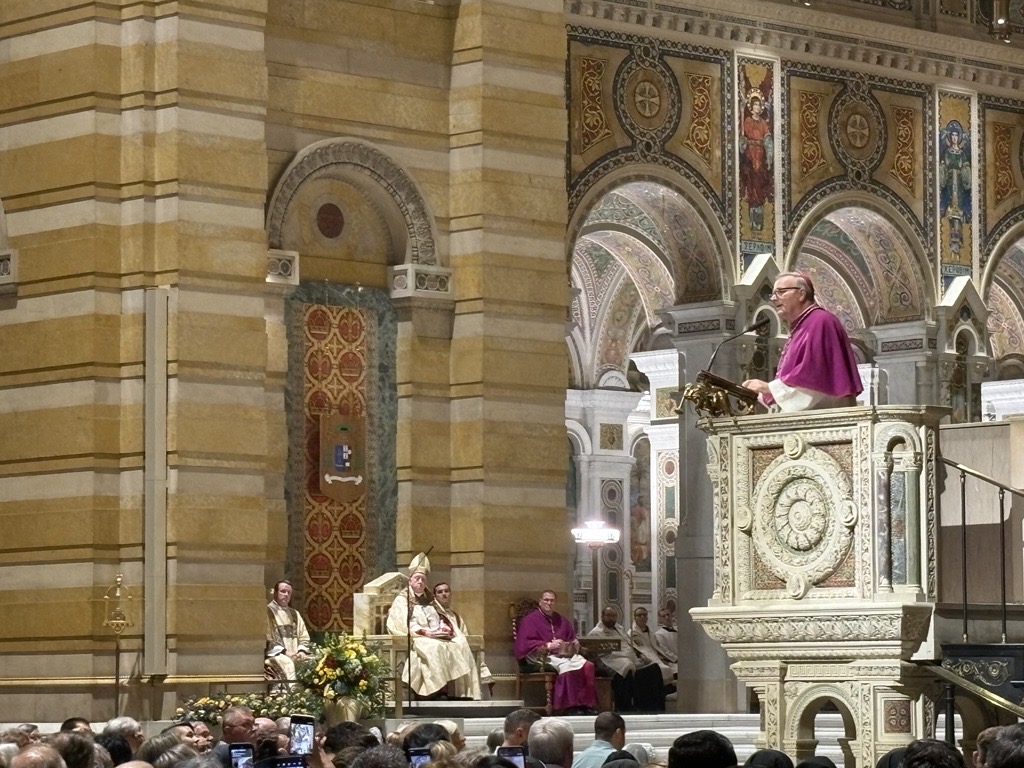
Read More
‘A powerful heavenly friend and intercessor’: Bishop Barron reflects on Fulton Sheen – #Catholic – ST. LOUIS — Families with young children, religious sisters and brothers, and pilgrims who had traveled to St. Louis filled the Cathedral Basilica of St. Louis Sept. 23 for evening prayer on the eve of the beatification of Archbishop Fulton J. Sheen.More than 1,000 people gathered for the service, as the cathedral’s schola sang the psalms and canticles and Archbishop Mitchell T. Rozanski of the Archdiocese of St. Louis presided. Bishop Robert Barron of Diocese of Winona-Rochester, Minnesota, preached.Barron began by recalling Sheen’s extraordinary influence as a preacher and communicator, including the millions who watched his television programs at the height of his career.But Barron said he wanted to focus on a different question: What made Sheen “blessed, a saintly man of God”?His answer, according to Barron, was friendship with Jesus Christ.From the beginning of his own work in evangelization, Barron said, Sheen had been his “motto and inspiration.” Sheen repeatedly insisted that Christianity was not an abstract philosophy or simply a set of moral convictions but a relationship with a living person — Jesus Christ, who told his apostles that he no longer called them servants but friends.Barron found a window into that friendship in Sheen’s autobiography, “Treasure in Clay,” particularly in Sheen’s reflection on the prophet Isaiah’s encounter with God.The passage offered a template for the spiritual journey, Barron said. It begins with an encounter with the holiness of God, moves through a recognition of one’s own unworthiness and ends with a willingness to be sent on mission.The first movement, he said, is grace.“Sheen’s life was marked through and through by signs of unmerited divine love,” Barron said. That grace was closely connected to Sheen’s devotion to Mary, whom Scripture describes as “full of grace.”“Mary, as it were, haunts the spiritual life of Fulton Sheen,” Barron said.He traced that devotion from Sheen’s baptism at St. Mary Church in El Paso, Illinois, through his priestly ordination in the Cathedral of St. Mary of the Immaculate Conception in Peoria, his devotion to the rosary, and his more than 30 journeys to Lourdes. Sheen went there, Barron recalled, to visit “the woman I love.”For Sheen, Mary was the supreme example of a human being receiving the unmerited love of God.
 
 Left to right: Sisters of Life Maria Augustine, Mariam, and Leonie Thérèse smile in front of the Cathedral Basilica of St. Louis following evening prayer Sept. 23, 2026, the vigil of the beatification of Archbishop Fulton Sheen. | Credit: Gigi Duncan/EWTN News
 
 That understanding of love for God also shaped Sheen’s approach to the Eucharist. Barron pointed to Sheen’s lifelong commitment to the Holy Hour, when he would spend an uninterrupted hour each day in prayer before the Blessed Sacrament.Sheen saw the Holy Hour not as a task to be accomplished but as time spent in the presence of Christ. “Looking at the Eucharistic Lord for an hour transforms the heart in a mysterious way,” he wrote.Barron also recalled Sheen’s image of the person who faithfully sits before the tabernacle as “like a dog at the master’s door ready to see” where the master will send him.That preparation would lead Sheen to radio and television, where he saw new opportunities to bring the Gospel to a much wider audience. His academic formation, Barron noted, was always directed toward that apostolic purpose. Sheen wanted to bring the Catholic intellectual tradition to bear on the questions of his time while communicating it in ways ordinary people could understand.He repeatedly heard, Barron said, Christ’s command to “go out into the deep.”Sheen answered that call through decades of preaching, writing, broadcasting, and missionary travel. Yet “Treasure in Clay” also reveals the fragility of the person carrying that treasure.Sheen openly acknowledged his weaknesses, including his enjoyment of titles, prestige, and popularity. “I was popular,” Sheen wrote. “I was sought after, I was a friend of both royalty and the masses.” Then came the question: “How close was I to the cross?”For Barron, that honesty was part of Sheen’s holiness. The closer a person comes to the holiness of God, he said, the more clearly that person sees his own need for forgiveness and healing.“God is holy. I am not. Woe is me,” Barron quoted Sheen as saying.Sheen’s sufferings, including those that came from within and outside the Church, became part of that purification. As Sheen put it, “Since I would not take up the cross, the Lord would lay it on my back.”Through that process, Barron said, Sheen became more deeply conformed to Christ and more ready to be sent. Those themes were reflected in the way people at the cathedral spoke about Sheen and his continuing influence.Sister of Life Maria Augustine, who traveled from New York with other members of her community, called Sheen “a great teacher and a great evangelist.”“We look to him for his inspiration and his intercession as we go out into the world,” she said, “to proclaim the good news of human life and love.”
 
 Cardinal Raymond Burke blesses an item outside of the Cathedral Basilica of St. Louis following vespers on Sept. 23, 2026. | Credit: Gigi Duncan/EWTN News
 
 For Cardinal Raymond Burke, Sheen’s example has particular significance for the priesthood. Burke said Sheen inspired his own priestly vocation, and he continues to read Sheen today to deepen his “knowledge and love of the holy priesthood.”Bishop Andrew Cozzens of Crookston, Minnesota, pointed to Sheen’s deep Eucharistic devotion as the source of his evangelizing work.“To me, Fulton Sheen is a man who was so deeply in love with Jesus in the Eucharist, that he just let that shine out in everything that he does,” Cozzens told EWTN News. “And that’s what I try to do too.”
 
 Bishop Andrew Cozzens of the Diocese of Crookston, Minnesota, meets pilgrims outside the Cathedral Basilica of St. Louis following vespers on the eve of the beatification of Archbishop Fulton Sheen on Sept. 23, 2026. | Credit: Gigi Duncan/EWTN News
 
 Barron returned at the end of his homily to the Church’s continuing work of evangelization. The beatification, he said, does not make Sheen any greater; rather, it brings him “in a powerful way before the attention of the world.”Those seeking “fresh language” to bring the Gospel to modern culture, Barron said, are indebted to Sheen. So are those who preach the “ancient faith with a heart on fire” and those willing to use the communications technologies available to them.For them, Barron said, Sheen is “a powerful heavenly friend and intercessor.”EWTN will provide live coverage of the beatification of Archbishop Fulton Sheen on Sept. 24, with broadcast coverage beginning at 10 a.m. ET with a “Beatification Pre-Show” from The Dome at America’s Center in St. Louis, followed by the “Mass of Beatification” at 2:30 p.m. ET. Live updates will also be available through the EWTN News live blog.

‘A powerful heavenly friend and intercessor’: Bishop Barron reflects on Fulton Sheen – #Catholic – ST. LOUIS — Families with young children, religious sisters and brothers, and pilgrims who had traveled to St. Louis filled the Cathedral Basilica of St. Louis Sept. 23 for evening prayer on the eve of the beatification of Archbishop Fulton J. Sheen.More than 1,000 people gathered for the service, as the cathedral’s schola sang the psalms and canticles and Archbishop Mitchell T. Rozanski of the Archdiocese of St. Louis presided. Bishop Robert Barron of Diocese of Winona-Rochester, Minnesota, preached.Barron began by recalling Sheen’s extraordinary influence as a preacher and communicator, including the millions who watched his television programs at the height of his career.But Barron said he wanted to focus on a different question: What made Sheen “blessed, a saintly man of God”?His answer, according to Barron, was friendship with Jesus Christ.From the beginning of his own work in evangelization, Barron said, Sheen had been his “motto and inspiration.” Sheen repeatedly insisted that Christianity was not an abstract philosophy or simply a set of moral convictions but a relationship with a living person — Jesus Christ, who told his apostles that he no longer called them servants but friends.Barron found a window into that friendship in Sheen’s autobiography, “Treasure in Clay,” particularly in Sheen’s reflection on the prophet Isaiah’s encounter with God.The passage offered a template for the spiritual journey, Barron said. It begins with an encounter with the holiness of God, moves through a recognition of one’s own unworthiness and ends with a willingness to be sent on mission.The first movement, he said, is grace.“Sheen’s life was marked through and through by signs of unmerited divine love,” Barron said. That grace was closely connected to Sheen’s devotion to Mary, whom Scripture describes as “full of grace.”“Mary, as it were, haunts the spiritual life of Fulton Sheen,” Barron said.He traced that devotion from Sheen’s baptism at St. Mary Church in El Paso, Illinois, through his priestly ordination in the Cathedral of St. Mary of the Immaculate Conception in Peoria, his devotion to the rosary, and his more than 30 journeys to Lourdes. Sheen went there, Barron recalled, to visit “the woman I love.”For Sheen, Mary was the supreme example of a human being receiving the unmerited love of God. Left to right: Sisters of Life Maria Augustine, Mariam, and Leonie Thérèse smile in front of the Cathedral Basilica of St. Louis following evening prayer Sept. 23, 2026, the vigil of the beatification of Archbishop Fulton Sheen. | Credit: Gigi Duncan/EWTN News That understanding of love for God also shaped Sheen’s approach to the Eucharist. Barron pointed to Sheen’s lifelong commitment to the Holy Hour, when he would spend an uninterrupted hour each day in prayer before the Blessed Sacrament.Sheen saw the Holy Hour not as a task to be accomplished but as time spent in the presence of Christ. “Looking at the Eucharistic Lord for an hour transforms the heart in a mysterious way,” he wrote.Barron also recalled Sheen’s image of the person who faithfully sits before the tabernacle as “like a dog at the master’s door ready to see” where the master will send him.That preparation would lead Sheen to radio and television, where he saw new opportunities to bring the Gospel to a much wider audience. His academic formation, Barron noted, was always directed toward that apostolic purpose. Sheen wanted to bring the Catholic intellectual tradition to bear on the questions of his time while communicating it in ways ordinary people could understand.He repeatedly heard, Barron said, Christ’s command to “go out into the deep.”Sheen answered that call through decades of preaching, writing, broadcasting, and missionary travel. Yet “Treasure in Clay” also reveals the fragility of the person carrying that treasure.Sheen openly acknowledged his weaknesses, including his enjoyment of titles, prestige, and popularity. “I was popular,” Sheen wrote. “I was sought after, I was a friend of both royalty and the masses.” Then came the question: “How close was I to the cross?”For Barron, that honesty was part of Sheen’s holiness. The closer a person comes to the holiness of God, he said, the more clearly that person sees his own need for forgiveness and healing.“God is holy. I am not. Woe is me,” Barron quoted Sheen as saying.Sheen’s sufferings, including those that came from within and outside the Church, became part of that purification. As Sheen put it, “Since I would not take up the cross, the Lord would lay it on my back.”Through that process, Barron said, Sheen became more deeply conformed to Christ and more ready to be sent. Those themes were reflected in the way people at the cathedral spoke about Sheen and his continuing influence.Sister of Life Maria Augustine, who traveled from New York with other members of her community, called Sheen “a great teacher and a great evangelist.”“We look to him for his inspiration and his intercession as we go out into the world,” she said, “to proclaim the good news of human life and love.” Cardinal Raymond Burke blesses an item outside of the Cathedral Basilica of St. Louis following vespers on Sept. 23, 2026. | Credit: Gigi Duncan/EWTN News For Cardinal Raymond Burke, Sheen’s example has particular significance for the priesthood. Burke said Sheen inspired his own priestly vocation, and he continues to read Sheen today to deepen his “knowledge and love of the holy priesthood.”Bishop Andrew Cozzens of Crookston, Minnesota, pointed to Sheen’s deep Eucharistic devotion as the source of his evangelizing work.“To me, Fulton Sheen is a man who was so deeply in love with Jesus in the Eucharist, that he just let that shine out in everything that he does,” Cozzens told EWTN News. “And that’s what I try to do too.” Bishop Andrew Cozzens of the Diocese of Crookston, Minnesota, meets pilgrims outside the Cathedral Basilica of St. Louis following vespers on the eve of the beatification of Archbishop Fulton Sheen on Sept. 23, 2026. | Credit: Gigi Duncan/EWTN News Barron returned at the end of his homily to the Church’s continuing work of evangelization. The beatification, he said, does not make Sheen any greater; rather, it brings him “in a powerful way before the attention of the world.”Those seeking “fresh language” to bring the Gospel to modern culture, Barron said, are indebted to Sheen. So are those who preach the “ancient faith with a heart on fire” and those willing to use the communications technologies available to them.For them, Barron said, Sheen is “a powerful heavenly friend and intercessor.”EWTN will provide live coverage of the beatification of Archbishop Fulton Sheen on Sept. 24, with broadcast coverage beginning at 10 a.m. ET with a “Beatification Pre-Show” from The Dome at America’s Center in St. Louis, followed by the “Mass of Beatification” at 2:30 p.m. ET. Live updates will also be available through the EWTN News live blog.

The bishop looked beyond Sheen’s public fame to the prayer, sacrifice, and friendship with Christ that shaped his life.
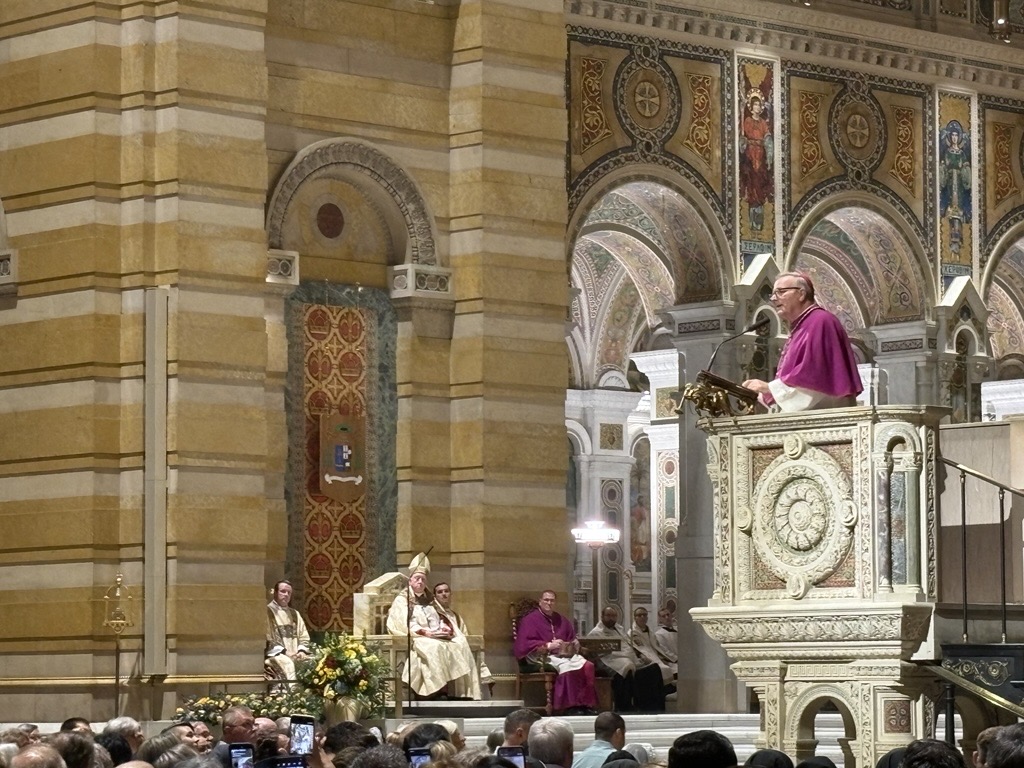
Read More

On Sept. 24, 1970, Luna 16 blazed a new trail in lunar sample collection – one traversed by robots. Although the Apollo astronauts had collected lunar samples on their missions, Luna 16 was the first instance of samples being gathered and returned to Earth fully robotically, with no astronauts (or cosmonauts) involved. After blasting offContinue reading “Sept. 24, 1970: Luna 16 brings back regolith”

The post Sept. 24, 1970: Luna 16 brings back regolith appeared first on Astronomy Magazine.

Read More