Day: September 28, 2026

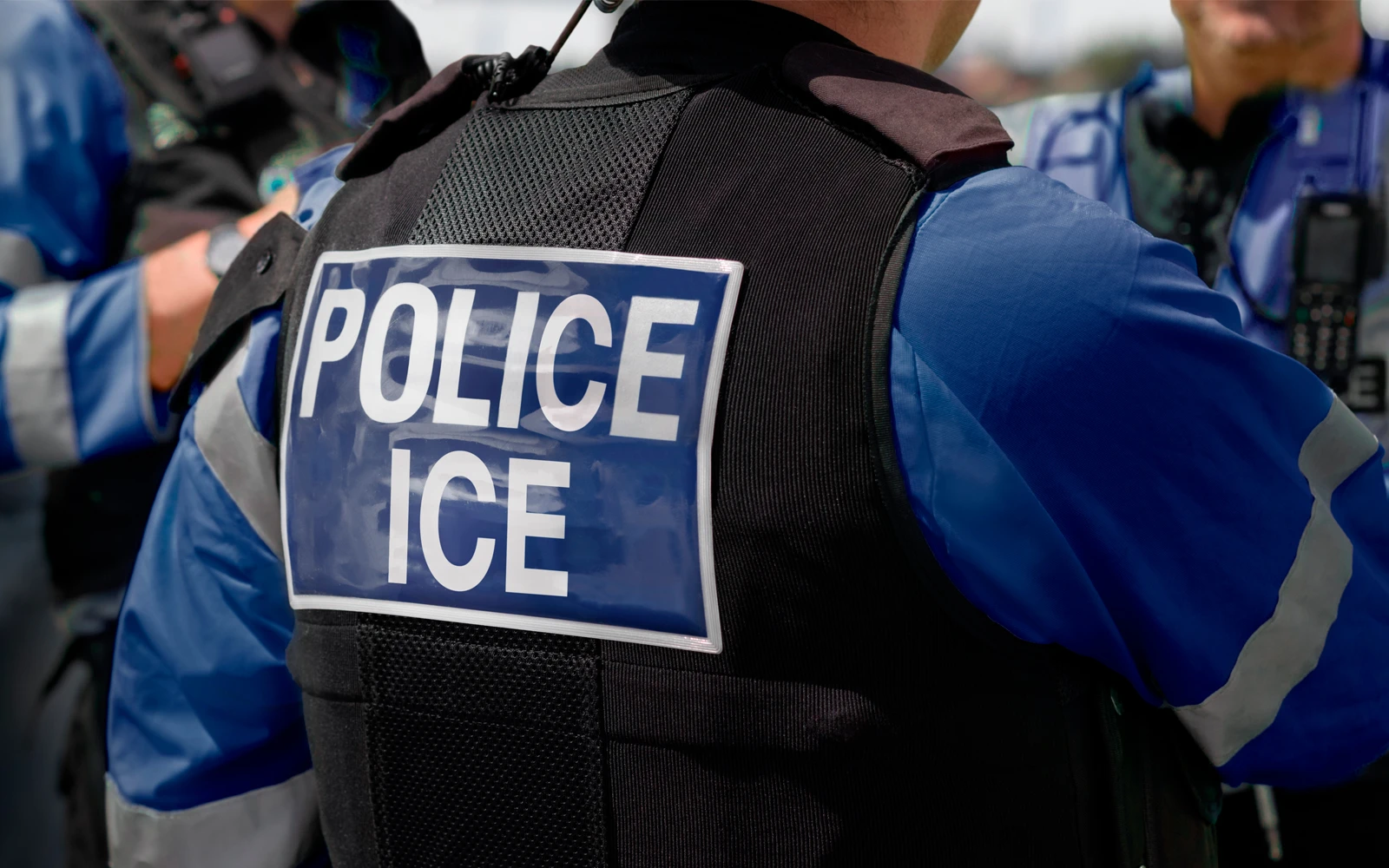
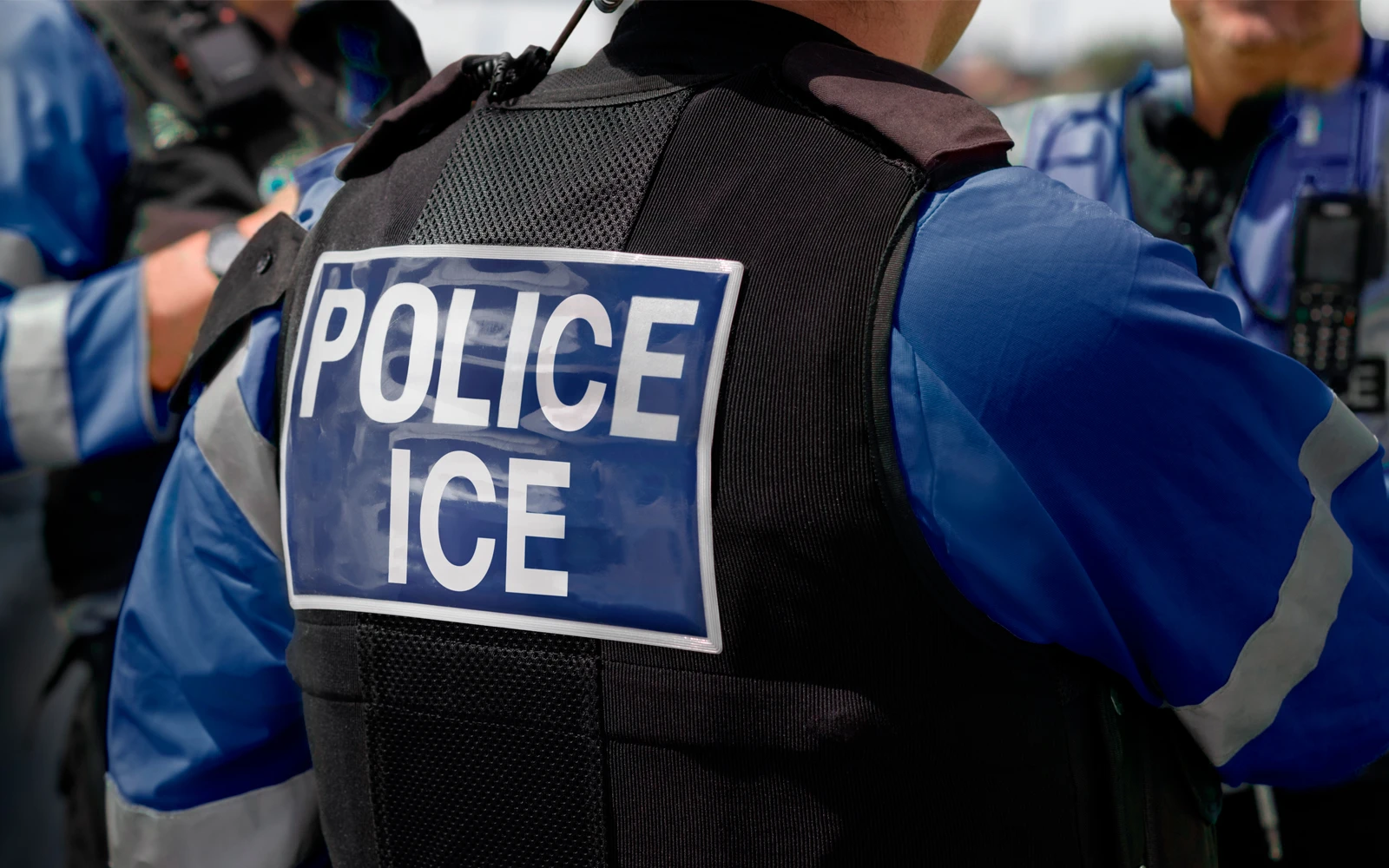
Church leaders continue to urge Catholics to aid immigrants as government defends deportations #Catholic Church leaders continue to draw attention to what they call the “indiscriminate” enforcement actions of U.S. federal immigration officials as they urged Catholics on the World Day of Migrants and Refugees to pray, help immigrants, and advocate for policy change.Pope Leo XIV titled this year’s observance of World Day of Migrants and Refugees “Even Just One of These Children,” citing Matthew 18:5: “Whoever welcomes one such child in my name welcomes me.”Cardinal Robert McElroy of Washington, D.C., said in a homily on Sunday, Sept. 27, that “for the last year and a half, the people of the United States have witnessed the suffering of the undocumented in our midst, purposely and strategically magnified by our government, and for the most part, we have simply passed on by.”McElroy wrote that “Jesus weeps all across our nation for the children who have been arrested, detained, transported to far-off centers with terrible living conditions, and cut off from their families.”The cardinal described the case of a 5-year-old boy in Minneapolis, Liam Ramos, who along with his father was arrested by Immigration and Customs Enforcement (ICE) officers and was “imprisoned for a month until an outraged federal judge ordered him to be released.”After being held for about 10 days, on Jan. 31, U.S. District Judge Fred Biery in San Antonio ordered their release, writing in his order that the case grew from “the ill-conceived and incompetently-implemented government pursuit of daily deportation quotas, apparently even if it requires traumatizing children.”Biery attached a photo and two Gospel verses to his order: Matthew 19:14 (“Let the little children come to me, and do not hinder them”) and John 11:35 (“Jesus wept”).In March an immigration judge denied the family’s asylum claim and ordered them removed to Ecuador. McElroy also decried the government’s ending of temporary protected status (TPS) for nearly 1 million people, saying refugees admitted under it “never broke any law.”The cardinal said: "They are being deported because of a general desire to exclude immigrants from American society. They are being deported because the bigotry that has often tarnished American immigrant history is rampant once again in our nation.”The Trump administration has stated it ended TPS because it says conditions in many countries have improved and the program “has been abused and exploited by illegal aliens” and has become a “de facto amnesty” program.TPS is granted when the Department of Homeland Security (DHS) determines that a country is temporarily unsafe to return to because of armed conflict, disaster, or other extraordinary conditions. Congress designed TPS in the Immigration Act of 1990 as a time-limited humanitarian designation intended to be temporary; it is not a path to citizenship. TPS holders are lawfully present and authorized to work while the designation lasts. After termination of TPS, however, people who remain commit a civil immigration violation.Yakima, Washington, bishop calls for ‘surgical deportation’Bishop Joseph Tyson of the Diocese of Yakima, Washington, also issued a message on Sunday, lamenting that “Yakima County seems to be disproportionately targeted” by immigration enforcement actions. He cited Freedom of Information Act data he had obtained, which he said showed that “fewer than a fourth” of the people ICE had detained between March and August had a criminal record.Tyson called for “a public policy that allows for a surgical deportation of those with serious criminal records” rather than the “indiscriminate deportation” of immigrants who “have lived here for years” and are often “detained in front of courthouses while pursuing legal pathways to regularize their legal status.”Andrew Arthur, a national-security and immigration expert at the Center for Immigration Studies, told EWTN News that “immigration laws — like every other law — are meaningless unless they are enforced.”“Border security — which even the bishops support — is impossible without interior enforcement and deportations of those who entered illegally,” even if they have not committed other crimes, he said.Referring to Tyson’s recommendation for “surgical deportations” for those with “serious criminal records,” Arthur, a former immigration judge, explained that the law does not require that “serious” crimes be committed before deportation takes place.“A ‘serious crime’ is one that impacts or threatens any other person,” he said. Regardless “there is no reason to wait until a drunk driver kills someone before he is deported … There is no reason that the American people should be threatened by a criminal immigrant who should never have been here to begin with.”McElroy also described ongoing immigration enforcement as a “wholesale war” on immigrants, which Arthur called a "reckless statement.”“Using military terminology in this context denigrates federal officers who are tasked with a very difficult job,” Arthur said.DHS affirms continued arrests of ‘anyone’ in country illegallyThe Department of Homeland Security refuted a report circulating on Sept. 26 that said anonymous ICE officials claimed they were instructed to cease arresting illegal immigrants who had not committed crimes other than entering or remaining in the country illegally.In a statement to EWTN News as well as in a social media post, DHS called the claim “false,” saying: “No one is off the table. We will continue to arrest any and all illegal aliens that come into our path. Anyone in our country illegally will be arrested and deported.”

Church leaders continue to urge Catholics to aid immigrants as government defends deportations #Catholic Church leaders continue to draw attention to what they call the “indiscriminate” enforcement actions of U.S. federal immigration officials as they urged Catholics on the World Day of Migrants and Refugees to pray, help immigrants, and advocate for policy change.Pope Leo XIV titled this year’s observance of World Day of Migrants and Refugees “Even Just One of These Children,” citing Matthew 18:5: “Whoever welcomes one such child in my name welcomes me.”Cardinal Robert McElroy of Washington, D.C., said in a homily on Sunday, Sept. 27, that “for the last year and a half, the people of the United States have witnessed the suffering of the undocumented in our midst, purposely and strategically magnified by our government, and for the most part, we have simply passed on by.”McElroy wrote that “Jesus weeps all across our nation for the children who have been arrested, detained, transported to far-off centers with terrible living conditions, and cut off from their families.”The cardinal described the case of a 5-year-old boy in Minneapolis, Liam Ramos, who along with his father was arrested by Immigration and Customs Enforcement (ICE) officers and was “imprisoned for a month until an outraged federal judge ordered him to be released.”After being held for about 10 days, on Jan. 31, U.S. District Judge Fred Biery in San Antonio ordered their release, writing in his order that the case grew from “the ill-conceived and incompetently-implemented government pursuit of daily deportation quotas, apparently even if it requires traumatizing children.”Biery attached a photo and two Gospel verses to his order: Matthew 19:14 (“Let the little children come to me, and do not hinder them”) and John 11:35 (“Jesus wept”).In March an immigration judge denied the family’s asylum claim and ordered them removed to Ecuador. McElroy also decried the government’s ending of temporary protected status (TPS) for nearly 1 million people, saying refugees admitted under it “never broke any law.”The cardinal said: "They are being deported because of a general desire to exclude immigrants from American society. They are being deported because the bigotry that has often tarnished American immigrant history is rampant once again in our nation.”The Trump administration has stated it ended TPS because it says conditions in many countries have improved and the program “has been abused and exploited by illegal aliens” and has become a “de facto amnesty” program.TPS is granted when the Department of Homeland Security (DHS) determines that a country is temporarily unsafe to return to because of armed conflict, disaster, or other extraordinary conditions. Congress designed TPS in the Immigration Act of 1990 as a time-limited humanitarian designation intended to be temporary; it is not a path to citizenship. TPS holders are lawfully present and authorized to work while the designation lasts. After termination of TPS, however, people who remain commit a civil immigration violation.Yakima, Washington, bishop calls for ‘surgical deportation’Bishop Joseph Tyson of the Diocese of Yakima, Washington, also issued a message on Sunday, lamenting that “Yakima County seems to be disproportionately targeted” by immigration enforcement actions. He cited Freedom of Information Act data he had obtained, which he said showed that “fewer than a fourth” of the people ICE had detained between March and August had a criminal record.Tyson called for “a public policy that allows for a surgical deportation of those with serious criminal records” rather than the “indiscriminate deportation” of immigrants who “have lived here for years” and are often “detained in front of courthouses while pursuing legal pathways to regularize their legal status.”Andrew Arthur, a national-security and immigration expert at the Center for Immigration Studies, told EWTN News that “immigration laws — like every other law — are meaningless unless they are enforced.”“Border security — which even the bishops support — is impossible without interior enforcement and deportations of those who entered illegally,” even if they have not committed other crimes, he said.Referring to Tyson’s recommendation for “surgical deportations” for those with “serious criminal records,” Arthur, a former immigration judge, explained that the law does not require that “serious” crimes be committed before deportation takes place.“A ‘serious crime’ is one that impacts or threatens any other person,” he said. Regardless “there is no reason to wait until a drunk driver kills someone before he is deported … There is no reason that the American people should be threatened by a criminal immigrant who should never have been here to begin with.”McElroy also described ongoing immigration enforcement as a “wholesale war” on immigrants, which Arthur called a "reckless statement.”“Using military terminology in this context denigrates federal officers who are tasked with a very difficult job,” Arthur said.DHS affirms continued arrests of ‘anyone’ in country illegallyThe Department of Homeland Security refuted a report circulating on Sept. 26 that said anonymous ICE officials claimed they were instructed to cease arresting illegal immigrants who had not committed crimes other than entering or remaining in the country illegally.In a statement to EWTN News as well as in a social media post, DHS called the claim “false,” saying: “No one is off the table. We will continue to arrest any and all illegal aliens that come into our path. Anyone in our country illegally will be arrested and deported.”

Pope Leo XIV titled this year’s observance of World Day of Migrants and Refugees “Even Just One of These Children,” citing Matthew 18:5: “Whoever welcomes one such child in my name welcomes me.”
Read More

Gospel and Word of the Day – 29 September 2026 – A reading from the Book of Daniel 7:9-10, 13-14 As I watched: Thrones were set up and the Ancient One took his throne. His clothing was bright as snow, and the hair on his head as white as wool; His throne was flames of fire, with wheels of burning fire. A surging stream of fire flowed out from where he sat; Thousands upon thousands were ministering to him, and myriads upon myriads attended him. The court was convened, and the books were opened. As the visions during the night continued, I saw One like a son of man coming, on the clouds of heaven; When he reached the Ancient One and was presented before him, He received dominion, glory, and kingship; nations and peoples of every language serve him. His dominion is an everlasting dominion that shall not be taken away, his kingship shall not be destroyed.From the Gospel according to John 1:47-51 Jesus saw Nathanael coming toward him and said of him, "Here is a true child of Israel. There is no duplicity in him." Nathanael said to him, "How do you know me?" Jesus answered and said to him, "Before Philip called you, I saw you under the fig tree." Nathanael answered him, "Rabbi, you are the Son of God; you are the King of Israel." Jesus answered and said to him, "Do you believe because I told you that I saw you under the fig tree? You will see greater things than this." And he said to him, "Amen, amen, I say to you, you will see heaven opened and the angels of God ascending and descending on the Son of Man."The Evangelist tells us that when Jesus sees Nathanael approaching, he exclaims: "Behold, an Israelite indeed, in whom there is no guile!" (Jn 1: 47). This is praise reminiscent of the text of a Psalm: "Blessed is the man… in whose spirit there is no deceit" (32[31]: 2), but provokes the curiosity of Nathanael who answers in amazement:  "How do you know me?" (Jn 1: 48). Jesus’ reply cannot immediately be understood. He says: "Before Philip called you, when you were under the fig  tree,  I  saw  you" (Jn  1: 48).  We  do not know what had happened under this fig tree. It is obvious that it had to do with a decisive moment in Nathanael’s life. His heart is moved by Jesus’ words, he feels understood and he understands: "This man knows everything about me, he knows and is familiar with the road of life; I can truly trust this man". And so he answers with a clear and beautiful confession of faith: "Rabbi, you are the Son of God! You are the King of Israel!" (Jn 1: 49). In this confession is conveyed a first important step in the journey of attachment to Jesus. (Benedict XVI, General Audience, 4 October 2006)  

A reading from the Book of Daniel
7:9-10, 13-14

As I watched:

Thrones were set up
and the Ancient One took his throne.
His clothing was bright as snow,
and the hair on his head as white as wool;
His throne was flames of fire,
with wheels of burning fire.
A surging stream of fire
flowed out from where he sat;
Thousands upon thousands were ministering to him,
and myriads upon myriads attended him.

The court was convened, and the books were opened.
As the visions during the night continued, I saw

One like a son of man coming,
on the clouds of heaven;
When he reached the Ancient One
and was presented before him,
He received dominion, glory, and kingship;
nations and peoples of every language serve him.
His dominion is an everlasting dominion
that shall not be taken away,
his kingship shall not be destroyed.

From the Gospel according to John
1:47-51

Jesus saw Nathanael coming toward him and said of him,
"Here is a true child of Israel.
There is no duplicity in him."
Nathanael said to him, "How do you know me?"
Jesus answered and said to him,
"Before Philip called you, I saw you under the fig tree."
Nathanael answered him,
"Rabbi, you are the Son of God; you are the King of Israel."
Jesus answered and said to him,
"Do you believe
because I told you that I saw you under the fig tree?
You will see greater things than this."
And he said to him, "Amen, amen, I say to you,
you will see heaven opened
and the angels of God ascending and descending on the Son of Man."

The Evangelist tells us that when Jesus sees Nathanael approaching, he exclaims: "Behold, an Israelite indeed, in whom there is no guile!" (Jn 1: 47). This is praise reminiscent of the text of a Psalm: "Blessed is the man… in whose spirit there is no deceit" (32[31]: 2), but provokes the curiosity of Nathanael who answers in amazement:  "How do you know me?" (Jn 1: 48). Jesus’ reply cannot immediately be understood. He says: "Before Philip called you, when you were under the fig  tree,  I  saw  you" (Jn  1: 48).  We  do not know what had happened under this fig tree. It is obvious that it had to do with a decisive moment in Nathanael’s life. His heart is moved by Jesus’ words, he feels understood and he understands: "This man knows everything about me, he knows and is familiar with the road of life; I can truly trust this man". And so he answers with a clear and beautiful confession of faith: "Rabbi, you are the Son of God! You are the King of Israel!" (Jn 1: 49). In this confession is conveyed a first important step in the journey of attachment to Jesus. (Benedict XVI, General Audience, 4 October 2006)


Read More
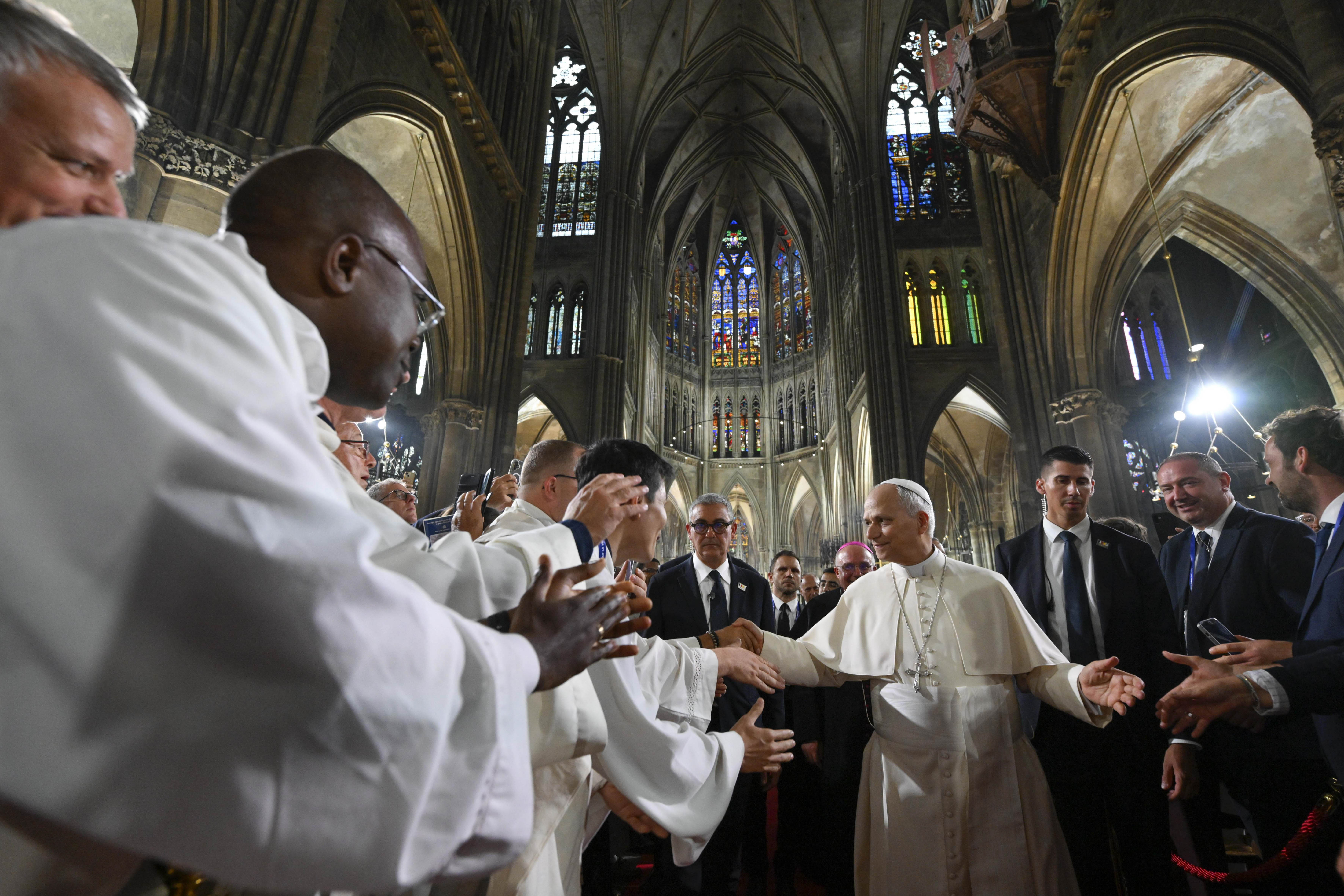
PHOTOS: Pope Leo XIV’s final day in France #Catholic Pope Leo XIV addressed European leaders at the Robert Schuman Conference Center in Metz on the final day of his Sept. 25–28 visit to France. The title of the event was “To the Roots of Europe for Peace and Unity.”From there he traveled to the Metz Cathedral — a towering Gothic structure dedicated to St. Stephen and nicknamed “the Good Lord’s lantern” for its large expanse of stained glass — where he celebrated Mass before 35,000 people both inside and outside the cathedral, according to the Vatican. He returned to Rome in the evening.Here is a look at his day in photos:
 
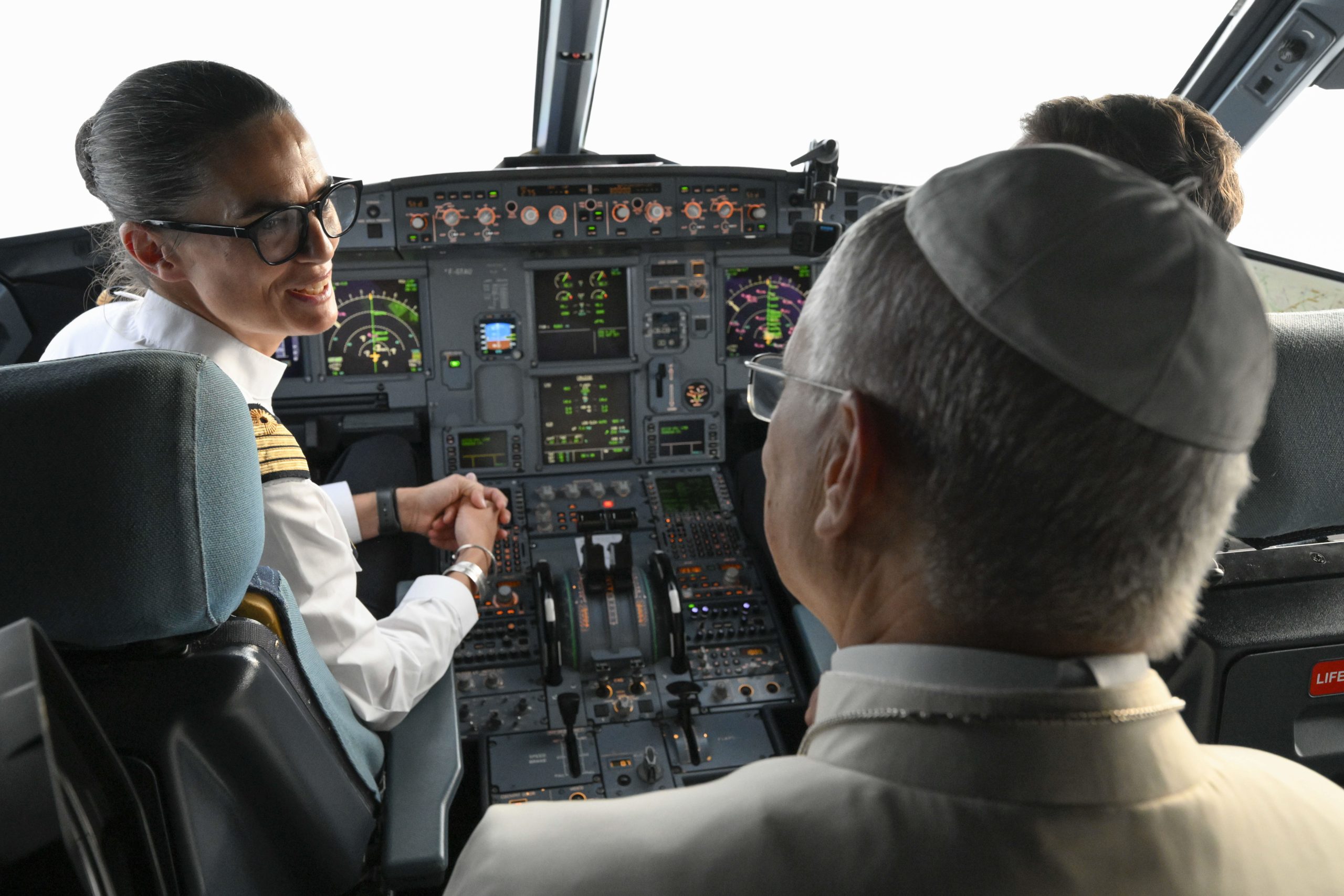
 Pope Leo XIV greets the cabin crew on the Air France A321 as he departs Lourdes for Metz on Sept. 28, 2026. | Credit: Vatican Media


 Pope Leo XIV embraces a child after landing in Metz, France, on Sept. 28, 2026. | Credit: Vatican Media


 Pope Leo XIV stands with religious leaders at an interreligious meeting at the Robert Schuman Conference Center in Metz, France, on Sept. 28, 2026. | Credit: Daniel Ibáñez/EWTN News


 A participant takes a video recording of Pope Leo XIV’s participation at the meeting “To the Roots of Europe for Peace and Unity” at the Robert Schuman Conference Center in Metz, France, on Sept. 28, 2026. | Credit: Daniel Ibáñez/EWTN News


 Pope Leo XIV sits with French President Emmanuel Macron at the meeting “To the Roots of Europe for Peace and Unity” at the Robert Schuman Conference Center in Metz, France, on Sept. 28, 2026. | Credit: Daniel Ibáñez/EWTN News


 Pope Leo XIV meets with religious leaders at an interreligious meeting at the Robert Schuman Conference Center in Metz, France, on Sept. 28, 2026. | Credit: Vatican Media


 Young people wait for Pope Leo XIV to arrive outside the Cathedral of St. Stephen in Metz, France, on Sept. 28, 2026. | Credit: Daniel Ibáñez/EWTN News


 Pope Leo XIV stops to bless a baby as he makes his way to the Cathedral of St. Stephen on Sept. 28, 2026, in Metz, France. | Credit: Vatican Media


 Pope Leo XIV signs the guest book upon entering the Cathedral of St. Stephen on Sept. 28, 2026, in Metz, France. | Credit: Vatican Media


 Pope Leo XIV prays at the Cathedral of St. Stephen on Sept. 28, 2026, in Metz, France. | Credit: Vatican Media


 Pope Leo XIV delivers his homily during Mass on Sept. 28, 2026, in the Cathedral of St. Stephen in Metz, France. | Credit: Daniel Ibáñez/EWTN News


 Pope Leo XIV celebrates Mass on Sept. 28, 2026, in the Cathedral of St. Stephen in Metz, France. | Credit: Vatican Media


 French President Emmanuel Macro and Pope Leo XIV meet one last time before the pope boards a plane back to Rome on Sept. 28, 2028. | Credit: Vatican Media


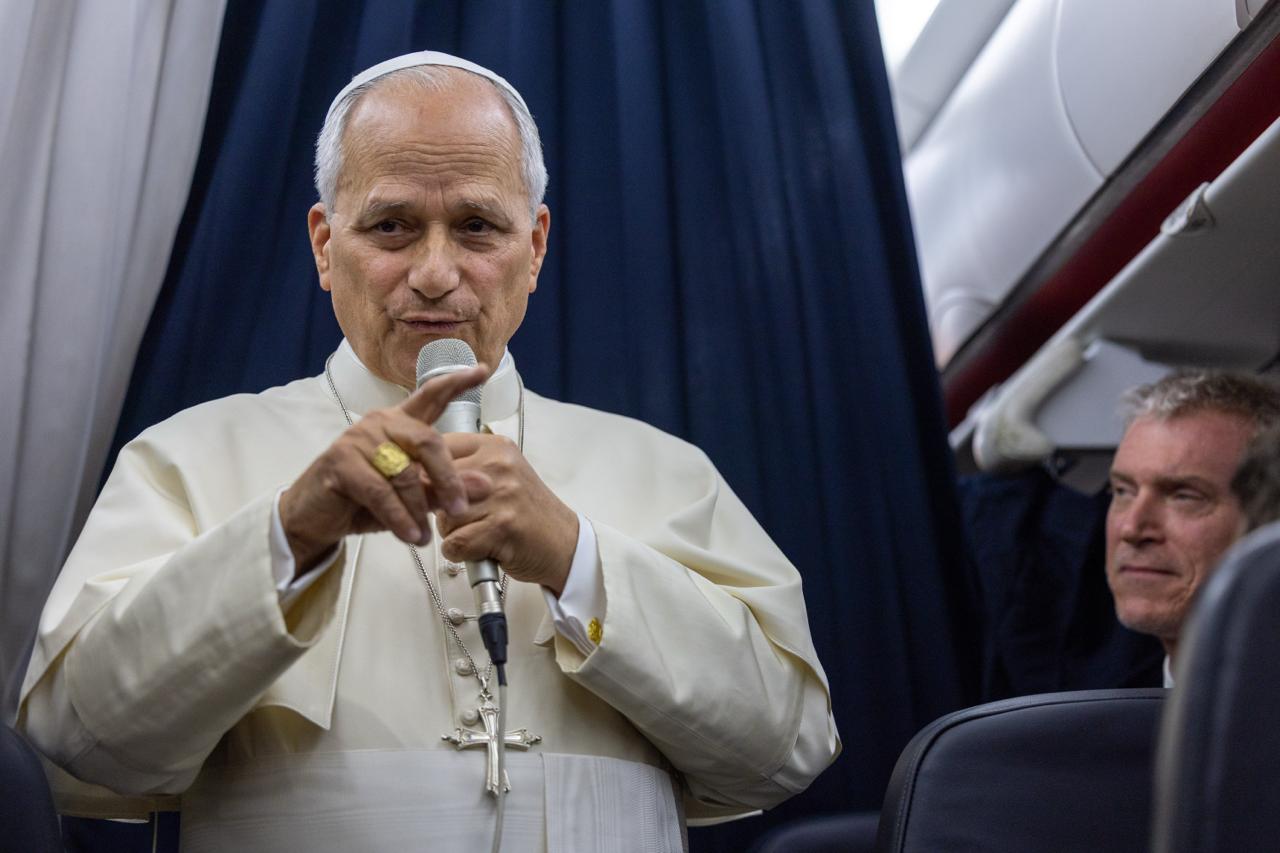
 Pope Leo XIV speaks to reporters on his flight from Metz, France, to Rome on Sept. 28, 2026. | Credit: Daniel Ibáñez/EWTN News

PHOTOS: Pope Leo XIV’s final day in France #Catholic Pope Leo XIV addressed European leaders at the Robert Schuman Conference Center in Metz on the final day of his Sept. 25–28 visit to France. The title of the event was “To the Roots of Europe for Peace and Unity.”From there he traveled to the Metz Cathedral — a towering Gothic structure dedicated to St. Stephen and nicknamed “the Good Lord’s lantern” for its large expanse of stained glass — where he celebrated Mass before 35,000 people both inside and outside the cathedral, according to the Vatican. He returned to Rome in the evening.Here is a look at his day in photos: Pope Leo XIV greets the cabin crew on the Air France A321 as he departs Lourdes for Metz on Sept. 28, 2026. | Credit: Vatican Media Pope Leo XIV embraces a child after landing in Metz, France, on Sept. 28, 2026. | Credit: Vatican Media Pope Leo XIV stands with religious leaders at an interreligious meeting at the Robert Schuman Conference Center in Metz, France, on Sept. 28, 2026. | Credit: Daniel Ibáñez/EWTN News A participant takes a video recording of Pope Leo XIV’s participation at the meeting “To the Roots of Europe for Peace and Unity” at the Robert Schuman Conference Center in Metz, France, on Sept. 28, 2026. | Credit: Daniel Ibáñez/EWTN News Pope Leo XIV sits with French President Emmanuel Macron at the meeting “To the Roots of Europe for Peace and Unity” at the Robert Schuman Conference Center in Metz, France, on Sept. 28, 2026. | Credit: Daniel Ibáñez/EWTN News Pope Leo XIV meets with religious leaders at an interreligious meeting at the Robert Schuman Conference Center in Metz, France, on Sept. 28, 2026. | Credit: Vatican Media Young people wait for Pope Leo XIV to arrive outside the Cathedral of St. Stephen in Metz, France, on Sept. 28, 2026. | Credit: Daniel Ibáñez/EWTN News Pope Leo XIV stops to bless a baby as he makes his way to the Cathedral of St. Stephen on Sept. 28, 2026, in Metz, France. | Credit: Vatican Media Pope Leo XIV signs the guest book upon entering the Cathedral of St. Stephen on Sept. 28, 2026, in Metz, France. | Credit: Vatican Media Pope Leo XIV prays at the Cathedral of St. Stephen on Sept. 28, 2026, in Metz, France. | Credit: Vatican Media Pope Leo XIV delivers his homily during Mass on Sept. 28, 2026, in the Cathedral of St. Stephen in Metz, France. | Credit: Daniel Ibáñez/EWTN News Pope Leo XIV celebrates Mass on Sept. 28, 2026, in the Cathedral of St. Stephen in Metz, France. | Credit: Vatican Media French President Emmanuel Macro and Pope Leo XIV meet one last time before the pope boards a plane back to Rome on Sept. 28, 2028. | Credit: Vatican Media Pope Leo XIV speaks to reporters on his flight from Metz, France, to Rome on Sept. 28, 2026. | Credit: Daniel Ibáñez/EWTN News

On the fourth and final day of his apostolic journey to France, the pope addressed European leaders at the Robert Schuman Conference Center and celebrated Mass at the Cathedral of St. Stephen in Metz.
Read More
Pope Leo says he is not ‘in panic mode’ over AI dangers – #Catholic – ABOARD THE PAPAL FLIGHT — Pope Leo XIV said he takes seriously the warnings raised by tech experts about the dangers of AI — including risks to humanity — but he is not panicking over dire predictions.“If someone were to ask me, am I in panic mode, no I’m not, I sleep at night. I do think the concerns raised by many experts in AI should be taken seriously,” the pope told reporters accompanying him on his flight to Rome from Metz, France, Sept. 28.“I don’t think that is fake news, as some have said, to try and cause … financial or some other kind of benefit,” he added.A former safety researcher at the AI company Anthropic warned earlier this month that he believes the technology’s rapid advancement could mean there’s a more than 10% chance that AI could “could kill all humans” within a decade.Anthropic CEO Dario Amodei responded by calling on the AI industry to slow down the pace of advanced model development to address risks, and other industry leaders publicly supported his call.That drew criticism of Amodei from President Donald Trump, who dismissed dire scenarios and said restrictions on AI development in the U.S. would benefit China. The two men dined together on Sunday in an apparent attempt to address their differences.The pope’s encyclical on AI, Magnifica Humanitas, published just four months ago, included a broad call for regulation of the technology.In recent months, concerns have grown over AI’s risks of creating advanced cyberattacks and autonomous agents that will get past human control and threaten humanity.Pope Leo told journalists on Monday that the Vatican has organized its own commission on AI, both to coordinate its own use of the technology and to “continue to promote dialogue, study, investigation to find ways to make sure that AI doesn’t get to a point where it destroys humanity.”“But we have to keep working. We can’t just sit back and pretend nothing is going to happen,” he said.Leo was returning to Rome after a four-day trip to France.In response to another reporter’s question, the pope said it was vital for the Church to proclaim Catholic social doctrine even on controversial matters such as end-of-life issues and political extremism.Asked if he had “crossed a line” in France, where there is a strict separation of church and state, by speaking against the recent legalization there of euthanasia and assisted suicide, he said: “I didn’t cross it,” because “we’re not entering into politics; we’re applying the Gospel to people’s lives.”“The defense of life is something that, as you all know, the Church teaches, believes very deeply,” the pope said.“Being in a place especially like Lourdes, where people are searching for something much deeper and understanding that their lives, even in the midst of sickness or disability or pain of different kinds, that their life has meaning, the Church, because of Jesus himself, wants to be close to those people and to affirm the values that that life itself I think holds for all of us,” the pope said.Asked whether he thought clerical sexual abuse was “systemic” in the Church, Leo said he preferred “to express it in a different way.”He said some organizations within the Church have, at times, “as a system, been abusive.”“But I think itʼs important to make the distinction. Sexual abuse is first and foremost a human problem. … When it happens within the Church it actually has another whole dimension added to it, because peopleʼs lives of faith are deeply wounded and sometimes even destroyed,” the pontiff said.“The Church, in certain ways, has been seen as being responsible, but in the same way, the Church, I think, is an important part of helping [victims] to find healing.”

Pope Leo says he is not ‘in panic mode’ over AI dangers – #Catholic – ABOARD THE PAPAL FLIGHT — Pope Leo XIV said he takes seriously the warnings raised by tech experts about the dangers of AI — including risks to humanity — but he is not panicking over dire predictions.“If someone were to ask me, am I in panic mode, no I’m not, I sleep at night. I do think the concerns raised by many experts in AI should be taken seriously,” the pope told reporters accompanying him on his flight to Rome from Metz, France, Sept. 28.“I don’t think that is fake news, as some have said, to try and cause … financial or some other kind of benefit,” he added.A former safety researcher at the AI company Anthropic warned earlier this month that he believes the technology’s rapid advancement could mean there’s a more than 10% chance that AI could “could kill all humans” within a decade.Anthropic CEO Dario Amodei responded by calling on the AI industry to slow down the pace of advanced model development to address risks, and other industry leaders publicly supported his call.That drew criticism of Amodei from President Donald Trump, who dismissed dire scenarios and said restrictions on AI development in the U.S. would benefit China. The two men dined together on Sunday in an apparent attempt to address their differences.The pope’s encyclical on AI, Magnifica Humanitas, published just four months ago, included a broad call for regulation of the technology.In recent months, concerns have grown over AI’s risks of creating advanced cyberattacks and autonomous agents that will get past human control and threaten humanity.Pope Leo told journalists on Monday that the Vatican has organized its own commission on AI, both to coordinate its own use of the technology and to “continue to promote dialogue, study, investigation to find ways to make sure that AI doesn’t get to a point where it destroys humanity.”“But we have to keep working. We can’t just sit back and pretend nothing is going to happen,” he said.Leo was returning to Rome after a four-day trip to France.In response to another reporter’s question, the pope said it was vital for the Church to proclaim Catholic social doctrine even on controversial matters such as end-of-life issues and political extremism.Asked if he had “crossed a line” in France, where there is a strict separation of church and state, by speaking against the recent legalization there of euthanasia and assisted suicide, he said: “I didn’t cross it,” because “we’re not entering into politics; we’re applying the Gospel to people’s lives.”“The defense of life is something that, as you all know, the Church teaches, believes very deeply,” the pope said.“Being in a place especially like Lourdes, where people are searching for something much deeper and understanding that their lives, even in the midst of sickness or disability or pain of different kinds, that their life has meaning, the Church, because of Jesus himself, wants to be close to those people and to affirm the values that that life itself I think holds for all of us,” the pope said.Asked whether he thought clerical sexual abuse was “systemic” in the Church, Leo said he preferred “to express it in a different way.”He said some organizations within the Church have, at times, “as a system, been abusive.”“But I think itʼs important to make the distinction. Sexual abuse is first and foremost a human problem. … When it happens within the Church it actually has another whole dimension added to it, because peopleʼs lives of faith are deeply wounded and sometimes even destroyed,” the pontiff said.“The Church, in certain ways, has been seen as being responsible, but in the same way, the Church, I think, is an important part of helping [victims] to find healing.”

In a 23-minute in-flight news conference, the pontiff also answered questions about end-of-life issues and sexual abuse.
Read More
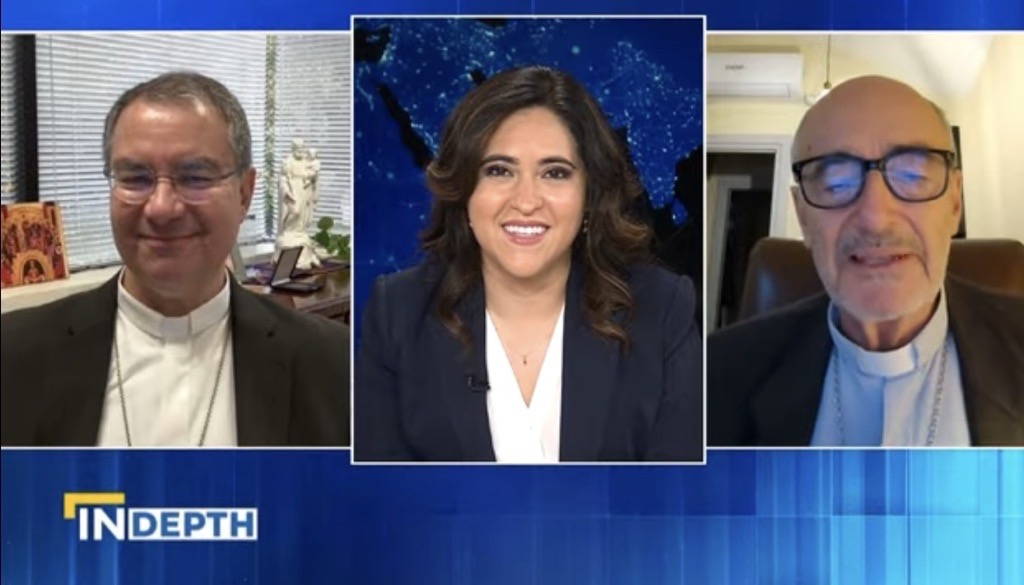
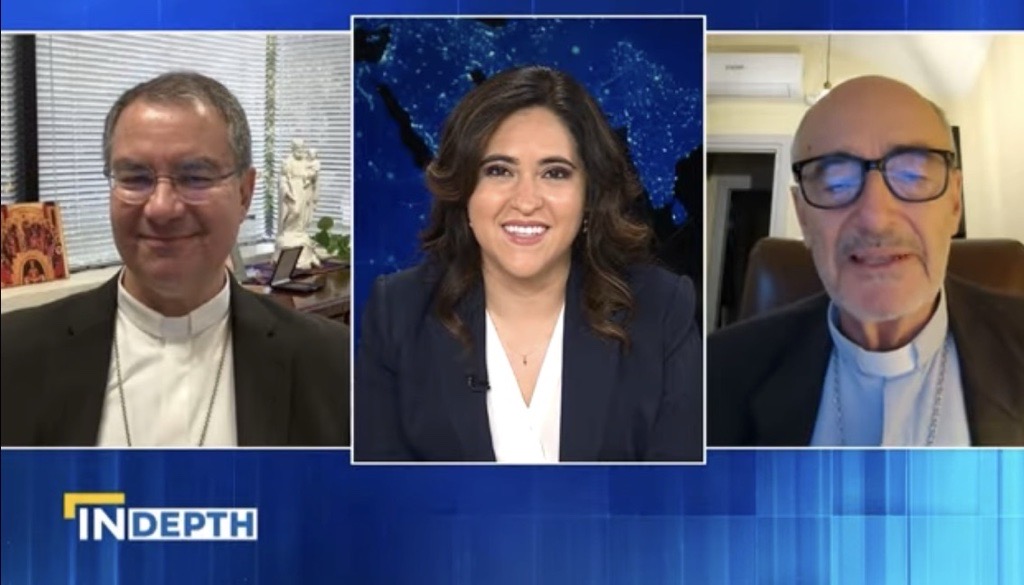
Church officials urge ‘care for workers’ amid AI race – #Catholic – Leaders of artificial intelligence commissions at the Vatican and U.S. Conference of Catholic Bishops (USCCB) called on the technology industry not to pursue profit or victory in the AI race at the expense of workers.In a Sept. 25 interview with Montse Alvarado on “EWTN News In Depth,” Cardinal Michael Czerny, who leads the Vatican’s Commission on AI, and San Jose Bishop Oscar Cantú, who heads the USCCB’s Task Force on Preserving Human Dignity formed in response Pope Leo XIV’s call for cooperation in  Magnifica Humanitas, discussed how AI may reshape the workforce.Two days before Czerny and Cantú spoke on “EWTN News In Depth,” OpenAI CEO Sam Altman and Anthropic CEO Dario Amodei made an urgent appeal to the U.N. Security Council for international standards to curb risks from rapid AI development. Czerny said: “Catholic social teaching says that companies, that investors and management, owe care to the workers.”  “They are not to be used, exploited simply as part of the production process,” Czerny continued. “They are not just cogs in the machine, they are human beings who are living out their dignity in this very, very important field of work.” He called leaders in the AI industry to care for its people and employees, and not to “pursue profit or win the AI race at the expense of human dignity.”Amid fears that AI will result in the loss of jobs, Czerny said: “I think we are treating it as a zero-sum game in an unhelpful sense.”“Maybe we should say, ‘No, the question isnʼt whether jobs will be lost, the question is how much is AI going to help us to create more meaningful and more human beneficial work among its achievements?’” he said. “This has to be one of its goals, not just us protesting against job loss.”Touching on the labor issue as well, Cantú said he hopes the reports from labs that he has met with are true in that they don’t anticipate significant job loss. “But I think we should be prepared, and we should go into this wide-eyed and continuing to put forward for the lab developers that at the center needs to be human dignity and the common good,” Cantú said.

Church officials urge ‘care for workers’ amid AI race – #Catholic – Leaders of artificial intelligence commissions at the Vatican and U.S. Conference of Catholic Bishops (USCCB) called on the technology industry not to pursue profit or victory in the AI race at the expense of workers.In a Sept. 25 interview with Montse Alvarado on “EWTN News In Depth,” Cardinal Michael Czerny, who leads the Vatican’s Commission on AI, and San Jose Bishop Oscar Cantú, who heads the USCCB’s Task Force on Preserving Human Dignity formed in response Pope Leo XIV’s call for cooperation in  Magnifica Humanitas, discussed how AI may reshape the workforce.Two days before Czerny and Cantú spoke on “EWTN News In Depth,” OpenAI CEO Sam Altman and Anthropic CEO Dario Amodei made an urgent appeal to the U.N. Security Council for international standards to curb risks from rapid AI development. Czerny said: “Catholic social teaching says that companies, that investors and management, owe care to the workers.”  “They are not to be used, exploited simply as part of the production process,” Czerny continued. “They are not just cogs in the machine, they are human beings who are living out their dignity in this very, very important field of work.” He called leaders in the AI industry to care for its people and employees, and not to “pursue profit or win the AI race at the expense of human dignity.”Amid fears that AI will result in the loss of jobs, Czerny said: “I think we are treating it as a zero-sum game in an unhelpful sense.”“Maybe we should say, ‘No, the question isnʼt whether jobs will be lost, the question is how much is AI going to help us to create more meaningful and more human beneficial work among its achievements?’” he said. “This has to be one of its goals, not just us protesting against job loss.”Touching on the labor issue as well, Cantú said he hopes the reports from labs that he has met with are true in that they don’t anticipate significant job loss. “But I think we should be prepared, and we should go into this wide-eyed and continuing to put forward for the lab developers that at the center needs to be human dignity and the common good,” Cantú said.

“Catholic social teaching says that companies, that investors and management, owe care to the workers,” said Cardinal Michael Czerny, head of the Vatican’s Commission on AI.
Read More
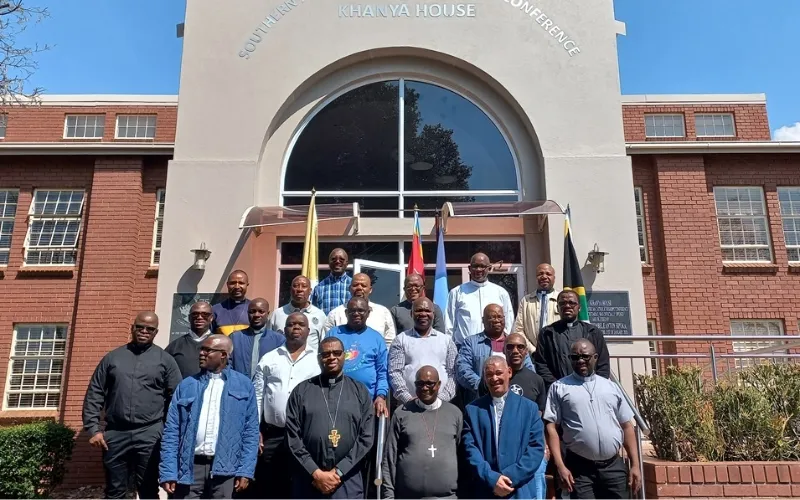
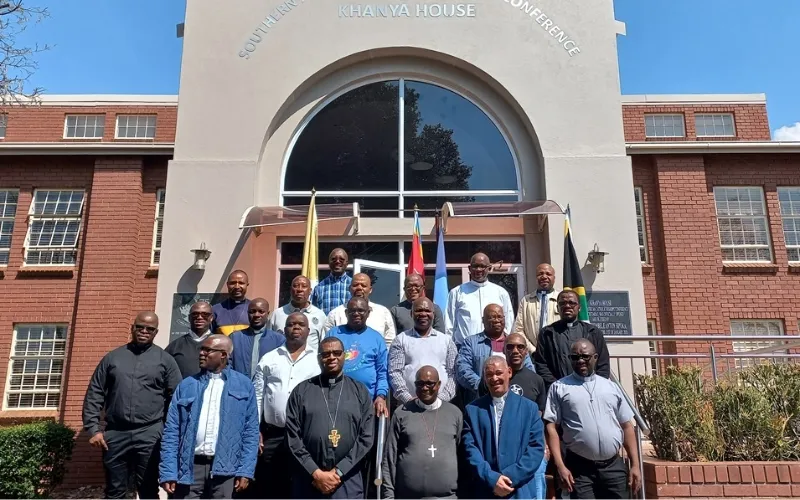
New priests’ council in South Africa lauded for fostering collaboration with bishops – #Catholic – JOHANNESBURG, South Africa — The new Council of Priests (COP) of the Southern African Catholic Bishops' Conference has been lauded for fostering collaboration between its members and bishops and promoting a synodal approach to addressing issues affecting the priesthood.Speaking to ACI Africa, the sister service of EWTN News in Africa, in an interview at the council’s first strategic planning meeting held Sept. 9–11, COP vice chairperson Father Alex Beukes said the new structure responds to the need for closer collaboration between bishops and priests.Beukes compared the COP structure with the former Southern African Council of Priests, saying: “The one reason for the change to COP is that we found that there was not much collaboration between bishops and priests.”He said COP was established by the bishops as a collaborative and synodal body through which priests can share their experiences and concerns.Beukes said the previous arrangement brought priests together for meetings but did not give them sufficient space to address issues affecting their ministry in the different dioceses.“Itʼs COP which changed that, because itʼs a collaborative ministry, and itʼs also synodal in its inception, that priests and bishops work together in solving various issues that are fundamental to the priesthood in the different dioceses in southern Africa,” he said.Held under the theme “Strengthening Priestly Communion, Stewardship, and Mission for a Sustainable Church,” the meeting focused on strengthening collaboration between bishops and priests, establishing priorities for the period 2026–2029, and addressing key challenges affecting priestly life and ministry.The two-day meeting brought together representatives from dioceses and archdioceses across South Africa and Eswatini, representing diverse experiences of diocesan, religious, and missionary priesthood.In the interview, Beukes said the broad representation at the first strategic planning meeting provided an opportunity for priests and bishops from across South Africa to share their experiences and discuss issues affecting the priesthood.“The beauty of this first encounter is that every diocese and archdiocese in all of South Africa is represented,” he said, adding that many dioceses had embraced the idea of closer collaboration between bishops and priests.He explained that the discussions were not limited to bishops, with priests also contributing their experiences and concerns.“And we could then speak together synodally, if you can actually call it that, and we can have a conversation in the spirit about issues that really affect the whole priesthood in the southern African diocese,” he said.Beukes said COP’s structure, which brings together chairpersons of priests’ councils from different dioceses, would also support the implementation of the synodal process at the diocesan level.He said the structure gives the chairpersons access to bishops, vicars general, and other members involved in the council of priests, enabling them to communicate issues raised by priests and follow up on their implementation.On the priorities discussed during the strategic planning meeting, Beukes said participants had addressed several issues that priests had previously identified as important.“Weʼve gone through a lot of priorities; we call them strategic priorities. And the ones that we have touched on are also ones that the priests in the general meeting had also asked us to look at. And we did,” he said.He added that the meeting also brought in people with expertise on the issues under discussion, with finances among the priorities examined.“We started with the priority on finances and how finances have changed over a period of time, and how it also affects parishes and affects priests who work in parishes,” Beukes said.He said the discussions were intended to provide practical insights that priests could take back to their parishes and dioceses.“All the priorities, those who speak to us, are things that we can take back to a parish council, but also to the diocese itself,” he said.For priests from the participating dioceses, the meeting also provided an opportunity to address practical challenges affecting priestly life and ministry.Father Sandile Mswane of the Diocese of Manzini, Eswatini, said the discussions covered finances, revenues, the changing face of the Church, healthcare, and self-care, describing the meeting as “an eye-opener” that would provide insights to share with priests in his diocese.Father Albert Post of the Diocese of The Hague identified financial pressures, retirement policies, and mental stress among the concerns requiring attention, while Father Lawrence Kamala of the Diocese of Port Elizabeth, South Africa, said the meeting had highlighted the need to strengthen the bond between bishops and priests as well as among priests themselves.This story was first published by ACI Africa, the sister service EWTN News in Africa, and has been adapted by EWTN News.

New priests’ council in South Africa lauded for fostering collaboration with bishops – #Catholic – JOHANNESBURG, South Africa — The new Council of Priests (COP) of the Southern African Catholic Bishops' Conference has been lauded for fostering collaboration between its members and bishops and promoting a synodal approach to addressing issues affecting the priesthood.Speaking to ACI Africa, the sister service of EWTN News in Africa, in an interview at the council’s first strategic planning meeting held Sept. 9–11, COP vice chairperson Father Alex Beukes said the new structure responds to the need for closer collaboration between bishops and priests.Beukes compared the COP structure with the former Southern African Council of Priests, saying: “The one reason for the change to COP is that we found that there was not much collaboration between bishops and priests.”He said COP was established by the bishops as a collaborative and synodal body through which priests can share their experiences and concerns.Beukes said the previous arrangement brought priests together for meetings but did not give them sufficient space to address issues affecting their ministry in the different dioceses.“Itʼs COP which changed that, because itʼs a collaborative ministry, and itʼs also synodal in its inception, that priests and bishops work together in solving various issues that are fundamental to the priesthood in the different dioceses in southern Africa,” he said.Held under the theme “Strengthening Priestly Communion, Stewardship, and Mission for a Sustainable Church,” the meeting focused on strengthening collaboration between bishops and priests, establishing priorities for the period 2026–2029, and addressing key challenges affecting priestly life and ministry.The two-day meeting brought together representatives from dioceses and archdioceses across South Africa and Eswatini, representing diverse experiences of diocesan, religious, and missionary priesthood.In the interview, Beukes said the broad representation at the first strategic planning meeting provided an opportunity for priests and bishops from across South Africa to share their experiences and discuss issues affecting the priesthood.“The beauty of this first encounter is that every diocese and archdiocese in all of South Africa is represented,” he said, adding that many dioceses had embraced the idea of closer collaboration between bishops and priests.He explained that the discussions were not limited to bishops, with priests also contributing their experiences and concerns.“And we could then speak together synodally, if you can actually call it that, and we can have a conversation in the spirit about issues that really affect the whole priesthood in the southern African diocese,” he said.Beukes said COP’s structure, which brings together chairpersons of priests’ councils from different dioceses, would also support the implementation of the synodal process at the diocesan level.He said the structure gives the chairpersons access to bishops, vicars general, and other members involved in the council of priests, enabling them to communicate issues raised by priests and follow up on their implementation.On the priorities discussed during the strategic planning meeting, Beukes said participants had addressed several issues that priests had previously identified as important.“Weʼve gone through a lot of priorities; we call them strategic priorities. And the ones that we have touched on are also ones that the priests in the general meeting had also asked us to look at. And we did,” he said.He added that the meeting also brought in people with expertise on the issues under discussion, with finances among the priorities examined.“We started with the priority on finances and how finances have changed over a period of time, and how it also affects parishes and affects priests who work in parishes,” Beukes said.He said the discussions were intended to provide practical insights that priests could take back to their parishes and dioceses.“All the priorities, those who speak to us, are things that we can take back to a parish council, but also to the diocese itself,” he said.For priests from the participating dioceses, the meeting also provided an opportunity to address practical challenges affecting priestly life and ministry.Father Sandile Mswane of the Diocese of Manzini, Eswatini, said the discussions covered finances, revenues, the changing face of the Church, healthcare, and self-care, describing the meeting as “an eye-opener” that would provide insights to share with priests in his diocese.Father Albert Post of the Diocese of The Hague identified financial pressures, retirement policies, and mental stress among the concerns requiring attention, while Father Lawrence Kamala of the Diocese of Port Elizabeth, South Africa, said the meeting had highlighted the need to strengthen the bond between bishops and priests as well as among priests themselves.This story was first published by ACI Africa, the sister service EWTN News in Africa, and has been adapted by EWTN News.

The meeting highlighted the need to strengthen the bond between bishops and priests as well as among priests themselves.
Read More
Retreat readies Assumption College board for new academic year #Catholic – Assumption College for Sisters (ACS) in Denville, N.J., kicked off its new board year on Sept. 16, by gathering at Villa Pauline Retreat and Spiritual Center in Mendham, N.J., for its Annual Board of Trustees Retreat. Board members and ACS staff participated in a reflective day titled “Spirit into Matter – Receiving, Accepting, Being, Reflecting,” led by potter, artist, teacher, and retreat presenter, Ray Boswell.
With a renewed sense of purpose and community, the ACS Board of Trustees steps into the new academic year ready to guide the mission and growth of the college.
Using his potter’s wheel, clay, and the power of storytelling, Boswell guided attendees in exploring the powerful biblical imagery of God as the potter and humanity as the clay. Through his artistry, he illustrated profound messages of divine love, gentleness, and the ongoing call to a deeper spiritual relationship.

Click here to subscribe to our weekly newsletter.

Making the retreat a truly interactive experience, each participant designed a personal vigil light mold. These pieces will be fired in a kiln and later returned to the trustees as tangible mementos of the day’s spiritual reflections.
The retreat concluded with a liturgy celebrating the spiritual foundation of the college, alongside a special recognition ceremony honoring several key leaders for their steadfast service: Angelo Sansano, board chair; Anthony Sturla, board secretary; and Father Martin Glynn, pastor of St. Mary’s Parish, also in Denville. Ellen Sandman, new board chair, expressed sincere gratitude to them.
 

Retreat readies Assumption College board for new academic year #Catholic – Assumption College for Sisters (ACS) in Denville, N.J., kicked off its new board year on Sept. 16, by gathering at Villa Pauline Retreat and Spiritual Center in Mendham, N.J., for its Annual Board of Trustees Retreat. Board members and ACS staff participated in a reflective day titled “Spirit into Matter – Receiving, Accepting, Being, Reflecting,” led by potter, artist, teacher, and retreat presenter, Ray Boswell. With a renewed sense of purpose and community, the ACS Board of Trustees steps into the new academic year ready to guide the mission and growth of the college. Using his potter’s wheel, clay, and the power of storytelling, Boswell guided attendees in exploring the powerful biblical imagery of God as the potter and humanity as the clay. Through his artistry, he illustrated profound messages of divine love, gentleness, and the ongoing call to a deeper spiritual relationship. Click here to subscribe to our weekly newsletter. Making the retreat a truly interactive experience, each participant designed a personal vigil light mold. These pieces will be fired in a kiln and later returned to the trustees as tangible mementos of the day’s spiritual reflections. The retreat concluded with a liturgy celebrating the spiritual foundation of the college, alongside a special recognition ceremony honoring several key leaders for their steadfast service: Angelo Sansano, board chair; Anthony Sturla, board secretary; and Father Martin Glynn, pastor of St. Mary’s Parish, also in Denville. Ellen Sandman, new board chair, expressed sincere gratitude to them.  

Retreat readies Assumption College board for new academic year #Catholic –

Assumption College for Sisters (ACS) in Denville, N.J., kicked off its new board year on Sept. 16, by gathering at Villa Pauline Retreat and Spiritual Center in Mendham, N.J., for its Annual Board of Trustees Retreat. Board members and ACS staff participated in a reflective day titled “Spirit into Matter – Receiving, Accepting, Being, Reflecting,” led by potter, artist, teacher, and retreat presenter, Ray Boswell.

With a renewed sense of purpose and community, the ACS Board of Trustees steps into the new academic year ready to guide the mission and growth of the college.

Using his potter’s wheel, clay, and the power of storytelling, Boswell guided attendees in exploring the powerful biblical imagery of God as the potter and humanity as the clay. Through his artistry, he illustrated profound messages of divine love, gentleness, and the ongoing call to a deeper spiritual relationship.


Click here to subscribe to our weekly newsletter.

Making the retreat a truly interactive experience, each participant designed a personal vigil light mold. These pieces will be fired in a kiln and later returned to the trustees as tangible mementos of the day’s spiritual reflections.

The retreat concluded with a liturgy celebrating the spiritual foundation of the college, alongside a special recognition ceremony honoring several key leaders for their steadfast service: Angelo Sansano, board chair; Anthony Sturla, board secretary; and Father Martin Glynn, pastor of St. Mary’s Parish, also in Denville. Ellen Sandman, new board chair, expressed sincere gratitude to them.


– Assumption College for Sisters (ACS) in Denville, N.J., kicked off its new board year on Sept. 16, by gathering at Villa Pauline Retreat and Spiritual Center in Mendham, N.J., for its Annual Board of Trustees Retreat. Board members and ACS staff participated in a reflective day titled “Spirit into Matter – Receiving, Accepting, Being, Reflecting,” led by potter, artist, teacher, and retreat presenter, Ray Boswell. With a renewed sense of purpose and community, the ACS Board of Trustees steps into the new academic year ready to guide the mission and growth of the college. Using his potter’s wheel, clay, and

Read More
St. Joseph’s Health honors contributions of Hispanics during Mass #Catholic – St. Joseph’s Health in Paterson, N.J., commemorated Hispanic Heritage Month, observed nationally from Sept. 15 to Oct. 15, during a bilingual Mass celebrated by Bishop Kevin J. Sweeney on Sept. 16 in the chapel of St. Joseph University Medical Center in Paterson, N.J.
Hispanic Heritage Month celebrates Hispanic and Latino history and culture. It recognizes he many contributions made to the history and culture of the United States, including advocacy work, art, food, sports, entertainment, business, science, and public service.
Father Krzysztof Liwarski, a hospital chaplain at St. Joseph’s, concelebrated the Mass with Bishop Sweeney. Deacon Lawrence Duffy, pastoral care director of St. Joseph’s Health, assisted with the liturgy.
“From rich traditions to inspiring stories of resilience and achievement, St. Joseph’s is grateful for the lasting impact these communities have made and continue to make,” St. Joseph’s said.
BEACON PHOTOS | JOE GIGLI
 [See image gallery at beaconnj.org] 

Click here to subscribe to our weekly newsletter.

St. Joseph’s Health honors contributions of Hispanics during Mass #Catholic –

St. Joseph’s Health in Paterson, N.J., commemorated Hispanic Heritage Month, observed nationally from Sept. 15 to Oct. 15, during a bilingual Mass celebrated by Bishop Kevin J. Sweeney on Sept. 16 in the chapel of St. Joseph University Medical Center in Paterson, N.J.

Hispanic Heritage Month celebrates Hispanic and Latino history and culture. It recognizes he many contributions made to the history and culture of the United States, including advocacy work, art, food, sports, entertainment, business, science, and public service.

Father Krzysztof Liwarski, a hospital chaplain at St. Joseph’s, concelebrated the Mass with Bishop Sweeney. Deacon Lawrence Duffy, pastoral care director of St. Joseph’s Health, assisted with the liturgy.

“From rich traditions to inspiring stories of resilience and achievement, St. Joseph’s is grateful for the lasting impact these communities have made and continue to make,” St. Joseph’s said.

BEACON PHOTOS | JOE GIGLI

Click here to subscribe to our weekly newsletter.

– St. Joseph’s Health in Paterson, N.J., commemorated Hispanic Heritage Month, observed nationally from Sept. 15 to Oct. 15, during a bilingual Mass celebrated by Bishop Kevin J. Sweeney on Sept. 16 in the chapel of St. Joseph University Medical Center in Paterson, N.J. Hispanic Heritage Month celebrates Hispanic and Latino history and culture. It recognizes he many contributions made to the history and culture of the United States, including advocacy work, art, food, sports, entertainment, business, science, and public service. Father Krzysztof Liwarski, a hospital chaplain at St. Joseph’s, concelebrated the Mass with Bishop Sweeney. Deacon Lawrence Duffy, pastoral care

Read More

At 10:58 AM on Sept. 28, 1969, residents of the small Australian farming community of Murchison, Victoria, heard a series of loud booms. The noise was accompanied by a strong smell and a streak of smoke in the sky. A carbonaceous chondite meteorite, the Murchison Meteorite broke up as it entered the atmosphere, and thusContinue reading “Sept. 28, 1969: The Murchison Meteorite explodes over Australia”

The post Sept. 28, 1969: The Murchison Meteorite explodes over Australia appeared first on Astronomy Magazine.

Read More