Day: September 30, 2026

Being a businessman is a vocation and a path to holiness, Catholic expert says – #Catholic – “Being a businessman (or woman) is a true vocation,” and work “well done” can be “a path of service and holiness,” said Luis Fernando Calvo, director of the Tomás Moro (Thomas More) Institute, on the occasion of the first event to be held by the Costa Rican Association of Christian Businessmen.The association’s first event on Oct. 1 will feature a lecture titled “Business Organization in the Church’s Social Thought.” It will be delivered by Calvo, author of “John Paul II, Friend of Man: Capitalism in the Thought of a Saint.”Speaking to ACI Prensa, the Spanish-language sister service of EWTN News, Calvo noted that “the Church’s social doctrine offers clear criteria for the Christian businessman to exercise his vocation with consistency, honesty, and a sense of responsibility toward their workers and the common good.”In the business vocation, he noted, “God invites the businessman to assist in his creation, to improve it, and to make it more habitable for humanity.”“Being a businessman transcends profit, though profit is necessary, because the businessman, through his expertise and effort, creates jobs, goods, and services that benefit those who acquire them, and contributes to building societies that are more worthy of the human person,” he said.In this regard, he said his lecture aims to “help businessmen discover that their work, when well done, is also a path of service and holiness.”“A business is not merely an instrument for generating profit but a community of people called to serve society,” Calvo emphasized.This story was first published by ACI Prensa, the Spanish-language sister service of EWTN News. It has been translated and adapted by EWTN News English.

Being a businessman is a vocation and a path to holiness, Catholic expert says – #Catholic – “Being a businessman (or woman) is a true vocation,” and work “well done” can be “a path of service and holiness,” said Luis Fernando Calvo, director of the Tomás Moro (Thomas More) Institute, on the occasion of the first event to be held by the Costa Rican Association of Christian Businessmen.The association’s first event on Oct. 1 will feature a lecture titled “Business Organization in the Church’s Social Thought.” It will be delivered by Calvo, author of “John Paul II, Friend of Man: Capitalism in the Thought of a Saint.”Speaking to ACI Prensa, the Spanish-language sister service of EWTN News, Calvo noted that “the Church’s social doctrine offers clear criteria for the Christian businessman to exercise his vocation with consistency, honesty, and a sense of responsibility toward their workers and the common good.”In the business vocation, he noted, “God invites the businessman to assist in his creation, to improve it, and to make it more habitable for humanity.”“Being a businessman transcends profit, though profit is necessary, because the businessman, through his expertise and effort, creates jobs, goods, and services that benefit those who acquire them, and contributes to building societies that are more worthy of the human person,” he said.In this regard, he said his lecture aims to “help businessmen discover that their work, when well done, is also a path of service and holiness.”“A business is not merely an instrument for generating profit but a community of people called to serve society,” Calvo emphasized.This story was first published by ACI Prensa, the Spanish-language sister service of EWTN News. It has been translated and adapted by EWTN News English.

In the business vocation, “God invites the entrepreneur to assist in his creation, to improve it, and to make it more habitable for humanity,” noted Luis Fernando Calvo.

Read More
Picture of the day


Chief Joseph of the Wallowa band of Nez Perce, an American Native American tribe in the Pacific Northwest. This photo was taken by Edward Sheriff Curtis. Chief Joseph died on this day in 1904.
 #ImageOfTheDay
Picture of the day
Chief Joseph of the Wallowa band of Nez Perce, an American Native American tribe in the Pacific Northwest. This photo was taken by Edward Sheriff Curtis. Chief Joseph died on this day in 1904.
Read More
U.S. bishops post .6M gain despite refugee-program revenue plunge – #Catholic – Financial reports for the U.S. Conference of Catholic Bishops (USCCB) revealed a .6 million increase in net assets from 2024 to 2025 despite a 60% decline in federal refugee program grants.The bishops said their money grew mostly because long-term investments did well in 2025. Altogether, the investment pool made a 15.2% return, said Chieko Noguchi, a spokesperson for the conference. The conference ended 2025 with an increase in net assets from 0.4 million to 3.9 million."The increase in net assets was due primarily to the performance of the long-term investment pool in 2025, which received .3 million in investment income (interest income and dividends) as well as an increase in unrealized gains of .2 million due to positive market performance,” Noguchi said.The USCCB’s financial audits for 2024 and 2025 showed total operating expenses fell about 0 million because migrant program activity contracted. Funding for refugee programs fell from 0.46 million to .23 million. The .6 million increase in net assets represents a nearly 13% increase, according to the audit, which reflects the USCCB’s financial position as of Dec. 31, 2025.The USCCB said in its audit that it did not renew its refugee‑resettlement agreements after the federal suspension of grants “rendered the programs financially unsustainable leading to a reduction in conference staff whose positions were funded by those programs.”According to the audit, the reduction of the refugee program and its staff contributed to a decrease in the conference’s overall operational expenses, which declined from 1.9 million in 2024 to 9.6 million in 2025.Overall, the USCCB’s financial position has strengthened over the past four years, with its net assets growing from 8.4 million in 2022 to 4.9 million in 2023, according to its 2022-2023 audit, to 0.4 million in 2024, and 3.9 in 2025.The year-to-year increase in net assets comes despite fluctuations in the conference’s investment portfolio. In 2022, the USCCB reported .4 million in unrealized investment losses. The portfolio returned to gains in the following years, with the conference reporting .4 million in unrealized investment gains in 2023, .6 million in 2024, and .2 million in 2025.National collections declined slightly from .3 million in 2024 to .6 million in 2025, while national collections program expenses increased by .1 million, according to the report. However, national collections are “restricted by the donor for a specific purpose” and therefore do not play a role in offsetting the conference’s loss of refugee program funding.

U.S. bishops post $43.6M gain despite refugee-program revenue plunge – #Catholic – Financial reports for the U.S. Conference of Catholic Bishops (USCCB) revealed a $43.6 million increase in net assets from 2024 to 2025 despite a 60% decline in federal refugee program grants.The bishops said their money grew mostly because long-term investments did well in 2025. Altogether, the investment pool made a 15.2% return, said Chieko Noguchi, a spokesperson for the conference. The conference ended 2025 with an increase in net assets from $340.4 million to $383.9 million."The increase in net assets was due primarily to the performance of the long-term investment pool in 2025, which received $16.3 million in investment income (interest income and dividends) as well as an increase in unrealized gains of $27.2 million due to positive market performance,” Noguchi said.The USCCB’s financial audits for 2024 and 2025 showed total operating expenses fell about $100 million because migrant program activity contracted. Funding for refugee programs fell from $180.46 million to $72.23 million. The $43.6 million increase in net assets represents a nearly 13% increase, according to the audit, which reflects the USCCB’s financial position as of Dec. 31, 2025.The USCCB said in its audit that it did not renew its refugee‑resettlement agreements after the federal suspension of grants “rendered the programs financially unsustainable leading to a reduction in conference staff whose positions were funded by those programs.”According to the audit, the reduction of the refugee program and its staff contributed to a decrease in the conference’s overall operational expenses, which declined from $281.9 million in 2024 to $189.6 million in 2025.Overall, the USCCB’s financial position has strengthened over the past four years, with its net assets growing from $268.4 million in 2022 to $304.9 million in 2023, according to its 2022-2023 audit, to $340.4 million in 2024, and $383.9 in 2025.The year-to-year increase in net assets comes despite fluctuations in the conference’s investment portfolio. In 2022, the USCCB reported $75.4 million in unrealized investment losses. The portfolio returned to gains in the following years, with the conference reporting $35.4 million in unrealized investment gains in 2023, $11.6 million in 2024, and $27.2 million in 2025.National collections declined slightly from $82.3 million in 2024 to $80.6 million in 2025, while national collections program expenses increased by $9.1 million, according to the report. However, national collections are “restricted by the donor for a specific purpose” and therefore do not play a role in offsetting the conference’s loss of refugee program funding.

Suspended federal funding made the refugee‑resettlement program grants financially unsustainable and forced staff cuts, the U.S. bishops’ financial report said.
Read More
Pope’s words in France are encouragement to not give up the fight against ‘deadly laws’ #Catholic – PARIS (OSV News) — Pope Leo XIV’s forceful defense of human life during his Sept. 25-27 visit to France has reignited debate over the country’s newly approved assisted-dying law, which lawmakers had largely considered settled after its passage in July.
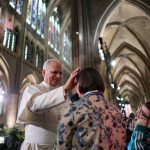
The pope’s words are now interpreted by pro-life movements as a call to protect life despite the new law, which took effect in August.
For Lucie Pacherie, a lawyer and spokesperson for the Jérôme Lejeune Foundation, the pope’s words are a “great encouragement to continue raising awareness among the French people that this law is not good, even though it has been passed.”
“The pope spoke in extremely firm terms,” she told OSV News. “He really made it clear that what is legal is not necessarily moral.”
Jerome Trillard, one of the six altar servers with Down syndrome who served papal Mass at Place de la Concorde Sept. 26, told French channel C News that people like him should not be “excluded” from society. “Instead, we need inclusion for people with disabilities,” he urged.
The presence of these altar servers at the papal Mass in mainstream television channels and viral papal blessings of the sick and disabled from Paris, through Lourdes to Metz, sent a signal that life is sacred, pro-life advocates and bishops underlined following the trip.

Click here to subscribe to our weekly newsletter.

Pope Leo in France: ‘What is legal is not necessarily moral’
Pope Leo used his first visit to France to deliver a forceful defense of human life at every stage, condemning abortion, surrogacy and assisted dying while urging lawmakers and caregivers to protect the vulnerable.
At the Élysée Palace in Paris Sept. 25, the pope told French civil authorities that “the protection of the right to life constitutes the indispensable foundation of every other human right,” warning against “trends in society that risk turning science and technology into profit-driven ventures promoting genetic manipulation, surrogacy, the trade in human organs or the possibility of arranging one’s own death.”
The pope called for a conversion of minds and hearts “to welcome life unconditionally, to support frailty with loving care, to accompany every stage of life with respect and mutual trust, and to defend with courage and compassion those unable to make their voices heard and those who feel ignored or overlooked.”
Two days later in Lourdes, speaking to patients and caregivers at the Accueil Notre Dame, Pope Leo applied that appeal particularly to those who are sick, elderly or disabled.
“Dear brothers and sisters who are sick, I want to tell you that you are not a burden,” he said. “You are the beating heart of our humanity and a precious treasure for the Church.”
He rejected the idea that human worth can be determined by utility, technology, or under legal decisions. “No one ever has the right, on the basis of laboratory algorithms, to decide the life of a given embryo or elderly person!” he said. “Medicine must never become the servant of programmed death.”
“No human law should ever make you lose the certainty of your dignity,” the pope told the sick and disabled. “It is impossible to regard causing death as something normal. What is legal is not necessarily moral.”
Pope to critics in France: ‘We’re applying the Gospel to people’s lives’
The papal words caused an avalanche of reactions in France. While his address at the Élysée Palace was considered to be delivered “peacefully,” France’s top-rated television channel TF1 noted the pope took a “tougher stance” in Lourdes.
“The pope must still respect the laws of our country,” Jean-Luc Romero, a former deputy mayor of Paris known for actively campaigning in favor of the assisted-dying law, commented on France Info TV.
Olivier Falorni, who served as the principal architect of the bill on assisted dying while he was a member of parliament opposed any “interference by the Church” in French law, speaking on France Info, a public news radio station.
The pope, asked about the hot button issue on a plane from Metz to Rome, said he “didn’t cross” the line of separation between the state and the Church, and encouraged to “read or re-read” his first encyclical “Magnifica Humanitas.”
“When it speaks about questions of social doctrine, we’re not entering into politics,” the pope told journalists. “We’re applying the Gospel to people’s lives.”
While noting there “can be politicians” who say “no, religion should only be in the private sphere. Let people do what they want on their own,” the pope underlined, “That is a state.”
But in the Church, “we have to be separate,” he said.
“I went to France … primarily to preach the Gospel, to preach the good news, to reaffirm what Jesus Christ himself says when he says: ‘I am the way and the truth and the life.’”
The defense of life, the pope said, “is something that, as you all know, the Church teaches and believes very deeply.”
While acknowledging laws similar to the French assisted-dying bill are spreading in Europe, Pope Leo said his encounter with the sick in the sanctuary of Lourdes carried a different kind of message.
In Lourdes, he said, people who are sick are “searching for something much deeper,” for “understanding that their lives, even in the midst of sickness or disability or pain of different kinds … has meaning.”
The Church, the pope said, “because of Jesus himself, wants to be close to those people and to affirm the values that that life itself … holds for all of us. So … I would say if that’s politics, I did that, but it was not to get involved in French politics. It was to teach what the Church really believes.”
Lejeune Foundation: Pope’s affirmation of life not ‘too late’ even if law passed
Many French journalists and politicians, from all corners of politics, reacted positively to the papal appeals for the protection of life.
French weekly Journal du Dimanche hailed a “vibrant speech against euthanasia.” “It is true that the pope sounded the charge against this law,” Rokhaya Diallo, a left-wing activist, commented on France Info.
“But this is not just a right-wing opinion.” “This issue transcends the left-right divide,” she emphasized, referring to the Franco-Chilean lawyer Élisa Rojas, an left-wing activist opposed to euthanasia, who published a book in April titled “To Die, Press One” to oppose this law.
For Pacherie, spokeswoman at the Lejeune Foundation, the remarks of the pope were shaped by the June 22 audience with members of the Lejeune Foundation to mark the centennial of Jérôme Lejeune’s birth.
“It was on that very same day that young boys and men with Down syndrome asked the pope if they could serve at his Mass during his visit to France,” Pacherie said. When the pope agreed, “it was a beautiful symbol to honor them and bless them in this way on that occasion,” Pacherie told OSV News.
The Lejeune Foundation carries on the work of the French scientist, professor of genetics who discovered that an extra chromosome in human DNA causes Down syndrome. What he hoped would be a breakthrough in protecting people with Down syndrome became a reason to eliminate them by abortion. In France, the abortion rate in cases of a prenatal diagnosis of Down syndrome is 68%.
“Professor Lejeune understood that while technology can assist medicine, it can never replace it. He also knew that technology can be used against medicine — which by its very nature is at the service of life — whenever it escapes essential ethical oversight and is governed instead by calculations of efficiency, profitability, or utility,” Pope Leo told Lejeune Foundation representatives on June 22.
“But the value of the human person does not depend on what he or she accomplishes or produces. For this reason, a physician should never be allowed to decide on the life of a particular embryo or a particular elderly person, on the basis of laboratory algorithms! Medicine must never become the servant of programmed death!” Pope Leo added in what was a preludium to the papal address in Acceuil Notre Dame in Lourdes.
Pacherie believes that “the pope’s statement has not come too late,” even though the law has already been passed.
“On June 22, the pope had already told us that neither he nor the Church as such was in a position to halt the ongoing process that would lead to the passage of this law,” she explained.
“Even if he had come to France earlier, he would not have been able to stop this measure, which was orchestrated by activists deeply involved in French politics.”
But for Pacherie, “the pope’s remarks in Lourdes come at just the right time to ensure we do not give up the fight against these deadly laws.”
She said the pope shed a light on people who are fragile and vulnerable in face of legislation and “our task is to continue caring for them, so that they do not have the weight of this law on their shoulders, and to raise awareness among the French public that just because something is legal does not mean it is a good thing.”
Caroline de Sury writes for OSV News from Paris.
 

Pope’s words in France are encouragement to not give up the fight against ‘deadly laws’ #Catholic – PARIS (OSV News) — Pope Leo XIV’s forceful defense of human life during his Sept. 25-27 visit to France has reignited debate over the country’s newly approved assisted-dying law, which lawmakers had largely considered settled after its passage in July. The pope’s words are now interpreted by pro-life movements as a call to protect life despite the new law, which took effect in August. For Lucie Pacherie, a lawyer and spokesperson for the Jérôme Lejeune Foundation, the pope’s words are a “great encouragement to continue raising awareness among the French people that this law is not good, even though it has been passed.” “The pope spoke in extremely firm terms,” she told OSV News. “He really made it clear that what is legal is not necessarily moral.” Jerome Trillard, one of the six altar servers with Down syndrome who served papal Mass at Place de la Concorde Sept. 26, told French channel C News that people like him should not be “excluded” from society. “Instead, we need inclusion for people with disabilities,” he urged. The presence of these altar servers at the papal Mass in mainstream television channels and viral papal blessings of the sick and disabled from Paris, through Lourdes to Metz, sent a signal that life is sacred, pro-life advocates and bishops underlined following the trip. Click here to subscribe to our weekly newsletter. Pope Leo in France: ‘What is legal is not necessarily moral’ Pope Leo used his first visit to France to deliver a forceful defense of human life at every stage, condemning abortion, surrogacy and assisted dying while urging lawmakers and caregivers to protect the vulnerable. At the Élysée Palace in Paris Sept. 25, the pope told French civil authorities that “the protection of the right to life constitutes the indispensable foundation of every other human right,” warning against “trends in society that risk turning science and technology into profit-driven ventures promoting genetic manipulation, surrogacy, the trade in human organs or the possibility of arranging one’s own death.” The pope called for a conversion of minds and hearts “to welcome life unconditionally, to support frailty with loving care, to accompany every stage of life with respect and mutual trust, and to defend with courage and compassion those unable to make their voices heard and those who feel ignored or overlooked.” Two days later in Lourdes, speaking to patients and caregivers at the Accueil Notre Dame, Pope Leo applied that appeal particularly to those who are sick, elderly or disabled. “Dear brothers and sisters who are sick, I want to tell you that you are not a burden,” he said. “You are the beating heart of our humanity and a precious treasure for the Church.” He rejected the idea that human worth can be determined by utility, technology, or under legal decisions. “No one ever has the right, on the basis of laboratory algorithms, to decide the life of a given embryo or elderly person!” he said. “Medicine must never become the servant of programmed death.” “No human law should ever make you lose the certainty of your dignity,” the pope told the sick and disabled. “It is impossible to regard causing death as something normal. What is legal is not necessarily moral.” Pope to critics in France: ‘We’re applying the Gospel to people’s lives’ The papal words caused an avalanche of reactions in France. While his address at the Élysée Palace was considered to be delivered “peacefully,” France’s top-rated television channel TF1 noted the pope took a “tougher stance” in Lourdes. “The pope must still respect the laws of our country,” Jean-Luc Romero, a former deputy mayor of Paris known for actively campaigning in favor of the assisted-dying law, commented on France Info TV. Olivier Falorni, who served as the principal architect of the bill on assisted dying while he was a member of parliament opposed any “interference by the Church” in French law, speaking on France Info, a public news radio station. The pope, asked about the hot button issue on a plane from Metz to Rome, said he “didn’t cross” the line of separation between the state and the Church, and encouraged to “read or re-read” his first encyclical “Magnifica Humanitas.” “When it speaks about questions of social doctrine, we’re not entering into politics,” the pope told journalists. “We’re applying the Gospel to people’s lives.” While noting there “can be politicians” who say “no, religion should only be in the private sphere. Let people do what they want on their own,” the pope underlined, “That is a state.” But in the Church, “we have to be separate,” he said. “I went to France … primarily to preach the Gospel, to preach the good news, to reaffirm what Jesus Christ himself says when he says: ‘I am the way and the truth and the life.’” The defense of life, the pope said, “is something that, as you all know, the Church teaches and believes very deeply.” While acknowledging laws similar to the French assisted-dying bill are spreading in Europe, Pope Leo said his encounter with the sick in the sanctuary of Lourdes carried a different kind of message. In Lourdes, he said, people who are sick are “searching for something much deeper,” for “understanding that their lives, even in the midst of sickness or disability or pain of different kinds … has meaning.” The Church, the pope said, “because of Jesus himself, wants to be close to those people and to affirm the values that that life itself … holds for all of us. So … I would say if that’s politics, I did that, but it was not to get involved in French politics. It was to teach what the Church really believes.” Lejeune Foundation: Pope’s affirmation of life not ‘too late’ even if law passed Many French journalists and politicians, from all corners of politics, reacted positively to the papal appeals for the protection of life. French weekly Journal du Dimanche hailed a “vibrant speech against euthanasia.” “It is true that the pope sounded the charge against this law,” Rokhaya Diallo, a left-wing activist, commented on France Info. “But this is not just a right-wing opinion.” “This issue transcends the left-right divide,” she emphasized, referring to the Franco-Chilean lawyer Élisa Rojas, an left-wing activist opposed to euthanasia, who published a book in April titled “To Die, Press One” to oppose this law. For Pacherie, spokeswoman at the Lejeune Foundation, the remarks of the pope were shaped by the June 22 audience with members of the Lejeune Foundation to mark the centennial of Jérôme Lejeune’s birth. “It was on that very same day that young boys and men with Down syndrome asked the pope if they could serve at his Mass during his visit to France,” Pacherie said. When the pope agreed, “it was a beautiful symbol to honor them and bless them in this way on that occasion,” Pacherie told OSV News. The Lejeune Foundation carries on the work of the French scientist, professor of genetics who discovered that an extra chromosome in human DNA causes Down syndrome. What he hoped would be a breakthrough in protecting people with Down syndrome became a reason to eliminate them by abortion. In France, the abortion rate in cases of a prenatal diagnosis of Down syndrome is 68%. “Professor Lejeune understood that while technology can assist medicine, it can never replace it. He also knew that technology can be used against medicine — which by its very nature is at the service of life — whenever it escapes essential ethical oversight and is governed instead by calculations of efficiency, profitability, or utility,” Pope Leo told Lejeune Foundation representatives on June 22. “But the value of the human person does not depend on what he or she accomplishes or produces. For this reason, a physician should never be allowed to decide on the life of a particular embryo or a particular elderly person, on the basis of laboratory algorithms! Medicine must never become the servant of programmed death!” Pope Leo added in what was a preludium to the papal address in Acceuil Notre Dame in Lourdes. Pacherie believes that “the pope’s statement has not come too late,” even though the law has already been passed. “On June 22, the pope had already told us that neither he nor the Church as such was in a position to halt the ongoing process that would lead to the passage of this law,” she explained. “Even if he had come to France earlier, he would not have been able to stop this measure, which was orchestrated by activists deeply involved in French politics.” But for Pacherie, “the pope’s remarks in Lourdes come at just the right time to ensure we do not give up the fight against these deadly laws.” She said the pope shed a light on people who are fragile and vulnerable in face of legislation and “our task is to continue caring for them, so that they do not have the weight of this law on their shoulders, and to raise awareness among the French public that just because something is legal does not mean it is a good thing.” Caroline de Sury writes for OSV News from Paris.  

Pope’s words in France are encouragement to not give up the fight against ‘deadly laws’ #Catholic –

PARIS (OSV News) — Pope Leo XIV’s forceful defense of human life during his Sept. 25-27 visit to France has reignited debate over the country’s newly approved assisted-dying law, which lawmakers had largely considered settled after its passage in July.

The pope’s words are now interpreted by pro-life movements as a call to protect life despite the new law, which took effect in August.

For Lucie Pacherie, a lawyer and spokesperson for the Jérôme Lejeune Foundation, the pope’s words are a “great encouragement to continue raising awareness among the French people that this law is not good, even though it has been passed.”

“The pope spoke in extremely firm terms,” she told OSV News. “He really made it clear that what is legal is not necessarily moral.”

Jerome Trillard, one of the six altar servers with Down syndrome who served papal Mass at Place de la Concorde Sept. 26, told French channel C News that people like him should not be “excluded” from society. “Instead, we need inclusion for people with disabilities,” he urged.

The presence of these altar servers at the papal Mass in mainstream television channels and viral papal blessings of the sick and disabled from Paris, through Lourdes to Metz, sent a signal that life is sacred, pro-life advocates and bishops underlined following the trip.


Click here to subscribe to our weekly newsletter.

Pope Leo in France: ‘What is legal is not necessarily moral’

Pope Leo used his first visit to France to deliver a forceful defense of human life at every stage, condemning abortion, surrogacy and assisted dying while urging lawmakers and caregivers to protect the vulnerable.

At the Élysée Palace in Paris Sept. 25, the pope told French civil authorities that “the protection of the right to life constitutes the indispensable foundation of every other human right,” warning against “trends in society that risk turning science and technology into profit-driven ventures promoting genetic manipulation, surrogacy, the trade in human organs or the possibility of arranging one’s own death.”

The pope called for a conversion of minds and hearts “to welcome life unconditionally, to support frailty with loving care, to accompany every stage of life with respect and mutual trust, and to defend with courage and compassion those unable to make their voices heard and those who feel ignored or overlooked.”

Two days later in Lourdes, speaking to patients and caregivers at the Accueil Notre Dame, Pope Leo applied that appeal particularly to those who are sick, elderly or disabled.

“Dear brothers and sisters who are sick, I want to tell you that you are not a burden,” he said. “You are the beating heart of our humanity and a precious treasure for the Church.”

He rejected the idea that human worth can be determined by utility, technology, or under legal decisions. “No one ever has the right, on the basis of laboratory algorithms, to decide the life of a given embryo or elderly person!” he said. “Medicine must never become the servant of programmed death.”

“No human law should ever make you lose the certainty of your dignity,” the pope told the sick and disabled. “It is impossible to regard causing death as something normal. What is legal is not necessarily moral.”

Pope to critics in France: ‘We’re applying the Gospel to people’s lives’

The papal words caused an avalanche of reactions in France. While his address at the Élysée Palace was considered to be delivered “peacefully,” France’s top-rated television channel TF1 noted the pope took a “tougher stance” in Lourdes.

“The pope must still respect the laws of our country,” Jean-Luc Romero, a former deputy mayor of Paris known for actively campaigning in favor of the assisted-dying law, commented on France Info TV.

Olivier Falorni, who served as the principal architect of the bill on assisted dying while he was a member of parliament opposed any “interference by the Church” in French law, speaking on France Info, a public news radio station.

The pope, asked about the hot button issue on a plane from Metz to Rome, said he “didn’t cross” the line of separation between the state and the Church, and encouraged to “read or re-read” his first encyclical “Magnifica Humanitas.”

“When it speaks about questions of social doctrine, we’re not entering into politics,” the pope told journalists. “We’re applying the Gospel to people’s lives.”

While noting there “can be politicians” who say “no, religion should only be in the private sphere. Let people do what they want on their own,” the pope underlined, “That is a state.”

But in the Church, “we have to be separate,” he said.

“I went to France … primarily to preach the Gospel, to preach the good news, to reaffirm what Jesus Christ himself says when he says: ‘I am the way and the truth and the life.’”

The defense of life, the pope said, “is something that, as you all know, the Church teaches and believes very deeply.”

While acknowledging laws similar to the French assisted-dying bill are spreading in Europe, Pope Leo said his encounter with the sick in the sanctuary of Lourdes carried a different kind of message.

In Lourdes, he said, people who are sick are “searching for something much deeper,” for “understanding that their lives, even in the midst of sickness or disability or pain of different kinds … has meaning.”

The Church, the pope said, “because of Jesus himself, wants to be close to those people and to affirm the values that that life itself … holds for all of us. So … I would say if that’s politics, I did that, but it was not to get involved in French politics. It was to teach what the Church really believes.”

Lejeune Foundation: Pope’s affirmation of life not ‘too late’ even if law passed

Many French journalists and politicians, from all corners of politics, reacted positively to the papal appeals for the protection of life.

French weekly Journal du Dimanche hailed a “vibrant speech against euthanasia.” “It is true that the pope sounded the charge against this law,” Rokhaya Diallo, a left-wing activist, commented on France Info.

“But this is not just a right-wing opinion.” “This issue transcends the left-right divide,” she emphasized, referring to the Franco-Chilean lawyer Élisa Rojas, an left-wing activist opposed to euthanasia, who published a book in April titled “To Die, Press One” to oppose this law.

For Pacherie, spokeswoman at the Lejeune Foundation, the remarks of the pope were shaped by the June 22 audience with members of the Lejeune Foundation to mark the centennial of Jérôme Lejeune’s birth.

“It was on that very same day that young boys and men with Down syndrome asked the pope if they could serve at his Mass during his visit to France,” Pacherie said. When the pope agreed, “it was a beautiful symbol to honor them and bless them in this way on that occasion,” Pacherie told OSV News.

The Lejeune Foundation carries on the work of the French scientist, professor of genetics who discovered that an extra chromosome in human DNA causes Down syndrome. What he hoped would be a breakthrough in protecting people with Down syndrome became a reason to eliminate them by abortion. In France, the abortion rate in cases of a prenatal diagnosis of Down syndrome is 68%.

“Professor Lejeune understood that while technology can assist medicine, it can never replace it. He also knew that technology can be used against medicine — which by its very nature is at the service of life — whenever it escapes essential ethical oversight and is governed instead by calculations of efficiency, profitability, or utility,” Pope Leo told Lejeune Foundation representatives on June 22.

“But the value of the human person does not depend on what he or she accomplishes or produces. For this reason, a physician should never be allowed to decide on the life of a particular embryo or a particular elderly person, on the basis of laboratory algorithms! Medicine must never become the servant of programmed death!” Pope Leo added in what was a preludium to the papal address in Acceuil Notre Dame in Lourdes.

Pacherie believes that “the pope’s statement has not come too late,” even though the law has already been passed.

“On June 22, the pope had already told us that neither he nor the Church as such was in a position to halt the ongoing process that would lead to the passage of this law,” she explained.

“Even if he had come to France earlier, he would not have been able to stop this measure, which was orchestrated by activists deeply involved in French politics.”

But for Pacherie, “the pope’s remarks in Lourdes come at just the right time to ensure we do not give up the fight against these deadly laws.”

She said the pope shed a light on people who are fragile and vulnerable in face of legislation and “our task is to continue caring for them, so that they do not have the weight of this law on their shoulders, and to raise awareness among the French public that just because something is legal does not mean it is a good thing.”

Caroline de Sury writes for OSV News from Paris.


– PARIS (OSV News) — Pope Leo XIV’s forceful defense of human life during his Sept. 25-27 visit to France has reignited debate over the country’s newly approved assisted-dying law, which lawmakers had largely considered settled after its passage in July. The pope’s words are now interpreted by pro-life movements as a call to protect life despite the new law, which took effect in August. For Lucie Pacherie, a lawyer and spokesperson for the Jérôme Lejeune Foundation, the pope’s words are a “great encouragement to continue raising awareness among the French people that this law is not good, even though it
Read More
Papal trip showed miracle of rebirth out of tragedy is possible, pope says #Catholic – VATICAN CITY (CNS) — Pope Leo XIV’s journey to France aimed to show that a joyful or serene rebirth is always possible even after tremendous tragedy or terrible suffering, he said.
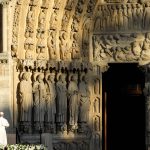
By visiting the newly restored Notre Dame Cathedral, meeting with survivors of abuse and praying at Lourdes, and celebrating the Christian faith openly in the public square of a secular nation, the pope highlighted how the miracle of new life can happen when everyone comes together out of love for one’s neighbor and the common good, he said during his weekly general audience Sept. 30.
As has been customary, Pope Leo used his first general audience after his Sept. 25-28 trip to Paris, Lourdes and Metz in France to tell people about the purpose of his visit and to thank all those who made the journey possible.
He also repeated an appeal he made in France: asking the faithful worldwide to pray the rosary throughout October, “dedicating it in a special way to ending wars and achieving peace.”
The motto of the journey, “That the world may have life,” the pope said in English, “characterized the Gospel-centered nature of my meetings throughout the visit. For God alone, through his grace, can restore the Church and renew humanity, and it was evident to me that this is precisely what is occurring.”

Click here to subscribe to our weekly newsletter.

The Cathedral of Notre Dame of Paris, which was restored after a fire destroyed its wooden spire and most of its roof in 2019, “can symbolically shed light on this entire apostolic journey, offering a perspective that I would summarize in one word: rebirth,” he said in his main catechesis in Italian to thousands of people gathered in St. Peter’s Square.
Rebuilt and “more splendid than ever, the cathedral’s restoration “was a test of the possible collaboration between the Church, the state, public institutions and civil society,” Pope Leo said.
“The synergy for the common good should be the norm for institutions, political and social forces, and all those with civil and economic responsibilities,” he said.
“This is the message I wished to convey” to secular leaders and organizations, he said, “highlighting the fundamental criterion upon which such collaboration must be based: the dignity of the human person.”
According to France’s National Institute of Demographic Studies, the percentage of 18 to 49-year-olds who reported not belonging to any religion grew from 45% in 2009 to 53% in 2020, and 29% of the entire population reported being Catholic.
However, the pope said, there is also “a sign of renewal within the Church in France that has been evident for some years now, namely the remarkable and growing number of young people and adults seeking baptism.”
A tangible and visible sign of rebirth “appeared in a surprising way” during Mass Sept. 26 in Place de la Concorde, which, he said, was a highpoint of his visit. “Priests, the choir and a remarkable crowd extended all the way along the Avenue des Champs Élysées up to the Arc de Triomphe and beyond.” An estimated 800,000 people filled the streets, according to the Vatican.
Despite the vast crowds, “everyone was able to receive the Eucharist,” he said, “This is the true reconstruction, the restoration of the Church that only God can bring about, through the intercession of the Virgin Mary.”
Turning to his visit to Lourdes, he said the shrine dedicated to Our Lady also represents “a message of hope and rebirth,” especially for those who are sick “in body and spirit.”
This was another message “that I wished to openly reaffirm: every human life, in whatever condition, even in the most extreme frailty, retains its inviolable dignity and deserves to be cared for, accompanied and relieved of suffering with human compassion and with the aid of the means offered by science,” he said.
Because Lourdes “represents for the entire world a sanctuary of the civilization of love,” he said this was context for his meeting with a group of people who had experienced abuse by members of the church.
“I asked them to help me express to other victims too my own wish, and that of the whole Church, to listen to them and walk alongside them as they seek healing, acknowledging the pain inflicted upon their lives and working to prevent abuse,” he said.
Lastly, visiting the city of Metz, he said, helped symbolize its role in the process of unifying Europe “as a project for peace in the wake of the destruction wrought by war.”
After two devastating world wars, “Europe was reborn, founded on those principles of democracy, solidarity and fraternity amongst peoples, which owe much to its Christian roots,” Pope Leo said.
“Dear brothers and sisters, may the public witness of love for Jesus Christ that we have seen in France be an inspiration to the whole Church. Let us not hide our faith!” he told Portuguese-speaking pilgrims.
 

Papal trip showed miracle of rebirth out of tragedy is possible, pope says #Catholic – VATICAN CITY (CNS) — Pope Leo XIV’s journey to France aimed to show that a joyful or serene rebirth is always possible even after tremendous tragedy or terrible suffering, he said. By visiting the newly restored Notre Dame Cathedral, meeting with survivors of abuse and praying at Lourdes, and celebrating the Christian faith openly in the public square of a secular nation, the pope highlighted how the miracle of new life can happen when everyone comes together out of love for one’s neighbor and the common good, he said during his weekly general audience Sept. 30. As has been customary, Pope Leo used his first general audience after his Sept. 25-28 trip to Paris, Lourdes and Metz in France to tell people about the purpose of his visit and to thank all those who made the journey possible. He also repeated an appeal he made in France: asking the faithful worldwide to pray the rosary throughout October, “dedicating it in a special way to ending wars and achieving peace.” The motto of the journey, “That the world may have life,” the pope said in English, “characterized the Gospel-centered nature of my meetings throughout the visit. For God alone, through his grace, can restore the Church and renew humanity, and it was evident to me that this is precisely what is occurring.” Click here to subscribe to our weekly newsletter. The Cathedral of Notre Dame of Paris, which was restored after a fire destroyed its wooden spire and most of its roof in 2019, “can symbolically shed light on this entire apostolic journey, offering a perspective that I would summarize in one word: rebirth,” he said in his main catechesis in Italian to thousands of people gathered in St. Peter’s Square. Rebuilt and “more splendid than ever, the cathedral’s restoration “was a test of the possible collaboration between the Church, the state, public institutions and civil society,” Pope Leo said. “The synergy for the common good should be the norm for institutions, political and social forces, and all those with civil and economic responsibilities,” he said. “This is the message I wished to convey” to secular leaders and organizations, he said, “highlighting the fundamental criterion upon which such collaboration must be based: the dignity of the human person.” According to France’s National Institute of Demographic Studies, the percentage of 18 to 49-year-olds who reported not belonging to any religion grew from 45% in 2009 to 53% in 2020, and 29% of the entire population reported being Catholic. However, the pope said, there is also “a sign of renewal within the Church in France that has been evident for some years now, namely the remarkable and growing number of young people and adults seeking baptism.” A tangible and visible sign of rebirth “appeared in a surprising way” during Mass Sept. 26 in Place de la Concorde, which, he said, was a highpoint of his visit. “Priests, the choir and a remarkable crowd extended all the way along the Avenue des Champs Élysées up to the Arc de Triomphe and beyond.” An estimated 800,000 people filled the streets, according to the Vatican. Despite the vast crowds, “everyone was able to receive the Eucharist,” he said, “This is the true reconstruction, the restoration of the Church that only God can bring about, through the intercession of the Virgin Mary.” Turning to his visit to Lourdes, he said the shrine dedicated to Our Lady also represents “a message of hope and rebirth,” especially for those who are sick “in body and spirit.” This was another message “that I wished to openly reaffirm: every human life, in whatever condition, even in the most extreme frailty, retains its inviolable dignity and deserves to be cared for, accompanied and relieved of suffering with human compassion and with the aid of the means offered by science,” he said. Because Lourdes “represents for the entire world a sanctuary of the civilization of love,” he said this was context for his meeting with a group of people who had experienced abuse by members of the church. “I asked them to help me express to other victims too my own wish, and that of the whole Church, to listen to them and walk alongside them as they seek healing, acknowledging the pain inflicted upon their lives and working to prevent abuse,” he said. Lastly, visiting the city of Metz, he said, helped symbolize its role in the process of unifying Europe “as a project for peace in the wake of the destruction wrought by war.” After two devastating world wars, “Europe was reborn, founded on those principles of democracy, solidarity and fraternity amongst peoples, which owe much to its Christian roots,” Pope Leo said. “Dear brothers and sisters, may the public witness of love for Jesus Christ that we have seen in France be an inspiration to the whole Church. Let us not hide our faith!” he told Portuguese-speaking pilgrims.  

Papal trip showed miracle of rebirth out of tragedy is possible, pope says #Catholic –

VATICAN CITY (CNS) — Pope Leo XIV’s journey to France aimed to show that a joyful or serene rebirth is always possible even after tremendous tragedy or terrible suffering, he said.

By visiting the newly restored Notre Dame Cathedral, meeting with survivors of abuse and praying at Lourdes, and celebrating the Christian faith openly in the public square of a secular nation, the pope highlighted how the miracle of new life can happen when everyone comes together out of love for one’s neighbor and the common good, he said during his weekly general audience Sept. 30.

As has been customary, Pope Leo used his first general audience after his Sept. 25-28 trip to Paris, Lourdes and Metz in France to tell people about the purpose of his visit and to thank all those who made the journey possible.

He also repeated an appeal he made in France: asking the faithful worldwide to pray the rosary throughout October, “dedicating it in a special way to ending wars and achieving peace.”

The motto of the journey, “That the world may have life,” the pope said in English, “characterized the Gospel-centered nature of my meetings throughout the visit. For God alone, through his grace, can restore the Church and renew humanity, and it was evident to me that this is precisely what is occurring.”


Click here to subscribe to our weekly newsletter.

The Cathedral of Notre Dame of Paris, which was restored after a fire destroyed its wooden spire and most of its roof in 2019, “can symbolically shed light on this entire apostolic journey, offering a perspective that I would summarize in one word: rebirth,” he said in his main catechesis in Italian to thousands of people gathered in St. Peter’s Square.

Rebuilt and “more splendid than ever, the cathedral’s restoration “was a test of the possible collaboration between the Church, the state, public institutions and civil society,” Pope Leo said.

“The synergy for the common good should be the norm for institutions, political and social forces, and all those with civil and economic responsibilities,” he said.

“This is the message I wished to convey” to secular leaders and organizations, he said, “highlighting the fundamental criterion upon which such collaboration must be based: the dignity of the human person.”

According to France’s National Institute of Demographic Studies, the percentage of 18 to 49-year-olds who reported not belonging to any religion grew from 45% in 2009 to 53% in 2020, and 29% of the entire population reported being Catholic.

However, the pope said, there is also “a sign of renewal within the Church in France that has been evident for some years now, namely the remarkable and growing number of young people and adults seeking baptism.”

A tangible and visible sign of rebirth “appeared in a surprising way” during Mass Sept. 26 in Place de la Concorde, which, he said, was a highpoint of his visit. “Priests, the choir and a remarkable crowd extended all the way along the Avenue des Champs Élysées up to the Arc de Triomphe and beyond.” An estimated 800,000 people filled the streets, according to the Vatican.

Despite the vast crowds, “everyone was able to receive the Eucharist,” he said, “This is the true reconstruction, the restoration of the Church that only God can bring about, through the intercession of the Virgin Mary.”

Turning to his visit to Lourdes, he said the shrine dedicated to Our Lady also represents “a message of hope and rebirth,” especially for those who are sick “in body and spirit.”

This was another message “that I wished to openly reaffirm: every human life, in whatever condition, even in the most extreme frailty, retains its inviolable dignity and deserves to be cared for, accompanied and relieved of suffering with human compassion and with the aid of the means offered by science,” he said.

Because Lourdes “represents for the entire world a sanctuary of the civilization of love,” he said this was context for his meeting with a group of people who had experienced abuse by members of the church.

“I asked them to help me express to other victims too my own wish, and that of the whole Church, to listen to them and walk alongside them as they seek healing, acknowledging the pain inflicted upon their lives and working to prevent abuse,” he said.

Lastly, visiting the city of Metz, he said, helped symbolize its role in the process of unifying Europe “as a project for peace in the wake of the destruction wrought by war.”

After two devastating world wars, “Europe was reborn, founded on those principles of democracy, solidarity and fraternity amongst peoples, which owe much to its Christian roots,” Pope Leo said.

“Dear brothers and sisters, may the public witness of love for Jesus Christ that we have seen in France be an inspiration to the whole Church. Let us not hide our faith!” he told Portuguese-speaking pilgrims.


– VATICAN CITY (CNS) — Pope Leo XIV’s journey to France aimed to show that a joyful or serene rebirth is always possible even after tremendous tragedy or terrible suffering, he said. By visiting the newly restored Notre Dame Cathedral, meeting with survivors of abuse and praying at Lourdes, and celebrating the Christian faith openly in the public square of a secular nation, the pope highlighted how the miracle of new life can happen when everyone comes together out of love for one’s neighbor and the common good, he said during his weekly general audience Sept. 30. As has been customary,
Read More
Pope Leo sends letter to White Sox, encouraging team to ‘foster friendship, solidarity’ #Catholic – (OSV News) — The Chicago White Sox have headed into the post-season with a bit of inspiration from one of their best-known fans — Pope Leo XIV.
In a Sept. 29 X post, the team shared images of a Sept. 9 letter from the Chicago-born pope, who expressed his hope that the White Sox would promote peace and goodwill among people.
The letter was addressed to White Sox chairman Jerry Reinsdorf, who had written to Pope Leo following the team’s pope-themed Aug. 11 game against the Cincinnati Reds at Chicago’s Rate Field.
The evening saw more than 38,000 “pope hats” — stylized black-and-gold miters — distributed to fans, with Dominican Sister Mary Jo Sobieck of Springfield, Ill., throwing out the first pitch and fans giving each other the “sign of peace” during the fifth inning.
Pope Leo was reported to have watched the game and lamented the team’s loss to the Reds, according to Democratic Rep. Raja Krishnamoorthi of Illinois, who had an Aug. 12 audience with the pope.
In his Sept. 9 message, Pope Leo said he was “pleased” to receive Reinsdorf’s “kind letter” and “most grateful for this thoughtful gesture.”

Click here to subscribe to our weekly newsletter.

The pope quoted from “Life in Abundance,” his Feb. 6 letter on the value of sport, saying that “sport can truly become a school of life, where all can learn that abundance does not come from victory at any cost, but from sharing, respecting others and from the joy of walking together.”
In his letter to Reinsdorf, Pope Leo added, “In this spirit, it is my hope that the White Sox will continue to foster bonds of friendship and solidarity among people, and thus bear hopeful witness to the possibility of living and working together in peace.”
The pope concluded his letter to Reinsdorf by saying, “I willingly invoke the Almighty’s abundant blessings upon you and your loved ones.”
The White Sox posted the letter the same day the team was in Houston to play the Astros in Game 1 of the American League’s wild card series.
The post-season spot was hard-won after the team, having clinched the American League Central Division in 2021, began what Catholic sports journalist and OSV News contributor John Knebels described as a “stunning descent.”
“They slipped to 81-81 in 2022, then fell to 61-101 in 2023,” Knebels told OSV News. “Things somehow became considerably worse in 2024, when Chicago finished an almost unfathomable 41-121.”
Knebels said those 121 losses were a record that surpassed “the 120 losses of the expansion New York Mets in 1962.”
He said a combination of White Sox manager Will Venable, “shrewd off-season additions,” player development and roster improvement have “produced one of baseball’s most remarkable turnarounds.”
Some Sox fans may be hoping the papal blessing evokes the team’s victory over the Astros in Game 1 of the 2005 World Series.
Video footage of then-Father Robert Prevost at the match went viral soon after Pope Leo’s election. The Sox swept the 2005 series 4-0, ending a decades-long drought known as the “Curse of the Black Sox,” a reference to a 1919 scandal over alleged match-fixing by several players who were later acquitted.
Reflecting on this season’s wild card series, Knebels said the White Sox had, in a sense, already won.
“For an organization that appeared historically lost only two years earlier, simply becoming respectable would have represented significant progress,” he said. “Instead, the Chicago White Sox became a playoff team.”
The Sox certainly played like one in the Sept. 29 wild card game, besting the Astros 6-3.
Gina Christian is a multimedia reporter for OSV News. Follow her on X @GinaJesseReina.
 

Pope Leo sends letter to White Sox, encouraging team to ‘foster friendship, solidarity’ #Catholic – (OSV News) — The Chicago White Sox have headed into the post-season with a bit of inspiration from one of their best-known fans — Pope Leo XIV. In a Sept. 29 X post, the team shared images of a Sept. 9 letter from the Chicago-born pope, who expressed his hope that the White Sox would promote peace and goodwill among people. The letter was addressed to White Sox chairman Jerry Reinsdorf, who had written to Pope Leo following the team’s pope-themed Aug. 11 game against the Cincinnati Reds at Chicago’s Rate Field. The evening saw more than 38,000 “pope hats” — stylized black-and-gold miters — distributed to fans, with Dominican Sister Mary Jo Sobieck of Springfield, Ill., throwing out the first pitch and fans giving each other the “sign of peace” during the fifth inning. Pope Leo was reported to have watched the game and lamented the team’s loss to the Reds, according to Democratic Rep. Raja Krishnamoorthi of Illinois, who had an Aug. 12 audience with the pope. In his Sept. 9 message, Pope Leo said he was “pleased” to receive Reinsdorf’s “kind letter” and “most grateful for this thoughtful gesture.” Click here to subscribe to our weekly newsletter. The pope quoted from “Life in Abundance,” his Feb. 6 letter on the value of sport, saying that “sport can truly become a school of life, where all can learn that abundance does not come from victory at any cost, but from sharing, respecting others and from the joy of walking together.” In his letter to Reinsdorf, Pope Leo added, “In this spirit, it is my hope that the White Sox will continue to foster bonds of friendship and solidarity among people, and thus bear hopeful witness to the possibility of living and working together in peace.” The pope concluded his letter to Reinsdorf by saying, “I willingly invoke the Almighty’s abundant blessings upon you and your loved ones.” The White Sox posted the letter the same day the team was in Houston to play the Astros in Game 1 of the American League’s wild card series. The post-season spot was hard-won after the team, having clinched the American League Central Division in 2021, began what Catholic sports journalist and OSV News contributor John Knebels described as a “stunning descent.” “They slipped to 81-81 in 2022, then fell to 61-101 in 2023,” Knebels told OSV News. “Things somehow became considerably worse in 2024, when Chicago finished an almost unfathomable 41-121.” Knebels said those 121 losses were a record that surpassed “the 120 losses of the expansion New York Mets in 1962.” He said a combination of White Sox manager Will Venable, “shrewd off-season additions,” player development and roster improvement have “produced one of baseball’s most remarkable turnarounds.” Some Sox fans may be hoping the papal blessing evokes the team’s victory over the Astros in Game 1 of the 2005 World Series. Video footage of then-Father Robert Prevost at the match went viral soon after Pope Leo’s election. The Sox swept the 2005 series 4-0, ending a decades-long drought known as the “Curse of the Black Sox,” a reference to a 1919 scandal over alleged match-fixing by several players who were later acquitted. Reflecting on this season’s wild card series, Knebels said the White Sox had, in a sense, already won. “For an organization that appeared historically lost only two years earlier, simply becoming respectable would have represented significant progress,” he said. “Instead, the Chicago White Sox became a playoff team.” The Sox certainly played like one in the Sept. 29 wild card game, besting the Astros 6-3. Gina Christian is a multimedia reporter for OSV News. Follow her on X @GinaJesseReina.  

Pope Leo sends letter to White Sox, encouraging team to ‘foster friendship, solidarity’ #Catholic –

(OSV News) — The Chicago White Sox have headed into the post-season with a bit of inspiration from one of their best-known fans — Pope Leo XIV.

In a Sept. 29 X post, the team shared images of a Sept. 9 letter from the Chicago-born pope, who expressed his hope that the White Sox would promote peace and goodwill among people.

The letter was addressed to White Sox chairman Jerry Reinsdorf, who had written to Pope Leo following the team’s pope-themed Aug. 11 game against the Cincinnati Reds at Chicago’s Rate Field.

The evening saw more than 38,000 “pope hats” — stylized black-and-gold miters — distributed to fans, with Dominican Sister Mary Jo Sobieck of Springfield, Ill., throwing out the first pitch and fans giving each other the “sign of peace” during the fifth inning.

Pope Leo was reported to have watched the game and lamented the team’s loss to the Reds, according to Democratic Rep. Raja Krishnamoorthi of Illinois, who had an Aug. 12 audience with the pope.

In his Sept. 9 message, Pope Leo said he was “pleased” to receive Reinsdorf’s “kind letter” and “most grateful for this thoughtful gesture.”


Click here to subscribe to our weekly newsletter.

The pope quoted from “Life in Abundance,” his Feb. 6 letter on the value of sport, saying that “sport can truly become a school of life, where all can learn that abundance does not come from victory at any cost, but from sharing, respecting others and from the joy of walking together.”

In his letter to Reinsdorf, Pope Leo added, “In this spirit, it is my hope that the White Sox will continue to foster bonds of friendship and solidarity among people, and thus bear hopeful witness to the possibility of living and working together in peace.”

The pope concluded his letter to Reinsdorf by saying, “I willingly invoke the Almighty’s abundant blessings upon you and your loved ones.”

The White Sox posted the letter the same day the team was in Houston to play the Astros in Game 1 of the American League’s wild card series.

The post-season spot was hard-won after the team, having clinched the American League Central Division in 2021, began what Catholic sports journalist and OSV News contributor John Knebels described as a “stunning descent.”

“They slipped to 81-81 in 2022, then fell to 61-101 in 2023,” Knebels told OSV News. “Things somehow became considerably worse in 2024, when Chicago finished an almost unfathomable 41-121.”

Knebels said those 121 losses were a record that surpassed “the 120 losses of the expansion New York Mets in 1962.”

He said a combination of White Sox manager Will Venable, “shrewd off-season additions,” player development and roster improvement have “produced one of baseball’s most remarkable turnarounds.”

Some Sox fans may be hoping the papal blessing evokes the team’s victory over the Astros in Game 1 of the 2005 World Series.

Video footage of then-Father Robert Prevost at the match went viral soon after Pope Leo’s election. The Sox swept the 2005 series 4-0, ending a decades-long drought known as the “Curse of the Black Sox,” a reference to a 1919 scandal over alleged match-fixing by several players who were later acquitted.

Reflecting on this season’s wild card series, Knebels said the White Sox had, in a sense, already won.

“For an organization that appeared historically lost only two years earlier, simply becoming respectable would have represented significant progress,” he said. “Instead, the Chicago White Sox became a playoff team.”

The Sox certainly played like one in the Sept. 29 wild card game, besting the Astros 6-3.

Gina Christian is a multimedia reporter for OSV News. Follow her on X @GinaJesseReina.


– (OSV News) — The Chicago White Sox have headed into the post-season with a bit of inspiration from one of their best-known fans — Pope Leo XIV. In a Sept. 29 X post, the team shared images of a Sept. 9 letter from the Chicago-born pope, who expressed his hope that the White Sox would promote peace and goodwill among people. The letter was addressed to White Sox chairman Jerry Reinsdorf, who had written to Pope Leo following the team’s pope-themed Aug. 11 game against the Cincinnati Reds at Chicago’s Rate Field. The evening saw more than 38,000 “pope hats”
Read More
Zambia archbishop released on bail after night in jail – #Catholic – LUSAKA, Zambia  — Archbishop Alick Banda of the Archdiocese of Lusaka in Zambia has been released from Chimbokaila Correctional Facility after meeting the bail conditions set by the Lusaka Magistrates’ Court.The archbishop spent a night in custody after he could not complete the bail process before close of business, despite the court granting him bail of 80,000 Zambian kwacha (about ,094) on Sept. 28.Banda was arrested by Zambia’s Drug Enforcement Commission (DEC) over the alleged possession of property suspected to have been unlawfully obtained, contrary to Section 319 of the Penal Code.The charge relates to a blue Toyota Hilux bearing registration number ALF 7734, which the DEC alleges Banda had in his possession between April 22, 2021, and Dec. 27, 2023.According to the particulars of the case, the vehicle is alleged to have been unlawfully obtained from the Zambia Revenue Authority (ZRA).The DEC said the vehicle forms part of a wider investigation involving approximately 22 ZRA motor vehicles allegedly disposed of improperly.The archbishop appeared before Magistrate Mwandu Nakazwe, where he pleaded not guilty to the charge.The court granted him 80,000 Zambian kwacha (about ,094) bail on his own recognizance (meaning he does not need to pay up front), requiring three working sureties (guarantors — usually family members or responsible parties) who are each bound to pay the sum of 50,000 Zambian kwacha (about ,560) if the accused takes off or skips court. The court also ordered the archbishop to surrender his travel documents.Following his release, Banda will remain subject to the court process as he awaits further proceedings in the case.The allegations against him remain unproven, and the archbishopʼs “not guilty” plea means the matter will now proceed through the judicial process.The archbishop’s arrest has generated varied reactions among members of the public, with calls for calm and for the legal process to be allowed to proceed without inflammatory statements.Members of the Zambia Conference of Catholic Bishops expressed solidarity with Banda as he appeared before the DEC, calling for fairness, dignity, and due process.In a statement issued Sept. 28, the Zambian bishops also called for spiritual solidarity with Banda as he faces the charges.The bishops affirmed their deep respect for Banda’s pastoral ministry and his tireless dedication to serving the Church and the nation.“In this moment, we recall the Church’s teaching that every person is entitled to fairness, dignity, and due process. We therefore call upon all concerned to ensure that these principles are upheld without prejudice or intimidation,” they said.This story was first published by ACI Africa, the sister service of EWTN News in Africa, and has been adapted by EWTN News.

Zambia archbishop released on bail after night in jail – #Catholic – LUSAKA, Zambia  — Archbishop Alick Banda of the Archdiocese of Lusaka in Zambia has been released from Chimbokaila Correctional Facility after meeting the bail conditions set by the Lusaka Magistrates’ Court.The archbishop spent a night in custody after he could not complete the bail process before close of business, despite the court granting him bail of 80,000 Zambian kwacha (about $4,094) on Sept. 28.Banda was arrested by Zambia’s Drug Enforcement Commission (DEC) over the alleged possession of property suspected to have been unlawfully obtained, contrary to Section 319 of the Penal Code.The charge relates to a blue Toyota Hilux bearing registration number ALF 7734, which the DEC alleges Banda had in his possession between April 22, 2021, and Dec. 27, 2023.According to the particulars of the case, the vehicle is alleged to have been unlawfully obtained from the Zambia Revenue Authority (ZRA).The DEC said the vehicle forms part of a wider investigation involving approximately 22 ZRA motor vehicles allegedly disposed of improperly.The archbishop appeared before Magistrate Mwandu Nakazwe, where he pleaded not guilty to the charge.The court granted him 80,000 Zambian kwacha (about $4,094) bail on his own recognizance (meaning he does not need to pay up front), requiring three working sureties (guarantors — usually family members or responsible parties) who are each bound to pay the sum of 50,000 Zambian kwacha (about $2,560) if the accused takes off or skips court. The court also ordered the archbishop to surrender his travel documents.Following his release, Banda will remain subject to the court process as he awaits further proceedings in the case.The allegations against him remain unproven, and the archbishopʼs “not guilty” plea means the matter will now proceed through the judicial process.The archbishop’s arrest has generated varied reactions among members of the public, with calls for calm and for the legal process to be allowed to proceed without inflammatory statements.Members of the Zambia Conference of Catholic Bishops expressed solidarity with Banda as he appeared before the DEC, calling for fairness, dignity, and due process.In a statement issued Sept. 28, the Zambian bishops also called for spiritual solidarity with Banda as he faces the charges.The bishops affirmed their deep respect for Banda’s pastoral ministry and his tireless dedication to serving the Church and the nation.“In this moment, we recall the Church’s teaching that every person is entitled to fairness, dignity, and due process. We therefore call upon all concerned to ensure that these principles are upheld without prejudice or intimidation,” they said.This story was first published by ACI Africa, the sister service of EWTN News in Africa, and has been adapted by EWTN News.

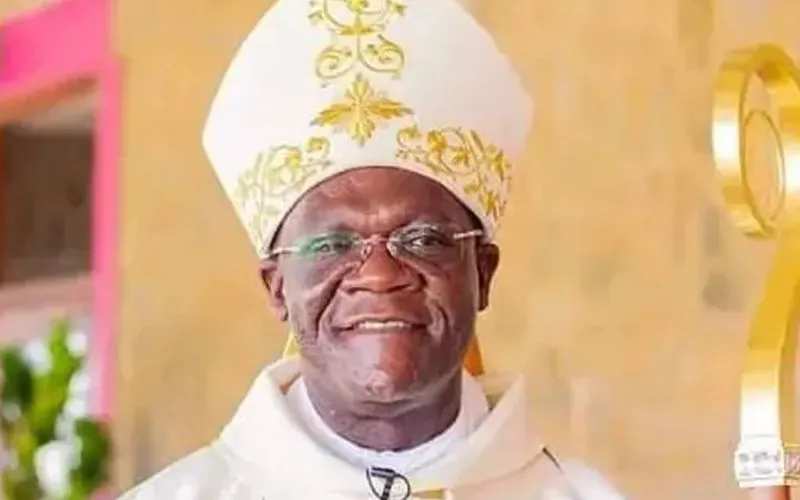
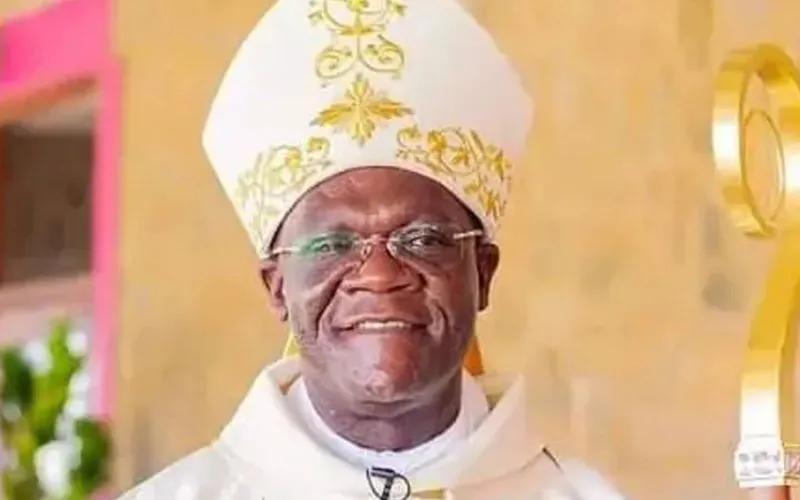
Archbishop Alick Banda of the Lusaka Archdiocese was arrested over the alleged possession of a vehicle suspected to have been unlawfully obtained.
Read More
Massachusetts report reveals ‘nearly 1,000 children’ abused by hundreds of priests across 3 dioceses #Catholic Nearly 1,000 children were abused by hundreds of priests across three dioceses in Massachusetts for decades, a report by the state’s attorney general said.The report, published on Sept. 30, found evidence that “more than 270 Catholic clerics abused nearly 1,000 children over the course of a century in the Dioceses of Fall River, Springfield, and Worcester,” state Attorney General Andrea Joy Campbell said. Leaders of the three dioceses failed to respond to allegations of abuse over the years, the attorney general said; diocesan leadership often transferred accused priests to other parishes and “failed to consistently report allegations to law enforcement,” according to the report. Among the contributing factors to the abuse epidemic, according to the report, was a “culture of reverence and indulgence” toward priests. Around mid-century, priests “were viewed as holy, and their attention or attachment to a particular family was encouraged,” the report says. These social dynamics “allowed offending priests easy access to victims.” The investigation was launched in 2019 and involved more than 300,000 pages of documentation as well as interviews with more than 100 people, including victims of child sex abuse. The inquiry is similar to those that have been undertaken in other states, including in Michigan, where the state’s attorney general has periodically released reports on the seven dioceses there. The Massachusetts report covers every diocese in the state except the Archdiocese of Boston. That archdiocese has been subject to lengthy scrutiny after having been among the earliest subjects of abuse inquiries starting in 2002. The attorney general’s report said the three dioceses “often intentionally did not document child sexual abuse allegations or used coded and euphemistic language to conceal them.” The office said it “worked diligently to create as complete a record as possible” of abuse in the dioceses. As with similar reports in other states, the Massachusetts investigation mostly concerned abuse that was decades old. The “majority of known abuse” occurred “before 2002,” prior to major public awareness of the clergy abuse scandal, the report said. The report expressed hope that the investigation would “result in a stronger commitment to a safer environment within these dioceses.” It thanked the child abuse victims who came forward to contribute to the inquiry. It was not immediately clear how many of the instances of abuse in the report had already been identified and/or reported by the three dioceses. A query to the state attorney general’s office was not immediately returned.Dioceses apologizeBoth the Worcester Diocese and the Fall River Diocese had issued responses to the report by the afternoon of Sept. 30 in which they apologized to victims of sexual abuse. A statement from the Diocese of Worcester said it would study the report to “identify any additional improvements” it could make to its child safety policies. The diocese noted that the report found the “vast majority of cases” occurred decades ago and that it had significantly updated its screening procedures in the years since. Fall River Bishop Edgar M. da Cunha, SDV, meanwhile, said in a statement that he was “filled with sorrow” over the details of the report. The diocese has developed a “culture of protection” to ensure children are not abused, including reporting abuse allegations to law enforcement and enhancing safety protocols, the bishop said. Da Cunha said that during his time as bishop he has “learned much about the best practices for protecting children and vulnerable adults in our care.”

Massachusetts report reveals ‘nearly 1,000 children’ abused by hundreds of priests across 3 dioceses #Catholic Nearly 1,000 children were abused by hundreds of priests across three dioceses in Massachusetts for decades, a report by the state’s attorney general said.The report, published on Sept. 30, found evidence that “more than 270 Catholic clerics abused nearly 1,000 children over the course of a century in the Dioceses of Fall River, Springfield, and Worcester,” state Attorney General Andrea Joy Campbell said. Leaders of the three dioceses failed to respond to allegations of abuse over the years, the attorney general said; diocesan leadership often transferred accused priests to other parishes and “failed to consistently report allegations to law enforcement,” according to the report. Among the contributing factors to the abuse epidemic, according to the report, was a “culture of reverence and indulgence” toward priests. Around mid-century, priests “were viewed as holy, and their attention or attachment to a particular family was encouraged,” the report says. These social dynamics “allowed offending priests easy access to victims.” The investigation was launched in 2019 and involved more than 300,000 pages of documentation as well as interviews with more than 100 people, including victims of child sex abuse. The inquiry is similar to those that have been undertaken in other states, including in Michigan, where the state’s attorney general has periodically released reports on the seven dioceses there. The Massachusetts report covers every diocese in the state except the Archdiocese of Boston. That archdiocese has been subject to lengthy scrutiny after having been among the earliest subjects of abuse inquiries starting in 2002. The attorney general’s report said the three dioceses “often intentionally did not document child sexual abuse allegations or used coded and euphemistic language to conceal them.” The office said it “worked diligently to create as complete a record as possible” of abuse in the dioceses. As with similar reports in other states, the Massachusetts investigation mostly concerned abuse that was decades old. The “majority of known abuse” occurred “before 2002,” prior to major public awareness of the clergy abuse scandal, the report said. The report expressed hope that the investigation would “result in a stronger commitment to a safer environment within these dioceses.” It thanked the child abuse victims who came forward to contribute to the inquiry. It was not immediately clear how many of the instances of abuse in the report had already been identified and/or reported by the three dioceses. A query to the state attorney general’s office was not immediately returned.Dioceses apologizeBoth the Worcester Diocese and the Fall River Diocese had issued responses to the report by the afternoon of Sept. 30 in which they apologized to victims of sexual abuse. A statement from the Diocese of Worcester said it would study the report to “identify any additional improvements” it could make to its child safety policies. The diocese noted that the report found the “vast majority of cases” occurred decades ago and that it had significantly updated its screening procedures in the years since. Fall River Bishop Edgar M. da Cunha, SDV, meanwhile, said in a statement that he was “filled with sorrow” over the details of the report. The diocese has developed a “culture of protection” to ensure children are not abused, including reporting abuse allegations to law enforcement and enhancing safety protocols, the bishop said. Da Cunha said that during his time as bishop he has “learned much about the best practices for protecting children and vulnerable adults in our care.”

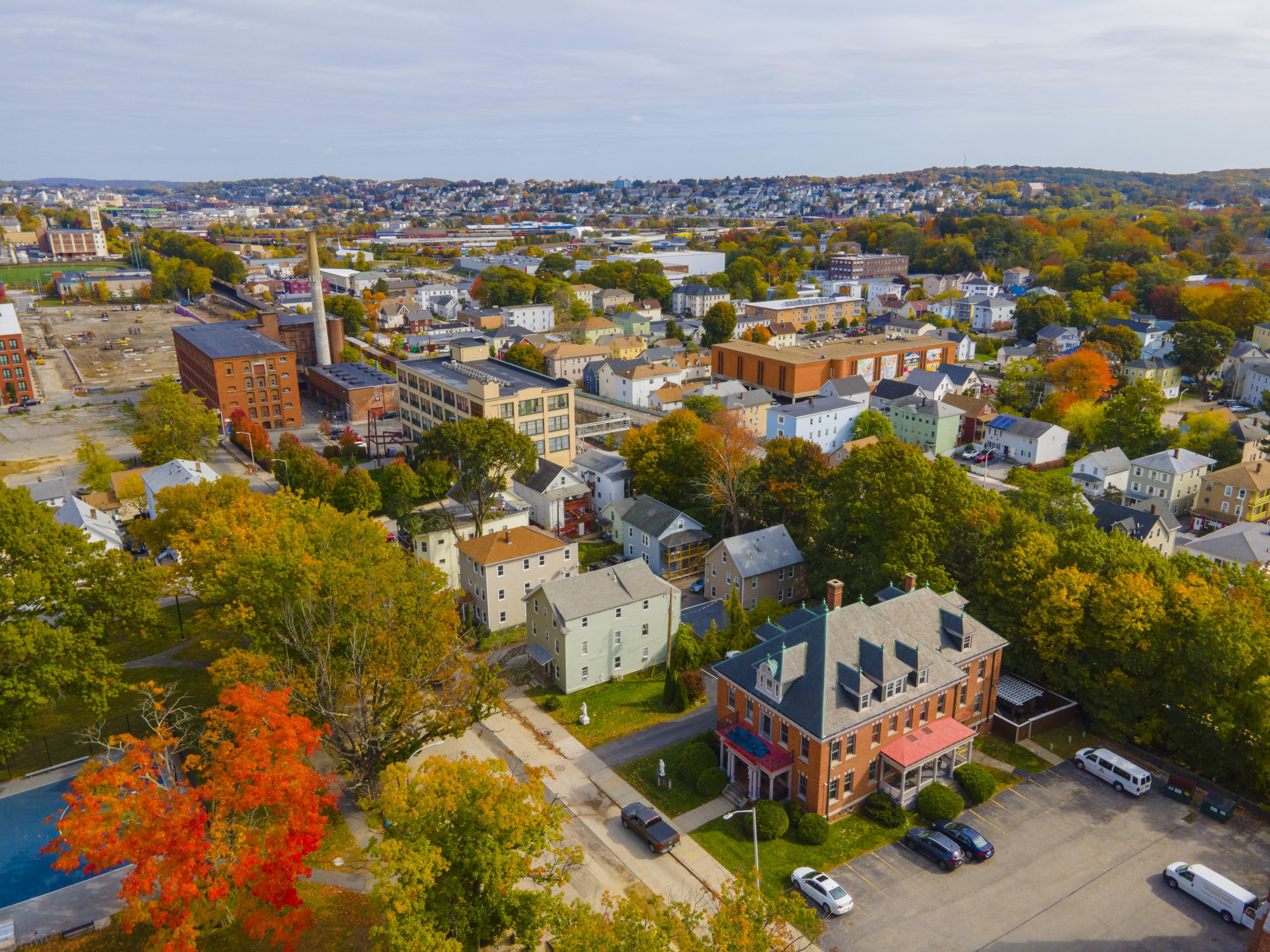
A “culture of reverence” in decades past helped priests avoid scrutiny for abuse, the lengthy report found.
Read More

Mission Highlight: Starship Flight 14 After 13 previous suborbital test flights, Starship finally reached orbit on test flight 14. SpaceX’s launch window opened at 8:15 a.m. EDT on Monday, Sept. 28, and the rocket cleared the tower at Starbase, Texas, at 8:48 a.m. EDT. Just over three hours later, the flight ended in a fireballContinue reading “Starship reaches orbit on 14th test flight”

The post Starship reaches orbit on 14th test flight appeared first on Astronomy Magazine.

Read More

Ahead of launch of NASA’s SpaceX Crew-13 mission, a SpaceX Falcon 9 rocket, with the Dragon spacecraft atop, is vertical at the launch pad of Space Launch Complex 40 at Cape Canaveral Space Force Station in Florida on Sunday, Sept. 27, 2026.

Read More