
The USCCB president called on Catholics to exercise their “right and responsibility” to vote while advocacy organization CatholicVote issued state voter guides.

The USCCB president called on Catholics to exercise their “right and responsibility” to vote while advocacy organization CatholicVote issued state voter guides.
A reading from the Letter of St. Paul to the Ephesians
1:11-14
Brothers and sisters:
In Christ we were also chosen,
destined in accord with the purpose of the One
who accomplishes all things according to the intention of his will,
so that we might exist for the praise of his glory,
we who first hoped in Christ.
In him you also, who have heard the word of truth,
the Gospel of your salvation, and have believed in him,
were sealed with the promised Holy Spirit,
which is the first installment of our inheritance
toward redemption as God’s possession, to the praise of his glory.
From the Gospel according to Luke
12:1-7
At that time:
So many people were crowding together
that they were trampling one another underfoot.
Jesus began to speak, first to his disciples,
“Beware of the leaven–that is, the hypocrisy–of the Pharisees.
“There is nothing concealed that will not be revealed,
nor secret that will not be known.
Therefore whatever you have said in the darkness
will be heard in the light,
and what you have whispered behind closed doors
will be proclaimed on the housetops.
I tell you, my friends,
do not be afraid of those who kill the body
but after that can do no more.
I shall show you whom to fear.
Be afraid of the one who after killing
has the power to cast into Gehenna;
yes, I tell you, be afraid of that one.
Are not five sparrows sold for two small coins?
Yet not one of them has escaped the notice of God.
Even the hairs of your head have all been counted.
Do not be afraid.
You are worth more than many sparrows.”
Jesus sends the disciples out on their mission and (…) he draws a parallel between what we hear “in private,” namely, what is in the secret of our hearts, and what we are called to proclaim to everyone. He reminds us that proclaiming the Gospel is first and foremost a sharing of a personal encounter with him, which is unique to each of us.
The strength of any apostolate, in fact — beyond techniques and tools — comes from the work of the Holy Spirit within us and from the authenticity of our response. Saint Thomas Aquinas spoke of preaching as passing on to others what we have contemplated: “contemplata aliis tradere” (cf. Summa Theologiae, III, q. 40, a. 1, ad 2). (…)
Now, just as then, it is a challenge to remain faithful to Jesus’ teachings and to proclaim his word: to respond to hatred with love, to arrogance with meekness, and to discouragement with perseverance. For this reason, we must deepen the roots of our faith and our mission in an intimate relationship with him (cf. Francis, Apostolic Exhortation Evangelii Gaudium, 8). This gives us the strength not to despair, but to continue to share with everyone, in every circumstance, his message of hope, love and peace. The world greatly needs it! (Pope Leo XIV, Angelus, 21 June 2026)
Read More
Chicago students send Pope Leo a White Sox care package after cancer surgery #Catholic – 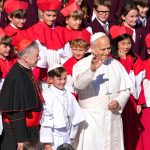
(Vatican News) — As Pope Leo XIV recovers from lung cancer surgery in the hospital, a group of students from his hometown of Chicago are sending him a care package with get-well cards and a Chicago White Sox blanket.
Local media outlets reported Oct. 14 that students at Our Lady of Mount Carmel Academy were planning to send the pope items including get-well cards and a Chicago White Sox blanket.
The students are part of Team 14, a student group named after Pope Leo XIV at Our Lady of Mount Carmel Academy. The group gained attention last year after organizing a mock conclave that went viral on social media, and several students later traveled to Rome to meet Pope Leo in person.
The roughly 40-member group regularly gathers for prayer and service projects, including food drives for people in need.
“It feels nice to wish (the pope) well because he’s like a close friend and I was really sad when I heard when he was sick,” Ines Martins, one of the sixth-grade students who met the pope, said, according to ABC7 Chicago.
“Dear Pope Leo. We hope you feel better. We are all praying for you and the doctors that are helping you,” student Sawyer Nolot said.
Another student, Catherine Esser, wrote in her card to the pope, “Get well soon and go White Sox.”
Pope Leo XIV underwent surgery at Gemelli Hospital on Oct. 13, during which doctors removed the lower lobe of his right lung.
The Holy See Press Office said in a statement on Oct. 14 that the pope had undergone scheduled blood tests and chest X-ray, which confirmed that his postoperative recovery is progressing normally.
A version of this story was originally published by Vatican News and distributed through a partnership with OSV News.
– (Vatican News) — As Pope Leo XIV recovers from lung cancer surgery in the hospital, a group of students from his hometown of Chicago are sending him a care package with get-well cards and a Chicago White Sox blanket. Local media outlets reported Oct. 14 that students at Our Lady of Mount Carmel Academy were planning to send the pope items including get-well cards and a Chicago White Sox blanket. The students are part of Team 14, a student group named after Pope Leo XIV at Our Lady of Mount Carmel Academy. The group gained attention last year after organizing
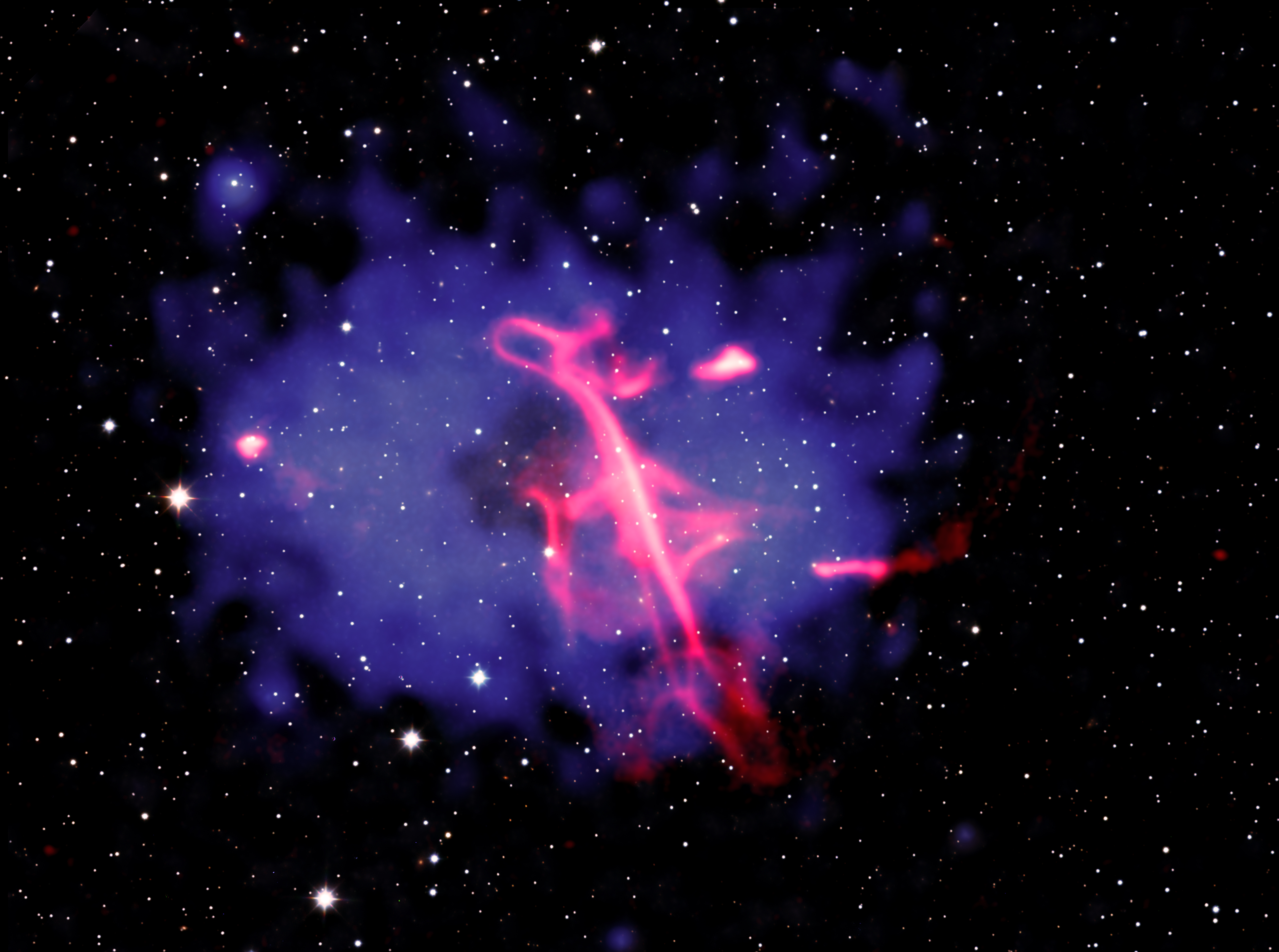
Astronomers have used NASA’s Chandra X-ray Observatory to break down the cause of a remarkable formation of radio waves they have nicknamed the “Treble Clef” because its distinct shape strongly resembles the musical symbol.
Read More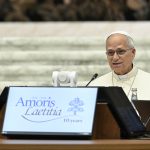
Bishops conclude Vatican family meeting as Pope Leo XIV recovers in hospital #Catholic – 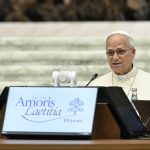
VATICAN CITY (OSV News) — The Vatican meeting of the world’s bishops’ conference presidents and the heads of Eastern Catholic churches marking the 10th anniversary of “Amoris Laetitia” concluded on the evening of Oct. 14 with prayers for Pope Leo XIV’s recovery from lung cancer surgery.
Jesuit Father Giacomo Costa, a consultant to the General Secretariat of the Synod who helped to organize the meeting, said Oct. 14 that “accompaniment” was one of the key words in the week’s discussions of marriage and family.
Reflecting on the significance of the experience at the event’s final press conference, Archbishop Charles Scicluna, the archbishop of Malta, said that he is bringing with him from this meeting “a renewed commitment to put the family at the center of the Church’s pastoral mission.”
“‘Amoris Laetitia’ 10 years ago stimulated, provoked, an invitation for pastoral conversion, an attitude of listening to families, before judging, and also discerning situations with … open hearts, seeking the will of God, but also facilitating the meeting with God’s mercy,” Archbishop Scicluna said.
In the closing session of the Vatican family summit, participants listened to a presentation of the meeting’s synthesis report. Due to the personal request of Pope Leo prior to his surgery, the meeting’s final synthesis report will not be made public until the pope has had time to personally review it. Father Costa said that the pope requested to postpone the meeting’s final report, noting that Pope Leo “wanted to listen to it and be able to offer his own word on it himself.”
“I will read the fruits of your work and discussions, and offer my reflections in due course,” Pope Leo wrote in a brief message to the participants signed on the day of his surgery.
“I encourage you to begin to share with your Episcopal Conferences and Dioceses what you have lived and received, and to continue proclaiming the Gospel with families, drawing on the richness of ‘Amoris Laetitia,’” the pope said.
The bishops, patriarchs, families and experts taking part in the meeting on marriage and family in Paul VI Hall met for more than 42 hours of discussions over the course of Oct. 7 to 14 on topics ranging from cohabitation of young couples to influencers on social media portraying “traditional” families, often referred to as “trad wife” culture.
The topic of annulments, as well as Communion for the divorced and remarried, also came up on Oct. 12, the day that participants devoted to discussing how best to accompany and support families in the difficulties of life, which was overshadowed by Pope Leo’s shocking announcement the day prior that he would be undergoing surgery.
Addressing participants that morning, U.S. theologian Julie Hanlon Rubio said, “In preparing for this intervention, I heard heartbreaking stories. One person told me of his elderly mother suffering from dementia who, when offered Eucharist at Mass, shouted, ‘No!,’ and covered her mouth, because one thing she remembered was that, because her husband of 50 years had been previously married, she was not worthy to receive the Body of Christ,” according to remarks posted on the meeting’s website.
“The Church can offer a challenging vision of marriage as intimate partnership oriented to love and justice that does not require perfection,” she added. “Whether they are single or married, with or without children; whether they are divorced, widowed, or remarried, we can meet them at the door with open arms, tell them that theirs is a challenging and necessary vocation, and assure them they are not alone.”
Earlier in the weeklong meeting, delegates reflected on the delicate first years of married life, a point Pope Francis emphasized in his post-synodal apostolic exhortation “Amoris Laetitia.”
In his address on Oct. 10, Cardinal José Cobo Cano of Madrid warned that the Church should “consider whether we prepared couples more for a wedding ceremony than for married life.”
“The issue is not merely a matter of reviewing contents. It is a question of whether our pastoral care is organized primarily around the planned wedding ceremony or around the human, faith-based and vocation journeys we are called to accompany,” he said.
He also emphasized the need for pastors to be present at significant moments in the first years of marriage “without necessarily turning this accompaniment into a continuous program of meetings.”
“The sacrament has been celebrated, but now the spouses must learn to build and put roots in their married life. They must build a ‘we’ without erasing the ‘I’ and the ‘you,’” Cardinal Cobo said.
Following the intense work during the first days of the meeting, Oct. 11 was scheduled as a recess. However, Pope Leo’s surgery announcement during his Sunday Angelus address shifted the pre-programmed schedule and shocked the participants.
Reconvening on Oct. 12, while under the weight of Pope Leo’s impending surgery, the bishops and patriarchs reflected on the challenges faced by families in difficult situations.
“Amoris Laetitia invited us to give priority to listening, to avoid judging too quickly, and to allow ourselves to be surprised by the action of God’s grace in people’s lives,” Cardinal Kevin Farrell, prefect of the Dicastery for Laity, Family, and Life, said in the day’s opening address.
Filipino Cardinal Pablo Virgilio David of Kalookan described ministering to families affected by extreme hardships, noting that the “fragility of many families is not produced only by personal choices.”
“Family life can also be wounded by poverty, migration, violence, addiction, imprisonment, injustice and precarious work. These realities can severely limit people’s freedom and their capacity even to approximate the Christian ideal of family life,” Cardinal David said in a video presentation.
Reflecting on the declining numbers of baptisms and marriages, Hanlon highlighted Pope Francis’ call for a pastoral accompaniment that “is ever ready to understand, forgive, accompany, hope, and, above all, integrate.”
“In an era when influencers on social media show off their seemingly perfect ‘traditional’ families complete with homemade bread and chickens, Francis’ integration of weakness is crucial,” Hanlon said.
In the afternoon, before continuing with reports on group discussions, Cardinal Farrell and Cardinal Mario Grech, the secretary general of the Synod of Bishops, released a statement confirming that, because of Pope Leo’s surgery, the synthesis report would not be made public; instead, they would present the report and relevant texts to him after his convalescence.
“We will then proceed according to his instructions,” the cardinals said.
On the meeting’s final day of plenary sessions and group work, Oct. 13, the assembly sent a message to Pope Leo ahead of his surgery in the afternoon, expressing their closeness, affection and prayers for his health.
“We are grateful to you for having wanted this Meeting and for encouraging us to listen to families and to the journeys of our Churches. As we continue our work, we feel your closeness and carry with us your concern for families throughout the world,” the message read.
The day’s discussions focused on Christian families and their significance in the Church’s mission. In his address, Tanzanian Cardinal Protase Rugambwa of Tabora highlighted the need for couples and families to take “on a more active role in the formation of seminarians, deacons, and other pastoral workers.”
“The involvement of families as active subjects of pastoral action is supported very much by the concrete experiences they have gained as faithful and committed Christians, which can be utilized not only in their struggle to support the growth of the Church’s mission but also in shaping the formation of those who are called to accompany them,” Cardinal Rugambwa said.
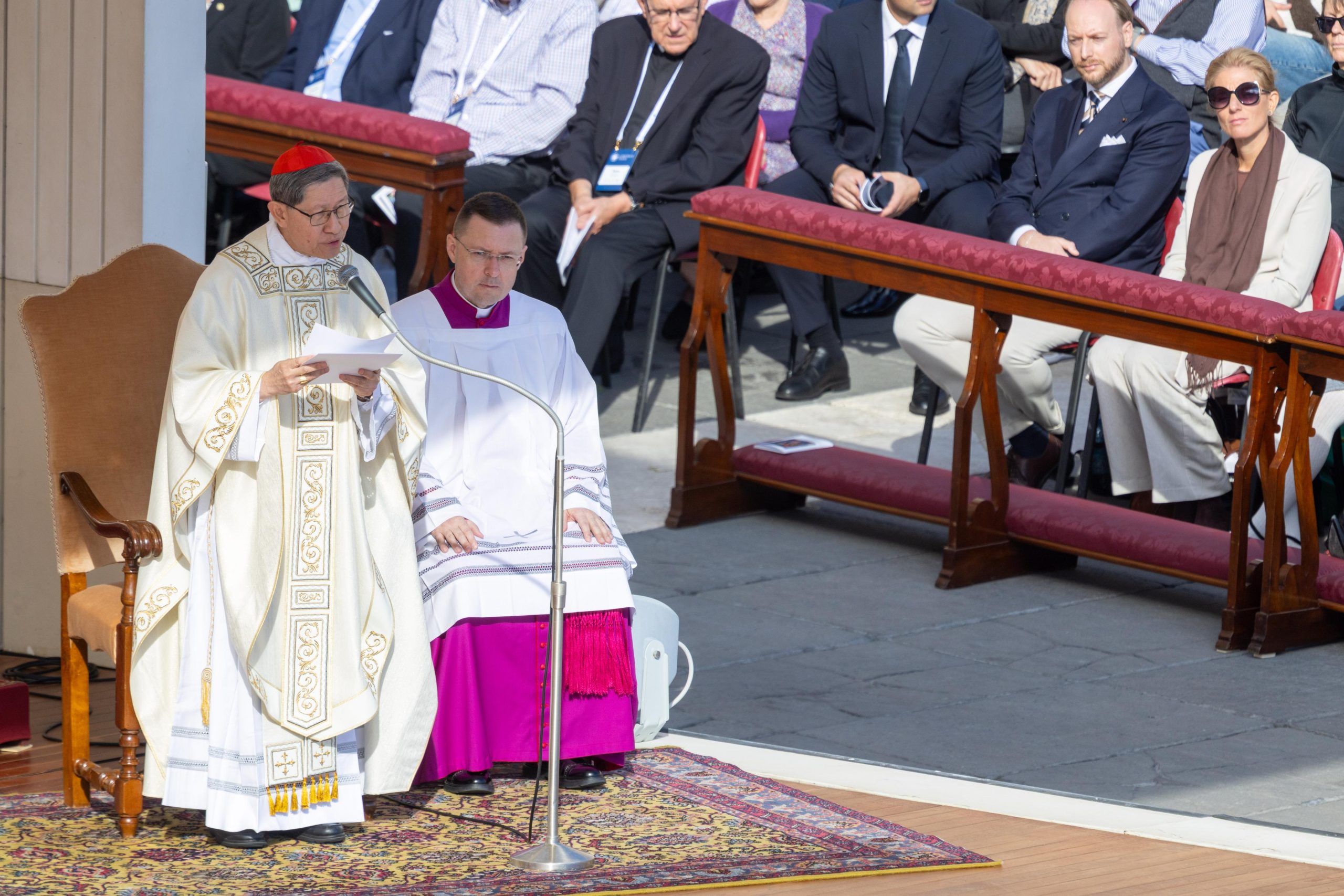
Pope Leo had been an active participant in the Vatican meeting up until he was admitted to the hospital. During the meeting’s closing Mass the morning following the pope’s surgery, Cardinal Luis Antonio Tagle read aloud a homily that had been prepared by the pope prior to the operation.
Cameroonian Archbishop Andrew Nkea of Bamenda, one of the bishops participating in the meeting, told OSV News that despite the pope’s absence on the meeting’s final days, those present in the assembly “were not discouraged, but we were very, very strongly united with him in prayer.”
“Every morning before we started the meeting, we prayed for his health and for his quick recovery,” he said. “It really didn’t affect the meeting in the sense that it didn’t kill our spirits, because we have hope in God and trust in his healing power. But at the same time, we missed him in the meeting.”
“We thank God that it was an early discovery,” Archbishop Nkea said. “So, we are hoping that he will recover very fast, and he will get back to his duties because the whole world is waiting for him to get well.”
Courtney Mares is Vatican editor for OSV News. Follow her on X @catholicourtney. Junno Arocho Esteves is an international correspondent for OSV News. Follow him on X @jae_journalist. Paulina Guzik, international editor for OSV News, contributed to this report.
– VATICAN CITY (OSV News) — The Vatican meeting of the world’s bishops’ conference presidents and the heads of Eastern Catholic churches marking the 10th anniversary of “Amoris Laetitia” concluded on the evening of Oct. 14 with prayers for Pope Leo XIV’s recovery from lung cancer surgery. Jesuit Father Giacomo Costa, a consultant to the General Secretariat of the Synod who helped to organize the meeting, said Oct. 14 that “accompaniment” was one of the key words in the week’s discussions of marriage and family. Reflecting on the significance of the experience at the event’s final press conference, Archbishop Charles Scicluna,
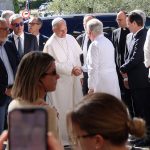
Pope Leo XIV starts respiratory physical therapy a day after lung cancer surgery #Catholic – 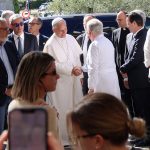
ROME (OSV News) — Pope Leo XIV underwent more medical exams and started respiratory physical therapy on Oct. 14, the day after the lung cancer surgery that removed the lower lobe of the pope’s right lung.
In the first medical update provided by the Vatican since the late-night revelation of the pope’s lung cancer diagnosis, the pope’s doctors said Wednesday that the pope’s “recovery is proceeding as expected” and the pope has begun walking around his hospital room.
“This morning, the Holy Father underwent the blood tests and chest X-ray scheduled following the surgery. The results confirm a normal postoperative recovery: the values are within the normal range for the type of surgery performed,” the joint statement by Dr. Stefano Margaritora, the pope’s surgeon, and Dr. Luigi Carbone, the pope’s personal doctor, said.
“The Holy Father underwent respiratory physical therapy and has begun walking around his room. He has resumed his regular diet, having had breakfast and lunch. His recovery is proceeding as expected.”
Vatican spokesman Matteo Bruni told journalists that Pope Leo was “in good spirits” the day after surgery. Bruni told journalists that before having surgery, Pope Leo had undergone a robotic bronchoscopy with biopsy, a chest CT scan with contrast, and a PET scan which indicated the need for the Oct. 13 surgery.
Pope Leo was admitted to Gemelli Hospital Oct. 13 for the lung surgery, following the pope’s Oct. 11 disclosure that recent medical examinations had revealed a “well-contained” lung nodule that had been “detected at a very early stage.”
According to Vatican News, post-operation tests will be conducted on the removed tissue in the coming days.
In response to a question of how long the wait might be to receive any results as to whether cancer remains beyond what was removed during the pope’s surgery, Bruni said, “You have to ask a doctor for the timing of those. It usually takes five, 10, 15 days depending on the situation.”
Speaking with OSV News, medical experts indicated that a potential analysis of the pope’s lymph nodes could be key to evaluating the next steps.
Dr. Nirmal Veeramachaneni, professor of cardiothoracic surgery at St. Louis University School of Medicine and medical director for lung cancer screening at SSM Health — who is not involved in the pope’s care — said in an interview with OSV News that it would typically take a week to get all of the biopsy results back.
The pope’s doctors Oct. 14 statement is the first update from the Vatican on the pope’s medical condition since the pope’s surgery ended with the revelation from his doctors that the “examination confirmed the diagnosis of lung adenocarcinoma, as suspected by the preoperative tests.”
Adenocarcinoma of the lung is the most common form of lung cancer in the United States. It represents about 40% of all lung cancers, according to the Lung Cancer Foundation of America.
The right lower lobe of the lung, which Pope Leo had removed, is the largest of the three lobes in the right lung. Located in the posterior and inferior part of the right chest cavity, it contributes roughly 30% of total lung capacity, making it the single largest lung lobe, according to the Baylor College of Medicine.
Pope Leo is expected to remain in Rome’s Gemelli Hospital as he recovers from surgery for at least one week. The Vatican has canceled all of the pope’s scheduled audiences through Oct. 20.
Bruni said that there were no changes to announce at this time to the pope’s expected length of stay in the hospital or to the pope’s scheduled trip to Latin America Nov. 6-17. He said that Pope Leo XIV had “manifested his intention” to travel to Peru and “that’s still there.”
The previously published schedule for the 12-day trip to South America indicated that he would travel more than 19,000 miles on 14 flights during a November trip to Uruguay, Argentina, and Peru, which includes stops high in the Andes mountains.
Peru’s President Keiko Fujimori said the country received the news of the pontiff’s diagnosis “with deep sadness” and asked God “to care for him, to give him strength, and allow us to see him soon recovered.”
“Holy Father, this land, which is also your home, embraces you with immense affection. Today it is our turn to accompany you with our prayers, just as you have so many times accompanied us with yours,” she wrote.
Courtney Mares is Vatican editor for OSV News. Follow her on X @catholicourtney.
– ROME (OSV News) — Pope Leo XIV underwent more medical exams and started respiratory physical therapy on Oct. 14, the day after the lung cancer surgery that removed the lower lobe of the pope’s right lung. In the first medical update provided by the Vatican since the late-night revelation of the pope’s lung cancer diagnosis, the pope’s doctors said Wednesday that the pope’s “recovery is proceeding as expected” and the pope has begun walking around his hospital room. “This morning, the Holy Father underwent the blood tests and chest X-ray scheduled following the surgery. The results confirm a normal postoperative
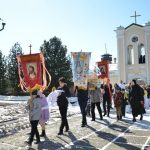
‘To see the face of God in wartime’: a Jesuit’s mission in Siberia #Catholic – 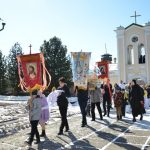
WARSAW, Poland (OSV News) — Every day for more than four years, in a Catholic parish deep in the Russian region of Siberia, a small community has gathered before the Blessed Sacrament to pray the rosary for peace between Russia and Ukraine.
The prayer has continued since Feb. 24, 2022, the day Russia launched its full-scale invasion of Ukraine. It includes another intention, one that Jesuit Father Wojciech Ziólek said has become essential to his ministry: that God would “save our hearts from hatred and revenge.”
When the war broke out, the world of Father Ziólek, the Polish pastor of Our Lady of the Rosary Parish in Tomsk, seemed to collapse. “I cried so much at the beginning. It was terrible,” Father Ziólek told OSV News during a brief visit to Poland in October. “There was this enormous sense of helplessness. As a Jesuit community, we did not know what to do.”
Father Ziólek spoke with OSV News in Warsaw Sept. 17, ahead of the 100th World Mission Sunday observed Oct. 18, and on the same day Russia launched another large-scale missile and drone attack on Ukraine. The overnight barrage wounded more than 20 people in Kyiv and other cities and damaged homes and infrastructure across several regions, according to Ukrainian officials.
The war is now well into its fifth year, as diplomatic efforts continue but so far have not brought a resolution for peace. On Oct. 11, right before announcing that would undergo surgery to remove a lung nodule, Pope Leo XIV renewed his appeal for peace, saying, “The war in tormented Ukraine continues to cause suffering far beyond its borders, especially in the poorest countries, where so many people depend on grain imports.”
“I make a heartfelt appeal to the parties to the conflict to allow for the safe transport of grain through the Black Sea. The daily bread of millions of people cannot be held hostage by the war,” the pope said.
Just weeks earlier, Archbishop Paul R. Gallagher, the Vatican secretary for relations with states and international organizations, had completed a visit to Moscow, where he met Russian government officials, representatives of the Russian Orthodox Church and Russia’s small Catholic community. During Mass with Catholic clergy and religious, he urged the Church in Russia to become “true artisans of peace in our daily lives.”
For Father Ziólek, that daily life takes place far from Moscow. His parish covers Tomsk Oblast, a Siberian region of more than 122,000 square miles — slightly larger than his homeland, Poland.
“The first thing that makes an impression on someone who has never been there is the distances,” Father Ziólek told OSV News. Across that enormous territory, he added, there are just two Catholic churches: the parish church in Tomsk and a tiny wooden church in the village of Bialystok.
“We are not simply a minority. We are a microscopic minority,” Father Ziólek said. “For someone coming from a Catholic country, or even from a place where there are several churches in one city, it is difficult to understand that across an area the size of Poland there are two churches.”
By Siberian standards, however, Tomsk has a large Catholic parish. Three Sunday Masses draw a combined 200 to 250 people, Father Ziólek said. In some Siberian Catholic communities, he added, Sunday Mass may bring together only 20 or 30. Catholics make up only about 0.5% of Russia’s population, with the Latin-rite Catholic community numbering roughly 800,000 people nationwide, according to recent Church data.
The congregation itself is a portrait of Siberia’s complicated religious history. There are descendants of Poles, Germans and Lithuanians, but also ethnic Russians, including people baptized in the Orthodox Church as infants, who never practiced the faith and later began searching for God as adults.
That search, Father Ziólek said, is something Russians speak about in a way that still moves him. “There is a beautiful question people ask here, a question I had never heard in Poland: ‘How did you come to God?’” Father Ziólek said. “And then the story begins.”
For older Catholics, those stories often reach back into families in which faith survived decades of Soviet atheism through a grandmother or great-grandmother who prayed while younger generations were taught that religion was meaningless.
Now something new is happening.
“The first generation of Catholics who have been going to church since childhood is entering adulthood,” Father Ziólek said. “These are people who have had contact with faith from birth, who were baptized as children.” Not everyone stays. Some young people rebel and leave, just as they do elsewhere, Father Ziólek said. Some later return. Others arrive by unexpected routes.
Father Ziólek recalled two young women in their 20s who were walking home after a Saturday night party. It was early Sunday morning, it was cold, and public transportation had not yet started running. They saw the Catholic church open and went inside to get warm. “They were dressed as you might dress for a nightclub,” Father Ziólek said. “They were afraid that some grandmother would spot them and tell them what an offense against God it was to come into church dressed like that.”
Nobody did. Mass began while they sat inside. The young women had never attended Catholic Mass before. “And then came the sign of peace,” Father Ziólek said. “Those grandmothers not only did not scold them, but reached out their hands to them. They were shocked.”
Today, he said, both women are among the parish’s most active members. Stories like that help explain why the community matters in a place where Catholics are few and separated by immense distances. Father Ziólek said laypeople play an unusually large role in parish life, including administration, fundraising and other ministries.
“They stay, because here they experienced God,” Father Ziólek said. “And they stay because this is a place of encounter.”
The war brought a different kind of test. From its first day, Father Ziólek and his fellow Jesuits decided to hold a daily half-hour of Eucharistic adoration and pray the rosary for peace between Russia and Ukraine.
“What we have tried to do from the beginning is, first, to pray for peace and, second, to protect people from hatred and fear,” Father Ziólek said.
“Because the two main fruits of war, the ones that appear immediately, are hatred and fear.”
He is careful to distinguish that experience from religious persecution. “No one persecutes us here as Catholics,” Father Ziólek told OSV News, adding that the parish has warm relations with many Orthodox Christians. Tomsk, he said, has its own tradition of religious and cultural coexistence, shaped partly by generations of people sent there from different corners of the Russian Empire and later the Soviet Union.
The Catholic Church itself carries that history. After the suppression of Poland’s November Uprising against Russian rule, many Polish insurgents were exiled to Tomsk and the surrounding region. Their growing presence helped create the need for a permanent Catholic church building, which was consecrated in 1833.
Nearly two centuries later, a Polish Jesuit is serving Catholics there.
Father Ziólek said he welcomed Archbishop Gallagher’s recent effort to meet Russia’s local Catholic community as part of the Vatican’s contacts in Moscow. But diplomacy, in his experience, is only one part of building peace. “I have much more hope in human gestures that bring Catholics, Orthodox Christians and Protestants closer to one another,” Father Ziólek said, pointing to Tomsk as a place where such relationships are part of ordinary Christian life.
For him and the other Jesuits, remaining present to that community has become particularly important since the war began. “Our duty – our honorable duty – is to be with people,” Father Ziólek said, “to help them and accompany them, as much as we are able, on their way to God.”
“People often ask me what I miss in Russia,” Father Ziólek told OSV News. “I always answer: freedom and parsley.” The parsley, he quickly explained, is quite literal. “They have parsley leaves in the vegetable shops, but no parsley root. And you need it to make Polish soup.”
But when OSV News asked what Russian Catholics themselves are missing, Father Ziólek’s answer was no longer a joke. “Love,” he said. “The experience of someone accepting them as they are. Someone who understands their tangled and very painful situation.”
“I think the essence of Christianity is to see the human being in another human being,” he said. “And the essence of working in Russia, in Siberia, is to see the human being in Russian.”
“More than that, it is about seeing the face of God in another person,” Father Ziólek added. “And the essence of working in Russia during the war is to see the face of God in Russians and help them see that face in Ukrainians.”
Katarzyna Szalajko writes for OSV News from Warsaw.
– WARSAW, Poland (OSV News) — Every day for more than four years, in a Catholic parish deep in the Russian region of Siberia, a small community has gathered before the Blessed Sacrament to pray the rosary for peace between Russia and Ukraine. The prayer has continued since Feb. 24, 2022, the day Russia launched its full-scale invasion of Ukraine. It includes another intention, one that Jesuit Father Wojciech Ziólek said has become essential to his ministry: that God would “save our hearts from hatred and revenge.” When the war broke out, the world of Father Ziólek, the Polish pastor of
Catholic, evangelical leaders issue joint call for compassionate immigration reform #Catholic – 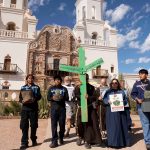
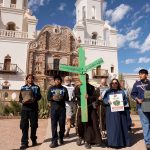
WASHINGTON (OSV News) — Catholic and evangelical leaders issued an ecumenical statement Oct. 13 as part of a joint effort to call for compassionate immigration reform.
Bishop Brendan J. Cahill, chair of the U.S. Conference of Catholic Bishops’ Committee on Migration, and Rev. Walter Kim, president of the National Association of Evangelicals, are the co-chairs of the Evangelical-Catholic Dialogue on Immigration. Their joint statement, “A Call for Christian Compassion and Wisdom in the Immigration Debate,” marks the first such statement on immigration in U.S. history to be jointly issued by senior leaders of their respective traditions, they said.
The pair said that although they have “doctrinal differences,” they are “united in our conviction that God calls us to stand both with our fellow Americans who are experiencing economic and cultural anxieties and with our immigrant neighbors who are facing existential challenges.”
The statement articulated shared principles that every human being is “created with dignity, bearing God’s image,” and that government “is responsible for protecting its citizens and providing for the common good, including the establishment and enforcement of reasonable immigration policies.”
Those policies should include targeted, humane border enforcement, clear legal pathways to citizenship and efforts to prevent the separation of families, they said.
They also highlighted risks to religious liberty presented by certain immigration enforcement efforts.
Catholic and other faith leaders have pointed to recent cases where religious liberty challenges have intersected with immigration issues, such as a recent lawsuit from the Archdiocese of St. Louis against the federal government over a policy it said prohibits priests from distributing holy Communion and hearing the confessions of people detained by U.S. Immigration and Customs Enforcement.
“We especially commit to upholding the right to religious liberty,” the statement said. “This right extends to all people, of all faiths and none, no matter their immigration status. It is implicated in a particular way for those in detention, for whom we as Christians are specifically compelled by Christ to offer our pastoral care (Matthew 25:31–46). We are resolute in our commitment to working with the relevant authorities to ensure access to religious and pastoral services for all in detention, that each person may have the opportunity for spiritual counsel and active participation in the sacraments.”
Faith leaders have also raised alarm about the need to prevent immigration enforcement actions at places seen as sensitive locations, including houses of worship, schools and hospitals.
In a joint statement issued through the USCCB, Bishop Cahill — currently bishop of Victoria, Texas, but was recently appointed the next bishop of the Diocese of Joliet, Illinois — and Rev. Kim said, “What is unique about this statement is not the content, which is grounded in centuries of Christian teaching and tradition that we have already affirmed separately, but the clear unity that exists between us in this moment.”
“As pastors devoted to proclaiming the Gospel of Jesus Christ, we share a responsibility to articulate our convictions, even when it comes to subject matter as challenging as immigration. In doing so together, we seek to embrace our common heritage as both Christians and Americans,” they said. They added that through Evangelical-Catholic Dialogue on Immigration, “we have found a strong sense of fraternity and common purpose. It is from this sincere and patriotic perspective, and with deep concern for those affected by current immigration policies, that we offer this statement with both conviction and hope.”
A joint report issued last year by the USCCB’s Migration and Refugee Services, the Center for the Study of Global Christianity at Gordon-Conwell Theological Seminary, and World Relief, found that more than 10 million Christians living in the U.S. would be vulnerable to deportation under Trump administration policies implemented in 2025. A majority of them were Catholic followed by a sizable number of evangelicals.
The joint statement from Bishop Cahill and Rev. Kim noted the report’s findings.
“Roughly one in 12 believers in this country either faces the loss of legal status or shares a home with someone who does,” they said. “Their fear is our fear; their tears are ours to wipe.”
Kate Scanlon is a national reporter for OSV News covering Washington. Follow her on X @kgscanlon.
– WASHINGTON (OSV News) — Catholic and evangelical leaders issued an ecumenical statement Oct. 13 as part of a joint effort to call for compassionate immigration reform. Bishop Brendan J. Cahill, chair of the U.S. Conference of Catholic Bishops’ Committee on Migration, and Rev. Walter Kim, president of the National Association of Evangelicals, are the co-chairs of the Evangelical-Catholic Dialogue on Immigration. Their joint statement, “A Call for Christian Compassion and Wisdom in the Immigration Debate,” marks the first such statement on immigration in U.S. history to be jointly issued by senior leaders of their respective traditions, they said. The pair
El Papa León XIV inicia fisioterapia respiratoria un día después de la cirugía por cáncer de pulmón #Catholic – 
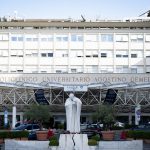
ROMA (OSV News) — El Papa León XIV se sometió a exámenes médicos adicionales y comenzó fisioterapia respiratoria el 14 de octubre, un día después de la cirugía por cáncer pulmonar en la que se le extirpó el lóbulo inferior del pulmón derecho.
En el primer informe médico proporcionado por el Vaticano desde que se dio a conocer, a última hora de la noche, el diagnóstico de cáncer de pulmón del Santo Padre, los médicos del Papa León informaron el miércoles que la “evolución sigue según lo previsto” y que el Papa ha comenzado a caminar por su habitación del hospital.
“Esta mañana, el Santo Padre se ha sometido a los análisis de sangre y a la radiografía de tórax previstos tras la intervención. Los resultados confirman una evolución postoperatoria normal: los valores se encuentran dentro de los límites normales para el tipo de intervención realizada”, indicaron en un comunicado conjunto el Dr. Stefano Margaritora, cirujano del Papa, y el Dr. Luigi Carbone, médico personal del Papa.
“El Santo Padre ha realizado fisioterapia respiratoria y ha comenzado a caminar por la habitación. Ha retomado su alimentación habitual, tomando el desayuno y el almuerzo. La evolución sigue según lo previsto”.
El portavoz del Vaticano, Matteo Bruni, dijo a los periodistas que el Papa León se encontraba “de buen ánimo” el día después de la cirugía programada para extirparle un nódulo localizado en el pulmón. Bruni explicó a los periodistas que, antes de someterse a la cirugía, el Papa León se había realizado una broncoscopia robótica con biopsia, una tomografía computarizada de tórax con contraste y una tomografía por emisión de positrones (PET), cuyos resultados indicaron la necesidad de la cirugía del 13 de octubre.
El Papa León ingresó en el Hospital Gemelli el 13 de octubre para someterse a la cirugía pulmonar, tras anunciar el 11 de octubre que los exámenes médicos recientes habían revelado un nódulo pulmonar “bien localizado” que se había “detectado todavía en una fase muy temprana”.
Según Vatican News, en los próximos días se realizarán los análisis del tejido extirpado durante la cirugía.
En respuesta a una pregunta sobre cuánto tiempo podría tardar en conocerse si queda cáncer más allá de lo que se extirpó durante la cirugía del Papa, Bruni dijo: “Hay que preguntarle a un médico cuánto tardarán esos resultados. Por lo general, los resultados tardan cinco, diez o quince días, dependiendo de la situación”.
Expertos médicos consultados por OSV News indicaron que un posible análisis de los ganglios linfáticos del Papa León podría ser clave para evaluar los pasos a seguir.
El Dr. Nirmal Veeramachaneni, profesor de cirugía cardiotorácica en la Facultad de Medicina de la Universidad de St. Louis y director médico del programa de detección de cáncer de pulmón en SSM Health –quien no participa en la atención médica del pontífice–, dijo en una entrevista con OSV News que, por lo general, se tarda una semana en recibir todos los resultados de la biopsia.
El comunicado del 14 de octubre de los médicos del Papa León es la primera actualización del Vaticano sobre el estado de salud del Papa desde que concluyó su cirugía, cuando sus médicos revelaron que “el examen histológico in situ ha confirmado el diagnóstico de adenocarcinoma pulmonar, tal y como se sospechaba a partir de los exámenes preoperatorios”.
El adenocarcinoma de pulmón es la forma más común de cáncer de pulmón en Estados Unidos. Representa alrededor del 40% de todos los cánceres de pulmón, según la Fundación Americana contra el Cáncer de Pulmón.
El lóbulo inferior derecho del pulmón, que le extirparon al Papa León, es el más grande de los tres lóbulos del pulmón derecho. Ubicado en la parte posterior e inferior de la cavidad torácica derecha, aporta aproximadamente el 30% de la capacidad pulmonar total, lo que lo convierte en el lóbulo pulmonar más grande, según el Baylor College of Medicine.
Se espera que el Papa León permanezca al menos una semana en el Hospital Gemelli de Roma mientras se recupera de la cirugía. El Vaticano ha cancelado todas las audiencias programadas del Papa hasta el 20 de octubre.
Bruni dijo que, por el momento, no había cambios que anunciar respecto a la duración prevista de la estancia del Papa en el hospital ni respecto al viaje papal programado a América Latina del 6 al 17 de noviembre. Afirmó que el Papa León XIV había “manifestado su intención” de viajar a Perú, donde había sido misionero y obispo durante muchos años, y “esa intención sigue vigente”.
El itinerario publicado anteriormente para la visita apostólica de 12 días a Sudamérica indicaba que recorrería más de 19.000 millas en 14 vuelos durante un viaje en noviembre a Uruguay, Argentina y Perú, que incluye paradas en zonas de gran altitud de la cordillera de los Andes.
La presidenta de Perú, Keiko Fujimori, dijo que el país recibió la noticia del diagnóstico del pontífice “con profunda tristeza” y le pidió a Dios que “lo cuide, le dé fuerzas y nos permita verlo pronto recuperado”.
“Santo Padre, esta tierra, que también es su hogar, lo abraza con inmenso cariño. Hoy nos toca acompañarlo con nuestras oraciones, así como usted tantas veces nos ha acompañado con las suyas”, escribió. “Hoy, más que nunca, unamos nuestra fe en una gran cadena de oración. Que nuestro Señor de los Milagros escuche nuestras súplicas y lo acompañe en este difícil momento”.
Courtney Mares es editora del Vaticano para OSV News. Síguela en X: @catholicourtney.
– ROMA (OSV News) — El Papa León XIV se sometió a exámenes médicos adicionales y comenzó fisioterapia respiratoria el 14 de octubre, un día después de la cirugía por cáncer pulmonar en la que se le extirpó el lóbulo inferior del pulmón derecho. En el primer informe médico proporcionado por el Vaticano desde que se dio a conocer, a última hora de la noche, el diagnóstico de cáncer de pulmón del Santo Padre, los médicos del Papa León informaron el miércoles que la “evolución sigue según lo previsto” y que el Papa ha comenzado a caminar por su habitación del
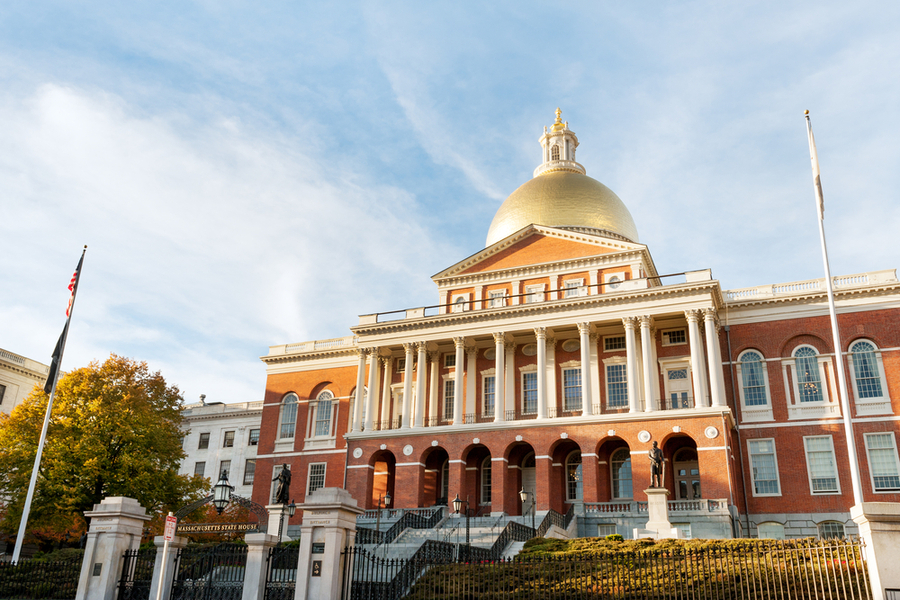
The New England state recently passed a law that effectively removes all limits on abortion.
Looking for a sky event this week? Check out our full Sky This Week column. October 14: Io covers Callisto An hour after sunset this evening, you’ll find the waxing crescent Moon low in the southwest, hanging above the back of Scorpius and just off the spout of Sagittarius’ Teapot. Zoom in with a telescope on MareContinue reading “The Sky Today on Thursday, October 15: Double crater Messier”
The post The Sky Today on Thursday, October 15: Double crater Messier appeared first on Astronomy Magazine.
Read More