Day: October 17, 2026

Gospel and Word of the Day – 18 October 2026 – A reading from the Book of Isaiah 45:1, 4-6 Thus says the LORD to his anointed, Cyrus, whose right hand I grasp, subduing nations before him, and making kings run in his service, opening doors before him and leaving the gates unbarred: For the sake of Jacob, my servant, of Israel, my chosen one, I have called you by your name, giving you a title, though you knew me not. I am the LORD and there is no other, there is no God besides me. It is I who arm you, though you know me not, so that toward the rising and the setting of the sun people may know that there is none besides me. I am the LORD, there is no other.   A reading from the First Letter of St. Paul to Thessalonians 1:1-5b Paul, Silvanus, and Timothy to the church of the Thessalonians in God the Father and the Lord Jesus Christ: grace to you and peace. We give thanks to God always for all of you, remembering you in our prayers, unceasingly calling to mind your work of faith and labor of love and endurance in hope of our Lord Jesus Christ, before our God and Father, knowing, brothers and sisters loved by God, how you were chosen. For our gospel did not come to you in word alone, but also in power and in the Holy Spirit and with much conviction.From the Gospel according to Matthew 22:15-21 The Pharisees went off and plotted how they might entrap Jesus in speech.  They sent their disciples to him, with the Herodians, saying, "Teacher, we know that you are a truthful man and that you teach the way of God in accordance with the truth. And you are not concerned with anyone’s opinion, for you do not regard a person’s status. Tell us, then, what is your opinion: Is it lawful to pay the census tax to Caesar or not?"  Knowing their malice, Jesus said, "Why are you testing me, you hypocrites?  Show me the coin that pays the census tax."  Then they handed him the Roman coin.  He said to them, "Whose image is this and whose inscription?"  They replied, "Caesar’s." At that he said to them, "Then repay to Caesar what belongs to Caesar and to God what belongs to God."Jesus replies with a surprising political realism, linked to the theocentrism of the prophetic tradition. The tribute to Caesar must be paid because his image is on the coin; but the human being, every person, carries in him- or herself another image, that of God, and therefore it is to him and to him alone that each one owes his or her existence. The Fathers of the Church, drawing inspiration from the fact that Jesus was referring to the image of the Emperor impressed on the coin of the tribute, interpreted this passage in the light of the fundamental concept of the human being as an image of God, contained in the first chapter of the Book of Genesis. (…) This word of Jesus is rich in anthropological content and it cannot be reduced only to the political context. The Church, therefore, is not limited to reminding human beings of the right distinction between the sphere of Caesar’s authority and that of God, between the political and religious contexts. The mission of the Church, like that of Christ, is essentially to speak of God, to remember his sovereignty, to remind all, especially Christians who have lost their own identity, of the right of God to what belongs to him, that is, our life. (Pope Benedict XVI, Homily, 16 October 2011)

A reading from the Book of Isaiah
45:1, 4-6

Thus says the LORD to his anointed, Cyrus,
whose right hand I grasp,
subduing nations before him,
and making kings run in his service,
opening doors before him
and leaving the gates unbarred:
For the sake of Jacob, my servant,
of Israel, my chosen one,
I have called you by your name,
giving you a title, though you knew me not.
I am the LORD and there is no other,
there is no God besides me.
It is I who arm you, though you know me not,
so that toward the rising and the setting of the sun
people may know that there is none besides me.
I am the LORD, there is no other.


A reading from the First Letter of St. Paul to Thessalonians
1:1-5b

Paul, Silvanus, and Timothy to the church of the Thessalonians
in God the Father and the Lord Jesus Christ:
grace to you and peace.
We give thanks to God always for all of you,
remembering you in our prayers,
unceasingly calling to mind your work of faith and labor of love
and endurance in hope of our Lord Jesus Christ,
before our God and Father,
knowing, brothers and sisters loved by God,
how you were chosen.
For our gospel did not come to you in word alone,
but also in power and in the Holy Spirit and with much conviction.

From the Gospel according to Matthew
22:15-21

The Pharisees went off
and plotted how they might entrap Jesus in speech. 
They sent their disciples to him, with the Herodians, saying,
"Teacher, we know that you are a truthful man
and that you teach the way of God in accordance with the truth.
And you are not concerned with anyone’s opinion,
for you do not regard a person’s status.
Tell us, then, what is your opinion:
Is it lawful to pay the census tax to Caesar or not?" 
Knowing their malice, Jesus said,
"Why are you testing me, you hypocrites? 
Show me the coin that pays the census tax." 
Then they handed him the Roman coin. 
He said to them, "Whose image is this and whose inscription?" 
They replied, "Caesar’s."
At that he said to them,
"Then repay to Caesar what belongs to Caesar
and to God what belongs to God."

Jesus replies with a surprising political realism, linked to the theocentrism of the prophetic tradition. The tribute to Caesar must be paid because his image is on the coin; but the human being, every person, carries in him- or herself another image, that of God, and therefore it is to him and to him alone that each one owes his or her existence. The Fathers of the Church, drawing inspiration from the fact that Jesus was referring to the image of the Emperor impressed on the coin of the tribute, interpreted this passage in the light of the fundamental concept of the human being as an image of God, contained in the first chapter of the Book of Genesis. (…)

This word of Jesus is rich in anthropological content and it cannot be reduced only to the political context. The Church, therefore, is not limited to reminding human beings of the right distinction between the sphere of Caesar’s authority and that of God, between the political and religious contexts. The mission of the Church, like that of Christ, is essentially to speak of God, to remember his sovereignty, to remind all, especially Christians who have lost their own identity, of the right of God to what belongs to him, that is, our life. (Pope Benedict XVI, Homily, 16 October 2011)

Read More
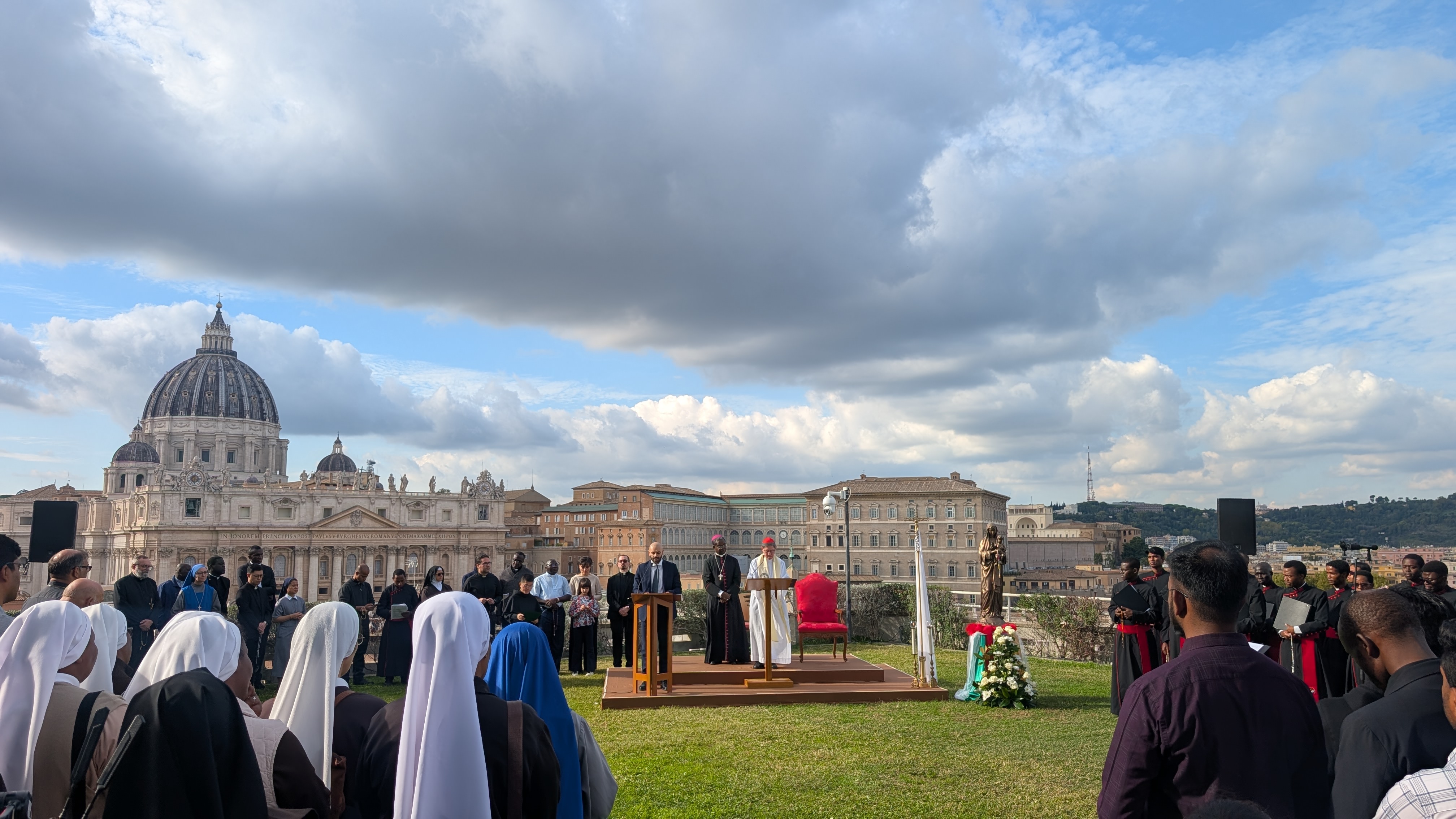
International rosary in Rome held in advance of 100th World Mission Sunday #Catholic An international rosary in Rome united clergy, religious, and lay faithful to mark the 100th anniversary of World Mission Sunday.The rosary was held on the grounds of the Pontifical Urban University on Oct. 17, the eve of this year’s World Mission Sunday on Oct. 18. Led by Cardinal Luis Antonio Tagle, dean of the College of Cardinals and Grand Chancellor of the university, the rosary was recited in 13 languages across five mysteries representing Africa, Asia, the Americas, Europe, and Oceania.The occasion also marked the 75th anniversary of the rosary’s establishment by Blessed Fulton J. Sheen, who was U.S. national director of the Pontifical Mission Societies from 1950 to 1966.Sister Mary Teresa Baron, recently appointed president of the Pontifical Mission Societies, was not present during the rosary.Several participants in the rosary explained how the faithful can support the Church’s missionaries beyond financial contributions.Archbishop Fortunatus Nwachukwu, who serves as a secretary at the Dicastery for Evangelization, urged a focus on the Word of God.“I am always a bit wary about monetizing mission,” Nwachukwu said to EWTN News. “So, I do not want to begin with money; I want to begin with the Word, because mission is all about bringing the Word of the Lord to the ends of the earth.”
 
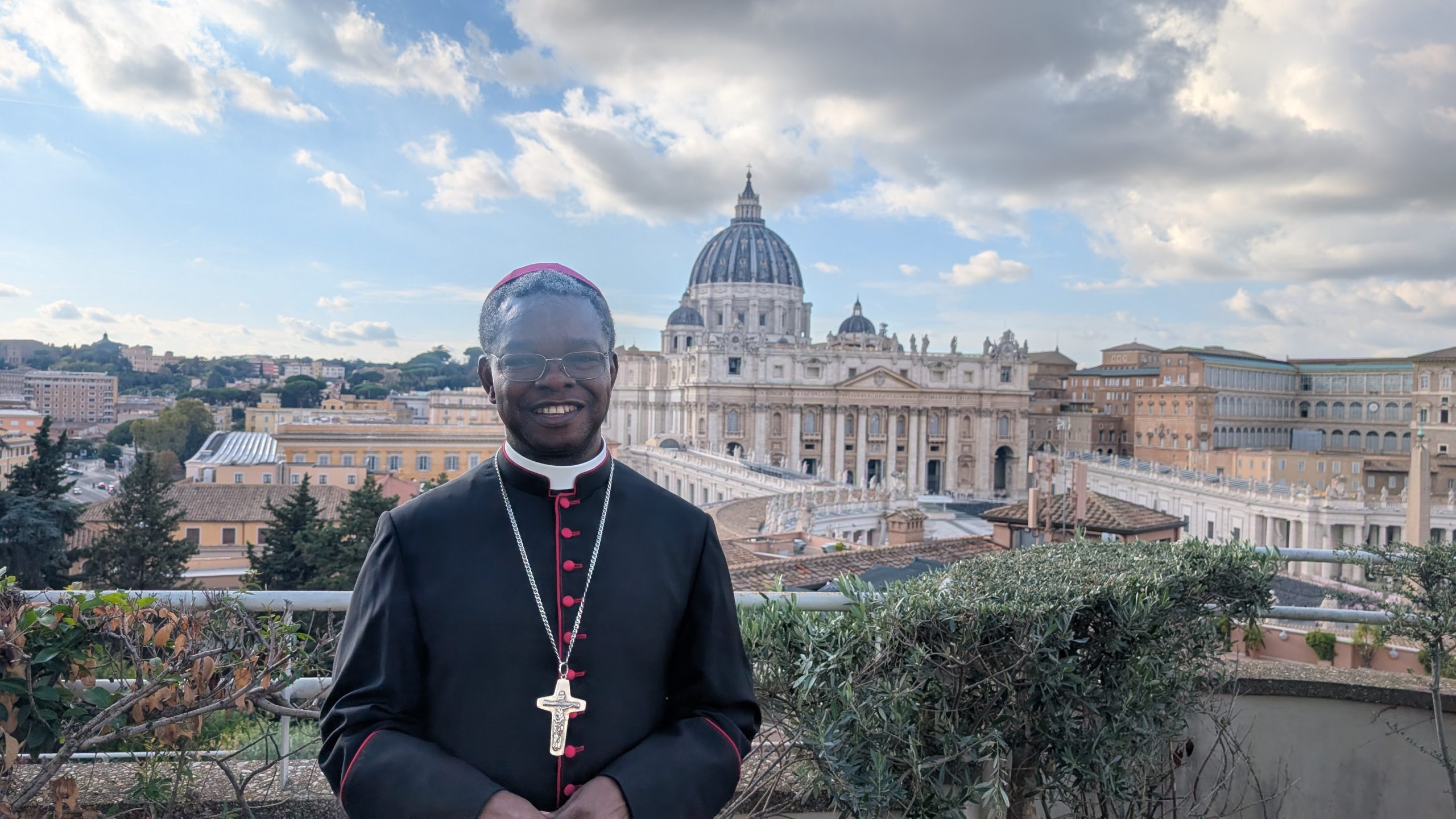
 Archbishop Fortunatus Nwachukwu, secretary of the Section of First Evangelization at the Dicastery for Evangelization, participated in an international rosary at the Pontifical Urban University in Rome on Oct. 17, 2026, to mark the 100th anniversary of World Mission Sunday. | Credit: Ishmael Adibuah/EWTN News
 
 At the same time, Nwachukwu indicated that supporting missionaries also means providing “the means to bring the Gospel to various places.” That support, he said, involves money.“[Today] is also an occasion to tell people: please, be generous to missionaries,” Nwachukwu said.Msgr. Thomas George Schluep, who also serves at the Dicastery for Evangelization, cited Pope Leo XIV’s message for World Mission Sunday as a reminder that unity in Christ precedes material support“Pope Leo, in his message for this 100th Anniversary of World Mission Sunday, reminds us that we first must be one in Christ,” Schluep told EWTN News. “Our baptism calls us to be missionaries: to share that love with our families, our friends, our coworkers.”Memories of missionaries, Pope Leo’s return from the hospitalParticipants also shared personal anecdotes about missionaries and their impact on their faith journey.Schluep shared his memory of Father Gerard Hammond, an American Maryknoll missionary priest known for his decades of humanitarian work in North and South Korea.“I met him in Korea, where he had been serving since 1960 when he was ordained and sent on mission. He was celebrated by thousands of people in South Korea for bringing the faith to them over the course of 65 years,” Schluep said.“In North Korea he could not speak of Christ, but his “apostolate of presence” and love for those suffering from tuberculosis was itself evangelization. He taught me a lot about the importance of being present to people, exactly where they are at in their lives, no matter the personal cost.”Around the time the rosary was taking place, Pope Leo XIV returned to the Vatican after being hospitalized for surgery Oct. 13 at Rome’s Gemelli Hospital. Nwachukwu expressed happiness at his return and hoped that “the Lord will keep him quite long among us”.“We are all praying for him. We love the Pope, and we love what he is doing.”The contributions of AmericansSchluep, an American from Pittsburgh, Pennsylvania, also noted the significant contributions of Americans, such as Blessed Fulton Sheen, to missionary work through the Pontifical Mission Societies.“The American contribution to the missions historically has been enormous,” Schluep noted. “It was a great joy to see Fulton Sheen beatified, who did so much to evangelize the United States, but also who traveled personally to so many missions around the world and did so much to raise funds for those missions.”
 
 Cardinal Tagle stands before the image of Blessed Fulton Sheen during the beatification Mass in St. Louis on Sept. 24, 2026. | Credit: Jeffrey Bruno
 
 Schluep said he hoped the example of Pope Leo XIV, the first U.S.-born pope, would encourage renewed American support. “The fact that the Holy Father understands American culture and missionary life in Peru can help him in his particular guidance for us, but now he is the Pope of the entire world, and he calls us to think also of the entire world and not just our country, our families, and especially ourselves,” Schluep said.

International rosary in Rome held in advance of 100th World Mission Sunday #Catholic An international rosary in Rome united clergy, religious, and lay faithful to mark the 100th anniversary of World Mission Sunday.The rosary was held on the grounds of the Pontifical Urban University on Oct. 17, the eve of this year’s World Mission Sunday on Oct. 18. Led by Cardinal Luis Antonio Tagle, dean of the College of Cardinals and Grand Chancellor of the university, the rosary was recited in 13 languages across five mysteries representing Africa, Asia, the Americas, Europe, and Oceania.The occasion also marked the 75th anniversary of the rosary’s establishment by Blessed Fulton J. Sheen, who was U.S. national director of the Pontifical Mission Societies from 1950 to 1966.Sister Mary Teresa Baron, recently appointed president of the Pontifical Mission Societies, was not present during the rosary.Several participants in the rosary explained how the faithful can support the Church’s missionaries beyond financial contributions.Archbishop Fortunatus Nwachukwu, who serves as a secretary at the Dicastery for Evangelization, urged a focus on the Word of God.“I am always a bit wary about monetizing mission,” Nwachukwu said to EWTN News. “So, I do not want to begin with money; I want to begin with the Word, because mission is all about bringing the Word of the Lord to the ends of the earth.” Archbishop Fortunatus Nwachukwu, secretary of the Section of First Evangelization at the Dicastery for Evangelization, participated in an international rosary at the Pontifical Urban University in Rome on Oct. 17, 2026, to mark the 100th anniversary of World Mission Sunday. | Credit: Ishmael Adibuah/EWTN News At the same time, Nwachukwu indicated that supporting missionaries also means providing “the means to bring the Gospel to various places.” That support, he said, involves money.“[Today] is also an occasion to tell people: please, be generous to missionaries,” Nwachukwu said.Msgr. Thomas George Schluep, who also serves at the Dicastery for Evangelization, cited Pope Leo XIV’s message for World Mission Sunday as a reminder that unity in Christ precedes material support“Pope Leo, in his message for this 100th Anniversary of World Mission Sunday, reminds us that we first must be one in Christ,” Schluep told EWTN News. “Our baptism calls us to be missionaries: to share that love with our families, our friends, our coworkers.”Memories of missionaries, Pope Leo’s return from the hospitalParticipants also shared personal anecdotes about missionaries and their impact on their faith journey.Schluep shared his memory of Father Gerard Hammond, an American Maryknoll missionary priest known for his decades of humanitarian work in North and South Korea.“I met him in Korea, where he had been serving since 1960 when he was ordained and sent on mission. He was celebrated by thousands of people in South Korea for bringing the faith to them over the course of 65 years,” Schluep said.“In North Korea he could not speak of Christ, but his “apostolate of presence” and love for those suffering from tuberculosis was itself evangelization. He taught me a lot about the importance of being present to people, exactly where they are at in their lives, no matter the personal cost.”Around the time the rosary was taking place, Pope Leo XIV returned to the Vatican after being hospitalized for surgery Oct. 13 at Rome’s Gemelli Hospital. Nwachukwu expressed happiness at his return and hoped that “the Lord will keep him quite long among us”.“We are all praying for him. We love the Pope, and we love what he is doing.”The contributions of AmericansSchluep, an American from Pittsburgh, Pennsylvania, also noted the significant contributions of Americans, such as Blessed Fulton Sheen, to missionary work through the Pontifical Mission Societies.“The American contribution to the missions historically has been enormous,” Schluep noted. “It was a great joy to see Fulton Sheen beatified, who did so much to evangelize the United States, but also who traveled personally to so many missions around the world and did so much to raise funds for those missions.” Cardinal Tagle stands before the image of Blessed Fulton Sheen during the beatification Mass in St. Louis on Sept. 24, 2026. | Credit: Jeffrey Bruno Schluep said he hoped the example of Pope Leo XIV, the first U.S.-born pope, would encourage renewed American support. “The fact that the Holy Father understands American culture and missionary life in Peru can help him in his particular guidance for us, but now he is the Pope of the entire world, and he calls us to think also of the entire world and not just our country, our families, and especially ourselves,” Schluep said.

The rosary, recited in 13 languages, also marked the 75th anniversary of the World Mission Rosary by Blessed Fulton Sheen.

Read More
Pope’s surgeon green lights Nov. 6–17 apostolic trip to Latin America #Catholic Pope Leo XIV has received the green light from his surgeon to proceed with his planned Nov. 6–17 apostolic journey to Uruguay, Argentina, and Peru.In an interview with Vatican News following the Holy Father’s Oct. 17 discharge from the Gemelli Hospital, Dr. Stefano Margaritora, who operated on Pope Leo on Oct. 13, said he expects Leo will be fully recovered and in shape to travel within the next “10 days or so.”Calling him “an ideal patient,” Margaritora said that upon his discharge from the hospital Leo “was in entirely satisfactory clinical condition” with completely normal blood test results and heart function.“The lung’s re-expansion after surgery is proceeding according to the usual timetable,” and “overall, his condition is good,” Margaritora added.The surgeon indicated that the Holy Father’s lung adenocarcinoma was discovered during routine abdominal examinations, which underscores the importance of regular preventive checkups.“In the Holy Father’s case, he had no respiratory symptoms and felt perfectly well,” the doctor noted.The pope has “put his heart and soul” into his recovery, Margaritora said. “His determination to recover quickly has been effective in every respect” and “truly commendable,” he pointed out.Illustrating the point, the doctor noted that on the second day after the operation, the medical staff found him arranging the chairs in the chapel himself. “Holy Father, we can do that,” Margaritora recounted. But Leo replied: “It doesn’t matter. I can do it, so I will.”

Pope’s surgeon green lights Nov. 6–17 apostolic trip to Latin America #Catholic Pope Leo XIV has received the green light from his surgeon to proceed with his planned Nov. 6–17 apostolic journey to Uruguay, Argentina, and Peru.In an interview with Vatican News following the Holy Father’s Oct. 17 discharge from the Gemelli Hospital, Dr. Stefano Margaritora, who operated on Pope Leo on Oct. 13, said he expects Leo will be fully recovered and in shape to travel within the next “10 days or so.”Calling him “an ideal patient,” Margaritora said that upon his discharge from the hospital Leo “was in entirely satisfactory clinical condition” with completely normal blood test results and heart function.“The lung’s re-expansion after surgery is proceeding according to the usual timetable,” and “overall, his condition is good,” Margaritora added.The surgeon indicated that the Holy Father’s lung adenocarcinoma was discovered during routine abdominal examinations, which underscores the importance of regular preventive checkups.“In the Holy Father’s case, he had no respiratory symptoms and felt perfectly well,” the doctor noted.The pope has “put his heart and soul” into his recovery, Margaritora said. “His determination to recover quickly has been effective in every respect” and “truly commendable,” he pointed out.Illustrating the point, the doctor noted that on the second day after the operation, the medical staff found him arranging the chairs in the chapel himself. “Holy Father, we can do that,” Margaritora recounted. But Leo replied: “It doesn’t matter. I can do it, so I will.”

“No clinical reasons why it should not take place,” said Dr. Stefano Margaritora, who called Pope Leo “an ideal patient.”

Read More
Morristown Knights honored for their selfless gift of service #Catholic – The sense of celebration was palpable on Oct. 10 at Assumption Church in Morristown. N.J. members of the Knights of Columbus George Washington Council No. 359 filled the pews.
Bishop Kevin J. Sweeney joined about 300 knights, spouses and other family members to celebrate the council’s annual Mass to mark the beginning of its fraternal year. The liturgy was followed by a dinner of appreciation honoring service and compassion throughout the community at Morris County Golf Club in Morris Township. The council, which recently added nine young men, is one of the oldest knight groups in the United States.
“It’s a great blessing to see the inspiration of women and men of faith who serve, lead, and help us as disciples of our Lord Jesus to put our faith into action,” Bishop Sweeney said at the Mass.
George Washington Council is the only one in the U.S. not named after a Catholic; instead, it was named after the Revolutionary War general and first U.S. president. Morristown is known as the military capital of the Revolution, where Washington and the Continental Army wintered during the war.

Click here to subscribe to our weekly newsletter.

The council began at a time of strong anti-Catholic sentiment. Yet the council has always supported patriotism and been engaged in community service.
The council typically raises at least ,000 each year for local charities, which Knights trustee John Wooters said is focused on people on the margins facing challenges ranging from food and housing to mental health issues. But he said time and talent are as much of a compassionate asset to the community as their financial contribution.
“It’s also manpower. We are probably doing something at least twice a week at some different organization, whether it’s moving medical supplies and medical beds so that they can be put on a container to go to Ukraine, or taking care of somebody who’s involved with [domestic] abuse. We have to move the family,” Wooters said.
The knights’ financial and volunteer support spans from ArcMorris, helping people with disabilities, to performing tasks for the Discalced Carmelites of the Most Blessed Virgin Mary of Mount Carmel.
Msgr. John Hart, pastor of Assumption, a fourth-degree knight, and the council’s chaplain, said the call to service stems from the faith of these men of diverse ages, backgrounds, and talents.
“It flows from who they are as Catholic men, Catholic gentlemen, as family men,” Msgr. John Hart said.
During the Oct. 10 dinner of appreciation, former grand knight and current trustee Bill Kostyak received the council’s Knight of the Year award. Carolyn Lake received the council’s Lifetime Achievement Award for her volunteer work with the Interfaith Food Pantry in Morris Plains.
The event is the council’s main fundraiser, which has given yearly honors to people from various circles of service, from the medical and education worlds to law enforcement. 
During the Mass, Bishop Sweeney praised the award winners in his homily, citing examples of saints celebrating October feast days such as St. Carlo Acutis and St. Thérèse of Lisieux.
“The beauty of the lives of the saints, my sisters and brothers, is that they were normal people like us in so many ways, but they allowed themselves to fall in love with Jesus, to know Jesus in the sacraments, in prayer, and seeing him in our brothers and sisters who are in need,” Bishop Sweeney said. “To honor our honorees today, [we are] taking time to recognize the goodness, the generosity of those who respond to the Lord’s call.”
BEACON PHOTOS | JOE GIGLI
 [See image gallery at beaconnj.org] 
 

Morristown Knights honored for their selfless gift of service #Catholic – The sense of celebration was palpable on Oct. 10 at Assumption Church in Morristown. N.J. members of the Knights of Columbus George Washington Council No. 359 filled the pews. Bishop Kevin J. Sweeney joined about 300 knights, spouses and other family members to celebrate the council’s annual Mass to mark the beginning of its fraternal year. The liturgy was followed by a dinner of appreciation honoring service and compassion throughout the community at Morris County Golf Club in Morris Township. The council, which recently added nine young men, is one of the oldest knight groups in the United States. “It’s a great blessing to see the inspiration of women and men of faith who serve, lead, and help us as disciples of our Lord Jesus to put our faith into action,” Bishop Sweeney said at the Mass. George Washington Council is the only one in the U.S. not named after a Catholic; instead, it was named after the Revolutionary War general and first U.S. president. Morristown is known as the military capital of the Revolution, where Washington and the Continental Army wintered during the war. Click here to subscribe to our weekly newsletter. The council began at a time of strong anti-Catholic sentiment. Yet the council has always supported patriotism and been engaged in community service. The council typically raises at least $50,000 each year for local charities, which Knights trustee John Wooters said is focused on people on the margins facing challenges ranging from food and housing to mental health issues. But he said time and talent are as much of a compassionate asset to the community as their financial contribution. “It’s also manpower. We are probably doing something at least twice a week at some different organization, whether it’s moving medical supplies and medical beds so that they can be put on a container to go to Ukraine, or taking care of somebody who’s involved with [domestic] abuse. We have to move the family,” Wooters said. The knights’ financial and volunteer support spans from ArcMorris, helping people with disabilities, to performing tasks for the Discalced Carmelites of the Most Blessed Virgin Mary of Mount Carmel. Msgr. John Hart, pastor of Assumption, a fourth-degree knight, and the council’s chaplain, said the call to service stems from the faith of these men of diverse ages, backgrounds, and talents. “It flows from who they are as Catholic men, Catholic gentlemen, as family men,” Msgr. John Hart said. During the Oct. 10 dinner of appreciation, former grand knight and current trustee Bill Kostyak received the council’s Knight of the Year award. Carolyn Lake received the council’s Lifetime Achievement Award for her volunteer work with the Interfaith Food Pantry in Morris Plains. The event is the council’s main fundraiser, which has given yearly honors to people from various circles of service, from the medical and education worlds to law enforcement.  During the Mass, Bishop Sweeney praised the award winners in his homily, citing examples of saints celebrating October feast days such as St. Carlo Acutis and St. Thérèse of Lisieux. “The beauty of the lives of the saints, my sisters and brothers, is that they were normal people like us in so many ways, but they allowed themselves to fall in love with Jesus, to know Jesus in the sacraments, in prayer, and seeing him in our brothers and sisters who are in need,” Bishop Sweeney said. “To honor our honorees today, [we are] taking time to recognize the goodness, the generosity of those who respond to the Lord’s call.” BEACON PHOTOS | JOE GIGLI [See image gallery at beaconnj.org]  

Morristown Knights honored for their selfless gift of service #Catholic –

The sense of celebration was palpable on Oct. 10 at Assumption Church in Morristown. N.J. members of the Knights of Columbus George Washington Council No. 359 filled the pews.

Bishop Kevin J. Sweeney joined about 300 knights, spouses and other family members to celebrate the council’s annual Mass to mark the beginning of its fraternal year. The liturgy was followed by a dinner of appreciation honoring service and compassion throughout the community at Morris County Golf Club in Morris Township. The council, which recently added nine young men, is one of the oldest knight groups in the United States.

“It’s a great blessing to see the inspiration of women and men of faith who serve, lead, and help us as disciples of our Lord Jesus to put our faith into action,” Bishop Sweeney said at the Mass.

George Washington Council is the only one in the U.S. not named after a Catholic; instead, it was named after the Revolutionary War general and first U.S. president. Morristown is known as the military capital of the Revolution, where Washington and the Continental Army wintered during the war.


Click here to subscribe to our weekly newsletter.

The council began at a time of strong anti-Catholic sentiment. Yet the council has always supported patriotism and been engaged in community service.

The council typically raises at least $50,000 each year for local charities, which Knights trustee John Wooters said is focused on people on the margins facing challenges ranging from food and housing to mental health issues. But he said time and talent are as much of a compassionate asset to the community as their financial contribution.

“It’s also manpower. We are probably doing something at least twice a week at some different organization, whether it’s moving medical supplies and medical beds so that they can be put on a container to go to Ukraine, or taking care of somebody who’s involved with [domestic] abuse. We have to move the family,” Wooters said.

The knights’ financial and volunteer support spans from ArcMorris, helping people with disabilities, to performing tasks for the Discalced Carmelites of the Most Blessed Virgin Mary of Mount Carmel.

Msgr. John Hart, pastor of Assumption, a fourth-degree knight, and the council’s chaplain, said the call to service stems from the faith of these men of diverse ages, backgrounds, and talents.

“It flows from who they are as Catholic men, Catholic gentlemen, as family men,” Msgr. John Hart said.

During the Oct. 10 dinner of appreciation, former grand knight and current trustee Bill Kostyak received the council’s Knight of the Year award. Carolyn Lake received the council’s Lifetime Achievement Award for her volunteer work with the Interfaith Food Pantry in Morris Plains.

The event is the council’s main fundraiser, which has given yearly honors to people from various circles of service, from the medical and education worlds to law enforcement. 

During the Mass, Bishop Sweeney praised the award winners in his homily, citing examples of saints celebrating October feast days such as St. Carlo Acutis and St. Thérèse of Lisieux.

“The beauty of the lives of the saints, my sisters and brothers, is that they were normal people like us in so many ways, but they allowed themselves to fall in love with Jesus, to know Jesus in the sacraments, in prayer, and seeing him in our brothers and sisters who are in need,” Bishop Sweeney said. “To honor our honorees today, [we are] taking time to recognize the goodness, the generosity of those who respond to the Lord’s call.”

BEACON PHOTOS | JOE GIGLI

[See image gallery at beaconnj.org]
 

– The sense of celebration was palpable on Oct. 10 at Assumption Church in Morristown. N.J. members of the Knights of Columbus George Washington Council No. 359 filled the pews. Bishop Kevin J. Sweeney joined about 300 knights, spouses and other family members to celebrate the council’s annual Mass to mark the beginning of its fraternal year. The liturgy was followed by a dinner of appreciation honoring service and compassion throughout the community at Morris County Golf Club in Morris Township. The council, which recently added nine young men, is one of the oldest knight groups in the United States. “It’s a

Read More
A century of Church growth: From 10 million to 347 million in the mission territories – #Catholic – A century after Pope Pius XI established World Mission Sunday, the Catholic Church has grown dramatically in the mission territories, from fewer than 10 million Catholics to nearly 347 million.According to data from the website Domund100.es, produced by the Pontifical Mission Society of Spain, in 1925 the Church had 297 missionary dioceses, some of which encompassed entire countries.There were 9,645,173 Catholics in these mission lands, representing 1.68% of the population. A century later, the number of Catholics in mission territories stands at 346,644,968, representing 8.6%.This spread of the Gospel would not have been possible without the dedication of thousands of diocesan priests and men and women religious who answered the call to “go into the whole world and proclaim the Gospel to all creation.”A hundred years ago, missionaries numbered fewer than 10,000 priests, just over 2,300 male religious, and more than 20,000 female religious. Today, there are more than 100,000 priests, over 76,000 male religious, and more than 200,000 female religious in mission lands.The Church’s evangelizing work has translated into concrete achievements. For instance, the number of parishes has grown from 627 to over 41,000 in a century. Although there are no records from that time regarding schools or social institutions such as hospitals, orphanages, and care homes established by the Church in these regions, the comparison over the last 50 years speaks volumes: The number of schools rose from fewer than 50,000 to nearly 125,000, and social institutions increased from 12,000 to more than 26,000.On average each day, over the last 100 years in mission territories, the Church has seen more than 9,000 people becoming Catholic, two priestly ordinations, five women taking vows as religious, and the construction of one parish church and three new schools.
 
 A missionary priest with a mobile chapel in Africa (undated). | Credit: Pontifical Mission Societies
 
 1,133 missionary diocesesCurrently, the Pontifical Mission Societies support 1,133 missionary dioceses, those that following the initial proclamation of the Gospel do not yet possess sufficient resources of their own to sustain themselves and therefore depend on the Dicastery for Evangelization.These dioceses, which account for one-third of the Catholic Church, are spread across 138 countries covering almost all of Africa and Asia (with the exception of the Philippines), Oceania (excluding Australia), and the Amazon basin in the Americas.Given that two-thirds of the worldʼs population lives in these territories and considering the growth of the Catholic faith there, the face of the Church is gradually changing. Indeed, 22 out of every 100 Catholics are African, whereas 40 years ago African Catholics represented barely 7%.This story was first published by EWTN News Español, the Spanish-language sister service of EWTN News. It has been translated and adapted by EWTN News English.

A century of Church growth: From 10 million to 347 million in the mission territories – #Catholic – A century after Pope Pius XI established World Mission Sunday, the Catholic Church has grown dramatically in the mission territories, from fewer than 10 million Catholics to nearly 347 million.According to data from the website Domund100.es, produced by the Pontifical Mission Society of Spain, in 1925 the Church had 297 missionary dioceses, some of which encompassed entire countries.There were 9,645,173 Catholics in these mission lands, representing 1.68% of the population. A century later, the number of Catholics in mission territories stands at 346,644,968, representing 8.6%.This spread of the Gospel would not have been possible without the dedication of thousands of diocesan priests and men and women religious who answered the call to “go into the whole world and proclaim the Gospel to all creation.”A hundred years ago, missionaries numbered fewer than 10,000 priests, just over 2,300 male religious, and more than 20,000 female religious. Today, there are more than 100,000 priests, over 76,000 male religious, and more than 200,000 female religious in mission lands.The Church’s evangelizing work has translated into concrete achievements. For instance, the number of parishes has grown from 627 to over 41,000 in a century. Although there are no records from that time regarding schools or social institutions such as hospitals, orphanages, and care homes established by the Church in these regions, the comparison over the last 50 years speaks volumes: The number of schools rose from fewer than 50,000 to nearly 125,000, and social institutions increased from 12,000 to more than 26,000.On average each day, over the last 100 years in mission territories, the Church has seen more than 9,000 people becoming Catholic, two priestly ordinations, five women taking vows as religious, and the construction of one parish church and three new schools. A missionary priest with a mobile chapel in Africa (undated). | Credit: Pontifical Mission Societies 1,133 missionary diocesesCurrently, the Pontifical Mission Societies support 1,133 missionary dioceses, those that following the initial proclamation of the Gospel do not yet possess sufficient resources of their own to sustain themselves and therefore depend on the Dicastery for Evangelization.These dioceses, which account for one-third of the Catholic Church, are spread across 138 countries covering almost all of Africa and Asia (with the exception of the Philippines), Oceania (excluding Australia), and the Amazon basin in the Americas.Given that two-thirds of the worldʼs population lives in these territories and considering the growth of the Catholic faith there, the face of the Church is gradually changing. Indeed, 22 out of every 100 Catholics are African, whereas 40 years ago African Catholics represented barely 7%.This story was first published by EWTN News Español, the Spanish-language sister service of EWTN News. It has been translated and adapted by EWTN News English.

On average each day, over the last 100 years in mission territories, the Church has seen more than 9,000 people becoming Catholic, two priestly ordinations, and five women taking vows as religious.

Read More
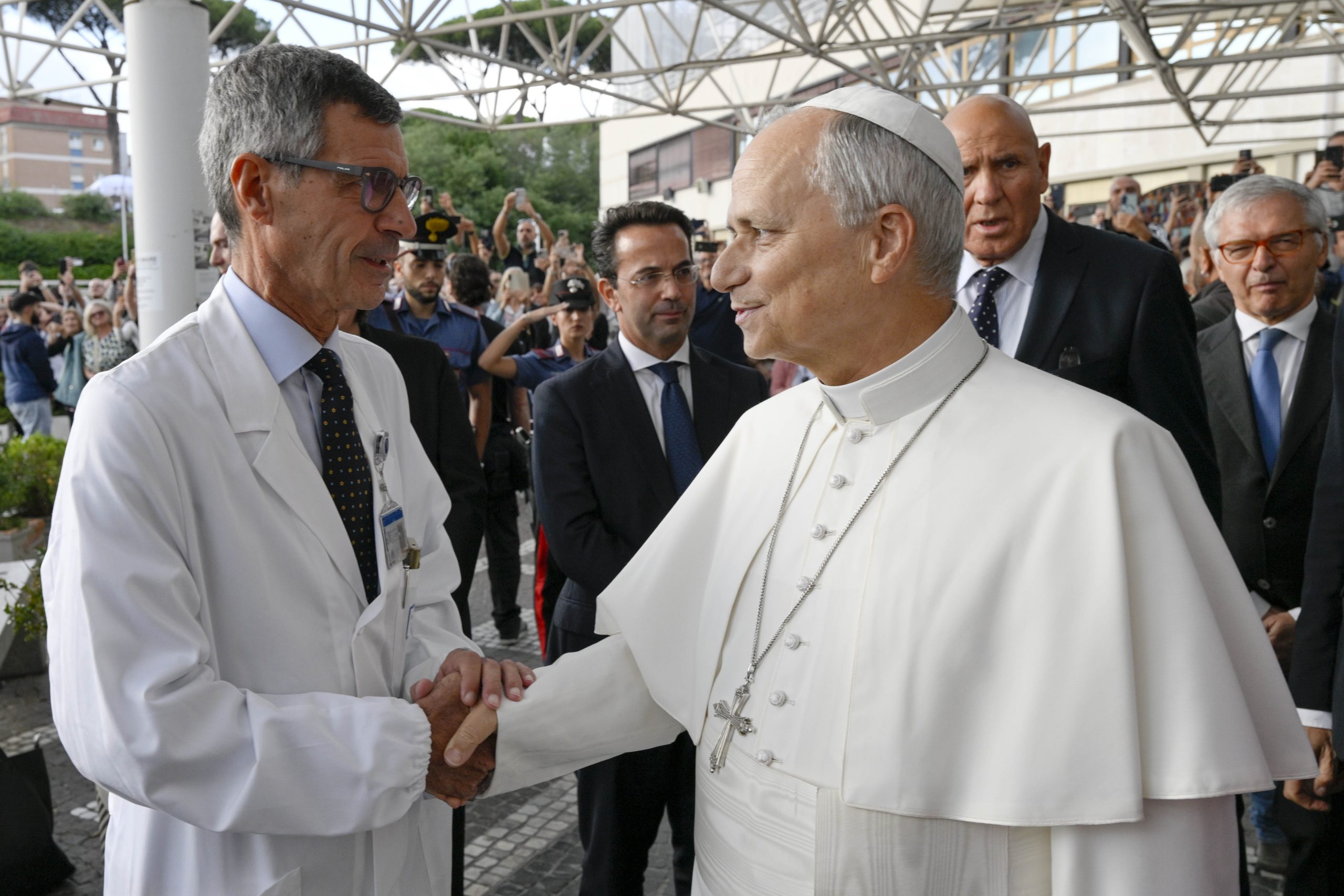
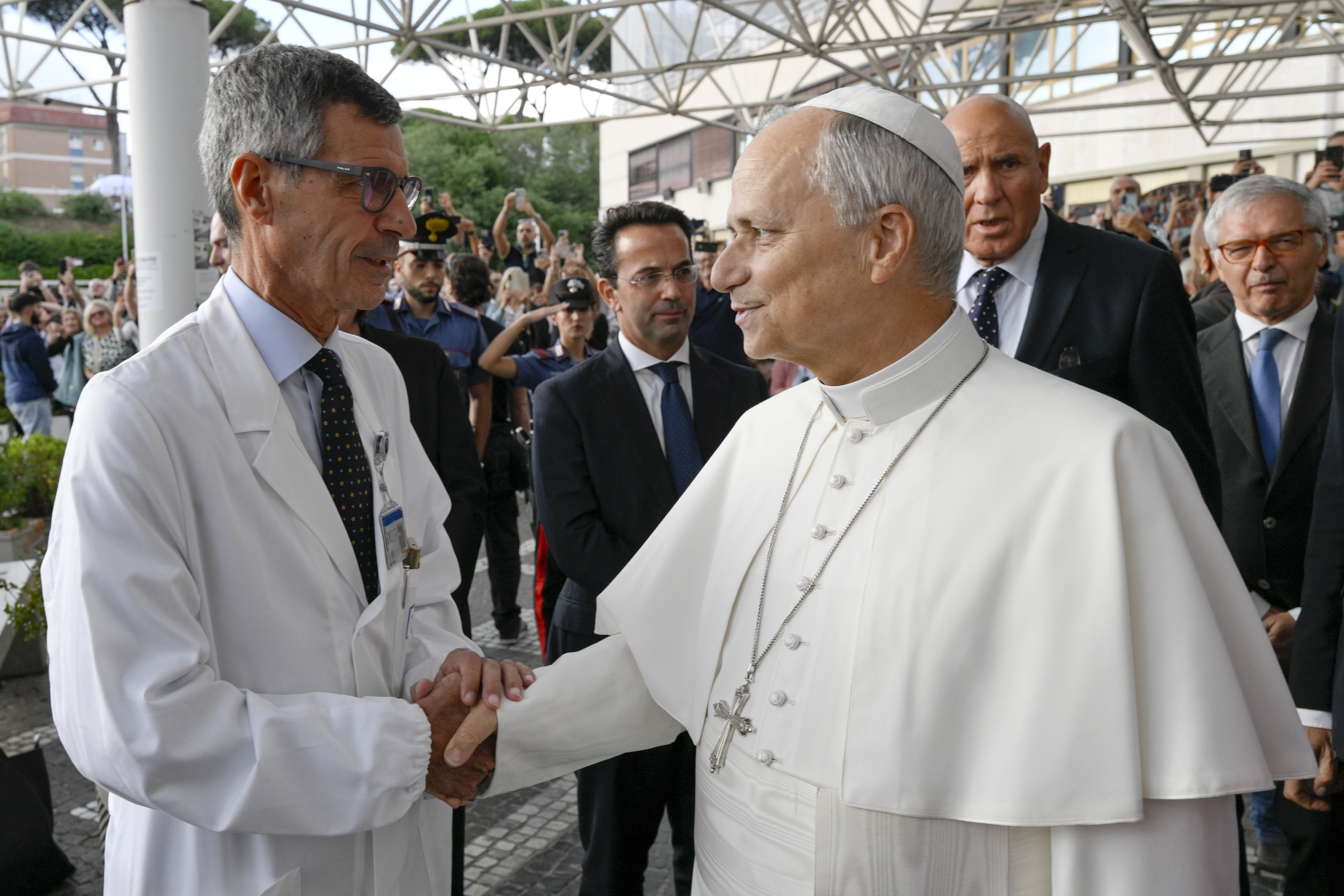
Pope Leo XIV leaves Gemelli Hospital, returns to Vatican – #Catholic – Pope Leo XIV left the Agostino Gemelli University Hospital shortly after 3:30 p.m. local time on Saturday to return to the Vatican. TweetThe 71-year-old pope had been admitted last Tuesday and underwent surgery just hours later to remove the lower lobe of his right lung. The procedure, which lasted about an hour and a half, was performed using a video-assisted technique, while an intraoperative histological examination confirmed a diagnosis of pulmonary adenocarcinoma. 
 
 Pope Leo XIV concludes his stay at the Gemelli Hospital on Oct. 17, 2026. | Credit Vatican Media
 
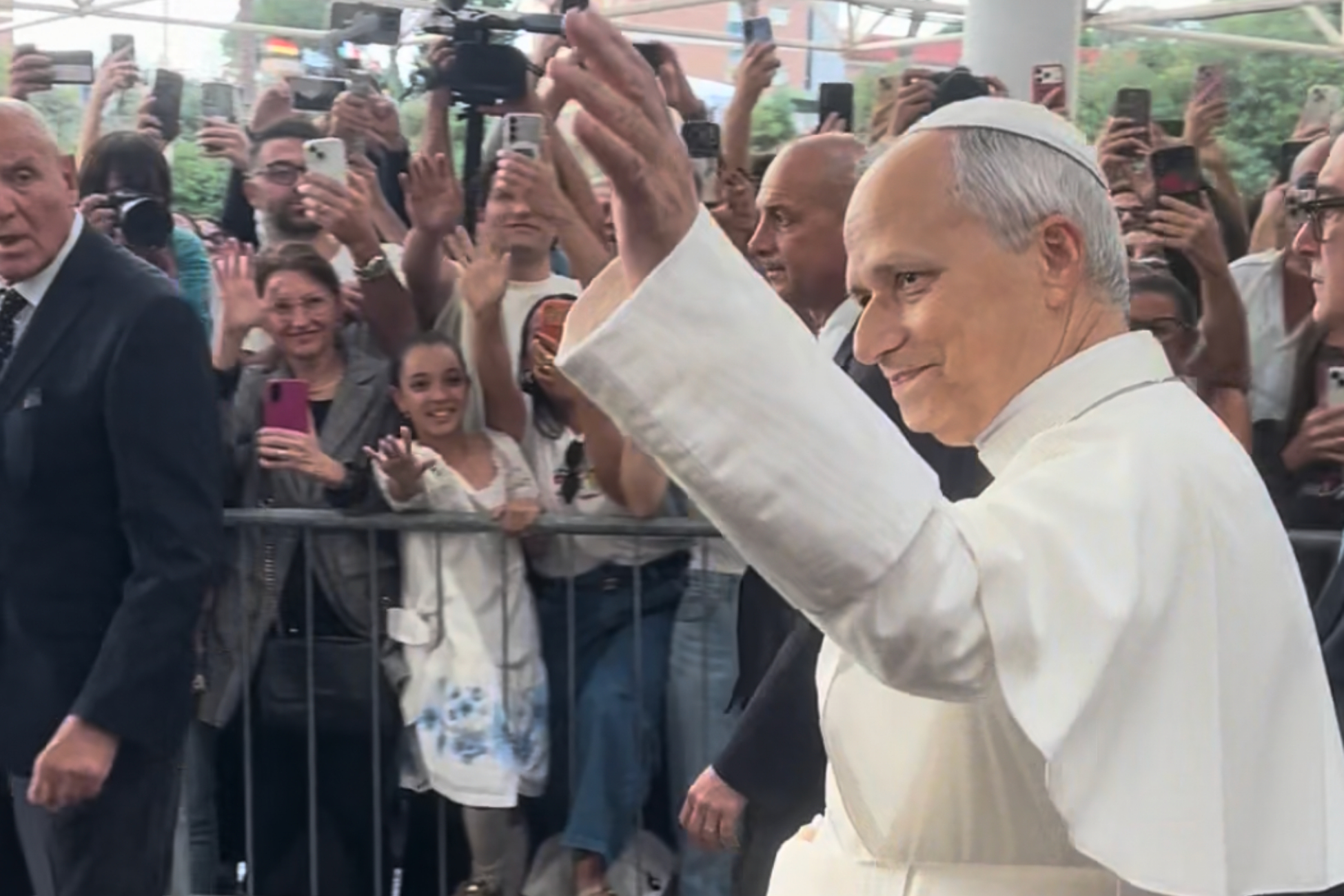
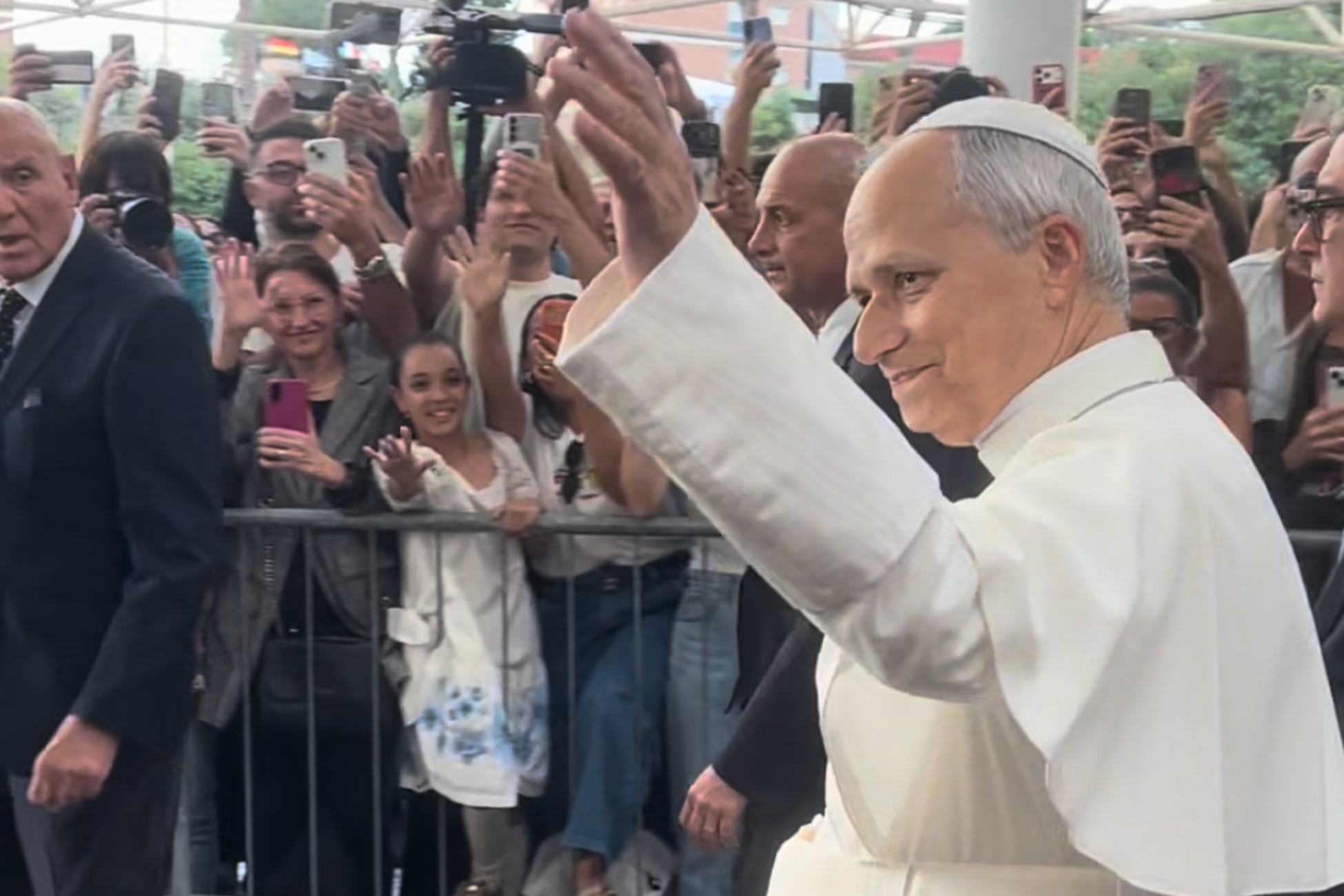
 His discharge from the hospital was announced by the pontiff’s attending physician, Dr. Luigi Carbone, and the surgeon who performed the operation, Professor Stefano Margaritora. As he left, the pope greeted the faithful gathered along the barriers. Daniele Franco, chairman of the board of the Gemelli University Hospital Foundation, was also there to welcome the pontiff upon his exit. Before getting into the car, Leo greeted several members of the faithful who presented him with gifts. The pope did not stay in the papal suite on the hospitalʼs 10th floor, as it was undergoing renovation, but rather in adjacent rooms on the same floor.
 
 Pope Leo XIV is seen here blessing a group outside Gemelli Hospital on Oct. 17, 2026. | Credit: Vatican Media
 
 Yesterday, the first postoperative images of the pope were released, showing Leo XIV presiding over Mass in a room at the Policlinico hospital that had been specially set up for the celebration. Beside the pope was his personal secretary, Monsignor Edgard Iván Rimaycuna Inga. Around noon Saturday, Oct. 17, the pope also celebrated Mass before leaving the Roman hospital, the Holy See Press Office reported. In the days following the surgery, Leo XIV has resumed his work, meeting at the hospital on various occasions with Archbishop Paolo Rudelli, substitute for general affairs of the Secretariat of State; Cardinal Luis Antonio Tagle, dean of the College of Cardinals; and Cardinal Baldassare Reina, vicar general of His Holiness for the Diocese of Rome. On Friday, the press office also reported on a telephone conversation between the pope and Russian President Vladimir Putin. 
 
 Pope Leo XIV appears in good spirits as he departs Gemelli Hospital on Oct. 17, 2026. | Credit: Vatican Media
 
 Sunday morning at noon, the pope will appear at the window of his study in the Apostolic Palace for the customary recitation of the Angelus. It was only last Sunday that Leo XIV himself, at the conclusion of the Angelus prayer, announced the news of his imminent hospitalization and the associated surgery.This story was first published by ACI Stampa, the Italian-language sister service of EWTN News. It has been translated and adapted by EWTN News English.

Pope Leo XIV leaves Gemelli Hospital, returns to Vatican – #Catholic – Pope Leo XIV left the Agostino Gemelli University Hospital shortly after 3:30 p.m. local time on Saturday to return to the Vatican. TweetThe 71-year-old pope had been admitted last Tuesday and underwent surgery just hours later to remove the lower lobe of his right lung. The procedure, which lasted about an hour and a half, was performed using a video-assisted technique, while an intraoperative histological examination confirmed a diagnosis of pulmonary adenocarcinoma. Pope Leo XIV concludes his stay at the Gemelli Hospital on Oct. 17, 2026. | Credit Vatican Media His discharge from the hospital was announced by the pontiff’s attending physician, Dr. Luigi Carbone, and the surgeon who performed the operation, Professor Stefano Margaritora. As he left, the pope greeted the faithful gathered along the barriers. Daniele Franco, chairman of the board of the Gemelli University Hospital Foundation, was also there to welcome the pontiff upon his exit. Before getting into the car, Leo greeted several members of the faithful who presented him with gifts. The pope did not stay in the papal suite on the hospitalʼs 10th floor, as it was undergoing renovation, but rather in adjacent rooms on the same floor. Pope Leo XIV is seen here blessing a group outside Gemelli Hospital on Oct. 17, 2026. | Credit: Vatican Media Yesterday, the first postoperative images of the pope were released, showing Leo XIV presiding over Mass in a room at the Policlinico hospital that had been specially set up for the celebration. Beside the pope was his personal secretary, Monsignor Edgard Iván Rimaycuna Inga. Around noon Saturday, Oct. 17, the pope also celebrated Mass before leaving the Roman hospital, the Holy See Press Office reported. In the days following the surgery, Leo XIV has resumed his work, meeting at the hospital on various occasions with Archbishop Paolo Rudelli, substitute for general affairs of the Secretariat of State; Cardinal Luis Antonio Tagle, dean of the College of Cardinals; and Cardinal Baldassare Reina, vicar general of His Holiness for the Diocese of Rome. On Friday, the press office also reported on a telephone conversation between the pope and Russian President Vladimir Putin. Pope Leo XIV appears in good spirits as he departs Gemelli Hospital on Oct. 17, 2026. | Credit: Vatican Media Sunday morning at noon, the pope will appear at the window of his study in the Apostolic Palace for the customary recitation of the Angelus. It was only last Sunday that Leo XIV himself, at the conclusion of the Angelus prayer, announced the news of his imminent hospitalization and the associated surgery.This story was first published by ACI Stampa, the Italian-language sister service of EWTN News. It has been translated and adapted by EWTN News English.

The 71-year-old pope had been admitted last Tuesday and underwent surgery to remove the lower lobe of his right lung.

Read More
For the first time in 5 years, the number of priests worldwide rose – #Catholic – The number of Catholic priests worldwide has risen again after five years of no growth, according to statistics published by the Vatican agency Fides ahead of the 100th World Mission Sunday, which will be celebrated Sunday, Oct. 18.According to the Fides report, the total number of priests rose from 406,996 to 407,421, representing an increase of 425 compared with the previous year. The Vatican agency noted that the data comes from the Statistical Yearbook of the Church and is current as of Dec. 31, 2024.Africa recorded the largest increase with 1,676 more priests, followed by Asia with 1,065. The Americas also reversed the previous yearʼs downward trend, adding 199 priests.In contrast, Europe lost 2,483 priests over the course of the year, while Oceania recorded a decrease of 32.The overall increase is attributed to the growth in the number of diocesan priests, which reached 279,238, an increase of 496 compared with the previous count. Meanwhile, the number of religious order priests fell by 71, standing at 128,183.Despite the increase in the number of priests, the number of Catholics per priest also rose, reaching 3,491 — an increase of 38 compared with the previous year. The average number of inhabitants per priest also climbed, reaching 16,104.At 1.4 billion, Catholics are 18% of global populationFides statistics further indicated that the global Catholic population reached 1,422,144,000 as of June 30, 2024, an increase of 16.69 million over the previous year. Based on these figures, Catholics represent 17.8% of the worldʼs population.Africa saw the largest growth in the number of Catholics, with an increase of 7.58 million, followed by the Americas, with a rise of nearly 7 million. Asia added 968,000, Europe 911,000, and Oceania 239,000.Number of seminarians worldwide decreasesWhile the number of priests is rising, the number of seminarians is decreasing. The number of major seminarians stood at 103,604 worldwide, a decrease of 2,891 from the previous year.Africa was the only continent to record growth, with 786 additional seminarians, whereas Asia saw a decline of 2,733, Europe 701, the Americas 227, and Oceania 16.The number of minor seminarians also decreased, falling to 94,041, which is 980 fewer than in the previous count. Africa reversed the previous yearʼs trend, adding 132, while Oceania recorded an increase of 20. In contrast, Europe lost 872, Asia 182, and the Americas 78.Catholic Church’s educational and charitable work Fides also compiles figures on the Churchʼs educational work around the world. Globally, the Church administers 75,448 kindergartens with over 7.4 million pupils; 103,666 primary schools attended by more than 36.3 million students; and 51,810 secondary schools with over 20.3 million students.Joining them are nearly 2.7 million students in higher education centers and more than 4 million in university institutions affiliated with the Catholic Church.In its healthcare and social assistance work, the Church manages 101,110 facilities worldwide. These include 5,397 hospitals, 13,646 dispensaries, 16,263 homes for the elderly, the chronically ill, and people with disabilities, 8,138 orphanages, 10,624 marriage counseling centers, and 3,194 social education or rehabilitation centers.This story was first published by EWTN News Español, the Spanish-language sister service of EWTN News. It has been translated and adapted by EWTN News English.

For the first time in 5 years, the number of priests worldwide rose – #Catholic – The number of Catholic priests worldwide has risen again after five years of no growth, according to statistics published by the Vatican agency Fides ahead of the 100th World Mission Sunday, which will be celebrated Sunday, Oct. 18.According to the Fides report, the total number of priests rose from 406,996 to 407,421, representing an increase of 425 compared with the previous year. The Vatican agency noted that the data comes from the Statistical Yearbook of the Church and is current as of Dec. 31, 2024.Africa recorded the largest increase with 1,676 more priests, followed by Asia with 1,065. The Americas also reversed the previous yearʼs downward trend, adding 199 priests.In contrast, Europe lost 2,483 priests over the course of the year, while Oceania recorded a decrease of 32.The overall increase is attributed to the growth in the number of diocesan priests, which reached 279,238, an increase of 496 compared with the previous count. Meanwhile, the number of religious order priests fell by 71, standing at 128,183.Despite the increase in the number of priests, the number of Catholics per priest also rose, reaching 3,491 — an increase of 38 compared with the previous year. The average number of inhabitants per priest also climbed, reaching 16,104.At 1.4 billion, Catholics are 18% of global populationFides statistics further indicated that the global Catholic population reached 1,422,144,000 as of June 30, 2024, an increase of 16.69 million over the previous year. Based on these figures, Catholics represent 17.8% of the worldʼs population.Africa saw the largest growth in the number of Catholics, with an increase of 7.58 million, followed by the Americas, with a rise of nearly 7 million. Asia added 968,000, Europe 911,000, and Oceania 239,000.Number of seminarians worldwide decreasesWhile the number of priests is rising, the number of seminarians is decreasing. The number of major seminarians stood at 103,604 worldwide, a decrease of 2,891 from the previous year.Africa was the only continent to record growth, with 786 additional seminarians, whereas Asia saw a decline of 2,733, Europe 701, the Americas 227, and Oceania 16.The number of minor seminarians also decreased, falling to 94,041, which is 980 fewer than in the previous count. Africa reversed the previous yearʼs trend, adding 132, while Oceania recorded an increase of 20. In contrast, Europe lost 872, Asia 182, and the Americas 78.Catholic Church’s educational and charitable work Fides also compiles figures on the Churchʼs educational work around the world. Globally, the Church administers 75,448 kindergartens with over 7.4 million pupils; 103,666 primary schools attended by more than 36.3 million students; and 51,810 secondary schools with over 20.3 million students.Joining them are nearly 2.7 million students in higher education centers and more than 4 million in university institutions affiliated with the Catholic Church.In its healthcare and social assistance work, the Church manages 101,110 facilities worldwide. These include 5,397 hospitals, 13,646 dispensaries, 16,263 homes for the elderly, the chronically ill, and people with disabilities, 8,138 orphanages, 10,624 marriage counseling centers, and 3,194 social education or rehabilitation centers.This story was first published by EWTN News Español, the Spanish-language sister service of EWTN News. It has been translated and adapted by EWTN News English.

The Catholic Church has 407,421 priests, 425 more than the previous year. Africa and Asia are driving this growth, while Europe recorded another decline.

Read More
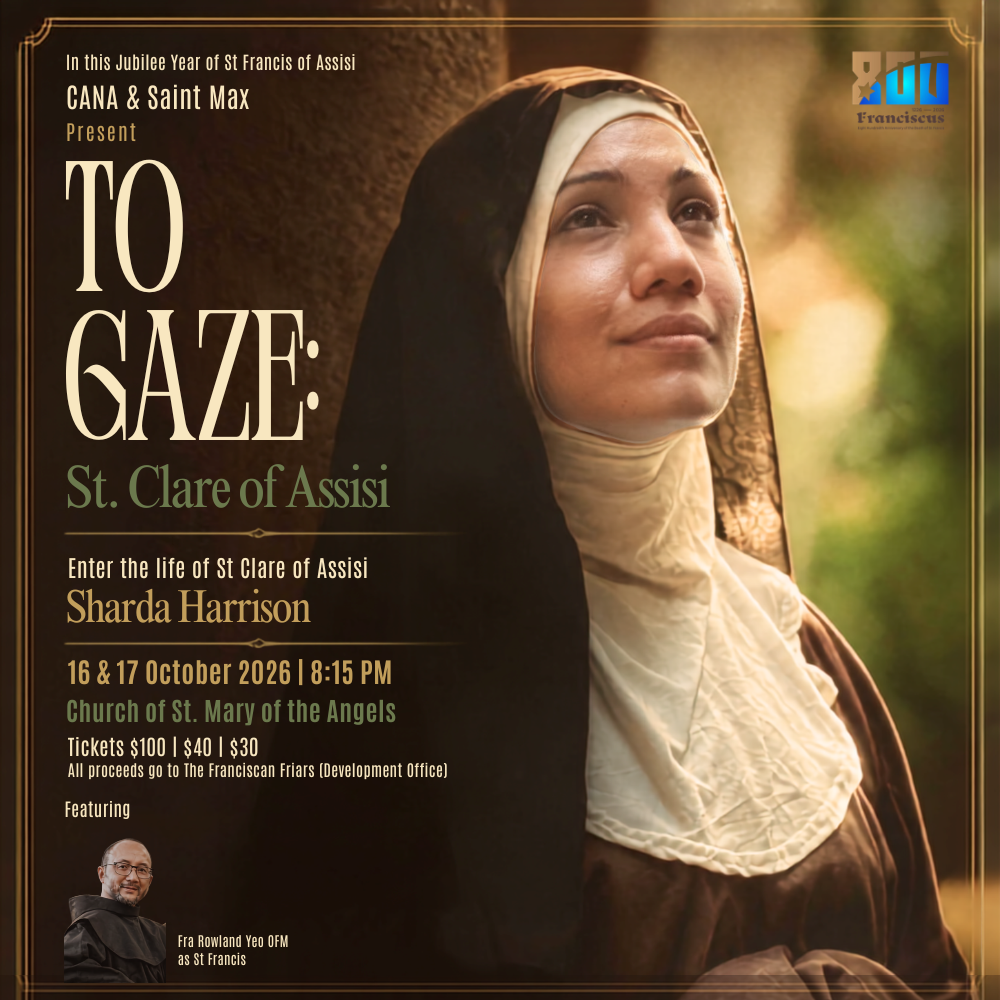
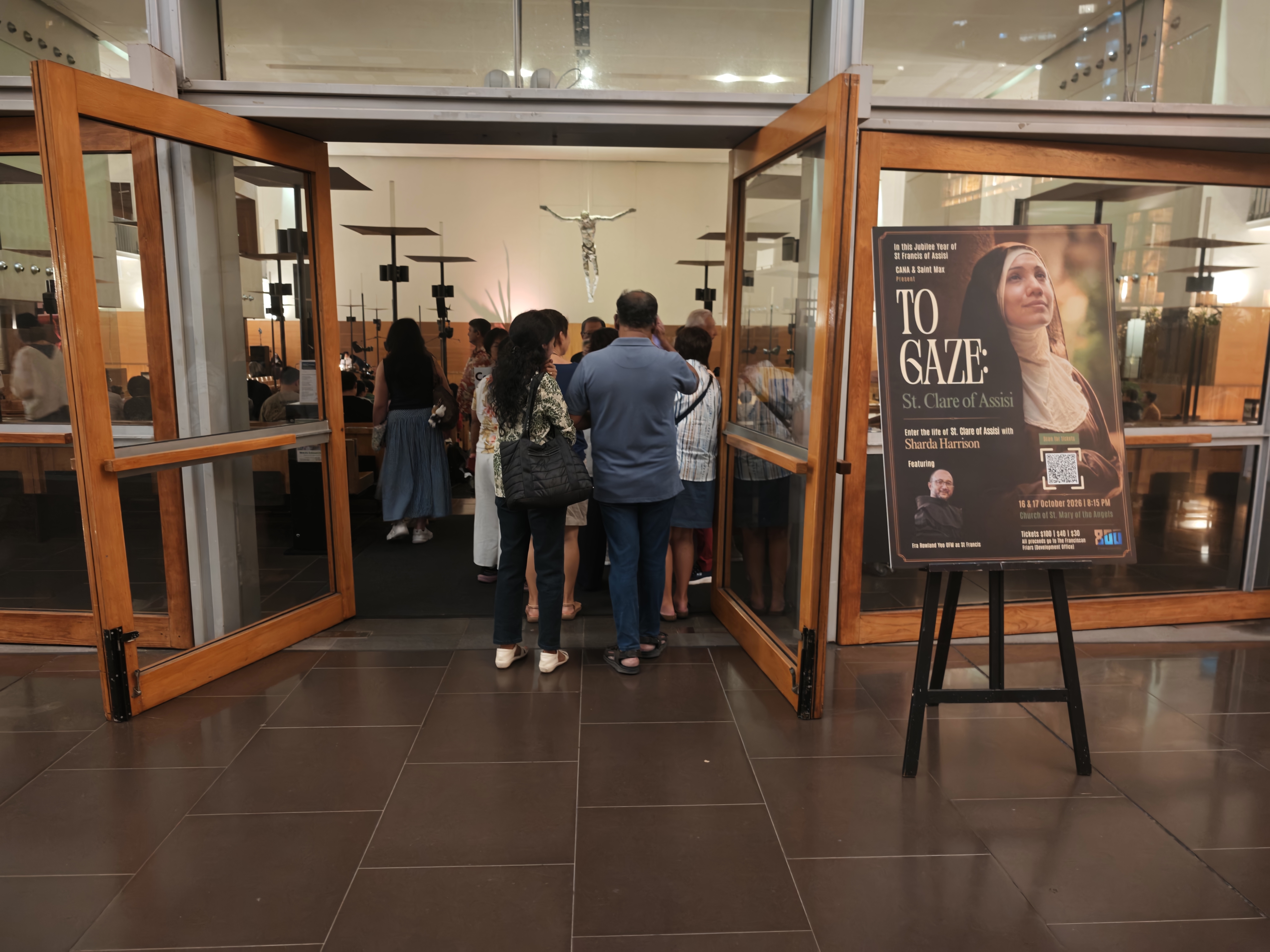
In a wealthy Asian city, a play asks why St. Clare of Assisi chose to own nothing #Catholic SINGAPORE — St. Clare of Assisi, as she appears on a church stage in Singapore this week, opens her story with a list of what her family owned. “We had money, we had servants … we had horses,” she tells the audience. “We had everything, but for a girl like me, my life was already written for me.”The line comes early in “TO GAZE: St. Clare of Assisi,” performed Oct. 16 and 17 at the Church of St. Mary of the Angels, a Catholic parish in Bukit Batok in western Singapore served by Franciscan friars.
 
 The official poster for “TO GAZE: St. Clare of Assisi,” presented by CANA and Saint Max in Singapore Oct. 16–17, 2026, for the Jubilee Year of St. Francis, with Sharda Harrison as St. Clare and Fra Rowland Yeo, OFM, as St. Francis. | Credit: Courtesy of CANA and Saint Max
 
 Presented by CANA, a faith-based community and cultural hub in Singapore, and Saint Max, the production is part of the celebrations of the Jubilee Year of St. Francis of Assisi, which the worldwide Franciscan family has held to mark 800 years since Francis died in October 1226.Actress Sharda Harrison wrote the script and plays the role of Clare; according to the organizers, she also directed the show. Fra Rowland Yeo, OFM, a Franciscan friar, plays St. Francis, and the productionʼs poster says all proceeds go to the development office of the Franciscan friars.
 
 Fra Michael D’Cruz, OFM, welcomes the audience before the performance Oct. 16, 2026, in Singapore. | Credit: Benedict Tang
 
 An organizer from CANA who asked not to be named said that after a year of jubilee celebrations for Francis, the play was a fitting way to close the celebration with “the precious legacy of St. Clare.” The group turned to Harrison, the organizer said, because she had portrayed St. Thérèse of Lisieux for them in 2024 in “St. Thérèse: The Little Way,” a play she also wrote and directed.Asked what audiences should take home, the organizer answered with a question: “Why is poverty a privilege? … Why is this crazy lady Clare so resolved to live it?” The second and last performance falls on Oct. 17, the United Nations' International Day for the Eradication of Poverty.
 
 Sharda Harrison, barefoot, addresses the audience as St. Clare at the first performance of “TO GAZE: St. Clare of Assisi,” Oct. 16, 2026. | Credit: Benedict Tang
 
 Medieval marriage, modern ‘swiping’In a city-state where Catholics live alongside Buddhists, Muslims, Hindus, Taoists, and others, the script reaches for references from everyday modern life. When Clareʼs father looks for a husband for her, suitors appear on a large screen: Guido, Bernardo, and Silvestro, “my fatherʼs favorite.” Clare asks the audience to vote. “In your time … you swipe right if you like the boy, and you swipe left if you donʼt like the boy,” she says.The comedy gives way to the turning point of her life. Clare describes Francis as a merchantʼs son “born into wealth just like me.” She says: “I realized that I had everything, but I wanted none of it.” She slips out of her family home on Palm Sunday night, has her hair cut before Francis, and faces her furious father: “I belong to Christ now, Father.”It is not a one-woman show. Other actors play Clareʼs companions and the early friars, and Clare pulls women from the audience into the story, choosing them as “sisters” and giving them vows as her community grows.
 
 Clare’s hair is cut as she gives up her life of privilege, with Fra Rowland Yeo, OFM, as St. Francis, at a performance in Singapore on Oct. 16, 2026. | Credit: Benedict Tang
 
 ‘The right to possess nothing’Poverty runs through the script. Clare recalls that her mother, Ortolana, “saw God everywhere, especially in the poor,” and adds: “They were not hidden like today.”“This is what it means to live in the privilege of poverty,” she says, “to be given the right to possess nothing.” The world, she tells them, “did not understand. Not even the Church.”The title of the play echoes Clareʼs letters to St. Agnes of Prague, a princess who, in the playʼs words, “decided to give up everything to become a poor lady.” In welcoming remarks before the curtain, Fra Michael DʼCruz, OFM, the Franciscan friar overseeing the event for the parish, quoted those letters and described how the two saints, Clare and Francis, worked together. “Francis was the voice; Clare was the quiet powerhouse of prayer,” he said.Near the end, Clare looks back on a life of refusals. “Perhaps saying no was never the whole point,” she says. “I had to learn how to say yes, yes to Christ, yes to poverty.”After the cast took their bow on opening night, Harrison dropped Clareʼs Italian accent to thank those present “for wanting to be here to listen to Clareʼs story,” promising “a bigger, grander farewell” for the last night.St. Clare died in 1253 at San Damiano, near Assisi, Italy, her home “for the next 40 years,” as she says in the script.

In a wealthy Asian city, a play asks why St. Clare of Assisi chose to own nothing #Catholic SINGAPORE — St. Clare of Assisi, as she appears on a church stage in Singapore this week, opens her story with a list of what her family owned. “We had money, we had servants … we had horses,” she tells the audience. “We had everything, but for a girl like me, my life was already written for me.”The line comes early in “TO GAZE: St. Clare of Assisi,” performed Oct. 16 and 17 at the Church of St. Mary of the Angels, a Catholic parish in Bukit Batok in western Singapore served by Franciscan friars. The official poster for “TO GAZE: St. Clare of Assisi,” presented by CANA and Saint Max in Singapore Oct. 16–17, 2026, for the Jubilee Year of St. Francis, with Sharda Harrison as St. Clare and Fra Rowland Yeo, OFM, as St. Francis. | Credit: Courtesy of CANA and Saint Max Presented by CANA, a faith-based community and cultural hub in Singapore, and Saint Max, the production is part of the celebrations of the Jubilee Year of St. Francis of Assisi, which the worldwide Franciscan family has held to mark 800 years since Francis died in October 1226.Actress Sharda Harrison wrote the script and plays the role of Clare; according to the organizers, she also directed the show. Fra Rowland Yeo, OFM, a Franciscan friar, plays St. Francis, and the productionʼs poster says all proceeds go to the development office of the Franciscan friars. Fra Michael D’Cruz, OFM, welcomes the audience before the performance Oct. 16, 2026, in Singapore. | Credit: Benedict Tang An organizer from CANA who asked not to be named said that after a year of jubilee celebrations for Francis, the play was a fitting way to close the celebration with “the precious legacy of St. Clare.” The group turned to Harrison, the organizer said, because she had portrayed St. Thérèse of Lisieux for them in 2024 in “St. Thérèse: The Little Way,” a play she also wrote and directed.Asked what audiences should take home, the organizer answered with a question: “Why is poverty a privilege? … Why is this crazy lady Clare so resolved to live it?” The second and last performance falls on Oct. 17, the United Nations' International Day for the Eradication of Poverty. Sharda Harrison, barefoot, addresses the audience as St. Clare at the first performance of “TO GAZE: St. Clare of Assisi,” Oct. 16, 2026. | Credit: Benedict Tang Medieval marriage, modern ‘swiping’In a city-state where Catholics live alongside Buddhists, Muslims, Hindus, Taoists, and others, the script reaches for references from everyday modern life. When Clareʼs father looks for a husband for her, suitors appear on a large screen: Guido, Bernardo, and Silvestro, “my fatherʼs favorite.” Clare asks the audience to vote. “In your time … you swipe right if you like the boy, and you swipe left if you donʼt like the boy,” she says.The comedy gives way to the turning point of her life. Clare describes Francis as a merchantʼs son “born into wealth just like me.” She says: “I realized that I had everything, but I wanted none of it.” She slips out of her family home on Palm Sunday night, has her hair cut before Francis, and faces her furious father: “I belong to Christ now, Father.”It is not a one-woman show. Other actors play Clareʼs companions and the early friars, and Clare pulls women from the audience into the story, choosing them as “sisters” and giving them vows as her community grows. Clare’s hair is cut as she gives up her life of privilege, with Fra Rowland Yeo, OFM, as St. Francis, at a performance in Singapore on Oct. 16, 2026. | Credit: Benedict Tang ‘The right to possess nothing’Poverty runs through the script. Clare recalls that her mother, Ortolana, “saw God everywhere, especially in the poor,” and adds: “They were not hidden like today.”“This is what it means to live in the privilege of poverty,” she says, “to be given the right to possess nothing.” The world, she tells them, “did not understand. Not even the Church.”The title of the play echoes Clareʼs letters to St. Agnes of Prague, a princess who, in the playʼs words, “decided to give up everything to become a poor lady.” In welcoming remarks before the curtain, Fra Michael DʼCruz, OFM, the Franciscan friar overseeing the event for the parish, quoted those letters and described how the two saints, Clare and Francis, worked together. “Francis was the voice; Clare was the quiet powerhouse of prayer,” he said.Near the end, Clare looks back on a life of refusals. “Perhaps saying no was never the whole point,” she says. “I had to learn how to say yes, yes to Christ, yes to poverty.”After the cast took their bow on opening night, Harrison dropped Clareʼs Italian accent to thank those present “for wanting to be here to listen to Clareʼs story,” promising “a bigger, grander farewell” for the last night.St. Clare died in 1253 at San Damiano, near Assisi, Italy, her home “for the next 40 years,” as she says in the script.

A Catholic parish in western Singapore hosted the play “TO GAZE: St. Clare of Assisi” as part of celebrations for the Jubilee Year of St. Francis of Assisi.

Read More
German bishops join initiative for ‘child-friendly’ artificial intelligence #Catholic The German Bishops' Conference has joined an initiative that aims to make artificial intelligence safe and suitable for children, citing Pope Leo XIVʼs call to defend human dignity in the age of AI.The initiative, called “KI kindgerecht!” (“Child-friendly AI!”), also involves Germanyʼs biggest Protestant body and an association of childrenʼs websites.“AI is already embedded in many digital applications,” said Bishop Georg Bätzing of Limburg, who chairs the bishops' media commission, in a statement Oct. 14."With the encyclical Magnifica Humanitas, Pope Leo XIV gives the Church a clear mandate: In the age of artificial intelligence, we must defend human dignity — especially where children are easily exposed to danger."The initiative “combines protection, participation, and responsibility, and makes clear that digital spaces must serve the good of the child,” he said.Responsibility must not be “shifted onto parents alone,” Bätzing added. “Precisely because we know how vulnerable children are, we see it as our duty to act as advocates for this group in need of protection — in the digital space as well. Technology must serve the human person, not purely economic interests.”The Church in Germany is working with academics, educators, and interested providers on a code of conduct for child-friendly interactive AI, built on five principles: safety by design, respect for childrenʼs rights, age-appropriate spaces for participation, data protection, and human review.The bishops also said providers “must be obliged to comply with child-friendly standards” and called for lasting investment in media education so children, parents, and teachers can learn to use AI confidently.Vatican sharpens focusThe German initiative comes as the Church globally wrestles with AI and the Vatican sharpens its own focus on minors online.At its Sept. 28–Oct. 2 plenary assembly in Rome, the Pontifical Commission for the Protection of Minors examined how digital technologies, AI, and websites are used in the pastoral care of children and backed wider collaboration with international partners and Curia offices so that “the dignity, safety, and wellbeing of children remain at the heart of technological development and governance,” Vatican News reported.In March, Pope Leo XIV warned: “We must not allow children to end up believing they can find in artificial intelligence chatbots their best friends or the oracle of all knowledge, dulling their intelligence and their capacity for relationships, and numbing their creativity and thinking.”
 
 Pope Leo XIV warns children should not look to chatbots for friendship
 
 Receiving participants of a Rome conference on “The Dignity of Children and Adolescents in the Age of Artificial Intelligence” on Nov. 13, 2025, Leo also warned that “children and adolescents are particularly vulnerable to manipulation through AI algorithms that can influence their decisions and preferences.”In Magnifica Humanitas, the encyclical on artificial intelligence published May 25, the pope wrote that “online phenomena such as grooming, blackmail, and the sexual exploitation of minors are not uncommon, and are made more insidious by the use of fake profiles, algorithms that facilitate dangerous contact, and AI tools capable of manipulating images and videos.”This story was first published by CNA Deutsch, the German-language sister service of EWTN News, and has been translated and adapted by EWTN News English.

German bishops join initiative for ‘child-friendly’ artificial intelligence #Catholic The German Bishops' Conference has joined an initiative that aims to make artificial intelligence safe and suitable for children, citing Pope Leo XIVʼs call to defend human dignity in the age of AI.The initiative, called “KI kindgerecht!” (“Child-friendly AI!”), also involves Germanyʼs biggest Protestant body and an association of childrenʼs websites.“AI is already embedded in many digital applications,” said Bishop Georg Bätzing of Limburg, who chairs the bishops' media commission, in a statement Oct. 14."With the encyclical Magnifica Humanitas, Pope Leo XIV gives the Church a clear mandate: In the age of artificial intelligence, we must defend human dignity — especially where children are easily exposed to danger."The initiative “combines protection, participation, and responsibility, and makes clear that digital spaces must serve the good of the child,” he said.Responsibility must not be “shifted onto parents alone,” Bätzing added. “Precisely because we know how vulnerable children are, we see it as our duty to act as advocates for this group in need of protection — in the digital space as well. Technology must serve the human person, not purely economic interests.”The Church in Germany is working with academics, educators, and interested providers on a code of conduct for child-friendly interactive AI, built on five principles: safety by design, respect for childrenʼs rights, age-appropriate spaces for participation, data protection, and human review.The bishops also said providers “must be obliged to comply with child-friendly standards” and called for lasting investment in media education so children, parents, and teachers can learn to use AI confidently.Vatican sharpens focusThe German initiative comes as the Church globally wrestles with AI and the Vatican sharpens its own focus on minors online.At its Sept. 28–Oct. 2 plenary assembly in Rome, the Pontifical Commission for the Protection of Minors examined how digital technologies, AI, and websites are used in the pastoral care of children and backed wider collaboration with international partners and Curia offices so that “the dignity, safety, and wellbeing of children remain at the heart of technological development and governance,” Vatican News reported.In March, Pope Leo XIV warned: “We must not allow children to end up believing they can find in artificial intelligence chatbots their best friends or the oracle of all knowledge, dulling their intelligence and their capacity for relationships, and numbing their creativity and thinking.” Pope Leo XIV warns children should not look to chatbots for friendship Receiving participants of a Rome conference on “The Dignity of Children and Adolescents in the Age of Artificial Intelligence” on Nov. 13, 2025, Leo also warned that “children and adolescents are particularly vulnerable to manipulation through AI algorithms that can influence their decisions and preferences.”In Magnifica Humanitas, the encyclical on artificial intelligence published May 25, the pope wrote that “online phenomena such as grooming, blackmail, and the sexual exploitation of minors are not uncommon, and are made more insidious by the use of fake profiles, algorithms that facilitate dangerous contact, and AI tools capable of manipulating images and videos.”This story was first published by CNA Deutsch, the German-language sister service of EWTN News, and has been translated and adapted by EWTN News English.

Citing Pope Leo XIV’s call to defend human dignity in the age of AI, the German Bishops’ Conference has joined an initiative to make artificial intelligence safe for children.

Read More

Looking for a sky event this week? Check out our full Sky This Week column.  October 16: Tethys and its shadow transit Still visible for several hours after sunset is the Wild Duck Cluster (M11), a young grouping of stars also cataloged as NGC 6705. Located in Scutum the Shield, the cluster is still 40° high inContinue reading “The Sky Today on Saturday, October 17: Watch Wild Ducks”

The post The Sky Today on Saturday, October 17: Watch Wild Ducks appeared first on Astronomy Magazine.

Read More