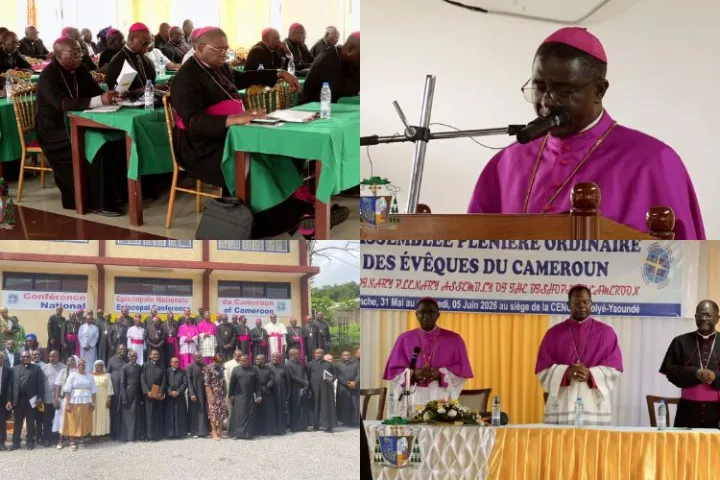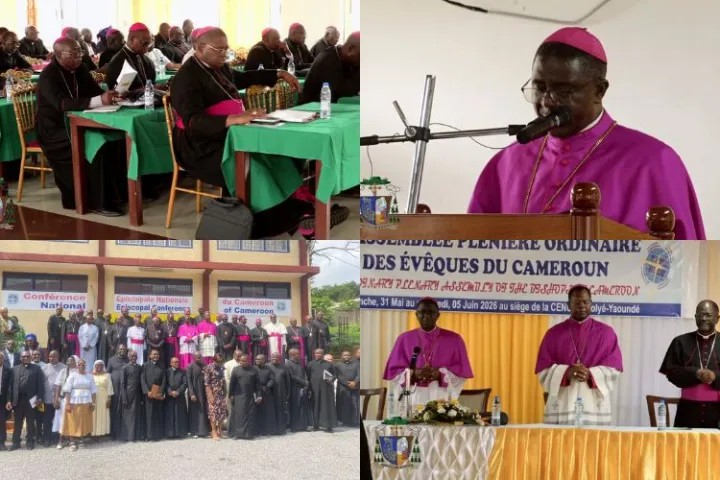
YAOUNDE, Cameroon — The president of the National Episcopal Conference of Cameroon (NECC), Archbishop Andrew Fuanya Nkea, has renewed the Catholic Church’s call for peace and dialogue, urging both Church leaders and political authorities to address the root causes of conflict as the country continues to face security, political, and socio-economic challenges.
Speaking during the opening ceremony of the 51st Plenary Assembly of NECC members, the archbishop emphasized that peace must remain a national priority, particularly in Cameroon’s conflict-affected northwest, southwest, and far north regions.
“Peace is a fundamental human right, indispensable for the development of peoples, social cohesion, economic progress, and respect for human dignity,” Nkea said on Tuesday, June 2.
The leader of Cameroon’s Bamenda Archdiocese reflected on the April 15–18 apostolic journey of Pope Leo XIV to Cameroon, describing it as a historic moment for the local Church and a source of renewed hope for the nation.
“At a time when our Church and our country needed it most, he accepted, against all odds, even risking his own life, to come and comfort us and renew in us the hope that does not disappoint,” Nkea said.
He also highlighted the Holy Father’s appeal for reconciliation and an end to violence, recalling that Pope Leo XIV spoke of the suffering caused by the conflicts affecting parts of Cameroon, including the loss of lives, the displacement of families, disruptions to education, and growing uncertainty among young people.
The Cameroonian archbishop said the Church remains committed to promoting peace, dialogue, and hope while encouraging greater investment in the countryʼs youth as an essential part of building a stable future.
Quoting Pope Leo, Nkea noted that the tensions and violence affecting parts of Cameroon have caused profound suffering, including loss of life, displacement of families, disruption of education, and uncertainty among young people.
“Enough of war, with all the pain it causes through death, destruction, and exile,” the archbishop said, echoing the pope’s call.
He emphasized that peace cannot be achieved solely through political declarations but requires a sincere commitment to dialogue, conversion, justice, and national reconciliation.
“We will never achieve lasting peace without a firm decision to choose the path that leads to it, with all its demands of conversion, love for country, change of mentality, and dialogue,” he said.
As Cameroon prepares for future municipal elections, Nkea called for prayers and vigilance, noting that elections in the country are often accompanied by tensions and violence.
“The appeasement that we contributed to create after the presidential election was not a sign of weakness but a necessity for our society,” he said.
A significant portion of the archbishop’s address focused on the role of young people in building a peaceful and prosperous future.
Drawing from Pope Leoʼs remarks during his visit, the archbishop emphasized that youth remain the nation’s greatest hope.
“Young people represent the hope of the country and of the Church. Their energy and creativity are priceless treasures,” he said.
He warned that unemployment, social exclusion, and lack of opportunities continue to expose many young people to violence, migration, drug abuse, prostitution, and despair.
“Investing in education, training, and entrepreneurship for young people is therefore a strategic choice for peace,” Nkea said.
The NECC president also encouraged the Church in Cameroon to reflect on the popeʼs recent encyclical, Magnifica Humanitas, particularly its teaching on the ethical challenges posed by artificial intelligence (AI) and digital technologies.
“In times marked by the challenges posed by a certain use of digital technology and artificial intelligence, we must discern how to receive the Holy Father’s encyclical in our context,” he said.
Nkea also used the occasion to celebrate the 60th anniversary of NECC, describing the milestone as a testament to six decades of evangelization, ecclesial maturity, and faithful service to the people of God.
The 51st Ordinary Plenary Assembly of the NECC, running from May 31 to June 5, is bringing together Catholic bishops from across Cameroon to review pastoral priorities, discuss national concerns, evaluate Church projects, and strengthen their collective mission of evangelization.
Throughout the gathering, Nkea said, the bishops are to continue praying for peace in Cameroon and around the world while seeking ways to respond to the challenges facing the Church and society.
“We freely chose to come together and persevere in our journey toward eternity. May the Holy Spirit remain the principal protagonist of our communion and collegiality, so that our work may be for the glory of God and the salvation of all,” he said.
This story was first published by ACI Africa, the sister service of EWTN News in Africa, and has been adapted by EWTN News.
Cameroon’s bishops renew call for peace, dialogue as nation faces ongoing crises – #Catholic –
YAOUNDE, Cameroon — The president of the National Episcopal Conference of Cameroon (NECC), Archbishop Andrew Fuanya Nkea, has renewed the Catholic Church’s call for peace and dialogue, urging both Church leaders and political authorities to address the root causes of conflict as the country continues to face security, political, and socio-economic challenges.
Speaking during the opening ceremony of the 51st Plenary Assembly of NECC members, the archbishop emphasized that peace must remain a national priority, particularly in Cameroon’s conflict-affected northwest, southwest, and far north regions.
“Peace is a fundamental human right, indispensable for the development of peoples, social cohesion, economic progress, and respect for human dignity,” Nkea said on Tuesday, June 2.
The leader of Cameroon’s Bamenda Archdiocese reflected on the April 15–18 apostolic journey of Pope Leo XIV to Cameroon, describing it as a historic moment for the local Church and a source of renewed hope for the nation.
“At a time when our Church and our country needed it most, he accepted, against all odds, even risking his own life, to come and comfort us and renew in us the hope that does not disappoint,” Nkea said.
He also highlighted the Holy Father’s appeal for reconciliation and an end to violence, recalling that Pope Leo XIV spoke of the suffering caused by the conflicts affecting parts of Cameroon, including the loss of lives, the displacement of families, disruptions to education, and growing uncertainty among young people.
The Cameroonian archbishop said the Church remains committed to promoting peace, dialogue, and hope while encouraging greater investment in the countryʼs youth as an essential part of building a stable future.
Quoting Pope Leo, Nkea noted that the tensions and violence affecting parts of Cameroon have caused profound suffering, including loss of life, displacement of families, disruption of education, and uncertainty among young people.
“Enough of war, with all the pain it causes through death, destruction, and exile,” the archbishop said, echoing the pope’s call.
He emphasized that peace cannot be achieved solely through political declarations but requires a sincere commitment to dialogue, conversion, justice, and national reconciliation.
“We will never achieve lasting peace without a firm decision to choose the path that leads to it, with all its demands of conversion, love for country, change of mentality, and dialogue,” he said.
As Cameroon prepares for future municipal elections, Nkea called for prayers and vigilance, noting that elections in the country are often accompanied by tensions and violence.
“The appeasement that we contributed to create after the presidential election was not a sign of weakness but a necessity for our society,” he said.
A significant portion of the archbishop’s address focused on the role of young people in building a peaceful and prosperous future.
Drawing from Pope Leoʼs remarks during his visit, the archbishop emphasized that youth remain the nation’s greatest hope.
“Young people represent the hope of the country and of the Church. Their energy and creativity are priceless treasures,” he said.
He warned that unemployment, social exclusion, and lack of opportunities continue to expose many young people to violence, migration, drug abuse, prostitution, and despair.
“Investing in education, training, and entrepreneurship for young people is therefore a strategic choice for peace,” Nkea said.
The NECC president also encouraged the Church in Cameroon to reflect on the popeʼs recent encyclical, Magnifica Humanitas, particularly its teaching on the ethical challenges posed by artificial intelligence (AI) and digital technologies.
“In times marked by the challenges posed by a certain use of digital technology and artificial intelligence, we must discern how to receive the Holy Father’s encyclical in our context,” he said.
Nkea also used the occasion to celebrate the 60th anniversary of NECC, describing the milestone as a testament to six decades of evangelization, ecclesial maturity, and faithful service to the people of God.
The 51st Ordinary Plenary Assembly of the NECC, running from May 31 to June 5, is bringing together Catholic bishops from across Cameroon to review pastoral priorities, discuss national concerns, evaluate Church projects, and strengthen their collective mission of evangelization.
Throughout the gathering, Nkea said, the bishops are to continue praying for peace in Cameroon and around the world while seeking ways to respond to the challenges facing the Church and society.
“We freely chose to come together and persevere in our journey toward eternity. May the Holy Spirit remain the principal protagonist of our communion and collegiality, so that our work may be for the glory of God and the salvation of all,” he said.
This story was first published by ACI Africa, the sister service of EWTN News in Africa, and has been adapted by EWTN News.
The president of the National Episcopal Conference of Cameroon emphasized that peace must remain a national priority, particularly in Cameroon’s conflict-ridden regions.