
“One day we were joking (during the preparations), and he looked at me and said, ‘When they kill me, don’t cry for me. Put up the paschal candle and put up the Easter banner,” emphasized Sister Herlinda Yos, one of the Carmelites. “He started all that, the experience of the Resurrection. That’s why the liturgies are very solid in Atitlan. Padre Francisco invoked a sense of celebration in the liturgy…”
— The Shepherd Who Didn’t Run by Maria Ruiz Scarperlanda
In retrospect, I believe that the first time I heard of Father Stanley Rother was sometime between 2017 and 2019. A very faithful parishioner and volunteer sacristan, Antonio, who was originally from Guatemala, whom I had gotten to know in my years as pastor of St. Michael’s in Brooklyn, told me the story of an American priest who had been serving in Guatemala, had been killed, and had recently been beatified. It sounded like a “nice story.” The priest had certainly made a strong impression on Antonio, who shared with me how this priest had become so close to the parishioners he served in a small town in Guatemala.
A number of years later, in 2022 or 2023, someone gave me a book called The Shepherd Who Didn’t Run — Fr. Stanley Rother, Martyr from Oklahoma. Somewhere in the course of reading the book and learning the story of Father Rother, I realized that “this was the priest Antonio had been telling me about.” I remember being so impressed by Father Rother’s life, vocation, and ministry that I thought I might give a copy of the book to all our seminarians. I also remember hesitating and thinking, “If all or most of our seminarians read this book, we may “lose” some of them because they will be inspired to serve as missionaries in Guatemala or some other area of the world where there are people in poverty who would be blessed by a priest who could serve them, get to know them, and “become one of them.”
As I reflect again on the story of Father Rother, I think of priests from my home diocese of Brooklyn and other places in the United States, who spent time serving as missionaries in Latin America and other places, who inspired me and encouraged me to appreciate how much we can learn and receive from individuals, families, and communities, whose language, culture, and food may be very different from ours. They taught me that taking the time to not only visit, but spend some time living with them and getting to know them, can be a wonderful way to share our faith and experience “the Church.” We are all members of the “one (mystical) Body of Christ,” and one of the most beautiful blessings of our Catholic (Universal) Faith and Church is the way it is received, lived, and shared by people and cultures, literally, all over the world.
While not everyone will have the opportunity to visit a different country and culture for the purpose of sharing the faith, many parishes and other groups within the Church offer “mission trips,” both within the United States and to other countries, to facilitate those opportunities and experiences. Hearing the stories of those who are able to travel on a mission trip can be a blessing for those who are not physically able to make the trip but support the “mission” and missionaries by their donations and especially their prayers.
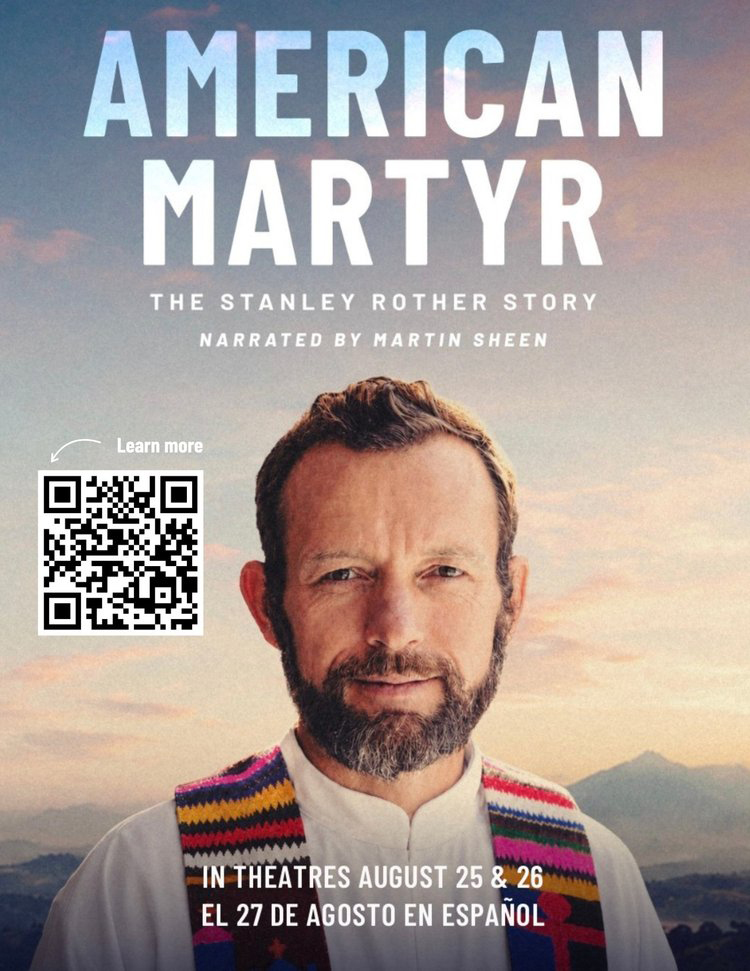
Hearing and learning the story of someone who discerns and lives a missionary vocation can also be a great blessing and inspiration to all the baptized. That was my experience as I learned the story of Father Stanley Rother. Thanks to a new “feature-length” documentary film, “American Martyr: The Stanley Rother Story, narrated by Martin Sheen, many more will now have the opportunity to “get to know” Father Rother and his inspiring life, which led to his martyrdom on July 28, 1981. I was fortunate to be able to view an advance screening of “American Martyr,” and I would highly recommend watching it when you have an opportunity.
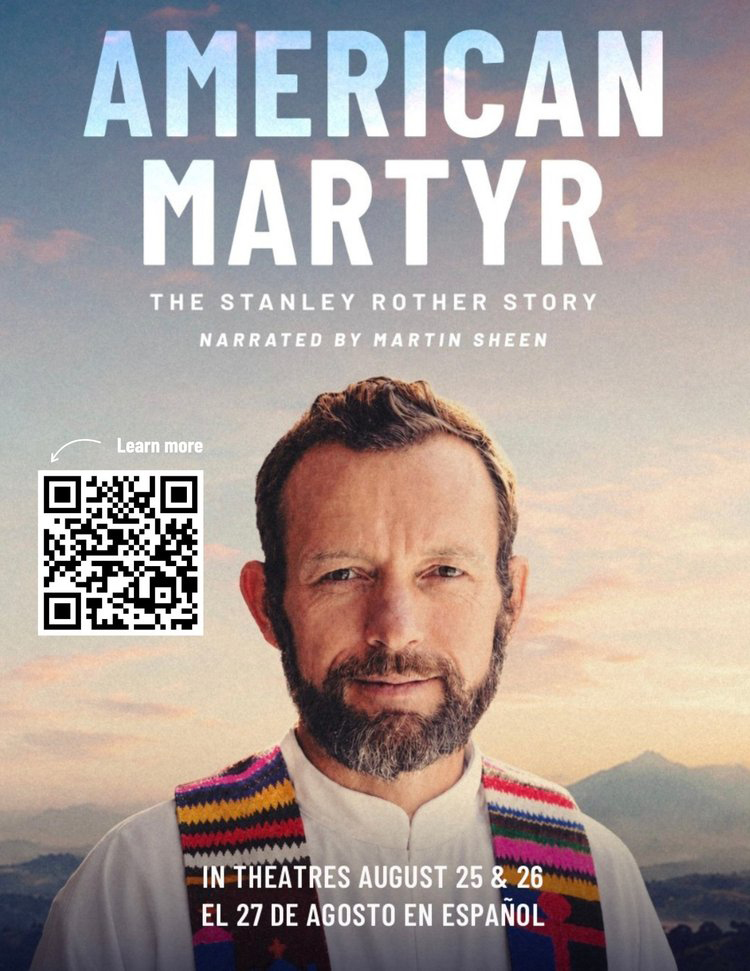
If you are reading this on or before Thursday, Aug. 27, you can see the movie at a local theatre, in its limited release on Tuesday, Wednesday, and Thursday, Aug. 25-27. It will be shown at Cinemark Willowbrook Mall in Wayne, AMC Clifton Commons, AMC Garden State in Paramus, and many other theatres in our area. Click here for more information.
His full name was Stanley Francis Rother. Among the innumerable beautiful aspects of Father Rother’s life and ministry is his struggle with academics, especially Latin, during his first six years in the seminary, in San Antonio, Texas. His academic struggles were so serious that, after six years, the seminary faculty believed that he either did not have a vocation to the priesthood or the necessary intellectual ability to be ordained. He spent almost a year back at home, but Stanley’s pastor and, eventually, his bishop, the Most Reverend Victor Reed of the Diocese of Oklahoma City, believed that Stanley did have a vocation. They found a seminary that would accept him and give him another chance, Mount Saint Mary’s Seminary, in Emmetsburg, Md.
I hope that you will have the opportunity to see the movie, read the book, and learn the “full story” of Father Stanley’s life, ministry, and martyrdom. I mentioned his middle name because, once Father Stanley arrived in Guatemala and began to get to know the people of the parish and surrounding communities of Atitlan, he realized that he would not only need to learn Spanish, but also the native, indigenous language of the Mayan people he would serve; both the language and the people are called “Tz’utujil.” The seminarian who couldn’t pass his Latin classes would become the missionary priest who would translate the entire Bible into “Tz’utujil.” The “Tz’utujil” people, however, were unable to translate or pronounce Stanley or Rother. They did have an indigenous translation for Francis, “Apla’s.” Father Stanley Rother became know and loved as “Padre Apla’s.”
In the final Chapter of The Shepherd Who Didn’t Run, the author speaks of the Church’s process for someone to be canonized, officially named a Saint, and then speaks of the people whom Father Stanley knew, loved, and served in Guatemala — and how they came to know and love him:
“Once the Holy Father affirms that Father Stanley Rother died a martyr, permission will be granted for his immediate beatification. (**Pope Francis officially confirmed his martyrdom in December 2016, and he was beatified on September 23, 2027.) … Father Stanley Rother would then be on his way to potentially becoming the first male saint born in the United States. But his people in Santiago, Atitlan don’t need an official declaration. They already affirm Padre Apla’s as a saint, their saint, and they come to him daily asking for help and intercession — much as they did during the 13 years he served as their priest.
Since his beatification, Father Stanley Rother’s mortal remains have been reinterred in an inspiring new shrine in Oklahoma City. No doubt, many will be drawn to that holy place in our country where the first beatified American-born martyr rests. Blessed Stanley Rother’s heart remains in the parish church of Saint James the Apostle (San Santiago Apóstol) in Atitlán, Guatemala. Inscribed on the marker over his heart are the words of the Lord Jesus from John’s gospel, “No one has greater love than this, to lay down one’s life for one’s friends” (15:13). Blessed Stanley Rother’s life is a shining example, in our own time, of what is possible when we open our hearts to the power of God’s grace. When we make our faith the foundation of our lives, we too are able to make sacrifices out of love for God and others, so that his kingdom comes into clearer view through our actions and words.
Coming to Theatres near us – American Martyr: The Stanley Rother Story #Catholic –
“One day we were joking (during the preparations), and he looked at me and said, ‘When they kill me, don’t cry for me. Put up the paschal candle and put up the Easter banner,” emphasized Sister Herlinda Yos, one of the Carmelites. “He started all that, the experience of the Resurrection. That’s why the liturgies are very solid in Atitlan. Padre Francisco invoked a sense of celebration in the liturgy…”
— The Shepherd Who Didn’t Run by Maria Ruiz Scarperlanda
In retrospect, I believe that the first time I heard of Father Stanley Rother was sometime between 2017 and 2019. A very faithful parishioner and volunteer sacristan, Antonio, who was originally from Guatemala, whom I had gotten to know in my years as pastor of St. Michael’s in Brooklyn, told me the story of an American priest who had been serving in Guatemala, had been killed, and had recently been beatified. It sounded like a “nice story.” The priest had certainly made a strong impression on Antonio, who shared with me how this priest had become so close to the parishioners he served in a small town in Guatemala.
A number of years later, in 2022 or 2023, someone gave me a book called The Shepherd Who Didn’t Run — Fr. Stanley Rother, Martyr from Oklahoma. Somewhere in the course of reading the book and learning the story of Father Rother, I realized that “this was the priest Antonio had been telling me about.” I remember being so impressed by Father Rother’s life, vocation, and ministry that I thought I might give a copy of the book to all our seminarians. I also remember hesitating and thinking, “If all or most of our seminarians read this book, we may “lose” some of them because they will be inspired to serve as missionaries in Guatemala or some other area of the world where there are people in poverty who would be blessed by a priest who could serve them, get to know them, and “become one of them.”
As I reflect again on the story of Father Rother, I think of priests from my home diocese of Brooklyn and other places in the United States, who spent time serving as missionaries in Latin America and other places, who inspired me and encouraged me to appreciate how much we can learn and receive from individuals, families, and communities, whose language, culture, and food may be very different from ours. They taught me that taking the time to not only visit, but spend some time living with them and getting to know them, can be a wonderful way to share our faith and experience “the Church.” We are all members of the “one (mystical) Body of Christ,” and one of the most beautiful blessings of our Catholic (Universal) Faith and Church is the way it is received, lived, and shared by people and cultures, literally, all over the world.
While not everyone will have the opportunity to visit a different country and culture for the purpose of sharing the faith, many parishes and other groups within the Church offer “mission trips,” both within the United States and to other countries, to facilitate those opportunities and experiences. Hearing the stories of those who are able to travel on a mission trip can be a blessing for those who are not physically able to make the trip but support the “mission” and missionaries by their donations and especially their prayers.
Hearing and learning the story of someone who discerns and lives a missionary vocation can also be a great blessing and inspiration to all the baptized. That was my experience as I learned the story of Father Stanley Rother. Thanks to a new “feature-length” documentary film, “American Martyr: The Stanley Rother Story, narrated by Martin Sheen, many more will now have the opportunity to “get to know” Father Rother and his inspiring life, which led to his martyrdom on July 28, 1981. I was fortunate to be able to view an advance screening of “American Martyr,” and I would highly recommend watching it when you have an opportunity.
If you are reading this on or before Thursday, Aug. 27, you can see the movie at a local theatre, in its limited release on Tuesday, Wednesday, and Thursday, Aug. 25-27. It will be shown at Cinemark Willowbrook Mall in Wayne, AMC Clifton Commons, AMC Garden State in Paramus, and many other theatres in our area. Click here for more information.
His full name was Stanley Francis Rother. Among the innumerable beautiful aspects of Father Rother’s life and ministry is his struggle with academics, especially Latin, during his first six years in the seminary, in San Antonio, Texas. His academic struggles were so serious that, after six years, the seminary faculty believed that he either did not have a vocation to the priesthood or the necessary intellectual ability to be ordained. He spent almost a year back at home, but Stanley’s pastor and, eventually, his bishop, the Most Reverend Victor Reed of the Diocese of Oklahoma City, believed that Stanley did have a vocation. They found a seminary that would accept him and give him another chance, Mount Saint Mary’s Seminary, in Emmetsburg, Md.
I hope that you will have the opportunity to see the movie, read the book, and learn the “full story” of Father Stanley’s life, ministry, and martyrdom. I mentioned his middle name because, once Father Stanley arrived in Guatemala and began to get to know the people of the parish and surrounding communities of Atitlan, he realized that he would not only need to learn Spanish, but also the native, indigenous language of the Mayan people he would serve; both the language and the people are called “Tz’utujil.” The seminarian who couldn’t pass his Latin classes would become the missionary priest who would translate the entire Bible into “Tz’utujil.” The “Tz’utujil” people, however, were unable to translate or pronounce Stanley or Rother. They did have an indigenous translation for Francis, “Apla’s.” Father Stanley Rother became know and loved as “Padre Apla’s.”
In the final Chapter of The Shepherd Who Didn’t Run, the author speaks of the Church’s process for someone to be canonized, officially named a Saint, and then speaks of the people whom Father Stanley knew, loved, and served in Guatemala — and how they came to know and love him:
“Once the Holy Father affirms that Father Stanley Rother died a martyr, permission will be granted for his immediate beatification. (**Pope Francis officially confirmed his martyrdom in December 2016, and he was beatified on September 23, 2027.) … Father Stanley Rother would then be on his way to potentially becoming the first male saint born in the United States. But his people in Santiago, Atitlan don’t need an official declaration. They already affirm Padre Apla’s as a saint, their saint, and they come to him daily asking for help and intercession — much as they did during the 13 years he served as their priest.
Since his beatification, Father Stanley Rother’s mortal remains have been reinterred in an inspiring new shrine in Oklahoma City. No doubt, many will be drawn to that holy place in our country where the first beatified American-born martyr rests. Blessed Stanley Rother’s heart remains in the parish church of Saint James the Apostle (San Santiago Apóstol) in Atitlán, Guatemala. Inscribed on the marker over his heart are the words of the Lord Jesus from John’s gospel, “No one has greater love than this, to lay down one’s life for one’s friends” (15:13). Blessed Stanley Rother’s life is a shining example, in our own time, of what is possible when we open our hearts to the power of God’s grace. When we make our faith the foundation of our lives, we too are able to make sacrifices out of love for God and others, so that his kingdom comes into clearer view through our actions and words.