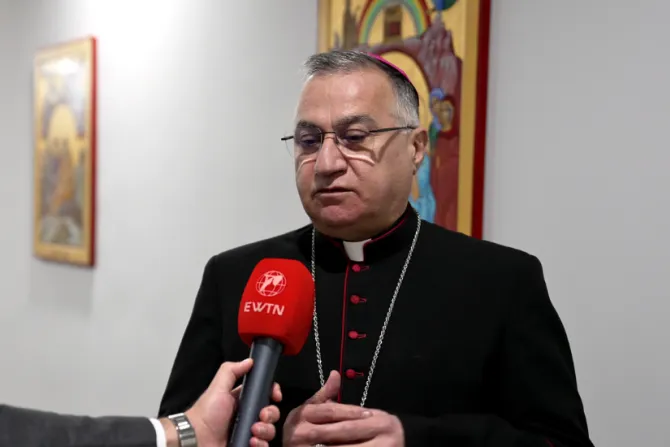
For Christians in Iraq, remaining in their historic homeland increasingly depends not only on security but also on whether younger generations can find meaningful work and build stable lives, according to Chaldean Catholic Archbishop Bashar Warda of Erbil.
In an interview with ACI MENA, the Arabic-language sister service of EWTN News, Warda said education, professional formation, and sustainable employment have become essential to strengthening Christian communities at a time when economic pressures continue to weigh heavily on young Iraqis.
The challenge is particularly significant for Christians because their numbers have declined considerably in recent decades, leaving smaller communities more vulnerable to economic pressures.
Speaking at the Catholic University of Erbil, Warda pointed to the structure of Iraq’s economy as part of the problem. Government spending and public-sector employment continue to play an outsized role, while the private sector has yet to generate enough sustainable jobs to meet the needs of a young and growing workforce.
A difficult transition from education to employment
World Bank data indicate that the country’s unemployment rate stands at 15.5%, while labor force participation is around 38%.
Demographics add another layer to the challenge: Iraqis between the ages of 15 and 29 make up approximately 29% of the population, placing continued pressure on the labor market.
The countryʼs heavy dependence on oil also affects its ability to generate employment. Oil accounted for approximately 88% of government revenue and 91% of merchandise exports in 2025, leaving the economy exposed to fluctuations in energy prices and revenues.
Against that backdrop, Warda said preparing young people for employment requires more than helping them earn university degrees. Education, he said, must also provide the practical and professional skills needed in an increasingly competitive labor market, particularly as opportunities for government employment become more limited.
He pointed to university students who take night jobs to finance their education as an example of both the pressures facing young Iraqis and their determination to pursue a future through work.
For Warda, their experience also demonstrates that young people are prepared to take responsibility when meaningful opportunities are available.
Moving beyond emergency assistance
Warda praised the support that Aid to the Church in Need provides through scholarships but said the challenge does not end when students graduate.
Helping young Christians move from education into employment, he said, must become a greater priority for the Church and other institutions seeking to sustain Iraqʼs Christian presence.
That requires a broader change in approach: from responding primarily to immediate needs to creating the conditions in which families and young people can become economically independent.
Warda called for greater investment in people, professional formation, employment, and projects capable of strengthening the private sector and providing young Iraqis with viable alternatives to dependence on government jobs.
The Chaldean Catholic Archdiocese of Erbil has sought to follow that model through a network of educational, academic, healthcare, media, and humanitarian institutions.
Creating opportunities through Church institutions
Warda said institutions connected to the archdiocese currently employ approximately 950 people from different communities and backgrounds without discrimination. Yet he raised the question of whether even that number is enough when measured against the scale of the economic challenges facing Iraqi society and, in particular, its Christian communities.
For Warda, expanding sustainable employment will require partnerships and investment beyond what Church institutions can accomplish on their own.
He argued that the Churchʼs response should therefore be rooted not simply in charitable assistance but in justice, human dignity, and empowerment.
The ultimate purpose of assistance, he said, should be to give people the skills and opportunities they need to support themselves and their families rather than allowing short-term assistance to become a source of permanent dependence.
For Iraqʼs Christians, that approach places economic opportunity alongside education as an important part of the effort to preserve a living Christian presence in the country, one in which young people can see a future for themselves and their families in their homeland.
This story was first published by ACI MENA, the Arabic-language sister service of EWTN News. It has been translated and adapted by EWTN News English.
For Iraq’s Christians, Archbishop Warda says long-term stability requires jobs – #Catholic –
For Christians in Iraq, remaining in their historic homeland increasingly depends not only on security but also on whether younger generations can find meaningful work and build stable lives, according to Chaldean Catholic Archbishop Bashar Warda of Erbil.
In an interview with ACI MENA, the Arabic-language sister service of EWTN News, Warda said education, professional formation, and sustainable employment have become essential to strengthening Christian communities at a time when economic pressures continue to weigh heavily on young Iraqis.
The challenge is particularly significant for Christians because their numbers have declined considerably in recent decades, leaving smaller communities more vulnerable to economic pressures.
Speaking at the Catholic University of Erbil, Warda pointed to the structure of Iraq’s economy as part of the problem. Government spending and public-sector employment continue to play an outsized role, while the private sector has yet to generate enough sustainable jobs to meet the needs of a young and growing workforce.
A difficult transition from education to employment
World Bank data indicate that the country’s unemployment rate stands at 15.5%, while labor force participation is around 38%.
Demographics add another layer to the challenge: Iraqis between the ages of 15 and 29 make up approximately 29% of the population, placing continued pressure on the labor market.
The countryʼs heavy dependence on oil also affects its ability to generate employment. Oil accounted for approximately 88% of government revenue and 91% of merchandise exports in 2025, leaving the economy exposed to fluctuations in energy prices and revenues.
Against that backdrop, Warda said preparing young people for employment requires more than helping them earn university degrees. Education, he said, must also provide the practical and professional skills needed in an increasingly competitive labor market, particularly as opportunities for government employment become more limited.
He pointed to university students who take night jobs to finance their education as an example of both the pressures facing young Iraqis and their determination to pursue a future through work.
For Warda, their experience also demonstrates that young people are prepared to take responsibility when meaningful opportunities are available.
Moving beyond emergency assistance
Warda praised the support that Aid to the Church in Need provides through scholarships but said the challenge does not end when students graduate.
Helping young Christians move from education into employment, he said, must become a greater priority for the Church and other institutions seeking to sustain Iraqʼs Christian presence.
That requires a broader change in approach: from responding primarily to immediate needs to creating the conditions in which families and young people can become economically independent.
Warda called for greater investment in people, professional formation, employment, and projects capable of strengthening the private sector and providing young Iraqis with viable alternatives to dependence on government jobs.
The Chaldean Catholic Archdiocese of Erbil has sought to follow that model through a network of educational, academic, healthcare, media, and humanitarian institutions.
Creating opportunities through Church institutions
Warda said institutions connected to the archdiocese currently employ approximately 950 people from different communities and backgrounds without discrimination. Yet he raised the question of whether even that number is enough when measured against the scale of the economic challenges facing Iraqi society and, in particular, its Christian communities.
For Warda, expanding sustainable employment will require partnerships and investment beyond what Church institutions can accomplish on their own.
He argued that the Churchʼs response should therefore be rooted not simply in charitable assistance but in justice, human dignity, and empowerment.
The ultimate purpose of assistance, he said, should be to give people the skills and opportunities they need to support themselves and their families rather than allowing short-term assistance to become a source of permanent dependence.
For Iraqʼs Christians, that approach places economic opportunity alongside education as an important part of the effort to preserve a living Christian presence in the country, one in which young people can see a future for themselves and their families in their homeland.
This story was first published by ACI MENA, the Arabic-language sister service of EWTN News. It has been translated and adapted by EWTN News English.
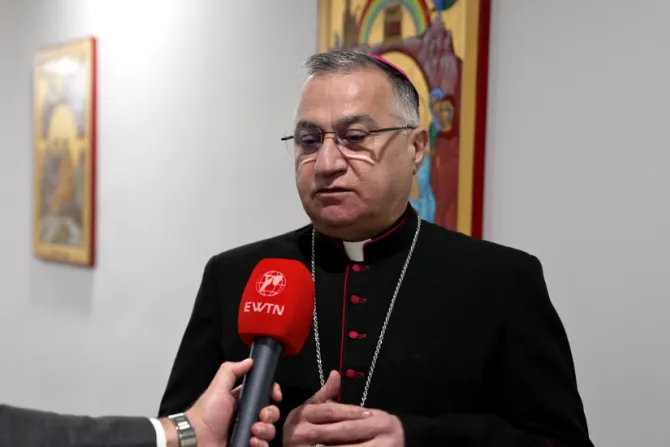
Archbishop Bashar Warda of Erbil called for investment in the future of young Christians in Iraq, pointing to the structure of the country’s economy as part of the problem.