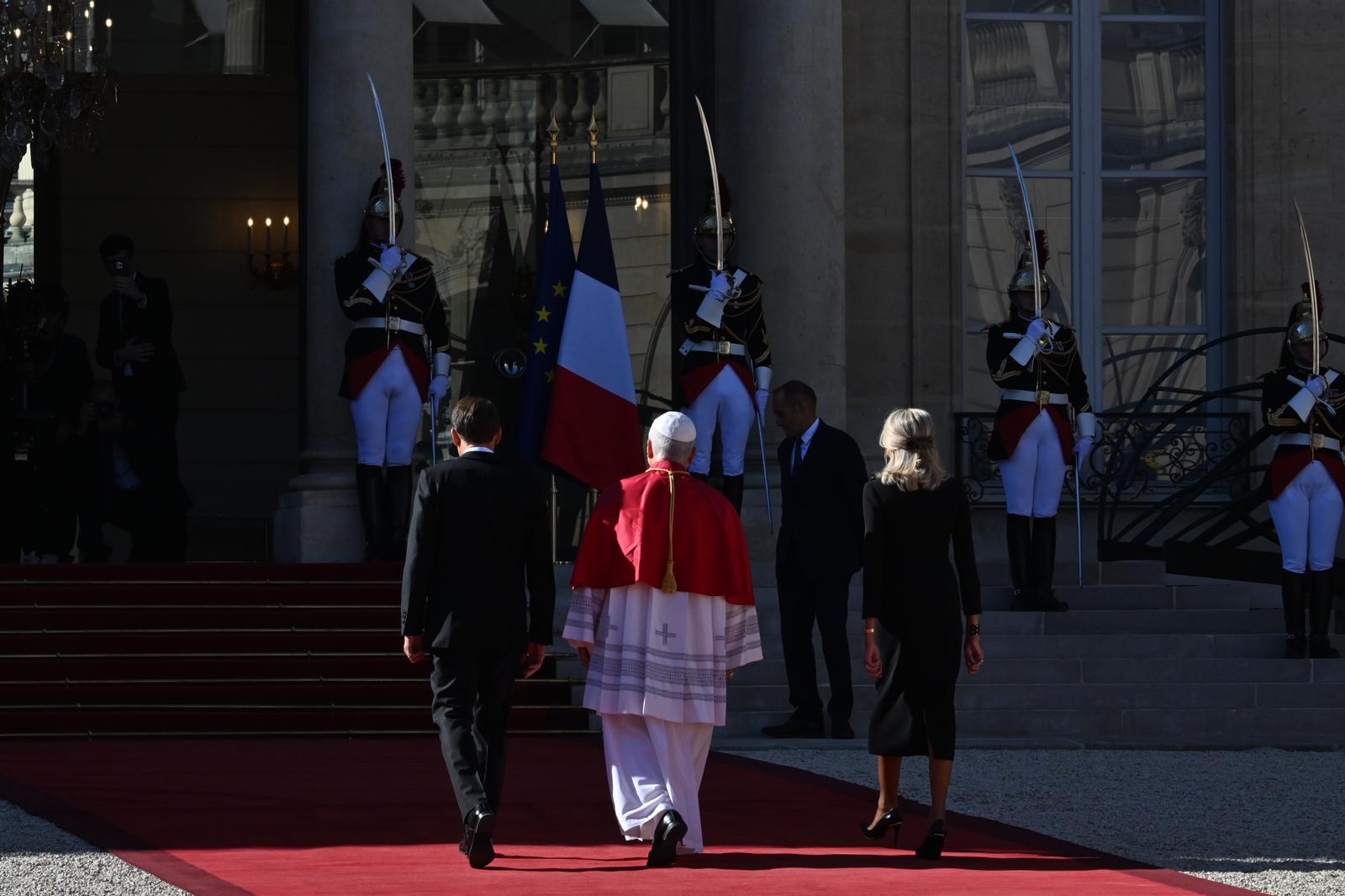
METZ, France — The hot-button issue of immigration has invited itself into Pope Leo XIV’s first apostolic journey to France, otherwise marked by the defense of human life and the remarkable signs of Catholic revival currently emerging across the country. It could provide one of the most revealing indications yet of how the American pope intends to address a deeply divided Europe.
As Leo prepares to reach Metz, at the crossroads of France, Germany, and Luxembourg, what message can he offer a continent increasingly torn between the Christian imperative to welcome the stranger and growing concerns over the social, cultural, and security consequences of mass immigration?
The balance is particularly difficult to strike, not least for a pope whose experience has been largely shaped by Latin America, where migration raises different demographic and civilizational challenges than in Europe. So far, he has combined strong continuity with Pope Francis’ defense of migrants and a more explicit recognition of the rights of nations, the demands of integration, and the concerns of receiving societies.
It is against this backdrop that Leo is traveling to Metz on Sept. 28 for an interreligious meeting, followed by an address on the “Roots of Europe for Peace and Unity” at the Robert Schuman Conference Centre. He already sent a strong international signal by visiting Maison Bakhita, a Paris center for migrants, on Sept. 26, just one day before the World Day of Migrants and Refugees.
At Europe’s crossroads
More than a decade after the 2015 migration crisis, immigration has become one of the defining fault lines of European politics — and increasingly of European Catholicism itself.
That year alone, more than 1.2 million people applied for asylum in the European Union, and migration pressures have remained a major continental issue ever since, with political repercussions still unfolding.
In the weeks preceding Leo’s arrival in Metz, the anti-immigration Alternative for Germany (AfD) scored two historic victories in regional elections, while in France, Marine Le Pen’s Rassemblement National is already well ahead of its rivals in polls for the 2027 presidential election.
The term “remigration” itself, once largely confined to fringe circles, has entered the European political vocabulary, as illustrated by the large-scale “Save Europe Act” campaign, which advocates an end to mass immigration and a policy of remigration. It has already gathered some 750,000 signatures and sparked a confrontation with the European Commission over its attempted registration as a European Citizens’ Initiative.
These mounting tensions are increasingly reflected within the Church itself. While identitarian Catholic voices and platforms have gained visibility on social media, much of the Catholic hierarchy has continued to place strong emphasis on the duty to welcome migrants.
In Germany, Catholic bishops have also repeatedly warned against the AfD and the growing appeal of “remigration,” while Cardinal Gerhard Müller, following the party’s historic victory in Saxony-Anhalt this month, accused bishops of misusing their spiritual authority by intervening in partisan politics and thereby alienating Catholic AfD voters.
In Italy, meanwhile, Archbishop Giancarlo Perego, head of the bishops’ migration commission, recently accused Giorgia Meloni’s government of placing “borders before people.”
France has been marked by equally heated Catholic debates on the issue over the past decade.
In “Église et immigration: le grand malaise,” published in 2017, conservative writer Laurent Dandrieu accused Church leaders of reducing Catholic teaching to an almost exclusive imperative of welcome while neglecting the major upheavals experienced by local communities.
More recently, Father Benoist de Sinety, in “La Cause du Christ,” attacked the opposite temptation of instrumentalizing Christianity in the service of identitarian politics.
A column published this month in La Nef magazine challenged what it regarded as a false choice between Christian hospitality and attachment to one’s cultural inheritance.
A ‘rupture’ with the previous pontificate?
Pope Leo, however, seems sensitive to the nuances demanded by this growing polarization. While maintaining the firm defense of migrants that characterized Francis’ pontificate, he has also given unusual prominence to the responsibilities of migrants and the legitimate concerns of the societies that receive them.
Barely a month after his election, Leo prayed at Pentecost that the Holy Spirit might “open borders, break down walls,” and overcome the “logic of exclusion” of political nationalisms. Yet, while supporting the U.S. bishops’ opposition to President Donald Trump’s mass deportation policies last November, he stated unequivocally that “every country has a right to determine who and how and when people enter,” rejecting the idea that states should have open borders.
This drive for balance was reaffirmed during his visit to the Canary Islands in June, when he invoked the “right not to have to migrate,” warned against the creation of “parallel worlds,” and asserted that host societies must be able to welcome newcomers without “diluting their identity.”
This language has led some Catholic observers, including French Vatican analyst Jean-Marie Guénois, to speak of a “rupture” with his predecessor on immigration. But his approach appears less a break than an attempt to better articulate a tension already present in Catholic doctrine.
A delicate balance
Indeed, the Catechism of the Catholic Church itself holds together principles that are often separated in today’s debate. It asks wealthier nations to welcome foreigners seeking security and vital resources “to the extent they are able,” while affirming that political authorities may regulate immigration for the sake of the common good. Migrants, in turn, are called to respect the laws as well as the “material and spiritual heritage” of their host country (No. 2241).
The Catholic Church therefore establishes moral obligations without prescribing minimum or maximum thresholds. Such teaching inevitably requires prudential judgments concerning integration, security, social cohesion, and the common good — precisely the areas over which Catholics today are most deeply divided.
At a time when Europe’s migration debate is hardening and divisions are deepening to the point of threatening the unity of the Church, the question is no longer simply whether Catholics should welcome the stranger or defend the continuity of nations and cultures. It is whether the Church can speak credibly both to Europeans who feel dispossessed of their future and to the migrant who, more often than not, does not know Christ.
Leo’s address at the “Roots of Europe” conference may offer a first indication of how he intends to navigate between these two realities in an increasingly tense European context.
In Metz, Pope Leo steps into Europe’s deepening divide over immigration – #Catholic –
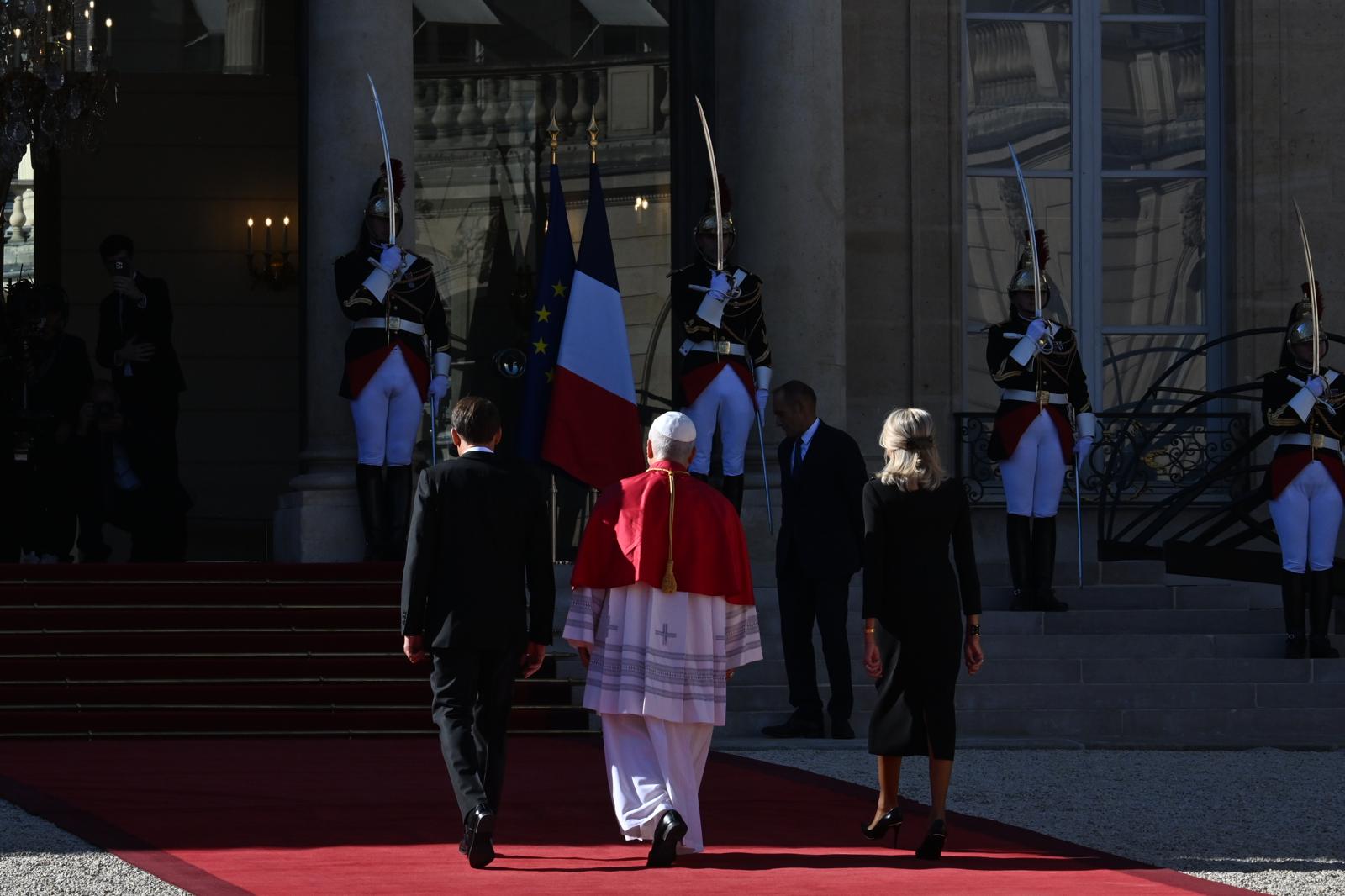
METZ, France — The hot-button issue of immigration has invited itself into Pope Leo XIV’s first apostolic journey to France, otherwise marked by the defense of human life and the remarkable signs of Catholic revival currently emerging across the country. It could provide one of the most revealing indications yet of how the American pope intends to address a deeply divided Europe.
As Leo prepares to reach Metz, at the crossroads of France, Germany, and Luxembourg, what message can he offer a continent increasingly torn between the Christian imperative to welcome the stranger and growing concerns over the social, cultural, and security consequences of mass immigration?
The balance is particularly difficult to strike, not least for a pope whose experience has been largely shaped by Latin America, where migration raises different demographic and civilizational challenges than in Europe. So far, he has combined strong continuity with Pope Francis’ defense of migrants and a more explicit recognition of the rights of nations, the demands of integration, and the concerns of receiving societies.
It is against this backdrop that Leo is traveling to Metz on Sept. 28 for an interreligious meeting, followed by an address on the “Roots of Europe for Peace and Unity” at the Robert Schuman Conference Centre. He already sent a strong international signal by visiting Maison Bakhita, a Paris center for migrants, on Sept. 26, just one day before the World Day of Migrants and Refugees.
At Europe’s crossroads
More than a decade after the 2015 migration crisis, immigration has become one of the defining fault lines of European politics — and increasingly of European Catholicism itself.
That year alone, more than 1.2 million people applied for asylum in the European Union, and migration pressures have remained a major continental issue ever since, with political repercussions still unfolding.
In the weeks preceding Leo’s arrival in Metz, the anti-immigration Alternative for Germany (AfD) scored two historic victories in regional elections, while in France, Marine Le Pen’s Rassemblement National is already well ahead of its rivals in polls for the 2027 presidential election.
The term “remigration” itself, once largely confined to fringe circles, has entered the European political vocabulary, as illustrated by the large-scale “Save Europe Act” campaign, which advocates an end to mass immigration and a policy of remigration. It has already gathered some 750,000 signatures and sparked a confrontation with the European Commission over its attempted registration as a European Citizens’ Initiative.
These mounting tensions are increasingly reflected within the Church itself. While identitarian Catholic voices and platforms have gained visibility on social media, much of the Catholic hierarchy has continued to place strong emphasis on the duty to welcome migrants.
In Germany, Catholic bishops have also repeatedly warned against the AfD and the growing appeal of “remigration,” while Cardinal Gerhard Müller, following the party’s historic victory in Saxony-Anhalt this month, accused bishops of misusing their spiritual authority by intervening in partisan politics and thereby alienating Catholic AfD voters.
In Italy, meanwhile, Archbishop Giancarlo Perego, head of the bishops’ migration commission, recently accused Giorgia Meloni’s government of placing “borders before people.”
France has been marked by equally heated Catholic debates on the issue over the past decade.
In “Église et immigration: le grand malaise,” published in 2017, conservative writer Laurent Dandrieu accused Church leaders of reducing Catholic teaching to an almost exclusive imperative of welcome while neglecting the major upheavals experienced by local communities.
More recently, Father Benoist de Sinety, in “La Cause du Christ,” attacked the opposite temptation of instrumentalizing Christianity in the service of identitarian politics.
A column published this month in La Nef magazine challenged what it regarded as a false choice between Christian hospitality and attachment to one’s cultural inheritance.
A ‘rupture’ with the previous pontificate?
Pope Leo, however, seems sensitive to the nuances demanded by this growing polarization. While maintaining the firm defense of migrants that characterized Francis’ pontificate, he has also given unusual prominence to the responsibilities of migrants and the legitimate concerns of the societies that receive them.
Barely a month after his election, Leo prayed at Pentecost that the Holy Spirit might “open borders, break down walls,” and overcome the “logic of exclusion” of political nationalisms. Yet, while supporting the U.S. bishops’ opposition to President Donald Trump’s mass deportation policies last November, he stated unequivocally that “every country has a right to determine who and how and when people enter,” rejecting the idea that states should have open borders.
This drive for balance was reaffirmed during his visit to the Canary Islands in June, when he invoked the “right not to have to migrate,” warned against the creation of “parallel worlds,” and asserted that host societies must be able to welcome newcomers without “diluting their identity.”
This language has led some Catholic observers, including French Vatican analyst Jean-Marie Guénois, to speak of a “rupture” with his predecessor on immigration. But his approach appears less a break than an attempt to better articulate a tension already present in Catholic doctrine.
A delicate balance
Indeed, the Catechism of the Catholic Church itself holds together principles that are often separated in today’s debate. It asks wealthier nations to welcome foreigners seeking security and vital resources “to the extent they are able,” while affirming that political authorities may regulate immigration for the sake of the common good. Migrants, in turn, are called to respect the laws as well as the “material and spiritual heritage” of their host country (No. 2241).
The Catholic Church therefore establishes moral obligations without prescribing minimum or maximum thresholds. Such teaching inevitably requires prudential judgments concerning integration, security, social cohesion, and the common good — precisely the areas over which Catholics today are most deeply divided.
At a time when Europe’s migration debate is hardening and divisions are deepening to the point of threatening the unity of the Church, the question is no longer simply whether Catholics should welcome the stranger or defend the continuity of nations and cultures. It is whether the Church can speak credibly both to Europeans who feel dispossessed of their future and to the migrant who, more often than not, does not know Christ.
Leo’s address at the “Roots of Europe” conference may offer a first indication of how he intends to navigate between these two realities in an increasingly tense European context.
As Leo prepares to reach Metz, at the crossroads of France, Germany, and Luxembourg, what message will he offer about welcoming the stranger and the consequences of mass immigration?