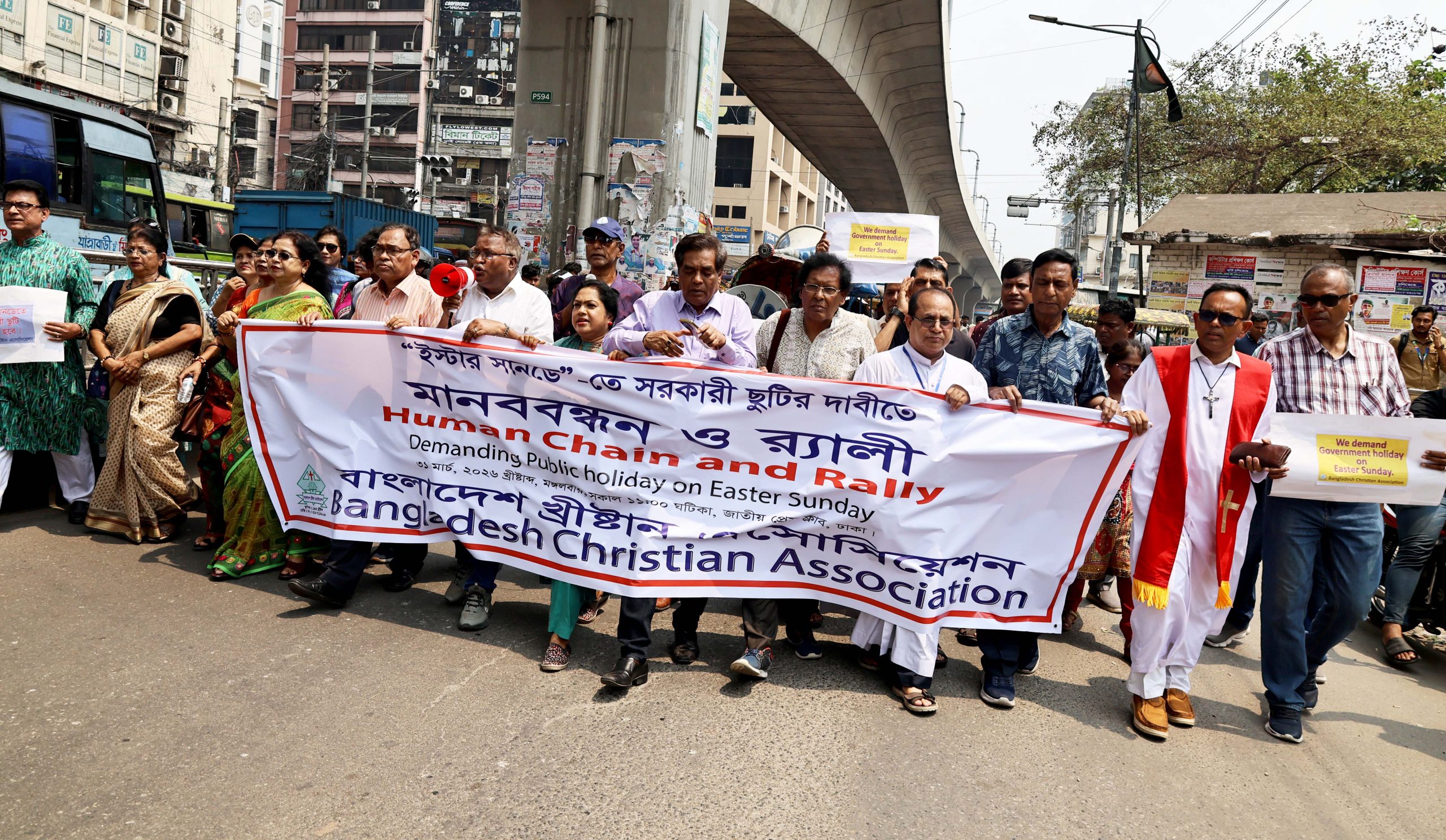

Christian leaders and Catholic clergy in the Muslim-majority South Asian nation are urging Prime Minister Tarique Rahman to add Easter Sunday to the government holiday calendar.
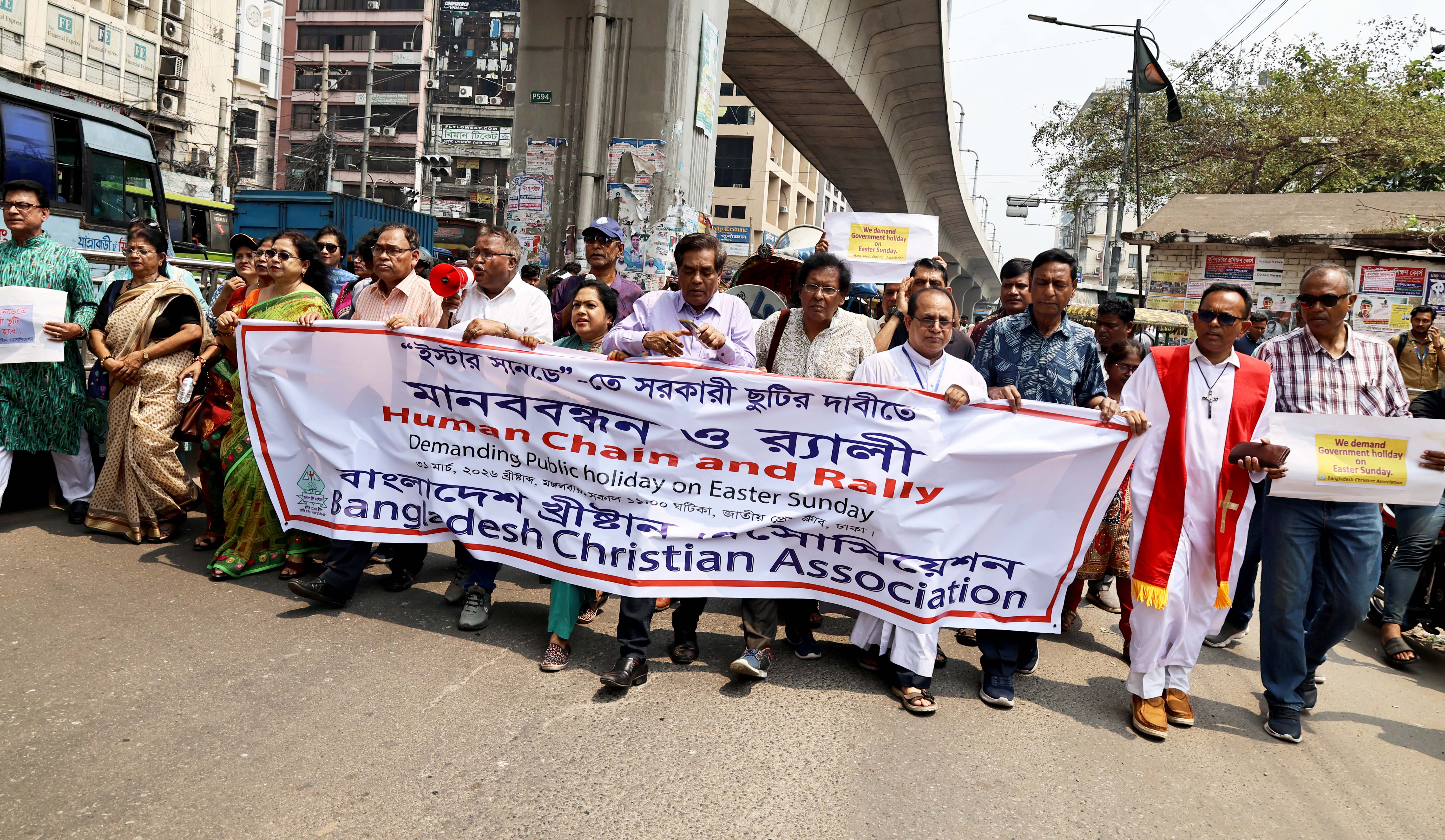
Christian leaders and Catholic clergy in the Muslim-majority South Asian nation are urging Prime Minister Tarique Rahman to add Easter Sunday to the government holiday calendar.
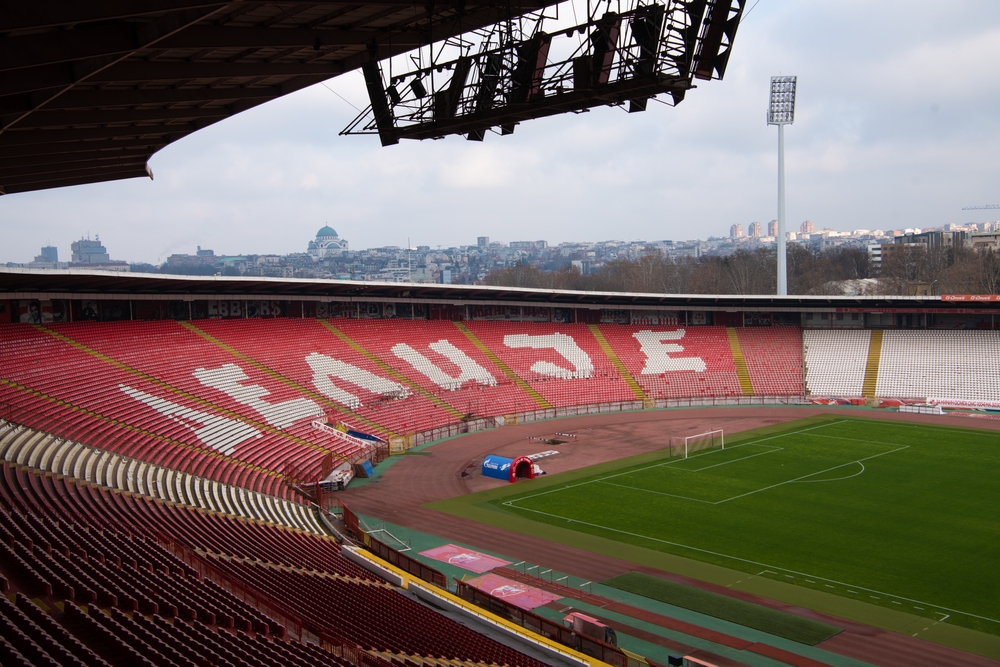
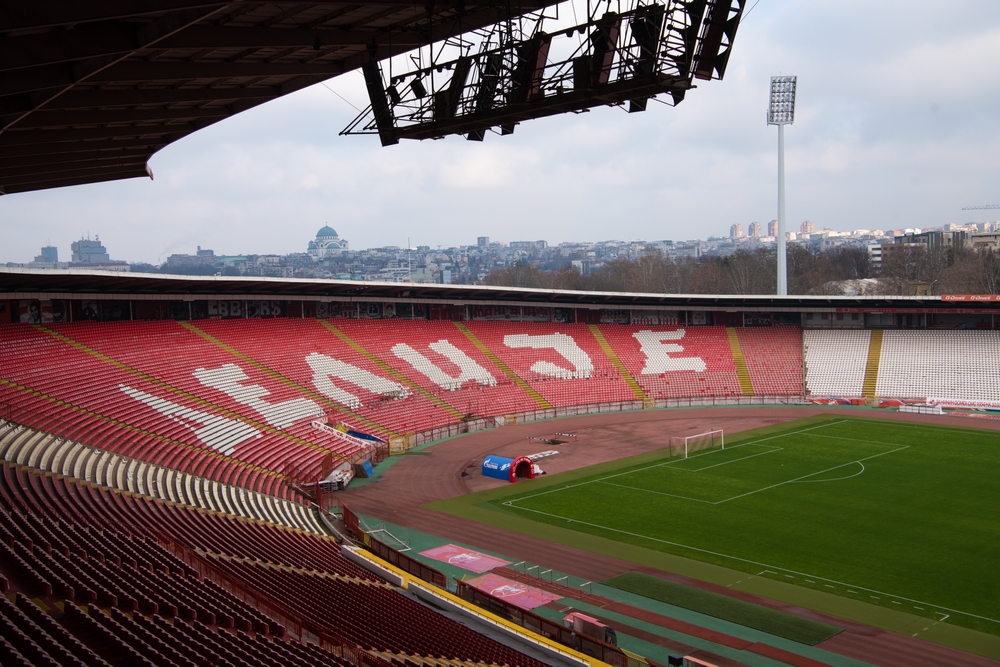
UEFA told EWTN News its fine on a Serbian soccer club was for offensive language, not a massive Orthodox Christian display — contradicting widespread reports the sanction targeted religious imagery.
| Picture of the day |
|---|
.jpg)
|
|
A previously unpublished illustration intended for the Saturday Evening Post’s 1943 New Year’s edition. It was never used due to publisher demands that the illustrator, J.C. Leyendecker, create a more optimistic and patriotic cover that was sensitive to the families of American soldiers. It was publicly shown for the first time in 2020 as part of an auction.
|
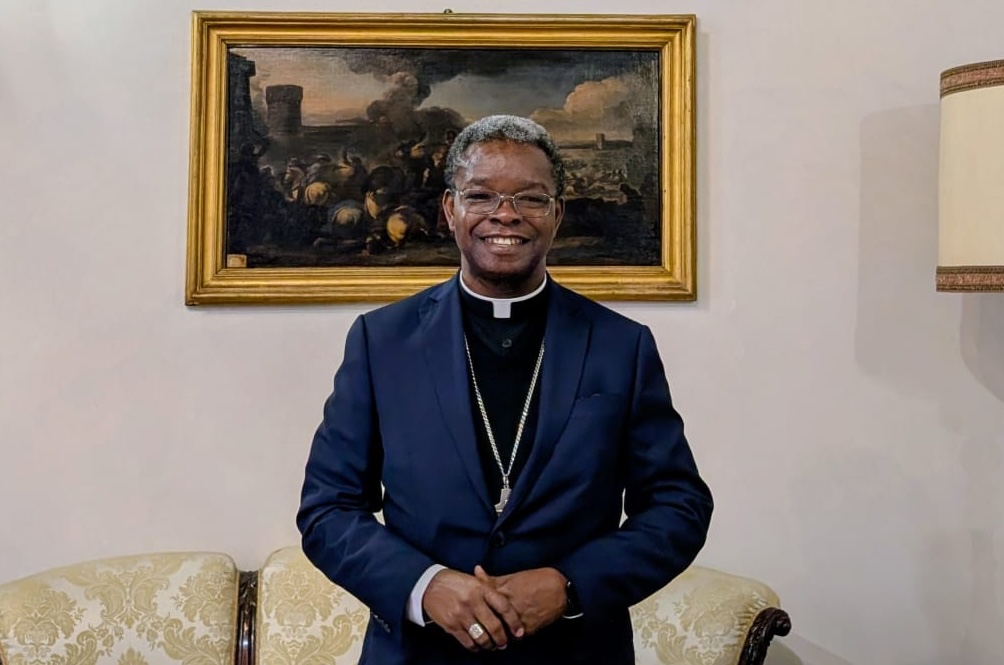
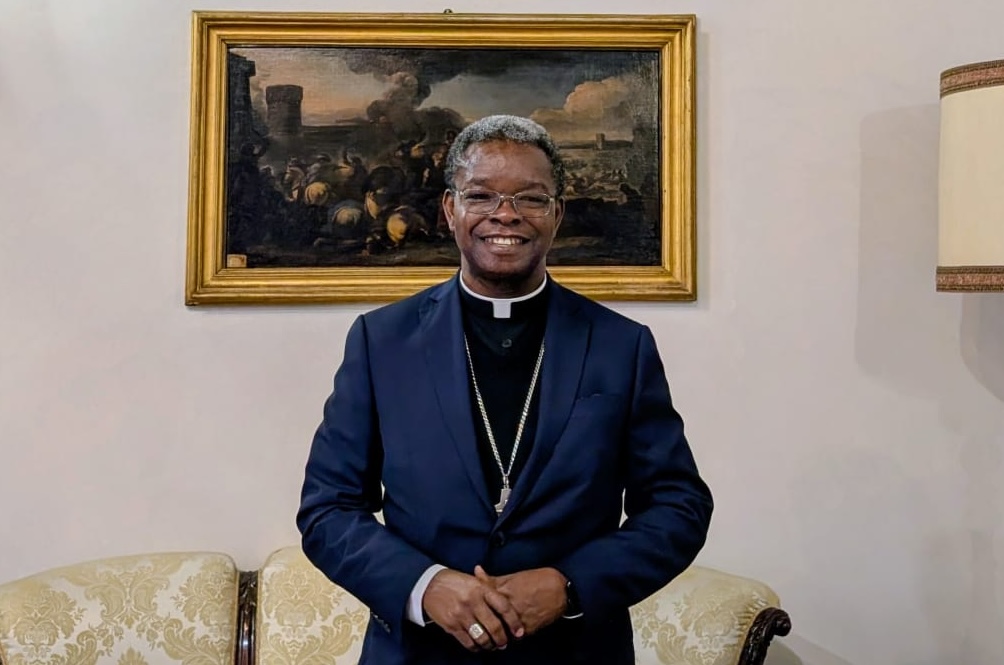
A Nigerian archbishop said African missionaries can evangelize a Europe uneasy with its Christian past.
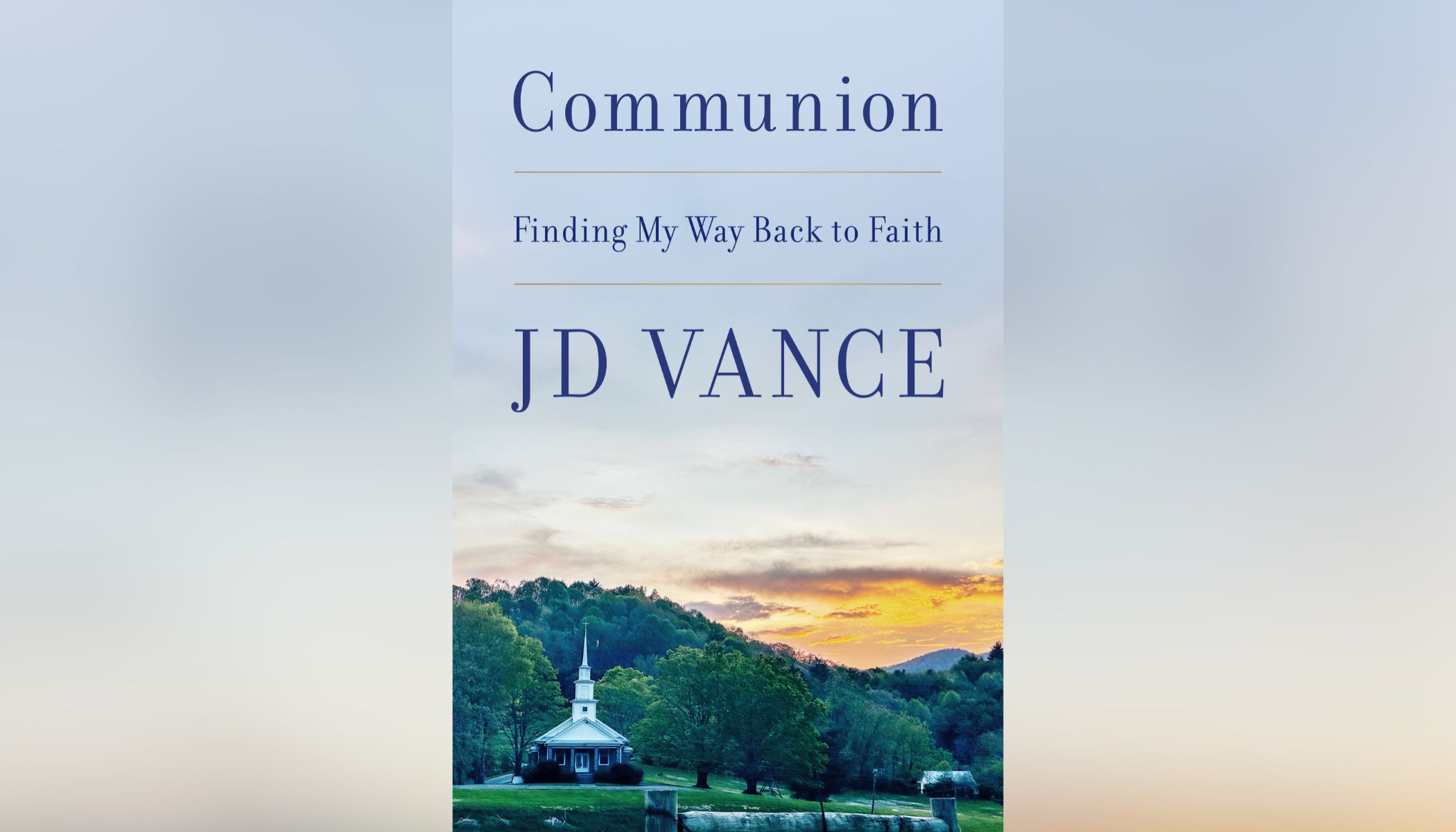
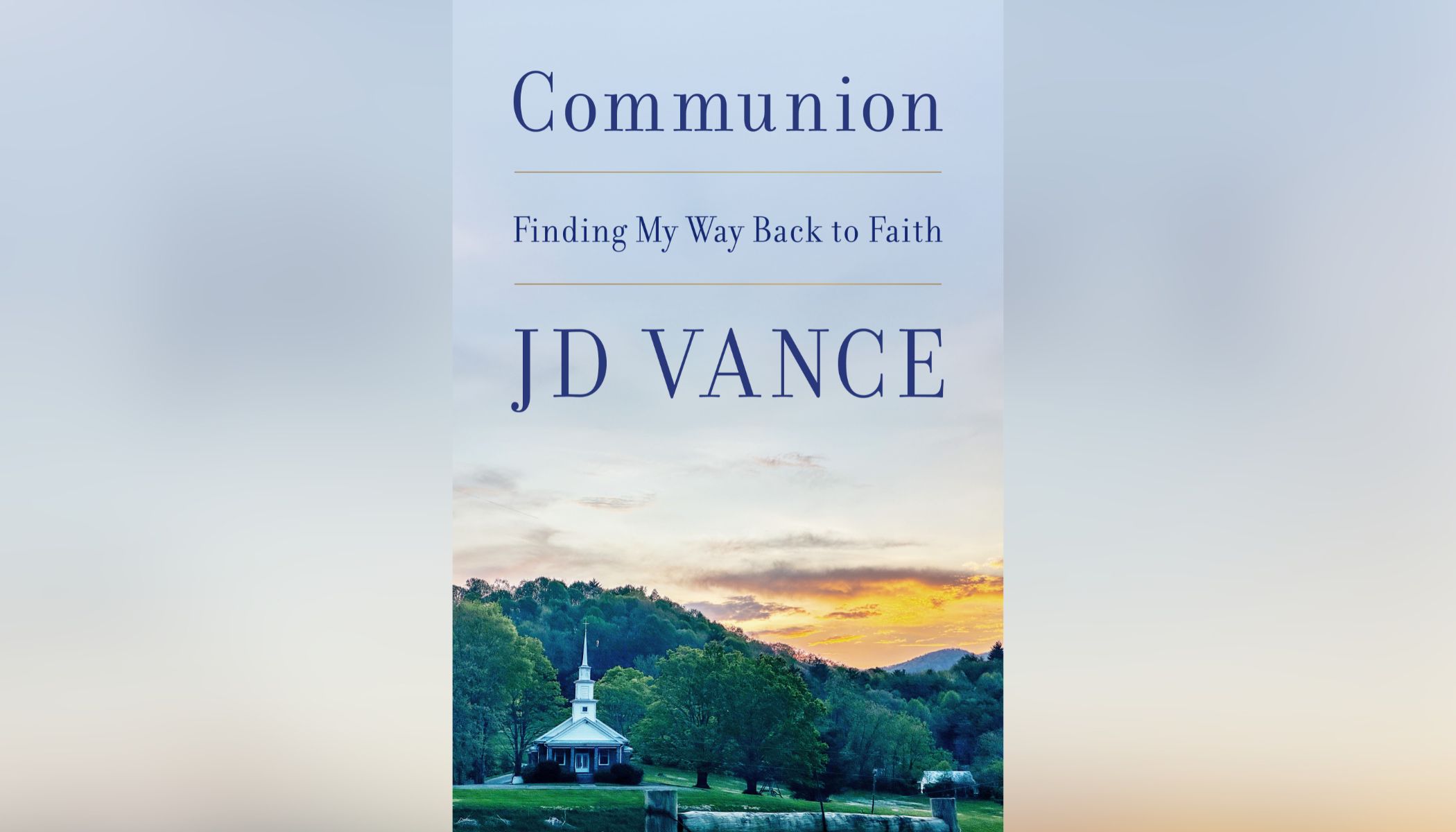
“I’m glad I found my way back to the Church. I learned much along the way. But if you believe as I do, you know I’ve been fortunate and touched by God’s grace,” Vance said.
| Picture of the day |
|---|
,_parque_nacional_Ras_Muhammad,_Egipto,_2022-03-26,_DD_155.jpg)
|
|
Royal angelfish (Pygoplites diacanthus), Ras Muhammad National Park, Red Sea, Egypt. The body of the royal angelfish is moderately elongate, is very compressed and can reach a length of up to 25 centimetres (9.8 in) It’s widely distributed throughout the Indo-Pacific and can be found in the Red Sea and Indian Ocean around East Africa and the Maldives, stretching to the Tuamoto Islands, New Caledonia, and Great Barrier Reef. The royal angelfish occurs at depths ranging from 0 to 80m (0 to 262 ft), in coral rich areas of lagoons, reefs, and are also often found in the vicinity of caves. It is a carnivorous species that feeds on sponges and tunicates located throughout reefs and underwater caves. They are a non-migratory species that can be found solitary, in pairs, or groups.
|
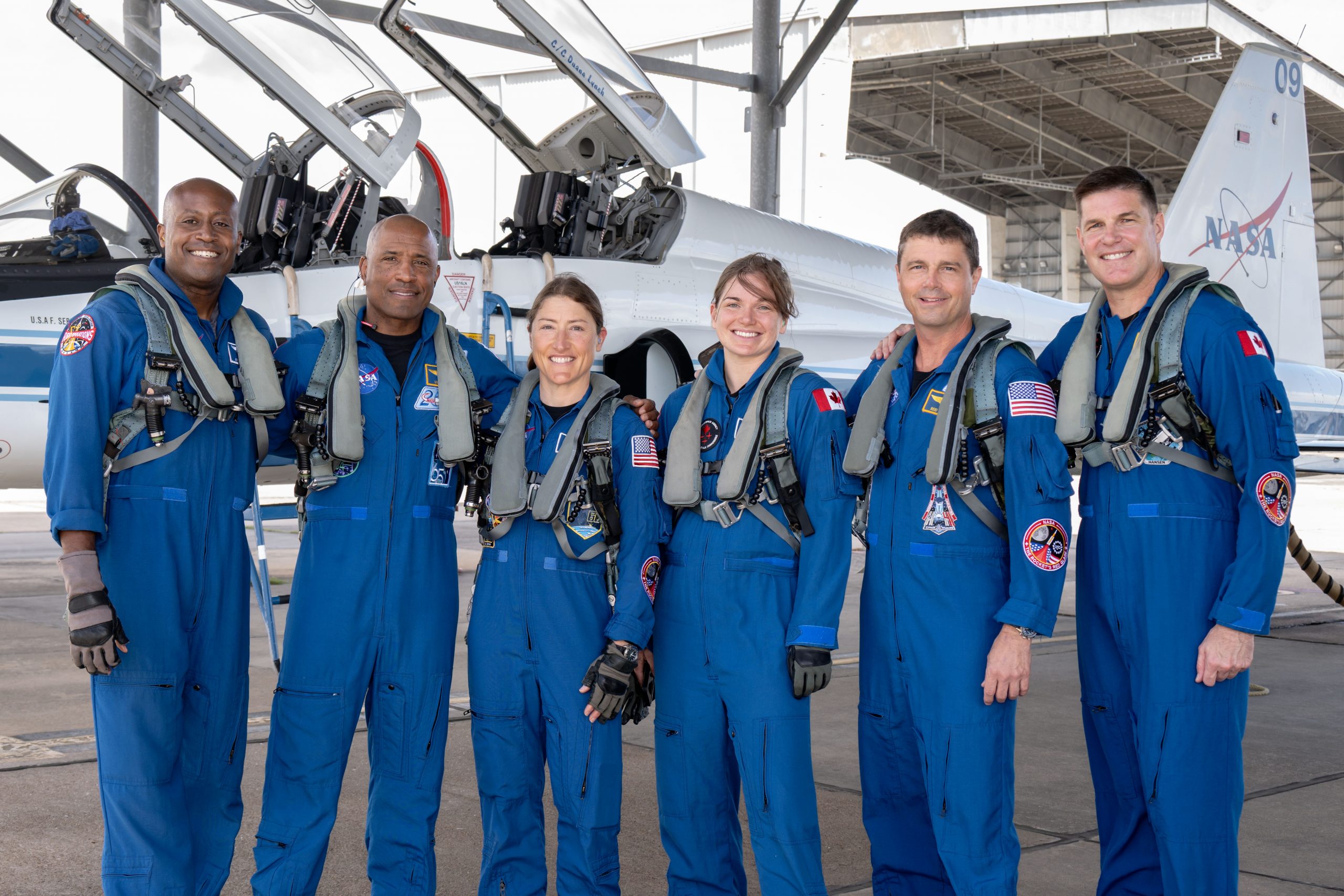
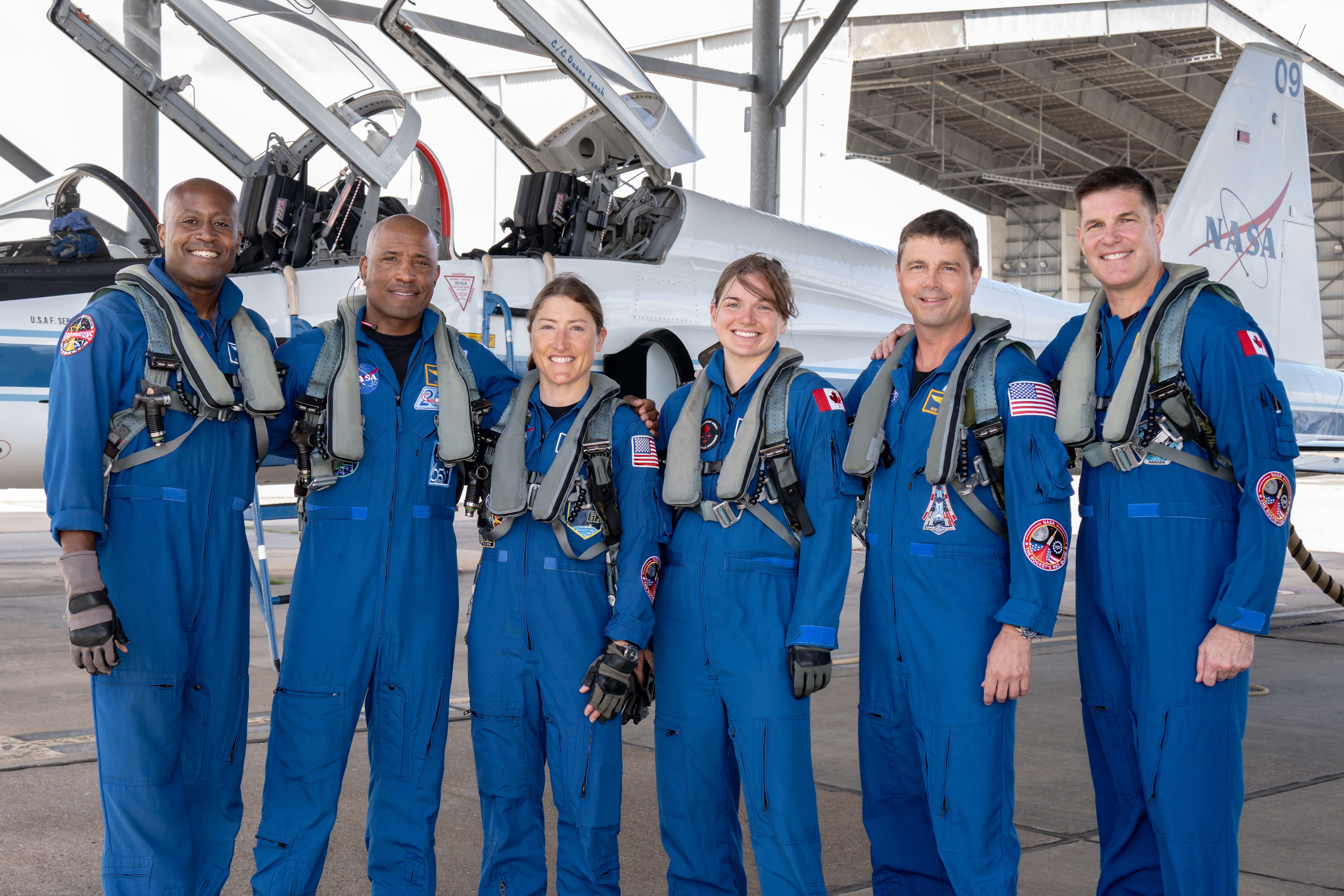
From left to right, NASA astronauts Andre Douglas, Victor Glover, and Christina Koch, CSA (Canadian Space Agency) astronauts Jenni Gibbons, NASA astronaut Reid Wiseman, and CSA astronaut Jeremy Hansen pose for a photo before the Artemis II crew proceed to a media event on March 27, 2026.
Read More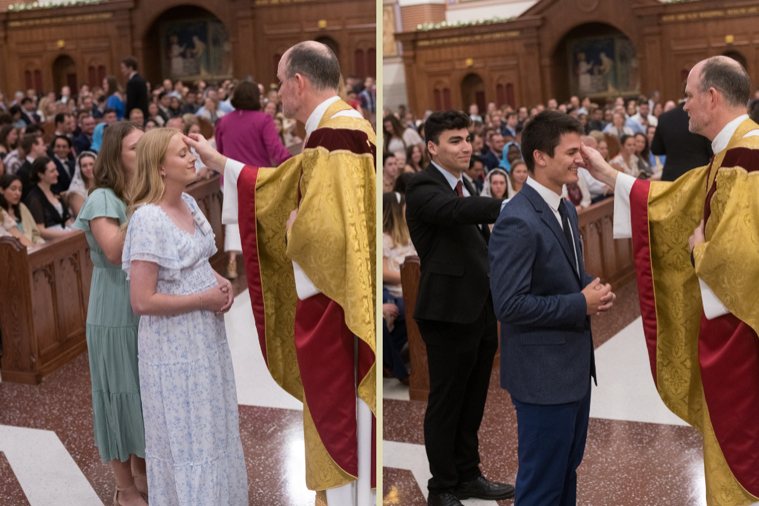
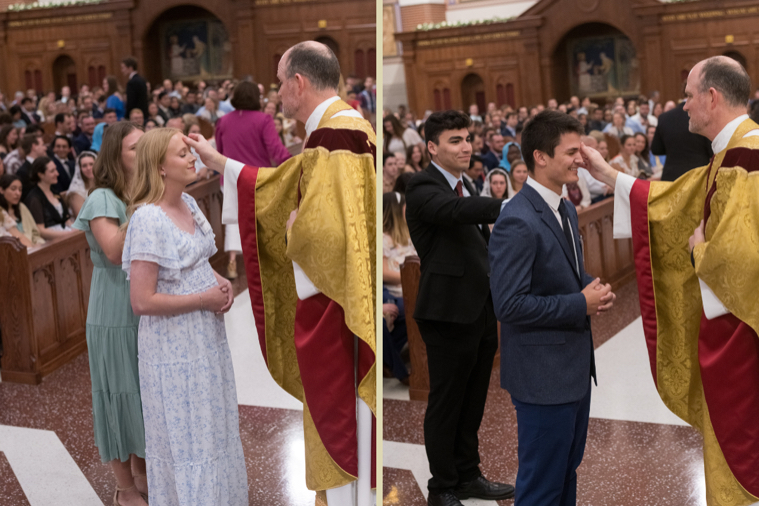
The National Catholic Register contacted all 175 Latin-rite territorial dioceses in the United States, seeking numbers of people planning to join the Catholic Church at Easter 2026.
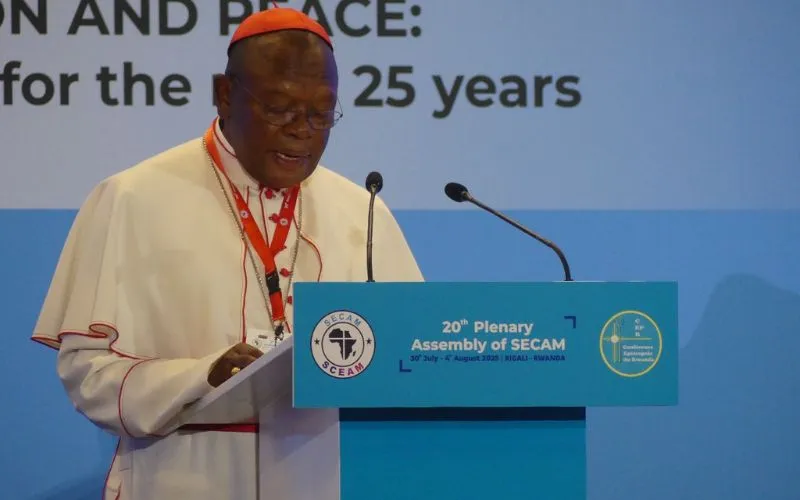
The final report addressing the pastoral challenge of polygamy in Africa draws attention to a wide range of social, cultural, and pastoral realities shaping the practice across the continent.

| Picture of the day |
|---|

|
|
Morning in a Pine Forest (1889) by Russian artists Ivan Shishkin and Konstantin Savitsky.
|
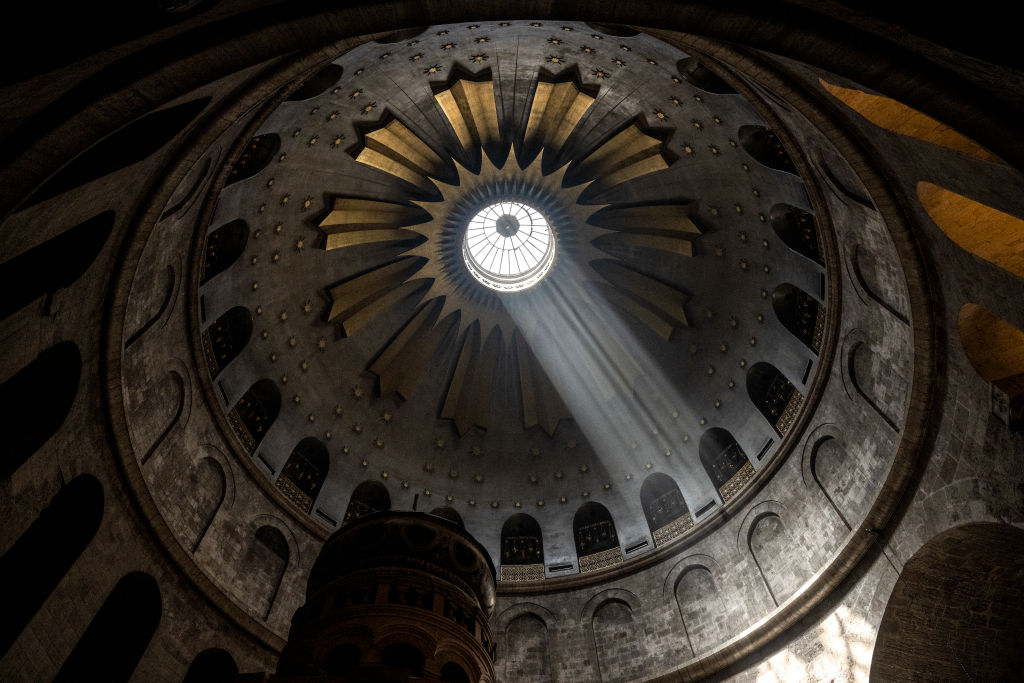
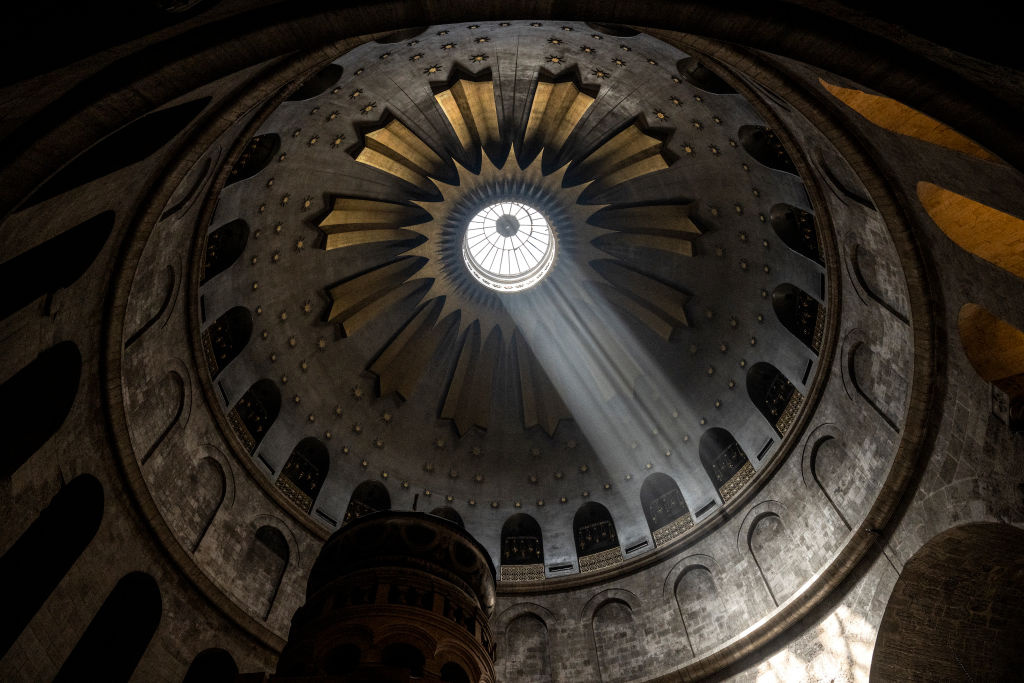
Police stopped the two church leaders on their way as they were proceeding privately “without any ceremonial or liturgical manifestations,” and forced them to turn back.
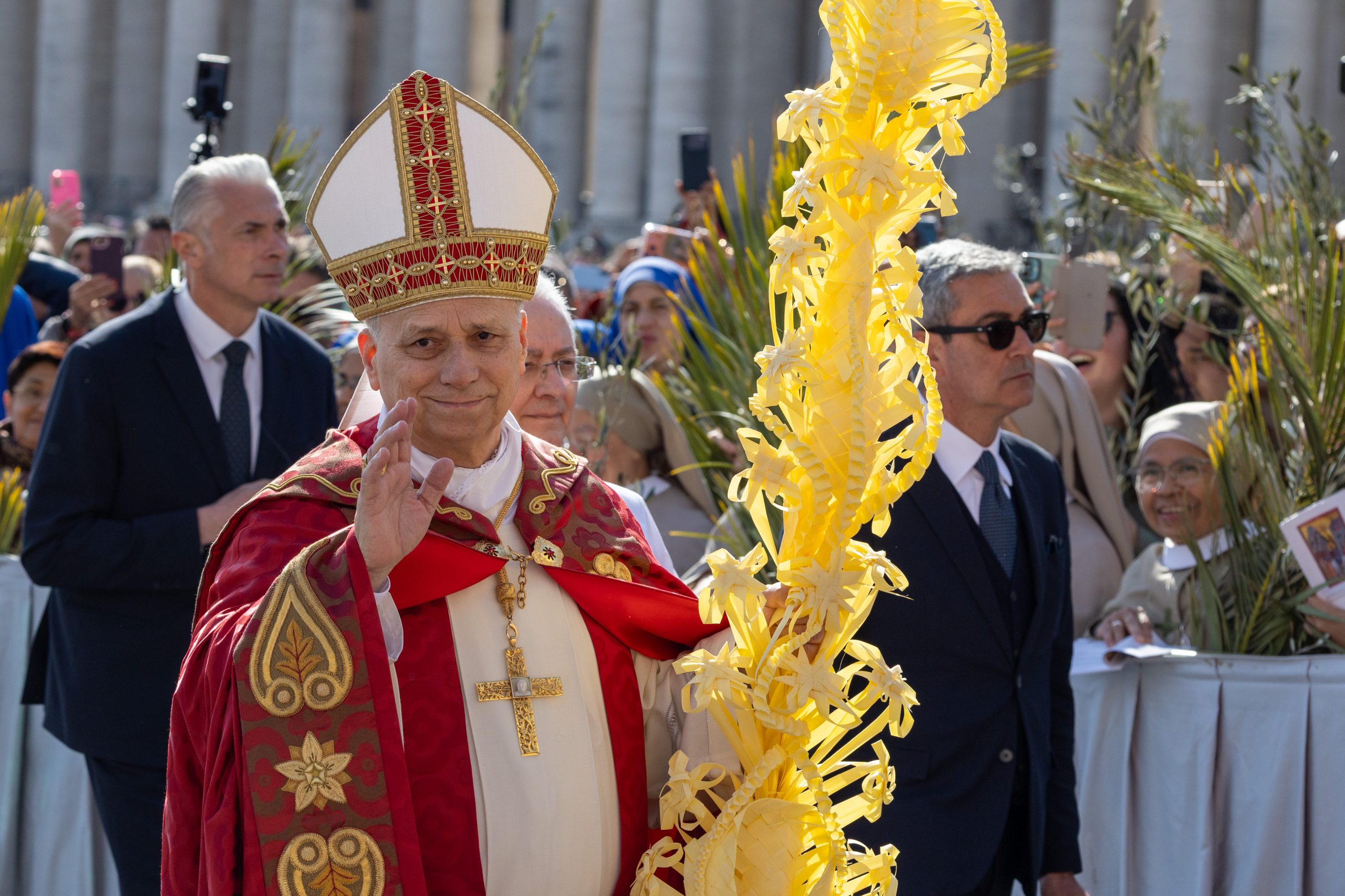
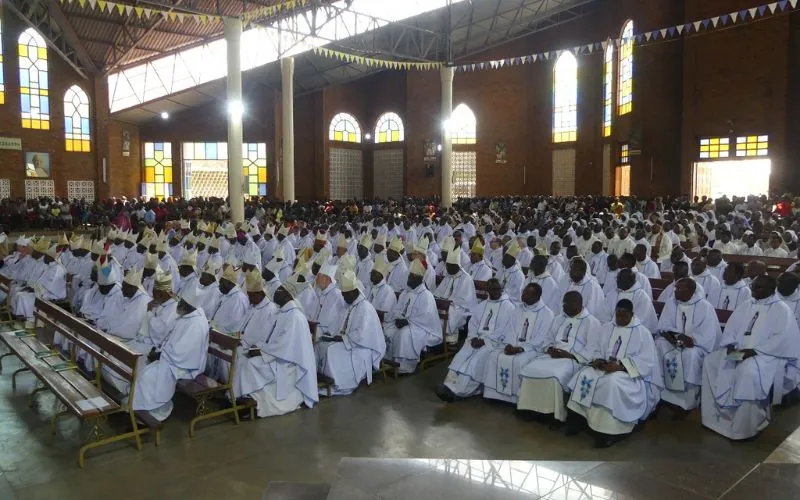
At Palm Sunday Mass and the Angelus following it, the pope prayed for Middle East Christians, victims of war, and migrants who died at sea off Crete.
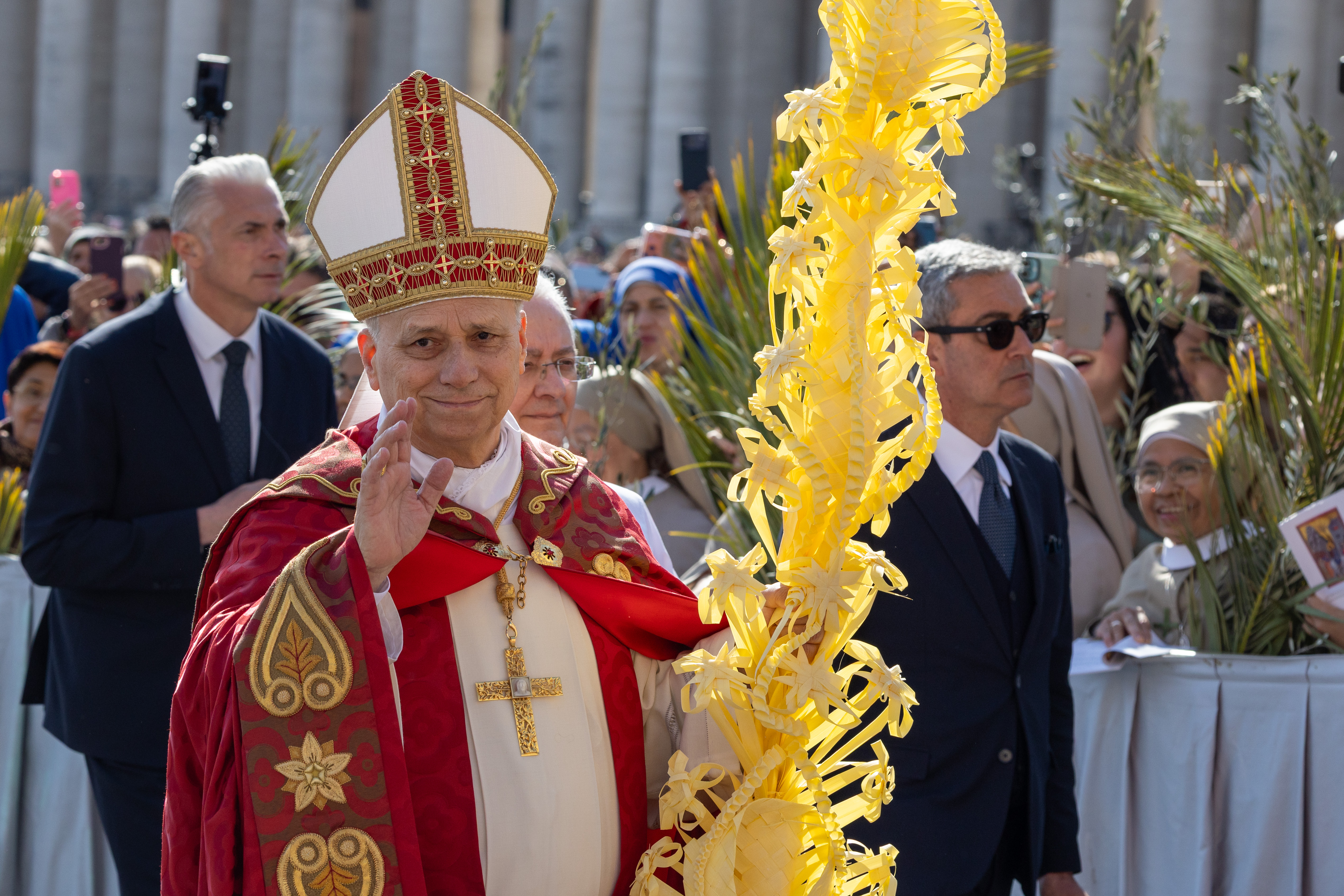
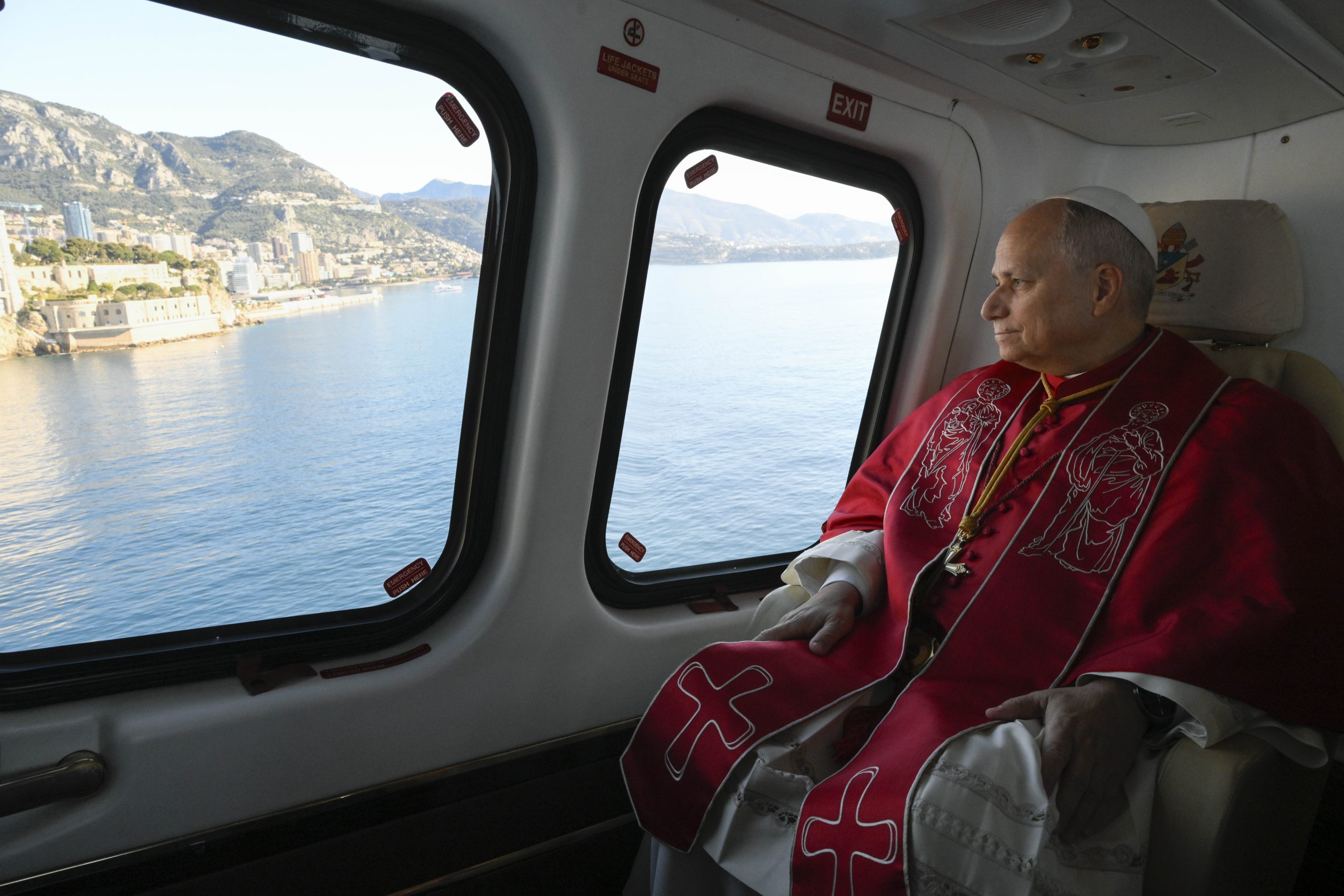
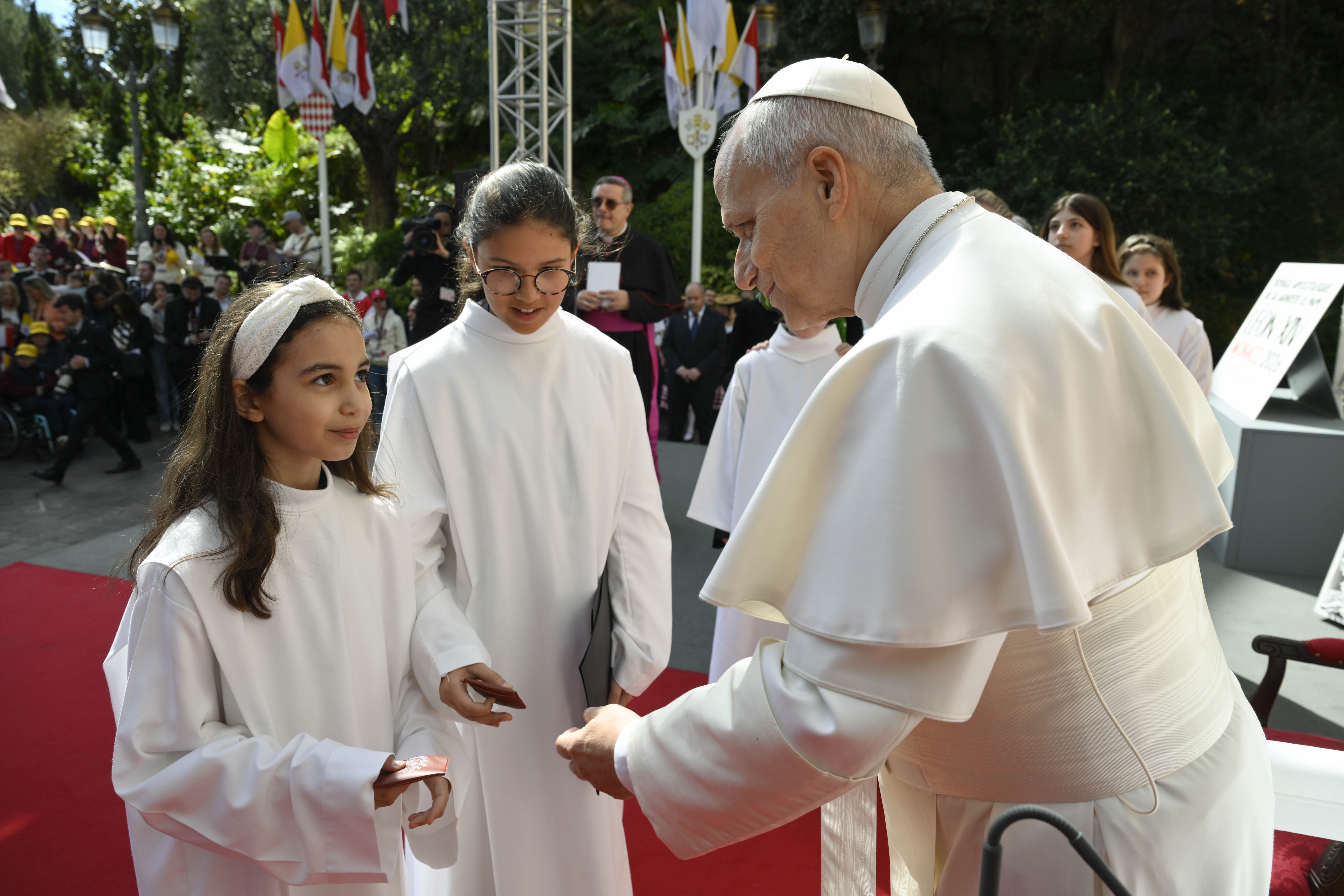
The Holy Father met with the country’s royalty, addressed Catholic youth, and celebrated Mass at Louis II Stadium.
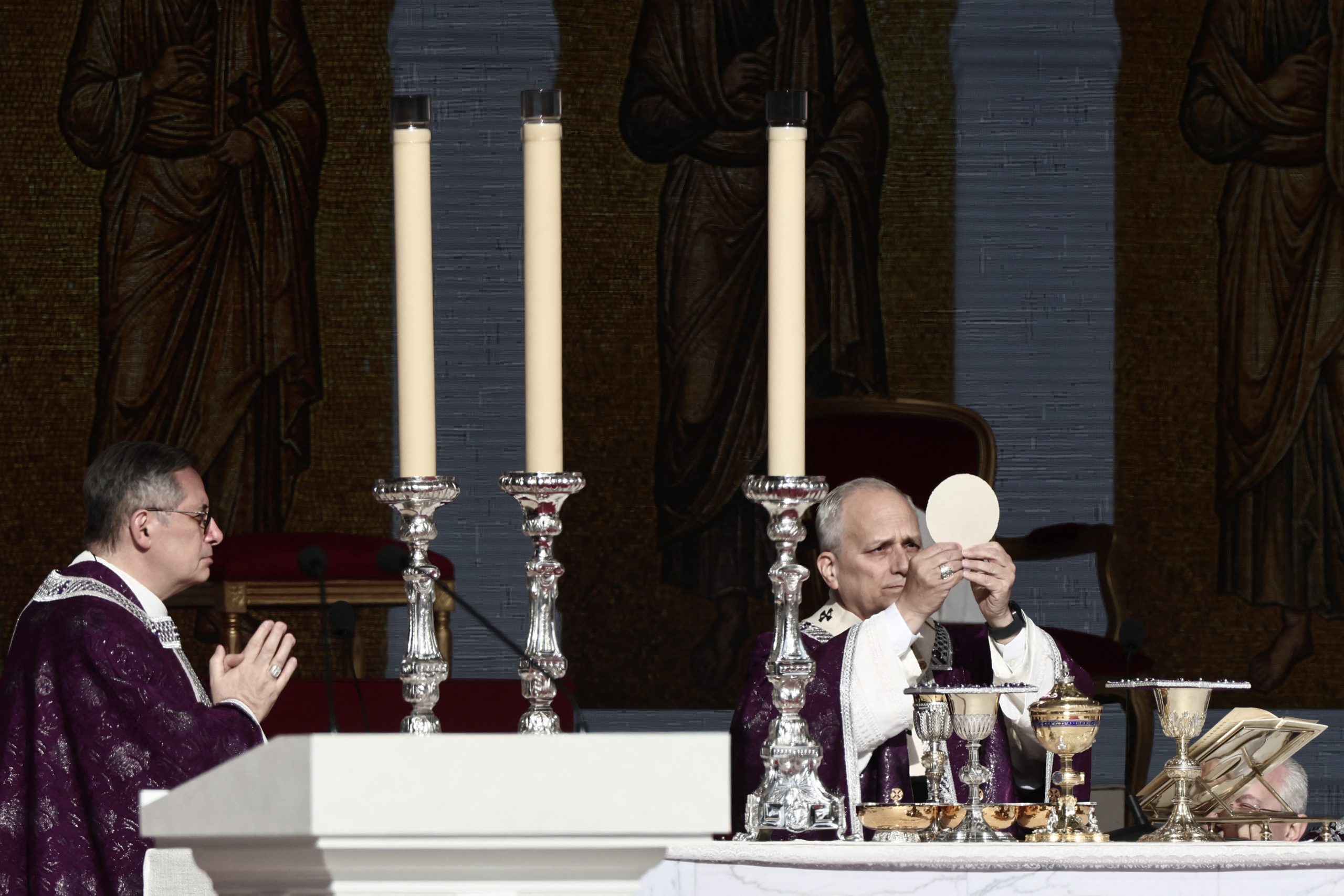
The Holy Father during his homily at Monaco’s Louis II Stadium urged the faithful to “not get used to the rumble of weapons or the images of war.”
| Picture of the day |
|---|

|
|
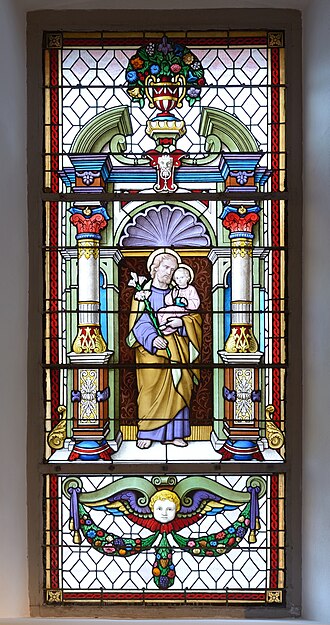
Saint Joseph depicted holding a staff with lily blossoms and the Christ Child on a stained-glass window in the Saint Antony church in Urtijëi. Today is St. Joseph’s feast day in Western Christianity.
|
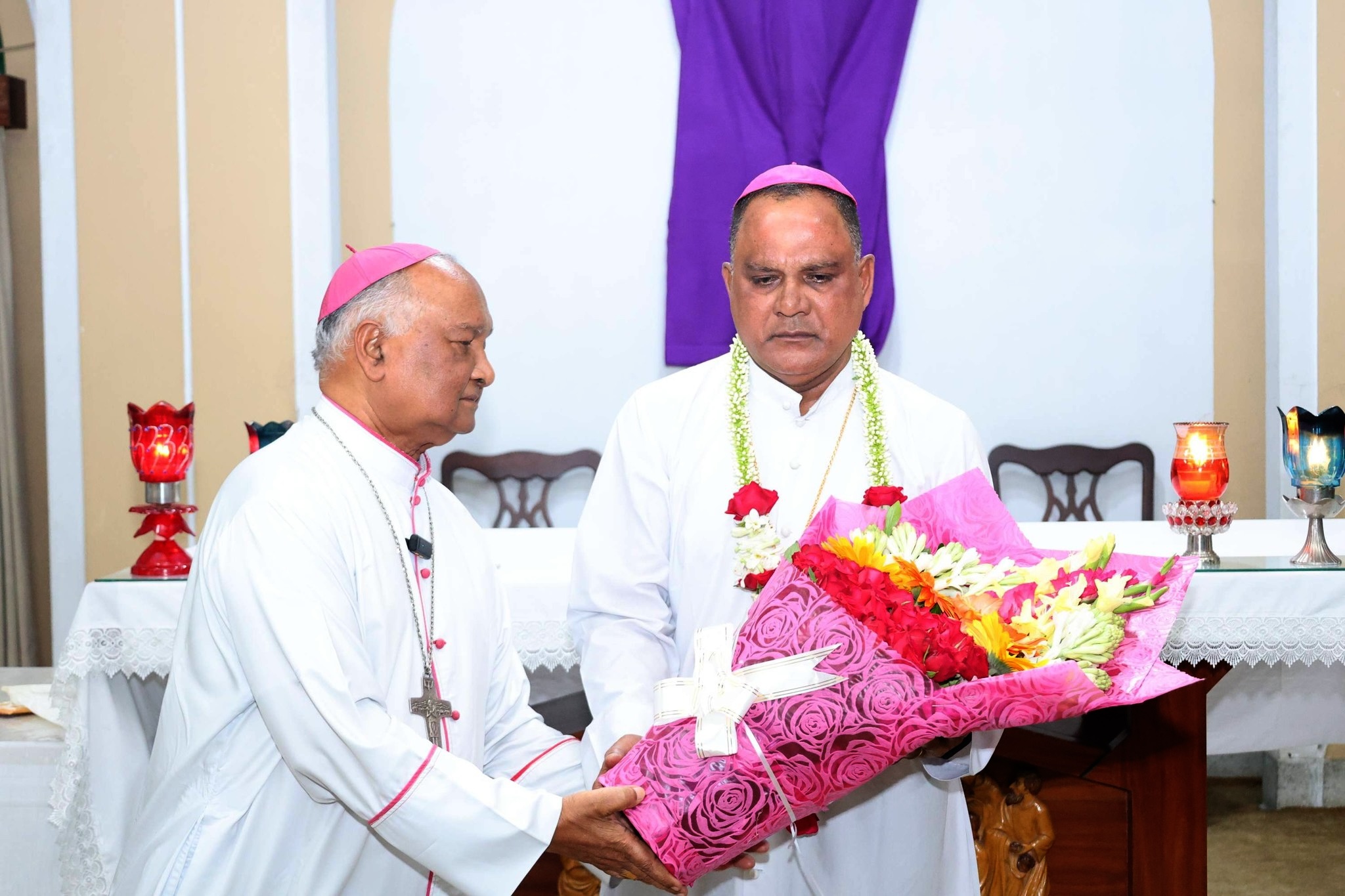
Pope Leo XIV erected the Diocese of Joypurhat on March 25, appointing Father Paul Gomes as first bishop of a region whose Catholics are largely Indigenous.
![California grandmother aims for 10,000 signatures on petition against second-trimester abortions #Catholic Mary Waldorf didn’t know anything about organizing petitions, but when a hospital worker and fellow parishioner told her that staff were forced to participate in second-trimester abortions, she felt called to do something.Enloe Medical Center in Chico, California, about 80 miles north of Sacramento, is the primary hospital in the area.“It’s the only hospital in a huge county. We all have to use it,” Waldorf told “EWTN Pro-Life Weekly.”Waldorf still remembers how she felt the day she found out about the abortions being performed there.“I spent the rest of the day just bawling because I know what a second-trimester abortion is,” she said.“Everybody was shocked,” she added.Waldorf went with a small group to peacefully protest in front of the hospital, holding signs. Hospital staff approached, asking why they were there.“They didn’t even know” about the later-term abortions being performed at the facility, Waldorf said.Waldorf claimed that local media will not cover the controversy. She said she has sent several letters to the editor of local papers but described the situation as a “media blackout.”A pediatrician at the hospital told her the hospital administration might reconsider if there was enough concern. “Why she told me, God only knows,” Waldorf said. “But I thought, well, if that’s the case, then what if we do a petition?”“I’m just somebody who goes to church, has grandkids, goes to work — I don’t know how to do [a petition],” she told “EWTN Pro-Life Weekly.” “I am not a media [figure]. But when God gives you an opportunity, you got to go for it.”The petition had about 800 signatures as of March 27. Waldorf is aiming for 10,000 — 10% of the size of the town.Waldorf said staff members have told her that the hospital allegedly has refused to allow some medical workers to opt out of assisting with abortion procedures.“They were told that the pre-op and the post-op nurses and personnel could not opt out,” Waldorf said.Waldorf runs a local chapter of 40 Days for Life, a nationwide effort aimed at praying for women seeking abortions and for their children, usually in front of abortion clinics during Lent. She says she wants women to have “true choice.”“If the mindset of people is about death, they don’t consider the child — and you have to consider both,” Waldorf said. “They’re not counseling these women. What about giving them true choice?”“The dignity of the human person is so paramount,” Waldorf added. “And I think that that is what’s being lost here completely.”](https://unitedyam.com/wp-content/uploads/2026/03/california-grandmother-aims-for-10000-signatures-on-petition-against-second-trimester-abortions-catholic-mary-waldorf-didnt-know-anything-about-organizing-petitions-but-when-a-hospital-wor-scaled.png "California grandmother aims for 10,000 signatures on petition against second-trimester abortions #Catholic Mary Waldorf didn’t know anything about organizing petitions, but when a hospital worker and fellow parishioner told her that staff were forced to participate in second-trimester abortions, she felt called to do something.Enloe Medical Center in Chico, California, about 80 miles north of Sacramento, is the primary hospital in the area.“It’s the only hospital in a huge county. We all have to use it,” Waldorf told “EWTN Pro-Life Weekly.”Waldorf still remembers how she felt the day she found out about the abortions being performed there.“I spent the rest of the day just bawling because I know what a second-trimester abortion is,” she said.“Everybody was shocked,” she added.Waldorf went with a small group to peacefully protest in front of the hospital, holding signs. Hospital staff approached, asking why they were there.“They didn’t even know” about the later-term abortions being performed at the facility, Waldorf said.Waldorf claimed that local media will not cover the controversy. She said she has sent several letters to the editor of local papers but described the situation as a “media blackout.”A pediatrician at the hospital told her the hospital administration might reconsider if there was enough concern. “Why she told me, God only knows,” Waldorf said. “But I thought, well, if that’s the case, then what if we do a petition?”“I’m just somebody who goes to church, has grandkids, goes to work — I don’t know how to do [a petition],” she told “EWTN Pro-Life Weekly.” “I am not a media [figure]. But when God gives you an opportunity, you got to go for it.”The petition had about 800 signatures as of March 27. Waldorf is aiming for 10,000 — 10% of the size of the town.Waldorf said staff members have told her that the hospital allegedly has refused to allow some medical workers to opt out of assisting with abortion procedures.“They were told that the pre-op and the post-op nurses and personnel could not opt out,” Waldorf said.Waldorf runs a local chapter of 40 Days for Life, a nationwide effort aimed at praying for women seeking abortions and for their children, usually in front of abortion clinics during Lent. She says she wants women to have “true choice.”“If the mindset of people is about death, they don’t consider the child — and you have to consider both,” Waldorf said. “They’re not counseling these women. What about giving them true choice?”“The dignity of the human person is so paramount,” Waldorf added. “And I think that that is what’s being lost here completely.”")
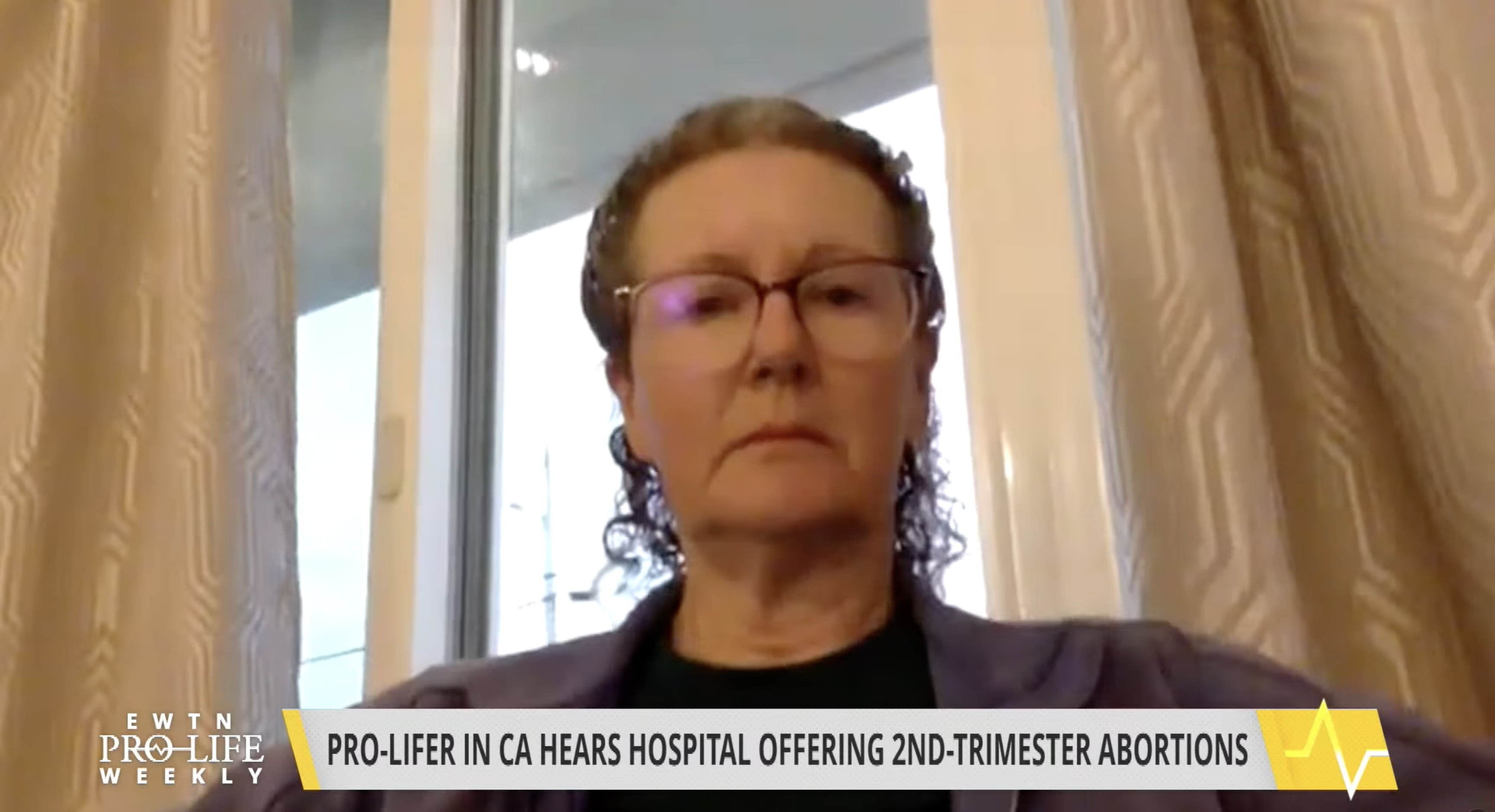
Mary Waldorf is rallying her town to petition against second-trimester abortions offered by Enloe Medical Center.
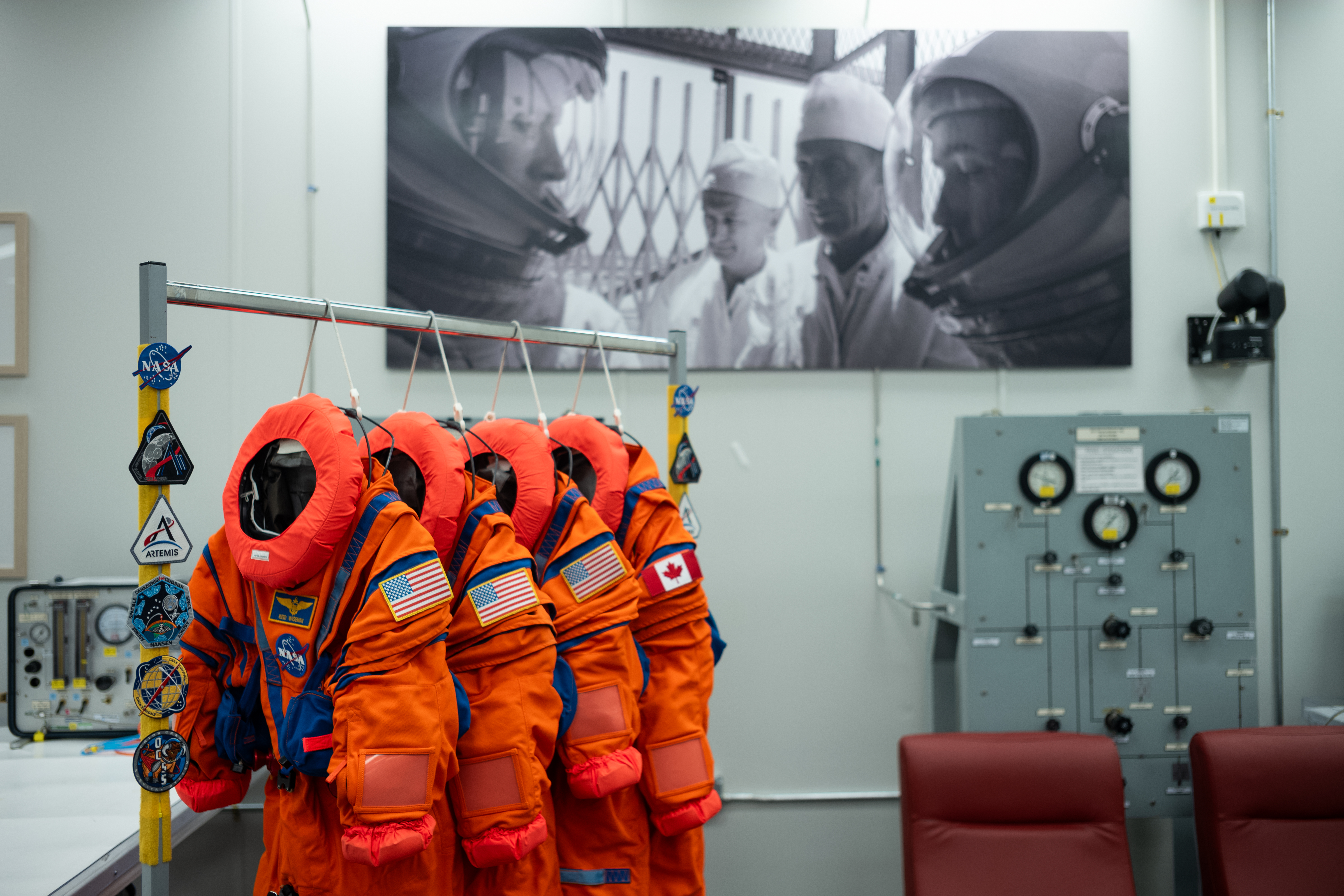
The Orion Crew Survival System suits that Commander Reid Wiseman, Pilot Victor Glover, and Mission Specialist Christina Koch from NASA, and Mission Specialist Jeremy Hansen from the CSA (Canadian Space Agency) will wear on the Artemis II test flight are seen in the suit-up room of the Neil A. Armstrong Operations and Checkout Building, Saturday, Jan. 17, 2026, at NASA’s Kennedy Space Center in Florida.
Read More![Religious sisters lose lawsuit against Smith & Wesson alleging ‘facilitation’ of mass shootings #Catholic Several congregations of religious sisters have lost their lawsuit against the iconic American gun manufacturer Smith & Wesson, which claimed the company has “facilitated” mass shootings in the United States. A version of the lawsuit was first filed in December 2023 in Nevada district court by the Adrian Dominican Sisters, the Sisters of Bon Secours USA, the Sisters of St. Francis of Philadelphia, and the Sisters of the Holy Names of Jesus and Mary, U.S.-Ontario Province.The filing alleged that Smith & Wesson is “intent on marketing and selling AR-15 rifles in whatever manner results in the most sales.” The suit claimed the company was pursuing such marketing even if it “is illegal and attracts a dangerous category of buyers [and] facilitates an unrelenting and growing stream of killings.”The sisters had filed the suit as shareholders in the company, claiming that Smith & Wesson’s marketing “causes the company to face an ever-increasing and substantial likelihood of liability that threatens its long-term existence.” The filing specifically targeted the company’s board of directors on behalf of the company and its shareholders in what is known as a “derivative lawsuit.”The sisters in the original lawsuit failed to meet a required $500,000 security bond deadline, leading to the suit’s dismissal. They subsequently refiled in federal court in February 2025. In a March 23 order dismissing the suit, U.S. District Judge Gloria Navarro said the nuns failed to establish standing to bring the action against the board members.The judge said the nuns could amend the lawsuit if they wished, though the court reimposed the $500,000 security bond, ordering that the sisters must post the amount if they wished to continue the suit.Smith & Wesson was founded in 1852. It operates out of Tennessee and Nevada.The company makes and sells a wide array of firearms, including ArmaLite-type rifles, commonly referred to as “AR-15s,” which it has been selling since 2006.](https://unitedyam.com/wp-content/uploads/2026/03/religious-sisters-lose-lawsuit-against-smith-wesson-alleging-facilitation-of-mass-shootings-catholic-several-congregations-of-religious-sisters-have-lost-their-lawsuit-against-the-scaled.jpg "Religious sisters lose lawsuit against Smith & Wesson alleging ‘facilitation’ of mass shootings #Catholic Several congregations of religious sisters have lost their lawsuit against the iconic American gun manufacturer Smith & Wesson, which claimed the company has “facilitated” mass shootings in the United States. A version of the lawsuit was first filed in December 2023 in Nevada district court by the Adrian Dominican Sisters, the Sisters of Bon Secours USA, the Sisters of St. Francis of Philadelphia, and the Sisters of the Holy Names of Jesus and Mary, U.S.-Ontario Province.The filing alleged that Smith & Wesson is “intent on marketing and selling AR-15 rifles in whatever manner results in the most sales.” The suit claimed the company was pursuing such marketing even if it “is illegal and attracts a dangerous category of buyers [and] facilitates an unrelenting and growing stream of killings.”The sisters had filed the suit as shareholders in the company, claiming that Smith & Wesson’s marketing “causes the company to face an ever-increasing and substantial likelihood of liability that threatens its long-term existence.” The filing specifically targeted the company’s board of directors on behalf of the company and its shareholders in what is known as a “derivative lawsuit.”The sisters in the original lawsuit failed to meet a required $500,000 security bond deadline, leading to the suit’s dismissal. They subsequently refiled in federal court in February 2025. In a March 23 order dismissing the suit, U.S. District Judge Gloria Navarro said the nuns failed to establish standing to bring the action against the board members.The judge said the nuns could amend the lawsuit if they wished, though the court reimposed the $500,000 security bond, ordering that the sisters must post the amount if they wished to continue the suit.Smith & Wesson was founded in 1852. It operates out of Tennessee and Nevada.The company makes and sells a wide array of firearms, including ArmaLite-type rifles, commonly referred to as “AR-15s,” which it has been selling since 2006.")
Multiple congregations of sisters alleged that the gun manufacturer was partly complicit in “an unrelenting and growing stream of killings.”

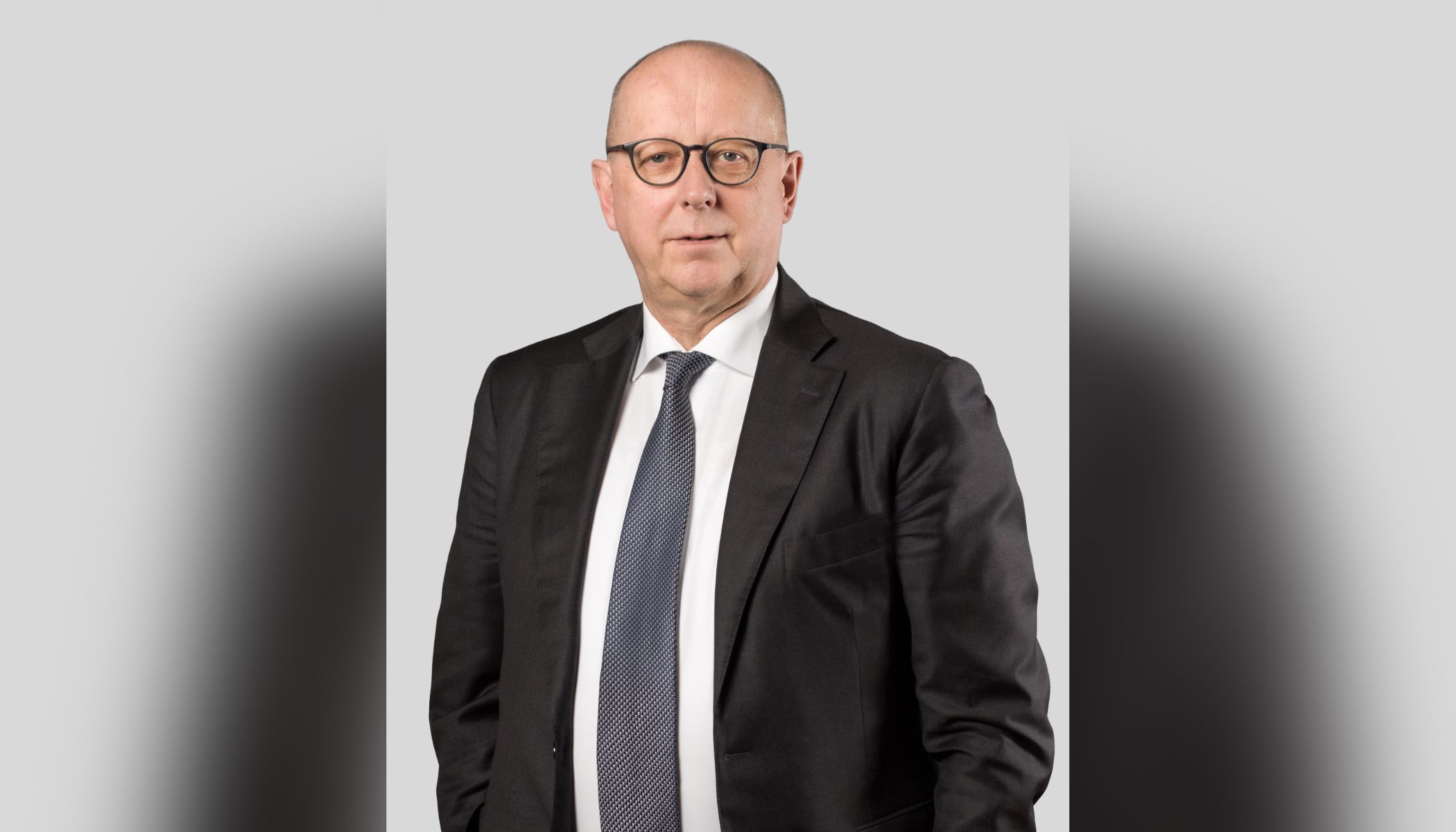
François Pauly will succeed Jean-Baptiste de Franssu at helm of Institute for the Works of Religion.
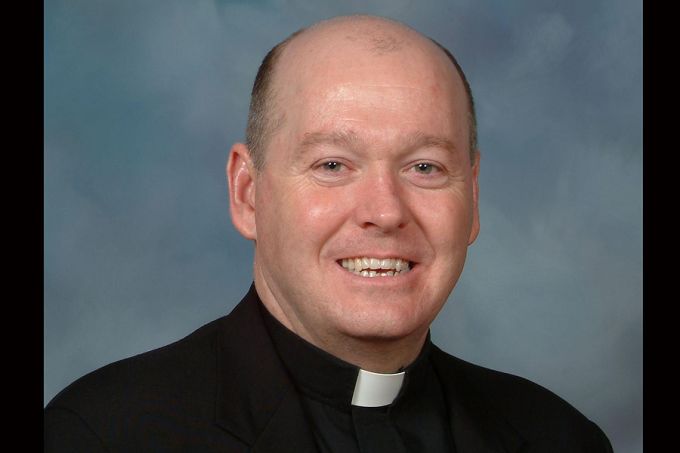
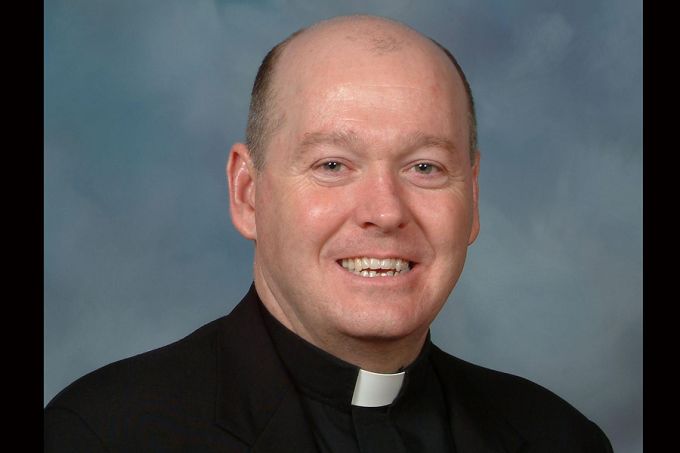
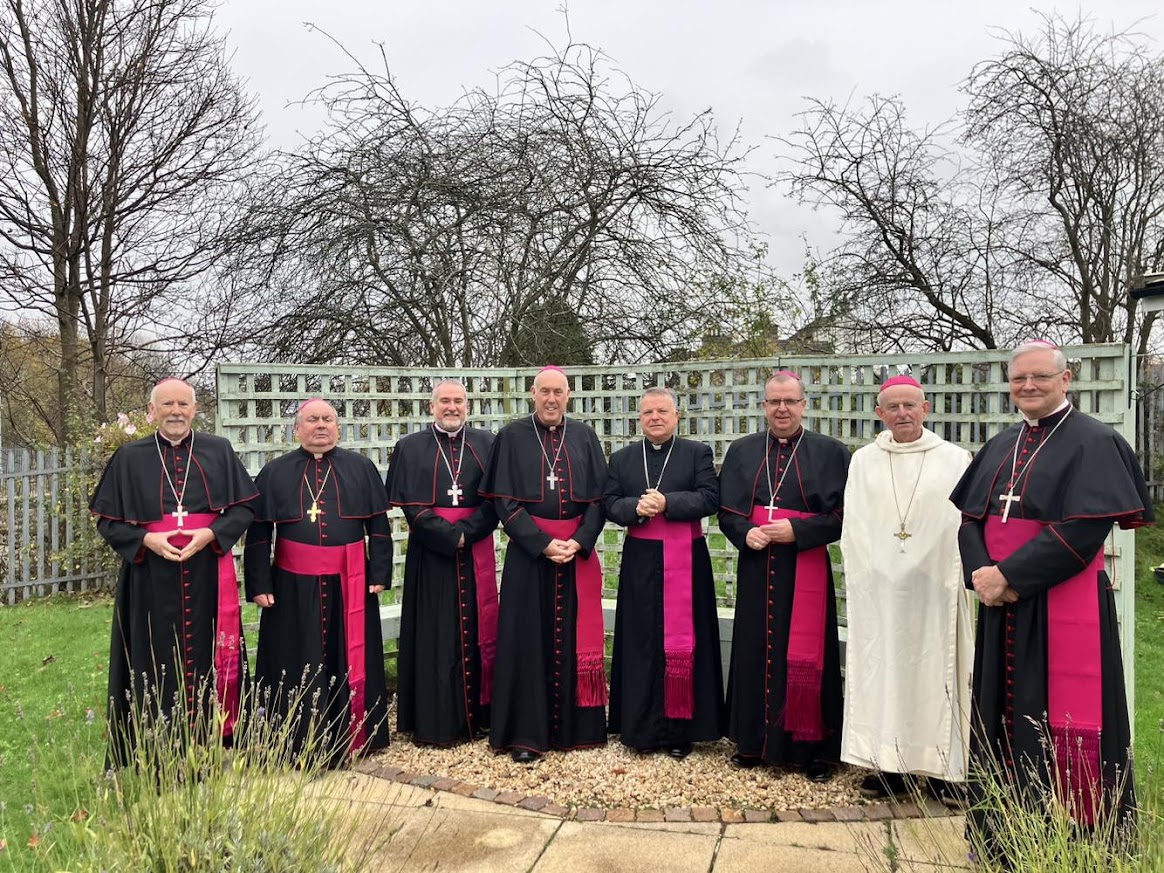
Bishop Brendan Cahill noted the importance of ecumenical approaches to “one of the most pressing issues of our time.”
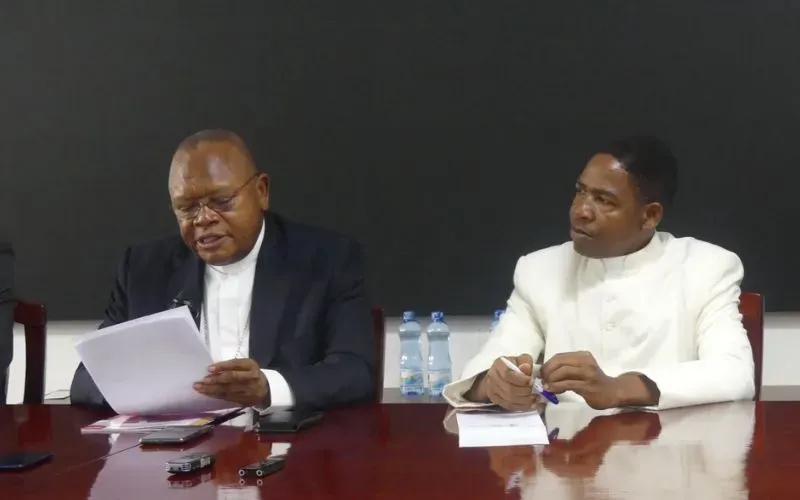
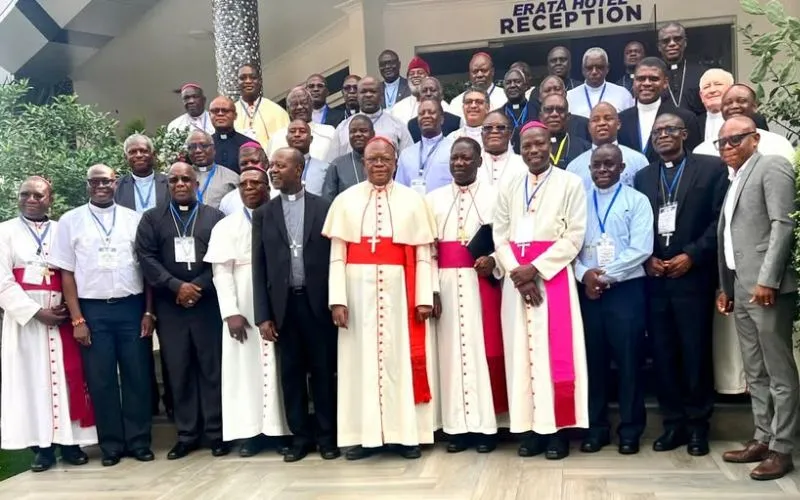
SECAM has issued a 25-page final report addressing the pastoral challenge of polygamy across Africa, a direct response to a mandate given at the Synod on Synodality.
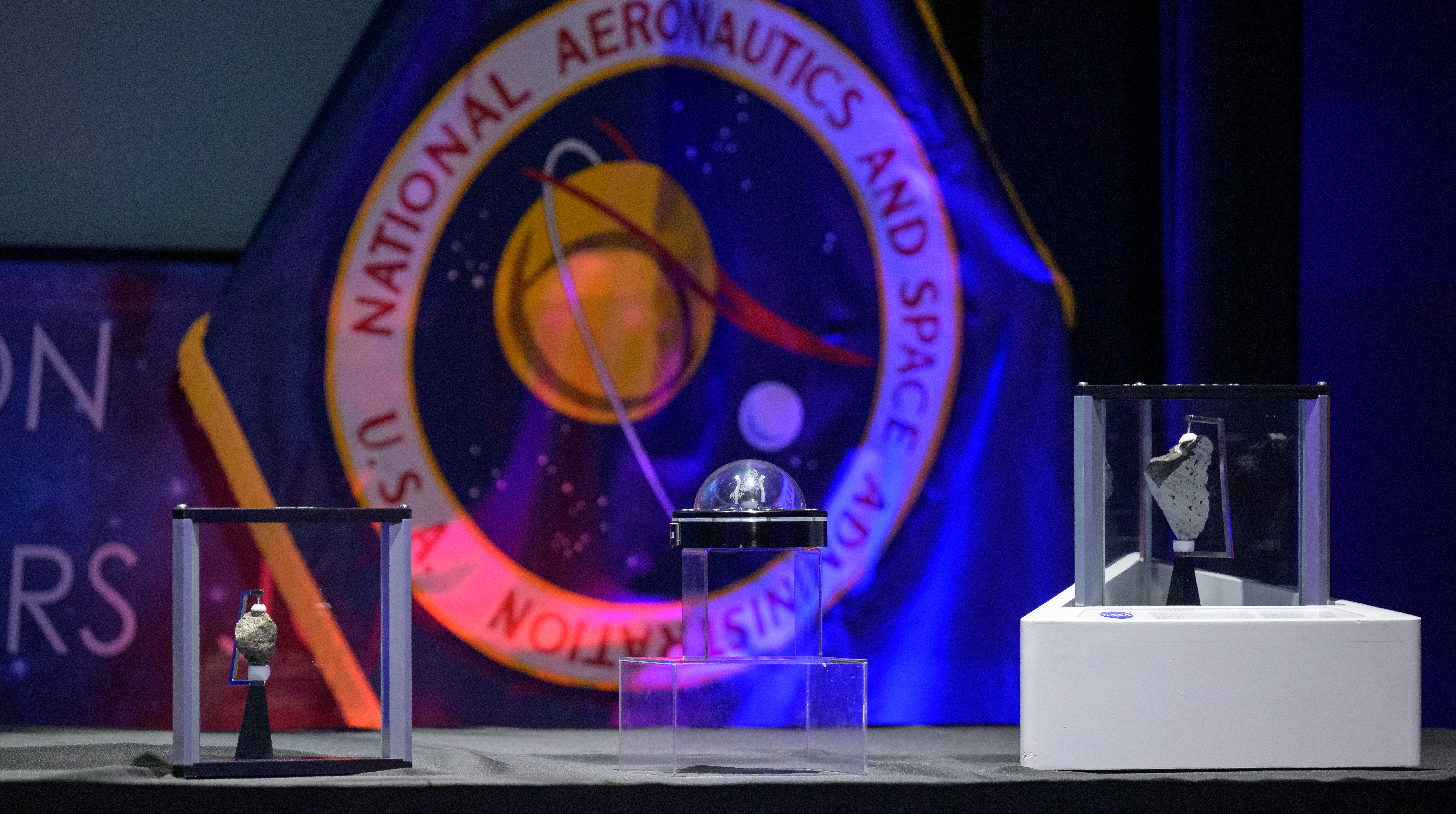
Moon rocks are seen during a March 24, 2026, event where NASA is outlining how the agency is executing the National Space Policy and accelerating preparations for America’s return to the surface of the Moon by 2028.
Read More![Pakistan Christian prisoners rebuild lives after church bombings #Catholic LAHORE, Pakistan — Every year during Lent, Sunil Masih remembers his elder brother as churches in Youhanabad — Lahore’s largest squatter settlement for poor Christians — mark the anniversary of the 2015 church bombings.The four Catholic brothers were among more than 150 Christians arrested by police days after twin suicide attacks on St. John’s Catholic Church and Christ Church on March 15, 2015, which killed at least 19 people and injured hundreds. The attacks were claimed by Jamaat-ul-Ahrar, an offshoot of Tehreek-e-Taliban Pakistan.The bombings sparked mob violence that mistakenly killed two Muslim men, who were later identified and detained through raids and video evidence.
Sunil Masih stands beside his vegetable cart in front of his family’s former
milk shop in Youhanabad, Lahore, Pakistan, on March 15, 2025. | Credit:
Kamran Chaudhry
Masih, now 28, said the trauma of prison changed him forever.“They hurled abuses at us, beat us with strips cut from vehicle tires, and in jail we were given old dried roti [flat bread],” he told EWTN News. “Water from the greasy toilet taps was served for drinking. Family meetings were allowed only after a month. It was a hellhole on earth.”He and his brother Sadaqat Perwaiz — popularly known as Monty — were released after six months in Central Jail Lahore. One brother, however, remained among 42 Christians and one Muslim charged in the lynching case.Devastation beyond prisonThe protracted court proceedings devastated the family’s four-decade-old milk business, saddled them with mounting debts, and forced the sale of their 680-square-foot home.Their worries deepened after two Christian inmates, Inderyas Masih, 36, and Usman Shaukat, 29, died in custody under suspicious circumstances during the trial. Police claimed tuberculosis and a heart attack, respectively, while families and the British Pakistani Christian Association reported bruises and unexplained injuries.
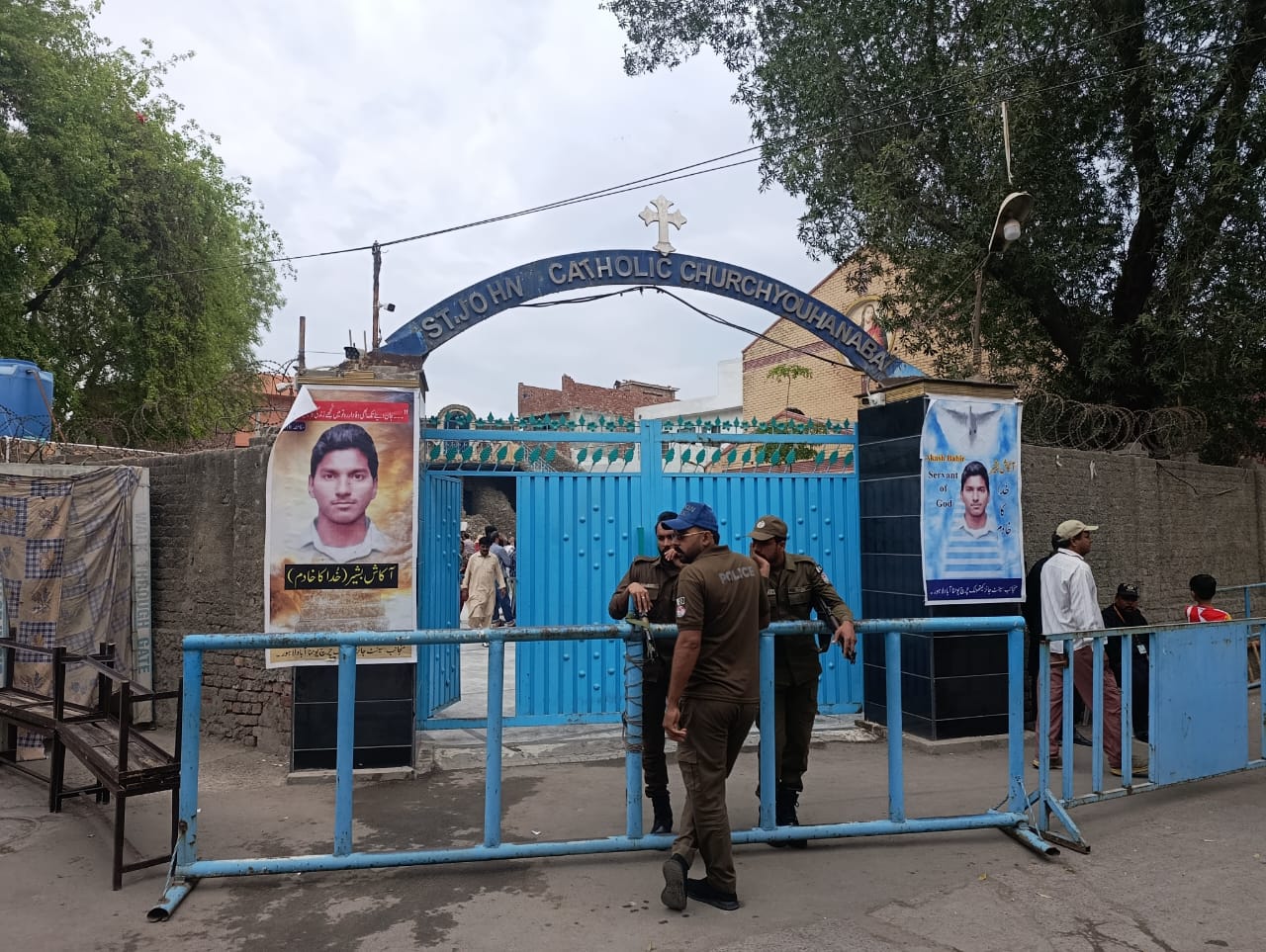
Pakistani police stand guard outside St. John’s Catholic Church in
Youhanabad, Lahore, on March 15, 2025. Posters of Servant of God Akash Bashir flank the entrance gate on the 10th anniversary of twin suicide bombings that struck the neighborhood. | Credit: Kamran Chaudhry
In January 2020, an anti-terrorism court acquitted the remaining 39 accused after blood money (Diyat) of 25 million rupees ($89,800) was paid to the victims’ families by Pastor Anwar Fazal, a prominent Christian televangelist.Under the Qisas and Diyat Ordinance 1990, introduced during Gen. Ziaul Haq’s Islamization process, courts calculate compensation based on the financial capacity of the convict and the victim’s heirs, with a minimum value linked to 30,630 grams of silver.Monty died of a heart attack in 2022, leaving behind two children aged 10 and 14. His faded poster still hangs in front of the family’s closed milk shop.“He was a stout man, known for his strong community ties and friendly nature in our neighborhood. Prison left him very lean and weakened by an infection that caused his legs to swell beneath the knees and bleed,” Masih said.Today, Sunil Masih sells vegetables from a wooden cart in front of the same shop, now leased to a real estate dealer. He hopes to marry once his new business stabilizes.‘The gift of a hero’On March 15, police guarded churches in Youhanabad, which houses more than 150,000 Christians, as the community observed the 11th bombing anniversary.At St. John’s, parishioners lit candles and placed flowers beneath a banner honoring Akash Bashir, the 20-year-old security volunteer who died preventing a suicide bomber from entering the church during that Sunday Mass.“Salute and gratitude to the martyrs of Youhanabad,” read the banner near the Marian grotto. In January 2022, the Vatican recognized Bashir as a servant of God, making him the first Pakistani Catholic on the path to canonization.
Father Akram Javed (fifth from right), parish priest of St. John’s Catholic Church, lights a memorial candle for Servant of God Akash Bashir at a commemoration in Youhanabad, Lahore, Pakistan, on March 15, 2025. |
Credit: Kamran Chaudhry
Father Akram Javed, parish priest of St. John’s, thanked police for security.“A group of 30 local volunteers carry on Akash’s mission, protecting the church and worshippers. The bombings were a terrible tragedy, but in that darkness, we received the gift of a hero,” he told EWTN News.‘The bombing was a national tragedy’Pentecostal politician Aslam Pervaiz Sahotra, who spent five years in prison, sees the anniversary as a moment of reflection for Pakistan’s 3.3 million Christians, many of whom continue to face discrimination, economic hardship, and lingering trauma.
A man prays outside a church in Youhanabad, Lahore, Pakistan, on March 15, 2025, during commemorations marking the anniversary of the twin suicide bombings. Banners honoring Akash Bashir are visible in the background. | Credit: Kamran Chaudhry
“The bombing was a national tragedy from which the authorities learnt nothing. We continue to suffer losses due to terrorism, with sporadic attacks targeting minority communities and security forces,” said the 65-year-old head of the Massiha Millat Party (Christian Nation Party).He alleged prison authorities tried to manipulate him, introducing Muslim prisoners to persuade him to stay passive.“Despite back pain from four displaced vertebrae, my time in prison strengthened my faith and resolve for activism. The trend of arresting Christians for alleged blasphemy to appease angry crowds will continue unless investigations are conducted on merit,” he added.
Pakistani bishops demand probe into death of Christian farmworker
The United States Commission on International Religious Freedom, in its 2025 annual report, said religious freedom in Pakistan continued to deteriorate, recommending it be designated a “country of particular concern,” citing blasphemy-related prosecutions, mob violence, and forced conversions targeting Christians and other minorities, and a growing climate of fear and impunity.](https://unitedyam.com/wp-content/uploads/2026/03/pakistan-christian-prisoners-rebuild-lives-after-church-bombings-catholic-lahore-pakistan-every-year-during-lent-sunil-masih-remembers-his-elder-brother-as-churches-in-youhanabad.jpg)
Eleven years after twin suicide bombings struck two Pakistan churches, survivors of mass arrests still bear the scars as a young martyr who died stopping the attack moves toward sainthood.
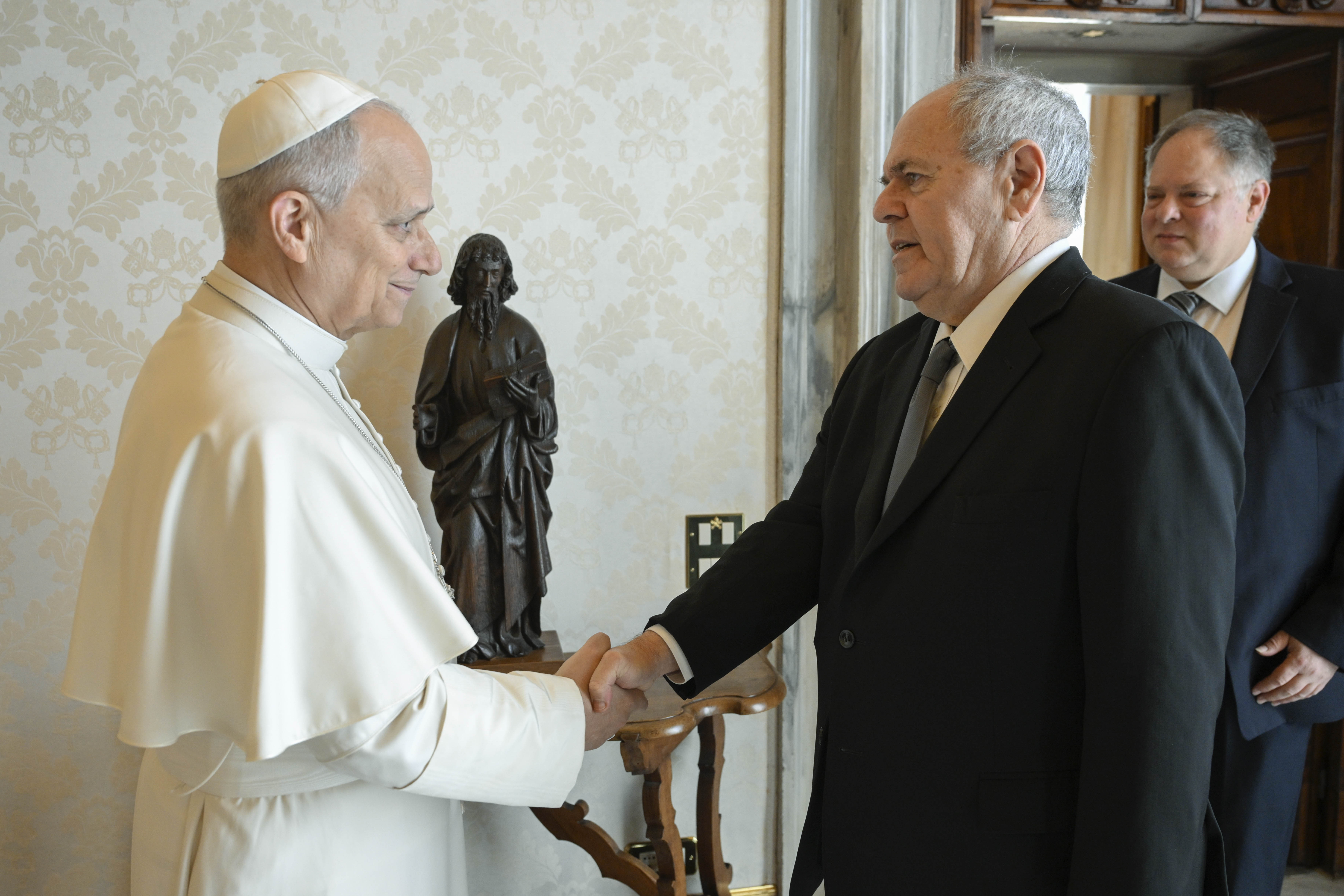
![Yad Vashem chief: Holocaust memory is key to fighting antisemitism #Catholic Dani Dayan, chairman of Yad Vashem, said that remembering and honoring the Holocaust is essential to combating rising antisemitism worldwide.Dayan, who met with Pope Leo XIV on March 23 together with Israel’s ambassador to the Holy See, Yaron Sideman, said their conversation focused on “two issues: the historical remembrance, the need to remember, to know about the Holocaust — but not just for the sake of history, also for the sake of the present and the sake of the future.”We have to make sure that an “atrocity like this cannot happen again — not to the Jewish people, not to any other people,” he said.He added that antisemitism is “raising its ugly head again all over the world” and that the two issues are closely linked.“I think that knowing about the Holocaust, learning about the Holocaust, remembering, honoring the Holocaust is one of the tools to combat antisemitism,” Dayan said.‘Antisemitism is bigotry’Asked whether Israeli policy risks fueling antisemitism, Dayan rejected the premise.“I think antisemitism should not have palliative reasons. Antisemitism is bigotry, antisemitism is racism, and it’s completely independent of anything that Israel does or does not,” he said.He described antisemitism as a unifying force among otherwise opposed extremist groups.“In many sectors in the world, antisemitism has become the common denominator, the lingua franca of all the extremists in the world — left-wing extremists, right-wing extremists, religious extremists, Islamist extremists, and many others,” he said.“They hate each other on any other issue… [but] they don’t only agree, they even collaborate.”“Antisemitism should not be understood. It should be combated without any reservation,” he added, noting he found “full agreement” with Pope Leo XIV on the point.Memory, politics, and responsibilityDayan emphasized the distinction between Holocaust remembrance and contemporary political debates.“The policy and Holocaust remembrance are two completely different things,” he said, while noting that the Holocaust remains “omnipresent in the back of our minds” for many Jews and continues to shape collective identity.He said the obligation to remember the Holocaust is “threefold”: for the future, to build a world free of bigotry and genocide; for the present, amid resurging antisemitism; and as a moral duty to the victims.“Six million victims that were massacred by Nazi Germany and its collaborators during the Shoah deserve to be remembered,” he said. “It’s a debt that we have to maintain.”A shared history and a future visit?Reflecting on relations between the Catholic Church and the Jewish people, Dayan pointed to the significance of papal visits to Yad Vashem.He presented Pope Leo XIV with a painting by Jewish artist Carol Deutsch, created during the Shoah, depicting the biblical question “Adam, where are you?”He linked the image to Pope Francis’ address at Yad Vashem, in which the late pope asked: “Where was humanity?”Dayan expressed hope that Pope Leo XIV would visit Yad Vashem in the future, “when circumstances allow it.”‘Peace is an imperative’Asked about the role of believers in promoting peace, Dayan said the memory of the Holocaust underscores the urgency of that mission.“To yearn for it and to act for it,” he said. “Learning about the Holocaust… is one of the greatest motivations a person can have to understand that peace is an imperative.”He acknowledged that he once believed the devastation of World War II and the Holocaust would end war and antisemitism.“Unfortunately… I was very naive in that respect. We have to work harder, all of us, in order to make that a reality in the future,” he said.This story was first published by ACI Stampa, the Italian-language sister service of EWTN News. It has been translated and adapted by EWTN News English.](https://unitedyam.com/wp-content/uploads/2026/03/yad-vashem-chief-holocaust-memory-is-key-to-fighting-antisemitism-catholic-dani-dayan-chairman-of-yad-vashem-said-that-remembering-and-honoring-the-holocaust-is-essential-to-combating-rising-antis-scaled.jpg "Yad Vashem chief: Holocaust memory is key to fighting antisemitism #Catholic Dani Dayan, chairman of Yad Vashem, said that remembering and honoring the Holocaust is essential to combating rising antisemitism worldwide.Dayan, who met with Pope Leo XIV on March 23 together with Israel’s ambassador to the Holy See, Yaron Sideman, said their conversation focused on “two issues: the historical remembrance, the need to remember, to know about the Holocaust — but not just for the sake of history, also for the sake of the present and the sake of the future.”We have to make sure that an “atrocity like this cannot happen again — not to the Jewish people, not to any other people,” he said.He added that antisemitism is “raising its ugly head again all over the world” and that the two issues are closely linked.“I think that knowing about the Holocaust, learning about the Holocaust, remembering, honoring the Holocaust is one of the tools to combat antisemitism,” Dayan said.‘Antisemitism is bigotry’Asked whether Israeli policy risks fueling antisemitism, Dayan rejected the premise.“I think antisemitism should not have palliative reasons. Antisemitism is bigotry, antisemitism is racism, and it’s completely independent of anything that Israel does or does not,” he said.He described antisemitism as a unifying force among otherwise opposed extremist groups.“In many sectors in the world, antisemitism has become the common denominator, the lingua franca of all the extremists in the world — left-wing extremists, right-wing extremists, religious extremists, Islamist extremists, and many others,” he said.“They hate each other on any other issue… [but] they don’t only agree, they even collaborate.”“Antisemitism should not be understood. It should be combated without any reservation,” he added, noting he found “full agreement” with Pope Leo XIV on the point.Memory, politics, and responsibilityDayan emphasized the distinction between Holocaust remembrance and contemporary political debates.“The policy and Holocaust remembrance are two completely different things,” he said, while noting that the Holocaust remains “omnipresent in the back of our minds” for many Jews and continues to shape collective identity.He said the obligation to remember the Holocaust is “threefold”: for the future, to build a world free of bigotry and genocide; for the present, amid resurging antisemitism; and as a moral duty to the victims.“Six million victims that were massacred by Nazi Germany and its collaborators during the Shoah deserve to be remembered,” he said. “It’s a debt that we have to maintain.”A shared history and a future visit?Reflecting on relations between the Catholic Church and the Jewish people, Dayan pointed to the significance of papal visits to Yad Vashem.He presented Pope Leo XIV with a painting by Jewish artist Carol Deutsch, created during the Shoah, depicting the biblical question “Adam, where are you?”He linked the image to Pope Francis’ address at Yad Vashem, in which the late pope asked: “Where was humanity?”Dayan expressed hope that Pope Leo XIV would visit Yad Vashem in the future, “when circumstances allow it.”‘Peace is an imperative’Asked about the role of believers in promoting peace, Dayan said the memory of the Holocaust underscores the urgency of that mission.“To yearn for it and to act for it,” he said. “Learning about the Holocaust… is one of the greatest motivations a person can have to understand that peace is an imperative.”He acknowledged that he once believed the devastation of World War II and the Holocaust would end war and antisemitism.“Unfortunately… I was very naive in that respect. We have to work harder, all of us, in order to make that a reality in the future,” he said.This story was first published by ACI Stampa, the Italian-language sister service of EWTN News. It has been translated and adapted by EWTN News English.")
Dani Dayan speaks after meeting Pope Leo XIV, says antisemitism is “bigotry” independent of Israeli policy.

| Picture of the day |
|---|
,_Parque_natural_de_la_Arr%C3%A1bida,_Portugal,_2020-07-21,_DD_62.jpg)
|
|
Common cuttlefish (Sepia officinalis), Arrábida National Park, Portugal. The common cuttlefish is one of the largest and best-known cuttlefish species. They are a migratory species that spend the summer and spring inshore for spawning and then move to depths of 100 to 200m during autumn and winter. They only have a lifespan of 1–2 years and have many predators including sharks, dolphins, seals, fish, and cephalopods which includes other cuttlefish. During the day, most cuttlefish can be found buried below the substrate and fairly inactive. At night however, they are actively searching for prey and can ambush them from under the substrate. Cuttlefish are carnivorous and eat a variety of organisms including crustaceans (crabs and shrimp), small fish, molluscs (clams and snails), and sometimes other cuttlefish.
|

This new image from the Hubble Space Telescope and the James Webb Space Telescope takes a closer look at the core of Messier 101, also known as the Pinwheel Galaxy.
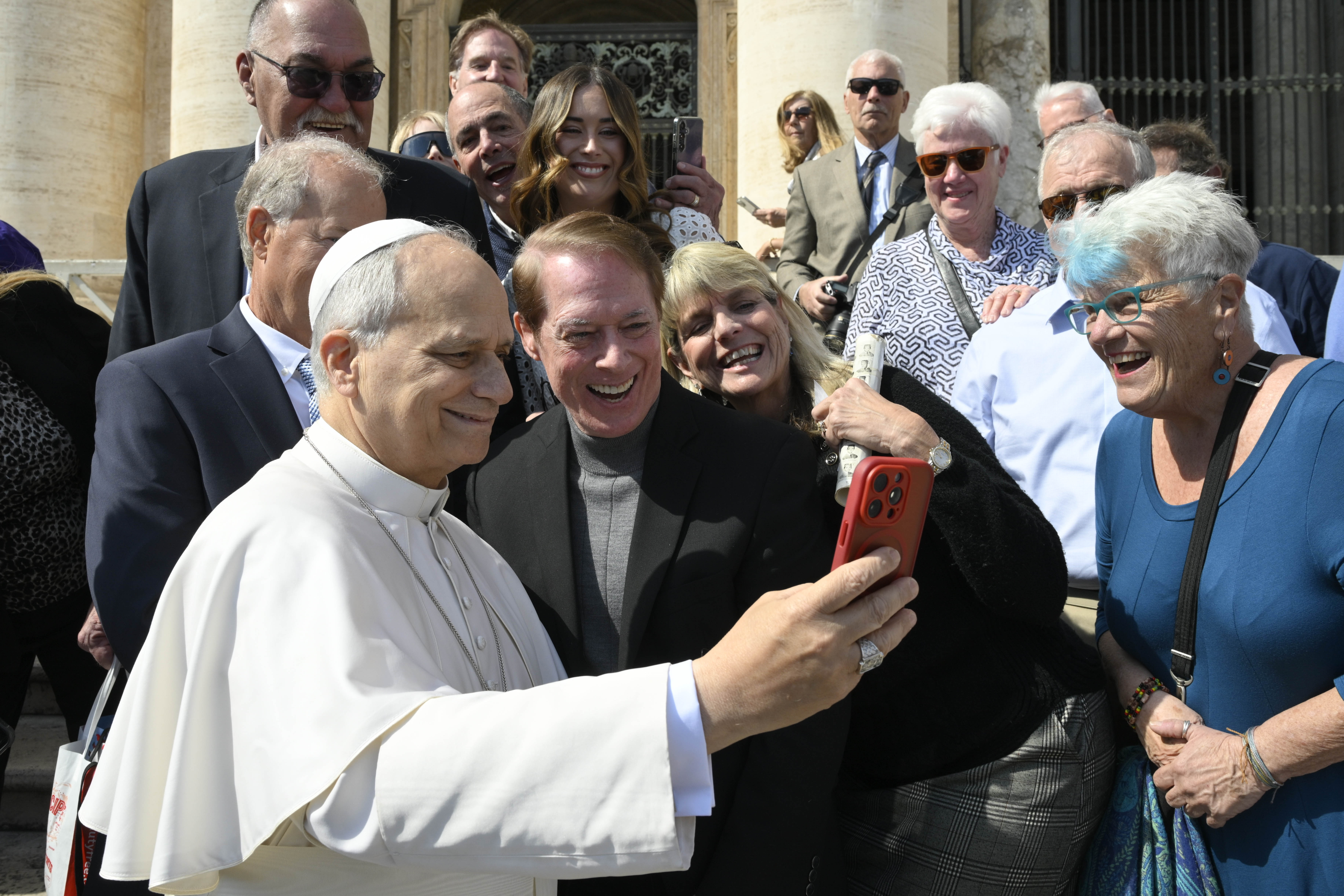
Read More![Pope Leo XIV reunites with his eighth grade classmates #Catholic On the steps of St. Peter’s Basilica in Rome, Pope Leo XIV met last week with some of his eighth grade classmates from St. Mary of the Assumption lower school in south Chicago, where he grew up.Of the 82 eighth graders with whom he attended St. Mary’s in 1969, 10 greeted him after the general audience on March 18, exchanging laughs, gifts, and warm handshakes.During the meeting, his former classmates gave him a photograph of the class of 1969, which he held up as he posed for another group shot more than 50 years later.Jerome Clemens pointed out the young Robert Prevost standing among his classmates to the L’Osservatore Romano, the Vatican newspaper: “Here he is, our friend, the pope,” showing the back of the photo with Prevost’s old autograph and his new one, which he signed, “Leo XIV.”Another former classmate, Sherry Stone (née Blue), dropped a sign she held that read “God bless you Pope Leo” when the pope approached her.“Sorry! I’m nervous!” she said, laughing, as he shook her hand.Instagram postLast spring, Stone told the Lansing Journal: “When he was in the conclave, I thought, ‘Could it be him? Could Bob be the new pope? No, probably not.’ When I saw that it was him, I was just amazed. I was crying tears of joy.”“He was a super nice guy, but not nerdy,” she said.After finishing eighth grade at St. Mary’s, Prevost attended boarding school at St. Augustine Seminary High School in Michigan, graduating in 1973. He then attended another Augustinian school, Villanova University, where he earned a bachelor’s degree in mathematics in 1977 before entering the Augustinian novitiate that September. He was ordained a priest in 1982, earning a master of divinity degree from the Catholic Theological Union in Chicago that same year. He earned a licentiate in canon law (JCL) in 1984 and completed a doctorate in canon law (JCD) in 1987, both from the Pontifical University of St. Thomas Aquinas in Rome.St. Mary’s church and school on Chicago’s ‘most endangered list’St. Mary of the Assumption Church and School, where a young Prevost served as an altar boy and his mother, Mildred Prevost, worked as a librarian, was at the center of a vibrant Catholic community in the Riverdale neighborhood on Chicago’s South Side in the 1960s.The property, which has been vacant since 2011 and is now privately owned, is located just a few blocks from the pope’s childhood home in Dolton, Illinois, but within Chicago city limits.The neighborhood has seen significant decline since then. Ward Miller of Preservation Chicago told EWTN News that St. Mary’s, which has a hole in the roof of the church building, broken windows, graffiti, and many other issues, was listed on Preservation Chicago’s 2026 “7 Most Endangered List" as of March 4.
Broken windows and graffiti on St. Mary of the Assumption School, where Robert Prevost, now Pope Leo XIV, the first American pope, attended eighth grade in 1969. | Credit: Matthew Kaplan
“We at Preservation Chicago are of the opinion that the church and school buildings of St. Mary’s are in need of immediate attention in order to secure temporary repairs, with a long-term goal of a full restoration of the campus of buildings, before everything is lost to deterioration,” Miller said.The property’s current owner, Joel Hall, said last year he is open to a landmark designation by the city, according to Miller. Preservation Chicago, a nonprofit advocacy organization dedicated to preserving historic sites in Chicago and encouraging landmark designations in the city, presented its case to designate it as such at a meeting in May 2025 of the Commission of Chicago Landmarks.No decision has been made yet regarding the landmark designation, but Preservation Chicago has created an online petition to the city of Chicago to “Save the Pope’s Church!”“This complex should become a visitors site, an oratory or shrine, as this is our first American pope — a world leader, and from Chicago!” Miller told EWTN News.
The interior of the dilapidated St. Mary of the Assumption Church, showing water damage to the floor and graffiti behind where the altar once stood. Pope Leo XIV served as an altar boy there during his childhood. | Credit: Ward Miller/Preservation Chicago
“We would very much like to see a partnership form to save these buildings and tell the story of this world leader,” reads an article on Preservation Chicago’s website. “An initial step in this process would be to consider a Chicago landmark designation of the buildings of this campus, with a plan to methodically restore and repurpose each of the buildings.”
Close-up of St. Mary of the Assumption Church in Riverdale, Chicago, Pope Leo XIV’s childhood parish, which was recently added to Preservation Chicagoʼs “7 Most Endangered” list of historic structures in the city. | Credit: Cristen Brown
Miller told EWTN News he would like to see the property “prepared [in time] for the pope’s return visits to Chicago!”The pope does not yet have plans to visit the United States.](https://unitedyam.com/wp-content/uploads/2026/03/pope-leo-xiv-reunites-with-his-eighth-grade-classmates-catholic-on-the-steps-of-st-peters-basilica-in-rome-pope-leo-xiv-met-last-week-with-some-of-his-eighth-grade-classmates-from-st-mary.jpg)
Pope Leo XIV met with 10 of his eighth grade classmates in St. Peter’s Square at a recent general audience.
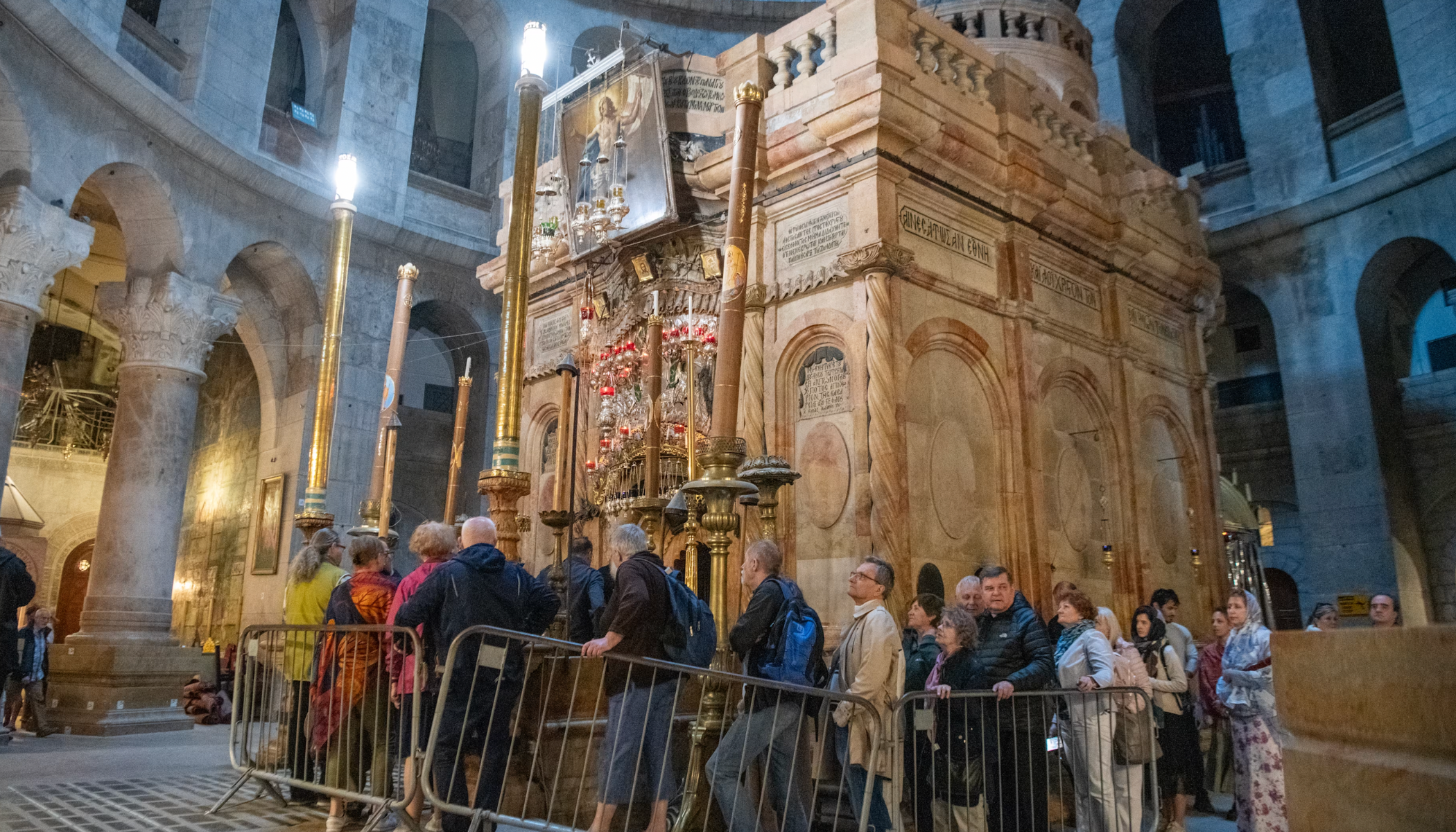
Holy Week observances and events in the Holy Land have been canceled or significantly revised in the face of closures in Jerusalem due to the war with Iran.
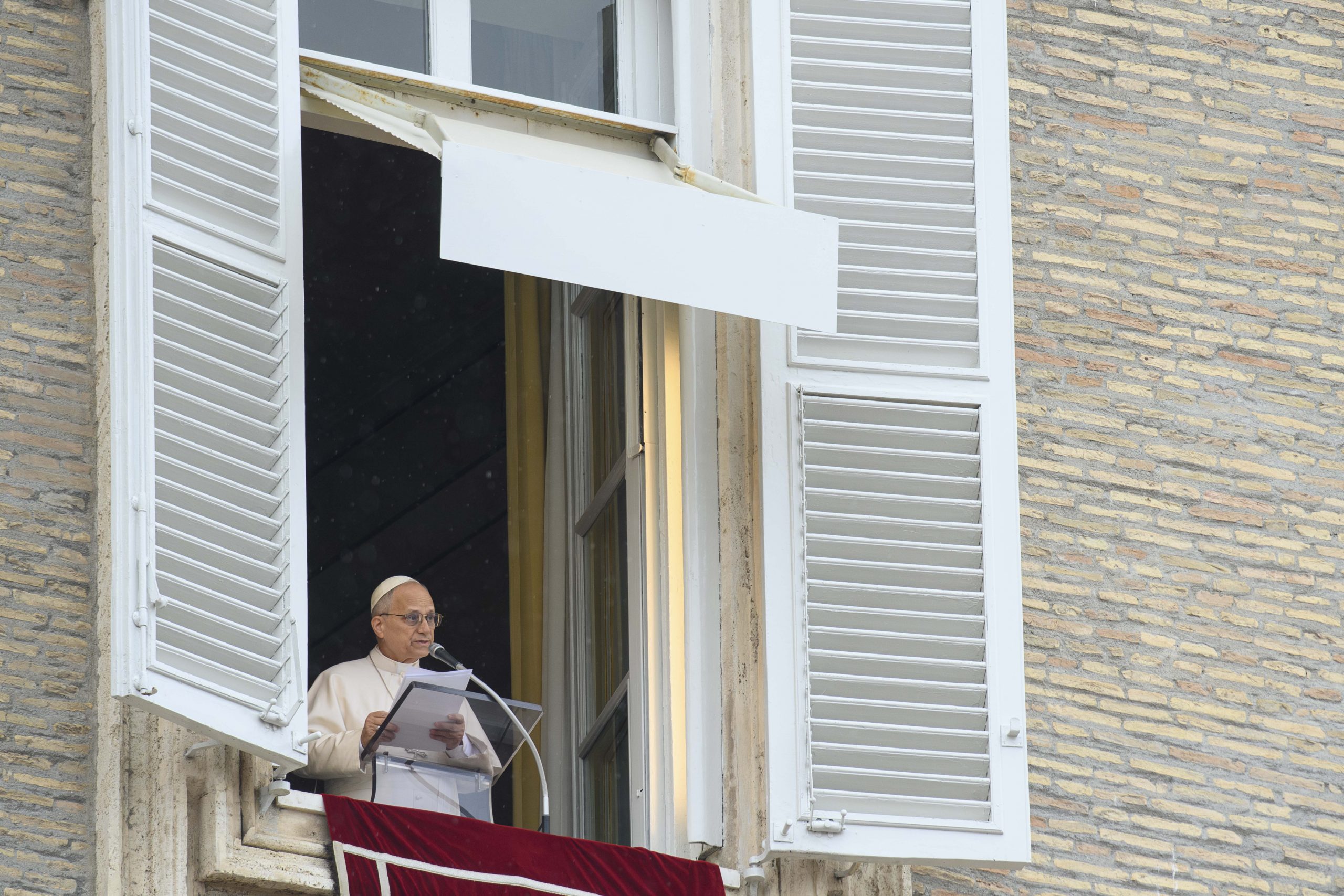
Pope Leo XIV says suffering of innocent victims “hurts all of humanity” as he calls for end to hostilities and renewed paths to peace.
![Ireland sees modest revival in faith, especially among youth and young adults #Catholic An increase in spirituality and religious practice among young adults in Ireland aged 18 to 30 and confirmation that Ireland is in the “middle range” of religious countries in Europe are among the trends identified in a new report published by the Irish Catholic bishops titled “Turning the Tide.”Archbishop Eamon Martin of Armagh, primate of all Ireland, told EWTN News: “There has been a lot of talk recently about the so-called quiet revival in religious practice in recent years. The [report] looks at some of the research studies that have been carried out north and south of the island of Ireland into religious practice, religious awareness and spirituality, and interest in religion, and asks a question by comparing this with European social studies: Is there actually any uptake [in] religious practice and awareness and interest in Ireland?”Drawing on research from the European Social Survey, the Iona Institute’s two recent surveys conducted by Amárach Research, and a variety of relevant academic studies, the report seeks to provide an integrated, relevant, and current look at religious practice in Ireland.“The report very interestingly points to some type of uptick, as they call it, particularly among young people around the ages of 16 to 30 and the fact that they are taking a new interest in religion and in spirituality.”Encouraged by the positive trends emerging across different studies, Martin sounded a note of caution, highlighting the challenges that these findings pose for the Catholic Church in Ireland.“I don’t think we should get ourselves too enthusiastic thinking this is a complete reversal of the very obvious decline and religious practice over the last 10 or 20 years,” he said. “However, it is saying something on the turning tide.”The archbishop pointed to the implications for the Irish Church: “It’s asking us to reflect on this phenomenon in the light of research, and for instance what does this mean for us as Church, as parishes, as dioceses? How are we responding to this growing body of young people who want to know more more about God, about church, and about religion?”The report, co-authored by Stephen Bullivant, professor of theology and the sociology of religion at St. Mary’s University, Twickenham, and Emily Nelson, a doctoral student of sociology at Queen’s University Belfast, examined the overall religious profile of the island of Ireland, including areas of convergence and divergence between Northern Ireland and the Republic of Ireland.The authors drew together research studies on patterns in belief, practice, and religious identification between generations, with particular attention to differences within young adult cohorts. The work also provided insight on dimensions of religiosity, religious transmission, and attitudes toward Church teaching and institutions among both men and women.Ireland remains among the more religious countries in Europe, on measures of religious affiliation, religious service attendance, and frequency of prayer. Among western European countries, it is one of few outliers with a relatively high level of overall religiosity. It also ranks toward the higher end of (especially western) European countries on measures of weekly Mass attendance and daily prayer.While key measures of Irish religiosity have declined significantly since the European Social Survey began in 2002-2003, the most recent round in 2023-2024 shows a strong uptick in religious affiliation and religious practice.This effect is most strongly evident among those aged 16–29 years, across both Catholics and Protestants.Northern Ireland is both the most religious region of the United Kingdom, by a large margin, and the most religious part of the island of Ireland, in terms of both affiliation and religious practice.Although women in the Republic of Ireland are equally as likely as men to be religious, they continue to play an influential role in transmitting faith, even as they express higher levels of moral dissent and institutional dissatisfaction. The report revealed that 74% of Irish Catholic women were found to believe that the Church did not treat them with “a lot of respect.”According to the report, 51% of Irish adults — and 27% of Irish young adults —pray at least once a week, and 31% say they attend Mass at least once a week, placing them fourth overall, alongside Italy (32%) but well behind Poland (49%) and Slovakia (46%).There is a significant drop-off among young adults, whose reported religious practice is roughly half that of older adults. Irish 16- to 29-year-olds rank sixth overall compared with other countries, at 17%, though that is at least double the rates of the same age group in Switzerland, Germany, and Belgium, at 5%, and in Austria with less than 1%.The Irish report also pointed to a 2023 Barna study that found in certain respects, Irish teens are more religious than their global peers. Just over 3 in 5 (62%) Irish teens identify as Christian with nearly a third identify as atheist, agnostic, or of no faith.On average, 18- to 24-year-olds in the Republic of Ireland aren’t particularly positive about both Christianity and the Catholic Church in Ireland, but they are more positive than those in the 25–34 age range, and fewer have a negative attitude toward priests and nuns.In 2023, EWTN News’ Colm Flynn traveled to Ireland with the question “Is Ireland still Catholic?” He explored the various reasons for the decline of the faith in Ireland and the challenges the Church faces there today. In the three years since, and after many emails and messages pointing to signs of a “quiet revival” of faith in Ireland, Flynn recently returned to the country to explore those signs of renewal. In his report, he refers to the “Turning the Tide” report:](https://unitedyam.com/wp-content/uploads/2026/03/ireland-sees-modest-revival-in-faith-especially-among-youth-and-young-adults-catholic-an-increase-in-spirituality-and-religious-practice-among-young-adults-in-ireland-aged-18-to-30-and-confirmation-scaled.jpg "Ireland sees modest revival in faith, especially among youth and young adults #Catholic An increase in spirituality and religious practice among young adults in Ireland aged 18 to 30 and confirmation that Ireland is in the “middle range” of religious countries in Europe are among the trends identified in a new report published by the Irish Catholic bishops titled “Turning the Tide.”Archbishop Eamon Martin of Armagh, primate of all Ireland, told EWTN News: “There has been a lot of talk recently about the so-called quiet revival in religious practice in recent years. The [report] looks at some of the research studies that have been carried out north and south of the island of Ireland into religious practice, religious awareness and spirituality, and interest in religion, and asks a question by comparing this with European social studies: Is there actually any uptake [in] religious practice and awareness and interest in Ireland?”Drawing on research from the European Social Survey, the Iona Institute’s two recent surveys conducted by Amárach Research, and a variety of relevant academic studies, the report seeks to provide an integrated, relevant, and current look at religious practice in Ireland.“The report very interestingly points to some type of uptick, as they call it, particularly among young people around the ages of 16 to 30 and the fact that they are taking a new interest in religion and in spirituality.”Encouraged by the positive trends emerging across different studies, Martin sounded a note of caution, highlighting the challenges that these findings pose for the Catholic Church in Ireland.“I don’t think we should get ourselves too enthusiastic thinking this is a complete reversal of the very obvious decline and religious practice over the last 10 or 20 years,” he said. “However, it is saying something on the turning tide.”The archbishop pointed to the implications for the Irish Church: “It’s asking us to reflect on this phenomenon in the light of research, and for instance what does this mean for us as Church, as parishes, as dioceses? How are we responding to this growing body of young people who want to know more more about God, about church, and about religion?”The report, co-authored by Stephen Bullivant, professor of theology and the sociology of religion at St. Mary’s University, Twickenham, and Emily Nelson, a doctoral student of sociology at Queen’s University Belfast, examined the overall religious profile of the island of Ireland, including areas of convergence and divergence between Northern Ireland and the Republic of Ireland.The authors drew together research studies on patterns in belief, practice, and religious identification between generations, with particular attention to differences within young adult cohorts. The work also provided insight on dimensions of religiosity, religious transmission, and attitudes toward Church teaching and institutions among both men and women.Ireland remains among the more religious countries in Europe, on measures of religious affiliation, religious service attendance, and frequency of prayer. Among western European countries, it is one of few outliers with a relatively high level of overall religiosity. It also ranks toward the higher end of (especially western) European countries on measures of weekly Mass attendance and daily prayer.While key measures of Irish religiosity have declined significantly since the European Social Survey began in 2002-2003, the most recent round in 2023-2024 shows a strong uptick in religious affiliation and religious practice.This effect is most strongly evident among those aged 16–29 years, across both Catholics and Protestants.Northern Ireland is both the most religious region of the United Kingdom, by a large margin, and the most religious part of the island of Ireland, in terms of both affiliation and religious practice.Although women in the Republic of Ireland are equally as likely as men to be religious, they continue to play an influential role in transmitting faith, even as they express higher levels of moral dissent and institutional dissatisfaction. The report revealed that 74% of Irish Catholic women were found to believe that the Church did not treat them with “a lot of respect.”According to the report, 51% of Irish adults — and 27% of Irish young adults —pray at least once a week, and 31% say they attend Mass at least once a week, placing them fourth overall, alongside Italy (32%) but well behind Poland (49%) and Slovakia (46%).There is a significant drop-off among young adults, whose reported religious practice is roughly half that of older adults. Irish 16- to 29-year-olds rank sixth overall compared with other countries, at 17%, though that is at least double the rates of the same age group in Switzerland, Germany, and Belgium, at 5%, and in Austria with less than 1%.The Irish report also pointed to a 2023 Barna study that found in certain respects, Irish teens are more religious than their global peers. Just over 3 in 5 (62%) Irish teens identify as Christian with nearly a third identify as atheist, agnostic, or of no faith.On average, 18- to 24-year-olds in the Republic of Ireland aren’t particularly positive about both Christianity and the Catholic Church in Ireland, but they are more positive than those in the 25–34 age range, and fewer have a negative attitude toward priests and nuns.In 2023, EWTN News’ Colm Flynn traveled to Ireland with the question “Is Ireland still Catholic?” He explored the various reasons for the decline of the faith in Ireland and the challenges the Church faces there today. In the three years since, and after many emails and messages pointing to signs of a “quiet revival” of faith in Ireland, Flynn recently returned to the country to explore those signs of renewal. In his report, he refers to the “Turning the Tide” report:")
A new report examining surveys and research on the practice of the Catholic faith in Ireland shows an uptick in religious practice and spirituality among younger people.
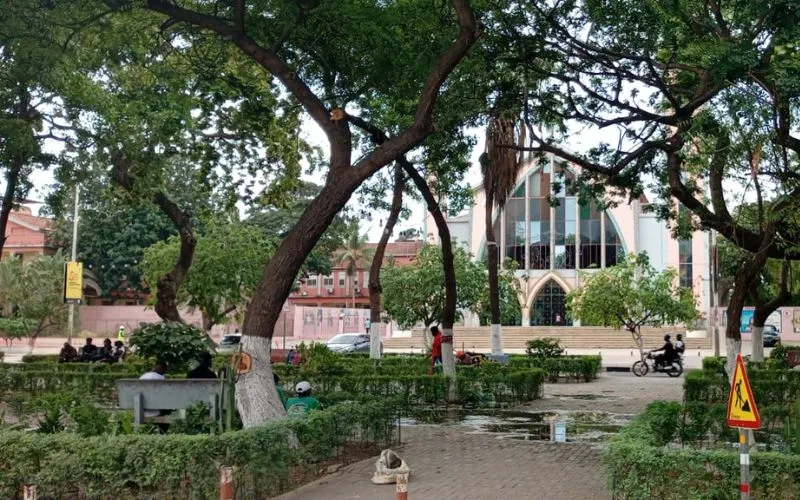
Our Lady of Fatima Parish in the Archdiocese of Luanda is preparing to host Pope Leo XIV’s meeting with bishops, priests, women and men religious, and catechists during his April 18–21 visit.
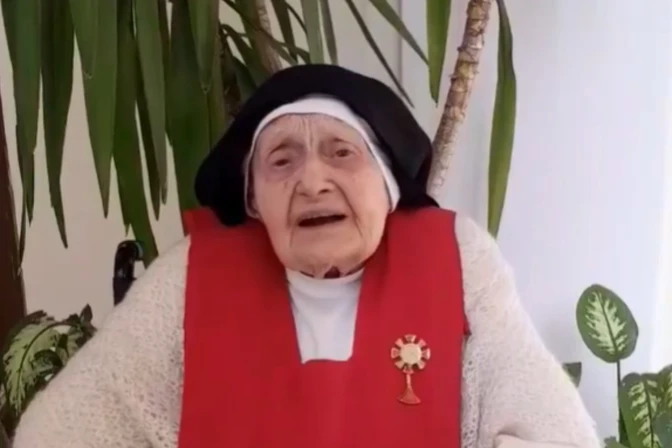
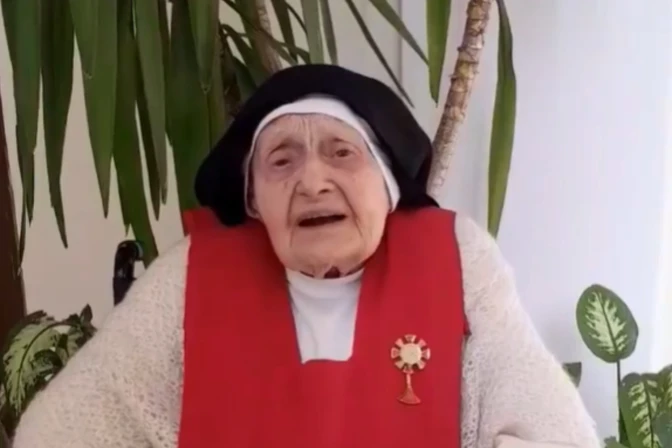
Sister Anna Maria shares about her late-in-life vocation, some wisdom on living a long life, and how her advanced age has not stopped the elderly nun from keeping active.

NASA astronaut and Expedition 74 crew member Chris Williams smiles for the camera during a spacesuit fit verification inside the International Space Station’s Quest airlock.
Read More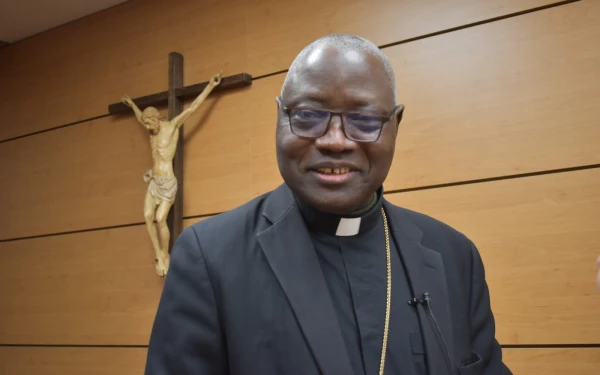
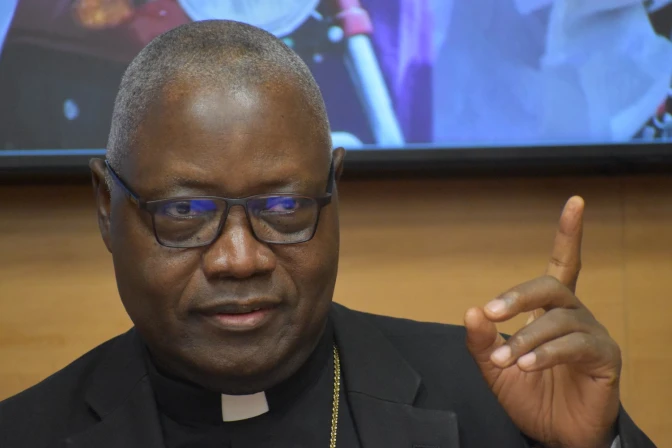
Archbishop Ignatius Ayau Kaigama appealed for U.S. assistance in combatting Islamic terrorism.
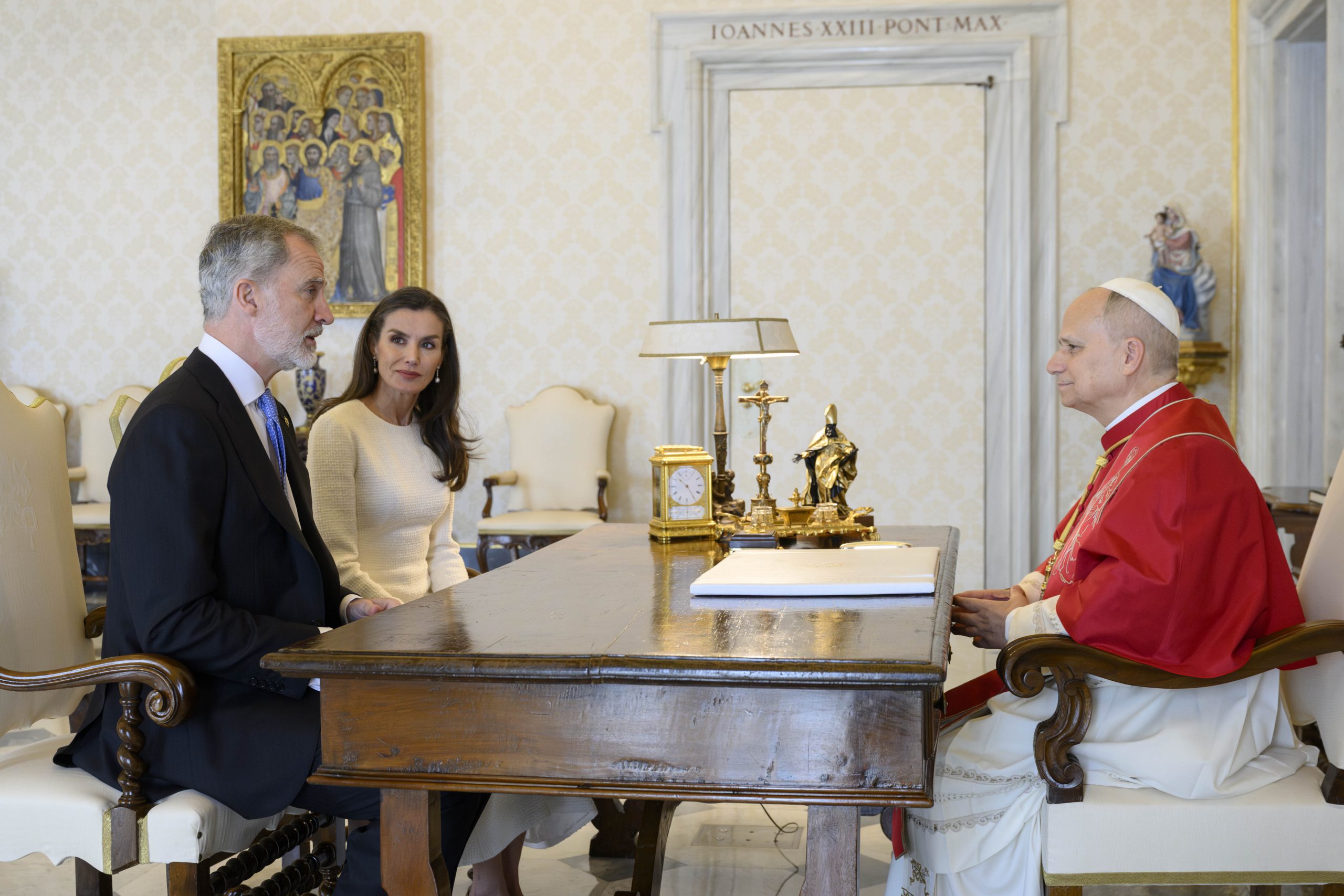
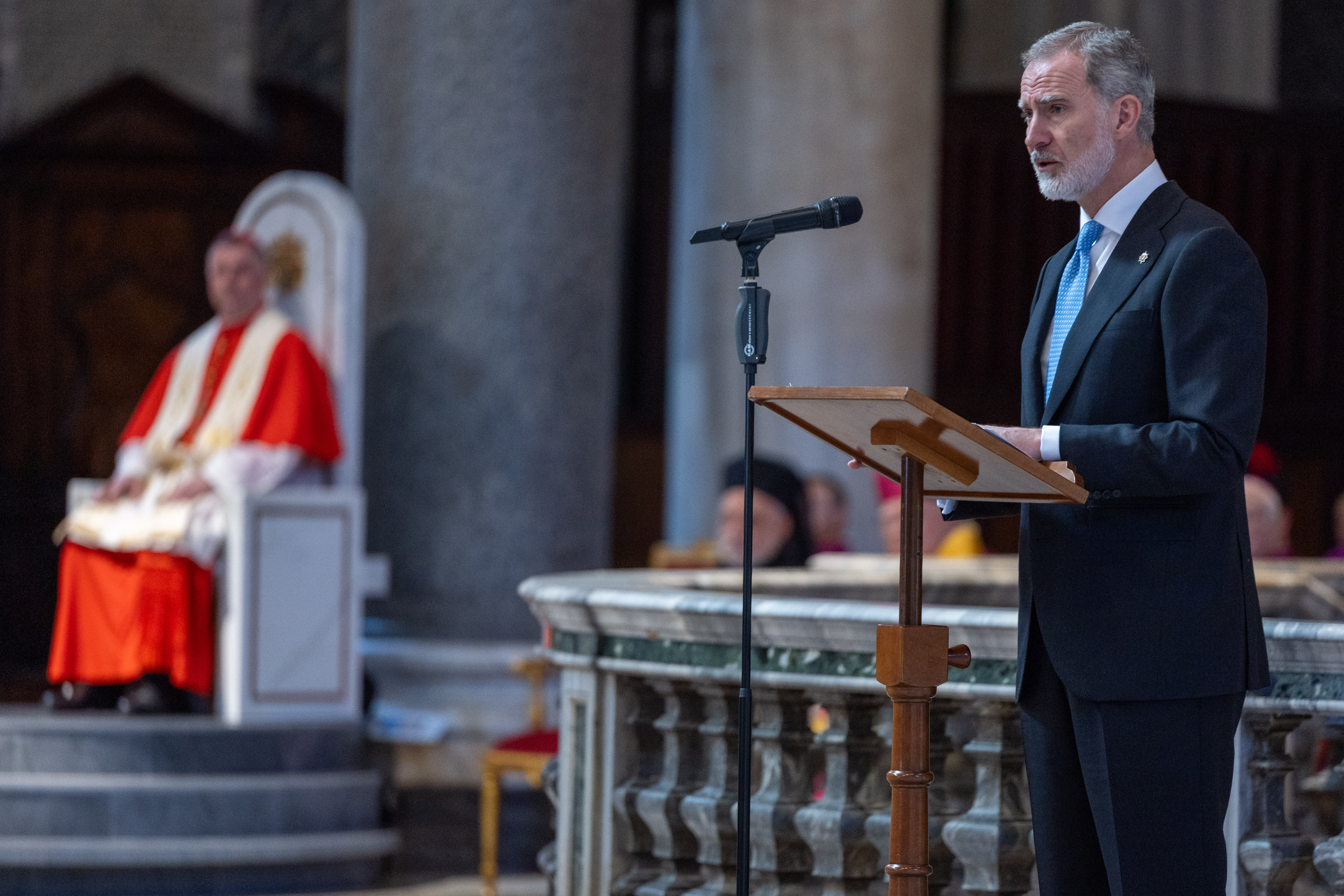
“Protocanon” is an honorary title reserved exclusively for the Spanish head of state, recognizing the monarch as a collaborator of the pope.
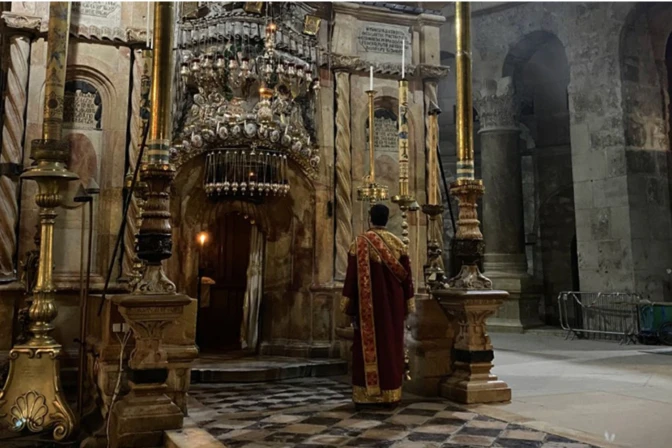
Now more than ever, the Christian minority in the Holy Land needs the support it receives through the annual Good Friday collection as ongoing violence in the Middle East has curtailed pilgrimages.
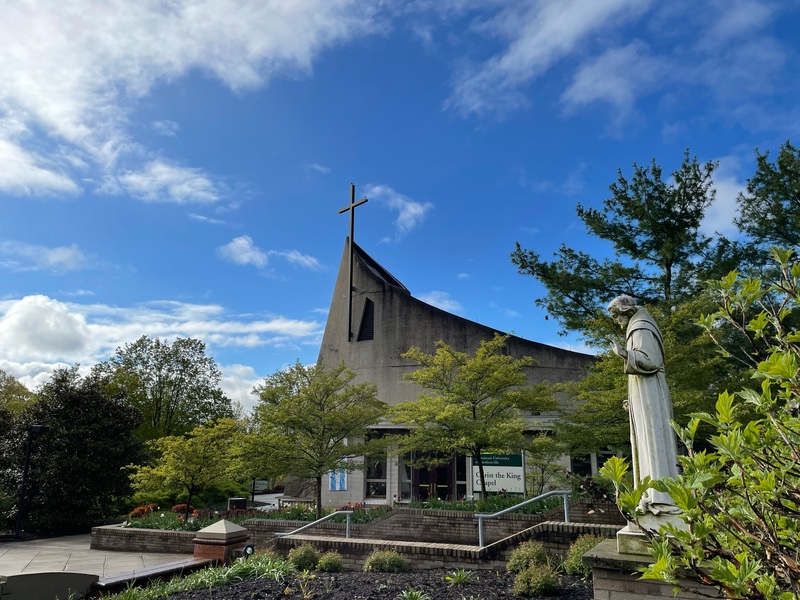
Multiple Catholic leaders are slated to be commencement speakers at Newman Guide Schools in 2026.
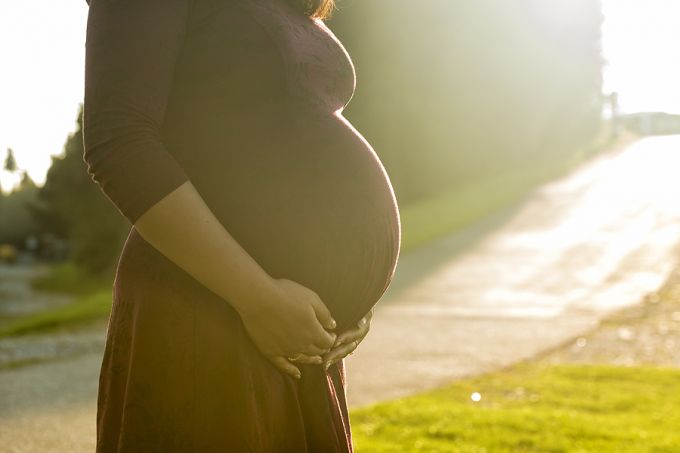
Archbishop Gabriele Caccia, the Holy See’s permanent observer to the United Nations, laid out the economic reasons surrogacy exists, the harm it does, and why it is wrong.

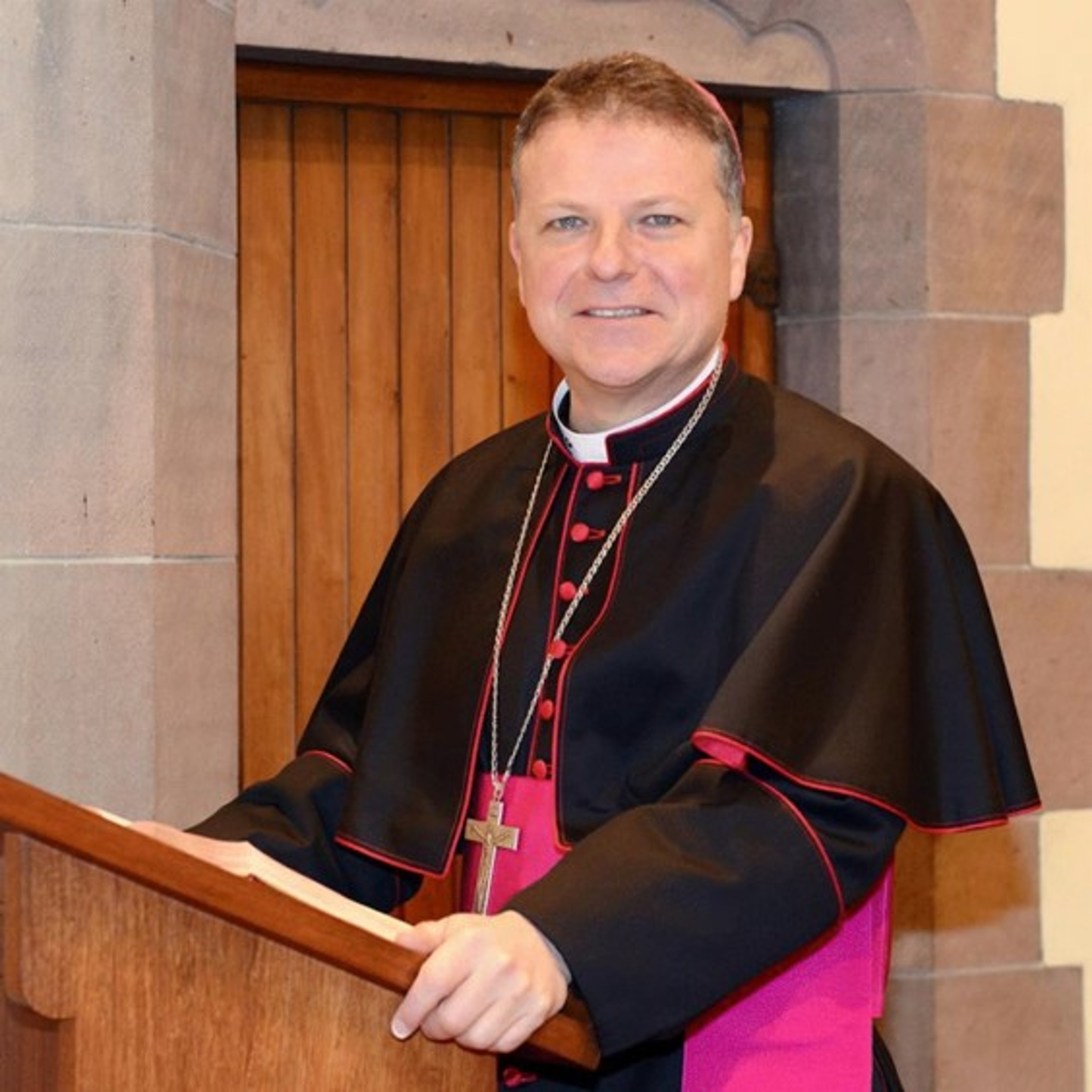
In a decisive vote, Scottish members of Parliament have rejected the Assisted Dying for Terminally Ill Adults (Scotland) Bill, a victory the bishops in Scotland are praising.
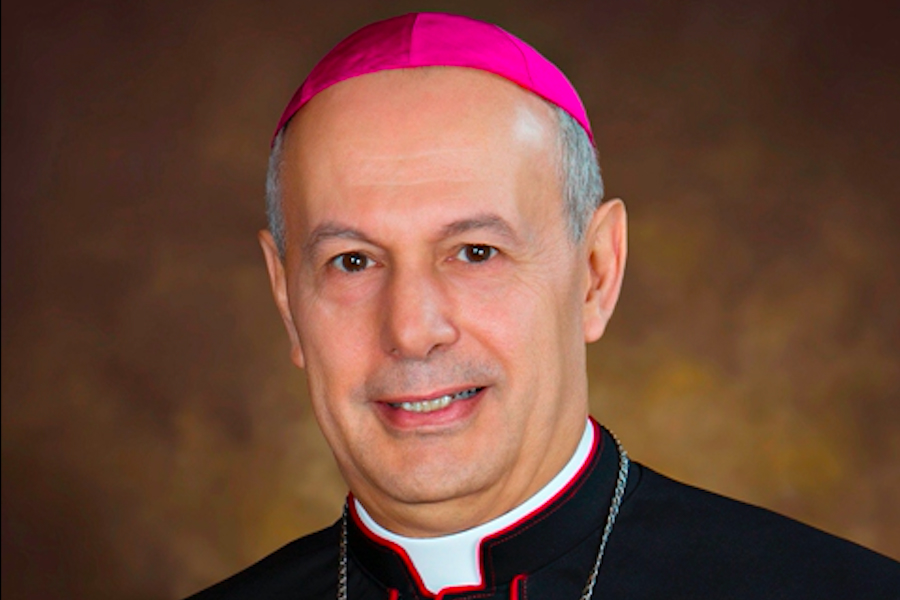
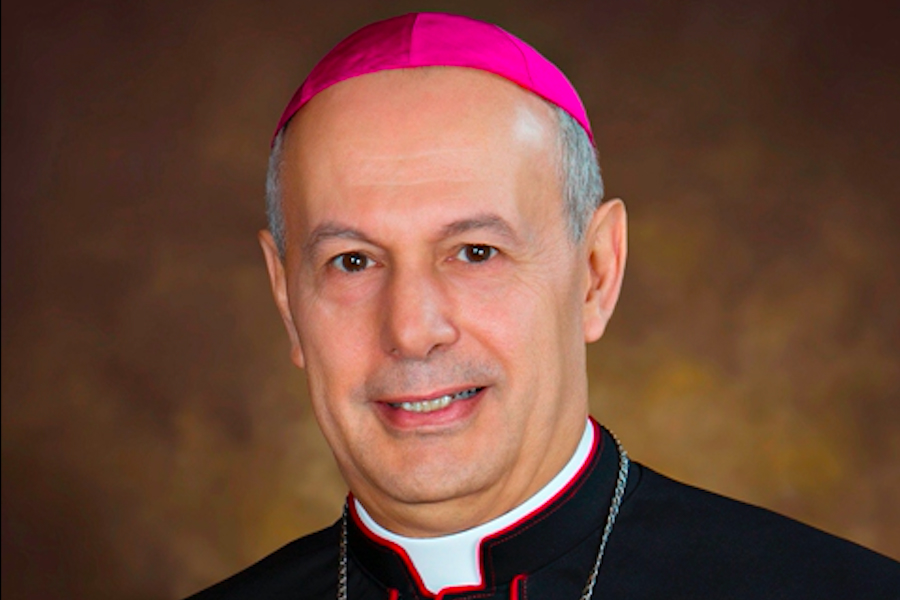
Archbishop Gabriele Caccia, the new papal envoy to Washington, has been shaped by a diplomatic career in geopolitical hot spots.
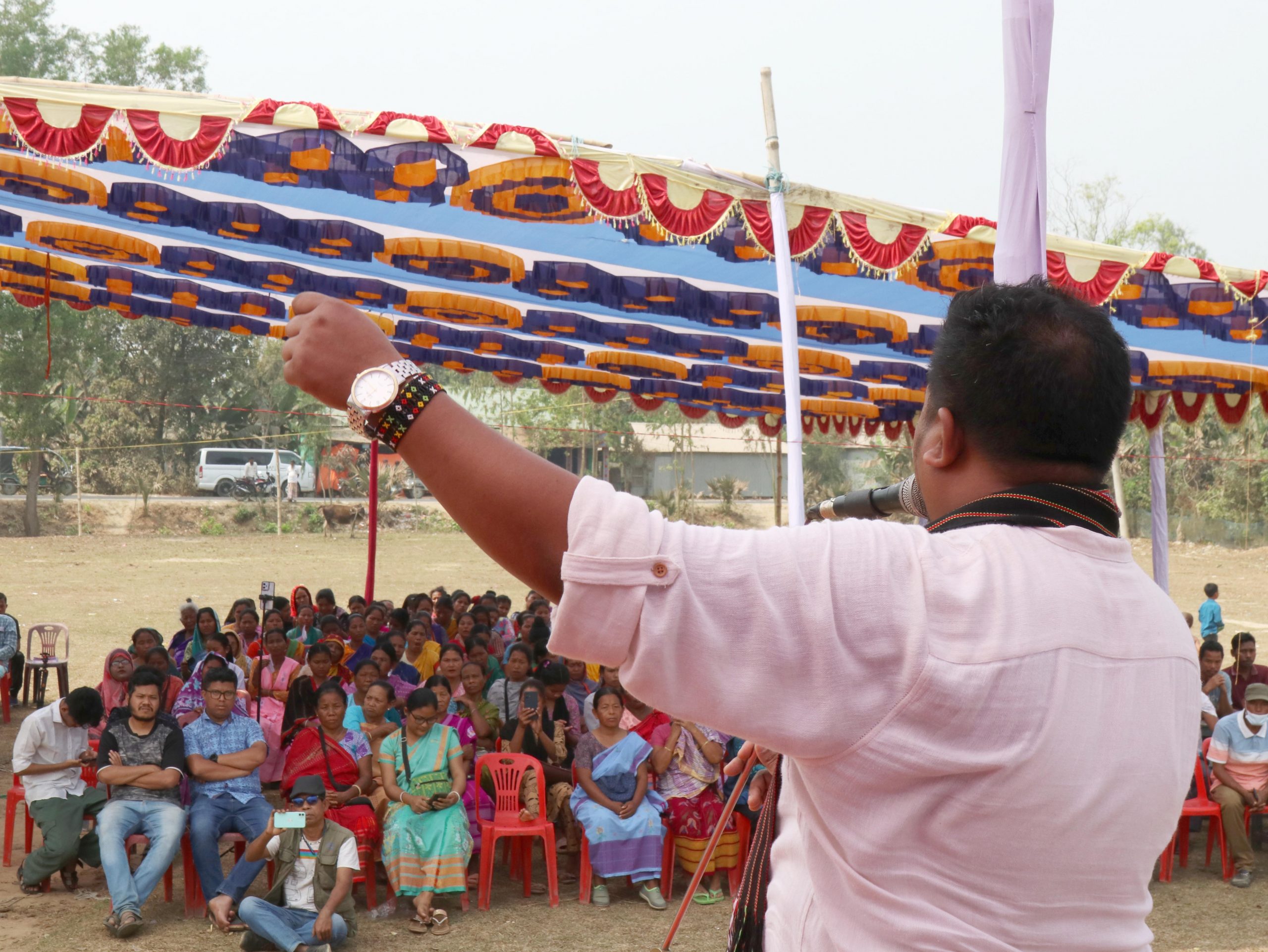
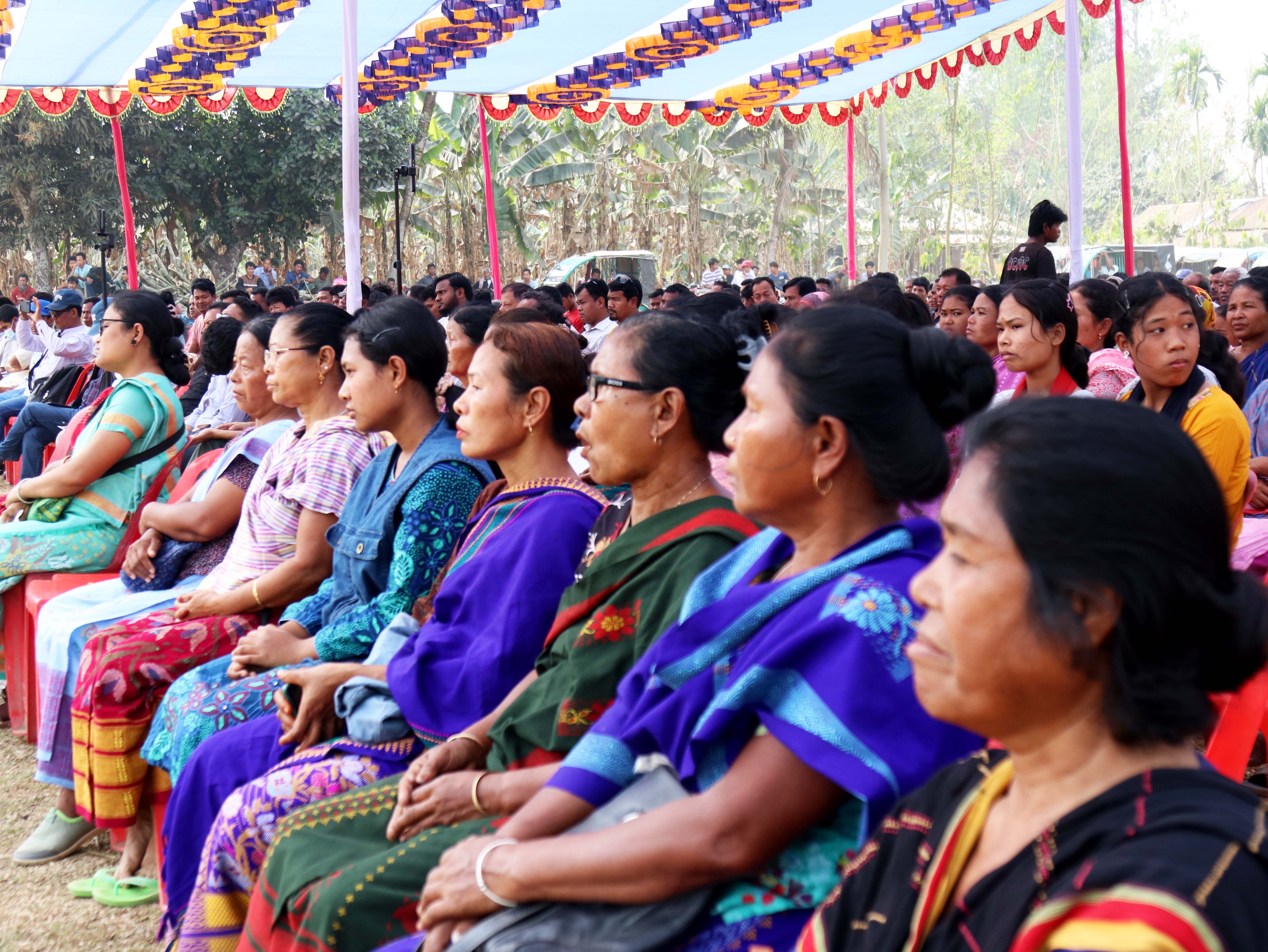
Catholic Indigenous leaders in Bangladesh say they will escalate protests if the government does not halt a forest development project they call a pretext for eviction.
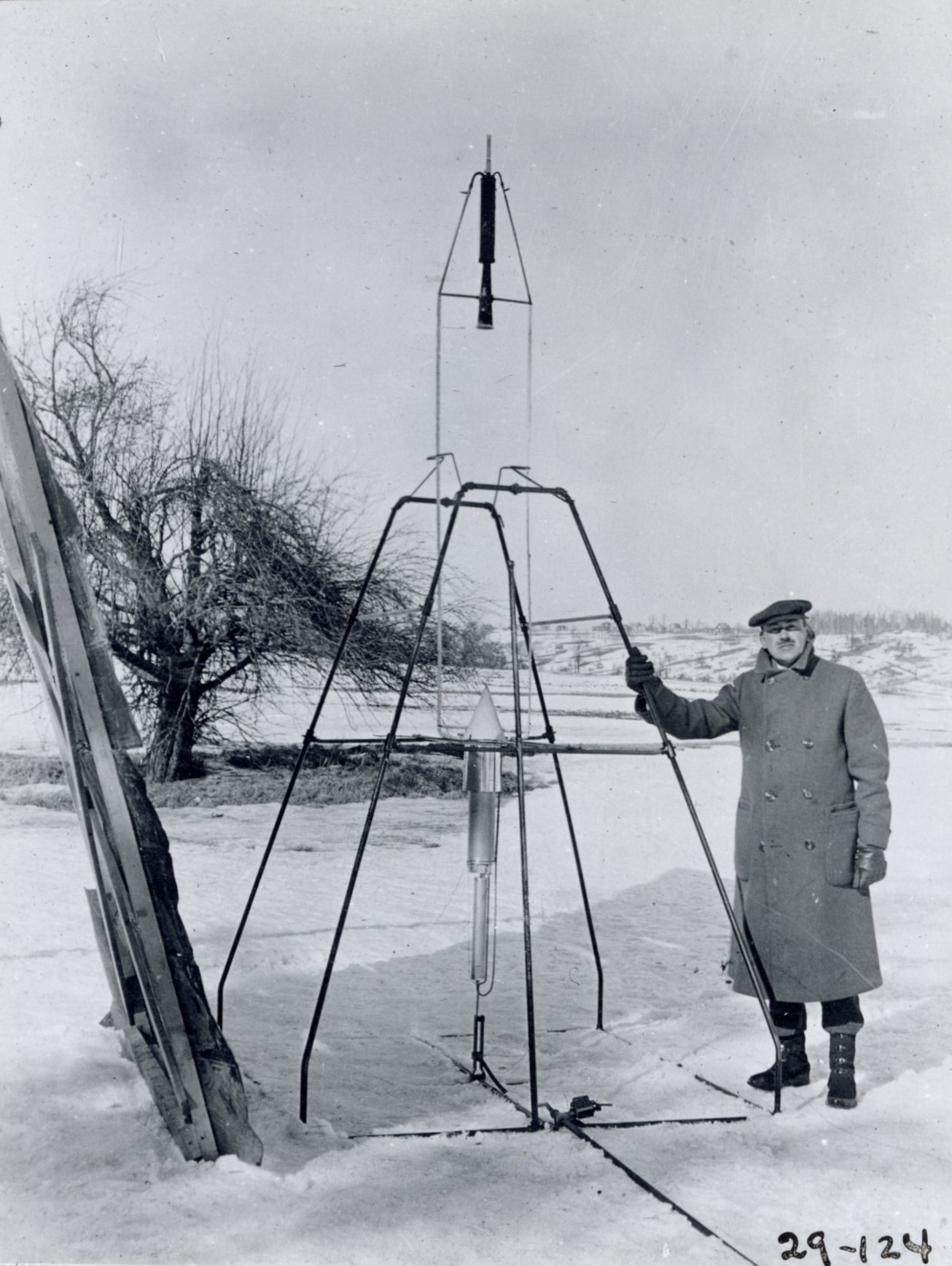
Dr. Robert H. Goddard and a liquid oxygen-gasoline rocket in the frame from which it was fired on March 16, 1926, at Auburn, Mass.
Read More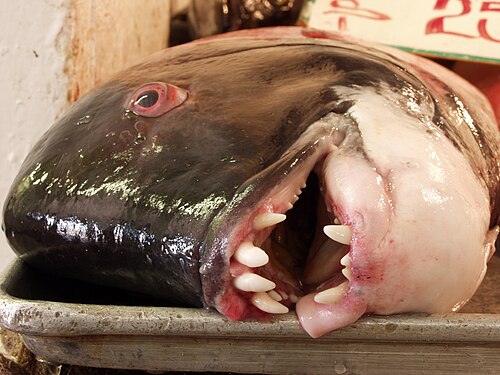
| Picture of the day |
|---|
_at_Ensenada%27s_fishmarket.jpg)
|
|
A California Sheephead at Ensenada´s fishmarket (Mercado Negro), Baja California, México. The California Sheephead (Semicossyphus pulcher) is characterized by its wrasse-like shape, and three different color patterns for juveniles, adult males, and adult females.
|
Michigan Catholics “stand in solidarity” with Jewish community after attack on a synagogue.
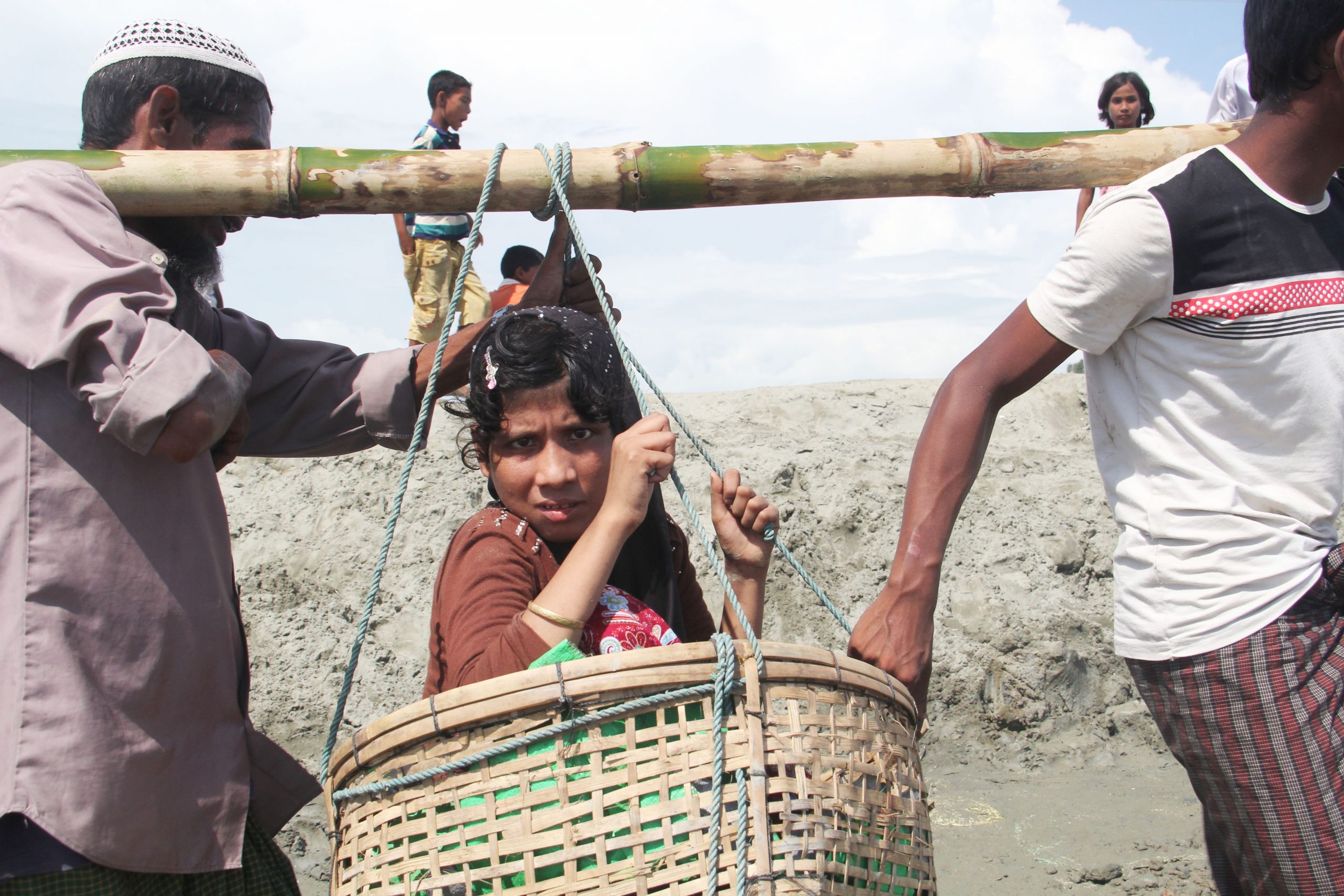
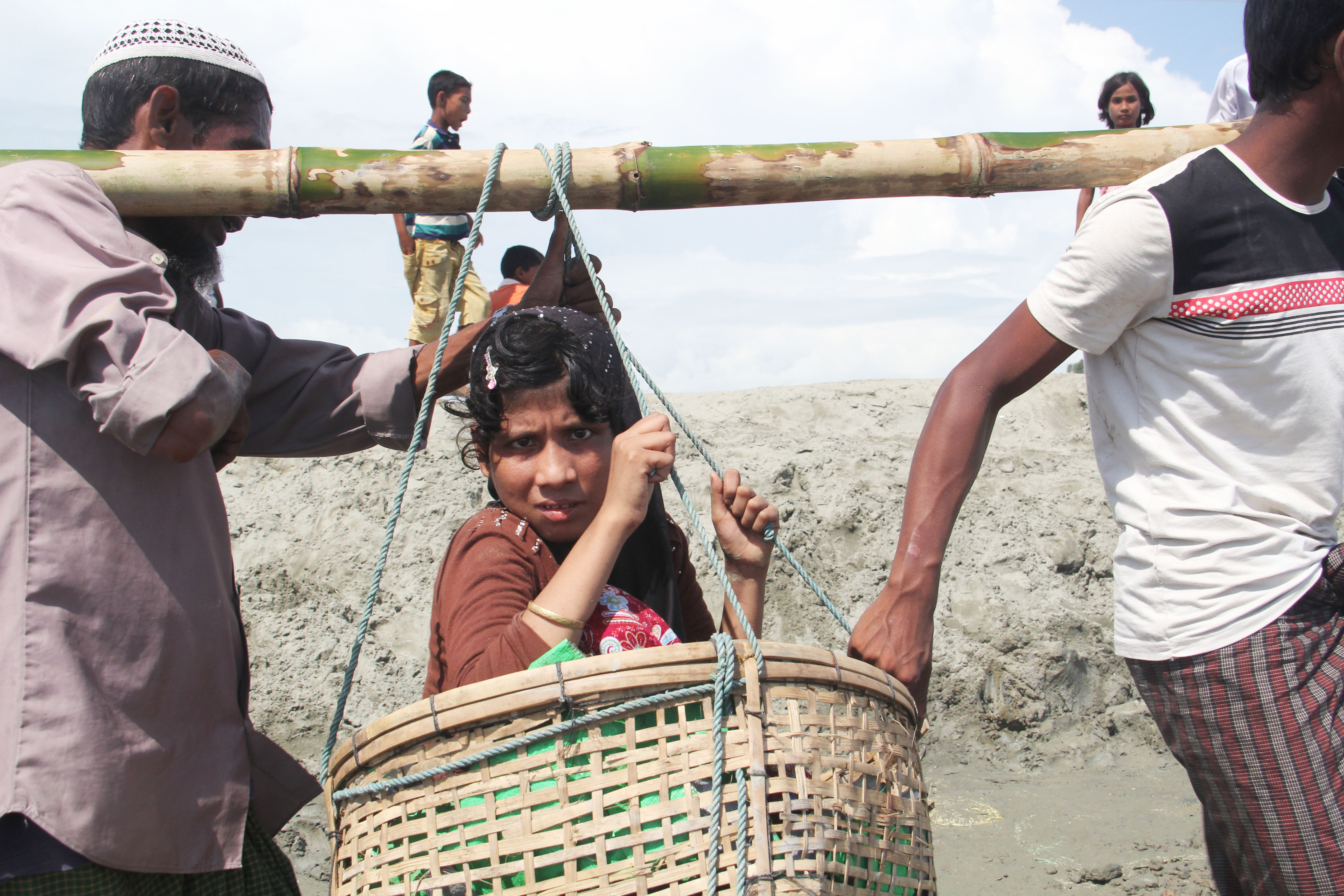
As Ramadan draws to a close in the camps of Cox’s Bazar, Caritas Bangladesh is sharing the meaning of Lent with more than 1 million Rohingya Muslim refugees.
| Picture of the day |
|---|

|
|
Two Glanville fritillaries (Melitaea cinxia) on a red clover. Today is Kaede Hondo’s birthday, she voiced Kokoro Yotsuba in Kamisama Minarai: Himitsu no Cocotama.
|

| Picture of the day |
|---|
|
|
|
Two Glanville fritillaries (Melitaea cinxia) on a red clover. Today is Kaede Hondo’s birthday, she voiced Kokoro Yotsuba in Kamisama Minarai: Himitsu no Cocotama.
|
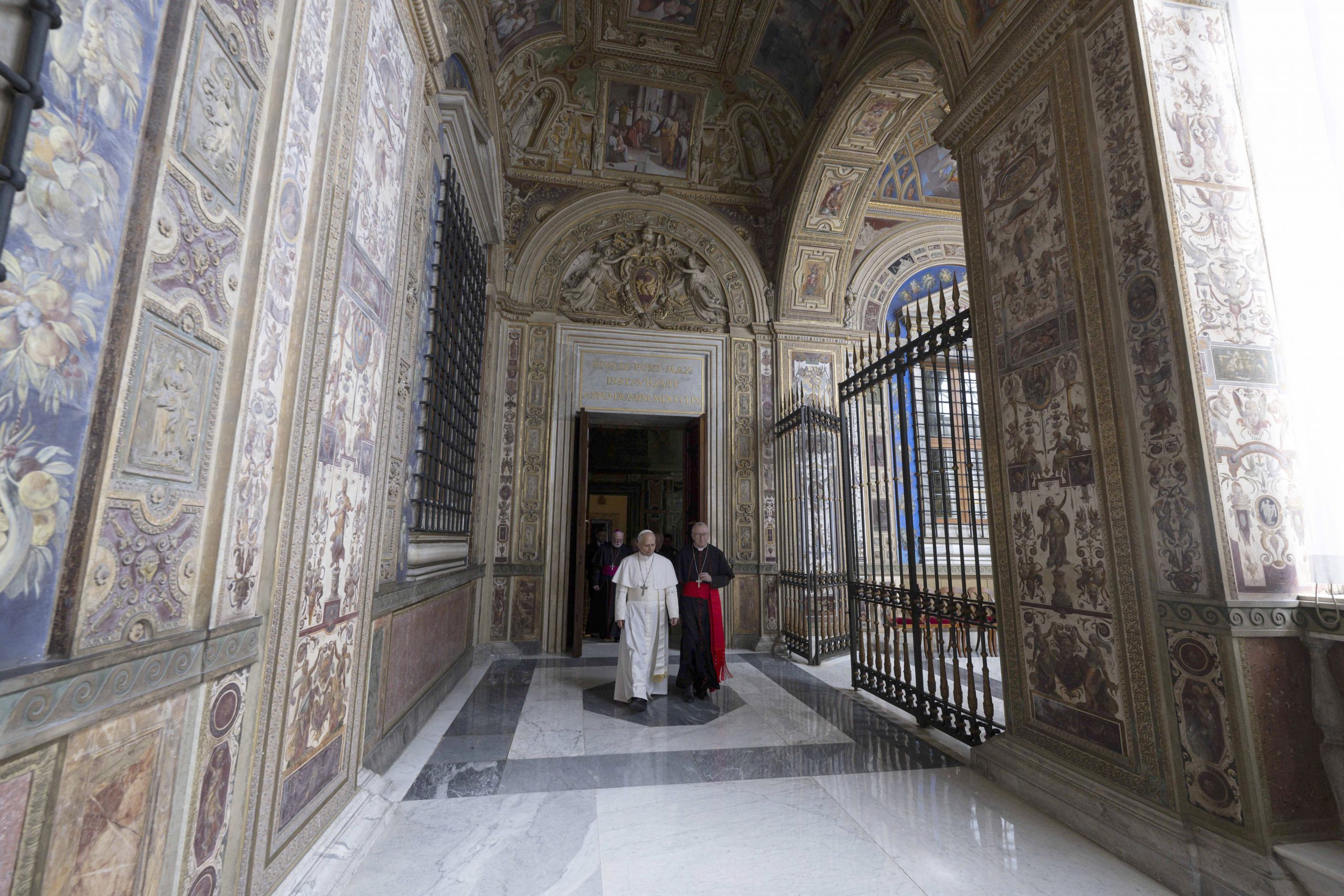
The move was announced on March 14 by the Holy See Press Office, more than ten months after Leo’s election.