Amazon

Study: Doctors don’t screen for abortion coercion — and it hurts women #Catholic A recent study found that women who are pressured to undergo unwanted abortions are at highest risk of negative outcomes and harm from abortion.The study, published in the Journal of the Alliance for Hippocratic Medicine (JAHM), found that physicians rarely screen for coercion and pressure to abort, even though it is the highest predictive risk factor for negative outcomes.The authors, David C. Reardon, Dr. Martha W. Shuping, and Dr. Patricia K. Giebink, called the failure to screen for this “medical negligence.”“Women considering abortions should be evaluated for risk factors predictive of negative outcomes,” the study read. “The failure to screen for these risk factors is medical negligence. Screening and informing women of their personal risk factors as required by ethical and legal standards may lead to consideration of alternatives to abortion by women who consider the risks unacceptable.”Michael New, a senior associate scholar at the Charlotte Lozier Institute, a pro-life group that does abortion-related research, said it was a “methodologically strong study,” noting that 1,000 women were surveyed, 226 of whom had an abortion in the past.“Pro-lifers and the medical community should learn several important lessons from this study,” New told EWTN News. “First, coerced abortions are not uncommon. Secondly, … this study adds to a body of research that finds that a substantial percentage of abortions are unwanted or are inconsistent with the values of the woman seeking the abortion.”“Third, even though supporters of legal abortion claim that women obtaining abortions report low levels of mental health problems, they should acknowledge that mental health risks are substantially higher among the subset of women who are emotionally conflicted or who would prefer not to have the abortion,” he continued.Father Tadeusz Pacholczyk, a senior ethicist at The National Catholic Bioethics Center, urged physicians “to provide full disclosure of the risks and side effects to their patients.”“The long list of bad mental, emotional, and health effects that regularly arise in the wake of an induced abortion should give pause to anyone seeking, or counseling, abortion, especially when it comes to medical professionals who themselves need to be fully informed regarding the seriousness of these risks,” Pacholczyk told EWTN News.“I think it’s fair to say that a key duty of the physician or healthcare professional, in seeking to ‘do no harm,’ would be to try to dissuade their patients from acting on any desire to procure a direct abortion,” he continued. “And a candid discussion about the broad range of potential bad outcomes from the procedure provides an excellent starting point for dialoguing with their patients in a moment of crisis.”Pacholczyk urged medical professionals to have references for pre-abortion counseling for women considering abortion.“While medical professionals may not be able themselves to provide all the support a young woman requires when confronted with an unexpected pregnancy, they should be able to recommend or refer the woman to obtain additional helpful pre-abortion counseling so she can ponder, and bring to the surface, her own motives and fears, and by doing so, hopefully strengthen her to steer clear of the pseudo-remedy of abortion and instead address her situation with a heightened awareness of the care, accompaniment, and support coming from those around her,” Pacholczyk said. Though difficult to enforce, legislation to require medical professionals to screen for coercion may enable victims of coercion to sue abortion clinics, if put into effect, according to New.“It is unsurprising that physicians performing abortions rarely screen for coercion,” New said. “Many abortion are done in high-volume clinics where abortion doctors spend very little time with women seeking abortions.”Kelsey Pritchard, a spokeswoman for Susan B. Anthony Pro-Life America, said the abortion industry doesn’t prioritize women.“The abortion industry prioritizes profit — not women’s well-being, informed consent, or health, the overwhelming evidence shows,” Pritchard said.“Previous peer-reviewed research by Charlotte Lozier Institute scholars indicates most women who’ve had abortions would have preferred not to if they had more support, with nearly a quarter describing their abortions as unwanted or coerced,” Pritchard continued.She voiced concerns about the ease of abortion coercion due to mail-order abortion.“Since Democrats made it as easy as ordering an Amazon package for anyone anywhere to buy and ship dangerous abortion drugs, even to states with pro-life laws, this hidden epidemic has gone from bad to worse, with alarming cases of women assaulted and poisoned across the country,” Pritchard said.“Women pressured, coerced, or forced to abort go on to report higher levels of mental health and quality-of-life difficulties, which they all too often endure silently as they can face significant hurdles to coming forward,” Pritchard said.“The loudest pro-abortion voices refuse to acknowledge the truth behind their narrative of ‘freedom’ and ‘choice,’” Pritchard said.

Study: Doctors don’t screen for abortion coercion — and it hurts women #Catholic A recent study found that women who are pressured to undergo unwanted abortions are at highest risk of negative outcomes and harm from abortion.The study, published in the Journal of the Alliance for Hippocratic Medicine (JAHM), found that physicians rarely screen for coercion and pressure to abort, even though it is the highest predictive risk factor for negative outcomes.The authors, David C. Reardon, Dr. Martha W. Shuping, and Dr. Patricia K. Giebink, called the failure to screen for this “medical negligence.”“Women considering abortions should be evaluated for risk factors predictive of negative outcomes,” the study read. “The failure to screen for these risk factors is medical negligence. Screening and informing women of their personal risk factors as required by ethical and legal standards may lead to consideration of alternatives to abortion by women who consider the risks unacceptable.”Michael New, a senior associate scholar at the Charlotte Lozier Institute, a pro-life group that does abortion-related research, said it was a “methodologically strong study,” noting that 1,000 women were surveyed, 226 of whom had an abortion in the past.“Pro-lifers and the medical community should learn several important lessons from this study,” New told EWTN News. “First, coerced abortions are not uncommon. Secondly, … this study adds to a body of research that finds that a substantial percentage of abortions are unwanted or are inconsistent with the values of the woman seeking the abortion.”“Third, even though supporters of legal abortion claim that women obtaining abortions report low levels of mental health problems, they should acknowledge that mental health risks are substantially higher among the subset of women who are emotionally conflicted or who would prefer not to have the abortion,” he continued.Father Tadeusz Pacholczyk, a senior ethicist at The National Catholic Bioethics Center, urged physicians “to provide full disclosure of the risks and side effects to their patients.”“The long list of bad mental, emotional, and health effects that regularly arise in the wake of an induced abortion should give pause to anyone seeking, or counseling, abortion, especially when it comes to medical professionals who themselves need to be fully informed regarding the seriousness of these risks,” Pacholczyk told EWTN News.“I think it’s fair to say that a key duty of the physician or healthcare professional, in seeking to ‘do no harm,’ would be to try to dissuade their patients from acting on any desire to procure a direct abortion,” he continued. “And a candid discussion about the broad range of potential bad outcomes from the procedure provides an excellent starting point for dialoguing with their patients in a moment of crisis.”Pacholczyk urged medical professionals to have references for pre-abortion counseling for women considering abortion.“While medical professionals may not be able themselves to provide all the support a young woman requires when confronted with an unexpected pregnancy, they should be able to recommend or refer the woman to obtain additional helpful pre-abortion counseling so she can ponder, and bring to the surface, her own motives and fears, and by doing so, hopefully strengthen her to steer clear of the pseudo-remedy of abortion and instead address her situation with a heightened awareness of the care, accompaniment, and support coming from those around her,” Pacholczyk said. Though difficult to enforce, legislation to require medical professionals to screen for coercion may enable victims of coercion to sue abortion clinics, if put into effect, according to New.“It is unsurprising that physicians performing abortions rarely screen for coercion,” New said. “Many abortion are done in high-volume clinics where abortion doctors spend very little time with women seeking abortions.”Kelsey Pritchard, a spokeswoman for Susan B. Anthony Pro-Life America, said the abortion industry doesn’t prioritize women.“The abortion industry prioritizes profit — not women’s well-being, informed consent, or health, the overwhelming evidence shows,” Pritchard said.“Previous peer-reviewed research by Charlotte Lozier Institute scholars indicates most women who’ve had abortions would have preferred not to if they had more support, with nearly a quarter describing their abortions as unwanted or coerced,” Pritchard continued.She voiced concerns about the ease of abortion coercion due to mail-order abortion.“Since Democrats made it as easy as ordering an Amazon package for anyone anywhere to buy and ship dangerous abortion drugs, even to states with pro-life laws, this hidden epidemic has gone from bad to worse, with alarming cases of women assaulted and poisoned across the country,” Pritchard said.“Women pressured, coerced, or forced to abort go on to report higher levels of mental health and quality-of-life difficulties, which they all too often endure silently as they can face significant hurdles to coming forward,” Pritchard said.“The loudest pro-abortion voices refuse to acknowledge the truth behind their narrative of ‘freedom’ and ‘choice,’” Pritchard said.

A recent study highlights that when women are coerced or pressured into abortion, they are at high risk for negative outcomes — but abortion prviidess rarely screen for abortion coercion.

Read More
Cana launches wedding registry storefront, partnering with Catholic businesses #Catholic Cana has launched its own registry storefront, partnering with brands for traditional wedding gifts and also working with Catholic businesses to offer couples everything from Catholic jewelry to sacred home decor.The storefront launched on Sept. 4, putting “Catholic vendors front and center,” Cana founders told EWTN News.Cana is a faith-focused wedding-planning platform designed for Catholic and Christian couples to build their websites. The Cana site helps engaged couples manage registries, guest lists, RSVPs, and it connects users with a diverse range of vendors.It is intended to help couples plan a beautiful, reverent, and personalized wedding, the founders said. It is free of charge to the thousands of couples who use it.Bringing Christ and ‘intentionality’ to wedding registries “Up until this point, Cana essentially was just an affiliate partner for pretty much any online retailer. The most popular provider was Amazon, but also Target, Crate & Barrel, and Williams-Sonoma,” James Reichert, co-founder of Cana, told EWTN News.“Then couples could take an individual link from a Catholic retailer and add that item to their registry. But we were essentially an affiliate partner for the big retailers,” he said.Cana didnʼt want to be “a Catholic version” of the secular wedding websites, but rather “we wanted to be something truly, radically different,” Reichert said. “So we built our own registry storefront.”The storefront puts “our Catholic vendors front and center,” Gabe Gessler, co-founder of Cana, added.“We’ve partnered with big brands. Couples can add ultra high quality kitchenware and bedding items and they can create a full scale wedding registry through the service,” Reichert said.Reichert said they also partnered with “incredible Catholic retailers: West Coast Catholic, The Little Catholic, The Catholic Company…,House of Joppa, and Darling & Divine.”“For the first time, Catholic and Christian couples donʼt just have to register for their home goods, all the cookware, dinnerware, bedding things, that they would typically do on a regular wedding registry,” he said.Now, “they can also register for sacred arts, sacred jewelry, beautiful wall mounts, and icons from all of these incredible brands that have been trusted for decades,” Reichert said. Cana is hoping to be a “central point for all those different brands on one beautiful wedding registry experience,” he said.“So many of our brides, they desire intentionality,” Gessler said. “They desire an intentional experience that points them towards the person that matters the most, which is Jesus Christ.”To give couples a better experience, Cana is “placing forward, front and center, really high quality, what we truly believe are world-class companies, that are able to meet this intersection of commerce and the faith all in one,” Gessler said.“We believe itʼs going to bless our partners more,” he said.“Really what we want to do is help create this ecosystem where a Catholic bride doesnʼt need to go scour the internet for all these different partners, or these different registries. But actually she can just have it all in one place,” Gessler said.“Then also she can come and support these incredible Catholic businesses,” Gessler said.CanaLaunched in September 2025, “Cana really exists to help couples focus on Christ from their engagement to eternity,” Reichert said. “Our biggest desire is to just help create holy couples and holy marriages.”“Weʼve now been around for a year,” Gessler said. “Weʼve had more than 8,000 brides join Cana.”“Itʼs not just a registry experience. Itʼs a digital wedding planning experience that is totally holistic and centered around Christ and the sacrament of marriage rather than just …the excitement of the day,” Gessler said.“When you get married to your spouse … itʼs an opportunity to enter into this new stage of your life and to place Christ at the center of it,” he said.“We are praying for every single couple who uses us every day,” Reichert said. “To any couple who has the courage to use us to plan their wedding, we genuinely are so grateful for every single one.”

Cana launches wedding registry storefront, partnering with Catholic businesses #Catholic Cana has launched its own registry storefront, partnering with brands for traditional wedding gifts and also working with Catholic businesses to offer couples everything from Catholic jewelry to sacred home decor.The storefront launched on Sept. 4, putting “Catholic vendors front and center,” Cana founders told EWTN News.Cana is a faith-focused wedding-planning platform designed for Catholic and Christian couples to build their websites. The Cana site helps engaged couples manage registries, guest lists, RSVPs, and it connects users with a diverse range of vendors.It is intended to help couples plan a beautiful, reverent, and personalized wedding, the founders said. It is free of charge to the thousands of couples who use it.Bringing Christ and ‘intentionality’ to wedding registries “Up until this point, Cana essentially was just an affiliate partner for pretty much any online retailer. The most popular provider was Amazon, but also Target, Crate & Barrel, and Williams-Sonoma,” James Reichert, co-founder of Cana, told EWTN News.“Then couples could take an individual link from a Catholic retailer and add that item to their registry. But we were essentially an affiliate partner for the big retailers,” he said.Cana didnʼt want to be “a Catholic version” of the secular wedding websites, but rather “we wanted to be something truly, radically different,” Reichert said. “So we built our own registry storefront.”The storefront puts “our Catholic vendors front and center,” Gabe Gessler, co-founder of Cana, added.“We’ve partnered with big brands. Couples can add ultra high quality kitchenware and bedding items and they can create a full scale wedding registry through the service,” Reichert said.Reichert said they also partnered with “incredible Catholic retailers: West Coast Catholic, The Little Catholic, The Catholic Company…,House of Joppa, and Darling & Divine.”“For the first time, Catholic and Christian couples donʼt just have to register for their home goods, all the cookware, dinnerware, bedding things, that they would typically do on a regular wedding registry,” he said.Now, “they can also register for sacred arts, sacred jewelry, beautiful wall mounts, and icons from all of these incredible brands that have been trusted for decades,” Reichert said. Cana is hoping to be a “central point for all those different brands on one beautiful wedding registry experience,” he said.“So many of our brides, they desire intentionality,” Gessler said. “They desire an intentional experience that points them towards the person that matters the most, which is Jesus Christ.”To give couples a better experience, Cana is “placing forward, front and center, really high quality, what we truly believe are world-class companies, that are able to meet this intersection of commerce and the faith all in one,” Gessler said.“We believe itʼs going to bless our partners more,” he said.“Really what we want to do is help create this ecosystem where a Catholic bride doesnʼt need to go scour the internet for all these different partners, or these different registries. But actually she can just have it all in one place,” Gessler said.“Then also she can come and support these incredible Catholic businesses,” Gessler said.CanaLaunched in September 2025, “Cana really exists to help couples focus on Christ from their engagement to eternity,” Reichert said. “Our biggest desire is to just help create holy couples and holy marriages.”“Weʼve now been around for a year,” Gessler said. “Weʼve had more than 8,000 brides join Cana.”“Itʼs not just a registry experience. Itʼs a digital wedding planning experience that is totally holistic and centered around Christ and the sacrament of marriage rather than just …the excitement of the day,” Gessler said.“When you get married to your spouse … itʼs an opportunity to enter into this new stage of your life and to place Christ at the center of it,” he said.“We are praying for every single couple who uses us every day,” Reichert said. “To any couple who has the courage to use us to plan their wedding, we genuinely are so grateful for every single one.”

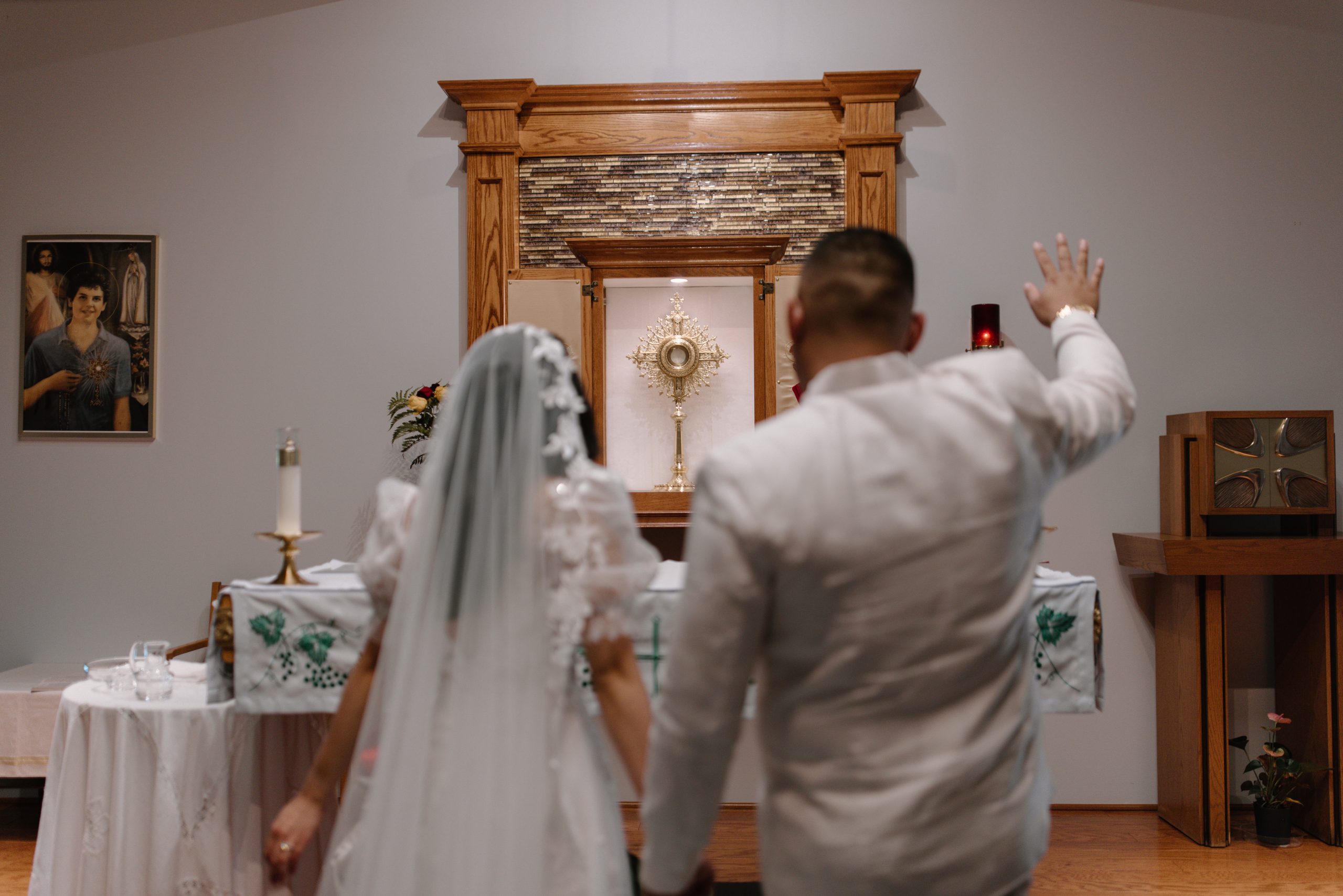
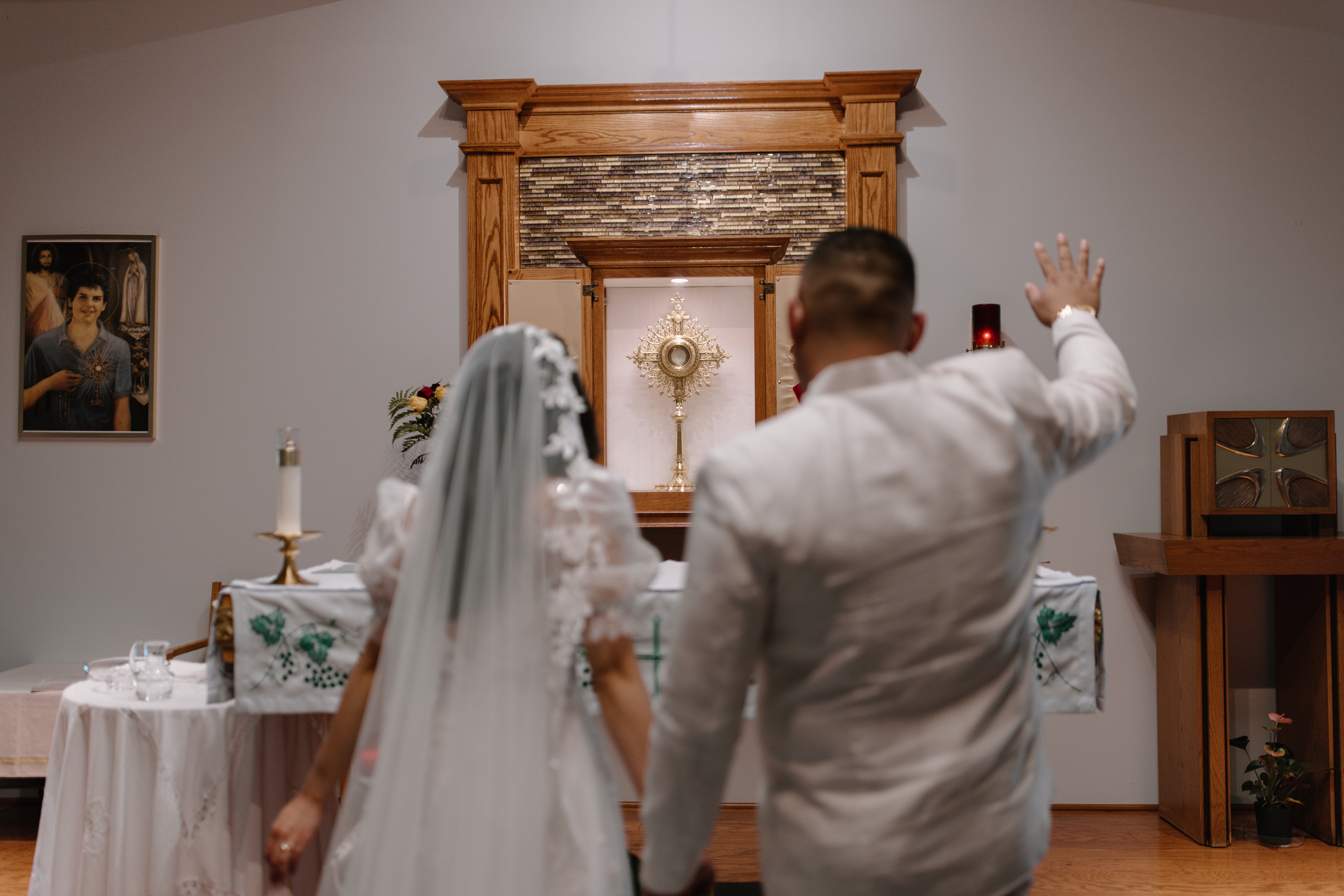
“Catholic and Christian couples don’t just have to register for their home goods,” but can “also register for sacred arts, sacred jewelry, beautiful wall mounts, and icons,” James Reichert said.
Read More