Buenos Aires

PHOTOS: Pope Leo XIV concludes visit to Argentina, returns to adopted country of Peru #Catholic Pope Leo XIV concluded his visit to Argentina on Nov. 11 and departed for Peru, his adopted country where he spent years as a bishop and where he will finish his historic South American papal voyage. The Holy Father spent his last hours in Argentina visiting prisoners at a federal prison complex and holding a public Mass before flying to the Peruvian city of Callao, where he took part in welcoming ceremonies and met with civil authorities.Here are photos of Pope Leo’s activities in Argentina and Peru on Nov. 11:
 
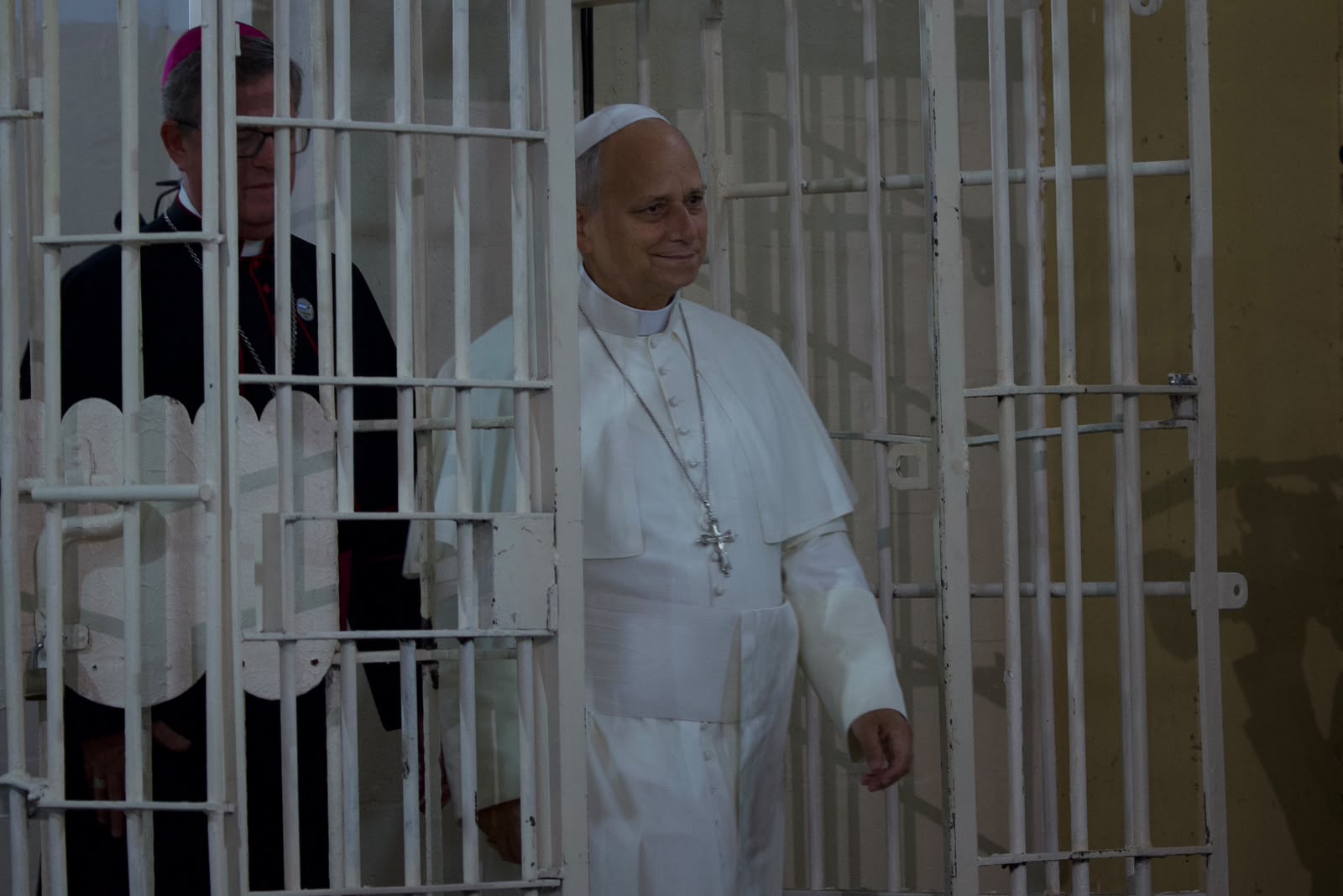
 Pope Leo XIV walks through the federal prison complex in Buenos Aires, Argentina, Nov. 11, 2026. | Credit: Daniel Ibáñez/EWTN


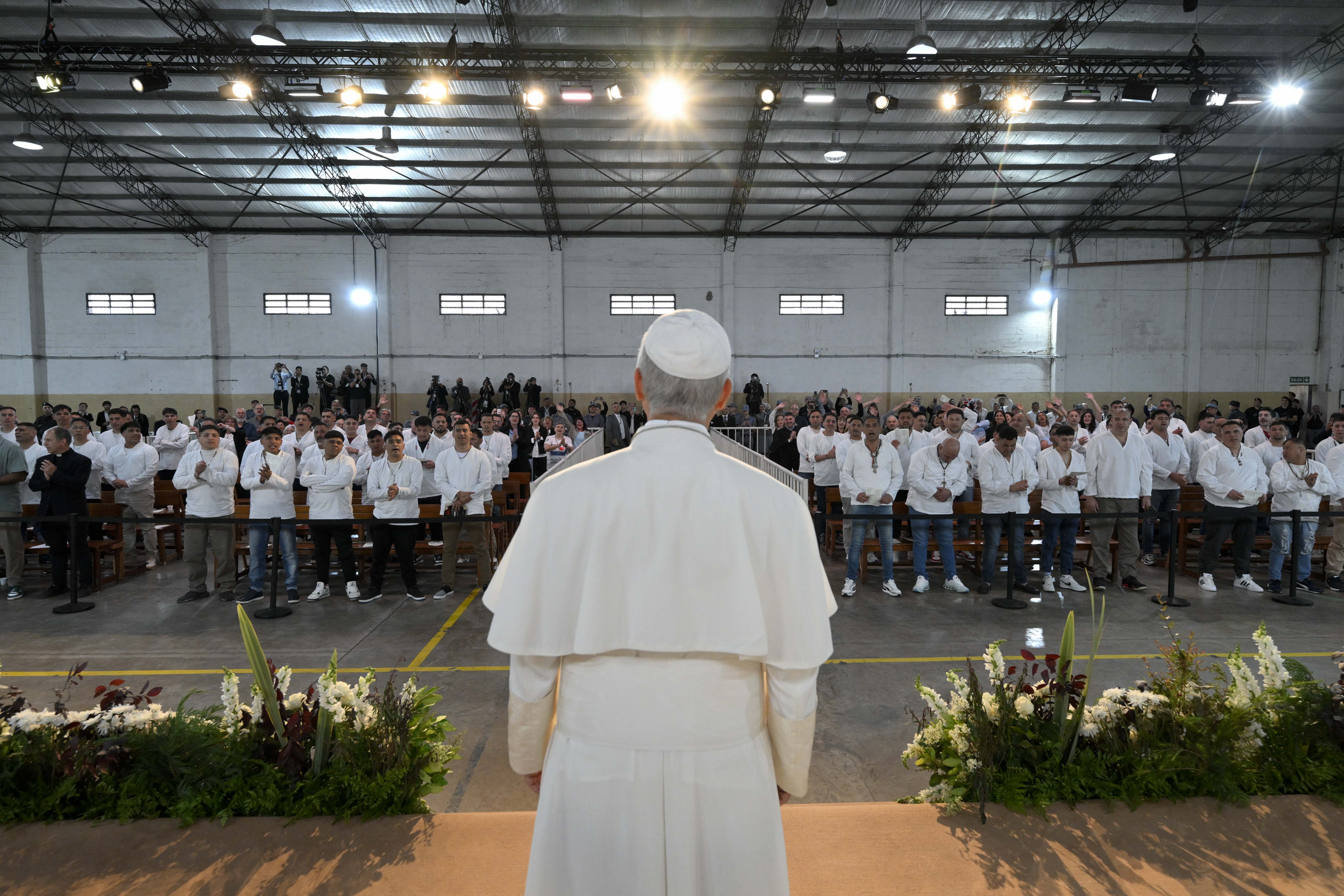
 Pope Leo XIV greets an assembly of prisoners at the federal prison complex in Buenos Aires, Argentina, Nov. 11, 2026. | Credit: Daniel Ibáñez/EWTN


 A prisoner embraces Pope Leo XIV at the federal prison complex in Buenos Aires, Argentina, Nov. 11, 2026. | Credit: Daniel Ibáñez/EWTN


 Pope Leo XIV waves to crowds outside of the Basilica of Our Lady of Luján, patroness of Argentina, on Nov. 11, 2026. | Credit: Vatican Media


 Pope Leo XIV processes in to Mass in the square in front of the Basilica of Our Lady of Luján, patroness of Argentina, on Nov. 11, 2026. | Credit: Daniel Ibáñez/EWTN News


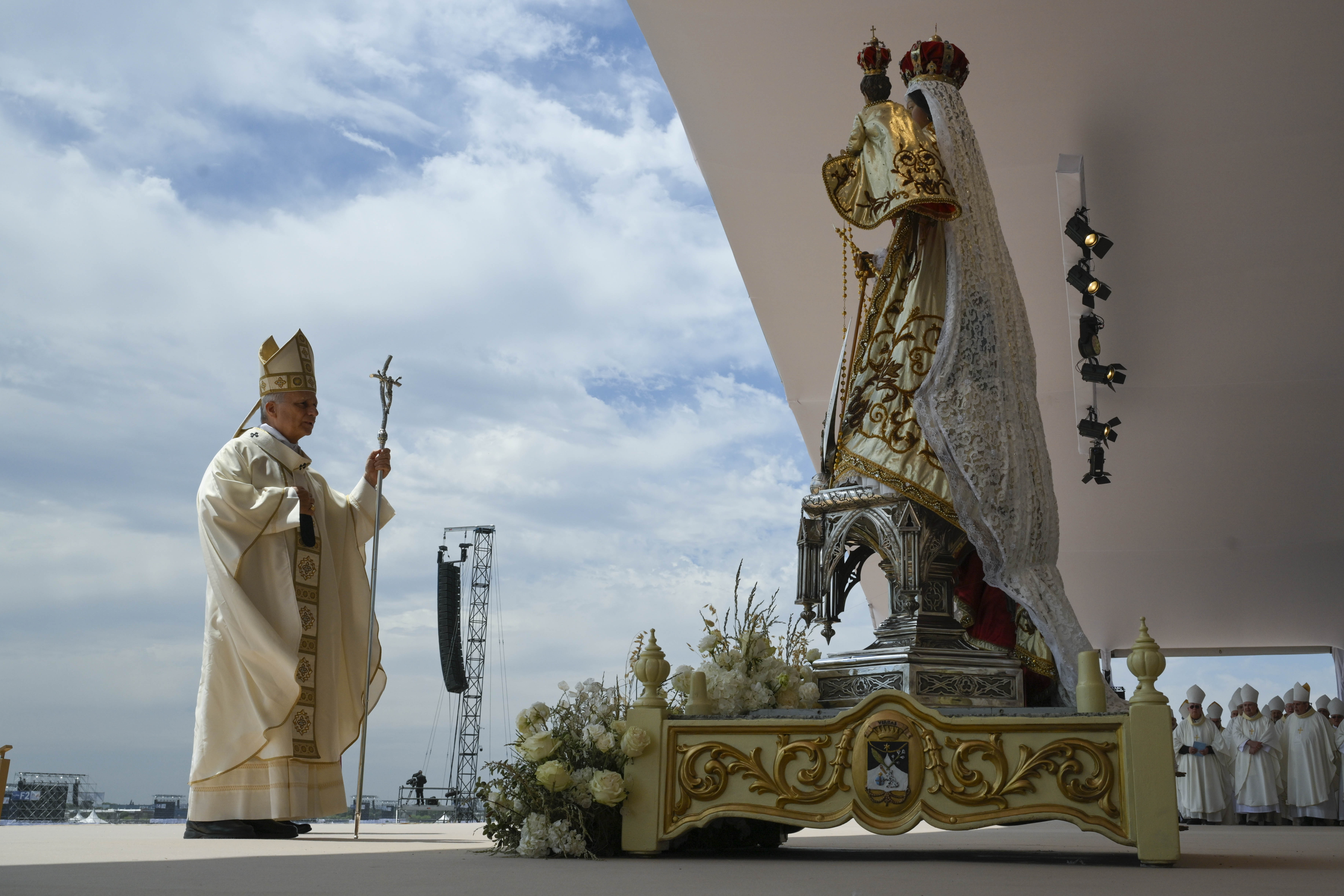
 Pope Leo XIV celebrates Mass in the square in front of the Basilica of Our Lady of Luján, patroness of Argentina, on Nov. 11, 2026. | Credit: Daniel Ibáñez/EWTN News


 Pope Leo XIV celebrates Mass in the square in front of the Basilica of Our Lady of Luján, patroness of Argentina, on Nov. 11, 2026. | Credit: Daniel Ibáñez/EWTN News


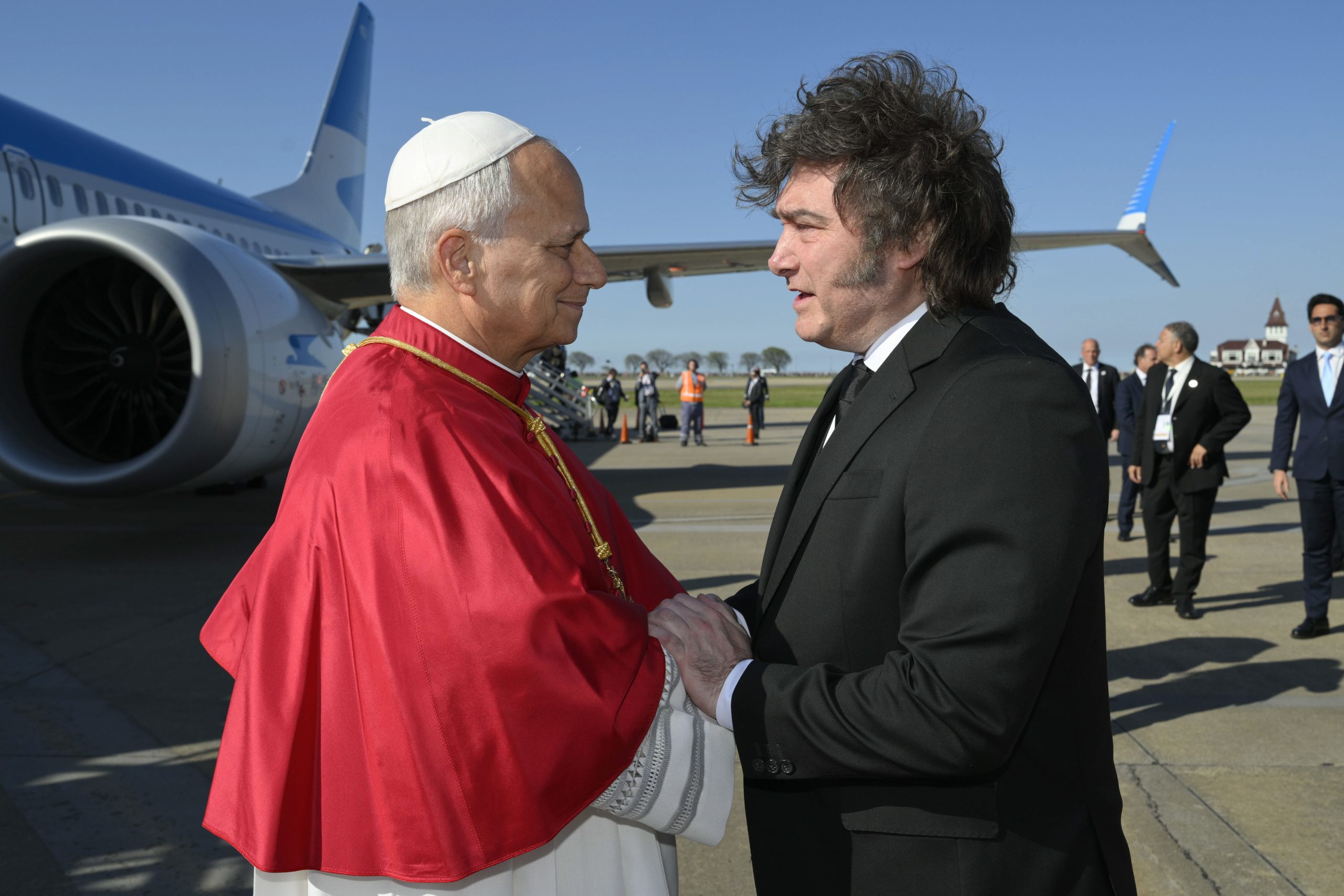
 Pope Leo XIV shakes hands with Argentine President Javier Milei as the Holy Father departs after a three-day trip to the country on Nov. 11, 2026, before heading for Peru. | Credit: Vatican Media


 Pope Leo XIV waves as he prepares to board a plane for Peru after a three-day trip to Argentina on Nov. 11, 2026. | Credit: Vatican Media


 Pope Leo XIV greets the crowds as he steps off the airplane after arriving in Peru on Nov. 11, 2026. | Credit: Daniel Ibáñez/EWTN News


 Pope Leo XIV is greeted by Peru President Keiko Fujimori upon his arrival in Peru on Nov. 11, 2026. | Credit: Daniel Ibáñez/EWTN News


 Pope Leo XIV participates in a welcome ceremony at the Palacio de Gobierno in Lima, Peru, Nov. 11, 2026. | Credit: Daniel Ibáñez/EWTN


 Pope Leo XIV participates in a welcome ceremony at the Palacio de Gobierno in Lima, Peru, Nov. 11, 2026. | Credit: Daniel Ibáñez/EWTN

PHOTOS: Pope Leo XIV concludes visit to Argentina, returns to adopted country of Peru #Catholic Pope Leo XIV concluded his visit to Argentina on Nov. 11 and departed for Peru, his adopted country where he spent years as a bishop and where he will finish his historic South American papal voyage. The Holy Father spent his last hours in Argentina visiting prisoners at a federal prison complex and holding a public Mass before flying to the Peruvian city of Callao, where he took part in welcoming ceremonies and met with civil authorities.Here are photos of Pope Leo’s activities in Argentina and Peru on Nov. 11: Pope Leo XIV walks through the federal prison complex in Buenos Aires, Argentina, Nov. 11, 2026. | Credit: Daniel Ibáñez/EWTN Pope Leo XIV greets an assembly of prisoners at the federal prison complex in Buenos Aires, Argentina, Nov. 11, 2026. | Credit: Daniel Ibáñez/EWTN A prisoner embraces Pope Leo XIV at the federal prison complex in Buenos Aires, Argentina, Nov. 11, 2026. | Credit: Daniel Ibáñez/EWTN Pope Leo XIV waves to crowds outside of the Basilica of Our Lady of Luján, patroness of Argentina, on Nov. 11, 2026. | Credit: Vatican Media Pope Leo XIV processes in to Mass in the square in front of the Basilica of Our Lady of Luján, patroness of Argentina, on Nov. 11, 2026. | Credit: Daniel Ibáñez/EWTN News Pope Leo XIV celebrates Mass in the square in front of the Basilica of Our Lady of Luján, patroness of Argentina, on Nov. 11, 2026. | Credit: Daniel Ibáñez/EWTN News Pope Leo XIV celebrates Mass in the square in front of the Basilica of Our Lady of Luján, patroness of Argentina, on Nov. 11, 2026. | Credit: Daniel Ibáñez/EWTN News Pope Leo XIV shakes hands with Argentine President Javier Milei as the Holy Father departs after a three-day trip to the country on Nov. 11, 2026, before heading for Peru. | Credit: Vatican Media Pope Leo XIV waves as he prepares to board a plane for Peru after a three-day trip to Argentina on Nov. 11, 2026. | Credit: Vatican Media Pope Leo XIV greets the crowds as he steps off the airplane after arriving in Peru on Nov. 11, 2026. | Credit: Daniel Ibáñez/EWTN News Pope Leo XIV is greeted by Peru President Keiko Fujimori upon his arrival in Peru on Nov. 11, 2026. | Credit: Daniel Ibáñez/EWTN News Pope Leo XIV participates in a welcome ceremony at the Palacio de Gobierno in Lima, Peru, Nov. 11, 2026. | Credit: Daniel Ibáñez/EWTN Pope Leo XIV participates in a welcome ceremony at the Palacio de Gobierno in Lima, Peru, Nov. 11, 2026. | Credit: Daniel Ibáñez/EWTN

The Holy Father will conclude his historic South American visit with nearly a week in Peru.
Read More
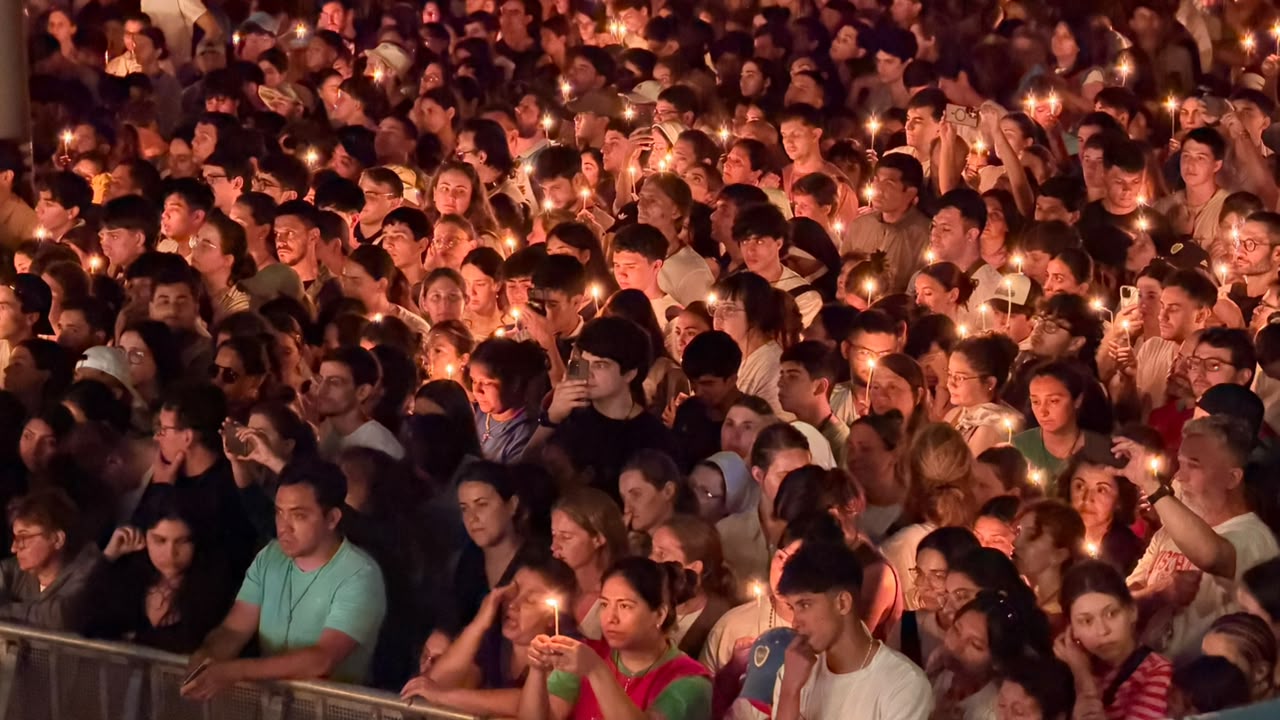
Pope Leo XIV urges youth to shun ‘the idols of our time’ and turn to Christ #Catholic BUENOS AIRES, Argentina — Pope Leo XIV appealed to young people to reject worldly distractions and follow Christ, assuring them that their past mistakes are no obstacle to joining the Church.“Dear young people, Christ loves us and wants us to share in his own life,” Leo told an estimated 1 million participants at a vigil on Nov. 10, his last night in Argentina. “Christ offers you a life that not even death can take away.”The event took place at the same site in northern Buenos Aires where Leo had celebrated Mass the previous day, drawing an estimated 2.5 million people. The crowds in Argentina have been by far the largest of his pontificate.
 
 Pope Leo XIV participates in a youth vigil at the Monumento de los Españoles in Buenos Aires, Argentina, Nov. 10, 2026. | Credit: Daniel Ibáñez/EWTN
 
 The pope’s speech came after testimonies and questions from young people, including a man recovering from drug addiction.Leo urged his listeners to reject what he called “the idols of our time,” which cannot provide happiness or life.“Idols arise and demand our worship: success at any cost, money, an obsession with appearance, popularity or the unrestrained pursuit of pleasure. Sometimes, in order to win the approval of others, we may go so far as to lie, betray or humiliate someone on social media,” the pope said.“There are also those who make a business of offering pleasures that ultimately enslave us, such as pornography and addictive substances,” he added.Leo cited Pope Francis’ insistence that “everyone, everyone, everyone” is welcome in the Church.“Whoever you are and whatever you may have done, Jesus Christ knows you, loves you and wants you to be close to him,” the pope said. “No one has fallen so low that Christ cannot raise them up.”He added that “we all need conversion” and that welcome is not the equivalent of moral indifference.“Christ loves us as we are, but his love is too great to leave us prisoners of sin, of what destroys us,” Leo said. “There are wounds to be healed, failings to be acknowledged and, whenever possible, wrongs to be made right.”
 
 Pope Leo XIV holds a candle during a youth vigil at the Monumento de los Españoles in Buenos Aires, Argentina, Nov. 10, 2026. | Credit: Daniel Ibáñez/EWTN
 
 He urged his listeners to confess their sins, pray, read Scripture and receive the Eucharist in order to be transformed by Christ.“Share your bread with those who are hungry, open your doors to those who have no home, visit the sick and those whom no one wants to visit,” the pope told his young listeners, as part of his program for their pursuit of sanctity.On Wednesday, following a pilgrimage to Argentina’s most prominent Marian shrine, in Luján, Leo was scheduled to leave for Peru, the last stop on his tour of South America.

Pope Leo XIV urges youth to shun ‘the idols of our time’ and turn to Christ #Catholic BUENOS AIRES, Argentina — Pope Leo XIV appealed to young people to reject worldly distractions and follow Christ, assuring them that their past mistakes are no obstacle to joining the Church.“Dear young people, Christ loves us and wants us to share in his own life,” Leo told an estimated 1 million participants at a vigil on Nov. 10, his last night in Argentina. “Christ offers you a life that not even death can take away.”The event took place at the same site in northern Buenos Aires where Leo had celebrated Mass the previous day, drawing an estimated 2.5 million people. The crowds in Argentina have been by far the largest of his pontificate. Pope Leo XIV participates in a youth vigil at the Monumento de los Españoles in Buenos Aires, Argentina, Nov. 10, 2026. | Credit: Daniel Ibáñez/EWTN The pope’s speech came after testimonies and questions from young people, including a man recovering from drug addiction.Leo urged his listeners to reject what he called “the idols of our time,” which cannot provide happiness or life.“Idols arise and demand our worship: success at any cost, money, an obsession with appearance, popularity or the unrestrained pursuit of pleasure. Sometimes, in order to win the approval of others, we may go so far as to lie, betray or humiliate someone on social media,” the pope said.“There are also those who make a business of offering pleasures that ultimately enslave us, such as pornography and addictive substances,” he added.Leo cited Pope Francis’ insistence that “everyone, everyone, everyone” is welcome in the Church.“Whoever you are and whatever you may have done, Jesus Christ knows you, loves you and wants you to be close to him,” the pope said. “No one has fallen so low that Christ cannot raise them up.”He added that “we all need conversion” and that welcome is not the equivalent of moral indifference.“Christ loves us as we are, but his love is too great to leave us prisoners of sin, of what destroys us,” Leo said. “There are wounds to be healed, failings to be acknowledged and, whenever possible, wrongs to be made right.” Pope Leo XIV holds a candle during a youth vigil at the Monumento de los Españoles in Buenos Aires, Argentina, Nov. 10, 2026. | Credit: Daniel Ibáñez/EWTN He urged his listeners to confess their sins, pray, read Scripture and receive the Eucharist in order to be transformed by Christ.“Share your bread with those who are hungry, open your doors to those who have no home, visit the sick and those whom no one wants to visit,” the pope told his young listeners, as part of his program for their pursuit of sanctity.On Wednesday, following a pilgrimage to Argentina’s most prominent Marian shrine, in Luján, Leo was scheduled to leave for Peru, the last stop on his tour of South America.

The pontiff echoed Pope Francis’ promise that “everyone, everyone, everyone” is welcome in the Church, while insisting that “we all need conversion.”
Read More
PHOTOS: Pope Leo XIV visits Argentina during South American papal trip #Catholic Pope Leo XIV marked two full days in Argentina with several Masses and meetings with Catholic leadership along with a youth vigil and a celebration of vespers.The pope will finish his Argentinian visit on Nov. 11 and fly to Peru, his adopted country where he spent years as a bishop and where he will finish out his historic South American trip. The Holy Father already visited Uruguay at the outset of his journey. Here are some photos of Pope Leo’s activities in Argentina. 
 
 Javier Milei, president of Argentina, welcomes Pope Leo XIV at airport in Buenos Aires on Nov. 8, 2026. | Credit: Vatican Media


 Pope Leo XIV visits on Nov. 9, 2026 the staff and residents of the Pequeño Cottolengo Don Orione in Claypole, a residential institution in Argentina inspired by St. Joseph Benedict Cottolengo. | Credit: Daniel Ibáñez/EWTN News


 Pope Leo XIV visits on Nov. 9, 2026 the staff and residents of the Pequeño Cottolengo Don Orione in Claypole, a residential institution in Argentina inspired by St. Joseph Benedict Cottolengo. | Credit: Vatican Media


 Pope Leo XIV visits on Nov. 9, 2026 the staff and residents of the Pequeño Cottolengo Don Orione in Claypole, a residential institution in Argentina inspired by St. Joseph Benedict Cottolengo, an Italian priest from Turin who founded a network of charitable institutions dedicated to caring for people whom society often neglected, especially people with disabilities, the poor, and chronically ill. | Credit: Vatican Media


 About 2.5 million faithful gather for Mass celebrated by Pope Leo XIV at the Monument de los Españoles in Buenos Aires, Argentina, on Nov. 9, 2026. | Credit: Daniel Ibáñez/EWTN News


 Pope Leo XIV delivers his homily during the celebration of vespers with the Argentine bishops on Nov. 9, 2026, at the Cathedral of the Most Holy Trinity in Buenos Aires, Argentina. | Credit: Daniel Ibáñez/EWTN News


 Pope Leo XIV arrives in Córdoba, Argentina, Nov. 10, 2026. The Holy Father came to Argentina as part of his whirlwind 12-day papal trip to South America. | Credit: Vatican Media


 Pope Leo XIV is greeted by youth after arriving in Córdoba, Argentina, Nov. 10, 2026. The Holy Father came to Argentina as part of his whirlwind 12-day papal trip to South America. | Credit: Vatican Media


 Pope Leo XIV waves to crowds in Córdoba, Argentina, Nov. 10, 2026. The Holy Father came to Argentina as part of his whirlwind 12-day papal trip to South America. | Credit: Vatican Media


 Pope Leo XIV waves to the crowds as he processes in for Mass in Córdoba, Argentina, on Nov. 10, 2026. | Credit: Daniel Ibáñez/EWTN News


 Pope Leo XIV celebrates Mass at the Military Aviation School in Córdoba, Argentina, on Nov. 10, 2026. | Credit: Daniel Ibáñez/EWTN News


 Pope Leo XIV celebrates Mass at the Military Aviation School in Córdoba, Argentina, on Nov. 10, 2026. | Credit: Daniel Ibáñez/EWTN News


 Pope Leo XIV celebrates Mass at the Military Aviation School in Córdoba, Argentina, on Nov. 10, 2026. | Credit: Vatican Media


 Pope Leo XIV waves to crowds in Córdoba, Argentina, on Nov. 10, 2026. | Credit: Vatican Media


 Pope Leo XIV meets with bishops, clergy, religious, seminarians, and pastoral workers outside Córdoba’s cathedral in Argentina on Nov. 10, 2026. | Credit: Daniel Ibáñez/EWTN News


 Pope Leo XIV meets with bishops, clergy, religious, seminarians, and pastoral workers outside Córdoba’s cathedral in Argentina on Nov. 10, 2026. | Credit: Daniel Ibáñez/EWTN News


 Pope Leo XIV greets a Catholic woman while meeting with bishops, clergy, religious, seminarians, and pastoral workers outside Córdoba’s cathedral in Argentina on Nov. 10, 2026. | Credit: Daniel Ibáñez/EWTN News


 Pope Leo XIV holds a candle during a youth vigil at the Monumento de los Españoles in Buenos Aires, Argentina, Nov. 10, 2026. | Credit: Daniel Ibáñez/EWTN


 Pope Leo XIV participates in a youth vigil at the Monumento de los Españoles in Buenos Aires, Argentina, Nov. 10, 2026. | Credit: Daniel Ibáñez/EWTN

PHOTOS: Pope Leo XIV visits Argentina during South American papal trip #Catholic Pope Leo XIV marked two full days in Argentina with several Masses and meetings with Catholic leadership along with a youth vigil and a celebration of vespers.The pope will finish his Argentinian visit on Nov. 11 and fly to Peru, his adopted country where he spent years as a bishop and where he will finish out his historic South American trip. The Holy Father already visited Uruguay at the outset of his journey. Here are some photos of Pope Leo’s activities in Argentina. Javier Milei, president of Argentina, welcomes Pope Leo XIV at airport in Buenos Aires on Nov. 8, 2026. | Credit: Vatican Media Pope Leo XIV visits on Nov. 9, 2026 the staff and residents of the Pequeño Cottolengo Don Orione in Claypole, a residential institution in Argentina inspired by St. Joseph Benedict Cottolengo. | Credit: Daniel Ibáñez/EWTN News Pope Leo XIV visits on Nov. 9, 2026 the staff and residents of the Pequeño Cottolengo Don Orione in Claypole, a residential institution in Argentina inspired by St. Joseph Benedict Cottolengo. | Credit: Vatican Media Pope Leo XIV visits on Nov. 9, 2026 the staff and residents of the Pequeño Cottolengo Don Orione in Claypole, a residential institution in Argentina inspired by St. Joseph Benedict Cottolengo, an Italian priest from Turin who founded a network of charitable institutions dedicated to caring for people whom society often neglected, especially people with disabilities, the poor, and chronically ill. | Credit: Vatican Media About 2.5 million faithful gather for Mass celebrated by Pope Leo XIV at the Monument de los Españoles in Buenos Aires, Argentina, on Nov. 9, 2026. | Credit: Daniel Ibáñez/EWTN News Pope Leo XIV delivers his homily during the celebration of vespers with the Argentine bishops on Nov. 9, 2026, at the Cathedral of the Most Holy Trinity in Buenos Aires, Argentina. | Credit: Daniel Ibáñez/EWTN News Pope Leo XIV arrives in Córdoba, Argentina, Nov. 10, 2026. The Holy Father came to Argentina as part of his whirlwind 12-day papal trip to South America. | Credit: Vatican Media Pope Leo XIV is greeted by youth after arriving in Córdoba, Argentina, Nov. 10, 2026. The Holy Father came to Argentina as part of his whirlwind 12-day papal trip to South America. | Credit: Vatican Media Pope Leo XIV waves to crowds in Córdoba, Argentina, Nov. 10, 2026. The Holy Father came to Argentina as part of his whirlwind 12-day papal trip to South America. | Credit: Vatican Media Pope Leo XIV waves to the crowds as he processes in for Mass in Córdoba, Argentina, on Nov. 10, 2026. | Credit: Daniel Ibáñez/EWTN News Pope Leo XIV celebrates Mass at the Military Aviation School in Córdoba, Argentina, on Nov. 10, 2026. | Credit: Daniel Ibáñez/EWTN News Pope Leo XIV celebrates Mass at the Military Aviation School in Córdoba, Argentina, on Nov. 10, 2026. | Credit: Daniel Ibáñez/EWTN News Pope Leo XIV celebrates Mass at the Military Aviation School in Córdoba, Argentina, on Nov. 10, 2026. | Credit: Vatican Media Pope Leo XIV waves to crowds in Córdoba, Argentina, on Nov. 10, 2026. | Credit: Vatican Media Pope Leo XIV meets with bishops, clergy, religious, seminarians, and pastoral workers outside Córdoba’s cathedral in Argentina on Nov. 10, 2026. | Credit: Daniel Ibáñez/EWTN News Pope Leo XIV meets with bishops, clergy, religious, seminarians, and pastoral workers outside Córdoba’s cathedral in Argentina on Nov. 10, 2026. | Credit: Daniel Ibáñez/EWTN News Pope Leo XIV greets a Catholic woman while meeting with bishops, clergy, religious, seminarians, and pastoral workers outside Córdoba’s cathedral in Argentina on Nov. 10, 2026. | Credit: Daniel Ibáñez/EWTN News Pope Leo XIV holds a candle during a youth vigil at the Monumento de los Españoles in Buenos Aires, Argentina, Nov. 10, 2026. | Credit: Daniel Ibáñez/EWTN Pope Leo XIV participates in a youth vigil at the Monumento de los Españoles in Buenos Aires, Argentina, Nov. 10, 2026. | Credit: Daniel Ibáñez/EWTN

The Holy Father has celebrated Mass in multiple cities, met with Catholic leadership and visited with several communities in Argentina.
Read More
Behind the numbers: Stories from Leo XIV’s largest Mass #Catholic An estimated 2.5 million people made Pope Leo XIV’s Mass in Buenos Aires on Monday the largest of his pontificate. Behind that figure were faces, stories and testimonies of faith that filled a historic day.Access opened at midnight, on a national holiday declared for the apostolic visit, for the Mass at the Monumento a los Españoles in the Palermo neighborhood, scheduled for 11:30 a.m. Local artists greeted those who had camped overnight beside the altar, a large structure put up some weeks earlier, under a clear spring sky.Around 9 a.m., the singer-songwriter Athenas warmed the crowd with familiar Catholic songs. The surprise of the morning was Soledad Pastorutti, who sang her own pieces, including La Viajera and A Don Ata, and closed with religious songs such as Alma Misionera and Oración del Remanso.
 
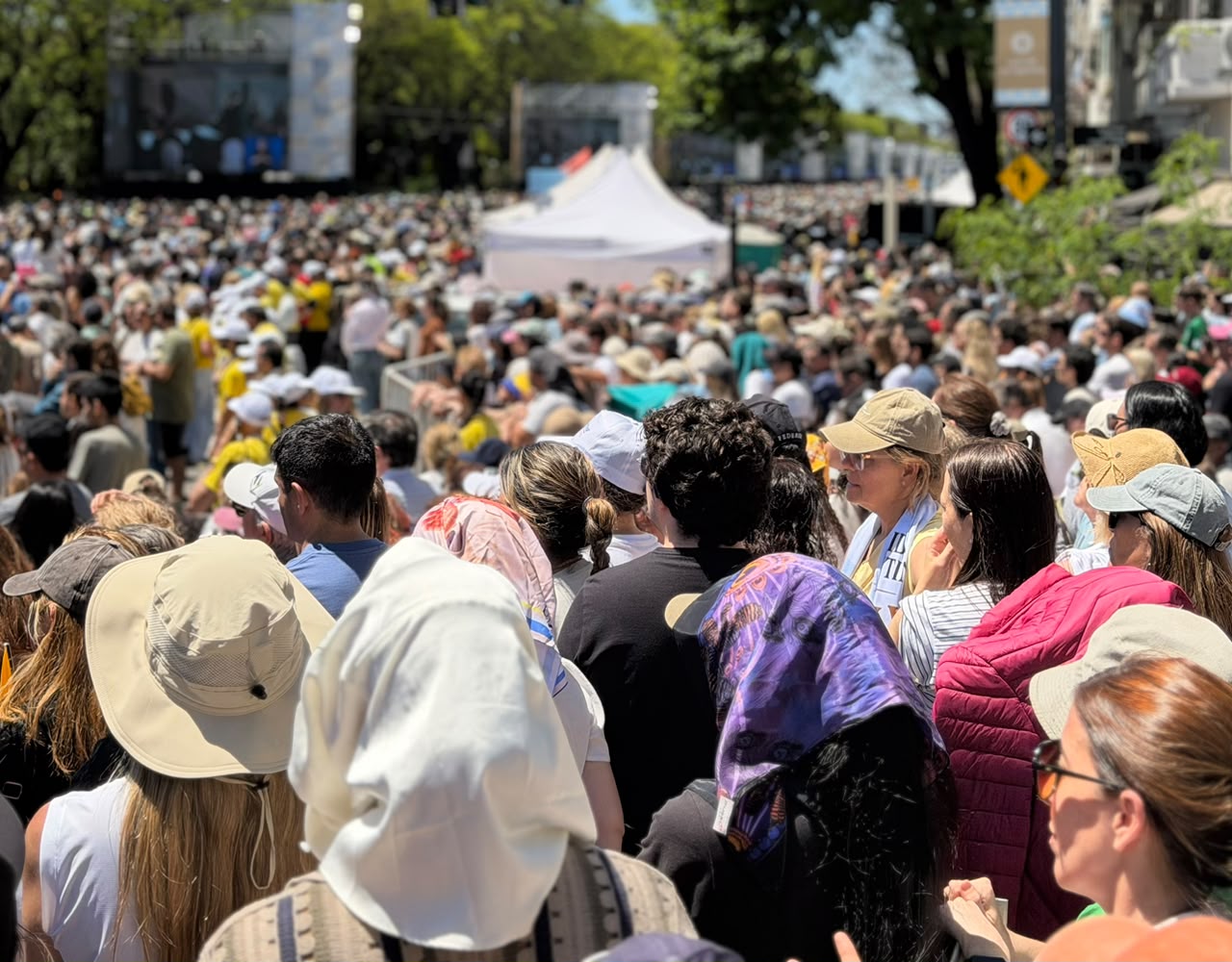
 The crowd at the Mass with Pope Leo XIV in Buenos Aires, Nov. 9, 2026. | Credit: Julieta Villar/EWTN News
 
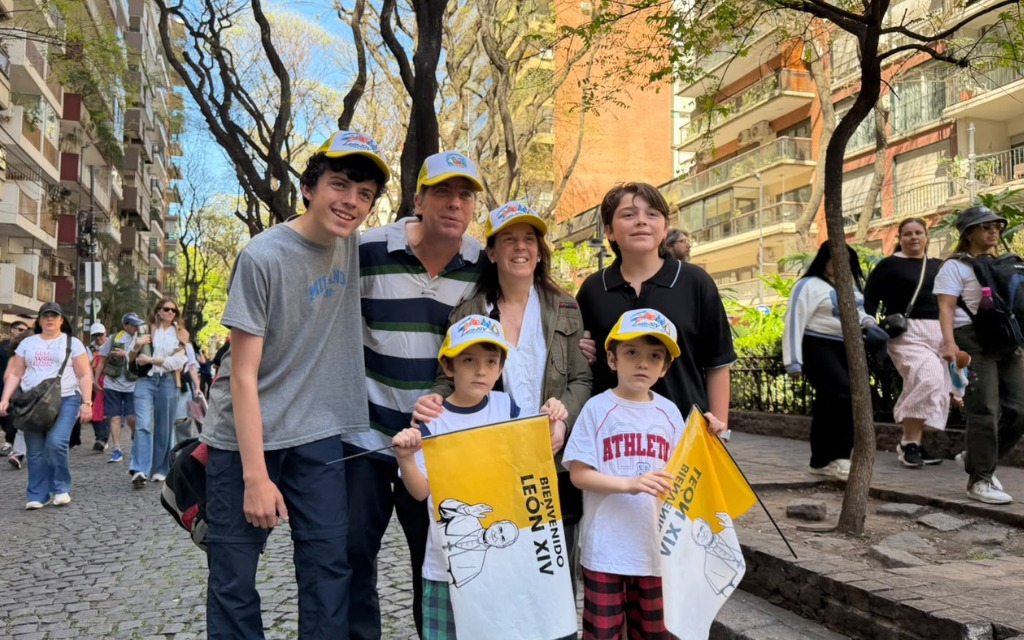
 With the streets closed, people walked in the hundreds: families, parish groups, couples, friends and a few onlookers, mixed in with street vendors selling flags, mugs and even images made with artificial intelligence that showed Pope Leo embracing Lionel Messi and Diego Maradona.Florencia Raspi and Nicolás Deim arrived on Avenida del Libertador with four of their five children, all in yellow and white caps bearing the pope’s image. Raspi, who was nine when she saw St. John Paul II with her own family, wanted her children to have that same experience.“What moves us is the faith, the unique moment we are going to live,” she told EWTN News, “and above all this great public act of faith, how faith moves us and stirs us.” For Argentine families, she hoped the pope would leave “a message of hope, of unity,” and the sense of “welcome everyone … that in our differences we all come together.”
 
 A group of young people at the Mass with Pope Leo XIV at the Monumento a los Españoles in Buenos Aires, Nov. 9, 2026. | Credit: Julieta Villar/EWTN News
 
 Olga walked arm in arm with her daughter, and with tears in her eyes spoke of “the emotion of seeing him, the faith we have,” and of waiting for “the blessing he is going to give us all.” For her country she wished “that we may be united, that we respect one another, and that the country may move forward.”Manuel Bur arrived in Buenos Aires on Friday with his girlfriend, from Concepción del Uruguay in Entre Ríos province. He hoped the pope would “give us strength, encouragement, to be better people, to be a better community.”Milagros Kirpach, of the Noche de la Caridad group at Our Lady of Guadalupe parish, said she had come for more than a glimpse of the pope. “What is being lived, the people walking to meet their faith, is what brought me,” she said. For Argentines she hoped for a message of unity and peace. “I think that all of us being united today reflects that.”Martina Navarro, of the Residencia Universitaria Sur of Opus Dei, had been volunteering since the early hours. “I had the joy of being able to take part. It was incredible to see the Church so alive, so happy to receive Pope Leo.”“As always, the pope leaves us unity, because he is literally the vicar of Christ on earth,” she said. “We have the joy of being able to be a little closer to heaven with him.”Francisco Brusco, of the Piarist Schools at Colegio Calasanz in Buenos Aires, also served as a volunteer. “I cannot think of Pope Leo without thinking of the first pope, who is St. Peter, and whenever I think of St. Peter I think of the great mercy of God,” he said. “Falling is human. Redemption comes from God and from his great mercy.”With the pope’s arrival, he said, “the most important thing is to show that the faith is more alive than ever,” and that it is “a very good way of showing that Argentina really is Catholic.”
 
 Two pilgrims at the Mass with Pope Leo XIV in Buenos Aires, Nov. 9, 2026. | Credit: Julieta Villar/EWTN News
 
 The popemobile crossed Avenida del Libertador after 11 a.m., nearly an hour behind schedule. The crowd in the sun covered their heads with caps, scarves, blankets and even bags. Many were moved by the pope’s arrival; others were somewhat surprised at how quickly the vehicle passed.The Mass itself was marked by respect, prayer and recollection. At the consecration, a great many of the faithful knelt, then went in an orderly way to receive Communion, distributed by more than 2,000 ministers of Holy Communion.In his homily, the pope spoke of the family as the place where faith, human virtues, a culture of work, respect for the elderly, the defense of life and fidelity to one’s word are handed on. He also drew applause when he recalled Pope Francis, who was archbishop of Buenos Aires before he became pope.At the sign of peace there was joy and a sense of fellowship, which lasted to the end, when the crowd left the site in an orderly way for home.This story was first published by ACI Prensa, the Spanish-language sister service of EWTN News, and has been translated and adapted by EWTN News English.

Behind the numbers: Stories from Leo XIV’s largest Mass #Catholic An estimated 2.5 million people made Pope Leo XIV’s Mass in Buenos Aires on Monday the largest of his pontificate. Behind that figure were faces, stories and testimonies of faith that filled a historic day.Access opened at midnight, on a national holiday declared for the apostolic visit, for the Mass at the Monumento a los Españoles in the Palermo neighborhood, scheduled for 11:30 a.m. Local artists greeted those who had camped overnight beside the altar, a large structure put up some weeks earlier, under a clear spring sky.Around 9 a.m., the singer-songwriter Athenas warmed the crowd with familiar Catholic songs. The surprise of the morning was Soledad Pastorutti, who sang her own pieces, including La Viajera and A Don Ata, and closed with religious songs such as Alma Misionera and Oración del Remanso. The crowd at the Mass with Pope Leo XIV in Buenos Aires, Nov. 9, 2026. | Credit: Julieta Villar/EWTN News With the streets closed, people walked in the hundreds: families, parish groups, couples, friends and a few onlookers, mixed in with street vendors selling flags, mugs and even images made with artificial intelligence that showed Pope Leo embracing Lionel Messi and Diego Maradona.Florencia Raspi and Nicolás Deim arrived on Avenida del Libertador with four of their five children, all in yellow and white caps bearing the pope’s image. Raspi, who was nine when she saw St. John Paul II with her own family, wanted her children to have that same experience.“What moves us is the faith, the unique moment we are going to live,” she told EWTN News, “and above all this great public act of faith, how faith moves us and stirs us.” For Argentine families, she hoped the pope would leave “a message of hope, of unity,” and the sense of “welcome everyone … that in our differences we all come together.” A group of young people at the Mass with Pope Leo XIV at the Monumento a los Españoles in Buenos Aires, Nov. 9, 2026. | Credit: Julieta Villar/EWTN News Olga walked arm in arm with her daughter, and with tears in her eyes spoke of “the emotion of seeing him, the faith we have,” and of waiting for “the blessing he is going to give us all.” For her country she wished “that we may be united, that we respect one another, and that the country may move forward.”Manuel Bur arrived in Buenos Aires on Friday with his girlfriend, from Concepción del Uruguay in Entre Ríos province. He hoped the pope would “give us strength, encouragement, to be better people, to be a better community.”Milagros Kirpach, of the Noche de la Caridad group at Our Lady of Guadalupe parish, said she had come for more than a glimpse of the pope. “What is being lived, the people walking to meet their faith, is what brought me,” she said. For Argentines she hoped for a message of unity and peace. “I think that all of us being united today reflects that.”Martina Navarro, of the Residencia Universitaria Sur of Opus Dei, had been volunteering since the early hours. “I had the joy of being able to take part. It was incredible to see the Church so alive, so happy to receive Pope Leo.”“As always, the pope leaves us unity, because he is literally the vicar of Christ on earth,” she said. “We have the joy of being able to be a little closer to heaven with him.”Francisco Brusco, of the Piarist Schools at Colegio Calasanz in Buenos Aires, also served as a volunteer. “I cannot think of Pope Leo without thinking of the first pope, who is St. Peter, and whenever I think of St. Peter I think of the great mercy of God,” he said. “Falling is human. Redemption comes from God and from his great mercy.”With the pope’s arrival, he said, “the most important thing is to show that the faith is more alive than ever,” and that it is “a very good way of showing that Argentina really is Catholic.” Two pilgrims at the Mass with Pope Leo XIV in Buenos Aires, Nov. 9, 2026. | Credit: Julieta Villar/EWTN News The popemobile crossed Avenida del Libertador after 11 a.m., nearly an hour behind schedule. The crowd in the sun covered their heads with caps, scarves, blankets and even bags. Many were moved by the pope’s arrival; others were somewhat surprised at how quickly the vehicle passed.The Mass itself was marked by respect, prayer and recollection. At the consecration, a great many of the faithful knelt, then went in an orderly way to receive Communion, distributed by more than 2,000 ministers of Holy Communion.In his homily, the pope spoke of the family as the place where faith, human virtues, a culture of work, respect for the elderly, the defense of life and fidelity to one’s word are handed on. He also drew applause when he recalled Pope Francis, who was archbishop of Buenos Aires before he became pope.At the sign of peace there was joy and a sense of fellowship, which lasted to the end, when the crowd left the site in an orderly way for home.This story was first published by ACI Prensa, the Spanish-language sister service of EWTN News, and has been translated and adapted by EWTN News English.

Families and volunteers who waited overnight in Buenos Aires spoke of handing on the faith, of unity and of a living Church.
Read More
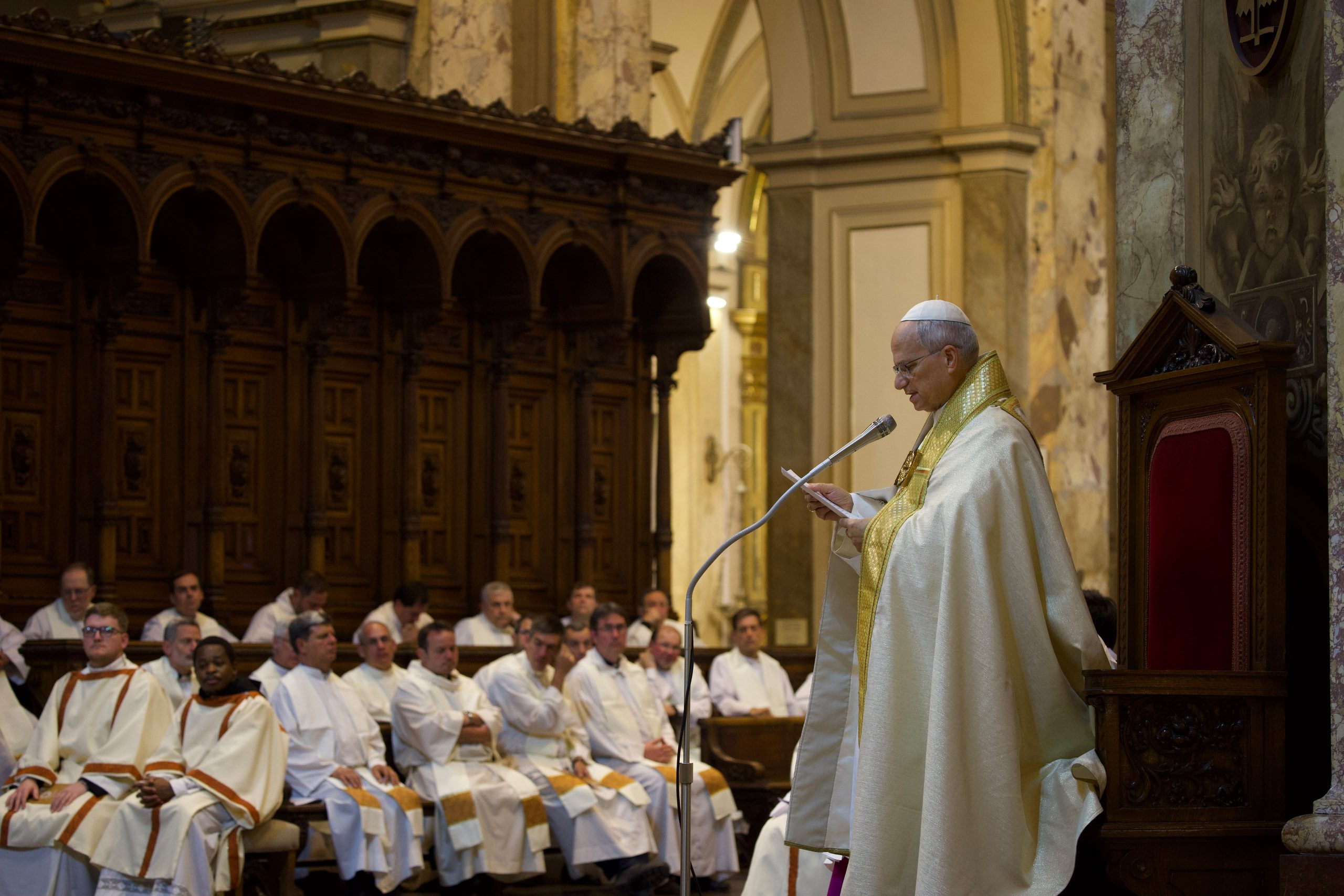
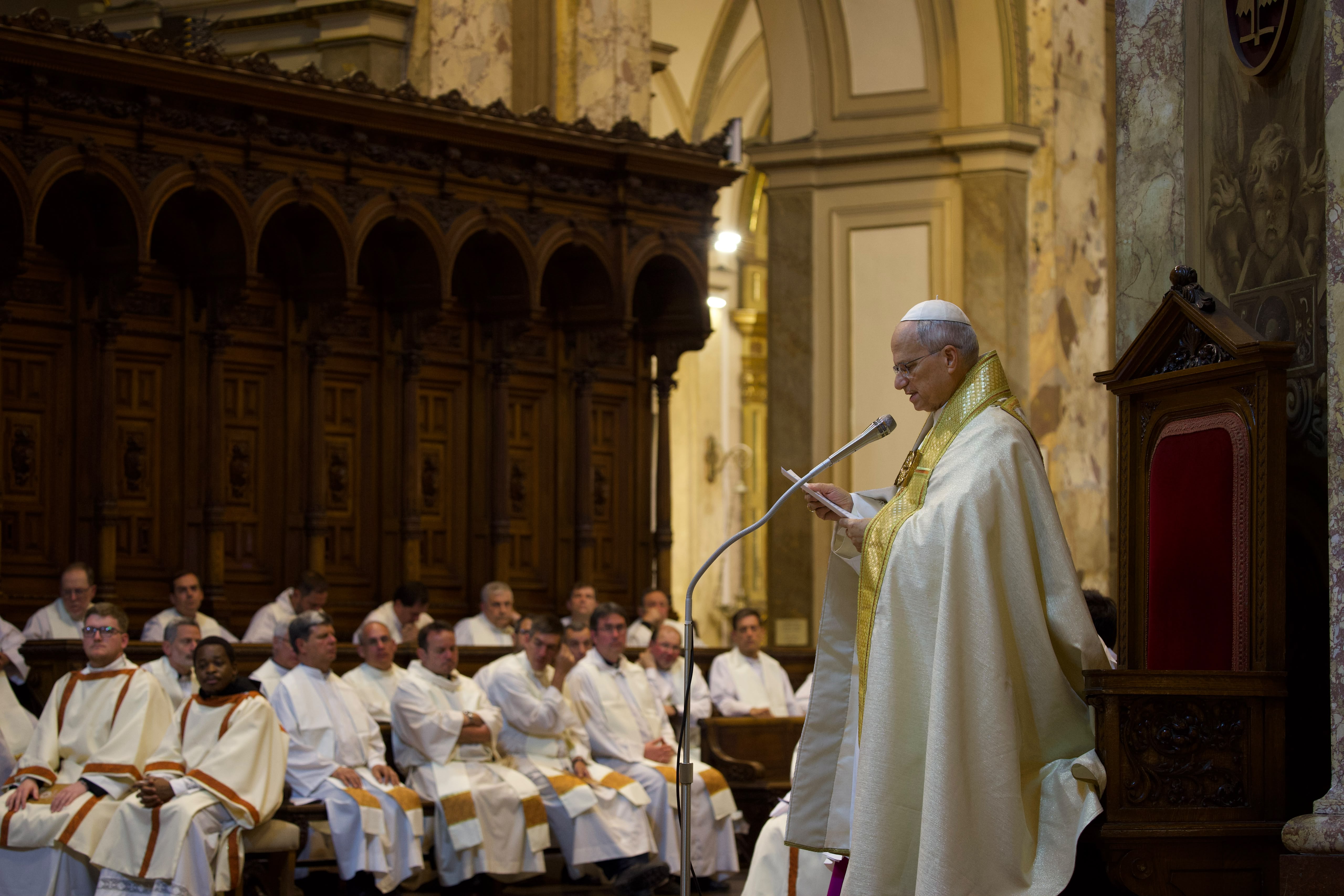
Pope Leo XIV calls for religious and social unity in Argentina #Catholic BUENOS AIRES, Argentina — Pope Leo XIV has made it clear since the start of his pontificate that he seeks to be a pope of unity. On Monday, Nov. 9, he brought that message to Argentina, in speeches on economic relations, interfaith dialogue and leadership of the Church itself.Speaking to an audience at the Catholic University of Argentina that included business leaders, trade unionists and grass-roots social activists, the pope encouraged groups with apparently conflicting interests to join together in embracing the fundamental principles of Catholic Social Teaching.Leo made his talk a mini-tutorial in the subject, offering brief definitions of the dignity of the human person, the common good, the universal destination of goods, solidarity and subsidiarity. By acting in accordance with these, he said, society could “build the civilization of love.”The pope offered a concrete example of someone who lived by the principles in the Venerable Enrique Shaw, an Argentine businessman “who underwent a conversion after discovering the beauty of the Gospel as expressed in the Church’s Social Doctrine.”Leo said the entrepreneur “understood that industry was not just a productive mechanism or a means of accumulating capital, but a true community of people called to grow together.”Shaw died in 1962 and Pope Francis recognized his heroic virtues in 2021.The pope also pointed to trade unions, workers’ associations, cooperatives and welfare organizations, whose “specific mission is to be instruments of solidarity and cohesion, channels of cooperation between workers and businesses.”A little later the same afternoon, Leo addressed representatives of other Christian churches and other religions, proposing an understanding of “sincere prayer” that unites their different creeds. Such prayer, the pope said, gives voice to “religions as guardians of human dignity, religions as expressions of our freedom, and religions as places in which to cultivate hope.”The pope’s last public event of the day was a vespers service with the Catholic bishops of Argentina. After surveying the geographic and cultural diversity of the country, Leo noted that Catholicism in the country is united by veneration of the Virgin Mary, though under different titles and devotions, including the Most Holy Virgin of the Miracle, Our Lady of the Valley, the Virgin of the Rosary, Mary of Itatí and Our Lady of Luján.Leo is scheduled to celebrate Mass in front of the Basilica of Our Lady of Luján on Wednesday, his last day in Argentina.The pope offered the biblical story of Joseph’s reunion with his father Jacob and his brothers, depicted in a relief on the facade of the cathedral where he was speaking, as a model of reconciliation for his listeners.“Let us cultivate communion, welcoming our legitimate differences with charity and fostering fraternity, so that our unity may make Christ’s love visible and help many to encounter him,” the pope said.Leo asked the bishops “to continue listening to one another and discerning together what the Holy Spirit is asking of you in the light of the word of God and the Magisterium of the Church.” He said they should do so in conjunction with their synodal teams, also present in the cathedral, since they were “fellow disciples of the one Teacher.”Synodality, a signature initiative of Pope Francis that Leo has pledged to continue, seeks to involve the whole Church, including the laity, more fully in discernment and mission.

Pope Leo XIV calls for religious and social unity in Argentina #Catholic BUENOS AIRES, Argentina — Pope Leo XIV has made it clear since the start of his pontificate that he seeks to be a pope of unity. On Monday, Nov. 9, he brought that message to Argentina, in speeches on economic relations, interfaith dialogue and leadership of the Church itself.Speaking to an audience at the Catholic University of Argentina that included business leaders, trade unionists and grass-roots social activists, the pope encouraged groups with apparently conflicting interests to join together in embracing the fundamental principles of Catholic Social Teaching.Leo made his talk a mini-tutorial in the subject, offering brief definitions of the dignity of the human person, the common good, the universal destination of goods, solidarity and subsidiarity. By acting in accordance with these, he said, society could “build the civilization of love.”The pope offered a concrete example of someone who lived by the principles in the Venerable Enrique Shaw, an Argentine businessman “who underwent a conversion after discovering the beauty of the Gospel as expressed in the Church’s Social Doctrine.”Leo said the entrepreneur “understood that industry was not just a productive mechanism or a means of accumulating capital, but a true community of people called to grow together.”Shaw died in 1962 and Pope Francis recognized his heroic virtues in 2021.The pope also pointed to trade unions, workers’ associations, cooperatives and welfare organizations, whose “specific mission is to be instruments of solidarity and cohesion, channels of cooperation between workers and businesses.”A little later the same afternoon, Leo addressed representatives of other Christian churches and other religions, proposing an understanding of “sincere prayer” that unites their different creeds. Such prayer, the pope said, gives voice to “religions as guardians of human dignity, religions as expressions of our freedom, and religions as places in which to cultivate hope.”The pope’s last public event of the day was a vespers service with the Catholic bishops of Argentina. After surveying the geographic and cultural diversity of the country, Leo noted that Catholicism in the country is united by veneration of the Virgin Mary, though under different titles and devotions, including the Most Holy Virgin of the Miracle, Our Lady of the Valley, the Virgin of the Rosary, Mary of Itatí and Our Lady of Luján.Leo is scheduled to celebrate Mass in front of the Basilica of Our Lady of Luján on Wednesday, his last day in Argentina.The pope offered the biblical story of Joseph’s reunion with his father Jacob and his brothers, depicted in a relief on the facade of the cathedral where he was speaking, as a model of reconciliation for his listeners.“Let us cultivate communion, welcoming our legitimate differences with charity and fostering fraternity, so that our unity may make Christ’s love visible and help many to encounter him,” the pope said.Leo asked the bishops “to continue listening to one another and discerning together what the Holy Spirit is asking of you in the light of the word of God and the Magisterium of the Church.” He said they should do so in conjunction with their synodal teams, also present in the cathedral, since they were “fellow disciples of the one Teacher.”Synodality, a signature initiative of Pope Francis that Leo has pledged to continue, seeks to involve the whole Church, including the laity, more fully in discernment and mission.

On Monday in Buenos Aires, Pope Leo XIV spoke on Catholic social teaching, prayer among religions, and communion in the Church.
Read More
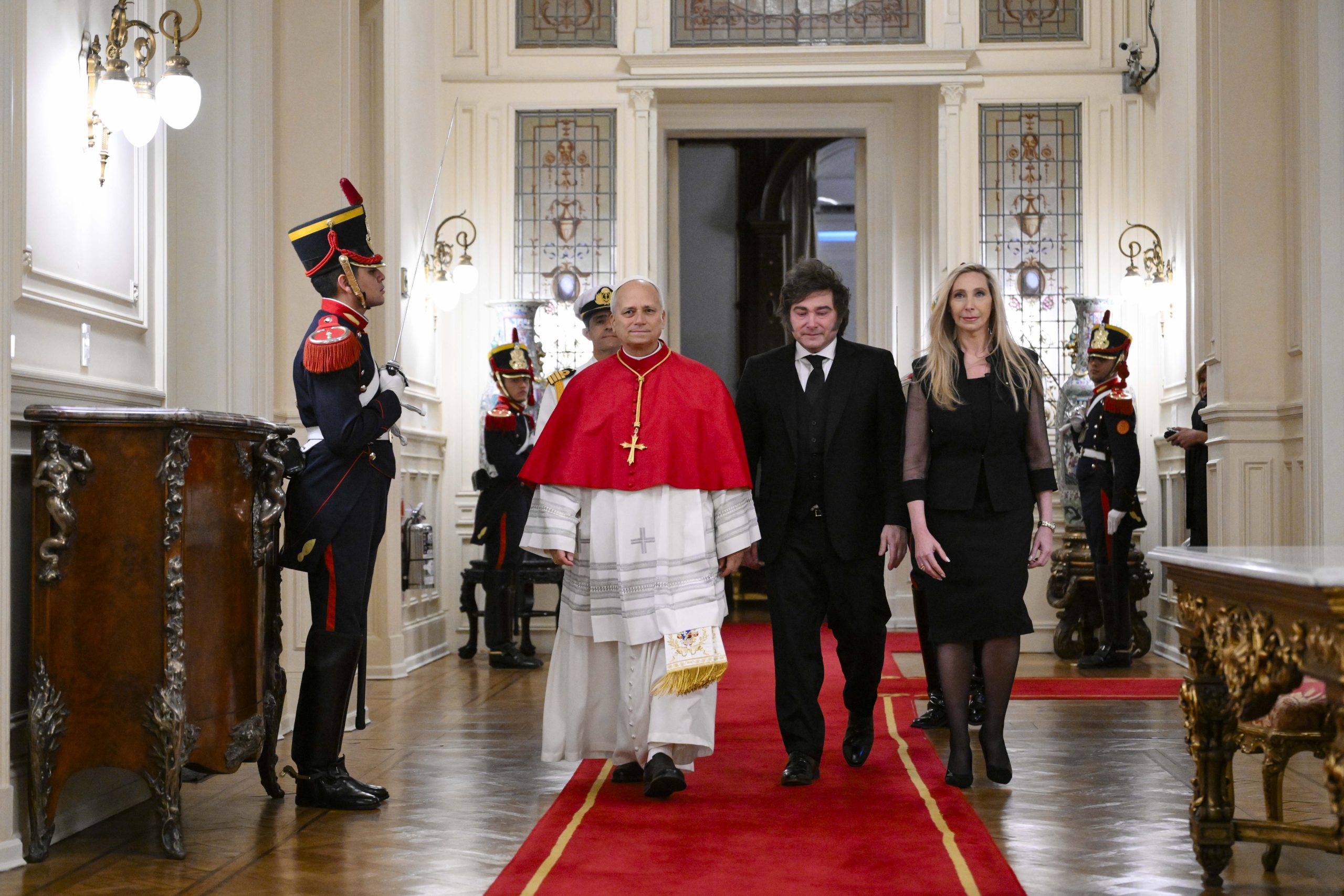
In Argentina, Pope Leo XIV highlights social problems #Catholic BUENOS AIRES, Argentina — Pope Leo XIV spoke about crime, economic inequality, and political polarization, among other topics, in a wide-ranging speech to President Javier Milei and other dignitaries Nov. 8, the pope’s first day in Argentina.Milei is a self-described “anarcho-capitalist” whose policies of austerity have drawn criticism from Argentina’s Catholic bishops. Though Leo did not directly criticize the president, his speech was the most political he has given so far on his tour of South America, which began Nov. 6 in Uruguay and will conclude Nov. 16 in Peru.The pope opened by stating that he had come to Argentina “as a pastor,” but that the Church wishes “to propose to those who hold public office a message inspired by the Gospel and aimed at safeguarding the dignity of every person, civic concord, and the common good.”Leo highlighted several widespread social problems, including public safety. “Organized crime, human trafficking networks, arms and drug trafficking together with corruption all undermine social cohesion, fuel violence and divert resources necessary for the common good,” the pope said.Violent crime is an urgent concern across the region. According to a U.N. report, the homicide rate for Latin America and the Caribbean was the world’s highest in 2023, and nearly four times the world average.Addressing the question of inequality, the pope said that efforts should be made to ensure “that economic growth also benefits those who are disadvantaged. Here I think of families facing an uncertain future, the unemployed, the elderly who for years contributed to society, and all those who, despite hard work, nonetheless struggle to meet their household’s needs.”Leo pointed to the plight of young people driven to emigrate in search of opportunities. “A nation must seriously ask itself where it has failed when its young people have to leave their homeland in order to make their dreams come true,” he said.
 
 Pope Leo XIV tours the Casa Rosada alongside Argentine President Javier Milei and other members of the delegation during his visit to Buenos Aires on Nov. 8, 2026. | Credit: Vatican Media
 
 He also addressed what he described as a threat to democracy from political polarization, a widely noted trend in Latin America and beyond.The pope said democracy is strengthened “through willingness to listen, through careful use of words, through the patient search for agreement, and through the ability to see those who think differently as fellow citizens with whom we share a common future. In this way, a spirit of trust is created, one that enables a society to deal with its differences without losing sight of the things that keep it united,” Leo said.Milei campaigned for president as a firebrand, wielding a chainsaw to show what he would do to government budgets and deriding his fellow Argentine Pope Francis as, among other things, a “filthy leftist,” though he later said he apologized personally to Francis. On Sunday, speaking right before the current pope, the president lauded the late pontiff as “an exceptional figure who inspired us all with his humanity, regardless of our creed. A person of immense generosity, whom I had the honor of knowing personally.”Leo opened his own speech by recalling his predecessor, saying the universal Church had “listened to the voice of an Argentinian pope” for years. The pope also urged the countryʼs leaders to make room for the unborn.  The audience of foreign diplomats and Argentine civil and political leaders frequently interrupted Leo’s speech with vigorous applause and cheering reminiscent of a parliament or a political convention.Earlier on Sunday, Milei met Leo’s plane at the airport and met with him privately at the seat of government, the Casa Rosada, before he and the pope gave their speeches.

In Argentina, Pope Leo XIV highlights social problems #Catholic BUENOS AIRES, Argentina — Pope Leo XIV spoke about crime, economic inequality, and political polarization, among other topics, in a wide-ranging speech to President Javier Milei and other dignitaries Nov. 8, the pope’s first day in Argentina.Milei is a self-described “anarcho-capitalist” whose policies of austerity have drawn criticism from Argentina’s Catholic bishops. Though Leo did not directly criticize the president, his speech was the most political he has given so far on his tour of South America, which began Nov. 6 in Uruguay and will conclude Nov. 16 in Peru.The pope opened by stating that he had come to Argentina “as a pastor,” but that the Church wishes “to propose to those who hold public office a message inspired by the Gospel and aimed at safeguarding the dignity of every person, civic concord, and the common good.”Leo highlighted several widespread social problems, including public safety. “Organized crime, human trafficking networks, arms and drug trafficking together with corruption all undermine social cohesion, fuel violence and divert resources necessary for the common good,” the pope said.Violent crime is an urgent concern across the region. According to a U.N. report, the homicide rate for Latin America and the Caribbean was the world’s highest in 2023, and nearly four times the world average.Addressing the question of inequality, the pope said that efforts should be made to ensure “that economic growth also benefits those who are disadvantaged. Here I think of families facing an uncertain future, the unemployed, the elderly who for years contributed to society, and all those who, despite hard work, nonetheless struggle to meet their household’s needs.”Leo pointed to the plight of young people driven to emigrate in search of opportunities. “A nation must seriously ask itself where it has failed when its young people have to leave their homeland in order to make their dreams come true,” he said. Pope Leo XIV tours the Casa Rosada alongside Argentine President Javier Milei and other members of the delegation during his visit to Buenos Aires on Nov. 8, 2026. | Credit: Vatican Media He also addressed what he described as a threat to democracy from political polarization, a widely noted trend in Latin America and beyond.The pope said democracy is strengthened “through willingness to listen, through careful use of words, through the patient search for agreement, and through the ability to see those who think differently as fellow citizens with whom we share a common future. In this way, a spirit of trust is created, one that enables a society to deal with its differences without losing sight of the things that keep it united,” Leo said.Milei campaigned for president as a firebrand, wielding a chainsaw to show what he would do to government budgets and deriding his fellow Argentine Pope Francis as, among other things, a “filthy leftist,” though he later said he apologized personally to Francis. On Sunday, speaking right before the current pope, the president lauded the late pontiff as “an exceptional figure who inspired us all with his humanity, regardless of our creed. A person of immense generosity, whom I had the honor of knowing personally.”Leo opened his own speech by recalling his predecessor, saying the universal Church had “listened to the voice of an Argentinian pope” for years. The pope also urged the countryʼs leaders to make room for the unborn.  The audience of foreign diplomats and Argentine civil and political leaders frequently interrupted Leo’s speech with vigorous applause and cheering reminiscent of a parliament or a political convention.Earlier on Sunday, Milei met Leo’s plane at the airport and met with him privately at the seat of government, the Casa Rosada, before he and the pope gave their speeches.

The pontiff met with President Javier Milei on his first day in the country.

Read More
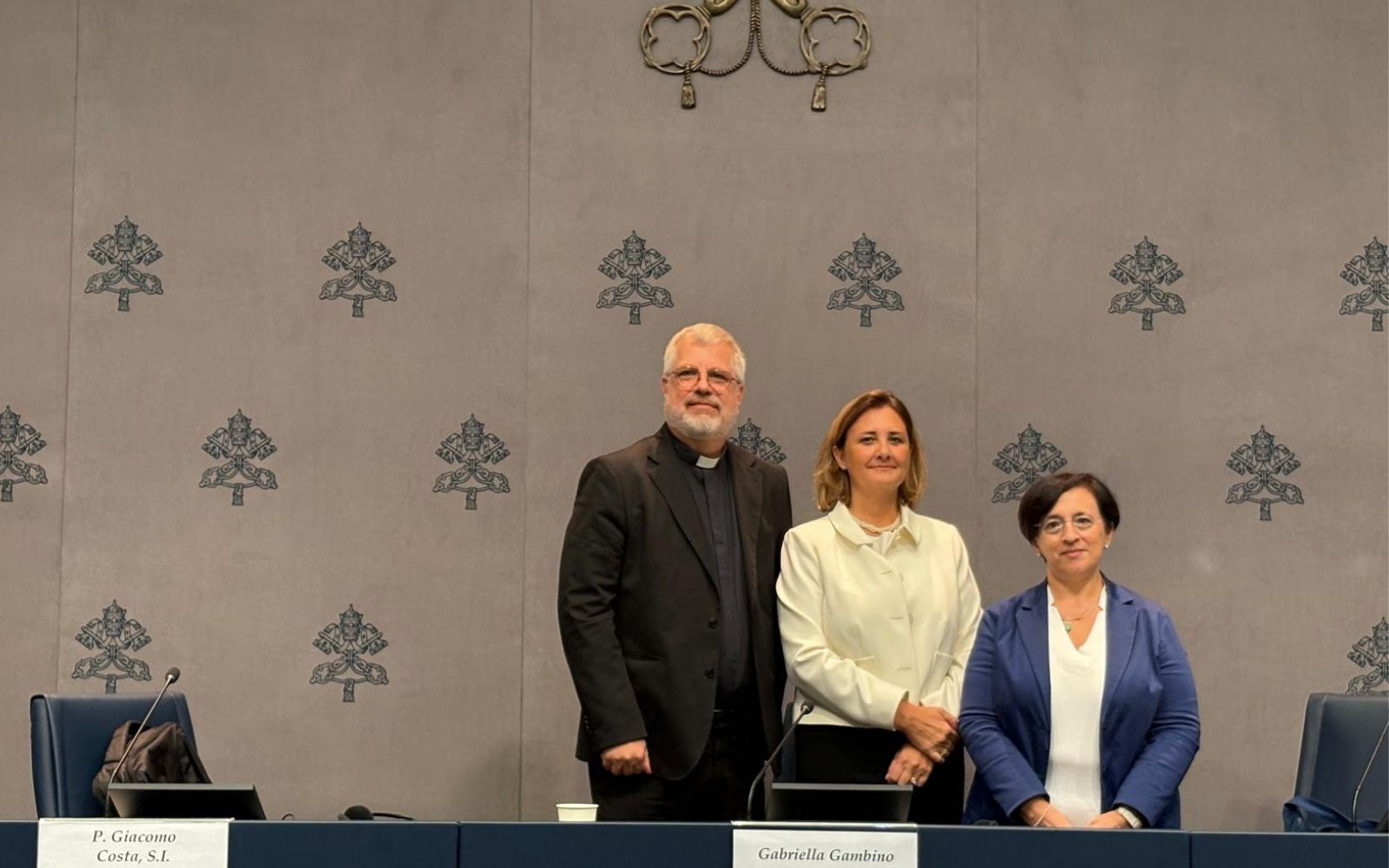
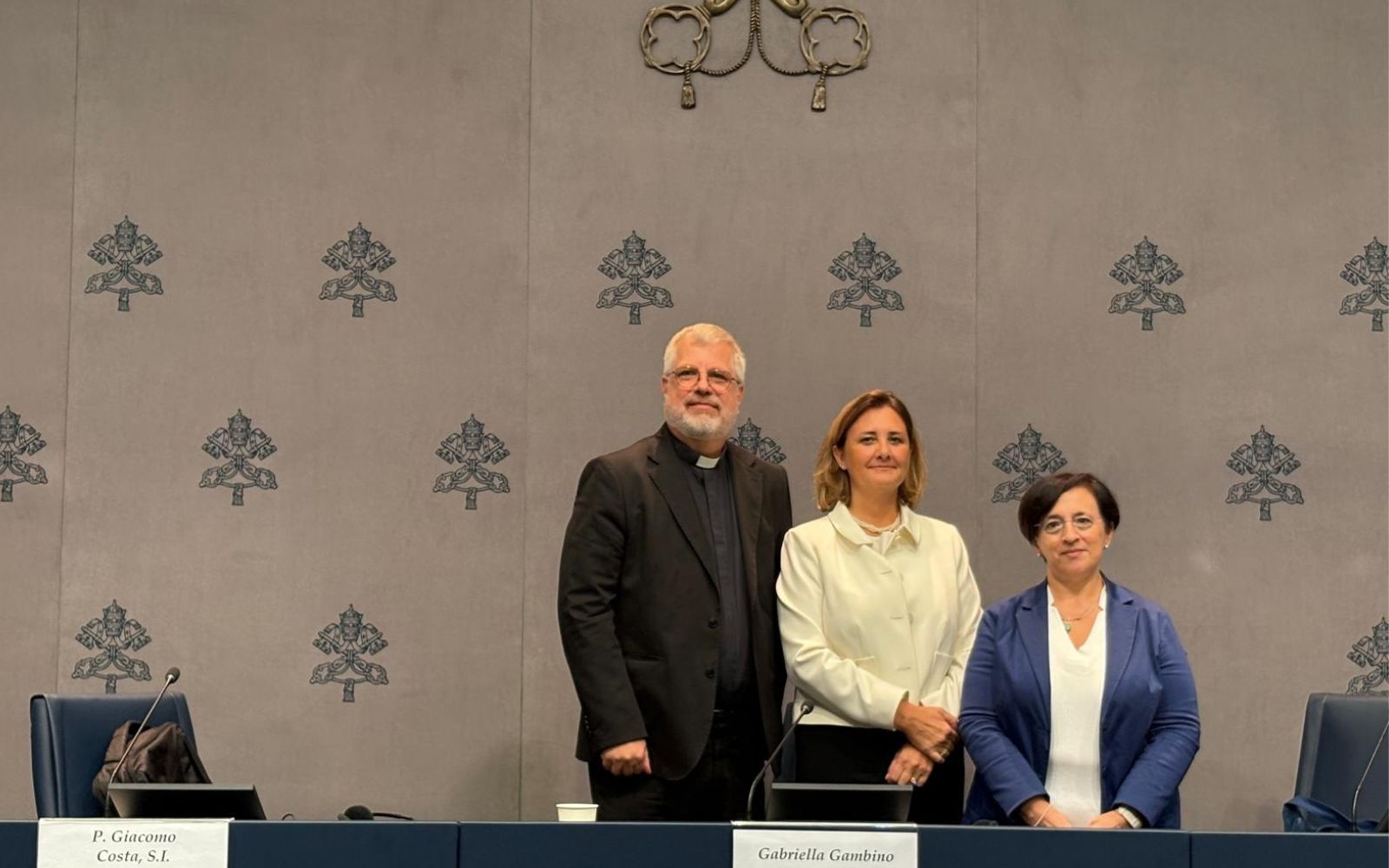
10 years after Amoris Laetitia, bishops to discuss challenges of families at the Vatican #Catholic Pope Leo XIV has convened a gathering on the family at the Vatican from Oct. 7–14, during which bishops will listen to the testimony of 11 married couples from five continents.These families will present to more than 150 bishops the challenges they encounter in passing on the faith in increasingly secularized societies.The meeting is being organized on the occasion of the 10th anniversary of Amoris Laetitia, the postsynodal apostolic exhortation published by Pope Francis in 2016.The document sparked intense debate, especially after the bishops of the Buenos Aires Pastoral Region interpreted it as allowing, following a process of accompanied pastoral discernment, access to the sacraments of reconciliation and the Eucharist for some Catholics who are divorced and civilly remarried “when a person judges that he or she would fall into a further fault by harming the children of the new union.”In 2023, the Dicastery for the Doctrine of the Faith confirmed that this interpretation forms part of the authentic magisterium after being incorporated into the Acta Apostolicae Sedis, the Holy See’s official bulletin.According to the Dicastery for the Laity, the Family, and Life, participants in the meeting will include the heads of the 15 Eastern Catholic Churches “sui iuris” (14 represented by their patriarchs or highest authorities and one by a delegate), the presidents of the world’s 115 bishops’ conferences (those of Peru, Paraguay, Turkey, and Ethiopia will send delegates), two representatives of bishops from territories without a bishops’ conference, and 22 participants specially chosen by the Holy Father.In addition, 67 other people will attend, including members of the Dicastery for the Laity, the Family, and Life, the General Secretariat of the Synod, and 26 experts and 16 facilitators.Not an evaluation of Amoris LaetitiaDuring a presentation of the gathering at the Vatican, Gabriella Gambino, undersecretary of the Dicastery for the Laity, the Family, and Life since 2017, a laywoman, mother of five, and doctor of bioethics, emphasized that “this is not about evaluating a text but about deepening our understanding of the family and pastoral realities that have received and interpreted this document in different ways, just as the life of the Church is diverse in the various places around the world where it is present and rooted in the one Gospel.”“The central point on which we must focus our attention is that the Church’s goal is not to see texts applied mechanically and uniformly in every reality, because each one has characteristics that are very different from the others,” she said.She stated that the central question of the meeting is: “How is the faith transmitted today? How is faith passed on in families today, and how do families contribute to building up the Church?”“Without families, the Church cannot renew its Christian roots. It is in families that children are born, where faith and values are transmitted, for better or worse, and where vocations arise,” she explained.To illustrate the scale of the ongoing religious changes, Gambino offered several statistics. In Poland, religious marriages celebrated over the last five years have declined by 45%. In Australia, they have fallen from 88% in 1970 to 16% in 2024. In her view, these are signs that, in different contexts, highlight the urgency of better accompanying couples in their decision to marry and providing stronger support for the transmission of faith within the family.Orietta Rachele Grazioli, a tenured professor of canon law and comparative family law at the Pontifical John Paul II Theological Institute for Marriage and Family Sciences, and vice coordinator of the expert group, explained that the “methodology chosen by the Holy Father for this gathering is centered on two key words that complement one another: listening and discernment.”5 major themesThe gathering will be structured around five major themes related to marriage, family life, and the transmission of the faith. Reflection will begin with “Families Today: Reality, Beauty, and Challenges,” dedicated to analyzing the current situation of the family, and will continue with “Young People and the Discovery of the Vocation to Marriage,” “Married Life: The First Years of Marriage, a Decisive Time,” and “In Life’s Difficulties: Accompanying and Supporting,” which will address the accompaniment of engaged and married couples at different stages of their journey.The meeting will conclude with the theme “Christian Families as Subjects of the Church’s Mission,” focused on the evangelizing role of families and their contribution to ecclesial life.Father Giacomo Costa, a consultant to the General Secretariat of the Synod, said that “the question is not what Amoris Laetitia says but what we have learned by trying to live it.”He also recalled that the goal identified by Pope Leo XIV, who will be present at both the opening and closing of the gathering, is “to advance in mutual listening toward a synodal discernment about the steps we must take today to proclaim the Gospel with families. The composition of the assembly itself reflects this objective.”Before the start of the proceedings, an introductory meditation will be given by Sister Helen Alford, president of the Pontifical Academy of Social Sciences. Each morning will be structured around three types of speeches: family testimonies, contributions from bishops, and reflections from experts.‘The goal is not to eliminate differences’“The goal is not to eliminate differences. We do not want to arrive at an artificial consensus,” Costa said. Each day will include a report summarizing the discussions, which will serve as the basis for extensive dialogue and debate sessions in the afternoon. He made clear, however, that “this is not a new synod on the family but a process guided by the synodal method, one that consciously draws upon the experience of the synods and other forums of the Church.”Regarding the expected outcomes of the gathering, Costa insisted that “nothing has been predetermined.” A final summary will be prepared at the conclusion of the assembly, but no concluding document will be published. The text will be reviewed by a commission tasked with verifying that it faithfully reflects what emerged during the working sessions.Afterward, the presidents of bishops’ conferences will be invited to promote initiatives in their local Churches aimed at opening new pastoral paths and further developing the proposals that emerge from the gathering.This story was first published by ACI Prensa, the Spanish-language sister service of EWTN News. It has been translated and adapted by EWTN News English.

10 years after Amoris Laetitia, bishops to discuss challenges of families at the Vatican #Catholic Pope Leo XIV has convened a gathering on the family at the Vatican from Oct. 7–14, during which bishops will listen to the testimony of 11 married couples from five continents.These families will present to more than 150 bishops the challenges they encounter in passing on the faith in increasingly secularized societies.The meeting is being organized on the occasion of the 10th anniversary of Amoris Laetitia, the postsynodal apostolic exhortation published by Pope Francis in 2016.The document sparked intense debate, especially after the bishops of the Buenos Aires Pastoral Region interpreted it as allowing, following a process of accompanied pastoral discernment, access to the sacraments of reconciliation and the Eucharist for some Catholics who are divorced and civilly remarried “when a person judges that he or she would fall into a further fault by harming the children of the new union.”In 2023, the Dicastery for the Doctrine of the Faith confirmed that this interpretation forms part of the authentic magisterium after being incorporated into the Acta Apostolicae Sedis, the Holy See’s official bulletin.According to the Dicastery for the Laity, the Family, and Life, participants in the meeting will include the heads of the 15 Eastern Catholic Churches “sui iuris” (14 represented by their patriarchs or highest authorities and one by a delegate), the presidents of the world’s 115 bishops’ conferences (those of Peru, Paraguay, Turkey, and Ethiopia will send delegates), two representatives of bishops from territories without a bishops’ conference, and 22 participants specially chosen by the Holy Father.In addition, 67 other people will attend, including members of the Dicastery for the Laity, the Family, and Life, the General Secretariat of the Synod, and 26 experts and 16 facilitators.Not an evaluation of Amoris LaetitiaDuring a presentation of the gathering at the Vatican, Gabriella Gambino, undersecretary of the Dicastery for the Laity, the Family, and Life since 2017, a laywoman, mother of five, and doctor of bioethics, emphasized that “this is not about evaluating a text but about deepening our understanding of the family and pastoral realities that have received and interpreted this document in different ways, just as the life of the Church is diverse in the various places around the world where it is present and rooted in the one Gospel.”“The central point on which we must focus our attention is that the Church’s goal is not to see texts applied mechanically and uniformly in every reality, because each one has characteristics that are very different from the others,” she said.She stated that the central question of the meeting is: “How is the faith transmitted today? How is faith passed on in families today, and how do families contribute to building up the Church?”“Without families, the Church cannot renew its Christian roots. It is in families that children are born, where faith and values are transmitted, for better or worse, and where vocations arise,” she explained.To illustrate the scale of the ongoing religious changes, Gambino offered several statistics. In Poland, religious marriages celebrated over the last five years have declined by 45%. In Australia, they have fallen from 88% in 1970 to 16% in 2024. In her view, these are signs that, in different contexts, highlight the urgency of better accompanying couples in their decision to marry and providing stronger support for the transmission of faith within the family.Orietta Rachele Grazioli, a tenured professor of canon law and comparative family law at the Pontifical John Paul II Theological Institute for Marriage and Family Sciences, and vice coordinator of the expert group, explained that the “methodology chosen by the Holy Father for this gathering is centered on two key words that complement one another: listening and discernment.”5 major themesThe gathering will be structured around five major themes related to marriage, family life, and the transmission of the faith. Reflection will begin with “Families Today: Reality, Beauty, and Challenges,” dedicated to analyzing the current situation of the family, and will continue with “Young People and the Discovery of the Vocation to Marriage,” “Married Life: The First Years of Marriage, a Decisive Time,” and “In Life’s Difficulties: Accompanying and Supporting,” which will address the accompaniment of engaged and married couples at different stages of their journey.The meeting will conclude with the theme “Christian Families as Subjects of the Church’s Mission,” focused on the evangelizing role of families and their contribution to ecclesial life.Father Giacomo Costa, a consultant to the General Secretariat of the Synod, said that “the question is not what Amoris Laetitia says but what we have learned by trying to live it.”He also recalled that the goal identified by Pope Leo XIV, who will be present at both the opening and closing of the gathering, is “to advance in mutual listening toward a synodal discernment about the steps we must take today to proclaim the Gospel with families. The composition of the assembly itself reflects this objective.”Before the start of the proceedings, an introductory meditation will be given by Sister Helen Alford, president of the Pontifical Academy of Social Sciences. Each morning will be structured around three types of speeches: family testimonies, contributions from bishops, and reflections from experts.‘The goal is not to eliminate differences’“The goal is not to eliminate differences. We do not want to arrive at an artificial consensus,” Costa said. Each day will include a report summarizing the discussions, which will serve as the basis for extensive dialogue and debate sessions in the afternoon. He made clear, however, that “this is not a new synod on the family but a process guided by the synodal method, one that consciously draws upon the experience of the synods and other forums of the Church.”Regarding the expected outcomes of the gathering, Costa insisted that “nothing has been predetermined.” A final summary will be prepared at the conclusion of the assembly, but no concluding document will be published. The text will be reviewed by a commission tasked with verifying that it faithfully reflects what emerged during the working sessions.Afterward, the presidents of bishops’ conferences will be invited to promote initiatives in their local Churches aimed at opening new pastoral paths and further developing the proposals that emerge from the gathering.This story was first published by ACI Prensa, the Spanish-language sister service of EWTN News. It has been translated and adapted by EWTN News English.

Vatican officials said the weeklong meeting is neither a synod, nor an evaluation of Amoris Laetitia.
Read More