Centre

‘Nearly every Catholic health care institution’ in Illinois shielded from suicide law in court order #Catholic Catholic health institutions in Illinois will enjoy broad protection against the state’s assisted suicide law after a federal court expanded a block against the law to protect religious objectors from being forced to participate in it. The U.S. District Court for the Northern District of Illinois earlier this year ruled in favor of multiple Catholic plaintiffs, including Springfield Bishop Thomas Paprocki and Chicago archbishop Cardinal Blase Cupich, barring the state from requiring them to participate in the suicide regime there. Multiple groups of religious sisters have also been included in those protective orders. The Thomas More Society, a legal group representing Paprocki and several others in their lawsuit, announced on Oct. 8 that “nearly every Catholic health care institution in Illinois” had been included in an expanded court order blocking the suicide law from being enforced. Among the protected entities are the Catholic Medical Association, the Catholic Psychotherapy Association, and numerous Catholic healthcare affiliates in the Diocese of Springfield. The order is temporary and will last only so long as the lawsuit against the state suicide law plays out, but Thomas More Society litigation head Peter Breen said in a news release that the law firm would “keep fighting until that protection is permanent.” “Catholic and Christian health care providers, from hospitals and nursing homes to physicians, nurses, and therapists, strive to heal, not harm, and for generations, have cared for the sick and dying in keeping with their faith,” Breen said, arguing that the state has “no right or authority” to coerce them into helping patients kill themselves. Narrow opt-out laws mean the Catholic care providers were not obligated to actively facilitate the specific act of suicide. But the state law still requires them to participate in the suicide regime in various other ways, including touting the alleged benefits of taking one’s own life.Elsewhere in the U.S., Rockville Centre, New York, Bishop John Barres and a coalition of four communities of religious sisters won a victory in July when a U.S. district judge said the state would be barred from enforcing its new suicide law against the Catholic plaintiffs while their own federal suit played out.

‘Nearly every Catholic health care institution’ in Illinois shielded from suicide law in court order #Catholic Catholic health institutions in Illinois will enjoy broad protection against the state’s assisted suicide law after a federal court expanded a block against the law to protect religious objectors from being forced to participate in it. The U.S. District Court for the Northern District of Illinois earlier this year ruled in favor of multiple Catholic plaintiffs, including Springfield Bishop Thomas Paprocki and Chicago archbishop Cardinal Blase Cupich, barring the state from requiring them to participate in the suicide regime there. Multiple groups of religious sisters have also been included in those protective orders. The Thomas More Society, a legal group representing Paprocki and several others in their lawsuit, announced on Oct. 8 that “nearly every Catholic health care institution in Illinois” had been included in an expanded court order blocking the suicide law from being enforced. Among the protected entities are the Catholic Medical Association, the Catholic Psychotherapy Association, and numerous Catholic healthcare affiliates in the Diocese of Springfield. The order is temporary and will last only so long as the lawsuit against the state suicide law plays out, but Thomas More Society litigation head Peter Breen said in a news release that the law firm would “keep fighting until that protection is permanent.” “Catholic and Christian health care providers, from hospitals and nursing homes to physicians, nurses, and therapists, strive to heal, not harm, and for generations, have cared for the sick and dying in keeping with their faith,” Breen said, arguing that the state has “no right or authority” to coerce them into helping patients kill themselves. Narrow opt-out laws mean the Catholic care providers were not obligated to actively facilitate the specific act of suicide. But the state law still requires them to participate in the suicide regime in various other ways, including touting the alleged benefits of taking one’s own life.Elsewhere in the U.S., Rockville Centre, New York, Bishop John Barres and a coalition of four communities of religious sisters won a victory in July when a U.S. district judge said the state would be barred from enforcing its new suicide law against the Catholic plaintiffs while their own federal suit played out.

Multiple religious objectors are suing the state over its newly instituted assisted suicide regime.

Read More
Inaugural edition of Sheen Awards honors Mother Angelica #Catholic On Sept. 25, one day after the beatification of Archbishop Fulton Sheen, members of the media and entertainment world as well as the Church at large gathered in Peoria, Illinois — the hometown of now-Blessed Fulton Sheen — for the inaugural Sheen Awards.Among the notable figures in attendance were Bishop Louis Tylka of the Diocese of Peoria; Bishop John Barres of the Diocese Rockville Centre, New York; Bishop Robert Barron of the Diocese of Winona-Rochester, Minnesota; Jonathan Roumie, who plays Jesus in “The Chosen”; David Henrie, host of EWTN’s travel series “Seeking Beauty”; and Siobhan Fallon Hogan, host of the EWTN podcast “Catholics and Cappuccinos.” Seven awards were presented including the Radio and Podcast Impact Award, the Evangelization Impact Award, the Mission and Humanitarian Impact Award, the Innovation Impact Award, the Digital Creator Impact Award, the Television and Streaming Impact Award, and the Archbishop Fulton J. Sheen Lifetime Achievement Award.Mother Angelica, EWTN’s foundress, posthumously received the inaugural Lifetime Achievement Award. The award was bestowed on Mother Angelica in recognition of her lifetime of service to the Church and her pioneering use of television to proclaim the Gospel through the Eternal Word Television Network. EWTN Studios President Peter Gagnon accepted the award on her behalf.“On behalf of Michael Warsaw, CEO, and myself, we want to thank Bishop Tylka and the Archbishop Sheen Foundation for honoring Mother Angelica with this award,” Gagnon said in his acceptance speech. Gagnon worked with Mother Angelica for many years and pointed out that “one of her favorite expressions was to say, ‘This is awesome!’”He said: “When there would be a papal event, she would say, ‘Wasnʼt that awesome?’ … I think tonight she would say, ‘This is awesome.’”A little over one year after the death of Sheen — on Dec. 12, 1980 — EWTN was officially incorporated by Mother Angelica. Reflecting on this, Gagnon said: “I donʼt think itʼs a coincidence.”“Mother Angelica took the torch from Archbishop Sheen because she saw the power of reaching people through the media, through television,” he said. “She, like Archbishop Sheen, could reach through that camera lens and talk to you. And when she was talking to you, she was talking to you directly.”Gagnon added: “Also like him [Sheen], she had just an incredible love for the Church and a zeal for souls. I never knew anyone who loved Our Lord as much as Mother Angelica did. Her impact on many throughout the world is truly humbling and amazing.”EWTN has aired “Life Is Worth Living,” Sheen’s popular television show, for over 20 years. Gagnon emphasized that the network is “proud to share his words and message throughout the world.”In an additional statement commenting on the significance of the award, Michael Warsaw, chairman and CEO of EWTN Global Catholic Network, noted: “Among the great Catholic evangelists of the 20th century, Blessed Archbishop Fulton J. Sheen, and our own Mother Angelica, stand out for the extraordinary ways they embraced media to proclaim the Gospel, defend the dignity of the human person and speak the truth to a world desperately in need of Jesus Christ.” “It is especially meaningful to see Mother Angelica honored in the name of Archbishop Sheen, whose pioneering use of radio and television demonstrated the power of media in service of the Gospel,” Warsaw pointed out. He said the recognition is “particularly poignant as we mark the 10th anniversary of Mother Angelica’s passing.”
 
 EWTN Studios President Peter Gagnon accepts the Lifetime Achievement Award on behalf of Mother Angelica at the Sheen Awards on Sept. 25, 2026. | Credit: Nellie Gould, Archbishop Fulton J. Sheen Foundation
 
 “She would have been deeply honored to be recognized at the inaugural Sheen Awards and counted among the innovators and communicators carrying forward Archbishop Sheen’s legacy,” Warsaw added.Broaching the topic of Mother Angelica’s own potential cause for canonization, Warsaw indicated: “While I remain mindful of the Church’s careful discernment regarding any potential cause for sainthood, I can say personally that I pray and hope that one day Mother Angelica might be numbered among the saints of the Church she loved and served so faithfully.”Warsaw concluded: “On behalf of the entire EWTN family, I am profoundly grateful for this recognition of Mother Angelica and, more importantly, for the opportunity to remember what animated both Mother Angelica and Blessed Fulton Sheen: the desire to bring souls to Jesus Christ. May their example inspire us all to use the gifts God has given us to proclaim the Gospel with courage, creativity and joy.”Additional Sheen Award recipients included Katie McGrady, who received the Radio and Podcast Impact Award; Roumie, who received the Television and Streaming Impact Award; and Barron, who received the Evangelization Impact Award.The Mission and Humanitarian Impact Award went to the Pontifical Mission Societies in the United States, while Hallow received the Innovation Impact Award. Paul J. Kim was awarded the Digital Creator Impact Award.Watch EWTN’s livestream of the red carpet at the Sheen Awards here.

Inaugural edition of Sheen Awards honors Mother Angelica #Catholic On Sept. 25, one day after the beatification of Archbishop Fulton Sheen, members of the media and entertainment world as well as the Church at large gathered in Peoria, Illinois — the hometown of now-Blessed Fulton Sheen — for the inaugural Sheen Awards.Among the notable figures in attendance were Bishop Louis Tylka of the Diocese of Peoria; Bishop John Barres of the Diocese Rockville Centre, New York; Bishop Robert Barron of the Diocese of Winona-Rochester, Minnesota; Jonathan Roumie, who plays Jesus in “The Chosen”; David Henrie, host of EWTN’s travel series “Seeking Beauty”; and Siobhan Fallon Hogan, host of the EWTN podcast “Catholics and Cappuccinos.” Seven awards were presented including the Radio and Podcast Impact Award, the Evangelization Impact Award, the Mission and Humanitarian Impact Award, the Innovation Impact Award, the Digital Creator Impact Award, the Television and Streaming Impact Award, and the Archbishop Fulton J. Sheen Lifetime Achievement Award.Mother Angelica, EWTN’s foundress, posthumously received the inaugural Lifetime Achievement Award. The award was bestowed on Mother Angelica in recognition of her lifetime of service to the Church and her pioneering use of television to proclaim the Gospel through the Eternal Word Television Network. EWTN Studios President Peter Gagnon accepted the award on her behalf.“On behalf of Michael Warsaw, CEO, and myself, we want to thank Bishop Tylka and the Archbishop Sheen Foundation for honoring Mother Angelica with this award,” Gagnon said in his acceptance speech. Gagnon worked with Mother Angelica for many years and pointed out that “one of her favorite expressions was to say, ‘This is awesome!’”He said: “When there would be a papal event, she would say, ‘Wasnʼt that awesome?’ … I think tonight she would say, ‘This is awesome.’”A little over one year after the death of Sheen — on Dec. 12, 1980 — EWTN was officially incorporated by Mother Angelica. Reflecting on this, Gagnon said: “I donʼt think itʼs a coincidence.”“Mother Angelica took the torch from Archbishop Sheen because she saw the power of reaching people through the media, through television,” he said. “She, like Archbishop Sheen, could reach through that camera lens and talk to you. And when she was talking to you, she was talking to you directly.”Gagnon added: “Also like him [Sheen], she had just an incredible love for the Church and a zeal for souls. I never knew anyone who loved Our Lord as much as Mother Angelica did. Her impact on many throughout the world is truly humbling and amazing.”EWTN has aired “Life Is Worth Living,” Sheen’s popular television show, for over 20 years. Gagnon emphasized that the network is “proud to share his words and message throughout the world.”In an additional statement commenting on the significance of the award, Michael Warsaw, chairman and CEO of EWTN Global Catholic Network, noted: “Among the great Catholic evangelists of the 20th century, Blessed Archbishop Fulton J. Sheen, and our own Mother Angelica, stand out for the extraordinary ways they embraced media to proclaim the Gospel, defend the dignity of the human person and speak the truth to a world desperately in need of Jesus Christ.” “It is especially meaningful to see Mother Angelica honored in the name of Archbishop Sheen, whose pioneering use of radio and television demonstrated the power of media in service of the Gospel,” Warsaw pointed out. He said the recognition is “particularly poignant as we mark the 10th anniversary of Mother Angelica’s passing.” EWTN Studios President Peter Gagnon accepts the Lifetime Achievement Award on behalf of Mother Angelica at the Sheen Awards on Sept. 25, 2026. | Credit: Nellie Gould, Archbishop Fulton J. Sheen Foundation “She would have been deeply honored to be recognized at the inaugural Sheen Awards and counted among the innovators and communicators carrying forward Archbishop Sheen’s legacy,” Warsaw added.Broaching the topic of Mother Angelica’s own potential cause for canonization, Warsaw indicated: “While I remain mindful of the Church’s careful discernment regarding any potential cause for sainthood, I can say personally that I pray and hope that one day Mother Angelica might be numbered among the saints of the Church she loved and served so faithfully.”Warsaw concluded: “On behalf of the entire EWTN family, I am profoundly grateful for this recognition of Mother Angelica and, more importantly, for the opportunity to remember what animated both Mother Angelica and Blessed Fulton Sheen: the desire to bring souls to Jesus Christ. May their example inspire us all to use the gifts God has given us to proclaim the Gospel with courage, creativity and joy.”Additional Sheen Award recipients included Katie McGrady, who received the Radio and Podcast Impact Award; Roumie, who received the Television and Streaming Impact Award; and Barron, who received the Evangelization Impact Award.The Mission and Humanitarian Impact Award went to the Pontifical Mission Societies in the United States, while Hallow received the Innovation Impact Award. Paul J. Kim was awarded the Digital Creator Impact Award.Watch EWTN’s livestream of the red carpet at the Sheen Awards here.

EWTN’s foundress was the posthumous recipient of the Lifetime Achievement Award.

Read More
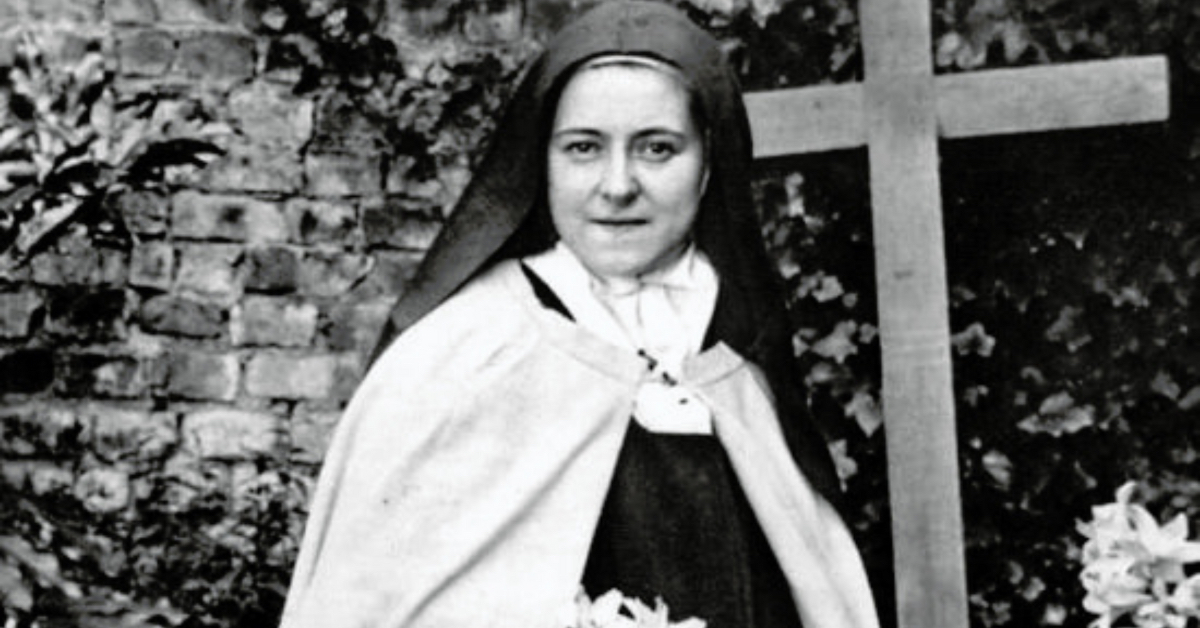
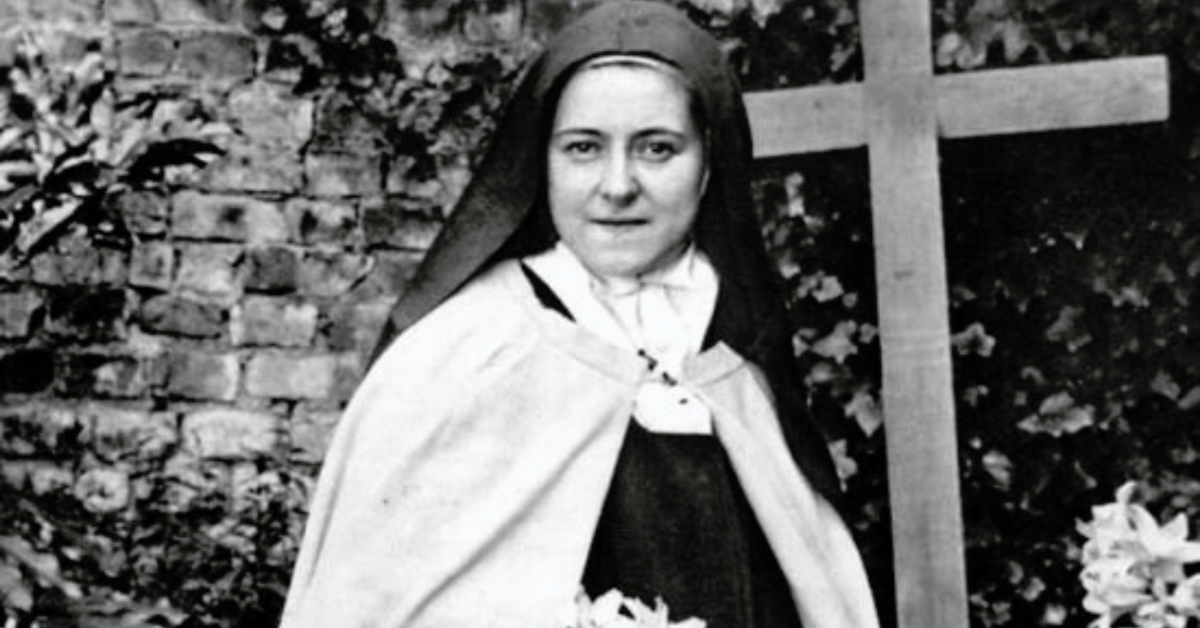
The enduring appeal of St. Thérèse of Lisieux, one of France’s most beloved saints #Catholic During the First World War, before being proclaimed a saint, devotion to St. Thérèse of Lisieux became particularly widespread in France. Soldiers carried medals and images of her, and many French Catholics saw her as a spiritual companion and intercessor.The Carmelite nun, patron saint of missions, and the youngest doctor of the Church died at the age of 24 and was canonized in 1925 by Pope Pius XI. She was declared the second patron saint of France in 1944, during the Battle of Normandy, by Pope Pius XII.The town of Lisieux, a 90-minute train ride from Paris, is where Thérèse spent her entire religious life. It is the second most visited pilgrimage destination in France, after Lourdes, with over 2 million pilgrims every year.Last year, in Pope Leo XIV’s message on the occasion of the 10th anniversary of the canonization of St. Thérèse’s parents, Louis and Zélie Martin, he called the faithful to “put Jesus at the centre of your families, your activities, and your choices. Help your children discover His boundless love and tenderness, and strive to make them love Him in return as He deserves: this is the great lesson that Louis and Zélie teach us today, and which the Church and the world so urgently need. How could Thérèse have loved Jesus and Mary so much — and then passed on such a beautiful doctrine to us — if she had not learned it from her saintly parents from an early age?”Thérèse lost her mother when she was just 4 years old and endured periods of illness and intense emotional sensitivity as a child. At 14, however, she experienced a moment of spiritual transformation where she received a special grace from God. In France, young children left their shoes by the hearth at Christmas, and parents would fill them with gifts. But her sister Celine didnʼt want Thérèse to grow up, so they continued to place gifts in “baby” Thérèseʼs shoes. As she and Celine climbed the stairs to take off their hats their fatherʼs voice rose from the parlor below. Standing over the shoes, he said: “Thank goodness thatʼs the last time we shall have this kind of thing!” Thérèse froze, and her sister looked at her helplessly, knowing that in a few minutes she would be in tears over what their father had said. But the tantrum never came. A special grace came over Thérèse as Jesus had done what she could not do herself. She swallowed her tears, walked slowly down the stairs, and went over the gifts in the shoes, as if she had never heard a word her father said. In her autobiography, “Story of Soul,” she referred to that Christmas as her “conversion.”From childish to childlikeIn his book “The Way of Trust and Love,” French priest Jacques Philippe explores St. Thérèse of Lisieuxʼs “Little Way” to holiness. He recalls that “through seemingly insignificant events, God can heal us deeply. Sometimes we feel a call from the Lord to step outside ourselves, to take a step forward, to become more mature, more free. There are times in life when we dwell on our immaturity, our complaints, our laments, our dependencies, and then suddenly one day we are given grace, a gift from God, but one that also calls upon our freedom. There is a choice to be made; it is both healing and conversion: freedom must choose to perform an act of courage.”He then later proposes: “Let us then ask God this question: What is the ‘yes’ you are asking of me today? What is the small act of courage and trust you are asking me to do today?”For St. Thérèse, it was about overcoming her emotional sensitivity. For others, it might be learning to control their tongue, be more optimistic, or manage their temper.A ‘Little Way’ for everyoneFrom the very beginning of her life, Thérèse desired to be a saint; still, when she entered the convent, she also thought how inaccessible and unrealizable it was when she compared herself to others.And here, perhaps, is where we can learn one of her most powerful teachings: never lose courage.She goes on: “Instead of being discouraged, I told myself: God would not make me wish for something impossible and so, in spite of my littleness, I can aim at being a saint. It is impossible for me to grow bigger, so I put up with myself as I am, with all my countless faults. But I will look for some means of going to heaven by a little way which is very short and very straight, a little way that is quite new … It is your arms, Jesus, which are the lift to carry me to heaven, and so there is no need for me to grow up. In fact, just the opposite: I must stay little and become less and less.”But by “little,” Thérèse does not suggest we think of ourselves as of small value; instead, she reminds us of an unchanging truth: We are children of God.As St. John Paul II on his apostolic trip to France in June 1980 recalled: “There is something unique about it, a characteristic of St. Thérèse of Lisieux. In it, one finds both the confirmation and the renewal of the most fundamental and universal truth. What truth in the Gospel message is more fundamental and universal than this: God is our Father, and we are his children?”And like children who trust, even if thrown into the air, in the safety of returning to their parents' arms, we must trust in the providence of our Father, with a deep knowledge of his unlimited and unconditional love for us: “In truth I tell you, unless you change and become like little children you will never enter the kingdom of heaven” (Mt 18:3).A missionary without ever leaving homeProclaimed the patron saint of missionaries for her support of the missions through constant prayer and sacrifice despite being a cloistered nun who never left her convent, she said: “My strength lies in prayer and sacrifice; they are invincible weapons, and touch hearts more surely than words can do, as I have learned by experience.”To many, even in the convent, she seemed like an average, ordinary person. Her greatness showed in the constancy of her love for others in the simplest ways. Perhaps some of the missionary work we are called to do today doesn’t necessarily begin externally but within our hearts. As the saint herself wrote: “A word, a kindly smile, will often suffice to gladden a wounded and sorrowful heart.”Thérèse also found strength in Scripture: “But above all it is the Gospels that occupy me during my prayers; in them I find everything that is necessary for my poor little soul. I constantly discover in them new lights, hidden and mysterious meanings.”Her life was characterized by austerity, far from recognition and noise from the world. She died anonymously in 1897 at the young age of 24, and no more than 30 people attended her funeral.This saint’s life and journal is a legacy for all who want to learn a simple and practical approach toward their relationship with God. Her advice is for everyone: “Miss no single opportunity of making some small sacrifice, here by a smiling look, there by a kindly word; always doing the smallest right and doing it all for love.”

The enduring appeal of St. Thérèse of Lisieux, one of France’s most beloved saints #Catholic During the First World War, before being proclaimed a saint, devotion to St. Thérèse of Lisieux became particularly widespread in France. Soldiers carried medals and images of her, and many French Catholics saw her as a spiritual companion and intercessor.The Carmelite nun, patron saint of missions, and the youngest doctor of the Church died at the age of 24 and was canonized in 1925 by Pope Pius XI. She was declared the second patron saint of France in 1944, during the Battle of Normandy, by Pope Pius XII.The town of Lisieux, a 90-minute train ride from Paris, is where Thérèse spent her entire religious life. It is the second most visited pilgrimage destination in France, after Lourdes, with over 2 million pilgrims every year.Last year, in Pope Leo XIV’s message on the occasion of the 10th anniversary of the canonization of St. Thérèse’s parents, Louis and Zélie Martin, he called the faithful to “put Jesus at the centre of your families, your activities, and your choices. Help your children discover His boundless love and tenderness, and strive to make them love Him in return as He deserves: this is the great lesson that Louis and Zélie teach us today, and which the Church and the world so urgently need. How could Thérèse have loved Jesus and Mary so much — and then passed on such a beautiful doctrine to us — if she had not learned it from her saintly parents from an early age?”Thérèse lost her mother when she was just 4 years old and endured periods of illness and intense emotional sensitivity as a child. At 14, however, she experienced a moment of spiritual transformation where she received a special grace from God. In France, young children left their shoes by the hearth at Christmas, and parents would fill them with gifts. But her sister Celine didnʼt want Thérèse to grow up, so they continued to place gifts in “baby” Thérèseʼs shoes. As she and Celine climbed the stairs to take off their hats their fatherʼs voice rose from the parlor below. Standing over the shoes, he said: “Thank goodness thatʼs the last time we shall have this kind of thing!” Thérèse froze, and her sister looked at her helplessly, knowing that in a few minutes she would be in tears over what their father had said. But the tantrum never came. A special grace came over Thérèse as Jesus had done what she could not do herself. She swallowed her tears, walked slowly down the stairs, and went over the gifts in the shoes, as if she had never heard a word her father said. In her autobiography, “Story of Soul,” she referred to that Christmas as her “conversion.”From childish to childlikeIn his book “The Way of Trust and Love,” French priest Jacques Philippe explores St. Thérèse of Lisieuxʼs “Little Way” to holiness. He recalls that “through seemingly insignificant events, God can heal us deeply. Sometimes we feel a call from the Lord to step outside ourselves, to take a step forward, to become more mature, more free. There are times in life when we dwell on our immaturity, our complaints, our laments, our dependencies, and then suddenly one day we are given grace, a gift from God, but one that also calls upon our freedom. There is a choice to be made; it is both healing and conversion: freedom must choose to perform an act of courage.”He then later proposes: “Let us then ask God this question: What is the ‘yes’ you are asking of me today? What is the small act of courage and trust you are asking me to do today?”For St. Thérèse, it was about overcoming her emotional sensitivity. For others, it might be learning to control their tongue, be more optimistic, or manage their temper.A ‘Little Way’ for everyoneFrom the very beginning of her life, Thérèse desired to be a saint; still, when she entered the convent, she also thought how inaccessible and unrealizable it was when she compared herself to others.And here, perhaps, is where we can learn one of her most powerful teachings: never lose courage.She goes on: “Instead of being discouraged, I told myself: God would not make me wish for something impossible and so, in spite of my littleness, I can aim at being a saint. It is impossible for me to grow bigger, so I put up with myself as I am, with all my countless faults. But I will look for some means of going to heaven by a little way which is very short and very straight, a little way that is quite new … It is your arms, Jesus, which are the lift to carry me to heaven, and so there is no need for me to grow up. In fact, just the opposite: I must stay little and become less and less.”But by “little,” Thérèse does not suggest we think of ourselves as of small value; instead, she reminds us of an unchanging truth: We are children of God.As St. John Paul II on his apostolic trip to France in June 1980 recalled: “There is something unique about it, a characteristic of St. Thérèse of Lisieux. In it, one finds both the confirmation and the renewal of the most fundamental and universal truth. What truth in the Gospel message is more fundamental and universal than this: God is our Father, and we are his children?”And like children who trust, even if thrown into the air, in the safety of returning to their parents' arms, we must trust in the providence of our Father, with a deep knowledge of his unlimited and unconditional love for us: “In truth I tell you, unless you change and become like little children you will never enter the kingdom of heaven” (Mt 18:3).A missionary without ever leaving homeProclaimed the patron saint of missionaries for her support of the missions through constant prayer and sacrifice despite being a cloistered nun who never left her convent, she said: “My strength lies in prayer and sacrifice; they are invincible weapons, and touch hearts more surely than words can do, as I have learned by experience.”To many, even in the convent, she seemed like an average, ordinary person. Her greatness showed in the constancy of her love for others in the simplest ways. Perhaps some of the missionary work we are called to do today doesn’t necessarily begin externally but within our hearts. As the saint herself wrote: “A word, a kindly smile, will often suffice to gladden a wounded and sorrowful heart.”Thérèse also found strength in Scripture: “But above all it is the Gospels that occupy me during my prayers; in them I find everything that is necessary for my poor little soul. I constantly discover in them new lights, hidden and mysterious meanings.”Her life was characterized by austerity, far from recognition and noise from the world. She died anonymously in 1897 at the young age of 24, and no more than 30 people attended her funeral.This saint’s life and journal is a legacy for all who want to learn a simple and practical approach toward their relationship with God. Her advice is for everyone: “Miss no single opportunity of making some small sacrifice, here by a smiling look, there by a kindly word; always doing the smallest right and doing it all for love.”

The beloved Carmelite nun, patron saint of the missions, and youngest doctor of the Church is celebrated in the universal Church on Oct. 1.
Read More
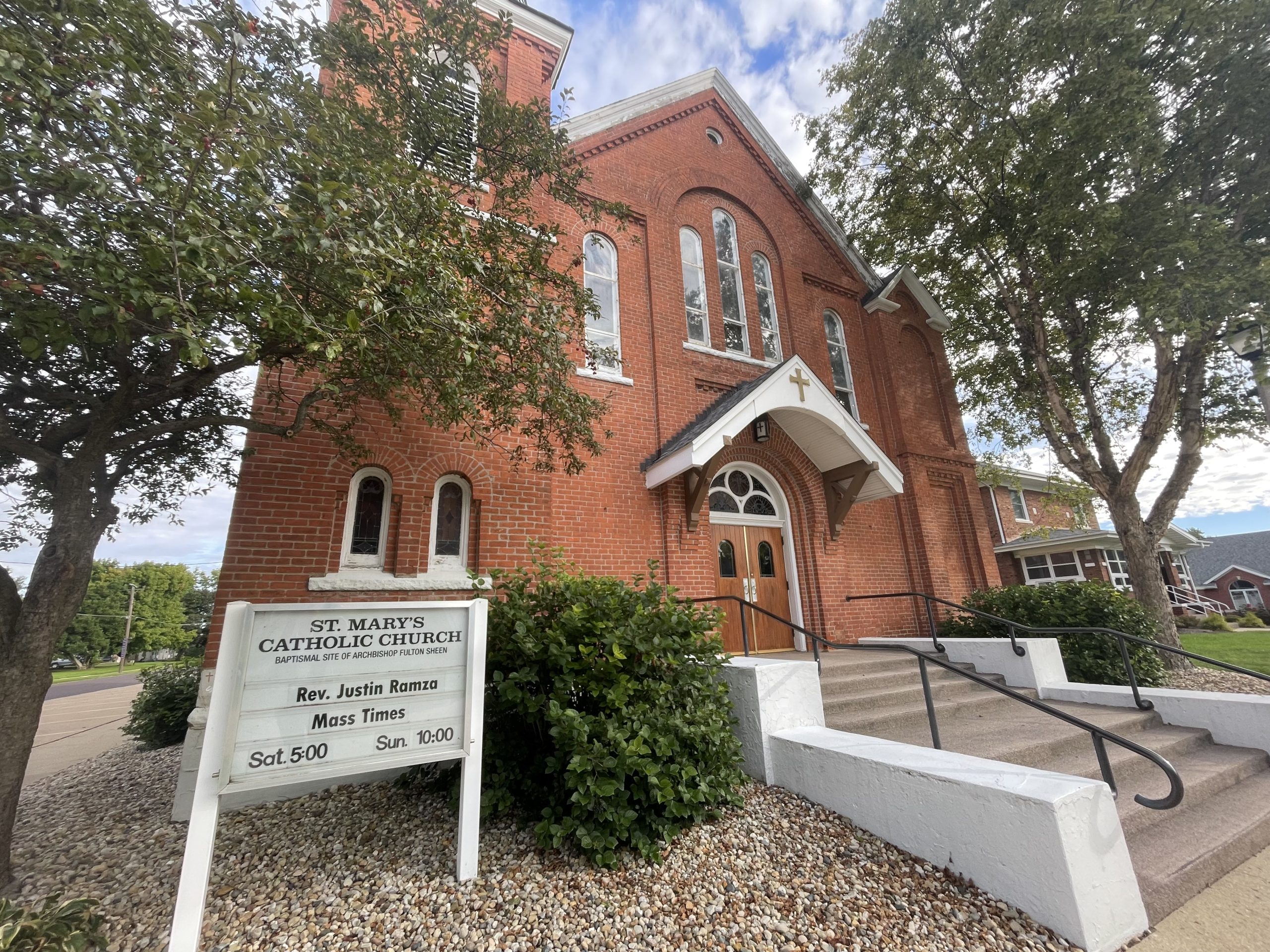
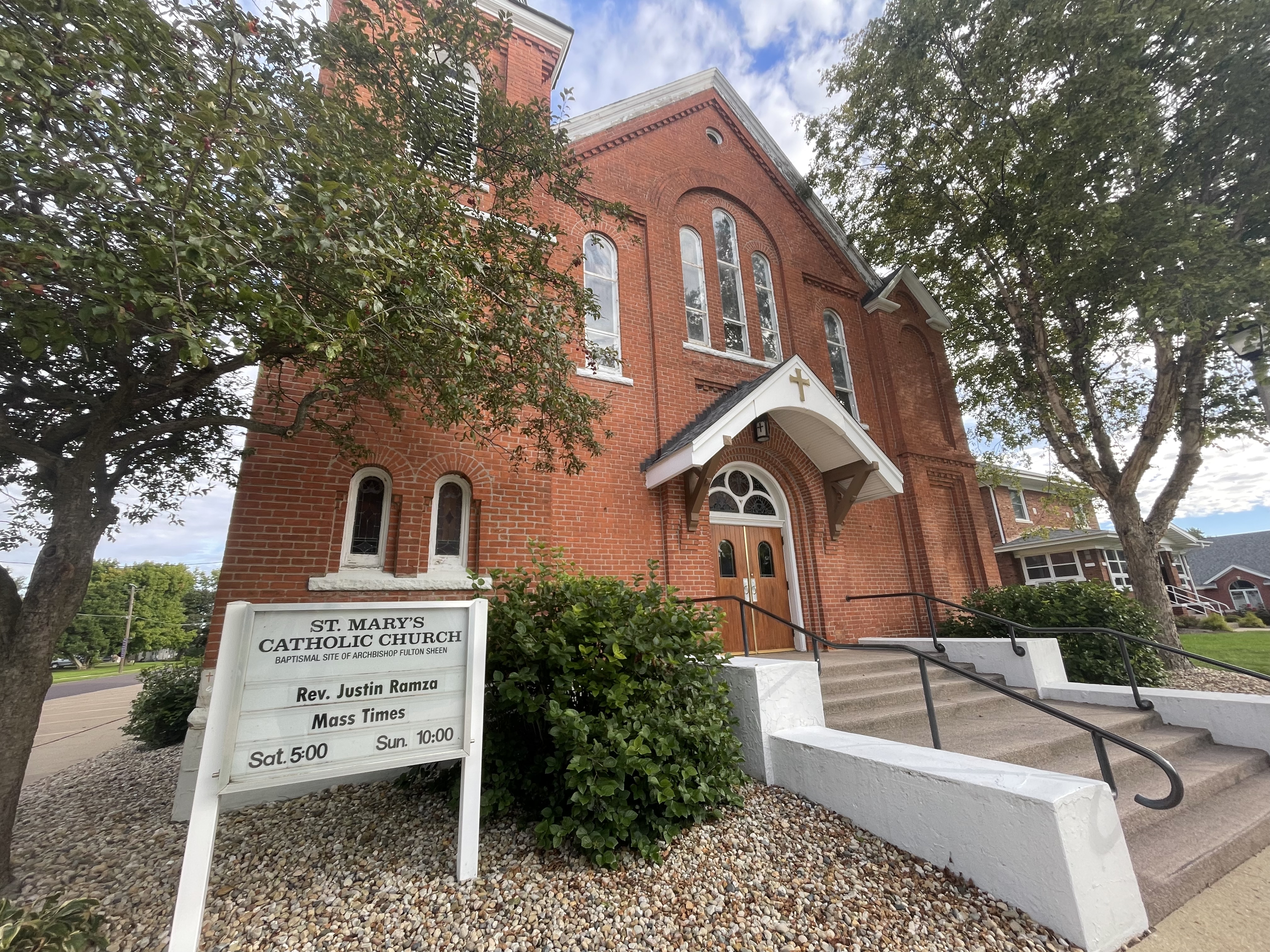
Illinois bishop announces first-ever parish to be named after Blessed Fulton Sheen #Catholic Bishop Louis Tylka of the Diocese of Peoria, Illinois, announced at the end of a Mass celebrated on Saturday the first-ever parish named for Blessed Fulton Sheen.The combined parish of St. Mary in El Paso, Illinois — where Sheen was baptized — and St. John in Benson, Illinois, will be the first parish in the world to be named after the new blessed. While the buildings themselves will retain their original names, the new parish name will take effect on Dec. 9, Sheen’s feast day, Tylka said.“This has been a remarkable week of firsts for the Diocese of Peoria and the universal Catholic Church,” Tylka said in a statement released later on Sept. 26. “We have celebrated Archbishop Fulton Sheen becoming the first American-born bishop to be declared Blessed. For the first time, we have heard his name invoked as a Blessed in the Eucharistic Prayer. For the first time, we have prayed the Collect given to the Church for his feast. And today, I have the great joy of announcing another first: the establishment of the first parish in the world named Blessed Fulton Sheen Parish.”The Sept. 26 Mass — celebrated by Bishop John Barres of the Diocese of Rockville Centre, New York, who was baptized as a baby by Sheen — was one of many celebrated in thanksgiving for the beatification of Sheen, who was declared “blessed” on Sept. 24 in St. Louis.“There is something profoundly fitting about this new parish carrying his name,” Tylka continued in the statement. “It was at St. Mary Church in El Paso that Fulton John Sheen was baptized. There, his life in Christ began. From those waters of Baptism flowed a remarkable life of faith, priesthood, preaching, teaching, missionary discipleship and evangelization that eventually touched millions of people around the world.”A person must be proclaimed “blessed” by the Church before a parish can be named after him or her, Tylka explained to EWTN News’ Mark Irons on Saturday outside of St. Mary’s Church. Tylka said he signed the decree to name the parish after Sheen on Friday morning, less than 24 hours after Sheen’s beatification.“It’s great,” Tylka said when asked by Irons what he thought about having the parish named after Sheen. “This is where he was baptized, this parish church — which will still be St. Mary’s Church, but it is St. Mary’s Church of Blessed Fulton Sheen Parish — to know that connection, that we’re continuing on that faith that God has given to us that he witnessed so well, just immense pride and certainly for the folks here … to be able to know that theirs is the first parish to ever honor the blessed.”TweetSheen, despite his humble origins in small-town Illinois, aspired to great things as an academic and as a communicator of the Catholic faith. On Thursday, before a crowd of more than 50,000 at The Dome at America’s Center in St. Louis, the farm-boy-turned-mass-media star was declared “blessed” after the reading of a decree signed by Pope Leo XIV, a fellow Midwesterner.Via his decree, Pope Leo announced Blessed Sheen’s feast day will be on Dec. 9, the anniversary of his death. His feast day is expected to be on the calendar of the Catholic Church in the United States.Sheen was born in Illinois in 1895 and ordained a priest of the Diocese of Peoria in 1919. He later became an auxiliary bishop for the Archdiocese of New York and then bishop of Rochester, New York.His international fame was largely due to his ability to use the new forms of media of his time to proclaim the Catholic faith.Through his television program “Life Is Worth Living,” broadcast during the 1950s, Sheen brought reflections on faith, morality, and the meaning of life into millions of homes, becoming one of the most recognizable Catholic figures on American television.Mark Irons and Jonah McKeown contributed to this report.This story was updated at 4:02 p.m. ET on Sept. 26, 2026, with the statement from the Diocese of Peoria/Bishop Tylka and comments to Mark Irons.

Illinois bishop announces first-ever parish to be named after Blessed Fulton Sheen #Catholic Bishop Louis Tylka of the Diocese of Peoria, Illinois, announced at the end of a Mass celebrated on Saturday the first-ever parish named for Blessed Fulton Sheen.The combined parish of St. Mary in El Paso, Illinois — where Sheen was baptized — and St. John in Benson, Illinois, will be the first parish in the world to be named after the new blessed. While the buildings themselves will retain their original names, the new parish name will take effect on Dec. 9, Sheen’s feast day, Tylka said.“This has been a remarkable week of firsts for the Diocese of Peoria and the universal Catholic Church,” Tylka said in a statement released later on Sept. 26. “We have celebrated Archbishop Fulton Sheen becoming the first American-born bishop to be declared Blessed. For the first time, we have heard his name invoked as a Blessed in the Eucharistic Prayer. For the first time, we have prayed the Collect given to the Church for his feast. And today, I have the great joy of announcing another first: the establishment of the first parish in the world named Blessed Fulton Sheen Parish.”The Sept. 26 Mass — celebrated by Bishop John Barres of the Diocese of Rockville Centre, New York, who was baptized as a baby by Sheen — was one of many celebrated in thanksgiving for the beatification of Sheen, who was declared “blessed” on Sept. 24 in St. Louis.“There is something profoundly fitting about this new parish carrying his name,” Tylka continued in the statement. “It was at St. Mary Church in El Paso that Fulton John Sheen was baptized. There, his life in Christ began. From those waters of Baptism flowed a remarkable life of faith, priesthood, preaching, teaching, missionary discipleship and evangelization that eventually touched millions of people around the world.”A person must be proclaimed “blessed” by the Church before a parish can be named after him or her, Tylka explained to EWTN News’ Mark Irons on Saturday outside of St. Mary’s Church. Tylka said he signed the decree to name the parish after Sheen on Friday morning, less than 24 hours after Sheen’s beatification.“It’s great,” Tylka said when asked by Irons what he thought about having the parish named after Sheen. “This is where he was baptized, this parish church — which will still be St. Mary’s Church, but it is St. Mary’s Church of Blessed Fulton Sheen Parish — to know that connection, that we’re continuing on that faith that God has given to us that he witnessed so well, just immense pride and certainly for the folks here … to be able to know that theirs is the first parish to ever honor the blessed.”TweetSheen, despite his humble origins in small-town Illinois, aspired to great things as an academic and as a communicator of the Catholic faith. On Thursday, before a crowd of more than 50,000 at The Dome at America’s Center in St. Louis, the farm-boy-turned-mass-media star was declared “blessed” after the reading of a decree signed by Pope Leo XIV, a fellow Midwesterner.Via his decree, Pope Leo announced Blessed Sheen’s feast day will be on Dec. 9, the anniversary of his death. His feast day is expected to be on the calendar of the Catholic Church in the United States.Sheen was born in Illinois in 1895 and ordained a priest of the Diocese of Peoria in 1919. He later became an auxiliary bishop for the Archdiocese of New York and then bishop of Rochester, New York.His international fame was largely due to his ability to use the new forms of media of his time to proclaim the Catholic faith.Through his television program “Life Is Worth Living,” broadcast during the 1950s, Sheen brought reflections on faith, morality, and the meaning of life into millions of homes, becoming one of the most recognizable Catholic figures on American television.Mark Irons and Jonah McKeown contributed to this report.This story was updated at 4:02 p.m. ET on Sept. 26, 2026, with the statement from the Diocese of Peoria/Bishop Tylka and comments to Mark Irons.

The combined parish of St. Mary in El Paso, Illinois, and St. John in Benson, Illinois, will be the first parish in the world to be named after the new blessed.
Read More
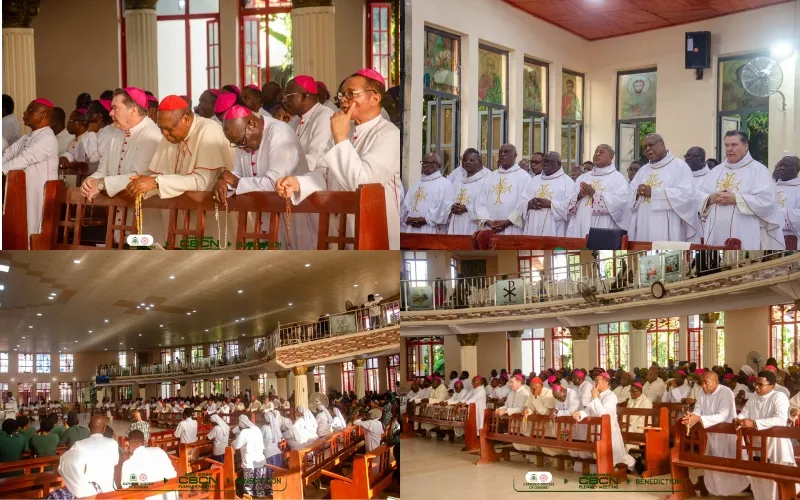
Nigeria’s bishops designate Dec. 8 as national day of prayer and fasting for upcoming elections #Catholic OSOGBO, Nigeria — Members of the Catholic Bishops’ Conference of Nigeria (CBCN) have designated Dec. 8 as a National Day of Prayer and fasting for the success of the country’s 2027 general elections, calling on Nigerians to prepare spiritually for the polls.In a statement issued at the end of their 2026 second plenary assembly held at Our Lady and St. Kizito Pastoral Centre in the Diocese of Osogbo, the bishops urged stakeholders to work toward elections that are “free, fair and credible.”“We announce that 8 December 2026 will be observed as a special national day for prayer and fasting for the success of the elections,” the bishops said in the statement following their Sept. 10–18 plenary assembly.They encouraged eligible voters to participate in the elections and elect leaders who are qualified to serve while urging citizens to make their choices according to their consciences.“We encourage eligible voters to come out en masse to vote qualified people into offices and in line with their good consciences,” the bishops said in the statement that their president, Archbishop Matthew Man-Oso Ndagoso, signed.The CBCN also urged Nigerians to familiarize themselves with its pastoral letter on the forthcoming elections and follow the provisions and guidelines contained in the document.As part of preparations for the polls, the bishops called on dioceses and parishes across the country to organize civic education and voter mobilization activities alongside end-of-month fasting and prayer.They further encouraged the faithful to participate in rosary processions from October to December, linking the spiritual activities with preparations for the elections.The bishops also addressed the role of technology and artificial intelligence (AI), urging politicians and other users to deploy emerging technologies responsibly and ethically, particularly in the context of the forthcoming elections.“As a vehicle for evangelization, we enjoin all to use it to transform data into knowledge and insights for greater value,” they said while calling on political actors to exercise responsibility in their use of technology and AI.The bishops said technology is closely linked to human freedom and autonomy but cautioned that its use must remain guided by ethical considerations.“Technology is not inherently evil or antagonistic to humanity, but it is never neutral,” they said, referencing Pope Leo XIV’s encyclical Magnifica Humanitas.They also raised concern over what they described as the growing challenge of neo-paganism in Nigeria, particularly among young people, which they attributed partly to economic hardship, cultural revival, and inadequate Christian formation.The bishops observed that modern forms of neo-paganism spread rapidly through internet culture, media, and books, and called on pastoral agents to make greater use of digital platforms in evangelization and catechesis.“We encourage pastoral agents to intentionally incorporate the use of digital spaces, social media, and online catechesis in teaching the truth of the Gospel,” they said.They also called for what they described as healthy inculturation that respects positive elements of African cultural heritage while maintaining the foundational teachings of Christianity.On education, the bishops described access to quality education as essential for human development and the peaceful integration of Nigeria’s diverse communities and cultures.They said the Catholic Church remains committed to education and ready to collaborate with the government in providing quality learning opportunities while urging authorities to fulfill their constitutional responsibility to fund education.“We, therefore, urge governments to embrace their constitutional responsibility of funding education,” they said, adding that children in public, private, and mission schools should have access to free education, particularly at primary and secondary levels.They further called for policies that promote the development of the human person and contribute to the country’s overall development.The bishops also expressed concern over a bill before the National Assembly that, according to them, could affect churches, mosques, schools, and humanitarian organizations involved in assisting vulnerable and conflict-affected communities.They said provisions requiring the registration of foreign aid resources and giving authorities powers to supervise their use could create challenges for organizations providing critical assistance.The bishops particularly raised concern about provisions that would allow authorities to deny or refuse renewal of an organization’s registration if its activities are considered not to be in the “national interest,” arguing that such provisions could give government officials broad discretionary powers.They further said the proposed legislation could create additional bureaucracy, duplicate existing regulations, and increase government control over civic organizations.“Non-profit organizations and Incorporated Trustees including churches, mosques, other religious bodies, and humanitarian groups are already strictly regulated by the Corporate Affairs Commission (CAC) under the Companies and Allied Matters Act (CAMA) and some other extant laws,” they said.The bishops consequently called on the National Assembly and the federal government not to proceed with the bill, citing concerns over freedom of association, religion, thought, and conscience as well as its potential implications for the wider development of Nigerians.This story was first published by ACI Africa, the sister service of EWTN News in Africa, and has been adapted by EWTN News.

Nigeria’s bishops designate Dec. 8 as national day of prayer and fasting for upcoming elections #Catholic OSOGBO, Nigeria — Members of the Catholic Bishops’ Conference of Nigeria (CBCN) have designated Dec. 8 as a National Day of Prayer and fasting for the success of the country’s 2027 general elections, calling on Nigerians to prepare spiritually for the polls.In a statement issued at the end of their 2026 second plenary assembly held at Our Lady and St. Kizito Pastoral Centre in the Diocese of Osogbo, the bishops urged stakeholders to work toward elections that are “free, fair and credible.”“We announce that 8 December 2026 will be observed as a special national day for prayer and fasting for the success of the elections,” the bishops said in the statement following their Sept. 10–18 plenary assembly.They encouraged eligible voters to participate in the elections and elect leaders who are qualified to serve while urging citizens to make their choices according to their consciences.“We encourage eligible voters to come out en masse to vote qualified people into offices and in line with their good consciences,” the bishops said in the statement that their president, Archbishop Matthew Man-Oso Ndagoso, signed.The CBCN also urged Nigerians to familiarize themselves with its pastoral letter on the forthcoming elections and follow the provisions and guidelines contained in the document.As part of preparations for the polls, the bishops called on dioceses and parishes across the country to organize civic education and voter mobilization activities alongside end-of-month fasting and prayer.They further encouraged the faithful to participate in rosary processions from October to December, linking the spiritual activities with preparations for the elections.The bishops also addressed the role of technology and artificial intelligence (AI), urging politicians and other users to deploy emerging technologies responsibly and ethically, particularly in the context of the forthcoming elections.“As a vehicle for evangelization, we enjoin all to use it to transform data into knowledge and insights for greater value,” they said while calling on political actors to exercise responsibility in their use of technology and AI.The bishops said technology is closely linked to human freedom and autonomy but cautioned that its use must remain guided by ethical considerations.“Technology is not inherently evil or antagonistic to humanity, but it is never neutral,” they said, referencing Pope Leo XIV’s encyclical Magnifica Humanitas.They also raised concern over what they described as the growing challenge of neo-paganism in Nigeria, particularly among young people, which they attributed partly to economic hardship, cultural revival, and inadequate Christian formation.The bishops observed that modern forms of neo-paganism spread rapidly through internet culture, media, and books, and called on pastoral agents to make greater use of digital platforms in evangelization and catechesis.“We encourage pastoral agents to intentionally incorporate the use of digital spaces, social media, and online catechesis in teaching the truth of the Gospel,” they said.They also called for what they described as healthy inculturation that respects positive elements of African cultural heritage while maintaining the foundational teachings of Christianity.On education, the bishops described access to quality education as essential for human development and the peaceful integration of Nigeria’s diverse communities and cultures.They said the Catholic Church remains committed to education and ready to collaborate with the government in providing quality learning opportunities while urging authorities to fulfill their constitutional responsibility to fund education.“We, therefore, urge governments to embrace their constitutional responsibility of funding education,” they said, adding that children in public, private, and mission schools should have access to free education, particularly at primary and secondary levels.They further called for policies that promote the development of the human person and contribute to the country’s overall development.The bishops also expressed concern over a bill before the National Assembly that, according to them, could affect churches, mosques, schools, and humanitarian organizations involved in assisting vulnerable and conflict-affected communities.They said provisions requiring the registration of foreign aid resources and giving authorities powers to supervise their use could create challenges for organizations providing critical assistance.The bishops particularly raised concern about provisions that would allow authorities to deny or refuse renewal of an organization’s registration if its activities are considered not to be in the “national interest,” arguing that such provisions could give government officials broad discretionary powers.They further said the proposed legislation could create additional bureaucracy, duplicate existing regulations, and increase government control over civic organizations.“Non-profit organizations and Incorporated Trustees including churches, mosques, other religious bodies, and humanitarian groups are already strictly regulated by the Corporate Affairs Commission (CAC) under the Companies and Allied Matters Act (CAMA) and some other extant laws,” they said.The bishops consequently called on the National Assembly and the federal government not to proceed with the bill, citing concerns over freedom of association, religion, thought, and conscience as well as its potential implications for the wider development of Nigerians.This story was first published by ACI Africa, the sister service of EWTN News in Africa, and has been adapted by EWTN News.

The Bishops’ Conference of Nigeria has called for prayer and fasting on December 8 for the success of the country’s general elections, calling on Nigerians to prepare spiritually for the polls.
Read More
Picture of the day


The NASA/German Research Centre for Geosciences GRACE Follow-On spacecraft launch onboard a SpaceX Falcon 9 rocket, Tuesday, May 22, 2018, from Space Launch Complex 4E at Vandenberg Air Force Base in California.
 #ImageOfTheDay
Picture of the day
The NASA/German Research Centre for Geosciences GRACE Follow-On spacecraft launch onboard a SpaceX Falcon 9 rocket, Tuesday, May 22, 2018, from Space Launch Complex 4E at Vandenberg Air Force Base in California.
Read More
Picture of the day


View of coastline northwest from above Manarola: fields and steep trail to Volastra in foreground, Corniglia Station and town centre, north to Punta Mesco. Depicts the north half of Cinque Terre National Park coastline. Liguria, Italy
 #ImageOfTheDay
Picture of the day
View of coastline northwest from above Manarola: fields and steep trail to Volastra in foreground, Corniglia Station and town centre, north to Punta Mesco. Depicts the north half of Cinque Terre National Park coastline. Liguria, Italy
Read More