Democratic

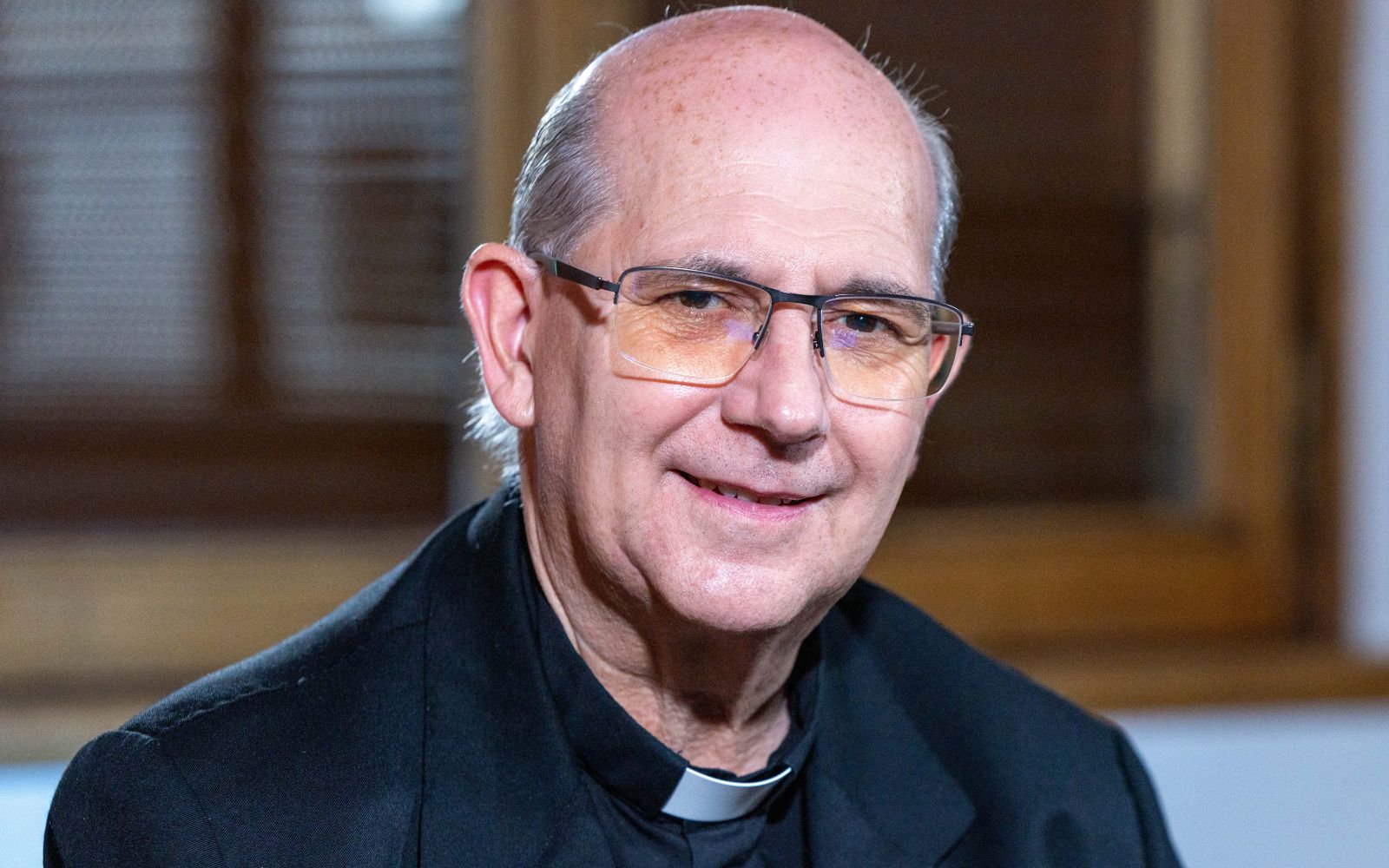
U.S. bishops say violence ‘never the answer’ after shooting at White House press dinner #Catholic U.S. bishops said violence is never the answer after a shooter breached the hotel hosting the White House Correspondents’ Association dinner in Washington, D.C. and injured a Secret Service agent on April 25.Archbishop Paul Coakley, president of the U.S. Conference of Catholic Bishops, said in a statement, “We are grateful the lives of the President, those who protect him, and everyone in attendance last night were spared from serious harm. Let us all pray for our elected leaders and public officials that they may receive God’s blessings. Because human life is a precious gift, there is no room for violence of any kind in our society.”Attendees heard gunshots shortly after the White House Correspondents' Dinner began at the Washington Hilton hotel. President Donald Trump, first lady Melania Trump, Vice President JD Vance and several cabinet members were evacuated by federal agents.  Trump said in a press conference at the White House following the shooting that a lone suspect was taken into police custody and one federal agent was hospitalized after being hit in his bulletproof vest.Bishop David Bonnar of Youngstown, Ohio said the issue of gun violence requires attention.Bonnar said in a statement, “The United States is built on freedom and respect for all. There is no room for violence that endangers the life of any human being. Moreover, the issue of gun violence must be addressed. Violence is never the answer. We all must look deeper into the human heart to build each other up rather than tear each other down. We pray for peace in moments of disagreement and discord. As we celebrate our 250th birthday may we live as a nation under God with liberty and justice for all.”Bonnar also offered a prayer of protection.
 
 We all must look deeper into the human heart to build each other up rather than tear each other down.
 
 Bishop David BonnarDiocese of Youngstown, Ohio
 
 
 Since 2025, the United States has seen a marked escalation in political violence, including assassination attempts and lethal attacks linked to ideological extremism, threats against elected officials, and armed incidents surrounding political events. High‑profile political actor Charlie Kirk, a conservative commentator, was assassinated in Utah in September 2025. In Minnesota, Rep. Melissa Hortman, the top Democratic leader of the state House of Representatives, was assassinated in her home in June 2025, and her husband was killed in the same attack. Hortman, who had served as Minnesota House speaker, was a Roman Catholic catechist.Bishop Robert Barron of Winona-Rochester, Minnesota, posted on X on April 26, “Iʼm grateful that the President and his entourage are unhurt after this latest attack. May I raise my voice against the viciousness and tribalism that are so prevalent on the internet and that contribute mightily to the violence we see in our political culture. Can we please remember that it is possible to disagree with a politicianʼs ideas without demonizing and de-humanizing him? Jesus commanded us to love our enemies, and that includes our ideological opponents.”

U.S. bishops say violence ‘never the answer’ after shooting at White House press dinner #Catholic U.S. bishops said violence is never the answer after a shooter breached the hotel hosting the White House Correspondents’ Association dinner in Washington, D.C. and injured a Secret Service agent on April 25.Archbishop Paul Coakley, president of the U.S. Conference of Catholic Bishops, said in a statement, “We are grateful the lives of the President, those who protect him, and everyone in attendance last night were spared from serious harm. Let us all pray for our elected leaders and public officials that they may receive God’s blessings. Because human life is a precious gift, there is no room for violence of any kind in our society.”Attendees heard gunshots shortly after the White House Correspondents' Dinner began at the Washington Hilton hotel. President Donald Trump, first lady Melania Trump, Vice President JD Vance and several cabinet members were evacuated by federal agents.  Trump said in a press conference at the White House following the shooting that a lone suspect was taken into police custody and one federal agent was hospitalized after being hit in his bulletproof vest.Bishop David Bonnar of Youngstown, Ohio said the issue of gun violence requires attention.Bonnar said in a statement, “The United States is built on freedom and respect for all. There is no room for violence that endangers the life of any human being. Moreover, the issue of gun violence must be addressed. Violence is never the answer. We all must look deeper into the human heart to build each other up rather than tear each other down. We pray for peace in moments of disagreement and discord. As we celebrate our 250th birthday may we live as a nation under God with liberty and justice for all.”Bonnar also offered a prayer of protection. We all must look deeper into the human heart to build each other up rather than tear each other down. Bishop David BonnarDiocese of Youngstown, Ohio Since 2025, the United States has seen a marked escalation in political violence, including assassination attempts and lethal attacks linked to ideological extremism, threats against elected officials, and armed incidents surrounding political events. High‑profile political actor Charlie Kirk, a conservative commentator, was assassinated in Utah in September 2025. In Minnesota, Rep. Melissa Hortman, the top Democratic leader of the state House of Representatives, was assassinated in her home in June 2025, and her husband was killed in the same attack. Hortman, who had served as Minnesota House speaker, was a Roman Catholic catechist.Bishop Robert Barron of Winona-Rochester, Minnesota, posted on X on April 26, “Iʼm grateful that the President and his entourage are unhurt after this latest attack. May I raise my voice against the viciousness and tribalism that are so prevalent on the internet and that contribute mightily to the violence we see in our political culture. Can we please remember that it is possible to disagree with a politicianʼs ideas without demonizing and de-humanizing him? Jesus commanded us to love our enemies, and that includes our ideological opponents.”

Archbishop Paul Coakley, president of the U.S. Conference of Catholic Bishops, condemned violence, and Bishop David Bonnar of Youngstown, Ohio said the issue of gun violence must be addressed.

Read More
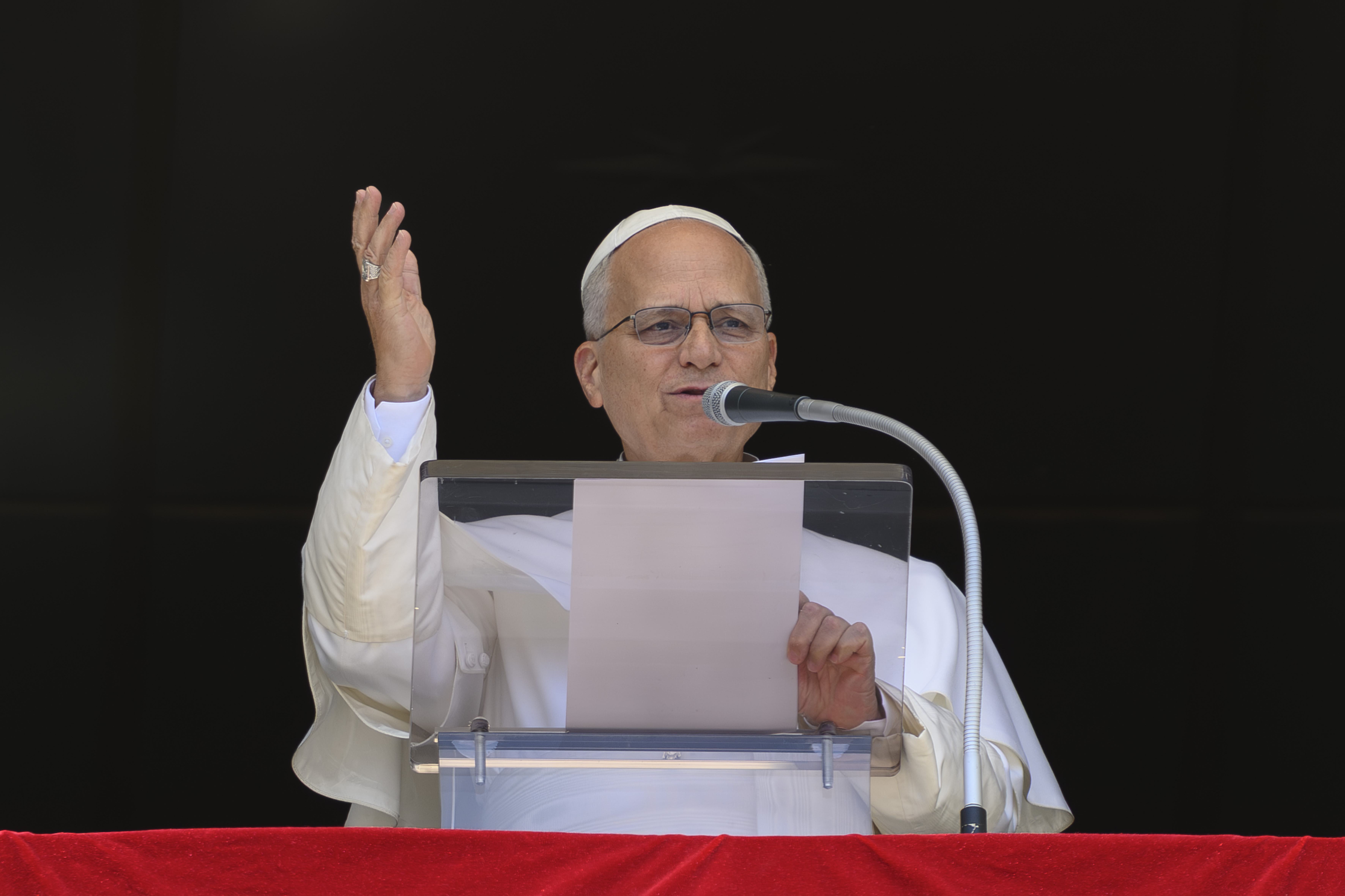
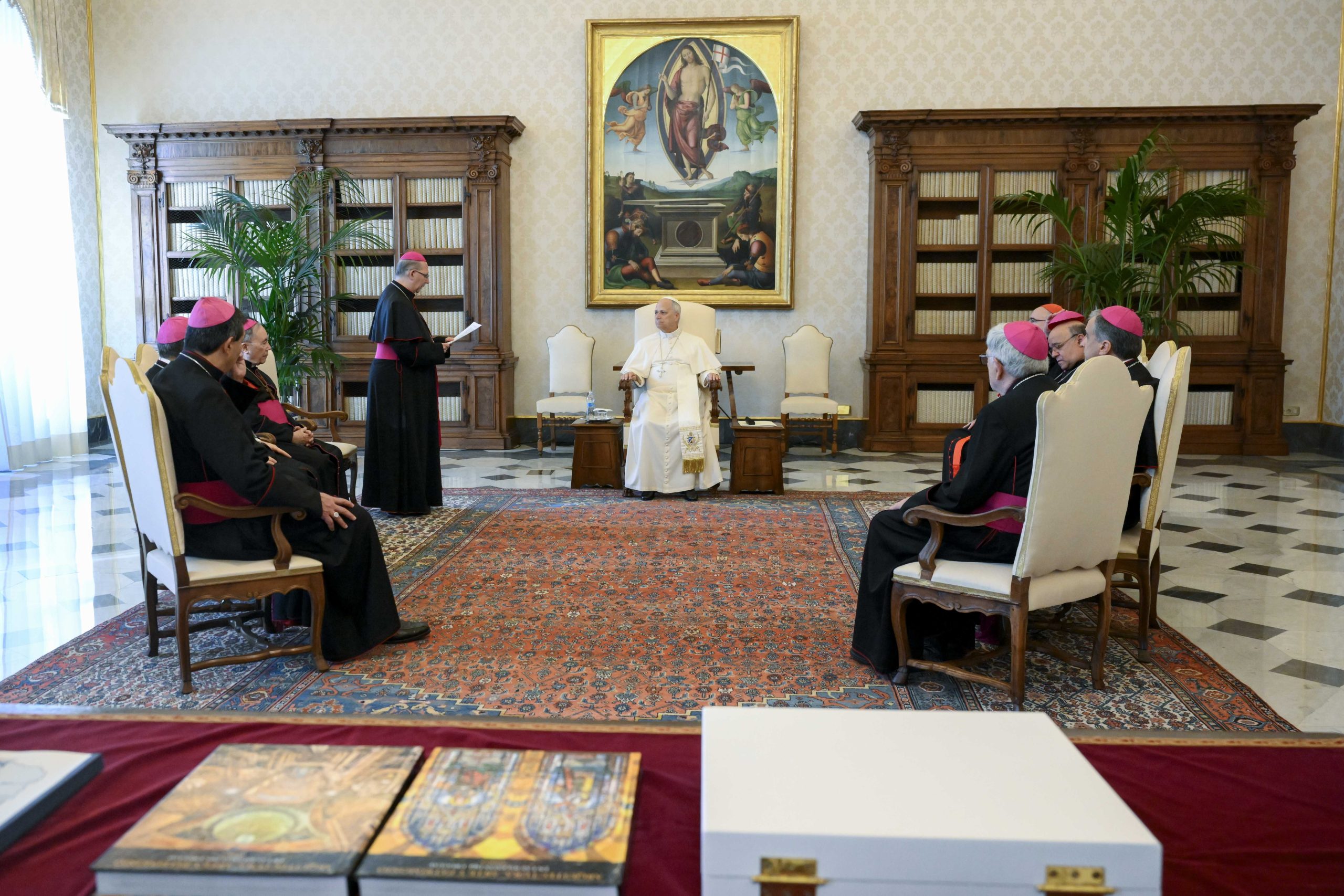
Pope Leo XIV says debate with Trump is ‘not in my interest at all’ #Catholic ABOARD THE PAPAL PLANE — Pope Leo XIV arrived in Angola after a two-and-a-half-hour flight from Cameroon on April 18, using the short journey to reject suggestions that his recent remarks about war were aimed at U.S. President Donald Trump while reflecting on the pastoral focus of his African trip.In a brief in-flight press conference with journalists, the pope addressed the interpretation of some of his recent speeches as a response to criticism from Trump, who had accused him of weakness in foreign policy.“[T]hereʼs been a certain narrative that has not been accurate in all of its aspects, but because of the political situation created when on the first day of the trip, the President of the United States made some comments about myself,” the pope said.“Much of what has been written since then has been more commentary on commentary, trying to interpret what has been said.”He pointed in particular to his address at the April 16 prayer meeting for peace in Cameroon.“Just one little example, the talk that I gave at the prayer meeting for peace a couple days ago was prepared two weeks ago, well before the president ever commented on myself and on the message of peace that I am promoting,” he said.“And yet, as it happens, it was looked at as if I was trying to debate again the president, which is not in my interest at all.”Leo XIV said he intends instead to continue proclaiming the Gospel and promoting peace.“So we go on the journey, we continue proclaiming the Gospel message,” he said.He added that the liturgies during the trip have highlighted what it means to follow Christ, promote fraternity, and seek justice and peace.The pope also said the broader African journey has been shaped by themes that emerged at the start of the trip in Algeria, especially the figure of St. Augustine.“I was personally very pleased, as you know, we began the trip in Algeria with the theme of Saint Augustine, and yesterday at the Catholic University, we had the blessing of that beautiful monument that they had prepared with a map of Africa and Saint Augustine at the center,” he said.“And so in one sense, it expresses part of what this trip is about.”Leo XIV emphasized that his primary purpose in Africa is to accompany Catholics.“And I primarily come to Africa as pastor, as the head of the Catholic Church, to be with, to celebrate with, to encourage and accompany all of the Catholics throughout Africa.”He also referred to a meeting with imams in Cameroon, describing it in general terms as part of the Church’s continuing commitment to interreligious dialogue, understanding, and peace-building.He concluded his main remarks by thanking journalists for their work and expressing hope that God would continue to bless the journey.Responding later to a French journalist, Leo XIV expressed gratitude for the reception he received in Cameroon.“I would just like to thank everyone in Cameroon for the wonderful welcome, the great enthusiasm, the joy of the people,” he said.“It was absolutely fantastic, the experience … how wonderful it is to experience what it means to be a follower of Jesus Christ and to celebrate our faith together.”The pope’s flight took him from Yaoundé to Luanda, crossing over Cameroon, Equatorial Guinea, Gabon, the Democratic Republic of Congo, and Angola. Angola is the third and penultimate stop of his African journey.The Catholic Church has longstanding ties with Angola. Formal relations date back centuries, including the 1608 appointment of Antonio Manuel Nyunda as the first ambassador to Rome from the then-Kingdom of Kongo. More recently, in 2019, the Holy See and Angola signed an agreement recognizing the legal personality of the Catholic Church and defining its property rights.This story was first published by ACI Stampa, the Italian-language sister service of EWTN News. It has been translated and adapted by EWTN News English.

Pope Leo XIV says debate with Trump is ‘not in my interest at all’ #Catholic ABOARD THE PAPAL PLANE — Pope Leo XIV arrived in Angola after a two-and-a-half-hour flight from Cameroon on April 18, using the short journey to reject suggestions that his recent remarks about war were aimed at U.S. President Donald Trump while reflecting on the pastoral focus of his African trip.In a brief in-flight press conference with journalists, the pope addressed the interpretation of some of his recent speeches as a response to criticism from Trump, who had accused him of weakness in foreign policy.“[T]hereʼs been a certain narrative that has not been accurate in all of its aspects, but because of the political situation created when on the first day of the trip, the President of the United States made some comments about myself,” the pope said.“Much of what has been written since then has been more commentary on commentary, trying to interpret what has been said.”He pointed in particular to his address at the April 16 prayer meeting for peace in Cameroon.“Just one little example, the talk that I gave at the prayer meeting for peace a couple days ago was prepared two weeks ago, well before the president ever commented on myself and on the message of peace that I am promoting,” he said.“And yet, as it happens, it was looked at as if I was trying to debate again the president, which is not in my interest at all.”Leo XIV said he intends instead to continue proclaiming the Gospel and promoting peace.“So we go on the journey, we continue proclaiming the Gospel message,” he said.He added that the liturgies during the trip have highlighted what it means to follow Christ, promote fraternity, and seek justice and peace.The pope also said the broader African journey has been shaped by themes that emerged at the start of the trip in Algeria, especially the figure of St. Augustine.“I was personally very pleased, as you know, we began the trip in Algeria with the theme of Saint Augustine, and yesterday at the Catholic University, we had the blessing of that beautiful monument that they had prepared with a map of Africa and Saint Augustine at the center,” he said.“And so in one sense, it expresses part of what this trip is about.”Leo XIV emphasized that his primary purpose in Africa is to accompany Catholics.“And I primarily come to Africa as pastor, as the head of the Catholic Church, to be with, to celebrate with, to encourage and accompany all of the Catholics throughout Africa.”He also referred to a meeting with imams in Cameroon, describing it in general terms as part of the Church’s continuing commitment to interreligious dialogue, understanding, and peace-building.He concluded his main remarks by thanking journalists for their work and expressing hope that God would continue to bless the journey.Responding later to a French journalist, Leo XIV expressed gratitude for the reception he received in Cameroon.“I would just like to thank everyone in Cameroon for the wonderful welcome, the great enthusiasm, the joy of the people,” he said.“It was absolutely fantastic, the experience … how wonderful it is to experience what it means to be a follower of Jesus Christ and to celebrate our faith together.”The pope’s flight took him from Yaoundé to Luanda, crossing over Cameroon, Equatorial Guinea, Gabon, the Democratic Republic of Congo, and Angola. Angola is the third and penultimate stop of his African journey.The Catholic Church has longstanding ties with Angola. Formal relations date back centuries, including the 1608 appointment of Antonio Manuel Nyunda as the first ambassador to Rome from the then-Kingdom of Kongo. More recently, in 2019, the Holy See and Angola signed an agreement recognizing the legal personality of the Catholic Church and defining its property rights.This story was first published by ACI Stampa, the Italian-language sister service of EWTN News. It has been translated and adapted by EWTN News English.

En route from Cameroon to Angola, the pope said his mission in Africa is pastoral and rejected suggestions that his recent remarks were aimed at President Donald Trump.

Read More