Digital

Vatican warns that AI ‘deepfakes’ threaten the human experience #Catholic Cardinal Jose Tolentino de Mendonça, prefect of the Dicastery for Culture and Education, on Thursday criticized AI deepfakes as a threat to human encounter.Speaking at a conference on AI in Rome on May 21, Mendonça warned of the dangers of AI, saying that it can “have painful consequences on the destiny of individuals.”“When a deepfake lends a personʼs face to words they have never spoken … it is the very grammar of the human encounter that is altered,” Mendonça said. “Technology that exploits our need for relationship … can not only have painful consequences on the destiny of individuals, but it can also damage the social, cultural, and political fabric of societies.”Preserving humanity in the age of AIComing a few days before of the release of Pope Leo XIVʼs Magnifica Humanitas, which will treat moral and social questions related to AI, the theme of the conference was “Preserving Human Voices and Faces.”Organized by the Dicastery for Communication and held at the Pontifical Urban University, the conference brought together professors, journalists, and engineers who offered insights into the risks AI poses to authentic human experiences.Mendonça, citing the popeʼs message for the 60th World Day of Social Communications, clarified that the goal “lies not in stopping digital innovation but in guiding it.”Paolo Ruffini, prefect of the Dicastery for Communication, added: “The greatest danger consists in passively accepting the idea that knowledge no longer belongs to us.”Magnifica Humanitas: Keeping the human at the centerSome of the conference panelists expressed their hopes for Leoʼs upcoming encyclical on AI.One of those was Bishop Paul Tighe, secretary of the Section of Culture of the Dicastery for Culture and Education. Speaking to EWTN News on the sidelines, Tighe gave his impressions about what the pope intends to contribute with this document.“I think the pope is doing two things: First, he will be offering perspectives that enable people to reflect and think critically about AI and its role in society. Second, he is initiating a dialogue,” Tighe told EWTN News. “He wants to create an environment where all the various people who have a part in the development of AI are attentive to keeping the human at the center.”

Vatican warns that AI ‘deepfakes’ threaten the human experience #Catholic Cardinal Jose Tolentino de Mendonça, prefect of the Dicastery for Culture and Education, on Thursday criticized AI deepfakes as a threat to human encounter.Speaking at a conference on AI in Rome on May 21, Mendonça warned of the dangers of AI, saying that it can “have painful consequences on the destiny of individuals.”“When a deepfake lends a personʼs face to words they have never spoken … it is the very grammar of the human encounter that is altered,” Mendonça said. “Technology that exploits our need for relationship … can not only have painful consequences on the destiny of individuals, but it can also damage the social, cultural, and political fabric of societies.”Preserving humanity in the age of AIComing a few days before of the release of Pope Leo XIVʼs Magnifica Humanitas, which will treat moral and social questions related to AI, the theme of the conference was “Preserving Human Voices and Faces.”Organized by the Dicastery for Communication and held at the Pontifical Urban University, the conference brought together professors, journalists, and engineers who offered insights into the risks AI poses to authentic human experiences.Mendonça, citing the popeʼs message for the 60th World Day of Social Communications, clarified that the goal “lies not in stopping digital innovation but in guiding it.”Paolo Ruffini, prefect of the Dicastery for Communication, added: “The greatest danger consists in passively accepting the idea that knowledge no longer belongs to us.”Magnifica Humanitas: Keeping the human at the centerSome of the conference panelists expressed their hopes for Leoʼs upcoming encyclical on AI.One of those was Bishop Paul Tighe, secretary of the Section of Culture of the Dicastery for Culture and Education. Speaking to EWTN News on the sidelines, Tighe gave his impressions about what the pope intends to contribute with this document.“I think the pope is doing two things: First, he will be offering perspectives that enable people to reflect and think critically about AI and its role in society. Second, he is initiating a dialogue,” Tighe told EWTN News. “He wants to create an environment where all the various people who have a part in the development of AI are attentive to keeping the human at the center.”

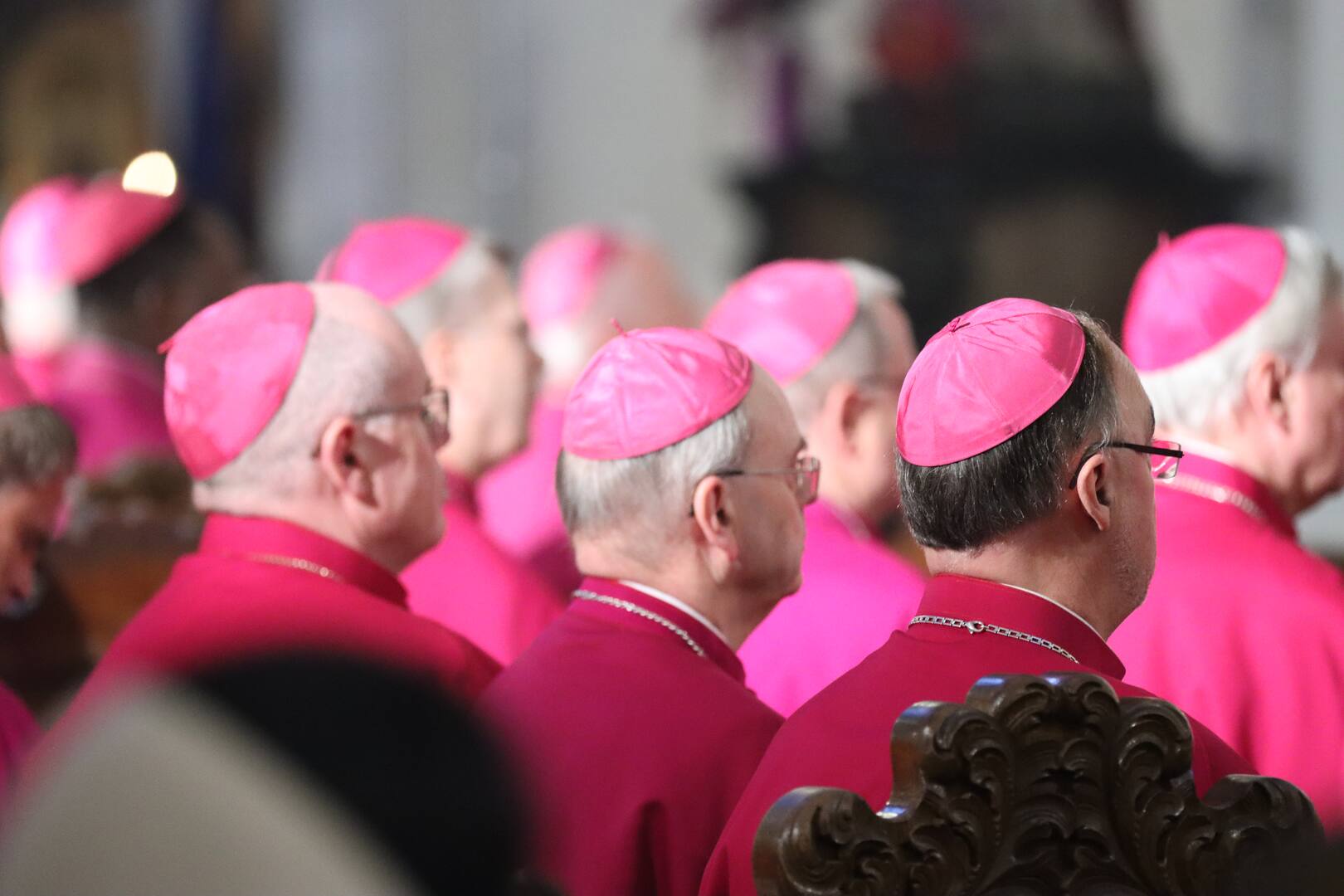
A top Vatican official warned of the dangers of AI at a conference ahead of the pope’s upcoming encyclical.

Read More
EWTN News explains: What is a papal encylical? #Catholic With the announcement of Pope Leo XIVʼs first papal encyclical, Magnifica Humanitas: “On the Protection of Human Dignity in the Age of Artificial Intelligence," there is much anticipation as to what guidance the pope will provide on the digital revolution and emerging technologies such as AI.But what are papal encyclicals, and what can they reveal about the popeʼs priorities on the world stage and for the Church?The pope’s pastoral letterA papal encyclical is a pastoral letter written by the pope, primarily addressed to bishops but also to Catholics and all people, typically reflecting on Church teachings and suggesting ways to apply them to modern issues.According to the 1917 edition of the Catholic Encyclopedia, encyclicals were “letters sent to all the bishops of Christendom, or at least to all those in one particular country, and intended to guide them in their relations with their flocks.”Encyclicals are part of the pope’s everyday teaching authority, known as his “ordinary magisterium.” They are among the most common ways he presents Church doctrine and serve as authoritative and valuable sources of Catholic teaching and guidance on contemporary topics, including sexuality, Catholic social teaching, and stewardship of the earth.Since Pope Leo XIII, encyclicals have become one of the most common means by which popes are heard across the globe on the most pressing issues of our time.Are Catholics required to believe them?A pope does not normally use an encyclical to make an "ex cathedra" declaration — a solemn, and rare, statement on faith or morals, normally promulgated in an apostolic constitution. Modern examples of "ex cathedra" proclamations include the popes' definitions of the dogmas of the Immaculate Conception (1854) and the Assumption (1950).Encyclicals, however, are not merely letters or expressions of the popeʼs opinion. They carry significant doctrinal weight and are frequently cited as important sources of Catholic teaching.According to canon law, Catholics are required to give “a religious submission of the intellect and will” to these letters and to “take care to avoid those things which do not agree with it.”Simply put, Catholics are to presume that the pope teaches the truth in these letters and to sincerely respect the teachings they contain.Recent encyclical trendsInitially addressed exclusively to bishops, papal encyclicals began reaching broader audiences in the modern period, beginning with Pope Leo XIII’s groundbreaking 1891 encyclical Rerum Novarum. It marked the first time in many years that the bishop of Rome had written a pastoral letter on matters other than doctrine or internal affairs of the Church, instead addressing workers’ rights, the right to private property, and the dangers of socialism.With St. John XXIII’s Pacem in Terris in 1963, pontiffs increasingly addressed their letters to “all men of goodwill,” shifting from a mainly Catholic audience to the global stage.
 
 Pope Leo XIII in 1898. | Credit: Francesco De Federicis/Wikimedia Commons
 
 Since the Second Vatican Council, papal encyclicals have increasingly focused on threats to the dignity of the human person and authentic human development. St. Paul VI wrote Humanae Vitae in 1968, reiterating and applying Church teaching to the question of artificial birth control. St. John Paul II dedicated four encyclicals to promoting Catholic social teaching, building on Leo XIII’s Rerum Novarum. Pope Francis’ four encyclicals largely addressed the preservation of ecology and universal fraternity.Despite the importance given to these letters in the modern period, the average number of encyclicals per pope is relatively small. Francis wrote only four, while Benedict XVI, his immediate predecessor, wrote just three. John Paul II wrote 14, but the average number of encyclicals per pope since the Second Vatican Council has been just seven.Leo XIII has the most encyclicals of any pope, with 88, 11 of which are dedicated to the rosary.Pope Leo XIVʼs first encyclical builds on othersPope Leo XIV indicated at the beginning of his pontificate that he intended to follow in the footsteps of Pope Leo XIII, his predecessor, by responding to todayʼs industrial revolution: “developments in the field of artificial intelligence.” May 15 marked the 135th anniversary of the publication of Pope Leo XIII’s 1891 encyclical on capital and labor, Rerum Novarum: “Of New Things” — the first in a long line of social encyclicals produced in the modern era of the Catholic Church.Addressing the College of Cardinals on May 10, 2025, Leo said: “In our own day, the Church offers to everyone the treasury of her social teaching in response to another industrial revolution and to developments in the field of artificial intelligence that pose new challenges for the defense of human dignity, justice, and labor.”Magnifica Humanitas is expected to be released on May 25 at 11:30 a.m. Rome time in the Vaticanʼs Synod Hall.

EWTN News explains: What is a papal encylical? #Catholic With the announcement of Pope Leo XIVʼs first papal encyclical, Magnifica Humanitas: “On the Protection of Human Dignity in the Age of Artificial Intelligence," there is much anticipation as to what guidance the pope will provide on the digital revolution and emerging technologies such as AI.But what are papal encyclicals, and what can they reveal about the popeʼs priorities on the world stage and for the Church?The pope’s pastoral letterA papal encyclical is a pastoral letter written by the pope, primarily addressed to bishops but also to Catholics and all people, typically reflecting on Church teachings and suggesting ways to apply them to modern issues.According to the 1917 edition of the Catholic Encyclopedia, encyclicals were “letters sent to all the bishops of Christendom, or at least to all those in one particular country, and intended to guide them in their relations with their flocks.”Encyclicals are part of the pope’s everyday teaching authority, known as his “ordinary magisterium.” They are among the most common ways he presents Church doctrine and serve as authoritative and valuable sources of Catholic teaching and guidance on contemporary topics, including sexuality, Catholic social teaching, and stewardship of the earth.Since Pope Leo XIII, encyclicals have become one of the most common means by which popes are heard across the globe on the most pressing issues of our time.Are Catholics required to believe them?A pope does not normally use an encyclical to make an "ex cathedra" declaration — a solemn, and rare, statement on faith or morals, normally promulgated in an apostolic constitution. Modern examples of "ex cathedra" proclamations include the popes' definitions of the dogmas of the Immaculate Conception (1854) and the Assumption (1950).Encyclicals, however, are not merely letters or expressions of the popeʼs opinion. They carry significant doctrinal weight and are frequently cited as important sources of Catholic teaching.According to canon law, Catholics are required to give “a religious submission of the intellect and will” to these letters and to “take care to avoid those things which do not agree with it.”Simply put, Catholics are to presume that the pope teaches the truth in these letters and to sincerely respect the teachings they contain.Recent encyclical trendsInitially addressed exclusively to bishops, papal encyclicals began reaching broader audiences in the modern period, beginning with Pope Leo XIII’s groundbreaking 1891 encyclical Rerum Novarum. It marked the first time in many years that the bishop of Rome had written a pastoral letter on matters other than doctrine or internal affairs of the Church, instead addressing workers’ rights, the right to private property, and the dangers of socialism.With St. John XXIII’s Pacem in Terris in 1963, pontiffs increasingly addressed their letters to “all men of goodwill,” shifting from a mainly Catholic audience to the global stage. Pope Leo XIII in 1898. | Credit: Francesco De Federicis/Wikimedia Commons Since the Second Vatican Council, papal encyclicals have increasingly focused on threats to the dignity of the human person and authentic human development. St. Paul VI wrote Humanae Vitae in 1968, reiterating and applying Church teaching to the question of artificial birth control. St. John Paul II dedicated four encyclicals to promoting Catholic social teaching, building on Leo XIII’s Rerum Novarum. Pope Francis’ four encyclicals largely addressed the preservation of ecology and universal fraternity.Despite the importance given to these letters in the modern period, the average number of encyclicals per pope is relatively small. Francis wrote only four, while Benedict XVI, his immediate predecessor, wrote just three. John Paul II wrote 14, but the average number of encyclicals per pope since the Second Vatican Council has been just seven.Leo XIII has the most encyclicals of any pope, with 88, 11 of which are dedicated to the rosary.Pope Leo XIVʼs first encyclical builds on othersPope Leo XIV indicated at the beginning of his pontificate that he intended to follow in the footsteps of Pope Leo XIII, his predecessor, by responding to todayʼs industrial revolution: “developments in the field of artificial intelligence.” May 15 marked the 135th anniversary of the publication of Pope Leo XIII’s 1891 encyclical on capital and labor, Rerum Novarum: “Of New Things” — the first in a long line of social encyclicals produced in the modern era of the Catholic Church.Addressing the College of Cardinals on May 10, 2025, Leo said: “In our own day, the Church offers to everyone the treasury of her social teaching in response to another industrial revolution and to developments in the field of artificial intelligence that pose new challenges for the defense of human dignity, justice, and labor.”Magnifica Humanitas is expected to be released on May 25 at 11:30 a.m. Rome time in the Vaticanʼs Synod Hall.

Papal encyclicals are a powerful way the pope shapes global debates and articulates Church doctrine, but how should Catholics understand them?

Read More
Hezbollah supporters allegedly launch digital campaign targeting Maronite patriarch #Catholic Hezbollah supporters have reportedly used AI-generated manipulated images to target Cardinal Bechara Boutros al-Rai, the Maronite patriarch of Antioch and All the East. The patriarch described the digital attack on him as “a war of words, not freedom of opinion, but a worrying decline in the standards of language and values, and a violation of human dignity that no one has the right to infringe upon, regardless of its source or form.”The digital attack involved the circulation of altered images portraying the patriarch in mocking and degrading ways.Jowelle M. Howayeck, a Lebanese civic activist and 2022 parliamentary candidate, argued that the campaign is neither spontaneous nor ambiguous in its intent. “It is both intimidation and sectarian provocation, and it is deliberate,” she said.
 
 Jowelle M. Howayeck, a Lebanese civic activist and 2022 parliamentary candidate. | Credit: Photo courtesy of Jowelle M. Howayeck
 
 For Howayeck, the timing is not accidental. She links the campaign to a broader political context in which Hezbollah is “losing political ground,” prompting what she describes as a predictable shift in strategy: “Divert attention from the core issue and construct a new confrontation that can be framed as a symbolic victory.”In her view, “this is not political engagement. It is crisis management through fear, distraction, and division.”The campaign, she added, also reflects a deepening rupture between Hezbollah and the Christian community.Digital confrontations of this kind are not new in Lebanon’s political landscape, but they carry particular risks in a country built on a fragile and strained social contract. The patriarch himself has been targeted before "because the patriarch represents a form of authority that cannot be coerced or absorbed: moral legitimacy anchored in national identity," Howayeck said. "Whenever his positions align with state sovereignty, they expose a structural contradiction within the opposing project.”

Hezbollah supporters allegedly launch digital campaign targeting Maronite patriarch #Catholic Hezbollah supporters have reportedly used AI-generated manipulated images to target Cardinal Bechara Boutros al-Rai, the Maronite patriarch of Antioch and All the East. The patriarch described the digital attack on him as “a war of words, not freedom of opinion, but a worrying decline in the standards of language and values, and a violation of human dignity that no one has the right to infringe upon, regardless of its source or form.”The digital attack involved the circulation of altered images portraying the patriarch in mocking and degrading ways.Jowelle M. Howayeck, a Lebanese civic activist and 2022 parliamentary candidate, argued that the campaign is neither spontaneous nor ambiguous in its intent. “It is both intimidation and sectarian provocation, and it is deliberate,” she said. Jowelle M. Howayeck, a Lebanese civic activist and 2022 parliamentary candidate. | Credit: Photo courtesy of Jowelle M. Howayeck For Howayeck, the timing is not accidental. She links the campaign to a broader political context in which Hezbollah is “losing political ground,” prompting what she describes as a predictable shift in strategy: “Divert attention from the core issue and construct a new confrontation that can be framed as a symbolic victory.”In her view, “this is not political engagement. It is crisis management through fear, distraction, and division.”The campaign, she added, also reflects a deepening rupture between Hezbollah and the Christian community.Digital confrontations of this kind are not new in Lebanon’s political landscape, but they carry particular risks in a country built on a fragile and strained social contract. The patriarch himself has been targeted before "because the patriarch represents a form of authority that cannot be coerced or absorbed: moral legitimacy anchored in national identity," Howayeck said. "Whenever his positions align with state sovereignty, they expose a structural contradiction within the opposing project.”

Hezbollah supporters have reportedly used AI-generated manipulated images to attack Cardinal Bechara Boutros al-Rai, the Maronite Patriarch of Antioch and All the East.

Read More
This is Pope Leo’s prayer intention for the month of May #Catholic Pope Leo XIV’s prayer intention for the month of May is that everyone might have food.In a video released on X, the Holy Father asked the faithful: “What do you feel about 318 million people experiencing acute hunger every day?”“We need to act, but without prayer we will remain powerless,” he said. “This May, I invite you to join me in prayer that we may seriously commit to avoiding food waste and to ensuring that everyone has access to quality food every day.”In the full video shared on the Pope’s Worldwide Prayer Network website, Pope Leo recites an original prayer written specifically for this month’s prayer intention.Here is the pope’s full prayer:In the name of the Father, and of the Son, and of the Holy Spirit. Amen.Lord of creation,You gave us the fertile earth and, with it, our daily bread,as a sign of your love and providence.Today we recognize with sorrowthat millions of brothers and sisters continue to suffer from hunger,while so many goods are wasted at our tables.Awaken in us a new awareness:that we learn to thank for every food, to consume simply,to share with joy,and to care for the fruits of the earth as a gift from you,destined for all, not just a few.Good Father,make us capable of transforming the logic of selfish consumptioninto a culture of solidarity.May our communities promote concrete gestures:awareness campaigns, food banks,and a sober and responsible lifestyle.You who sent us your beloved Son Jesus,broken bread for the life of the world,give us a new heart, hungry for justice and thirsty for fraternity.May no one be excluded from the common table,and may your Spirit teach us to see breadnot as an object of consumption,but as a sign of communion and care.Amen.“Pray with the Pope” is accessible on the Pope’s Worldwide Prayer Network website and its digital platforms.

This is Pope Leo’s prayer intention for the month of May #Catholic Pope Leo XIV’s prayer intention for the month of May is that everyone might have food.In a video released on X, the Holy Father asked the faithful: “What do you feel about 318 million people experiencing acute hunger every day?”“We need to act, but without prayer we will remain powerless,” he said. “This May, I invite you to join me in prayer that we may seriously commit to avoiding food waste and to ensuring that everyone has access to quality food every day.”In the full video shared on the Pope’s Worldwide Prayer Network website, Pope Leo recites an original prayer written specifically for this month’s prayer intention.Here is the pope’s full prayer:In the name of the Father, and of the Son, and of the Holy Spirit. Amen.Lord of creation,You gave us the fertile earth and, with it, our daily bread,as a sign of your love and providence.Today we recognize with sorrowthat millions of brothers and sisters continue to suffer from hunger,while so many goods are wasted at our tables.Awaken in us a new awareness:that we learn to thank for every food, to consume simply,to share with joy,and to care for the fruits of the earth as a gift from you,destined for all, not just a few.Good Father,make us capable of transforming the logic of selfish consumptioninto a culture of solidarity.May our communities promote concrete gestures:awareness campaigns, food banks,and a sober and responsible lifestyle.You who sent us your beloved Son Jesus,broken bread for the life of the world,give us a new heart, hungry for justice and thirsty for fraternity.May no one be excluded from the common table,and may your Spirit teach us to see breadnot as an object of consumption,but as a sign of communion and care.Amen.“Pray with the Pope” is accessible on the Pope’s Worldwide Prayer Network website and its digital platforms.

Pope Leo XIV’s prayer intention for the month of May is that everyone might have food.

Read More
Here are the patron saints of World Youth Day Seoul 2027 #Catholic The Local Organizing Committee for World Youth Day Seoul 2027 has officially announced the patron saints who will spiritually accompany the next major international gathering of young Catholics, which will take place in the South Korean capital Aug. 3–8, 2027.According to a statement from organizers, the five patron saints of WYD Seoul 2027 are St. John Paul II, founder of World Youth Day; St. Andrew Kim Taegon and his companion martyrs; St. Frances Xavier Cabrini; St. Josephine Bakhita; and St. Carlo Acutis.St. John Paul II (1920–2005) is remembered for centering much of his pastoral teaching on young people, the family, and the defense of the dignity of human life. St. Andrew Kim Taegon (1821–1846), the first Korean Catholic priest, together with his companion martyrs, represents a powerful witness of faith and courage, sealed by martyrdom at a young age.St. Frances Xavier Cabrini (1850–1917) was a tireless missionary, known especially for her work on behalf of migrants and the poor. St. Josephine Bakhita (1869–1947), a former slave who became a religious sister, is a witness of hope, freedom, and faith transformed through suffering. St. Carlo Acutis (1991–2006), meanwhile, embodies the witness of holiness in the digital age and remains a model of evangelization for young people today.As is customary for each World Youth Day, the patron saints are presented as models and guides of faith for young people through the witness of their lives and spirituality. For WYD Seoul 2027, the choices were made in light of the event’s major spiritual themes: truth, love, and peace.The selection process began at the end of 2024 and included a nationwide survey of young people, youth ministry leaders, and formators. Following that consultation, the Local Organizing Committee reviewed the candidates and made the final selection.After the announcement, a group of young volunteers spent two months studying the lives and spirituality of the five patron saints. Through prayer, dialogue, and shared reflection, they prepared a special prayer and a representative symbol for each saint to express the particular witness they offer to new generations.Cardinal Kevin Farrell, prefect of the Dicastery for the Laity, the Family, and Life, emphasized the importance of the selection, saying the patron saints “play a fundamental role in the preparation of each World Youth Day.” He said these models of holiness invite young people to reflect on God’s call and encourage them to respond with generosity and courage in following Christ.“May the witness of these patron saints inspire young people throughout the world, especially in contexts marked by difficulty and persecution,” Farrell said.Archbishop Peter Soon-taick Chung of Seoul, president of the Local Organizing Committee, noted that the chosen saints represent different continents and generations.“Each one of them offers a concrete path for living the faith amid the realities that young people face today,” Chung said, expressing his hope that participants will form a deep spiritual bond with the saints during the journey of preparation for WYD.The Local Organizing Committee will continue presenting the lives and spirituality of the patron saints through the official WYD Seoul 2027 website and social media channels, while also developing new content and formation programs.Along with the announcement, the committee also launched an interactive section titled “Meet Your Patron Saint!” Inspired by personality tests and digital quizzes, the feature asks young people a series of questions to help them discover which of the five saints most closely resembles their own personality. The goal is to help young people encounter the saints not only as historical figures but also as companions who can illuminate the questions and hopes of today.This story was first published by ACI Prensa, the Spanish-language sister service of EWTN News. It has been translated and adapted by EWTN News English.

Here are the patron saints of World Youth Day Seoul 2027 #Catholic The Local Organizing Committee for World Youth Day Seoul 2027 has officially announced the patron saints who will spiritually accompany the next major international gathering of young Catholics, which will take place in the South Korean capital Aug. 3–8, 2027.According to a statement from organizers, the five patron saints of WYD Seoul 2027 are St. John Paul II, founder of World Youth Day; St. Andrew Kim Taegon and his companion martyrs; St. Frances Xavier Cabrini; St. Josephine Bakhita; and St. Carlo Acutis.St. John Paul II (1920–2005) is remembered for centering much of his pastoral teaching on young people, the family, and the defense of the dignity of human life. St. Andrew Kim Taegon (1821–1846), the first Korean Catholic priest, together with his companion martyrs, represents a powerful witness of faith and courage, sealed by martyrdom at a young age.St. Frances Xavier Cabrini (1850–1917) was a tireless missionary, known especially for her work on behalf of migrants and the poor. St. Josephine Bakhita (1869–1947), a former slave who became a religious sister, is a witness of hope, freedom, and faith transformed through suffering. St. Carlo Acutis (1991–2006), meanwhile, embodies the witness of holiness in the digital age and remains a model of evangelization for young people today.As is customary for each World Youth Day, the patron saints are presented as models and guides of faith for young people through the witness of their lives and spirituality. For WYD Seoul 2027, the choices were made in light of the event’s major spiritual themes: truth, love, and peace.The selection process began at the end of 2024 and included a nationwide survey of young people, youth ministry leaders, and formators. Following that consultation, the Local Organizing Committee reviewed the candidates and made the final selection.After the announcement, a group of young volunteers spent two months studying the lives and spirituality of the five patron saints. Through prayer, dialogue, and shared reflection, they prepared a special prayer and a representative symbol for each saint to express the particular witness they offer to new generations.Cardinal Kevin Farrell, prefect of the Dicastery for the Laity, the Family, and Life, emphasized the importance of the selection, saying the patron saints “play a fundamental role in the preparation of each World Youth Day.” He said these models of holiness invite young people to reflect on God’s call and encourage them to respond with generosity and courage in following Christ.“May the witness of these patron saints inspire young people throughout the world, especially in contexts marked by difficulty and persecution,” Farrell said.Archbishop Peter Soon-taick Chung of Seoul, president of the Local Organizing Committee, noted that the chosen saints represent different continents and generations.“Each one of them offers a concrete path for living the faith amid the realities that young people face today,” Chung said, expressing his hope that participants will form a deep spiritual bond with the saints during the journey of preparation for WYD.The Local Organizing Committee will continue presenting the lives and spirituality of the patron saints through the official WYD Seoul 2027 website and social media channels, while also developing new content and formation programs.Along with the announcement, the committee also launched an interactive section titled “Meet Your Patron Saint!” Inspired by personality tests and digital quizzes, the feature asks young people a series of questions to help them discover which of the five saints most closely resembles their own personality. The goal is to help young people encounter the saints not only as historical figures but also as companions who can illuminate the questions and hopes of today.This story was first published by ACI Prensa, the Spanish-language sister service of EWTN News. It has been translated and adapted by EWTN News English.

The five saints chosen for the international youth gathering reflect the event’s spiritual themes of truth, love, and peace.

Read More