duty

Cardinal Koovakad to lead Sanremo meeting on interreligious dialogue #Catholic Cardinal George Jacob Koovakad, prefect of the Dicastery for Interreligious Dialogue, will lead a meeting in Sanremo on Oct. 9 dedicated to the theme “Interreligious Dialogue Today in the Social and Cultural Context of Our Diocese.”The event is part of a broader diocesan initiative launched by Bishop Antonio Suetta, who published a pastoral letter on Pentecost Sunday outlining guidelines for charity, dialogue, and the proclamation of God’s love to Muslims “who live in our territory,” according to the diocesan website.The pastoral letter, titled “No One Has Greater Love Than This,” takes its inspiration from two significant anniversaries: the special Year of St. Francis, proclaimed by Pope Leo XIV for the 800th anniversary of the saint’s death, and the 60th anniversary of the Second Vatican Council declaration Nostra Aetate.
 
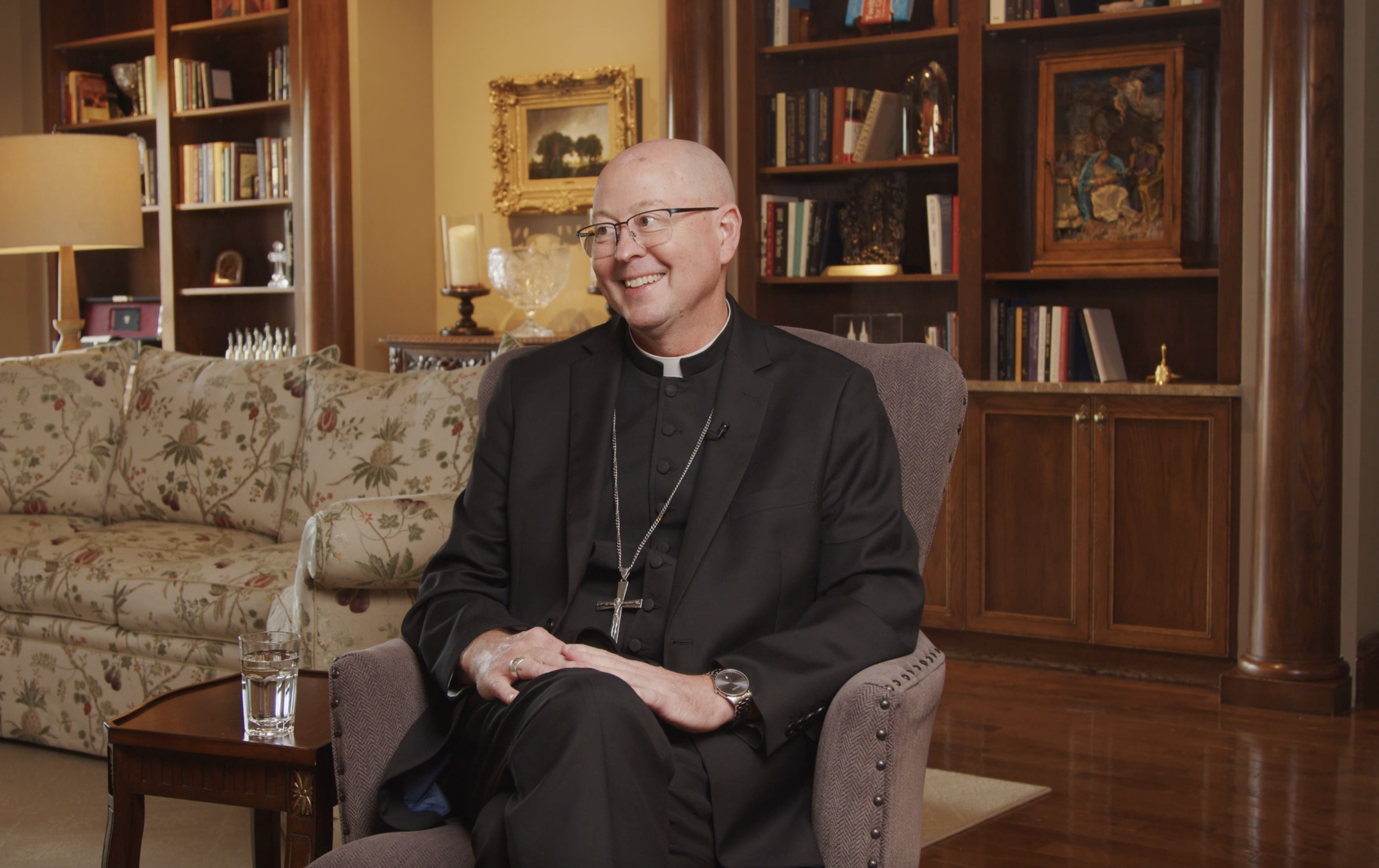
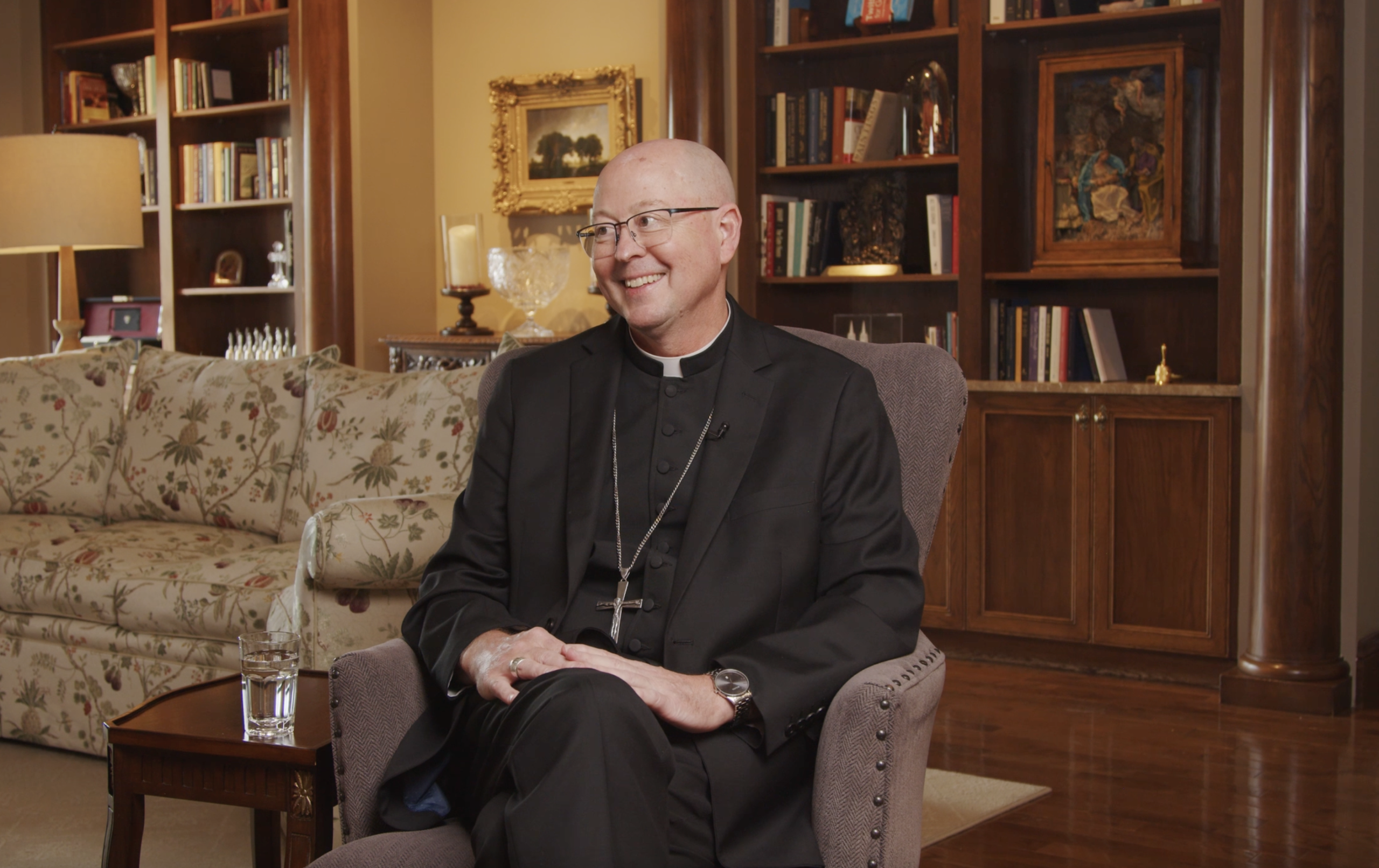
 Bishop Antonio Suetta of Ventimiglia-San Remo, Italy. | Credit: Photo courtesy of Diocese of Ventimiglia-San Remo
 
 In the document, Suetta emphasizes esteem, welcome, and missionary courage. He recalls the example of St. Francis of Assisi and his historic 1219 encounter with the sultan of Egypt, presenting evangelization first as a witness offered through deeds and the coherence of Christian life, and only afterward through words.The letter also stresses dialogue and collaboration, beginning from the teaching of Nostra Aetate and the recognition that Christians and Muslims are creatures of the one God. This shared foundation, the bishop writes, calls believers to work together in defense of human dignity and moral values in an increasingly secularized society.At the same time, Suetta underlines what he describes as the Christian duty of proclamation. Charity and welcome, he writes, must never lead Christians to conceal their spiritual identity. To share the joy of the Gospel and to make known the true face of Jesus Christ — who for Christians is “the way, the truth, and the life” and the revelation of God who is love — is presented in the letter as the highest act of charity Christians can offer.The pastoral initiative includes concrete proposals, such as specific formation programs and opportunities for encounter promoted by the diocesan Office for Catechetical Pastoral Ministry in collaboration with Caritas.“Welcoming others with selfless charity, bearing witness to a coherent Christian life, and proclaiming the love of God in Jesus Christ with freedom and sincere respect are the human means that the Lord asks of us in order to evangelize,” the letter states.The events will take place during the Church’s missionary month of October. In addition to the Oct. 9 meeting in Sanremo with Cardinal Koovakad, the diocese will hold a missionary vigil on Oct. 17 at the Oratory of the Immaculate in Piazza San Siro.The presence of the prefect of the Dicastery for Interreligious Dialogue is seen as a sign of support from the Holy See for the diocesan initiative.

Cardinal Koovakad to lead Sanremo meeting on interreligious dialogue #Catholic Cardinal George Jacob Koovakad, prefect of the Dicastery for Interreligious Dialogue, will lead a meeting in Sanremo on Oct. 9 dedicated to the theme “Interreligious Dialogue Today in the Social and Cultural Context of Our Diocese.”The event is part of a broader diocesan initiative launched by Bishop Antonio Suetta, who published a pastoral letter on Pentecost Sunday outlining guidelines for charity, dialogue, and the proclamation of God’s love to Muslims “who live in our territory,” according to the diocesan website.The pastoral letter, titled “No One Has Greater Love Than This,” takes its inspiration from two significant anniversaries: the special Year of St. Francis, proclaimed by Pope Leo XIV for the 800th anniversary of the saint’s death, and the 60th anniversary of the Second Vatican Council declaration Nostra Aetate. Bishop Antonio Suetta of Ventimiglia-San Remo, Italy. | Credit: Photo courtesy of Diocese of Ventimiglia-San Remo In the document, Suetta emphasizes esteem, welcome, and missionary courage. He recalls the example of St. Francis of Assisi and his historic 1219 encounter with the sultan of Egypt, presenting evangelization first as a witness offered through deeds and the coherence of Christian life, and only afterward through words.The letter also stresses dialogue and collaboration, beginning from the teaching of Nostra Aetate and the recognition that Christians and Muslims are creatures of the one God. This shared foundation, the bishop writes, calls believers to work together in defense of human dignity and moral values in an increasingly secularized society.At the same time, Suetta underlines what he describes as the Christian duty of proclamation. Charity and welcome, he writes, must never lead Christians to conceal their spiritual identity. To share the joy of the Gospel and to make known the true face of Jesus Christ — who for Christians is “the way, the truth, and the life” and the revelation of God who is love — is presented in the letter as the highest act of charity Christians can offer.The pastoral initiative includes concrete proposals, such as specific formation programs and opportunities for encounter promoted by the diocesan Office for Catechetical Pastoral Ministry in collaboration with Caritas.“Welcoming others with selfless charity, bearing witness to a coherent Christian life, and proclaiming the love of God in Jesus Christ with freedom and sincere respect are the human means that the Lord asks of us in order to evangelize,” the letter states.The events will take place during the Church’s missionary month of October. In addition to the Oct. 9 meeting in Sanremo with Cardinal Koovakad, the diocese will hold a missionary vigil on Oct. 17 at the Oratory of the Immaculate in Piazza San Siro.The presence of the prefect of the Dicastery for Interreligious Dialogue is seen as a sign of support from the Holy See for the diocesan initiative.

The October gathering follows a pastoral letter by Bishop Antonio Suetta on charity, Christian witness, and the proclamation of the Gospel to Muslims living in the diocese.

Read More
Start here: 15 quotes from Pope Leo XIV’s first encyclical Magnifica Humanitas #Catholic Pope Leo XIV just released his first encyclical — and it may be the most important Church document of our lifetime. Called Magnifica Humanitas, it covers artificial intelligence, human dignity, childrenʼs phones, autonomous weapons, doomscrolling, the mystery of the human soul, and why no machine will ever have the final word on what it means to be a person made in the image of God.The full document is available to download here — and worth a read. But for a quick taste of whatʼs inside, here are 15 powerful quotes from the encyclical:“Never has humanity had such power over itself.” (par. 4)"In practice, however, technology is never neutral, because it takes on the characteristics of those who devise, finance, regulate and use it. Therefore, the primary choice is not between a ‘yes’ or ‘no’ to technology, but rather between constructing Babel or rebuilding Jerusalem; between a power that claims to dominate the heavens and a people who work together in the presence of God to rebuild the walls of fraternal coexistence.” (par. 9)“In the era of artificial intelligence, when human dignity is threatened by new forms of dehumanization, ours is the pressing duty to remain profoundly human. We must lovingly safeguard the grandeur of humanity bestowed upon us and revealed in its fullness in Christ, the splendor of which no machine can ever replace.” (par. 15)“Thus, the ‘rejected stones’ — the poor, the sick, the migrants and the least among us — will become the cornerstone, and a solid, welcoming common home will emerge on the earth, where love and faithfulness will finally meet, and righteousness and peace will embrace (cf. Ps 85:10).” (par.16)“Human dignity does not depend on a person’s abilities, wealth, or position in life, nor on the right or wrong choices made; instead, it is a gift that precedes and transcends each person, endowed by God as an expression of his unfailing love.” (par. 50)“Among these ideologies, I consider particularly insidious the one that suggests that every person must earn or justify his or her own worth, to the point of attributing greater value to those who are more efficient or effective.” (par. 51)“No sin, failure, humiliation, or exclusion can diminish the profound value of a human life that God has willed and called into being.” (par. 52)“Solidarity demands that decisions regarding data, algorithms, platforms and artificial intelligence take into account not only the immediate benefit for a few, but also the impact on all peoples and on future generations.” (par. 76)“For an algorithm, an error is a flaw to be corrected; for a person, however, an error can be a catalyst for profound change. A person’s future is not calculable, but depends on one’s freedom — elevated by the inexhaustible grace of God — and on the relationships cultivated.” (par. 128)“Having a personal mobile device at too early an age and using it without adult supervision can exacerbate young people’s vulnerabilities, foster addiction, and expose them to isolation, bullying, and cyberbullying, as well as to pressures to share intimate images or sensitive information.” (par. 141)“Even in the darkest nights, the Lord raises up men and women who refuse to give up, who persevere in doing good, who protect the vulnerable and open pathways to reconciliation. The memory of the saints, righteous people, and the oft-forgotten peacemakers, show us that grace does not magically eliminate conflict, but instead it inspires active resistance to evil and an astonishing creativity in doing good.” (par. 211)“The civilization of love will not arise from a single or spectacular gesture, but from the sum total of small and steadfast acts of fidelity that serve as a bulwark against dehumanization.” (par. 213)“‘Let us disarm words and we will help to disarm the world.’ Words have enormous power, something we experience in our daily interactions; for example, spoken words can change our mood for better or for worse." (par. 214)“No computational system, however sophisticated, can create a heart that gives itself, or a conscience that discerns good from evil. Even when machines excel in efficiency, a human face that asks to be gazed upon remains the center of our history. This human face is the fullness toward which history is moving.” (par. 233)“Let us remain faithful to the truth! Living amid incessant flows of information, opinions and images, we know how easy it can be to influence decisions and preferences through increasingly sophisticated algorithms. In this context, it is imperative to cultivate hearts that love the truth, prefer what is right despite the most appealing content and pursue wisdom rather than immediate results.” (par. 237)

Start here: 15 quotes from Pope Leo XIV’s first encyclical Magnifica Humanitas #Catholic Pope Leo XIV just released his first encyclical — and it may be the most important Church document of our lifetime. Called Magnifica Humanitas, it covers artificial intelligence, human dignity, childrenʼs phones, autonomous weapons, doomscrolling, the mystery of the human soul, and why no machine will ever have the final word on what it means to be a person made in the image of God.The full document is available to download here — and worth a read. But for a quick taste of whatʼs inside, here are 15 powerful quotes from the encyclical:“Never has humanity had such power over itself.” (par. 4)"In practice, however, technology is never neutral, because it takes on the characteristics of those who devise, finance, regulate and use it. Therefore, the primary choice is not between a ‘yes’ or ‘no’ to technology, but rather between constructing Babel or rebuilding Jerusalem; between a power that claims to dominate the heavens and a people who work together in the presence of God to rebuild the walls of fraternal coexistence.” (par. 9)“In the era of artificial intelligence, when human dignity is threatened by new forms of dehumanization, ours is the pressing duty to remain profoundly human. We must lovingly safeguard the grandeur of humanity bestowed upon us and revealed in its fullness in Christ, the splendor of which no machine can ever replace.” (par. 15)“Thus, the ‘rejected stones’ — the poor, the sick, the migrants and the least among us — will become the cornerstone, and a solid, welcoming common home will emerge on the earth, where love and faithfulness will finally meet, and righteousness and peace will embrace (cf. Ps 85:10).” (par.16)“Human dignity does not depend on a person’s abilities, wealth, or position in life, nor on the right or wrong choices made; instead, it is a gift that precedes and transcends each person, endowed by God as an expression of his unfailing love.” (par. 50)“Among these ideologies, I consider particularly insidious the one that suggests that every person must earn or justify his or her own worth, to the point of attributing greater value to those who are more efficient or effective.” (par. 51)“No sin, failure, humiliation, or exclusion can diminish the profound value of a human life that God has willed and called into being.” (par. 52)“Solidarity demands that decisions regarding data, algorithms, platforms and artificial intelligence take into account not only the immediate benefit for a few, but also the impact on all peoples and on future generations.” (par. 76)“For an algorithm, an error is a flaw to be corrected; for a person, however, an error can be a catalyst for profound change. A person’s future is not calculable, but depends on one’s freedom — elevated by the inexhaustible grace of God — and on the relationships cultivated.” (par. 128)“Having a personal mobile device at too early an age and using it without adult supervision can exacerbate young people’s vulnerabilities, foster addiction, and expose them to isolation, bullying, and cyberbullying, as well as to pressures to share intimate images or sensitive information.” (par. 141)“Even in the darkest nights, the Lord raises up men and women who refuse to give up, who persevere in doing good, who protect the vulnerable and open pathways to reconciliation. The memory of the saints, righteous people, and the oft-forgotten peacemakers, show us that grace does not magically eliminate conflict, but instead it inspires active resistance to evil and an astonishing creativity in doing good.” (par. 211)“The civilization of love will not arise from a single or spectacular gesture, but from the sum total of small and steadfast acts of fidelity that serve as a bulwark against dehumanization.” (par. 213)“‘Let us disarm words and we will help to disarm the world.’ Words have enormous power, something we experience in our daily interactions; for example, spoken words can change our mood for better or for worse." (par. 214)“No computational system, however sophisticated, can create a heart that gives itself, or a conscience that discerns good from evil. Even when machines excel in efficiency, a human face that asks to be gazed upon remains the center of our history. This human face is the fullness toward which history is moving.” (par. 233)“Let us remain faithful to the truth! Living amid incessant flows of information, opinions and images, we know how easy it can be to influence decisions and preferences through increasingly sophisticated algorithms. In this context, it is imperative to cultivate hearts that love the truth, prefer what is right despite the most appealing content and pursue wisdom rather than immediate results.” (par. 237)

Pope Leo XIV just released his first encyclical — and it may be the most important Church document of our lifetime.

Read More