
Glass

Major restoration in Minneapolis aims to renew ‘every square inch’ of country’s oldest basilica #Catholic If you want to clean more-than-century-old marble statues of the apostles, you don’t simply use soap and water. Rather, you must spray the figures with a “specialized conservation material” that subsequently dries into a “latex-like layer,” which is then “carefully peeled away,” thus preserving the statue’s original finish. The process “is labor intensive and takes significant time,” according to staff at the Basilica of Saint Mary, a towering and historic minor basilica in downtown Minneapolis. The massive church, which was dedicated in 1915 and became the first basilica in the United States when it was designated as such by Pope Pius XI in 1926, has been undergoing a major restoration project since 2025. 
 
 A specialty cleaning material is sprayed on a statue of St. Peter at the Basilica of Saint Mary in Minneapolis in an undated photo. | Credit: Ken Fournelle/Courtesy of the Basilica of Saint Mary
 
 Built in the Beaux-Arts style — what was at the time a popular architectural form in the United States — the co-cathedral boasts a towering flèche-topped central dome and an 82-foot-high barrel vault. Among its many adornments include the statues of the apostles, which were carved in Italy as half-scale replicas of statues at the Archbasilica of St. John Lateran, the cathedral of the pope in Rome. Church’s roots stretch back to 1860sOn its website, the basilica says its roots can be traced to 1868, when a simple “shed church” was constructed in Minneapolis. Years later another, more substantial Gothic Revival edifice was built, but burgeoning development in the neighborhood eventually pushed the parish to relocate to its present location on Hennepin Avenue. The cornerstone of the current structure was laid in 1908. The church, designated a pro-cathedral, celebrated its first Mass in 1914; it was dedicated the following year. It was still being worked on when the U.S. entered World War I in 1917. 
 
 An original print of the basilica, drafted by architect Emmanuel Louis Masqueray, hangs in the church’s undercroft. | Credit: Courtesy of the Basilica of Saint Mary
 
 In 1926, Pius XI raised the pro-cathedral to the rank of minor basilica, after which it took on its present name. It would enjoy a vibrant parish life in the following decades, though the construction of adjacent freeways in the 1960s “took a heavy toll” on the building. The 1980s and 1990s saw parishioners spearheading efforts at ongoing restoration. The latest restoration campaign, titled “Restoring Beauty, Inspiring Hope,” has aimed to raise a total of about  million in funding. Among the project’s goals are masonry repairs, roof repairs, pew restorations with new kneelers, plaster restoration, and numerous other projects. 
 
 Workers in an undated photograph clean a limestone surface in an ambulatory of the Basilica of Saint Mary in Minneapolis. | Credit: Photo courtesy of the Basilica of Saint Mary
 
 Johan van Parys, who has served as the basilica’s director of liturgy and the sacred arts since 1995, told EWTN News that the basilica has needed repairs almost from its inception. “Even from the beginning, the building had issues with moisture intrusion,” he said. The architect who designed the church, Emmanuel Louis Masqueray, was French, and he “didn’t completely understand the challenges of Minnesota summers and winters.” “He designed flat roofs over part of the building,” van Parys said. He jokingly described flat roofs as “the bane of our existence” due to their tendency to hold water. In existing photographs of the church taken in 1914, van Parys said, water damage is already visible. “We’ve had to do work on the building ever since,” he said. The church underwent a “somewhat major” restoration in the 1950s, van Parys said, during which for unknown reasons workers painted over intricate stenciling within coffers and other parts of the structure. Along with those details, van Parys said, the restoration effort is “bringing back the original look of the basilica.” The effort was formally launched in 2019 with a master plan for the entire church campus, but the COVID-19 pandemic the next year set the project back. The process resumed after a few years, and the restoration work itself formally began in 2025. 
 
 Scaffolding towers above the nave of the Basilica of Saint Mary in Minneapolis in an undated photograph. | Credit: Ken Fournelle/Courtesy of the Basilica of Saint Mary
 
 Van Parys said the basilica is being restored both inside and out from top to the bottom, including the plaster ceiling, which has suffered damage over the years and has to be replastered in parts. Work is also being done on the church’s extensive stained-glass window arrangements. Such windows are generally held in place with a lead matrix, but over time the weight of the glass can weaken the metal frame, leading the glass to bulge outward. A stained-glass specialist, however, told the restoration crew that the window fixtures were in “great condition,” meaning considerable amounts of work could be avoided. Some of the windows were still in need of repair, however, and were sent to a specialist in Newark, New Jersey. Limestone throughout the building is also being restored, van Parys said. The visible stone throughout the building is bolstered by several inches of reinforced concrete and bricks; moisture often makes its way through this sandwiching of materials, leading to a buildup of salt crystals on the stone, what is known as “efflorescence.” Removing this blemish beautifies the facade of the stone and also protects it from degradation. Crews use a spray-and-peel chemical similar to the process used on the statues of the apostles. 
 
 A century’s worth of visible soot and grime contrasts with a restored limestone surface in an undated photograph in the Basilica of Saint Mary, Minneapolis. | Credit: Photo courtesy of the Basilica of Saint Mary
 
 The restoration crews also removed the basilica’s pews in order to have them restored with cleaning, sanding, and shellac finishing.“We opted to restore the original 1914 pews,” van Parys said. “One of our principles in terms of restoration is that we don’t want to over-restore. We didn’t want it to be a new church. People have worshipped in here since 1914. We want this presence of prayer and generations before us to remain.”“So rather than have new pews we decided to restore the old ones,” he said. “In doing so we discovered that the people who built the pews in 1914 signed them. So we have the names of all the people who worked on the pews.”
 
 Workmen in an undated photo remove pews from the Basilica of Saint Mary in Minneapolis as part of the restoration of the church. | Credit: Ken Fournelle/Courtesy of the Basilica of Saint Mary
 
 Upon removing the pews, the work crews discovered that the flooring of the nave was not level. “One option was to put shims under all the pews,” van Parys said. “But that would have been a huge operation.” Since crews were already removing the wood flooring to restore it, they also removed part of the old concrete subfloor and re-leveled it.
 
 A worker at Fresh Air Finishers in Saint Paul, Minnesota, restores a pew from the Basilica of Saint Mary in an undated photograph. | Credit: Ken Fournelle/Courtesy of the Basilica of Saint Mary
 
 Numerous other restoration projects are ongoing, van Parys said, including restoring the church’s bronze doors, which were installed after it was designated a basilica. The church’s rector at the time, Monsignor James Reardon, had traveled to Rome and observed that the basilicas there had bronze doors. “He decided we needed bronze doors as well,” van Parys said. 
 
 Archbishop Bernard Hebda blesses and seals bronze doors at the Basilica of Saint Mary ahead of restoration of the century-old features of the historic church, April 5, 2026. | Credit: Photo courtesy of the Basilica of Saint Mary
 
 Crews are aiming to be done with the massive project by Palm Sunday 2027. At the moment the parish holds Masses in the building’s undercroft beneath the structure. “Every week at Mass, I tell people, for instance, ‘Last Sunday was Week 35, which means we have 34 weeks to go,’” van Parys said with a laugh. He said the work is “quite expedited” and progressing quickly. Ultimately the effort is meant not just to restore the church but to develop a “manual of preservation” for future generations to help protect it. “Our goal is to restore and to also make sure that everything is cared for in the best possible way, to extend the lifespan of the basilica as long as possible before another restoration is necessary,” he said. He said the entire project is being conducted “not only with liturgical principles but also historical preservation principles.”“It is really comprehensive,” he said. “Every square inch of the basilica will be restored.”

Major restoration in Minneapolis aims to renew ‘every square inch’ of country’s oldest basilica #Catholic If you want to clean more-than-century-old marble statues of the apostles, you don’t simply use soap and water. Rather, you must spray the figures with a “specialized conservation material” that subsequently dries into a “latex-like layer,” which is then “carefully peeled away,” thus preserving the statue’s original finish. The process “is labor intensive and takes significant time,” according to staff at the Basilica of Saint Mary, a towering and historic minor basilica in downtown Minneapolis. The massive church, which was dedicated in 1915 and became the first basilica in the United States when it was designated as such by Pope Pius XI in 1926, has been undergoing a major restoration project since 2025. A specialty cleaning material is sprayed on a statue of St. Peter at the Basilica of Saint Mary in Minneapolis in an undated photo. | Credit: Ken Fournelle/Courtesy of the Basilica of Saint Mary Built in the Beaux-Arts style — what was at the time a popular architectural form in the United States — the co-cathedral boasts a towering flèche-topped central dome and an 82-foot-high barrel vault. Among its many adornments include the statues of the apostles, which were carved in Italy as half-scale replicas of statues at the Archbasilica of St. John Lateran, the cathedral of the pope in Rome. Church’s roots stretch back to 1860sOn its website, the basilica says its roots can be traced to 1868, when a simple “shed church” was constructed in Minneapolis. Years later another, more substantial Gothic Revival edifice was built, but burgeoning development in the neighborhood eventually pushed the parish to relocate to its present location on Hennepin Avenue. The cornerstone of the current structure was laid in 1908. The church, designated a pro-cathedral, celebrated its first Mass in 1914; it was dedicated the following year. It was still being worked on when the U.S. entered World War I in 1917. An original print of the basilica, drafted by architect Emmanuel Louis Masqueray, hangs in the church’s undercroft. | Credit: Courtesy of the Basilica of Saint Mary In 1926, Pius XI raised the pro-cathedral to the rank of minor basilica, after which it took on its present name. It would enjoy a vibrant parish life in the following decades, though the construction of adjacent freeways in the 1960s “took a heavy toll” on the building. The 1980s and 1990s saw parishioners spearheading efforts at ongoing restoration. The latest restoration campaign, titled “Restoring Beauty, Inspiring Hope,” has aimed to raise a total of about $50 million in funding. Among the project’s goals are masonry repairs, roof repairs, pew restorations with new kneelers, plaster restoration, and numerous other projects. Workers in an undated photograph clean a limestone surface in an ambulatory of the Basilica of Saint Mary in Minneapolis. | Credit: Photo courtesy of the Basilica of Saint Mary Johan van Parys, who has served as the basilica’s director of liturgy and the sacred arts since 1995, told EWTN News that the basilica has needed repairs almost from its inception. “Even from the beginning, the building had issues with moisture intrusion,” he said. The architect who designed the church, Emmanuel Louis Masqueray, was French, and he “didn’t completely understand the challenges of Minnesota summers and winters.” “He designed flat roofs over part of the building,” van Parys said. He jokingly described flat roofs as “the bane of our existence” due to their tendency to hold water. In existing photographs of the church taken in 1914, van Parys said, water damage is already visible. “We’ve had to do work on the building ever since,” he said. The church underwent a “somewhat major” restoration in the 1950s, van Parys said, during which for unknown reasons workers painted over intricate stenciling within coffers and other parts of the structure. Along with those details, van Parys said, the restoration effort is “bringing back the original look of the basilica.” The effort was formally launched in 2019 with a master plan for the entire church campus, but the COVID-19 pandemic the next year set the project back. The process resumed after a few years, and the restoration work itself formally began in 2025. Scaffolding towers above the nave of the Basilica of Saint Mary in Minneapolis in an undated photograph. | Credit: Ken Fournelle/Courtesy of the Basilica of Saint Mary Van Parys said the basilica is being restored both inside and out from top to the bottom, including the plaster ceiling, which has suffered damage over the years and has to be replastered in parts. Work is also being done on the church’s extensive stained-glass window arrangements. Such windows are generally held in place with a lead matrix, but over time the weight of the glass can weaken the metal frame, leading the glass to bulge outward. A stained-glass specialist, however, told the restoration crew that the window fixtures were in “great condition,” meaning considerable amounts of work could be avoided. Some of the windows were still in need of repair, however, and were sent to a specialist in Newark, New Jersey. Limestone throughout the building is also being restored, van Parys said. The visible stone throughout the building is bolstered by several inches of reinforced concrete and bricks; moisture often makes its way through this sandwiching of materials, leading to a buildup of salt crystals on the stone, what is known as “efflorescence.” Removing this blemish beautifies the facade of the stone and also protects it from degradation. Crews use a spray-and-peel chemical similar to the process used on the statues of the apostles. A century’s worth of visible soot and grime contrasts with a restored limestone surface in an undated photograph in the Basilica of Saint Mary, Minneapolis. | Credit: Photo courtesy of the Basilica of Saint Mary The restoration crews also removed the basilica’s pews in order to have them restored with cleaning, sanding, and shellac finishing.“We opted to restore the original 1914 pews,” van Parys said. “One of our principles in terms of restoration is that we don’t want to over-restore. We didn’t want it to be a new church. People have worshipped in here since 1914. We want this presence of prayer and generations before us to remain.”“So rather than have new pews we decided to restore the old ones,” he said. “In doing so we discovered that the people who built the pews in 1914 signed them. So we have the names of all the people who worked on the pews.” Workmen in an undated photo remove pews from the Basilica of Saint Mary in Minneapolis as part of the restoration of the church. | Credit: Ken Fournelle/Courtesy of the Basilica of Saint Mary Upon removing the pews, the work crews discovered that the flooring of the nave was not level. “One option was to put shims under all the pews,” van Parys said. “But that would have been a huge operation.” Since crews were already removing the wood flooring to restore it, they also removed part of the old concrete subfloor and re-leveled it. A worker at Fresh Air Finishers in Saint Paul, Minnesota, restores a pew from the Basilica of Saint Mary in an undated photograph. | Credit: Ken Fournelle/Courtesy of the Basilica of Saint Mary Numerous other restoration projects are ongoing, van Parys said, including restoring the church’s bronze doors, which were installed after it was designated a basilica. The church’s rector at the time, Monsignor James Reardon, had traveled to Rome and observed that the basilicas there had bronze doors. “He decided we needed bronze doors as well,” van Parys said. Archbishop Bernard Hebda blesses and seals bronze doors at the Basilica of Saint Mary ahead of restoration of the century-old features of the historic church, April 5, 2026. | Credit: Photo courtesy of the Basilica of Saint Mary Crews are aiming to be done with the massive project by Palm Sunday 2027. At the moment the parish holds Masses in the building’s undercroft beneath the structure. “Every week at Mass, I tell people, for instance, ‘Last Sunday was Week 35, which means we have 34 weeks to go,’” van Parys said with a laugh. He said the work is “quite expedited” and progressing quickly. Ultimately the effort is meant not just to restore the church but to develop a “manual of preservation” for future generations to help protect it. “Our goal is to restore and to also make sure that everything is cared for in the best possible way, to extend the lifespan of the basilica as long as possible before another restoration is necessary,” he said. He said the entire project is being conducted “not only with liturgical principles but also historical preservation principles.”“It is really comprehensive,” he said. “Every square inch of the basilica will be restored.”

The massive church was dedicated in 1915 and became the first basilica in the United States when it was designated as such by Pope Pius XI in 1926.

Read More
Notre-Dame Cathedral enters final stage of restoration following 2019 fire #Catholic A symbol of Christian heritage and one of the finest examples of Gothic architecture, Notre-Dame Cathedral in Paris, attracts millions of tourists and pilgrims from around the world each year.The devastating fire that significantly damaged the iconic cathedral on April 15, 2019, led to an unprecedented wave of international solidarity to ensure its restoration.Although the cathedral reopened for worship in December 2024, restoration work is not yet complete. French authorities recently unveiled a final phase of work to be carried out from 2027 to 2033, which will require a new fundraising campaign aiming to raise 130 million euros (8.5 million).
 
 A view of the interior of the restored Notre Dame Cathedral. | Credit: Photo courtesy of Martín Muñoz Ledo
 
 The planned investment amounts to 150 million euros (1.3 million). Of that sum, nearly 20 million euros (.8 million) has already been secured, while the remainder is to come from donations from individuals, companies, and partner organizations, following the funding model used to rebuild the monument after the fire.“Our goal is to fully complete the cathedral’s restoration,” stated Philippe Jost, president of Rebâtir Notre-Dame de Paris (Rebuilding Notre Dame in Paris), in an interview with the French Catholic newspaper La Croix.The program consists of around a dozen projects aimed both at repairing damage done by the fire and at restoring elements of cultural heritage that were already in a fragile state of preservation prior to 2019.The western rose window: The central focusThe planned works feature the complete restoration of the great western rose window, one of the most iconic examples of European Gothic architecture. This historic 13th-century stained-glass window has not undergone a complete restoration since the work directed by Eugène Viollet-le-Duc in the 19th century.The plans also include the restoration of the north transept façades, various medieval sculptures, and other architectural elements showing signs of wear. Project leaders believe these works will be crucial for ensuring the cathedralʼs long-term preservation.A functioning cathedral, yet still under constructionThe reopening of Notre Dame in late 2024 allowed the resumption of the cathedralʼs ordinary liturgical life. Since then, thousands of the faithful and tourists have once again passed through its doors each day.However, the fire also made evident conservation issues that had accumulated over decades in a building with more than eight centuries of history. Consequently, the new phase of work aims not only to repair fire damage but also to address broader structural and heritage-related needs.The reopening ceremony, held in December 2024, was considered one of the most significant cultural and religious events in Europe in recent years.Furthermore, those responsible for the restoration hope to rekindle the spirit of solidarity that emerged following the 2019 tragedy. At that time, financial pledges totaling nearly 1 billion euros (.14 billion) were secured, funds that made the reconstruction possible and left resources for future conservation work.Debate persists over new stained-glass windowsThe unveiling of this final phase does not put an end to one of the most notable controversies surrounding Notre Dame: the proposal, backed by President Emmanuel Macron, to replace six 19th-century stained-glass windows created by Viollet-le-Duc with contemporary works by French artist Claire Tabouret.The project remains subject to a court ruling following challenges filed by various heritage preservation associations. Their representatives argue that the historic stained-glass windows sustained minimal damage during the fire and consider their replacement unjustified.The issue has divided restoration experts, public officials, and figures from the world of culture. While some advocate for the complete preservation of the cathedralʼs historic legacy, others view the proposal as an opportunity to incorporate a new artistic expression into one of Franceʼs most recognizable monuments.This story was first published by ACI Prensa, the Spanish-language sister service of EWTN News. It has been translated and adapted by EWTN News English.

Notre-Dame Cathedral enters final stage of restoration following 2019 fire #Catholic A symbol of Christian heritage and one of the finest examples of Gothic architecture, Notre-Dame Cathedral in Paris, attracts millions of tourists and pilgrims from around the world each year.The devastating fire that significantly damaged the iconic cathedral on April 15, 2019, led to an unprecedented wave of international solidarity to ensure its restoration.Although the cathedral reopened for worship in December 2024, restoration work is not yet complete. French authorities recently unveiled a final phase of work to be carried out from 2027 to 2033, which will require a new fundraising campaign aiming to raise 130 million euros ($148.5 million). A view of the interior of the restored Notre Dame Cathedral. | Credit: Photo courtesy of Martín Muñoz Ledo The planned investment amounts to 150 million euros ($171.3 million). Of that sum, nearly 20 million euros ($22.8 million) has already been secured, while the remainder is to come from donations from individuals, companies, and partner organizations, following the funding model used to rebuild the monument after the fire.“Our goal is to fully complete the cathedral’s restoration,” stated Philippe Jost, president of Rebâtir Notre-Dame de Paris (Rebuilding Notre Dame in Paris), in an interview with the French Catholic newspaper La Croix.The program consists of around a dozen projects aimed both at repairing damage done by the fire and at restoring elements of cultural heritage that were already in a fragile state of preservation prior to 2019.The western rose window: The central focusThe planned works feature the complete restoration of the great western rose window, one of the most iconic examples of European Gothic architecture. This historic 13th-century stained-glass window has not undergone a complete restoration since the work directed by Eugène Viollet-le-Duc in the 19th century.The plans also include the restoration of the north transept façades, various medieval sculptures, and other architectural elements showing signs of wear. Project leaders believe these works will be crucial for ensuring the cathedralʼs long-term preservation.A functioning cathedral, yet still under constructionThe reopening of Notre Dame in late 2024 allowed the resumption of the cathedralʼs ordinary liturgical life. Since then, thousands of the faithful and tourists have once again passed through its doors each day.However, the fire also made evident conservation issues that had accumulated over decades in a building with more than eight centuries of history. Consequently, the new phase of work aims not only to repair fire damage but also to address broader structural and heritage-related needs.The reopening ceremony, held in December 2024, was considered one of the most significant cultural and religious events in Europe in recent years.Furthermore, those responsible for the restoration hope to rekindle the spirit of solidarity that emerged following the 2019 tragedy. At that time, financial pledges totaling nearly 1 billion euros ($1.14 billion) were secured, funds that made the reconstruction possible and left resources for future conservation work.Debate persists over new stained-glass windowsThe unveiling of this final phase does not put an end to one of the most notable controversies surrounding Notre Dame: the proposal, backed by President Emmanuel Macron, to replace six 19th-century stained-glass windows created by Viollet-le-Duc with contemporary works by French artist Claire Tabouret.The project remains subject to a court ruling following challenges filed by various heritage preservation associations. Their representatives argue that the historic stained-glass windows sustained minimal damage during the fire and consider their replacement unjustified.The issue has divided restoration experts, public officials, and figures from the world of culture. While some advocate for the complete preservation of the cathedralʼs historic legacy, others view the proposal as an opportunity to incorporate a new artistic expression into one of Franceʼs most recognizable monuments.This story was first published by ACI Prensa, the Spanish-language sister service of EWTN News. It has been translated and adapted by EWTN News English.

The cathedral has reopened but restoration work remains to be done, including on the western rose window.

Read More
Pope Leo XIV prays for Venezuela quake victims at Angelus #Catholic VATICAN CITY — Pope Leo XIV on Sunday expressed his closeness to the people of Venezuela after recent earthquakes, offering prayers for the victims and encouragement to rescue workers.“I wish to express my solidarity with our Venezuelan brothers and sisters affected by the recent earthquakes, which have caused numerous deaths and injuries, as well as extensive damage to property,” the pope said after praying the Angelus on June 28 in St. Peter’s Square.“Praying to the Lord for the eternal rest of the deceased, I renew my spiritual solidarity with their families, the injured, and all who have been shaken by this tragedy,” he continued. “I also wish to express my gratitude and encouragement to those generously working on search and rescue efforts and providing assistance.”Before the Angelus, Pope Leo reflected on the day’s Gospel reading from Matthew 10:37–42, saying that Jesus’ call to discipleship is rooted in a love that requires “detachment, loss and hospitality.”“In today’s Gospel reading, we hear some of Jesus’ exhortations on how to follow him and be witnesses to his kingdom,” the pope said. “This is not just a matter of outward acts, but of committing ourselves entirely to a loving relationship with him.”The first requirement, he said, is detachment. Citing Jesus’ words — “Whoever loves father or mother more than me is not worthy of me; and whoever loves son or daughter more than me is not worthy of me” — Pope Leo said the Lord wanted the apostles to be free for mission.“When the Lord begins to send his apostles on mission, he wants them to be free from any ties,” he said. “However, this applies to everyone, as even the most significant relationships find their fullness through the love that Christ gives us.”The pope pointed to married life as an example, saying it “can only be lived fully by ‘leaving’ one’s parents’ home in order to commit to the life of marriage.” He also spoke of raising children, saying parents help them “to fulfill themselves and be happy by teaching them to ‘stand on their own two feet’ and make their own choices.”Quoting St. Augustine, Pope Leo said: “It is painful to part from what you love. Yet even the farmer temporarily loses what he sows.”“Only by ‘losing’ that seed sown in the ground, can we see it blossom,” the pope added.Pope Leo said Christians often struggle to understand that “love is also loss,” especially “in a world where losing is seen as weakness and we are obsessed with having and possessing.”“However, love only bears fruit in self-giving: when we are willing to lose a little of ourselves to make room for another; to lose a little time to listen to a friend; to lose a little comfort to share in a time of hardship,” he said.He added that “according to the Gospel, those who hold on to their lives merely for themselves actually lose them, for they do not open themselves to the joy of love and thus become barren.”“This is why Jesus invites us to embrace the cross,” the pope said. “He offered himself, lost himself, and in this very way we were enabled to receive his life in abundance. In the same way, if we live by the logic of the gift of self, we too will be capable of bringing forth new life in our relationships.”Finally, Pope Leo turned to hospitality, saying love must take shape in concrete acts.“Love is expressed through concrete choices and actions; by a commitment made up of small daily gestures, such as offering a glass of water to someone who is thirsty,” he said.Jesus, he said, sent his disciples without provisions “so that, by being dependent on the help of others, they would inspire hospitality in those they met.”“By welcoming those who come in Jesus’ name, we welcome him and the heavenly Father who sent him,” the pope said. “Indeed, love for the Lord always involves welcoming our brothers and sisters.”This story was first published by ACI Stampa, the Italian-language sister service of EWTN News. It has been translated and adapted by EWTN News English.

Pope Leo XIV prays for Venezuela quake victims at Angelus #Catholic VATICAN CITY — Pope Leo XIV on Sunday expressed his closeness to the people of Venezuela after recent earthquakes, offering prayers for the victims and encouragement to rescue workers.“I wish to express my solidarity with our Venezuelan brothers and sisters affected by the recent earthquakes, which have caused numerous deaths and injuries, as well as extensive damage to property,” the pope said after praying the Angelus on June 28 in St. Peter’s Square.“Praying to the Lord for the eternal rest of the deceased, I renew my spiritual solidarity with their families, the injured, and all who have been shaken by this tragedy,” he continued. “I also wish to express my gratitude and encouragement to those generously working on search and rescue efforts and providing assistance.”Before the Angelus, Pope Leo reflected on the day’s Gospel reading from Matthew 10:37–42, saying that Jesus’ call to discipleship is rooted in a love that requires “detachment, loss and hospitality.”“In today’s Gospel reading, we hear some of Jesus’ exhortations on how to follow him and be witnesses to his kingdom,” the pope said. “This is not just a matter of outward acts, but of committing ourselves entirely to a loving relationship with him.”The first requirement, he said, is detachment. Citing Jesus’ words — “Whoever loves father or mother more than me is not worthy of me; and whoever loves son or daughter more than me is not worthy of me” — Pope Leo said the Lord wanted the apostles to be free for mission.“When the Lord begins to send his apostles on mission, he wants them to be free from any ties,” he said. “However, this applies to everyone, as even the most significant relationships find their fullness through the love that Christ gives us.”The pope pointed to married life as an example, saying it “can only be lived fully by ‘leaving’ one’s parents’ home in order to commit to the life of marriage.” He also spoke of raising children, saying parents help them “to fulfill themselves and be happy by teaching them to ‘stand on their own two feet’ and make their own choices.”Quoting St. Augustine, Pope Leo said: “It is painful to part from what you love. Yet even the farmer temporarily loses what he sows.”“Only by ‘losing’ that seed sown in the ground, can we see it blossom,” the pope added.Pope Leo said Christians often struggle to understand that “love is also loss,” especially “in a world where losing is seen as weakness and we are obsessed with having and possessing.”“However, love only bears fruit in self-giving: when we are willing to lose a little of ourselves to make room for another; to lose a little time to listen to a friend; to lose a little comfort to share in a time of hardship,” he said.He added that “according to the Gospel, those who hold on to their lives merely for themselves actually lose them, for they do not open themselves to the joy of love and thus become barren.”“This is why Jesus invites us to embrace the cross,” the pope said. “He offered himself, lost himself, and in this very way we were enabled to receive his life in abundance. In the same way, if we live by the logic of the gift of self, we too will be capable of bringing forth new life in our relationships.”Finally, Pope Leo turned to hospitality, saying love must take shape in concrete acts.“Love is expressed through concrete choices and actions; by a commitment made up of small daily gestures, such as offering a glass of water to someone who is thirsty,” he said.Jesus, he said, sent his disciples without provisions “so that, by being dependent on the help of others, they would inspire hospitality in those they met.”“By welcoming those who come in Jesus’ name, we welcome him and the heavenly Father who sent him,” the pope said. “Indeed, love for the Lord always involves welcoming our brothers and sisters.”This story was first published by ACI Stampa, the Italian-language sister service of EWTN News. It has been translated and adapted by EWTN News English.

The pope expressed solidarity with those affected by recent earthquakes, following a reflection on “detachment, loss and hospitality” in Christian love.

Read More
Picture of the day


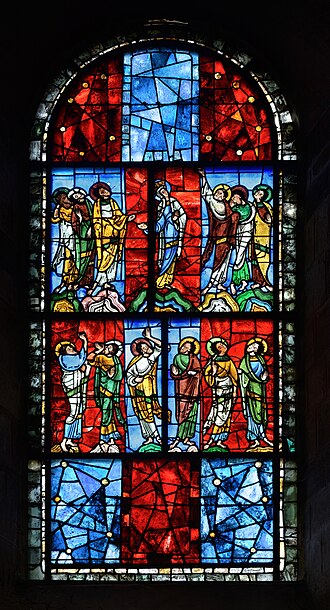
This stained glass window in the Cathedral of Saint Julian of Le Mans (Le Mans, France) depicts the Virgin Mary and the apostles during the Ascension of Jesus. Today is the Feast of the Ascension in Western Christianity.
 #ImageOfTheDay
Picture of the day
This stained glass window in the Cathedral of Saint Julian of Le Mans (Le Mans, France) depicts the Virgin Mary and the apostles during the Ascension of Jesus. Today is the Feast of the Ascension in Western Christianity.
Read More
Picture of the day


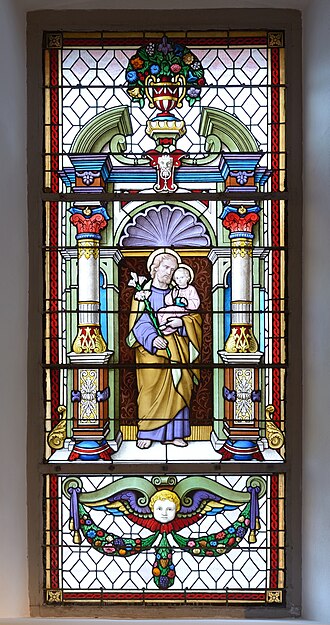
Saint Joseph depicted holding a staff with lily blossoms and the Christ Child on a stained-glass window in the Saint Antony church in Urtijëi. Today is St. Joseph’s feast day in Western Christianity.
 #ImageOfTheDay
Picture of the day
Saint Joseph depicted holding a staff with lily blossoms and the Christ Child on a stained-glass window in the Saint Antony church in Urtijëi. Today is St. Joseph’s feast day in Western Christianity.
Read More
Picture of the day


A shattered ceiling light fixture on a bamboo floor mat. The lamp was a semi flush mounted light fixture with a shallow glass dome of clear glass coated with white glass on the inside. In the fixture are LED light bulbs with E27 Edison screw. The hook in the ceiling suddenly came lose one day and the lamp crashed to the floor in an apartment in Brastad, Lysekil Municipality, Sweden. Photographed in natural light from the window. Focus stacked from 10 photos.
 #ImageOfTheDay
Picture of the day
A shattered ceiling light fixture on a bamboo floor mat. The lamp was a semi flush mounted light fixture with a shallow glass dome of clear glass coated with white glass on the inside. In the fixture are LED light bulbs with E27 Edison screw. The hook in the ceiling suddenly came lose one day and the lamp crashed to the floor in an apartment in Brastad, Lysekil Municipality, Sweden. Photographed in natural light from the window. Focus stacked from 10 photos.
Read More
Picture of the day


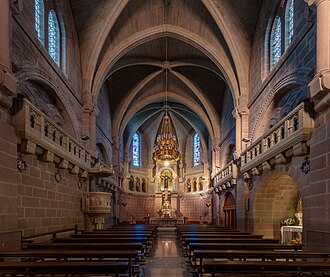
Basilica, Xavier, Navarre, Spain. The basilica belongs to the ensemble of the Castle of Xavier, built in the 10th century, although the basilica was not built until end of the 19th and beginning of the 20th century. Of eclectic style, the interior has a unique neogothic nave built with grey stone and white marble. The stained glass is a work of painter Marcelino Santamaría from Burgos. The main altar is an artistic decorative work, carved in stone inlaid with mosaics, bronzes and enamels by the Biais house in Paris. The tabernacle is located on a high relief that represents San Francisco baptizing and preaching.
 #ImageOfTheDay
Picture of the day
Basilica, Xavier, Navarre, Spain. The basilica belongs to the ensemble of the Castle of Xavier, built in the 10th century, although the basilica was not built until end of the 19th and beginning of the 20th century. Of eclectic style, the interior has a unique neogothic nave built with grey stone and white marble. The stained glass is a work of painter Marcelino Santamaría from Burgos. The main altar is an artistic decorative work, carved in stone inlaid with mosaics, bronzes and enamels by the Biais house in Paris. The tabernacle is located on a high relief that represents San Francisco baptizing and preaching.
Read More
Picture of the day


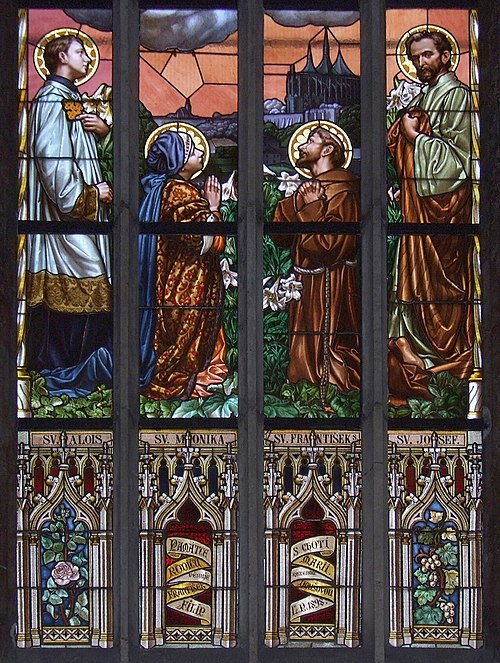
Detail of a stained glass window in St. Barbara’s Church (Kutná Hora, Czech Republic). The window depicts St. Aloysius, St. Monica, St. Francis of Assisi, and St. Joseph in prayer. Today is All Saints’ Day.
 #ImageOfTheDay
Picture of the day
Detail of a stained glass window in St. Barbara’s Church (Kutná Hora, Czech Republic). The window depicts St. Aloysius, St. Monica, St. Francis of Assisi, and St. Joseph in prayer. Today is All Saints’ Day.
Read More