humor

From Sunday Mass to stand-up: How Catholic Laughter is building community through comedy #Catholic A comedy show at church might seem like an unexpected combination, but when Catholic comedian Carl Kozlowski and his longtime friend Scott Vinci began hosting performances after Sunday Mass at a Los Angeles parish, they discovered that laughter could bring people together in ways they hadnʼt expected. Nearly 10 years later, their organization, Catholic Laughter, is bringing comedy nights to parishes across the country.After moving to Los Angeles from Chicago, Kozlowski began to attend a parish in Hollywood where he knew the pastor from his days in Chicago. The pastor was looking to have a form of entertainment during the monthly doughnut Sundays at the parish. Knowing Kozlowski was a comedian, the pastor asked him if he’d be willing to put on a comedy show. Kozlowski then enlisted the help of Vinci — who had helped him produce shows in the past.“We put on the first show and I think people were confused at first wondering why are there people on stage telling jokes on the microphone while weʼre trying to chit chat and have our doughnuts, but by the end of the hour, everybody was laughing. So he got enough positive feedback to keep doing it,” Kozlowski told EWTN News in an interview.Over the next four months, more and more people began to attend the monthly comedy show. Kozlowski shared that word was spreading to the surrounding neighborhoods and even non-Catholics began to attend.Noticing the success the comedy shows were having, the pastor at the parish decided to host a benefit show to raise money for church repairs. The event had such a positive outcome that people had to be turned away due to lack of space in the parish.
 
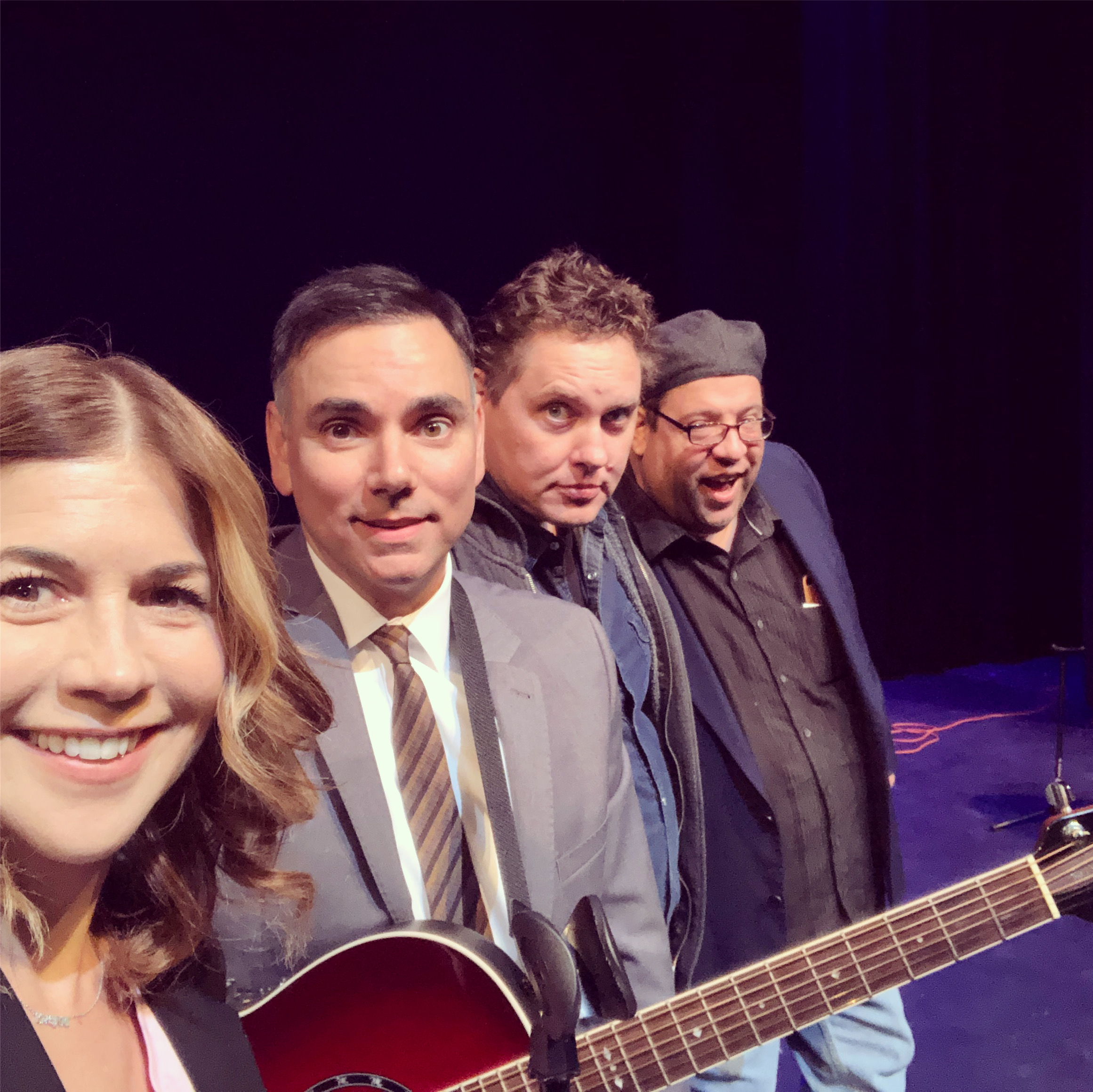
 From left to right: Catholic Laughter comedians Mary Gallagher, Scott Vinci, Tom Clark, and Carl Kozlowski. | Credit: Photo courtesy of Scott Vinci
 
 From there, the two began Catholic Laughter. The company offers clean, stand-up entertainment for parishes, schools, fundraising events, retreats, charity events, singles groups, and more. The comedians they work with have been featured on shows such as “The Tonight Show with Jimmy Fallon,” Comedy Central, “The Late Show with Stephen Colbert,” The Laugh Factory, and The Comedy Store. While not all the comedians are Catholic — roughly half are — they are all clean comics who are believers.One of the most impactful moments Kozwolski said he has witnessed was hearing the story of how one of their comedy shows brought someone back to the Church after 20 years.“A lot of times Catholics will bring their non-Catholic friends to the shows — or people that are lapsed Catholics and haven’t been to church in forever — because they know this will be a fun environment to introduce them to a Catholic environment,” Kozlowski explained. “And I remember one lady brought her husband who hadnʼt gone to Mass. She said he stopped going almost 20 years before and he came to the show and he had such a good time that he started going to Mass with her afterwards.”For Vinci, some of the most rewarding shows are those that help raise money for different charities. He shared that for several years in a row, Catholic Laughter hosted a show for Friends of Rwandan Education, a nonprofit organization based in Hudson, Ohio, that aims to empower teenagers and young adults in Rwanda through school support, scholarships, and business training subsidies.“It just really felt good to help different charities and different people out, especially when some of these charities that weʼve worked for in the past have raised over $100,000 that night we did it [the show] because of ticket sales and then they would do auctions and silent auctions and live auctions … Itʼs just really fulfilling,” Vinci told EWTN News.The friends agree that these shows also serve as a form of evangelization in that it “creates a lot of fellowship,” Vinci said.“I feel like the church community, a lot of itʼs built on the after hours, even if itʼs coffee and doughnuts after church. Thatʼs when you get to know your other parishioners and you talk to them,” he added. “And this is an evening of fellowship, but also thatʼs where people maybe meet other people in the church that they hadnʼt talked to or theyʼll see them in church and go, ‘Oh, I remember you from the comedy night’ … You feel like youʼve shared something.”
 
 Comedian Mary Gallagher performs at the Mater Dolorosa Retreat Center in Sierra Madre, California, in 2023. | Credit: Photo courtesy of Scott Vinci
 
 Vinci said he hopes those who attend their shows will take away with them that while “religion is very serious, thereʼs also funny aspects to it and also to life and to share that with other parishioners is, I think, something special.”As for their hopes for Catholic Laughter, Vinci said he hopes they can “bring this to more churches across the nation and even other countries and … we just want to spread more and spread joy more to more places, more churches, more fundraisers, etc."

From Sunday Mass to stand-up: How Catholic Laughter is building community through comedy #Catholic A comedy show at church might seem like an unexpected combination, but when Catholic comedian Carl Kozlowski and his longtime friend Scott Vinci began hosting performances after Sunday Mass at a Los Angeles parish, they discovered that laughter could bring people together in ways they hadnʼt expected. Nearly 10 years later, their organization, Catholic Laughter, is bringing comedy nights to parishes across the country.After moving to Los Angeles from Chicago, Kozlowski began to attend a parish in Hollywood where he knew the pastor from his days in Chicago. The pastor was looking to have a form of entertainment during the monthly doughnut Sundays at the parish. Knowing Kozlowski was a comedian, the pastor asked him if he’d be willing to put on a comedy show. Kozlowski then enlisted the help of Vinci — who had helped him produce shows in the past.“We put on the first show and I think people were confused at first wondering why are there people on stage telling jokes on the microphone while weʼre trying to chit chat and have our doughnuts, but by the end of the hour, everybody was laughing. So he got enough positive feedback to keep doing it,” Kozlowski told EWTN News in an interview.Over the next four months, more and more people began to attend the monthly comedy show. Kozlowski shared that word was spreading to the surrounding neighborhoods and even non-Catholics began to attend.Noticing the success the comedy shows were having, the pastor at the parish decided to host a benefit show to raise money for church repairs. The event had such a positive outcome that people had to be turned away due to lack of space in the parish. From left to right: Catholic Laughter comedians Mary Gallagher, Scott Vinci, Tom Clark, and Carl Kozlowski. | Credit: Photo courtesy of Scott Vinci From there, the two began Catholic Laughter. The company offers clean, stand-up entertainment for parishes, schools, fundraising events, retreats, charity events, singles groups, and more. The comedians they work with have been featured on shows such as “The Tonight Show with Jimmy Fallon,” Comedy Central, “The Late Show with Stephen Colbert,” The Laugh Factory, and The Comedy Store. While not all the comedians are Catholic — roughly half are — they are all clean comics who are believers.One of the most impactful moments Kozwolski said he has witnessed was hearing the story of how one of their comedy shows brought someone back to the Church after 20 years.“A lot of times Catholics will bring their non-Catholic friends to the shows — or people that are lapsed Catholics and haven’t been to church in forever — because they know this will be a fun environment to introduce them to a Catholic environment,” Kozlowski explained. “And I remember one lady brought her husband who hadnʼt gone to Mass. She said he stopped going almost 20 years before and he came to the show and he had such a good time that he started going to Mass with her afterwards.”For Vinci, some of the most rewarding shows are those that help raise money for different charities. He shared that for several years in a row, Catholic Laughter hosted a show for Friends of Rwandan Education, a nonprofit organization based in Hudson, Ohio, that aims to empower teenagers and young adults in Rwanda through school support, scholarships, and business training subsidies.“It just really felt good to help different charities and different people out, especially when some of these charities that weʼve worked for in the past have raised over $100,000 that night we did it [the show] because of ticket sales and then they would do auctions and silent auctions and live auctions … Itʼs just really fulfilling,” Vinci told EWTN News.The friends agree that these shows also serve as a form of evangelization in that it “creates a lot of fellowship,” Vinci said.“I feel like the church community, a lot of itʼs built on the after hours, even if itʼs coffee and doughnuts after church. Thatʼs when you get to know your other parishioners and you talk to them,” he added. “And this is an evening of fellowship, but also thatʼs where people maybe meet other people in the church that they hadnʼt talked to or theyʼll see them in church and go, ‘Oh, I remember you from the comedy night’ … You feel like youʼve shared something.” Comedian Mary Gallagher performs at the Mater Dolorosa Retreat Center in Sierra Madre, California, in 2023. | Credit: Photo courtesy of Scott Vinci Vinci said he hopes those who attend their shows will take away with them that while “religion is very serious, thereʼs also funny aspects to it and also to life and to share that with other parishioners is, I think, something special.”As for their hopes for Catholic Laughter, Vinci said he hopes they can “bring this to more churches across the nation and even other countries and … we just want to spread more and spread joy more to more places, more churches, more fundraisers, etc."

Catholic Laughter is bringing clean comedy to parishes across the country, using humor to build fellowship, support charities, and create opportunities for evangelization.

Read More
How to face tragedy and still affirm God is your friend? The answer of a Venezuelan mother #Catholic On June 24, 2026, María Elena Rocha was in Caracas. That Wednesday, a public holiday in Venezuela, she decided to set out on a pilgrimage with two friends to visit sites associated with Venezuela’s first saints: St. Carmen Rendiles and St. José Gregorio Hernández.Her devotion made the circuitous, hour-long  journey from her home in La Guaira to the capital city feel shorter. María Elena lived in La Guaira’s Caribbean Golf I building with her family: her husband, Wilson, and their sons, 25-year-old Ricardo and 22-year-old Enrique, all three of whom chose to stay home that day.In Caracas, the day unfolded normally. María Elena and her friends visited the Colegio Belén, where the remains of Mother Carmen rest. Afterward, they went to the José Gregorio Hernández House Museum and concluded their pilgrimage with a Mass at Our Lady of La Candelaria Parish, where the remains of the “doctor of the poor” also rest.Earthquakes and uncertaintyAt 6:04 p.m., María Elena and her friends were in line to buy ice cream. Dark gray clouds over Caracas signaled an approaching storm, but the roar would not come from the sky but from the earth. At that moment, the ground shook with extreme violence, and panic reigned. The three of them managed to get out of the shopping mall where they had been.Soon, the power grid failed and both the internet and telephone lines went down. Two hours later, the group was finally able to retrieve their car from where it was parked and began the journey back home, a trip that, this time, seemed to last forever.
 
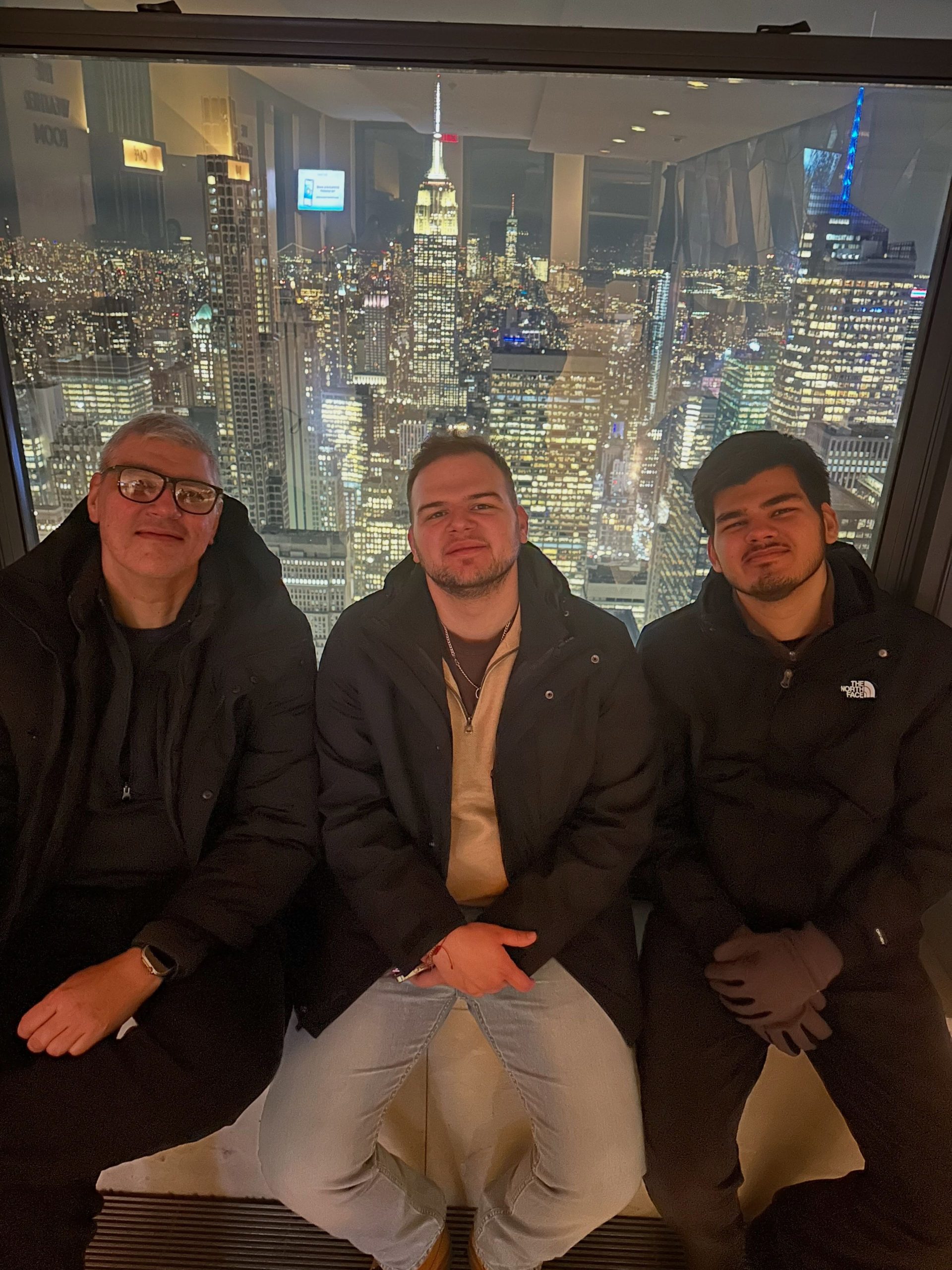
 Wilson, Ricardo, and Enrique on vacation | Credit: Courtesy of María Elena Rocha
 
 María Elena told EWTN News Español, the Spanish-language sister service of EWTN News, that what she encountered in La Guaira looked like something out of a horror movie. Late into the night, only fires broke the darkness. Entire buildings had collapsed. People were searching desperately through the rubble, while others were stealing and looting. There were shrieks, wailing, and weeping.The journey home was difficult, not only because of the damaged state of the road, but also because of the shock evoked by the scene. Every meter covered, every sight of pain and destruction, dealt a blow to the hope María Elena still clung to: the hope of reuniting with her loved ones. She could only reach her home on foot.María Elena faces unimaginable painIt was nearly midnight when María Elena saw that where the Caribbean Golf I building had once stood there was now only a massive pile of rubble. The 49-year-old woman said that paradoxically she felt a great sense of inner peace despite the tragedy. Amidst the confusion, she was told that one of her children was alive but trapped in the rubble. With great effort, María Elena made her way to the spot.It was Enrique, her youngest son. He was severely injured but was able to communicate with his mother. The first few hours following the earthquakes were chaotic in La Guaira; rescue efforts had to be carried out by hand because the necessary equipment for a swift response was not available. It was a very long night during which Enrique asked María Elena not to abandon him. “Don’t worry, son, I will never leave you alone,” she told him.
 
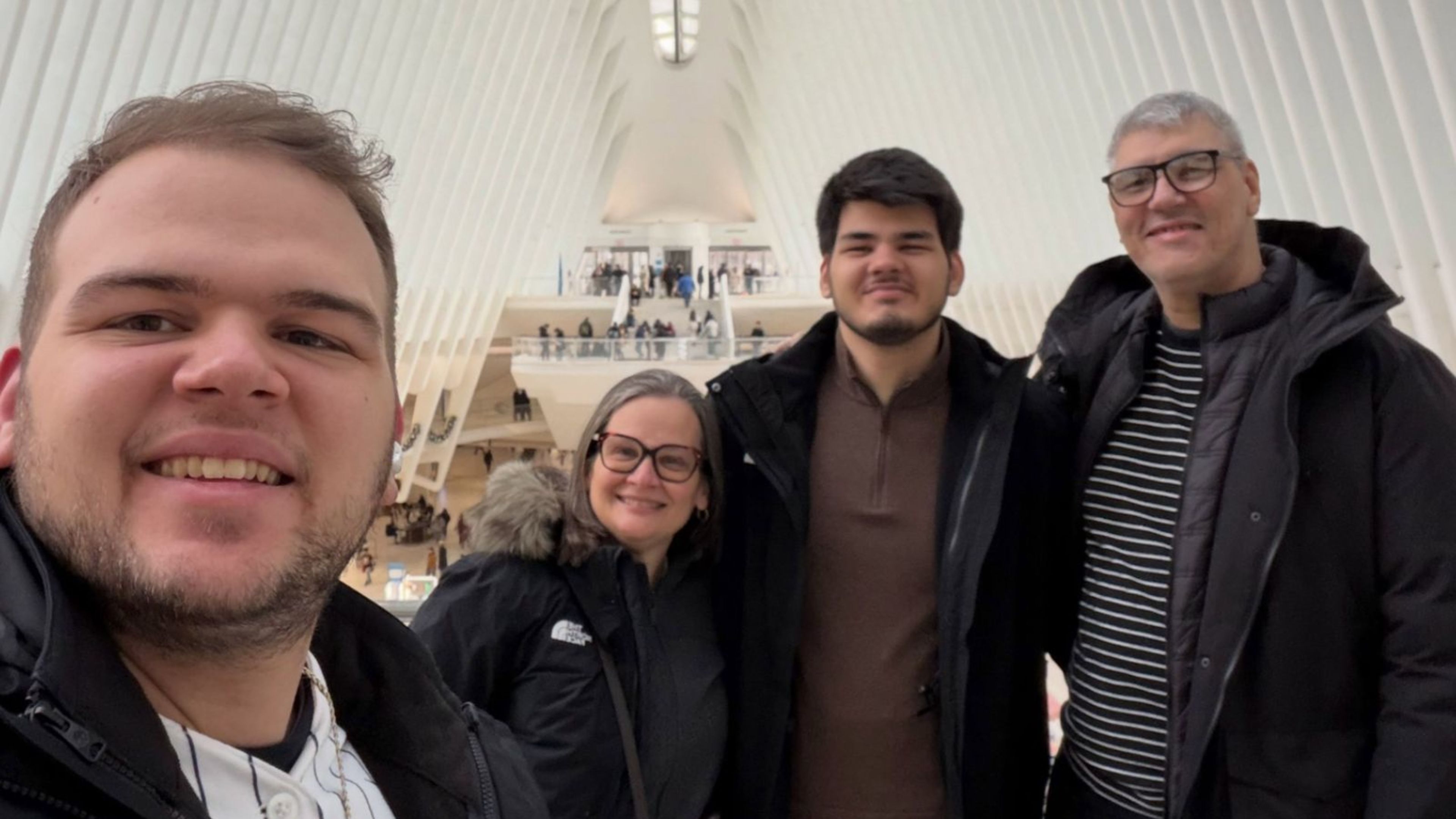
 María Elena with Enrique | Credit: Courtesy of María Elena Rocha
 
 And so, morning came, followed by the afternoon. Trapped and in pain, Enrique could hold on no longer. María Elena, always close by, said she heard his final breath: “He waited for me to take his last breath.” Enrique died right there, alongside his father and his older brother. It was days later that rescuers managed to recover their bodies, which María Elena was then able to give a Christian burial.“My faith grew stronger,” María Elena said. Her journey, however, has not been easy. It has been filled with pain, reproaches, and at times even anger toward God. María Elena was left on her own, and many times she sought answers.“I fought with God. I was filled with rage. ‘Why did you leave me here? Am I so bad that I have to stay here?’ Yet, I surrendered all my suffering to God for the sanctification of their souls,” she shared.Her greatest refuge has always been faith. Now she regularly attends a prayer group at a parish in Caracas, which she says has been very beneficial. She seeks indulgences for her husband and children and says she always tries to be cheerful and “let others see God in me.”“Despite the great loss I’ve experienced, I’ve held onto my sense of humor. That‘s one of the things I asked of God when my son Enrique passed away. I accepted his death with deep pain and entrusted him to God, but I prayed that he wouldn’t take away my joy because I had always been the source of joy in our home. That’s what my children and my husband used to say,” she remarked.“I want my husband and my children to feel proud of their wife and mother. I know that if I am happy, they will be happy, too. Happiness is a decision, and I decided to entrust my happiness to God because he wants all of us to be happy,” she added.Oct. 24 marks four months since that terrible day. More than 6,000 Venezuelans lost their lives in a matter of seconds; thousands were left injured, and many others remain missing. “Despite everything, I thank God for the fact that I was able to speak with my youngest son at that moment. I am grateful to God for life,” María Elena says, though she adds with that sense of humor she hasn’t lost: “Although I do ask him to take me soon.”“I ask that I might fulfill my mission quickly so that I can go to Heaven, because that’s what I long for most these days. Even before, I had no fear of death, because that is our destiny: to die in order to live and I want to live with God,” she said.María Elena says she doesn’t yet know what will become of her life, but affirms that she has “surrendered herself” to whatever Providence may decide.A message on the value of sufferingThe Church teaches us that God does not desire suffering for its own sake, nor is he its direct cause. The explanation of how God can permit evil without being its author is profound, yet it does not fully resolve the pain of any given loss. Through faith, we believe that God can bring good even out of evil; however, this does not make the death of innocent people a good thing, nor does it justify tragedies.Such suffering can take on meaning when experienced in union with Christ. As has been evidenced in the case in Venezuela following the earthquakes, pain can awaken solidarity and mutual responsibility; it can even prompt a society to reflect on how it might improve. This is María Elena’s conviction.“We have been suffering for years. Just try it, you’ll see: when you entrust that suffering to Christ, all the little things we go through, those moments of anger and indignation, offering them to Jesus for the sake of someone else, you will see how the blessings follow,” she said.
 
 María Elena after recovering intact from the rubble a statue of Our Lady of Fatima which belonged to the Luso-Venezuelan Center of Vargas | Credit: Courtesy of María Elena Rocha
 
 “And another thing: thank God for everything. It’s incredible, when you thank God for both the bad things and the good, blessings will follow. I’m not saying that problems won’t continue to arise; I still have plenty of things to deal with myself, but when we are with God, our burdens are lighter,” María Elena reflected.“I am not alone, because I have God; I have the Most Holy Virgin Mary, who has always been with me and I have felt her presence. And who better than she who knows what this pain is like?” she said.This story was first published by EWTN News Español, the Spanish-language sister service of EWTN News. It has been translated and adapted by EWTN News English.

How to face tragedy and still affirm God is your friend? The answer of a Venezuelan mother #Catholic On June 24, 2026, María Elena Rocha was in Caracas. That Wednesday, a public holiday in Venezuela, she decided to set out on a pilgrimage with two friends to visit sites associated with Venezuela’s first saints: St. Carmen Rendiles and St. José Gregorio Hernández.Her devotion made the circuitous, hour-long  journey from her home in La Guaira to the capital city feel shorter. María Elena lived in La Guaira’s Caribbean Golf I building with her family: her husband, Wilson, and their sons, 25-year-old Ricardo and 22-year-old Enrique, all three of whom chose to stay home that day.In Caracas, the day unfolded normally. María Elena and her friends visited the Colegio Belén, where the remains of Mother Carmen rest. Afterward, they went to the José Gregorio Hernández House Museum and concluded their pilgrimage with a Mass at Our Lady of La Candelaria Parish, where the remains of the “doctor of the poor” also rest.Earthquakes and uncertaintyAt 6:04 p.m., María Elena and her friends were in line to buy ice cream. Dark gray clouds over Caracas signaled an approaching storm, but the roar would not come from the sky but from the earth. At that moment, the ground shook with extreme violence, and panic reigned. The three of them managed to get out of the shopping mall where they had been.Soon, the power grid failed and both the internet and telephone lines went down. Two hours later, the group was finally able to retrieve their car from where it was parked and began the journey back home, a trip that, this time, seemed to last forever. Wilson, Ricardo, and Enrique on vacation | Credit: Courtesy of María Elena Rocha María Elena told EWTN News Español, the Spanish-language sister service of EWTN News, that what she encountered in La Guaira looked like something out of a horror movie. Late into the night, only fires broke the darkness. Entire buildings had collapsed. People were searching desperately through the rubble, while others were stealing and looting. There were shrieks, wailing, and weeping.The journey home was difficult, not only because of the damaged state of the road, but also because of the shock evoked by the scene. Every meter covered, every sight of pain and destruction, dealt a blow to the hope María Elena still clung to: the hope of reuniting with her loved ones. She could only reach her home on foot.María Elena faces unimaginable painIt was nearly midnight when María Elena saw that where the Caribbean Golf I building had once stood there was now only a massive pile of rubble. The 49-year-old woman said that paradoxically she felt a great sense of inner peace despite the tragedy. Amidst the confusion, she was told that one of her children was alive but trapped in the rubble. With great effort, María Elena made her way to the spot.It was Enrique, her youngest son. He was severely injured but was able to communicate with his mother. The first few hours following the earthquakes were chaotic in La Guaira; rescue efforts had to be carried out by hand because the necessary equipment for a swift response was not available. It was a very long night during which Enrique asked María Elena not to abandon him. “Don’t worry, son, I will never leave you alone,” she told him. María Elena with Enrique | Credit: Courtesy of María Elena Rocha And so, morning came, followed by the afternoon. Trapped and in pain, Enrique could hold on no longer. María Elena, always close by, said she heard his final breath: “He waited for me to take his last breath.” Enrique died right there, alongside his father and his older brother. It was days later that rescuers managed to recover their bodies, which María Elena was then able to give a Christian burial.“My faith grew stronger,” María Elena said. Her journey, however, has not been easy. It has been filled with pain, reproaches, and at times even anger toward God. María Elena was left on her own, and many times she sought answers.“I fought with God. I was filled with rage. ‘Why did you leave me here? Am I so bad that I have to stay here?’ Yet, I surrendered all my suffering to God for the sanctification of their souls,” she shared.Her greatest refuge has always been faith. Now she regularly attends a prayer group at a parish in Caracas, which she says has been very beneficial. She seeks indulgences for her husband and children and says she always tries to be cheerful and “let others see God in me.”“Despite the great loss I’ve experienced, I’ve held onto my sense of humor. That‘s one of the things I asked of God when my son Enrique passed away. I accepted his death with deep pain and entrusted him to God, but I prayed that he wouldn’t take away my joy because I had always been the source of joy in our home. That’s what my children and my husband used to say,” she remarked.“I want my husband and my children to feel proud of their wife and mother. I know that if I am happy, they will be happy, too. Happiness is a decision, and I decided to entrust my happiness to God because he wants all of us to be happy,” she added.Oct. 24 marks four months since that terrible day. More than 6,000 Venezuelans lost their lives in a matter of seconds; thousands were left injured, and many others remain missing. “Despite everything, I thank God for the fact that I was able to speak with my youngest son at that moment. I am grateful to God for life,” María Elena says, though she adds with that sense of humor she hasn’t lost: “Although I do ask him to take me soon.”“I ask that I might fulfill my mission quickly so that I can go to Heaven, because that’s what I long for most these days. Even before, I had no fear of death, because that is our destiny: to die in order to live and I want to live with God,” she said.María Elena says she doesn’t yet know what will become of her life, but affirms that she has “surrendered herself” to whatever Providence may decide.A message on the value of sufferingThe Church teaches us that God does not desire suffering for its own sake, nor is he its direct cause. The explanation of how God can permit evil without being its author is profound, yet it does not fully resolve the pain of any given loss. Through faith, we believe that God can bring good even out of evil; however, this does not make the death of innocent people a good thing, nor does it justify tragedies.Such suffering can take on meaning when experienced in union with Christ. As has been evidenced in the case in Venezuela following the earthquakes, pain can awaken solidarity and mutual responsibility; it can even prompt a society to reflect on how it might improve. This is María Elena’s conviction.“We have been suffering for years. Just try it, you’ll see: when you entrust that suffering to Christ, all the little things we go through, those moments of anger and indignation, offering them to Jesus for the sake of someone else, you will see how the blessings follow,” she said. María Elena after recovering intact from the rubble a statue of Our Lady of Fatima which belonged to the Luso-Venezuelan Center of Vargas | Credit: Courtesy of María Elena Rocha “And another thing: thank God for everything. It’s incredible, when you thank God for both the bad things and the good, blessings will follow. I’m not saying that problems won’t continue to arise; I still have plenty of things to deal with myself, but when we are with God, our burdens are lighter,” María Elena reflected.“I am not alone, because I have God; I have the Most Holy Virgin Mary, who has always been with me and I have felt her presence. And who better than she who knows what this pain is like?” she said.This story was first published by EWTN News Español, the Spanish-language sister service of EWTN News. It has been translated and adapted by EWTN News English.

Maria Elena Rocha recounts how despite the tragedy of losing her husband and two sons in last summer’s earthquake in Venezuela, her faith and trust in God still sustains her.
Read More
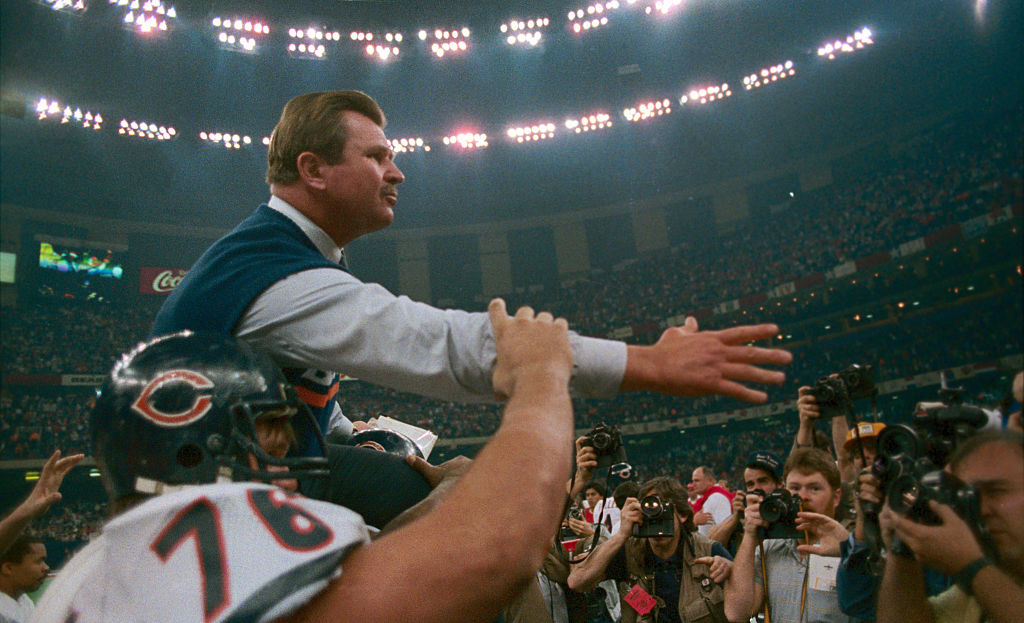
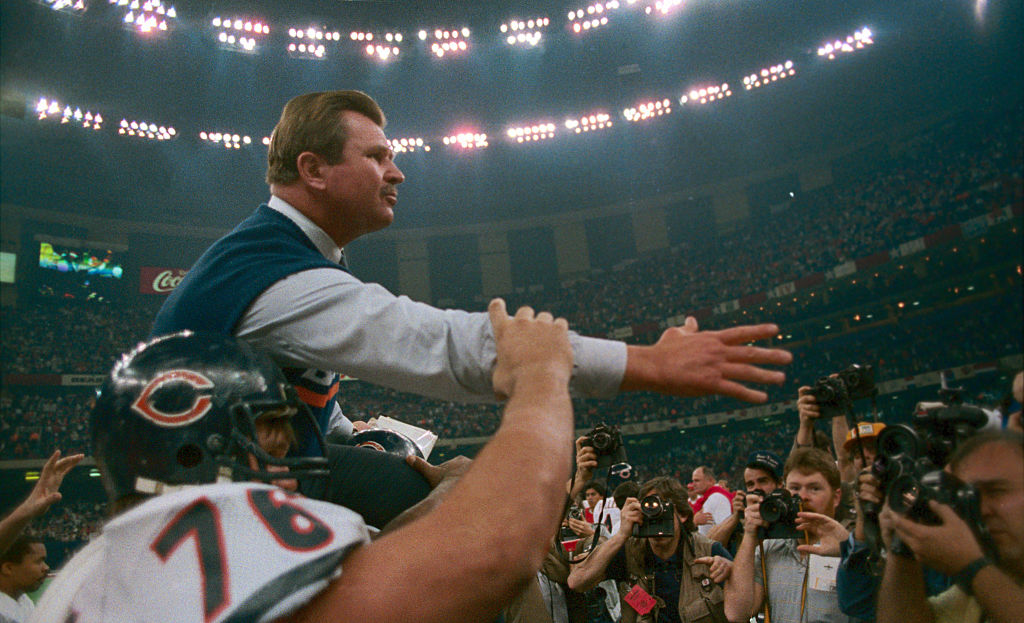
NFL legend Mike Ditka was a Catholic coach #Catholic Former professional football coach Mike Ditka, a practicing Catholic who occasionally served as lector at the 7 a.m. team Mass on game-day Sundays during his decade leading the Chicago Bears, died Friday. He was 86.“Iron Mike,” as Ditka was known, had a famously explosive temper, which often boiled over on the sidelines and in postgame press conferences. Ditka, who led the Bears to a Super Bowl XX victory in 1986, once broke his right hand after punching a hard object over frustration with the play of a rookie offensive lineman — then, before the next game, told his team to “win this one for Lefty.”Less well known was Ditka’s commitment to his Catholic faith, for which he credited his convert mother and the nuns of his parochial school in Aliquippa, Pennsylvania, where he was raised.“Growing up, the most important thing was the sacraments with my family,” Ditka told an interviewer with the Catholic website “One Peter Five” in August 2018. “We loved everything about the faith. Going to Catholic school and learning the faith, I wouldn’t trade that for anything.”“I don’t care how many times I got hit by a nun,” Ditka said, “it was good for me.”Football successBorn Michael Dyczko in 1939, Ditka was the son of a non-churchgoing Ukrainian and Polish steelworker father and an Irish and German mother who converted to Catholicism.He played tight end for the University of Pittsburgh and then in the NFL for the Chicago Bears, Philadelphia Eagles, and Dallas Cowboys. In 1988 Ditka was honored as the first tight end ever to be inducted into the Pro Football Hall of Fame.After retiring from playing, Ditka served as an assistant coach before getting his unlikely chance as the head coach of the Bears in 1982.His 1985 Bears went 15-1 during the regular season and stomped their way through the playoffs to a Super Bowl victory. So confident were the players of that dominant team that they recorded a rap song called “The Super Bowl Shuffle” during the regular season. (Ditka later said he didn’t know about it, but he didn’t criticize the players for doing it.)Ditka’s success, toughness, temper, and sense of humor made him a cultural phenomenon, inspiring a recurring skit (and guest appearances) on “Saturday Night Live” and launching a career as a motivational speaker.When the team’s fortunes plummeted, he was fired in 1992. He later coached the New Orleans Saints but was fired after three years.Off-field philanthropyDitka made millions as a pitchman for dozens of products after he left football, and he used some of that wealth to help others.“Ditka was very supportive of Misericordia and other charities that supported children with special needs and disabilities,” Mary FioRito, an attorney, lifelong Chicagoan, and Cardinal Francis George Fellow at the Ethics and Public Policy Center, told the National Catholic Register, the sister partner of EWTN News.And not just with checks.“He spoke at fundraisers, and surprised observers could catch him privately visiting with residents he knew by name,” reported the suburban Chicago Daily Herald.Ditka was also a member of the Knights of Columbus and participated in the organization’s charitable activities.‘Constant turmoil’In his 1986 autobiography “Ditka,” published at the peak of his success, Ditka admitted to having had “no spiritual life at all” during the 1970s, before two other coaches got him involved in a Bible study that reintroduced him to God.“I always had faith, but I never had understanding,” Ditka said. “I always knew what was going on in life. I was raised right. I did all the things you were supposed to do. But I never understood why I was supposed to do them, because I never had a total understanding of what was going on.”He also acknowledged what he called “constant turmoil inside,” and he compared himself unfavorably to longtime Dallas Cowboys coach Tom Landry (1924–2000), whom he admired for always keeping his cool on the sidelines and for his involvement in the Fellowship of Christian Athletes.“My priorities can get mixed up. I don’t think he ever gets his priorities mixed up,” Ditka said in the book.Ditka said he discovered that following his faith was hard work.“Sometimes you take for granted that your faith will always be there and everything will be fine. But without making the effort, that’s just not a fact. You have to make a real effort to live your faith daily,” Ditka said in the book.“Nobody is going to do it every day. Nobody is going to do it perfectly,” he continued. “But unless you make the effort you’ve got no chance at all.”Ditka married in 1961, got divorced in 1973, and then remarried in 1977. Both wives survive him, as do his four children, according to an obituary in the Daily Herald.“I’m far from perfect now, and I’m never going to be perfect,” Ditka said in his autobiography. “When I die, I’m going to be still trying to get better than I am.”This story was first published by the National Catholic Register, the sister partner of EWTN News, and has been adapted by EWTN News.

NFL legend Mike Ditka was a Catholic coach #Catholic Former professional football coach Mike Ditka, a practicing Catholic who occasionally served as lector at the 7 a.m. team Mass on game-day Sundays during his decade leading the Chicago Bears, died Friday. He was 86.“Iron Mike,” as Ditka was known, had a famously explosive temper, which often boiled over on the sidelines and in postgame press conferences. Ditka, who led the Bears to a Super Bowl XX victory in 1986, once broke his right hand after punching a hard object over frustration with the play of a rookie offensive lineman — then, before the next game, told his team to “win this one for Lefty.”Less well known was Ditka’s commitment to his Catholic faith, for which he credited his convert mother and the nuns of his parochial school in Aliquippa, Pennsylvania, where he was raised.“Growing up, the most important thing was the sacraments with my family,” Ditka told an interviewer with the Catholic website “One Peter Five” in August 2018. “We loved everything about the faith. Going to Catholic school and learning the faith, I wouldn’t trade that for anything.”“I don’t care how many times I got hit by a nun,” Ditka said, “it was good for me.”Football successBorn Michael Dyczko in 1939, Ditka was the son of a non-churchgoing Ukrainian and Polish steelworker father and an Irish and German mother who converted to Catholicism.He played tight end for the University of Pittsburgh and then in the NFL for the Chicago Bears, Philadelphia Eagles, and Dallas Cowboys. In 1988 Ditka was honored as the first tight end ever to be inducted into the Pro Football Hall of Fame.After retiring from playing, Ditka served as an assistant coach before getting his unlikely chance as the head coach of the Bears in 1982.His 1985 Bears went 15-1 during the regular season and stomped their way through the playoffs to a Super Bowl victory. So confident were the players of that dominant team that they recorded a rap song called “The Super Bowl Shuffle” during the regular season. (Ditka later said he didn’t know about it, but he didn’t criticize the players for doing it.)Ditka’s success, toughness, temper, and sense of humor made him a cultural phenomenon, inspiring a recurring skit (and guest appearances) on “Saturday Night Live” and launching a career as a motivational speaker.When the team’s fortunes plummeted, he was fired in 1992. He later coached the New Orleans Saints but was fired after three years.Off-field philanthropyDitka made millions as a pitchman for dozens of products after he left football, and he used some of that wealth to help others.“Ditka was very supportive of Misericordia and other charities that supported children with special needs and disabilities,” Mary FioRito, an attorney, lifelong Chicagoan, and Cardinal Francis George Fellow at the Ethics and Public Policy Center, told the National Catholic Register, the sister partner of EWTN News.And not just with checks.“He spoke at fundraisers, and surprised observers could catch him privately visiting with residents he knew by name,” reported the suburban Chicago Daily Herald.Ditka was also a member of the Knights of Columbus and participated in the organization’s charitable activities.‘Constant turmoil’In his 1986 autobiography “Ditka,” published at the peak of his success, Ditka admitted to having had “no spiritual life at all” during the 1970s, before two other coaches got him involved in a Bible study that reintroduced him to God.“I always had faith, but I never had understanding,” Ditka said. “I always knew what was going on in life. I was raised right. I did all the things you were supposed to do. But I never understood why I was supposed to do them, because I never had a total understanding of what was going on.”He also acknowledged what he called “constant turmoil inside,” and he compared himself unfavorably to longtime Dallas Cowboys coach Tom Landry (1924–2000), whom he admired for always keeping his cool on the sidelines and for his involvement in the Fellowship of Christian Athletes.“My priorities can get mixed up. I don’t think he ever gets his priorities mixed up,” Ditka said in the book.Ditka said he discovered that following his faith was hard work.“Sometimes you take for granted that your faith will always be there and everything will be fine. But without making the effort, that’s just not a fact. You have to make a real effort to live your faith daily,” Ditka said in the book.“Nobody is going to do it every day. Nobody is going to do it perfectly,” he continued. “But unless you make the effort you’ve got no chance at all.”Ditka married in 1961, got divorced in 1973, and then remarried in 1977. Both wives survive him, as do his four children, according to an obituary in the Daily Herald.“I’m far from perfect now, and I’m never going to be perfect,” Ditka said in his autobiography. “When I die, I’m going to be still trying to get better than I am.”This story was first published by the National Catholic Register, the sister partner of EWTN News, and has been adapted by EWTN News.

The Chicago Bears icon, who died on Friday, gave to charities, lectored at Mass, and belonged to the Knights of Columbus.
Read More