illness

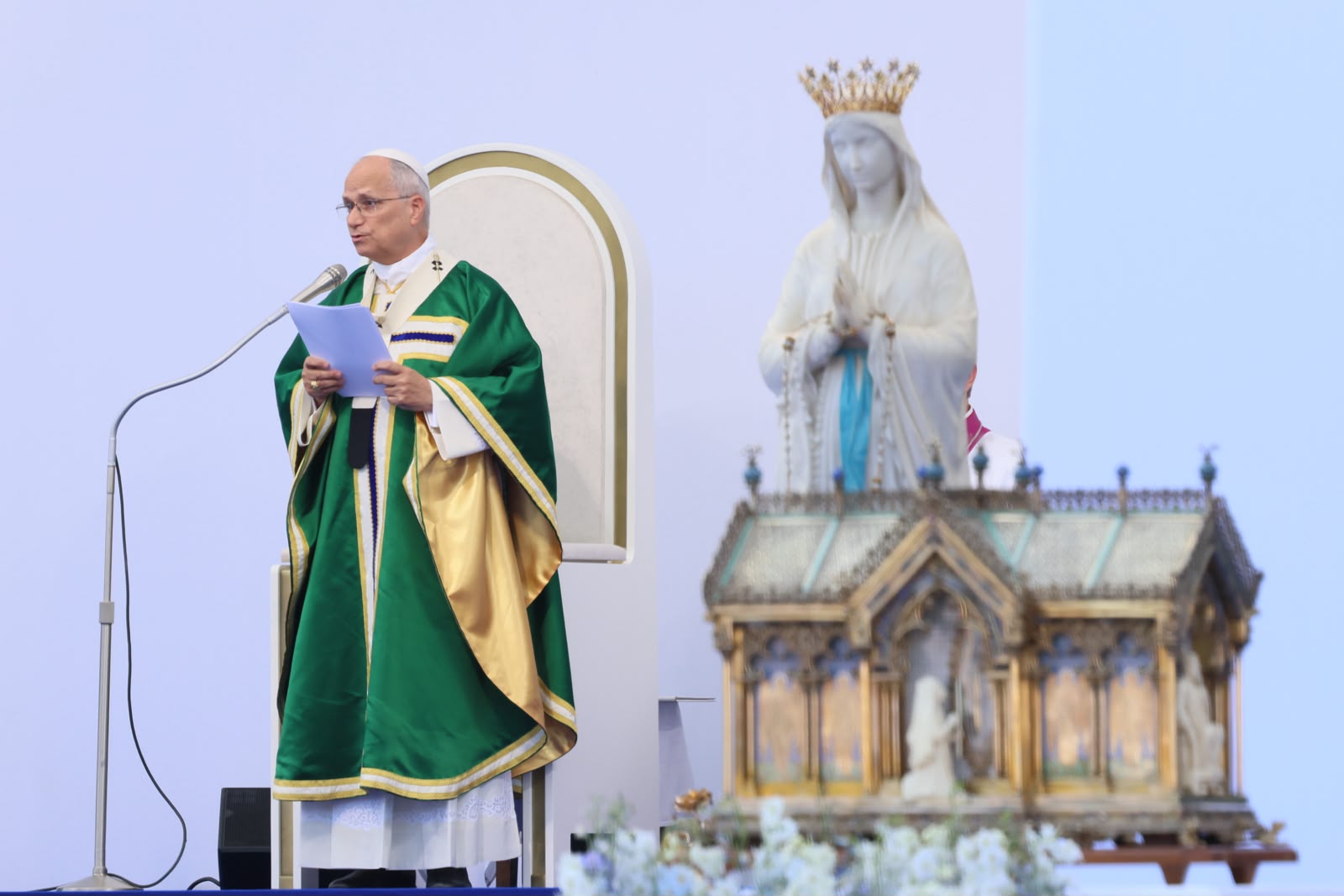
Argentinians join in prayer for earthquake-shattered Venezuelans #Catholic With thousands dead, injured, and missing in the wake of last week’s devastating earthquakes in Venezuela, Argentinians gathered in prayer for the Venezuelan people on June 28 at the basilica and national shrine of Our Lady of Luján. There, the archbishop of Mercedes-Luján, Jorge Eduardo Scheinig, offered Mass for the Venezuelan people.“Let us think of those who have died and their families,” Scheinig said in his homily. “In a single minute, so many people were left with nothing, absolutely nothing,” he noted.“Let us pray for the rescue workers and for all those who are working [on the ground]. Let us stand in solidarity with them through prayer,” said Scheinig, who proceeded to lead a moment of silence to pray to God and the Virgin for the people of Venezuela.The archbishop dedicated the rest of his homily to examining priorities, those things that “carry more weight than others” and “have the power to bring order to our lives.”“If you have the right priorities, you are at peace. But if you choose your priorities poorly, it causes confusion and anguish for you; it doesn’t help you live well. So, from time to time, we need to have the courage to reexamine our priorities,” he noted.In this regard, he said that “Jesus helps us order our priorities,” and elaborated: “What is Jesus’ priority? God. What comes first for Jesus? God. And what does he advise us? Put God first, and you won’t regret it,” he explained.He therefore urged people to ask themselves: “What place does God hold? What place does Mass hold?” he continued. “If you put God’s love first, if you love God in your life — that love is so good, so pure, and so radiant that it brings order to your entire life and helps you understand your whole life. Because God takes nothing away from you; he fills your life with love,” he pointed out. “Putting God first means taking a stand, taking a risk, and filling your heart with love; that helps you love everyone and everything in a different way, to love better,” he emphasized.Referring to the situation in Venezuela, Scheinig reflected: “Just look at how strange the world is. Today, television shows harrowing scenes. I was watching the news and saw a little boy crying — he had been left all alone after the earthquake, and it breaks your heart. Yet, a short while later, we’re watching the Argentina [World Cup] match.”“And notice, too, that we see scenes of war, of migrants who have nothing and live in a small tent. That’s the world. It happens to us in a family as well: You might be celebrating the 15th birthday of one of your children and then a close relative dies or someone comes down with an illness. That’s life. Life is that strange mix of very beautiful things and deeply painful things,” he noted.“But when your heart has priorities, you don’t get confused. And so, yes, we can cheer for the national team, but my priority isn’t soccer; my priority is life, it’s what happens to other people. I don’t let the things of life desensitize me,” he cautioned.That is why, “if God is your priority, you are able to not get desensitized to pain. You have your life on track. You can watch the World Cup, but you realize that it isn’t the priority. Your life is in order. You know where you stand, what you want, and what you don’t want,” he continued.In that context, he added, the need arises to stand with Venezuelans in prayer: “God, strengthen so many people whose lives changed in an instant.”“We also feel moved to show solidarity, to give money and goods, and to share what we have with those in need because your heart is rightly ordered; it is with God.”“Life presents us with complex, difficult moments in the world,” Scheinig acknowledged, while expressing the hope that “God holds first place on our list of priorities, so that we may remain good people.”This story was first published by ACI Prensa, the Spanish-language sister service of EWTN News. It has been translated and adapted by EWTN News English.

Argentinians join in prayer for earthquake-shattered Venezuelans #Catholic With thousands dead, injured, and missing in the wake of last week’s devastating earthquakes in Venezuela, Argentinians gathered in prayer for the Venezuelan people on June 28 at the basilica and national shrine of Our Lady of Luján. There, the archbishop of Mercedes-Luján, Jorge Eduardo Scheinig, offered Mass for the Venezuelan people.“Let us think of those who have died and their families,” Scheinig said in his homily. “In a single minute, so many people were left with nothing, absolutely nothing,” he noted.“Let us pray for the rescue workers and for all those who are working [on the ground]. Let us stand in solidarity with them through prayer,” said Scheinig, who proceeded to lead a moment of silence to pray to God and the Virgin for the people of Venezuela.The archbishop dedicated the rest of his homily to examining priorities, those things that “carry more weight than others” and “have the power to bring order to our lives.”“If you have the right priorities, you are at peace. But if you choose your priorities poorly, it causes confusion and anguish for you; it doesn’t help you live well. So, from time to time, we need to have the courage to reexamine our priorities,” he noted.In this regard, he said that “Jesus helps us order our priorities,” and elaborated: “What is Jesus’ priority? God. What comes first for Jesus? God. And what does he advise us? Put God first, and you won’t regret it,” he explained.He therefore urged people to ask themselves: “What place does God hold? What place does Mass hold?” he continued. “If you put God’s love first, if you love God in your life — that love is so good, so pure, and so radiant that it brings order to your entire life and helps you understand your whole life. Because God takes nothing away from you; he fills your life with love,” he pointed out. “Putting God first means taking a stand, taking a risk, and filling your heart with love; that helps you love everyone and everything in a different way, to love better,” he emphasized.Referring to the situation in Venezuela, Scheinig reflected: “Just look at how strange the world is. Today, television shows harrowing scenes. I was watching the news and saw a little boy crying — he had been left all alone after the earthquake, and it breaks your heart. Yet, a short while later, we’re watching the Argentina [World Cup] match.”“And notice, too, that we see scenes of war, of migrants who have nothing and live in a small tent. That’s the world. It happens to us in a family as well: You might be celebrating the 15th birthday of one of your children and then a close relative dies or someone comes down with an illness. That’s life. Life is that strange mix of very beautiful things and deeply painful things,” he noted.“But when your heart has priorities, you don’t get confused. And so, yes, we can cheer for the national team, but my priority isn’t soccer; my priority is life, it’s what happens to other people. I don’t let the things of life desensitize me,” he cautioned.That is why, “if God is your priority, you are able to not get desensitized to pain. You have your life on track. You can watch the World Cup, but you realize that it isn’t the priority. Your life is in order. You know where you stand, what you want, and what you don’t want,” he continued.In that context, he added, the need arises to stand with Venezuelans in prayer: “God, strengthen so many people whose lives changed in an instant.”“We also feel moved to show solidarity, to give money and goods, and to share what we have with those in need because your heart is rightly ordered; it is with God.”“Life presents us with complex, difficult moments in the world,” Scheinig acknowledged, while expressing the hope that “God holds first place on our list of priorities, so that we may remain good people.”This story was first published by ACI Prensa, the Spanish-language sister service of EWTN News. It has been translated and adapted by EWTN News English.

In his homily during a Mass offered for the earthquake’s victims, Archbishop Jorge Scheinig urged the faithful to reexamine their priorities in life, realizing one can lose everything in an instant.

Read More
Five years of euthanasia in Spain: The toll and path forward to overturn #Catholic It hasbeen five years since the Euthanasia Law came into effect in Spain — a law that, since its approval, has claimed the lives of 1,668 people, according to official data published by the Spanish Ministry of Health.Since its inception, the number of euthanasia procedures carried out in the country has risen steadily; from 75 in the second half of 2021 to 288 in 2022, followed by 334 in 2023, some 426 in 2024 and 565 in 2025.The Madrid-based Professionals for Ethics Association has issued a report that points out that the progression of euthanasia over the past five years shows that “once approved, euthanasia becomes a slippery slope” with destructive effects.In addition to accelerated year-to-year growth in the number of euthanasia cases, the ethics professionals cite the progressive expansion of the grounds for the procedure under the catch-all category of “severe suffering.”Euthanasia procedures have been streamlined “even at the cost of reducing or eliminating safeguards,” according to the report.Euthanasia is being promoted “as an altruistic choice, based on arguments regarding organ donation and bequests to pro-euthanasia associations.”The report denounces the “imposition of the so-called ‘right to die’ and personal autonomy over good medical practice.”The practice of euthanasia results in the “abandonment of clinical effort” in situations where it appears to be an “easier and less costly” option. The report also underscores that euthanasia “harms the relationship of trust” between patient and physician, as well as between the patient and their family members.The "normalization of euthanasia" in society and among healthcare professionals has led to the "loss of the meaning of vulnerable life, of aging, and of the value of caring for and accompanying” such patients, the report finds.Other destructive effects include “social pressure on dependent individuals based on ‘quality of life’ criteria and the perception of being a burden to others” and, finally, the fostering of individualism and “society’s indifference toward suffering.”RecommendationsBeyond pointing out dangers and contradictions inherent in the advance of euthanasia in Spain, the Professionals for Ethics Association proposes five measures “to reverse the slippery slope of euthanasia upon which we have already embarked.” The first recommended measure is to develop “the plan, organization, and resources necessary to provide nationwide palliative care coverage," which must include "home-based teams and specialized pediatric units."The ethics professionals also recommend boosting support “for vulnerable individuals and their families,” specifically those facing dependency, mental illness, and unwanted loneliness. This requires both the allocation of resources to address these challenges and facilitating “family support through programs that balance work and family life in order to provide care” for the patient.A third recommendation is to monitor official information regarding the euthanasia procedures performed in order to “ensure rigor in the processes for requesting and approving euthanasia,” as well as preventing lax interpretations of the law that make “euthanasia the easiest, most accessible, and quickest ‘solution’.”Fourth, the association holds that “it is vital to preserve the mission and objectives of healthcare aimed at preventing, curing, and caring for health as well as professional ethics and practice.”In this regard, the group emphasizes that “euthanasia runs counter to the essence of medicine, caring for human life, and should never be considered a medical act.” Thus, the association also advocates the right of healthcare workers to conscientiously object to participating in euthanasia procedures.Finally, the association calls for halting the promotion of euthanasia, as its rise “is neither a social good nor a sign of progress in human rights, nor is it even a neutral matter.”“The fact that an increasing number of people in Spain desire a lethal injection should be a cause for concern, not celebration,” the group emphasizes; and therefore advocates for “a euthanasia prevention plan” similar to those for suicide and, ultimately, the repeal of the euthanasia law and the enactment of legislation “that facilitates the care of human life until the very end.”This story was first published by ACI Prensa, the Spanish-language sister service of EWTN News. It has been translated and adapted by EWTN News English.

Five years of euthanasia in Spain: The toll and path forward to overturn #Catholic It hasbeen five years since the Euthanasia Law came into effect in Spain — a law that, since its approval, has claimed the lives of 1,668 people, according to official data published by the Spanish Ministry of Health.Since its inception, the number of euthanasia procedures carried out in the country has risen steadily; from 75 in the second half of 2021 to 288 in 2022, followed by 334 in 2023, some 426 in 2024 and 565 in 2025.The Madrid-based Professionals for Ethics Association has issued a report that points out that the progression of euthanasia over the past five years shows that “once approved, euthanasia becomes a slippery slope” with destructive effects.In addition to accelerated year-to-year growth in the number of euthanasia cases, the ethics professionals cite the progressive expansion of the grounds for the procedure under the catch-all category of “severe suffering.”Euthanasia procedures have been streamlined “even at the cost of reducing or eliminating safeguards,” according to the report.Euthanasia is being promoted “as an altruistic choice, based on arguments regarding organ donation and bequests to pro-euthanasia associations.”The report denounces the “imposition of the so-called ‘right to die’ and personal autonomy over good medical practice.”The practice of euthanasia results in the “abandonment of clinical effort” in situations where it appears to be an “easier and less costly” option. The report also underscores that euthanasia “harms the relationship of trust” between patient and physician, as well as between the patient and their family members.The "normalization of euthanasia" in society and among healthcare professionals has led to the "loss of the meaning of vulnerable life, of aging, and of the value of caring for and accompanying” such patients, the report finds.Other destructive effects include “social pressure on dependent individuals based on ‘quality of life’ criteria and the perception of being a burden to others” and, finally, the fostering of individualism and “society’s indifference toward suffering.”RecommendationsBeyond pointing out dangers and contradictions inherent in the advance of euthanasia in Spain, the Professionals for Ethics Association proposes five measures “to reverse the slippery slope of euthanasia upon which we have already embarked.” The first recommended measure is to develop “the plan, organization, and resources necessary to provide nationwide palliative care coverage," which must include "home-based teams and specialized pediatric units."The ethics professionals also recommend boosting support “for vulnerable individuals and their families,” specifically those facing dependency, mental illness, and unwanted loneliness. This requires both the allocation of resources to address these challenges and facilitating “family support through programs that balance work and family life in order to provide care” for the patient.A third recommendation is to monitor official information regarding the euthanasia procedures performed in order to “ensure rigor in the processes for requesting and approving euthanasia,” as well as preventing lax interpretations of the law that make “euthanasia the easiest, most accessible, and quickest ‘solution’.”Fourth, the association holds that “it is vital to preserve the mission and objectives of healthcare aimed at preventing, curing, and caring for health as well as professional ethics and practice.”In this regard, the group emphasizes that “euthanasia runs counter to the essence of medicine, caring for human life, and should never be considered a medical act.” Thus, the association also advocates the right of healthcare workers to conscientiously object to participating in euthanasia procedures.Finally, the association calls for halting the promotion of euthanasia, as its rise “is neither a social good nor a sign of progress in human rights, nor is it even a neutral matter.”“The fact that an increasing number of people in Spain desire a lethal injection should be a cause for concern, not celebration,” the group emphasizes; and therefore advocates for “a euthanasia prevention plan” similar to those for suicide and, ultimately, the repeal of the euthanasia law and the enactment of legislation “that facilitates the care of human life until the very end.”This story was first published by ACI Prensa, the Spanish-language sister service of EWTN News. It has been translated and adapted by EWTN News English.

Euthanasia is on the rise in Spain, and as its destructive effects become more apparent, ethics professionals are offering recommendations to prevent and ultimately eliminate the practice.

Read More
Cleveland father and son live out sacrificial faith after mother’s near-death illness #Catholic In a time when the meaning of masculinity is often misunderstood and undervalued, Joe Soltis and his 15-year-old son, Jake, are a father/son pair from Cleveland, Ohio, who have made service to others the focus of their lives.After his mother’s serious illness, Jake, almost entirely by himself, built her a sauna and exercise room in the family’s basement in order to help her recover. Joe, the CEO of a marketing company, serves on the board of an ecumenical project that unites Catholics and Protestants called Prayer At The Heart, with the aim of igniting “a great spiritual awakening out of a national movement of unified, humble, desperate prayer, unity and evangelism.”The pair spoke with EWTN News about how their Catholic faith inspires them to be men who make it their mission to love as Jesus loves, and about how they hope to inspire others to do the same.‘There’s a good chance Mom won’t be coming home’In 2020, Joe’s wife and Jake’s mom, Becky, almost died after multiple medical issues led doctors to estimate she had only a 10% chance of survival. Joe said she was diagnosed with lupus, Lyme disease, a burst gall bladder, sepsis, and pancreatitis.“We weren’t allowed to see her in the hospital because it was during Covid,” said Joe, the father of five boys and one daughter, who had to tell his kids “there’s a good chance Mom won’t be coming home.”
 
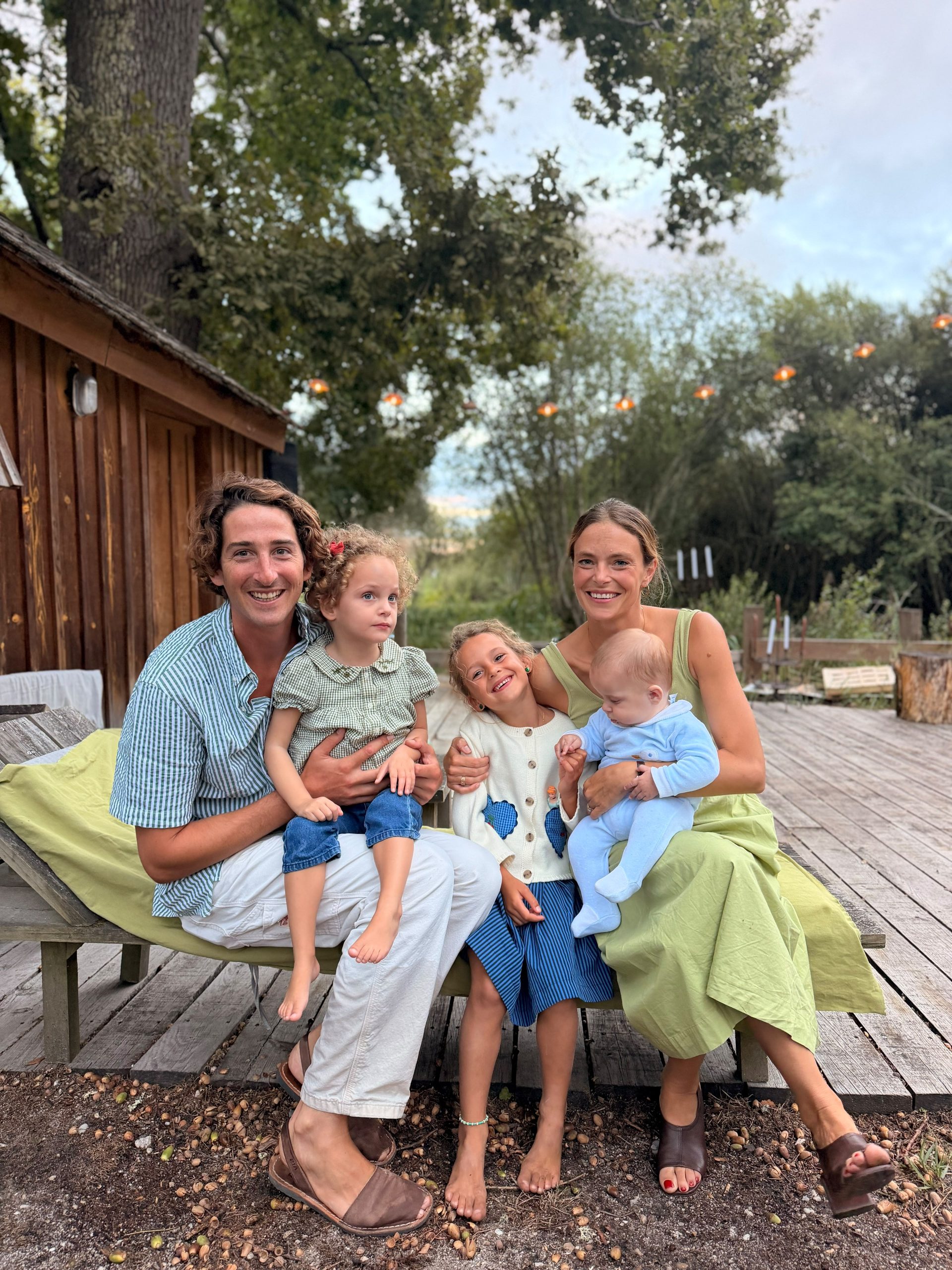
 The Soltis family. | Credit: Photo courtesy of the Soltis family
 
 After weeks in the hospital, Becky began to recover, Joe said, and “by the grace of God, she pulled through.”“Out of that hardship, I have found a woman who is incredibly holy,” Joe said of his wife, who, though mostly recovered, still suffers ongoing symptoms from lupus. “She is an incredible mom and an incredible wife. I couldn’t ask for anyone better. She is a blessing to all of us.”Joe said that time “brought our family tremendously closer together.” A plan to ‘mobilize Christians’As Becky recovered from her health crisis, Joe watched the race riots that erupted all over the country that summer, leading him to conclude that “there are evil forces” at work leading to such division between Americans.“That’s not what Christ wants,” he said, and he wondered whether such division was “manufactured and intentional.” He read Saul Alinsky’s Rules for Radicals, which he called “diabolically brilliant.”On July 4, 2020, between his work, family, and other responsibilities, Joe “happened to be free to sit down and think.” He felt inspired to write out a plan that would address how to “mobilize Christians” in a “Catholic, Christian, biblical manner.” Becky helped him fine tune the plan, which Joe then sent to various Christian leaders. Tom Phillips, vice president of the Billy Graham Evangelistic Association, called him back and put him in touch with Doug Small, a Pentecostal leader with a similar vision who also lives in Ohio. Together, the men came up with Prayer at the Heart, an evangelistic endeavor with the goal of “one million Christians praying for one million friends to know Christ.”Of the ecumenical nature of their ministry, he said there is “great unity among” the team. “We can all unite around Christ.”  “Each congregation-denomination-ministry would brand the effort calling their constituents to prayer, evangelism-mission in their own way,” reads the website, on which Christians can sign up to pray for unbelievers. “The early apostles didn’t just stay in their church and pray,” Joe said. “They went out and evangelized. It’s time for Christians to get out of their homes and churches and bring Jesus to people.”The ministry’s strategy also involves other practical initiatives, such as the organization of local gatherings and outdoor prayer meetings, as well as a prayer request line available 24 hours a day, seven days a week.In addition, the ministry is organizing neighborhood prayer walks, weekly groups of Christians praying for coworkers, and a new missionary and mentorship program to train young adults in prayer and evangelism.“There’s no person or political party that’s going to save us. The only thing that’s going to save us is the love of Jesus Christ and the love of others,” Joe said.A message to fathers: ‘Love your wife’This Father’s Day, Joe has encouraging words for fathers: “Love your wife and kids the way Christ loved the Church.” “Sacrifice, be willing to lay your life down. Strive to love like Christ, knowing you will sometimes fall short,” he said. “Go to church every Sunday. Your kids wonʼt know faith is important if you don’t show it. Pray every day with your kids.”“Every night we say the Seven Sorrows of Mary, the St. Michael prayer, and the Angel of God prayer,” he said. “Then we say what we’re thankful for, and this is what we’d like God to help us with.”The Soltis’ also say a rosary once a week as a family, as well as in the car on long trips. “If your family is going through a difficult time, strongly follow the lead of the United States Conference of Catholic Bishops and consecrate your family to the Sacred Heart of Jesus,” Joe said.“One of the promises of that consecration is peace within your family. Ours didn’t have peace for a while but it does now, thank the Lord.”‘If I start, God will help me and guide me through it’Jake told EWTN News that “my dad and mom have always shown what love is. It’s a choice, You choose to love others, to love your enemy. Love is a choice and not an emotional feeling.”When he decided to build the sauna and exercise room for his mother in the family’s basement, he said he had “no idea what I was getting into.”Before beginning the basement renovation, Jake said he only “knew how to build a sub par table.” During the work, he said he “was just inspired. I just wanted to help my mom.”
 
 Becky Soltis and her son, Jake, in their basement, where Jake built a sauna and exercise room to aid in his motherʼs recovery. | Credit: Photo courtesy of the Soltis family
 
 Joe said his son “put a lot of pressure on himself because his mom’s health was at stake.” Becky had a grand mal seizure in 2025, which Joe called “scary.”“I have based the majority of my life on the saying ‘I will figure it out,’” Jake said. "I know that if I start something, and use the gifts I was given from God, I will be able to figure it out. I’m not wasting my ability, and I trust that if I start, God will help me and guide me through it.”His father said Jake “looked at two Google images” before starting the project. “He has the knack and ability to do this stuff. He would come home from school and work for thousands of hours.” “The only thing I did was I loaded the stuff in the back of the Chevy Tahoe at the hardware store. Every now and then I helped him out,” Joe laughed.“As an 8th grader, he took an unfinished basement, and now we have a fitness center, sauna, theater room, and theyʼre beautiful! They look professional. He did it all himself, for his mother,” Joe said proudly.

Cleveland father and son live out sacrificial faith after mother’s near-death illness #Catholic In a time when the meaning of masculinity is often misunderstood and undervalued, Joe Soltis and his 15-year-old son, Jake, are a father/son pair from Cleveland, Ohio, who have made service to others the focus of their lives.After his mother’s serious illness, Jake, almost entirely by himself, built her a sauna and exercise room in the family’s basement in order to help her recover. Joe, the CEO of a marketing company, serves on the board of an ecumenical project that unites Catholics and Protestants called Prayer At The Heart, with the aim of igniting “a great spiritual awakening out of a national movement of unified, humble, desperate prayer, unity and evangelism.”The pair spoke with EWTN News about how their Catholic faith inspires them to be men who make it their mission to love as Jesus loves, and about how they hope to inspire others to do the same.‘There’s a good chance Mom won’t be coming home’In 2020, Joe’s wife and Jake’s mom, Becky, almost died after multiple medical issues led doctors to estimate she had only a 10% chance of survival. Joe said she was diagnosed with lupus, Lyme disease, a burst gall bladder, sepsis, and pancreatitis.“We weren’t allowed to see her in the hospital because it was during Covid,” said Joe, the father of five boys and one daughter, who had to tell his kids “there’s a good chance Mom won’t be coming home.” The Soltis family. | Credit: Photo courtesy of the Soltis family After weeks in the hospital, Becky began to recover, Joe said, and “by the grace of God, she pulled through.”“Out of that hardship, I have found a woman who is incredibly holy,” Joe said of his wife, who, though mostly recovered, still suffers ongoing symptoms from lupus. “She is an incredible mom and an incredible wife. I couldn’t ask for anyone better. She is a blessing to all of us.”Joe said that time “brought our family tremendously closer together.” A plan to ‘mobilize Christians’As Becky recovered from her health crisis, Joe watched the race riots that erupted all over the country that summer, leading him to conclude that “there are evil forces” at work leading to such division between Americans.“That’s not what Christ wants,” he said, and he wondered whether such division was “manufactured and intentional.” He read Saul Alinsky’s Rules for Radicals, which he called “diabolically brilliant.”On July 4, 2020, between his work, family, and other responsibilities, Joe “happened to be free to sit down and think.” He felt inspired to write out a plan that would address how to “mobilize Christians” in a “Catholic, Christian, biblical manner.” Becky helped him fine tune the plan, which Joe then sent to various Christian leaders. Tom Phillips, vice president of the Billy Graham Evangelistic Association, called him back and put him in touch with Doug Small, a Pentecostal leader with a similar vision who also lives in Ohio. Together, the men came up with Prayer at the Heart, an evangelistic endeavor with the goal of “one million Christians praying for one million friends to know Christ.”Of the ecumenical nature of their ministry, he said there is “great unity among” the team. “We can all unite around Christ.”  “Each congregation-denomination-ministry would brand the effort calling their constituents to prayer, evangelism-mission in their own way,” reads the website, on which Christians can sign up to pray for unbelievers. “The early apostles didn’t just stay in their church and pray,” Joe said. “They went out and evangelized. It’s time for Christians to get out of their homes and churches and bring Jesus to people.”The ministry’s strategy also involves other practical initiatives, such as the organization of local gatherings and outdoor prayer meetings, as well as a prayer request line available 24 hours a day, seven days a week.In addition, the ministry is organizing neighborhood prayer walks, weekly groups of Christians praying for coworkers, and a new missionary and mentorship program to train young adults in prayer and evangelism.“There’s no person or political party that’s going to save us. The only thing that’s going to save us is the love of Jesus Christ and the love of others,” Joe said.A message to fathers: ‘Love your wife’This Father’s Day, Joe has encouraging words for fathers: “Love your wife and kids the way Christ loved the Church.” “Sacrifice, be willing to lay your life down. Strive to love like Christ, knowing you will sometimes fall short,” he said. “Go to church every Sunday. Your kids wonʼt know faith is important if you don’t show it. Pray every day with your kids.”“Every night we say the Seven Sorrows of Mary, the St. Michael prayer, and the Angel of God prayer,” he said. “Then we say what we’re thankful for, and this is what we’d like God to help us with.”The Soltis’ also say a rosary once a week as a family, as well as in the car on long trips. “If your family is going through a difficult time, strongly follow the lead of the United States Conference of Catholic Bishops and consecrate your family to the Sacred Heart of Jesus,” Joe said.“One of the promises of that consecration is peace within your family. Ours didn’t have peace for a while but it does now, thank the Lord.”‘If I start, God will help me and guide me through it’Jake told EWTN News that “my dad and mom have always shown what love is. It’s a choice, You choose to love others, to love your enemy. Love is a choice and not an emotional feeling.”When he decided to build the sauna and exercise room for his mother in the family’s basement, he said he had “no idea what I was getting into.”Before beginning the basement renovation, Jake said he only “knew how to build a sub par table.” During the work, he said he “was just inspired. I just wanted to help my mom.” Becky Soltis and her son, Jake, in their basement, where Jake built a sauna and exercise room to aid in his motherʼs recovery. | Credit: Photo courtesy of the Soltis family Joe said his son “put a lot of pressure on himself because his mom’s health was at stake.” Becky had a grand mal seizure in 2025, which Joe called “scary.”“I have based the majority of my life on the saying ‘I will figure it out,’” Jake said. "I know that if I start something, and use the gifts I was given from God, I will be able to figure it out. I’m not wasting my ability, and I trust that if I start, God will help me and guide me through it.”His father said Jake “looked at two Google images” before starting the project. “He has the knack and ability to do this stuff. He would come home from school and work for thousands of hours.” “The only thing I did was I loaded the stuff in the back of the Chevy Tahoe at the hardware store. Every now and then I helped him out,” Joe laughed.“As an 8th grader, he took an unfinished basement, and now we have a fitness center, sauna, theater room, and theyʼre beautiful! They look professional. He did it all himself, for his mother,” Joe said proudly.

The pair spoke with EWTN News about how their faith inspires them to be men who make it their mission to love as Jesus loves, and about how they hope to inspire others to do the same.

Read More
Pope Leo XIV declares American religious founder Mary Teresa Tallon venerable #Catholic Pope Leo XIV has declared American religious sister Mary Teresa Tallon venerable.The pontiff signed a decree on Thursday recognizing the heroic virtue of the foundress of the Parish Visitors of Mary Immaculate in New York. He also recognized the heroic virtue of several others, bringing them closer to sainthood. Just before signing the decree, he met with Cardinal Marcello Semeraro, prefect of the Dicastery for the Causes of Saints.Mary Teresa Tallon: Making every soul countTallon was born on May 6, 1867, in Hanover, New York, as the daughter of Irish immigrants.In 1887, at the age of 19, Tallon joined the Sisters of the Holy Cross, despite her family’s disapproval. She remained part of the congregation for the next 33 years, teaching in Catholic schools in South Bend, Indiana.During this time, Tallon was inspired to establish a new congregation dedicated to contemplation and to preaching the Gospel to the neglected. In 1920, she left the Sisters of the Holy Cross and, on Aug. 15, established the Parish Visitors of Mary Immaculate (PVMI). She gave it the motto “Make every soul count.”Considered a gifted scholar, Tallon authored a report documenting the first decade of the Confraternity of Christian Doctrine in New York for the National Catechetical Congress in 1936.Tallon died on Feb. 10, 1954, after a prolonged illness. In 2013, she was declared a servant of God in recognition of her holiness.Others declared venerablePope Leo XIV on June 18 also moved several other servants of God along the path to sainthood.Two Italians were declared venerable: Maria Agnese Tribbioli, a religious sister who founded the Pie Operaie di San Giuseppe congregation, and Maria Petra Giordano, a Dominican nun.Others included Spanish nun Clara Andreu y Malferit and Belgian missionary Júlio Maria de Lombaerde.Leo also recognized the martyrdom of Juan Torres Torres and 19 companions, all Catholic priests, for having been killed “in odium fidei” (“in hatred of the faith”) in Spain during the Spanish Civil War.

Pope Leo XIV declares American religious founder Mary Teresa Tallon venerable #Catholic Pope Leo XIV has declared American religious sister Mary Teresa Tallon venerable.The pontiff signed a decree on Thursday recognizing the heroic virtue of the foundress of the Parish Visitors of Mary Immaculate in New York. He also recognized the heroic virtue of several others, bringing them closer to sainthood. Just before signing the decree, he met with Cardinal Marcello Semeraro, prefect of the Dicastery for the Causes of Saints.Mary Teresa Tallon: Making every soul countTallon was born on May 6, 1867, in Hanover, New York, as the daughter of Irish immigrants.In 1887, at the age of 19, Tallon joined the Sisters of the Holy Cross, despite her family’s disapproval. She remained part of the congregation for the next 33 years, teaching in Catholic schools in South Bend, Indiana.During this time, Tallon was inspired to establish a new congregation dedicated to contemplation and to preaching the Gospel to the neglected. In 1920, she left the Sisters of the Holy Cross and, on Aug. 15, established the Parish Visitors of Mary Immaculate (PVMI). She gave it the motto “Make every soul count.”Considered a gifted scholar, Tallon authored a report documenting the first decade of the Confraternity of Christian Doctrine in New York for the National Catechetical Congress in 1936.Tallon died on Feb. 10, 1954, after a prolonged illness. In 2013, she was declared a servant of God in recognition of her holiness.Others declared venerablePope Leo XIV on June 18 also moved several other servants of God along the path to sainthood.Two Italians were declared venerable: Maria Agnese Tribbioli, a religious sister who founded the Pie Operaie di San Giuseppe congregation, and Maria Petra Giordano, a Dominican nun.Others included Spanish nun Clara Andreu y Malferit and Belgian missionary Júlio Maria de Lombaerde.Leo also recognized the martyrdom of Juan Torres Torres and 19 companions, all Catholic priests, for having been killed “in odium fidei” (“in hatred of the faith”) in Spain during the Spanish Civil War.

On June 18, the pope issued a decree recognizing the heroic virtue of the foundress of the Parish Visitors of Mary Immaculate in New York, among several others.

Read More