India

Monsignor Vaccari cites rising humanitarian strain as Middle East violence intensifies #Catholic Monsignor Peter Vaccari reported rising humanitarian needs during a recent Middle East visit, describing disrupted daily life as conflicts intensified.Vaccari, president of Catholic Near East Welfare Association (CNEWA), a papal agency that delivers humanitarian aid, described the realities facing those living amid ongoing regional tensions in an interview with “EWTN News Nightly” anchor Veronica Dudo, an excerpt of which was broadcast on June 8. Vaccari said about a visit to Jerusalem: “The day began with the sound of large sirens. Loud sirens going off, letting us know that rockets, drones, and missiles were on their way.” The situation, he said, dramatically altered the day’s plans for residents and aid workers alike.Despite the challenges, Vaccari continued his journey throughout the region, emphasizing the importance of maintaining a visible Church presence among suffering communities.CNEWA maintains offices throughout the Middle East, including in Jerusalem, Amman, and Beirut. According to Vaccari, the organization’s local presence enables it to respond quickly to changing circumstances and coordinate assistance directly with Church leaders on the ground.“The work that we do is on the ground,” Vaccari said, noting that local staff and Church partners remain deeply connected to the communities they serve.Much of CNEWA’s work focuses on humanitarian relief in Gaza, the West Bank, Jordan, and Lebanon. The organization provides assistance ranging from food and clean water to medicine, medical equipment, and emergency relief for families displaced by conflict.Beyond material aid, CNEWA has increasingly emphasized psychosocial and emotional support programs. Vaccari said such healing initiatives have become especially important as communities continue to endure the trauma associated with war and displacement.“To whatever extent we can work to try to provide clean water, medicine, food, medical relief, medical equipment, weʼre trying to do that,” he said. “Psychosocial healing, which as you can well imagine under the circumstances right now, is [also] a very needed entity.”Founded by Pope Pius XI in 1926, CNEWA works on behalf of the Holy See to support Eastern Catholic Churches and provide humanitarian assistance throughout the Middle East, Northeast Africa, India, and Eastern Europe. The organization partners closely with local bishops, religious communities, and lay leaders to deliver aid where it is most needed.“We work with the local Church,” Vaccari said. “We’re working with local bishops, lay leadership, consecrated religious, and the nuncios.”The organization’s work is funded largely through donations from Catholics and other benefactors around the world.“Never, in a typical mission, do we work alone,” Vaccari said. He expressed gratitude for local partners and donors whose support makes the organization’s humanitarian and pastoral outreach possible.

Monsignor Vaccari cites rising humanitarian strain as Middle East violence intensifies #Catholic Monsignor Peter Vaccari reported rising humanitarian needs during a recent Middle East visit, describing disrupted daily life as conflicts intensified.Vaccari, president of Catholic Near East Welfare Association (CNEWA), a papal agency that delivers humanitarian aid, described the realities facing those living amid ongoing regional tensions in an interview with “EWTN News Nightly” anchor Veronica Dudo, an excerpt of which was broadcast on June 8. Vaccari said about a visit to Jerusalem: “The day began with the sound of large sirens. Loud sirens going off, letting us know that rockets, drones, and missiles were on their way.” The situation, he said, dramatically altered the day’s plans for residents and aid workers alike.Despite the challenges, Vaccari continued his journey throughout the region, emphasizing the importance of maintaining a visible Church presence among suffering communities.CNEWA maintains offices throughout the Middle East, including in Jerusalem, Amman, and Beirut. According to Vaccari, the organization’s local presence enables it to respond quickly to changing circumstances and coordinate assistance directly with Church leaders on the ground.“The work that we do is on the ground,” Vaccari said, noting that local staff and Church partners remain deeply connected to the communities they serve.Much of CNEWA’s work focuses on humanitarian relief in Gaza, the West Bank, Jordan, and Lebanon. The organization provides assistance ranging from food and clean water to medicine, medical equipment, and emergency relief for families displaced by conflict.Beyond material aid, CNEWA has increasingly emphasized psychosocial and emotional support programs. Vaccari said such healing initiatives have become especially important as communities continue to endure the trauma associated with war and displacement.“To whatever extent we can work to try to provide clean water, medicine, food, medical relief, medical equipment, weʼre trying to do that,” he said. “Psychosocial healing, which as you can well imagine under the circumstances right now, is [also] a very needed entity.”Founded by Pope Pius XI in 1926, CNEWA works on behalf of the Holy See to support Eastern Catholic Churches and provide humanitarian assistance throughout the Middle East, Northeast Africa, India, and Eastern Europe. The organization partners closely with local bishops, religious communities, and lay leaders to deliver aid where it is most needed.“We work with the local Church,” Vaccari said. “We’re working with local bishops, lay leadership, consecrated religious, and the nuncios.”The organization’s work is funded largely through donations from Catholics and other benefactors around the world.“Never, in a typical mission, do we work alone,” Vaccari said. He expressed gratitude for local partners and donors whose support makes the organization’s humanitarian and pastoral outreach possible.

Monsignor Peter Vaccari, president of Catholic Near East Welfare Association (CNEWA), a papal agency that delivers humanitarian aid, described situation in Jerusalem.

Read More

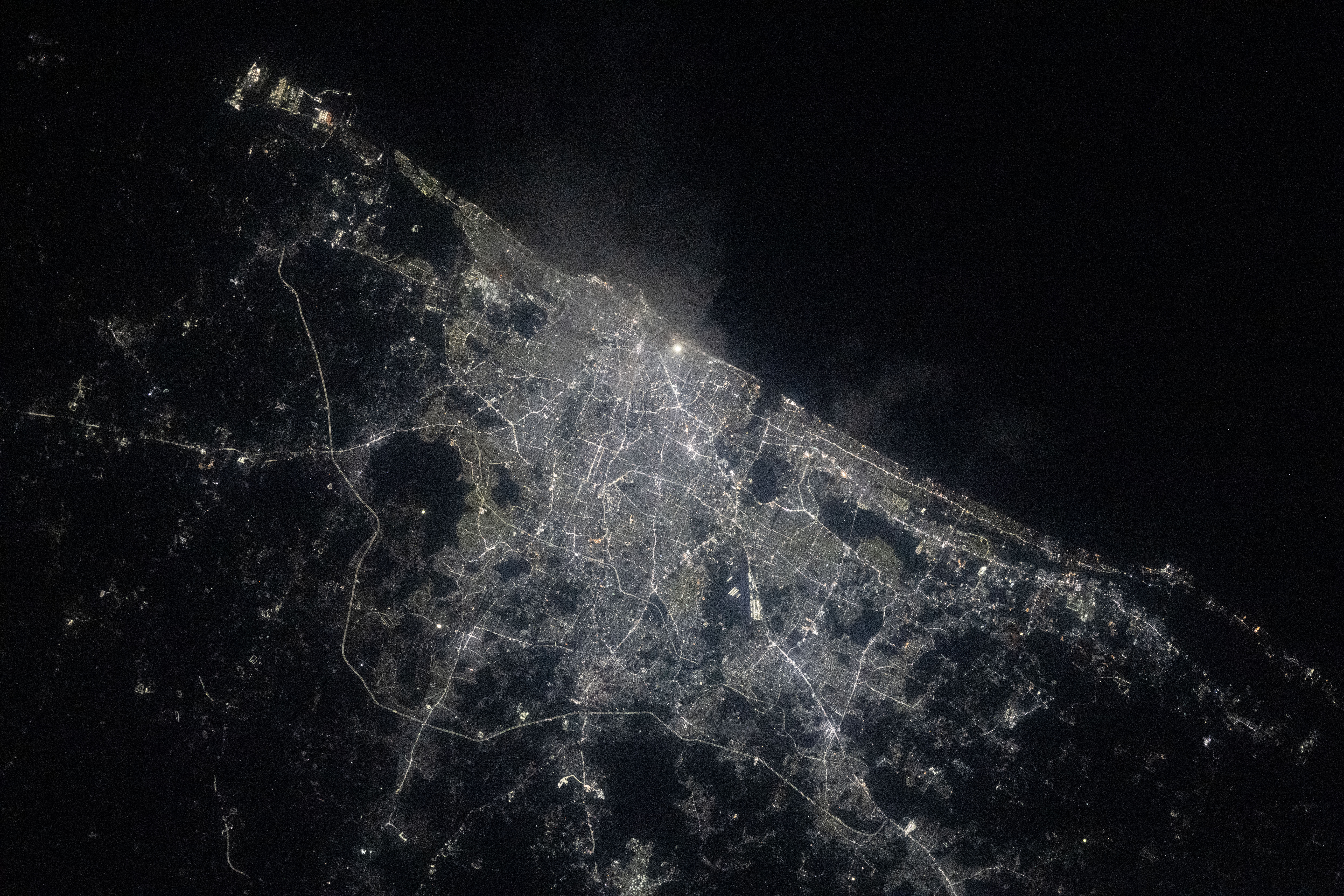
Chennai, on India’s southern coast along the Bay of Bengal and with a metropolitan population of about 8.7 million, shines with white LED streetlights in this photograph taken at approximately 9:13 p.m. local time on May 2, 2026, from the International Space Station.

Read More
Picture of the day
Partially frozen Gurudongmar Lake, a glacial lake located to the north of the Himalayas in the northeast Indian state of Sikkim at an altitude of over 5,150 metres (16,900 ft). The lake is fed by glaciers of the Khangchengyao massif, forms the headwaters of the Teesta river and is considered sacred by Buddhists and Sikhs. Today is Sikkim Day, which commemorates the formation of Sikkim as a state of India in 1975, following a popular referendum and full merger after decades of being a protectorate since 1947.
Read More
Indian Catholics denied bail after confronting mob that disrupted Mass #Catholic UDAIPUR, India — Nine Catholics have been behind bars for more than two weeks after parishioners chased out more than a dozen people who barged into a village church during Mass, shouting accusations of conversion, in a remote village in Indiaʼs desert state of Rajasthan.“We feel frustrated that our people were denied bail a second time today on the false allegation of conversion,” Bishop Devprasad John Ganawa of Udaipur, a Divine Word missionary, told EWTN News on May 12.“When the hooligans disrupted the Mass on May 1 shouting ‘conversion,’ our people forced them out. Instead of registering a criminal case against the intruders, the police have charged our people with ‘conversion and attempt to murder’ and arrested nine Catholics of Bandaria Parish,” Ganawa explained.‘They took out a knife’“I was saying the evening Mass at the substation of my parish at Kalinjara village when the incident happened,” Father Arvind Amliyar recounted to EWTN News.“During the Communion time over a dozen people stormed into the church, shouted ‘conversion,’ and started filming with cameras. When one of them took out a knife, our people snatched it and chased them out,” Amliyar said.“Soon police came and what happened then shocked me. Instead of finding out what had happened, they arrested four Catholics the same night,” the priest said.A Hindu mob then staged a protest outside the police station and demanded action against the parishioners, according to Amliyar. Police turned away Catholics who went to them twice, including at midnight the same day and the next day, refusing to register their complaint.Police came knocking on May 4 at 2:30 a.m. and arrested five more parishioners, including Anil Rawat, 70, a retired headmaster of a government school who now runs a private school in the village.Bail denied twiceThe local magistrate court rejected the parishioners' bail application the next day, as they were charged with “serious crimes”: conversion and attempted murder. Church lawyers then moved the case to the Banswara district court, which denied bail again on May 12.“Now, we have to go to the High Court with senior lawyers,” Amliyar said of the challenging situation facing the village church, which serves about 70 Catholic families. About 70 people were attending Mass when the intruders stormed in.“I cannot understand what is going on. The police bluntly refused to register the complaint of our people and have filed a serious charge of conversion against our people and imprisoned them,” Ganawa said of the first case of alleged conversion in Udaipur Diocese, where he has served as bishop for 13 years.Anti-conversion laws ‘reduced to a tool to harass minorities’“This is another typical case of the widespread abuse of anti-conversion laws against Christians in several states, most of them ruled by the BJP [Bharatiya Janata Party],” A.C. Michael, a Catholic and national coordinator of the United Christian Forum, which monitors atrocities against Christians, told EWTN News from New Delhi.Under the Indian criminal system, the burden of proof lies with the prosecution. However, under recently enacted or amended anti-conversion laws, Michael said, the burden of disproving the charge of conversion is shifted to the accused, making it difficult for defendants to secure bail from trial courts quickly, even in fraudulent cases.Under the Rajasthan Prohibition of Unlawful Conversion of Religion Act, enacted in 2025, the burden of disproving the allegation of conversion falls on the accused.As a result, Michael said, hundreds of Christians are languishing in jails in BJP-ruled states while protracted legal challenges drag on in higher courts.“The shocking reality is that there has been hardly any conviction in so-called conversion cases. That is why the churches and Christian groups have moved the Supreme Court for abolishing the anti-conversion laws that have been reduced to a tool to harass minorities,” Michael said.He noted that the Supreme Court in May 2024 observed that certain provisions in anti-conversion laws may be in violation of Article 25 of the Indian Constitution, which guarantees the right to freely profess, practice, and propagate oneʼs religion.The Feb. 4–10 biennial assembly of more than 200 bishops in India in Bangalore also reiterated this concern in its final statement: “As many innocent individuals are incarcerated based on unfounded allegations of forceful religious conversions, we strongly demand the repealing of legislations which are inconsistent with religious freedom and right to privacy.”

Indian Catholics denied bail after confronting mob that disrupted Mass #Catholic UDAIPUR, India — Nine Catholics have been behind bars for more than two weeks after parishioners chased out more than a dozen people who barged into a village church during Mass, shouting accusations of conversion, in a remote village in Indiaʼs desert state of Rajasthan.“We feel frustrated that our people were denied bail a second time today on the false allegation of conversion,” Bishop Devprasad John Ganawa of Udaipur, a Divine Word missionary, told EWTN News on May 12.“When the hooligans disrupted the Mass on May 1 shouting ‘conversion,’ our people forced them out. Instead of registering a criminal case against the intruders, the police have charged our people with ‘conversion and attempt to murder’ and arrested nine Catholics of Bandaria Parish,” Ganawa explained.‘They took out a knife’“I was saying the evening Mass at the substation of my parish at Kalinjara village when the incident happened,” Father Arvind Amliyar recounted to EWTN News.“During the Communion time over a dozen people stormed into the church, shouted ‘conversion,’ and started filming with cameras. When one of them took out a knife, our people snatched it and chased them out,” Amliyar said.“Soon police came and what happened then shocked me. Instead of finding out what had happened, they arrested four Catholics the same night,” the priest said.A Hindu mob then staged a protest outside the police station and demanded action against the parishioners, according to Amliyar. Police turned away Catholics who went to them twice, including at midnight the same day and the next day, refusing to register their complaint.Police came knocking on May 4 at 2:30 a.m. and arrested five more parishioners, including Anil Rawat, 70, a retired headmaster of a government school who now runs a private school in the village.Bail denied twiceThe local magistrate court rejected the parishioners' bail application the next day, as they were charged with “serious crimes”: conversion and attempted murder. Church lawyers then moved the case to the Banswara district court, which denied bail again on May 12.“Now, we have to go to the High Court with senior lawyers,” Amliyar said of the challenging situation facing the village church, which serves about 70 Catholic families. About 70 people were attending Mass when the intruders stormed in.“I cannot understand what is going on. The police bluntly refused to register the complaint of our people and have filed a serious charge of conversion against our people and imprisoned them,” Ganawa said of the first case of alleged conversion in Udaipur Diocese, where he has served as bishop for 13 years.Anti-conversion laws ‘reduced to a tool to harass minorities’“This is another typical case of the widespread abuse of anti-conversion laws against Christians in several states, most of them ruled by the BJP [Bharatiya Janata Party],” A.C. Michael, a Catholic and national coordinator of the United Christian Forum, which monitors atrocities against Christians, told EWTN News from New Delhi.Under the Indian criminal system, the burden of proof lies with the prosecution. However, under recently enacted or amended anti-conversion laws, Michael said, the burden of disproving the charge of conversion is shifted to the accused, making it difficult for defendants to secure bail from trial courts quickly, even in fraudulent cases.Under the Rajasthan Prohibition of Unlawful Conversion of Religion Act, enacted in 2025, the burden of disproving the allegation of conversion falls on the accused.As a result, Michael said, hundreds of Christians are languishing in jails in BJP-ruled states while protracted legal challenges drag on in higher courts.“The shocking reality is that there has been hardly any conviction in so-called conversion cases. That is why the churches and Christian groups have moved the Supreme Court for abolishing the anti-conversion laws that have been reduced to a tool to harass minorities,” Michael said.He noted that the Supreme Court in May 2024 observed that certain provisions in anti-conversion laws may be in violation of Article 25 of the Indian Constitution, which guarantees the right to freely profess, practice, and propagate oneʼs religion.The Feb. 4–10 biennial assembly of more than 200 bishops in India in Bangalore also reiterated this concern in its final statement: “As many innocent individuals are incarcerated based on unfounded allegations of forceful religious conversions, we strongly demand the repealing of legislations which are inconsistent with religious freedom and right to privacy.”

Nine parishioners face conversion and attempted murder charges after forcing out intruders who stormed a village church during Mass in Rajasthan.

Read More
Catholic film star becomes first Christian chief minister of major Indian state #Catholic CHENNAI, India — The Catholic Church in the Indian state of Tamil Nadu is celebrating after Joseph Vijay, an actor-turned-politician raised in the Catholic faith, was sworn in as the stateʼs chief minister on May 10.“This is a historic development. We hope it will lead to positive changes as the chief minister has already promised,” Archbishop George Antonysamy of Madras and Mylapore told EWTN News on May 13.Vijayʼs new political party, Tamilaga Vettri Kazhagam (TVK), which translates to Victory Party of Tamil Nadu, was founded in 2024. In its electoral debut, the party stunned the Dravidian parties that had held power for nearly six decades between them, winning 107 seats in the 234-member state assembly.Acknowledging the mandate, five smaller parties withdrew their support from the ousted DMK and opposition AIADMK coalitions to back TVK, pushing it past the 118-seat majority mark and prompting the state governor to invite Vijay to form the government on May 9.The Vijay government won a crucial vote of confidence on May 13 with 144 votes, with a section of the AIADMK also voting in his favor.‘I wonʼt touch public money’“I wonʼt touch public money,” Vijay declared soon after his swearing-in on May 10, promising a “corruption-free” administration. Within hours, the new chief minister signed three orders subsidizing electricity for the poor, establishing a task force for womenʼs safety, and setting up anti-narcotics units to curb the drug menace.Welcoming “the steps the CM has promised,” Antonysamy said, “We cannot judge a person in a few days. Everything will depend on the performance. Vijay himself is new to government administration, and his legislators too, as most of them hail from his fan base.”Catholic identity in the spotlight“We are really rejoicing that we have a Catholic chief minister,” Father Vincent Chinnadurai, spokesperson of the Tamil Nadu Catholic Bishops' Council, told EWTN News.“Vijay is known as a popular actor. But his Catholic background came into public attention after the Hindu nationalists tried to polarize the voters, saying that Vijay is a Christian with the first name Joseph,” explained Chinnadurai, who is also the rector of the Santhome Basilica in Chennai, adjacent to the archbishopʼs residence.The Santhome Basilica is built over the traditional site of the tomb of St. Thomas the Apostle, who according to tradition was martyred at Mylapore in present-day Chennai in A.D. 72. It is one of three basilicas in the world built over tombs traditionally associated with apostles, along with St. Peterʼs Basilica at the Vatican and the Cathedral of Santiago de Compostela in Spain.“The people here are very happy, as we are privileged to be the first big state in India to have a Catholic chief minister, and at a time when Christians are facing troubles in different parts of the country,” Chinnadurai added. He is a former chairman of the Minorities Commission of Tamil Nadu.With approximately 77 million people, Tamil Nadu is the seventh most populous of Indiaʼs 28 states.The archbishop also acknowledged that “Vijay is not known much as a Catholic. But during the election time, it came out in a big way.”Hindu nationalists and the ‘Joseph’ factorThe name “Joseph” stood out prominently on the large stage at the Nehru Indoor Stadium during the swearing-in ceremony, which was broadcast live by major national television channels.When Hindu nationalists tried to brand Vijay as a Christian in the run-up to the election held on April 19, Chinnadurai pointed out that “he did not back off.”Instead, Vijay publicized a Christmas program in which he made a speech linking himself to the Old Testament figure of Joseph, who looked after his brothers even after they had thrown him into a well, while he was the ruler of Egypt. In the speech, Vijay also asserted that “Tamil Nadu is a mother; all children are equal,” promising to care for all, including those who opposed him.In the state, where popular film actors have massive fan followings with organized clubs, The Hindu, a national daily based in Chennai, noted in its May 10 edition that although Vijay set up TVK only two years ago, the party was built on more than 80,000 fan clubs established from 2009 across the state, carrying out social work and social campaigns.Faithful throng Marian shrineThousands of Vijayʼs fans thronged the Marian shrine of Vailankanni, known as the Lourdes of the East, about 200 miles south of Chennai, from the night of May 1, expecting him to visit the shrine on the morning of May 2 in thanksgiving after voting.The fans waited through the night and loudly chanted “TVK, TVK” inside the church premises before church authorities asked them to calm down. Vijay canceled the visit after hearing about the commotion at the shrine.“Vijay is an alumnus of our college, and his mother used to come to our college for Mass regularly,” Professor Gladstone Xavier of Chennaiʼs Loyola College told EWTN News.With Vijayʼs Catholic identity now public, Xavier hopes that “Vijayʼs performance as the chief minister should make the community proud.”

Catholic film star becomes first Christian chief minister of major Indian state #Catholic CHENNAI, India — The Catholic Church in the Indian state of Tamil Nadu is celebrating after Joseph Vijay, an actor-turned-politician raised in the Catholic faith, was sworn in as the stateʼs chief minister on May 10.“This is a historic development. We hope it will lead to positive changes as the chief minister has already promised,” Archbishop George Antonysamy of Madras and Mylapore told EWTN News on May 13.Vijayʼs new political party, Tamilaga Vettri Kazhagam (TVK), which translates to Victory Party of Tamil Nadu, was founded in 2024. In its electoral debut, the party stunned the Dravidian parties that had held power for nearly six decades between them, winning 107 seats in the 234-member state assembly.Acknowledging the mandate, five smaller parties withdrew their support from the ousted DMK and opposition AIADMK coalitions to back TVK, pushing it past the 118-seat majority mark and prompting the state governor to invite Vijay to form the government on May 9.The Vijay government won a crucial vote of confidence on May 13 with 144 votes, with a section of the AIADMK also voting in his favor.‘I wonʼt touch public money’“I wonʼt touch public money,” Vijay declared soon after his swearing-in on May 10, promising a “corruption-free” administration. Within hours, the new chief minister signed three orders subsidizing electricity for the poor, establishing a task force for womenʼs safety, and setting up anti-narcotics units to curb the drug menace.Welcoming “the steps the CM has promised,” Antonysamy said, “We cannot judge a person in a few days. Everything will depend on the performance. Vijay himself is new to government administration, and his legislators too, as most of them hail from his fan base.”Catholic identity in the spotlight“We are really rejoicing that we have a Catholic chief minister,” Father Vincent Chinnadurai, spokesperson of the Tamil Nadu Catholic Bishops' Council, told EWTN News.“Vijay is known as a popular actor. But his Catholic background came into public attention after the Hindu nationalists tried to polarize the voters, saying that Vijay is a Christian with the first name Joseph,” explained Chinnadurai, who is also the rector of the Santhome Basilica in Chennai, adjacent to the archbishopʼs residence.The Santhome Basilica is built over the traditional site of the tomb of St. Thomas the Apostle, who according to tradition was martyred at Mylapore in present-day Chennai in A.D. 72. It is one of three basilicas in the world built over tombs traditionally associated with apostles, along with St. Peterʼs Basilica at the Vatican and the Cathedral of Santiago de Compostela in Spain.“The people here are very happy, as we are privileged to be the first big state in India to have a Catholic chief minister, and at a time when Christians are facing troubles in different parts of the country,” Chinnadurai added. He is a former chairman of the Minorities Commission of Tamil Nadu.With approximately 77 million people, Tamil Nadu is the seventh most populous of Indiaʼs 28 states.The archbishop also acknowledged that “Vijay is not known much as a Catholic. But during the election time, it came out in a big way.”Hindu nationalists and the ‘Joseph’ factorThe name “Joseph” stood out prominently on the large stage at the Nehru Indoor Stadium during the swearing-in ceremony, which was broadcast live by major national television channels.When Hindu nationalists tried to brand Vijay as a Christian in the run-up to the election held on April 19, Chinnadurai pointed out that “he did not back off.”Instead, Vijay publicized a Christmas program in which he made a speech linking himself to the Old Testament figure of Joseph, who looked after his brothers even after they had thrown him into a well, while he was the ruler of Egypt. In the speech, Vijay also asserted that “Tamil Nadu is a mother; all children are equal,” promising to care for all, including those who opposed him.In the state, where popular film actors have massive fan followings with organized clubs, The Hindu, a national daily based in Chennai, noted in its May 10 edition that although Vijay set up TVK only two years ago, the party was built on more than 80,000 fan clubs established from 2009 across the state, carrying out social work and social campaigns.Faithful throng Marian shrineThousands of Vijayʼs fans thronged the Marian shrine of Vailankanni, known as the Lourdes of the East, about 200 miles south of Chennai, from the night of May 1, expecting him to visit the shrine on the morning of May 2 in thanksgiving after voting.The fans waited through the night and loudly chanted “TVK, TVK” inside the church premises before church authorities asked them to calm down. Vijay canceled the visit after hearing about the commotion at the shrine.“Vijay is an alumnus of our college, and his mother used to come to our college for Mass regularly,” Professor Gladstone Xavier of Chennaiʼs Loyola College told EWTN News.With Vijayʼs Catholic identity now public, Xavier hopes that “Vijayʼs performance as the chief minister should make the community proud.”

Church leaders in the southern Indian state of Tamil Nadu call the election of actor-turned-politician Joseph Vijay a source of pride in a country where Christians face growing persecution.

Read More
India’s state elections deliver split verdict for Christian community #Catholic The results of staggered elections in four key Indian states held in April have drawn diverse reactions from the Christian community following the May 4 counting of the votes.While the poll outcomes from the two southern states of Kerala and Tamil Nadu have been soothing for Christians, the results from West Bengal and Assam in eastern and northeastern India have come as frustrating for Christian communities.Kerala: A ‘clear verdict’ against propagandaIn the southern Christian heartland of Kerala, the ruling communist alliance was decimated to 35 seats while the opposition Congress-led alliance won 102 seats in the 140-member assembly of Kerala, a state of 35 million people, 18% of whom are Christian.“The result has shown that the people cannot be misled by propaganda and they have given a clear verdict against it,” Father Thomas Tharayil, deputy secretary of the Kerala Catholic Bishops' Council, told EWTN News on May 6.The remark came against the backdrop of anti-Christian propaganda by the Hindu nationalist Bharatiya Janata Party (BJP), with prominent Christians in the BJP even attacking Church leaders for the Churchʼs protest against the draconian amendment to the Foreign Contribution Regulation Act.Christians in Kerala were relieved after four prominent Christians who had allied with the BJP lost the polls despite making much noise against church leadership: P.C. George, a seven-time Kerala legislator; his son Shone George; federal Minister of State for Minority Affairs George Kurian; and Anoop Antony, son of veteran Congress party leader and former Kerala chief minister A.K. Antony.Half a dozen other Christian candidates the BJP fielded in Christian pockets under its lotus symbol also lost, while the party won just three seats with its Hindu candidates.Tamil Nadu: A ‘genuinely historic’ TVK upsetIn neighboring Tamil Nadu, with a population of 77 million, the new political party TVK (Tamilaga Vettri Kazhagam — Victory Party of Tamil Nadu), founded by Catholic actor Joseph Vijay, stunned the Dravidian parties that had held power for nearly six decades between them.Under Vijayʼs leadership, the TVK he founded in 2024 won 108 of the 234 seats in the state legislature, with the ruling DMK reduced to 73 and the opposition AIADMK left with 53 seats.Describing the TVK victory that stunned even poll forecasts as “genuinely historic,” Father Charles Antony, editor of the Catholic fortnightly New Leader based in Chennai, told EWTN News: “Vijayʼs victory is real, consequential, and disruptive [of the] bipolar politics” in the state, which has more than 5 million Christians.“He visited churches, temples, and mosques alike during the campaign, successfully projecting himself as a leader for all communities. This secular messaging helped his party distance itself from identity-based polarization,” he added.While Vijay is “Catholic,” Antony emphasized that “his Christian identity is incidental to his politics. Attacks from the BJP [on his Christian identity] with ‘minority’ tag against him, paradoxically, may have helped consolidate minority votes.”West Bengal: ‘A terrible result many had feared’The likely outcome in West Bengal — the state bordering Bangladesh — had been the subject of much conjecture even before voting, due to the controversial, hurried action of the Election Commission of India that disenfranchised more than 9 million, or 12%, of its 76 million voters under a Special Intensive Revision of the voter list.The Trinamool Congress, which had ruled the state since 2011 across three consecutive terms, lost the election badly — as many had feared — winning a mere 80 seats while the BJP captured power in the state for the first time, with 205 seats in the 294-seat state assembly.“This is a terrible result many had feared,” Sunil Lucas, former president of Signis India, told EWTN News, while prominent Church leaders declined to comment on the results that bring the Hindu nationalist BJP to power in West Bengal — with Kolkata as its capital — for the first time.“Decoding BJPʼs Bengal sweep: 77 seats won in 2021 retained, 129 wrested from TMC,” Indian Express summed up the results, which were flayed by the ruling party and the opposition parties other than the BJP.On May 5, the national news channel NDTV carried a similar report with graphic details on how the ruling Trinamool Congress party “performed in seats with high voter deletions.” In constituencies where more than 25,000 voters had been disenfranchised, the BJP had won 95 of 147 seats, the report pointed out.Assam: ‘Democracy becomes a failure’In Assam state in the northeast, the BJP improved its tally with allies to 102 of the stateʼs 126 seats, securing a third consecutive term.“When the ruling party with over two-thirds majority has no member of the minorities in the legislature, democracy becomes a failure,” Allen Brooks, a Catholic and spokesperson for the ecumenical Assam Christian Forum, told EWTN News.While none of the 82 BJP winners are from the Muslim community, which accounts for 34% of Assamʼs population, Brooks also lamented that “there is not a single Christian in the Assam Assembly now, though Christians account for 3.7%” of the stateʼs 31 million people.Commenting on the election results, Cardinal Anthony Poola, president of the Catholic Bishops' conference of India, in a May 6 statement said: “The true measure of a vibrant democracy lies not just in the successful conduct of elections but in the steadfast commitment of elected leaders to serve the most vulnerable. We urge the new governments to work hand-in-hand with all institutions to build a more just, inclusive, and equitable India.”This story was updated at 12:29 p.m. ET on May 6, 2026, to include Cardinal Anthony Poolaʼs statement.

India’s state elections deliver split verdict for Christian community #Catholic The results of staggered elections in four key Indian states held in April have drawn diverse reactions from the Christian community following the May 4 counting of the votes.While the poll outcomes from the two southern states of Kerala and Tamil Nadu have been soothing for Christians, the results from West Bengal and Assam in eastern and northeastern India have come as frustrating for Christian communities.Kerala: A ‘clear verdict’ against propagandaIn the southern Christian heartland of Kerala, the ruling communist alliance was decimated to 35 seats while the opposition Congress-led alliance won 102 seats in the 140-member assembly of Kerala, a state of 35 million people, 18% of whom are Christian.“The result has shown that the people cannot be misled by propaganda and they have given a clear verdict against it,” Father Thomas Tharayil, deputy secretary of the Kerala Catholic Bishops' Council, told EWTN News on May 6.The remark came against the backdrop of anti-Christian propaganda by the Hindu nationalist Bharatiya Janata Party (BJP), with prominent Christians in the BJP even attacking Church leaders for the Churchʼs protest against the draconian amendment to the Foreign Contribution Regulation Act.Christians in Kerala were relieved after four prominent Christians who had allied with the BJP lost the polls despite making much noise against church leadership: P.C. George, a seven-time Kerala legislator; his son Shone George; federal Minister of State for Minority Affairs George Kurian; and Anoop Antony, son of veteran Congress party leader and former Kerala chief minister A.K. Antony.Half a dozen other Christian candidates the BJP fielded in Christian pockets under its lotus symbol also lost, while the party won just three seats with its Hindu candidates.Tamil Nadu: A ‘genuinely historic’ TVK upsetIn neighboring Tamil Nadu, with a population of 77 million, the new political party TVK (Tamilaga Vettri Kazhagam — Victory Party of Tamil Nadu), founded by Catholic actor Joseph Vijay, stunned the Dravidian parties that had held power for nearly six decades between them.Under Vijayʼs leadership, the TVK he founded in 2024 won 108 of the 234 seats in the state legislature, with the ruling DMK reduced to 73 and the opposition AIADMK left with 53 seats.Describing the TVK victory that stunned even poll forecasts as “genuinely historic,” Father Charles Antony, editor of the Catholic fortnightly New Leader based in Chennai, told EWTN News: “Vijayʼs victory is real, consequential, and disruptive [of the] bipolar politics” in the state, which has more than 5 million Christians.“He visited churches, temples, and mosques alike during the campaign, successfully projecting himself as a leader for all communities. This secular messaging helped his party distance itself from identity-based polarization,” he added.While Vijay is “Catholic,” Antony emphasized that “his Christian identity is incidental to his politics. Attacks from the BJP [on his Christian identity] with ‘minority’ tag against him, paradoxically, may have helped consolidate minority votes.”West Bengal: ‘A terrible result many had feared’The likely outcome in West Bengal — the state bordering Bangladesh — had been the subject of much conjecture even before voting, due to the controversial, hurried action of the Election Commission of India that disenfranchised more than 9 million, or 12%, of its 76 million voters under a Special Intensive Revision of the voter list.The Trinamool Congress, which had ruled the state since 2011 across three consecutive terms, lost the election badly — as many had feared — winning a mere 80 seats while the BJP captured power in the state for the first time, with 205 seats in the 294-seat state assembly.“This is a terrible result many had feared,” Sunil Lucas, former president of Signis India, told EWTN News, while prominent Church leaders declined to comment on the results that bring the Hindu nationalist BJP to power in West Bengal — with Kolkata as its capital — for the first time.“Decoding BJPʼs Bengal sweep: 77 seats won in 2021 retained, 129 wrested from TMC,” Indian Express summed up the results, which were flayed by the ruling party and the opposition parties other than the BJP.On May 5, the national news channel NDTV carried a similar report with graphic details on how the ruling Trinamool Congress party “performed in seats with high voter deletions.” In constituencies where more than 25,000 voters had been disenfranchised, the BJP had won 95 of 147 seats, the report pointed out.Assam: ‘Democracy becomes a failure’In Assam state in the northeast, the BJP improved its tally with allies to 102 of the stateʼs 126 seats, securing a third consecutive term.“When the ruling party with over two-thirds majority has no member of the minorities in the legislature, democracy becomes a failure,” Allen Brooks, a Catholic and spokesperson for the ecumenical Assam Christian Forum, told EWTN News.While none of the 82 BJP winners are from the Muslim community, which accounts for 34% of Assamʼs population, Brooks also lamented that “there is not a single Christian in the Assam Assembly now, though Christians account for 3.7%” of the stateʼs 31 million people.Commenting on the election results, Cardinal Anthony Poola, president of the Catholic Bishops' conference of India, in a May 6 statement said: “The true measure of a vibrant democracy lies not just in the successful conduct of elections but in the steadfast commitment of elected leaders to serve the most vulnerable. We urge the new governments to work hand-in-hand with all institutions to build a more just, inclusive, and equitable India.”This story was updated at 12:29 p.m. ET on May 6, 2026, to include Cardinal Anthony Poolaʼs statement.

Christian leaders welcomed the Kerala and Tamil Nadu outcomes but voiced alarm at the BJP’s historic sweep of West Bengal and a third-term win in Assam.

Read More
Answering call to serve the poor: Papal Foundation announces more than  million in grants #Catholic The Papal Foundation this week announced a record-setting  million in grants for its annual distribution of humanitarian aid to support more than 144 projects across 75 countries.Since its founding, the Papal Foundation has served the Catholic Church with collaboration of laity, clergy, and hierarchy. The United States-based organization is dedicated to fulfilling the requests of the Holy Father for the needs of the Church in developing countries.The foundation has distributed more than 0 million in grants, scholarships, and humanitarian aid to more than 2,700 projects selected by Pope Leo XIV, Pope Francis, Pope Benedict XVI, and St. John Paul II.During his recent papal trip to Africa April 13–23, Pope Leo prayed at the Basilica of St. Augustine in Annaba, Algeria, and he visited the restored Church of Notre Dame dʼAfrique. Both sites were restored through the generosity of The Papal Foundation, with investments of ,000 each from the foundation in 2008.This year, The Papal Foundation’s board of trustees approved  million, including ,502,765 in current grants and an additional  million to be distributed in 2026 to further new projects. The grants will fund initiatives across the globe including the construction and renovation of Catholic schools, classrooms, monasteries, orphanages, and medical clinics in numerous countries including Tanzania, the Central African Republic, and the Philippines.“This year’s grants are a powerful testament to what can be accomplished through faithful stewardship and shared mission,” said Ward Fitzgerald, president of The Papal Foundation board of trustees, in a press release announcing the grants.“Each project represents hope, meeting urgent needs and strengthening the resolve of the Catholic Church community in developing nations,” he said.In Tanzania, the grant will aid the creation of a dormitory to rescue girls from early marriage, trafficking, and sexual abuse, and boys from school dropout. In India, a safe school for marginalized tribal children will be built.The grants will fund the creation of a library and technology center in the Central African Republic and professional IT training for vulnerable women in the Philippines. Also, in the Republic of Guinea, a well and water tower will be built for the community.“Supporting these life-changing grants is the core of the mission of The Papal Foundation,” Fitzgerald said. “The impact we have on the poor and most vulnerable is the organization’s gift to the Church and the Catholic Church’s gift to its people around the world.”Requests for the grants come in from developing nations after local bishops identify the most urgent needs. They are then advanced by apostolic nuncios to the foundation’s grants committee. The requests are then reviewed through the assessor’s office at the Vatican, led by its current assessor for general affairs of the secretariat Monsignor Anthony Onyemuche Ekpo. Members of the foundation’s grants committee met with Ekpo this week to review proposals and begin building a working relationship.“It was encouraging to meet Monsignor Ekpo at the start of his tenure and to hear his focus on expanding impact while strengthening efficiency and accountability,” Fitzgerald told EWTN News.“Those are principles we take seriously. Our goal is to be the most highly disciplined and transparent steward of funds, and the most effective means to get resources to the most in need.”Fitzgerald noted Ekpo’s work in Nigeria and in Australia, which he said has proven to be strength allowing him to bring "a clear understanding of the realities facing developing countries, along with firsthand experience in more advanced economies.” “That perspective allows us to evaluate requests more effectively and align our resources with the priorities identified by the Holy Father,” Fitzgerald said.Growing engagementThe Holy Father met with members of the Papal Foundation in an audience at the Vatican on May 2, where he said he was “deeply grateful” for the work of the foundation “to assist the Successor of Peter in his mission to care for the needs of the universal Church.”
 
 Pope Leo XIV poses with members of the Papal Foundation in the Sala Clementina at the Vatican Apostolic Palace, Saturday, May 2, 2026. | Credit: Vatican Media
 
 “Your generosity has allowed countless people to experience in a concrete fashion the goodness and kindness of God in their own communities,” the pope said. He pointed out that the charity workers “will probably never meet everyone who has benefitted from your kindness, so in their name I express heartfelt appreciation.”The 2026 grants are the result of an evaluation process led by the foundation’s grants committee, chaired by Dr. Tammy Tenaglia of the Archdiocese of Philadelphia, with assistance from the foundation’s mission fund committee.The work of The Papal Foundation has been accomplished with the help of the foundation’s Stewards of Saint Peter, which is made up of North American Catholic philanthropists committed to bringing the love of Christ to those most in need.Since Pope Leo’s election, the community of Stewards of Saint Peter has welcomed 25 new families committed to supporting the Holy Father’s mission to serve the poor. “The growth we’re seeing is incredibly encouraging, as it reflects a shared commitment to serve, to give, and to bring the Church’s mission to life in meaningful ways across the globe,” said David Savage, executive director of The Papal Foundation.The foundation’s annual pilgrimage to Rome the week of April 27 brought together 56 of the Steward families. Led by The Papal Foundation’s chairman, Cardinal Timothy Dolan, the trip included a visit to St. Peter’s Basilica and an audience with Pope Leo XIV on Saturday, May 2.

Answering call to serve the poor: Papal Foundation announces more than $15 million in grants #Catholic The Papal Foundation this week announced a record-setting $15 million in grants for its annual distribution of humanitarian aid to support more than 144 projects across 75 countries.Since its founding, the Papal Foundation has served the Catholic Church with collaboration of laity, clergy, and hierarchy. The United States-based organization is dedicated to fulfilling the requests of the Holy Father for the needs of the Church in developing countries.The foundation has distributed more than $270 million in grants, scholarships, and humanitarian aid to more than 2,700 projects selected by Pope Leo XIV, Pope Francis, Pope Benedict XVI, and St. John Paul II.During his recent papal trip to Africa April 13–23, Pope Leo prayed at the Basilica of St. Augustine in Annaba, Algeria, and he visited the restored Church of Notre Dame dʼAfrique. Both sites were restored through the generosity of The Papal Foundation, with investments of $90,000 each from the foundation in 2008.This year, The Papal Foundation’s board of trustees approved $15 million, including $12,502,765 in current grants and an additional $3 million to be distributed in 2026 to further new projects. The grants will fund initiatives across the globe including the construction and renovation of Catholic schools, classrooms, monasteries, orphanages, and medical clinics in numerous countries including Tanzania, the Central African Republic, and the Philippines.“This year’s grants are a powerful testament to what can be accomplished through faithful stewardship and shared mission,” said Ward Fitzgerald, president of The Papal Foundation board of trustees, in a press release announcing the grants.“Each project represents hope, meeting urgent needs and strengthening the resolve of the Catholic Church community in developing nations,” he said.In Tanzania, the grant will aid the creation of a dormitory to rescue girls from early marriage, trafficking, and sexual abuse, and boys from school dropout. In India, a safe school for marginalized tribal children will be built.The grants will fund the creation of a library and technology center in the Central African Republic and professional IT training for vulnerable women in the Philippines. Also, in the Republic of Guinea, a well and water tower will be built for the community.“Supporting these life-changing grants is the core of the mission of The Papal Foundation,” Fitzgerald said. “The impact we have on the poor and most vulnerable is the organization’s gift to the Church and the Catholic Church’s gift to its people around the world.”Requests for the grants come in from developing nations after local bishops identify the most urgent needs. They are then advanced by apostolic nuncios to the foundation’s grants committee. The requests are then reviewed through the assessor’s office at the Vatican, led by its current assessor for general affairs of the secretariat Monsignor Anthony Onyemuche Ekpo. Members of the foundation’s grants committee met with Ekpo this week to review proposals and begin building a working relationship.“It was encouraging to meet Monsignor Ekpo at the start of his tenure and to hear his focus on expanding impact while strengthening efficiency and accountability,” Fitzgerald told EWTN News.“Those are principles we take seriously. Our goal is to be the most highly disciplined and transparent steward of funds, and the most effective means to get resources to the most in need.”Fitzgerald noted Ekpo’s work in Nigeria and in Australia, which he said has proven to be strength allowing him to bring "a clear understanding of the realities facing developing countries, along with firsthand experience in more advanced economies.” “That perspective allows us to evaluate requests more effectively and align our resources with the priorities identified by the Holy Father,” Fitzgerald said.Growing engagementThe Holy Father met with members of the Papal Foundation in an audience at the Vatican on May 2, where he said he was “deeply grateful” for the work of the foundation “to assist the Successor of Peter in his mission to care for the needs of the universal Church.” Pope Leo XIV poses with members of the Papal Foundation in the Sala Clementina at the Vatican Apostolic Palace, Saturday, May 2, 2026. | Credit: Vatican Media “Your generosity has allowed countless people to experience in a concrete fashion the goodness and kindness of God in their own communities,” the pope said. He pointed out that the charity workers “will probably never meet everyone who has benefitted from your kindness, so in their name I express heartfelt appreciation.”The 2026 grants are the result of an evaluation process led by the foundation’s grants committee, chaired by Dr. Tammy Tenaglia of the Archdiocese of Philadelphia, with assistance from the foundation’s mission fund committee.The work of The Papal Foundation has been accomplished with the help of the foundation’s Stewards of Saint Peter, which is made up of North American Catholic philanthropists committed to bringing the love of Christ to those most in need.Since Pope Leo’s election, the community of Stewards of Saint Peter has welcomed 25 new families committed to supporting the Holy Father’s mission to serve the poor. “The growth we’re seeing is incredibly encouraging, as it reflects a shared commitment to serve, to give, and to bring the Church’s mission to life in meaningful ways across the globe,” said David Savage, executive director of The Papal Foundation.The foundation’s annual pilgrimage to Rome the week of April 27 brought together 56 of the Steward families. Led by The Papal Foundation’s chairman, Cardinal Timothy Dolan, the trip included a visit to St. Peter’s Basilica and an audience with Pope Leo XIV on Saturday, May 2.

The grants will fund initiatives across the globe including the construction and renovation of Catholic schools, monasteries, orphanages, and medical clinics in numerous countries.

Read More
Pope Leo XIV tells new priests: ‘You are a channel, not a filter’ #Catholic VATICAN CITY, April 26, 2026 — Pope Leo XIV ordained 10 new priests in St. Peter’s Basilica on Sunday, urging them to keep the doors of the Church open and to remember that their mission is to welcome, not to exclude.“Today more than ever, especially when statistics seem to indicate a divide between people and the Church, keep the door open! Let people in, and be prepared to go out,” the pope said in his homily for the Mass on the Fourth Sunday of Easter, also known as Good Shepherd Sunday.“This is another secret for your life: you are a channel, not a filter,” he told the ordinands.Eight of the new priests were ordained for the Diocese of Rome, of which the pope is bishop: Guglielmo Lapenna, Giorgio Larosa, Jos Emanuele Nleme Sabate, Giovanni Emanuele Nunziante Salazar, Antonino Ordine, Yordan Camilo Ramos Medina, Daniele Riscica, and Cristian Sguazzino.The pope also ordained Armando Roa Núñez, born in Mexico and incardinated in the Diocese of Miao in India, and Selwyn Pinto Loyce, born in Saudi Arabia and incardinated in the Institute of Christ the Redeemer, Idente Missionaries.Reflecting on the Gospel in which Jesus says, “I am the gate,” Leo told the new priests to see themselves as servants of a suffering humanity that awaits abundant life.“Never hide this holy door. Do not block it; do not be an obstacle to those who wish to enter,” he said. Quoting Jesus’ rebuke in Luke’s Gospel, he added: “You did not enter yourselves, and you hindered those who were entering.”The pope said priestly ministry should be marked by communion and openness. “You belong to everyone and are for everyone!” he said. “Let this be the fundamental purpose of your mission: to keep the threshold open and direct others to it, without using too many words.”Leo also urged the ordinands not to reduce Christian life to parish structures or ecclesial groups.“The Church’s doors are open, but not to cut us off from life: life does not end in a parish, in an association, in a movement, in a group,” he said. “Whoever is saved can ‘go out and find pasture.’”“Dear brothers, go out and discover culture, people and life!” the pope continued. “Marvel at the things that God makes grow without our having sown them.”The pope also spoke about celibacy, comparing it to the love of spouses.“Certainly, like the love of spouses, the love that inspires celibacy for the Kingdom of God must also be guarded and constantly renewed, for every true affection matures and becomes fruitful over time,” he said.He told the new priests that the deeper their bond with Christ, “the more radical” their belonging to humanity becomes, adding that they are called to be “not only good priests but also honest, helpful citizens, builders of peace and social friendship.”The pope warned against fear and the search for scapegoats, saying that the need for security today can make people aggressive and cause communities to close in on themselves.“May your security not lie in the role you hold, but in the life, death and resurrection of Jesus as well as in your participation, along with your people, in the story of salvation,” he said.The communities to which the priests will be sent, he said, are already places where the risen Christ is present.“These communities will also help you to become saints!” Leo said. “For your part, help them to walk together, following Jesus, the Good Shepherd, so that they may become places — gardens — of life that rise anew and share themselves with others.”He added: “Facilitating encounters, helping to bring together those who would otherwise never meet, and conciliating division is one and the same as celebrating the Eucharist and Reconciliation. Coming together always means planting the Church anew.”Later on Sunday, before leading the Regina Caeli from the window of the Apostolic Palace, Pope Leo returned to the image of Jesus as the Good Shepherd and the gate of the sheepfold.“Jesus does not come as a thief to take away our life and our freedom, but to lead us along the paths of righteousness,” he said. “He does not come to ensnare or deceive our conscience, but to illuminate it with the light of his wisdom. He does not come to taint our earthly joys, but to open them to a fuller and more lasting happiness.”“Those who entrust themselves to him have nothing to fear,” the pope said, “for he does not deprive us of life, but comes to give it to us in abundance.”Leo urged the faithful to be vigilant about who or what enters “the gate” of their hearts.“‘Thieves’ can take many forms,” he said, citing those who “suppress our freedom or fail to respect our dignity,” as well as “beliefs and biases,” “mistaken ideas,” and “superficial and consumeristic lifestyles” that leave people empty inside.He also pointed to those who harm humanity by “pillaging the earth’s resources, waging blood-thirsty wars, or fueling evil in any form,” saying they “do nothing but rob each of us of the possibility of a future marked by peace and serenity.”The pope invited the faithful to examine their consciences: “Who do we want to guide us in life? Which ‘thieves’ have tried to break into our fold? Have they succeeded, or have we managed to ward them off?”After the Regina Caeli, Leo recalled the 40th anniversary of the Chernobyl nuclear disaster, calling it a warning about the risks of powerful technologies.“Let us entrust those who died and all who still suffer from the aftermath of the disaster to God’s mercy,” he said. “I hope that discernment and responsibility will always prevail at every level of decision-making so that all use of atomic energy may be placed at the service of life and peace.”The pope also offered a special greeting to the relatives and friends of the new priests of the Diocese of Rome.“Please continue to accompany these young ministers of the Gospel with your prayers,” he said.This story was first published in two parts by ACI Prensa, EWTN News’ Spanish-language news partner. It has been translated and adapted by EWTN News English.

Pope Leo XIV tells new priests: ‘You are a channel, not a filter’ #Catholic VATICAN CITY, April 26, 2026 — Pope Leo XIV ordained 10 new priests in St. Peter’s Basilica on Sunday, urging them to keep the doors of the Church open and to remember that their mission is to welcome, not to exclude.“Today more than ever, especially when statistics seem to indicate a divide between people and the Church, keep the door open! Let people in, and be prepared to go out,” the pope said in his homily for the Mass on the Fourth Sunday of Easter, also known as Good Shepherd Sunday.“This is another secret for your life: you are a channel, not a filter,” he told the ordinands.Eight of the new priests were ordained for the Diocese of Rome, of which the pope is bishop: Guglielmo Lapenna, Giorgio Larosa, Jos Emanuele Nleme Sabate, Giovanni Emanuele Nunziante Salazar, Antonino Ordine, Yordan Camilo Ramos Medina, Daniele Riscica, and Cristian Sguazzino.The pope also ordained Armando Roa Núñez, born in Mexico and incardinated in the Diocese of Miao in India, and Selwyn Pinto Loyce, born in Saudi Arabia and incardinated in the Institute of Christ the Redeemer, Idente Missionaries.Reflecting on the Gospel in which Jesus says, “I am the gate,” Leo told the new priests to see themselves as servants of a suffering humanity that awaits abundant life.“Never hide this holy door. Do not block it; do not be an obstacle to those who wish to enter,” he said. Quoting Jesus’ rebuke in Luke’s Gospel, he added: “You did not enter yourselves, and you hindered those who were entering.”The pope said priestly ministry should be marked by communion and openness. “You belong to everyone and are for everyone!” he said. “Let this be the fundamental purpose of your mission: to keep the threshold open and direct others to it, without using too many words.”Leo also urged the ordinands not to reduce Christian life to parish structures or ecclesial groups.“The Church’s doors are open, but not to cut us off from life: life does not end in a parish, in an association, in a movement, in a group,” he said. “Whoever is saved can ‘go out and find pasture.’”“Dear brothers, go out and discover culture, people and life!” the pope continued. “Marvel at the things that God makes grow without our having sown them.”The pope also spoke about celibacy, comparing it to the love of spouses.“Certainly, like the love of spouses, the love that inspires celibacy for the Kingdom of God must also be guarded and constantly renewed, for every true affection matures and becomes fruitful over time,” he said.He told the new priests that the deeper their bond with Christ, “the more radical” their belonging to humanity becomes, adding that they are called to be “not only good priests but also honest, helpful citizens, builders of peace and social friendship.”The pope warned against fear and the search for scapegoats, saying that the need for security today can make people aggressive and cause communities to close in on themselves.“May your security not lie in the role you hold, but in the life, death and resurrection of Jesus as well as in your participation, along with your people, in the story of salvation,” he said.The communities to which the priests will be sent, he said, are already places where the risen Christ is present.“These communities will also help you to become saints!” Leo said. “For your part, help them to walk together, following Jesus, the Good Shepherd, so that they may become places — gardens — of life that rise anew and share themselves with others.”He added: “Facilitating encounters, helping to bring together those who would otherwise never meet, and conciliating division is one and the same as celebrating the Eucharist and Reconciliation. Coming together always means planting the Church anew.”Later on Sunday, before leading the Regina Caeli from the window of the Apostolic Palace, Pope Leo returned to the image of Jesus as the Good Shepherd and the gate of the sheepfold.“Jesus does not come as a thief to take away our life and our freedom, but to lead us along the paths of righteousness,” he said. “He does not come to ensnare or deceive our conscience, but to illuminate it with the light of his wisdom. He does not come to taint our earthly joys, but to open them to a fuller and more lasting happiness.”“Those who entrust themselves to him have nothing to fear,” the pope said, “for he does not deprive us of life, but comes to give it to us in abundance.”Leo urged the faithful to be vigilant about who or what enters “the gate” of their hearts.“‘Thieves’ can take many forms,” he said, citing those who “suppress our freedom or fail to respect our dignity,” as well as “beliefs and biases,” “mistaken ideas,” and “superficial and consumeristic lifestyles” that leave people empty inside.He also pointed to those who harm humanity by “pillaging the earth’s resources, waging blood-thirsty wars, or fueling evil in any form,” saying they “do nothing but rob each of us of the possibility of a future marked by peace and serenity.”The pope invited the faithful to examine their consciences: “Who do we want to guide us in life? Which ‘thieves’ have tried to break into our fold? Have they succeeded, or have we managed to ward them off?”After the Regina Caeli, Leo recalled the 40th anniversary of the Chernobyl nuclear disaster, calling it a warning about the risks of powerful technologies.“Let us entrust those who died and all who still suffer from the aftermath of the disaster to God’s mercy,” he said. “I hope that discernment and responsibility will always prevail at every level of decision-making so that all use of atomic energy may be placed at the service of life and peace.”The pope also offered a special greeting to the relatives and friends of the new priests of the Diocese of Rome.“Please continue to accompany these young ministers of the Gospel with your prayers,” he said.This story was first published in two parts by ACI Prensa, EWTN News’ Spanish-language news partner. It has been translated and adapted by EWTN News English.

The pope ordained 10 men to the priesthood on Good Shepherd Sunday and later warned at the Regina Caeli against the “thieves” that rob people of freedom, dignity, and peace.

Read More
Picture of the day
Sand dunes of the Thar Desert in the Indian state of Rajasthan. On this day in 1949, the state was formed after a merger of several Rajput princely states into the Indian Union following India’s independence from British colonial rule.
Read More
Picture of the day


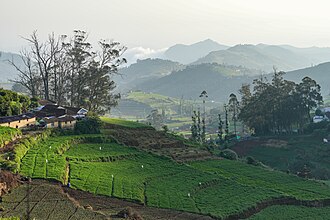
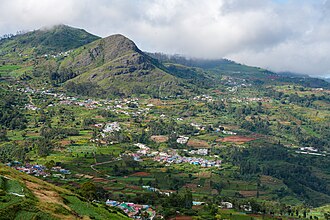
Villages of Hullathy Gram Panchayat in a steep arid valley in the north face of the Nilgiri Mountains. Villagers have created a vibrant agrarian economy, largely vegetables and tea, using terraces and irrigation. Tamil Nadu, India.
 #ImageOfTheDay
Picture of the day
Villages of Hullathy Gram Panchayat in a steep arid valley in the north face of the Nilgiri Mountains. Villagers have created a vibrant agrarian economy, largely vegetables and tea, using terraces and irrigation. Tamil Nadu, India.
Read More
Fishing Boats and City Lights – Fishing boats illuminate the Arabian Sea along India’s west coast with green lights designed to attract squid, shrimp, sardines, and mackerel in this nighttime photograph from the International Space Station, orbiting 259 miles above Earth. At lower right, the city lights of Hyderabad—renowned for its historic diamond and pearl trade—stretch westward toward the Mumbai Metropolitan Region, home to over 26 million people and the heart of Bollywood.

Fishing boats illuminate the Arabian Sea along India’s west coast with green lights designed to attract squid, shrimp, sardines, and mackerel in this nighttime photograph from the International Space Station, orbiting 259 miles above Earth. At lower right, the city lights of Hyderabad—renowned for its historic diamond and pearl trade—stretch westward toward the Mumbai Metropolitan Region, home to over 26 million people and the heart of Bollywood.

Read More
Picture of the day


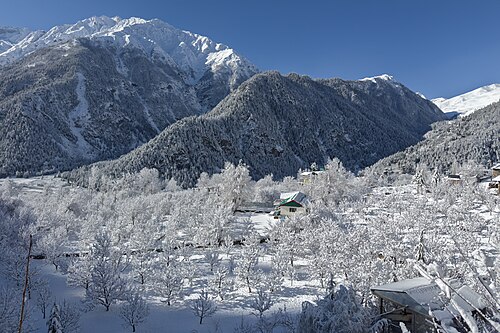
Apple orchards after snowfall in Sangla in the northern Indian state of Himachal Pradesh. India has the second largest area under apple cultivation in the world and is the fifth largest producer of the fruit globally. More than 90% of India’s apple production comes from just two of its northern Himalayan states: Jammu and Kashmir, and Himachal Pradesh. Today is Republic Day in India.
 #ImageOfTheDay
Picture of the day
Apple orchards after snowfall in Sangla in the northern Indian state of Himachal Pradesh. India has the second largest area under apple cultivation in the world and is the fifth largest producer of the fruit globally. More than 90% of India’s apple production comes from just two of its northern Himalayan states: Jammu and Kashmir, and Himachal Pradesh. Today is Republic Day in India.
Read More
Picture of the day


Top view of grafted Gymnocalycium mihanovichii (chin cactus). The host cactus has been digitally blanked out. The red body is about 3.5 cm (1.4 in) diameter. The small “moons” are 0.5–0.8 cm (0.20–0.31 in) diameter. House plant in Ooty, The Nilgiris, Tamil Nadu, India. Focus stack of 89 images using PMax mode of ZereneStacker.
 #ImageOfTheDay
Picture of the day
Top view of grafted Gymnocalycium mihanovichii (chin cactus). The host cactus has been digitally blanked out. The red body is about 3.5 cm (1.4 in) diameter. The small “moons” are 0.5–0.8 cm (0.20–0.31 in) diameter. House plant in Ooty, The Nilgiris, Tamil Nadu, India. Focus stack of 89 images using PMax mode of ZereneStacker.
Read More
Picture of the day


A circa 1660–70 Pahari painting from Basohli, Jammu, India, depicting the Hindu goddess Bhadrakali being worshipped by the three supreme gods of Hinduism: Brahma the creator, Vishnu the preserver, and Shiva the destroyer, to pacify her after she killed the demon Mahishasura, who could not be killed by them, the men or other gods. Her victory over the demon is celebrated by Hindus as the victory of good over evil on the day of Vijayadashami, which is today.
 #ImageOfTheDay
Picture of the day
A circa 1660–70 Pahari painting from Basohli, Jammu, India, depicting the Hindu goddess Bhadrakali being worshipped by the three supreme gods of Hinduism: Brahma the creator, Vishnu the preserver, and Shiva the destroyer, to pacify her after she killed the demon Mahishasura, who could not be killed by them, the men or other gods. Her victory over the demon is celebrated by Hindus as the victory of good over evil on the day of Vijayadashami, which is today.
Read More
Picture of the day


Panoramic view of the west bank of Nigeen Lake in Srinagar, India, with the distant Middle Himalayan Pir Panjal mountain range in the background. The city, situated on the banks of the Jhelum river and several lakes in the Himalayan Kashmir Valley, is the summer capital of Jammu and Kashmir and the northernmost million-plus city of India.
 #ImageOfTheDay
Picture of the day
Panoramic view of the west bank of Nigeen Lake in Srinagar, India, with the distant Middle Himalayan Pir Panjal mountain range in the background. The city, situated on the banks of the Jhelum river and several lakes in the Himalayan Kashmir Valley, is the summer capital of Jammu and Kashmir and the northernmost million-plus city of India.
Read More
Picture of the day


Tenzin Gyatso, the fourteenth and current Dalai Lama, is the highest spiritual leader and head of Tibetan Buddhism. In 1959, he escaped from Tibet to India following the Tibetan uprising against Chinese occupation of Tibet, and established the Tibetan government-in-exile, which continues to function in Dharamsala, India, where he resides. He was awarded the Nobel Peace Prize in 1989. Today is his 90th birthday.
 #ImageOfTheDay
Picture of the day
Tenzin Gyatso, the fourteenth and current Dalai Lama, is the highest spiritual leader and head of Tibetan Buddhism. In 1959, he escaped from Tibet to India following the Tibetan uprising against Chinese occupation of Tibet, and established the Tibetan government-in-exile, which continues to function in Dharamsala, India, where he resides. He was awarded the Nobel Peace Prize in 1989. Today is his 90th birthday.
Read More