Interviews

Archbishop of Panama asks victims for forgiveness: ‘We cannot remain silent in the face of abuse’ #Catholic The archbishop of Panama, José Domingo Ulloa Mendieta, stated that “we cannot remain silent in the face of abuse” during his presentation of the report “Assessment of Institutional Responses (AIR) in cases of sexual abuse of minors and vulnerable persons” within the Archdiocese of Panama between 2001 and 2025.The report by the Transparency Commission (TC), a pilot project and the first from an interdisciplinary group of independent experts on addressing and preventing abuse within ecclesial settings, was presented on Sept. 22 at the Santa María La Antigua University auditorium in Panama City.Speaking during the presentation, Ulloa emphasized: “It has already been said here, and we know it: Our Panamanian culture often prefers to remain silent, but in the face of abuse, we cannot remain silent.”“We want to listen; we want to take every complaint seriously, with respect, and confidentiality, protecting the individuals involved and acting in accordance with established procedures,” he added.The prelate explained that the archdiocese he leads “remains committed to reporting relevant allegations to the competent civil authorities in accordance with current legislation” and acknowledged the need to ask what can be done better to move forward in the prevention of abuse.“A culture of protection is not built solely through written rules; it is built when every priest, religious, pastoral worker, collaborator, and member of our communities understands that protecting minors and vulnerable persons is an ongoing, shared responsibility,” the archbishop emphasized.Asking forgiveness of the victimsThe prelate also addressed “in a special way victims and survivors. We are deeply pained by the suffering you have endured.”“It pains us to know that those who should have found a place of welcome, care, and trust within the Church experienced situations that caused them such deep wounds,” he continued.Ulloa emphasized that “wherever members of our Church caused harm, and wherever our institutional response fell short of what the victims needed and had a right to expect, we ask for forgiveness in the name of the Church.”The archbishop also noted that “over this 25-year period, and I wish to highlight this especially for the media, more than 18 priests have been removed from priestly ministry due to situations involving the Sixth Commandment, offenses against property, or other issues they have experienced.”The Transparency CommissionAccording to its website, the Transparency Commission (TC) was established to conduct comprehensive investigations “in a holistic, professional, independent, and rigorous manner regarding cases of abuse of minors and vulnerable persons within the Church.” It is funded by the University of Notre Dame Law School in Indiana and Villanueva University in Madrid.“This group of experts focuses its work on places where crises related to ecclesial abuse have not yet occurred or have not come to light,” notes the TC website.
 
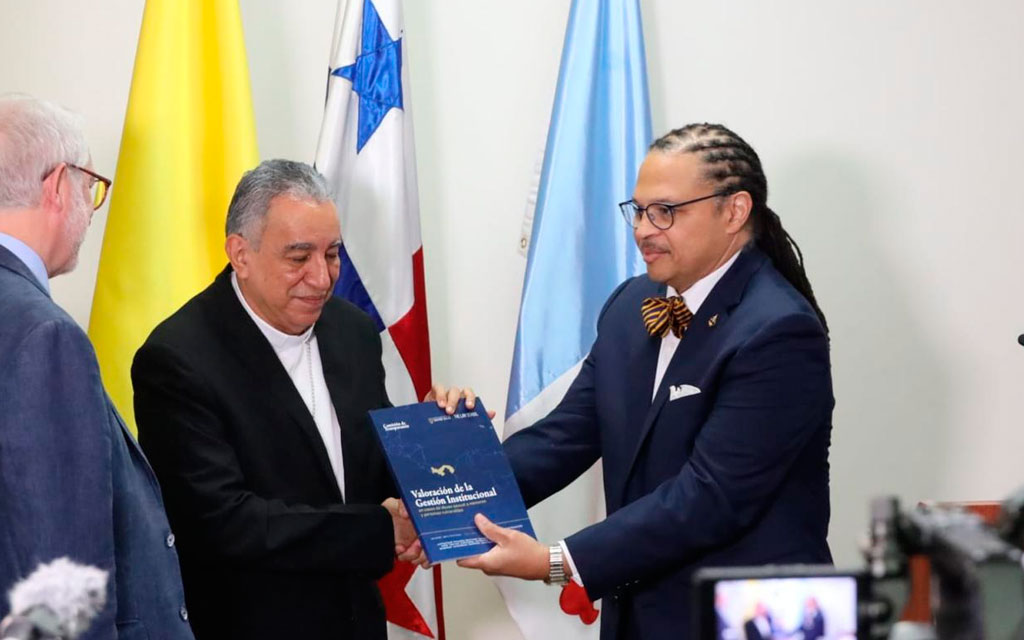
 Presentation of the report to the archbishop of Panama, José Domingo Ulloa. | Credit: Archdiocese of Panama
 
 The report indicates that in cases of sexual abuse, the AIR “must place victims at the center of the analysis, since the way the institution protects their rights, addresses their needs, and fosters their reparation constitutes the primary criterion for evaluating the quality of the response provided.”The Transparency Commission is composed of 17 individuals coordinated by Father Jordi Pujol, a lawyer who holds a doctorate in moral theology and is also a professor of law and communication ethics at the Pontifical University of the Holy Cross in Rome.Its members include Father Thomas Berg, a professor and researcher at the McGrath Institute for Church Life at the University of Notre Dame; Yago de la Cierva, a professor of preventive and crisis communication at the Pontifical University of the Holy Cross; and Irma Patricia Espinosa, a psychiatrist, member of the National Council for the Protection of Minors of the Mexican Bishops’ Conference, academic director and founding partner of the Center for Interdisciplinary Research and Training for the Protection of Minors (CEPROME) Latin America, and a member of the Pontifical Commission for the Protection of Minors since 2022.Also serving on the Transparency Commission are María Inés Franck, professor of canon law at the Pontifical Catholic University of Argentina and a member of the Pastoral Council for the Protection of Minors of the Argentine Bishops’ Conference; Monsignor John Paul Kimes, professor of canon law at the University of Notre Dame Law School; and Father Daniel Portillo, dean of the psychology department at Lumen Gentium Catholic University in Mexico. He is the director and a founding member of CEPROME Latin America.The Panama ReportThe request for the report goes back to October 2025, when the archbishop of Panama requested an assessment of institutional response from the TC “on his own initiative, without a court order or a request from the Holy See.”The commission stated that it accepted the assignment subject to three conditions: full access to information, total independence in the investigation, and a commitment to publish the findings. The archdiocese did not intervene in the compilation of the report and only saw it days before its presentation.The TC states that it operated with financial independence: Its members received no remuneration from the archdiocese, and costs were covered by Notre Dame Law School and the Villanueva University Foundation. The archdiocese only covered transportation and accommodation and provided workspace.The commission reported that, during the period under review, the archdiocese received 37 complaints of which it analyzed 24, while the remaining 13 were excluded from the analysis “because they referred to events that occurred outside the archdioceseʼs territory or the time frame examined, or because they did not involve abuse against minors or vulnerable persons.”The report reveals that case management improved thanks to two initiatives by the archdiocese: the approval of guidelines in 2015 and the creation in 2024 of the Pastoral Care and Prevention Office and the Listening Office.The report, currently available only in Spanish, identifies five areas requiring improvement: listening to and accompanying victims; recordkeeping; prevention; justice for victims; and reparation.“Making reparation requires acknowledging the harm, accepting personal and institutional responsibility, and addressing the physical, psychological, moral, spiritual, and social needs of each victim,” the commission emphasizes.The pilot projectIn a FAQ section about the report, the TC explains that this work is a pilot project because “it is the first time that a comprehensive methodology has been applied that can be replicated in other dioceses or ecclesial organizations.”“This first project has allowed us to test a methodology and a work system, based on professional listening, research in archives, conducting interviews with various audiences of interest, and media analysis and the sociocultural context of the country,” it adds.The Transparency Commission further specifies that the working methodology aims to “place victims at the center, protecting their rights, and guarantee due process for the accused,” applying a clear standard of prudence to avoid “revictimizing a victim or blaming an innocent person.”The Transparency Commission also noted that “the Vatican has been kept informed of the workʼs progress at all times; both the Pontifical Commission for the Protection of Minors and the Pontifical Commission for Latin America are aware of the TC’s work. Furthermore, some members of the commission work or have worked with both the Pontifical Commission for the Protection of Minors and the Dicastery for the Doctrine of the Faith.”The TC concludes by noting that anyone who has suffered abuse within the Church may, at any time, turn to the Archdiocese of Panama’s Listening Office and file a report with the public prosecutorʼs office.This story was first published by ACI Prensa, the Spanish-language sister service of EWTN News. It has been translated and adapted by EWTN News English.

Archbishop of Panama asks victims for forgiveness: ‘We cannot remain silent in the face of abuse’ #Catholic The archbishop of Panama, José Domingo Ulloa Mendieta, stated that “we cannot remain silent in the face of abuse” during his presentation of the report “Assessment of Institutional Responses (AIR) in cases of sexual abuse of minors and vulnerable persons” within the Archdiocese of Panama between 2001 and 2025.The report by the Transparency Commission (TC), a pilot project and the first from an interdisciplinary group of independent experts on addressing and preventing abuse within ecclesial settings, was presented on Sept. 22 at the Santa María La Antigua University auditorium in Panama City.Speaking during the presentation, Ulloa emphasized: “It has already been said here, and we know it: Our Panamanian culture often prefers to remain silent, but in the face of abuse, we cannot remain silent.”“We want to listen; we want to take every complaint seriously, with respect, and confidentiality, protecting the individuals involved and acting in accordance with established procedures,” he added.The prelate explained that the archdiocese he leads “remains committed to reporting relevant allegations to the competent civil authorities in accordance with current legislation” and acknowledged the need to ask what can be done better to move forward in the prevention of abuse.“A culture of protection is not built solely through written rules; it is built when every priest, religious, pastoral worker, collaborator, and member of our communities understands that protecting minors and vulnerable persons is an ongoing, shared responsibility,” the archbishop emphasized.Asking forgiveness of the victimsThe prelate also addressed “in a special way victims and survivors. We are deeply pained by the suffering you have endured.”“It pains us to know that those who should have found a place of welcome, care, and trust within the Church experienced situations that caused them such deep wounds,” he continued.Ulloa emphasized that “wherever members of our Church caused harm, and wherever our institutional response fell short of what the victims needed and had a right to expect, we ask for forgiveness in the name of the Church.”The archbishop also noted that “over this 25-year period, and I wish to highlight this especially for the media, more than 18 priests have been removed from priestly ministry due to situations involving the Sixth Commandment, offenses against property, or other issues they have experienced.”The Transparency CommissionAccording to its website, the Transparency Commission (TC) was established to conduct comprehensive investigations “in a holistic, professional, independent, and rigorous manner regarding cases of abuse of minors and vulnerable persons within the Church.” It is funded by the University of Notre Dame Law School in Indiana and Villanueva University in Madrid.“This group of experts focuses its work on places where crises related to ecclesial abuse have not yet occurred or have not come to light,” notes the TC website. Presentation of the report to the archbishop of Panama, José Domingo Ulloa. | Credit: Archdiocese of Panama The report indicates that in cases of sexual abuse, the AIR “must place victims at the center of the analysis, since the way the institution protects their rights, addresses their needs, and fosters their reparation constitutes the primary criterion for evaluating the quality of the response provided.”The Transparency Commission is composed of 17 individuals coordinated by Father Jordi Pujol, a lawyer who holds a doctorate in moral theology and is also a professor of law and communication ethics at the Pontifical University of the Holy Cross in Rome.Its members include Father Thomas Berg, a professor and researcher at the McGrath Institute for Church Life at the University of Notre Dame; Yago de la Cierva, a professor of preventive and crisis communication at the Pontifical University of the Holy Cross; and Irma Patricia Espinosa, a psychiatrist, member of the National Council for the Protection of Minors of the Mexican Bishops’ Conference, academic director and founding partner of the Center for Interdisciplinary Research and Training for the Protection of Minors (CEPROME) Latin America, and a member of the Pontifical Commission for the Protection of Minors since 2022.Also serving on the Transparency Commission are María Inés Franck, professor of canon law at the Pontifical Catholic University of Argentina and a member of the Pastoral Council for the Protection of Minors of the Argentine Bishops’ Conference; Monsignor John Paul Kimes, professor of canon law at the University of Notre Dame Law School; and Father Daniel Portillo, dean of the psychology department at Lumen Gentium Catholic University in Mexico. He is the director and a founding member of CEPROME Latin America.The Panama ReportThe request for the report goes back to October 2025, when the archbishop of Panama requested an assessment of institutional response from the TC “on his own initiative, without a court order or a request from the Holy See.”The commission stated that it accepted the assignment subject to three conditions: full access to information, total independence in the investigation, and a commitment to publish the findings. The archdiocese did not intervene in the compilation of the report and only saw it days before its presentation.The TC states that it operated with financial independence: Its members received no remuneration from the archdiocese, and costs were covered by Notre Dame Law School and the Villanueva University Foundation. The archdiocese only covered transportation and accommodation and provided workspace.The commission reported that, during the period under review, the archdiocese received 37 complaints of which it analyzed 24, while the remaining 13 were excluded from the analysis “because they referred to events that occurred outside the archdioceseʼs territory or the time frame examined, or because they did not involve abuse against minors or vulnerable persons.”The report reveals that case management improved thanks to two initiatives by the archdiocese: the approval of guidelines in 2015 and the creation in 2024 of the Pastoral Care and Prevention Office and the Listening Office.The report, currently available only in Spanish, identifies five areas requiring improvement: listening to and accompanying victims; recordkeeping; prevention; justice for victims; and reparation.“Making reparation requires acknowledging the harm, accepting personal and institutional responsibility, and addressing the physical, psychological, moral, spiritual, and social needs of each victim,” the commission emphasizes.The pilot projectIn a FAQ section about the report, the TC explains that this work is a pilot project because “it is the first time that a comprehensive methodology has been applied that can be replicated in other dioceses or ecclesial organizations.”“This first project has allowed us to test a methodology and a work system, based on professional listening, research in archives, conducting interviews with various audiences of interest, and media analysis and the sociocultural context of the country,” it adds.The Transparency Commission further specifies that the working methodology aims to “place victims at the center, protecting their rights, and guarantee due process for the accused,” applying a clear standard of prudence to avoid “revictimizing a victim or blaming an innocent person.”The Transparency Commission also noted that “the Vatican has been kept informed of the workʼs progress at all times; both the Pontifical Commission for the Protection of Minors and the Pontifical Commission for Latin America are aware of the TC’s work. Furthermore, some members of the commission work or have worked with both the Pontifical Commission for the Protection of Minors and the Dicastery for the Doctrine of the Faith.”The TC concludes by noting that anyone who has suffered abuse within the Church may, at any time, turn to the Archdiocese of Panama’s Listening Office and file a report with the public prosecutorʼs office.This story was first published by ACI Prensa, the Spanish-language sister service of EWTN News. It has been translated and adapted by EWTN News English.

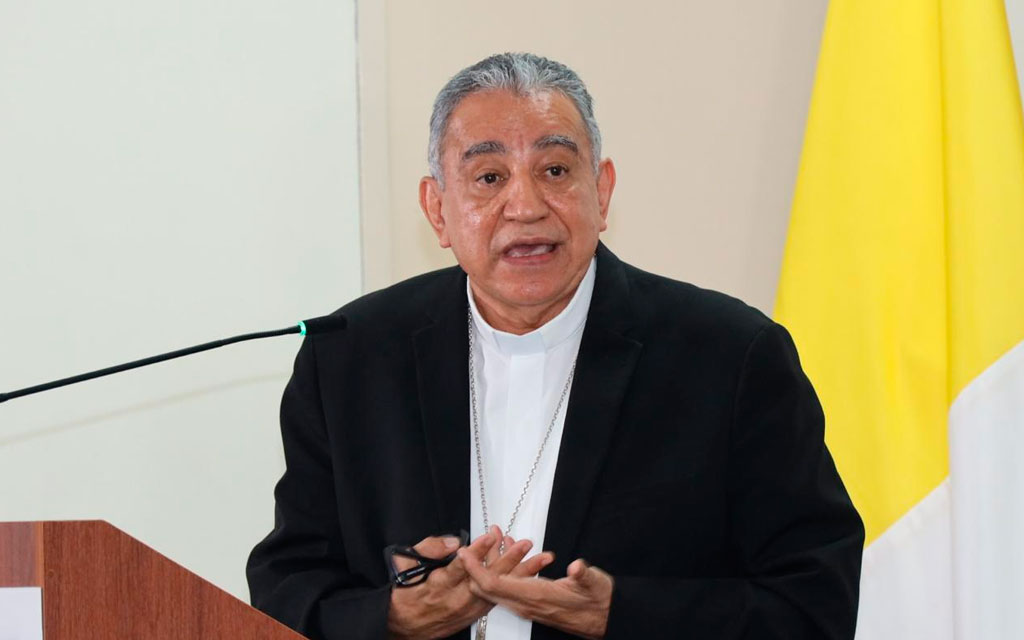
Addressing the scourge of sexual abuse, the archbishop of Panama requested the services of the Transparency Commission, a project sponsored by Notre Dame Law School and Madrid’s Villanueva University.
Read More
EWTN to air film on St. Peter Claver, slave of the slaves #Catholic St. Peter Claver was a Spanish Jesuit priest who dedicated his life to the care of African slaves. On Sept. 9 — the saint’s feast day — EWTN will release an original docudrama on his life titled “Saint Peter Claver — Slave of the Slaves.”The docudrama was filmed on location in Spain, Colombia, and Cape Verde and uses interviews and dramatizations to present the life of Claver, who tirelessly ministered to the spiritual and physical needs of African slaves in Cartagena, Colombia, for 40 years.The film will air on EWTN TV and EWTN+ on Sept. 9 at 9:30 p.m. ET and re-air on Sept. 12 at 8 p.m. ET. At this time, the program will not air on YouTube.
 
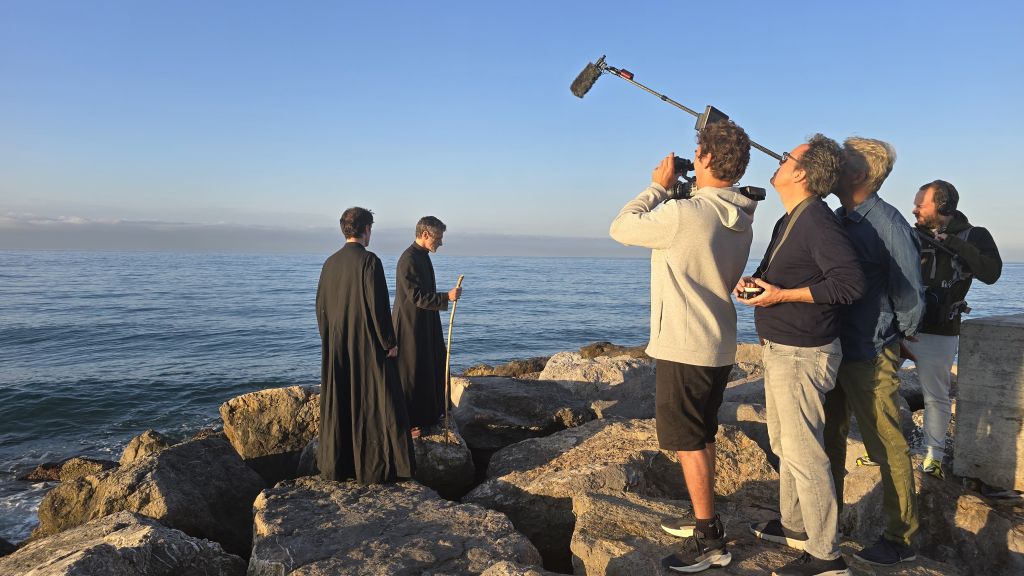
 A behind-the-scenes look at the making of “Saint Peter Claver — Slave of the Slaves.” | Credit: EWTN
 
 Who was St. Peter Claver?Born on June 26, 1580, in Catalonia, Spain, Claver grew up in a devout Catholic farming family. He attended the University of Barcelona and at age 20 joined the Jesuits.During his studies as a novice, Claver met an older lay Jesuit brother, Alphonsus Rodriguez. It was Rodriguez who encouraged Claver to become a missionary in the Spanish colonies in the Americas.In 1610, Claver traveled from Spain to Cartagena, Colombia, where he was ordained a priest five years later.At that time, the African slave trade had been in place for several decades in the Americas, and Cartagena was one of the busiest slave ports in the Spanish empire.While there, Claver witnessed the cruelty with which the slaves were treated firsthand, despite Pope Paul III’s repeated condemnations of slavery. It is estimated that tens of thousands of enslaved Africans passed through Cartagena during Claver’s ministry.Moved by their suffering, Claver worked to bring both bodily and spiritual aid to the slaves. Despite his own health problems and the language barrier, he dedicated himself to his vocation.Claver would meet slave ships upon arrival in the harbor and board them to care for the poorly treated passengers on board who had made the journey from Africa in diseased and cramped conditions over the course of several months. He would tend to the sick — bringing food, water, and medicine — and treat wounds and illnesses. He would immediately baptize babies and those near death.After a slave was sold, Claver would continue to visit the individual, providing physical and spiritual support.When it came to catechesis, due to the language barrier, Claver used pictorial representations of the Gospel stories he was teaching.Throughout his ministry, Claver lived on small amounts of food and sleep. His lifestyle led to several miraculous occurrences, including when he healed the sick with the touch of his cloak or appeared surrounded by a supernatural light during his hospital visits.After suffering for several years from poor health, Claver died on Sept. 8, 1654. He had baptized and taught the faith to more than 300,000 slaves during his 40 years in Colombia.He was beatified by Pius IX on July 16, 1850, and canonized along with his friend St. Alphonsus Rodriguez on Jan. 15, 1888, by Pope Leo XIII.Claver is the patron saint of enslaved peoples, African missions, and interracial justice, and one of several patron saints of Colombia.

EWTN to air film on St. Peter Claver, slave of the slaves #Catholic St. Peter Claver was a Spanish Jesuit priest who dedicated his life to the care of African slaves. On Sept. 9 — the saint’s feast day — EWTN will release an original docudrama on his life titled “Saint Peter Claver — Slave of the Slaves.”The docudrama was filmed on location in Spain, Colombia, and Cape Verde and uses interviews and dramatizations to present the life of Claver, who tirelessly ministered to the spiritual and physical needs of African slaves in Cartagena, Colombia, for 40 years.The film will air on EWTN TV and EWTN+ on Sept. 9 at 9:30 p.m. ET and re-air on Sept. 12 at 8 p.m. ET. At this time, the program will not air on YouTube. A behind-the-scenes look at the making of “Saint Peter Claver — Slave of the Slaves.” | Credit: EWTN Who was St. Peter Claver?Born on June 26, 1580, in Catalonia, Spain, Claver grew up in a devout Catholic farming family. He attended the University of Barcelona and at age 20 joined the Jesuits.During his studies as a novice, Claver met an older lay Jesuit brother, Alphonsus Rodriguez. It was Rodriguez who encouraged Claver to become a missionary in the Spanish colonies in the Americas.In 1610, Claver traveled from Spain to Cartagena, Colombia, where he was ordained a priest five years later.At that time, the African slave trade had been in place for several decades in the Americas, and Cartagena was one of the busiest slave ports in the Spanish empire.While there, Claver witnessed the cruelty with which the slaves were treated firsthand, despite Pope Paul III’s repeated condemnations of slavery. It is estimated that tens of thousands of enslaved Africans passed through Cartagena during Claver’s ministry.Moved by their suffering, Claver worked to bring both bodily and spiritual aid to the slaves. Despite his own health problems and the language barrier, he dedicated himself to his vocation.Claver would meet slave ships upon arrival in the harbor and board them to care for the poorly treated passengers on board who had made the journey from Africa in diseased and cramped conditions over the course of several months. He would tend to the sick — bringing food, water, and medicine — and treat wounds and illnesses. He would immediately baptize babies and those near death.After a slave was sold, Claver would continue to visit the individual, providing physical and spiritual support.When it came to catechesis, due to the language barrier, Claver used pictorial representations of the Gospel stories he was teaching.Throughout his ministry, Claver lived on small amounts of food and sleep. His lifestyle led to several miraculous occurrences, including when he healed the sick with the touch of his cloak or appeared surrounded by a supernatural light during his hospital visits.After suffering for several years from poor health, Claver died on Sept. 8, 1654. He had baptized and taught the faith to more than 300,000 slaves during his 40 years in Colombia.He was beatified by Pius IX on July 16, 1850, and canonized along with his friend St. Alphonsus Rodriguez on Jan. 15, 1888, by Pope Leo XIII.Claver is the patron saint of enslaved peoples, African missions, and interracial justice, and one of several patron saints of Colombia.

“Saint Peter Claver — Slave of the Slaves” will air on EWTN on Sept. 9.

Read More
‘God is good’: One of the internet’s most popular nonbelievers announces his return to the Church #Catholic “Big news. God exists. Christ is Lord, and he established the Catholic Church.” That’s how Joe Schmid announced his conversion to Catholicism on his YouTube channel, “Majesty of Reason,” on Aug. 21. Conversion is always a cause for celebration, but in Schmid’s case it was likely unexpected among his channel’s 55,000 subscribers. For years, Schmid has used his YouTube channel to explore a broad variety of philosophical and naturalistic arguments and principles — and Schmid himself has openly identified as an agnostic for most of that time. Schmid, who was raised Catholic, told EWTN News that he adopted atheism and then eventually agnosticism in high school. He said he was originally led to atheism because of “the problem of evolutionary animal suffering,” a well-known topic of philosophical and theological debate.Philosophers such as Joshua Rasmussen and Alexander Pruss led him to consider “contingency arguments” in favor of God’s existence, he said, but his own “arduous conversion process” would ultimately last a decade.Schmid launched his YouTube channel in April 2020. Broadly, “my videos focused primarily on philosophy of religion, and secondarily on other areas of philosophy like metaphysics, metaethics, and epistemology,” Schmid told EWTN News, and “criticizing arguments for God’s existence was one of my central focuses.”To that end, he created a wide variety of videos, including interviews and debates with scholars, lengthy lectures, and episodes responding to other YouTube content, “primarily theist and Christian and Catholic creators.”  Those videos have undergone a marked shift in recent weeks. Videos over the last year have included debates about whether Jesus rose from the dead and an extended case for veganism, among numerous other topics. On Aug. 21, however, Schmid posted a nearly half-hour-long video revealing his conversion to Catholicism, and in the roughly two weeks since then his videos have focused on topics such as “the best-ever cumulative case for God” and “the best objections to Catholicism answered.” Schmid, who is a a fourth-year doctoral candidate in philosophy at Princeton University, told EWTN News his return to the faith “wasnʼt my own making.”“Conversion is a gift of Godʼs grace, and Iʼve seen its transformative impact in my life,” he said. “So God is ultimately what led me to Catholicism.”Yet, he said a “huge confluence of factors” convinced him of the truth of the Catholic faith “on an intellectual level.” Chief among them are the “vindicatory miracles,” or “miracles wrought by God in confirmation of distinctive Catholic doctrines.”He cited the charisms of Padre Pio, the healing miracles at Lourdes, the apparitions of Our Lady of Fátima, Eucharistic miracles, “and much more besides.” “I converted after a long process of working through my many objections to Catholicism and appreciating the many powerful arguments in its favor,” he said. In his video he described the process as a “culmination” of “head factors and heart factors.”“God is good,” he told his viewers.The high-profile conversion was noted by the Aquinas Institute, the Catholic campus ministry at Princeton, which urged the Catholic community there to “pray for Joe as he continues to grow in his Catholic faith and begins this new chapter of his public work.” Schmid also appeared recently in a two-hour-long interview with Catholic apologist Trent Horn, who described Schmid as “one of my smartest critics.” Horn praised Schmid’s rigorous approach to philosophical and theological debate even when Schmid himself was an agnostic. “Iʼve learned a lot from you in your rebuttals, and it has helped in my own path and trying to grow as an apologist and a philosopher,” Horn told Schmid during the interview. Speaking to his own viewers when announcing his conversion, Schmid said he has significant plans to continue his YouTube channel in service to Catholicism, and “we will see where the Lord takes me.” “Debates and discussions will be continuing,” he said. He asked for patience from viewers during the transition.“And I also ask for your prayers,” he added. “Know that I will be praying for you.”

‘God is good’: One of the internet’s most popular nonbelievers announces his return to the Church #Catholic “Big news. God exists. Christ is Lord, and he established the Catholic Church.” That’s how Joe Schmid announced his conversion to Catholicism on his YouTube channel, “Majesty of Reason,” on Aug. 21. Conversion is always a cause for celebration, but in Schmid’s case it was likely unexpected among his channel’s 55,000 subscribers. For years, Schmid has used his YouTube channel to explore a broad variety of philosophical and naturalistic arguments and principles — and Schmid himself has openly identified as an agnostic for most of that time. Schmid, who was raised Catholic, told EWTN News that he adopted atheism and then eventually agnosticism in high school. He said he was originally led to atheism because of “the problem of evolutionary animal suffering,” a well-known topic of philosophical and theological debate.Philosophers such as Joshua Rasmussen and Alexander Pruss led him to consider “contingency arguments” in favor of God’s existence, he said, but his own “arduous conversion process” would ultimately last a decade.Schmid launched his YouTube channel in April 2020. Broadly, “my videos focused primarily on philosophy of religion, and secondarily on other areas of philosophy like metaphysics, metaethics, and epistemology,” Schmid told EWTN News, and “criticizing arguments for God’s existence was one of my central focuses.”To that end, he created a wide variety of videos, including interviews and debates with scholars, lengthy lectures, and episodes responding to other YouTube content, “primarily theist and Christian and Catholic creators.”  Those videos have undergone a marked shift in recent weeks. Videos over the last year have included debates about whether Jesus rose from the dead and an extended case for veganism, among numerous other topics. On Aug. 21, however, Schmid posted a nearly half-hour-long video revealing his conversion to Catholicism, and in the roughly two weeks since then his videos have focused on topics such as “the best-ever cumulative case for God” and “the best objections to Catholicism answered.” Schmid, who is a a fourth-year doctoral candidate in philosophy at Princeton University, told EWTN News his return to the faith “wasnʼt my own making.”“Conversion is a gift of Godʼs grace, and Iʼve seen its transformative impact in my life,” he said. “So God is ultimately what led me to Catholicism.”Yet, he said a “huge confluence of factors” convinced him of the truth of the Catholic faith “on an intellectual level.” Chief among them are the “vindicatory miracles,” or “miracles wrought by God in confirmation of distinctive Catholic doctrines.”He cited the charisms of Padre Pio, the healing miracles at Lourdes, the apparitions of Our Lady of Fátima, Eucharistic miracles, “and much more besides.” “I converted after a long process of working through my many objections to Catholicism and appreciating the many powerful arguments in its favor,” he said. In his video he described the process as a “culmination” of “head factors and heart factors.”“God is good,” he told his viewers.The high-profile conversion was noted by the Aquinas Institute, the Catholic campus ministry at Princeton, which urged the Catholic community there to “pray for Joe as he continues to grow in his Catholic faith and begins this new chapter of his public work.” Schmid also appeared recently in a two-hour-long interview with Catholic apologist Trent Horn, who described Schmid as “one of my smartest critics.” Horn praised Schmid’s rigorous approach to philosophical and theological debate even when Schmid himself was an agnostic. “Iʼve learned a lot from you in your rebuttals, and it has helped in my own path and trying to grow as an apologist and a philosopher,” Horn told Schmid during the interview. Speaking to his own viewers when announcing his conversion, Schmid said he has significant plans to continue his YouTube channel in service to Catholicism, and “we will see where the Lord takes me.” “Debates and discussions will be continuing,” he said. He asked for patience from viewers during the transition.“And I also ask for your prayers,” he added. “Know that I will be praying for you.”

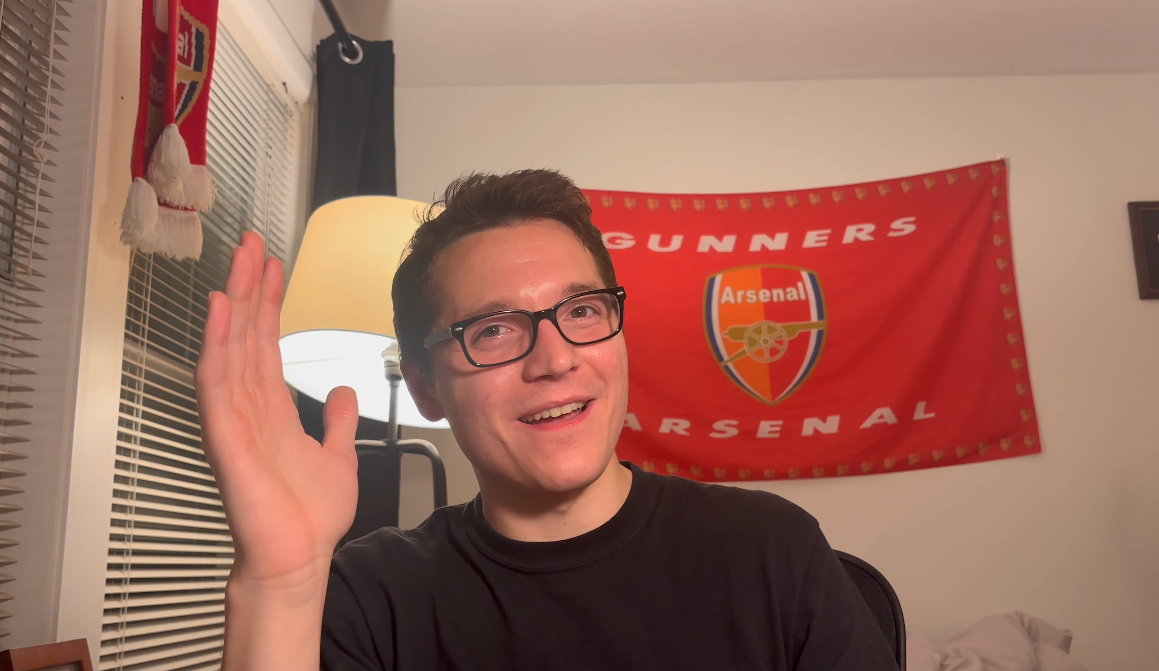
Joe Schmid ran a highly popular agnostic YouTube channel for years, but “a gift of God’s grace” has led him back to the faith.
Read More