Museum

Researchers name moth species after Pope Leo XIV #Catholic Researchers have named a moth species “Pyralis papaleonei,” or “Pope Leo moth," in honor of the Holy Father.“The new species is dedicated to the head of the Catholic Church, Pope Leo XIV,” authors Peter Huemer, Lauri Kaila, and Andreas H. Segerer wrote in a research article on the species. “The pontiff is a strong advocate of climate and environmental protection, and we hope that his voice may serve as an example for humanity.”In the journal, Nota Lepidopterologica, the entomologists said the species was discovered on the Mediterranean island of Crete. It is a medium-sized species with a 2-centimeter wingspan, gold spots, and prominent white bands.“Furthermore, due to its distinctive coloration and overall appearance, the new species belongs to a group of Pyralidae whose species names refer to high secular or ecclesiastical offices including Pyralis regalis, Pyralis imperialis, Pyralis princeps, and Pyralis cardinalis,” they wrote.Butterflies are often named after external characteristics, geographical locations, or in honor of distinguished individuals, according to a press release from Tiroler Landesmuseum Ferdinandeum, or the Tyrolean State Museum, located in Innsbruck, Austria.
 
 Pyralis papaleonei species. | Credit: Photo courtesy of the Tyrolean State Museum
 
 Within the Pyralis genus, a different tradition has emerged. As early as 1775, Austrian naturalists and Jesuits Michael Denis and Ignaz Schiffermüller described the first species of the group as Pyralis regalis, or "royal,” due to its coloration.This prompted similar names including Pyralis princeps and Pyralis cardinalis, which belong to the superfamily Pyraloidea comprised of 16,000 described species worldwide.In the Old Testament (Genesis 2), Adam is instructed to name all animals. According to the museum, this led to the action of taxonomy — the science of classifying, naming, and categorizing organisms — to often be considered, “in the biblical sense, the oldest task of humankind.” According to Huemer, head of studies at the Tyrolean State Museum, the naming process is more than a scientific act but a symbolic gesture. For the Pope Leo moth, it is an appeal to the head of the Catholic Church and to draw attention to humanityʼs central responsibility for the preservation of creation.“We are facing a global biodiversity crisis, yet only a fraction of the world’s species has been scientifically documented,” Huemer said in a statement. “Effective conservation of biodiversity requires that species are first recognized, described, and named.”Huemer’s call echoes the pope’s "call for conversion” at a 2025 international conference on climate justice, celebrating the 10th anniversary of Pope Francis' encyclical Laudato Si’.“It is only by returning to the heart that a true ecological conversion can take place,” the Holy Father said. “We must shift from collecting data to caring, and from environmental discourse to an ecological conversion that transforms both personal and communal lifestyles."

Researchers name moth species after Pope Leo XIV #Catholic Researchers have named a moth species “Pyralis papaleonei,” or “Pope Leo moth," in honor of the Holy Father.“The new species is dedicated to the head of the Catholic Church, Pope Leo XIV,” authors Peter Huemer, Lauri Kaila, and Andreas H. Segerer wrote in a research article on the species. “The pontiff is a strong advocate of climate and environmental protection, and we hope that his voice may serve as an example for humanity.”In the journal, Nota Lepidopterologica, the entomologists said the species was discovered on the Mediterranean island of Crete. It is a medium-sized species with a 2-centimeter wingspan, gold spots, and prominent white bands.“Furthermore, due to its distinctive coloration and overall appearance, the new species belongs to a group of Pyralidae whose species names refer to high secular or ecclesiastical offices including Pyralis regalis, Pyralis imperialis, Pyralis princeps, and Pyralis cardinalis,” they wrote.Butterflies are often named after external characteristics, geographical locations, or in honor of distinguished individuals, according to a press release from Tiroler Landesmuseum Ferdinandeum, or the Tyrolean State Museum, located in Innsbruck, Austria. Pyralis papaleonei species. | Credit: Photo courtesy of the Tyrolean State Museum Within the Pyralis genus, a different tradition has emerged. As early as 1775, Austrian naturalists and Jesuits Michael Denis and Ignaz Schiffermüller described the first species of the group as Pyralis regalis, or "royal,” due to its coloration.This prompted similar names including Pyralis princeps and Pyralis cardinalis, which belong to the superfamily Pyraloidea comprised of 16,000 described species worldwide.In the Old Testament (Genesis 2), Adam is instructed to name all animals. According to the museum, this led to the action of taxonomy — the science of classifying, naming, and categorizing organisms — to often be considered, “in the biblical sense, the oldest task of humankind.” According to Huemer, head of studies at the Tyrolean State Museum, the naming process is more than a scientific act but a symbolic gesture. For the Pope Leo moth, it is an appeal to the head of the Catholic Church and to draw attention to humanityʼs central responsibility for the preservation of creation.“We are facing a global biodiversity crisis, yet only a fraction of the world’s species has been scientifically documented,” Huemer said in a statement. “Effective conservation of biodiversity requires that species are first recognized, described, and named.”Huemer’s call echoes the pope’s "call for conversion” at a 2025 international conference on climate justice, celebrating the 10th anniversary of Pope Francis' encyclical Laudato Si’.“It is only by returning to the heart that a true ecological conversion can take place,” the Holy Father said. “We must shift from collecting data to caring, and from environmental discourse to an ecological conversion that transforms both personal and communal lifestyles."

“The pontiff is a strong advocate of climate and environmental protection, and we hope that his voice may serve as an example for humanity,” researchers wrote.

Read More
Picture of the day


Doll (musha-ningyo) featuring Takenouchi no Sukune, minister of Emperor Ōjin; end of the Edo period, 19th century, Japan. Ann and Gabriel Barbier-Mueller Museum, Dallas (Texas) ; the photograph was taken during an exhibition in the Musée des Arts Premiers in Paris
 #ImageOfTheDay
Picture of the day
Doll (musha-ningyo) featuring Takenouchi no Sukune, minister of Emperor Ōjin; end of the Edo period, 19th century, Japan. Ann and Gabriel Barbier-Mueller Museum, Dallas (Texas) ; the photograph was taken during an exhibition in the Musée des Arts Premiers in Paris
Read More
Picture of the day


One Hundred Horses by Giuseppe Castiglione, painted in 1728. Collected by the National Palace Museum in Taipei, Taiwan. Today is Chinese New Year. In traditional Chinese culture, today marks the beginning of Horse Year.
 #ImageOfTheDay
Picture of the day
One Hundred Horses by Giuseppe Castiglione, painted in 1728. Collected by the National Palace Museum in Taipei, Taiwan. Today is Chinese New Year. In traditional Chinese culture, today marks the beginning of Horse Year.
Read More
Picture of the day


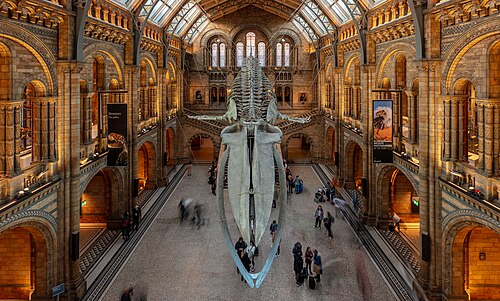
Blue whale skeleton at the Central Hall of the Natural History Museum, London, England. ‘Hope’, nickname of the blue whale skeleton, is 25.2 metres (83 ft) long and is suspended from the ceiling since July 14th 2017. Blue whales are the largest creature ever to have lived in the Earth. In the 1800s there was an estimated amount of 250,000 blue whales across the world’s oceans. After decades of commercial hunting the species was to the brink of extinction, with only around 400 surviving in 1966. That year the world took action in London and decided to legally protect blue whales from commercial hunting. Since then the population of blue whales has steadily grown to its current level of around 20,000.
 #ImageOfTheDay
Picture of the day
Blue whale skeleton at the Central Hall of the Natural History Museum, London, England. ‘Hope’, nickname of the blue whale skeleton, is 25.2 metres (83 ft) long and is suspended from the ceiling since July 14th 2017. Blue whales are the largest creature ever to have lived in the Earth. In the 1800s there was an estimated amount of 250,000 blue whales across the world’s oceans. After decades of commercial hunting the species was to the brink of extinction, with only around 400 surviving in 1966. That year the world took action in London and decided to legally protect blue whales from commercial hunting. Since then the population of blue whales has steadily grown to its current level of around 20,000.
Read More
Picture of the day


St. Nicholas the Wonderworker Church (1766) was relocated from the village of Glotovo, Vladimir Oblast to the Museum of Wooden Architecture at the Kremlin in Suzdal, Russia. Today is Saint Nicholas Day in much of Eastern and Western Christianity.
 #ImageOfTheDay
Picture of the day
St. Nicholas the Wonderworker Church (1766) was relocated from the village of Glotovo, Vladimir Oblast to the Museum of Wooden Architecture at the Kremlin in Suzdal, Russia. Today is Saint Nicholas Day in much of Eastern and Western Christianity.
Read More
Picture of the day


The former “Kaispeicher B”, one of the oldest preserved warehouse structures in the Port of Hamburg, is now home to the International Maritime Museum Hamburg. The museum opened 17 years ago today, on June 25, 2008.
 #ImageOfTheDay
Picture of the day
The former “Kaispeicher B”, one of the oldest preserved warehouse structures in the Port of Hamburg, is now home to the International Maritime Museum Hamburg. The museum opened 17 years ago today, on June 25, 2008.
Read More