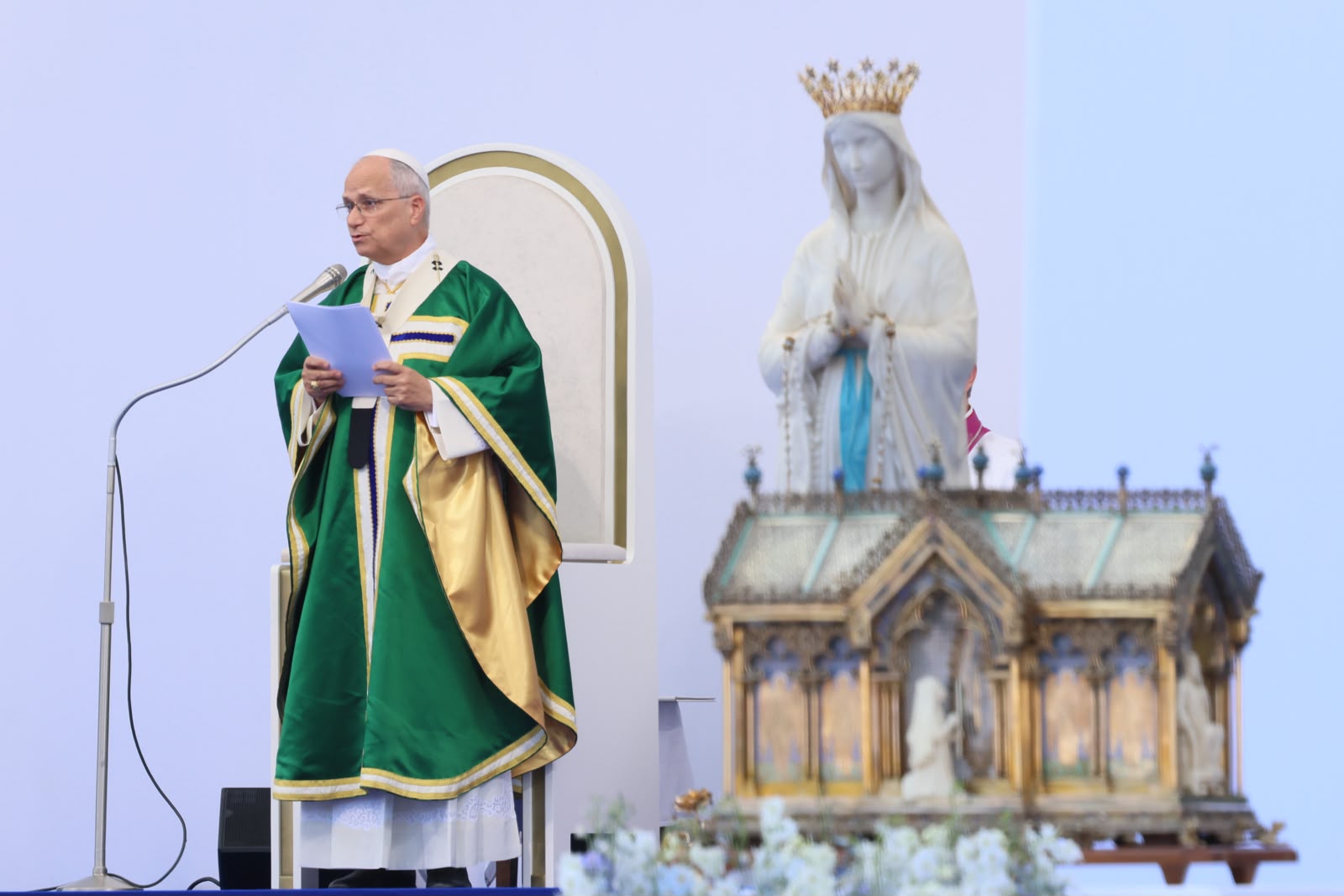
Read More Pope Leo in Lourdes: The Church must heal her ‘wounds, infidelities, and painful errors’ #Catholic LOURDES, France — Pope Leo XIV issued a firm call to conversion from sin and error in the Church, and invited all to repent and do penance, at the Sanctuary of Our Lady of Lourdes on Sunday.Mary’s call to conversion in her message to St. Bernadette “also concerns the Church herself as she makes her earthly journey. She must have the courage to begin with herself,” he said at Mass on Sept. 27.“In order to heal the deep wounds, infidelities and painful errors that have occurred within her, we must humbly place ourselves under the Lord’s purifying gaze. Recognizing our own faults is essential to our spiritual growth,” the pontiff said.In 2021, the Independent Commission on Sexual Abuse in the Church (CIASE) published a nearly 2,500-page final report, estimating that 216,000 children were abused by priests, deacons, monks, or nuns in France from 1950 to 2020.TweetLeo is scheduled to meet later on Sunday with seven victims of clerical sexual abuse in France.Lourdes is an evocative backdrop to the private meeting, since it is among the first shrines to cover artwork by the accused sexual abuser Father Marko Rupnik, currently on trial at the Vatican.Rupnik’s mosaics decorating the front of the Basilica of the Rosary were covered ahead of Leo’s visit and will remain covered indefinitely, according to the local bishop.The pope celebrated Mass on a prairie across the river Gave de Pau from the grotto of the apparitions on the third day of his Sept. 25-28 visit to France.Pilgrims from France and around the world gathered on the grassy hill and along the streets of the shrine. Some waved flags or held banners of sacred images. A number of pilgrims arrived in wheelchairs. Around 150,000 people attended the Mass, according to the Vatican.Claire Banks, a nurse from the UK, said she has traveled over 100 times to Lourdes.“It was too good of an opportunity to miss coming here and seeing the pope. I think he’s wonderful,” she told EWTN News. She described an “electric atmosphere” at the shrine since Leo’s arrival.Libby Frank, another Mass attendee, is also from the UK, but has lived in Lourdes for 40 years. She recently retired after working for a charity that brings sick people to the shrine.“I worked for three papal visits and now I’ve come to one papal visit to enjoy it with my family and friends and just be part of the community,” she said, referencing two visits by St. Pope John Paul II in 1983 and 2004, and one by Pope Benedict in 2008.“There’s been a phenomenal amount of excitement locally waiting for Leo to come visit. The town [of Lourdes] has really gotten behind everything that’s happening,” she said.TweetThe Sanctuary of Our Lady of Lourdes is among the most popular Catholic shrines in the world, built on the site of Mary’s apparitions to St. Bernadette in 1858. It is particularly visited by the sick, who come to bathe in or drink its healing spring water.In his homily, Pope Leo noted that a “call to conversion, both tender and urgent,” was a central part of the message the Virgin Mary entrusted to Bernadette, and that “it is today, not tomorrow, that we must repent.”He said Jesus is quite direct about the call to repentance: “As St. Luke tells us, ‘Unless you repent, you will all perish.’ But he also extends our horizon beyond this earthly life to the horizon of eternal life.”“Did not the Virgin Mary say to St. Bernadette, ‘I do not promise to make you happy in this world but in the next’?” Leo said.The pope noted that we can often forget this in an age and society focused on progress and material wellbeing.Eternal life is already won for us by Jesus’ sacrifice, he continued, but “the obstacle to grace and eternal life — the only obstacle to this love — is sin.”The Holy Father called everyone to do penance, an act of love for God and for our brothers and sisters, “who do not heed this call to conversion, and whose sins lead them towards death.”“We want to make amends for the wounds our sins have dealt to [God’s] heart,” he said.Addressing the many sick, elderly, and disabled people present at the Mass, Leo said their suffering, if lived in a “spirit of offering,” can take part “in the redemptive work that the world so greatly needs.”“In this way, you are truly at the heart of the Church, and your role is irreplaceable,” he said.“In the face of current trends that seek to redefine the value of human life in illness, suffering and old age, the grotto of Massabielle stands as a place of Christian hope,” he said. “Here, no one is turned away due to their frailty.”Earlier in the morning, Leo met with France’s bishops at the shrine, where he praised their courage in opposing the recent legalization of euthanasia and assisted suicide in the country.“I encourage you to persevere, together with all people of good will who uphold the same values,” he told the bishops’ conference.At the end of Mass, before praying the Angelus, the pope invited those present to pray the rosary for peace, and to offer concrete acts of penance and mercy.“It was here that the Immaculate Virgin appeared to St. Bernadette with the rosary and, as it were, guided her in prayer,” he said. “For this reason, today I invite all the faithful and all Christian communities to pray the holy rosary throughout the coming month of October, with the particular intention that wars may cease and that peace may be established among peoples in conflict.”Elliot Hartley contributed to this report.This story was updated at 7:14 a.m. ET with more information about the Mass and the pope’s meeting with bishops. unitedyam September 27, 2026September 28, 2026 The pontiff spoke about the urgency of repentance and conversion at a Mass on the third day of his visit to France. Read More
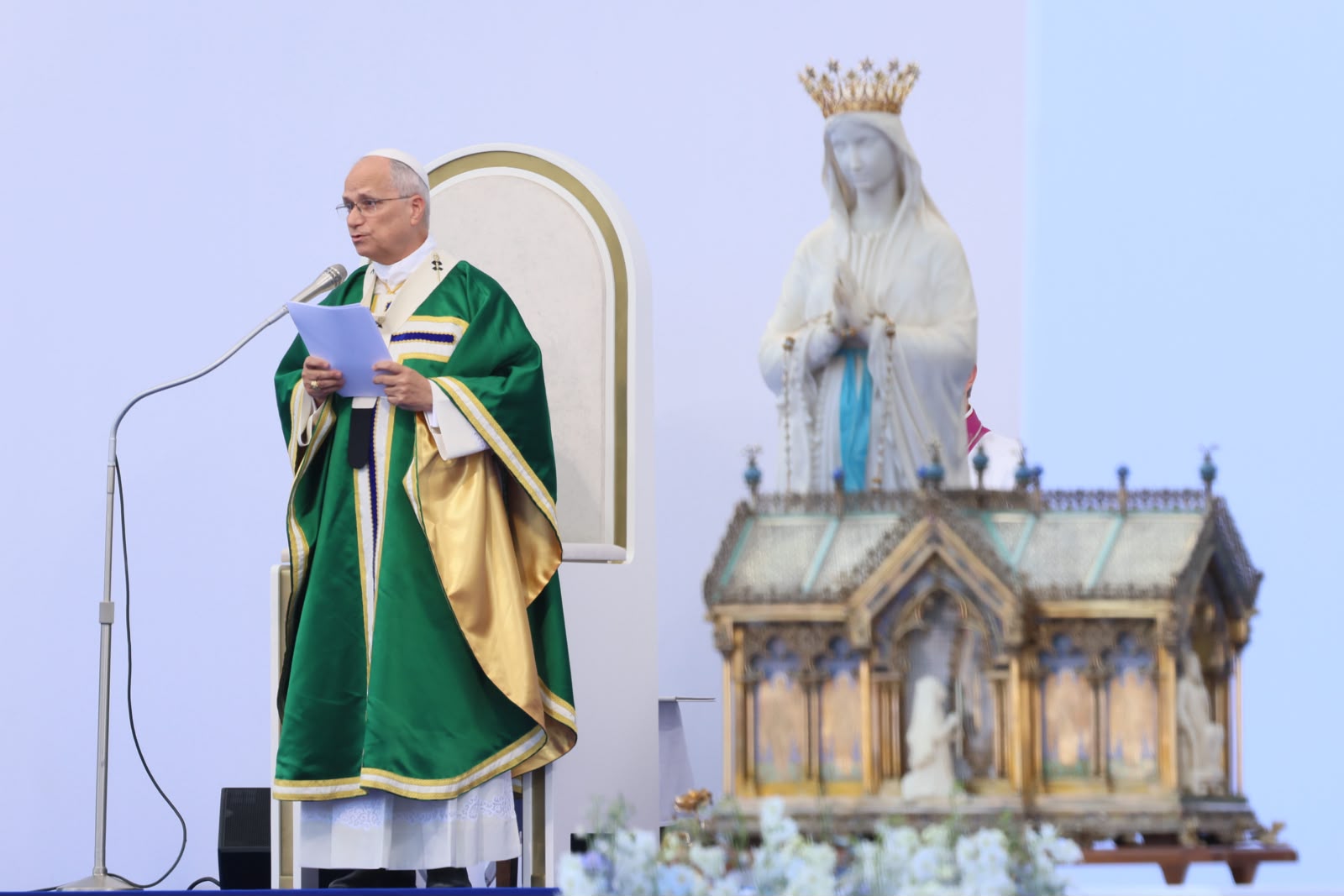
Read More The Catholic Church has a lot to say about Labor Day — why? #Catholic As the U.S. celebrates Labor Day, Catholics have a wealth of resources in biblical interpretation, Church teaching, and social thought that address the nature of work and the place of the worker in society and in God’s creation.But are Catholics, and others, aware of these resources?One Catholic leader considering such questions is Father Sinclair Oubre, a priest of the Diocese of Beaumont, Texas. He is the spiritual moderator of the Catholic Labor Network, a Catholic association that promotes Catholic teaching about work and labor unions. It also supports labor organizing.“All work, no matter what the work is, is essential,” Oubre likes to say. In his view, if a woman in janitorial work at a major software company does not show up to clean the toilets and empty the trash, all production in the office will nosedive.Centuries of Catholic teaching about labor can be found compiled in the Compendium of the Social Doctrine of the Church, published in 2004 by the Pontifical Commission for Justice and Peace. It dedicates its entire sixth chapter to human work and labor, its place in God’s plan, its role in society, and the rights and duties of workers.“The Compendium gathers together in one place those rights that are found in Catholic social teaching, whether it’s Rerum Novarum, or Quadragesimo Anno, or Centesimus Annus, and synthesizes them,” Oubre told EWTN News, referring to the respective encyclicals of popes Leo XIII, Pius XI, and John Paul II.“It’s a beautiful reflection on human work in the world and a very mature and in-depth discussion of the place of work, the place of labor, and the communal nature of it,” Oubre said.Labor, politics, and spiritualityOubre said Catholic teaching is a challenge regardless of people’s political views.“It’s a challenge to the right, but it’s also a challenge to the left,” he said. Catholicism encourages those on the political right not simply to pray novenas and commit themselves to spiritual actions. It is a challenge not to leave other questions about work and labor to the market.For the political left, Catholic social teaching “means you have to enter into a more intimate relationship with your Church and your relationship with Jesus and not just be as a social justice person by throwing a couple of little quotes around. It requires you to enter into that deeper spiritual relationship.”Oubre stressed the importance of starting from the view of Catholic spirituality, not only social justice, because if we don’t, our approach “becomes ideological and polemic.” The spiritual approach “brings us closer to Jesus Christ.”“No matter how dirty, how uncomfortable, how awful the job is, we are participating in God’s ongoing creation. It’s important that we do that job in a way that gives glory to God,” Oubre said.God and man at workThe Compendium’s reflection on work begins with its biblical aspects: There is a human duty to “cultivate and care for the earth” and other good things created by God, it says. Work existed before the fall of Adam and Eve, and it is not a punishment or curse until the break with God transforms it into “toil and pain.” However, God’s rest on the seventh day of creation is the sign of the “fuller freedom” of the “eternal Sabbath.”The life of Jesus Christ is a mission of work, from his early life helping St. Joseph in the work of a carpenter to his ministry of preaching and healing, and most of all in his redemptive labors on the cross.The Compendium presents human labor as a way of supporting oneself and one’s loved ones but also a way to serve those in need. Work is a way to make God’s creation more beautiful, since humankind shares in God’s art and wisdom.“Human work, directed to charity as its final goal, becomes an occasion for contemplation, it becomes devout prayer, vigilantly rising towards and in anxious hope of the day that will not end,” the Compendium says.The rights of laborGod’s rest on the seventh day of creation, the Compendium says, means men and women must enjoy “sufficient rest and free time that will allow them to tend to their family, cultural, social, and religious life.”The Compendium outlines and explains the many rights of workers: the right to rest from work; the right to a working environment that is not harmful to a worker’s health or moral integrity; the right to unemployment protections; the right to a pension and insurance for old age, disability, and work-related accidents; the right to social security for working mothers; and the right to assemble and form associations; the right to just wages and remuneration; and the right to strike.Labor unions play a “fundamental role” in serving the common good and promoting social order and solidarity, though they must not abuse their role in society or become simply arms of a political party.“The recognition of workers’ rights has always been a difficult problem to resolve because this recognition takes place within complex historical and institutional processes, and still today it remains incomplete,” the Compendium says. “This makes the practice of authentic solidarity among workers more fitting and necessary than ever.”A challenge for Catholics and institutionsCatholic teaching has a lengthy paper record. But as in other areas, there is a challenge to practice it.“What I find over and over again that the Church — our Church — gives us wonderful documents of guidance… and we never go back and read them,” Oubre told EWTN News.He cited the U.S. Conference of Catholic Bishops’ 1996 pastoral letter “Economic Justice for All,” which says the Church should be a model for labor rights and treating workers justly.However, Oubre said that in his experience Catholic parishes often neglect to provide unemployment insurance to employees if the law allows them to opt out. Catholic institutions often act as “at-will” employers in which management can fire employees for any reason. They may show preferences for nonunion labor over unionized labor when planning and funding construction projects.“You’re going to undercut the guy who has actually followed the Church’s teachings in regards to work by hiring somebody who may be not offering medical insurance for his employees,” the priest lamented.For Labor Day, Oubre encouraged parishes, dioceses, and other institutions to make sure to adopt policies that put Catholic labor teaching into practice.This story was first published on Sept. 4, 2023, and has been updated. unitedyam September 7, 2026September 7, 2026 “All work, no matter what the work is, is essential,” said Father Sinclair Oubre, spiritual moderator of the Catholic Labor Network. Read More