![Catholic lung cancer specialists weigh in on Pope Leo XIV’s diagnosis #Catholic Representatives of the American Lung Association and the Catholic Medical Association (CMA) discussed possible underlying causes of Pope Leo XIVʼs lung cancer and potential treatment options.Dr. Jeff McGovern, a pulmonologist, and Dr. Juanita Mora, spokesperson for the American Lung Association, appeared on “EWTN News Nightly” on Oct. 14 to discuss the Holy Father’s health following surgery. The Oct. 13 surgery involved the removal of the lower lobe of his right lung and confirmed a diagnosis of lung adenocarcinoma.“It is the most common cause of lung cancer in smokers and nonsmokers,” said McGovern, a CMA member. He said “treatments can be varying depending on the size,” and can involve chemotherapy, immunotherapy, or radiation in addition to the surgical removal of the lower part of the lung.The type of ongoing treatment the pope receives will depend on the results of a pathology test, which will reveal the stage of the cancer and whether it is contained or has spread to other areas, McGovern said.The pathology test “usually takes a couple of days,” or sometimes even longer, he said, but noted that because the patient is the Holy Father, “I would expect the pathology would be available a lot sooner than usual.”“In the best of all possible worlds, if it is contained, then going forward, as far as treatment, itʼs a CT scan every six months and then after about two or three years, a year thereafter. And that would be the treatment, and that would be the ideal setting for the Holy Father,” he said.Mora, a Catholic who is also from Chicago, Pope Leo’s hometown, said if the Holy Father’s pathology report reveals that the cancer has not spread, the survival rate is 80% to 90%. A spread would determine “whether he will get chemotherapy, radiotherapy or whether he will need actual immunotherapy thatʼs geared exactly to the biomarkers of the tumor that turn positive.” Mora said the Holy Father is “someone who is active,” playing tennis and staying in shape. “He’s a 71-year-old healthy, strong man. This is what Pope Leo has going for him,” she said. “We know that heʼs going to be at higher risk for some viral respiratory infections,” she said. “So, it is important for him to get his Covid-19 vaccine, his flu vaccine, and his RSV vaccine for those that are eligible.”In terms of travel, Mora said his doctors may determine he needs anticoagulation, or blood thinners, “so that heʼs at less risk of developing any clots, especially with the long flight that he has, [as well as] all the respiratory virus infections.”By the numbers: Impact of lung cancer“One person is diagnosed with lung cancer every 2.5 minutes,” Mora said. “In the United States, we lose 238,000 people a year due to lung cancer. And itʼs the No. 1 cause of mortality from cancer in both men and women in the United States.”In addition to smoking, Mora highlighted several other causes of lung cancer, including radon gas, “a colorless, odorless gas that can seep in through cracks in our ground, in our home, or through cracks in walls,” ozone pollution, and particle contamination.](https://unitedyam.com/wp-content/uploads/2026/10/catholic-lung-cancer-specialists-weigh-in-on-pope-leo-xivs-diagnosis-catholic-representatives-of-the-american-lung-association-and-the-catholic-medical-association-cma-discussed-possible-u.png "Catholic lung cancer specialists weigh in on Pope Leo XIV’s diagnosis #Catholic Representatives of the American Lung Association and the Catholic Medical Association (CMA) discussed possible underlying causes of Pope Leo XIVʼs lung cancer and potential treatment options.Dr. Jeff McGovern, a pulmonologist, and Dr. Juanita Mora, spokesperson for the American Lung Association, appeared on “EWTN News Nightly” on Oct. 14 to discuss the Holy Father’s health following surgery. The Oct. 13 surgery involved the removal of the lower lobe of his right lung and confirmed a diagnosis of lung adenocarcinoma.“It is the most common cause of lung cancer in smokers and nonsmokers,” said McGovern, a CMA member. He said “treatments can be varying depending on the size,” and can involve chemotherapy, immunotherapy, or radiation in addition to the surgical removal of the lower part of the lung.The type of ongoing treatment the pope receives will depend on the results of a pathology test, which will reveal the stage of the cancer and whether it is contained or has spread to other areas, McGovern said.The pathology test “usually takes a couple of days,” or sometimes even longer, he said, but noted that because the patient is the Holy Father, “I would expect the pathology would be available a lot sooner than usual.”“In the best of all possible worlds, if it is contained, then going forward, as far as treatment, itʼs a CT scan every six months and then after about two or three years, a year thereafter. And that would be the treatment, and that would be the ideal setting for the Holy Father,” he said.Mora, a Catholic who is also from Chicago, Pope Leo’s hometown, said if the Holy Father’s pathology report reveals that the cancer has not spread, the survival rate is 80% to 90%. A spread would determine “whether he will get chemotherapy, radiotherapy or whether he will need actual immunotherapy thatʼs geared exactly to the biomarkers of the tumor that turn positive.” Mora said the Holy Father is “someone who is active,” playing tennis and staying in shape. “He’s a 71-year-old healthy, strong man. This is what Pope Leo has going for him,” she said. “We know that heʼs going to be at higher risk for some viral respiratory infections,” she said. “So, it is important for him to get his Covid-19 vaccine, his flu vaccine, and his RSV vaccine for those that are eligible.”In terms of travel, Mora said his doctors may determine he needs anticoagulation, or blood thinners, “so that heʼs at less risk of developing any clots, especially with the long flight that he has, [as well as] all the respiratory virus infections.”By the numbers: Impact of lung cancer“One person is diagnosed with lung cancer every 2.5 minutes,” Mora said. “In the United States, we lose 238,000 people a year due to lung cancer. And itʼs the No. 1 cause of mortality from cancer in both men and women in the United States.”In addition to smoking, Mora highlighted several other causes of lung cancer, including radon gas, “a colorless, odorless gas that can seep in through cracks in our ground, in our home, or through cracks in walls,” ozone pollution, and particle contamination.")

“It is the most common cause of lung cancer in smokers and nonsmokers,” said Jeff McGovern, a pulmonologist, about Pope Leo’s diagnosis.
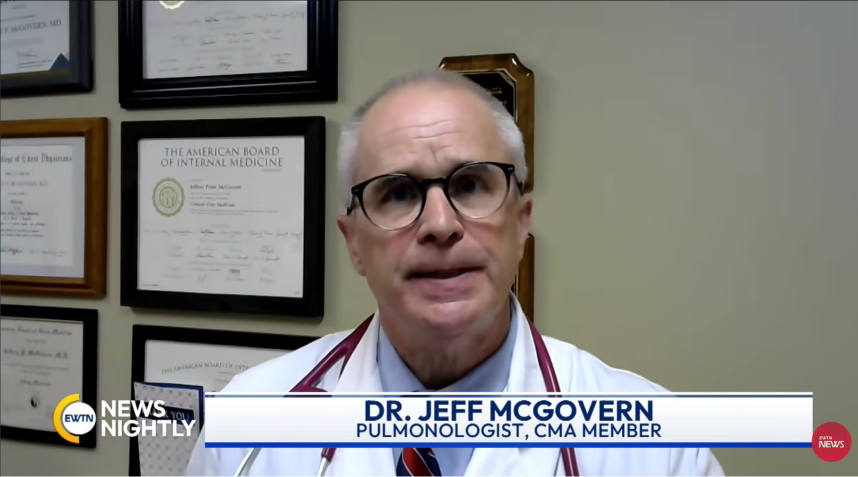
“It is the most common cause of lung cancer in smokers and nonsmokers,” said Jeff McGovern, a pulmonologist, about Pope Leo’s diagnosis.

The guide is meant to assist in priestly formation on Catholic Social Teaching, so they can better communicate those teachings to their congregations.