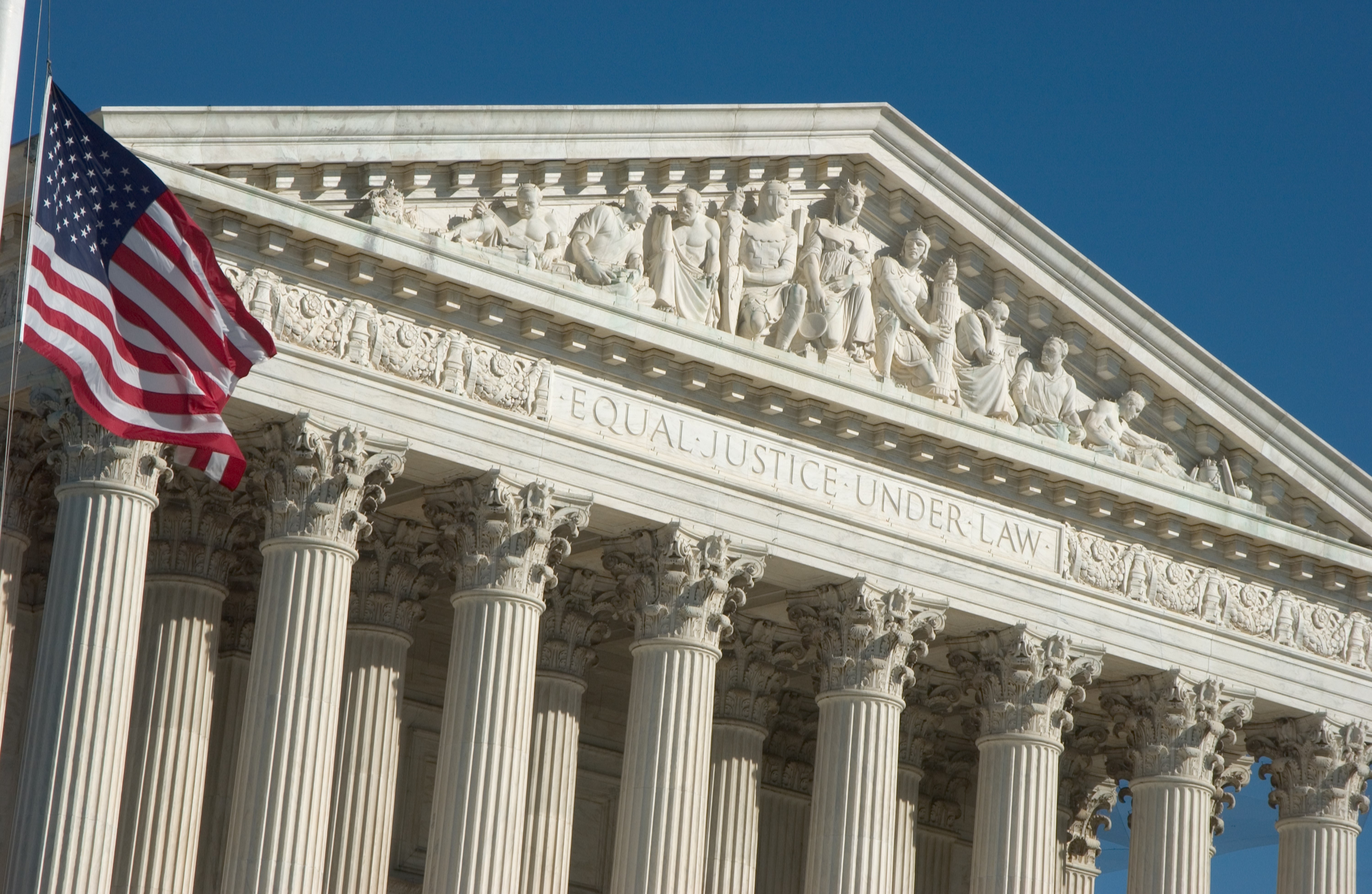
A majority of U.S. Supreme Court justices sounded ready to require that Colorado provide Catholic schools government funding for preschool even if the schools refuse to guarantee admission for children of same-sex couples, during oral arguments Tuesday in a case involving a school in the Archdiocese of Denver.
The case, St. Mary School v. Roy, centers on a preschool-through-grade-8 Catholic school in Littleton that wants to participate in the state’s universal preschool program.
Justice Brett Kavanaugh, a member of the court’s conservative majority, described the case as a clash between the free exercise of religion and the right to same-sex marriage the court found in Obergefell v. Hodges in 2015. But he suggested the clash is unnecessary because parents in Colorado have so many options for prekindergarten, since there are more than 2,000 providers in the state, while the Archdiocese of Denver has only 34 schools that provide the service.
“Why has this been provoked when there’s an ability for everyone to go to the school, a good school, that’s a fit for them, and to respect religious rights?” he asked.
Helen Norton, deputy solicitor general for the state of Colorado, said parents often choose prekindergarten programs based on their location and their hours rather than their curriculum.
“Colorado has an interest in ensuring that its public funds go to schools that ensure equal opportunity — not some opportunity, that ensure equal opportunity to public-funded options, regardless of protected-class status,” Norton said, replying to Kavanaugh’s question. “Families are harmed when they’re turned away from the publicly funded school that makes their lives work because of their protected-class status.”
‘Creating a Catholic community’
In 2020, Colorado voters approved a state-funded universal prekindergarten program, using increases in tobacco-related taxes to pay for it. The state government is planning to spend about $360 million for the program during the 2026-2027 school year. The state pays preschool providers about $6,100 per year for 15 hours a week of instruction for 4-year-olds during the 2026-2027 school year, according to state standards.
Catholic schools want to participate in the program, but the Archdiocese of Denver objects to a state mandate concerning admissions.
A Colorado state statute requires that preschools participating in the funding program provide children “an equal opportunity to enroll and receive preschool services” regardless of eight protected classes — including “sexual orientation” and “gender identity” — “as such characteristics and circumstances apply to the child or the child’s family.”
A lawyer for the Catholic schools told justices Tuesday that Church and school officials want to make admissions decisions on a case-by-case basis in alignment with Catholic teachings instead of simply allowing all comers because of a state mandate.
“I think it’s their thoughtful attempt to say, ‘We’re creating a Catholic community,’” said Nicholas Reaves, senior counsel for the Becket law group, which is representing the Catholic schools.
Reaves got hostile questions from the court’s three liberals (Sonia Sotomayor, Elena Kagan, and Ketanji Brown Jackson) and either friendly or neutral questions from the court’s five conservatives (Clarence Thomas, Samuel Alito, Brett Kavanaugh, Neil Gorsuch, and Amy Coney Barrett), which suggests how the decision might ultimately go. (The chief justice, John Roberts, often seen as a swing vote, mostly moderated the discussion.)
Sarah Harris, principal deputy solicitor general in the Trump administration, also argued on the Catholic schools’ side during oral presentations Tuesday.
Many options
The history of Catholic schools in the 19th century came up during oral arguments, including their origin in concerns among Catholic clerics and parents that government-run public schools were providing a Protestant point of view to the exclusion of Catholicism. Kavanaugh, a Catholic, at one point asked the lawyer for the state of Colorado about a moment in the trial record when the administrator of the state’s universal prekindergarten program was asked about Catholic history.
“The director of the program, by all accounts a dutiful public servant, … was asked at the trial, ‘Are you aware that Catholics have historically been discriminated against?’ And she answered, ‘No,’” Kavanaugh said. “I was surprised by that answer and curious if that’s Colorado’s position.”
“Not at all, Your Honor,” Norton replied. “And it’s Colorado’s position that the equal-opportunity requirements help religious families. They ensure that Catholic families are not turned away from the UPK [universal prekindergarten] school that best meets their needs because of their faith or because of any other protected characteristic. And a history of discrimination against Catholics is among the reasons that requirement is so important.”
Some legal observers have suggested that a majority of the U.S. Supreme Court may use the Colorado case as a vehicle to overturn the Smith decision in 1990, which, although written by the late conservative Justice Antonin Scalia, is disliked by many religious-liberty advocates who argue it doesn’t respect free-exercise rights enough.
Yet the lawyer representing the Catholic schools on Tuesday offered narrower grounds for the justices to overturn Colorado’s admissions requirements, noting that for every Catholic preschool program in the Archdiocese of Denver, there are two universal prekindergarten programs already in the state’s program within three miles of it.
Said Reaves: “This is just not really a problem in real life.”
This story was first published by the National Catholic Register, the sister partner of EWTN News, and has been adapted by EWTN News.
U.S. Supreme Court leans toward Catholic schools in clash over pre-K funding #Catholic
A majority of U.S. Supreme Court justices sounded ready to require that Colorado provide Catholic schools government funding for preschool even if the schools refuse to guarantee admission for children of same-sex couples, during oral arguments Tuesday in a case involving a school in the Archdiocese of Denver.
The case, St. Mary School v. Roy, centers on a preschool-through-grade-8 Catholic school in Littleton that wants to participate in the state’s universal preschool program.
Justice Brett Kavanaugh, a member of the court’s conservative majority, described the case as a clash between the free exercise of religion and the right to same-sex marriage the court found in Obergefell v. Hodges in 2015. But he suggested the clash is unnecessary because parents in Colorado have so many options for prekindergarten, since there are more than 2,000 providers in the state, while the Archdiocese of Denver has only 34 schools that provide the service.
“Why has this been provoked when there’s an ability for everyone to go to the school, a good school, that’s a fit for them, and to respect religious rights?” he asked.
Helen Norton, deputy solicitor general for the state of Colorado, said parents often choose prekindergarten programs based on their location and their hours rather than their curriculum.
“Colorado has an interest in ensuring that its public funds go to schools that ensure equal opportunity — not some opportunity, that ensure equal opportunity to public-funded options, regardless of protected-class status,” Norton said, replying to Kavanaugh’s question. “Families are harmed when they’re turned away from the publicly funded school that makes their lives work because of their protected-class status.”
‘Creating a Catholic community’
In 2020, Colorado voters approved a state-funded universal prekindergarten program, using increases in tobacco-related taxes to pay for it. The state government is planning to spend about $360 million for the program during the 2026-2027 school year. The state pays preschool providers about $6,100 per year for 15 hours a week of instruction for 4-year-olds during the 2026-2027 school year, according to state standards.
Catholic schools want to participate in the program, but the Archdiocese of Denver objects to a state mandate concerning admissions.
A Colorado state statute requires that preschools participating in the funding program provide children “an equal opportunity to enroll and receive preschool services” regardless of eight protected classes — including “sexual orientation” and “gender identity” — “as such characteristics and circumstances apply to the child or the child’s family.”
A lawyer for the Catholic schools told justices Tuesday that Church and school officials want to make admissions decisions on a case-by-case basis in alignment with Catholic teachings instead of simply allowing all comers because of a state mandate.
“I think it’s their thoughtful attempt to say, ‘We’re creating a Catholic community,’” said Nicholas Reaves, senior counsel for the Becket law group, which is representing the Catholic schools.
Reaves got hostile questions from the court’s three liberals (Sonia Sotomayor, Elena Kagan, and Ketanji Brown Jackson) and either friendly or neutral questions from the court’s five conservatives (Clarence Thomas, Samuel Alito, Brett Kavanaugh, Neil Gorsuch, and Amy Coney Barrett), which suggests how the decision might ultimately go. (The chief justice, John Roberts, often seen as a swing vote, mostly moderated the discussion.)
Sarah Harris, principal deputy solicitor general in the Trump administration, also argued on the Catholic schools’ side during oral presentations Tuesday.
Many options
The history of Catholic schools in the 19th century came up during oral arguments, including their origin in concerns among Catholic clerics and parents that government-run public schools were providing a Protestant point of view to the exclusion of Catholicism. Kavanaugh, a Catholic, at one point asked the lawyer for the state of Colorado about a moment in the trial record when the administrator of the state’s universal prekindergarten program was asked about Catholic history.
“The director of the program, by all accounts a dutiful public servant, … was asked at the trial, ‘Are you aware that Catholics have historically been discriminated against?’ And she answered, ‘No,’” Kavanaugh said. “I was surprised by that answer and curious if that’s Colorado’s position.”
“Not at all, Your Honor,” Norton replied. “And it’s Colorado’s position that the equal-opportunity requirements help religious families. They ensure that Catholic families are not turned away from the UPK [universal prekindergarten] school that best meets their needs because of their faith or because of any other protected characteristic. And a history of discrimination against Catholics is among the reasons that requirement is so important.”
Some legal observers have suggested that a majority of the U.S. Supreme Court may use the Colorado case as a vehicle to overturn the Smith decision in 1990, which, although written by the late conservative Justice Antonin Scalia, is disliked by many religious-liberty advocates who argue it doesn’t respect free-exercise rights enough.
Yet the lawyer representing the Catholic schools on Tuesday offered narrower grounds for the justices to overturn Colorado’s admissions requirements, noting that for every Catholic preschool program in the Archdiocese of Denver, there are two universal prekindergarten programs already in the state’s program within three miles of it.
Said Reaves: “This is just not really a problem in real life.”
This story was first published by the National Catholic Register, the sister partner of EWTN News, and has been adapted by EWTN News.