

,_Giraffe_--_2024_--_0431.jpg)

The Artemis II crew participates in the dedication of the Apollo 14 Moon tree at the Lunar Receiving Park at NASA’s Johnson Space Center. This tree is a second-generation Apollo Moon tree of the loblolly pine species.
Read More| Picture of the day |
|---|

|
|
Genex Tower in Belgrade, Serbia, an iconic example of Yugoslav brutalism, framed with abandoned car park. Today is 35 years since both Slovenia and Croatia declared their independence from Yugoslavia, and started the breakup of Yugoslavia.
|
| Picture of the day |
|---|
,_parque_nacional_de_la_Selva_Impenetrable_de_Bwindi,_Uganda,_2024-02-02,_DD_80.jpg)
|
|
Mountain gorilla (Gorilla beringei beringei), Bwindi Impenetrable National Park, Uganda
|
| Picture of the day |
|---|
_female_in_flight.jpg)
|
|
Malabar pied hornbill (Anthracoceros coronatus) female in Yala National Park, Sri Lanka. Like all hornbills, the bird has a large casque; the male’s casque is even larger.
|
| Picture of the day |
|---|

|
|
Hercules’ cudgel with Pieskowa Skała on the background. Ojców National Park, Southern Poland.
|
| Picture of the day |
|---|

|
|
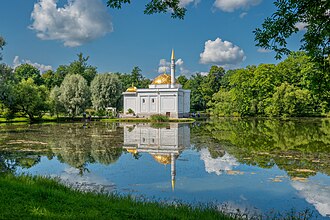
Great Pond and Turkish Bath pavilion, Catherine Park, Pushkin town, Saint Petersburg, Russia
|
| Picture of the day |
|---|

|
|
Crepuscular rays over parc de Noisiel (park of Noisiel) at sunrise. Taken from above the gardens of Champs-sur-Marne castle, Seine-et-Marne, France
|
| Picture of the day |
|---|

|
|
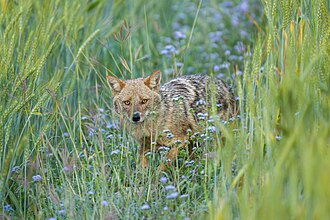
Golden jackal (Canis aureus) in azureum flowers (Jim Corbett National Park, India)
|
| Picture of the day |
|---|

|
|
Glaucidium cuculoides (Asian barred owlet) in Kaziranga National Park, Assam, India.
|

| Picture of the day |
|---|

|
|
Kyzylkup table mountain. Kyzylsai regional park, Mangystau District, Mangystau Region, Kazakhstan
|
| Picture of the day |
|---|
,_parque_nacional_Ras_Muhammad,_Egipto,_2022-03-26,_DD_155.jpg)
|
|
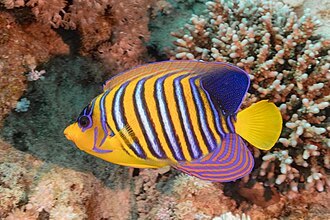
Royal angelfish (Pygoplites diacanthus), Ras Muhammad National Park, Red Sea, Egypt. The body of the royal angelfish is moderately elongate, is very compressed and can reach a length of up to 25 centimetres (9.8 in) It’s widely distributed throughout the Indo-Pacific and can be found in the Red Sea and Indian Ocean around East Africa and the Maldives, stretching to the Tuamoto Islands, New Caledonia, and Great Barrier Reef. The royal angelfish occurs at depths ranging from 0 to 80m (0 to 262 ft), in coral rich areas of lagoons, reefs, and are also often found in the vicinity of caves. It is a carnivorous species that feeds on sponges and tunicates located throughout reefs and underwater caves. They are a non-migratory species that can be found solitary, in pairs, or groups.
|
| Picture of the day |
|---|

|
|
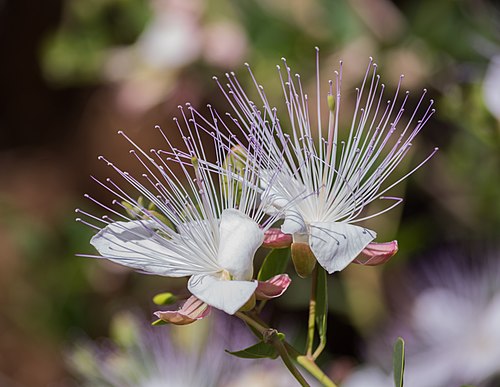
Capparis spinosa in the Ichkeul National Park. Today is the first day of spring and Tunisia’s Independence Day.
|
| Picture of the day |
|---|
,_Parque_natural_de_la_Arr%C3%A1bida,_Portugal,_2020-07-21,_DD_62.jpg)
|
|
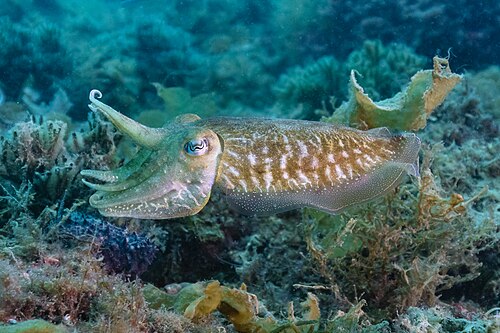
Common cuttlefish (Sepia officinalis), Arrábida National Park, Portugal. The common cuttlefish is one of the largest and best-known cuttlefish species. They are a migratory species that spend the summer and spring inshore for spawning and then move to depths of 100 to 200m during autumn and winter. They only have a lifespan of 1–2 years and have many predators including sharks, dolphins, seals, fish, and cephalopods which includes other cuttlefish. During the day, most cuttlefish can be found buried below the substrate and fairly inactive. At night however, they are actively searching for prey and can ambush them from under the substrate. Cuttlefish are carnivorous and eat a variety of organisms including crustaceans (crabs and shrimp), small fish, molluscs (clams and snails), and sometimes other cuttlefish.
|

| Picture of the day |
|---|

|
|
Crane installation in the Duisburg-Nord Landscape Park, North Rhine-Westphalia, Germany
|

| Picture of the day |
|---|
_young_female_Kruger_2.jpg)
|
|
Leopard (Panthera pardus pardus) young female in Kruger National Park, South Africa.
|

| Picture of the day |
|---|

|
|
Lake Baikal in winter. Ice ridges near Olkhon island in Pribaikalsky National Park.
|
| Picture of the day |
|---|
,_parque_nacional_Ras_Muhammad,_Egipto,_2022-03-26,_DD_138.jpg)
|
|
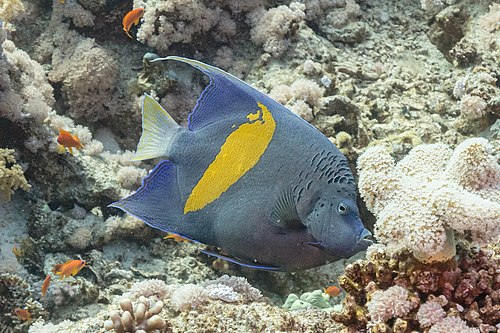
Yellowbar angelfish (Pomacanthus maculosus), Ras Muhammad National Park, Red Sea, Egypt. This marine angelfish is distributed throughout the Persian Gulf, the northwestern Indian Ocean, and the Red Sea south to 19°S. In 2009 it was recorded off the coast of Lebanon in the eastern Mediterranean, probably as a result of Lessepsian migration from the Red Sea through the Suez Canal. Pomacanthus maculosus is found at depths of between 4 and 50 metres (13 and 164 ft). It is a solitary species that lives in sheltered areas, often where there is a mixture of coral and silt. Their diet is dominated by sea sponges and tunicates, although other invertebrates will be eaten opportunistically. The females attain sexual maturity when the reach around 5.5 years of age and a total length of 21.6 centimetres (8.5 in). The maximum longevity is thought to be 36 years old. They are protogynous hermaphrodites and the older females can change sex to become males when there is a shortage of males. The larvae are planktonic. The yellowbar angelfish is occasionally collected for the aquarium trade and in some parts of the Persian Gulf it has been recorded in fish markets.
|

| Picture of the day |
|---|

|
|
View of coastline northwest from above Manarola: fields and steep trail to Volastra in foreground, Corniglia Station and town centre, north to Punta Mesco. Depicts the north half of Cinque Terre National Park coastline. Liguria, Italy
|
| Picture of the day |
|---|

|
|
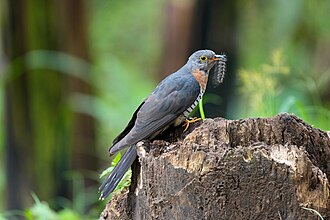
Wild red-chested cuckoo (Cuculus solitarius) at Kibale Forest National Park, Uganda
|

| Picture of the day |
|---|

|
|
View on Val Montanaia (Montanaia Valley), with the Cima Both (2,437 m) on the left and the “Campanile” (2,173 m) in the middle; both are peaks of the Spalti di Toro group, in the Friulian Dolomites Natural Park, Friuli-Venezia Giulia, Italy.
|
| Picture of the day |
|---|

|
|
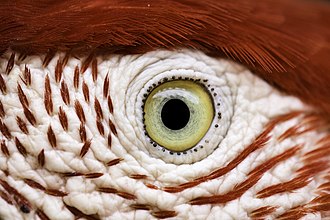
A macro shot of a red-and-green macaw’s (Ara chloropterus) eye, Serra da Capivara National Park, Piauí state, Brazil.
|
| Picture of the day |
|---|
_kissing,_Satchari_National_Park_(alt).jpg)
|
|
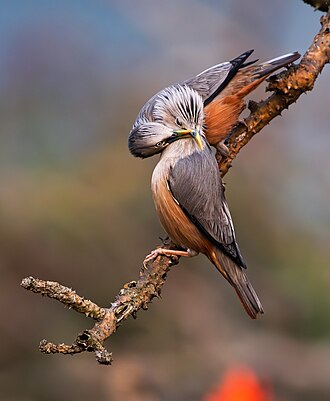
Two chestnut-tailed starlings (Sturnia malabarica) kissing while perched on a branch in Satchari National Park, Bangladesh
|
| Picture of the day |
|---|

|
|
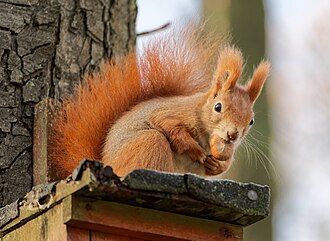
A red squirrel (Sciurus vulgaris) eating a nut in Bednarski Park (Kraków, Poland).
|
| Picture of the day |
|---|

|
|
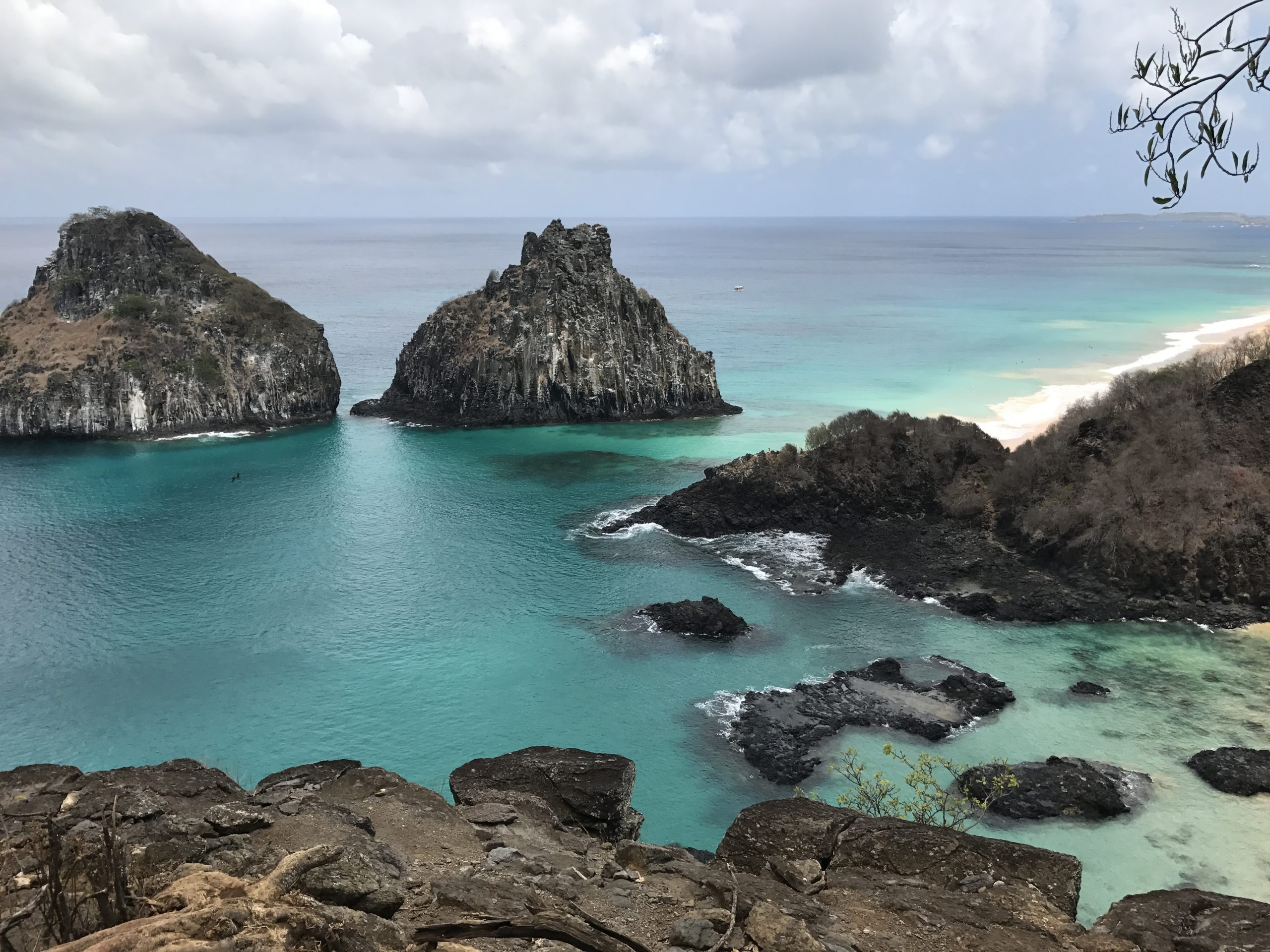
Coney (Cephalopholis fulva) camouflaged on a rock, Fernando de Noronha Marine National Park, Pernambuco, Brazil
|

| Picture of the day |
|---|
_catching_fish_3_of_3.jpg)
|
|
Painted stork (Mycteria leucocephala) catching a fish in Yala National Park, Sri Lanka.
|