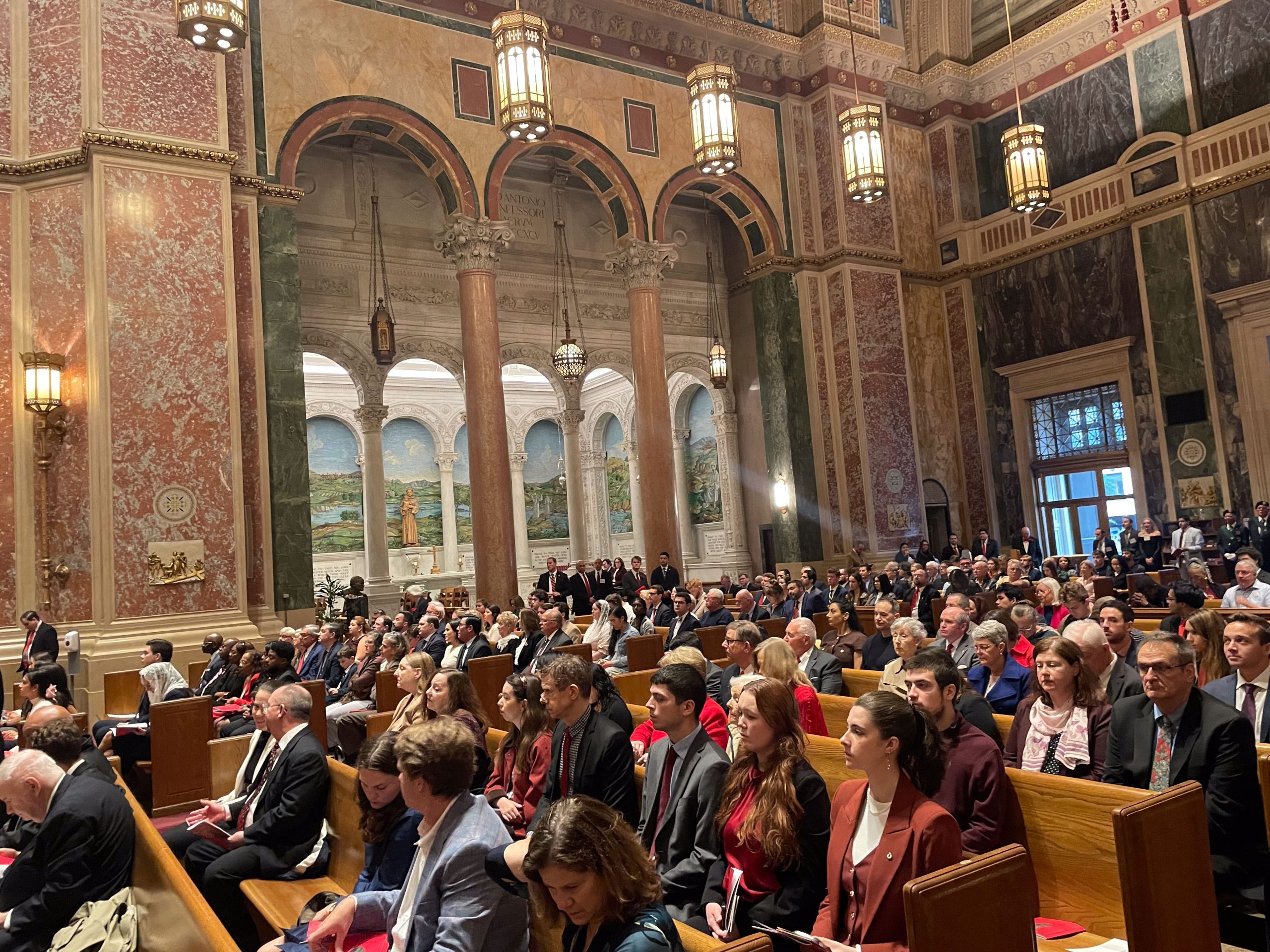
professor

EWTN News explains: Why does the pope visit mosques on papal trips? #Catholic For more than a quarter-century, popes have periodically visited Islamic mosques as part of official voyages and papal visits. The tradition began with Pope John Paul II, who in 2001 became the first pope in history known to have entered a mosque when he visited the Great Mosque of Damascus in the capital of Syria. The subsequent Popes Benedict XVI, Francis, and Leo XIV have all paid visits to mosques to hold ecumenical dialogues and host diplomatic meetings. Yet the practice is not without some controversy. Indeed, Leo XIVʼs visit to the Great Mosque of Algiers on April 13 drew some backlash on social media by critics incredulous over the leader of the Catholic Church visiting a major Islamic holy site. (This was Leoʼs second visit to a mosque; he also visited the famed “Blue Mosque” in Istanbul in late 2025.) 
 
 Pope Leo XIV stands with Rector Mohamed Mamoun Al Qasimi at the Great Mosque in Algiers, Monday, April 13, 2026. | Credit: Vatican Media
 
 So why do popes make visits to mosques, courting controversy and criticism for making a point to go to holy sites of another religion? ‘We can live together in peace’Pope Leo XIV himself addressed criticism directed toward him on April 15 on board the papal plane after leaving Algiers bound for Cameroon. “I think the visit to the mosque was significant [and showed] that although we have different beliefs, we have different ways of worshipping, we have different ways of living, we can [still] live together in peace,” the Holy Father said.  “I think that to promote that kind of image is something which the world needs to hear today,” he said, arguing that such visits show that “together we can continue to offer in our witness as we continue on this apostolic voyage.”Gabriel Said Reynolds, a theology professor at the University of Notre Dame who has written multiple works on the Quran and its relationship to Christianity, told EWTN News that interpreting papal visits to mosques should include an understanding of “the Churchʼs vision of God in the world.” “What is God’s relationship to the world? That’s been important to all of the recent popes,” he said.Reynolds pointed out that an Islamic mosque is “fundamentally different from a church.” “A Catholic church is a sort of temple in which God is present in the tabernacle — body, blood, soul, and divinity,” he said. “It’s a sacred space in the deepest sense of the word.”“What Muslims would say of a mosque is fundamentally different,” he said. “A mosque is for communal prayer, but the communal prayer that takes place in a mosque is no different than the ritual prayer that’s more often done at home.” He likened a mosque to a “gathering place” with just a few features that set it apart as a distinct site — such as a pulpit for occasional sermons and an alcove that denotes the direction of Mecca to which Muslims orient themselves during prayer. Reynolds said popes visit mosques in no small part as a “pastoral concern” for Christians living in majority-Muslim countries, such as Algeria. “Algerian society is thoroughly Islamic,” he said. “It’s not generally marked by notions of rights and responsibilities and citizenship in the same way the U.S. is. Cultivating positive relationships with Muslim leaders is absolutely essential for Christians.”Reynolds said the Churchʼs view about human dignity has “fundamental implications with its relationship toward non-Christians.” He pointed out, for instance, that the pope “could show up at an atheist convention and meet the people there and have dialogue with them.”“John 3:16 says God loves the world,” he said. “It’s not that God loves believers and doesn’t love the unbelievers. All people are children of God, according to Catholic teaching.”The declaration Nostra Aetate, meanwhile — issued by the Second Vatican Council in 1965 to address Catholicismʼs relationship with non-Christians — affirmed that the Church “regards [Muslims] with esteem.”The document points out that although Muslims “do not acknowledge Jesus as God,” they still “adore the one God” and “revere [Jesus] as a prophet” while giving honor to the Virgin Mother as well. The Second Vatican Council acknowledged that “in the course of centuries not a few quarrels and hostilities have arisen” between Christians and Muslims, but the document “urge[d] all to forget the past and to work sincerely for mutual understanding.”It further called on religious adherents to “preserve as well as to promote together for the benefit of all mankind social justice and moral welfare, as well as peace and freedom.”

EWTN News explains: Why does the pope visit mosques on papal trips? #Catholic For more than a quarter-century, popes have periodically visited Islamic mosques as part of official voyages and papal visits. The tradition began with Pope John Paul II, who in 2001 became the first pope in history known to have entered a mosque when he visited the Great Mosque of Damascus in the capital of Syria. The subsequent Popes Benedict XVI, Francis, and Leo XIV have all paid visits to mosques to hold ecumenical dialogues and host diplomatic meetings. Yet the practice is not without some controversy. Indeed, Leo XIVʼs visit to the Great Mosque of Algiers on April 13 drew some backlash on social media by critics incredulous over the leader of the Catholic Church visiting a major Islamic holy site. (This was Leoʼs second visit to a mosque; he also visited the famed “Blue Mosque” in Istanbul in late 2025.) Pope Leo XIV stands with Rector Mohamed Mamoun Al Qasimi at the Great Mosque in Algiers, Monday, April 13, 2026. | Credit: Vatican Media So why do popes make visits to mosques, courting controversy and criticism for making a point to go to holy sites of another religion? ‘We can live together in peace’Pope Leo XIV himself addressed criticism directed toward him on April 15 on board the papal plane after leaving Algiers bound for Cameroon. “I think the visit to the mosque was significant [and showed] that although we have different beliefs, we have different ways of worshipping, we have different ways of living, we can [still] live together in peace,” the Holy Father said.  “I think that to promote that kind of image is something which the world needs to hear today,” he said, arguing that such visits show that “together we can continue to offer in our witness as we continue on this apostolic voyage.”Gabriel Said Reynolds, a theology professor at the University of Notre Dame who has written multiple works on the Quran and its relationship to Christianity, told EWTN News that interpreting papal visits to mosques should include an understanding of “the Churchʼs vision of God in the world.” “What is God’s relationship to the world? That’s been important to all of the recent popes,” he said.Reynolds pointed out that an Islamic mosque is “fundamentally different from a church.” “A Catholic church is a sort of temple in which God is present in the tabernacle — body, blood, soul, and divinity,” he said. “It’s a sacred space in the deepest sense of the word.”“What Muslims would say of a mosque is fundamentally different,” he said. “A mosque is for communal prayer, but the communal prayer that takes place in a mosque is no different than the ritual prayer that’s more often done at home.” He likened a mosque to a “gathering place” with just a few features that set it apart as a distinct site — such as a pulpit for occasional sermons and an alcove that denotes the direction of Mecca to which Muslims orient themselves during prayer. Reynolds said popes visit mosques in no small part as a “pastoral concern” for Christians living in majority-Muslim countries, such as Algeria. “Algerian society is thoroughly Islamic,” he said. “It’s not generally marked by notions of rights and responsibilities and citizenship in the same way the U.S. is. Cultivating positive relationships with Muslim leaders is absolutely essential for Christians.”Reynolds said the Churchʼs view about human dignity has “fundamental implications with its relationship toward non-Christians.” He pointed out, for instance, that the pope “could show up at an atheist convention and meet the people there and have dialogue with them.”“John 3:16 says God loves the world,” he said. “It’s not that God loves believers and doesn’t love the unbelievers. All people are children of God, according to Catholic teaching.”The declaration Nostra Aetate, meanwhile — issued by the Second Vatican Council in 1965 to address Catholicismʼs relationship with non-Christians — affirmed that the Church “regards [Muslims] with esteem.”The document points out that although Muslims “do not acknowledge Jesus as God,” they still “adore the one God” and “revere [Jesus] as a prophet” while giving honor to the Virgin Mother as well. The Second Vatican Council acknowledged that “in the course of centuries not a few quarrels and hostilities have arisen” between Christians and Muslims, but the document “urge[d] all to forget the past and to work sincerely for mutual understanding.”It further called on religious adherents to “preserve as well as to promote together for the benefit of all mankind social justice and moral welfare, as well as peace and freedom.”

Why do popes make visits to Islamic mosques, courting controversy and criticism by taking part in events at holy sites of another religion?

Read More
Trump’s comments on Pope Leo called ‘disrespectful’ as Americans react #Catholic Catholic bishops and U.S. elected officials have publicly criticized the president’s statements about Pope Leo XIV.President Donald Trump called Leo “weak on crime and terrible for foreign policy” in a lengthy social media post April 12 that drew response from the United States Conference of Catholic Bishops (USCCB) and elected officials.Bishop Robert Barron of the Diocese of Winona-Rochester, Minnesota, called Trump’s attack on Pope Leo XIV “disrespectful." Barron, who serves on Trump’s Religious Liberty Commission, said in a post on X that Trump’s comments “were entirely inappropriate and disrespectful” and “I think the president owes the pope an apology.”“[Trump’s comments] don’t contribute at all to a constructive conversation,” he said. “It is the pope’s prerogative to articulate Catholic doctrine and the principles that govern the moral life. In regard to the concrete application of those principles, people of goodwill can and do disagree.”Barron encouraged Catholic Trump officials to arrange a meeting with Vatican officials “so that a real dialogue can take place,” saying “this is far preferable to the statements on social media.”Bishop Michael Burbidge of Arlington, Virginia, said in a social media post: “Along with Archbishop [Paul] Coakley, president of the USCCB, and my brother bishops, I was disheartened by recent comments from President Trump concerning Pope Leo XIV and the Church. I pray that civility and respect are fully restored as together, with God’s grace, we work for peace and harmony among all people. May we also be united in our prayer for the end of war and violence so that Christ’s peace reigns throughout the world and in our hearts.”Palm Beach, Florida, Bishop Manuel de Jesús Rodríguez posted on X: “The @DiocesePB stands firm with our Holy Father, @Pontifex, and strongly rejects the disrespectful and violent attacks that Donald J. Trump has directed against the Holy Father.”Buffalo, New York, Bishop Michael Fisher posted on X: “This is not about politics but the very cause of humanity.”The Catholic Association's Ashley McGuire said in a statement: “The Catholic Church does not in any way fit into American political boxes. It will always prioritize the protection of innocent life in all its stages as well as the cause of the poor and marginalized. Insulting the pope, and all Catholics by extension, with the hope of making the Church bend to American political agendas, is discouraging and counterproductive.” McGuire added: “We pray that President Trump apologizes to Pope Leo.”U.S. officials' reaction beginsRepublican Vice President JD Vance, who is Catholic, has not yet commented on the matter, nor has Secretary of State Marco Rubio, also a Catholic.Sen. Mark Kelly, D-Arizona, who is Catholic, posted on X that “I find it abhorrent that the president of the United States would publicly attack the successor of St. Peter.”U.S. House Minority Leader Hakeem Jeffries said on X that Trump “shamefully attacked” the pope. Few Republican elected officials have spoken out.TweetDemocratic California Gov. Gavin Newsom posted on X: “Hey @GOP, you good with your guy directly attacking the pope now?”Rep. Lukas Schubert, a Republican Montana state lawmaker, disputed the presidentʼs statement that the pope is a “liberal person.”“Pope Leo is significantly further to the right than President Trump on abortion, gay marriage, and family values. Also he is more America First on the Iran War,” Schubert said.AI imageTrump also posted an AI-created image on Truth Social that appeared to portray himself as Jesus Christ, healing the sick, which led several Catholics to accuse the president of blasphemy.Edward Feser, a Catholic philosopher and professor at Pasadena City College, posted on X that Trump’s comments illustrate “how utter enslavement to the sin of pride makes a man unsuitable for the presidency.”“For all their faults, previous presidents had the visceral understanding of proper boundaries not to attack the vicar of Christ even when they disagreed with him,” he said.Feser quoted Daniel 11:36-37 in response to Trump’s AI image of himself as Christ, which reads: “And the king shall do according to his will; he shall exalt himself and magnify himself above every god, and shall speak astonishing things against the God of gods … He shall not give heed to any other god, for he shall magnify himself above all.”In reaction to the AI photo, Matt Fradd, the host of “Pints With Aquinas,“ urged Catholics to “offer a rosary today for Donald Trump and all blasphemers. … Seriously. Do it. I will too.”TweetRep. Shontel Brown, D-Ohio, did not directly reference Trumpʼs remarks about the pope but criticized the AI-created image on X: “There aren’t enough words to denounce how wrong this is.”The comments came after Leo criticized the Iran war and Trump’s rhetoric about targeting the entire civilization of Iran. Leo said in response to the post: “I have no fear neither of the Trump administration nor of speaking out loudly about the message of the Gospel.”Marjorie Taylor Greene, a former Republican congresswoman who was a strong ally of Trump before splitting with him on the Iran war and his handling of the Jeffrey Epstein files, posted on X that Trump “attacked the pope because the pope is rightly against Trump’s war in Iran and then he posted this picture of himself as if he is replacing Jesus.”“This comes after last week’s post of his evil tirade on Easter and then threatening to kill an entire civilization,” she said. “I completely denounce this and I’m praying against it!!!”‘Fuels division’Father Robert Sirico, the founder of the Acton Institute, said in a statement that Leo “has both the right and the duty to speak prophetically on matters of war and peace, the dignity of the human person, and the moral limits of force — even when his words discomfort political leaders.”He said Trump’s post does not “strengthen America’s moral standing but “merely fuels division.”Sirico also added that Catholics can disagree with popes on prudential judgments, such as foreign policy or crime, which he said are not infallible: “The Church herself teaches that such applications of principle admit of legitimate debate.”This story was updated at 11:50 a.m. ET on April 13, 2026, with comments from Buffalo, New York, Bishop Michael Fisher and The Catholic Associationʼs Ashley McGuire.

Trump’s comments on Pope Leo called ‘disrespectful’ as Americans react #Catholic Catholic bishops and U.S. elected officials have publicly criticized the president’s statements about Pope Leo XIV.President Donald Trump called Leo “weak on crime and terrible for foreign policy” in a lengthy social media post April 12 that drew response from the United States Conference of Catholic Bishops (USCCB) and elected officials.Bishop Robert Barron of the Diocese of Winona-Rochester, Minnesota, called Trump’s attack on Pope Leo XIV “disrespectful." Barron, who serves on Trump’s Religious Liberty Commission, said in a post on X that Trump’s comments “were entirely inappropriate and disrespectful” and “I think the president owes the pope an apology.”“[Trump’s comments] don’t contribute at all to a constructive conversation,” he said. “It is the pope’s prerogative to articulate Catholic doctrine and the principles that govern the moral life. In regard to the concrete application of those principles, people of goodwill can and do disagree.”Barron encouraged Catholic Trump officials to arrange a meeting with Vatican officials “so that a real dialogue can take place,” saying “this is far preferable to the statements on social media.”Bishop Michael Burbidge of Arlington, Virginia, said in a social media post: “Along with Archbishop [Paul] Coakley, president of the USCCB, and my brother bishops, I was disheartened by recent comments from President Trump concerning Pope Leo XIV and the Church. I pray that civility and respect are fully restored as together, with God’s grace, we work for peace and harmony among all people. May we also be united in our prayer for the end of war and violence so that Christ’s peace reigns throughout the world and in our hearts.”Palm Beach, Florida, Bishop Manuel de Jesús Rodríguez posted on X: “The @DiocesePB stands firm with our Holy Father, @Pontifex, and strongly rejects the disrespectful and violent attacks that Donald J. Trump has directed against the Holy Father.”Buffalo, New York, Bishop Michael Fisher posted on X: “This is not about politics but the very cause of humanity.”The Catholic Association's Ashley McGuire said in a statement: “The Catholic Church does not in any way fit into American political boxes. It will always prioritize the protection of innocent life in all its stages as well as the cause of the poor and marginalized. Insulting the pope, and all Catholics by extension, with the hope of making the Church bend to American political agendas, is discouraging and counterproductive.” McGuire added: “We pray that President Trump apologizes to Pope Leo.”U.S. officials' reaction beginsRepublican Vice President JD Vance, who is Catholic, has not yet commented on the matter, nor has Secretary of State Marco Rubio, also a Catholic.Sen. Mark Kelly, D-Arizona, who is Catholic, posted on X that “I find it abhorrent that the president of the United States would publicly attack the successor of St. Peter.”U.S. House Minority Leader Hakeem Jeffries said on X that Trump “shamefully attacked” the pope. Few Republican elected officials have spoken out.TweetDemocratic California Gov. Gavin Newsom posted on X: “Hey @GOP, you good with your guy directly attacking the pope now?”Rep. Lukas Schubert, a Republican Montana state lawmaker, disputed the presidentʼs statement that the pope is a “liberal person.”“Pope Leo is significantly further to the right than President Trump on abortion, gay marriage, and family values. Also he is more America First on the Iran War,” Schubert said.AI imageTrump also posted an AI-created image on Truth Social that appeared to portray himself as Jesus Christ, healing the sick, which led several Catholics to accuse the president of blasphemy.Edward Feser, a Catholic philosopher and professor at Pasadena City College, posted on X that Trump’s comments illustrate “how utter enslavement to the sin of pride makes a man unsuitable for the presidency.”“For all their faults, previous presidents had the visceral understanding of proper boundaries not to attack the vicar of Christ even when they disagreed with him,” he said.Feser quoted Daniel 11:36-37 in response to Trump’s AI image of himself as Christ, which reads: “And the king shall do according to his will; he shall exalt himself and magnify himself above every god, and shall speak astonishing things against the God of gods … He shall not give heed to any other god, for he shall magnify himself above all.”In reaction to the AI photo, Matt Fradd, the host of “Pints With Aquinas,“ urged Catholics to “offer a rosary today for Donald Trump and all blasphemers. … Seriously. Do it. I will too.”TweetRep. Shontel Brown, D-Ohio, did not directly reference Trumpʼs remarks about the pope but criticized the AI-created image on X: “There aren’t enough words to denounce how wrong this is.”The comments came after Leo criticized the Iran war and Trump’s rhetoric about targeting the entire civilization of Iran. Leo said in response to the post: “I have no fear neither of the Trump administration nor of speaking out loudly about the message of the Gospel.”Marjorie Taylor Greene, a former Republican congresswoman who was a strong ally of Trump before splitting with him on the Iran war and his handling of the Jeffrey Epstein files, posted on X that Trump “attacked the pope because the pope is rightly against Trump’s war in Iran and then he posted this picture of himself as if he is replacing Jesus.”“This comes after last week’s post of his evil tirade on Easter and then threatening to kill an entire civilization,” she said. “I completely denounce this and I’m praying against it!!!”‘Fuels division’Father Robert Sirico, the founder of the Acton Institute, said in a statement that Leo “has both the right and the duty to speak prophetically on matters of war and peace, the dignity of the human person, and the moral limits of force — even when his words discomfort political leaders.”He said Trump’s post does not “strengthen America’s moral standing but “merely fuels division.”Sirico also added that Catholics can disagree with popes on prudential judgments, such as foreign policy or crime, which he said are not infallible: “The Church herself teaches that such applications of principle admit of legitimate debate.”This story was updated at 11:50 a.m. ET on April 13, 2026, with comments from Buffalo, New York, Bishop Michael Fisher and The Catholic Associationʼs Ashley McGuire.

President Donald Trump called Leo “weak on crime and terrible for foreign policy” in a lengthy social media post April 12 that drew response from U.S. bishops and elected officials.

Read More
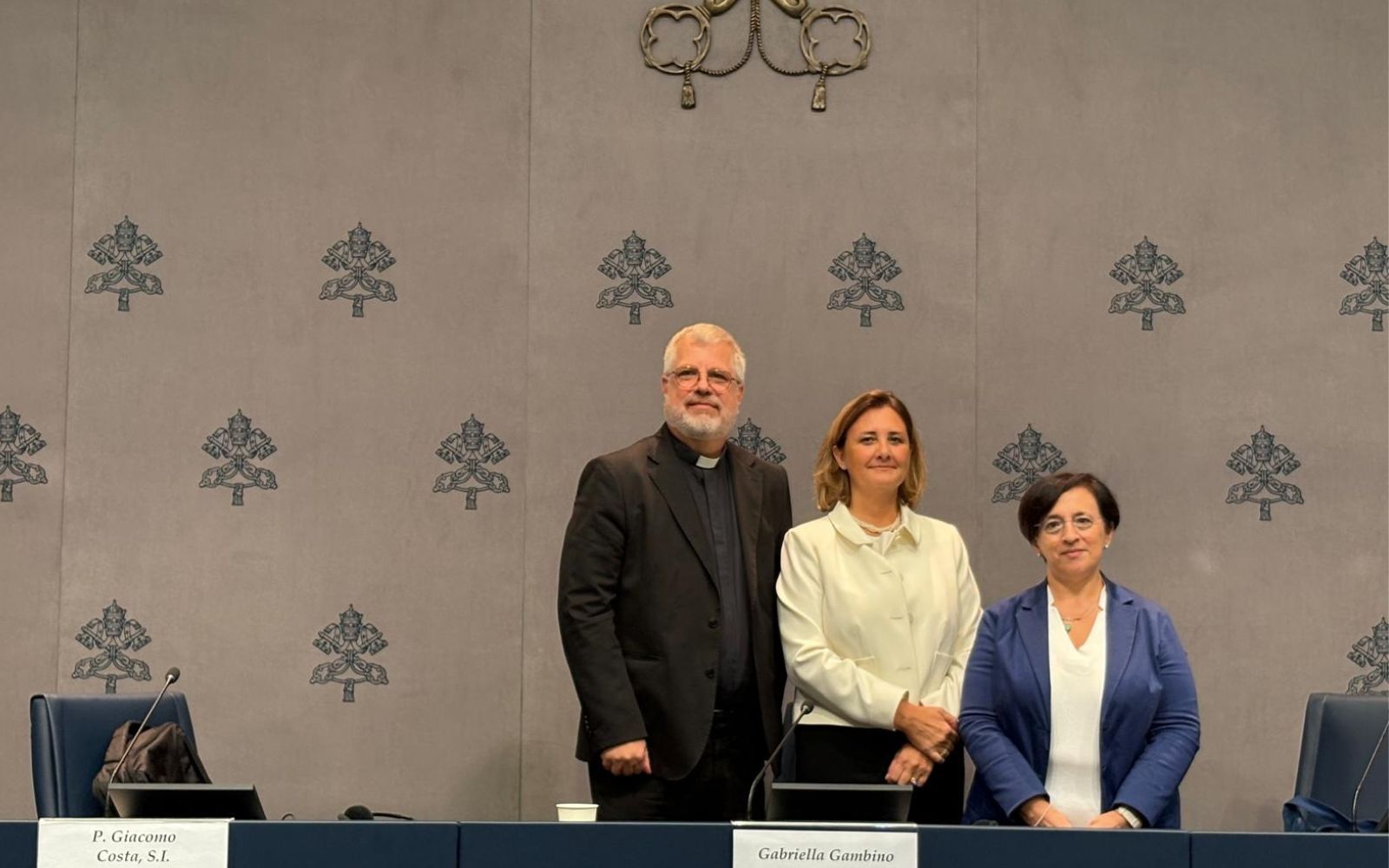
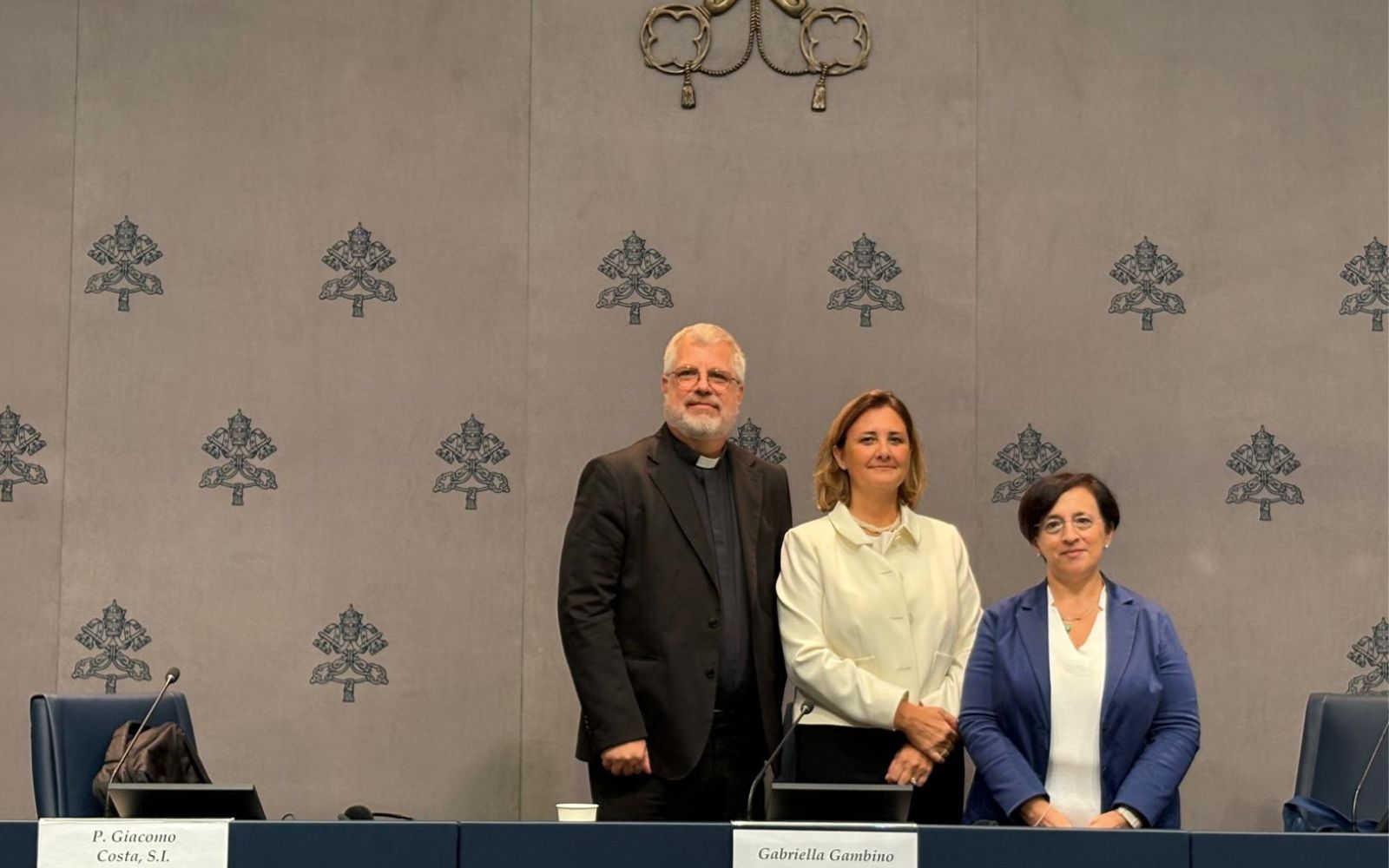
Pope Leo names Father Andrea Ciucci chancellor of Pontifical Academy for Life #Catholic Pope Leo XIV on Friday appointed Father Andrea Ciucci chancellor of the Pontifical Academy for Life. The Italian priest has served as the academyʼs secretariat coordinator since 2016.Originally from Milan, the 59-year-old Ciucci has a doctorate in the philosophy of religion from the Pontifical University of Sant’Anselmo in Rome. After serving as a parish vicar in Milan, he worked at the former Pontifical Council for the Family from 2012–2016.He is also the general secretary of the RenAIssance Foundation, a Vatican institution that promotes an ethical perspective on artificial intelligence.Ciucci is a professor at the Pontifical Theological Institute John Paul II in Rome and he is a public speaker and writer on the topic of new technologies and their influence on young people and families.Last month, the president of the Pontifical Academy for Life, Renzo Pegoraro, received the title of “bishop” from Pope Leo for his role.Pegoraro was chancellor of the academy from 2011 until his appointment as president in May 2025.According to the academyʼs statutes, the chancellor “may represent the Pontifical Academy for Life on behalf of the president and collaborates with him in the direction and administration of the academy’s activities.”The Pontifical Academy for Life was founded in February 1994 by St. John Paul II. It is one of several academic and cultural institutions at the Vatican that bring together experts in their fields to discuss issues of relevance to the Church and the world.

Pope Leo names Father Andrea Ciucci chancellor of Pontifical Academy for Life #Catholic Pope Leo XIV on Friday appointed Father Andrea Ciucci chancellor of the Pontifical Academy for Life. The Italian priest has served as the academyʼs secretariat coordinator since 2016.Originally from Milan, the 59-year-old Ciucci has a doctorate in the philosophy of religion from the Pontifical University of Sant’Anselmo in Rome. After serving as a parish vicar in Milan, he worked at the former Pontifical Council for the Family from 2012–2016.He is also the general secretary of the RenAIssance Foundation, a Vatican institution that promotes an ethical perspective on artificial intelligence.Ciucci is a professor at the Pontifical Theological Institute John Paul II in Rome and he is a public speaker and writer on the topic of new technologies and their influence on young people and families.Last month, the president of the Pontifical Academy for Life, Renzo Pegoraro, received the title of “bishop” from Pope Leo for his role.Pegoraro was chancellor of the academy from 2011 until his appointment as president in May 2025.According to the academyʼs statutes, the chancellor “may represent the Pontifical Academy for Life on behalf of the president and collaborates with him in the direction and administration of the academy’s activities.”The Pontifical Academy for Life was founded in February 1994 by St. John Paul II. It is one of several academic and cultural institutions at the Vatican that bring together experts in their fields to discuss issues of relevance to the Church and the world.

The Italian priest has served as the academy’s secretariat coordinator since 2016.

Read More
Government favors natural family planning over contraception in key health funding #Catholic New 2027 guidelines by the U.S. Department of Health and Human Services (HHS) will ban key federal abortion funding while favoring fertility education and natural family planning.The April 3 “2027 Notice of Funding Opportunity” for Title X, the federal family planning grant program, bans funds from being used “in programs where abortion is a method of family planning.”The move came days after the Trump administration released the fifth and final year of grant funding to Planned Parenthood under Title X, a decision that garnered criticism throughout the pro-life movement. The White House cited legal challenges for the controversial decision to continue the funding.“The administration has issued the fifth and final year of Title X grants that were locked in place during the Biden presidency,” the White House told EWTN News in a statement. “The administration faced significant legal challenges in stopping any of these dollars from going out.”Previous Republican administrations, including that of Trump’s first term, also banned abortion funding via Title X. What makes this year’s criteria unique is that it encourages fertility education in place of contraception.The notice highlighted “fertility-awareness-based methods” or “natural family planning,” a method encouraged by the Catholic Church that involves tracking a woman’s biological markers to determine when ovulation occurs.The administration also teased a new pro-family grant that will be announced soon.“HHS will soon be releasing a new Title X funding opportunity for the next five-year funding cycle that prioritizes life and promotes the pro-family agenda,” the White House statement read.The notice also promoted “body literacy” on fertility-related conditions, such as “education on menstrual cycle physiology, hormonal health, male and female fertility awareness, and early indicators of reproductive disorders such as endometriosis, polycystic ovary syndrome (PCOS), thyroid dysfunction, metabolic disorders, and other conditions that often first emerge in adolescence.”An estimated 1 in 10 women have endometriosis; 1 in 8 women develop a thyroid disorder; and roughly 1 in 10 have PCOS — all conditions that can negatively affect fertility and overall health.“For example, endometriosis often goes undiagnosed for years because symptoms such as severe menstrual pain or irregular bleeding are frequently normalized or minimized,” the HHS notice read.“Body literacy counseling helps patients recognize that these experiences are not ‘normal’ features” but instead “potential indicators of an underlying condition, prompting earlier discussion with providers, timely diagnosis, appropriate treatment, and improved long-term reproductive and overall health outcomes,” the notice continued.The 2027 plan is not prioritizing contraception funding; instead the government said that contraception is part of an overreliance on “pharmaceutical and surgical treatments.” The health department noted that fewer women than in previous years are using contraception (54% of reproductive-age women) and that “the most common reason women reported discontinuing use related to dissatisfaction was side effects.” For instance, hormonal contraception can cause depression in some patients, among other negative side effects.“This approach has failed to adequately address the root causes of the nation’s chronic disease burden, resulting in ongoing health challenges that affect fertility, pregnancy outcomes, and long-term health outcomes,” the notice read.HHS said it will focus instead on “underlying behavioral and lifestyle factors of health — such as nutrition, sleep, physical activity, stress management, and environmental factors.”The White House told EWTN News that “the administration remains committed to realigning the Title X program with the president’s pro-life and pro-family agenda going forward.”Michael New, an assistant professor of practice at the Busch School of Business at The Catholic University of America as well as a Charlotte Lozier Institute senior associate scholar, called the decrease in Planned Parenthood funding “a win for the pro-life movement,” though with a caveat.“Cutting funding to Planned Parenthood may not have a large impact on the incidence of abortion in the short term due the increasing prevalence of telehealth abortions,” New said.The professor also noted that “defunding contraception programs and supporting natural family planning is a win for pro-lifers.”“Since the Title X program started in 1970, the federal government has spent hundreds of millions of dollars, if not billions of dollars, into promoting contraception,” New said. “This money has been poorly spent. Many places that distribute contraception also perform abortions, so some of this money indirectly funds abortion.”“Many Catholics do not want their tax dollars spent on programs, such as contraception programs, they find morally objectionable,” New continued. “Even though many Americans support contraceptive use, pro-life Catholics would like the government to stay out of the issue: no funding, no mandates, no distribution. As such, defunding contraception programs has been a longtime policy goal for many pro-life Catholics.”“​​Natural family planning, when done correctly, has a strong track record of success,” New said. “However, it has been marginalized in many secular public health circles. The fact that HHS is promoting natural family planning will give NFP more visibility and credibility.”

Government favors natural family planning over contraception in key health funding #Catholic New 2027 guidelines by the U.S. Department of Health and Human Services (HHS) will ban key federal abortion funding while favoring fertility education and natural family planning.The April 3 “2027 Notice of Funding Opportunity” for Title X, the federal family planning grant program, bans funds from being used “in programs where abortion is a method of family planning.”The move came days after the Trump administration released the fifth and final year of grant funding to Planned Parenthood under Title X, a decision that garnered criticism throughout the pro-life movement. The White House cited legal challenges for the controversial decision to continue the funding.“The administration has issued the fifth and final year of Title X grants that were locked in place during the Biden presidency,” the White House told EWTN News in a statement. “The administration faced significant legal challenges in stopping any of these dollars from going out.”Previous Republican administrations, including that of Trump’s first term, also banned abortion funding via Title X. What makes this year’s criteria unique is that it encourages fertility education in place of contraception.The notice highlighted “fertility-awareness-based methods” or “natural family planning,” a method encouraged by the Catholic Church that involves tracking a woman’s biological markers to determine when ovulation occurs.The administration also teased a new pro-family grant that will be announced soon.“HHS will soon be releasing a new Title X funding opportunity for the next five-year funding cycle that prioritizes life and promotes the pro-family agenda,” the White House statement read.The notice also promoted “body literacy” on fertility-related conditions, such as “education on menstrual cycle physiology, hormonal health, male and female fertility awareness, and early indicators of reproductive disorders such as endometriosis, polycystic ovary syndrome (PCOS), thyroid dysfunction, metabolic disorders, and other conditions that often first emerge in adolescence.”An estimated 1 in 10 women have endometriosis; 1 in 8 women develop a thyroid disorder; and roughly 1 in 10 have PCOS — all conditions that can negatively affect fertility and overall health.“For example, endometriosis often goes undiagnosed for years because symptoms such as severe menstrual pain or irregular bleeding are frequently normalized or minimized,” the HHS notice read.“Body literacy counseling helps patients recognize that these experiences are not ‘normal’ features” but instead “potential indicators of an underlying condition, prompting earlier discussion with providers, timely diagnosis, appropriate treatment, and improved long-term reproductive and overall health outcomes,” the notice continued.The 2027 plan is not prioritizing contraception funding; instead the government said that contraception is part of an overreliance on “pharmaceutical and surgical treatments.” The health department noted that fewer women than in previous years are using contraception (54% of reproductive-age women) and that “the most common reason women reported discontinuing use related to dissatisfaction was side effects.” For instance, hormonal contraception can cause depression in some patients, among other negative side effects.“This approach has failed to adequately address the root causes of the nation’s chronic disease burden, resulting in ongoing health challenges that affect fertility, pregnancy outcomes, and long-term health outcomes,” the notice read.HHS said it will focus instead on “underlying behavioral and lifestyle factors of health — such as nutrition, sleep, physical activity, stress management, and environmental factors.”The White House told EWTN News that “the administration remains committed to realigning the Title X program with the president’s pro-life and pro-family agenda going forward.”Michael New, an assistant professor of practice at the Busch School of Business at The Catholic University of America as well as a Charlotte Lozier Institute senior associate scholar, called the decrease in Planned Parenthood funding “a win for the pro-life movement,” though with a caveat.“Cutting funding to Planned Parenthood may not have a large impact on the incidence of abortion in the short term due the increasing prevalence of telehealth abortions,” New said.The professor also noted that “defunding contraception programs and supporting natural family planning is a win for pro-lifers.”“Since the Title X program started in 1970, the federal government has spent hundreds of millions of dollars, if not billions of dollars, into promoting contraception,” New said. “This money has been poorly spent. Many places that distribute contraception also perform abortions, so some of this money indirectly funds abortion.”“Many Catholics do not want their tax dollars spent on programs, such as contraception programs, they find morally objectionable,” New continued. “Even though many Americans support contraceptive use, pro-life Catholics would like the government to stay out of the issue: no funding, no mandates, no distribution. As such, defunding contraception programs has been a longtime policy goal for many pro-life Catholics.”“​​Natural family planning, when done correctly, has a strong track record of success,” New said. “However, it has been marginalized in many secular public health circles. The fact that HHS is promoting natural family planning will give NFP more visibility and credibility.”

New directives by the U.S. Department of Health and Human Services ban Title X abortion funding while favoring fertility education and “body literacy.”

Read More
Ireland sees modest revival in faith, especially among youth and young adults #Catholic An increase in spirituality and religious practice among young adults in Ireland aged 18 to 30 and confirmation that Ireland is in the “middle range” of religious countries in Europe are among the trends identified in a new report published by the Irish Catholic bishops titled “Turning the Tide.”Archbishop Eamon Martin of Armagh, primate of all Ireland, told EWTN News: “There has been a lot of talk recently about the so-called quiet revival in religious practice in recent years. The [report] looks at some of the research studies that have been carried out north and south of the island of Ireland into religious practice, religious awareness and spirituality, and interest in religion, and asks a question by comparing this with European social studies: Is there actually any uptake [in] religious practice and awareness and interest in Ireland?”Drawing on research from the European Social Survey, the Iona Institute’s two recent surveys conducted by Amárach Research, and a variety of relevant academic studies, the report seeks to provide an integrated, relevant, and current look at religious practice in Ireland.“The report very interestingly points to some type of uptick, as they call it, particularly among young people around the ages of 16 to 30 and the fact that they are taking a new interest in religion and in spirituality.”Encouraged by the positive trends emerging across different studies, Martin sounded a note of caution, highlighting the challenges that these findings pose for the Catholic Church in Ireland.“I don’t think we should get ourselves too enthusiastic thinking this is a complete reversal of the very obvious decline and religious practice over the last 10 or 20 years,” he said. “However, it is saying something on the turning tide.”The archbishop pointed to the implications for the Irish Church: “It’s asking us to reflect on this phenomenon in the light of research, and for instance what does this mean for us as Church, as parishes, as dioceses? How are we responding to this growing body of young people who want to know more more about God, about church, and about religion?”The report, co-authored by Stephen Bullivant, professor of theology and the sociology of religion at St. Mary’s University, Twickenham, and Emily Nelson, a doctoral student of sociology at Queen’s University Belfast, examined the overall religious profile of the island of Ireland, including areas of convergence and divergence between Northern Ireland and the Republic of Ireland.The authors drew together research studies on patterns in belief, practice, and religious identification between generations, with particular attention to differences within young adult cohorts. The work also provided insight on  dimensions of religiosity, religious transmission, and attitudes toward Church teaching and institutions among both men and women.Ireland remains among the more religious countries in Europe, on measures of religious affiliation, religious service attendance, and frequency of prayer. Among western European countries, it is one of few outliers with a relatively high level of overall religiosity. It also ranks toward the higher end of (especially western) European countries on measures of weekly Mass attendance and daily prayer.While key measures of Irish religiosity have declined significantly since the European Social Survey began in 2002-2003, the most recent round in 2023-2024 shows a strong uptick in religious affiliation and religious practice.This effect is most strongly evident among those aged 16–29 years, across both Catholics and Protestants.Northern Ireland is both the most religious region of the United Kingdom, by a large margin, and the most religious part of the island of Ireland, in terms of both affiliation and religious practice.Although women in the Republic of Ireland are equally as likely as men to be religious, they continue to play an influential role in transmitting faith, even as they express higher levels of moral dissent and institutional dissatisfaction. The report revealed that 74% of Irish Catholic women were found to believe that the Church did not treat them with “a lot of respect.”According to the report, 51% of Irish adults — and 27% of Irish young adults —pray at least once a week, and 31% say they attend Mass at least once a week, placing them fourth overall, alongside Italy (32%) but well behind Poland (49%) and Slovakia (46%).There is a significant drop-off among young adults, whose reported religious practice is roughly half that of older adults. Irish 16- to 29-year-olds rank sixth overall compared with other countries, at 17%, though that is at least double the rates of the same age group in Switzerland, Germany, and Belgium, at 5%, and in Austria with less than 1%.The Irish report also pointed to a 2023 Barna study that found in certain respects, Irish teens are more religious than their global peers. Just over 3 in 5 (62%) Irish teens identify as Christian with nearly a third identify as atheist, agnostic, or of no faith.On average, 18- to 24-year-olds in the Republic of Ireland aren’t particularly positive about both Christianity and the Catholic Church in Ireland, but they are more positive than those in the 25–34 age range, and fewer have a negative attitude toward priests and nuns.In 2023, EWTN News’ Colm Flynn traveled to Ireland with the question “Is Ireland still Catholic?” He explored the various reasons for the decline of the faith in Ireland and the challenges the Church faces there today. In the three years since, and after many emails and messages pointing to signs of a “quiet revival” of faith in Ireland, Flynn recently returned to the country to explore those signs of renewal. In his report, he refers to the “Turning the Tide” report:

Ireland sees modest revival in faith, especially among youth and young adults #Catholic An increase in spirituality and religious practice among young adults in Ireland aged 18 to 30 and confirmation that Ireland is in the “middle range” of religious countries in Europe are among the trends identified in a new report published by the Irish Catholic bishops titled “Turning the Tide.”Archbishop Eamon Martin of Armagh, primate of all Ireland, told EWTN News: “There has been a lot of talk recently about the so-called quiet revival in religious practice in recent years. The [report] looks at some of the research studies that have been carried out north and south of the island of Ireland into religious practice, religious awareness and spirituality, and interest in religion, and asks a question by comparing this with European social studies: Is there actually any uptake [in] religious practice and awareness and interest in Ireland?”Drawing on research from the European Social Survey, the Iona Institute’s two recent surveys conducted by Amárach Research, and a variety of relevant academic studies, the report seeks to provide an integrated, relevant, and current look at religious practice in Ireland.“The report very interestingly points to some type of uptick, as they call it, particularly among young people around the ages of 16 to 30 and the fact that they are taking a new interest in religion and in spirituality.”Encouraged by the positive trends emerging across different studies, Martin sounded a note of caution, highlighting the challenges that these findings pose for the Catholic Church in Ireland.“I don’t think we should get ourselves too enthusiastic thinking this is a complete reversal of the very obvious decline and religious practice over the last 10 or 20 years,” he said. “However, it is saying something on the turning tide.”The archbishop pointed to the implications for the Irish Church: “It’s asking us to reflect on this phenomenon in the light of research, and for instance what does this mean for us as Church, as parishes, as dioceses? How are we responding to this growing body of young people who want to know more more about God, about church, and about religion?”The report, co-authored by Stephen Bullivant, professor of theology and the sociology of religion at St. Mary’s University, Twickenham, and Emily Nelson, a doctoral student of sociology at Queen’s University Belfast, examined the overall religious profile of the island of Ireland, including areas of convergence and divergence between Northern Ireland and the Republic of Ireland.The authors drew together research studies on patterns in belief, practice, and religious identification between generations, with particular attention to differences within young adult cohorts. The work also provided insight on  dimensions of religiosity, religious transmission, and attitudes toward Church teaching and institutions among both men and women.Ireland remains among the more religious countries in Europe, on measures of religious affiliation, religious service attendance, and frequency of prayer. Among western European countries, it is one of few outliers with a relatively high level of overall religiosity. It also ranks toward the higher end of (especially western) European countries on measures of weekly Mass attendance and daily prayer.While key measures of Irish religiosity have declined significantly since the European Social Survey began in 2002-2003, the most recent round in 2023-2024 shows a strong uptick in religious affiliation and religious practice.This effect is most strongly evident among those aged 16–29 years, across both Catholics and Protestants.Northern Ireland is both the most religious region of the United Kingdom, by a large margin, and the most religious part of the island of Ireland, in terms of both affiliation and religious practice.Although women in the Republic of Ireland are equally as likely as men to be religious, they continue to play an influential role in transmitting faith, even as they express higher levels of moral dissent and institutional dissatisfaction. The report revealed that 74% of Irish Catholic women were found to believe that the Church did not treat them with “a lot of respect.”According to the report, 51% of Irish adults — and 27% of Irish young adults —pray at least once a week, and 31% say they attend Mass at least once a week, placing them fourth overall, alongside Italy (32%) but well behind Poland (49%) and Slovakia (46%).There is a significant drop-off among young adults, whose reported religious practice is roughly half that of older adults. Irish 16- to 29-year-olds rank sixth overall compared with other countries, at 17%, though that is at least double the rates of the same age group in Switzerland, Germany, and Belgium, at 5%, and in Austria with less than 1%.The Irish report also pointed to a 2023 Barna study that found in certain respects, Irish teens are more religious than their global peers. Just over 3 in 5 (62%) Irish teens identify as Christian with nearly a third identify as atheist, agnostic, or of no faith.On average, 18- to 24-year-olds in the Republic of Ireland aren’t particularly positive about both Christianity and the Catholic Church in Ireland, but they are more positive than those in the 25–34 age range, and fewer have a negative attitude toward priests and nuns.In 2023, EWTN News’ Colm Flynn traveled to Ireland with the question “Is Ireland still Catholic?” He explored the various reasons for the decline of the faith in Ireland and the challenges the Church faces there today. In the three years since, and after many emails and messages pointing to signs of a “quiet revival” of faith in Ireland, Flynn recently returned to the country to explore those signs of renewal. In his report, he refers to the “Turning the Tide” report:

A new report examining surveys and research on the practice of the Catholic faith in Ireland shows an uptick in religious practice and spirituality among younger people.

Read More