science

Newman Guide schools honor Catholic leaders at 2026 commencements #Catholic Here are some of the distinguished individuals receiving honorary degrees at many of the Catholic institutions the Cardinal Newman Society recommends for their commitment to a faithful Catholic education. The Catholic University of AmericaThe Catholic University of America (CUA) will confer honorary degrees on three “notable individuals” at its May 16 commencement ceremony, including Lisa Brenninkmeyer, Dr. John Bruchalski, and Iqbal Z. Quadir.Brenninkmeyer is the founder and CEO of Walking with Purpose, a Catholic Bible study group for women and girls, while Bruchalski is the founder of Tepeyac OB-GYN and Quadir is a distinguished fellow at the CUA’s Busch School of Business “who has pioneered technology-based and for-profit entrepreneurship for the economic empowerment of low-income people,” according to a press release from the university.Monsignor James Patrick Shea, president of the University of Mary, will serve as commencement speaker.Thomas More College of Liberal ArtsThomas More College of Liberal Arts in New Hampshire will award former Wyoming Catholic College President Glenn Arbery, PhD, and his wife, Virginia, with honorary doctorates at its commencement ceremony May 16.“Thomas More College is glad to have old friends and teachers — Glenn and Virginia Arbery — returning,” Thomas More College President William Fahey said. “A community is healthy when it remembers and honors important moments and people of its history. The Arberys are well known and influential teachers and scholars at several institutions of higher learning, but our college was profoundly shaped and ennobled by their learning and generous hearts. We are glad to have them return for this most solemn and joyful of occasions.”University of MaryCatholic businessman and lawyer Timothy Busch received an honorary degree from the University of Mary in Bismarck, North Dakota, in addition to delivering the commencement address during the university’s April 25 commencement.The university also honored Dan Butler, chairman of the board of trustees at the University of Mary, as well as his wife, Heather Butler, who co-chaired the university’s 2030 Capital Campaign with U.S. Sen. Kevin Cramer, R-North Dakota, raising over 0 million for the university’s advancement, according to the university.Franciscan University of SteubenvilleBusch also served as commencement speaker for graduates of science and professional programs at Franciscan University in Steubenville, Ohio, and received an honorary doctorate in humane letters during its May 9 commencement.Busch’s NAPA Institute co-founder, Father Robert Spitzer, SJ, also delivered a commencement address for graduates from the arts, humanities, and social scientists at the university. Spitzer received an honorary doctorate in catechetics and evangelization.University of DallasIn addition to delivering the school’s commencement address, Cardinal Timothy Dolan, archbishop emeritus of New York, will receive an honorary degree of doctor of humane letters from the University of Dallas.“Cardinal Dolan is one of the Church’s most joyful and widely respected shepherds, and we are honored to welcome him to the University of Dallas,” said President Jonathan J. Sanford said in a press release. The university’s commencement ceremony will take place May 16.Benedictine CollegePeter Cancro, the founder and chairman of the popular sandwich chain Jersey Mike’s, will receive an honorary doctor of humane letters at Benedictine College’s May 16 commencement.Cancro, who is renowned for his charitable contributions to faith-based organizations, including a  million gift to Ave Maria School of Law, will also deliver the commencement address.Ave Maria UniversityFlorida Gov. Ron DeSantis received an honorary degree from Ave Maria University during its May 9 commencement ceremony. “The faith does not depend on what is fashionable or who holds power. It is, in fact, the truth that ultimately will set you free,” DeSantis said during his speech, urging Ave Maria’s class of 2026 to put on “the full armor of God” as they go out into the world.Walsh UniversityEWTN “Real Life Catholic” host Chris Stefanick received an honorary doctorate of applied theology at Walsh University’s May 2 commencement ceremonies.“Your formation as men and women of character is the primary end of Catholic education,” Stefanik told graduates during his speech at the Ohio Catholic school. “The secondary end is the formation of useful citizens. Your greatest achievement will forever be marked not by what you do, but by what you do for others.” Walsh University also conferred an honorary doctorate of applied engineering upon Michael White, former principal director for hypersonics in the Office of the Under Secretary of Defense for Research and Engineering.

Newman Guide schools honor Catholic leaders at 2026 commencements #Catholic Here are some of the distinguished individuals receiving honorary degrees at many of the Catholic institutions the Cardinal Newman Society recommends for their commitment to a faithful Catholic education. The Catholic University of AmericaThe Catholic University of America (CUA) will confer honorary degrees on three “notable individuals” at its May 16 commencement ceremony, including Lisa Brenninkmeyer, Dr. John Bruchalski, and Iqbal Z. Quadir.Brenninkmeyer is the founder and CEO of Walking with Purpose, a Catholic Bible study group for women and girls, while Bruchalski is the founder of Tepeyac OB-GYN and Quadir is a distinguished fellow at the CUA’s Busch School of Business “who has pioneered technology-based and for-profit entrepreneurship for the economic empowerment of low-income people,” according to a press release from the university.Monsignor James Patrick Shea, president of the University of Mary, will serve as commencement speaker.Thomas More College of Liberal ArtsThomas More College of Liberal Arts in New Hampshire will award former Wyoming Catholic College President Glenn Arbery, PhD, and his wife, Virginia, with honorary doctorates at its commencement ceremony May 16.“Thomas More College is glad to have old friends and teachers — Glenn and Virginia Arbery — returning,” Thomas More College President William Fahey said. “A community is healthy when it remembers and honors important moments and people of its history. The Arberys are well known and influential teachers and scholars at several institutions of higher learning, but our college was profoundly shaped and ennobled by their learning and generous hearts. We are glad to have them return for this most solemn and joyful of occasions.”University of MaryCatholic businessman and lawyer Timothy Busch received an honorary degree from the University of Mary in Bismarck, North Dakota, in addition to delivering the commencement address during the university’s April 25 commencement.The university also honored Dan Butler, chairman of the board of trustees at the University of Mary, as well as his wife, Heather Butler, who co-chaired the university’s 2030 Capital Campaign with U.S. Sen. Kevin Cramer, R-North Dakota, raising over $100 million for the university’s advancement, according to the university.Franciscan University of SteubenvilleBusch also served as commencement speaker for graduates of science and professional programs at Franciscan University in Steubenville, Ohio, and received an honorary doctorate in humane letters during its May 9 commencement.Busch’s NAPA Institute co-founder, Father Robert Spitzer, SJ, also delivered a commencement address for graduates from the arts, humanities, and social scientists at the university. Spitzer received an honorary doctorate in catechetics and evangelization.University of DallasIn addition to delivering the school’s commencement address, Cardinal Timothy Dolan, archbishop emeritus of New York, will receive an honorary degree of doctor of humane letters from the University of Dallas.“Cardinal Dolan is one of the Church’s most joyful and widely respected shepherds, and we are honored to welcome him to the University of Dallas,” said President Jonathan J. Sanford said in a press release. The university’s commencement ceremony will take place May 16.Benedictine CollegePeter Cancro, the founder and chairman of the popular sandwich chain Jersey Mike’s, will receive an honorary doctor of humane letters at Benedictine College’s May 16 commencement.Cancro, who is renowned for his charitable contributions to faith-based organizations, including a $5 million gift to Ave Maria School of Law, will also deliver the commencement address.Ave Maria UniversityFlorida Gov. Ron DeSantis received an honorary degree from Ave Maria University during its May 9 commencement ceremony. “The faith does not depend on what is fashionable or who holds power. It is, in fact, the truth that ultimately will set you free,” DeSantis said during his speech, urging Ave Maria’s class of 2026 to put on “the full armor of God” as they go out into the world.Walsh UniversityEWTN “Real Life Catholic” host Chris Stefanick received an honorary doctorate of applied theology at Walsh University’s May 2 commencement ceremonies.“Your formation as men and women of character is the primary end of Catholic education,” Stefanik told graduates during his speech at the Ohio Catholic school. “The secondary end is the formation of useful citizens. Your greatest achievement will forever be marked not by what you do, but by what you do for others.” Walsh University also conferred an honorary doctorate of applied engineering upon Michael White, former principal director for hypersonics in the Office of the Under Secretary of Defense for Research and Engineering.

With graduation season underway, here is a roundup of individuals who will receive honorary degrees from Catholic colleges at commencement ceremonies across the country.

Read More
Researchers name moth species after Pope Leo XIV #Catholic Researchers have named a moth species “Pyralis papaleonei,” or “Pope Leo moth," in honor of the Holy Father.“The new species is dedicated to the head of the Catholic Church, Pope Leo XIV,” authors Peter Huemer, Lauri Kaila, and Andreas H. Segerer wrote in a research article on the species. “The pontiff is a strong advocate of climate and environmental protection, and we hope that his voice may serve as an example for humanity.”In the journal, Nota Lepidopterologica, the entomologists said the species was discovered on the Mediterranean island of Crete. It is a medium-sized species with a 2-centimeter wingspan, gold spots, and prominent white bands.“Furthermore, due to its distinctive coloration and overall appearance, the new species belongs to a group of Pyralidae whose species names refer to high secular or ecclesiastical offices including Pyralis regalis, Pyralis imperialis, Pyralis princeps, and Pyralis cardinalis,” they wrote.Butterflies are often named after external characteristics, geographical locations, or in honor of distinguished individuals, according to a press release from Tiroler Landesmuseum Ferdinandeum, or the Tyrolean State Museum, located in Innsbruck, Austria.
 
 Pyralis papaleonei species. | Credit: Photo courtesy of the Tyrolean State Museum
 
 Within the Pyralis genus, a different tradition has emerged. As early as 1775, Austrian naturalists and Jesuits Michael Denis and Ignaz Schiffermüller described the first species of the group as Pyralis regalis, or "royal,” due to its coloration.This prompted similar names including Pyralis princeps and Pyralis cardinalis, which belong to the superfamily Pyraloidea comprised of 16,000 described species worldwide.In the Old Testament (Genesis 2), Adam is instructed to name all animals. According to the museum, this led to the action of taxonomy — the science of classifying, naming, and categorizing organisms — to often be considered, “in the biblical sense, the oldest task of humankind.” According to Huemer, head of studies at the Tyrolean State Museum, the naming process is more than a scientific act but a symbolic gesture. For the Pope Leo moth, it is an appeal to the head of the Catholic Church and to draw attention to humanityʼs central responsibility for the preservation of creation.“We are facing a global biodiversity crisis, yet only a fraction of the world’s species has been scientifically documented,” Huemer said in a statement. “Effective conservation of biodiversity requires that species are first recognized, described, and named.”Huemer’s call echoes the pope’s "call for conversion” at a 2025 international conference on climate justice, celebrating the 10th anniversary of Pope Francis' encyclical Laudato Si’.“It is only by returning to the heart that a true ecological conversion can take place,” the Holy Father said. “We must shift from collecting data to caring, and from environmental discourse to an ecological conversion that transforms both personal and communal lifestyles."

Researchers name moth species after Pope Leo XIV #Catholic Researchers have named a moth species “Pyralis papaleonei,” or “Pope Leo moth," in honor of the Holy Father.“The new species is dedicated to the head of the Catholic Church, Pope Leo XIV,” authors Peter Huemer, Lauri Kaila, and Andreas H. Segerer wrote in a research article on the species. “The pontiff is a strong advocate of climate and environmental protection, and we hope that his voice may serve as an example for humanity.”In the journal, Nota Lepidopterologica, the entomologists said the species was discovered on the Mediterranean island of Crete. It is a medium-sized species with a 2-centimeter wingspan, gold spots, and prominent white bands.“Furthermore, due to its distinctive coloration and overall appearance, the new species belongs to a group of Pyralidae whose species names refer to high secular or ecclesiastical offices including Pyralis regalis, Pyralis imperialis, Pyralis princeps, and Pyralis cardinalis,” they wrote.Butterflies are often named after external characteristics, geographical locations, or in honor of distinguished individuals, according to a press release from Tiroler Landesmuseum Ferdinandeum, or the Tyrolean State Museum, located in Innsbruck, Austria. Pyralis papaleonei species. | Credit: Photo courtesy of the Tyrolean State Museum Within the Pyralis genus, a different tradition has emerged. As early as 1775, Austrian naturalists and Jesuits Michael Denis and Ignaz Schiffermüller described the first species of the group as Pyralis regalis, or "royal,” due to its coloration.This prompted similar names including Pyralis princeps and Pyralis cardinalis, which belong to the superfamily Pyraloidea comprised of 16,000 described species worldwide.In the Old Testament (Genesis 2), Adam is instructed to name all animals. According to the museum, this led to the action of taxonomy — the science of classifying, naming, and categorizing organisms — to often be considered, “in the biblical sense, the oldest task of humankind.” According to Huemer, head of studies at the Tyrolean State Museum, the naming process is more than a scientific act but a symbolic gesture. For the Pope Leo moth, it is an appeal to the head of the Catholic Church and to draw attention to humanityʼs central responsibility for the preservation of creation.“We are facing a global biodiversity crisis, yet only a fraction of the world’s species has been scientifically documented,” Huemer said in a statement. “Effective conservation of biodiversity requires that species are first recognized, described, and named.”Huemer’s call echoes the pope’s "call for conversion” at a 2025 international conference on climate justice, celebrating the 10th anniversary of Pope Francis' encyclical Laudato Si’.“It is only by returning to the heart that a true ecological conversion can take place,” the Holy Father said. “We must shift from collecting data to caring, and from environmental discourse to an ecological conversion that transforms both personal and communal lifestyles."

“The pontiff is a strong advocate of climate and environmental protection, and we hope that his voice may serve as an example for humanity,” researchers wrote.

Read More
Pope Leo XIV: Universities must seek truth and form the whole person #Catholic MALABO, Equatorial Guinea — Pope Leo XIV on Tuesday said the inauguration of a new university campus in Equatorial Guinea is “an act of trust in human beings,” praising investment in the education of young people during the final stop of his Africa trip.Speaking at the opening of the Pope Leo XIV University Campus in Basupú, part of the National University of Equatorial Guinea (UNGE), the pontiff said the new institution represents more than new buildings.“This inauguration is an act of trust in human beings, an affirmation of the fact that it is worth the effort to continue wagering on the formation of new generations and on the task, so demanding and yet so noble, of seeking the truth and putting knowledge at the service of the common good,” Leo said.The new campus, in the northern part of Bioko Island, is the country’s largest academic facility. The government chose to dedicate it to the pope in conjunction with his visit. Founded in 1995, the National University of Equatorial Guinea was established to help form national leaders and align academic and professional training with the country’s development needs.Leo was welcomed by Rector Filiberto Ntutumu Nguema Nchama and the archbishop of Malabo, Archbishop Juan Nsue Edjang May. A bust of the pope was unveiled before he met with students and professors gathered in the square outside the main entrance.Students appealed to the pope for encouragement in becoming “a generation characterized by discipline, respect, responsibility, and commitment to the common good,” one aimed not only at personal success but also at contributing to the development of Equatorial Guinea.Faculty members, for their part, pledged themselves to academic excellence, innovation, and the integral formation of students. University officials also stressed that science and technology are powerful tools whose value depends on how they are used and that Christian moral tradition offers essential guidance in that task.In his address, Leo turned to an image deeply resonant in Equatorial Guinea: the ceiba, the country’s national tree.“For the people of Equatorial Guinea, the ceiba, the national tree, has a great symbolic meaning,” he said. “A tree puts forth deep roots and ascends slowly with patience and strength to the heights, embodying in itself a fruitfulness that does not exist for itself.”The pope said the tree offers “a parable of that which a university is called to be”: an institution rooted in serious study, living memory, and the persevering search for truth.Leo then drew on biblical imagery to reflect on the relationship between faith, reason, and knowledge. Referring to the tree of the knowledge of good and evil in Genesis, he said the biblical account is not a rejection of human intelligence.“It should be emphasized that this story is not about a condemnation of knowledge as such, as if faith was afraid of intelligence or looked with suspicion upon the desire for knowledge,” he said.Instead, he warned against knowledge detached from truth and goodness and reduced to self-interest or domination.“The problem, therefore, does not rest with knowledge but in its deviation towards an intelligence that no longer seeks to correspond to reality but rather to twist it for its own purposes,” he said.Leo said Christian tradition points to another tree — the cross — as the redemption, not the negation, of human intelligence.“Christian tradition contemplates another tree, that of the cross, not as a denial of human intelligence but as a sign of its redemption,” he said.“At the cross, human beings are invited to allow their desire for knowledge to be healed: to rediscover that truth is not fabricated, not manipulated nor possessed like a trophy but welcomed, sought with humility, and served with responsibility.”For that reason, he said, Christ is not an escape from intellectual effort.“From a Christian perspective, Christ does not appear as a religious escape in the face of intellectual endeavors, as if faith began where reason ended,” Leo said. “On the contrary, in him the profound harmony between truth, reason, and freedom are manifested.”The pope said the Church’s concern in education is that young people be formed integrally, “rather than giving the mere appearance of success.”He added that the university should be judged less by its size or number of graduates than by the quality of the people it forms for society.“Here on this campus, the ceiba of Equatorial Guinea is called to bear fruits of progress rooted in solidarity and of a knowledge that ennobles and develops the human being in an integral way,” he said. “It is called to offer the fruits of intelligence and uprightness, of competence and wisdom, of excellence and service.”“If generations of men and women are profoundly shaped in this place by truth and are capable of transforming their own existence into a gift for others, then the ceiba will remain an eloquent symbol rooted in the best things of this land, elevated by wisdom and abounding in fruits that pay tribute to Equatorial Guinea and enrich the entire human family.”Before the university event, the pope also made a brief visit to St. Elizabeth of Hungary Cathedral in Malabo, built in 1897.This story was first published by ACI Stampa, the Italian-language sister service of EWTN News. It has been translated and adapted by EWTN News English.

Pope Leo XIV: Universities must seek truth and form the whole person #Catholic MALABO, Equatorial Guinea — Pope Leo XIV on Tuesday said the inauguration of a new university campus in Equatorial Guinea is “an act of trust in human beings,” praising investment in the education of young people during the final stop of his Africa trip.Speaking at the opening of the Pope Leo XIV University Campus in Basupú, part of the National University of Equatorial Guinea (UNGE), the pontiff said the new institution represents more than new buildings.“This inauguration is an act of trust in human beings, an affirmation of the fact that it is worth the effort to continue wagering on the formation of new generations and on the task, so demanding and yet so noble, of seeking the truth and putting knowledge at the service of the common good,” Leo said.The new campus, in the northern part of Bioko Island, is the country’s largest academic facility. The government chose to dedicate it to the pope in conjunction with his visit. Founded in 1995, the National University of Equatorial Guinea was established to help form national leaders and align academic and professional training with the country’s development needs.Leo was welcomed by Rector Filiberto Ntutumu Nguema Nchama and the archbishop of Malabo, Archbishop Juan Nsue Edjang May. A bust of the pope was unveiled before he met with students and professors gathered in the square outside the main entrance.Students appealed to the pope for encouragement in becoming “a generation characterized by discipline, respect, responsibility, and commitment to the common good,” one aimed not only at personal success but also at contributing to the development of Equatorial Guinea.Faculty members, for their part, pledged themselves to academic excellence, innovation, and the integral formation of students. University officials also stressed that science and technology are powerful tools whose value depends on how they are used and that Christian moral tradition offers essential guidance in that task.In his address, Leo turned to an image deeply resonant in Equatorial Guinea: the ceiba, the country’s national tree.“For the people of Equatorial Guinea, the ceiba, the national tree, has a great symbolic meaning,” he said. “A tree puts forth deep roots and ascends slowly with patience and strength to the heights, embodying in itself a fruitfulness that does not exist for itself.”The pope said the tree offers “a parable of that which a university is called to be”: an institution rooted in serious study, living memory, and the persevering search for truth.Leo then drew on biblical imagery to reflect on the relationship between faith, reason, and knowledge. Referring to the tree of the knowledge of good and evil in Genesis, he said the biblical account is not a rejection of human intelligence.“It should be emphasized that this story is not about a condemnation of knowledge as such, as if faith was afraid of intelligence or looked with suspicion upon the desire for knowledge,” he said.Instead, he warned against knowledge detached from truth and goodness and reduced to self-interest or domination.“The problem, therefore, does not rest with knowledge but in its deviation towards an intelligence that no longer seeks to correspond to reality but rather to twist it for its own purposes,” he said.Leo said Christian tradition points to another tree — the cross — as the redemption, not the negation, of human intelligence.“Christian tradition contemplates another tree, that of the cross, not as a denial of human intelligence but as a sign of its redemption,” he said.“At the cross, human beings are invited to allow their desire for knowledge to be healed: to rediscover that truth is not fabricated, not manipulated nor possessed like a trophy but welcomed, sought with humility, and served with responsibility.”For that reason, he said, Christ is not an escape from intellectual effort.“From a Christian perspective, Christ does not appear as a religious escape in the face of intellectual endeavors, as if faith began where reason ended,” Leo said. “On the contrary, in him the profound harmony between truth, reason, and freedom are manifested.”The pope said the Church’s concern in education is that young people be formed integrally, “rather than giving the mere appearance of success.”He added that the university should be judged less by its size or number of graduates than by the quality of the people it forms for society.“Here on this campus, the ceiba of Equatorial Guinea is called to bear fruits of progress rooted in solidarity and of a knowledge that ennobles and develops the human being in an integral way,” he said. “It is called to offer the fruits of intelligence and uprightness, of competence and wisdom, of excellence and service.”“If generations of men and women are profoundly shaped in this place by truth and are capable of transforming their own existence into a gift for others, then the ceiba will remain an eloquent symbol rooted in the best things of this land, elevated by wisdom and abounding in fruits that pay tribute to Equatorial Guinea and enrich the entire human family.”Before the university event, the pope also made a brief visit to St. Elizabeth of Hungary Cathedral in Malabo, built in 1897.This story was first published by ACI Stampa, the Italian-language sister service of EWTN News. It has been translated and adapted by EWTN News English.

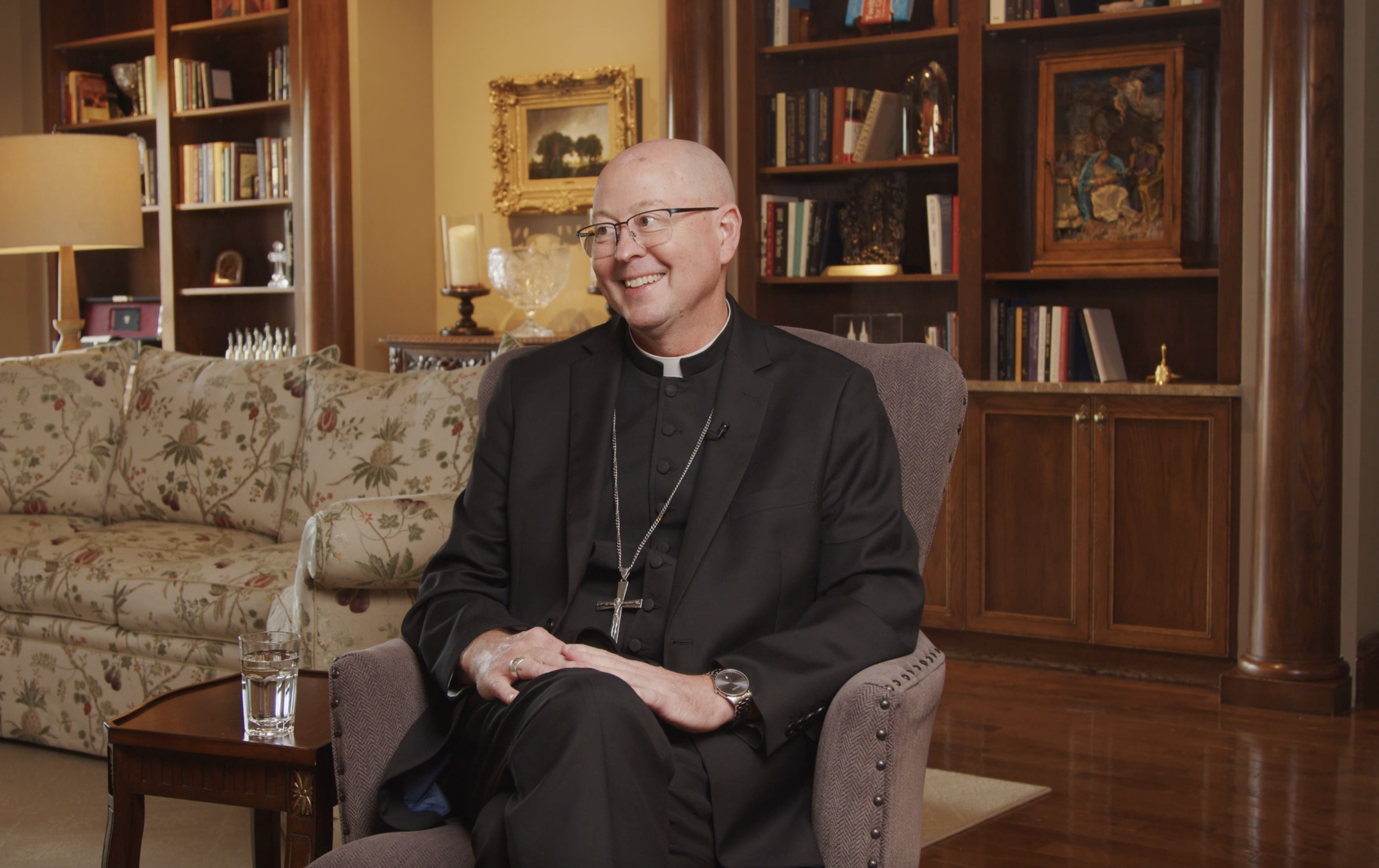
At the inauguration of a new campus named in his honor in Equatorial Guinea, the pope urged the education of young people in truth, responsibility, and service to the common good.

Read More
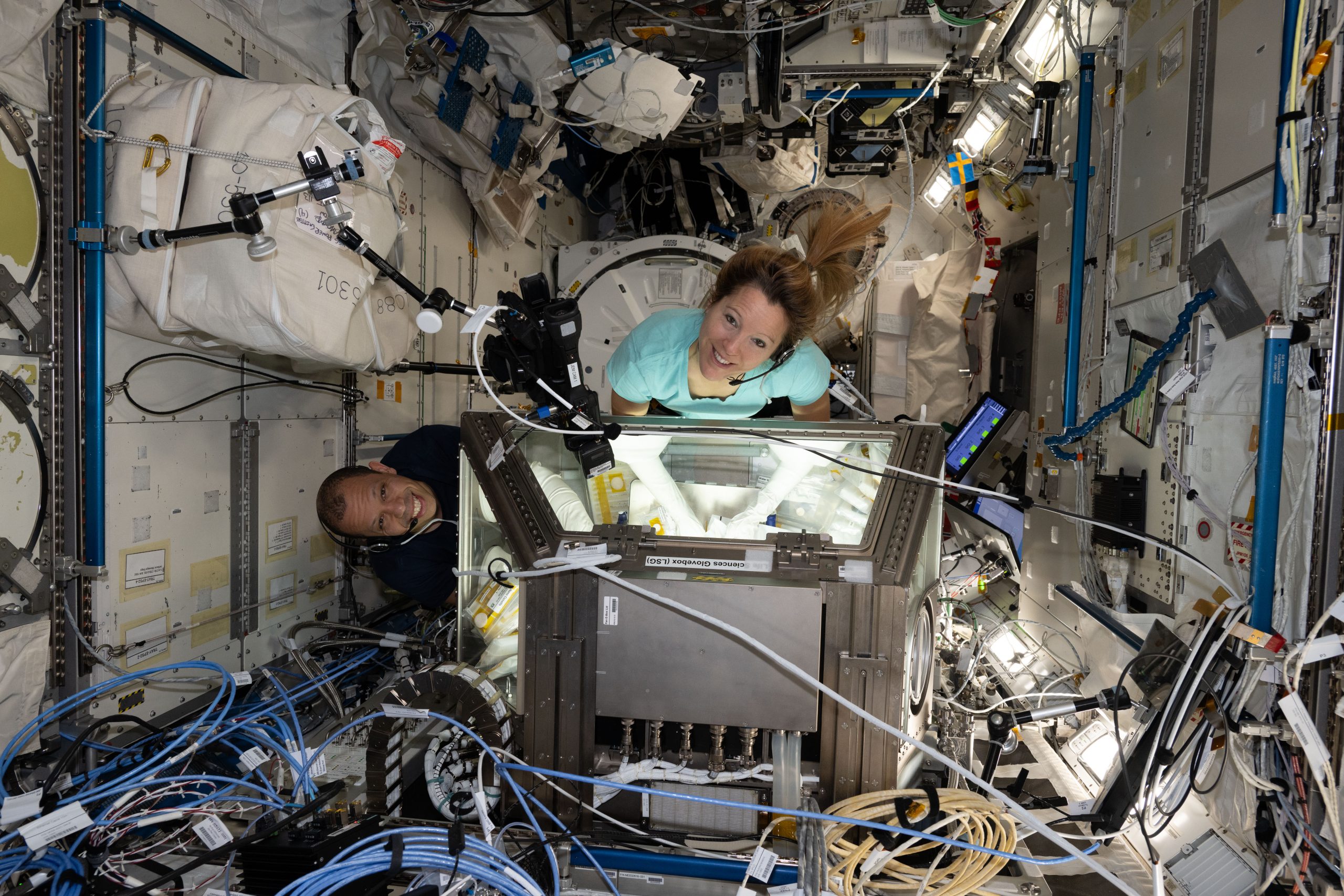
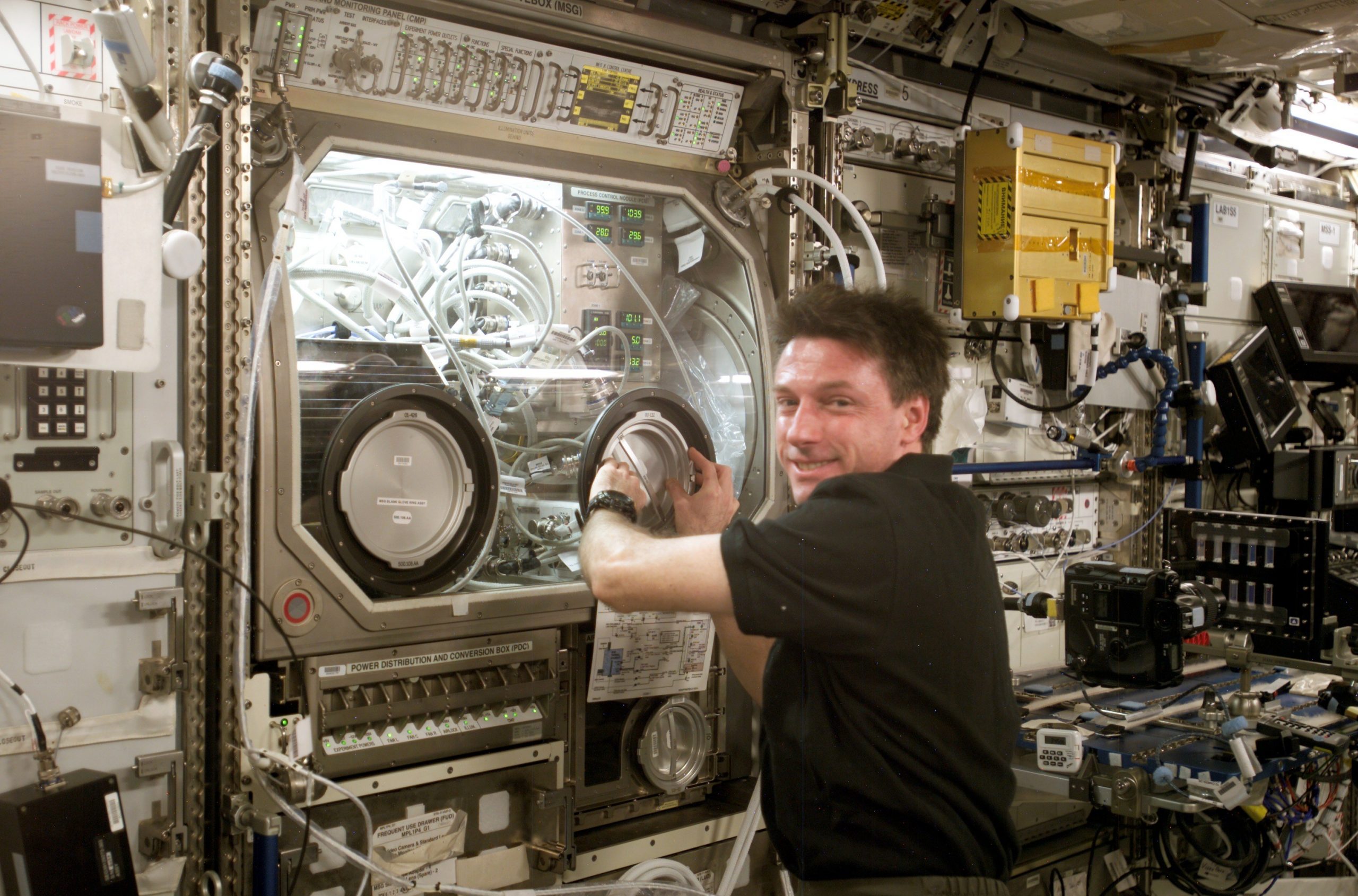
Studying Physics in Microgravity – Tiny ball bearings surround a larger central bearing during the Fluid Particles experiment, conducted inside the Microgravity Science Glovebox (MSG) aboard the International Space Station’s Destiny laboratory module.

Tiny ball bearings surround a larger central bearing during the Fluid Particles experiment, conducted inside the Microgravity Science Glovebox (MSG) aboard the International Space Station’s Destiny laboratory module.

Read More
Suited Up for Science: NASA ER-2 Pilot Prepares for GEMx Flight – NASA ER-2 pilot Kirt Stallings waits inside the transport vehicle at Edwards, California, on Thursday, Aug. 21, 2025, moments before boarding NASA’s Armstrong Flight Research Center’s ER-2 aircraft for a high-altitude mission supporting the Geological Earth Mapping Experiment (GEMx). Through the vehicle window, the aircraft can be seen being readied for flight.

NASA ER-2 pilot Kirt Stallings waits inside the transport vehicle at Edwards, California, on Thursday, Aug. 21, 2025, moments before boarding NASA’s Armstrong Flight Research Center’s ER-2 aircraft for a high-altitude mission supporting the Geological Earth Mapping Experiment (GEMx). Through the vehicle window, the aircraft can be seen being readied for flight.

Read More