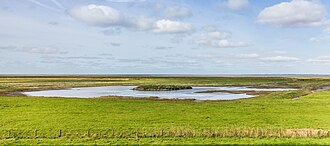
Sea

Centennial honors historic Michigan church built amid KKK threats and strikes #Catholic A richly diverse Catholic community in southern Michigan is preparing to mark a milestone: the centennial of St. Mary Star of the Sea in Jackson, where the beauty of sacred space, reverent liturgy, and a vibrant musical tradition continue to shape the lives of the faithful. The church has thrived through historic events and turbulent times, even as it was being rebuilt. In 1924, one of the largest Ku Klux Klan (KKK) rallies ever recorded saw 100,000 participants tramp through Jacksonʼs streets, and parish tradition holds that the Knights of Columbus kept vigil at the construction site to protect it from KKK vandalism. 
 
 St. Mary Star of the Sea Parish in Jackson, Michigan. | Credit: Photo courtesy of Father Timothy Nelson
 
 As he prepares to wrap up his 15-year tenure as pastor of the parish, Father Timothy Nelson reflected on the churchʼs enduring vitality: “Our church is not a relic but a dynamic part of the present, enriched by a legacy of faith.”Located west of Detroit, Jackson has long been a railroad hub with ties to the automobile industry. St. Mary’s is one of three current parishes, following a consolidation of several others. Following decades of a strong Polish-American presence, demographic changes have included the growing influx of Hispanic families. Children of the latter now make up about a quarter of the enrollment at St. Mary School.St. Mary’s three spires dominate the skyline, reaching up 180 feet in an imposing Romanesque style. Long regarded as one of the most beautiful churches in Michigan, it features magnificent stained-glass windows fashioned in Innsbruck, Austria, an apse mosaic of Our Lady Star of the Sea, murals of the apostles, and Carrara marble altars and Communion rail. The latter embellishments were donated by George Washington Hill, president of the American Tobacco Co., as a memorial to his young wife, Aquinas Heiler Hill, who died in 1925. The green and red colors in the mosaics around the high altar repeat the original colors used on packs of Lucky Strike cigarettes.
 
 A mosaic of the Crucifixion at St. Mary Star of the Sea Parish in Jackson, Michigan. | Credit: Photo courtesy of Father Timothy Nelson
 
 The present structure replaced an earlier church, with its cornerstone laid on Sept. 23, 1923. Construction faced delays because of a prolonged labor strike at limestone quarries. The era was also marred with social unrest, including the Ku Klux Klan and its virulent anti-Catholicism and racism. Construction was not completed until May 31, 1926, at a cost of 5,000. Then-Auxiliary Bishop Joseph C. Plagens came from Detroit to officiate the dedicatory Mass.Among its treasures is a unique stained-glass rose window memorializing the fallen of the first world war, including nuns who tended the wounded. “The window shows not only the American soldiers and sailors of the war, but even their enemies who reach out to Jesus rising above them,” Nelson said as he gave a tour of the magnificent church. Restoration of the windows cost  million and was made possible through the generosity of parishioners and benefactors, including the Eisele Family Foundation. St. Mary’s is depicted in “Buildings of Michigan” by Kathryn Bishop Eckert as one of the most notable in the Mitten State.
 
 Stained-glass window at St. Mary Star of the Sea Parish in Jackson, Michigan. | Credit: Kathryn Mietelka
 
 Now 74, Nelson will step down as pastor this summer. A former cardiologist, he will continue his ministry as chaplain of the St. Pio Medical Center in nearby Howell, which is part of a Vatican-authorized healthcare network inspired by St. Pio of Pietrelcina (Padre Pio). He will be succeeded by Father John Vinton, who will continue offering Traditional Latin Masses and Spanish-language Masses.St. Mary’s serves about 1,086 families, including the active Sacred Heart of Jesus Hispanic Community.Nelson said: “The school is necessary for parish life” and is the most diverse parochial school in the area.The parish’s liturgical life shows both continuity and renewal. The Traditional Latin Mass, celebrated every Sunday, is accompanied by Gregorian chant and organ led by Aine Schroeder, a student at nearby Hillsdale College. Schroeder said the Gregorian schola will chant the “Ave Maria” and “Salve Regina” at the centennial concert. Dispelling concerns that the Latin liturgy is stuck in the past, Nelson said: “I agree with Pope Benedict XVI that the past continues to be lived in the present. We are bringing it into the future.”
 
 Inside St. Mary Star of the Sea Parish in Jackson, Michigan. | Credit: Photo courtesy of Father Timothy Nelson
 
 For longtime parishioner Mary Belknap, a fourth-generation member who serves on the parish guild, St. Mary’s is a spiritual home and a place of encounter. “It’s one of the hallmark parishes in the state. People come from all over to see us and our beautiful church,” she said. Bridging the gaps between communities came easily to educator Belknap, who said that, having been raised in poverty as a child, she has experienced life on the margins, and “I personally reach out to embrace the goodness of other people.”The parishʼs centennial observance will commence with a concert on May 29 and culminate in a solemn Mass on May 31 — exactly 100 years after its first Mass — to be celebrated by Bishop Earl Boyea. Mary Malewitz, parish music director since 1981, is organizing the opening concert, which will feature adult and school choirs, a Hispanic choir, and a Gregorian schola. Between each performance, parishioners will sing their favorite hymns. “St. Mary’s has brought glory to Michigan for generations,” she told EWTN News.

Centennial honors historic Michigan church built amid KKK threats and strikes #Catholic A richly diverse Catholic community in southern Michigan is preparing to mark a milestone: the centennial of St. Mary Star of the Sea in Jackson, where the beauty of sacred space, reverent liturgy, and a vibrant musical tradition continue to shape the lives of the faithful. The church has thrived through historic events and turbulent times, even as it was being rebuilt. In 1924, one of the largest Ku Klux Klan (KKK) rallies ever recorded saw 100,000 participants tramp through Jacksonʼs streets, and parish tradition holds that the Knights of Columbus kept vigil at the construction site to protect it from KKK vandalism. St. Mary Star of the Sea Parish in Jackson, Michigan. | Credit: Photo courtesy of Father Timothy Nelson As he prepares to wrap up his 15-year tenure as pastor of the parish, Father Timothy Nelson reflected on the churchʼs enduring vitality: “Our church is not a relic but a dynamic part of the present, enriched by a legacy of faith.”Located west of Detroit, Jackson has long been a railroad hub with ties to the automobile industry. St. Mary’s is one of three current parishes, following a consolidation of several others. Following decades of a strong Polish-American presence, demographic changes have included the growing influx of Hispanic families. Children of the latter now make up about a quarter of the enrollment at St. Mary School.St. Mary’s three spires dominate the skyline, reaching up 180 feet in an imposing Romanesque style. Long regarded as one of the most beautiful churches in Michigan, it features magnificent stained-glass windows fashioned in Innsbruck, Austria, an apse mosaic of Our Lady Star of the Sea, murals of the apostles, and Carrara marble altars and Communion rail. The latter embellishments were donated by George Washington Hill, president of the American Tobacco Co., as a memorial to his young wife, Aquinas Heiler Hill, who died in 1925. The green and red colors in the mosaics around the high altar repeat the original colors used on packs of Lucky Strike cigarettes. A mosaic of the Crucifixion at St. Mary Star of the Sea Parish in Jackson, Michigan. | Credit: Photo courtesy of Father Timothy Nelson The present structure replaced an earlier church, with its cornerstone laid on Sept. 23, 1923. Construction faced delays because of a prolonged labor strike at limestone quarries. The era was also marred with social unrest, including the Ku Klux Klan and its virulent anti-Catholicism and racism. Construction was not completed until May 31, 1926, at a cost of $375,000. Then-Auxiliary Bishop Joseph C. Plagens came from Detroit to officiate the dedicatory Mass.Among its treasures is a unique stained-glass rose window memorializing the fallen of the first world war, including nuns who tended the wounded. “The window shows not only the American soldiers and sailors of the war, but even their enemies who reach out to Jesus rising above them,” Nelson said as he gave a tour of the magnificent church. Restoration of the windows cost $1 million and was made possible through the generosity of parishioners and benefactors, including the Eisele Family Foundation. St. Mary’s is depicted in “Buildings of Michigan” by Kathryn Bishop Eckert as one of the most notable in the Mitten State. Stained-glass window at St. Mary Star of the Sea Parish in Jackson, Michigan. | Credit: Kathryn Mietelka Now 74, Nelson will step down as pastor this summer. A former cardiologist, he will continue his ministry as chaplain of the St. Pio Medical Center in nearby Howell, which is part of a Vatican-authorized healthcare network inspired by St. Pio of Pietrelcina (Padre Pio). He will be succeeded by Father John Vinton, who will continue offering Traditional Latin Masses and Spanish-language Masses.St. Mary’s serves about 1,086 families, including the active Sacred Heart of Jesus Hispanic Community.Nelson said: “The school is necessary for parish life” and is the most diverse parochial school in the area.The parish’s liturgical life shows both continuity and renewal. The Traditional Latin Mass, celebrated every Sunday, is accompanied by Gregorian chant and organ led by Aine Schroeder, a student at nearby Hillsdale College. Schroeder said the Gregorian schola will chant the “Ave Maria” and “Salve Regina” at the centennial concert. Dispelling concerns that the Latin liturgy is stuck in the past, Nelson said: “I agree with Pope Benedict XVI that the past continues to be lived in the present. We are bringing it into the future.” Inside St. Mary Star of the Sea Parish in Jackson, Michigan. | Credit: Photo courtesy of Father Timothy Nelson For longtime parishioner Mary Belknap, a fourth-generation member who serves on the parish guild, St. Mary’s is a spiritual home and a place of encounter. “It’s one of the hallmark parishes in the state. People come from all over to see us and our beautiful church,” she said. Bridging the gaps between communities came easily to educator Belknap, who said that, having been raised in poverty as a child, she has experienced life on the margins, and “I personally reach out to embrace the goodness of other people.”The parishʼs centennial observance will commence with a concert on May 29 and culminate in a solemn Mass on May 31 — exactly 100 years after its first Mass — to be celebrated by Bishop Earl Boyea. Mary Malewitz, parish music director since 1981, is organizing the opening concert, which will feature adult and school choirs, a Hispanic choir, and a Gregorian schola. Between each performance, parishioners will sing their favorite hymns. “St. Mary’s has brought glory to Michigan for generations,” she told EWTN News.

Founded amid hardship and change, the centennial of St. Mary Star of the Sea in Jackson, Michigan, brings together generations to honor a diverse parish that continues to thrive.

Read More
Picture of the day


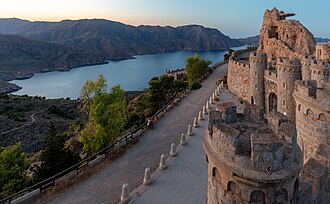
View of the coastal artillery site Castillitos, Cartagena, Spain. It was built together with the coastal artillery Cenizas in order to protect the entrance to the Bay of Cartagena in the Mediterranean Sea. The construction took place between 1933 and 1936 following a project from 1926 during the dictatorship of Primo de Rivera. It’s a Spanish National Heritage Monument since 1985.
 #ImageOfTheDay
Picture of the day
View of the coastal artillery site Castillitos, Cartagena, Spain. It was built together with the coastal artillery Cenizas in order to protect the entrance to the Bay of Cartagena in the Mediterranean Sea. The construction took place between 1933 and 1936 following a project from 1926 during the dictatorship of Primo de Rivera. It’s a Spanish National Heritage Monument since 1985.
Read More
Picture of the day


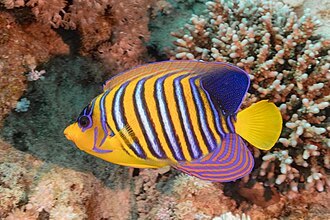
Royal angelfish (Pygoplites diacanthus), Ras Muhammad National Park, Red Sea, Egypt. The body of the royal angelfish is moderately elongate, is very compressed and can reach a length of up to 25 centimetres (9.8 in) It’s widely distributed throughout the Indo-Pacific and can be found in the Red Sea and Indian Ocean around East Africa and the Maldives, stretching to the Tuamoto Islands, New Caledonia, and Great Barrier Reef. The royal angelfish occurs at depths ranging from 0 to 80m (0 to 262 ft), in coral rich areas of lagoons, reefs, and are also often found in the vicinity of caves. It is a carnivorous species that feeds on sponges and tunicates located throughout reefs and underwater caves. They are a non-migratory species that can be found solitary, in pairs, or groups.
 #ImageOfTheDay
Picture of the day
Royal angelfish (Pygoplites diacanthus), Ras Muhammad National Park, Red Sea, Egypt. The body of the royal angelfish is moderately elongate, is very compressed and can reach a length of up to 25 centimetres (9.8 in) It’s widely distributed throughout the Indo-Pacific and can be found in the Red Sea and Indian Ocean around East Africa and the Maldives, stretching to the Tuamoto Islands, New Caledonia, and Great Barrier Reef. The royal angelfish occurs at depths ranging from 0 to 80m (0 to 262 ft), in coral rich areas of lagoons, reefs, and are also often found in the vicinity of caves. It is a carnivorous species that feeds on sponges and tunicates located throughout reefs and underwater caves. They are a non-migratory species that can be found solitary, in pairs, or groups.
Read More
Artemis II Recovery Training – Off the coast of California, NASA’s Artemis Landing and Recovery team and the Department of War that will work together to retrieve the Artemis II crew and Orion spacecraft following their return to Earth and splashdown in the Pacific Ocean are performing a final simulation of their activities, called a just-in-time training, at sea on Tuesday, Jan. 27, 2026. During the training, teams use the Crew Module Test Article, a full-scale mockup of the Orion spacecraft, to simulate as close as possible the conditions they can expect to encounter during splashdown of the Artemis II mission.

Off the coast of California, NASA’s Artemis Landing and Recovery team and the Department of War that will work together to retrieve the Artemis II crew and Orion spacecraft following their return to Earth and splashdown in the Pacific Ocean are performing a final simulation of their activities, called a just-in-time training, at sea on Tuesday, Jan. 27, 2026. During the training, teams use the Crew Module Test Article, a full-scale mockup of the Orion spacecraft, to simulate as close as possible the conditions they can expect to encounter during splashdown of the Artemis II mission.

Read More


Fishing Boats and City Lights – Fishing boats illuminate the Arabian Sea along India’s west coast with green lights designed to attract squid, shrimp, sardines, and mackerel in this nighttime photograph from the International Space Station, orbiting 259 miles above Earth. At lower right, the city lights of Hyderabad—renowned for its historic diamond and pearl trade—stretch westward toward the Mumbai Metropolitan Region, home to over 26 million people and the heart of Bollywood.

Fishing boats illuminate the Arabian Sea along India’s west coast with green lights designed to attract squid, shrimp, sardines, and mackerel in this nighttime photograph from the International Space Station, orbiting 259 miles above Earth. At lower right, the city lights of Hyderabad—renowned for its historic diamond and pearl trade—stretch westward toward the Mumbai Metropolitan Region, home to over 26 million people and the heart of Bollywood.

Read More
Picture of the day


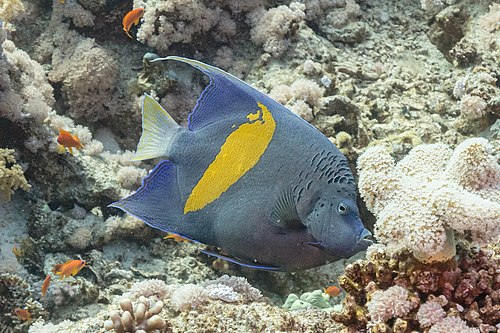
Yellowbar angelfish (Pomacanthus maculosus), Ras Muhammad National Park, Red Sea, Egypt. This marine angelfish is distributed throughout the Persian Gulf, the northwestern Indian Ocean, and the Red Sea south to 19°S. In 2009 it was recorded off the coast of Lebanon in the eastern Mediterranean, probably as a result of Lessepsian migration from the Red Sea through the Suez Canal. Pomacanthus maculosus is found at depths of between 4 and 50 metres (13 and 164 ft). It is a solitary species that lives in sheltered areas, often where there is a mixture of coral and silt. Their diet is dominated by sea sponges and tunicates, although other invertebrates will be eaten opportunistically. The females attain sexual maturity when the reach around 5.5 years of age and a total length of 21.6 centimetres (8.5 in). The maximum longevity is thought to be 36 years old. They are protogynous hermaphrodites and the older females can change sex to become males when there is a shortage of males. The larvae are planktonic. The yellowbar angelfish is occasionally collected for the aquarium trade and in some parts of the Persian Gulf it has been recorded in fish markets.
 #ImageOfTheDay
Picture of the day
Yellowbar angelfish (Pomacanthus maculosus), Ras Muhammad National Park, Red Sea, Egypt. This marine angelfish is distributed throughout the Persian Gulf, the northwestern Indian Ocean, and the Red Sea south to 19°S. In 2009 it was recorded off the coast of Lebanon in the eastern Mediterranean, probably as a result of Lessepsian migration from the Red Sea through the Suez Canal. Pomacanthus maculosus is found at depths of between 4 and 50 metres (13 and 164 ft). It is a solitary species that lives in sheltered areas, often where there is a mixture of coral and silt. Their diet is dominated by sea sponges and tunicates, although other invertebrates will be eaten opportunistically. The females attain sexual maturity when the reach around 5.5 years of age and a total length of 21.6 centimetres (8.5 in). The maximum longevity is thought to be 36 years old. They are protogynous hermaphrodites and the older females can change sex to become males when there is a shortage of males. The larvae are planktonic. The yellowbar angelfish is occasionally collected for the aquarium trade and in some parts of the Persian Gulf it has been recorded in fish markets.
Read More
Red, Green Light Show – A green and red aurora streams across Earth’s horizon above the city lights of Europe in this Jan. 19, 2026, photograph, which looks north across Italy toward Germany. The International Space Station was orbiting 262 miles above the Mediterranean Sea at approximately 10:02 p.m. local time when the image was captured.

A green and red aurora streams across Earth’s horizon above the city lights of Europe in this Jan. 19, 2026, photograph, which looks north across Italy toward Germany. The International Space Station was orbiting 262 miles above the Mediterranean Sea at approximately 10:02 p.m. local time when the image was captured.

Read More
Picture of the day


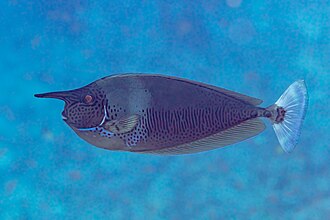
Short-nosed unicornfish (Naso brevirostris), Red Sea, Egypt. This species has a maximum published total length of 60 centimetres (24 in). It occurs in the Indian and western Pacific Oceans. Adults feed mainly on gelatinous zooplankton, while juveniles mainly feed on benthic algae. The switch from grazing to preying on gelatinous zooplankton coincides with the development of the bony protuberance.
 #ImageOfTheDay
Picture of the day
Short-nosed unicornfish (Naso brevirostris), Red Sea, Egypt. This species has a maximum published total length of 60 centimetres (24 in). It occurs in the Indian and western Pacific Oceans. Adults feed mainly on gelatinous zooplankton, while juveniles mainly feed on benthic algae. The switch from grazing to preying on gelatinous zooplankton coincides with the development of the bony protuberance.
Read More
Picture of the day


Orbicular (round body) batfish (Platax orbicularis), Red Sea, Egypt. It belongs to the family Ephippidae, the spadefishes and batfishes. This species is found in the Indo-Pacific but has been recorded outside its native range in the western Atlantic Ocean. The adult can reach a total length of 40 centimetres (16 in).
 #ImageOfTheDay
Picture of the day
Orbicular (round body) batfish (Platax orbicularis), Red Sea, Egypt. It belongs to the family Ephippidae, the spadefishes and batfishes. This species is found in the Indo-Pacific but has been recorded outside its native range in the western Atlantic Ocean. The adult can reach a total length of 40 centimetres (16 in).
Read More
Picture of the day


The Isaiah Scroll is the best preserved of the seven Dead Sea Scrolls that were first discovered by Bedouin shepherds from Qumran. The Dead Sea Scrolls were first made available to the public on this date in 1991.
 #ImageOfTheDay
Picture of the day
The Isaiah Scroll is the best preserved of the seven Dead Sea Scrolls that were first discovered by Bedouin shepherds from Qumran. The Dead Sea Scrolls were first made available to the public on this date in 1991.
Read More
Picture of the day


Coral (Favia favus), Ras Muhammad National Park, Red Sea, Egypt. This species of stony corals is massive and forms thickly encrusting dome-shaped colonial corals. There is a great diversity of form even among the same species. The corallites project slightly above the surface of the coral and each has its own wall. The septa and costae linked to the corallite wall are well developed and covered by fine teeth. The polyps only extend and feed during the night. Each one has a small number of tapering tentacles which often have a darker coloured tip; these are called stinger tentacles, or sweeper tentacles. They use these to sweep the water to see if any other coral is in its area; if so, then they begin to sting the other coral. This is commonly known as coral war. Each coral is trying to make sure it has enough room around it so it can continue to grow and have more surface area for its offspring.
 #ImageOfTheDay
Picture of the day
Coral (Favia favus), Ras Muhammad National Park, Red Sea, Egypt. This species of stony corals is massive and forms thickly encrusting dome-shaped colonial corals. There is a great diversity of form even among the same species. The corallites project slightly above the surface of the coral and each has its own wall. The septa and costae linked to the corallite wall are well developed and covered by fine teeth. The polyps only extend and feed during the night. Each one has a small number of tapering tentacles which often have a darker coloured tip; these are called stinger tentacles, or sweeper tentacles. They use these to sweep the water to see if any other coral is in its area; if so, then they begin to sting the other coral. This is commonly known as coral war. Each coral is trying to make sure it has enough room around it so it can continue to grow and have more surface area for its offspring.
Read More
Landsat 9 Sees Buccaneer Archipelago

In the sparsely populated Kimberley region of Western Australia, jagged landforms reach like fingers into the turquoise-blue ocean waters. Along the coastline north of Derby, they used to reach even farther. But rising sea levels submerged part of the coastal landscape, giving rise to hundreds of islands and low-lying reefs that compose the Buccaneer Archipelago.

Read More
Picture of the day


Pelagic stingray (Pteroplatytrygon violacea), Cape Palos, region of Murcia, Spain. This species of stingray has a worldwide distribution in waters warmer than 19 °C (66 °F), and migrates seasonally to spend the summer closer to the continental shelf and at higher latitudes. The only stingray that almost exclusively inhabits the open ocean, this species is typically found in surface waters down to a depth of 100 m (330 ft). The pelagic stingray typically grows to 1.3 m (4.3 ft) long and 59 cm (23 in) across. It’s an active predator that captures prey by wrapping its pectoral fins around it, before manipulating it to the mouth. A wide variety of organisms are represented in its diet: crustaceans, molluscs, bony fishes, sea horses and filefish, comb jellies and medusae, and polychaete worms.
 #ImageOfTheDay
Picture of the day
Pelagic stingray (Pteroplatytrygon violacea), Cape Palos, region of Murcia, Spain. This species of stingray has a worldwide distribution in waters warmer than 19 °C (66 °F), and migrates seasonally to spend the summer closer to the continental shelf and at higher latitudes. The only stingray that almost exclusively inhabits the open ocean, this species is typically found in surface waters down to a depth of 100 m (330 ft). The pelagic stingray typically grows to 1.3 m (4.3 ft) long and 59 cm (23 in) across. It’s an active predator that captures prey by wrapping its pectoral fins around it, before manipulating it to the mouth. A wide variety of organisms are represented in its diet: crustaceans, molluscs, bony fishes, sea horses and filefish, comb jellies and medusae, and polychaete worms.
Read More