Sports

Church in Venezuela to ‘remain at the side of the suffering’ following earthquakes #Catholic One month after the devastating earthquakes in Venezuela, the Catholic Church is focused on “remaining at the side of the suffering,” according to Father Ricardo Guillén, episcopal vicar for pastoral ministry of the Archdiocese of Caracas.In an interview with the archdiocesan press office, the priest explained how “physical presence, active listening, and organized charity” have been the cornerstones of the Church’s response to the tragedy, which claimed the lives of thousands of people and severely affected tens of thousands more.“Our immediate priority was to be present where the suffering was most acute; we showed up and shared close up with the vulnerability of our people,” he said.From the very first hours following the earthquakes, he continued, the Church understood that this accompaniment “could not take place from a distance” but rather “required being physically present in the places of greatest uncertainty to support those who had lost everything.”“For this reason, we deployed directly to the areas most critical to the emergency,” he added. Consecrated personnel and lay volunteers assessed the scale of the disaster, offering special support to people at the morgues “to embrace and share in the families’ painful silence” and bringing the comfort of the sacraments.“In each of those places, our mission was simply to be present, to listen, and not to leave anyone alone,” Guillén added.‘God never abandons us’After highlighting “the profound vocation of service and solidarity,” which he said especially characterizes the new generations of Venezuelans and which enabled the enormous logistical response to the emergency, the episcopal vicar noted that it is precisely “in closeness and compassion” that God’s presence is revealed amid so much pain.Beyond providing material aid, the Catholic Church’s “fundamental mission” was to “be a living presence of the Lord and sustain the faith where suffering was the greatest,” regardless of the difficulties posed by the earthquakes. Thus, the Church “had to take to the streets,” transforming plazas, parks, and sports fields into “open-air altars” for religious services and encouraging the most popular devotions in Caracas and La Guaira.“One of the most moving services was accompanying people in their grief,” he said. “We priests were present in morgues, hospitals, and cemeteries in Caracas and La Guaira, supporting those who were suffering, often offering nothing more than a hug, weeping with those who wept, praying together, or maintaining a respectful silence in the face of such immense pain.”“Bringing grace and comfort to places where suffering reigned was living proof that God never abandons us,” he added.What are lessons the earthquakes taught the Church?Guillén emphasized that “the earthquake left deep scars, but it also revealed the immense spiritual and solidarity reserves of our people.”“Far from plunging us into despair, this tragedy becomes an urgent call to make fraternity a permanent way of life, oriented toward the common good and the recognition of every person’s dignity,” he said.He remarked that “true consolation requires neither explanations nor grand speeches,” but rather manifests itself “in quiet presence, in an outstretched hand, in attentive listening that takes in the pain, and in respectful silence that helps heal the wounds of the soul.”The earthquakes “leave us with profound lessons” for the Church in Venezuela and have confronted the entire country with “the urgent need to organize ourselves better in the face of contingencies of this magnitude,” he said. In that sense, he continued, Cáritas must strengthen itself and become “a true network of solidarity capable of reaching even the most remote areas” of Venezuela. “Ultimately, this time confirms for us that the faith lived out is authenticated through charity and tangible dedication to the most vulnerable,” Guillén said.“For this reason, the Church in Caracas reaffirms its unwavering commitment to continue accompanying those affected. We are not pulling out now that the immediate phase of the emergency has ended; we will be there for the long road of rebuilding society and the integral healing of our people’s lives,” he pledged.This story was first published by ACI Prensa, the Spanish-language sister service of EWTN News. It has been translated and adapted by EWTN News English.

Church in Venezuela to ‘remain at the side of the suffering’ following earthquakes #Catholic One month after the devastating earthquakes in Venezuela, the Catholic Church is focused on “remaining at the side of the suffering,” according to Father Ricardo Guillén, episcopal vicar for pastoral ministry of the Archdiocese of Caracas.In an interview with the archdiocesan press office, the priest explained how “physical presence, active listening, and organized charity” have been the cornerstones of the Church’s response to the tragedy, which claimed the lives of thousands of people and severely affected tens of thousands more.“Our immediate priority was to be present where the suffering was most acute; we showed up and shared close up with the vulnerability of our people,” he said.From the very first hours following the earthquakes, he continued, the Church understood that this accompaniment “could not take place from a distance” but rather “required being physically present in the places of greatest uncertainty to support those who had lost everything.”“For this reason, we deployed directly to the areas most critical to the emergency,” he added. Consecrated personnel and lay volunteers assessed the scale of the disaster, offering special support to people at the morgues “to embrace and share in the families’ painful silence” and bringing the comfort of the sacraments.“In each of those places, our mission was simply to be present, to listen, and not to leave anyone alone,” Guillén added.‘God never abandons us’After highlighting “the profound vocation of service and solidarity,” which he said especially characterizes the new generations of Venezuelans and which enabled the enormous logistical response to the emergency, the episcopal vicar noted that it is precisely “in closeness and compassion” that God’s presence is revealed amid so much pain.Beyond providing material aid, the Catholic Church’s “fundamental mission” was to “be a living presence of the Lord and sustain the faith where suffering was the greatest,” regardless of the difficulties posed by the earthquakes. Thus, the Church “had to take to the streets,” transforming plazas, parks, and sports fields into “open-air altars” for religious services and encouraging the most popular devotions in Caracas and La Guaira.“One of the most moving services was accompanying people in their grief,” he said. “We priests were present in morgues, hospitals, and cemeteries in Caracas and La Guaira, supporting those who were suffering, often offering nothing more than a hug, weeping with those who wept, praying together, or maintaining a respectful silence in the face of such immense pain.”“Bringing grace and comfort to places where suffering reigned was living proof that God never abandons us,” he added.What are lessons the earthquakes taught the Church?Guillén emphasized that “the earthquake left deep scars, but it also revealed the immense spiritual and solidarity reserves of our people.”“Far from plunging us into despair, this tragedy becomes an urgent call to make fraternity a permanent way of life, oriented toward the common good and the recognition of every person’s dignity,” he said.He remarked that “true consolation requires neither explanations nor grand speeches,” but rather manifests itself “in quiet presence, in an outstretched hand, in attentive listening that takes in the pain, and in respectful silence that helps heal the wounds of the soul.”The earthquakes “leave us with profound lessons” for the Church in Venezuela and have confronted the entire country with “the urgent need to organize ourselves better in the face of contingencies of this magnitude,” he said. In that sense, he continued, Cáritas must strengthen itself and become “a true network of solidarity capable of reaching even the most remote areas” of Venezuela. “Ultimately, this time confirms for us that the faith lived out is authenticated through charity and tangible dedication to the most vulnerable,” Guillén said.“For this reason, the Church in Caracas reaffirms its unwavering commitment to continue accompanying those affected. We are not pulling out now that the immediate phase of the emergency has ended; we will be there for the long road of rebuilding society and the integral healing of our people’s lives,” he pledged.This story was first published by ACI Prensa, the Spanish-language sister service of EWTN News. It has been translated and adapted by EWTN News English.

While the Church’s response to the earthquakes in Venezuela certainly involved material aid, a major part was simply being present to minister to survivors, offering consolation and the sacraments.

Read More
Forest fires in Spain: ‘Providence is taking super good care of us,’ priest says #Catholic The territory of the Diocese of Getafe, south of Madrid, Spain, is being especially hard hit by wildfires that have forced thousands of people to shelter in place or evacuate. The natural disaster finds the diocese’s priests on the front lines, welcoming, accompanying, consoling, and praying.In the central area of ​​Spain alone, 12 towns have been evacuated and another three are under a shelter-in-place order due to the wave of forest fires that in recent days have devastated thousands of acres. At least 50,000 people have been affected in the area.Faced with this human tragedy, the Catholic Church has set to work providing material aid, shelter, a listening ear, and the sacraments in efforts overseen by the auxiliary bishop of Getafe, José María Avendaño.Father Álvaro Piñero is the vicar of the parish in Villaviciosa de Odón, one of the towns serving as a place of refuge for those fleeing the fires who had nowhere else to go. Throughout the weekend, he has been coordinating the aid provided by the parish to the more than 300 displaced people arriving from Chapinería, Pelayos de la Presa, Navas del Rey, and other towns.Along with the residents, the parish priests from those towns are also being sheltered because as Piñero explained to ACI Prensa, the Spanish-language sister service of EWTN News, “even when displaced, one remains a priest and continues to minister to the people of oneʼs town.”“Many of the volunteers helping at the sports center are from Caritas or local confraternities from the town; they have ties to the parish,” noted Piñero, who is from Valdemoro, a nearby town where he has gone to pick up hosts for Mass.Instagram postIn addition to providing food and meeting material needs, the Church offers the treasure of the faith and the sacraments: “At the sports center, we have been attending to people, listening to them, hearing their confessions and above all, listening to so many suffering people. At the end of the day, the people here are extremely vulnerable.”The authorities specifically entrusted the care of the children to the parish. The youngsters are kept entertained with games and activities, so much so that when asked if they want to return home, some say no, “because it feels like camp.”Despite the magnitude of the tragedy, heart-wrenching from a purely human perspective, a supernatural outlook and a shepherd’s heart keep hope alive.“As St. Paul said in the reading: We hold this treasure in earthen vessels so that not only death but the glory of the Lord may be manifested in our lives. That is somewhat what we are experiencing; while we are keenly feeling the drama of so many very difficult situations, Providence is also taking super good care of us,” Piñero emphasized.“If God is looking after us now in this situation, why would he fail me tomorrow? If he is doing so now, then I believe trust is what sustains us in these moments, and not blind trust, but a trust we can tangibly feel here and now,” he explained, referring to the help provided by so many volunteers and donors.‘The Lord is going through this evacuation with us’One of the areas hardest hit by the fire is the Tiétar Valley, home to the town of Rozas de Puerto Real and the minor seminary of the Diocese of Getafe, where 130 students, 35 of whom are seminarians, normally study.The facility, currently spared by the flames, is in grave danger. A summer camp was taking place there until participants had to be evacuated on July 25, the feast of St. James the Apostle. “We were already surrounded by smoke and had to evacuate all the young people; it was done very quickly. In less than 25 minutes, the entire seminary had been cleared, and although there was great fear, everyoneʼs efforts made it possible,” Father Eliert Jerez, rector of the minor seminary, told ACI Prensa.In addition to the people, they removed the statues of the Immaculate Conception and St. Joseph, the archives, and the tabernacles containing the Blessed Sacrament from the site; these were taken to Villaviciosa de Odón, where Jerez is currently taking shelter.
 
 Father Eliert Jerez, rector of the minor seminary of the Diocese of Getafe in Spain | Credit: Nicolás de Cárdenas/ACI Prensa
 
 The moment the Body of Christ was being moved was captured on video. “I canʼt get that moment out of my head, and I donʼt want to let it go from my heart either,” the priest shared.“When you hold the Blessed Sacrament in your hand, when you can’t wear a cope or liturgical vestments — you realize the Lord’s closeness in those moments. You realize that the Lord was going through this evacuation with us, and I imagine he was also in this prayer and this plea for it to end,” he added.It’s precisely in prayer that they are finding great comfort: “Prayer is working real miracles such as the fact that the seminary has not yet been engulfed by the flames,” explained the rector, even as the burden of responsibility weighs heavily on him: “Many of our seminarians are going to be left homeless. Many of our seminarians will face immense difficulties in continuing their formation.”It’s not just for their sake that Jerez is aware of how this situation will transform life in the region for years to come: “So many towns have been affected. Many people will not get their jobs back because they make their living from the land, and that is very difficult to recover from. Many people have lost not only their homes but also their prospects for the future, and this is a reality that will stay with us in the years ahead.”Indeed, he admitted to his deep unease: “I have had trouble sleeping ever since the first flames appeared.”This story was first published by ACI Prensa, the Spanish-language sister service of EWTN News. It has been translated and adapted by EWTN News English.

Forest fires in Spain: ‘Providence is taking super good care of us,’ priest says #Catholic The territory of the Diocese of Getafe, south of Madrid, Spain, is being especially hard hit by wildfires that have forced thousands of people to shelter in place or evacuate. The natural disaster finds the diocese’s priests on the front lines, welcoming, accompanying, consoling, and praying.In the central area of ​​Spain alone, 12 towns have been evacuated and another three are under a shelter-in-place order due to the wave of forest fires that in recent days have devastated thousands of acres. At least 50,000 people have been affected in the area.Faced with this human tragedy, the Catholic Church has set to work providing material aid, shelter, a listening ear, and the sacraments in efforts overseen by the auxiliary bishop of Getafe, José María Avendaño.Father Álvaro Piñero is the vicar of the parish in Villaviciosa de Odón, one of the towns serving as a place of refuge for those fleeing the fires who had nowhere else to go. Throughout the weekend, he has been coordinating the aid provided by the parish to the more than 300 displaced people arriving from Chapinería, Pelayos de la Presa, Navas del Rey, and other towns.Along with the residents, the parish priests from those towns are also being sheltered because as Piñero explained to ACI Prensa, the Spanish-language sister service of EWTN News, “even when displaced, one remains a priest and continues to minister to the people of oneʼs town.”“Many of the volunteers helping at the sports center are from Caritas or local confraternities from the town; they have ties to the parish,” noted Piñero, who is from Valdemoro, a nearby town where he has gone to pick up hosts for Mass.Instagram postIn addition to providing food and meeting material needs, the Church offers the treasure of the faith and the sacraments: “At the sports center, we have been attending to people, listening to them, hearing their confessions and above all, listening to so many suffering people. At the end of the day, the people here are extremely vulnerable.”The authorities specifically entrusted the care of the children to the parish. The youngsters are kept entertained with games and activities, so much so that when asked if they want to return home, some say no, “because it feels like camp.”Despite the magnitude of the tragedy, heart-wrenching from a purely human perspective, a supernatural outlook and a shepherd’s heart keep hope alive.“As St. Paul said in the reading: We hold this treasure in earthen vessels so that not only death but the glory of the Lord may be manifested in our lives. That is somewhat what we are experiencing; while we are keenly feeling the drama of so many very difficult situations, Providence is also taking super good care of us,” Piñero emphasized.“If God is looking after us now in this situation, why would he fail me tomorrow? If he is doing so now, then I believe trust is what sustains us in these moments, and not blind trust, but a trust we can tangibly feel here and now,” he explained, referring to the help provided by so many volunteers and donors.‘The Lord is going through this evacuation with us’One of the areas hardest hit by the fire is the Tiétar Valley, home to the town of Rozas de Puerto Real and the minor seminary of the Diocese of Getafe, where 130 students, 35 of whom are seminarians, normally study.The facility, currently spared by the flames, is in grave danger. A summer camp was taking place there until participants had to be evacuated on July 25, the feast of St. James the Apostle. “We were already surrounded by smoke and had to evacuate all the young people; it was done very quickly. In less than 25 minutes, the entire seminary had been cleared, and although there was great fear, everyoneʼs efforts made it possible,” Father Eliert Jerez, rector of the minor seminary, told ACI Prensa.In addition to the people, they removed the statues of the Immaculate Conception and St. Joseph, the archives, and the tabernacles containing the Blessed Sacrament from the site; these were taken to Villaviciosa de Odón, where Jerez is currently taking shelter. Father Eliert Jerez, rector of the minor seminary of the Diocese of Getafe in Spain | Credit: Nicolás de Cárdenas/ACI Prensa The moment the Body of Christ was being moved was captured on video. “I canʼt get that moment out of my head, and I donʼt want to let it go from my heart either,” the priest shared.“When you hold the Blessed Sacrament in your hand, when you can’t wear a cope or liturgical vestments — you realize the Lord’s closeness in those moments. You realize that the Lord was going through this evacuation with us, and I imagine he was also in this prayer and this plea for it to end,” he added.It’s precisely in prayer that they are finding great comfort: “Prayer is working real miracles such as the fact that the seminary has not yet been engulfed by the flames,” explained the rector, even as the burden of responsibility weighs heavily on him: “Many of our seminarians are going to be left homeless. Many of our seminarians will face immense difficulties in continuing their formation.”It’s not just for their sake that Jerez is aware of how this situation will transform life in the region for years to come: “So many towns have been affected. Many people will not get their jobs back because they make their living from the land, and that is very difficult to recover from. Many people have lost not only their homes but also their prospects for the future, and this is a reality that will stay with us in the years ahead.”Indeed, he admitted to his deep unease: “I have had trouble sleeping ever since the first flames appeared.”This story was first published by ACI Prensa, the Spanish-language sister service of EWTN News. It has been translated and adapted by EWTN News English.

Amid the destructive forest fires in central Spain, the Catholic Church is ministering to the evacuees, providing material aid, shelter, a listening ear, and the sacraments.

Read More
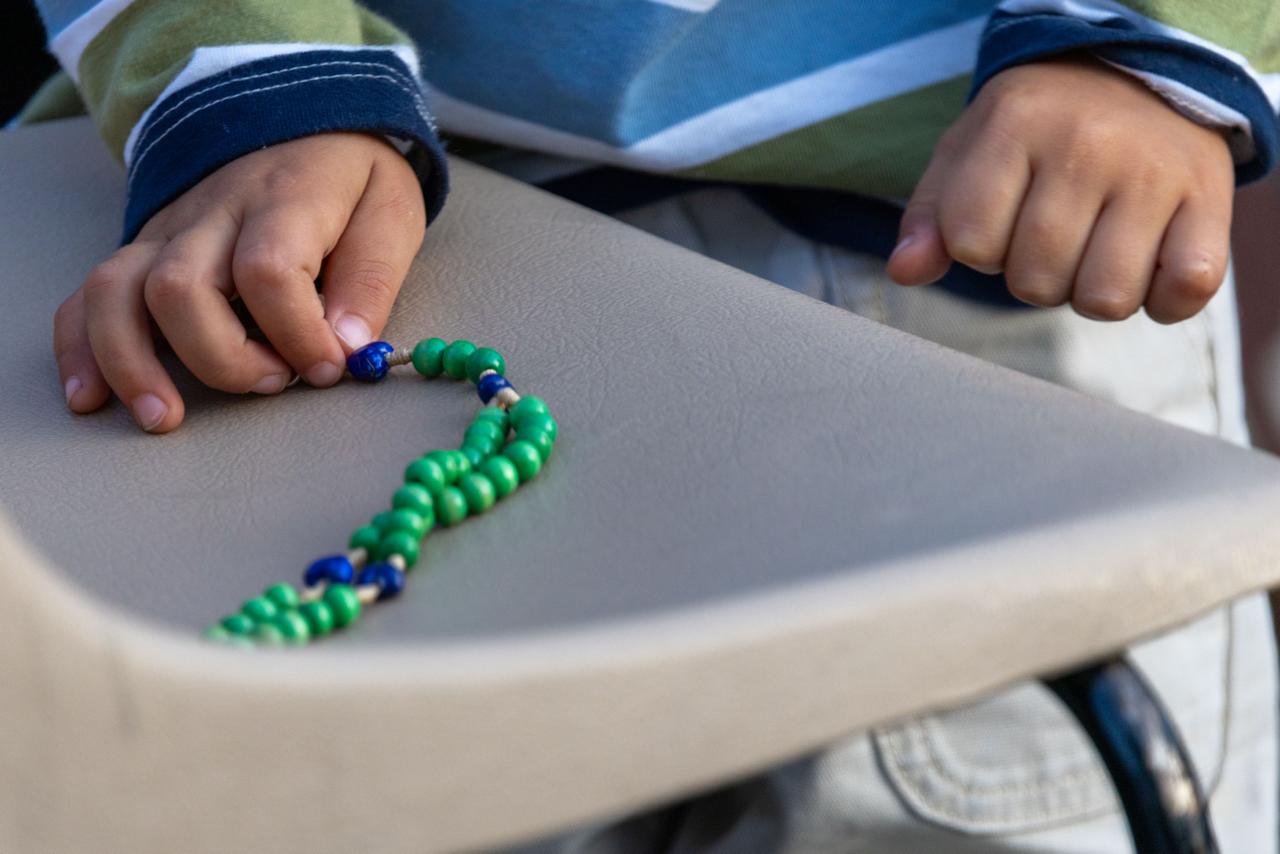
Catholic parents of Texas flood victims share witness to faith amid grief #Catholic The parents of Blair and Brooke Harber, the Catholic sisters who died in the 2025 Texas Hill Country flash floods, shared how their faith has sustained them through the tremendous grief and how they are honoring their daughters' legacy.Blair Harber, 13, and Brooke Harber, 11, who attended St. Rita Catholic School in Dallas, were among the victims of the Texas Hill Country flash floods that devastated parts of the state on July 4, 2025.“I would say after a year, itʼs almost more difficult than it has been," RJ Harber said in an interview with host Catherine Hadro on “EWTN News In Depth” alongside his wife, Annie Harber.“The depth of the grief does not go away. It actually enhances, because this is your reality now, and you understand your children are actually gone,” he said.“Now there is comfort knowing that they are in heaven, and we did our job as parents to prepare them to get them there. But our love for them was so deep that the grief that we have is just tremendous,” he said.The family was vacationing with RJ Harber’s parents, Mike and Charlene Harber, on the Guadalupe River near Hunt, Texas, when the floods occurred.The flash flood raised the river more than 22 feet in half an hour in the early morning hours of July 4, dislodging and carrying away the sisters’ cabin, in which they were staying with their grandparents.Harbers have ‘leaned heavily’ on Catholic faithAnnie and RJ Harber detailed the challenges of navigating such a profound loss. They shared how it tested their faith, while also relying on that same faith to carry them through the past year.It was “really important to us to instill the Catholic faith and values in our girls,” Annie Harber said. “But … after all of this, I definitely questioned God and was angry at God” and “didnʼt understand why, or how, this could happen to us.”“We have leaned on each other and our faith to get us up every morning,” she said. “I think for me, truly, when I wake up, I tell myself Iʼm one day closer to seeing the girls, because we know theyʼre in heaven and our goal is to ultimately get there. So we have to continue to live by the Catholic faith and our values that we taught the girls.”“I think weʼre still alive because of our faith,” RJ Harber said. “God can accept anger, but he can also help us carry this cross. And the Church has rallied around us.”“We found the girls on Saturday, July 5, and we went to Mass Sunday, July 6. It was probably the most difficult thing Iʼve ever done. But thatʼs because we want to follow the commandments,” he said, citing the Third Commandment to keep holy the Sabbath. “So weʼve leaned heavily … on our Catholic faith,” he said.RJ Harber, who also lost his parents in the disaster, said his “daughters were their greatest joy.” His parents attended “every single sporting event” of their granddaughters.The girls “were their only grandchildren, so they just doted on them,” he said. “My father was suffering from Parkinsonʼs disease, but he would just want me to drive him to Brooke’s softball game and watch her pitch, or ask to watch Blair play soccer.”“We find solace in the fact that theyʼre watching over our girls in heaven and are just thankful that theyʼre there with them now,” he said.‘The faith was very important to our girls’As Annie and RJ Harber have relied on their faith through their grief, they detailed the importance the Catholic faith played in their daughters’ lives as well.“Not only did they go to Catholic school, but we would go to Mass every Sunday,” RJ Harber said. “It was instrumental in our lives.”RJ reflected on his daughter Blair’s faith, sharing that she prayed the rosary “every single night.” Two weeks before the tragedy, “her rosary beads broke and she asked to borrow mine, which I received when I converted to the Catholic faith, and took those down to the river with her.”“So we know that she died with those beads in her hands, and with Mary and God protecting her, in those last moments,” he said.
 
 So we know that she died with those beads in her hands, and with Mary and God protecting her, in those last moments.”
 
 RJ Harber
 
 
 “We prayed every single night. And we still pray with them every single night,” RJ said.“Prayer has been instrumental. We get messages from all over the world about people praying for us. And I think thatʼs helping us share the girls with the world. And honestly I think God, through the Holy Spirit, is using our daughters to bring people closer to the faith,” he said.The couple said they have heard from several people who have returned to Mass and confession since hearing the sisters’ story.“Weʼve received … messages about people converting to the Catholic faith because of Brooke and Blair. So their work is not done in this world — itʼs only beginning.”The Blair & Brooke Harber Beloved Sisters FundSince losing their daughters, Annie and RJ have started a fund to continue to honor their daughters through The Blair & Brooke Harber Beloved Sisters Fund.The fund, set up through The Catholic Foundation of Texas, supports flood and disaster relief efforts and aids Catholic after-school activities, including after-school education and Catholic sports.Blair and Brooke “played lacrosse and there is a large barrier to entry into lacrosse,” RJ Harber said. “So weʼve been able to get hundreds of sticks donated, hundreds of goggles donated, and have allowed girls to come and try lacrosse for the first time who would otherwise never try it.”“This February, we hosted an event. Over 200 girls came out and tried the sport for the first time. So these kindergartners, first graders, second graders are looking up to our girls and carrying their life forward. And I just think thatʼs a beautiful thing to see,” he said.

Catholic parents of Texas flood victims share witness to faith amid grief #Catholic The parents of Blair and Brooke Harber, the Catholic sisters who died in the 2025 Texas Hill Country flash floods, shared how their faith has sustained them through the tremendous grief and how they are honoring their daughters' legacy.Blair Harber, 13, and Brooke Harber, 11, who attended St. Rita Catholic School in Dallas, were among the victims of the Texas Hill Country flash floods that devastated parts of the state on July 4, 2025.“I would say after a year, itʼs almost more difficult than it has been," RJ Harber said in an interview with host Catherine Hadro on “EWTN News In Depth” alongside his wife, Annie Harber.“The depth of the grief does not go away. It actually enhances, because this is your reality now, and you understand your children are actually gone,” he said.“Now there is comfort knowing that they are in heaven, and we did our job as parents to prepare them to get them there. But our love for them was so deep that the grief that we have is just tremendous,” he said.The family was vacationing with RJ Harber’s parents, Mike and Charlene Harber, on the Guadalupe River near Hunt, Texas, when the floods occurred.The flash flood raised the river more than 22 feet in half an hour in the early morning hours of July 4, dislodging and carrying away the sisters’ cabin, in which they were staying with their grandparents.Harbers have ‘leaned heavily’ on Catholic faithAnnie and RJ Harber detailed the challenges of navigating such a profound loss. They shared how it tested their faith, while also relying on that same faith to carry them through the past year.It was “really important to us to instill the Catholic faith and values in our girls,” Annie Harber said. “But … after all of this, I definitely questioned God and was angry at God” and “didnʼt understand why, or how, this could happen to us.”“We have leaned on each other and our faith to get us up every morning,” she said. “I think for me, truly, when I wake up, I tell myself Iʼm one day closer to seeing the girls, because we know theyʼre in heaven and our goal is to ultimately get there. So we have to continue to live by the Catholic faith and our values that we taught the girls.”“I think weʼre still alive because of our faith,” RJ Harber said. “God can accept anger, but he can also help us carry this cross. And the Church has rallied around us.”“We found the girls on Saturday, July 5, and we went to Mass Sunday, July 6. It was probably the most difficult thing Iʼve ever done. But thatʼs because we want to follow the commandments,” he said, citing the Third Commandment to keep holy the Sabbath. “So weʼve leaned heavily … on our Catholic faith,” he said.RJ Harber, who also lost his parents in the disaster, said his “daughters were their greatest joy.” His parents attended “every single sporting event” of their granddaughters.The girls “were their only grandchildren, so they just doted on them,” he said. “My father was suffering from Parkinsonʼs disease, but he would just want me to drive him to Brooke’s softball game and watch her pitch, or ask to watch Blair play soccer.”“We find solace in the fact that theyʼre watching over our girls in heaven and are just thankful that theyʼre there with them now,” he said.‘The faith was very important to our girls’As Annie and RJ Harber have relied on their faith through their grief, they detailed the importance the Catholic faith played in their daughters’ lives as well.“Not only did they go to Catholic school, but we would go to Mass every Sunday,” RJ Harber said. “It was instrumental in our lives.”RJ reflected on his daughter Blair’s faith, sharing that she prayed the rosary “every single night.” Two weeks before the tragedy, “her rosary beads broke and she asked to borrow mine, which I received when I converted to the Catholic faith, and took those down to the river with her.”“So we know that she died with those beads in her hands, and with Mary and God protecting her, in those last moments,” he said. So we know that she died with those beads in her hands, and with Mary and God protecting her, in those last moments.” RJ Harber “We prayed every single night. And we still pray with them every single night,” RJ said.“Prayer has been instrumental. We get messages from all over the world about people praying for us. And I think thatʼs helping us share the girls with the world. And honestly I think God, through the Holy Spirit, is using our daughters to bring people closer to the faith,” he said.The couple said they have heard from several people who have returned to Mass and confession since hearing the sisters’ story.“Weʼve received … messages about people converting to the Catholic faith because of Brooke and Blair. So their work is not done in this world — itʼs only beginning.”The Blair & Brooke Harber Beloved Sisters FundSince losing their daughters, Annie and RJ have started a fund to continue to honor their daughters through The Blair & Brooke Harber Beloved Sisters Fund.The fund, set up through The Catholic Foundation of Texas, supports flood and disaster relief efforts and aids Catholic after-school activities, including after-school education and Catholic sports.Blair and Brooke “played lacrosse and there is a large barrier to entry into lacrosse,” RJ Harber said. “So weʼve been able to get hundreds of sticks donated, hundreds of goggles donated, and have allowed girls to come and try lacrosse for the first time who would otherwise never try it.”“This February, we hosted an event. Over 200 girls came out and tried the sport for the first time. So these kindergartners, first graders, second graders are looking up to our girls and carrying their life forward. And I just think thatʼs a beautiful thing to see,” he said.

Blair Harber, 13, and Brooke Harber, 11, were among the victims of the Texas Hill Country flash floods that devastated parts of the state last year.

Read More
As the World Cup final looms, what lessons can defeat teach us? #Catholic With fewer than 10 matches left to play, the 2026 FIFA World Cup is entering its final stretch. As the tournament continues and more national teams are defeated and eliminated, the dream of becoming world champion fades away.Faced with this reality, a question arises: What message can defeat convey from the perspective of the Catholic faith?The worldʼs most important national team tournament has already seen the elimination of host countries Mexico, the United States, and Canada, as well as teams with high aspirations like Cristiano Ronaldo’s Portugal and Luka Modrić’s Croatia.Although one might think that a defeat brings only sadness and frustration, Father David Jasso, a priest of the Archdiocese of Monterrey, Mexico, and former sporting director of the Monterrey Soccer Club, said in an interview with ACI Prensa, the Spanish-language sister service of EWTN News, that failure also offers important lessons.“We learn more from failure and mistakes than from achievements and successes,” the priest stated, noting that defeat is part of life and personal growth.He also highlighted that the World Cup has demonstrated the power of sport to bring people together around the same dream. He pointed out that experiences like this remind us that we can still “unite, that we can still be together, and that shared hopes and dreams are also part of life.”He encouraged fans to experience the remainder of the tournament in a spirit of fraternity. “Even though our national team isnʼt participating, we love soccer, so let’s enjoy it, especially with family and friends,” he said, while also calling for gatherings and fan festivities to take place “with respect and peace.”Jasso noted that although soccer is a “thrilling, indescribable” sport and winning the World Cup is a great aspiration, “there are more important things for which we are playing,” including “glory, heaven, and salvation.”He also pointed out the importance of preserving the essence of the game, urging people to “carefully protect the sport from corruption, negative practices, and business aspects that unfortunately affect this beautiful sport.”A moment to reflect on hopeFather José de Jesús Aguilar, a priest of the Archdiocese of Mexico, told ACI Prensa that even in defeat, “one must always have hope.”The priest noted that the Gospel invites us to “always seek success, the best, and growth,” but he also pointed out that Scripture teaches, in the Book of Ecclesiastes, that “there is a time to win and a time to lose.”He explained that this is because “there are many things that do not depend solely on oneself, but also on others,” and furthermore, “people, times, circumstances, opportunities, and many other things” can change.For this reason, he urged fans to accept the final scores with composure, noting that although all the teams are competing to lift up the trophy in celebration, “in this World Cup, there will be only one winner, while all the others participate and learn even from their losses.”This story was first published by ACI Prensa, the Spanish-language sister service of EWTN News. It has been translated and adapted by EWTN News English.

As the World Cup final looms, what lessons can defeat teach us? #Catholic With fewer than 10 matches left to play, the 2026 FIFA World Cup is entering its final stretch. As the tournament continues and more national teams are defeated and eliminated, the dream of becoming world champion fades away.Faced with this reality, a question arises: What message can defeat convey from the perspective of the Catholic faith?The worldʼs most important national team tournament has already seen the elimination of host countries Mexico, the United States, and Canada, as well as teams with high aspirations like Cristiano Ronaldo’s Portugal and Luka Modrić’s Croatia.Although one might think that a defeat brings only sadness and frustration, Father David Jasso, a priest of the Archdiocese of Monterrey, Mexico, and former sporting director of the Monterrey Soccer Club, said in an interview with ACI Prensa, the Spanish-language sister service of EWTN News, that failure also offers important lessons.“We learn more from failure and mistakes than from achievements and successes,” the priest stated, noting that defeat is part of life and personal growth.He also highlighted that the World Cup has demonstrated the power of sport to bring people together around the same dream. He pointed out that experiences like this remind us that we can still “unite, that we can still be together, and that shared hopes and dreams are also part of life.”He encouraged fans to experience the remainder of the tournament in a spirit of fraternity. “Even though our national team isnʼt participating, we love soccer, so let’s enjoy it, especially with family and friends,” he said, while also calling for gatherings and fan festivities to take place “with respect and peace.”Jasso noted that although soccer is a “thrilling, indescribable” sport and winning the World Cup is a great aspiration, “there are more important things for which we are playing,” including “glory, heaven, and salvation.”He also pointed out the importance of preserving the essence of the game, urging people to “carefully protect the sport from corruption, negative practices, and business aspects that unfortunately affect this beautiful sport.”A moment to reflect on hopeFather José de Jesús Aguilar, a priest of the Archdiocese of Mexico, told ACI Prensa that even in defeat, “one must always have hope.”The priest noted that the Gospel invites us to “always seek success, the best, and growth,” but he also pointed out that Scripture teaches, in the Book of Ecclesiastes, that “there is a time to win and a time to lose.”He explained that this is because “there are many things that do not depend solely on oneself, but also on others,” and furthermore, “people, times, circumstances, opportunities, and many other things” can change.For this reason, he urged fans to accept the final scores with composure, noting that although all the teams are competing to lift up the trophy in celebration, “in this World Cup, there will be only one winner, while all the others participate and learn even from their losses.”This story was first published by ACI Prensa, the Spanish-language sister service of EWTN News. It has been translated and adapted by EWTN News English.

In the world of sports, as in life, “we learn more from failure and mistakes than from achievements and successes,” said former Monterrey Soccer Club director and priest Father David Jasso.

Read More