stewardship

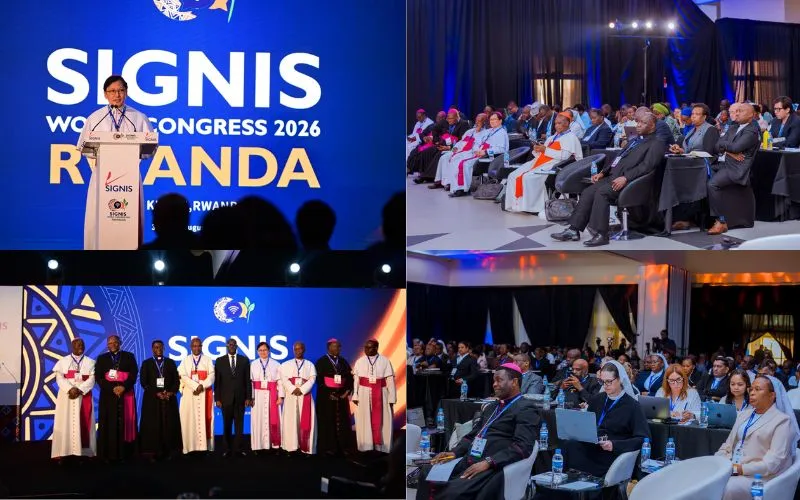
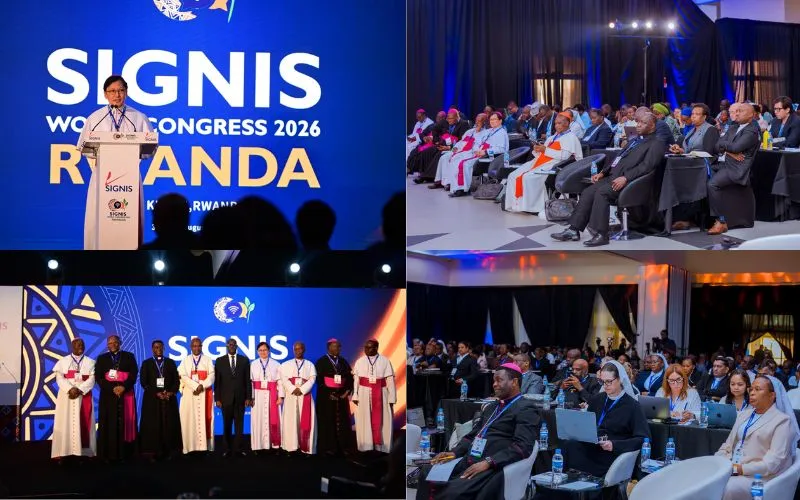
Pope to World SIGNIS Congress: Embrace digital communication that promotes human dignity #Catholic KIGALI, Rwanda — Pope Leo XIV called on Catholic communicators gathered this week in Kigali, Rwanda, to use digital communication platforms available to them to promote the common good, human dignity, truth, and environmental stewardship.The pope’s message was delivered by the apostolic nuncio in Rwanda, Archbishop Arnaldo Sánchez Catalán, during the opening ceremony of the first-ever SIGNIS World Congress to be held in Africa, taking place in Kigali under the theme “Digital Communication for Cultural Harmony and Environmental Well-Being.”In the message, sent through Vatican Secretary of State Cardinal Pietro Parolin, Pope Leo XIV expressed his spiritual closeness to participants and said he hoped their deliberations would provide “a new impetus” for ensuring that communication platforms serve the common good of the human family.The pope warned against a communication culture increasingly shaped by algorithms rather than genuine human encounter.He noted that the digital age has transformed everyday life, emphasizing that online communication goes beyond the transmission of information.In his encyclical Magnifica Humanitas, Pope Leo XIV observes that digital communication contributes to the creation of culture because it shapes how people perceive the world and consequently influences the collective conscience.Against this background, the Holy Father encouraged participants to explore communication strategies and tools inspired by the pursuit of truth and respect for human dignity. He said such efforts should contribute to a culture rooted in Gospel values, particularly communion, peace, and environmental stewardship.Addressing participants through a recorded message, Paolo Ruffini, prefect of the Vatican Dicastery for Communication, warned that technological advances, particularly artificial intelligence (AI), must not come at the expense of human relationships and responsibility.Ruffini acknowledged the transformative potential of AI but said the central question confronting society is not technological but human: what kind of people humanity chooses to become while using these technologies.AI, he said, can calculate, organize information, and emulate language, but it cannot replace wisdom born from freedom, personal experience, responsibility, and love.“We must never allow algorithms to write our story,” Ruffini cautioned, stressing that human beings must remain in control of the technologies they create.He called on communicators to safeguard human voices and faces in an increasingly digital environment, emphasizing that doing so requires cultivating critical thinking, preserving spaces for dialogue, and ensuring that technology remains at the service of the human person.Ruffini also challenged SIGNIS to strengthen its role as a global network connecting professionals working in journalism, cinema, and communication.He described communication as a public good that needs to be protected, urging the organization to build alliances with professionals, entrepreneurs, and information engineers committed to creating a better digital communication ecosystem.According to the prefect, SIGNIS should remain a network of people united by faith rather than becoming merely an ecclesiastical bureaucracy.He envisioned the organization as a space where relationships of trust can flourish, reliable information can be shared, and projects can be developed to promote a different model of communication.Such a network, he said, should create room for dialogue amid diversity and disagreement while ensuring that differences do not destroy fraternity.Ruffini further challenged Catholic communicators to resist a communication model driven primarily by profit or the pursuit of consensus, insisting that the ultimate purpose of communication must remain at the service of truth.“The future of communication will not ultimately depend on the power of our technologies. It will depend on the strength of our commitment and on the nature of our relationship,” he said.He urged participants to use their faith-based network to build bridges and create meaningful encounters in a world increasingly mediated by digital platforms.Ruffini called for greater space for human voices and faces in digital communication, encouraging SIGNIS members to help shape a communication ecosystem that places human dignity and relationships at its center.“The greatest innovation we can still offer our society is not as much a machine but a more human way of communicating,” he said.Participants in the Aug. 3–8 congress are exploring a wide range of topics, including digital communication for communion, religious and cultural praxis in the digital age, artificial intelligence in contemporary media, media literacy, youth engagement, environmental communication, and the role of Catholic communicators in promoting reconciliation and cultural harmony.Among the African countries represented at the congress are Rwanda (the host country), Burundi, the Democratic Republic of Congo, Kenya, Uganda, Tanzania, Nigeria, Togo, Ivory Coast, Cameroon, Zambia, Ghana, Senegal, Ethiopia, South Sudan, Sudan, Burkina Faso, Benin, South Africa, and Mozambique.This story was first published by ACI Africa, the sister service of EWTN News in Africa, and has been adapted by EWTN News.

Pope to World SIGNIS Congress: Embrace digital communication that promotes human dignity #Catholic KIGALI, Rwanda — Pope Leo XIV called on Catholic communicators gathered this week in Kigali, Rwanda, to use digital communication platforms available to them to promote the common good, human dignity, truth, and environmental stewardship.The pope’s message was delivered by the apostolic nuncio in Rwanda, Archbishop Arnaldo Sánchez Catalán, during the opening ceremony of the first-ever SIGNIS World Congress to be held in Africa, taking place in Kigali under the theme “Digital Communication for Cultural Harmony and Environmental Well-Being.”In the message, sent through Vatican Secretary of State Cardinal Pietro Parolin, Pope Leo XIV expressed his spiritual closeness to participants and said he hoped their deliberations would provide “a new impetus” for ensuring that communication platforms serve the common good of the human family.The pope warned against a communication culture increasingly shaped by algorithms rather than genuine human encounter.He noted that the digital age has transformed everyday life, emphasizing that online communication goes beyond the transmission of information.In his encyclical Magnifica Humanitas, Pope Leo XIV observes that digital communication contributes to the creation of culture because it shapes how people perceive the world and consequently influences the collective conscience.Against this background, the Holy Father encouraged participants to explore communication strategies and tools inspired by the pursuit of truth and respect for human dignity. He said such efforts should contribute to a culture rooted in Gospel values, particularly communion, peace, and environmental stewardship.Addressing participants through a recorded message, Paolo Ruffini, prefect of the Vatican Dicastery for Communication, warned that technological advances, particularly artificial intelligence (AI), must not come at the expense of human relationships and responsibility.Ruffini acknowledged the transformative potential of AI but said the central question confronting society is not technological but human: what kind of people humanity chooses to become while using these technologies.AI, he said, can calculate, organize information, and emulate language, but it cannot replace wisdom born from freedom, personal experience, responsibility, and love.“We must never allow algorithms to write our story,” Ruffini cautioned, stressing that human beings must remain in control of the technologies they create.He called on communicators to safeguard human voices and faces in an increasingly digital environment, emphasizing that doing so requires cultivating critical thinking, preserving spaces for dialogue, and ensuring that technology remains at the service of the human person.Ruffini also challenged SIGNIS to strengthen its role as a global network connecting professionals working in journalism, cinema, and communication.He described communication as a public good that needs to be protected, urging the organization to build alliances with professionals, entrepreneurs, and information engineers committed to creating a better digital communication ecosystem.According to the prefect, SIGNIS should remain a network of people united by faith rather than becoming merely an ecclesiastical bureaucracy.He envisioned the organization as a space where relationships of trust can flourish, reliable information can be shared, and projects can be developed to promote a different model of communication.Such a network, he said, should create room for dialogue amid diversity and disagreement while ensuring that differences do not destroy fraternity.Ruffini further challenged Catholic communicators to resist a communication model driven primarily by profit or the pursuit of consensus, insisting that the ultimate purpose of communication must remain at the service of truth.“The future of communication will not ultimately depend on the power of our technologies. It will depend on the strength of our commitment and on the nature of our relationship,” he said.He urged participants to use their faith-based network to build bridges and create meaningful encounters in a world increasingly mediated by digital platforms.Ruffini called for greater space for human voices and faces in digital communication, encouraging SIGNIS members to help shape a communication ecosystem that places human dignity and relationships at its center.“The greatest innovation we can still offer our society is not as much a machine but a more human way of communicating,” he said.Participants in the Aug. 3–8 congress are exploring a wide range of topics, including digital communication for communion, religious and cultural praxis in the digital age, artificial intelligence in contemporary media, media literacy, youth engagement, environmental communication, and the role of Catholic communicators in promoting reconciliation and cultural harmony.Among the African countries represented at the congress are Rwanda (the host country), Burundi, the Democratic Republic of Congo, Kenya, Uganda, Tanzania, Nigeria, Togo, Ivory Coast, Cameroon, Zambia, Ghana, Senegal, Ethiopia, South Sudan, Sudan, Burkina Faso, Benin, South Africa, and Mozambique.This story was first published by ACI Africa, the sister service of EWTN News in Africa, and has been adapted by EWTN News.

The pope’s message was delivered by the apostolic nuncio in Rwanda during the opening ceremony of the first-ever SIGNIS World Congress to be held in Africa, taking place in Rwanda this week.
Read More
Philippine court dismisses case against bishop involved in mining dispute #Catholic A court in the northern Philippines has dismissed a forcible entry case against a Catholic bishop, a priest, and several community leaders involved in a dispute over a mining exploration project in Nueva Vizcaya province.Bishop Jose Elmer Mangalinao of Bayombong welcomed the June 24 ruling, which dismissed a complaint linked to barricades established by residents in Kasibu town against exploration activities by North Luzon Mineral Resources Corporation (NLMRC).“This outcome is not only a legal victory. It is a victory for truth, justice, and the collective efforts of communities who courageously stand to protect our land, water, and future generations,” Mangalinao said in a statement.The complaint named Mangalinao, Father Christian Dumangeng, and several community leaders allegedly involved in maintaining the barricades. The case drew national attention after a Catholic bishop and priest were included among the defendants.The dispute stems from opposition to a 4,456-hectare (11,011 acres) mining exploration project being undertaken by NLMRC in several villages in Kasibu, a municipality in Nueva Vizcaya, a mountainous province on the island of Luzon north of Manila.Residents, church groups, and some Indigenous leaders have raised concerns about the project’s potential effects on watersheds, local livelihoods, and nearby communities.Residents established barricades in May to block the movement of fuel, equipment, and mineral samples linked to NLMRC’s exploration activities, according to community groups.The complaint was filed by Rosario Camma, who identified himself as the overall chieftain of the Bugkalot-Ilongot Indigenous Cultural Communities. Some members of the Bugkalot-Ilongot Indigenous communities have joined opposition to the project, citing concerns about its possible effects on their communities and surrounding resources.In a nine-page decision obtained by EWTN News, the local court said the plaintiff failed to establish a clear legal right warranting injunctive relief and ruled that it lacked jurisdiction over the action. The court found that the relief sought was more consistent with an injunction case than a forcible entry action.The decision also cited a certification from the Philippine government’s Indigenous affairs agency stating that the exploration permit area falls outside officially recognized ancestral domain lands. Opponents of the project, however, have argued that the controversy extends beyond ancestral domain claims and includes concerns over environmental impacts and consultation requirements.The court further held that the complaint sought to stop activities related to the barricades rather than recover possession of property, a key element in forcible entry cases.Mangalinao has defended his involvement in the issue, saying his presence at the barricades was part of his pastoral responsibility. Earlier this week, he said he visited the communities to celebrate Mass and accompany residents concerned about the future of their land and water sources.“I went as their bishop to offer the Holy Mass, to pray with them, and to remind them that their concern for the land, the water, and their children’s future is one the Church shares and blesses,” he said.In his homily on June 21, the prelate said the dispute is an issue of environmental stewardship and concern for communities affected by development projects.“I could have chosen not to speak up, but if I do not speak up, my sin would be great before God,” he said.The bishop said the ruling would strengthen continuing efforts to defend the environment and communities affected by extractive projects.“Let this moment remind us that defending our watersheds, our environment, and our people’s livelihood is not a crime: it is a shared moral responsibility,” he said.“We believe, as the Church has always taught, that the earth is not ours to exhaust but ours to steward,” he added.

Philippine court dismisses case against bishop involved in mining dispute #Catholic A court in the northern Philippines has dismissed a forcible entry case against a Catholic bishop, a priest, and several community leaders involved in a dispute over a mining exploration project in Nueva Vizcaya province.Bishop Jose Elmer Mangalinao of Bayombong welcomed the June 24 ruling, which dismissed a complaint linked to barricades established by residents in Kasibu town against exploration activities by North Luzon Mineral Resources Corporation (NLMRC).“This outcome is not only a legal victory. It is a victory for truth, justice, and the collective efforts of communities who courageously stand to protect our land, water, and future generations,” Mangalinao said in a statement.The complaint named Mangalinao, Father Christian Dumangeng, and several community leaders allegedly involved in maintaining the barricades. The case drew national attention after a Catholic bishop and priest were included among the defendants.The dispute stems from opposition to a 4,456-hectare (11,011 acres) mining exploration project being undertaken by NLMRC in several villages in Kasibu, a municipality in Nueva Vizcaya, a mountainous province on the island of Luzon north of Manila.Residents, church groups, and some Indigenous leaders have raised concerns about the project’s potential effects on watersheds, local livelihoods, and nearby communities.Residents established barricades in May to block the movement of fuel, equipment, and mineral samples linked to NLMRC’s exploration activities, according to community groups.The complaint was filed by Rosario Camma, who identified himself as the overall chieftain of the Bugkalot-Ilongot Indigenous Cultural Communities. Some members of the Bugkalot-Ilongot Indigenous communities have joined opposition to the project, citing concerns about its possible effects on their communities and surrounding resources.In a nine-page decision obtained by EWTN News, the local court said the plaintiff failed to establish a clear legal right warranting injunctive relief and ruled that it lacked jurisdiction over the action. The court found that the relief sought was more consistent with an injunction case than a forcible entry action.The decision also cited a certification from the Philippine government’s Indigenous affairs agency stating that the exploration permit area falls outside officially recognized ancestral domain lands. Opponents of the project, however, have argued that the controversy extends beyond ancestral domain claims and includes concerns over environmental impacts and consultation requirements.The court further held that the complaint sought to stop activities related to the barricades rather than recover possession of property, a key element in forcible entry cases.Mangalinao has defended his involvement in the issue, saying his presence at the barricades was part of his pastoral responsibility. Earlier this week, he said he visited the communities to celebrate Mass and accompany residents concerned about the future of their land and water sources.“I went as their bishop to offer the Holy Mass, to pray with them, and to remind them that their concern for the land, the water, and their children’s future is one the Church shares and blesses,” he said.In his homily on June 21, the prelate said the dispute is an issue of environmental stewardship and concern for communities affected by development projects.“I could have chosen not to speak up, but if I do not speak up, my sin would be great before God,” he said.The bishop said the ruling would strengthen continuing efforts to defend the environment and communities affected by extractive projects.“Let this moment remind us that defending our watersheds, our environment, and our people’s livelihood is not a crime: it is a shared moral responsibility,” he said.“We believe, as the Church has always taught, that the earth is not ours to exhaust but ours to steward,” he added.

Bishop Jose Elmer Mangalinao of Bayombong welcomed the June 24 ruling, which dismissed a complaint against him, another priest, and community leaders related to a mining exploration project.

Read More