Trade

Catholic legal group criticizes Trump’s birthright-citizenship order as bishops plan to monitor #Catholic A Catholic legal group criticized President Donald Trump’s executive orders to restrict birthright citizenship, and the U.S. Conference of Catholic Bishops (USCCB) is reviewing and monitoring them.The executive orders issued Aug. 6 direct the government to stop allowing foreign visitors to enter the United States on short‑term visas for the purpose of giving birth and impose a narrower limit on birthright citizenship after the U.S. Supreme Court struck down a broader attempt to end citizenship for children born to people in the country temporarily or unlawfully.One executive order would end automatic birthright citizenship for the children of parents who are not U.S. citizens and engage in a commercial transaction or fraudulent activity to ensure the mother is inside U.S. territory to give birth. It also would end birthright citizenship for a child born of a parent considered an “alien enemy,” including members of terrorist organizations.A second executive order titled “Ending Birth Tourism” authorizes federal departments to implement rules that prevent the entry of pregnant foreign women seeking to give birth in the United States and allow removal if they enter the country. The order refers to noncitizens entering the U.S. for the purpose of giving birth on American soil and efforts from a foreign national to coordinate such entries.Under existing State Department guidance, consular officers can deny a B‑1/B‑2 visitor visa if they believe the applicant’s primary purpose is to give birth in the U.S. to obtain citizenship for the child.Anna Gallagher, executive director of the Catholic Legal Immigration Network (CLINIC), criticized the birthright citizenship executive order in a statement to EWTN News.“The Supreme Court has already spoken: birthright citizenship is guaranteed by the Constitution,” Gallagher said.“This latest attempt by the Trump administration to circumvent settled law only creates needless fear and uncertainty for immigrant families,” she added. “Catholic social teaching calls us to uphold the dignity of every person and welcome the stranger — not seek new ways to exclude them.”The USCCB has not taken a clear position on the executive orders yet, but it is monitoring how they are enforced and potential judicial proceedings.“The USCCB supports the application of constitutional principles and the rule of law in a manner consistent with the God-given dignity of every human person,” USCCB spokesperson Chieko Noguchi told EWTN News.“We’re reviewing the executive orders and will continue to monitor for administrative actions taken and possible judicial proceedings concerning their implementation,” she said.In June, the Supreme Court ruled the 14th Amendment of the Constitution protects automatic birthright citizenship with few exceptions. The protection extends to children who are born to people who are in the country unlawfully.Although the majority opinion did not directly address “birth tourism,” it did clearly say birthright citizenship applies to the children of parents who are “unlawfully or temporarily present” in the country.The “birth tourism” concern appeared in the dissents authored by both Justice Samuel Alito and Justice Clarence Thomas.Alito, in his dissent, wrote that he believed the majority’s opinion protects birthright citizenship to “the children of ‘birth tourists,’” though saying he does not not agree with the ruling.Thomas wrote in his dissent that people have taken advantage of birthright citizenship through “birth tourism” and said there are companies that “collect large fees from wealthy foreigners to facilitate their trips to give birth in the United States.”However, in the majority opinion, Chief Justice John Roberts wrote that words like “temporary” and “lawful” do not appear in the citizenship clause of the 14th Amendment: “For a simple reason: they did not matter.”Ashley Feasley, a legal expert for the Immigration Law and Policy Initiative at The Catholic University of America, told EWTN News she believes the executive orders are “an attempt to undermine” the Supreme Court.“Although they will almost certainly face legal challenge, in the interim they will place a profound burden on some of the most vulnerable migrants, pregnant women, and on the officers who work diligently to defend our borders,” she said.“Requiring Department of Homeland Security officials to interrogate women, many of whom have legal visas, about their pregnancies, even turning them away from ports of entry without clearly defined criteria for doing so, risks harming both woman and unborn child and diverts DHS officers' attention from the vital missions of border security and trade facilitation,” Feasley said. Legal challenges have not yet been filed.

Catholic legal group criticizes Trump’s birthright-citizenship order as bishops plan to monitor #Catholic A Catholic legal group criticized President Donald Trump’s executive orders to restrict birthright citizenship, and the U.S. Conference of Catholic Bishops (USCCB) is reviewing and monitoring them.The executive orders issued Aug. 6 direct the government to stop allowing foreign visitors to enter the United States on short‑term visas for the purpose of giving birth and impose a narrower limit on birthright citizenship after the U.S. Supreme Court struck down a broader attempt to end citizenship for children born to people in the country temporarily or unlawfully.One executive order would end automatic birthright citizenship for the children of parents who are not U.S. citizens and engage in a commercial transaction or fraudulent activity to ensure the mother is inside U.S. territory to give birth. It also would end birthright citizenship for a child born of a parent considered an “alien enemy,” including members of terrorist organizations.A second executive order titled “Ending Birth Tourism” authorizes federal departments to implement rules that prevent the entry of pregnant foreign women seeking to give birth in the United States and allow removal if they enter the country. The order refers to noncitizens entering the U.S. for the purpose of giving birth on American soil and efforts from a foreign national to coordinate such entries.Under existing State Department guidance, consular officers can deny a B‑1/B‑2 visitor visa if they believe the applicant’s primary purpose is to give birth in the U.S. to obtain citizenship for the child.Anna Gallagher, executive director of the Catholic Legal Immigration Network (CLINIC), criticized the birthright citizenship executive order in a statement to EWTN News.“The Supreme Court has already spoken: birthright citizenship is guaranteed by the Constitution,” Gallagher said.“This latest attempt by the Trump administration to circumvent settled law only creates needless fear and uncertainty for immigrant families,” she added. “Catholic social teaching calls us to uphold the dignity of every person and welcome the stranger — not seek new ways to exclude them.”The USCCB has not taken a clear position on the executive orders yet, but it is monitoring how they are enforced and potential judicial proceedings.“The USCCB supports the application of constitutional principles and the rule of law in a manner consistent with the God-given dignity of every human person,” USCCB spokesperson Chieko Noguchi told EWTN News.“We’re reviewing the executive orders and will continue to monitor for administrative actions taken and possible judicial proceedings concerning their implementation,” she said.In June, the Supreme Court ruled the 14th Amendment of the Constitution protects automatic birthright citizenship with few exceptions. The protection extends to children who are born to people who are in the country unlawfully.Although the majority opinion did not directly address “birth tourism,” it did clearly say birthright citizenship applies to the children of parents who are “unlawfully or temporarily present” in the country.The “birth tourism” concern appeared in the dissents authored by both Justice Samuel Alito and Justice Clarence Thomas.Alito, in his dissent, wrote that he believed the majority’s opinion protects birthright citizenship to “the children of ‘birth tourists,’” though saying he does not not agree with the ruling.Thomas wrote in his dissent that people have taken advantage of birthright citizenship through “birth tourism” and said there are companies that “collect large fees from wealthy foreigners to facilitate their trips to give birth in the United States.”However, in the majority opinion, Chief Justice John Roberts wrote that words like “temporary” and “lawful” do not appear in the citizenship clause of the 14th Amendment: “For a simple reason: they did not matter.”Ashley Feasley, a legal expert for the Immigration Law and Policy Initiative at The Catholic University of America, told EWTN News she believes the executive orders are “an attempt to undermine” the Supreme Court.“Although they will almost certainly face legal challenge, in the interim they will place a profound burden on some of the most vulnerable migrants, pregnant women, and on the officers who work diligently to defend our borders,” she said.“Requiring Department of Homeland Security officials to interrogate women, many of whom have legal visas, about their pregnancies, even turning them away from ports of entry without clearly defined criteria for doing so, risks harming both woman and unborn child and diverts DHS officers' attention from the vital missions of border security and trade facilitation,” Feasley said. Legal challenges have not yet been filed.

The Catholic Legal Immigration Network (CLINIC) criticized an executive order targeting birthright citizenship. The U.S. Catholic bishops are reviewing and monitoring the order.

Read More
Catholic Relief Services to receive 5 million in food aid for Sudan, Ethiopia #Catholic The U.S. Department of Agriculture (USDA) will provide up to 5 million through Catholic Relief Services (CRS) for emergency food and nutrition assistance in Sudan and Ethiopia amid widespread hunger.“More than 110,000 metric tons of U.S.-grown agricultural commodities” will be delivered to the two East African countries under an agreement in principle between CRS and the USDA, according to a July 14 USDA announcement.“American farmers feed, fuel, and clothe the world, and under President Trump’s leadership, we’re utilizing that bounty to serve those in need while ensuring that the benefits of U.S. food aid flow back to America’s hardworking farmers, ranchers, and producers that make this assistance possible,” Michelle Bekkering, USDA’s deputy undersecretary for trade and foreign agricultural affairs, said in a statement. “We’re also enforcing strict accountability so that aid goes to those who actually need it, safeguarding hard-earned taxpayer dollars, and delivering aid that builds self-reliance instead of long-term dependence.” “Authorized under Title II of the Food for Peace Act,” the announcement said, “the agreement leverages Catholic Relief Services’ operational footprints in East Africa, including the Sudan Emergency Project and the Joint Emergency Operation in Ethiopia.”CRS has faced a sharp drop in federal support after the Trump administration collapsed global‑health and humanitarian functions of the U.S. Agency for International Development into the State Department in 2025. USAID earlier supplied roughly half of the agency’s .5 billion budget.CRS President and CEO Sean Callahan said in a July 14 press release that the agreement came “at a critical moment for struggling families in Sudan and Ethiopia.”“For decades, our partnership with USDA has connected the generosity and productivity of American farmers with some of the world’s most vulnerable communities,” Callahan said. “We are committed to ensuring these resources are managed responsibly and translated into meaningful support for families working to overcome crisis.”“We are hopeful fellow trusted organizations carrying out lifesaving work across the world are supported in their efforts to meet these critical needs for extremely vulnerable families and communities,” he said.Callahan told EWTN News that CRS tracks the delivery of food commodities “to the last mile and employs robust monitoring, verification, and financial oversight to help ensure assistance reaches the people it is intended to serve.”“We continually assess security conditions, adjust operations as needed, and work closely with local partners to help ensure assistance reaches the people it is intended to serve,” he said.Maura O’Brien, a former USAID official who led its Sudan and South Sudan office and serves as coordinator for the Michael B. Kim Institute for Ethical Inquiry and Leadership at Haverford College, said CRS has been a trusted partner but USAID’s absence will be felt.“Not having any U.S. presence in the field makes any assistance more vulnerable to fraud, waste, and abuse — especially in a conflict environment. Oversight and coordination are essential to effectively delivering desperately needed relief to communities in East Africa," O’Brien said.USDA did not immediately reply to a request for comment.

Catholic Relief Services to receive $235 million in food aid for Sudan, Ethiopia #Catholic The U.S. Department of Agriculture (USDA) will provide up to $235 million through Catholic Relief Services (CRS) for emergency food and nutrition assistance in Sudan and Ethiopia amid widespread hunger.“More than 110,000 metric tons of U.S.-grown agricultural commodities” will be delivered to the two East African countries under an agreement in principle between CRS and the USDA, according to a July 14 USDA announcement.“American farmers feed, fuel, and clothe the world, and under President Trump’s leadership, we’re utilizing that bounty to serve those in need while ensuring that the benefits of U.S. food aid flow back to America’s hardworking farmers, ranchers, and producers that make this assistance possible,” Michelle Bekkering, USDA’s deputy undersecretary for trade and foreign agricultural affairs, said in a statement. “We’re also enforcing strict accountability so that aid goes to those who actually need it, safeguarding hard-earned taxpayer dollars, and delivering aid that builds self-reliance instead of long-term dependence.” “Authorized under Title II of the Food for Peace Act,” the announcement said, “the agreement leverages Catholic Relief Services’ operational footprints in East Africa, including the Sudan Emergency Project and the Joint Emergency Operation in Ethiopia.”CRS has faced a sharp drop in federal support after the Trump administration collapsed global‑health and humanitarian functions of the U.S. Agency for International Development into the State Department in 2025. USAID earlier supplied roughly half of the agency’s $1.5 billion budget.CRS President and CEO Sean Callahan said in a July 14 press release that the agreement came “at a critical moment for struggling families in Sudan and Ethiopia.”“For decades, our partnership with USDA has connected the generosity and productivity of American farmers with some of the world’s most vulnerable communities,” Callahan said. “We are committed to ensuring these resources are managed responsibly and translated into meaningful support for families working to overcome crisis.”“We are hopeful fellow trusted organizations carrying out lifesaving work across the world are supported in their efforts to meet these critical needs for extremely vulnerable families and communities,” he said.Callahan told EWTN News that CRS tracks the delivery of food commodities “to the last mile and employs robust monitoring, verification, and financial oversight to help ensure assistance reaches the people it is intended to serve.”“We continually assess security conditions, adjust operations as needed, and work closely with local partners to help ensure assistance reaches the people it is intended to serve,” he said.Maura O’Brien, a former USAID official who led its Sudan and South Sudan office and serves as coordinator for the Michael B. Kim Institute for Ethical Inquiry and Leadership at Haverford College, said CRS has been a trusted partner but USAID’s absence will be felt.“Not having any U.S. presence in the field makes any assistance more vulnerable to fraud, waste, and abuse — especially in a conflict environment. Oversight and coordination are essential to effectively delivering desperately needed relief to communities in East Africa," O’Brien said.USDA did not immediately reply to a request for comment.

“More than 110,000 metric tons of U.S.-grown agricultural commodities” will be delivered under an agreement in principle between Catholic Relief Services and the U.S. Department of Agriculture.

Read More
Fishing Boats and City Lights – Fishing boats illuminate the Arabian Sea along India’s west coast with green lights designed to attract squid, shrimp, sardines, and mackerel in this nighttime photograph from the International Space Station, orbiting 259 miles above Earth. At lower right, the city lights of Hyderabad—renowned for its historic diamond and pearl trade—stretch westward toward the Mumbai Metropolitan Region, home to over 26 million people and the heart of Bollywood.

Fishing boats illuminate the Arabian Sea along India’s west coast with green lights designed to attract squid, shrimp, sardines, and mackerel in this nighttime photograph from the International Space Station, orbiting 259 miles above Earth. At lower right, the city lights of Hyderabad—renowned for its historic diamond and pearl trade—stretch westward toward the Mumbai Metropolitan Region, home to over 26 million people and the heart of Bollywood.

Read More
Picture of the day


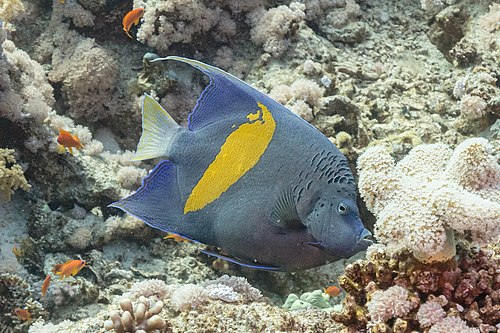
Yellowbar angelfish (Pomacanthus maculosus), Ras Muhammad National Park, Red Sea, Egypt. This marine angelfish is distributed throughout the Persian Gulf, the northwestern Indian Ocean, and the Red Sea south to 19°S. In 2009 it was recorded off the coast of Lebanon in the eastern Mediterranean, probably as a result of Lessepsian migration from the Red Sea through the Suez Canal. Pomacanthus maculosus is found at depths of between 4 and 50 metres (13 and 164 ft). It is a solitary species that lives in sheltered areas, often where there is a mixture of coral and silt. Their diet is dominated by sea sponges and tunicates, although other invertebrates will be eaten opportunistically. The females attain sexual maturity when the reach around 5.5 years of age and a total length of 21.6 centimetres (8.5 in). The maximum longevity is thought to be 36 years old. They are protogynous hermaphrodites and the older females can change sex to become males when there is a shortage of males. The larvae are planktonic. The yellowbar angelfish is occasionally collected for the aquarium trade and in some parts of the Persian Gulf it has been recorded in fish markets.
 #ImageOfTheDay
Picture of the day
Yellowbar angelfish (Pomacanthus maculosus), Ras Muhammad National Park, Red Sea, Egypt. This marine angelfish is distributed throughout the Persian Gulf, the northwestern Indian Ocean, and the Red Sea south to 19°S. In 2009 it was recorded off the coast of Lebanon in the eastern Mediterranean, probably as a result of Lessepsian migration from the Red Sea through the Suez Canal. Pomacanthus maculosus is found at depths of between 4 and 50 metres (13 and 164 ft). It is a solitary species that lives in sheltered areas, often where there is a mixture of coral and silt. Their diet is dominated by sea sponges and tunicates, although other invertebrates will be eaten opportunistically. The females attain sexual maturity when the reach around 5.5 years of age and a total length of 21.6 centimetres (8.5 in). The maximum longevity is thought to be 36 years old. They are protogynous hermaphrodites and the older females can change sex to become males when there is a shortage of males. The larvae are planktonic. The yellowbar angelfish is occasionally collected for the aquarium trade and in some parts of the Persian Gulf it has been recorded in fish markets.
Read More
Picture of the day


Remains of the World Trade Center complex in downtown New York City, United States, after the September 11 attacks. Image taken by NOAA’s Cessna CitationJet on September 23, 2001, from an altitude of 3,300 ft (1,005 m) using a Leica/LH systems RC30 camera.
 #ImageOfTheDay
Picture of the day
Remains of the World Trade Center complex in downtown New York City, United States, after the September 11 attacks. Image taken by NOAA’s Cessna CitationJet on September 23, 2001, from an altitude of 3,300 ft (1,005 m) using a Leica/LH systems RC30 camera.
Read More