
X

Sen. Hawley says MLB admits error in warning Giants players over Bible verses #Catholic Major League Baseball (MLB) will not punish the three San Francisco Giants players who wrote Bible verses on their caps during the team’s gay pride celebrations and blamed the incident on poor communication from the franchise, according to Sen. Josh Hawley, R-Missouri.Hawley posted a letter on X, which he said he received from MLB Commissioner Rob Manfred after the senator accused the league of discrimination and the Department of Justice (DOJ) opened an investigation into the matter.The incident stemmed from the Giants’ June 12 “Pride Night,” in which most players wore caps that infused a gay pride rainbow into the team logo. Three players inscribed Bible verses on the caps, with one referencing Genesis 9:12-16, in which God tells Noah the rainbow is “the sign of the covenant that I am making between me and you and every living creature with you for all ages to come” and promises to never flood the entire Earth again.After the game, the Giants apologized for the players causing “pain and anger to many in the LGBTQ+ community” and the MLB issued warnings, which Manfred said was simply enforcing its content-neutral prohibition on writing messages on uniforms.In the letter Hawley posted, Manfred said players cannot be forced to wear the pride-inspired uniform, but blamed the Giants for not properly communicating to players that it is optional. He said “the Giants’ communication with players was inadequate and not clear” but the MLB warnings to the players were delivered before the league became aware of that.“Some players apparently did not understand that they had the option to wear their normal uniform and elected to add messages to their hats bearing the pride logo as a result,” the commissioner added.He said the players “were neither fined nor disciplined, nor will they ever be.” He said the MLB “believes in the right of our players and fans to express their religious beliefs and at the same time supports the communities in this country that are fans of our clubs, including the LGBTQ community.”“We believe that a policy permitting our clubs to celebrate or honor segments of its fanbase, yet does not require players or other on-field personnel to directly participate in the celebration in ways that makes them uncomfortable, strikes the right balance,” he wrote.Neither the MLB nor the Giants responded to requests for comment from EWTN News about the letter.Harmeet Dhillon, assistant attorney general for the Civil Rights Division of the DOJ, sent a letter to Manfred last week to inform him that the DOJ will use all available means to hold employers accountable for any discrimination against Christians and that the incident was referred to the Equal Employment Opportunity Commission (EEOC).In spite of the MLB’s position that the policy banning written messages is content-neutral, the DOJ letter contends that the league has a “double standard” when it comes to enforcement, noting that players were allowed to wear “Black Lives Matter” messages in spite of the general prohibition.This incident came less than a month after the Washington Nationals fired Sean Hudson, its former director of community relations, for saying the team tries to avoid the inclusion of pitcher Trevor Williams in promotional materials because of his Catholic faith.Rep. Lauren Boebert, R-Colorado, urged the Justice Department to reexamine the MLB’s antitrust exemption because of the incident and to investigate potential patterns of discriminatory actions.

Sen. Hawley says MLB admits error in warning Giants players over Bible verses #Catholic Major League Baseball (MLB) will not punish the three San Francisco Giants players who wrote Bible verses on their caps during the team’s gay pride celebrations and blamed the incident on poor communication from the franchise, according to Sen. Josh Hawley, R-Missouri.Hawley posted a letter on X, which he said he received from MLB Commissioner Rob Manfred after the senator accused the league of discrimination and the Department of Justice (DOJ) opened an investigation into the matter.The incident stemmed from the Giants’ June 12 “Pride Night,” in which most players wore caps that infused a gay pride rainbow into the team logo. Three players inscribed Bible verses on the caps, with one referencing Genesis 9:12-16, in which God tells Noah the rainbow is “the sign of the covenant that I am making between me and you and every living creature with you for all ages to come” and promises to never flood the entire Earth again.After the game, the Giants apologized for the players causing “pain and anger to many in the LGBTQ+ community” and the MLB issued warnings, which Manfred said was simply enforcing its content-neutral prohibition on writing messages on uniforms.In the letter Hawley posted, Manfred said players cannot be forced to wear the pride-inspired uniform, but blamed the Giants for not properly communicating to players that it is optional. He said “the Giants’ communication with players was inadequate and not clear” but the MLB warnings to the players were delivered before the league became aware of that.“Some players apparently did not understand that they had the option to wear their normal uniform and elected to add messages to their hats bearing the pride logo as a result,” the commissioner added.He said the players “were neither fined nor disciplined, nor will they ever be.” He said the MLB “believes in the right of our players and fans to express their religious beliefs and at the same time supports the communities in this country that are fans of our clubs, including the LGBTQ community.”“We believe that a policy permitting our clubs to celebrate or honor segments of its fanbase, yet does not require players or other on-field personnel to directly participate in the celebration in ways that makes them uncomfortable, strikes the right balance,” he wrote.Neither the MLB nor the Giants responded to requests for comment from EWTN News about the letter.Harmeet Dhillon, assistant attorney general for the Civil Rights Division of the DOJ, sent a letter to Manfred last week to inform him that the DOJ will use all available means to hold employers accountable for any discrimination against Christians and that the incident was referred to the Equal Employment Opportunity Commission (EEOC).In spite of the MLB’s position that the policy banning written messages is content-neutral, the DOJ letter contends that the league has a “double standard” when it comes to enforcement, noting that players were allowed to wear “Black Lives Matter” messages in spite of the general prohibition.This incident came less than a month after the Washington Nationals fired Sean Hudson, its former director of community relations, for saying the team tries to avoid the inclusion of pitcher Trevor Williams in promotional materials because of his Catholic faith.Rep. Lauren Boebert, R-Colorado, urged the Justice Department to reexamine the MLB’s antitrust exemption because of the incident and to investigate potential patterns of discriminatory actions.

The MLB commissioner said in a letter that the Giants did not adequately inform the players that gay pride caps were optional, Hawley said.

Read More
UK bishops welcome child safety but cautious on social media ban for under 16 #Catholic Catholic bishops across the United Kingdom say they need to see more legislative detail before supporting government proposals to ban social media for youth under 16. On June 15, Secretary of State for Science, Innovation, and Technology Liz Kendall announced to the House of Commons that the government "will ban social media companies providing their services to under 16s.”Kendall said that the UK would be following the same model as Australia, which was the first country in the world to ban social media for youth under 16. The UK ban is due to come into effect early next year.In an email response to EWTN News on June 17 regarding whether bishops of England and Wales support the proposed ban, a spokeswoman for the Catholic Bishops' Conference for England and Wales said: “Until the government publishes further details it’s hard to give a yes or no answer.” But Bishop John Arnold, the lead bishop for communications for the conference, “is very keen to ensure that the safety and protection of the dignity of young people online is a central concern for all,” the statement said.In a separate email to EWTN News, Bishop Arnold wrote that the “safety of children and young people in the digital world is paramount. Young people face many pressures today, which are often exacerbated by unrealistic and harmful material which they have accessed online.”“When it comes to the responsible and appropriate use of technology, the protection of children and young people is a shared responsibility among parents, schools, government and society,” he said.“I urge all people to work together to protect and place the dignity of the human person, especially children, the young and vulnerable, at the center of technological and legislative developments,” the bishop said.The Bishops’ Conference of Scotland, meanwhile, said it would “prefer not to comment directly on the specific policy issue, but rather give a considered response to the noble principles behind online safety measures.” “The bishops support the introduction of any new measures which increase online safety for children and young people,” the conference said."We have a responsibility to ensure that children and young people are protected from harmful and age-inappropriate content, and from online environments that can negatively affect their wellbeing, relationships and healthy development,” the statement continued.The UK governmentʼs proposal includes banning youth usage of platforms like Instagram, YouTube, TikTok, Snapchat, Facebook, and X. They do not intend for messaging services like WhatsApp and Signal to be included in the ban.Livestreamers and strangers being able to contact children will also be restricted for those under‑16 on other online services like gaming.“Who should take responsibility?”Edwin Fawcett, a Catholic psychotherapist based in England and Wales, is also unsure about the benefits and drawbacks of the proposal.“At this point the toll taken on mental and emotional health by social media, especially for developing brains, is virtually undisputed. Who should take responsibility for young peopleʼs formation and education?” he told EWTN News. “The Churchʼs wise answer: parents. Yet in a busy, driven and fragmented society the tsunami of digital hyper-reality is almost impossible to avoid or withstand,” he said.Fawcett argued that there is “a pandemic of relational wounds and deficits in the real world” which “has set the stage for widespread mental health issues, which are being activated and worsened by addictive online behavior — behavior chosen in an attempt to anesthetize the same wounds.”He continued: “Whether the ban is designed to support the rights and responsibilities of the family is hard to say. But letʼs pray that a deep renewal of family life, communities and culture will begin filling the void which social media has falsely promised to do — a void which may now be exposed by the incoming ban.”Lucy Marsh, a spokeswoman for the Family Education Trust — a secular research body which supports traditional family values — said that the ban has not been sufficiently “thought through.”“Children should not have unsupervised access to social media, but the government’s rushed plan to ban under-16s from using certain platforms is the wrong way to go about it,” she told EWTN News.“Rather than educating parents on how to restrict their child’s access to the internet and raising awareness about why young children should not have smartphones, the government is trying to introduce digital ID via the back door. This means using facial recognition and biometrics which involve giving even more information to tech companies. In the name of protecting children, those children will be under even more surveillance.”The government “should focus on ensuring tech companies make phones for children which cannot access social media apps, including WhatsApp, which is used by predatory adults to share pornography and groom children,” she said.

UK bishops welcome child safety but cautious on social media ban for under 16 #Catholic Catholic bishops across the United Kingdom say they need to see more legislative detail before supporting government proposals to ban social media for youth under 16. On June 15, Secretary of State for Science, Innovation, and Technology Liz Kendall announced to the House of Commons that the government "will ban social media companies providing their services to under 16s.”Kendall said that the UK would be following the same model as Australia, which was the first country in the world to ban social media for youth under 16. The UK ban is due to come into effect early next year.In an email response to EWTN News on June 17 regarding whether bishops of England and Wales support the proposed ban, a spokeswoman for the Catholic Bishops' Conference for England and Wales said: “Until the government publishes further details it’s hard to give a yes or no answer.” But Bishop John Arnold, the lead bishop for communications for the conference, “is very keen to ensure that the safety and protection of the dignity of young people online is a central concern for all,” the statement said.In a separate email to EWTN News, Bishop Arnold wrote that the “safety of children and young people in the digital world is paramount. Young people face many pressures today, which are often exacerbated by unrealistic and harmful material which they have accessed online.”“When it comes to the responsible and appropriate use of technology, the protection of children and young people is a shared responsibility among parents, schools, government and society,” he said.“I urge all people to work together to protect and place the dignity of the human person, especially children, the young and vulnerable, at the center of technological and legislative developments,” the bishop said.The Bishops’ Conference of Scotland, meanwhile, said it would “prefer not to comment directly on the specific policy issue, but rather give a considered response to the noble principles behind online safety measures.” “The bishops support the introduction of any new measures which increase online safety for children and young people,” the conference said."We have a responsibility to ensure that children and young people are protected from harmful and age-inappropriate content, and from online environments that can negatively affect their wellbeing, relationships and healthy development,” the statement continued.The UK governmentʼs proposal includes banning youth usage of platforms like Instagram, YouTube, TikTok, Snapchat, Facebook, and X. They do not intend for messaging services like WhatsApp and Signal to be included in the ban.Livestreamers and strangers being able to contact children will also be restricted for those under‑16 on other online services like gaming.“Who should take responsibility?”Edwin Fawcett, a Catholic psychotherapist based in England and Wales, is also unsure about the benefits and drawbacks of the proposal.“At this point the toll taken on mental and emotional health by social media, especially for developing brains, is virtually undisputed. Who should take responsibility for young peopleʼs formation and education?” he told EWTN News. “The Churchʼs wise answer: parents. Yet in a busy, driven and fragmented society the tsunami of digital hyper-reality is almost impossible to avoid or withstand,” he said.Fawcett argued that there is “a pandemic of relational wounds and deficits in the real world” which “has set the stage for widespread mental health issues, which are being activated and worsened by addictive online behavior — behavior chosen in an attempt to anesthetize the same wounds.”He continued: “Whether the ban is designed to support the rights and responsibilities of the family is hard to say. But letʼs pray that a deep renewal of family life, communities and culture will begin filling the void which social media has falsely promised to do — a void which may now be exposed by the incoming ban.”Lucy Marsh, a spokeswoman for the Family Education Trust — a secular research body which supports traditional family values — said that the ban has not been sufficiently “thought through.”“Children should not have unsupervised access to social media, but the government’s rushed plan to ban under-16s from using certain platforms is the wrong way to go about it,” she told EWTN News.“Rather than educating parents on how to restrict their child’s access to the internet and raising awareness about why young children should not have smartphones, the government is trying to introduce digital ID via the back door. This means using facial recognition and biometrics which involve giving even more information to tech companies. In the name of protecting children, those children will be under even more surveillance.”The government “should focus on ensuring tech companies make phones for children which cannot access social media apps, including WhatsApp, which is used by predatory adults to share pornography and groom children,” she said.

Bishops across the UK and other Catholic leaders say they want more information before endorsing a proposal to ban social media for youth under 16.

Read More
Pro-life advocates defend unborn babies with Down syndrome after YouTuber goes public with abortion #Catholic Pro-life advocates defend unborn babies with Down syndromePro-life advocates are defending unborn children with Down syndrome after a YouTuber told the world that he and his wife aborted their child who had been diagnosed with the condition.YouTube creator Jesse Ridgway went viral for posting about how he and his wife decided to abort their unborn baby after they learned the child would likely have Down syndrome. Advocates on X reacted by sharing posts celebrating the worth of individuals with the medical diagnosis."Down syndrome shouldn’t mean a death sentence,” Live Action Founder and President Lila Rose said.SBA Pro-Life America posted in response to Ridgway’s post: “This is so sad and awful. We CANʼT stand silently by.”“Research shows 99% of people with Down syndrome are happy with their lives, and their families love them,” the pro-life group continued. “Families deserve truthful information & support. People with Down syndrome deserve to live. They should never be targets for discrimination, inside the womb or out. Period.”“Babies with Down syndrome arenʼt a ‘glitch.’ Theyʼre a blessing.” Live Action posted. “Yet 67-80% of these beautiful babies are killed for their disability before they are born."Study: Women aren’t informed on emotional, physical impact of abortionWomen want information on abortion symptoms and the emotional impacts associated with the procedure, but they often aren’t given it, according to a recent peer-reviewed study.The study by scholars associated with the Charlotte Lozier Institute found women experience significant informed consent gaps when they are given abortion drugs.The researchers found that three in 10 women report experiencing unexpected levels of pain and bleeding.“Because they didn’t know what was ‘normal,’ many women turned to the internet for information about abortion side effects like excessive pain and bleeding, help processing difficult emotions, and urgent reassurance during the abortion process,” the study read.Tessa Cox, senior research associate at the institute and one of the authors of the study emphasized the risks associated with this lack of medical information-sharing. “The stakes are too high for informed consent to be treated as a formality,” Cox said in a statement.Fourteen attorneys general call for clean water protections from abortion drugsFourteen attorneys general called on the federal government to track water pollution from abortion pills this week.The attorneys general asked the U.S. Environmental Protection Agency to track pollution from the drugs dumped into the U.S. water supply. They argued that “loosened regulations” have “increased the number of chemical abortions occurring in the home,” resulting in “tons of chemically tainted medical waste being flushed into American waterways.”Students for Life President Kristan Hawkins, who spearheaded the movement, called the request “commonsense.”“Because of negligent FDA policy and the failure to enforce the Comstock Act, more than 50 tons of chemically tainted blood, placenta tissue, and human remains go into our waterways every year. With infertility on the rise, we need to know: what is the extent of the damage?” Hawkins said in a statement shared with EWTN News.The letter was signed by attorneys general of Alabama, Alaska, Arkansas, Florida, Idaho, Indiana, Kansas, Kentucky, Louisiana, Missouri, Nebraska, Oklahoma, South Carolina, and Texas.Head of Knights of Columbus awarded for ‘building up a culture of life’The Sisters of Life, a religious organization centered around affirming the life of every human being, gave an award to the head of the Knights of Columbus, Supreme Knight Patrick Kelly, for his life-affirming work.Kelly received the John Cardinal O’Connor Award on on June 5 at the annual Friends of the Sisters of Life Gala in Rye, New York.“His Eminence John Cardinal O’Connor was a towering pillar of the pro-life movement,” Kelly said in a press release. “With an unshakable resolve, he dedicated so much of his ministry as bishop to proclaiming the sanctity of every human life, made in the image and likeness of God.”“Speaking for the Knights, we will keep doing everything we can to support the Sisters of Life, and to protect vulnerable mothers and their children,” Kelly said. "As we prepare for the work ahead, we take comfort in the knowledge that Jesus Christ will continue to guide us.”Alabama attorney general launches legal challenge against abortion drug companiesAlabama Attorney General Steve Marshall issued cease-and-desist letters to six companies that have been allegedly illegally distributing abortion drugs.According to a June 9 press release, the companies were providing chemical abortion drugs in Alabama, where abortion is illegal.“These companies are not only breaking the law, they are deceiving Alabama consumers about the very real dangers of these drugs,” said Marshall in a statement. “That stops now.”The letters were sent to abortion drug providers across the United States, as well as one company based in the United Arab Emirates. Several companies were based in California or New York, which have “shield laws” designed to protect abortion companies.

Pro-life advocates defend unborn babies with Down syndrome after YouTuber goes public with abortion #Catholic Pro-life advocates defend unborn babies with Down syndromePro-life advocates are defending unborn children with Down syndrome after a YouTuber told the world that he and his wife aborted their child who had been diagnosed with the condition.YouTube creator Jesse Ridgway went viral for posting about how he and his wife decided to abort their unborn baby after they learned the child would likely have Down syndrome. Advocates on X reacted by sharing posts celebrating the worth of individuals with the medical diagnosis."Down syndrome shouldn’t mean a death sentence,” Live Action Founder and President Lila Rose said.SBA Pro-Life America posted in response to Ridgway’s post: “This is so sad and awful. We CANʼT stand silently by.”“Research shows 99% of people with Down syndrome are happy with their lives, and their families love them,” the pro-life group continued. “Families deserve truthful information & support. People with Down syndrome deserve to live. They should never be targets for discrimination, inside the womb or out. Period.”“Babies with Down syndrome arenʼt a ‘glitch.’ Theyʼre a blessing.” Live Action posted. “Yet 67-80% of these beautiful babies are killed for their disability before they are born."Study: Women aren’t informed on emotional, physical impact of abortionWomen want information on abortion symptoms and the emotional impacts associated with the procedure, but they often aren’t given it, according to a recent peer-reviewed study.The study by scholars associated with the Charlotte Lozier Institute found women experience significant informed consent gaps when they are given abortion drugs.The researchers found that three in 10 women report experiencing unexpected levels of pain and bleeding.“Because they didn’t know what was ‘normal,’ many women turned to the internet for information about abortion side effects like excessive pain and bleeding, help processing difficult emotions, and urgent reassurance during the abortion process,” the study read.Tessa Cox, senior research associate at the institute and one of the authors of the study emphasized the risks associated with this lack of medical information-sharing. “The stakes are too high for informed consent to be treated as a formality,” Cox said in a statement.Fourteen attorneys general call for clean water protections from abortion drugsFourteen attorneys general called on the federal government to track water pollution from abortion pills this week.The attorneys general asked the U.S. Environmental Protection Agency to track pollution from the drugs dumped into the U.S. water supply. They argued that “loosened regulations” have “increased the number of chemical abortions occurring in the home,” resulting in “tons of chemically tainted medical waste being flushed into American waterways.”Students for Life President Kristan Hawkins, who spearheaded the movement, called the request “commonsense.”“Because of negligent FDA policy and the failure to enforce the Comstock Act, more than 50 tons of chemically tainted blood, placenta tissue, and human remains go into our waterways every year. With infertility on the rise, we need to know: what is the extent of the damage?” Hawkins said in a statement shared with EWTN News.The letter was signed by attorneys general of Alabama, Alaska, Arkansas, Florida, Idaho, Indiana, Kansas, Kentucky, Louisiana, Missouri, Nebraska, Oklahoma, South Carolina, and Texas.Head of Knights of Columbus awarded for ‘building up a culture of life’The Sisters of Life, a religious organization centered around affirming the life of every human being, gave an award to the head of the Knights of Columbus, Supreme Knight Patrick Kelly, for his life-affirming work.Kelly received the John Cardinal O’Connor Award on on June 5 at the annual Friends of the Sisters of Life Gala in Rye, New York.“His Eminence John Cardinal O’Connor was a towering pillar of the pro-life movement,” Kelly said in a press release. “With an unshakable resolve, he dedicated so much of his ministry as bishop to proclaiming the sanctity of every human life, made in the image and likeness of God.”“Speaking for the Knights, we will keep doing everything we can to support the Sisters of Life, and to protect vulnerable mothers and their children,” Kelly said. "As we prepare for the work ahead, we take comfort in the knowledge that Jesus Christ will continue to guide us.”Alabama attorney general launches legal challenge against abortion drug companiesAlabama Attorney General Steve Marshall issued cease-and-desist letters to six companies that have been allegedly illegally distributing abortion drugs.According to a June 9 press release, the companies were providing chemical abortion drugs in Alabama, where abortion is illegal.“These companies are not only breaking the law, they are deceiving Alabama consumers about the very real dangers of these drugs,” said Marshall in a statement. “That stops now.”The letters were sent to abortion drug providers across the United States, as well as one company based in the United Arab Emirates. Several companies were based in California or New York, which have “shield laws” designed to protect abortion companies.

Pro-life and abortion-related news you may have missed this week.

Read More

NASA’s X-59 quiet supersonic research aircraft completed its first supersonic flight Friday, June 5, 2026, marking the first time the aircraft exceeded the speed of sound in support of NASA’s Quesst mission. The milestone represents a major step in flight testing as the aircraft expands into the supersonic portion of its flight envelope.

Read More

Pope Leo XIV in Madrid: Corpus Christi must not become museum of the past #Catholic Madrid, Spain, June 7, 2026 — Pope Leo XIV on Sunday called on Spain to renew its historic Eucharistic faith, warning that the country’s centuries-old religious traditions must not become “a museum of the past to be visited” but remain “a school of faith from which to draw even today.”The pope made the appeal while presiding over Mass, a procession, and Eucharistic blessing for the solemnity of Corpus Christi in Madrid’s Plaza de Cibeles, one of the Spanish capital’s most emblematic sites.“As I begin my visit to Spain, it is with a heart filled with joy that I preside over this celebration on the Solemnity of Corpus Christi,” the pope said in his homily.Corpus Christi has deep roots in Spain and throughout the Catholic world. The feast originated after the efforts of St. Juliana of Cornillon, a Belgian religious sister who promoted a liturgical celebration dedicated to the Blessed Sacrament. Pope Urban IV confirmed the feast for the universal Church in 1264, and within decades it had reached the Iberian Peninsula. King Alfonso X, known as “the Wise,” took part in a Corpus Christi celebration in Toledo in 1280.Over the centuries, the tradition became firmly established in Spain, making the country one of the great centers of Eucharistic devotion. During the period of the Council of Trent, when the real presence of Christ in the Eucharist was contested in parts of Europe, Spanish popular piety continued to exalt it through processions, music, art, and public expressions of faith.In Madrid, Pope Leo said Corpus Christi is “more than just another celebration on the liturgical calendar.”“It is a way of returning to the heart of the faith to renew our love and fidelity to God,” he said.“The solemn processions held on this day have for centuries shaped the piety, art, music, architecture and life of the Spanish people,” the pope continued. “Even today, they still express and manifest the spiritual sentiments of this country through the beauty and elegance of the floral carpets, the altars erected in the streets, the carefully crafted monstrances and stands, the hymns and the liturgical vestments.”The setting itself added a striking backdrop to the celebration. Plaza de Cibeles, crowned by the statue of the Roman goddess in a chariot drawn by lions, is known internationally as the place where Real Madrid celebrates its titles. On Sunday, however, the square’s focus was Christ in the Eucharist.One participant joked that with Pope Leo XIV in Madrid, the Spanish capital had three lions.The pope said the Corpus Christi procession is not “an exhibition, a remnant of folklore or a simple display of beauty.”“It is a profession of faith in the presence of the risen Lord, who is alive and continues to walk among us, who becomes bread to satiate our hunger for life, and visits the recesses of our hearts and history, even those shrouded in darkness,” he said.The procession route, about 600 meters along Calle de Alcalá, one of Madrid’s central thoroughfares, was adorned with 16 floral carpets — eight on each side — made with more than 30,000 carnations. Numerous faithful joined the pope, including many boys and girls who had recently received their first Communion.Pope Leo said the procession reveals that Christ “is not confined to the church, but comes out to meet us.”“Jesus travels the streets, crosses the squares and visits our neighborhoods, dwelling in the settings of our daily lives,” he said. “He is a God who is close to us, who walks with his people, the Lord of history.”The pope also connected Corpus Christi with charity, noting that the Church in Spain has long associated the solemnity with the Day for Charity.“The Christ who processes through the streets in the monstrance is the same one who identifies with the poor, the downtrodden, those who are alone and forsaken,” he said.“It is not merely a matter of bringing out the monstrance,” Pope Leo emphasized, “but of allowing ourselves to be brought out of our selfishness and indifference, of a comfortable, private faith, so as to respond to his invitation to conversion, to change our perspective, and to welcome his presence which transforms us and makes us builders of a new world.”The pope said the historical memory of Spain’s Corpus Christi processions “is not confined to wistful nostalgia.”“Instead, it stands as an invitation in the present moment, in our daily lives, in our relationships, in society, and in the building of the future,” he said.That, he added, is the task facing Spain today and tomorrow: “to ensure that the religiosity which has shaped and defined this country for centuries is not a museum of the past to be visited, but a school of faith from which to draw even today.”The pope described that school of faith as one that “teaches us to kneel before God and before our neighbor, because no one can kneel before the Lord and despise their brother.”It is also, he said, “a school that teaches us of the gratitude of love that becomes a gift, so that it may flow among us and break the chains of all selfishness.”From the Eucharist, he continued, Catholics learn “that God is a real presence and that we too are called to be present in the realities and challenges of society, not shying away, but personally committing ourselves to the building of the common good.”Pope Leo also recalled St. Manuel González García, the Spanish bishop known as “the bishop of the abandoned tabernacle.”“His life reminds us that the Eucharist should be honored not only during great celebrations or on special occasions, but also through the silent fidelity of those who accompany the Lord with a humble and quiet friendship that is nourished day by day,” the pope said.The pope also cited St. John of the Cross, recalling that while imprisoned in harsh conditions in Toledo around the time of Corpus Christi in 1578, the Spanish mystic recognized the hidden presence of the Lord even in darkness.“The Eucharistic Jesus is ‘that eternal spring that is hidden’ — a spring that flows and quenches thirst, yet without blinding, without imposing itself through outward power, without presenting itself in a spectacular way,” the pope said.Pope Leo closed by urging the faithful to return to Christ in the Eucharist with “sincere love.”“Let us open ourselves to the encounter with him, let us allow him to quench the thirst of our hearts, so that we may then go forth into the paths of life and history, bringing to the people this stream of fresh water, a stream of love, peace, justice and joy,” he said.“Let us drink anew from this Eucharistic spring, which does not enclose us in private devotion, but sends us out to refresh our brothers and sisters, our families, the poor, the suffering, and those who have lost hope,” the pope said. “Eucharistic grace transforms us and makes us protagonists of the transformation of history, a sign of hope for those we meet.”“May the Lord Jesus, present in the Eucharist, transform you into bread that is broken, given, and offered,” he concluded, “so that a life of fullness may spring forth for you, for your families, and for your country.”This story was first published by ACI Prensa, the Spanish-language sister service of EWTN News. It has been translated and adapted by EWTN News English.

Pope Leo XIV in Madrid: Corpus Christi must not become museum of the past #Catholic Madrid, Spain, June 7, 2026 — Pope Leo XIV on Sunday called on Spain to renew its historic Eucharistic faith, warning that the country’s centuries-old religious traditions must not become “a museum of the past to be visited” but remain “a school of faith from which to draw even today.”The pope made the appeal while presiding over Mass, a procession, and Eucharistic blessing for the solemnity of Corpus Christi in Madrid’s Plaza de Cibeles, one of the Spanish capital’s most emblematic sites.“As I begin my visit to Spain, it is with a heart filled with joy that I preside over this celebration on the Solemnity of Corpus Christi,” the pope said in his homily.Corpus Christi has deep roots in Spain and throughout the Catholic world. The feast originated after the efforts of St. Juliana of Cornillon, a Belgian religious sister who promoted a liturgical celebration dedicated to the Blessed Sacrament. Pope Urban IV confirmed the feast for the universal Church in 1264, and within decades it had reached the Iberian Peninsula. King Alfonso X, known as “the Wise,” took part in a Corpus Christi celebration in Toledo in 1280.Over the centuries, the tradition became firmly established in Spain, making the country one of the great centers of Eucharistic devotion. During the period of the Council of Trent, when the real presence of Christ in the Eucharist was contested in parts of Europe, Spanish popular piety continued to exalt it through processions, music, art, and public expressions of faith.In Madrid, Pope Leo said Corpus Christi is “more than just another celebration on the liturgical calendar.”“It is a way of returning to the heart of the faith to renew our love and fidelity to God,” he said.“The solemn processions held on this day have for centuries shaped the piety, art, music, architecture and life of the Spanish people,” the pope continued. “Even today, they still express and manifest the spiritual sentiments of this country through the beauty and elegance of the floral carpets, the altars erected in the streets, the carefully crafted monstrances and stands, the hymns and the liturgical vestments.”The setting itself added a striking backdrop to the celebration. Plaza de Cibeles, crowned by the statue of the Roman goddess in a chariot drawn by lions, is known internationally as the place where Real Madrid celebrates its titles. On Sunday, however, the square’s focus was Christ in the Eucharist.One participant joked that with Pope Leo XIV in Madrid, the Spanish capital had three lions.The pope said the Corpus Christi procession is not “an exhibition, a remnant of folklore or a simple display of beauty.”“It is a profession of faith in the presence of the risen Lord, who is alive and continues to walk among us, who becomes bread to satiate our hunger for life, and visits the recesses of our hearts and history, even those shrouded in darkness,” he said.The procession route, about 600 meters along Calle de Alcalá, one of Madrid’s central thoroughfares, was adorned with 16 floral carpets — eight on each side — made with more than 30,000 carnations. Numerous faithful joined the pope, including many boys and girls who had recently received their first Communion.Pope Leo said the procession reveals that Christ “is not confined to the church, but comes out to meet us.”“Jesus travels the streets, crosses the squares and visits our neighborhoods, dwelling in the settings of our daily lives,” he said. “He is a God who is close to us, who walks with his people, the Lord of history.”The pope also connected Corpus Christi with charity, noting that the Church in Spain has long associated the solemnity with the Day for Charity.“The Christ who processes through the streets in the monstrance is the same one who identifies with the poor, the downtrodden, those who are alone and forsaken,” he said.“It is not merely a matter of bringing out the monstrance,” Pope Leo emphasized, “but of allowing ourselves to be brought out of our selfishness and indifference, of a comfortable, private faith, so as to respond to his invitation to conversion, to change our perspective, and to welcome his presence which transforms us and makes us builders of a new world.”The pope said the historical memory of Spain’s Corpus Christi processions “is not confined to wistful nostalgia.”“Instead, it stands as an invitation in the present moment, in our daily lives, in our relationships, in society, and in the building of the future,” he said.That, he added, is the task facing Spain today and tomorrow: “to ensure that the religiosity which has shaped and defined this country for centuries is not a museum of the past to be visited, but a school of faith from which to draw even today.”The pope described that school of faith as one that “teaches us to kneel before God and before our neighbor, because no one can kneel before the Lord and despise their brother.”It is also, he said, “a school that teaches us of the gratitude of love that becomes a gift, so that it may flow among us and break the chains of all selfishness.”From the Eucharist, he continued, Catholics learn “that God is a real presence and that we too are called to be present in the realities and challenges of society, not shying away, but personally committing ourselves to the building of the common good.”Pope Leo also recalled St. Manuel González García, the Spanish bishop known as “the bishop of the abandoned tabernacle.”“His life reminds us that the Eucharist should be honored not only during great celebrations or on special occasions, but also through the silent fidelity of those who accompany the Lord with a humble and quiet friendship that is nourished day by day,” the pope said.The pope also cited St. John of the Cross, recalling that while imprisoned in harsh conditions in Toledo around the time of Corpus Christi in 1578, the Spanish mystic recognized the hidden presence of the Lord even in darkness.“The Eucharistic Jesus is ‘that eternal spring that is hidden’ — a spring that flows and quenches thirst, yet without blinding, without imposing itself through outward power, without presenting itself in a spectacular way,” the pope said.Pope Leo closed by urging the faithful to return to Christ in the Eucharist with “sincere love.”“Let us open ourselves to the encounter with him, let us allow him to quench the thirst of our hearts, so that we may then go forth into the paths of life and history, bringing to the people this stream of fresh water, a stream of love, peace, justice and joy,” he said.“Let us drink anew from this Eucharistic spring, which does not enclose us in private devotion, but sends us out to refresh our brothers and sisters, our families, the poor, the suffering, and those who have lost hope,” the pope said. “Eucharistic grace transforms us and makes us protagonists of the transformation of history, a sign of hope for those we meet.”“May the Lord Jesus, present in the Eucharist, transform you into bread that is broken, given, and offered,” he concluded, “so that a life of fullness may spring forth for you, for your families, and for your country.”This story was first published by ACI Prensa, the Spanish-language sister service of EWTN News. It has been translated and adapted by EWTN News English.

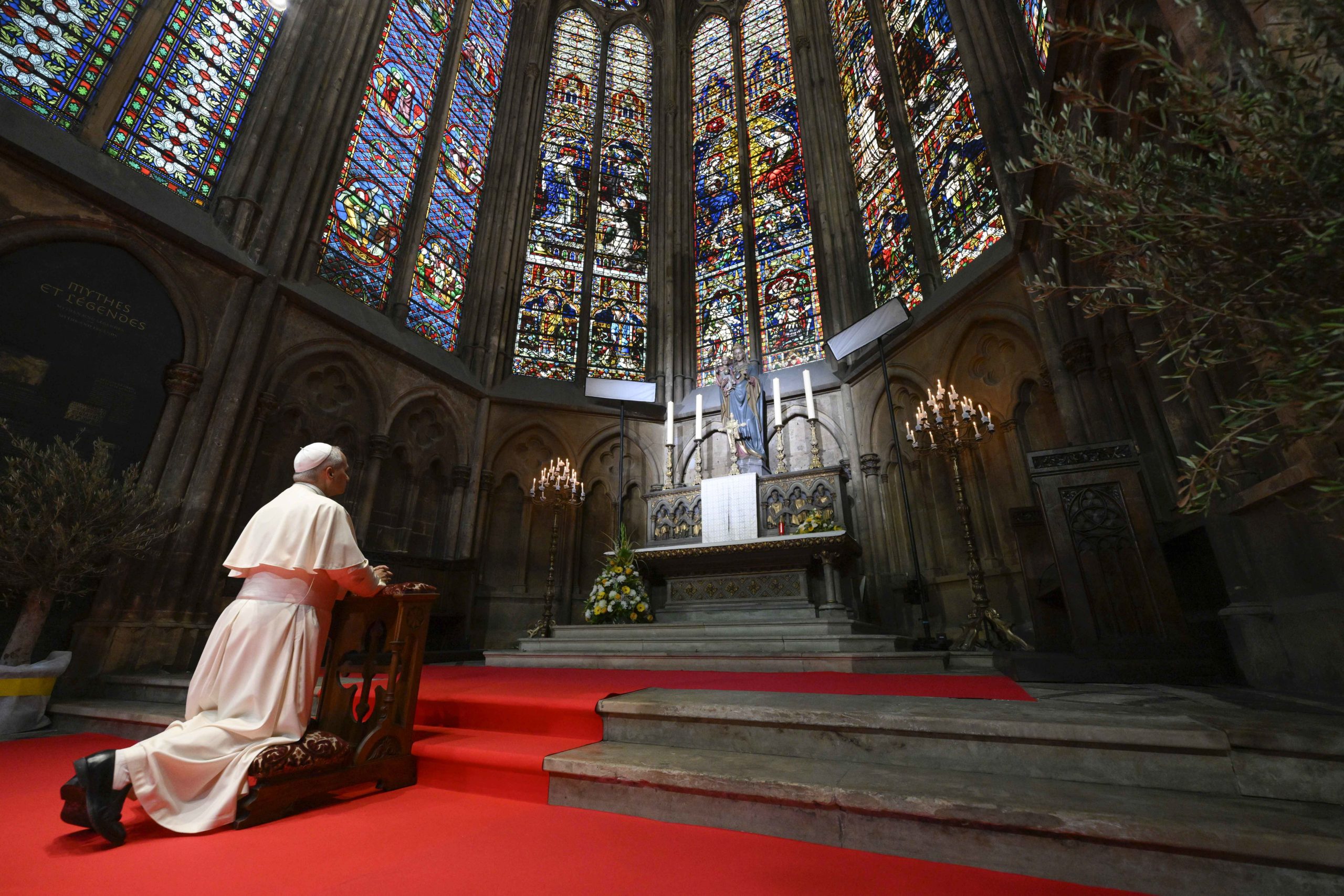
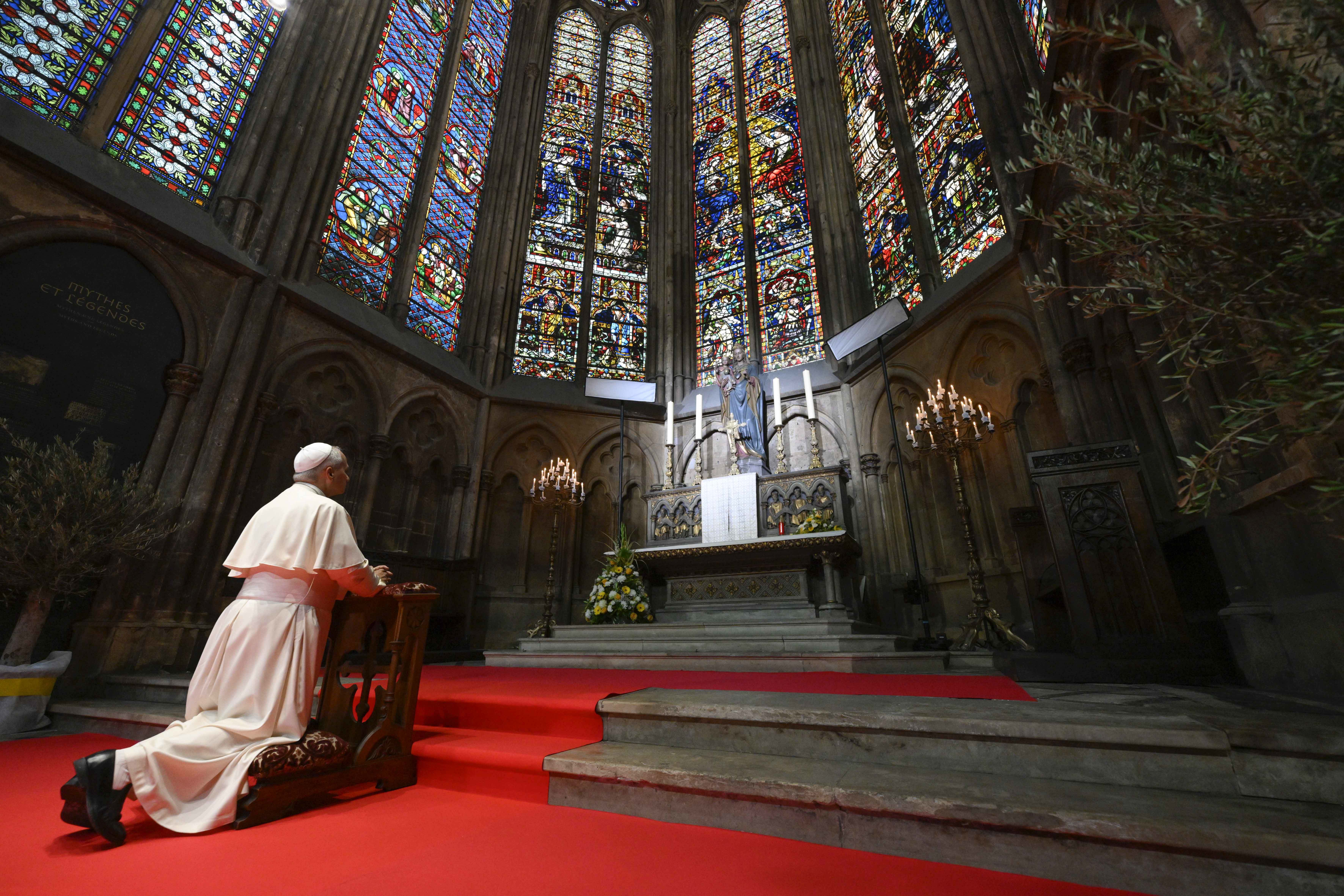
At Mass in Madrid’s Plaza de Cibeles, the pope called Spain’s centuries-old Eucharistic devotion “a school of faith” for the present and future.

Read More
This is Pope Leo XIV’s prayer intention for the month of June #Catholic Pope Leo XIV’s prayer intention for the month of June is for the value of sports.“In times of war and extreme polarization, sport is one of the few things that bring us closer together,” the pope said in a video released on X on June 2.He added: “Let us pray this June that sport may be an instrument of peace, encounter, and dialogue among cultures and nations, and that it may promote values such as respect, solidarity, and personal growth.”In the full video shared on the Pope’s Worldwide Prayer Network website, Pope Leo recites an original prayer written specifically for this month’s prayer intention:In the name of the Father, and of the Son, and of the Holy Spirit. Amen.Lord of life,we thank you for the gift of sport,for those who glorify God through the exercise of their bodies,for the friendships born on the fieldand the joy of playing as a team.You teach us that in life, as in the game,no one is saved alone.We need others to grow,to learn respect, to overcome our limits,and to celebrate together the victories we achieve.We ask that sport may always bea school of fraternity, not of empty rivalry,a space of encounter, not exclusion,a path of peace, not violence.May those who play, train, or cheerdiscover in sport a universal languagethat brings cultures together, unites peoples,and sows respect, solidarity, and personal growth.Lord Jesus,may every sport become a parable of life lived with you,working with joy and effort,living with humility in defeatand with gratitude in the victory you offer in your resurrection.May your Spirit never be lacking in us,making us one team, united with youto build communion and fraternity in history.Amen.“Pray with the Pope” is accessible on the Pope’s Worldwide Prayer Network website and its digital platforms.

This is Pope Leo XIV’s prayer intention for the month of June #Catholic Pope Leo XIV’s prayer intention for the month of June is for the value of sports.“In times of war and extreme polarization, sport is one of the few things that bring us closer together,” the pope said in a video released on X on June 2.He added: “Let us pray this June that sport may be an instrument of peace, encounter, and dialogue among cultures and nations, and that it may promote values such as respect, solidarity, and personal growth.”In the full video shared on the Pope’s Worldwide Prayer Network website, Pope Leo recites an original prayer written specifically for this month’s prayer intention:In the name of the Father, and of the Son, and of the Holy Spirit. Amen.Lord of life,we thank you for the gift of sport,for those who glorify God through the exercise of their bodies,for the friendships born on the fieldand the joy of playing as a team.You teach us that in life, as in the game,no one is saved alone.We need others to grow,to learn respect, to overcome our limits,and to celebrate together the victories we achieve.We ask that sport may always bea school of fraternity, not of empty rivalry,a space of encounter, not exclusion,a path of peace, not violence.May those who play, train, or cheerdiscover in sport a universal languagethat brings cultures together, unites peoples,and sows respect, solidarity, and personal growth.Lord Jesus,may every sport become a parable of life lived with you,working with joy and effort,living with humility in defeatand with gratitude in the victory you offer in your resurrection.May your Spirit never be lacking in us,making us one team, united with youto build communion and fraternity in history.Amen.“Pray with the Pope” is accessible on the Pope’s Worldwide Prayer Network website and its digital platforms.

“In times of war and extreme polarization, sport is one of the few things that bring us closer together,” the pope said in a video released on X on June 2.

Read More
Going Low and Slow in Testing – NASA’s X-59 quiet supersonic research aircraft flies above NASA’s Armstrong Flight Research Center in Edwards, California, during testing focused on lower-speed and altitude flight conditions in support of NASA’s Quesst mission. NASA continues to include two-flight days in its envelope expansion as teams work to better understand how the aircraft responds throughout its operating range.

NASA’s X-59 quiet supersonic research aircraft flies above NASA’s Armstrong Flight Research Center in Edwards, California, during testing focused on lower-speed and altitude flight conditions in support of NASA’s Quesst mission. NASA continues to include two-flight days in its envelope expansion as teams work to better understand how the aircraft responds throughout its operating range.

Read More

Bishop Barron speaks on U.S. religious roots ahead of nation’s 250th anniversary #Catholic While there has been a tendency in the United Sates "to hyper-stress separation of church and state," Bishop Robert Barron said "the roots of our country are deeply religious" and "the basic principles of the country are inescapably religious.” On May 17, thousands gathered on the National Mall in Washington, D.C., for the White House event celebrating “one nation under God” and "the connection between religion and our American democracy,”  Barron said.In an interview with EWTN News’ Colm Flynn ahead of the event, Barron discussed the “hugely important” phrase "one nation under God.”“In the written versions of the Gettysburg Address that [Abraham Lincoln] prepared before giving it, the phrase ‘under God’ is not there,” Barron explained.“But then when he was delivering it he added ... ‘under God,’“ Barron said. ”I think it represented a deep intuition that Lincoln had that you canʼt really understand our democracy without it.” The phrase “under God” is “meant to hold off tyranny,” he said. It is clear that “all kings and all rulers are under God, meaning under the judgment and authority of God. Our founders understood that.”“And that little phrase is meant to hold off that tendency to deify any political establishment, political party, political ruler. Weʼre a nation, yes indeed, but weʼre under God. Our laws are determined by God,” he said.“I love the First Amendment to our Constitution, which in its opening lines expresses very eloquently … the right balance,“ he said. ”Namely, ‘Congress shall make no law respecting the establishment of religion.’”“But then thereʼs a second part, the second clause of that: ‘Congress shall make no law limiting the free exercise of religion,’” he said.“Thatʼs an eloquent balance. So thereʼs no officially state-sanctioned religion, but that does not mean that religion has no role in public life. On the contrary, because there should be no law restricting the free exercise of religion,” Barron said. Catholics’ role in public life and public officeCatholics in public office should bring “moral sensibility into their public decisions,” Barron said.“Weʼre not here to impose Catholicism on anybody,” he said. “But I think to bring a moral and spiritual sensibility into the decisions that you make at these high levels is altogether valid.”As a member of the White House Religious Liberty Commission, Barron said he met “lots of Catholics in the present administration” and told them to “bring Thomas Aquinas into your public life.”“By which I mean bring these great moral and spiritual principles that indeed undergird our democracy, but make them a lively presence in the work that you do,” he said.Barron further spoke about his time on the White House commission, where he received both criticism and praise.When asked to be a commissioner, “my first reaction was very positive,” Barron said. “I thought … ‘Theyʼre inviting a Catholic bishop to be a voice around the table in the formulation of this policy. Why would I say no?’”To say no would be “taking a Catholic voice away from that process,” he said.“I’m not implementing the policy. Iʼm making suggestions regarding the formulation of policy,” Barron explained. “The president could take or leave what we say … So Iʼm not implementing the presidentʼs policies. Iʼm helping to shape public policy.”“The commission was great. I spoke my mind in every setting. No one censored me,” said Barron, who was present at a White House Holy Week event when Pentecostal pastor Paula Cain White compared the president’s suffering to Jesus Christ’s.Barron said he was able to address issues within the administration, specifically about Immigration and Customs Enforcement (ICE) “detainees in Chicago having access to sacraments and pastoral care.”The bishop took the matter to Homeland Security and “no one questioned” him. It was “a religious liberty issue,” because “people have a right to their sacraments and pastoral care,” he said.Barron also spoke out in regard to the president’s “critical remarks about the pope.”“I said in an X post that I have deep admiration for the president in regard to religion. Heʼs done wonderful things. But I said I think that was a disrespectful way to talk to the pope,” Barron said.“In regards to prudential judgment,” a president can “disagree with the pope,” Barron said. “But the pope is not ... just an ordinary hack politician that you can sort of talk in that flippant way to.”
 
 Bishop Robert Barron speaks with EWTN News’ Colm Flynn ahead of the May 17, 2026, White House event on “one nation under God” in Washington, D.C. | Credit: EWTN News
 
 “Heʼs the vicar of Christ, successor of Peter. Heʼs our Holy Father. And I just felt that was disrespectful, and I thought it was not a constructive contribution to the conversation,” he said.“Heʼs the Holy Father, so we have a filial relationship to him. Heʼs a father, weʼre like children … we have a family relationship to the pope. So itʼs different than just our relationship to a political leader.”“At the level of principle and the moral values that ought to be informing our life … we abide by what the pope is saying, but I think there can be disagreement at the prudential level,” Barron said.Dividing issues in the nation todayAmid numerous wars right now, Barron said “we should study” the just war tradition.It offers “very useful criteria, and I think the Churchʼs job is to bring these to consciousness and urge political leaders to apply them,” he said.“The Catechism of the Catholic Church says that when it comes to the evaluation and application of the criteria, that belongs to the civil authorities. And I think thereʼs great wisdom there too.”Barron also spoke to the ongoing matters with U.S. immigration enforcement.“A completely open border invites a lot of moral chaos, and a lot of catastrophe happens because of an open border. So the Church recognizes the legitimacy of that,” Barron said. “At the same time, the Church wants us to welcome the stranger and to be open to those who are in great need and those who are seeking refuge.”ICE “is a very legitimate expression of the governmentʼs authority, but … I think ICE is way too blunt a tool to use to solve the general issue of people in the country illegally,” Barron said.“I think a political solution has to be found. I donʼt think ICE is the right instrument to do that,” he said. “Iʼd invite people who are intimately involved in these things to have a good, morally informed conversation about it and come to good prudential judgments.”“Iʼm not an expert in immigration policy, and Iʼm not an expert in the economics that are prevailing on the ground in various situations,” he said. “I think we have to inform all those who are making those decisions, make sure they have a keen moral sensibility, [and] know what the principles are.”“But I think people of goodwill can, and obviously do, disagree about how they are applied … concretely,” he said.

Bishop Barron speaks on U.S. religious roots ahead of nation’s 250th anniversary #Catholic While there has been a tendency in the United Sates "to hyper-stress separation of church and state," Bishop Robert Barron said "the roots of our country are deeply religious" and "the basic principles of the country are inescapably religious.” On May 17, thousands gathered on the National Mall in Washington, D.C., for the White House event celebrating “one nation under God” and "the connection between religion and our American democracy,”  Barron said.In an interview with EWTN News’ Colm Flynn ahead of the event, Barron discussed the “hugely important” phrase "one nation under God.”“In the written versions of the Gettysburg Address that [Abraham Lincoln] prepared before giving it, the phrase ‘under God’ is not there,” Barron explained.“But then when he was delivering it he added … ‘under God,’“ Barron said. ”I think it represented a deep intuition that Lincoln had that you canʼt really understand our democracy without it.” The phrase “under God” is “meant to hold off tyranny,” he said. It is clear that “all kings and all rulers are under God, meaning under the judgment and authority of God. Our founders understood that.”“And that little phrase is meant to hold off that tendency to deify any political establishment, political party, political ruler. Weʼre a nation, yes indeed, but weʼre under God. Our laws are determined by God,” he said.“I love the First Amendment to our Constitution, which in its opening lines expresses very eloquently … the right balance,“ he said. ”Namely, ‘Congress shall make no law respecting the establishment of religion.’”“But then thereʼs a second part, the second clause of that: ‘Congress shall make no law limiting the free exercise of religion,’” he said.“Thatʼs an eloquent balance. So thereʼs no officially state-sanctioned religion, but that does not mean that religion has no role in public life. On the contrary, because there should be no law restricting the free exercise of religion,” Barron said. Catholics’ role in public life and public officeCatholics in public office should bring “moral sensibility into their public decisions,” Barron said.“Weʼre not here to impose Catholicism on anybody,” he said. “But I think to bring a moral and spiritual sensibility into the decisions that you make at these high levels is altogether valid.”As a member of the White House Religious Liberty Commission, Barron said he met “lots of Catholics in the present administration” and told them to “bring Thomas Aquinas into your public life.”“By which I mean bring these great moral and spiritual principles that indeed undergird our democracy, but make them a lively presence in the work that you do,” he said.Barron further spoke about his time on the White House commission, where he received both criticism and praise.When asked to be a commissioner, “my first reaction was very positive,” Barron said. “I thought … ‘Theyʼre inviting a Catholic bishop to be a voice around the table in the formulation of this policy. Why would I say no?’”To say no would be “taking a Catholic voice away from that process,” he said.“I’m not implementing the policy. Iʼm making suggestions regarding the formulation of policy,” Barron explained. “The president could take or leave what we say … So Iʼm not implementing the presidentʼs policies. Iʼm helping to shape public policy.”“The commission was great. I spoke my mind in every setting. No one censored me,” said Barron, who was present at a White House Holy Week event when Pentecostal pastor Paula Cain White compared the president’s suffering to Jesus Christ’s.Barron said he was able to address issues within the administration, specifically about Immigration and Customs Enforcement (ICE) “detainees in Chicago having access to sacraments and pastoral care.”The bishop took the matter to Homeland Security and “no one questioned” him. It was “a religious liberty issue,” because “people have a right to their sacraments and pastoral care,” he said.Barron also spoke out in regard to the president’s “critical remarks about the pope.”“I said in an X post that I have deep admiration for the president in regard to religion. Heʼs done wonderful things. But I said I think that was a disrespectful way to talk to the pope,” Barron said.“In regards to prudential judgment,” a president can “disagree with the pope,” Barron said. “But the pope is not … just an ordinary hack politician that you can sort of talk in that flippant way to.” Bishop Robert Barron speaks with EWTN News’ Colm Flynn ahead of the May 17, 2026, White House event on “one nation under God” in Washington, D.C. | Credit: EWTN News “Heʼs the vicar of Christ, successor of Peter. Heʼs our Holy Father. And I just felt that was disrespectful, and I thought it was not a constructive contribution to the conversation,” he said.“Heʼs the Holy Father, so we have a filial relationship to him. Heʼs a father, weʼre like children … we have a family relationship to the pope. So itʼs different than just our relationship to a political leader.”“At the level of principle and the moral values that ought to be informing our life … we abide by what the pope is saying, but I think there can be disagreement at the prudential level,” Barron said.Dividing issues in the nation todayAmid numerous wars right now, Barron said “we should study” the just war tradition.It offers “very useful criteria, and I think the Churchʼs job is to bring these to consciousness and urge political leaders to apply them,” he said.“The Catechism of the Catholic Church says that when it comes to the evaluation and application of the criteria, that belongs to the civil authorities. And I think thereʼs great wisdom there too.”Barron also spoke to the ongoing matters with U.S. immigration enforcement.“A completely open border invites a lot of moral chaos, and a lot of catastrophe happens because of an open border. So the Church recognizes the legitimacy of that,” Barron said. “At the same time, the Church wants us to welcome the stranger and to be open to those who are in great need and those who are seeking refuge.”ICE “is a very legitimate expression of the governmentʼs authority, but … I think ICE is way too blunt a tool to use to solve the general issue of people in the country illegally,” Barron said.“I think a political solution has to be found. I donʼt think ICE is the right instrument to do that,” he said. “Iʼd invite people who are intimately involved in these things to have a good, morally informed conversation about it and come to good prudential judgments.”“Iʼm not an expert in immigration policy, and Iʼm not an expert in the economics that are prevailing on the ground in various situations,” he said. “I think we have to inform all those who are making those decisions, make sure they have a keen moral sensibility, [and] know what the principles are.”“But I think people of goodwill can, and obviously do, disagree about how they are applied … concretely,” he said.

“There’s no officially state-sanctioned religion, but that does not mean that religion has no role in public life,” Bishop Robert Barron said.

Read More
SSPX responds to Vatican warning about excommunication with ‘declaration of Catholic faith’ #Catholic The traditionalist Society of St. Pius X (SSPX) addressed Pope Leo XIV this week with a statement of faith it called “the minimum necessary to be in communion with the Church.”In an introduction to the “Declaration of Catholic Faith” — published May 14 on the society’s website — the SSPX said that for more than 50 years it has raised the issue of what it believes are “errors that are destroying Catholic faith and morals” but that the group has never received “any truly satisfactory response” from the Holy See.The statement, signed by SSPX superior general Father Davide Pagliarani, said it "places this simple Declaration of Faith” into the hands of Pope Leo: “It seems to us to correspond to the minimum necessary to be in communion with the Church, to call ourselves truly Catholic and, consequently, Your children.”The Vatican’s prefect for the Dicastery for the Doctrine of the Faith (DDF), Cardinal Víctor Manuel Fernández, issued a brief statement on May 13, warning that if the SSPX carried out the “schismatic act” of consecrating new bishops without papal mandate — as the group has announced it plans to do on July 1 — it will result in excommunications as established by canon law.Fernández also said Pope Leo XIV is praying that the leaders of the SSPX “may reconsider the very grave decision they have made.”In the society’s declaration following Fernández’s statement, it reiterates the teachings of the Catholic faith about the existence of only one faith and one Church, and that Jesus Christ is the one mediator between God and men.The declaration appears to reject a document issued by the DDF last year stating that “Co-Redemptrix” is not an appropriate way to describe the Virgin Mary’s participation in salvation because “it carries the risk of eclipsing the exclusive role of Jesus Christ.”The SSPX said, “By divine decree, the Most Holy Virgin Mary has been directly and intimately associated with the entire work of Redemption; to deny this association — in the terms received from Tradition — is therefore to alter the very notion of Redemption as willed by divine Providence.”The “declaration of Catholic faith” also appears to make oblique references to some of the theological questions contested by the SSPX, which are mostly tied to the interpretation of post–Second Vatican Council teaching, including God’s will regarding the plurality of religions; and the differing levels of assent required by various Vatican II texts and their interpretation.For example, the society’s statement says the necessity to be a part of the Catholic Church to save one’s soul “concerns the whole of humanity without exception and embraces without distinction Christians, Jews, Muslims, pagans, and atheists” and that the mandate “to convert every man to the Catholic Faith, remains binding until the end of time and responds to the most absolute and most pressing necessity in the world.”The declaration also says a couple living a “lifestyle” that includes “sins of impurity” should be helped to free themselves from sin and that the couple “can in no way be blessed — formally or informally — by ministers of the Church” — an apparent reference to Pope Francis’ 2023 declaration Fiducia Supplicans, which allows priests to offer private, nonliturgical blessings to same-sex couples.

SSPX responds to Vatican warning about excommunication with ‘declaration of Catholic faith’ #Catholic The traditionalist Society of St. Pius X (SSPX) addressed Pope Leo XIV this week with a statement of faith it called “the minimum necessary to be in communion with the Church.”In an introduction to the “Declaration of Catholic Faith” — published May 14 on the society’s website — the SSPX said that for more than 50 years it has raised the issue of what it believes are “errors that are destroying Catholic faith and morals” but that the group has never received “any truly satisfactory response” from the Holy See.The statement, signed by SSPX superior general Father Davide Pagliarani, said it "places this simple Declaration of Faith” into the hands of Pope Leo: “It seems to us to correspond to the minimum necessary to be in communion with the Church, to call ourselves truly Catholic and, consequently, Your children.”The Vatican’s prefect for the Dicastery for the Doctrine of the Faith (DDF), Cardinal Víctor Manuel Fernández, issued a brief statement on May 13, warning that if the SSPX carried out the “schismatic act” of consecrating new bishops without papal mandate — as the group has announced it plans to do on July 1 — it will result in excommunications as established by canon law.Fernández also said Pope Leo XIV is praying that the leaders of the SSPX “may reconsider the very grave decision they have made.”In the society’s declaration following Fernández’s statement, it reiterates the teachings of the Catholic faith about the existence of only one faith and one Church, and that Jesus Christ is the one mediator between God and men.The declaration appears to reject a document issued by the DDF last year stating that “Co-Redemptrix” is not an appropriate way to describe the Virgin Mary’s participation in salvation because “it carries the risk of eclipsing the exclusive role of Jesus Christ.”The SSPX said, “By divine decree, the Most Holy Virgin Mary has been directly and intimately associated with the entire work of Redemption; to deny this association — in the terms received from Tradition — is therefore to alter the very notion of Redemption as willed by divine Providence.”The “declaration of Catholic faith” also appears to make oblique references to some of the theological questions contested by the SSPX, which are mostly tied to the interpretation of post–Second Vatican Council teaching, including God’s will regarding the plurality of religions; and the differing levels of assent required by various Vatican II texts and their interpretation.For example, the society’s statement says the necessity to be a part of the Catholic Church to save one’s soul “concerns the whole of humanity without exception and embraces without distinction Christians, Jews, Muslims, pagans, and atheists” and that the mandate “to convert every man to the Catholic Faith, remains binding until the end of time and responds to the most absolute and most pressing necessity in the world.”The declaration also says a couple living a “lifestyle” that includes “sins of impurity” should be helped to free themselves from sin and that the couple “can in no way be blessed — formally or informally — by ministers of the Church” — an apparent reference to Pope Francis’ 2023 declaration Fiducia Supplicans, which allows priests to offer private, nonliturgical blessings to same-sex couples.

The Vatican said on May 13 that the Society of St. Pius X’s plan to consecrate new bishops without papal mandate will be a schismatic act resulting in excommunication.

Read More
NASA’s Chandra Finds Young Stars Dim Quickly – Scientists have found that young stellar cousins of our Sun are calming down and dimming more quickly in their X-ray output than previously thought, according to a study using NASA’s Chandra X-ray Observatory.

Scientists have found that young stellar cousins of our Sun are calming down and dimming more quickly in their X-ray output than previously thought, according to a study using NASA’s Chandra X-ray Observatory.

Read More

NASA’s SPHEREx Observatory Maps Interstellar Ice in Milky Way – An observation made by NASA’s SPHEREx mission reveals vast frozen complexes in the Cygnus X star-forming region of the Milky Way galaxy. The chemical signature of water ice is shown as bright blue structures, while polycyclic aromatic hydrocarbons are in orange.

An observation made by NASA’s SPHEREx mission reveals vast frozen complexes in the Cygnus X star-forming region of the Milky Way galaxy. The chemical signature of water ice is shown as bright blue structures, while polycyclic aromatic hydrocarbons are in orange.

Read More
White Dwarf Star (Artist’s Concept) – This artist’s concept depicts a smaller white dwarf star pulling material from a larger star, right, into an accretion disk. Scientists used NASA’s IXPE (Imaging X-ray Polarization Explorer) to study a white dwarf star and its X-ray polarization.

This artist’s concept depicts a smaller white dwarf star pulling material from a larger star, right, into an accretion disk. Scientists used NASA’s IXPE (Imaging X-ray Polarization Explorer) to study a white dwarf star and its X-ray polarization.

Read More


XRISM Finds Chlorine, Potassium in Cas A – This composite image of the Cassiopeia A (or Cas A) supernova remnant, released Jan. 8, 2024, contains X-rays from Chandra (blue), infrared data from Webb (red, green, blue), and optical data from Hubble (red and white). A study by the XRISM (X-ray Imaging and Spectroscopy Mission) spacecraft has made the first-ever X-ray detections of chlorine and potassium in the wreckage.

This composite image of the Cassiopeia A (or Cas A) supernova remnant, released Jan. 8, 2024, contains X-rays from Chandra (blue), infrared data from Webb (red, green, blue), and optical data from Hubble (red and white). A study by the XRISM (X-ray Imaging and Spectroscopy Mission) spacecraft has made the first-ever X-ray detections of chlorine and potassium in the wreckage.

Read More


NASA’s Quesst Mission Marks X-59’s Historic First Flight – NASA’s X-59 quiet supersonic research aircraft lifts off for its first flight Tuesday, Oct. 28, 2025, from U.S. Air Force Plant 42 in Palmdale, California. The aircraft’s first flight marks the start of flight testing for NASA’s Quesst mission, the result of years of design, integration, and ground testing and begins a new chapter in NASA’s aeronautics research legacy.

NASA’s X-59 quiet supersonic research aircraft lifts off for its first flight Tuesday, Oct. 28, 2025, from U.S. Air Force Plant 42 in Palmdale, California. The aircraft’s first flight marks the start of flight testing for NASA’s Quesst mission, the result of years of design, integration, and ground testing and begins a new chapter in NASA’s aeronautics research legacy.

Read More


Mapping Dark Matter – This image shows two massive galaxy clusters. The vast number of galaxies and foreground stars in the image were captured by NASA’s James Webb Space Telescope in near-infrared light. Glowing, hot X-rays captured by NASA’s Chandra X-ray Observatory appear in pink. The blue represents the dark matter, which was precisely mapped by researchers with Webb’s detailed imaging.

This image shows two massive galaxy clusters. The vast number of galaxies and foreground stars in the image were captured by NASA’s James Webb Space Telescope in near-infrared light. Glowing, hot X-rays captured by NASA’s Chandra X-ray Observatory appear in pink. The blue represents the dark matter, which was precisely mapped by researchers with Webb’s detailed imaging.

Read More
An Eye-catching Star Cluster

Westerlund 1 is the biggest and closest “super” star cluster to Earth. Data from Chandra and other telescopes are helping astronomers delve deeper into this galactic factory where stars are vigorously being produced. Observations from Chandra have uncovered thousands of individual stars pumping out X-ray emission into the cluster.

Read More
NASA’s X-59 at Sunrise

NASA’s X-59 quiet supersonic research aircraft sits on the ramp at sunrise before ground tests at Lockheed Martin’s Skunk Works facility in Palmdale, California, on July 18, 2025. The X-59 is the centerpiece of NASA’s Quesst mission to demonstrate quiet supersonic flight.

Read More
Putting the X-59 to the Test

Researchers from NASA and the Japanese Aerospace Exploration Agency (JAXA) recently tested a scale model of the X-59 experimental aircraft in a supersonic wind tunnel located in Chofu, Japan, to assess the noise audible underneath the aircraft. The test was an important milestone for NASA’s one-of-a-kind X-59, which is designed to fly faster than the speed of sound without causing a loud sonic boom.

Read More
Astronaut Joe Engle Flies X-15

In 1963, Captain Engle was assigned as one of two Air Force test pilots to fly the X-15 Research Rocket aircraft. In 1965, he flew the X-15 to an altitude of 280,600 feet, and became the youngest pilot ever to qualify as an astronaut. Three of his sixteen flights in the X-15 exceeded the 50-mile (264,000 feet) altitude required for astronaut rating.

Read More