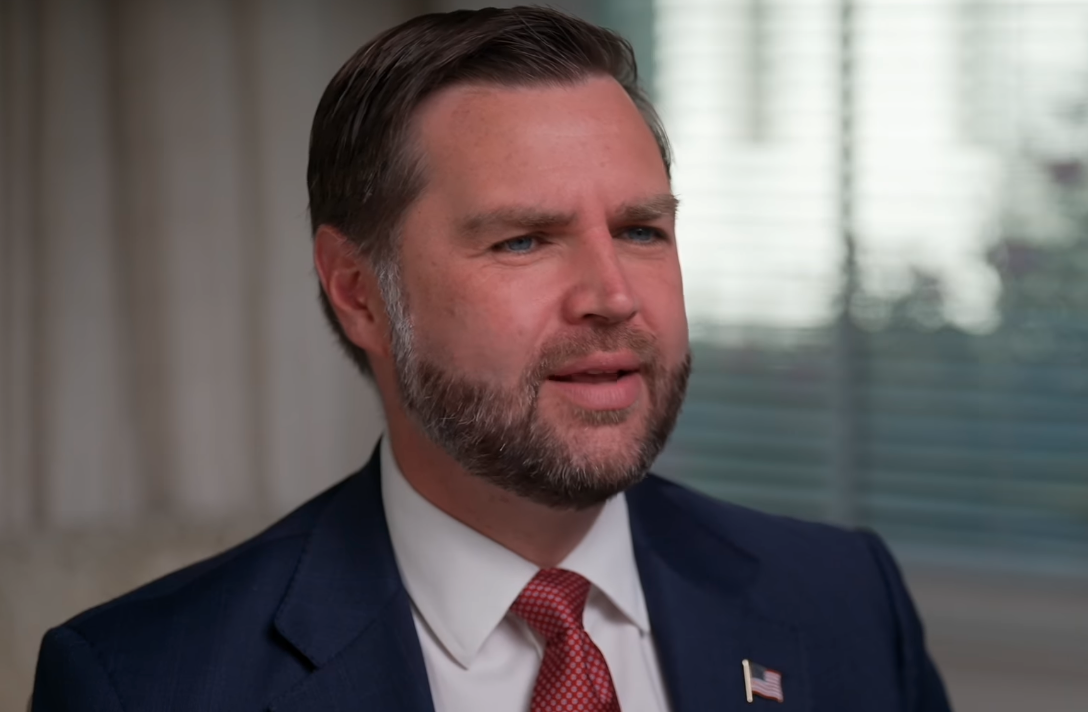
Vice President JD Vance on Oct. 22 told Raymond Arroyo on EWTN News’ “The World Over with Raymond Arroyo” that God calls Christians to be “humble in the face [of] uncertainty” and that Christians walking in faith often “take two steps toward Jesus and one step back” before arriving at Christ.
Vance spoke with Arroyo in a wide-ranging interview that included politics, immigration, economics, and faith.
The vice president has been especially forthcoming about his own faith journey, one which began in Appalachian Protestant churches and eventually led him to the Catholic Church. He attended Christian churches while growing up but was drawn to what in June he described as the “beautiful ancient Church” of Catholicism.
Speaking with Arroyo, Vance described a religious experience in which he was driving on mountain roads back from his grandmother’s funeral and nearly drove off the road.
“And just like right at that point where Iʼm like, all right, Iʼm about to go over the side of the mountain, the car just comes to a completely restful stop,” he said. “Like God put his hand on that car and made it stop.”
The experience “gnawed at me,” Vance said, describing the event as “a door opening.”
“[W]e are ultimately Godʼs ambassadors here on Earth,” he said, describing what he said is the “powerful” witness of Christians “doing good things.”
Arroyo and Vance discussed several other topics in the interview, including the ongoing civil unrest and rioting in France.
“I donʼt think you can talk about whatʼs happening in France without acknowledging the role of migration,” Vance said. “Because in the neighborhoods where you see the most significant violence, the most significant outburst, the burning of these beautiful historical buildings — you often have neighborhoods with extremely high immigrant populations.”
Western societies “want to be welcoming to people,” the vice president said. But “when we allow someone into our country, are they culturally compatible? Are they willing to assimilate into Western values and Western society?”
Asked about Church leadership on immigration issues, Vance — who has publicly disagreed with the U.S. bishops on some aspects of the immigration debate — said he would “never accuse the Church of being naive.”
The Church “will say two things that I fundamentally believe in and agree with, but I think 90% of people agree with, which is: One, you must be welcoming towards a stranger. On the other hand, nations are allowed to control their borders.”
As Vance sees it, the Church leadership in the U.S. has “missed an opportunity” to strike a balance on immigration in an age of high migration. He noted that the airplane is “less than 100 years old” and that rapid large-scale immigration is “a very new phenomenon.”
“I do think the Church has to figure out what should the immigration policy of an advanced economy be in a world of mass transit,” he said.
He noted that Christians are called “to be fundamentally hopeful [of] the future.” He disputed arguments that France is on the verge of “civilizational death,” describing it instead as “civilizational risk.”
“[I] think that if France returns to its Christian roots, it can be welcoming to the stranger. It can also protect its borders and in a way that preserves its civilization,” he said.
Vice President Vance to EWTN: ‘We are God’s ambassadors on Earth’ #Catholic
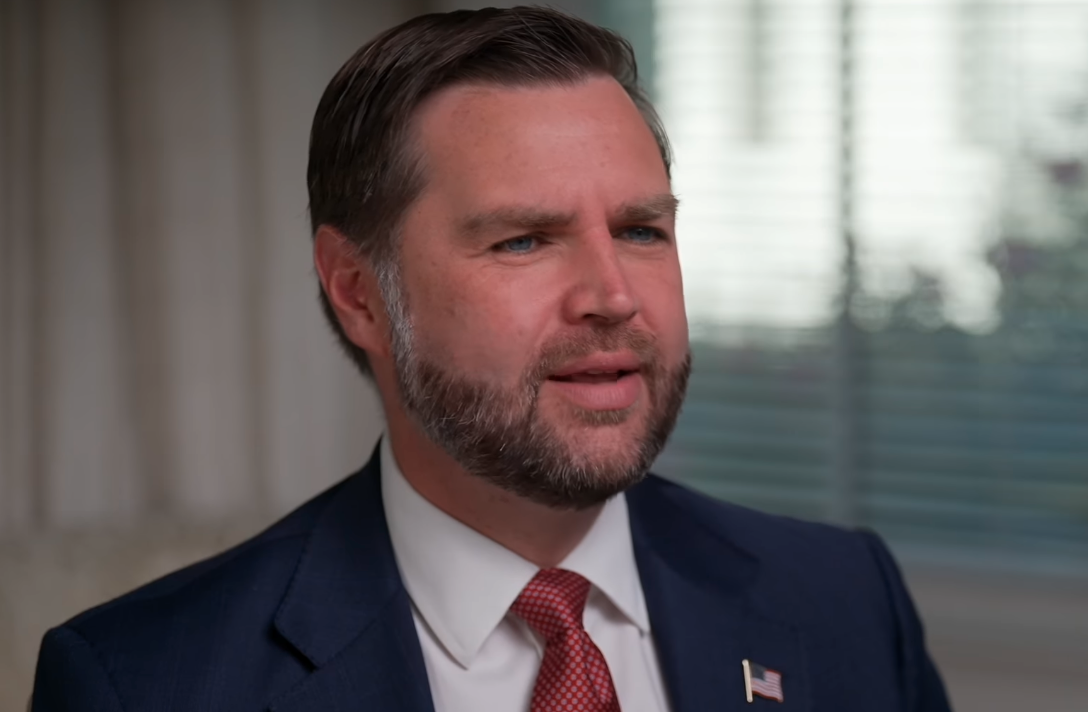
Vice President JD Vance on Oct. 22 told Raymond Arroyo on EWTN News’ “The World Over with Raymond Arroyo” that God calls Christians to be “humble in the face [of] uncertainty” and that Christians walking in faith often “take two steps toward Jesus and one step back” before arriving at Christ.
Vance spoke with Arroyo in a wide-ranging interview that included politics, immigration, economics, and faith.
The vice president has been especially forthcoming about his own faith journey, one which began in Appalachian Protestant churches and eventually led him to the Catholic Church. He attended Christian churches while growing up but was drawn to what in June he described as the “beautiful ancient Church” of Catholicism.
Speaking with Arroyo, Vance described a religious experience in which he was driving on mountain roads back from his grandmother’s funeral and nearly drove off the road.
“And just like right at that point where Iʼm like, all right, Iʼm about to go over the side of the mountain, the car just comes to a completely restful stop,” he said. “Like God put his hand on that car and made it stop.”
The experience “gnawed at me,” Vance said, describing the event as “a door opening.”
“[W]e are ultimately Godʼs ambassadors here on Earth,” he said, describing what he said is the “powerful” witness of Christians “doing good things.”
Arroyo and Vance discussed several other topics in the interview, including the ongoing civil unrest and rioting in France.
“I donʼt think you can talk about whatʼs happening in France without acknowledging the role of migration,” Vance said. “Because in the neighborhoods where you see the most significant violence, the most significant outburst, the burning of these beautiful historical buildings — you often have neighborhoods with extremely high immigrant populations.”
Western societies “want to be welcoming to people,” the vice president said. But “when we allow someone into our country, are they culturally compatible? Are they willing to assimilate into Western values and Western society?”
Asked about Church leadership on immigration issues, Vance — who has publicly disagreed with the U.S. bishops on some aspects of the immigration debate — said he would “never accuse the Church of being naive.”
The Church “will say two things that I fundamentally believe in and agree with, but I think 90% of people agree with, which is: One, you must be welcoming towards a stranger. On the other hand, nations are allowed to control their borders.”
As Vance sees it, the Church leadership in the U.S. has “missed an opportunity” to strike a balance on immigration in an age of high migration. He noted that the airplane is “less than 100 years old” and that rapid large-scale immigration is “a very new phenomenon.”
“I do think the Church has to figure out what should the immigration policy of an advanced economy be in a world of mass transit,” he said.
He noted that Christians are called “to be fundamentally hopeful [of] the future.” He disputed arguments that France is on the verge of “civilizational death,” describing it instead as “civilizational risk.”
“[I] think that if France returns to its Christian roots, it can be welcoming to the stranger. It can also protect its borders and in a way that preserves its civilization,” he said.