angels

What happened to St. Maximilian Kolbe’s beard? The answer may surprise you #Catholic In 2022, the Catholic Church in Poland shared a photo commemorating the 81st anniversary of St. Maximilian Kolbe’s arrest by the Nazis. The image, the last one taken of the saint before his final arrest, was notable for what it didn’t show — his signature long beard.By the time the photo was taken, Kolbe had already been arrested by the Nazis once but was clearly resolved to continue his nationwide evangelization efforts. The monastery he had established at Niepokalanów, 25 miles west of Warsaw, had become a major Catholic publishing center.The beard with which Kolbe is often pictured is notable for several reasons, one of which was the fact that not many of his Franciscan counterparts in Poland sported them. He shaved his signature beard in order to blend in with his fellow Franciscans and with society at large.
 
 St. Maximilian Kolbe. | Credit: Public domain
 
 The second reason is that Kolbe’s beard is the only first-class relic that exists of him. The rest of his body was incinerated in the ovens of Auschwitz after he was murdered by the Nazis in 1941.Father James McCurry, a Conventual Franciscan and minister provincial of the Our Lady of the Angels Province, gave a homily in 2016 commemorating the 75th anniversary of Kolbe’s martyrdom in which he mentioned the saint’s beard.McCurry, author of the book “Maximilian Kolbe: Martyr of Charity,” said Kolbe chose to keep the beard upon his return from six years of missionary work in Japan. In those days, it was customary for missionaries to grow long beards, and Kolbe wanted to keep it as a reminder of his missionary days and as a reminder to always be a “missionary” of the Gospel.McCurry said Kolbe’s beard made him unusual among his Conventual Franciscan counterparts, who generally did not wear them. Kolbe’s fame was spreading in Poland thanks to his publishing work, and his unique beard helped him to stand out all the more.It was for this reason that Kolbe eventually, after the 1939 Nazi invasion of Poland, made the decision to shave it, McCurry said, so as not to stand out. Kolbe’s founding of the Militia Immaculata (MI), an evangelization movement identifying with Mary, put him high on Nazi watchlists.One book on his life offers this quote from the saint: “Beards provoke the enemy who rapidly is approaching our friary. Our Franciscan habits also will provoke him. I can part with my beard. I can’t sacrifice my habit.”After a fellow brother cut off Kolbe’s beard for him, the brother at first tried to save the beard, but Kolbe objected and told him to throw it in the stove. So, obediently, the brother threw it into the stove, but the fire was not lit, so the brother later retrieved it and stored it in a pickle jar.Today, Kolbe’s beard is his only surviving first-class relic.McCurry was also a friend of Franciszek Gajowniczek, the man for whom Kolbe laid down his life at Auschwitz in late July 1941, following his arrest on Feb. 17.Gajowniczek was one of the 10 men selected to be executed in reprisal for one prisoner’s escape from the barracks. He cried out: “What will happen to my wife and children?” And in response, Kolbe stepped forward and offered to take his place. The 10 were placed, naked, in a starvation chamber.All 10 of those condemned that day died eventually; six starved, and the deaths of the rest, including Kolbe, were hastened by an injection of carbolic acid.This story was first published in August 2021 and has been updated.

What happened to St. Maximilian Kolbe’s beard? The answer may surprise you #Catholic In 2022, the Catholic Church in Poland shared a photo commemorating the 81st anniversary of St. Maximilian Kolbe’s arrest by the Nazis. The image, the last one taken of the saint before his final arrest, was notable for what it didn’t show — his signature long beard.By the time the photo was taken, Kolbe had already been arrested by the Nazis once but was clearly resolved to continue his nationwide evangelization efforts. The monastery he had established at Niepokalanów, 25 miles west of Warsaw, had become a major Catholic publishing center.The beard with which Kolbe is often pictured is notable for several reasons, one of which was the fact that not many of his Franciscan counterparts in Poland sported them. He shaved his signature beard in order to blend in with his fellow Franciscans and with society at large. St. Maximilian Kolbe. | Credit: Public domain The second reason is that Kolbe’s beard is the only first-class relic that exists of him. The rest of his body was incinerated in the ovens of Auschwitz after he was murdered by the Nazis in 1941.Father James McCurry, a Conventual Franciscan and minister provincial of the Our Lady of the Angels Province, gave a homily in 2016 commemorating the 75th anniversary of Kolbe’s martyrdom in which he mentioned the saint’s beard.McCurry, author of the book “Maximilian Kolbe: Martyr of Charity,” said Kolbe chose to keep the beard upon his return from six years of missionary work in Japan. In those days, it was customary for missionaries to grow long beards, and Kolbe wanted to keep it as a reminder of his missionary days and as a reminder to always be a “missionary” of the Gospel.McCurry said Kolbe’s beard made him unusual among his Conventual Franciscan counterparts, who generally did not wear them. Kolbe’s fame was spreading in Poland thanks to his publishing work, and his unique beard helped him to stand out all the more.It was for this reason that Kolbe eventually, after the 1939 Nazi invasion of Poland, made the decision to shave it, McCurry said, so as not to stand out. Kolbe’s founding of the Militia Immaculata (MI), an evangelization movement identifying with Mary, put him high on Nazi watchlists.One book on his life offers this quote from the saint: “Beards provoke the enemy who rapidly is approaching our friary. Our Franciscan habits also will provoke him. I can part with my beard. I can’t sacrifice my habit.”After a fellow brother cut off Kolbe’s beard for him, the brother at first tried to save the beard, but Kolbe objected and told him to throw it in the stove. So, obediently, the brother threw it into the stove, but the fire was not lit, so the brother later retrieved it and stored it in a pickle jar.Today, Kolbe’s beard is his only surviving first-class relic.McCurry was also a friend of Franciszek Gajowniczek, the man for whom Kolbe laid down his life at Auschwitz in late July 1941, following his arrest on Feb. 17.Gajowniczek was one of the 10 men selected to be executed in reprisal for one prisoner’s escape from the barracks. He cried out: “What will happen to my wife and children?” And in response, Kolbe stepped forward and offered to take his place. The 10 were placed, naked, in a starvation chamber.All 10 of those condemned that day died eventually; six starved, and the deaths of the rest, including Kolbe, were hastened by an injection of carbolic acid.This story was first published in August 2021 and has been updated.

The last image taken of the saint before his final arrest was notable for what it didn’t show — his signature long beard.

Read More
‘Canticle of Peace’: Leo XIV presents the beauty of music as a path to God #Catholic Pope Leo XIV stated Wednesday that “the beauty of music invites us to encounter the One who is beauty itself,” during the “Canticle of Peace” prayer and fraternal gathering held at Castel Gandolfo’s Borgo Laudato Si’ gardens.Leo XIV also prayed for peace to reign “in all those places in the world that continue to suffer from violenceThe gathering, organized by the Laudato Si’ Center for Higher Education and the Andrea Bocelli Foundation (ABF), took place as part of the celebrations marking the eighth centenary of the death of St. Francis of Assisi.Addressing the young members of the ABF Voices choir who came from Uganda, the Holy Land, and Italy, Leo XIV assured them: “Know also that the Holy Father loves you and prays for you, for your families, and for your countries.”After listening to the performance by tenor Andrea Bocelli and the choir, the pope thanked them for the effort put into preparing the recital and congratulated their conductors, noting that “music has the extraordinary capacity to bring different voices together in unison, where each contributes something unique to the whole.”“In this sense, the choir becomes an ideal symbol of harmony and cooperation,” he added.
 
 Andrea Bocelli during his performance at the “Canticle of Peace” before Pope Leo XIV and the young people gathered at the Borgo Laudato Si’ in Castel Gandolfo on July 29, 2026 | Credit: Vatican Media.
 
 In his message, Leo XIV noted the significance of the fact that Sacred Scripture and the Church’s liturgy speak of “choirs of angels and saints” when describing the joy of heaven.This does not mean, he explained, that they are “literally singing all the time,” but rather that, “united in love, they contemplate God together and find the fullness of happiness in him.”The Holy Father then invited the young people to reflect on what had taken place during their performance: “As you sang, did you notice how music drew all of us into a new experience — something greater than anything any one of us could have created alone?”“This is the experience of beauty. It opens up a new horizon before us and awakens within us the desire to move towards it,” he continued.The pope explained that “when we journey toward that horizon, we do not simply discover something, but Someone. We encounter God, our Creator.”
 
 Pope Leo XIV speaking to the young participants in the “Canticle of Peace,” held at the Borgo Laudato Si’ in Castel Gandolfo on July 29, 2026. | Credit: Vatican Media
 
 Leo XIV encouraged the young people to continue cultivating the gifts God has bestowed upon them and to allow those talents to lead them to him, for “He is all we seek in life, the only one who can calm our restless hearts.”The pontiff also reminded them that “you were made for great things and that the whole world is not enough to satisfy your thirst for meaning and happiness.”Before concluding, Leo XIV thanked the Andrea Bocelli Foundation for its work on behalf of young people facing educational and social disadvantages, and highlighted that “through the power of music, you are contributing to the Church’s mission of promoting the integral development of every human person in service of the common good. May God bless your efforts.”This story was first published by ACI Prensa, the Spanish-language sister service of EWTN News. It has been translated and adapted by EWTN News English.

‘Canticle of Peace’: Leo XIV presents the beauty of music as a path to God #Catholic Pope Leo XIV stated Wednesday that “the beauty of music invites us to encounter the One who is beauty itself,” during the “Canticle of Peace” prayer and fraternal gathering held at Castel Gandolfo’s Borgo Laudato Si’ gardens.Leo XIV also prayed for peace to reign “in all those places in the world that continue to suffer from violenceThe gathering, organized by the Laudato Si’ Center for Higher Education and the Andrea Bocelli Foundation (ABF), took place as part of the celebrations marking the eighth centenary of the death of St. Francis of Assisi.Addressing the young members of the ABF Voices choir who came from Uganda, the Holy Land, and Italy, Leo XIV assured them: “Know also that the Holy Father loves you and prays for you, for your families, and for your countries.”After listening to the performance by tenor Andrea Bocelli and the choir, the pope thanked them for the effort put into preparing the recital and congratulated their conductors, noting that “music has the extraordinary capacity to bring different voices together in unison, where each contributes something unique to the whole.”“In this sense, the choir becomes an ideal symbol of harmony and cooperation,” he added. Andrea Bocelli during his performance at the “Canticle of Peace” before Pope Leo XIV and the young people gathered at the Borgo Laudato Si’ in Castel Gandolfo on July 29, 2026 | Credit: Vatican Media. In his message, Leo XIV noted the significance of the fact that Sacred Scripture and the Church’s liturgy speak of “choirs of angels and saints” when describing the joy of heaven.This does not mean, he explained, that they are “literally singing all the time,” but rather that, “united in love, they contemplate God together and find the fullness of happiness in him.”The Holy Father then invited the young people to reflect on what had taken place during their performance: “As you sang, did you notice how music drew all of us into a new experience — something greater than anything any one of us could have created alone?”“This is the experience of beauty. It opens up a new horizon before us and awakens within us the desire to move towards it,” he continued.The pope explained that “when we journey toward that horizon, we do not simply discover something, but Someone. We encounter God, our Creator.” Pope Leo XIV speaking to the young participants in the “Canticle of Peace,” held at the Borgo Laudato Si’ in Castel Gandolfo on July 29, 2026. | Credit: Vatican Media Leo XIV encouraged the young people to continue cultivating the gifts God has bestowed upon them and to allow those talents to lead them to him, for “He is all we seek in life, the only one who can calm our restless hearts.”The pontiff also reminded them that “you were made for great things and that the whole world is not enough to satisfy your thirst for meaning and happiness.”Before concluding, Leo XIV thanked the Andrea Bocelli Foundation for its work on behalf of young people facing educational and social disadvantages, and highlighted that “through the power of music, you are contributing to the Church’s mission of promoting the integral development of every human person in service of the common good. May God bless your efforts.”This story was first published by ACI Prensa, the Spanish-language sister service of EWTN News. It has been translated and adapted by EWTN News English.

The Holy Father made his remarks at an event organized by the Laudato Si’ Center for Higher Education and the Andrea Bocelli Foundation.

Read More
Picture of the day


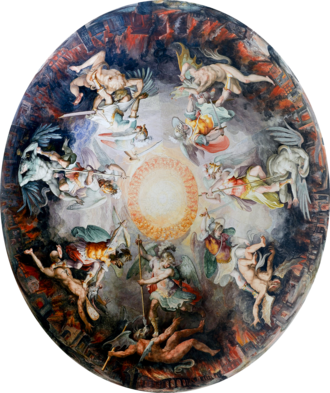
Fall of the Rebel Angels is a fresco by Giacinto Brandi adorning the central vault of Sant’Ambrogio e Carlo al Corso basilica in Rome. It depicts Michael the Archangel’s victory in battle over fallen angels. Today is Michaelmas.
 #ImageOfTheDay
Picture of the day
Fall of the Rebel Angels is a fresco by Giacinto Brandi adorning the central vault of Sant’Ambrogio e Carlo al Corso basilica in Rome. It depicts Michael the Archangel’s victory in battle over fallen angels. Today is Michaelmas.
Read More