confident

Catholic group praises California for ‘largest commutation in history’ as hundreds spared execution #Catholic The prominent anti-death penalty group Catholic Mobilizing Network praised California Gov. Gavin Newsom on Nov. 5 for his commutation of the death sentences of every prisoner on the state’s death row. In a publicly released letter, Newsom said he had “decided to exercise [his] constitutional clemency authority to commute all California death sentences to life without the possibility of parole.”The Democratic governor, who identifies as Catholic, said in the letter that he had come to “firmly believe that state-sanctioned killing is incompatible with California’s values,” that it “undermines the foundations of our legal system,” and that it “diminishes each of us.” The governor described life in prison without parole as “the most severe punishment I can lawfully impose.” The convicted criminals “will die in prison but not by our hand,” he said. The commutation covered all 548 prisoners condemned to death in the state. Newsom’s executive order in 2019 ensured executions would not occur while he remained governor.Responding to the news on Nov. 5, Krisanne Vaillancourt Murphy, executive director of Catholic Mobilizing Network, called the decision “an incredibly encouraging and historic witness for life and human dignity.” She described the order as “the largest commutation in world history.”The Catholic group regularly advocates death sentence commutations and the national abolition of the death penalty itself. The Catechism of the Catholic Church states bluntly that the death penalty is “inadmissible because it is an attack on the inviolability and dignity of the person.”Vaillancourt Murphy in her statement said the mass clemency “demonstrates how justice can be rooted in mercy and restoration instead of death and retribution.”Newsom “has given each of [the condemned criminals] a tangible sign of hope and a chance for rehabilitation,” she said.The decision “underscores the sacred value” of the lives of the prisoners, she said, though she stressed the need to “bear witness to the incomparable suffering that the families and loved ones of murder victims endure.” “We hear the cry for justice and accountability that grave harm rightly deserves, and we continue to hold them in prayer,” Vaillancourt Murphy said. Newsom in his statement noted that the state Supreme Court will have to weigh in on some of the commutations according to the state constitution, though the governor said he was “confident that this act of categorical clemency” was in line with state law.

Catholic group praises California for ‘largest commutation in history’ as hundreds spared execution #Catholic The prominent anti-death penalty group Catholic Mobilizing Network praised California Gov. Gavin Newsom on Nov. 5 for his commutation of the death sentences of every prisoner on the state’s death row. In a publicly released letter, Newsom said he had “decided to exercise [his] constitutional clemency authority to commute all California death sentences to life without the possibility of parole.”The Democratic governor, who identifies as Catholic, said in the letter that he had come to “firmly believe that state-sanctioned killing is incompatible with California’s values,” that it “undermines the foundations of our legal system,” and that it “diminishes each of us.” The governor described life in prison without parole as “the most severe punishment I can lawfully impose.” The convicted criminals “will die in prison but not by our hand,” he said. The commutation covered all 548 prisoners condemned to death in the state. Newsom’s executive order in 2019 ensured executions would not occur while he remained governor.Responding to the news on Nov. 5, Krisanne Vaillancourt Murphy, executive director of Catholic Mobilizing Network, called the decision “an incredibly encouraging and historic witness for life and human dignity.” She described the order as “the largest commutation in world history.”The Catholic group regularly advocates death sentence commutations and the national abolition of the death penalty itself. The Catechism of the Catholic Church states bluntly that the death penalty is “inadmissible because it is an attack on the inviolability and dignity of the person.”Vaillancourt Murphy in her statement said the mass clemency “demonstrates how justice can be rooted in mercy and restoration instead of death and retribution.”Newsom “has given each of [the condemned criminals] a tangible sign of hope and a chance for rehabilitation,” she said.The decision “underscores the sacred value” of the lives of the prisoners, she said, though she stressed the need to “bear witness to the incomparable suffering that the families and loved ones of murder victims endure.” “We hear the cry for justice and accountability that grave harm rightly deserves, and we continue to hold them in prayer,” Vaillancourt Murphy said. Newsom in his statement noted that the state Supreme Court will have to weigh in on some of the commutations according to the state constitution, though the governor said he was “confident that this act of categorical clemency” was in line with state law.

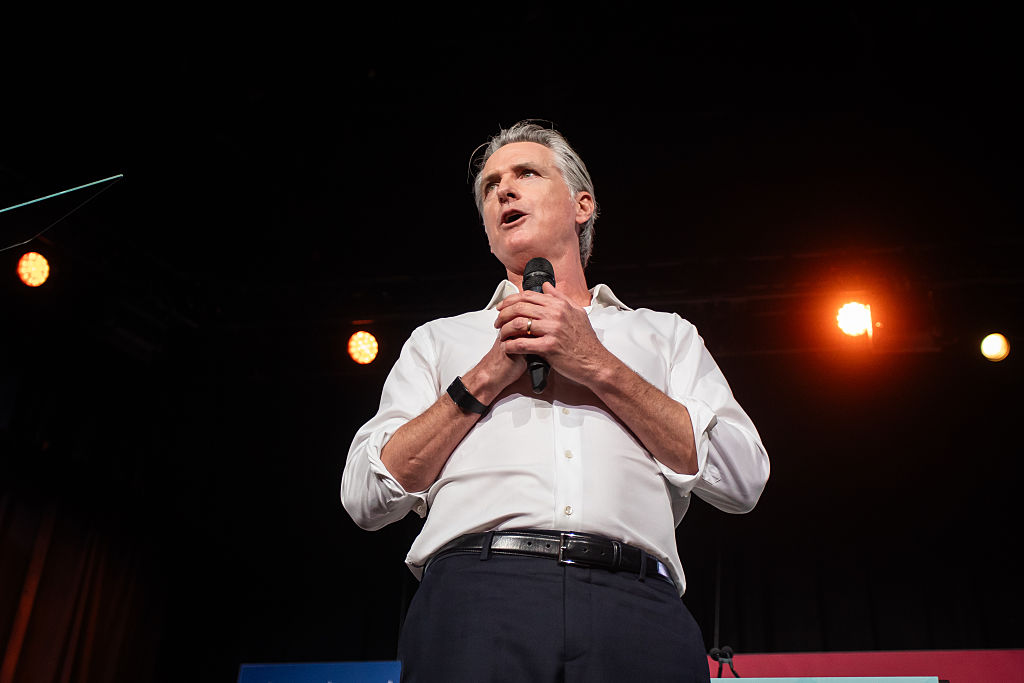
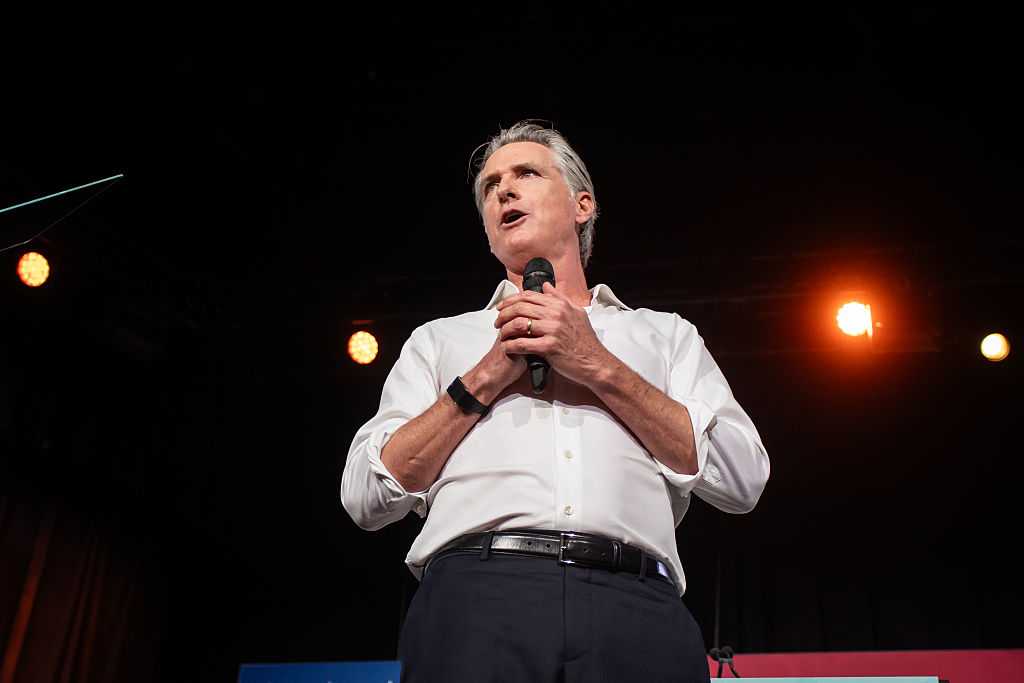
California Gov. Gavin Newsom commuted the death sentences of nearly 550 prisoners on the state’s death row on Nov. 5.
Read More
NFL legend Mike Ditka was a Catholic coach #Catholic Former professional football coach Mike Ditka, a practicing Catholic who occasionally served as lector at the 7 a.m. team Mass on game-day Sundays during his decade leading the Chicago Bears, died Friday. He was 86.“Iron Mike,” as Ditka was known, had a famously explosive temper, which often boiled over on the sidelines and in postgame press conferences. Ditka, who led the Bears to a Super Bowl XX victory in 1986, once broke his right hand after punching a hard object over frustration with the play of a rookie offensive lineman — then, before the next game, told his team to “win this one for Lefty.”Less well known was Ditka’s commitment to his Catholic faith, for which he credited his convert mother and the nuns of his parochial school in Aliquippa, Pennsylvania, where he was raised.“Growing up, the most important thing was the sacraments with my family,” Ditka told an interviewer with the Catholic website “One Peter Five” in August 2018. “We loved everything about the faith. Going to Catholic school and learning the faith, I wouldn’t trade that for anything.”“I don’t care how many times I got hit by a nun,” Ditka said, “it was good for me.”Football successBorn Michael Dyczko in 1939, Ditka was the son of a non-churchgoing Ukrainian and Polish steelworker father and an Irish and German mother who converted to Catholicism.He played tight end for the University of Pittsburgh and then in the NFL for the Chicago Bears, Philadelphia Eagles, and Dallas Cowboys. In 1988 Ditka was honored as the first tight end ever to be inducted into the Pro Football Hall of Fame.After retiring from playing, Ditka served as an assistant coach before getting his unlikely chance as the head coach of the Bears in 1982.His 1985 Bears went 15-1 during the regular season and stomped their way through the playoffs to a Super Bowl victory. So confident were the players of that dominant team that they recorded a rap song called “The Super Bowl Shuffle” during the regular season. (Ditka later said he didn’t know about it, but he didn’t criticize the players for doing it.)Ditka’s success, toughness, temper, and sense of humor made him a cultural phenomenon, inspiring a recurring skit (and guest appearances) on “Saturday Night Live” and launching a career as a motivational speaker.When the team’s fortunes plummeted, he was fired in 1992. He later coached the New Orleans Saints but was fired after three years.Off-field philanthropyDitka made millions as a pitchman for dozens of products after he left football, and he used some of that wealth to help others.“Ditka was very supportive of Misericordia and other charities that supported children with special needs and disabilities,” Mary FioRito, an attorney, lifelong Chicagoan, and Cardinal Francis George Fellow at the Ethics and Public Policy Center, told the National Catholic Register, the sister partner of EWTN News.And not just with checks.“He spoke at fundraisers, and surprised observers could catch him privately visiting with residents he knew by name,” reported the suburban Chicago Daily Herald.Ditka was also a member of the Knights of Columbus and participated in the organization’s charitable activities.‘Constant turmoil’In his 1986 autobiography “Ditka,” published at the peak of his success, Ditka admitted to having had “no spiritual life at all” during the 1970s, before two other coaches got him involved in a Bible study that reintroduced him to God.“I always had faith, but I never had understanding,” Ditka said. “I always knew what was going on in life. I was raised right. I did all the things you were supposed to do. But I never understood why I was supposed to do them, because I never had a total understanding of what was going on.”He also acknowledged what he called “constant turmoil inside,” and he compared himself unfavorably to longtime Dallas Cowboys coach Tom Landry (1924–2000), whom he admired for always keeping his cool on the sidelines and for his involvement in the Fellowship of Christian Athletes.“My priorities can get mixed up. I don’t think he ever gets his priorities mixed up,” Ditka said in the book.Ditka said he discovered that following his faith was hard work.“Sometimes you take for granted that your faith will always be there and everything will be fine. But without making the effort, that’s just not a fact. You have to make a real effort to live your faith daily,” Ditka said in the book.“Nobody is going to do it every day. Nobody is going to do it perfectly,” he continued. “But unless you make the effort you’ve got no chance at all.”Ditka married in 1961, got divorced in 1973, and then remarried in 1977. Both wives survive him, as do his four children, according to an obituary in the Daily Herald.“I’m far from perfect now, and I’m never going to be perfect,” Ditka said in his autobiography. “When I die, I’m going to be still trying to get better than I am.”This story was first published by the National Catholic Register, the sister partner of EWTN News, and has been adapted by EWTN News.

NFL legend Mike Ditka was a Catholic coach #Catholic Former professional football coach Mike Ditka, a practicing Catholic who occasionally served as lector at the 7 a.m. team Mass on game-day Sundays during his decade leading the Chicago Bears, died Friday. He was 86.“Iron Mike,” as Ditka was known, had a famously explosive temper, which often boiled over on the sidelines and in postgame press conferences. Ditka, who led the Bears to a Super Bowl XX victory in 1986, once broke his right hand after punching a hard object over frustration with the play of a rookie offensive lineman — then, before the next game, told his team to “win this one for Lefty.”Less well known was Ditka’s commitment to his Catholic faith, for which he credited his convert mother and the nuns of his parochial school in Aliquippa, Pennsylvania, where he was raised.“Growing up, the most important thing was the sacraments with my family,” Ditka told an interviewer with the Catholic website “One Peter Five” in August 2018. “We loved everything about the faith. Going to Catholic school and learning the faith, I wouldn’t trade that for anything.”“I don’t care how many times I got hit by a nun,” Ditka said, “it was good for me.”Football successBorn Michael Dyczko in 1939, Ditka was the son of a non-churchgoing Ukrainian and Polish steelworker father and an Irish and German mother who converted to Catholicism.He played tight end for the University of Pittsburgh and then in the NFL for the Chicago Bears, Philadelphia Eagles, and Dallas Cowboys. In 1988 Ditka was honored as the first tight end ever to be inducted into the Pro Football Hall of Fame.After retiring from playing, Ditka served as an assistant coach before getting his unlikely chance as the head coach of the Bears in 1982.His 1985 Bears went 15-1 during the regular season and stomped their way through the playoffs to a Super Bowl victory. So confident were the players of that dominant team that they recorded a rap song called “The Super Bowl Shuffle” during the regular season. (Ditka later said he didn’t know about it, but he didn’t criticize the players for doing it.)Ditka’s success, toughness, temper, and sense of humor made him a cultural phenomenon, inspiring a recurring skit (and guest appearances) on “Saturday Night Live” and launching a career as a motivational speaker.When the team’s fortunes plummeted, he was fired in 1992. He later coached the New Orleans Saints but was fired after three years.Off-field philanthropyDitka made millions as a pitchman for dozens of products after he left football, and he used some of that wealth to help others.“Ditka was very supportive of Misericordia and other charities that supported children with special needs and disabilities,” Mary FioRito, an attorney, lifelong Chicagoan, and Cardinal Francis George Fellow at the Ethics and Public Policy Center, told the National Catholic Register, the sister partner of EWTN News.And not just with checks.“He spoke at fundraisers, and surprised observers could catch him privately visiting with residents he knew by name,” reported the suburban Chicago Daily Herald.Ditka was also a member of the Knights of Columbus and participated in the organization’s charitable activities.‘Constant turmoil’In his 1986 autobiography “Ditka,” published at the peak of his success, Ditka admitted to having had “no spiritual life at all” during the 1970s, before two other coaches got him involved in a Bible study that reintroduced him to God.“I always had faith, but I never had understanding,” Ditka said. “I always knew what was going on in life. I was raised right. I did all the things you were supposed to do. But I never understood why I was supposed to do them, because I never had a total understanding of what was going on.”He also acknowledged what he called “constant turmoil inside,” and he compared himself unfavorably to longtime Dallas Cowboys coach Tom Landry (1924–2000), whom he admired for always keeping his cool on the sidelines and for his involvement in the Fellowship of Christian Athletes.“My priorities can get mixed up. I don’t think he ever gets his priorities mixed up,” Ditka said in the book.Ditka said he discovered that following his faith was hard work.“Sometimes you take for granted that your faith will always be there and everything will be fine. But without making the effort, that’s just not a fact. You have to make a real effort to live your faith daily,” Ditka said in the book.“Nobody is going to do it every day. Nobody is going to do it perfectly,” he continued. “But unless you make the effort you’ve got no chance at all.”Ditka married in 1961, got divorced in 1973, and then remarried in 1977. Both wives survive him, as do his four children, according to an obituary in the Daily Herald.“I’m far from perfect now, and I’m never going to be perfect,” Ditka said in his autobiography. “When I die, I’m going to be still trying to get better than I am.”This story was first published by the National Catholic Register, the sister partner of EWTN News, and has been adapted by EWTN News.

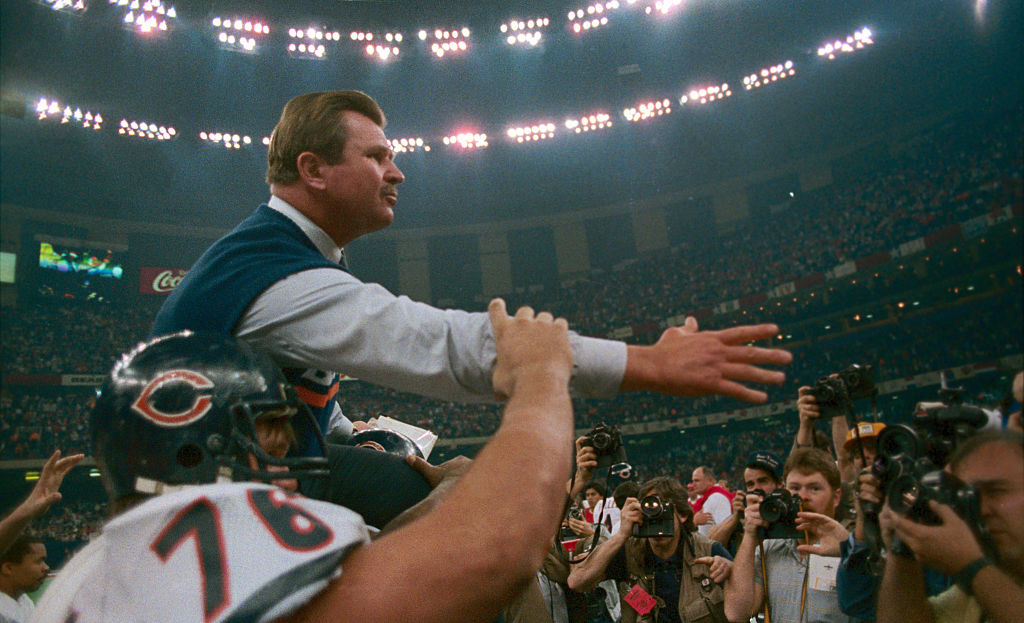
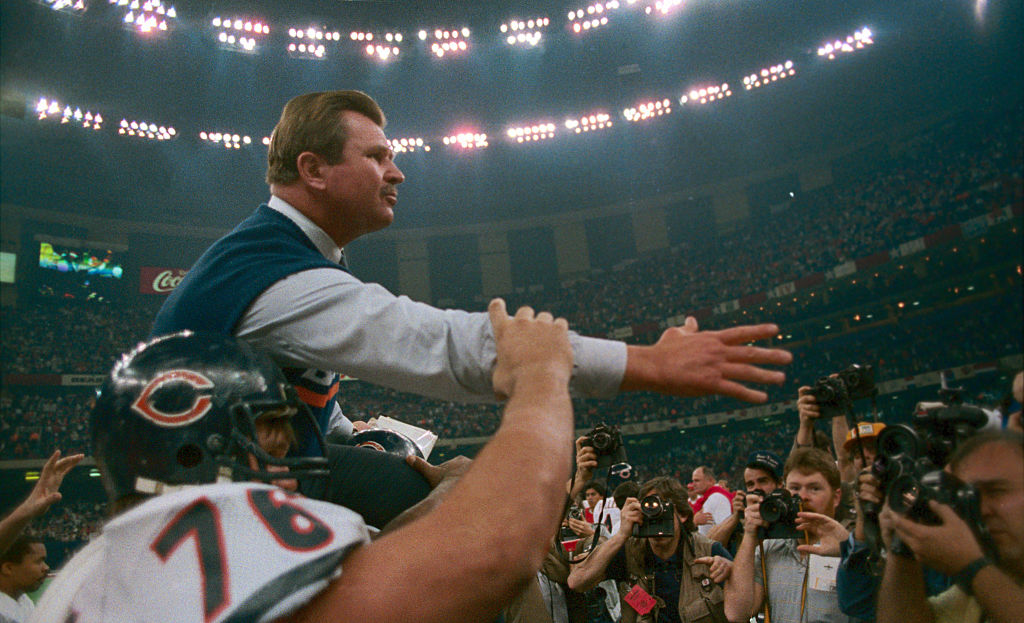
The Chicago Bears icon, who died on Friday, gave to charities, lectored at Mass, and belonged to the Knights of Columbus.
Read More
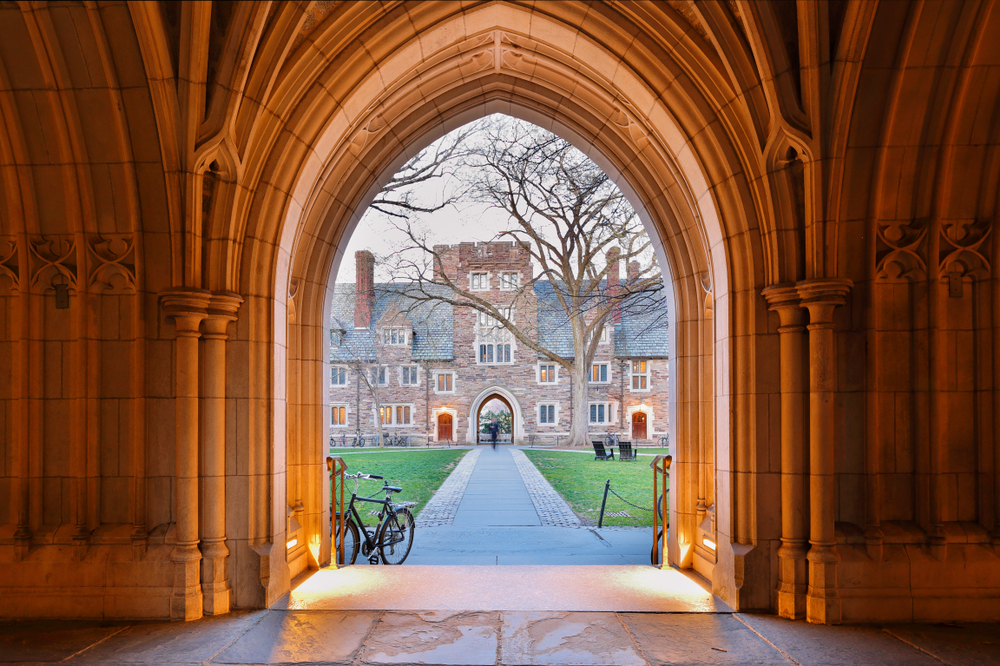
‘Those who seek Christ will find him’: Another philosopher at Princeton converts to Catholicism #Catholic Noah McKay was always “at least slightly” more confident than not that God existed.The philosophy doctoral student at Princeton University recently announced his conversion to Catholicism, but he told EWTN News that he struggled for years with what he saw as uncertainties related to faith, including the problem of evil and the “problem of divine hiddenness.”McKay is the second Princeton philosophy scholar this year to convert to the Catholic faith; earlier in the summer Joe Schmid announced his own return to the faith after years of having run an agnostic-themed philosophy channel on YouTube. “I was never an atheist, and I don’t think I was ever agnostic,” McKay told EWTN News. But he experienced profound uncertainties in high school and graduate school, some of which were also related to what he described as “difficulties with the reliability and interpretation of the Bible.”While he never fully abandoned belief in God, “what firmly convinced me of theism were, first, design arguments based on the fine-tuning of physics for the emergence of life, and, second, the empirical evidence for contemporary Christian miracles,” he said. “Arguments from consciousness, moral knowledge, and natural beauty also played a role,” he added. It is perhaps unsurprising that a philosophy scholar would be drawn into the Church in part by scholarly inquiry. Schmid told EWTN News shortly after his conversion, for instance, that “contingency arguments” helped convince him of God’s existence.McKay, meanwhile, cited “evidence for vindicatory Catholic miracles” as helping lead him to the Catholic Church specifically. Those miracles “presuppose distinctive teachings of the Catholic Church,” he pointed out, and the evidence for them, he argued, is “as good or better than the evidence for the more generically Christian miracles” in which McKay himself already believed. He told EWTN News that out of the necessity of consistency he felt he needed to either accept all of those Catholic miracles or reject all of them. “And the evidence was too strong for rejecting all of them to be reasonable!” he said. The evidence for those miracles wasn’t the only thing that convinced him of the truth of the Catholic faith, he said, but “it did motivate me to look into the history and theology of the Church more carefully,” and the evidence he found for Catholicism was “very strong.” He urged those considering Catholicism for the first time, or those who are considering returning to it, to start with researching those miracles.Speaking to Catholic YouTube apologist Cameron Bertuzzi in a recent interview, McKay argued that “if you already accept that Christianity is true, the inference to Catholicism is irresistible.” He admitted that his decision to join the Church caused his close friends and family “distress” given his Protestant background. But “I think Catholicism — if you’re fully informed, if you’re really considering all of the evidence — I think Catholicism is basically going to be irresistible,” he said. Speaking to EWTN News, he also urged potential converts and reverts: “Pray!” “I found praying the rosary especially helpful when I was discerning Catholicism,” he said. “Just ask God to help you earnestly seek the truth and make the means of discovering it available. Those who seek Christ, earnestly and prayerfully, will find him.” “I’m going to ask God to make himself known to everyone who reads this article!” he added.

‘Those who seek Christ will find him’: Another philosopher at Princeton converts to Catholicism #Catholic Noah McKay was always “at least slightly” more confident than not that God existed.The philosophy doctoral student at Princeton University recently announced his conversion to Catholicism, but he told EWTN News that he struggled for years with what he saw as uncertainties related to faith, including the problem of evil and the “problem of divine hiddenness.”McKay is the second Princeton philosophy scholar this year to convert to the Catholic faith; earlier in the summer Joe Schmid announced his own return to the faith after years of having run an agnostic-themed philosophy channel on YouTube. “I was never an atheist, and I don’t think I was ever agnostic,” McKay told EWTN News. But he experienced profound uncertainties in high school and graduate school, some of which were also related to what he described as “difficulties with the reliability and interpretation of the Bible.”While he never fully abandoned belief in God, “what firmly convinced me of theism were, first, design arguments based on the fine-tuning of physics for the emergence of life, and, second, the empirical evidence for contemporary Christian miracles,” he said. “Arguments from consciousness, moral knowledge, and natural beauty also played a role,” he added. It is perhaps unsurprising that a philosophy scholar would be drawn into the Church in part by scholarly inquiry. Schmid told EWTN News shortly after his conversion, for instance, that “contingency arguments” helped convince him of God’s existence.McKay, meanwhile, cited “evidence for vindicatory Catholic miracles” as helping lead him to the Catholic Church specifically. Those miracles “presuppose distinctive teachings of the Catholic Church,” he pointed out, and the evidence for them, he argued, is “as good or better than the evidence for the more generically Christian miracles” in which McKay himself already believed. He told EWTN News that out of the necessity of consistency he felt he needed to either accept all of those Catholic miracles or reject all of them. “And the evidence was too strong for rejecting all of them to be reasonable!” he said. The evidence for those miracles wasn’t the only thing that convinced him of the truth of the Catholic faith, he said, but “it did motivate me to look into the history and theology of the Church more carefully,” and the evidence he found for Catholicism was “very strong.” He urged those considering Catholicism for the first time, or those who are considering returning to it, to start with researching those miracles.Speaking to Catholic YouTube apologist Cameron Bertuzzi in a recent interview, McKay argued that “if you already accept that Christianity is true, the inference to Catholicism is irresistible.” He admitted that his decision to join the Church caused his close friends and family “distress” given his Protestant background. But “I think Catholicism — if you’re fully informed, if you’re really considering all of the evidence — I think Catholicism is basically going to be irresistible,” he said. Speaking to EWTN News, he also urged potential converts and reverts: “Pray!” “I found praying the rosary especially helpful when I was discerning Catholicism,” he said. “Just ask God to help you earnestly seek the truth and make the means of discovering it available. Those who seek Christ, earnestly and prayerfully, will find him.” “I’m going to ask God to make himself known to everyone who reads this article!” he added.

Noah McKay said the Catholic Church’s evidence in favor of vindicatory miracles helped lead him to the Church.
Read More