Easter

CNA’s top Catholic moments of 2025 #Catholic 
 
 Pope Leo XIV greets a girl in a wheelchair during an audience with members of Italian Catholic Action on Dec. 19, 2025 at the Vatican. Credit: Vatican Media

Dec 31, 2025 / 08:00 am (CNA).
2025 was filled with impactful moments — from the death of Pope Francis to the election of the first American-born pope, Leo XIV, to hundreds of thousands of young people who gathered in Rome for the Jubilee of Youth to the canonization of the Church’s first millennial saint.Here are some of the top Catholic moments of 2025:Death of Pope FrancisThe new year began with Catholics around the world uniting in prayer for Pope Francis’ health as he entered the hospital on Feb. 14. He was admitted to Gemelli Hospital in Rome due to a respiratory infection that progressed to bilateral pneumonia, requiring a prolonged hospitalization that lasted almost six weeks. 
         View this post on Instagram            
 
 On March 23, Pope Francis was discharged from the hospital and gave a blessing from the hospital window to the faithful who were gathered. 
         View this post on Instagram            
 
 Soon after, on March 29, the late pontiff was readmitted to the hospital with difficulty breathing. On April 21, the day after Easter, Pope Francis passed away at the age of 88 from a stroke, coma, and irreversible cardiovascular collapse, according to the death certificate published just over 12 hours after Francis’ death.More than 400,000 people filled St. Peter’s Square for the funeral of Pope Francis on April 26 as the world said goodbye to the first Latin American pope, who led the Catholic Church for 12 years.Conclave and election of Pope Leo XIVOn May 7, 133 cardinal electors gathered in the Sistine Chapel for the start of the conclave. After four ballots, Cardinal Robert Prevost was elected on May 8 as the 267th pope of the Catholic Church and took the name Pope Leo XIV. A Chicago native, he became the first American pope in Church history.Thousands gathered in St. Peter’s Square erupted in cheers as the bells of the basilica began to toll, confirming the election of a new pontiff. The crowds gathered as word spread throughout Rome that a new pope had been chosen. 
         View this post on Instagram            
 
 Jubilee of YouthOne of Pope Leo’s first major events was the Jubilee of Youth, which was held in Rome from July 28 to Aug. 3. Roughly 1 million young adults from around the world filled the streets of Rome as each day was filled with different opportunities and events for the young people to experience the richness of the Catholic faith.On Aug. 2, Pope Leo XIV was greeted by the largest crowd he had addressed during his pontificate thus far for the evening vigil at Tor Vergata, an outdoor venue 10 miles east of Rome. An estimated 1 million people were in attendance. The Holy Father arrived by helicopter and then drove through the grounds on the popemobile, waving to the cheering young people before the prayer service began.Pope Leo XIV approaches Tor Vergata in Rome by helicopter on Saturday, Aug. 2, 2025. | Credit: Vatican MediaMinneapolis school shootingThe Catholic community was shaken when a school shooting took place on Aug. 27 at Annunciation Catholic Church in Minneapolis. Two children were killed and 20 were injured. The shooter was identified as Robin Westman — who was born “Robert” and identified as a transgender woman — who died by suicide shortly after shooting through the windows of the church during a weekday school Mass.The Holy Father sent his condolences and offered prayers for the victims. He described the event as an “extremely difficult” and “terrible” tragedy.People attend a vigil at Lynnhurst Park to mourn the dead and pray for the wounded after a gunman opened fire on students at Annunciation Catholic School on Aug. 27, 2025, in Minneapolis. | Credit: Scott Olson/Getty ImagesCanonization of Carlo Acutis and Pier Giorgio FrassatiOn Sept. 7, two of the Church’s most beloved blesseds became saints: Carlo Acutis and Pier Giorgio Frassati. The canonizations of the two men, promulgated before an estimated 70,000 people in St. Peter’s Square, were the first of Leo XIV’s pontificate.During his homily, the pope said: “Today we look to St. Pier Giorgio Frassati and St. Carlo Acutis: a young man from the early 20th century and a teenager from our own day, both in love with Jesus and ready to give everything for him.”“Dear friends, Sts. Pier Giorgio Frassati and Carlo Acutis are an invitation to all of us, especially young people, not to squander our lives but to direct them upwards and make them masterpieces,” he added. 
         View this post on Instagram            
 
 Newman made doctor of the ChurchThe Catholic Church gained a new doctor of the Church on Nov. 1 , when Pope Leo XIV declared St. John Henry Newman a doctor of the Church, recognizing the English cardinal and theologian — one of the most influential converts from Anglicanism — as a towering figure of faith and intellect in modern Catholicism.“Newman’s impressive spiritual and cultural stature will surely serve as an inspiration to new generations whose hearts thirst for the infinite and who, through research and knowledge, are willing to undertake that journey which, as the ancients said, takes us ‘per aspera ad astra,’ through difficulties to the stars,” the pope said in his homily.On All Saints’ Day 2025, St. John Henry Newman was proclaimed a doctor of the Church by Pope Leo XIV. | Credit: Vatican MediaPope Leo featured at NCYCOn Nov. 21, Pope Leo took part in his first digital encounter with American youth during the National Catholic Youth Conference, which took place Nov. 20–22 in Indianapolis.The conference featured Catholic speakers, daily Mass and adoration, music and worship, breakout groups and workshops, and interactive exhibits with games, vendors, meetups, and live radio shows.The main attraction of the conference was the hourlong live, virtual dialogue the pope had with those in attendance. Five young people were chosen to ask the Holy Father questions, which ranged from prayer to technology to friendships and the future of the Church. Pope Leo gave those gathered invaluable advice regarding the several different topics discussed.First papal trip to Turkey and LebanonPope Leo visited Turkey and Lebanon during his first papal trip from Nov. 27–Dec. 2. The wide-ranging international visit included historic ecumenical encounters, deeply symbolic gestures of prayer, and pastoral visits to Christian communities under pressure. The Holy Father highlighted the importance of unity, peace, and fraternity, and brought encouragement to a region marked by ancient faith and present suffering.Pope Leo XIV visits the Sultan Ahmed Mosque, also known as the “Blue Mosque,” in Istanbul, Turkey, on Nov. 29, 2025. Credit: Vatican Media

CNA’s top Catholic moments of 2025 #Catholic Pope Leo XIV greets a girl in a wheelchair during an audience with members of Italian Catholic Action on Dec. 19, 2025 at the Vatican. Credit: Vatican Media Dec 31, 2025 / 08:00 am (CNA). 2025 was filled with impactful moments — from the death of Pope Francis to the election of the first American-born pope, Leo XIV, to hundreds of thousands of young people who gathered in Rome for the Jubilee of Youth to the canonization of the Church’s first millennial saint.Here are some of the top Catholic moments of 2025:Death of Pope FrancisThe new year began with Catholics around the world uniting in prayer for Pope Francis’ health as he entered the hospital on Feb. 14. He was admitted to Gemelli Hospital in Rome due to a respiratory infection that progressed to bilateral pneumonia, requiring a prolonged hospitalization that lasted almost six weeks. View this post on Instagram On March 23, Pope Francis was discharged from the hospital and gave a blessing from the hospital window to the faithful who were gathered. View this post on Instagram Soon after, on March 29, the late pontiff was readmitted to the hospital with difficulty breathing. On April 21, the day after Easter, Pope Francis passed away at the age of 88 from a stroke, coma, and irreversible cardiovascular collapse, according to the death certificate published just over 12 hours after Francis’ death.More than 400,000 people filled St. Peter’s Square for the funeral of Pope Francis on April 26 as the world said goodbye to the first Latin American pope, who led the Catholic Church for 12 years.Conclave and election of Pope Leo XIVOn May 7, 133 cardinal electors gathered in the Sistine Chapel for the start of the conclave. After four ballots, Cardinal Robert Prevost was elected on May 8 as the 267th pope of the Catholic Church and took the name Pope Leo XIV. A Chicago native, he became the first American pope in Church history.Thousands gathered in St. Peter’s Square erupted in cheers as the bells of the basilica began to toll, confirming the election of a new pontiff. The crowds gathered as word spread throughout Rome that a new pope had been chosen. View this post on Instagram Jubilee of YouthOne of Pope Leo’s first major events was the Jubilee of Youth, which was held in Rome from July 28 to Aug. 3. Roughly 1 million young adults from around the world filled the streets of Rome as each day was filled with different opportunities and events for the young people to experience the richness of the Catholic faith.On Aug. 2, Pope Leo XIV was greeted by the largest crowd he had addressed during his pontificate thus far for the evening vigil at Tor Vergata, an outdoor venue 10 miles east of Rome. An estimated 1 million people were in attendance. The Holy Father arrived by helicopter and then drove through the grounds on the popemobile, waving to the cheering young people before the prayer service began.Pope Leo XIV approaches Tor Vergata in Rome by helicopter on Saturday, Aug. 2, 2025. | Credit: Vatican MediaMinneapolis school shootingThe Catholic community was shaken when a school shooting took place on Aug. 27 at Annunciation Catholic Church in Minneapolis. Two children were killed and 20 were injured. The shooter was identified as Robin Westman — who was born “Robert” and identified as a transgender woman — who died by suicide shortly after shooting through the windows of the church during a weekday school Mass.The Holy Father sent his condolences and offered prayers for the victims. He described the event as an “extremely difficult” and “terrible” tragedy.People attend a vigil at Lynnhurst Park to mourn the dead and pray for the wounded after a gunman opened fire on students at Annunciation Catholic School on Aug. 27, 2025, in Minneapolis. | Credit: Scott Olson/Getty ImagesCanonization of Carlo Acutis and Pier Giorgio FrassatiOn Sept. 7, two of the Church’s most beloved blesseds became saints: Carlo Acutis and Pier Giorgio Frassati. The canonizations of the two men, promulgated before an estimated 70,000 people in St. Peter’s Square, were the first of Leo XIV’s pontificate.During his homily, the pope said: “Today we look to St. Pier Giorgio Frassati and St. Carlo Acutis: a young man from the early 20th century and a teenager from our own day, both in love with Jesus and ready to give everything for him.”“Dear friends, Sts. Pier Giorgio Frassati and Carlo Acutis are an invitation to all of us, especially young people, not to squander our lives but to direct them upwards and make them masterpieces,” he added. View this post on Instagram Newman made doctor of the ChurchThe Catholic Church gained a new doctor of the Church on Nov. 1 , when Pope Leo XIV declared St. John Henry Newman a doctor of the Church, recognizing the English cardinal and theologian — one of the most influential converts from Anglicanism — as a towering figure of faith and intellect in modern Catholicism.“Newman’s impressive spiritual and cultural stature will surely serve as an inspiration to new generations whose hearts thirst for the infinite and who, through research and knowledge, are willing to undertake that journey which, as the ancients said, takes us ‘per aspera ad astra,’ through difficulties to the stars,” the pope said in his homily.On All Saints’ Day 2025, St. John Henry Newman was proclaimed a doctor of the Church by Pope Leo XIV. | Credit: Vatican MediaPope Leo featured at NCYCOn Nov. 21, Pope Leo took part in his first digital encounter with American youth during the National Catholic Youth Conference, which took place Nov. 20–22 in Indianapolis.The conference featured Catholic speakers, daily Mass and adoration, music and worship, breakout groups and workshops, and interactive exhibits with games, vendors, meetups, and live radio shows.The main attraction of the conference was the hourlong live, virtual dialogue the pope had with those in attendance. Five young people were chosen to ask the Holy Father questions, which ranged from prayer to technology to friendships and the future of the Church. Pope Leo gave those gathered invaluable advice regarding the several different topics discussed.First papal trip to Turkey and LebanonPope Leo visited Turkey and Lebanon during his first papal trip from Nov. 27–Dec. 2. The wide-ranging international visit included historic ecumenical encounters, deeply symbolic gestures of prayer, and pastoral visits to Christian communities under pressure. The Holy Father highlighted the importance of unity, peace, and fraternity, and brought encouragement to a region marked by ancient faith and present suffering.Pope Leo XIV visits the Sultan Ahmed Mosque, also known as the “Blue Mosque,” in Istanbul, Turkey, on Nov. 29, 2025. Credit: Vatican Media


Pope Leo XIV greets a girl in a wheelchair during an audience with members of Italian Catholic Action on Dec. 19, 2025 at the Vatican. Credit: Vatican Media

Dec 31, 2025 / 08:00 am (CNA).

2025 was filled with impactful moments — from the death of Pope Francis to the election of the first American-born pope, Leo XIV, to hundreds of thousands of young people who gathered in Rome for the Jubilee of Youth to the canonization of the Church’s first millennial saint.

Here are some of the top Catholic moments of 2025:

Death of Pope Francis

The new year began with Catholics around the world uniting in prayer for Pope Francis’ health as he entered the hospital on Feb. 14. He was admitted to Gemelli Hospital in Rome due to a respiratory infection that progressed to bilateral pneumonia, requiring a prolonged hospitalization that lasted almost six weeks.

On March 23, Pope Francis was discharged from the hospital and gave a blessing from the hospital window to the faithful who were gathered.

Soon after, on March 29, the late pontiff was readmitted to the hospital with difficulty breathing. On April 21, the day after Easter, Pope Francis passed away at the age of 88 from a stroke, coma, and irreversible cardiovascular collapse, according to the death certificate published just over 12 hours after Francis’ death.

More than 400,000 people filled St. Peter’s Square for the funeral of Pope Francis on April 26 as the world said goodbye to the first Latin American pope, who led the Catholic Church for 12 years.

Conclave and election of Pope Leo XIV

On May 7, 133 cardinal electors gathered in the Sistine Chapel for the start of the conclave. After four ballots, Cardinal Robert Prevost was elected on May 8 as the 267th pope of the Catholic Church and took the name Pope Leo XIV. A Chicago native, he became the first American pope in Church history.

Thousands gathered in St. Peter’s Square erupted in cheers as the bells of the basilica began to toll, confirming the election of a new pontiff. The crowds gathered as word spread throughout Rome that a new pope had been chosen.

Jubilee of Youth

One of Pope Leo’s first major events was the Jubilee of Youth, which was held in Rome from July 28 to Aug. 3. Roughly 1 million young adults from around the world filled the streets of Rome as each day was filled with different opportunities and events for the young people to experience the richness of the Catholic faith.

On Aug. 2, Pope Leo XIV was greeted by the largest crowd he had addressed during his pontificate thus far for the evening vigil at Tor Vergata, an outdoor venue 10 miles east of Rome. An estimated 1 million people were in attendance. The Holy Father arrived by helicopter and then drove through the grounds on the popemobile, waving to the cheering young people before the prayer service began.

Pope Leo XIV approaches Tor Vergata in Rome by helicopter on Saturday, Aug. 2, 2025. | Credit: Vatican Media

Minneapolis school shooting

The Catholic community was shaken when a school shooting took place on Aug. 27 at Annunciation Catholic Church in Minneapolis. Two children were killed and 20 were injured. The shooter was identified as Robin Westman — who was born “Robert” and identified as a transgender woman — who died by suicide shortly after shooting through the windows of the church during a weekday school Mass.

The Holy Father sent his condolences and offered prayers for the victims. He described the event as an “extremely difficult” and “terrible” tragedy.

People attend a vigil at Lynnhurst Park to mourn the dead and pray for the wounded after a gunman opened fire on students at Annunciation Catholic School on Aug. 27, 2025, in Minneapolis. | Credit: Scott Olson/Getty Images

Canonization of Carlo Acutis and Pier Giorgio Frassati

On Sept. 7, two of the Church’s most beloved blesseds became saints: Carlo Acutis and Pier Giorgio Frassati. The canonizations of the two men, promulgated before an estimated 70,000 people in St. Peter’s Square, were the first of Leo XIV’s pontificate.

During his homily, the pope said: “Today we look to St. Pier Giorgio Frassati and St. Carlo Acutis: a young man from the early 20th century and a teenager from our own day, both in love with Jesus and ready to give everything for him.”

“Dear friends, Sts. Pier Giorgio Frassati and Carlo Acutis are an invitation to all of us, especially young people, not to squander our lives but to direct them upwards and make them masterpieces,” he added.

Newman made doctor of the Church

The Catholic Church gained a new doctor of the Church on Nov. 1 , when Pope Leo XIV declared St. John Henry Newman a doctor of the Church, recognizing the English cardinal and theologian — one of the most influential converts from Anglicanism — as a towering figure of faith and intellect in modern Catholicism.

“Newman’s impressive spiritual and cultural stature will surely serve as an inspiration to new generations whose hearts thirst for the infinite and who, through research and knowledge, are willing to undertake that journey which, as the ancients said, takes us ‘per aspera ad astra,’ through difficulties to the stars,” the pope said in his homily.

On All Saints’ Day 2025, St. John Henry Newman was proclaimed a doctor of the Church by Pope Leo XIV. | Credit: Vatican Media

Pope Leo featured at NCYC

On Nov. 21, Pope Leo took part in his first digital encounter with American youth during the National Catholic Youth Conference, which took place Nov. 20–22 in Indianapolis.

The conference featured Catholic speakers, daily Mass and adoration, music and worship, breakout groups and workshops, and interactive exhibits with games, vendors, meetups, and live radio shows.

The main attraction of the conference was the hourlong live, virtual dialogue the pope had with those in attendance. Five young people were chosen to ask the Holy Father questions, which ranged from prayer to technology to friendships and the future of the Church. Pope Leo gave those gathered invaluable advice regarding the several different topics discussed.

First papal trip to Turkey and Lebanon

Pope Leo visited Turkey and Lebanon during his first papal trip from Nov. 27–Dec. 2. The wide-ranging international visit included historic ecumenical encounters, deeply symbolic gestures of prayer, and pastoral visits to Christian communities under pressure. The Holy Father highlighted the importance of unity, peace, and fraternity, and brought encouragement to a region marked by ancient faith and present suffering.

Pope Leo XIV visits the Sultan Ahmed Mosque, also known as the “Blue Mosque,” in Istanbul, Turkey, on Nov. 29, 2025. Credit: Vatican Media
Read More
Rest in peace: Looking back at notable Catholics who passed away in 2025 #Catholic 
 
 Credit: udra11/Shutterstock

Dec 31, 2025 / 06:00 am (CNA).
The past year has seen several notable Catholics pass away — from public officials to the vicar of Christ himself.Here’s a rundown of some prominent Catholics around the world who left us in 2025:Pope Francis (Dec. 17, 1936 — April 21, 2025)The Holy Father, Pope Francis, passed away at 7:35 a.m. on Easter Monday, April 21, at his residence in the Vatican’s Casa Santa Marta. The 88-year-old pontiff led the Catholic Church for a little more than 12 years.The first Latin American pope in history as well as the first Jesuit pope, Francis led the Church through significant canonical and catechetical reforms, urging the faithful to reach out and minister to those on the margins of society while preaching the mercy of God.Upon his death he left the legacy of what Cardinal Kevin Farrell said was a life “dedicated to the service of God and his Church,” one that urged the faithful to “live the values of the Gospel with fidelity, courage, and universal love, especially for the poorest and most marginalized.”Pope Francis was succeeded in the chair of St. Peter by Pope Leo XIV on May 8.Mabel Landry Staton (Nov. 20, 1932 — Feb. 20, 2025)Mabel Landry Staton, a trailblazing athlete who briefly set an Olympic record at the 1952 Summer Olympics, died on Feb. 20 at age 92.Representing the United States at the Olympic games in Helsinki in 1952, Staton — known as “Dolly” after a nickname from her father — set a record in the long jump category at 19 feet 3.25 inches. Though the record only lasted for several minutes before New Zealand athlete Yvette Williams bested it, Staton would go on to win medals in the 1955 Pan American Games.The Philadelphia Inquirer reported that Staton served as a Eucharistic minister at St. Thomas More Church in Cherry Hill, New Jersey, as well as on the board of the Black Catholic Ministry of the Diocese of Camden.According to the Inquirer, Staton “could still outsprint some of the local high school boys in her 70s.”Alasdair MacIntyre (Jan. 12, 1929 — May 21, 2025)Alasdair MacIntyre, a towering figure in moral philosophy and a Catholic convert credited with reviving the discipline of virtue ethics, died on May 21 at age 96.His seminal 1981 work “After Virtue” reshaped contemporary moral and political philosophy, emphasizing virtue over utilitarian or deontological frameworks.Known by many as “the most important” modern Catholic philosopher, MacIntyre’s intellectual and spiritual journey spanned atheism, Marxism, Anglicanism, and ultimately Roman Catholicism.James Hitchcock (Feb. 13, 1938 — July 14, 2025)James Hitchcock — a noted historian of the Catholic Church, popular author, and longtime college professor — died on July 14 at age 87.Hitchcock was remembered by friends and colleagues as a man of prophetic insight who defended Church teaching and helped to make the Catholic intellectual tradition accessible for his students and readers.Hitchcock taught history at Saint Louis University from the late 1960s until 2013. Some of the most popular of the dozen books he wrote include his one-volume “History of the Catholic Church: From the Apostolic Age to the Third Millennium,” published in 2012 by Ignatius Press.Frank Caprio (Nov. 24, 1936 — Aug. 20, 2025)Frank Caprio, who served as a Providence, Rhode Island, municipal court judge for nearly 40 years and came to be known as “America’s nicest judge,” passed away on Aug. 20 from pancreatic cancer.Caprio gained worldwide fame for a lenient judicial style that blended justice, extreme empathy, and mercy when his courtroom was televised in a program called “Caught in Providence.”The program began in 1999 and went viral in 2017, achieving hundreds of millions of views since then. The show was nominated for a Daytime Emmy Award in 2021 and has a YouTube channel with nearly 3 million subscribers.Caprio told EWTN News in February that he always kept in mind something his father, a hardworking Italian immigrant with a fifth-grade education, had impressed upon him: “What might seem like a small fine to some was something that many couldn’t afford.”“Your case is dismissed” became Caprio’s signature phrase.Thomas A. Nelson (March 1, 1937 — Aug. 16, 2025)Thomas A. Nelson, the founder of TAN Books — a Catholic publishing house known for its books promoting traditional Catholicism in the post-Vatican II era — died Aug. 16 at age 88.Nelson, who had previously worked as a teacher, founded TAN Books and Publishers Inc. in Rockford, Illinois, in 1967 and an accompanying printing plant in 1978. In addition to being Nelson’s initials, TAN is an acronym for the Latin phrase “Tuum Adoramus Nomen” (“Let Us Adore Thy Name”).Under Nelson’s ownership, TAN became known for publishing orthodox Catholic books, including reprints of classic Catholic works on theology, Scripture, traditional devotions, the Traditional Latin Mass, and the lives of the saints as well as new titles on these subjects by contemporary authors.Katharine, Duchess of Kent (Feb. 22, 1933 — Sept. 4, 2025)The Duchess of Kent, who became the first senior British royal to be received into the Catholic Church since the 17th century, died on Sept. 4 at the age of 92.Renowned for her natural charm, compassion for the sick and downtrodden, and commitment to serving others, the duchess was a much-loved and hardworking British royal whose popularity was enhanced by her own personal suffering and self-effacing nature.She was received into the Church in January 1994 by Cardinal Basil Hume. Up until then, no senior royal had publicly been received into the Church since 1685.Katharine spoke favorably of the Church’s moral precepts. “I do love guidelines and the Catholic Church offers you guidelines,” she once told the BBC. “I have always wanted that in my life. I like to know what’s expected of me.”Sister Jean Dolores Schmidt (Aug. 21, 1919 — Oct. 9, 2025)Sister Jean Dolores Schmidt, the beloved Catholic nun who became known across the country at the age of 98 as the chaplain of the Loyola University Chicago men’s basketball team, died Oct. 9 at the age of 106.Sister Jean was born Dolores Bertha Schmidt on Aug. 21, 1919, to Joseph and Bertha Schmidt. She was raised in a devout Catholic home in San Francisco’s Castro District.In 1937, she joined the Sisters of Charity of the Blessed Virgin Mary and took the name Sister Jean Dolores. In 1991, she joined the staff at Loyola Chicago and three years later became part of the basketball team, first as an academic adviser before transitioning to chaplain.Sister Jean led the team in prayer before each game — praying for her players to be safe, for the referees to be fair, and for God’s assistance during the game.She also admitted to praying for the opposing team, though “not as hard.”Sister Mary Michael of the Eucharistic Heart of Jesus, PCPA (Feb. 25, 1931 — Nov. 10, 2025)Sister Mary Michael of the Eucharistic Heart of Jesus, PCPA, died on Nov. 10 at age 94 after roughly three-quarters of a century of religious life.Sister Mary Michael was the last of the original five nuns who, along with EWTN foundress Mother Angelica, began the Our Lady of the Angels Monastery in Irondale, Alabama.Born Evelyn Shinosky on Feb. 25, 1931, to Joseph and Helen Shinosky, she entered Sancta Clara Monastery in Canton, Ohio, on Aug. 15, 1951, and received the habit and her new name the following May.Her passing marked the end of an era at EWTN and at the monastery — one that saw both the launch of the global Catholic network and the expansion of the religious community to include the Shrine of the Most Blessed Sacrament of Our Lady of the Angels Monastery.Paul Badde (March 10, 1948 — Nov. 10, 2025)Paul Badde, author of many well-known books such as “Benedict Up Close,” “The Face of God,” and “The True Icon,” died on Nov. 10 at the age of 77 after a long illness. Badde was also a veteran contributor to EWTN and CNA Deutsch, CNA’s German-language news partner.Born in Schaag, Germany — a small village on the Lower Rhine — he studied philosophy and sociology in Freiburg as well as art history, history, and political science in Frankfurt. Before embarking on a journalistic career, Badde worked as a teacher for several years.A founding editor of Vatican Magazine, Paul and his wife, Ellen, had five children. Sister JoAnn Persch (June 27, 1934 — Nov. 14, 2025)Longtime immigrant rights advocate Sister JoAnn Persch died on Nov. 14 at age 91.Two weeks before her death, Persch attempted to bring Communion to detainees at the Broadview, Illinois, Immigration and Customs Enforcement (ICE) facility where for decades the Sisters of Mercy ministered to migrants and refugees. Officials denied her entry.Persch and Sister Pat Murphy were founding members of the Su Casa Catholic Worker House in Chicago, serving refugees from Central America who were survivors of war, torture, and political persecution.May the souls of the faithful departed, through the mercy of God, rest in peace.

Rest in peace: Looking back at notable Catholics who passed away in 2025 #Catholic Credit: udra11/Shutterstock Dec 31, 2025 / 06:00 am (CNA). The past year has seen several notable Catholics pass away — from public officials to the vicar of Christ himself.Here’s a rundown of some prominent Catholics around the world who left us in 2025:Pope Francis (Dec. 17, 1936 — April 21, 2025)The Holy Father, Pope Francis, passed away at 7:35 a.m. on Easter Monday, April 21, at his residence in the Vatican’s Casa Santa Marta. The 88-year-old pontiff led the Catholic Church for a little more than 12 years.The first Latin American pope in history as well as the first Jesuit pope, Francis led the Church through significant canonical and catechetical reforms, urging the faithful to reach out and minister to those on the margins of society while preaching the mercy of God.Upon his death he left the legacy of what Cardinal Kevin Farrell said was a life “dedicated to the service of God and his Church,” one that urged the faithful to “live the values of the Gospel with fidelity, courage, and universal love, especially for the poorest and most marginalized.”Pope Francis was succeeded in the chair of St. Peter by Pope Leo XIV on May 8.Mabel Landry Staton (Nov. 20, 1932 — Feb. 20, 2025)Mabel Landry Staton, a trailblazing athlete who briefly set an Olympic record at the 1952 Summer Olympics, died on Feb. 20 at age 92.Representing the United States at the Olympic games in Helsinki in 1952, Staton — known as “Dolly” after a nickname from her father — set a record in the long jump category at 19 feet 3.25 inches. Though the record only lasted for several minutes before New Zealand athlete Yvette Williams bested it, Staton would go on to win medals in the 1955 Pan American Games.The Philadelphia Inquirer reported that Staton served as a Eucharistic minister at St. Thomas More Church in Cherry Hill, New Jersey, as well as on the board of the Black Catholic Ministry of the Diocese of Camden.According to the Inquirer, Staton “could still outsprint some of the local high school boys in her 70s.”Alasdair MacIntyre (Jan. 12, 1929 — May 21, 2025)Alasdair MacIntyre, a towering figure in moral philosophy and a Catholic convert credited with reviving the discipline of virtue ethics, died on May 21 at age 96.His seminal 1981 work “After Virtue” reshaped contemporary moral and political philosophy, emphasizing virtue over utilitarian or deontological frameworks.Known by many as “the most important” modern Catholic philosopher, MacIntyre’s intellectual and spiritual journey spanned atheism, Marxism, Anglicanism, and ultimately Roman Catholicism.James Hitchcock (Feb. 13, 1938 — July 14, 2025)James Hitchcock — a noted historian of the Catholic Church, popular author, and longtime college professor — died on July 14 at age 87.Hitchcock was remembered by friends and colleagues as a man of prophetic insight who defended Church teaching and helped to make the Catholic intellectual tradition accessible for his students and readers.Hitchcock taught history at Saint Louis University from the late 1960s until 2013. Some of the most popular of the dozen books he wrote include his one-volume “History of the Catholic Church: From the Apostolic Age to the Third Millennium,” published in 2012 by Ignatius Press.Frank Caprio (Nov. 24, 1936 — Aug. 20, 2025)Frank Caprio, who served as a Providence, Rhode Island, municipal court judge for nearly 40 years and came to be known as “America’s nicest judge,” passed away on Aug. 20 from pancreatic cancer.Caprio gained worldwide fame for a lenient judicial style that blended justice, extreme empathy, and mercy when his courtroom was televised in a program called “Caught in Providence.”The program began in 1999 and went viral in 2017, achieving hundreds of millions of views since then. The show was nominated for a Daytime Emmy Award in 2021 and has a YouTube channel with nearly 3 million subscribers.Caprio told EWTN News in February that he always kept in mind something his father, a hardworking Italian immigrant with a fifth-grade education, had impressed upon him: “What might seem like a small fine to some was something that many couldn’t afford.”“Your case is dismissed” became Caprio’s signature phrase.Thomas A. Nelson (March 1, 1937 — Aug. 16, 2025)Thomas A. Nelson, the founder of TAN Books — a Catholic publishing house known for its books promoting traditional Catholicism in the post-Vatican II era — died Aug. 16 at age 88.Nelson, who had previously worked as a teacher, founded TAN Books and Publishers Inc. in Rockford, Illinois, in 1967 and an accompanying printing plant in 1978. In addition to being Nelson’s initials, TAN is an acronym for the Latin phrase “Tuum Adoramus Nomen” (“Let Us Adore Thy Name”).Under Nelson’s ownership, TAN became known for publishing orthodox Catholic books, including reprints of classic Catholic works on theology, Scripture, traditional devotions, the Traditional Latin Mass, and the lives of the saints as well as new titles on these subjects by contemporary authors.Katharine, Duchess of Kent (Feb. 22, 1933 — Sept. 4, 2025)The Duchess of Kent, who became the first senior British royal to be received into the Catholic Church since the 17th century, died on Sept. 4 at the age of 92.Renowned for her natural charm, compassion for the sick and downtrodden, and commitment to serving others, the duchess was a much-loved and hardworking British royal whose popularity was enhanced by her own personal suffering and self-effacing nature.She was received into the Church in January 1994 by Cardinal Basil Hume. Up until then, no senior royal had publicly been received into the Church since 1685.Katharine spoke favorably of the Church’s moral precepts. “I do love guidelines and the Catholic Church offers you guidelines,” she once told the BBC. “I have always wanted that in my life. I like to know what’s expected of me.”Sister Jean Dolores Schmidt (Aug. 21, 1919 — Oct. 9, 2025)Sister Jean Dolores Schmidt, the beloved Catholic nun who became known across the country at the age of 98 as the chaplain of the Loyola University Chicago men’s basketball team, died Oct. 9 at the age of 106.Sister Jean was born Dolores Bertha Schmidt on Aug. 21, 1919, to Joseph and Bertha Schmidt. She was raised in a devout Catholic home in San Francisco’s Castro District.In 1937, she joined the Sisters of Charity of the Blessed Virgin Mary and took the name Sister Jean Dolores. In 1991, she joined the staff at Loyola Chicago and three years later became part of the basketball team, first as an academic adviser before transitioning to chaplain.Sister Jean led the team in prayer before each game — praying for her players to be safe, for the referees to be fair, and for God’s assistance during the game.She also admitted to praying for the opposing team, though “not as hard.”Sister Mary Michael of the Eucharistic Heart of Jesus, PCPA (Feb. 25, 1931 — Nov. 10, 2025)Sister Mary Michael of the Eucharistic Heart of Jesus, PCPA, died on Nov. 10 at age 94 after roughly three-quarters of a century of religious life.Sister Mary Michael was the last of the original five nuns who, along with EWTN foundress Mother Angelica, began the Our Lady of the Angels Monastery in Irondale, Alabama.Born Evelyn Shinosky on Feb. 25, 1931, to Joseph and Helen Shinosky, she entered Sancta Clara Monastery in Canton, Ohio, on Aug. 15, 1951, and received the habit and her new name the following May.Her passing marked the end of an era at EWTN and at the monastery — one that saw both the launch of the global Catholic network and the expansion of the religious community to include the Shrine of the Most Blessed Sacrament of Our Lady of the Angels Monastery.Paul Badde (March 10, 1948 — Nov. 10, 2025)Paul Badde, author of many well-known books such as “Benedict Up Close,” “The Face of God,” and “The True Icon,” died on Nov. 10 at the age of 77 after a long illness. Badde was also a veteran contributor to EWTN and CNA Deutsch, CNA’s German-language news partner.Born in Schaag, Germany — a small village on the Lower Rhine — he studied philosophy and sociology in Freiburg as well as art history, history, and political science in Frankfurt. Before embarking on a journalistic career, Badde worked as a teacher for several years.A founding editor of Vatican Magazine, Paul and his wife, Ellen, had five children. Sister JoAnn Persch (June 27, 1934 — Nov. 14, 2025)Longtime immigrant rights advocate Sister JoAnn Persch died on Nov. 14 at age 91.Two weeks before her death, Persch attempted to bring Communion to detainees at the Broadview, Illinois, Immigration and Customs Enforcement (ICE) facility where for decades the Sisters of Mercy ministered to migrants and refugees. Officials denied her entry.Persch and Sister Pat Murphy were founding members of the Su Casa Catholic Worker House in Chicago, serving refugees from Central America who were survivors of war, torture, and political persecution.May the souls of the faithful departed, through the mercy of God, rest in peace.


Credit: udra11/Shutterstock

Dec 31, 2025 / 06:00 am (CNA).

The past year has seen several notable Catholics pass away — from public officials to the vicar of Christ himself.

Here’s a rundown of some prominent Catholics around the world who left us in 2025:

Pope Francis (Dec. 17, 1936 — April 21, 2025)

The Holy Father, Pope Francis, passed away at 7:35 a.m. on Easter Monday, April 21, at his residence in the Vatican’s Casa Santa Marta. The 88-year-old pontiff led the Catholic Church for a little more than 12 years.

The first Latin American pope in history as well as the first Jesuit pope, Francis led the Church through significant canonical and catechetical reforms, urging the faithful to reach out and minister to those on the margins of society while preaching the mercy of God.

Upon his death he left the legacy of what Cardinal Kevin Farrell said was a life “dedicated to the service of God and his Church,” one that urged the faithful to “live the values of the Gospel with fidelity, courage, and universal love, especially for the poorest and most marginalized.”

Pope Francis was succeeded in the chair of St. Peter by Pope Leo XIV on May 8.

Mabel Landry Staton (Nov. 20, 1932 — Feb. 20, 2025)

Mabel Landry Staton, a trailblazing athlete who briefly set an Olympic record at the 1952 Summer Olympics, died on Feb. 20 at age 92.

Representing the United States at the Olympic games in Helsinki in 1952, Staton — known as “Dolly” after a nickname from her father — set a record in the long jump category at 19 feet 3.25 inches. Though the record only lasted for several minutes before New Zealand athlete Yvette Williams bested it, Staton would go on to win medals in the 1955 Pan American Games.

The Philadelphia Inquirer reported that Staton served as a Eucharistic minister at St. Thomas More Church in Cherry Hill, New Jersey, as well as on the board of the Black Catholic Ministry of the Diocese of Camden.

According to the Inquirer, Staton “could still outsprint some of the local high school boys in her 70s.”

Alasdair MacIntyre (Jan. 12, 1929 — May 21, 2025)

Alasdair MacIntyre, a towering figure in moral philosophy and a Catholic convert credited with reviving the discipline of virtue ethics, died on May 21 at age 96.

His seminal 1981 work “After Virtue” reshaped contemporary moral and political philosophy, emphasizing virtue over utilitarian or deontological frameworks.

Known by many as “the most important” modern Catholic philosopher, MacIntyre’s intellectual and spiritual journey spanned atheism, Marxism, Anglicanism, and ultimately Roman Catholicism.

James Hitchcock (Feb. 13, 1938 — July 14, 2025)

James Hitchcock — a noted historian of the Catholic Church, popular author, and longtime college professor — died on July 14 at age 87.

Hitchcock was remembered by friends and colleagues as a man of prophetic insight who defended Church teaching and helped to make the Catholic intellectual tradition accessible for his students and readers.

Hitchcock taught history at Saint Louis University from the late 1960s until 2013. Some of the most popular of the dozen books he wrote include his one-volume “History of the Catholic Church: From the Apostolic Age to the Third Millennium,” published in 2012 by Ignatius Press.

Frank Caprio (Nov. 24, 1936 — Aug. 20, 2025)

Frank Caprio, who served as a Providence, Rhode Island, municipal court judge for nearly 40 years and came to be known as “America’s nicest judge,” passed away on Aug. 20 from pancreatic cancer.

Caprio gained worldwide fame for a lenient judicial style that blended justice, extreme empathy, and mercy when his courtroom was televised in a program called “Caught in Providence.”

The program began in 1999 and went viral in 2017, achieving hundreds of millions of views since then. The show was nominated for a Daytime Emmy Award in 2021 and has a YouTube channel with nearly 3 million subscribers.

Caprio told EWTN News in February that he always kept in mind something his father, a hardworking Italian immigrant with a fifth-grade education, had impressed upon him: “What might seem like a small fine to some was something that many couldn’t afford.”

“Your case is dismissed” became Caprio’s signature phrase.

Thomas A. Nelson (March 1, 1937 — Aug. 16, 2025)

Thomas A. Nelson, the founder of TAN Books — a Catholic publishing house known for its books promoting traditional Catholicism in the post-Vatican II era — died Aug. 16 at age 88.

Nelson, who had previously worked as a teacher, founded TAN Books and Publishers Inc. in Rockford, Illinois, in 1967 and an accompanying printing plant in 1978. In addition to being Nelson’s initials, TAN is an acronym for the Latin phrase “Tuum Adoramus Nomen” (“Let Us Adore Thy Name”).

Under Nelson’s ownership, TAN became known for publishing orthodox Catholic books, including reprints of classic Catholic works on theology, Scripture, traditional devotions, the Traditional Latin Mass, and the lives of the saints as well as new titles on these subjects by contemporary authors.

Katharine, Duchess of Kent (Feb. 22, 1933 — Sept. 4, 2025)

The Duchess of Kent, who became the first senior British royal to be received into the Catholic Church since the 17th century, died on Sept. 4 at the age of 92.

Renowned for her natural charm, compassion for the sick and downtrodden, and commitment to serving others, the duchess was a much-loved and hardworking British royal whose popularity was enhanced by her own personal suffering and self-effacing nature.

She was received into the Church in January 1994 by Cardinal Basil Hume. Up until then, no senior royal had publicly been received into the Church since 1685.

Katharine spoke favorably of the Church’s moral precepts. “I do love guidelines and the Catholic Church offers you guidelines,” she once told the BBC. “I have always wanted that in my life. I like to know what’s expected of me.”

Sister Jean Dolores Schmidt (Aug. 21, 1919 — Oct. 9, 2025)

Sister Jean Dolores Schmidt, the beloved Catholic nun who became known across the country at the age of 98 as the chaplain of the Loyola University Chicago men’s basketball team, died Oct. 9 at the age of 106.

Sister Jean was born Dolores Bertha Schmidt on Aug. 21, 1919, to Joseph and Bertha Schmidt. She was raised in a devout Catholic home in San Francisco’s Castro District.

In 1937, she joined the Sisters of Charity of the Blessed Virgin Mary and took the name Sister Jean Dolores. In 1991, she joined the staff at Loyola Chicago and three years later became part of the basketball team, first as an academic adviser before transitioning to chaplain.

Sister Jean led the team in prayer before each game — praying for her players to be safe, for the referees to be fair, and for God’s assistance during the game.

She also admitted to praying for the opposing team, though “not as hard.”

Sister Mary Michael of the Eucharistic Heart of Jesus, PCPA (Feb. 25, 1931 — Nov. 10, 2025)

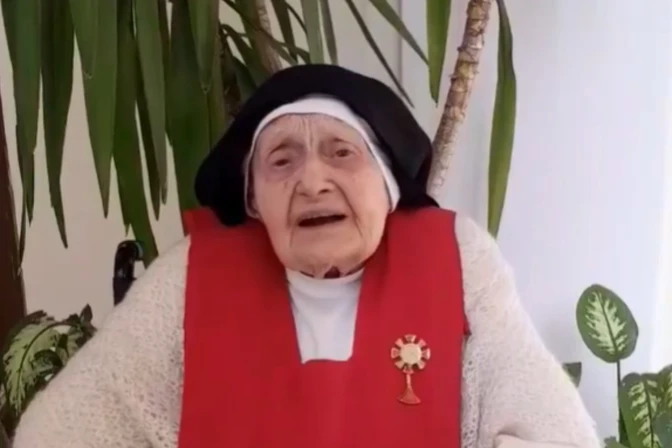
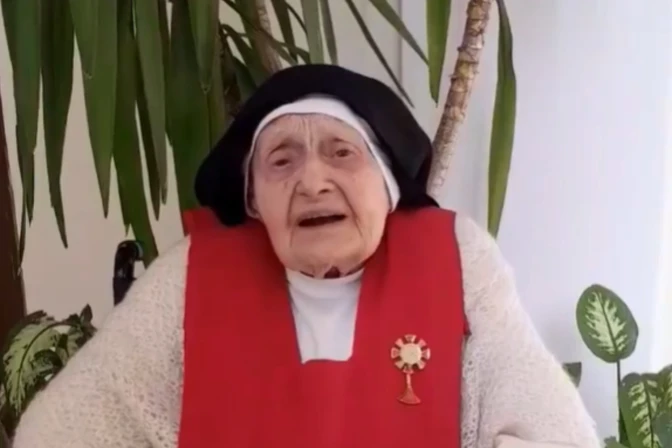
Sister Mary Michael of the Eucharistic Heart of Jesus, PCPA, died on Nov. 10 at age 94 after roughly three-quarters of a century of religious life.

Sister Mary Michael was the last of the original five nuns who, along with EWTN foundress Mother Angelica, began the Our Lady of the Angels Monastery in Irondale, Alabama.

Born Evelyn Shinosky on Feb. 25, 1931, to Joseph and Helen Shinosky, she entered Sancta Clara Monastery in Canton, Ohio, on Aug. 15, 1951, and received the habit and her new name the following May.

Her passing marked the end of an era at EWTN and at the monastery — one that saw both the launch of the global Catholic network and the expansion of the religious community to include the Shrine of the Most Blessed Sacrament of Our Lady of the Angels Monastery.

Paul Badde (March 10, 1948 — Nov. 10, 2025)

Paul Badde, author of many well-known books such as “Benedict Up Close,” “The Face of God,” and “The True Icon,” died on Nov. 10 at the age of 77 after a long illness. Badde was also a veteran contributor to EWTN and CNA Deutsch, CNA’s German-language news partner.

Born in Schaag, Germany — a small village on the Lower Rhine — he studied philosophy and sociology in Freiburg as well as art history, history, and political science in Frankfurt. Before embarking on a journalistic career, Badde worked as a teacher for several years.

A founding editor of Vatican Magazine, Paul and his wife, Ellen, had five children.

Sister JoAnn Persch (June 27, 1934 — Nov. 14, 2025)

Longtime immigrant rights advocate Sister JoAnn Persch died on Nov. 14 at age 91.

Two weeks before her death, Persch attempted to bring Communion to detainees at the Broadview, Illinois, Immigration and Customs Enforcement (ICE) facility where for decades the Sisters of Mercy ministered to migrants and refugees. Officials denied her entry.

Persch and Sister Pat Murphy were founding members of the Su Casa Catholic Worker House in Chicago, serving refugees from Central America who were survivors of war, torture, and political persecution.

May the souls of the faithful departed, through the mercy of God, rest in peace.

Read More
College campus ministries register remarkable growth in baptisms, confirmations #Catholic 
 
 Mass at Arizona State University’s Newman Center chapel. / Credit: Photo courtesy of Father Bill Clements, director of ASU Newman Center

Ann Arbor, Michigan, Dec 15, 2025 / 07:00 am (CNA).
Several college campuses across the country are witnessing a notable rise in baptisms and confirmations among students. Catholic evangelists tell CNA that this growth reflects a deepening desire among young adults for certainty, stability, and faith amid today’s turbulent cultural landscape.For example, at Arizona State University, the Newman Center is experiencing its largest group of students entering the Church. Ryan Ayala, a former seminarian and campus minister who has served at ASU for three years, oversees the evangelization efforts. “This past semester, we welcomed 52 students into the Church at Christ the King Parish” in Mesa, Ayala said. “And we are expecting 50 more for the Easter Vigil this spring.” According to Ayala, this year marked a record number of students received into the Catholic Church at ASU.Each year, ASU’s campus ministry prepares students for baptism, confirmation, and full communion through a fall vigil held in collaboration with Christ the King Parish. Students enter the Church from a wide range of backgrounds: Some encounter Christianity for the first time, others come from Protestant communities, and still others are baptized Catholics preparing to complete their sacraments. Yailen Cho (at left) was one of 52 Arizona State University students received into the Church last month. Credit: Photo courtesy of Yailen ChoThis year’s group included eight catechumens who were baptized, 26 Christians who made affirmations of faith, and a significant number of Catholics who received confirmation. The ceremony took place on the feast of Christ the King, Nov. 23.Ayala attributes the growth in part to simple, consistent outreach. “No phone call goes unanswered,” he said. Students come from Lutheran, Methodist, Presbyterian, and nondenominational evangelical backgrounds. Those not yet baptized often come from nonreligious homes, and two identified as atheists. One Muslim student is expected to join the program in January. ASU enrolls approximately 200,000 students.Overall, participation in ASU’s OCIA (Order of Christian Initiation of Adults) program has more than doubled. “This is by far the biggest class we’ve had,” Ayala said.Supporting this expansion are missionaries from the Fellowship of Catholic University Students (FOCUS), who lead Bible studies and accompany students in their growing faith. Ayala supervises the missionaries and has completed FOCUS formation himself. The Newman Center offers a focused nine-week OCIA process — shorter than the traditional yearlong program — requiring weekly sessions alongside FOCUS Bible studies.Reflecting on the surge of interest, Ayala sees both cultural and pastoral dynamics at work. “Two things are going on in this surge. There’s a trend in Gen Z. They are asking deeper, philosophical, and theological questions. Some students were shaken up by the shooting of Charlie Kirk. The other thing is simply responding to emails. I ask my staff to be diligent to inquirers. The most important thing is to respond and give them clarity about how to become Catholic.”“Our main strategy is to have an urgency to respond to them,” he added. “It was so moving to see all those students from other faith traditions stand up and make the commitment to become Catholic.” Ayala also noted the role of Catholic media, highlighting one student influenced by Father Mike Schmitz’s online ministry. He further praised the spiritual guidance of Father Bill Clements, who leads the Newman Center. “He does a great job humanizing the priesthood but also removing a lot of the anxieties that newcomers to the faith may have.”Clements, who has directed the Newman Center for 15 years, reports that about 400 students participate in weekly FOCUS Bible studies, and approximately 1,500 attend one of the six weekend Masses. He said he has seen a clear shift in the past two years. “In the last two years, a switch was flipped. I think people are tired of crazy. They’re hungry for some direction, truth, goodness, and beauty. We have one of the most beautiful Newman chapels in the country,” he said, “and that has been a huge attraction.”To meet the growing demand, Clements expanded the OCIA schedule. “I revamped the OCIA process here. When people would hit me up at this time of year, I would have to tell them that we start that in the fall. But I couldn’t stand making people wait. So now I have three sessions: fall, spring, and summer.” He credited FOCUS missionaries for their close accompaniment of students. “They appeal to students. It affords students a chance to connect with other Catholics, and it’s been instrumental in reviving interest in the Church. The missionaries work hard,” he said.One student, Yailen Cho, received baptism and confirmation on Nov. 23 at the ASU Newman Chapel. She told CNA: “I didn’t grow up very religious at all. My dad became Catholic two years ago, but I didn’t have any religious background.” Cho now regularly attends Mass and says the FOCUS program helped deepen her reading of the Gospels. Reflecting on her journey, she shared: “I’d had a prayer relationship with God for a while, and I had prayed that my heart would be softened towards God.” After wrestling with questions of faith, she reached out to the Newman Center, which she said she found “very warm and welcoming.” Directing a message to others considering the Catholic faith, she said: “I want everyone to be happy, and I want to be happy. If you live by the Word, as the Bible says, you can be happy in heaven forever.”Meanwhile, in Michigan and NebraskaSimilar momentum is evident at the University of Michigan in Ann Arbor. Rita Zyber, OCIA coordinator at St. Mary Student Parish, said 50 students are currently preparing to enter the Church. Last Easter, 30 students were received, compared with about 20 in 2024.With daily liturgies and seven weekend Masses, the parish remains consistently full. One Mass was added this year to accommodate greater attendance. “They are packed,” Zyber said.Reflecting on the increase, she noted: “There is so much chaos in the world. They are looking for structure, stability, and some grounding in God.”The parish is staffed by Jesuit priests whose Ignatian spirituality resonates strongly with students, Zyber said. She added that other campus and parish OCIA programs across Michigan are seeing similar growth.In a report last month in the National Catholic Register, CNA’s sister news partner, Father Ryan Kaup, pastor of St. Thomas Aquinas Church and Newman Center at the University of Nebraska-Lincoln, characterized the current situation as “a golden age of campus ministry.” Kaup reported that this past spring, 72 converts entered the Church at the Easter Vigil. So far this semester, they already have 125 students interested in joining the Church, he said.

College campus ministries register remarkable growth in baptisms, confirmations #Catholic Mass at Arizona State University’s Newman Center chapel. / Credit: Photo courtesy of Father Bill Clements, director of ASU Newman Center Ann Arbor, Michigan, Dec 15, 2025 / 07:00 am (CNA). Several college campuses across the country are witnessing a notable rise in baptisms and confirmations among students. Catholic evangelists tell CNA that this growth reflects a deepening desire among young adults for certainty, stability, and faith amid today’s turbulent cultural landscape.For example, at Arizona State University, the Newman Center is experiencing its largest group of students entering the Church. Ryan Ayala, a former seminarian and campus minister who has served at ASU for three years, oversees the evangelization efforts. “This past semester, we welcomed 52 students into the Church at Christ the King Parish” in Mesa, Ayala said. “And we are expecting 50 more for the Easter Vigil this spring.” According to Ayala, this year marked a record number of students received into the Catholic Church at ASU.Each year, ASU’s campus ministry prepares students for baptism, confirmation, and full communion through a fall vigil held in collaboration with Christ the King Parish. Students enter the Church from a wide range of backgrounds: Some encounter Christianity for the first time, others come from Protestant communities, and still others are baptized Catholics preparing to complete their sacraments. Yailen Cho (at left) was one of 52 Arizona State University students received into the Church last month. Credit: Photo courtesy of Yailen ChoThis year’s group included eight catechumens who were baptized, 26 Christians who made affirmations of faith, and a significant number of Catholics who received confirmation. The ceremony took place on the feast of Christ the King, Nov. 23.Ayala attributes the growth in part to simple, consistent outreach. “No phone call goes unanswered,” he said. Students come from Lutheran, Methodist, Presbyterian, and nondenominational evangelical backgrounds. Those not yet baptized often come from nonreligious homes, and two identified as atheists. One Muslim student is expected to join the program in January. ASU enrolls approximately 200,000 students.Overall, participation in ASU’s OCIA (Order of Christian Initiation of Adults) program has more than doubled. “This is by far the biggest class we’ve had,” Ayala said.Supporting this expansion are missionaries from the Fellowship of Catholic University Students (FOCUS), who lead Bible studies and accompany students in their growing faith. Ayala supervises the missionaries and has completed FOCUS formation himself. The Newman Center offers a focused nine-week OCIA process — shorter than the traditional yearlong program — requiring weekly sessions alongside FOCUS Bible studies.Reflecting on the surge of interest, Ayala sees both cultural and pastoral dynamics at work. “Two things are going on in this surge. There’s a trend in Gen Z. They are asking deeper, philosophical, and theological questions. Some students were shaken up by the shooting of Charlie Kirk. The other thing is simply responding to emails. I ask my staff to be diligent to inquirers. The most important thing is to respond and give them clarity about how to become Catholic.”“Our main strategy is to have an urgency to respond to them,” he added. “It was so moving to see all those students from other faith traditions stand up and make the commitment to become Catholic.” Ayala also noted the role of Catholic media, highlighting one student influenced by Father Mike Schmitz’s online ministry. He further praised the spiritual guidance of Father Bill Clements, who leads the Newman Center. “He does a great job humanizing the priesthood but also removing a lot of the anxieties that newcomers to the faith may have.”Clements, who has directed the Newman Center for 15 years, reports that about 400 students participate in weekly FOCUS Bible studies, and approximately 1,500 attend one of the six weekend Masses. He said he has seen a clear shift in the past two years. “In the last two years, a switch was flipped. I think people are tired of crazy. They’re hungry for some direction, truth, goodness, and beauty. We have one of the most beautiful Newman chapels in the country,” he said, “and that has been a huge attraction.”To meet the growing demand, Clements expanded the OCIA schedule. “I revamped the OCIA process here. When people would hit me up at this time of year, I would have to tell them that we start that in the fall. But I couldn’t stand making people wait. So now I have three sessions: fall, spring, and summer.” He credited FOCUS missionaries for their close accompaniment of students. “They appeal to students. It affords students a chance to connect with other Catholics, and it’s been instrumental in reviving interest in the Church. The missionaries work hard,” he said.One student, Yailen Cho, received baptism and confirmation on Nov. 23 at the ASU Newman Chapel. She told CNA: “I didn’t grow up very religious at all. My dad became Catholic two years ago, but I didn’t have any religious background.” Cho now regularly attends Mass and says the FOCUS program helped deepen her reading of the Gospels. Reflecting on her journey, she shared: “I’d had a prayer relationship with God for a while, and I had prayed that my heart would be softened towards God.” After wrestling with questions of faith, she reached out to the Newman Center, which she said she found “very warm and welcoming.” Directing a message to others considering the Catholic faith, she said: “I want everyone to be happy, and I want to be happy. If you live by the Word, as the Bible says, you can be happy in heaven forever.”Meanwhile, in Michigan and NebraskaSimilar momentum is evident at the University of Michigan in Ann Arbor. Rita Zyber, OCIA coordinator at St. Mary Student Parish, said 50 students are currently preparing to enter the Church. Last Easter, 30 students were received, compared with about 20 in 2024.With daily liturgies and seven weekend Masses, the parish remains consistently full. One Mass was added this year to accommodate greater attendance. “They are packed,” Zyber said.Reflecting on the increase, she noted: “There is so much chaos in the world. They are looking for structure, stability, and some grounding in God.”The parish is staffed by Jesuit priests whose Ignatian spirituality resonates strongly with students, Zyber said. She added that other campus and parish OCIA programs across Michigan are seeing similar growth.In a report last month in the National Catholic Register, CNA’s sister news partner, Father Ryan Kaup, pastor of St. Thomas Aquinas Church and Newman Center at the University of Nebraska-Lincoln, characterized the current situation as “a golden age of campus ministry.” Kaup reported that this past spring, 72 converts entered the Church at the Easter Vigil. So far this semester, they already have 125 students interested in joining the Church, he said.


Mass at Arizona State University’s Newman Center chapel. / Credit: Photo courtesy of Father Bill Clements, director of ASU Newman Center

Ann Arbor, Michigan, Dec 15, 2025 / 07:00 am (CNA).

Several college campuses across the country are witnessing a notable rise in baptisms and confirmations among students. Catholic evangelists tell CNA that this growth reflects a deepening desire among young adults for certainty, stability, and faith amid today’s turbulent cultural landscape.

For example, at Arizona State University, the Newman Center is experiencing its largest group of students entering the Church. Ryan Ayala, a former seminarian and campus minister who has served at ASU for three years, oversees the evangelization efforts. 

“This past semester, we welcomed 52 students into the Church at Christ the King Parish” in Mesa, Ayala said. “And we are expecting 50 more for the Easter Vigil this spring.” According to Ayala, this year marked a record number of students received into the Catholic Church at ASU.

Each year, ASU’s campus ministry prepares students for baptism, confirmation, and full communion through a fall vigil held in collaboration with Christ the King Parish. Students enter the Church from a wide range of backgrounds: Some encounter Christianity for the first time, others come from Protestant communities, and still others are baptized Catholics preparing to complete their sacraments. 

Yailen Cho (at left) was one of 52 Arizona State University students received into the Church last month. Credit: Photo courtesy of Yailen Cho

This year’s group included eight catechumens who were baptized, 26 Christians who made affirmations of faith, and a significant number of Catholics who received confirmation. The ceremony took place on the feast of Christ the King, Nov. 23.

Ayala attributes the growth in part to simple, consistent outreach. “No phone call goes unanswered,” he said. Students come from Lutheran, Methodist, Presbyterian, and nondenominational evangelical backgrounds. Those not yet baptized often come from nonreligious homes, and two identified as atheists. One Muslim student is expected to join the program in January. ASU enrolls approximately 200,000 students.

Overall, participation in ASU’s OCIA (Order of Christian Initiation of Adults) program has more than doubled. “This is by far the biggest class we’ve had,” Ayala said.

Supporting this expansion are missionaries from the Fellowship of Catholic University Students (FOCUS), who lead Bible studies and accompany students in their growing faith. Ayala supervises the missionaries and has completed FOCUS formation himself. The Newman Center offers a focused nine-week OCIA process — shorter than the traditional yearlong program — requiring weekly sessions alongside FOCUS Bible studies.

Reflecting on the surge of interest, Ayala sees both cultural and pastoral dynamics at work. “Two things are going on in this surge. There’s a trend in Gen Z. They are asking deeper, philosophical, and theological questions. Some students were shaken up by the shooting of Charlie Kirk. The other thing is simply responding to emails. I ask my staff to be diligent to inquirers. The most important thing is to respond and give them clarity about how to become Catholic.”

“Our main strategy is to have an urgency to respond to them,” he added. “It was so moving to see all those students from other faith traditions stand up and make the commitment to become Catholic.”

Ayala also noted the role of Catholic media, highlighting one student influenced by Father Mike Schmitz’s online ministry. He further praised the spiritual guidance of Father Bill Clements, who leads the Newman Center. “He does a great job humanizing the priesthood but also removing a lot of the anxieties that newcomers to the faith may have.”

Clements, who has directed the Newman Center for 15 years, reports that about 400 students participate in weekly FOCUS Bible studies, and approximately 1,500 attend one of the six weekend Masses. He said he has seen a clear shift in the past two years.

“In the last two years, a switch was flipped. I think people are tired of crazy. They’re hungry for some direction, truth, goodness, and beauty. We have one of the most beautiful Newman chapels in the country,” he said, “and that has been a huge attraction.”

To meet the growing demand, Clements expanded the OCIA schedule. “I revamped the OCIA process here. When people would hit me up at this time of year, I would have to tell them that we start that in the fall. But I couldn’t stand making people wait. So now I have three sessions: fall, spring, and summer.”

He credited FOCUS missionaries for their close accompaniment of students. “They appeal to students. It affords students a chance to connect with other Catholics, and it’s been instrumental in reviving interest in the Church. The missionaries work hard,” he said.

One student, Yailen Cho, received baptism and confirmation on Nov. 23 at the ASU Newman Chapel. She told CNA: “I didn’t grow up very religious at all. My dad became Catholic two years ago, but I didn’t have any religious background.” 

Cho now regularly attends Mass and says the FOCUS program helped deepen her reading of the Gospels. Reflecting on her journey, she shared: “I’d had a prayer relationship with God for a while, and I had prayed that my heart would be softened towards God.”

After wrestling with questions of faith, she reached out to the Newman Center, which she said she found “very warm and welcoming.”

Directing a message to others considering the Catholic faith, she said: “I want everyone to be happy, and I want to be happy. If you live by the Word, as the Bible says, you can be happy in heaven forever.”

Meanwhile, in Michigan and Nebraska

Similar momentum is evident at the University of Michigan in Ann Arbor. Rita Zyber, OCIA coordinator at St. Mary Student Parish, said 50 students are currently preparing to enter the Church. Last Easter, 30 students were received, compared with about 20 in 2024.

With daily liturgies and seven weekend Masses, the parish remains consistently full. One Mass was added this year to accommodate greater attendance. “They are packed,” Zyber said.

Reflecting on the increase, she noted: “There is so much chaos in the world. They are looking for structure, stability, and some grounding in God.”

The parish is staffed by Jesuit priests whose Ignatian spirituality resonates strongly with students, Zyber said. She added that other campus and parish OCIA programs across Michigan are seeing similar growth.

In a report last month in the National Catholic Register, CNA’s sister news partner, Father Ryan Kaup, pastor of St. Thomas Aquinas Church and Newman Center at the University of Nebraska-Lincoln, characterized the current situation as “a golden age of campus ministry.”

Kaup reported that this past spring, 72 converts entered the Church at the Easter Vigil. So far this semester, they already have 125 students interested in joining the Church, he said.

Read More
Trump honors Mary’s ‘freedom from original sin’ in Immaculate Conception message #Catholic 
 
 U.S. President Donald Trump delivers remarks on Dec. 6, 2025, in Washington, D.C. / Credit: Aaron Schwartz/Getty Images

Washington, D.C. Newsroom, Dec 8, 2025 / 18:09 pm (CNA).
President Donald Trump honored the feast of the Immaculate Conception on Dec. 8, which appears to be the first time an American president formally recognized the Catholic holy day.The presidential statement recognized the role Mary played in the salvation of humanity and the importance she has in American history. The statement does, however, contain one theological error about the Incarnation. It says God became man when Christ was born, although Catholic doctrine recognizes God becoming man at the Incarnation: when Mary conceived him.“Today, I recognize every American celebrating Dec. 8 as a holy day honoring the faith, humility, and love of Mary, mother of Jesus and one of the greatest figures in the Bible,” the statement said. Trump, who is not Catholic and describes himself as a “non-denominational Christian,” has cultivated strong bonds with a broad range of Christians and frequently referenced religious holidays and symbols in ways that resonate with supporters.CNA could not find similar proclamations on the Immaculate Conception from other presidents, including none from the only two Catholic presidents: John F. Kennedy and Joe Biden. Other presidents have spoken about Mary and the Immaculate Conception, sometimes in messages relating to Christmas or other topics, but not in a formal recognition of this feast.“On the feast of the Immaculate Conception, Catholics celebrate what they believe to be Mary’s freedom from original sin as the mother of God,” the statement read.The feast day celebrates the miracle in which Mary was conceived without the stain of original sin. Every person — with the exception of Mary and Jesus Christ — receives the hereditary stain of original sin, which was brought onto humanity through the first sin of Adam and Eve when they disobeyed God by eating fruit from the tree of knowledge of good and evil.Mary’s importance to humanity and the United StatesThe presidential statement said Mary’s agreement at the Annunciation to conceive and bear the child Christ was “one of the most profound and consequential acts of history,” and Mary “heroically accepted God’s will with trust and humility.” It cites Luke 1:38: “Behold, I am the handmaid of the Lord. May it be done to me according to your word.” “Mary’s decision forever altered the course of humanity,” the statement read, adding that Christ “would go on to offer his life on the Cross for the redemption of sins and the salvation of the world.”President Trump’s statement also describes the annunciation by the archangel Gabriel, who calls the Blessed Mother “favored one” and tells her “you will conceive in your womb and bear a son, and you shall name him Jesus.”Later in the document, the presidential message says “we remember the sacred words that have brought aid, comfort, and support to generations of American believers in times of need,” and includes the text of the Hail Mary.Trump’s statement also acknowledges the “distinct role” Mary has played “in our great American story.”The president’s statement also specifically references Bishop John Carroll’s consecration of the United States to the Blessed Mother. Carroll was the only Catholic to sign the Declaration of Independence. In addition, the statement references the annual Mass of Thanksgiving in New Orleans on Jan. 8, in which Catholics celebrate Mary’s perceived assistance to U.S. troops under the command of General Andrew Jackson in winning the Battle of New Orleans.The message notes that “American legends” including St. Elizabeth Ann Seton, St. Frances Xavier Cabrini, and Venerable Fulton Sheen “held a deep devotion to Mary” and that many American churches, hospitals, universities, and schools bear her name. It adds that many Americans will also celebrate Our Lady of Guadalupe on Dec. 12.“As we approach 250 years of glorious American independence, we acknowledge and give thanks, with total gratitude, for Mary’s role in advancing peace, hope, and love in America and beyond our shores,” the presidential message reads.The presidential message also recognizes Pope Benedict XV dedicating a statue of Mary, Queen of Peace, to encourage Christians “to look to her example of peace by praying for a stop to the horrific slaughter” occurring in World War I, which then ended just a few months later.“Today, we look to Mary once again for inspiration and encouragement as we pray for an end to war and for a new and lasting era of peace, prosperity, and harmony in Europe and throughout the world,” Trump’s statement added.Catholics react to Trump’s messageChad Pecknold, a political science professor at The Catholic University of America, said he welcomed the president’s recognition of the feast day.“The more America publicly honors Christian feast days such as Christmas, Good Friday, and Easter, and the more we remember our greatest saints, as well as our national heroes, the better oriented our nation will be to God,” he said. “This is the spiritual key to raising up the Res Americana for the next 250 years.”Susan Hanssen, a history professor at the University of Dallas (a Catholic institution), called the presidential message “a jaw-droppingly historic event.” For a president to celebrate Mary as “full of grace” and celebrate “the centrality of the Incarnation,” she said “goes beyond anything that Americans have ever heard in presidential public speeches.”“This pronouncement, along with the first American pope in world history, marks a watershed moment in American cultural history,” Hanssen said. Caleb Henry, a political science professor at Franciscan University, told CNA Trump’s message appears to be an extension of the president’s America Prays campaign, which asks Americans to pray for the country ahead of the 250th anniversary of the Declaration of Independence next year.Henry said the initiative seeks to “reconnect America’s people of faith with … the signing of the Declaration of Independence.” He said the Immaculate Conception statement appears to be “a message to America’s Catholic faithful,” that the country’s history “while complicated, is rooted in these truths of natural law, laws of nature, and of nature’s God.”“We have a Marian tradition here in our country as well,” he said. The statement comes as the nation’s Catholic bishops have welcomed some of Trump’s policies, such as regarding gender ideology. Bishops also have expressed dismay about indiscriminate immigration enforcement and a plan to expand in vitro fertilization (IVF).The United States Conference of Catholic Bishops issued a unified special pastoral message against “indiscriminate mass deportations” on Nov. 12.Henry said a message like the one issued on the Immaculate Conception is “a typical Trump move” by “ignoring all existing hierarchies and going straight to the people.”Theological error in the messageThe statement contains a theological error. After discussing the Annunciation, the message states “nine months later, God became man when Mary gave birth to a son, Jesus.”Christ became man at the moment of the Incarnation, when Mary conceived him, not when he was born. Father Aquinas Guilbeau, OP, told CNA that although early councils clarified this teaching, the misunderstanding “endures today.” He said: “Even among Christians, sadly. It remains a favorite of poets.” He noted that even in “Silent Night,” the verse that says “Jesus, Lord, at thy birth” falls into this error because: “Jesus is Lord before his birth. He is Lord at his conception.”“Wherever it appears, the error may be pious and well-intentioned but it remains theologically inaccurate,” Guilbeau said.

Trump honors Mary’s ‘freedom from original sin’ in Immaculate Conception message #Catholic U.S. President Donald Trump delivers remarks on Dec. 6, 2025, in Washington, D.C. / Credit: Aaron Schwartz/Getty Images Washington, D.C. Newsroom, Dec 8, 2025 / 18:09 pm (CNA). President Donald Trump honored the feast of the Immaculate Conception on Dec. 8, which appears to be the first time an American president formally recognized the Catholic holy day.The presidential statement recognized the role Mary played in the salvation of humanity and the importance she has in American history. The statement does, however, contain one theological error about the Incarnation. It says God became man when Christ was born, although Catholic doctrine recognizes God becoming man at the Incarnation: when Mary conceived him.“Today, I recognize every American celebrating Dec. 8 as a holy day honoring the faith, humility, and love of Mary, mother of Jesus and one of the greatest figures in the Bible,” the statement said. Trump, who is not Catholic and describes himself as a “non-denominational Christian,” has cultivated strong bonds with a broad range of Christians and frequently referenced religious holidays and symbols in ways that resonate with supporters.CNA could not find similar proclamations on the Immaculate Conception from other presidents, including none from the only two Catholic presidents: John F. Kennedy and Joe Biden. Other presidents have spoken about Mary and the Immaculate Conception, sometimes in messages relating to Christmas or other topics, but not in a formal recognition of this feast.“On the feast of the Immaculate Conception, Catholics celebrate what they believe to be Mary’s freedom from original sin as the mother of God,” the statement read.The feast day celebrates the miracle in which Mary was conceived without the stain of original sin. Every person — with the exception of Mary and Jesus Christ — receives the hereditary stain of original sin, which was brought onto humanity through the first sin of Adam and Eve when they disobeyed God by eating fruit from the tree of knowledge of good and evil.Mary’s importance to humanity and the United StatesThe presidential statement said Mary’s agreement at the Annunciation to conceive and bear the child Christ was “one of the most profound and consequential acts of history,” and Mary “heroically accepted God’s will with trust and humility.” It cites Luke 1:38: “Behold, I am the handmaid of the Lord. May it be done to me according to your word.” “Mary’s decision forever altered the course of humanity,” the statement read, adding that Christ “would go on to offer his life on the Cross for the redemption of sins and the salvation of the world.”President Trump’s statement also describes the annunciation by the archangel Gabriel, who calls the Blessed Mother “favored one” and tells her “you will conceive in your womb and bear a son, and you shall name him Jesus.”Later in the document, the presidential message says “we remember the sacred words that have brought aid, comfort, and support to generations of American believers in times of need,” and includes the text of the Hail Mary.Trump’s statement also acknowledges the “distinct role” Mary has played “in our great American story.”The president’s statement also specifically references Bishop John Carroll’s consecration of the United States to the Blessed Mother. Carroll was the only Catholic to sign the Declaration of Independence. In addition, the statement references the annual Mass of Thanksgiving in New Orleans on Jan. 8, in which Catholics celebrate Mary’s perceived assistance to U.S. troops under the command of General Andrew Jackson in winning the Battle of New Orleans.The message notes that “American legends” including St. Elizabeth Ann Seton, St. Frances Xavier Cabrini, and Venerable Fulton Sheen “held a deep devotion to Mary” and that many American churches, hospitals, universities, and schools bear her name. It adds that many Americans will also celebrate Our Lady of Guadalupe on Dec. 12.“As we approach 250 years of glorious American independence, we acknowledge and give thanks, with total gratitude, for Mary’s role in advancing peace, hope, and love in America and beyond our shores,” the presidential message reads.The presidential message also recognizes Pope Benedict XV dedicating a statue of Mary, Queen of Peace, to encourage Christians “to look to her example of peace by praying for a stop to the horrific slaughter” occurring in World War I, which then ended just a few months later.“Today, we look to Mary once again for inspiration and encouragement as we pray for an end to war and for a new and lasting era of peace, prosperity, and harmony in Europe and throughout the world,” Trump’s statement added.Catholics react to Trump’s messageChad Pecknold, a political science professor at The Catholic University of America, said he welcomed the president’s recognition of the feast day.“The more America publicly honors Christian feast days such as Christmas, Good Friday, and Easter, and the more we remember our greatest saints, as well as our national heroes, the better oriented our nation will be to God,” he said. “This is the spiritual key to raising up the Res Americana for the next 250 years.”Susan Hanssen, a history professor at the University of Dallas (a Catholic institution), called the presidential message “a jaw-droppingly historic event.” For a president to celebrate Mary as “full of grace” and celebrate “the centrality of the Incarnation,” she said “goes beyond anything that Americans have ever heard in presidential public speeches.”“This pronouncement, along with the first American pope in world history, marks a watershed moment in American cultural history,” Hanssen said. Caleb Henry, a political science professor at Franciscan University, told CNA Trump’s message appears to be an extension of the president’s America Prays campaign, which asks Americans to pray for the country ahead of the 250th anniversary of the Declaration of Independence next year.Henry said the initiative seeks to “reconnect America’s people of faith with … the signing of the Declaration of Independence.” He said the Immaculate Conception statement appears to be “a message to America’s Catholic faithful,” that the country’s history “while complicated, is rooted in these truths of natural law, laws of nature, and of nature’s God.”“We have a Marian tradition here in our country as well,” he said. The statement comes as the nation’s Catholic bishops have welcomed some of Trump’s policies, such as regarding gender ideology. Bishops also have expressed dismay about indiscriminate immigration enforcement and a plan to expand in vitro fertilization (IVF).The United States Conference of Catholic Bishops issued a unified special pastoral message against “indiscriminate mass deportations” on Nov. 12.Henry said a message like the one issued on the Immaculate Conception is “a typical Trump move” by “ignoring all existing hierarchies and going straight to the people.”Theological error in the messageThe statement contains a theological error. After discussing the Annunciation, the message states “nine months later, God became man when Mary gave birth to a son, Jesus.”Christ became man at the moment of the Incarnation, when Mary conceived him, not when he was born. Father Aquinas Guilbeau, OP, told CNA that although early councils clarified this teaching, the misunderstanding “endures today.” He said: “Even among Christians, sadly. It remains a favorite of poets.” He noted that even in “Silent Night,” the verse that says “Jesus, Lord, at thy birth” falls into this error because: “Jesus is Lord before his birth. He is Lord at his conception.”“Wherever it appears, the error may be pious and well-intentioned but it remains theologically inaccurate,” Guilbeau said.


U.S. President Donald Trump delivers remarks on Dec. 6, 2025, in Washington, D.C. / Credit: Aaron Schwartz/Getty Images

Washington, D.C. Newsroom, Dec 8, 2025 / 18:09 pm (CNA).

President Donald Trump honored the feast of the Immaculate Conception on Dec. 8, which appears to be the first time an American president formally recognized the Catholic holy day.

The presidential statement recognized the role Mary played in the salvation of humanity and the importance she has in American history. The statement does, however, contain one theological error about the Incarnation. It says God became man when Christ was born, although Catholic doctrine recognizes God becoming man at the Incarnation: when Mary conceived him.

“Today, I recognize every American celebrating Dec. 8 as a holy day honoring the faith, humility, and love of Mary, mother of Jesus and one of the greatest figures in the Bible,” the statement said. Trump, who is not Catholic and describes himself as a “non-denominational Christian,” has cultivated strong bonds with a broad range of Christians and frequently referenced religious holidays and symbols in ways that resonate with supporters.

CNA could not find similar proclamations on the Immaculate Conception from other presidents, including none from the only two Catholic presidents: John F. Kennedy and Joe Biden. Other presidents have spoken about Mary and the Immaculate Conception, sometimes in messages relating to Christmas or other topics, but not in a formal recognition of this feast.

“On the feast of the Immaculate Conception, Catholics celebrate what they believe to be Mary’s freedom from original sin as the mother of God,” the statement read.

The feast day celebrates the miracle in which Mary was conceived without the stain of original sin. Every person — with the exception of Mary and Jesus Christ — receives the hereditary stain of original sin, which was brought onto humanity through the first sin of Adam and Eve when they disobeyed God by eating fruit from the tree of knowledge of good and evil.

Mary’s importance to humanity and the United States

The presidential statement said Mary’s agreement at the Annunciation to conceive and bear the child Christ was “one of the most profound and consequential acts of history,” and Mary “heroically accepted God’s will with trust and humility.” 

It cites Luke 1:38: “Behold, I am the handmaid of the Lord. May it be done to me according to your word.” 

“Mary’s decision forever altered the course of humanity,” the statement read, adding that Christ “would go on to offer his life on the Cross for the redemption of sins and the salvation of the world.”

President Trump’s statement also describes the annunciation by the archangel Gabriel, who calls the Blessed Mother “favored one” and tells her “you will conceive in your womb and bear a son, and you shall name him Jesus.”

Later in the document, the presidential message says “we remember the sacred words that have brought aid, comfort, and support to generations of American believers in times of need,” and includes the text of the Hail Mary.

Trump’s statement also acknowledges the “distinct role” Mary has played “in our great American story.”

The president’s statement also specifically references Bishop John Carroll’s consecration of the United States to the Blessed Mother. Carroll was the only Catholic to sign the Declaration of Independence. In addition, the statement references the annual Mass of Thanksgiving in New Orleans on Jan. 8, in which Catholics celebrate Mary’s perceived assistance to U.S. troops under the command of General Andrew Jackson in winning the Battle of New Orleans.

The message notes that “American legends” including St. Elizabeth Ann Seton, St. Frances Xavier Cabrini, and Venerable Fulton Sheen “held a deep devotion to Mary” and that many American churches, hospitals, universities, and schools bear her name. It adds that many Americans will also celebrate Our Lady of Guadalupe on Dec. 12.

“As we approach 250 years of glorious American independence, we acknowledge and give thanks, with total gratitude, for Mary’s role in advancing peace, hope, and love in America and beyond our shores,” the presidential message reads.

The presidential message also recognizes Pope Benedict XV dedicating a statue of Mary, Queen of Peace, to encourage Christians “to look to her example of peace by praying for a stop to the horrific slaughter” occurring in World War I, which then ended just a few months later.

“Today, we look to Mary once again for inspiration and encouragement as we pray for an end to war and for a new and lasting era of peace, prosperity, and harmony in Europe and throughout the world,” Trump’s statement added.

Catholics react to Trump’s message

Chad Pecknold, a political science professor at The Catholic University of America, said he welcomed the president’s recognition of the feast day.

“The more America publicly honors Christian feast days such as Christmas, Good Friday, and Easter, and the more we remember our greatest saints, as well as our national heroes, the better oriented our nation will be to God,” he said. “This is the spiritual key to raising up the Res Americana for the next 250 years.”

Susan Hanssen, a history professor at the University of Dallas (a Catholic institution), called the presidential message “a jaw-droppingly historic event.” For a president to celebrate Mary as “full of grace” and celebrate “the centrality of the Incarnation,” she said “goes beyond anything that Americans have ever heard in presidential public speeches.”

“This pronouncement, along with the first American pope in world history, marks a watershed moment in American cultural history,” Hanssen said. 

Caleb Henry, a political science professor at Franciscan University, told CNA Trump’s message appears to be an extension of the president’s America Prays campaign, which asks Americans to pray for the country ahead of the 250th anniversary of the Declaration of Independence next year.

Henry said the initiative seeks to “reconnect America’s people of faith with … the signing of the Declaration of Independence.” He said the Immaculate Conception statement appears to be “a message to America’s Catholic faithful,” that the country’s history “while complicated, is rooted in these truths of natural law, laws of nature, and of nature’s God.”

“We have a Marian tradition here in our country as well,” he said. 

The statement comes as the nation’s Catholic bishops have welcomed some of Trump’s policies, such as regarding gender ideology. Bishops also have expressed dismay about indiscriminate immigration enforcement and a plan to expand in vitro fertilization (IVF).

The United States Conference of Catholic Bishops issued a unified special pastoral message against “indiscriminate mass deportations” on Nov. 12.

Henry said a message like the one issued on the Immaculate Conception is “a typical Trump move” by “ignoring all existing hierarchies and going straight to the people.”

Theological error in the message

The statement contains a theological error. After discussing the Annunciation, the message states “nine months later, God became man when Mary gave birth to a son, Jesus.”

Christ became man at the moment of the Incarnation, when Mary conceived him, not when he was born. 

Father Aquinas Guilbeau, OP, told CNA that although early councils clarified this teaching, the misunderstanding “endures today.” He said: “Even among Christians, sadly. It remains a favorite of poets.” 

He noted that even in “Silent Night,” the verse that says “Jesus, Lord, at thy birth” falls into this error because: “Jesus is Lord before his birth. He is Lord at his conception.”

“Wherever it appears, the error may be pious and well-intentioned but it remains theologically inaccurate,” Guilbeau said.

Read More