Education

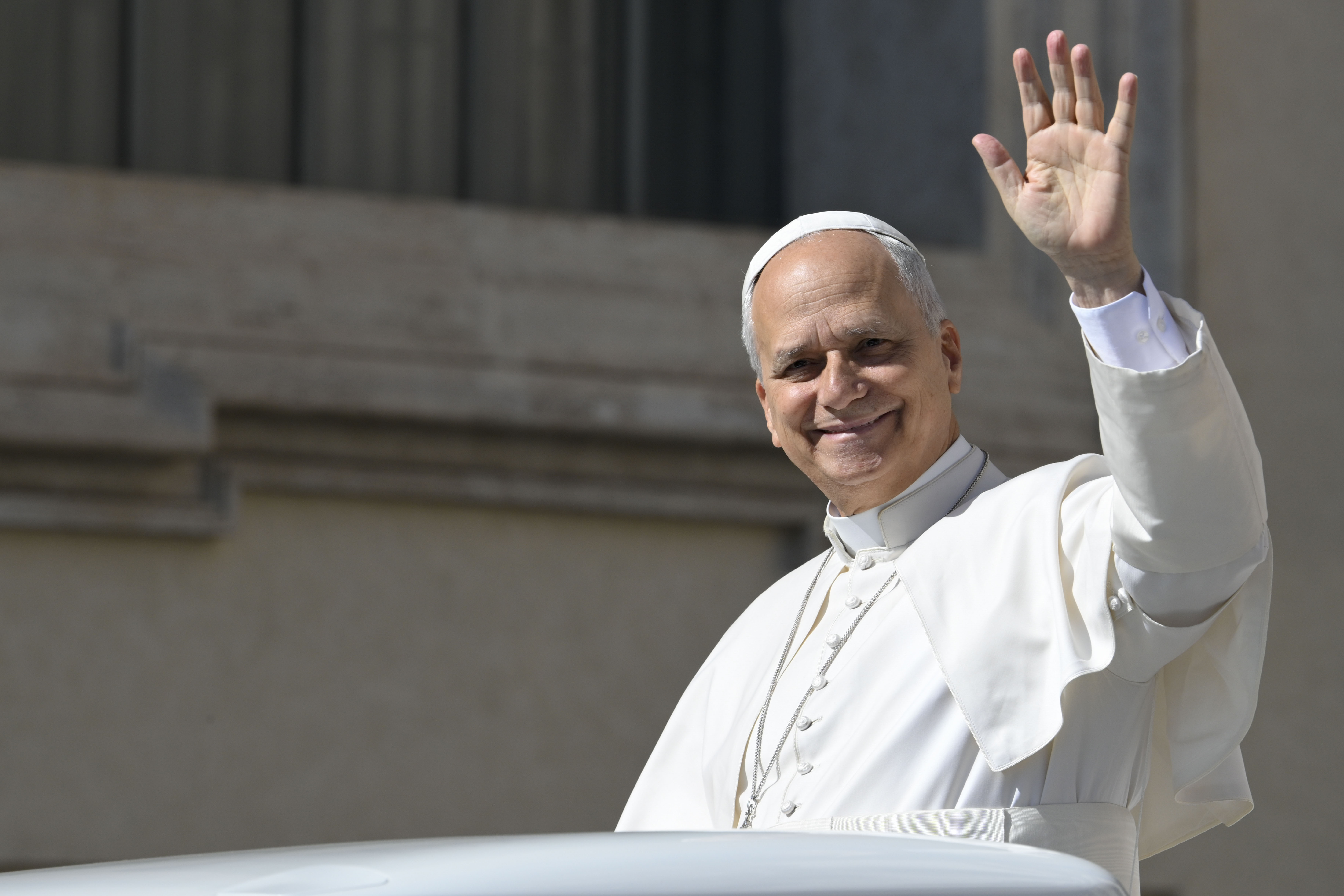
Pope Leo XIV arrives in Cameroon for second leg of Africa trip #Catholic YAOUNDE, Cameroon — Pope Leo XIV arrived Wednesday in Yaoundé, the capital of Cameroon, after a five-hour flight. While meeting with journalists aboard the papal plane, he delivered a brief address, thanking the Algerian authorities and reflecting on the first leg of the journey.Leo, speaking in English, expressed his “gratitude to all the authorities in Algeria, who made this visit possible. As youʼve seen, theyʼve even granted us the full honor of an escort as we fly over Algerian airspace.”This, the pope said, is “a sign of the goodness, of the generosity, of the respect that the Algerian people and the Algerian government have wished to show to the Holy See, to myself. And so I want to say a word of thanks to them, as well as a word of thanks to the very small but very significant presence of the Catholic Church in Algeria.”The pontiff then reflected on the journey.“We had, as you know,” he said, “some very special visits both in the Basilica Notre Dame dʼAfrique as well as in Annaba yesterday, in the Basilica of St. Augustine on the hill overlooking both the modern city of Annaba and the ruins of the ancient Roman city of Ippona. And that in itself, I would say, is also symbolically significant, because St. Augustine, who was bishop, as you know, of Hippo for more than 30 years, actually is a figure which is very much from the past and speaks to us of tradition, speaks to us of the life, the Church, as the Church grew in the early centuries.”Continuing to speak about St. Augustine, Leo said that he is “a very important figure today as his writings, his teaching, his spirituality, his invitation to search for God and to search for truth is something that is very much needed today — a message that is very real for all of us today, as believers in Jesus Christ, but for all people. And as youʼve seen, even the people of Algeria, the vast majority of whom are not Christian, they very much honor and respect the memory of St. Augustine as one of the great sons of their land.""So it was a special blessing for me personally to return once again to Annaba yesterday," he said, "but also to offer to the Church and the world a vision that St. Augustine offers us in terms of the search for God and the struggle to build community, to seek for unity among all peoples and respect for all peoples in spite of the differences.”The pope concluded: “In two days in Algeria I think weʼve really had a wonderful opportunity to, if you will, continue to build bridges, to promote dialogue. I think the visit to the mosque was significant and to say that it showed that although we have different beliefs, we have different ways of worshipping, we have different ways of living, we can live together in peace. And so I think that promoting that kind of image is something which the world needs to hear today, and that together we can continue to offer in our witness through as we continue on this apostolic voyage.”Pope Leo XIV is the third pope to visit Cameroon.Leo will first meet with 92-year-old President Biya, elected to an eighth term and in power for 40 years. After his address to the diplomatic corps — a standard stop at the beginning of every trip — the pope will visit the Ngul Zamba orphanage, a historic point of reference for the care and education of orphaned children and minors in situations of serious social vulnerability.In addition to Yaoundé, Leo XIV will also visit the city of Bamenda, around 230 miles from the capital, at the center of the Anglophone crisis — a complex situation in which English-speaking separatists have also called for the formation of their own state.The pope will also visit Douala, Cameroon’s economic capital, thus touching all the major realities of the country before departing for Angola on April 18.

Pope Leo XIV arrives in Cameroon for second leg of Africa trip #Catholic YAOUNDE, Cameroon — Pope Leo XIV arrived Wednesday in Yaoundé, the capital of Cameroon, after a five-hour flight. While meeting with journalists aboard the papal plane, he delivered a brief address, thanking the Algerian authorities and reflecting on the first leg of the journey.Leo, speaking in English, expressed his “gratitude to all the authorities in Algeria, who made this visit possible. As youʼve seen, theyʼve even granted us the full honor of an escort as we fly over Algerian airspace.”This, the pope said, is “a sign of the goodness, of the generosity, of the respect that the Algerian people and the Algerian government have wished to show to the Holy See, to myself. And so I want to say a word of thanks to them, as well as a word of thanks to the very small but very significant presence of the Catholic Church in Algeria.”The pontiff then reflected on the journey.“We had, as you know,” he said, “some very special visits both in the Basilica Notre Dame dʼAfrique as well as in Annaba yesterday, in the Basilica of St. Augustine on the hill overlooking both the modern city of Annaba and the ruins of the ancient Roman city of Ippona. And that in itself, I would say, is also symbolically significant, because St. Augustine, who was bishop, as you know, of Hippo for more than 30 years, actually is a figure which is very much from the past and speaks to us of tradition, speaks to us of the life, the Church, as the Church grew in the early centuries.”Continuing to speak about St. Augustine, Leo said that he is “a very important figure today as his writings, his teaching, his spirituality, his invitation to search for God and to search for truth is something that is very much needed today — a message that is very real for all of us today, as believers in Jesus Christ, but for all people. And as youʼve seen, even the people of Algeria, the vast majority of whom are not Christian, they very much honor and respect the memory of St. Augustine as one of the great sons of their land.""So it was a special blessing for me personally to return once again to Annaba yesterday," he said, "but also to offer to the Church and the world a vision that St. Augustine offers us in terms of the search for God and the struggle to build community, to seek for unity among all peoples and respect for all peoples in spite of the differences.”The pope concluded: “In two days in Algeria I think weʼve really had a wonderful opportunity to, if you will, continue to build bridges, to promote dialogue. I think the visit to the mosque was significant and to say that it showed that although we have different beliefs, we have different ways of worshipping, we have different ways of living, we can live together in peace. And so I think that promoting that kind of image is something which the world needs to hear today, and that together we can continue to offer in our witness through as we continue on this apostolic voyage.”Pope Leo XIV is the third pope to visit Cameroon.Leo will first meet with 92-year-old President Biya, elected to an eighth term and in power for 40 years. After his address to the diplomatic corps — a standard stop at the beginning of every trip — the pope will visit the Ngul Zamba orphanage, a historic point of reference for the care and education of orphaned children and minors in situations of serious social vulnerability.In addition to Yaoundé, Leo XIV will also visit the city of Bamenda, around 230 miles from the capital, at the center of the Anglophone crisis — a complex situation in which English-speaking separatists have also called for the formation of their own state.The pope will also visit Douala, Cameroon’s economic capital, thus touching all the major realities of the country before departing for Angola on April 18.

Reflecting on the visit to Algeria, the pope described it as “a wonderful opportunity to continue building bridges and promoting dialogue.”

Read More
Minnesota bishop: Singer Gracie Abrams helps young people confront ‘gaping wounds in their hearts’ #Catholic Hereʼs a roundup of the latest Catholic education news in the U.S.Minnesota bishop cites Gracie Abrams in speech on educators’ role in healing woundsBishop Andrew Cozzens of Crookston shared a video performance of pop singer Gracie Abrams during his keynote speech at the National Catholic Educational Association convention.While discussing the role of educators in helping young people to heal from their wounds, Cozzens played a video of Abrams performing her song “Camden."“The poetry that she sings about expresses the depth of pain that she carries in her heart, and whatʼs even more clear is that it resonates with tens of thousands of people in the stadium all her same age,” Cozzens said during his April 7 keynote, according to UCA News. "Many people in the stadium also feel like singing.”In the song, an extended reflection on insecurity and personal struggles, Abrams sings, in part, “All of me, a wound to close / But I leave the whole thing open / I just wanted you to know / I was never good at coping.”“This is the height of popular culture,” he said. “This is what our young people are singing about, the gaping wounds in their hearts." Catholic educators must invite young people to encounter Christ in their wounds, rather than seeking value from social media, artificial intelligence, popular culture, or politics, he said.The National Catholic Educational Association convention took place April 7-9. Other highlights at the event included a live butter sculpture of Pope Leo XIV, and “Puppy Love” sessions sponsored by Safe Hands Rescue and Healing Hearts Rescue, according to the event schedule.Chicago Archdiocese says public school system abruptly cut off funding for students with disabilitiesMore than 800 students with disabilities attending Chicago Catholic schools will be affected after the city’s public school system suddenly suspended funding to social services before the end of the school year.The Chicago Archdiocese said in an April 10 statement that Chicago Public Schools (CPS) targeted only Catholic schools in terminating services for individuals with special needs under the Individuals with Disabilities Education Act (IDEA). The statement noted students with learning differences will lose access to math, reading, and writing tutoring, which will create “severe hardship for hundreds of students” who were relying on the services through the end of the year.“We are not aware of any other non-public school system or individual school, religious or secular, whose IDEA services have been terminated,” the archdiocese said. “It is not clear why Catholic schools are being treated differently, but Catholic school students have the right to be treated equally under the law.”Chicago Archbishop Cardinal Blase Cupich said the archdiocese "cannot allow this shocking and possibly discriminatory action by CPS to stand, not only given its affront to Catholics, but even more so since this injustice would disenfranchise the students we serve.” The archdiocese said efforts to reach CPS Superintendent Macquline King “have not yielded a response.”The archdiocese said the Chicago school system had verbally confirmed funding for the services would continue through the end of the school year “as recently as March 25" before informing the archdiocese during Holy Week that the services would be suspended. “While federal funding for these services was provided to CPS for the full school year, we were informed that the last day of services would be [April 10],” the archdiocese said.Georgia archdiocese launches virtual Catholic high schoolThe Archdiocese of Atlanta is starting a fully online Catholic high school program this fall in partnership with Catholic Education Services.The launch of Sacred Heart Virtual Academy comes amid increased demand among homeschooling families, according to an April 8 report from the Georgia Bulletin. Curriculum will be provided by Catholic Education Services, whose mission “is to partner with Catholic school leaders and provide services that extend the reach and impact of your school’s mission through a faith-centered, rigorously academic education with a flexible learning platform,” according to its website.“We knew that we were not filling the needs of a group of kids that were in our parishes,” Kim Shields, the archdiocesan associate superintendent of schools, said in the report. “This allows a child that doesn’t want to go to a brick-and-mortar school to have that opportunity.” The school will serve grades 9-12, according to its website, and is open to students outside of the archdiocese.“My hope is that it serves what we’re about — to provide programs for students to help them develop in all areas of their life,” Shields said. “The premise is that everything is centered around the mission of the Catholic Church.”

Minnesota bishop: Singer Gracie Abrams helps young people confront ‘gaping wounds in their hearts’ #Catholic Hereʼs a roundup of the latest Catholic education news in the U.S.Minnesota bishop cites Gracie Abrams in speech on educators’ role in healing woundsBishop Andrew Cozzens of Crookston shared a video performance of pop singer Gracie Abrams during his keynote speech at the National Catholic Educational Association convention.While discussing the role of educators in helping young people to heal from their wounds, Cozzens played a video of Abrams performing her song “Camden."“The poetry that she sings about expresses the depth of pain that she carries in her heart, and whatʼs even more clear is that it resonates with tens of thousands of people in the stadium all her same age,” Cozzens said during his April 7 keynote, according to UCA News. "Many people in the stadium also feel like singing.”In the song, an extended reflection on insecurity and personal struggles, Abrams sings, in part, “All of me, a wound to close / But I leave the whole thing open / I just wanted you to know / I was never good at coping.”“This is the height of popular culture,” he said. “This is what our young people are singing about, the gaping wounds in their hearts." Catholic educators must invite young people to encounter Christ in their wounds, rather than seeking value from social media, artificial intelligence, popular culture, or politics, he said.The National Catholic Educational Association convention took place April 7-9. Other highlights at the event included a live butter sculpture of Pope Leo XIV, and “Puppy Love” sessions sponsored by Safe Hands Rescue and Healing Hearts Rescue, according to the event schedule.Chicago Archdiocese says public school system abruptly cut off funding for students with disabilitiesMore than 800 students with disabilities attending Chicago Catholic schools will be affected after the city’s public school system suddenly suspended funding to social services before the end of the school year.The Chicago Archdiocese said in an April 10 statement that Chicago Public Schools (CPS) targeted only Catholic schools in terminating services for individuals with special needs under the Individuals with Disabilities Education Act (IDEA). The statement noted students with learning differences will lose access to math, reading, and writing tutoring, which will create “severe hardship for hundreds of students” who were relying on the services through the end of the year.“We are not aware of any other non-public school system or individual school, religious or secular, whose IDEA services have been terminated,” the archdiocese said. “It is not clear why Catholic schools are being treated differently, but Catholic school students have the right to be treated equally under the law.”Chicago Archbishop Cardinal Blase Cupich said the archdiocese "cannot allow this shocking and possibly discriminatory action by CPS to stand, not only given its affront to Catholics, but even more so since this injustice would disenfranchise the students we serve.” The archdiocese said efforts to reach CPS Superintendent Macquline King “have not yielded a response.”The archdiocese said the Chicago school system had verbally confirmed funding for the services would continue through the end of the school year “as recently as March 25" before informing the archdiocese during Holy Week that the services would be suspended. “While federal funding for these services was provided to CPS for the full school year, we were informed that the last day of services would be [April 10],” the archdiocese said.Georgia archdiocese launches virtual Catholic high schoolThe Archdiocese of Atlanta is starting a fully online Catholic high school program this fall in partnership with Catholic Education Services.The launch of Sacred Heart Virtual Academy comes amid increased demand among homeschooling families, according to an April 8 report from the Georgia Bulletin. Curriculum will be provided by Catholic Education Services, whose mission “is to partner with Catholic school leaders and provide services that extend the reach and impact of your school’s mission through a faith-centered, rigorously academic education with a flexible learning platform,” according to its website.“We knew that we were not filling the needs of a group of kids that were in our parishes,” Kim Shields, the archdiocesan associate superintendent of schools, said in the report. “This allows a child that doesn’t want to go to a brick-and-mortar school to have that opportunity.” The school will serve grades 9-12, according to its website, and is open to students outside of the archdiocese.“My hope is that it serves what we’re about — to provide programs for students to help them develop in all areas of their life,” Shields said. “The premise is that everything is centered around the mission of the Catholic Church.”

A roundup of the latest Catholic education news in the U.S.

Read More
8,645 candles light Finland’s Parliament in pro-life vigil for unborn #Catholic HELSINKI — Thousands of candles illuminated the steps of Finlandʼs Parliament in Helsinki on March 21 as pro-life advocates held a public vigil commemorating children lost to abortion.Organized by the Finnish pro-life group Oikeus elämään ry, the “Muistamme” (“In remembrance”) event featured 8,645 candles, one for each abortion performed in Finland in 2024. Johannes Laitinen, one of the eventʼs organizers, said approximately 100 preselected participants were invited to light the candles, chosen because of their personal connection to the loss of children through abortion. Members of the public were also given the opportunity to take part in the candle lighting during the vigil.
 
 Johannes Laitinen, one of the organizers of the “Muistamme” pro-life vigil held outside Finland’s Parliament in Helsinki on March 21, 2026. | Credit: Miika Soininen
 
 After the candles were lit, participants observed a minute of silence, while volunteers remained through the night as the display continued glowing in central Helsinki.A public witness in the heart of HelsinkiSpeaking to EWTN News, Kirsi Morgan-MacKay, chairman of Finlandʼs Right to Life Association, said the vigil sought both to honor the unborn and to confront the public with the scale of abortion in the country. “The event created a visual that touched peopleʼs hearts and perhaps made them stop and think about how many children are actually lost every year through abortion,” she said.Morgan-MacKay added that the vigil also aimed to acknowledge the often-unspoken grief experienced by women and families affected by abortion.
 
 The full display of 8,645 candles glows on the steps of Finland’s Parliament in Helsinki on the night of March 21, 2026. | Credit: Jaakko Haapanen
 
 She noted that leaders from multiple Christian denominations attended the event, which organizers viewed as an encouraging sign of broader ecclesial engagement. “We have always hoped that churches would come together to defend the lives of unborn children,” she said, explaining that abortion is not merely political but “a spiritual, ethical, and moral issue.”A prayer gathering was also held in connection with the vigil at Luther Church in Helsinki, where clergy from Lutheran, Presbyterian, and Catholic communities offered prayers. Representing the Catholic Church, Jean Claude Kabeza, vicar general of the Diocese of Helsinki, conveyed greetings from Bishop Raimo Goyarrola.Finlandʼs welfare state and the limits of social supportWhile happy about Finlandʼs reputation for its strong social welfare system, Morgan-MacKay noted that many women facing crisis pregnancies still experience profound isolation. “Many women and families are still left alone in the midst of a crisis,” she said, adding that loneliness and lack of support often persist even within families.She also observed that in Finland, the lives of unborn children often go unvalued when a pregnancy is unwanted. She pointed out that women confronted with an unplanned pregnancy, sometimes in shock, may see abortion as an “easy” way out, particularly since medical abortion is frequently presented as a simple “procedure.”
 
 Pro-life advocates carry the “Muistamme” banner through central Helsinki during the candlelit vigil on March 21, 2026. | Credit: Miika Soininen
 
 Morgan-MacKay also drew attention to Finlandʼs liberalized abortion framework, particularly the increased accessibility of medical abortion, arguing that women may be pressured into rushed decisions without adequate counseling.“Sometimes the health care system offers abortion as the only option,” she said. “Many times, these women need space to pause, think everything through, and receive real support.”She added that while Finlandʼs pro-life movement remains relatively small, it is gradually growing, with increased awareness of abortionʼs broader social and personal consequences. She expressed particular encouragement at the involvement of younger supporters, especially young men, saying she believes “God is raising up a new generation of pro-lifers” as more Finns begin speaking openly about the issue.A bishopʼs medical perspective on abortionEWTN News also spoke with Goyarrola, who said he remains hopeful that Finland can become more receptive to pro-life values, despite abortion remaining a sensitive and often taboo topic in public life.Goyarrolaʼs comments carry added weight in Finlandʼs abortion debates because of his medical background. Before entering the priesthood, he trained as a physician, graduating with a degree in medicine and surgery from the University of Navarra in Spain in 1992, and has pursued doctoral research in palliative care at the University of Eastern Finland since 2022.
 
 Spanish Opus Dei priest announced as new Helsinki bishop
 
 Drawing on his medical knowledge, he has also written extensively on social issues for general audiences, authoring “Ihmiselämää äidin kohdussa” (“Human Life in the Womb”), on abortion, and “Arvokas kuolema” (“A Dignified Death”), on euthanasia. Both books were widely praised for making complex bioethical questions accessible to ordinary readers.Reflecting on his experience, Goyarrola said that with regard to discussing abortion, conversations require clarity and compassion rather than confrontation.“I believe that positive language is what truly reaches people and opens hearts to reflection,” he said. “The Church speaks in defense of life by offering real solutions to real problems and proposing ways to prevent abortion.”“No one celebrates abortion as a joyful experience,” he added.Signs of change among younger FinnsAssessing the broader cultural climate, Goyarrola said abortion has historically remained difficult to discuss openly in Finnish society. “Abortion has long been a taboo subject in Finland, and to a large extent it still is,” he said, noting that public discourse is often narrowly framed around “the womanʼs right to her own body.”Yet the bishop said younger generations appear increasingly willing to engage the issue more thoughtfully. “Among young people, the topic is beginning to be discussed more openly, and with many serious questions,” he noted.
 
 Participants light some of the 8,645 candles on the steps of Finlandʼs Parliament in Helsinki on March 21, 2026, one for each abortion performed in Finland in 2024. | Credit: Jaakko Haapanen
 
 Goyarrola explained that because over 90% of abortions in Finland are carried out for social rather than medical reasons, the underlying causes must be addressed socially as well. He called for “better education, access to information, healthier lifestyles, and more personal responsibility and support for marriage and family life.”He added that the Church must continue promoting a concrete vision of family and human dignity, saying: “We aim to promote a culture that values life, family, and hope.” He also noted that the Catholic Church in Finland tries to speak about the “need for more children in society,” not for economic or labor-related reasons but rather for the future of Finnish society itself.“I hope that we can speak about abortion and about life in the motherʼs womb without prejudice, in a rational and thoughtful way,” Goyarrola added. “Only through open and respectful conversation can we better understand the complexity of the issue and seek humane and responsible solutions.”

8,645 candles light Finland’s Parliament in pro-life vigil for unborn #Catholic HELSINKI — Thousands of candles illuminated the steps of Finlandʼs Parliament in Helsinki on March 21 as pro-life advocates held a public vigil commemorating children lost to abortion.Organized by the Finnish pro-life group Oikeus elämään ry, the “Muistamme” (“In remembrance”) event featured 8,645 candles, one for each abortion performed in Finland in 2024. Johannes Laitinen, one of the eventʼs organizers, said approximately 100 preselected participants were invited to light the candles, chosen because of their personal connection to the loss of children through abortion. Members of the public were also given the opportunity to take part in the candle lighting during the vigil. Johannes Laitinen, one of the organizers of the “Muistamme” pro-life vigil held outside Finland’s Parliament in Helsinki on March 21, 2026. | Credit: Miika Soininen After the candles were lit, participants observed a minute of silence, while volunteers remained through the night as the display continued glowing in central Helsinki.A public witness in the heart of HelsinkiSpeaking to EWTN News, Kirsi Morgan-MacKay, chairman of Finlandʼs Right to Life Association, said the vigil sought both to honor the unborn and to confront the public with the scale of abortion in the country. “The event created a visual that touched peopleʼs hearts and perhaps made them stop and think about how many children are actually lost every year through abortion,” she said.Morgan-MacKay added that the vigil also aimed to acknowledge the often-unspoken grief experienced by women and families affected by abortion. The full display of 8,645 candles glows on the steps of Finland’s Parliament in Helsinki on the night of March 21, 2026. | Credit: Jaakko Haapanen She noted that leaders from multiple Christian denominations attended the event, which organizers viewed as an encouraging sign of broader ecclesial engagement. “We have always hoped that churches would come together to defend the lives of unborn children,” she said, explaining that abortion is not merely political but “a spiritual, ethical, and moral issue.”A prayer gathering was also held in connection with the vigil at Luther Church in Helsinki, where clergy from Lutheran, Presbyterian, and Catholic communities offered prayers. Representing the Catholic Church, Jean Claude Kabeza, vicar general of the Diocese of Helsinki, conveyed greetings from Bishop Raimo Goyarrola.Finlandʼs welfare state and the limits of social supportWhile happy about Finlandʼs reputation for its strong social welfare system, Morgan-MacKay noted that many women facing crisis pregnancies still experience profound isolation. “Many women and families are still left alone in the midst of a crisis,” she said, adding that loneliness and lack of support often persist even within families.She also observed that in Finland, the lives of unborn children often go unvalued when a pregnancy is unwanted. She pointed out that women confronted with an unplanned pregnancy, sometimes in shock, may see abortion as an “easy” way out, particularly since medical abortion is frequently presented as a simple “procedure.” Pro-life advocates carry the “Muistamme” banner through central Helsinki during the candlelit vigil on March 21, 2026. | Credit: Miika Soininen Morgan-MacKay also drew attention to Finlandʼs liberalized abortion framework, particularly the increased accessibility of medical abortion, arguing that women may be pressured into rushed decisions without adequate counseling.“Sometimes the health care system offers abortion as the only option,” she said. “Many times, these women need space to pause, think everything through, and receive real support.”She added that while Finlandʼs pro-life movement remains relatively small, it is gradually growing, with increased awareness of abortionʼs broader social and personal consequences. She expressed particular encouragement at the involvement of younger supporters, especially young men, saying she believes “God is raising up a new generation of pro-lifers” as more Finns begin speaking openly about the issue.A bishopʼs medical perspective on abortionEWTN News also spoke with Goyarrola, who said he remains hopeful that Finland can become more receptive to pro-life values, despite abortion remaining a sensitive and often taboo topic in public life.Goyarrolaʼs comments carry added weight in Finlandʼs abortion debates because of his medical background. Before entering the priesthood, he trained as a physician, graduating with a degree in medicine and surgery from the University of Navarra in Spain in 1992, and has pursued doctoral research in palliative care at the University of Eastern Finland since 2022. Spanish Opus Dei priest announced as new Helsinki bishop Drawing on his medical knowledge, he has also written extensively on social issues for general audiences, authoring “Ihmiselämää äidin kohdussa” (“Human Life in the Womb”), on abortion, and “Arvokas kuolema” (“A Dignified Death”), on euthanasia. Both books were widely praised for making complex bioethical questions accessible to ordinary readers.Reflecting on his experience, Goyarrola said that with regard to discussing abortion, conversations require clarity and compassion rather than confrontation.“I believe that positive language is what truly reaches people and opens hearts to reflection,” he said. “The Church speaks in defense of life by offering real solutions to real problems and proposing ways to prevent abortion.”“No one celebrates abortion as a joyful experience,” he added.Signs of change among younger FinnsAssessing the broader cultural climate, Goyarrola said abortion has historically remained difficult to discuss openly in Finnish society. “Abortion has long been a taboo subject in Finland, and to a large extent it still is,” he said, noting that public discourse is often narrowly framed around “the womanʼs right to her own body.”Yet the bishop said younger generations appear increasingly willing to engage the issue more thoughtfully. “Among young people, the topic is beginning to be discussed more openly, and with many serious questions,” he noted. Participants light some of the 8,645 candles on the steps of Finlandʼs Parliament in Helsinki on March 21, 2026, one for each abortion performed in Finland in 2024. | Credit: Jaakko Haapanen Goyarrola explained that because over 90% of abortions in Finland are carried out for social rather than medical reasons, the underlying causes must be addressed socially as well. He called for “better education, access to information, healthier lifestyles, and more personal responsibility and support for marriage and family life.”He added that the Church must continue promoting a concrete vision of family and human dignity, saying: “We aim to promote a culture that values life, family, and hope.” He also noted that the Catholic Church in Finland tries to speak about the “need for more children in society,” not for economic or labor-related reasons but rather for the future of Finnish society itself.“I hope that we can speak about abortion and about life in the motherʼs womb without prejudice, in a rational and thoughtful way,” Goyarrola added. “Only through open and respectful conversation can we better understand the complexity of the issue and seek humane and responsible solutions.”

Organizers of the “Muistamme” vigil lit one candle for each of the 8,645 abortions performed in Finland in 2024, drawing Catholic, Lutheran, and Presbyterian clergy together in central Helsinki.

Read More
Pope Leo XIV: Sport must be a ‘space for encounter’ #Catholic VATICAN CITY — Pope Leo XIV on Thursday praised athletes from the Milan-Cortina 2026 Olympic and Paralympic Games, saying sport “can and must truly become a space for encounter” in a world marked by “polarization, rivalry, and conflicts that escalate into devastating wars.”Speaking in the Clementine Hall at the Vatican on April 9, the Holy Father welcomed the athletes “with joy” shortly after the conclusion of the Winter Games and thanked them for their witness.“Thank you for what you have shown,” the pope said. “Truly, sport, when lived authentically, is not merely a performance: It is a form of language, a narrative made up of gestures, of effort, of anticipation, of falls, and of new beginnings.”Leo XIV said the games revealed not only athletic achievement but also “stories of sacrifice, of discipline, of tenacity.”“In particular, in Paralympic competitions we have seen how a limitation can become a source of revelation: not something that holds a person back but something that can be transformed, even transfigured into newfound qualities,” he said. “You athletes have become life stories that inspire a great number of people.”The pope also emphasized the communal dimension of athletic success, saying: “No one wins alone.”“Your team spirit reminds us that no one wins alone, because behind every victory there are many people involved — from family to teams — as well as many days of training, pressure, and solitude,” he said.Quoting Psalm 18, he added: “It is often precisely in these moments that God reveals himself, as the psalmist sings: ‘Thou didst give a wide place for my steps under me, and my feet did not slip.’”Leo XIV said sport helps mature the human person by fostering discipline, humility, and right relationships.“Sport contributes to the maturing of our character, requires a steadfast spirituality, and is a fruitful form of education,” he said. “By training the mind, along with the limbs, sport is authentic when it remains humane — that is, when it remains faithful to its first vocation: to be a school of life and talent.”“A school in which one learns that true success is measured by the quality of relationships: not by the amount of prizes but by mutual respect, by shared joy in the game,” he continued.Referring to his Feb. 6 apostolic letter “Life in Abundance,” written for the occasion of the Olympics and Paralympics, the pope said the Gospel’s vision of abundant life points to harmony between the physical and interior dimensions of the person.Turning to the present global situation, Leo XIV said the athletes’ witness carries special importance.“At the present time, so marked by polarization, rivalry, and conflicts that escalate into devastating wars, your commitment takes on an even greater value: Sport can and must truly become a space for encounter!” he said. “Not a show of strength but an exercise in relationship.”Recalling the value of the Olympic truce, he thanked the athletes for making visible “this possibility of peace as a prophecy that is by no means rhetorical: breaking the logic of violence to promote that of encounter.”The pope also warned against distortions in sport, including doping, commercialism, and the reduction of athletes to mere spectacle.“We are well aware that sport also brings with it certain temptations: that of performance at any cost, which can lead to doping; that of profit, which transforms the game into a market and the athlete into a star; that of spectacle, which reduces the athlete to an image or a number,” he said. “Against these excesses, your witness is essential.”Leo XIV concluded by thanking the athletes for showing “an honest and beautiful way of inhabiting the world” and urged them to keep the human person at the center of sport in all its forms.Following the audience, several of the athletes spoke to journalists about their experience of the audience and competing in the Winter Games, including speed skater Francesca Lollobrigida, who won two gold medals at Milan-Cortina this year.
 
 Francesca Lollobrigida responds to journalists after a papal audience at the Apostolic Palace in Vatican City on April 9, 2026. | Credit: Ishmael Adibuah/EWTN News
 
 “My goal was just to show that in my sport; I was able to combine, you know, being a mother and a top athlete,“ Lollobrigida told EWTN News. ”Iʼm just doing this for the other women, you know, that maybe at some points during their career they want to stop to focus on the family and then to come back.”Nikko Landeros, an American-born Catholic who lost both his legs in 2007, represented Italy in ice hockey at the latest Paralympic games. He described to EWTN News the role of Catholicism in his athletic journey.“At home, I started pretty much Catholic. You know, I went to Catholic school in the U.S. Weʼve been going to church now… not as much as I should, but, you know, I still pray every day, and Iʼm thankful to be here. You know, if it werenʼt for God, I wouldnʼt be alive. So, you know, Iʼm super thankful,” Landeros said.This story was first published by ACI Stampa, the Italian-language sister service of EWTN News. It has been translated and adapted by EWTN News English.

Pope Leo XIV: Sport must be a ‘space for encounter’ #Catholic VATICAN CITY — Pope Leo XIV on Thursday praised athletes from the Milan-Cortina 2026 Olympic and Paralympic Games, saying sport “can and must truly become a space for encounter” in a world marked by “polarization, rivalry, and conflicts that escalate into devastating wars.”Speaking in the Clementine Hall at the Vatican on April 9, the Holy Father welcomed the athletes “with joy” shortly after the conclusion of the Winter Games and thanked them for their witness.“Thank you for what you have shown,” the pope said. “Truly, sport, when lived authentically, is not merely a performance: It is a form of language, a narrative made up of gestures, of effort, of anticipation, of falls, and of new beginnings.”Leo XIV said the games revealed not only athletic achievement but also “stories of sacrifice, of discipline, of tenacity.”“In particular, in Paralympic competitions we have seen how a limitation can become a source of revelation: not something that holds a person back but something that can be transformed, even transfigured into newfound qualities,” he said. “You athletes have become life stories that inspire a great number of people.”The pope also emphasized the communal dimension of athletic success, saying: “No one wins alone.”“Your team spirit reminds us that no one wins alone, because behind every victory there are many people involved — from family to teams — as well as many days of training, pressure, and solitude,” he said.Quoting Psalm 18, he added: “It is often precisely in these moments that God reveals himself, as the psalmist sings: ‘Thou didst give a wide place for my steps under me, and my feet did not slip.’”Leo XIV said sport helps mature the human person by fostering discipline, humility, and right relationships.“Sport contributes to the maturing of our character, requires a steadfast spirituality, and is a fruitful form of education,” he said. “By training the mind, along with the limbs, sport is authentic when it remains humane — that is, when it remains faithful to its first vocation: to be a school of life and talent.”“A school in which one learns that true success is measured by the quality of relationships: not by the amount of prizes but by mutual respect, by shared joy in the game,” he continued.Referring to his Feb. 6 apostolic letter “Life in Abundance,” written for the occasion of the Olympics and Paralympics, the pope said the Gospel’s vision of abundant life points to harmony between the physical and interior dimensions of the person.Turning to the present global situation, Leo XIV said the athletes’ witness carries special importance.“At the present time, so marked by polarization, rivalry, and conflicts that escalate into devastating wars, your commitment takes on an even greater value: Sport can and must truly become a space for encounter!” he said. “Not a show of strength but an exercise in relationship.”Recalling the value of the Olympic truce, he thanked the athletes for making visible “this possibility of peace as a prophecy that is by no means rhetorical: breaking the logic of violence to promote that of encounter.”The pope also warned against distortions in sport, including doping, commercialism, and the reduction of athletes to mere spectacle.“We are well aware that sport also brings with it certain temptations: that of performance at any cost, which can lead to doping; that of profit, which transforms the game into a market and the athlete into a star; that of spectacle, which reduces the athlete to an image or a number,” he said. “Against these excesses, your witness is essential.”Leo XIV concluded by thanking the athletes for showing “an honest and beautiful way of inhabiting the world” and urged them to keep the human person at the center of sport in all its forms.Following the audience, several of the athletes spoke to journalists about their experience of the audience and competing in the Winter Games, including speed skater Francesca Lollobrigida, who won two gold medals at Milan-Cortina this year. Francesca Lollobrigida responds to journalists after a papal audience at the Apostolic Palace in Vatican City on April 9, 2026. | Credit: Ishmael Adibuah/EWTN News “My goal was just to show that in my sport; I was able to combine, you know, being a mother and a top athlete,“ Lollobrigida told EWTN News. ”Iʼm just doing this for the other women, you know, that maybe at some points during their career they want to stop to focus on the family and then to come back.”Nikko Landeros, an American-born Catholic who lost both his legs in 2007, represented Italy in ice hockey at the latest Paralympic games. He described to EWTN News the role of Catholicism in his athletic journey.“At home, I started pretty much Catholic. You know, I went to Catholic school in the U.S. Weʼve been going to church now… not as much as I should, but, you know, I still pray every day, and Iʼm thankful to be here. You know, if it werenʼt for God, I wouldnʼt be alive. So, you know, Iʼm super thankful,” Landeros said.This story was first published by ACI Stampa, the Italian-language sister service of EWTN News. It has been translated and adapted by EWTN News English.

The pontiff addressed athletes from the Milan-Cortina 2026 Olympic and Paralympic Games.

Read More
Government favors natural family planning over contraception in key health funding #Catholic New 2027 guidelines by the U.S. Department of Health and Human Services (HHS) will ban key federal abortion funding while favoring fertility education and natural family planning.The April 3 “2027 Notice of Funding Opportunity” for Title X, the federal family planning grant program, bans funds from being used “in programs where abortion is a method of family planning.”The move came days after the Trump administration released the fifth and final year of grant funding to Planned Parenthood under Title X, a decision that garnered criticism throughout the pro-life movement. The White House cited legal challenges for the controversial decision to continue the funding.“The administration has issued the fifth and final year of Title X grants that were locked in place during the Biden presidency,” the White House told EWTN News in a statement. “The administration faced significant legal challenges in stopping any of these dollars from going out.”Previous Republican administrations, including that of Trump’s first term, also banned abortion funding via Title X. What makes this year’s criteria unique is that it encourages fertility education in place of contraception.The notice highlighted “fertility-awareness-based methods” or “natural family planning,” a method encouraged by the Catholic Church that involves tracking a woman’s biological markers to determine when ovulation occurs.The administration also teased a new pro-family grant that will be announced soon.“HHS will soon be releasing a new Title X funding opportunity for the next five-year funding cycle that prioritizes life and promotes the pro-family agenda,” the White House statement read.The notice also promoted “body literacy” on fertility-related conditions, such as “education on menstrual cycle physiology, hormonal health, male and female fertility awareness, and early indicators of reproductive disorders such as endometriosis, polycystic ovary syndrome (PCOS), thyroid dysfunction, metabolic disorders, and other conditions that often first emerge in adolescence.”An estimated 1 in 10 women have endometriosis; 1 in 8 women develop a thyroid disorder; and roughly 1 in 10 have PCOS — all conditions that can negatively affect fertility and overall health.“For example, endometriosis often goes undiagnosed for years because symptoms such as severe menstrual pain or irregular bleeding are frequently normalized or minimized,” the HHS notice read.“Body literacy counseling helps patients recognize that these experiences are not ‘normal’ features” but instead “potential indicators of an underlying condition, prompting earlier discussion with providers, timely diagnosis, appropriate treatment, and improved long-term reproductive and overall health outcomes,” the notice continued.The 2027 plan is not prioritizing contraception funding; instead the government said that contraception is part of an overreliance on “pharmaceutical and surgical treatments.” The health department noted that fewer women than in previous years are using contraception (54% of reproductive-age women) and that “the most common reason women reported discontinuing use related to dissatisfaction was side effects.” For instance, hormonal contraception can cause depression in some patients, among other negative side effects.“This approach has failed to adequately address the root causes of the nation’s chronic disease burden, resulting in ongoing health challenges that affect fertility, pregnancy outcomes, and long-term health outcomes,” the notice read.HHS said it will focus instead on “underlying behavioral and lifestyle factors of health — such as nutrition, sleep, physical activity, stress management, and environmental factors.”The White House told EWTN News that “the administration remains committed to realigning the Title X program with the president’s pro-life and pro-family agenda going forward.”Michael New, an assistant professor of practice at the Busch School of Business at The Catholic University of America as well as a Charlotte Lozier Institute senior associate scholar, called the decrease in Planned Parenthood funding “a win for the pro-life movement,” though with a caveat.“Cutting funding to Planned Parenthood may not have a large impact on the incidence of abortion in the short term due the increasing prevalence of telehealth abortions,” New said.The professor also noted that “defunding contraception programs and supporting natural family planning is a win for pro-lifers.”“Since the Title X program started in 1970, the federal government has spent hundreds of millions of dollars, if not billions of dollars, into promoting contraception,” New said. “This money has been poorly spent. Many places that distribute contraception also perform abortions, so some of this money indirectly funds abortion.”“Many Catholics do not want their tax dollars spent on programs, such as contraception programs, they find morally objectionable,” New continued. “Even though many Americans support contraceptive use, pro-life Catholics would like the government to stay out of the issue: no funding, no mandates, no distribution. As such, defunding contraception programs has been a longtime policy goal for many pro-life Catholics.”“​​Natural family planning, when done correctly, has a strong track record of success,” New said. “However, it has been marginalized in many secular public health circles. The fact that HHS is promoting natural family planning will give NFP more visibility and credibility.”

Government favors natural family planning over contraception in key health funding #Catholic New 2027 guidelines by the U.S. Department of Health and Human Services (HHS) will ban key federal abortion funding while favoring fertility education and natural family planning.The April 3 “2027 Notice of Funding Opportunity” for Title X, the federal family planning grant program, bans funds from being used “in programs where abortion is a method of family planning.”The move came days after the Trump administration released the fifth and final year of grant funding to Planned Parenthood under Title X, a decision that garnered criticism throughout the pro-life movement. The White House cited legal challenges for the controversial decision to continue the funding.“The administration has issued the fifth and final year of Title X grants that were locked in place during the Biden presidency,” the White House told EWTN News in a statement. “The administration faced significant legal challenges in stopping any of these dollars from going out.”Previous Republican administrations, including that of Trump’s first term, also banned abortion funding via Title X. What makes this year’s criteria unique is that it encourages fertility education in place of contraception.The notice highlighted “fertility-awareness-based methods” or “natural family planning,” a method encouraged by the Catholic Church that involves tracking a woman’s biological markers to determine when ovulation occurs.The administration also teased a new pro-family grant that will be announced soon.“HHS will soon be releasing a new Title X funding opportunity for the next five-year funding cycle that prioritizes life and promotes the pro-family agenda,” the White House statement read.The notice also promoted “body literacy” on fertility-related conditions, such as “education on menstrual cycle physiology, hormonal health, male and female fertility awareness, and early indicators of reproductive disorders such as endometriosis, polycystic ovary syndrome (PCOS), thyroid dysfunction, metabolic disorders, and other conditions that often first emerge in adolescence.”An estimated 1 in 10 women have endometriosis; 1 in 8 women develop a thyroid disorder; and roughly 1 in 10 have PCOS — all conditions that can negatively affect fertility and overall health.“For example, endometriosis often goes undiagnosed for years because symptoms such as severe menstrual pain or irregular bleeding are frequently normalized or minimized,” the HHS notice read.“Body literacy counseling helps patients recognize that these experiences are not ‘normal’ features” but instead “potential indicators of an underlying condition, prompting earlier discussion with providers, timely diagnosis, appropriate treatment, and improved long-term reproductive and overall health outcomes,” the notice continued.The 2027 plan is not prioritizing contraception funding; instead the government said that contraception is part of an overreliance on “pharmaceutical and surgical treatments.” The health department noted that fewer women than in previous years are using contraception (54% of reproductive-age women) and that “the most common reason women reported discontinuing use related to dissatisfaction was side effects.” For instance, hormonal contraception can cause depression in some patients, among other negative side effects.“This approach has failed to adequately address the root causes of the nation’s chronic disease burden, resulting in ongoing health challenges that affect fertility, pregnancy outcomes, and long-term health outcomes,” the notice read.HHS said it will focus instead on “underlying behavioral and lifestyle factors of health — such as nutrition, sleep, physical activity, stress management, and environmental factors.”The White House told EWTN News that “the administration remains committed to realigning the Title X program with the president’s pro-life and pro-family agenda going forward.”Michael New, an assistant professor of practice at the Busch School of Business at The Catholic University of America as well as a Charlotte Lozier Institute senior associate scholar, called the decrease in Planned Parenthood funding “a win for the pro-life movement,” though with a caveat.“Cutting funding to Planned Parenthood may not have a large impact on the incidence of abortion in the short term due the increasing prevalence of telehealth abortions,” New said.The professor also noted that “defunding contraception programs and supporting natural family planning is a win for pro-lifers.”“Since the Title X program started in 1970, the federal government has spent hundreds of millions of dollars, if not billions of dollars, into promoting contraception,” New said. “This money has been poorly spent. Many places that distribute contraception also perform abortions, so some of this money indirectly funds abortion.”“Many Catholics do not want their tax dollars spent on programs, such as contraception programs, they find morally objectionable,” New continued. “Even though many Americans support contraceptive use, pro-life Catholics would like the government to stay out of the issue: no funding, no mandates, no distribution. As such, defunding contraception programs has been a longtime policy goal for many pro-life Catholics.”“​​Natural family planning, when done correctly, has a strong track record of success,” New said. “However, it has been marginalized in many secular public health circles. The fact that HHS is promoting natural family planning will give NFP more visibility and credibility.”

New directives by the U.S. Department of Health and Human Services ban Title X abortion funding while favoring fertility education and “body literacy.”

Read More
On Easter Monday, Pope Leo XIV remembers those ‘tormented’ by war: ‘The truth does not remain hidden’ #Catholic On his first Easter Monday as pope, Leo XIV appeared at the window of the Apostolic Palace under bright sunshine and clear skies to lead the Regina Caeli with thousands of pilgrims gathered in St. Peter’s Square.“Dear brothers and sisters, Christ is risen! Happy Easter!“ he exclaimed. “This greeting, full of wonder and joy, will accompany us throughout the week. As we celebrate this new day that the Lord has made for us, the liturgy celebrates the entrance of all creation into the time of salvation: The despair of death has been banished forever, in the name of Jesus.”He continued: “Today’s Gospel asks us to choose between two accounts: that of the women, who encountered the Risen One, or that of the guards, who were bribed by the leaders of the Sanhedrin.” The women proclaim “the victory of Christ over death,” while the guards “proclaim that death always wins, no matter what,” the pope said, illustrating two opposing versions of the same event. In the guards’ version, Christ did not rise, “but his body was stolen,” the pope recalled. From this comes the fact that “from the same event — the empty tomb — two interpretations spring forth: One is a source of new and eternal life, the other of certain and definitive death,” he explained.This contrast “makes us reflect on the value of Christian witness and the honesty of human communication. Often, in fact, the telling of the truth is obscured by what we today call fake news — that is, lies, insinuations, and baseless accusations. Yet in the face of such obstacles, the truth does not remain hidden; on the contrary, it comes to meet us, alive and radiant, illuminating even the densest darkness,” he continued.Christ is the good news to be proclaimed to the world, he said: “The Lord’s passover is our passover, the passover of humanity, because this man, who died for us, is the Son of God, who gave his life for us.”Leo then turned his thoughts to “peoples tormented by war, to Christians persecuted for their faith, and to children deprived of education. To announce the passover of Christ in words and deeds means giving new voice to hope, otherwise stifled by the hands of the violent.”Finally, he remembered Pope Francis, “who exactly one year ago, on Easter Monday, entrusted his life to the Lord. As we recall his great witness of faith and love, let us pray together to the Virgin Mary, Seat of Wisdom, so that we may become ever brighter heralds of the truth.”After reciting the Marian prayer, Pope Leo XIV added a few more words: “I thank the initiatives promoted for the International Day of Sport for Development and Peace, and I renew the appeal that sport, with its universal language of fraternity, may be a place of inclusion and peace. I thank all those who in these days have sent me Easter greetings. I am especially grateful for the prayers. Through the intercession of the Virgin Mary, may God reward each one with his gifts.” He concluded: “I wish you a joyful and faithful celebration of this Easter Monday and these days of the Octave of Easter, during which the celebration of Christ’s resurrection continues. Let us persevere in invoking the gift of peace for the whole world.”This story was first published by ACI Stampa, the Italian-language sister service of EWTN News. It has been translated and adapted by EWTN News English.

On Easter Monday, Pope Leo XIV remembers those ‘tormented’ by war: ‘The truth does not remain hidden’ #Catholic On his first Easter Monday as pope, Leo XIV appeared at the window of the Apostolic Palace under bright sunshine and clear skies to lead the Regina Caeli with thousands of pilgrims gathered in St. Peter’s Square.“Dear brothers and sisters, Christ is risen! Happy Easter!“ he exclaimed. “This greeting, full of wonder and joy, will accompany us throughout the week. As we celebrate this new day that the Lord has made for us, the liturgy celebrates the entrance of all creation into the time of salvation: The despair of death has been banished forever, in the name of Jesus.”He continued: “Today’s Gospel asks us to choose between two accounts: that of the women, who encountered the Risen One, or that of the guards, who were bribed by the leaders of the Sanhedrin.” The women proclaim “the victory of Christ over death,” while the guards “proclaim that death always wins, no matter what,” the pope said, illustrating two opposing versions of the same event. In the guards’ version, Christ did not rise, “but his body was stolen,” the pope recalled. From this comes the fact that “from the same event — the empty tomb — two interpretations spring forth: One is a source of new and eternal life, the other of certain and definitive death,” he explained.This contrast “makes us reflect on the value of Christian witness and the honesty of human communication. Often, in fact, the telling of the truth is obscured by what we today call fake news — that is, lies, insinuations, and baseless accusations. Yet in the face of such obstacles, the truth does not remain hidden; on the contrary, it comes to meet us, alive and radiant, illuminating even the densest darkness,” he continued.Christ is the good news to be proclaimed to the world, he said: “The Lord’s passover is our passover, the passover of humanity, because this man, who died for us, is the Son of God, who gave his life for us.”Leo then turned his thoughts to “peoples tormented by war, to Christians persecuted for their faith, and to children deprived of education. To announce the passover of Christ in words and deeds means giving new voice to hope, otherwise stifled by the hands of the violent.”Finally, he remembered Pope Francis, “who exactly one year ago, on Easter Monday, entrusted his life to the Lord. As we recall his great witness of faith and love, let us pray together to the Virgin Mary, Seat of Wisdom, so that we may become ever brighter heralds of the truth.”After reciting the Marian prayer, Pope Leo XIV added a few more words: “I thank the initiatives promoted for the International Day of Sport for Development and Peace, and I renew the appeal that sport, with its universal language of fraternity, may be a place of inclusion and peace. I thank all those who in these days have sent me Easter greetings. I am especially grateful for the prayers. Through the intercession of the Virgin Mary, may God reward each one with his gifts.” He concluded: “I wish you a joyful and faithful celebration of this Easter Monday and these days of the Octave of Easter, during which the celebration of Christ’s resurrection continues. Let us persevere in invoking the gift of peace for the whole world.”This story was first published by ACI Stampa, the Italian-language sister service of EWTN News. It has been translated and adapted by EWTN News English.

Upon the recitation of the Regina Caeli, the pope also remembered Pope Francis, who died a year ago on Easter Monday.

Read More
Bangladesh Christians form human chain demanding Easter public holiday #Catholic DHAKA, Bangladesh — Christians in Bangladesh formed a human chain and rally in the capital March 31 demanding that the government declare Easter Sunday a public holiday.The Bangladesh Christian Association organized the demonstration in front of the National Press Club in Dhaka, calling on Prime Minister Tarique Rahman to add Easter to the government’s official holiday calendar.Easter Sunday falls on April 5 this year. Bangladesh’s roughly 600,000 Christians — less than 1% of the country’s approximately 170 million people — currently receive only one public holiday for a Christian feast: Christmas Day.Catholic bishops support the demandThe Catholic Church in Bangladesh has also voiced support for the campaign.Archbishop Bejoy N. D’Cruze, OMI, of Dhaka, president of the Catholic Bishops’ Conference of Bangladesh, expressed his solidarity with the demand for a holiday on Easter in an interview with EWTN News on March 30.“Since we do not have a government holiday on Easter Sunday, we cannot all celebrate this day together. Many cannot go to the villages, and we cannot all observe the religious customs that are in place before Easter,” D’Cruze told EWTN News.“I also demand from the government to declare a public holiday on Easter so that we Christians can celebrate the resurrection of Jesus Christ together in family, social, and religious ways,” the archbishop added.‘A heavy heart’Bangladesh Christian Association President Nirmal Rozario said the demand for the holiday is long-standing.“We have come here with a heavy heart and are standing in front of the Press Club. Easter Sunday is very important to us after Christmas. Jesus is the only person in the history of the world who has risen after death. We are demanding a public holiday on this important and significant day, Easter Sunday,” Rozario said.He added that the Christian community “has made considerable contributions to the formation of Bangladesh” in the areas of education, health services, and development, and questioned why the government has not granted the holiday.Rozario called on Rahman to add Easter Sunday to the government holiday calendar beginning next year and to grant a holiday for this year through an executive order.Unequal holiday allocationsMuslims, who make up roughly 91% of the population according to the 2022 census, receive multiple public holidays for their major religious celebrations, including several days for Eid al-Fitr and Eid al-Adha. Hindus, who constitute about 8% of the population, have two days off for their main religious festival, Durga Puja.Christians, however, have only one public holiday — Christmas Day.Manju Maria Palma, secretary of The Christian Cooperative Credit Union Ltd. in Dhaka, a 48,000-member organization, was present at the human chain.“Christ was resurrected on this day. This day is very important. If this public holiday is given, not only the Christian community will benefit but also our brothers and sisters of other religions will understand the significance of this day,” Palma said.Lawmaker expresses hopeEWTN News contacted at least three members of Parliament, including Abdul Aziz, a member of Parliament from the Natore-4 constituency, which includes a historic Christian settlement.Aziz told EWTN News: “Since we respect all religious ceremonies, including Christian activities, and since Christians have expressed their demands, our government will definitely consider the matter.”He also expressed hope that the government will soon discuss the issue of a holiday on Easter Sunday.

Bangladesh Christians form human chain demanding Easter public holiday #Catholic DHAKA, Bangladesh — Christians in Bangladesh formed a human chain and rally in the capital March 31 demanding that the government declare Easter Sunday a public holiday.The Bangladesh Christian Association organized the demonstration in front of the National Press Club in Dhaka, calling on Prime Minister Tarique Rahman to add Easter to the government’s official holiday calendar.Easter Sunday falls on April 5 this year. Bangladesh’s roughly 600,000 Christians — less than 1% of the country’s approximately 170 million people — currently receive only one public holiday for a Christian feast: Christmas Day.Catholic bishops support the demandThe Catholic Church in Bangladesh has also voiced support for the campaign.Archbishop Bejoy N. D’Cruze, OMI, of Dhaka, president of the Catholic Bishops’ Conference of Bangladesh, expressed his solidarity with the demand for a holiday on Easter in an interview with EWTN News on March 30.“Since we do not have a government holiday on Easter Sunday, we cannot all celebrate this day together. Many cannot go to the villages, and we cannot all observe the religious customs that are in place before Easter,” D’Cruze told EWTN News.“I also demand from the government to declare a public holiday on Easter so that we Christians can celebrate the resurrection of Jesus Christ together in family, social, and religious ways,” the archbishop added.‘A heavy heart’Bangladesh Christian Association President Nirmal Rozario said the demand for the holiday is long-standing.“We have come here with a heavy heart and are standing in front of the Press Club. Easter Sunday is very important to us after Christmas. Jesus is the only person in the history of the world who has risen after death. We are demanding a public holiday on this important and significant day, Easter Sunday,” Rozario said.He added that the Christian community “has made considerable contributions to the formation of Bangladesh” in the areas of education, health services, and development, and questioned why the government has not granted the holiday.Rozario called on Rahman to add Easter Sunday to the government holiday calendar beginning next year and to grant a holiday for this year through an executive order.Unequal holiday allocationsMuslims, who make up roughly 91% of the population according to the 2022 census, receive multiple public holidays for their major religious celebrations, including several days for Eid al-Fitr and Eid al-Adha. Hindus, who constitute about 8% of the population, have two days off for their main religious festival, Durga Puja.Christians, however, have only one public holiday — Christmas Day.Manju Maria Palma, secretary of The Christian Cooperative Credit Union Ltd. in Dhaka, a 48,000-member organization, was present at the human chain.“Christ was resurrected on this day. This day is very important. If this public holiday is given, not only the Christian community will benefit but also our brothers and sisters of other religions will understand the significance of this day,” Palma said.Lawmaker expresses hopeEWTN News contacted at least three members of Parliament, including Abdul Aziz, a member of Parliament from the Natore-4 constituency, which includes a historic Christian settlement.Aziz told EWTN News: “Since we respect all religious ceremonies, including Christian activities, and since Christians have expressed their demands, our government will definitely consider the matter.”He also expressed hope that the government will soon discuss the issue of a holiday on Easter Sunday.

Christian leaders and Catholic clergy in the Muslim-majority South Asian nation are urging Prime Minister Tarique Rahman to add Easter Sunday to the government holiday calendar.

Read More
Vatican official warns of ‘Christianophobia’ in Muslim world and secular West #Catholic Archbishop Fortunatus Nwachukwu is alarmed about rising hostility toward Christians, both in parts of the Islamic world and in Europe’s increasingly post‑Christian culture.Nwachukwu, who serves as secretary of the Section of First Evangelization at the Vatican’s Dicastery for Evangelization, told EWTN News that any serious conversation about peace and coexistence must begin with clear condemnation of anti‑Christian violence, particularly from Muslim leaders in places where Christians lack full religious freedom.The Nigerian prelate also warned of a growing cultural aversion to Christianity in the West, where Christian expression is often treated with suspicion even as societies insist on defending the religious symbols of others.Pope Leo XIV is scheduled to visit four countries in Africa, including the Muslim-majority Algeria, on his first apostolic journey to the continent April 13–23.A diplomat urges Muslims to confront anti‑Christian violenceDrawing on decades of diplomatic service in Ghana, Paraguay, Algeria, and Switzerland, Nwachukwu described the anti‑Christian discrimination he witnessed firsthand — experiences he believes continue to be overlooked.“I do not criticize Islam; I criticize the way some people practice their Islam,” he said. “People just shout about Islamophobia, but its main cause is not to be sought in the West. It is to be sought in the way some Muslims practice their religion. We are calling our Muslim friends to condemn the wrong use of their religion as a religion of violence.”He recalled that during his service in Algeria, Christians were openly labeled “enemies of Islam.” In one incident, a shopkeeper refused to serve him because he was wearing a Roman collar.“Christians still do not have full liberty to practice their religion,” he said.A West increasingly uncomfortable with its Christian rootsBut Nwachukwu also directed sharp criticism toward Europe, where he sees a growing reluctance to defend Christianity even as Western societies emphasize religious tolerance.“Everybody denounces Islamophobia, but nobody denounces Christianophobia,” he said. “We are in a post‑Christian Europe and a post‑Christian West.”He noted that Christian symbols face discrimination not applied to other religions: “You enter a hall and see a symbol of Buddhism — nobody touches it. You see a Muslim in a hijab — nobody says to remove it. But you see a cross, and they say, ‘Remove it.’ Why?”This, he argued, reflects a cultural embarrassment about Europe’s Christian heritage:“It is like feeling guilty for having a mother who is ugly and then forgetting that she also has rights. The Christianity that gave them their education, culture, and society — they now feel uncomfortable with it.”Reverse missionaries and a hopeful response to Europe’s secular driftNwachukwu said this situation makes the growing presence of African and Asian missionaries in Europe all the more significant, as a hopeful sign that the global Church can help rekindle the continent’s Christian identity.“The West often forgets that we are the result of sacrifices made by their own brothers and sisters who became missionaries,” he said. “But the sheaves — the children of those missionaries — are now returning.”Nwachukwu described this movement as a gift that can strengthen Western Christianity in places where secularism has taken deep root.“We want to see the mother Churches in Europe accept and be proud of their missionary children from the global south.”Encouragement for persecuted ChristiansTo Christians facing persecution — whether under hostile regimes, extremist movements, or secular cultural pressures — Nwachukwu offered a message of strength: “If you are encountering persecution, it means that the message you have is important. If your message were not important, people wouldn’t even think of you. So, the message is: Do not feel you are alone. Know what you are worth.”

Vatican official warns of ‘Christianophobia’ in Muslim world and secular West #Catholic Archbishop Fortunatus Nwachukwu is alarmed about rising hostility toward Christians, both in parts of the Islamic world and in Europe’s increasingly post‑Christian culture.Nwachukwu, who serves as secretary of the Section of First Evangelization at the Vatican’s Dicastery for Evangelization, told EWTN News that any serious conversation about peace and coexistence must begin with clear condemnation of anti‑Christian violence, particularly from Muslim leaders in places where Christians lack full religious freedom.The Nigerian prelate also warned of a growing cultural aversion to Christianity in the West, where Christian expression is often treated with suspicion even as societies insist on defending the religious symbols of others.Pope Leo XIV is scheduled to visit four countries in Africa, including the Muslim-majority Algeria, on his first apostolic journey to the continent April 13–23.A diplomat urges Muslims to confront anti‑Christian violenceDrawing on decades of diplomatic service in Ghana, Paraguay, Algeria, and Switzerland, Nwachukwu described the anti‑Christian discrimination he witnessed firsthand — experiences he believes continue to be overlooked.“I do not criticize Islam; I criticize the way some people practice their Islam,” he said. “People just shout about Islamophobia, but its main cause is not to be sought in the West. It is to be sought in the way some Muslims practice their religion. We are calling our Muslim friends to condemn the wrong use of their religion as a religion of violence.”He recalled that during his service in Algeria, Christians were openly labeled “enemies of Islam.” In one incident, a shopkeeper refused to serve him because he was wearing a Roman collar.“Christians still do not have full liberty to practice their religion,” he said.A West increasingly uncomfortable with its Christian rootsBut Nwachukwu also directed sharp criticism toward Europe, where he sees a growing reluctance to defend Christianity even as Western societies emphasize religious tolerance.“Everybody denounces Islamophobia, but nobody denounces Christianophobia,” he said. “We are in a post‑Christian Europe and a post‑Christian West.”He noted that Christian symbols face discrimination not applied to other religions: “You enter a hall and see a symbol of Buddhism — nobody touches it. You see a Muslim in a hijab — nobody says to remove it. But you see a cross, and they say, ‘Remove it.’ Why?”This, he argued, reflects a cultural embarrassment about Europe’s Christian heritage:“It is like feeling guilty for having a mother who is ugly and then forgetting that she also has rights. The Christianity that gave them their education, culture, and society — they now feel uncomfortable with it.”Reverse missionaries and a hopeful response to Europe’s secular driftNwachukwu said this situation makes the growing presence of African and Asian missionaries in Europe all the more significant, as a hopeful sign that the global Church can help rekindle the continent’s Christian identity.“The West often forgets that we are the result of sacrifices made by their own brothers and sisters who became missionaries,” he said. “But the sheaves — the children of those missionaries — are now returning.”Nwachukwu described this movement as a gift that can strengthen Western Christianity in places where secularism has taken deep root.“We want to see the mother Churches in Europe accept and be proud of their missionary children from the global south.”Encouragement for persecuted ChristiansTo Christians facing persecution — whether under hostile regimes, extremist movements, or secular cultural pressures — Nwachukwu offered a message of strength: “If you are encountering persecution, it means that the message you have is important. If your message were not important, people wouldn’t even think of you. So, the message is: Do not feel you are alone. Know what you are worth.”

A Nigerian archbishop said African missionaries can evangelize a Europe uneasy with its Christian past.

Read More
Bangladesh gets ninth diocese as Pope Leo XIV appoints first bishop #Catholic DHAKA — Pope Leo XIV has erected a new diocese in northern Bangladesh, naming a veteran seminary rector as its first bishop in what local Catholics are calling an Easter gift to the region’s predominantly Indigenous faithful.The Diocese of Joypurhat was established March 25, carved out of territories belonging to the dioceses of Rajshahi and Dinajpur and made a suffragan of the Archdiocese of Dhaka. The announcement was made by Archbishop Kevin Randall, apostolic nuncio to Bangladesh.Father Paul Gomes, 63, a priest of the Diocese of Rajshahi and rector of the Holy Spirit Major Seminary in Banani, Dhaka, has been appointed the diocese’s first bishop.Gomes was born in the Diocese of Rajshahi on Sept. 3, 1962. He studied philosophy and theology at the Holy Spirit Major Seminary and earned a bachelor of arts degree from Notre Dame College in Dhaka. He later completed a master’s degree and licentiate in dogmatic theology at the University of Santo Tomas in Manila, Philippines. He was ordained a priest on Dec. 29, 1992, and has served in pastoral and academic roles across the Rajshahi Diocese ever since, including as vicar general and rector of the Good Shepherd Cathedral in Rajshahi before returning to seminary leadership.Speaking to Radio Veritas after the announcement, Gomes said he would work to strengthen the faith, education, moral and social values, and overall development of the faithful in the new diocese.“There is no infrastructure here except for the parishes. I have to build a new bishop’s house and other infrastructure, and I hope to complete it with everyone’s cooperation,” Gomes said.‘An Easter gift from Pope Leo XIV’The new Joypurhat Diocese has 10 parishes and two quasi-parishes, serving approximately 23,000 Catholics, the majority of whom belong to Indigenous communities.“I think the new bishop and the diocese are an Easter gift from Pope Leo XIV to us. I hope the new bishop will carry out his pastoral work properly with our laypeople,” said Hilarius Mardy, a father of two.Mardy told EWTN News that lay Catholics would provide every kind of support within their means to the new bishop, but he added that the development of the diocese would require cooperation from Catholics across Bangladesh, not only within the new diocese.Questions over Indigenous representationWith the erection of Joypurhat, Bangladesh now has nine Catholic dioceses. Less than 1% of Bangladesh’s approximately 180 million people are Christian; the country’s roughly 400,000 Catholics include a large proportion from Indigenous communities.However, the appointment has prompted some differences of opinion. A 55-year-old Catholic who asked not to be named said an Indigenous bishop would have encouraged more Indigenous people to enter religious life.“I think the bishop who has been appointed is qualified, but was there no qualified Indigenous priest? If not, then it is a failure of the Church,” the Catholic said.Although Gomes has been formally appointed, his episcopal consecration is scheduled for June 5 in Joypurhat, Chancellor Father Premu T. Rozario of the Diocese of Rajshahi told EWTN News. Since no bishop’s house yet exists, the installation will take place at a local parish church near the city of Joypurhat.

Bangladesh gets ninth diocese as Pope Leo XIV appoints first bishop #Catholic DHAKA — Pope Leo XIV has erected a new diocese in northern Bangladesh, naming a veteran seminary rector as its first bishop in what local Catholics are calling an Easter gift to the region’s predominantly Indigenous faithful.The Diocese of Joypurhat was established March 25, carved out of territories belonging to the dioceses of Rajshahi and Dinajpur and made a suffragan of the Archdiocese of Dhaka. The announcement was made by Archbishop Kevin Randall, apostolic nuncio to Bangladesh.Father Paul Gomes, 63, a priest of the Diocese of Rajshahi and rector of the Holy Spirit Major Seminary in Banani, Dhaka, has been appointed the diocese’s first bishop.Gomes was born in the Diocese of Rajshahi on Sept. 3, 1962. He studied philosophy and theology at the Holy Spirit Major Seminary and earned a bachelor of arts degree from Notre Dame College in Dhaka. He later completed a master’s degree and licentiate in dogmatic theology at the University of Santo Tomas in Manila, Philippines. He was ordained a priest on Dec. 29, 1992, and has served in pastoral and academic roles across the Rajshahi Diocese ever since, including as vicar general and rector of the Good Shepherd Cathedral in Rajshahi before returning to seminary leadership.Speaking to Radio Veritas after the announcement, Gomes said he would work to strengthen the faith, education, moral and social values, and overall development of the faithful in the new diocese.“There is no infrastructure here except for the parishes. I have to build a new bishop’s house and other infrastructure, and I hope to complete it with everyone’s cooperation,” Gomes said.‘An Easter gift from Pope Leo XIV’The new Joypurhat Diocese has 10 parishes and two quasi-parishes, serving approximately 23,000 Catholics, the majority of whom belong to Indigenous communities.“I think the new bishop and the diocese are an Easter gift from Pope Leo XIV to us. I hope the new bishop will carry out his pastoral work properly with our laypeople,” said Hilarius Mardy, a father of two.Mardy told EWTN News that lay Catholics would provide every kind of support within their means to the new bishop, but he added that the development of the diocese would require cooperation from Catholics across Bangladesh, not only within the new diocese.Questions over Indigenous representationWith the erection of Joypurhat, Bangladesh now has nine Catholic dioceses. Less than 1% of Bangladesh’s approximately 180 million people are Christian; the country’s roughly 400,000 Catholics include a large proportion from Indigenous communities.However, the appointment has prompted some differences of opinion. A 55-year-old Catholic who asked not to be named said an Indigenous bishop would have encouraged more Indigenous people to enter religious life.“I think the bishop who has been appointed is qualified, but was there no qualified Indigenous priest? If not, then it is a failure of the Church,” the Catholic said.Although Gomes has been formally appointed, his episcopal consecration is scheduled for June 5 in Joypurhat, Chancellor Father Premu T. Rozario of the Diocese of Rajshahi told EWTN News. Since no bishop’s house yet exists, the installation will take place at a local parish church near the city of Joypurhat.

Pope Leo XIV erected the Diocese of Joypurhat on March 25, appointing Father Paul Gomes as first bishop of a region whose Catholics are largely Indigenous.

Read More
Collection for the Holy Land: Christians need concrete hope, not just consoling words #Catholic Cardinal Claudio Gugerotti, prefect of the Dicastery for the Eastern Churches, called upon the faithful worldwide to participate in the Good Friday collection aimed at assisting Christian communities in the Holy Land.The Good Friday collection is one of the primary sources of support for the Custody of the Holy Land — the Franciscan institution that for centuries has safeguarded the sites connected to the life of Jesus Christ and accompanied the Christian communities living in the region.The prefect called upon the faithful around the world to respond with a concrete gesture of solidarity. “I wish to propose a small gesture to you: to offer a little of our money to help our brothers and sisters who find themselves in extreme peril to live one more day, to find hope, and to find the possibility of starting anew.”“How many times have I personally visited those Christian minorities who wake up every morning facing the danger of no longer having a place to exist!” Gugerotti wrote in the March 18 letter, which was also signed by the dicastery’s secretary, Archbishop Michel Jalakh.“Help us to offer them concrete hope, not merely words of consolation — for we who visit them will leave, while they remain with their fears, even with the terror that, precisely because they are Christians, they may be eliminated,” the cardinal stated. The cardinal explained that the Good Friday donations hold a twofold significance: on the one hand, providing material aid to those living amid war and poverty, and on the other, challenging the conscience of the faithful.“It is also vital for us, because without sacrifice, without a real change in our way of living, we risk remaining inert before a world in flames — and thus complicit in its destruction,” he said. Gugerotti noted that many Christians in the Holy Land have lost their means of livelihood, especially those who depended on religious tourism, which historically sustained a large portion of the local economy. The conflict that began on Oct. 7, 2023, when Hamas attacked Israel, triggered a sharp decline in religious tourism.“A great many Christians in the Holy Land have lost everything, even the work that came from serving pilgrims,” he pointed out.In early 2025, Israel’s Ministry of Tourism characterized the year as a turning point, with 1.3 million international arrivals. However, 2026 has once again proven to be a highly problematic year for pilgrimages primarily due to the military escalation by the United States and Israel against Iran, which has thrown the entire region into crisis.The drastic reduction in pilgrimages and the current climate of insecurity have  exacerbated the situation. “Now, out of fear, almost everyone tends to avoid venturing into those lands,” he said.What is done with the money collected?In 2023 — the most recent year for which official data are available — the Holy Land collection raised 6,571,893 euros (.5 million). The Custody of the Holy Land typically receives 65% of the proceeds, while the remaining 35% goes to the Dicastery for the Eastern Churches, which uses it for the formation of priests and for subsidies to the various dioceses and eparchies in Palestine, Israel, Jordan, Lebanon, Syria, Turkey, and Iraq.Of the money it receives, the Custody of the Holy Land normally invests 20% in the upkeep of the sites where Jesus Christ walked, while the remainder goes to Christian families, who, in 1948, constituted 20% of the local population but now make up less than 1.4%.In the Gaza Strip, it collaborates with the Latin parish and the Atfa-Luna association to provide psycho-social support “to some 1,000 children and 300 adults,” as well as to distribute emergency kits and aid to families of people with disabilities.In Lebanon, the Church responded to the 2024 crisis (the fighting between Israel and Hezbollah) by providing “hot meals for some 500 beneficiaries every day” and ensuring “drinking water for about 250 people daily.” The Custody of the Holy Land also manages hundreds of housing units at nominal rents to prevent emigration.“It has been said that peace has been achieved; however, even though the media speak of it much less today than before, the shooting continues, people continue to die, lands remain disputed, and Christians continue to emigrate to save their lives,” the cardinal noted.According to the 2023 data released by the Dicastery for the Eastern Churches, 2,376,167 euros (.7 million) was donated to seminaries, houses of religious formation, and cultural institutions. The Franciscan Custody allocated more than 2 million euros (.3 million) to the education of young people in the Holy Land in 2023, funding scholarships at various universities in the region. Nearly 1 million euros (.15 million) were allocated to the Pontifical Oriental Institute, which now encompasses, at Pope Francis’ direction, the Pontifical Gregorian University.A portion was also invested in Bethlehem University, one of the prestigious foundations that underwrites the academic studies of 3,300 young people, both Muslim and Christian, with the aim of educating them to build a future of peace in the Holy Land.A concrete gesture: Giving is a ‘strong sign of faith’In his message, the cardinal invited bishops and pastoral leaders to raise awareness among the faithful regarding the importance of sustaining the Christian presence in the places where Christianity was born.“Let us ensure that our people approach the collection with the awareness that giving is a strong sign of faith,” he wrote. “A Holy Land without believers is a lost land, for the living memory of salvation is lost,” he added.“Pope Leo XIV never ceases to bring to our minds and hearts this commitment to be one, so that there may be peace — not a provisional truce, not perpetual hatred, not an immense expenditure on armaments, but a contribution to our common rebirth,” the cardinal wrote.The prelate concluded his letter by acknowledging that the collection would be merely “a drop in the ocean” but that “the ocean, as a result of losing its drops, is turning into a desert.”In addition to supporting the Franciscan mission in the Holy Land to safeguard the holy places, sustain local Christian communities, and foster peace in the region where Jesus lived, the cardinal said Christians can actively contribute by offering prayers to support this work and inspire new vocations, or by undertaking a pilgrimage to discover the roots of Christianity.This story was first published by ACI Prensa, the Spanish-language sister service of EWTN News. It has been translated and adapted by EWTN News English.

Collection for the Holy Land: Christians need concrete hope, not just consoling words #Catholic Cardinal Claudio Gugerotti, prefect of the Dicastery for the Eastern Churches, called upon the faithful worldwide to participate in the Good Friday collection aimed at assisting Christian communities in the Holy Land.The Good Friday collection is one of the primary sources of support for the Custody of the Holy Land — the Franciscan institution that for centuries has safeguarded the sites connected to the life of Jesus Christ and accompanied the Christian communities living in the region.The prefect called upon the faithful around the world to respond with a concrete gesture of solidarity. “I wish to propose a small gesture to you: to offer a little of our money to help our brothers and sisters who find themselves in extreme peril to live one more day, to find hope, and to find the possibility of starting anew.”“How many times have I personally visited those Christian minorities who wake up every morning facing the danger of no longer having a place to exist!” Gugerotti wrote in the March 18 letter, which was also signed by the dicastery’s secretary, Archbishop Michel Jalakh.“Help us to offer them concrete hope, not merely words of consolation — for we who visit them will leave, while they remain with their fears, even with the terror that, precisely because they are Christians, they may be eliminated,” the cardinal stated. The cardinal explained that the Good Friday donations hold a twofold significance: on the one hand, providing material aid to those living amid war and poverty, and on the other, challenging the conscience of the faithful.“It is also vital for us, because without sacrifice, without a real change in our way of living, we risk remaining inert before a world in flames — and thus complicit in its destruction,” he said. Gugerotti noted that many Christians in the Holy Land have lost their means of livelihood, especially those who depended on religious tourism, which historically sustained a large portion of the local economy. The conflict that began on Oct. 7, 2023, when Hamas attacked Israel, triggered a sharp decline in religious tourism.“A great many Christians in the Holy Land have lost everything, even the work that came from serving pilgrims,” he pointed out.In early 2025, Israel’s Ministry of Tourism characterized the year as a turning point, with 1.3 million international arrivals. However, 2026 has once again proven to be a highly problematic year for pilgrimages primarily due to the military escalation by the United States and Israel against Iran, which has thrown the entire region into crisis.The drastic reduction in pilgrimages and the current climate of insecurity have  exacerbated the situation. “Now, out of fear, almost everyone tends to avoid venturing into those lands,” he said.What is done with the money collected?In 2023 — the most recent year for which official data are available — the Holy Land collection raised 6,571,893 euros ($7.5 million). The Custody of the Holy Land typically receives 65% of the proceeds, while the remaining 35% goes to the Dicastery for the Eastern Churches, which uses it for the formation of priests and for subsidies to the various dioceses and eparchies in Palestine, Israel, Jordan, Lebanon, Syria, Turkey, and Iraq.Of the money it receives, the Custody of the Holy Land normally invests 20% in the upkeep of the sites where Jesus Christ walked, while the remainder goes to Christian families, who, in 1948, constituted 20% of the local population but now make up less than 1.4%.In the Gaza Strip, it collaborates with the Latin parish and the Atfa-Luna association to provide psycho-social support “to some 1,000 children and 300 adults,” as well as to distribute emergency kits and aid to families of people with disabilities.In Lebanon, the Church responded to the 2024 crisis (the fighting between Israel and Hezbollah) by providing “hot meals for some 500 beneficiaries every day” and ensuring “drinking water for about 250 people daily.” The Custody of the Holy Land also manages hundreds of housing units at nominal rents to prevent emigration.“It has been said that peace has been achieved; however, even though the media speak of it much less today than before, the shooting continues, people continue to die, lands remain disputed, and Christians continue to emigrate to save their lives,” the cardinal noted.According to the 2023 data released by the Dicastery for the Eastern Churches, 2,376,167 euros ($2.7 million) was donated to seminaries, houses of religious formation, and cultural institutions. The Franciscan Custody allocated more than 2 million euros ($2.3 million) to the education of young people in the Holy Land in 2023, funding scholarships at various universities in the region. Nearly 1 million euros ($1.15 million) were allocated to the Pontifical Oriental Institute, which now encompasses, at Pope Francis’ direction, the Pontifical Gregorian University.A portion was also invested in Bethlehem University, one of the prestigious foundations that underwrites the academic studies of 3,300 young people, both Muslim and Christian, with the aim of educating them to build a future of peace in the Holy Land.A concrete gesture: Giving is a ‘strong sign of faith’In his message, the cardinal invited bishops and pastoral leaders to raise awareness among the faithful regarding the importance of sustaining the Christian presence in the places where Christianity was born.“Let us ensure that our people approach the collection with the awareness that giving is a strong sign of faith,” he wrote. “A Holy Land without believers is a lost land, for the living memory of salvation is lost,” he added.“Pope Leo XIV never ceases to bring to our minds and hearts this commitment to be one, so that there may be peace — not a provisional truce, not perpetual hatred, not an immense expenditure on armaments, but a contribution to our common rebirth,” the cardinal wrote.The prelate concluded his letter by acknowledging that the collection would be merely “a drop in the ocean” but that “the ocean, as a result of losing its drops, is turning into a desert.”In addition to supporting the Franciscan mission in the Holy Land to safeguard the holy places, sustain local Christian communities, and foster peace in the region where Jesus lived, the cardinal said Christians can actively contribute by offering prayers to support this work and inspire new vocations, or by undertaking a pilgrimage to discover the roots of Christianity.This story was first published by ACI Prensa, the Spanish-language sister service of EWTN News. It has been translated and adapted by EWTN News English.

Now more than ever, the Christian minority in the Holy Land needs the support it receives through the annual Good Friday collection as ongoing violence in the Middle East has curtailed pilgrimages.

Read More
Speakers at 2026 Catholic graduations to include Ron DeSantis, Cardinal Dolan #Catholic Prominent U.S. Catholic leaders will headline commencement ceremonies at multiple Newman Guide-listed schools this spring, offering words of wisdom and faith to graduates around the country. Clergy, political leaders, and media figures will all take part in graduation events from Florida to Texas to Ohio and beyond. Ave Maria UniversityFlorida Gov. Ron DeSantis will be the commencement speaker at Ave Maria University, a spokesperson for the university told EWTN News.The Florida governor and former presidential candidate, who is a Catholic, will speak at the university’s May 9 graduation ceremony.Benedictine CollegePeter Cancro, the founder and chairman of the popular sandwich chain Jersey Mike’s, will deliver the 2026 commencement address at Benedictine College in Atchison, Kansas.Cancro will address graduates during the college’s commencement exercises on May 16 and will be presented with an honorary doctor of humane letters degree, according to a March 3 press release. Cancro is renowned for his charitable contributions to faith-based organizations, including a  million gift to Ave Maria School of Law.University of DallasCardinal Timothy Dolan, archbishop emeritus of New York, will deliver the commencement address at the University of Dallas this year.The university will present Dolan with an honorary doctor of humane letters degree during the May 16 ceremony, according to a press release. “Cardinal Dolan is one of the Church’s most joyful and widely respected shepherds, and we are honored to welcome him to the University of Dallas,” University of Dallas President Jonathan Sanford said.The Catholic University of AmericaUniversity of Mary President Monsignor James Shea will return to his alma mater, The Catholic University of America in Washington, D.C., to deliver the commencement address for the class of 2026.In a March 3 statement, university President Peter Kilpatrick described Shea as a “teacher, evangelist, interpreter of culture, and preacher,” one who is “deeply committed to the education and formation of young people.” “His ability to engage the larger culture with clarity, Christian hope, and great wit is a much-needed antidote to so many of the challenges we face today and an example I pray our students will take with them into their future vocations,” Kilpatrick said. The school’s graduation ceremony will take place May 16.Wyoming Catholic CollegeCatholicVote President and CEO Kelsey Reinhardt will give the commencement address for Wyoming Catholic College.“As two Wyoming natives, frequently traveling on behalf of our apostolates, our paths cross somewhat regularly,” said Wyoming Catholic College President Kyle Washut in a Feb. 23 press release.“I have had the privilege of visiting with Kelsey a number of times over the past year, and I have been impressed by her clarity on the moral challenges confronting America today and by her generosity and gentleness toward those who do not agree with her own clear-eyed analysis of those challenges.”Reinhardt’s commencement address will take place on May 18.Franciscan University of Steubenville The founders of the Napa Institute, Tim Busch and Father Robert J. Spitzer, SJ, will deliver commencement speeches for Franciscan University of Steubenville in Ohio.Busch, co-founder of the Napa Institute and founder of the Busch Firm, will deliver the commencement address for graduates of Franciscan University’s business and science programs, while Spitzer will give the commencement speech for humanities and social sciences graduates during the May 9 ceremonies, according to a March 10 university press release. The Latin patriarch of Jerusalem, Cardinal Pierbattista Pizzaballa, OFM, will also celebrate the baccalaureate Mass.Christendom CollegeAnne Carroll, founder of Seton School and Seton Home Study, will deliver the commencement address at Christendom College in Front Royal, Virginia.Carroll, who is the wife of the late Christendom College Founder Warren Carroll, will give the commencement address on May 15, the college announced in a March 12 release. The college will also honor Carroll “for her outstanding contributions to the Catholic faith, culture, and public life.”Walsh UniversityEWTN “Real Life Catholic” host Chris Stefanick will serve as commencement speaker for Walsh University, a Catholic university in Ohio.The university will also present Stefanick with an honorary doctorate of applied theology at the May 2 commencement ceremonies. “Commencement is more than a celebration of achievement. It is a commissioning,” President Tim Collins said in a Feb. 25 press release. “The leaders we honor on this day remind us that a life well lived is measured not only by accomplishment, but by impact — by how we place our talents at the service of faith, community, and the greater good. That is our hope for every Walsh University graduate. We pray they carry a deep sense of purpose, lead with integrity, and embrace the calling that gives their lives and work lasting meaning throughout every stage of life.”

Speakers at 2026 Catholic graduations to include Ron DeSantis, Cardinal Dolan #Catholic Prominent U.S. Catholic leaders will headline commencement ceremonies at multiple Newman Guide-listed schools this spring, offering words of wisdom and faith to graduates around the country. Clergy, political leaders, and media figures will all take part in graduation events from Florida to Texas to Ohio and beyond. Ave Maria UniversityFlorida Gov. Ron DeSantis will be the commencement speaker at Ave Maria University, a spokesperson for the university told EWTN News.The Florida governor and former presidential candidate, who is a Catholic, will speak at the university’s May 9 graduation ceremony.Benedictine CollegePeter Cancro, the founder and chairman of the popular sandwich chain Jersey Mike’s, will deliver the 2026 commencement address at Benedictine College in Atchison, Kansas.Cancro will address graduates during the college’s commencement exercises on May 16 and will be presented with an honorary doctor of humane letters degree, according to a March 3 press release. Cancro is renowned for his charitable contributions to faith-based organizations, including a $5 million gift to Ave Maria School of Law.University of DallasCardinal Timothy Dolan, archbishop emeritus of New York, will deliver the commencement address at the University of Dallas this year.The university will present Dolan with an honorary doctor of humane letters degree during the May 16 ceremony, according to a press release. “Cardinal Dolan is one of the Church’s most joyful and widely respected shepherds, and we are honored to welcome him to the University of Dallas,” University of Dallas President Jonathan Sanford said.The Catholic University of AmericaUniversity of Mary President Monsignor James Shea will return to his alma mater, The Catholic University of America in Washington, D.C., to deliver the commencement address for the class of 2026.In a March 3 statement, university President Peter Kilpatrick described Shea as a “teacher, evangelist, interpreter of culture, and preacher,” one who is “deeply committed to the education and formation of young people.” “His ability to engage the larger culture with clarity, Christian hope, and great wit is a much-needed antidote to so many of the challenges we face today and an example I pray our students will take with them into their future vocations,” Kilpatrick said. The school’s graduation ceremony will take place May 16.Wyoming Catholic CollegeCatholicVote President and CEO Kelsey Reinhardt will give the commencement address for Wyoming Catholic College.“As two Wyoming natives, frequently traveling on behalf of our apostolates, our paths cross somewhat regularly,” said Wyoming Catholic College President Kyle Washut in a Feb. 23 press release.“I have had the privilege of visiting with Kelsey a number of times over the past year, and I have been impressed by her clarity on the moral challenges confronting America today and by her generosity and gentleness toward those who do not agree with her own clear-eyed analysis of those challenges.”Reinhardt’s commencement address will take place on May 18.Franciscan University of Steubenville The founders of the Napa Institute, Tim Busch and Father Robert J. Spitzer, SJ, will deliver commencement speeches for Franciscan University of Steubenville in Ohio.Busch, co-founder of the Napa Institute and founder of the Busch Firm, will deliver the commencement address for graduates of Franciscan University’s business and science programs, while Spitzer will give the commencement speech for humanities and social sciences graduates during the May 9 ceremonies, according to a March 10 university press release. The Latin patriarch of Jerusalem, Cardinal Pierbattista Pizzaballa, OFM, will also celebrate the baccalaureate Mass.Christendom CollegeAnne Carroll, founder of Seton School and Seton Home Study, will deliver the commencement address at Christendom College in Front Royal, Virginia.Carroll, who is the wife of the late Christendom College Founder Warren Carroll, will give the commencement address on May 15, the college announced in a March 12 release. The college will also honor Carroll “for her outstanding contributions to the Catholic faith, culture, and public life.”Walsh UniversityEWTN “Real Life Catholic” host Chris Stefanick will serve as commencement speaker for Walsh University, a Catholic university in Ohio.The university will also present Stefanick with an honorary doctorate of applied theology at the May 2 commencement ceremonies. “Commencement is more than a celebration of achievement. It is a commissioning,” President Tim Collins said in a Feb. 25 press release. “The leaders we honor on this day remind us that a life well lived is measured not only by accomplishment, but by impact — by how we place our talents at the service of faith, community, and the greater good. That is our hope for every Walsh University graduate. We pray they carry a deep sense of purpose, lead with integrity, and embrace the calling that gives their lives and work lasting meaning throughout every stage of life.”

Multiple Catholic leaders are slated to be commencement speakers at Newman Guide Schools in 2026.

Read More
Holy See calls on UN to eradicate surrogacy ‘in all its forms’ #Catholic The Holy See has reaffirmed its position against surrogacy in a statement to the United Nations, urging the complete eradication of the practice and calling for the protection of women and children from exploitation.Archbishop Gabriele Caccia, apostolic nuncio and permanent observer of the Holy See to the U.N., highlighted the urgency and sensitivity of the issue, lamenting that “technology and practice have run laps around the law and ethics.”Although he acknowledged that many view surrogacy “as a compassionate solution for those wishing to be parents,” he urged the adoption of measures that respect the dignity and rights of women and children.Women choose it due to financial needCaccia lamented that because of financial need, many women agree to carry a child in their womb and subsequently hand the child over to others for money. This situation could be remedied through the development of “social protection, education, and economic opportunities,” he said.The statement asked whether the surrogacy industry could survive if poverty were eradicated. It warned that the demand for this practice “already exceeds the supply” and that many women who do not wish to participate may find themselves pressured or even coerced into doing so by family members.The text also addressed the rights of children, who are reduced to an item to be ordered “within an industrial and dehumanized logic.” The statement from the Holy See also denounced the commodification of babies and the fact that many are considered “a defective product” when they have a disability.This attitude “runs contrary to a just society in which children can grow and flourish. Children, in fact, possess rights and interests that must be respected, beginning with “a moral right to be created in an act of love,” as well as the right “to know their parents and to be cared for by them,” according to the statement.Although the Holy See acknowledged the “very real and understandable desire to have children,” it maintained that these issues cannot simply be resolved through the regulation of surrogacy. The Permanent Mission of the Holy See to the U.N. commended the decision of the Hague Conference on Private International Law not to proceed with the drafting of a convention on legal parentage in cases of surrogacy.Caccia also recalled the words of Pope Leo XIV, who affirmed that, by transforming gestation into a negotiable service, one “violates the dignity both of the child, who is reduced to a ‘product,’ and of the mother, exploiting her body and the generative process, and distorting the original relational calling of the family.”The Holy See urged that new steps be taken “toward ending this practice in all its forms and at all levels,” with the aim of protecting women and children “from exploitation and violence.”This story was first published by ACI Prensa, the Spanish-language sister service of EWTN News. It has been translated and adapted by EWTN News English.

Holy See calls on UN to eradicate surrogacy ‘in all its forms’ #Catholic The Holy See has reaffirmed its position against surrogacy in a statement to the United Nations, urging the complete eradication of the practice and calling for the protection of women and children from exploitation.Archbishop Gabriele Caccia, apostolic nuncio and permanent observer of the Holy See to the U.N., highlighted the urgency and sensitivity of the issue, lamenting that “technology and practice have run laps around the law and ethics.”Although he acknowledged that many view surrogacy “as a compassionate solution for those wishing to be parents,” he urged the adoption of measures that respect the dignity and rights of women and children.Women choose it due to financial needCaccia lamented that because of financial need, many women agree to carry a child in their womb and subsequently hand the child over to others for money. This situation could be remedied through the development of “social protection, education, and economic opportunities,” he said.The statement asked whether the surrogacy industry could survive if poverty were eradicated. It warned that the demand for this practice “already exceeds the supply” and that many women who do not wish to participate may find themselves pressured or even coerced into doing so by family members.The text also addressed the rights of children, who are reduced to an item to be ordered “within an industrial and dehumanized logic.” The statement from the Holy See also denounced the commodification of babies and the fact that many are considered “a defective product” when they have a disability.This attitude “runs contrary to a just society in which children can grow and flourish. Children, in fact, possess rights and interests that must be respected, beginning with “a moral right to be created in an act of love,” as well as the right “to know their parents and to be cared for by them,” according to the statement.Although the Holy See acknowledged the “very real and understandable desire to have children,” it maintained that these issues cannot simply be resolved through the regulation of surrogacy. The Permanent Mission of the Holy See to the U.N. commended the decision of the Hague Conference on Private International Law not to proceed with the drafting of a convention on legal parentage in cases of surrogacy.Caccia also recalled the words of Pope Leo XIV, who affirmed that, by transforming gestation into a negotiable service, one “violates the dignity both of the child, who is reduced to a ‘product,’ and of the mother, exploiting her body and the generative process, and distorting the original relational calling of the family.”The Holy See urged that new steps be taken “toward ending this practice in all its forms and at all levels,” with the aim of protecting women and children “from exploitation and violence.”This story was first published by ACI Prensa, the Spanish-language sister service of EWTN News. It has been translated and adapted by EWTN News English.

Archbishop Gabriele Caccia, the Holy See’s permanent observer to the United Nations, laid out the economic reasons surrogacy exists, the harm it does, and why it is wrong.

Read More
Rohingya refugees learn about Lent as Caritas Bangladesh bridges faiths in camps #Catholic COX’S BAZAR, Bangladesh — As more than 1 million Rohingya Muslim refugees in Bangladesh observe the final days of Ramadan, the Catholic charity Caritas Bangladesh is building bridges between the two faiths by sharing the meaning of Lent with refugees and host communities in the sprawling camps of Cox’s Bazar.“We at Caritas Bangladesh are building a bridge between the two religions by highlighting the significance of Lent for our Christians with the Rohingya refugees and the host community so that they can understand the meaning of Lent,” said Liton Luis Gomes, project director of Caritas Bangladesh’s Emergency Response Program.“We have been sharing with the Rohingya refugees the significance of our fasting, which is to eat less and distribute it to the poor, to listen to people, or to serve those who really deserve it,” Gomes told EWTN News.Caritas is sharing the theme of its 2026 Lenten campaign — “Prayer, Listening, and Fasting: A Holy Call of Inner Transformation” — with the Rohingya and host communities, Gomes said.The pope and the RohingyaPope Francis met a group of Rohingya refugees during his apostolic visit to Bangladesh on Dec. 1, 2017. The refugees traveled to Dhaka from Cox’s Bazar to meet the pope during an interreligious gathering at the archbishop’s residence.“The presence of God today is also called Rohingya,” Francis told the gathering in remarks that marked the first time during his visit to Myanmar and Bangladesh that he publicly used the word “Rohingya” to describe the persecuted Muslim minority.
 
 Pope urges ‘full rights’ be given to persecuted Rohingya minority
 
 Most of the Rohingya in the Cox’s Bazar camps arrived from Myanmar since August 2017, when the military began conducting clearance operations after a series of rebel attacks in Myanmar’s Rakhine state. The Rohingya are Muslims who have long faced discrimination in Buddhist-majority Myanmar, including being denied citizenship since 1982. The military coup in Myanmar, formerly Burma, in February 2021 further heightened their vulnerability.The population density of the camps is staggering — roughly 103,600 people per square mile, more than 40 times the average population density of Bangladesh as a whole. Refugees live in side-by-side plastic and bamboo shelters, each just a little larger than 100 square feet, some holding a dozen residents.‘We are not in a festive mood’Eid al-Fitr, one of Islam’s most important religious celebrations, is expected to begin later this week, but refugees say they are not able to celebrate.Abdur Rahim, 55, a Rohingya father of five, told EWTN News that food in the camps is not sufficient but that refugees are “still surviving, thanks to the Bangladesh government and the Almighty.”“We have no money to buy new clothes for my child and grandchild for this festival. Eid is joyful to Muslims, but we are not in a festive mood, because if we can go to our motherland Myanmar, we will be happy,” Rahim said.Rahim said the Caritas initiative had given him a new understanding of the season of fasting.“I didn’t know that Ramadan is not just about not eating. Now, through Caritas, I’ve learned that Ramadan is about helping people and reducing your expenses,” Rahim said.Between 2017 and 2023, Caritas provided  million in emergency efforts for Rohingya and host community members in Cox’s Bazar, according to Caritas Internationalis. During that period the charity assisted nearly 1.7 million individuals with shelter support, protection, disaster risk reduction, education, and water, sanitation, and hygiene services.Caritas Bangladesh is the social action arm of the Catholic Bishops’ Conference of Bangladesh.

Rohingya refugees learn about Lent as Caritas Bangladesh bridges faiths in camps #Catholic COX’S BAZAR, Bangladesh — As more than 1 million Rohingya Muslim refugees in Bangladesh observe the final days of Ramadan, the Catholic charity Caritas Bangladesh is building bridges between the two faiths by sharing the meaning of Lent with refugees and host communities in the sprawling camps of Cox’s Bazar.“We at Caritas Bangladesh are building a bridge between the two religions by highlighting the significance of Lent for our Christians with the Rohingya refugees and the host community so that they can understand the meaning of Lent,” said Liton Luis Gomes, project director of Caritas Bangladesh’s Emergency Response Program.“We have been sharing with the Rohingya refugees the significance of our fasting, which is to eat less and distribute it to the poor, to listen to people, or to serve those who really deserve it,” Gomes told EWTN News.Caritas is sharing the theme of its 2026 Lenten campaign — “Prayer, Listening, and Fasting: A Holy Call of Inner Transformation” — with the Rohingya and host communities, Gomes said.The pope and the RohingyaPope Francis met a group of Rohingya refugees during his apostolic visit to Bangladesh on Dec. 1, 2017. The refugees traveled to Dhaka from Cox’s Bazar to meet the pope during an interreligious gathering at the archbishop’s residence.“The presence of God today is also called Rohingya,” Francis told the gathering in remarks that marked the first time during his visit to Myanmar and Bangladesh that he publicly used the word “Rohingya” to describe the persecuted Muslim minority. Pope urges ‘full rights’ be given to persecuted Rohingya minority Most of the Rohingya in the Cox’s Bazar camps arrived from Myanmar since August 2017, when the military began conducting clearance operations after a series of rebel attacks in Myanmar’s Rakhine state. The Rohingya are Muslims who have long faced discrimination in Buddhist-majority Myanmar, including being denied citizenship since 1982. The military coup in Myanmar, formerly Burma, in February 2021 further heightened their vulnerability.The population density of the camps is staggering — roughly 103,600 people per square mile, more than 40 times the average population density of Bangladesh as a whole. Refugees live in side-by-side plastic and bamboo shelters, each just a little larger than 100 square feet, some holding a dozen residents.‘We are not in a festive mood’Eid al-Fitr, one of Islam’s most important religious celebrations, is expected to begin later this week, but refugees say they are not able to celebrate.Abdur Rahim, 55, a Rohingya father of five, told EWTN News that food in the camps is not sufficient but that refugees are “still surviving, thanks to the Bangladesh government and the Almighty.”“We have no money to buy new clothes for my child and grandchild for this festival. Eid is joyful to Muslims, but we are not in a festive mood, because if we can go to our motherland Myanmar, we will be happy,” Rahim said.Rahim said the Caritas initiative had given him a new understanding of the season of fasting.“I didn’t know that Ramadan is not just about not eating. Now, through Caritas, I’ve learned that Ramadan is about helping people and reducing your expenses,” Rahim said.Between 2017 and 2023, Caritas provided $45 million in emergency efforts for Rohingya and host community members in Cox’s Bazar, according to Caritas Internationalis. During that period the charity assisted nearly 1.7 million individuals with shelter support, protection, disaster risk reduction, education, and water, sanitation, and hygiene services.Caritas Bangladesh is the social action arm of the Catholic Bishops’ Conference of Bangladesh.

As Ramadan draws to a close in the camps of Cox’s Bazar, Caritas Bangladesh is sharing the meaning of Lent with more than 1 million Rohingya Muslim refugees.

Read More
Mathematicians can become ‘signs of hope for the world,’ Pope Leo XIV says #Catholic In a message conveyed through Vatican Secretary of State Cardinal Pietro Parolin, Pope Leo XIV on Friday said that mathematicians can become “signs of hope for the world,” particularly in a context marked by rapid technological advancements and challenges facing humanity.The pope’s message was addressed to the Turkish mathematician and university professor Betül Tanbay, chair of the International Day of Mathematics, which was observed March 13. Tanbay had informed the pontiff of a webinar dedicated to the theme “Mathematics and Hope.” In response, the pope sent a letter extending his cordial greetings and best wishes to all participants in the initiative.In the text, Leo XIV invited reflection on the role that mathematics can play in the face of “the multiple challenges confronting the human family,” citing rapid technological development, with all its potential “for both good and evil.”The pontiff encouraged participants to consider how mathematicians can offer a positive witness to society. “A particularly fruitful area of ​​research is the use of algorithms, especially in the field of artificial intelligence,” he noted.However, the pope emphasized that work in these fields demands something more than technical competence. As he pointed out, this task requires “not only intellectual effort and ingenuity but also the integral growth of the whole person,” capable of taking into account the moral dimension of emerging technologies.Recalling his own experience as a mathematics and physics teacher, Leo XIV quoted words he addressed to students during the Jubilee of the World of Education, held on Oct. 30, 2025: “Possessing vast knowledge is not enough if we don’t know who we are or what the meaning of life is.”Along these lines, the pontiff expressed his hope that participants would be attentive “to the profound spiritual needs of the human heart” and seek ways to humanize the digital realm so that it may become an opportunity for fraternity and creativity.Likewise, he encouraged mathematicians to be “prophets of hope, truth, and goodness in the world.”The message concluded with a prayer from the pope for all participants in the International Day of Mathematics, upon whom he invoked “abundant divine blessings of wisdom, joy, and peace.”Pope Leo XIV’s mathematical backgroundRobert Francis Prevost, now Pope Leo XIV, graduated in 1977 from Villanova University in Pennsylvania, earning a bachelor of arts degree in mathematics alongside studies in philosophy. This preceded the beginning of his theological studies upon his formal entry into the Augustinian novitiate that same year.During his time at the Catholic Theological Union in Chicago, Prevost combined his religious formation with teaching: He taught mathematics part time at Mendel Catholic High School in Chicago and worked occasionally as a substitute physics teacher at St. Rita of Cascia High School.This story was first published by ACI Prensa, the Spanish-language sister service of EWTN News. It has been translated and adapted by EWTN News English.

Mathematicians can become ‘signs of hope for the world,’ Pope Leo XIV says #Catholic In a message conveyed through Vatican Secretary of State Cardinal Pietro Parolin, Pope Leo XIV on Friday said that mathematicians can become “signs of hope for the world,” particularly in a context marked by rapid technological advancements and challenges facing humanity.The pope’s message was addressed to the Turkish mathematician and university professor Betül Tanbay, chair of the International Day of Mathematics, which was observed March 13. Tanbay had informed the pontiff of a webinar dedicated to the theme “Mathematics and Hope.” In response, the pope sent a letter extending his cordial greetings and best wishes to all participants in the initiative.In the text, Leo XIV invited reflection on the role that mathematics can play in the face of “the multiple challenges confronting the human family,” citing rapid technological development, with all its potential “for both good and evil.”The pontiff encouraged participants to consider how mathematicians can offer a positive witness to society. “A particularly fruitful area of ​​research is the use of algorithms, especially in the field of artificial intelligence,” he noted.However, the pope emphasized that work in these fields demands something more than technical competence. As he pointed out, this task requires “not only intellectual effort and ingenuity but also the integral growth of the whole person,” capable of taking into account the moral dimension of emerging technologies.Recalling his own experience as a mathematics and physics teacher, Leo XIV quoted words he addressed to students during the Jubilee of the World of Education, held on Oct. 30, 2025: “Possessing vast knowledge is not enough if we don’t know who we are or what the meaning of life is.”Along these lines, the pontiff expressed his hope that participants would be attentive “to the profound spiritual needs of the human heart” and seek ways to humanize the digital realm so that it may become an opportunity for fraternity and creativity.Likewise, he encouraged mathematicians to be “prophets of hope, truth, and goodness in the world.”The message concluded with a prayer from the pope for all participants in the International Day of Mathematics, upon whom he invoked “abundant divine blessings of wisdom, joy, and peace.”Pope Leo XIV’s mathematical backgroundRobert Francis Prevost, now Pope Leo XIV, graduated in 1977 from Villanova University in Pennsylvania, earning a bachelor of arts degree in mathematics alongside studies in philosophy. This preceded the beginning of his theological studies upon his formal entry into the Augustinian novitiate that same year.During his time at the Catholic Theological Union in Chicago, Prevost combined his religious formation with teaching: He taught mathematics part time at Mendel Catholic High School in Chicago and worked occasionally as a substitute physics teacher at St. Rita of Cascia High School.This story was first published by ACI Prensa, the Spanish-language sister service of EWTN News. It has been translated and adapted by EWTN News English.

On the International Day of Mathematics, Pope Leo XIV sent a message inviting reflection on the role good mathematics can play in today’s world.

Read More
10,000 Austrian students petition to end mandatory fees funding abortions #Catholic More than 10,000 Austrian university students have signed a petition demanding that the Austrian National Union of Students (ÖH, by its German acronym) abolish its so-called “Repro Fund,” a program that uses mandatory student fees to finance abortions.The petition, organized by ProLife Europe in partnership with CitizenGo, was formally submitted on March 11 to the authorities responsible for administering the fund. Titled “No Student Funds for Killing Human Beings,” the initiative was launched after the ÖH introduced financial assistance for abortions through the Repro Fund.According to the ÖH’s published budget for the 2025-2026 academic year, 18,000 euros have been allocated to cover abortion costs, with plans outlined in the student union’s coalition agreement to expand the fund in the coming years.Petition organizers argue that the policy forces students to subsidize abortions regardless of their moral convictions.“The targeted financing of abortions is incompatible with the freedom of conscience of many students and represents an ethically absolutely indefensible decision,” the petition states.Mandatory student feesIn Austria, all university students must pay a mandatory contribution to the ÖH as part of their semester enrollment.If a student fails to pay the fee, enrollment cannot be completed. This means the student loses official student status for that semester and is barred from attending courses or taking examinations. Nonpayment also results in the loss of student accident insurance, which is normally included as part of enrollment.Because the ÖH contribution is embedded in the legal structure of university registration, students cannot opt out of supporting the organization or its programs, regardless of whether they agree with its political positions or spending decisions.Pro-life petitioners say this system effectively compels students to fund abortions through their mandatory contributions.Student mobilization exceeds expectationsMaria Czernin, president of ProLife Europe, told EWTN News that the petition’s response exceeded expectations in Austria, where public mobilization on civil issues is often limited.“For a three-month petition in Austria, this is a very strong result,” Czernin said. “People here tend to be more reserved in public campaigns, so reaching more than 10,000 signatures is significant.”Organizers initially hoped to gather around 8,000 signatures, she said, but the campaign surpassed that target before the petition closed.The ÖH, Austria’s national student union, is elected democratically by university students. As a result, the Repro Fund was introduced through decisions taken by the organization’s governing coalition.During campus outreach efforts linked to the petition, ProLife Europe volunteers spoke with students who did not identify as pro-life but nevertheless objected to the use of mandatory student fees to fund abortions.“We encountered students who were not pro-life, but they still felt that their money should not be used for this,” Czernin said. “That says a lot about how controversial this program is.”She added that the program remains relatively unknown across many Austrian universities. Organizers believe that if awareness of the funds were more widespread, opposition would grow further.A message to policymakersCzernin said the petition is also intended as a signal to Eva-Maria Holzleitner, Austrian minister for women, science, and research, whose ministry oversees higher education policy.“I hope this petition reaches Minister Holzleitner as a strong sign from students,” she said. “It shows that many students clearly stand against this cooperation and against using their mandatory contributions in this way.”Beyond the immediate funding issue, Czernin explained that abortion should not be promoted as a solution for students facing academic or financial challenges.“There is no evidence that abortion helps women finish their studies,” she said. “But there is substantial research indicating that abortion can negatively affect women’s mental health.”She added that many women have successfully completed their studies while continuing their pregnancies, explaining that support structures for student mothers would be a more constructive response to the pressures some students face.Austria’s abortion landscapeIn Austria, abortion is permitted during the first three months of pregnancy.The law does not formally declare abortion a legal right. Instead, it states that the procedure is not punishable if it is performed by a physician within the first trimester following a prior medical consultation.There is no mandatory waiting period and no requirement for counseling from an independent advisory service. The consultation requirement is limited to a discussion with a doctor before the procedure.Abortion services are generally not covered by Austria’s public health insurance system and must typically be paid for privately. Because of this, women are not required to be registered residents of Austria or enrolled in Austrian health insurance to obtain an abortion in the country.Abortions are also not subject to mandatory reporting requirements and personal information about women undergoing the procedure is not shared with authorities.

10,000 Austrian students petition to end mandatory fees funding abortions #Catholic More than 10,000 Austrian university students have signed a petition demanding that the Austrian National Union of Students (ÖH, by its German acronym) abolish its so-called “Repro Fund,” a program that uses mandatory student fees to finance abortions.The petition, organized by ProLife Europe in partnership with CitizenGo, was formally submitted on March 11 to the authorities responsible for administering the fund. Titled “No Student Funds for Killing Human Beings,” the initiative was launched after the ÖH introduced financial assistance for abortions through the Repro Fund.According to the ÖH’s published budget for the 2025-2026 academic year, 18,000 euros have been allocated to cover abortion costs, with plans outlined in the student union’s coalition agreement to expand the fund in the coming years.Petition organizers argue that the policy forces students to subsidize abortions regardless of their moral convictions.“The targeted financing of abortions is incompatible with the freedom of conscience of many students and represents an ethically absolutely indefensible decision,” the petition states.Mandatory student feesIn Austria, all university students must pay a mandatory contribution to the ÖH as part of their semester enrollment.If a student fails to pay the fee, enrollment cannot be completed. This means the student loses official student status for that semester and is barred from attending courses or taking examinations. Nonpayment also results in the loss of student accident insurance, which is normally included as part of enrollment.Because the ÖH contribution is embedded in the legal structure of university registration, students cannot opt out of supporting the organization or its programs, regardless of whether they agree with its political positions or spending decisions.Pro-life petitioners say this system effectively compels students to fund abortions through their mandatory contributions.Student mobilization exceeds expectationsMaria Czernin, president of ProLife Europe, told EWTN News that the petition’s response exceeded expectations in Austria, where public mobilization on civil issues is often limited.“For a three-month petition in Austria, this is a very strong result,” Czernin said. “People here tend to be more reserved in public campaigns, so reaching more than 10,000 signatures is significant.”Organizers initially hoped to gather around 8,000 signatures, she said, but the campaign surpassed that target before the petition closed.The ÖH, Austria’s national student union, is elected democratically by university students. As a result, the Repro Fund was introduced through decisions taken by the organization’s governing coalition.During campus outreach efforts linked to the petition, ProLife Europe volunteers spoke with students who did not identify as pro-life but nevertheless objected to the use of mandatory student fees to fund abortions.“We encountered students who were not pro-life, but they still felt that their money should not be used for this,” Czernin said. “That says a lot about how controversial this program is.”She added that the program remains relatively unknown across many Austrian universities. Organizers believe that if awareness of the funds were more widespread, opposition would grow further.A message to policymakersCzernin said the petition is also intended as a signal to Eva-Maria Holzleitner, Austrian minister for women, science, and research, whose ministry oversees higher education policy.“I hope this petition reaches Minister Holzleitner as a strong sign from students,” she said. “It shows that many students clearly stand against this cooperation and against using their mandatory contributions in this way.”Beyond the immediate funding issue, Czernin explained that abortion should not be promoted as a solution for students facing academic or financial challenges.“There is no evidence that abortion helps women finish their studies,” she said. “But there is substantial research indicating that abortion can negatively affect women’s mental health.”She added that many women have successfully completed their studies while continuing their pregnancies, explaining that support structures for student mothers would be a more constructive response to the pressures some students face.Austria’s abortion landscapeIn Austria, abortion is permitted during the first three months of pregnancy.The law does not formally declare abortion a legal right. Instead, it states that the procedure is not punishable if it is performed by a physician within the first trimester following a prior medical consultation.There is no mandatory waiting period and no requirement for counseling from an independent advisory service. The consultation requirement is limited to a discussion with a doctor before the procedure.Abortion services are generally not covered by Austria’s public health insurance system and must typically be paid for privately. Because of this, women are not required to be registered residents of Austria or enrolled in Austrian health insurance to obtain an abortion in the country.Abortions are also not subject to mandatory reporting requirements and personal information about women undergoing the procedure is not shared with authorities.

Pro-life students are demonstrating against the “Repro Fund,” a program that uses mandatory student fees to finance abortions.

Read More
‘Biblical Roots’: Picasso’s spiritual ‘sensibilities’ on display at Burgos Cathedral #Catholic The Burgos Cathedral in Spain is hosting an exhibition of 44 works by Pablo Picasso titled “Biblical Roots,” which explores the biblical essence and Christian origins present in the Spanish painter’s work.Among those attending the March 2 opening of the exhibit were Cardinal José Tolentino de Mendonça, prefect of the Dicastery for Culture and Education, Queen Sofía, and Bernard Ruiz-Picasso, the artist’s grandson and president of the Bernard Ruiz-Picasso Foundation for Art (FABA, by its Spanish acronym).The cardinal emphasized during the opening that half a century after the artist’s death, “one of the least examined dimensions of Pablo Picasso is his radical exploration of transcendence,” according to a statement from the Archdiocese of Burgos. The cardinal also remarked that though the artist declared he had no faith, “he never abandoned the symbolic foundation of biblical and Christian tradition,” which constitutes “a generative tension throughout his work.”
 
 Queen Sofía at the exhibition in Burgos Cathedral. | Credit: Archdiocese of Burgos
 
 He said the Bible was for Picasso a “profound structure” of his sensibility, “an inner interpretive key forged in the sensory experience of the liturgy and the sacred Catholic imagery of his childhood.”He emphasized that in many of Picasso’s works, “the body of Christ becomes an archetype of human suffering,” particularly visible in the painting “Guernica,” “where the rhetoric of sacred iconography emerges as a language of pain.”For the cardinal, this exhibition also constitutes “an exemplary act of cultural dialogue: The cathedral and Picasso are not viewed as separate entities, but rather they challenge and illuminate each other by addressing the ultimate questions about meaning, suffering, and fraternity.”On behalf of Pope Leo XIV, he encouraged continued promotion of an authentic dialogue between Christianity and contemporary culture, “convinced that the artistic experience demands taking a broad view capable of recognizing the spiritual depth that dwells even in those who do not profess to be believers.” The opening of the exhibition — organized by the Archdiocese of Burgos, the Metropolitan Chapter, the FABA Foundation, and the Burgos Consulate of the Sea Foundation — was also attended by the vicar general of the archdiocese, Father Carlos Izquierdo Yusta, and Archbishop Emeritus Fidel Herráez Vegas, as well as other local officials.For Archbishop Mario Iceta of Burgos, the exhibition “constitutes a new milestone in the cathedral’s historical dialogue with culture.”He also recalled that the Burgos Cathedral, since the laying of its foundation stone by King St. Ferdinand (1199–1252), “has integrated all artistic styles throughout the centuries like a living organism,” and that today it also seeks to open itself up to contemporary culture through the work Picasso, a “leading and highly influential” artist.The artist’s grandson emphasized that the exhibition also has a profound meaning for the Ruiz-Picasso family, since “the artist visited the church ‘incognito’ in 1936, accompanied by his wife and son,” in what would be his last visit to Spain.This story was first published by ACI Prensa, the Spanish-language sister service of EWTN News. It has been translated and adapted by EWTN News English.

‘Biblical Roots’: Picasso’s spiritual ‘sensibilities’ on display at Burgos Cathedral #Catholic The Burgos Cathedral in Spain is hosting an exhibition of 44 works by Pablo Picasso titled “Biblical Roots,” which explores the biblical essence and Christian origins present in the Spanish painter’s work.Among those attending the March 2 opening of the exhibit were Cardinal José Tolentino de Mendonça, prefect of the Dicastery for Culture and Education, Queen Sofía, and Bernard Ruiz-Picasso, the artist’s grandson and president of the Bernard Ruiz-Picasso Foundation for Art (FABA, by its Spanish acronym).The cardinal emphasized during the opening that half a century after the artist’s death, “one of the least examined dimensions of Pablo Picasso is his radical exploration of transcendence,” according to a statement from the Archdiocese of Burgos. The cardinal also remarked that though the artist declared he had no faith, “he never abandoned the symbolic foundation of biblical and Christian tradition,” which constitutes “a generative tension throughout his work.” Queen Sofía at the exhibition in Burgos Cathedral. | Credit: Archdiocese of Burgos He said the Bible was for Picasso a “profound structure” of his sensibility, “an inner interpretive key forged in the sensory experience of the liturgy and the sacred Catholic imagery of his childhood.”He emphasized that in many of Picasso’s works, “the body of Christ becomes an archetype of human suffering,” particularly visible in the painting “Guernica,” “where the rhetoric of sacred iconography emerges as a language of pain.”For the cardinal, this exhibition also constitutes “an exemplary act of cultural dialogue: The cathedral and Picasso are not viewed as separate entities, but rather they challenge and illuminate each other by addressing the ultimate questions about meaning, suffering, and fraternity.”On behalf of Pope Leo XIV, he encouraged continued promotion of an authentic dialogue between Christianity and contemporary culture, “convinced that the artistic experience demands taking a broad view capable of recognizing the spiritual depth that dwells even in those who do not profess to be believers.” The opening of the exhibition — organized by the Archdiocese of Burgos, the Metropolitan Chapter, the FABA Foundation, and the Burgos Consulate of the Sea Foundation — was also attended by the vicar general of the archdiocese, Father Carlos Izquierdo Yusta, and Archbishop Emeritus Fidel Herráez Vegas, as well as other local officials.For Archbishop Mario Iceta of Burgos, the exhibition “constitutes a new milestone in the cathedral’s historical dialogue with culture.”He also recalled that the Burgos Cathedral, since the laying of its foundation stone by King St. Ferdinand (1199–1252), “has integrated all artistic styles throughout the centuries like a living organism,” and that today it also seeks to open itself up to contemporary culture through the work Picasso, a “leading and highly influential” artist.The artist’s grandson emphasized that the exhibition also has a profound meaning for the Ruiz-Picasso family, since “the artist visited the church ‘incognito’ in 1936, accompanied by his wife and son,” in what would be his last visit to Spain.This story was first published by ACI Prensa, the Spanish-language sister service of EWTN News. It has been translated and adapted by EWTN News English.

While Pablo Picasso was a professed atheist, a new exhibit in Spain highlights the spiritual sensibilities of his art.

Read More
From heiress to saint: The radical life of St. Katharine Drexel #Catholic St. Katharine Drexel was born in 1858 to a wealthy family in Philadelphia. Five weeks after her birth, her mother died. She and her two sisters were reared by their father, Frank, a successful international banker, and stepmother, Emma — whom Katharine always considered her mother. Both were devout Catholics and loving parents. The family was generous with the poor — three times a week they opened their lavish home to those in need, offering them food, clothing, medicine, and other necessities.From the earliest ages, the Drexel children were taught to pursue personal holiness through daily Mass, meditation, the rosary, and other devotions as well as by acts of penance and sacrifice. Katharine kept notes on her efforts to grow in virtue. In 1878, she wrote: “I am resolved during this year to try to overcome impatience and give attention to lessons. I, Katie, put these resolutions at the feet of Jesus, Mary, and Joseph hoping that they will find acceptance there. May Jesus, Mary, and Joseph help me to bear much fruit in the year 1878.”When she was in her 20s, Katharine lost both of her parents and inherited a portion of the family’s vast wealth. At this time, she became aware of the plight of the Native Americans, many of whom suffered from dire poverty and a lack of education. She would devote the remainder of her life to assisting them.In two private audiences with Pope Leo XIII, she begged him to send more missionaries to the Native Americans. During one of these meetings, the Holy Father suggested to an astonished Katharine that she herself become such a missionary.Although Katharine enjoyed an opulent lifestyle, she became disillusioned with the things of the world. She wrote a longtime friend, Bishop James O’Connor, of her desire to enter religious life.“Like the little girl who wept when she found that her doll was stuffed with sawdust and her drum was hollow, I, too, have made a horrifying discovery and my discovery, like hers, is true. I have ripped both the doll and the drum open and the fact lies plainly and in all its glaring reality before me: All, all, all (there is no exception) is passing away and will pass away,” she wrote.The bishop thought Katharine could do more for the Church in her position in society and worried she might have difficulty in renouncing her wealth. She responded: “The question alone important, the solution of which depends upon how I have spent my life, is the state of my soul at the moment of death. Infinite misery or infinite happiness! There is no half and half, either one or the other.”The bishop eventually relented and advised her to found a community to work among Native Americans and African Americans, declaring: “God has put in your heart a great love for the Indian and the Negroes.” In 1891, joined by 13 others, she founded the Sisters of the Blessed Sacrament.Mother Drexel went to work opening mission churches and boarding schools for Black and Native American children throughout the U.S.At times, prejudice and racism hindered her work. She would often buy buildings to create schools through third parties — otherwise, when sellers learned Mother Drexel was buying them to educate Black or Native children, they wouldn’t sell to her.Once, when members of the Nashville, Tennessee, city council wondered if Blacks were capable of higher education, she responded: “I cannot share these views with regard to the education of the race. I feel that if among our colored people we find individuals gifted with capabilities, with those sterling qualities which constitute character, our holy mother the Church who fosters and develops the intellect only that it may give God more glory and be of benefit to others, should also concede to the Negro the privilege of higher education.”In 1915, Katharine founded a teachers’ college in Louisiana, which would eventually become Xavier University of New Orleans and one of the first American colleges to admit Black students.Throughout her life, Mother Drexel’s chief motivation in addition to her missionary outreach was to help more souls know and love Jesus in the Blessed Sacrament. She believed devotion to the Blessed Sacrament was key to the success to her community’s missionary work.She died in 1955 at the age of 96 and was canonized by Pope John Paul II in 2000. Her community’s motherhouse for decades was located in Bensalem, Pennsylvania, a Philadelphia suburb, which included a shrine — elements of which included Mother Drexel’s remains and a museum dedicated to her memory. However, due to a lack of vocations, the motherhouse closed and the property sold at the end of 2017. The St. Katharine Drexel Shrine is now part of the Cathedral Basilica of Sts. Peter and Paul in Philadelphia.St. Katharine Drexel is honored in the Church on March 3.This story was first published by the National Catholic Register, a sister news service of EWTN News, on March 3, 2021, and has been updated and adapted by EWTN News.

From heiress to saint: The radical life of St. Katharine Drexel #Catholic St. Katharine Drexel was born in 1858 to a wealthy family in Philadelphia. Five weeks after her birth, her mother died. She and her two sisters were reared by their father, Frank, a successful international banker, and stepmother, Emma — whom Katharine always considered her mother. Both were devout Catholics and loving parents. The family was generous with the poor — three times a week they opened their lavish home to those in need, offering them food, clothing, medicine, and other necessities.From the earliest ages, the Drexel children were taught to pursue personal holiness through daily Mass, meditation, the rosary, and other devotions as well as by acts of penance and sacrifice. Katharine kept notes on her efforts to grow in virtue. In 1878, she wrote: “I am resolved during this year to try to overcome impatience and give attention to lessons. I, Katie, put these resolutions at the feet of Jesus, Mary, and Joseph hoping that they will find acceptance there. May Jesus, Mary, and Joseph help me to bear much fruit in the year 1878.”When she was in her 20s, Katharine lost both of her parents and inherited a portion of the family’s vast wealth. At this time, she became aware of the plight of the Native Americans, many of whom suffered from dire poverty and a lack of education. She would devote the remainder of her life to assisting them.In two private audiences with Pope Leo XIII, she begged him to send more missionaries to the Native Americans. During one of these meetings, the Holy Father suggested to an astonished Katharine that she herself become such a missionary.Although Katharine enjoyed an opulent lifestyle, she became disillusioned with the things of the world. She wrote a longtime friend, Bishop James O’Connor, of her desire to enter religious life.“Like the little girl who wept when she found that her doll was stuffed with sawdust and her drum was hollow, I, too, have made a horrifying discovery and my discovery, like hers, is true. I have ripped both the doll and the drum open and the fact lies plainly and in all its glaring reality before me: All, all, all (there is no exception) is passing away and will pass away,” she wrote.The bishop thought Katharine could do more for the Church in her position in society and worried she might have difficulty in renouncing her wealth. She responded: “The question alone important, the solution of which depends upon how I have spent my life, is the state of my soul at the moment of death. Infinite misery or infinite happiness! There is no half and half, either one or the other.”The bishop eventually relented and advised her to found a community to work among Native Americans and African Americans, declaring: “God has put in your heart a great love for the Indian and the Negroes.” In 1891, joined by 13 others, she founded the Sisters of the Blessed Sacrament.Mother Drexel went to work opening mission churches and boarding schools for Black and Native American children throughout the U.S.At times, prejudice and racism hindered her work. She would often buy buildings to create schools through third parties — otherwise, when sellers learned Mother Drexel was buying them to educate Black or Native children, they wouldn’t sell to her.Once, when members of the Nashville, Tennessee, city council wondered if Blacks were capable of higher education, she responded: “I cannot share these views with regard to the education of the race. I feel that if among our colored people we find individuals gifted with capabilities, with those sterling qualities which constitute character, our holy mother the Church who fosters and develops the intellect only that it may give God more glory and be of benefit to others, should also concede to the Negro the privilege of higher education.”In 1915, Katharine founded a teachers’ college in Louisiana, which would eventually become Xavier University of New Orleans and one of the first American colleges to admit Black students.Throughout her life, Mother Drexel’s chief motivation in addition to her missionary outreach was to help more souls know and love Jesus in the Blessed Sacrament. She believed devotion to the Blessed Sacrament was key to the success to her community’s missionary work.She died in 1955 at the age of 96 and was canonized by Pope John Paul II in 2000. Her community’s motherhouse for decades was located in Bensalem, Pennsylvania, a Philadelphia suburb, which included a shrine — elements of which included Mother Drexel’s remains and a museum dedicated to her memory. However, due to a lack of vocations, the motherhouse closed and the property sold at the end of 2017. The St. Katharine Drexel Shrine is now part of the Cathedral Basilica of Sts. Peter and Paul in Philadelphia.St. Katharine Drexel is honored in the Church on March 3.This story was first published by the National Catholic Register, a sister news service of EWTN News, on March 3, 2021, and has been updated and adapted by EWTN News.

Throughout her life, St. Katharine Drexel’s chief motivation was to help more people know and love Jesus in the Blessed Sacrament.

Read More
10 things to know about St. Frances Xavier Cabrini #Catholic A statue of St. Frances Xavier Cabrini, the first American saint, will replace a statue of Christopher Columbus at Arrigo Park in Chicago — an area known as Little Italy — Chicago Park District officials announced Feb. 18.Cabrini, who served poor Italian immigrants in Chicago, received roughly 38% of the almost 4,000 votes cast during an online contest to pick three nominees for the honor.The park district is now looking for artists who want to create the statue and are asking that applications be submitted by March 1.Here are 10 things to know about this beloved Catholic saint:1. She was the first American citizen to be canonized.Though born in Italy, Frances Xavier Cabrini became a naturalized U.S. citizen in 1909. In 1946, she was canonized by Pope Pius XII, becoming the first American citizen to be declared a saint.2. She originally wanted to be a missionary to China.Inspired by St. Francis Xavier, Cabrini hoped to evangelize in China. Instead, Pope Leo XIII directed her westward, telling her to serve immigrants in the United States, “not to the East, but to the West.”3. She arrived in New York with almost nothing.In 1889, Cabrini landed in New York City with six fellow sisters and limited resources. What awaited her was not a warm welcome but housing instability and overwhelming poverty among Italian immigrants.4. She founded the Missionary Sisters of the Sacred Heart.In 1880, she established the Missionary Sisters of the Sacred Heart of Jesus, a religious order dedicated to education, health care, and missionary work. The order continues its work worldwide today.5. She built an empire of schools and hospitals.By the time of her death, Cabrini had founded nearly 70 institutions, including orphanages, schools, and hospitals across the United States, Europe, and Latin America.6. She served Italian immigrants during a time of intense prejudice.In the late 19th and early 20th centuries, Italian immigrants faced widespread discrimination in America. Cabrini advocated fiercely for their dignity, education, and health care.7. She became a U.S. citizen in 1909.Cabrini’s naturalization reflected her long-term commitment to serving American communities, particularly in cities like New York and Chicago.8. She died in Chicago in 1917.Cabrini passed away on Dec. 22, 1917, in Chicago after years of tireless travel and work. The doctor attributed her death to chronic endocarditis, or heart disease. Her body is preserved for veneration at the National Shrine of St. Frances Xavier Cabrini.9. She is the patron saint of immigrants.In 1950, Pope Pius XII officially named her the patron saint of immigrants, recognizing her lifelong dedication to displaced and marginalized communities.10. Her legacy remains visible across the U.S.Hospitals, schools, and institutions bearing her name continue her mission of faith-driven service and education.

10 things to know about St. Frances Xavier Cabrini #Catholic A statue of St. Frances Xavier Cabrini, the first American saint, will replace a statue of Christopher Columbus at Arrigo Park in Chicago — an area known as Little Italy — Chicago Park District officials announced Feb. 18.Cabrini, who served poor Italian immigrants in Chicago, received roughly 38% of the almost 4,000 votes cast during an online contest to pick three nominees for the honor.The park district is now looking for artists who want to create the statue and are asking that applications be submitted by March 1.Here are 10 things to know about this beloved Catholic saint:1. She was the first American citizen to be canonized.Though born in Italy, Frances Xavier Cabrini became a naturalized U.S. citizen in 1909. In 1946, she was canonized by Pope Pius XII, becoming the first American citizen to be declared a saint.2. She originally wanted to be a missionary to China.Inspired by St. Francis Xavier, Cabrini hoped to evangelize in China. Instead, Pope Leo XIII directed her westward, telling her to serve immigrants in the United States, “not to the East, but to the West.”3. She arrived in New York with almost nothing.In 1889, Cabrini landed in New York City with six fellow sisters and limited resources. What awaited her was not a warm welcome but housing instability and overwhelming poverty among Italian immigrants.4. She founded the Missionary Sisters of the Sacred Heart.In 1880, she established the Missionary Sisters of the Sacred Heart of Jesus, a religious order dedicated to education, health care, and missionary work. The order continues its work worldwide today.5. She built an empire of schools and hospitals.By the time of her death, Cabrini had founded nearly 70 institutions, including orphanages, schools, and hospitals across the United States, Europe, and Latin America.6. She served Italian immigrants during a time of intense prejudice.In the late 19th and early 20th centuries, Italian immigrants faced widespread discrimination in America. Cabrini advocated fiercely for their dignity, education, and health care.7. She became a U.S. citizen in 1909.Cabrini’s naturalization reflected her long-term commitment to serving American communities, particularly in cities like New York and Chicago.8. She died in Chicago in 1917.Cabrini passed away on Dec. 22, 1917, in Chicago after years of tireless travel and work. The doctor attributed her death to chronic endocarditis, or heart disease. Her body is preserved for veneration at the National Shrine of St. Frances Xavier Cabrini.9. She is the patron saint of immigrants.In 1950, Pope Pius XII officially named her the patron saint of immigrants, recognizing her lifelong dedication to displaced and marginalized communities.10. Her legacy remains visible across the U.S.Hospitals, schools, and institutions bearing her name continue her mission of faith-driven service and education.

St. Frances Xavier Cabrini was the first American citizen to be canonized and is the patron saint of immigrants. A new statue of her will be erected in Chicago’s Little Italy.

Read More