![Pope Leo meets French abuse victims in Lourdes #Catholic LOURDES, France — Pope Leo XIV met seven French victims of clerical sexual abuse on Sunday, making a gesture of solidarity and reconciliation at a shrine world-famous for its healing waters.The nearly two-hour encounter took place at the residence of the local bishop, where Leo is staying for his two nights at the Sanctuary of Our Lady of Lourdes.Speaking to journalists after the meeting, one of the victims, Jérôme Guillement, said, “There was something sincere about [Pope Leo]. With him, every word was carefully chosen; every word had meaning. … There were a lot of emotions.”According to the Holy See Press Office, Leo spent an hour and a half speaking to the four men and three women individually, before addressing them as a group for about 20 minutes and “thanking them for their painful testimony and reaffirming his commitment to ensuring that the harm they experienced is not repeated for others.”He “expressed his solidarity with them and, through them, with all those who have suffered and continue to suffer from the wounds of abuse,” the statement said.Leo also prayed with some of the victims.“I sensed that he was a man of commitment and also a man of resolve,” Olivier Mardi, one of the participants, said after the meeting. “He’s not fooled and knows that these events will continue and that we must remain vigilant… There was an emotional side to it, and at the same time something very powerful when he speaks.”Five of the seven involved in the meeting revealed their identities ahead of the pope’s trip. Among them was Bertrand Virieux, a victim of ex-priest Bernard Preynat, who in 2020 was sentenced to five years in prison for assaults on young scouts in the Archdiocese of Lyon. Preynat died in 2024.The Church in France has been grappling with the repercussions of abuse in the wake of an independent commission’s report that hundreds of thousands of children had been abused by clergy and religious over the past 70 years.The Independent Commission on Sexual Abuse in the Church (CIASE) published a nearly 2,500-page final report in October 2021, estimating that 216,000 children were abused by priests, deacons, monks, or nuns in France from 1950 to 2020.It added that when abuse by lay Church workers was also taken into account, “the estimated number of child victims rises to 330,000 for the whole of the period.”The victims were accompanied by Bishop Gérard Le Stang of Amiens, president of the Council for the Prevention and Combating of Pedophilia within the French bishops’ conference.Guillement said Leo “felt that the Church in France still had a great deal of work to do” to prevent abuse.“We talked about prevention as part of a cultural shift at all levels … There are different opinions, but from his perspective, there’s still a systemic dimension at play,” the man added.According to Mardi, the pontiff “responded well to our very concrete proposals; he knows he has to work with us… He said we need to rekindle hope, and it takes serious commitment to make that happen.”Pope Leo spoke about the clerical sexual abuse of minors in his address to the French bishops on the morning of Sept. 27.“In recent years, you have faced with determination the painful scourge of abuse committed against minors by members of the clergy or in an ecclesial context,” he said.The pontiff praised them for their courageous measures to listen, search for truth, justice, forgiveness, and making amends, as well as “a firm commitment to a culture of prevention and protection against these crimes.”“You must continue along the path you have begun, maintaining the greatest vigilance,” he said.Before addressing the bishops, Leo stopped in front of a memorial for victims of child sexual abuse, featuring the brief reflection of an anonymous victim.“[The victim] will come to understand that it was the entire culture of a system that sought to protect itself rather than protect him,” an inscription on the memorial reads. “And his turmoil continues to deepen around this question: Why can’t justice be done for him? It is so vital to him that he may finally find peace and that the tears of his childhood may cease to flow.”At an open-air Mass later on Sunday morning, the pope seemed to allude to the clerical abuse crisis, saying in his homily that “In order to heal the deep wounds, infidelities and painful errors that have occurred within [the Church], we must humbly place ourselves under the Lord’s purifying gaze. Recognizing our own faults is essential to our spiritual growth.”The pope’s plans for a private conversation with victims ignited controversy among several abuse support groups in France who criticized the format of the meeting and the exclusion of victims’ organizations.Asked about the criticism, Bishop Pierre-Antoine Bozo, the spokesman of the French bishops’ conference, told journalists that “there are many survivor groups … If all of them had been included or brought together, it would have been a very large format, and it would not have had the same impact.”“What helps us most in accompanying victims is listening to them. And to do that, you cannot have 50 people sitting in front of you. That is really what the pope wanted,” Bozo said.The Lourdes shrine was an evocative backdrop for the meeting with abuse victims, since it is among the first shrines to cover artwork by the accused sexual abuser Father Marko Rupnik, currently on trial at the Vatican.Mosaics by Rupnik on the façade of the Basilica of the Rosary were covered ahead of Leo’s visit and will remain indefinitely hidden.“It had come to carry such a symbolic burden for victims that, even though many of the people who come to Lourdes are not abuse victims, for those who are, something had to be done,” Bishop Bozo said.“If it becomes so difficult for people to come to Lourdes, people who should have a privileged place there because they are suffering, then the situation is no longer acceptable,” the spokesman added. “So I think covering the mosaics is a first step. Afterward, something new will have to be proposed, perhaps a new work of art.”](https://unitedyam.com/wp-content/uploads/2026/09/pope-leo-meets-french-abuse-victims-in-lourdes-catholic-lourdes-france-pope-leo-xiv-met-seven-french-victims-of-clerical-sexual-abuse-on-sunday-making-a-gesture-of-solidarity-and-reconcil-scaled.jpg "Pope Leo meets French abuse victims in Lourdes #Catholic LOURDES, France — Pope Leo XIV met seven French victims of clerical sexual abuse on Sunday, making a gesture of solidarity and reconciliation at a shrine world-famous for its healing waters.The nearly two-hour encounter took place at the residence of the local bishop, where Leo is staying for his two nights at the Sanctuary of Our Lady of Lourdes.Speaking to journalists after the meeting, one of the victims, Jérôme Guillement, said, “There was something sincere about [Pope Leo]. With him, every word was carefully chosen; every word had meaning. … There were a lot of emotions.”According to the Holy See Press Office, Leo spent an hour and a half speaking to the four men and three women individually, before addressing them as a group for about 20 minutes and “thanking them for their painful testimony and reaffirming his commitment to ensuring that the harm they experienced is not repeated for others.”He “expressed his solidarity with them and, through them, with all those who have suffered and continue to suffer from the wounds of abuse,” the statement said.Leo also prayed with some of the victims.“I sensed that he was a man of commitment and also a man of resolve,” Olivier Mardi, one of the participants, said after the meeting. “He’s not fooled and knows that these events will continue and that we must remain vigilant… There was an emotional side to it, and at the same time something very powerful when he speaks.”Five of the seven involved in the meeting revealed their identities ahead of the pope’s trip. Among them was Bertrand Virieux, a victim of ex-priest Bernard Preynat, who in 2020 was sentenced to five years in prison for assaults on young scouts in the Archdiocese of Lyon. Preynat died in 2024.The Church in France has been grappling with the repercussions of abuse in the wake of an independent commission’s report that hundreds of thousands of children had been abused by clergy and religious over the past 70 years.The Independent Commission on Sexual Abuse in the Church (CIASE) published a nearly 2,500-page final report in October 2021, estimating that 216,000 children were abused by priests, deacons, monks, or nuns in France from 1950 to 2020.It added that when abuse by lay Church workers was also taken into account, “the estimated number of child victims rises to 330,000 for the whole of the period.”The victims were accompanied by Bishop Gérard Le Stang of Amiens, president of the Council for the Prevention and Combating of Pedophilia within the French bishops’ conference.Guillement said Leo “felt that the Church in France still had a great deal of work to do” to prevent abuse.“We talked about prevention as part of a cultural shift at all levels … There are different opinions, but from his perspective, there’s still a systemic dimension at play,” the man added.According to Mardi, the pontiff “responded well to our very concrete proposals; he knows he has to work with us… He said we need to rekindle hope, and it takes serious commitment to make that happen.”Pope Leo spoke about the clerical sexual abuse of minors in his address to the French bishops on the morning of Sept. 27.“In recent years, you have faced with determination the painful scourge of abuse committed against minors by members of the clergy or in an ecclesial context,” he said.The pontiff praised them for their courageous measures to listen, search for truth, justice, forgiveness, and making amends, as well as “a firm commitment to a culture of prevention and protection against these crimes.”“You must continue along the path you have begun, maintaining the greatest vigilance,” he said.Before addressing the bishops, Leo stopped in front of a memorial for victims of child sexual abuse, featuring the brief reflection of an anonymous victim.“[The victim] will come to understand that it was the entire culture of a system that sought to protect itself rather than protect him,” an inscription on the memorial reads. “And his turmoil continues to deepen around this question: Why can’t justice be done for him? It is so vital to him that he may finally find peace and that the tears of his childhood may cease to flow.”At an open-air Mass later on Sunday morning, the pope seemed to allude to the clerical abuse crisis, saying in his homily that “In order to heal the deep wounds, infidelities and painful errors that have occurred within [the Church], we must humbly place ourselves under the Lord’s purifying gaze. Recognizing our own faults is essential to our spiritual growth.”The pope’s plans for a private conversation with victims ignited controversy among several abuse support groups in France who criticized the format of the meeting and the exclusion of victims’ organizations.Asked about the criticism, Bishop Pierre-Antoine Bozo, the spokesman of the French bishops’ conference, told journalists that “there are many survivor groups … If all of them had been included or brought together, it would have been a very large format, and it would not have had the same impact.”“What helps us most in accompanying victims is listening to them. And to do that, you cannot have 50 people sitting in front of you. That is really what the pope wanted,” Bozo said.The Lourdes shrine was an evocative backdrop for the meeting with abuse victims, since it is among the first shrines to cover artwork by the accused sexual abuser Father Marko Rupnik, currently on trial at the Vatican.Mosaics by Rupnik on the façade of the Basilica of the Rosary were covered ahead of Leo’s visit and will remain indefinitely hidden.“It had come to carry such a symbolic burden for victims that, even though many of the people who come to Lourdes are not abuse victims, for those who are, something had to be done,” Bishop Bozo said.“If it becomes so difficult for people to come to Lourdes, people who should have a privileged place there because they are suffering, then the situation is no longer acceptable,” the spokesman added. “So I think covering the mosaics is a first step. Afterward, something new will have to be proposed, perhaps a new work of art.”")

The pontiff “expressed his solidarity with them and, through them, with all those who have suffered and continue to suffer from the wounds of abuse,” the Vatican said.
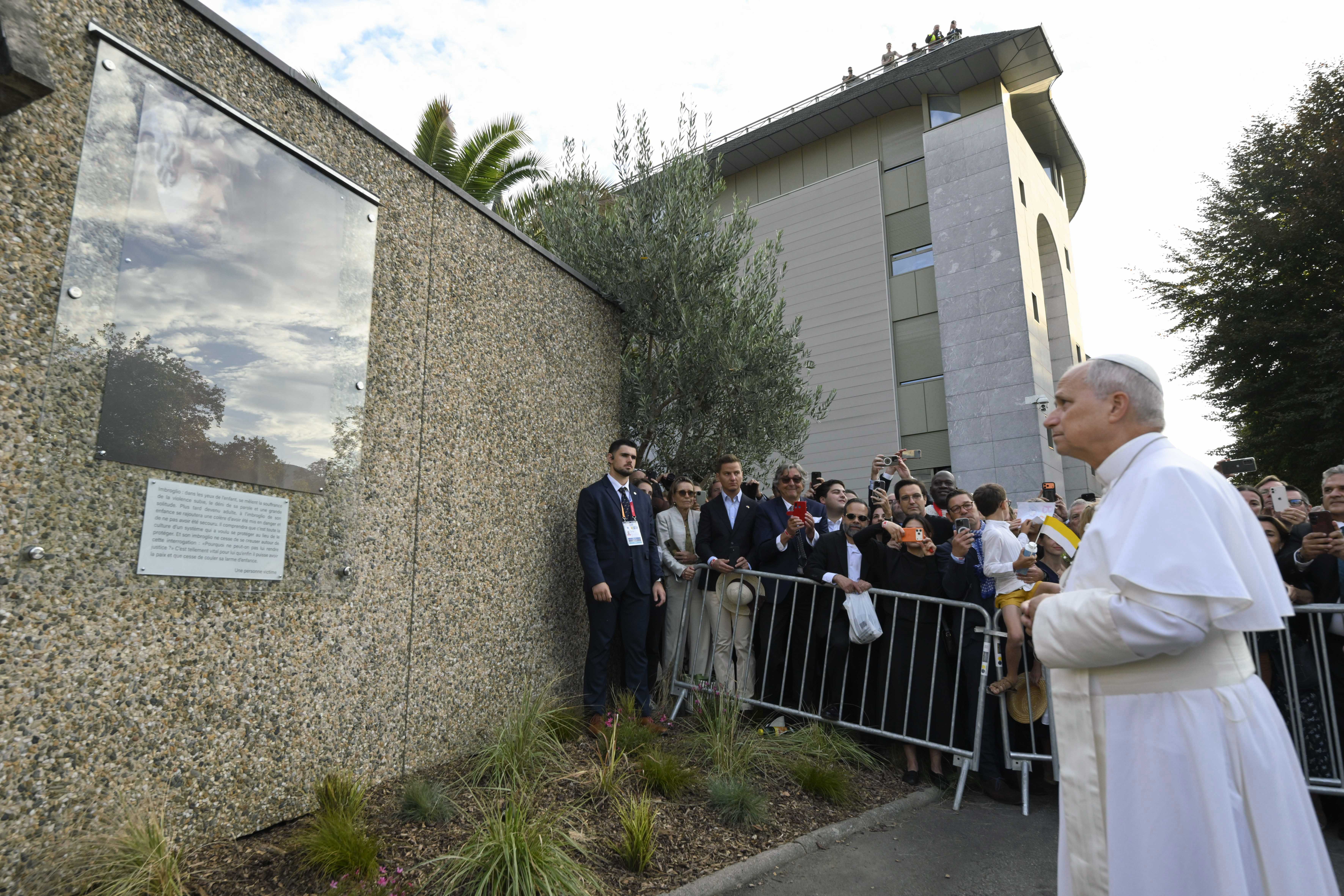
The pontiff “expressed his solidarity with them and, through them, with all those who have suffered and continue to suffer from the wounds of abuse,” the Vatican said.
![Catholic professor calls families to reclaim the home in a technological age #Catholic John Cuddeback, a professor of philosophy at Christendom College, says families today don’t often know how to achieve what they desire in their homes and family life. As a remedy, drawing from both ancient and modern thinkers, he has released "The Intentional Household: Living as if People Matter,” a book that outlines eight pillars for reclaiming the home as a place of human flourishing. “Families today are struggling to achieve what they so badly want: to have the kind of relationships we’re made for, beginning in the home, especially between spouses and between parents and children,” Cuddeback said. “They know they want something different, something better, but they feel hamstrung. In a culture that works against them in many ways, they are frustrated because they lack clear vision and examples to pattern themselves after.”
“The Intentional Household: Living as if People Matter” by Christendom College professor John Cuddeback. | Credit: Ken Oliver-Méndez/EWTN News
Cuddeback, who teaches a course on family and household and is also the author of “True Friendship,” spoke to EWTN News about how he hopes his book conveys that “[a]nyone can choose to be intentional about their household and make real progress with dramatic fruits in the lives of those we love most.” EWTN News: What do you see as the biggest challenge to building and maintaining an intentional home?Cuddebach: It all begins with priorities. As a society we have turned away from the intense focus that our household requires — and this is evident in how we struggle in marriage, raising children, and relating to the elderly. Even many traditionally-minded folks struggle to realize and enact the demanding, even while ordinary, aspects of God’s plan for our homes.Aristotle says that a society tends to produce the kind of people it honors. We do not honor those who prioritize home life — either women or men. This means that many of the structures, practices, and assumptions of our age are at odds with the real good of home life. This is especially evident in our obsession with the latest technologies.This book is a call to all of us to do something radically different and profoundly better — while always recognizing we must be people of our time and place. It calls us to discover that looking first to what our children and our elderly really need is the high road to deeper fulfillment for all of us.How has Pope Leo XIV’s encyclical Magnifica Humanitas influenced your thought on how technology should be incorporated in the home?Pope Leo makes clear that we have come to a crisis point. The time is now to be honest, serious, and persistent in examining our use of technology in view of real human flourishing. This must start in the home. No one else is going to do this for us.But as the pope makes clear, right practice must flow from an understanding of who we are and what we’re made for. “The Intentional Household” offers the rich and positive view of daily life in the home that grounds such an examination. It gives the “yes” that strengthens the “nos” we need to say. It gives direction for rising to the challenges of our age, including how to channel technology to true human flourishing.Approaching homelife intentionally — especially attending to the ordinary in good work and true leisure as essential to our relationships — we can take real steps to become those biblical good stewards so honored by the Lord.How does this apply to those across all walks of life, including single people, married couples without children, those who are divorced or separated?The principles of a vibrant home life are both perennial and flexible. Wherever we find ourselves we can discover how the plan that God wrote into human nature is much better than we have realized.Brokenness and suffering today are widespread. God’s plan encompasses these realities. By the grace of God, anyone who is humble and willing to take an intentional approach can affect real, and indeed dramatic change by applying the book’s eight principles. We can all take real steps to make our homes a place of vibrant life, with deep belonging, connection, and presence.One of the thinkers you cite in your book is Wendell Berry. In light of his recent passing can you speak to his influence on your life and thinking?Wendell Berry saw clearly how the loss of activities of work and leisure in the home has led to our experience of disconnection and isolation. Home should be a place of deep connection: between us and loved ones and neighbors, between soul and body, between us and the earth.One of Berry’s pivotal insights is the key role of a certain kind of work in the home. Berry has pointed out that the work of traditional home arts is much more important than we have realized. He argues that as the breakdown of home life came especially through the loss of good work, the renewal will likewise come through a rediscovery of work that connects us to one another as it connects us to our bodies and to the earth, and ultimately to God.Wendell Berry was a prophet of the extraordinary beauty and importance of the ordinary. Making our home an intentional household means rediscovering the power of ordinary things, such as mealtimes with the whole household, shared work in the kitchen and other home arts, and “porch time” and other such leisure times. Attention to these things can transform our marriage, parenting, and other key relationships.](https://unitedyam.com/wp-content/uploads/2026/09/catholic-professor-calls-families-to-reclaim-the-home-in-a-technological-age-catholic-john-cuddeback-a-professor-of-philosophy-at-christendom-college-says-families-today-dont-often-know-ho.jpg "Catholic professor calls families to reclaim the home in a technological age #Catholic John Cuddeback, a professor of philosophy at Christendom College, says families today don’t often know how to achieve what they desire in their homes and family life. As a remedy, drawing from both ancient and modern thinkers, he has released \"The Intentional Household: Living as if People Matter,” a book that outlines eight pillars for reclaiming the home as a place of human flourishing. “Families today are struggling to achieve what they so badly want: to have the kind of relationships we’re made for, beginning in the home, especially between spouses and between parents and children,” Cuddeback said. “They know they want something different, something better, but they feel hamstrung. In a culture that works against them in many ways, they are frustrated because they lack clear vision and examples to pattern themselves after.”
“The Intentional Household: Living as if People Matter” by Christendom College professor John Cuddeback. | Credit: Ken Oliver-Méndez/EWTN News
Cuddeback, who teaches a course on family and household and is also the author of “True Friendship,” spoke to EWTN News about how he hopes his book conveys that “[a]nyone can choose to be intentional about their household and make real progress with dramatic fruits in the lives of those we love most.” EWTN News: What do you see as the biggest challenge to building and maintaining an intentional home?Cuddebach: It all begins with priorities. As a society we have turned away from the intense focus that our household requires — and this is evident in how we struggle in marriage, raising children, and relating to the elderly. Even many traditionally-minded folks struggle to realize and enact the demanding, even while ordinary, aspects of God’s plan for our homes.Aristotle says that a society tends to produce the kind of people it honors. We do not honor those who prioritize home life — either women or men. This means that many of the structures, practices, and assumptions of our age are at odds with the real good of home life. This is especially evident in our obsession with the latest technologies.This book is a call to all of us to do something radically different and profoundly better — while always recognizing we must be people of our time and place. It calls us to discover that looking first to what our children and our elderly really need is the high road to deeper fulfillment for all of us.How has Pope Leo XIV’s encyclical Magnifica Humanitas influenced your thought on how technology should be incorporated in the home?Pope Leo makes clear that we have come to a crisis point. The time is now to be honest, serious, and persistent in examining our use of technology in view of real human flourishing. This must start in the home. No one else is going to do this for us.But as the pope makes clear, right practice must flow from an understanding of who we are and what we’re made for. “The Intentional Household” offers the rich and positive view of daily life in the home that grounds such an examination. It gives the “yes” that strengthens the “nos” we need to say. It gives direction for rising to the challenges of our age, including how to channel technology to true human flourishing.Approaching homelife intentionally — especially attending to the ordinary in good work and true leisure as essential to our relationships — we can take real steps to become those biblical good stewards so honored by the Lord.How does this apply to those across all walks of life, including single people, married couples without children, those who are divorced or separated?The principles of a vibrant home life are both perennial and flexible. Wherever we find ourselves we can discover how the plan that God wrote into human nature is much better than we have realized.Brokenness and suffering today are widespread. God’s plan encompasses these realities. By the grace of God, anyone who is humble and willing to take an intentional approach can affect real, and indeed dramatic change by applying the book’s eight principles. We can all take real steps to make our homes a place of vibrant life, with deep belonging, connection, and presence.One of the thinkers you cite in your book is Wendell Berry. In light of his recent passing can you speak to his influence on your life and thinking?Wendell Berry saw clearly how the loss of activities of work and leisure in the home has led to our experience of disconnection and isolation. Home should be a place of deep connection: between us and loved ones and neighbors, between soul and body, between us and the earth.One of Berry’s pivotal insights is the key role of a certain kind of work in the home. Berry has pointed out that the work of traditional home arts is much more important than we have realized. He argues that as the breakdown of home life came especially through the loss of good work, the renewal will likewise come through a rediscovery of work that connects us to one another as it connects us to our bodies and to the earth, and ultimately to God.Wendell Berry was a prophet of the extraordinary beauty and importance of the ordinary. Making our home an intentional household means rediscovering the power of ordinary things, such as mealtimes with the whole household, shared work in the kitchen and other home arts, and “porch time” and other such leisure times. Attention to these things can transform our marriage, parenting, and other key relationships.")
Christendom College professor John Cuddeback spoke to EWTN News about his new book “The Intentional Household: Living as if People Matter,” and treating our homes as places of human flourishing.

Caritas Nepal has begun distributing relief and operating community kitchens as authorities warn of a second flood following the deadliest natural disaster in Nepal’s recorded history.