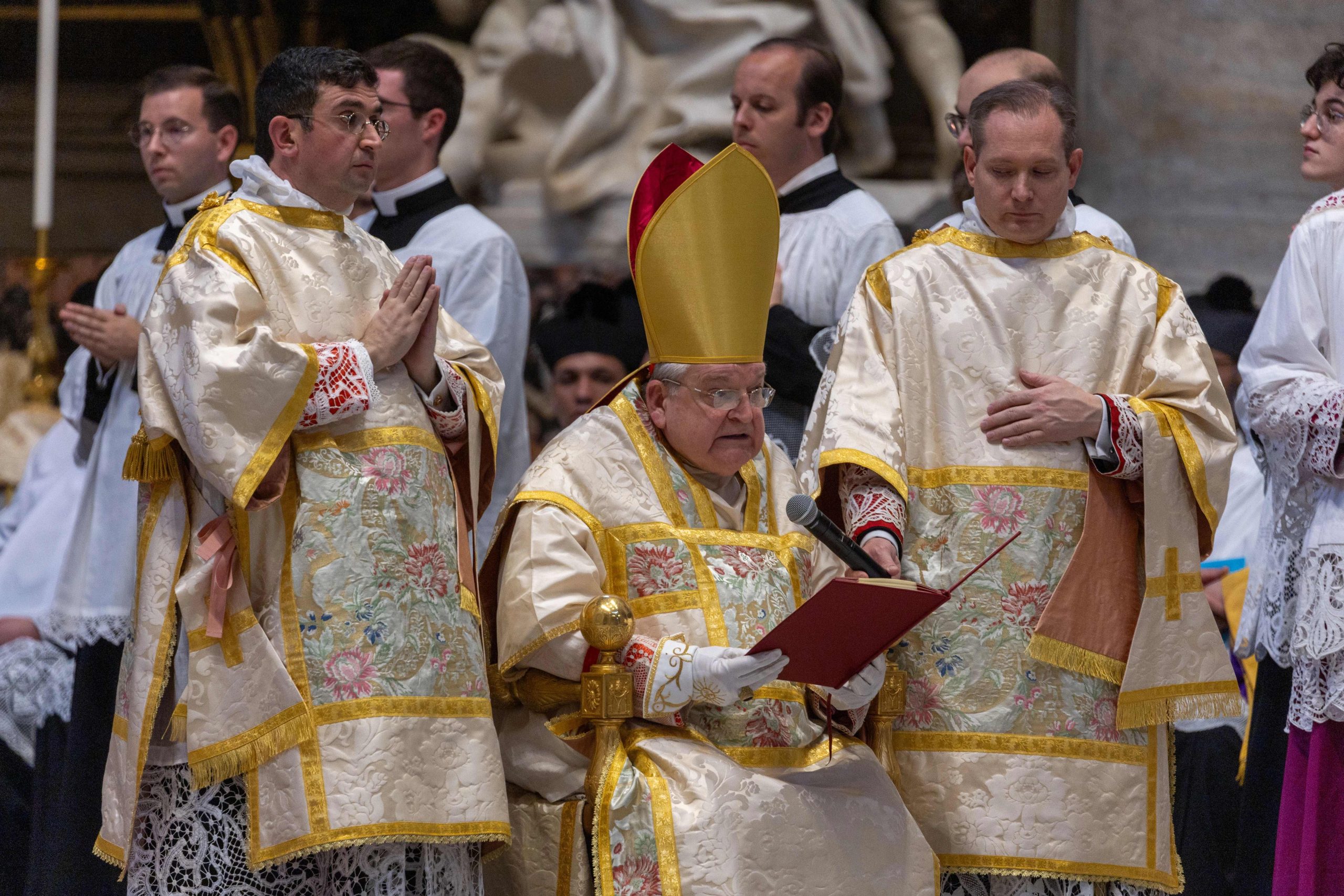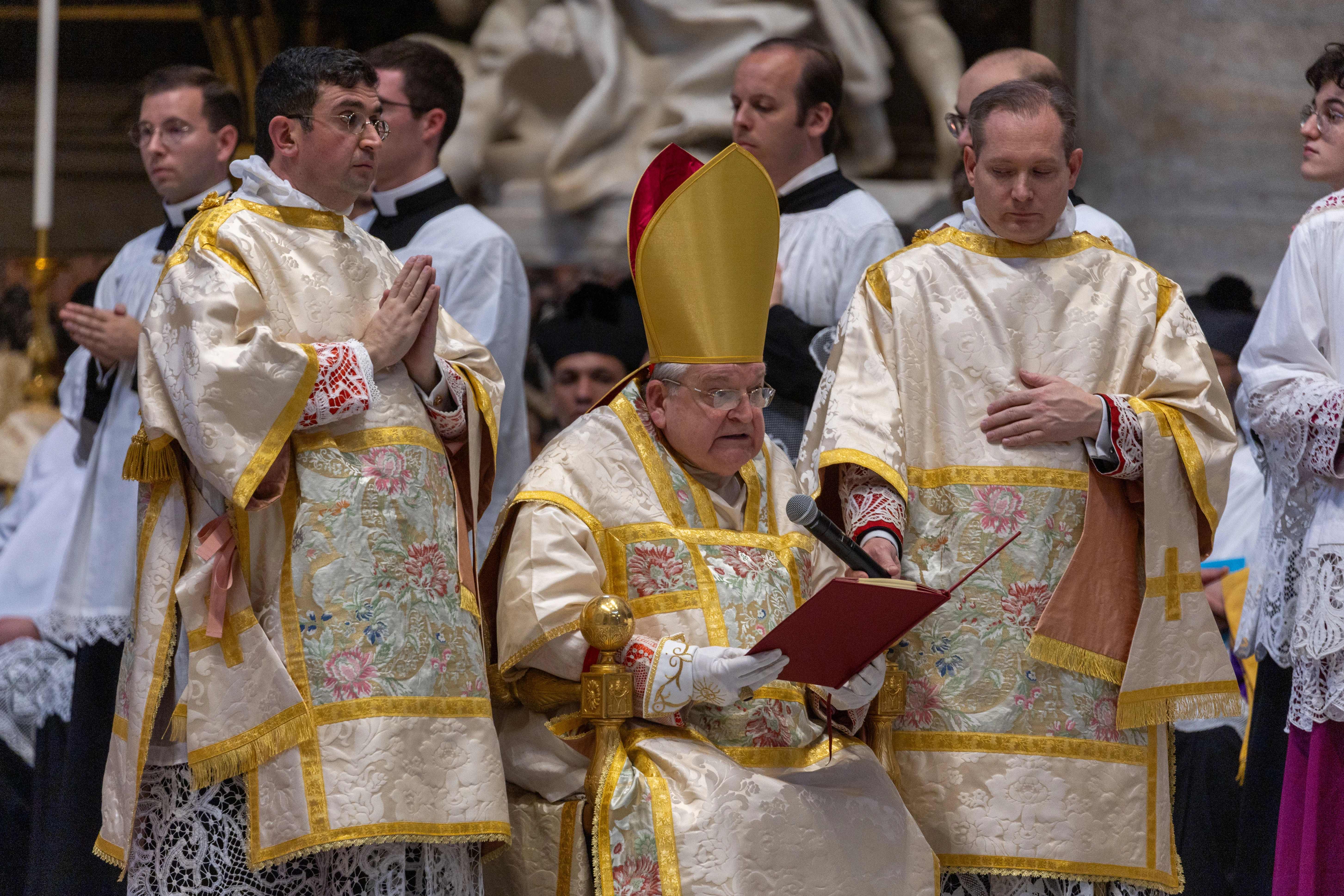
Founded amid hardship and change, the centennial of St. Mary Star of the Sea in Jackson, Michigan, brings together generations to honor a diverse parish that continues to thrive.


Founded amid hardship and change, the centennial of St. Mary Star of the Sea in Jackson, Michigan, brings together generations to honor a diverse parish that continues to thrive.

![Canadian priest offered euthanasia twice while recovering from hip fracture #Catholic A priest from Vancouver, British Columbia, Canada, recovering from a hip fracture at Vancouver General Hospital (VGH) said he was twice offered assisted death by healthcare staff who knew he was a priest and opposed to euthanasia — a practice critics say is growing as medical professionals are increasingly encouraged to initiate such conversations.“There are some things you just don’t talk about to some people,” said Father Larry Holland, who has completed studies in healthcare chaplaincy in addition to serving at numerous parishes in the Archdiocese of Vancouver.He described his reaction when a doctor brought up the option of medical aid in dying (MAID) should his condition deteriorate. “I think I was very shocked,” he said. “It is such a sensitive subject.”Holland, 79, is currently convalescing at VGH after suffering a hip fracture from a fall in his bathroom on Christmas Day. He spoke to The B.C. Catholic about the offers of MAID from two healthcare professionals, despite their knowing he was a Catholic priest.Holland said he wasn’t dying then or now and that the doctor’s mention of MAID left him “kind of silent” for a moment. The doctor then raised the subject again, saying it’s “something they have to discuss with someone who’s been given a terminal diagnosis.”Holland recalled telling the doctor he was morally opposed to euthanasia. The doctor explained that “he just wanted to make sure that, if a [terminal] diagnosis came up or not … I knew of the different services I had access to.”Weeks later, a second offer of MAID came from a nurse who the priest said seemed uncomfortable raising the topic and was likely doing so out of compassion because of the pain he was enduring.“It’s a false compassion, really,” he said.A spokesman for Vancouver Coastal Health, which operates VGH, told The B.C. Catholic in an email that “staff may consider bringing up MAID based on their clinical judgment, provided they possess the necessary knowledge and skills to do so.”Staff are also “responsible for answering questions when patients bring up the topic of MAID,” the spokesman said.The two incidents arise as Canada approaches 100,000 assisted dying deaths.Father Larry Lynn, the archdiocese’s pro-life chaplain, said he was shocked to hear about Holland’s case.“This must surely be among the most appalling examples of Canada’s coercive and insensitive euthanasia regime,” Lynn said in an interview.He said it’s disturbing that a healthcare provider suggests euthanasia with any patient, and particularly when the patient is a consecrated religious known to be morally opposed. “It places the medical practitioner into the role of the devil, tempting a vulnerable person into mortal sin.”He’s equally troubled that Canadian euthanasia providers aren’t ruling out initiating discussions with Roman Catholics about MAID. In a document titled “Bringing up Medical Assistance in Dying (MAID) as a Clinical Care Option,” the Canadian Association of MAID Assessors and Providers recommends against assuming patients oppose MAID because of their faith.The document says: “Healthcare professionals may draw incorrect assumptions about a person’s views on MAID; e.g., they may assume that a patient objects to MAID because she is a Roman Catholic nun, and yet Roman Catholic nuns and others dedicated to a faith-based way of life have requested MAID.” The booklet does not provide a source for the information.An updated version published in March removes the Catholic reference but gives the same advice regarding people of a “faith community” and even those of “strong faith.”Lynn called it “diabolical” to use a nun as an example for overcoming a patient’s moral objections.The booklet reflects a recent trend of encouraging healthcare personnel to initiate MAID discussions with patients. In November 2025, The B.C. Catholic reported on a little-known 2023 Health Canada document urging health authorities and professional bodies to adopt “practice standards” requiring doctors and nurse practitioners to raise MAID with certain patients.The MAID assessors and providers document similarly says physicians and nurse practitioners involved in care planning and consent processes “have a professional obligation to initiate a discussion about MAID if a patient might be eligible for MAID.” However, Health Canada does not have the authority to require provinces or health authorities to adopt such guidelines and The B.C. Catholic found no evidence of any public agency or professional body in British Columbia doing so.Amanda Achtman, creator of the anti-euthanasia project Dying to Meet You and ethics director of Canadian Physicians for Life, said initiating MAID discussions in a medical setting is a form of coercion that attacks patients’ deepest convictions when they’re vulnerable. To “torment” someone who has deeply held beliefs with an offer of MAID is “an attack on their identity,” Achtman said.Holland admitted he was in so much pain that he could “feel the temptation” to accept MAID. “It’s a human reaction. We always look for the easy way out.”Conservative member of Parliament Garnett Genuis has introduced Bill C-260, An Act to Prevent Coercion of Persons Not Seeking Medical Assistance in Dying, which would prohibit federal employees from proactively offering or recommending MAID. The bill resulted from incidents of bureaucrats such as veterans counselors trying to steer vulnerable people toward assisted dying.The Alberta government introduced legislation in March that would restrict regulated health professionals from providing information about MAID to their patients unless the patient brings it up. The Safeguards for Last Resort Termination of Life Act would also restrict the public display of MAID information, such as posters, within healthcare facilities.The bill is worth supporting, said Achtman, who lives in Calgary. “Simply being offered euthanasia already kills the person, because it defeats and deflates their sense of self-worth and value.”The unwanted initiation of MAID discussions in Canada made international headlines in March after Achtman shared the story of an 84-year-old woman, Miriam Lancaster, who went to VGH last year for severe back pain. She said the first doctor she spoke with in the emergency room raised MAID before any diagnostic work had been done. Lancaster’s daughter was present and confirmed the incident, adding her mother eventually responded to rehabilitation and rest.The Catholic chaplain at VGH, Father Ronald Sequeira, said it’s a constant struggle to help suffering patients not lose hope. He said he tries to offer them “some kind of encouragement and comfort,” but many give up.“The moment you lose hope, the devil comes in, in different personalities, and says, ‘Do you want MAID? I don’t want people to suffer.’”Patients often don’t realize that suffering is redemptive, he said. “God makes us more pure, more strong, through the suffering when we offer it up,” Sequeira said. “So we give hope — help them not to lose hope.”Holland said turning down an offer of death opens one to new experiences. Even enduring pain “can encourage growth,” he said. “It can motivate you, it can open up new worlds, new vistas, new opportunities,” including enriched relationships.He said he is sharing his story in the hope it will help others. “I went through it; you can go through it, too.”This story was first published in The B.C. Catholic and is reprinted here with permission and adaptations. Canadian priest offered euthanasia twice while recovering from hip fracture #Catholic A priest from Vancouver, British Columbia, Canada, recovering from a hip fracture at Vancouver General Hospital (VGH) said he was twice offered assisted death by healthcare staff who knew he was a priest and opposed to euthanasia — a practice critics say is growing as medical professionals are increasingly encouraged to initiate such conversations.“There are some things you just don’t talk about to some people,” said Father Larry Holland, who has completed studies in healthcare chaplaincy in addition to serving at numerous parishes in the Archdiocese of Vancouver.He described his reaction when a doctor brought up the option of medical aid in dying (MAID) should his condition deteriorate. “I think I was very shocked,” he said. “It is such a sensitive subject.”Holland, 79, is currently convalescing at VGH after suffering a hip fracture from a fall in his bathroom on Christmas Day. He spoke to The B.C. Catholic about the offers of MAID from two healthcare professionals, despite their knowing he was a Catholic priest.Holland said he wasn’t dying then or now and that the doctor’s mention of MAID left him “kind of silent” for a moment. The doctor then raised the subject again, saying it’s “something they have to discuss with someone who’s been given a terminal diagnosis.”Holland recalled telling the doctor he was morally opposed to euthanasia. The doctor explained that “he just wanted to make sure that, if a [terminal] diagnosis came up or not … I knew of the different services I had access to.”Weeks later, a second offer of MAID came from a nurse who the priest said seemed uncomfortable raising the topic and was likely doing so out of compassion because of the pain he was enduring.“It’s a false compassion, really,” he said.A spokesman for Vancouver Coastal Health, which operates VGH, told The B.C. Catholic in an email that “staff may consider bringing up MAID based on their clinical judgment, provided they possess the necessary knowledge and skills to do so.”Staff are also “responsible for answering questions when patients bring up the topic of MAID,” the spokesman said.The two incidents arise as Canada approaches 100,000 assisted dying deaths.Father Larry Lynn, the archdiocese’s pro-life chaplain, said he was shocked to hear about Holland’s case.“This must surely be among the most appalling examples of Canada’s coercive and insensitive euthanasia regime,” Lynn said in an interview.He said it’s disturbing that a healthcare provider suggests euthanasia with any patient, and particularly when the patient is a consecrated religious known to be morally opposed. “It places the medical practitioner into the role of the devil, tempting a vulnerable person into mortal sin.”He’s equally troubled that Canadian euthanasia providers aren’t ruling out initiating discussions with Roman Catholics about MAID. In a document titled “Bringing up Medical Assistance in Dying (MAID) as a Clinical Care Option,” the Canadian Association of MAID Assessors and Providers recommends against assuming patients oppose MAID because of their faith.The document says: “Healthcare professionals may draw incorrect assumptions about a person’s views on MAID; e.g., they may assume that a patient objects to MAID because she is a Roman Catholic nun, and yet Roman Catholic nuns and others dedicated to a faith-based way of life have requested MAID.” The booklet does not provide a source for the information.An updated version published in March removes the Catholic reference but gives the same advice regarding people of a “faith community” and even those of “strong faith.”Lynn called it “diabolical” to use a nun as an example for overcoming a patient’s moral objections.The booklet reflects a recent trend of encouraging healthcare personnel to initiate MAID discussions with patients. In November 2025, The B.C. Catholic reported on a little-known 2023 Health Canada document urging health authorities and professional bodies to adopt “practice standards” requiring doctors and nurse practitioners to raise MAID with certain patients.The MAID assessors and providers document similarly says physicians and nurse practitioners involved in care planning and consent processes “have a professional obligation to initiate a discussion about MAID if a patient might be eligible for MAID.” However, Health Canada does not have the authority to require provinces or health authorities to adopt such guidelines and The B.C. Catholic found no evidence of any public agency or professional body in British Columbia doing so.Amanda Achtman, creator of the anti-euthanasia project Dying to Meet You and ethics director of Canadian Physicians for Life, said initiating MAID discussions in a medical setting is a form of coercion that attacks patients’ deepest convictions when they’re vulnerable. To “torment” someone who has deeply held beliefs with an offer of MAID is “an attack on their identity,” Achtman said.Holland admitted he was in so much pain that he could “feel the temptation” to accept MAID. “It’s a human reaction. We always look for the easy way out.”Conservative member of Parliament Garnett Genuis has introduced Bill C-260, An Act to Prevent Coercion of Persons Not Seeking Medical Assistance in Dying, which would prohibit federal employees from proactively offering or recommending MAID. The bill resulted from incidents of bureaucrats such as veterans counselors trying to steer vulnerable people toward assisted dying.The Alberta government introduced legislation in March that would restrict regulated health professionals from providing information about MAID to their patients unless the patient brings it up. The Safeguards for Last Resort Termination of Life Act would also restrict the public display of MAID information, such as posters, within healthcare facilities.The bill is worth supporting, said Achtman, who lives in Calgary. “Simply being offered euthanasia already kills the person, because it defeats and deflates their sense of self-worth and value.”The unwanted initiation of MAID discussions in Canada made international headlines in March after Achtman shared the story of an 84-year-old woman, Miriam Lancaster, who went to VGH last year for severe back pain. She said the first doctor she spoke with in the emergency room raised MAID before any diagnostic work had been done. Lancaster’s daughter was present and confirmed the incident, adding her mother eventually responded to rehabilitation and rest.The Catholic chaplain at VGH, Father Ronald Sequeira, said it’s a constant struggle to help suffering patients not lose hope. He said he tries to offer them “some kind of encouragement and comfort,” but many give up.“The moment you lose hope, the devil comes in, in different personalities, and says, ‘Do you want MAID? I don’t want people to suffer.’”Patients often don’t realize that suffering is redemptive, he said. “God makes us more pure, more strong, through the suffering when we offer it up,” Sequeira said. “So we give hope — help them not to lose hope.”Holland said turning down an offer of death opens one to new experiences. Even enduring pain “can encourage growth,” he said. “It can motivate you, it can open up new worlds, new vistas, new opportunities,” including enriched relationships.He said he is sharing his story in the hope it will help others. “I went through it; you can go through it, too.”This story was first published in The B.C. Catholic and is reprinted here with permission and adaptations.](https://unitedyam.com/wp-content/uploads/2026/05/canadian-priest-offered-euthanasia-twice-while-recovering-from-hip-fracture-catholic-a-priest-from-vancouver-british-columbia-canada-recovering-from-a-hip-fracture-at-vancouver-general-hospital-v.png)
A Vancouver priest says he was twice offered assisted death by hospital medical staff who knew he was a priest and opposed to euthanasia — a practice critics say is growing.

![New York City street renamed for religious sister’s decades of service #Catholic A New York City street acquired a new name this past weekend honoring a Catholic sister’s decades of dedication to the East Harlem community.On Saturday, April 25, more than 100 people gathered to celebrate the newly named street — Sister Susanne Lachapelle Way — named for the life and legacy of Lachapelle and her contributions as a registered nurse, advocate, and Little Sister of the Assumption (LSA).“With a heart rooted in justice, she dedicated herself to serving the vulnerable through home visits, healthcare, and tireless advocacy, both locally and globally,” Rosario Jimenez, director for LSA Family in Mission, told EWTN News.The event and street naming flowed from Lachapelleʼs work with Little Sisters of the Assumption Family Health Service, a community-based nonprofit based in East Harlem. Founded by the Little Sisters, the organization offers numerous programs to help vulnerable families and children meet their basic needs.
Crowd celebrates the unveiling of the Sister Susanne Lachapelle Way street sign in East Harlem, New York, on April 25, 2026. | Credit: Photo courtesy of Alysa Jette and Grace Ayres-Doyle
The group has been in the city for almost 70 years and Lachapelle “really helped to set the trajectory for the organization,” Ray Lopez, chief program officer of LSA Family Health Service, told EWTN News.She was “a foundational visionary staff person and a leader who really, to this day, has a very profound impact on many of us who are on the staff and worked shoulder to shoulder with her, learning from her,” he said.“Since her passing, weʼve all … redoubled our efforts to find a way to keep LSAʼs original mission and vision going in this current environment,” Lopez said. “We really wanted to find ways to keep her name out there and the legacy going.”The street is on the southeast corner of East 115th Street and First Avenue. "Itʼs almost the exact midpoint of where Sister Susanne Lachapelle lived in the Little Sisters of the Assumption brownstone and where the LSA Family Health Service … center is located,” Lopez said.“She walked there every day for at least two decades,” he said. “We thought it was the appropriate place.”Sister Susanne and the Little Sisters: ‘Unsung heroes’Lachapelle entered the LSA order in 1962 and took the religious name Sister Susanne Mary of the Sacred Heart. She made her final vows in 1971.
Sister Susanne Lachapelle. | Credit: Photo courtesy of LSA Family in Mission
In her 60 years of religious life, she served in numerous areas and worked with many ministries. But for 45 years she made the community of East Harlem her home, helping to spearhead the LSA Family Health Service’s programs.As a nurse, Lachapelle conducted home visits, which “was a foundational program of LSA Family Health Service,” Lopez said. “All of the programs grew out of those interactions, those early interactions of nurses going into the homes to treat the sick and poor and really seeing conditions firsthand, sitting with families at their kitchen table, hearing their stories.”“Sister Susanne and the rest of the leadership created other programs to really provide wraparound services for families,” he said. "The Little Sisters set up a food pantry and a thrift store just to make sure that people had the very basics.”“From there, the services were about connecting people with public benefits, providing support around education, education enrichment, education navigation. A lot of … programs focused on maternal child health and early childhood development.”Along with her support for health and families, Lachapelle also had a passion for protecting the environment through her commitment to Pope Francis' Laudato Si', a call to protect our common home.
Sister Susanne Lachapelle. | Credit: Photo courtesy of LSA Family in Mission
Lachapelle decided to initiate “an environmental health component to the work that the Little Sisters were doing,” Lynn Tiede, a volunteer for LSA Health Service who worked with Lachapelle, told EWTN News.“She worked with the families and saw problems like asthma and other debilitating health things, she realized that … itʼs mold, itʼs the air quality, itʼs these other things that are really at the root of these health problems.”“Everybody was just so inspired … to see her traipsing into rough, rough buildings and just without any hesitation,” Tiede said. “If you went into a home and people were dealing with asthma, you … send in the environmental health team and then they try to work to get the building management to actually address those things.”With the success of her work, she even collaborated with the human rights group and nongovernmental organization Vivat International, where she helped bring voices and environmental issues to the United Nations, but she always remained “very, very humble,” Tiede said.Due to her humility “there were a few people who were against [the street-naming] when we proposed it, because they thought she would hate it — because she was so humble,” Tiede said.
Sister Susanne Lachapelle Way in East Harlem, New York. | Credit: Photo courtesy of LSA Family in Mission
Ultimately they chose to honor Lachapelle and the Little Sisters because they are “unsung heroes — these quiet heroes,” Tiede said.The process to get the street renamed began in 2024 and it was found to be an easier process than expected, as the city council was eager to acknowledge Lachapelle and the Little Sisters.Sister Susanne’s lasting impactAt the street naming celebration organizers “were expecting around 80 participants, but I think it was maybe 150 or a little bit more,” Jimenez said. “There were community members, families that she served, youth that she served, … volunteers, and of course, our board members and benefactors.”It honored her “simplicity and the way that she used to be a leader,” which was “was grounded in integrity, purpose, love,” Jimenez said. “Having a street named after her will honor all of that.”Reflecting on the event, Lopez said: “[It] feels like a dream because so many people came that worked with her in the past.”Despite having to move the event inside to avoid the cold and rain, the crowd of people stayed to celebrate. It “was crowded with people, and our center lobby was filled completely,” Lopez said. “It was just a very festive atmosphere.”He added: “It was really moving to have so many people there from so long ago that still feel it in their hearts, [how] the work here in East Harlem impacted their careers, impacted their lives, and that itʼs still a very significant thing for them,” he said.](https://unitedyam.com/wp-content/uploads/2026/04/new-york-city-street-renamed-for-religious-sisters-decades-of-service-catholic-a-new-york-city-street-acquired-a-new-name-this-past-weekend-honoring-a-catholic-sisters-decades-of-de-scaled.png)
For 45 years, Sister Susanne Lachapelle made the community of East Harlem her home, helping to spearhead the LSA Family Health Service’s programs to help the most vulnerable.