Increase

Maryland Supreme Court: State cannot reveal names of individuals who allegedly hid Church abuse #Catholic Prosecutors in Maryland may not reveal the names of individuals who allegedly hid or failed to report Church abuse, the state Supreme Court said April 27. As part of its investigation into alleged abuse in the Archdiocese of Baltimore, the state attorney generalʼs office had sought to make public the details of a grand jury report, including the identities of individuals who have not been charged with a crime but who allegedly failed to stop abuse from occurring. A lower court granted the attorney generalʼs request to publish the information, with an appellate court partly upholding that decision. Yet in its April 27 ruling, the Maryland Supreme Court reversed those decisions, holding that the attorney generalʼs office did not “meet [the] burden” of justifying the release of the identities. “Many grand jury investigations obtain damaging information and allegations about uncharged individuals that the public might benefit from learning,” the high court acknowledged. But “one of the primary purposes of grand jury secrecy is to protect uncharged persons from public disgrace in the absence of a criminal charge and a forum in which to seek vindication,” it said. “A court may not order disclosure of secret grand jury material, over the objection of an uncharged individual, for the purpose of holding that person accountable in the court of public opinion,” the justices said. The court noted that the attorney generalʼs office had argued that the “intensity of public interest” in the case could justify revealing the identities.Yet “the interests promoted by grand jury secrecy do not increase or decrease based on how much the public wants to learn the information contained in grand jury materials,” the court said.The decision comes amid ongoing court proceedings in the Archdiocese of Baltimore, which filed for bankruptcy in September 2023 ahead of a wave of sex abuse claims filed against it under the Maryland Child Victims Act. Earlier this month, the archdiocesan insurer Hartford Insurance Group proposed contributing $100 million to a settlement for abuse victims. The archdiocese in 2024 sued multiple insurers over what it claimed was a failure to pay abuse claims for which the insurers were contractually obligated.In 2024 Archbishop William Lori attended two court-ordered “listening sessions” with alleged victims of sexual abuse, with the prelate describing himself as "deeply moved by their very powerful testimony.”

Maryland Supreme Court: State cannot reveal names of individuals who allegedly hid Church abuse #Catholic Prosecutors in Maryland may not reveal the names of individuals who allegedly hid or failed to report Church abuse, the state Supreme Court said April 27. As part of its investigation into alleged abuse in the Archdiocese of Baltimore, the state attorney generalʼs office had sought to make public the details of a grand jury report, including the identities of individuals who have not been charged with a crime but who allegedly failed to stop abuse from occurring. A lower court granted the attorney generalʼs request to publish the information, with an appellate court partly upholding that decision. Yet in its April 27 ruling, the Maryland Supreme Court reversed those decisions, holding that the attorney generalʼs office did not “meet [the] burden” of justifying the release of the identities. “Many grand jury investigations obtain damaging information and allegations about uncharged individuals that the public might benefit from learning,” the high court acknowledged. But “one of the primary purposes of grand jury secrecy is to protect uncharged persons from public disgrace in the absence of a criminal charge and a forum in which to seek vindication,” it said. “A court may not order disclosure of secret grand jury material, over the objection of an uncharged individual, for the purpose of holding that person accountable in the court of public opinion,” the justices said. The court noted that the attorney generalʼs office had argued that the “intensity of public interest” in the case could justify revealing the identities.Yet “the interests promoted by grand jury secrecy do not increase or decrease based on how much the public wants to learn the information contained in grand jury materials,” the court said.The decision comes amid ongoing court proceedings in the Archdiocese of Baltimore, which filed for bankruptcy in September 2023 ahead of a wave of sex abuse claims filed against it under the Maryland Child Victims Act. Earlier this month, the archdiocesan insurer Hartford Insurance Group proposed contributing $100 million to a settlement for abuse victims. The archdiocese in 2024 sued multiple insurers over what it claimed was a failure to pay abuse claims for which the insurers were contractually obligated.In 2024 Archbishop William Lori attended two court-ordered “listening sessions” with alleged victims of sexual abuse, with the prelate describing himself as "deeply moved by their very powerful testimony.”

“Uncharged individuals” may not be exposed to the “court of public opinion” in grand jury documents, the state high court ruled.

Read More
U.S. Embassy to the Vatican: Nigerian Christians are being targeted #Catholic ROME — It is “intolerable” that Christians are being targeted for persecution in Nigeria, said U.S. Ambassador to the Holy See Brian Burch during an event in Rome on Friday.The group Solidarity with the Persecuted Church (SPC) and the Embassy of the United States to the Holy See organized the April 17 conference at the embassy on threats to religious freedom in Nigeria.Burch spoke to EWTN News on the sidelines about the stance of the U.S. on religious violence in Nigeria. He described the current situation as a “conflict between radical Islamic groups and Christians because of their faith.”“The United States is the greatest friend of religious liberty,” Burch said. “The purpose of this event is to call attention to the plight of Christians who are being targeted and killed in Nigeria. Unfortunately, there are extremist Islamic groups that have been targeting Christians specifically in their churches and their homes, and the scale and size of the persecution of Christians there is intolerable.”Asked about the denial by some Nigerian government officials that Christians specifically are being targeted, Burch insisted that the current violence against Christians is alarming, citing U.S. President Donald Trump, who designated Nigeria as a country of particular concern in 2025.“The president has said that Christians face an existential crisis in Nigeria, and thanks to his leadership, he is now acting to bring an end to this. We have called on the Nigerian government to take necessary steps to protect Christians, and the United States government is now working in partnership with the Nigerian government to assist them in doing just that,” he said.Steven Wagner, president of SPC, underscored the importance of Nigeria for Christianity in Africa and the need for the Holy See to be involved in raising awareness.“As Nigeria goes, so goes Africa. More Christians are martyred for their faith in Nigeria than in any other country on earth. There is a huge crisis of internally displaced persons. We are calling on the Vatican to increase public awareness of the problem and to continue to encourage the government of Nigeria to make progress in protecting its people,” Wagner said.Burch responds to Trump’s comments on the popeIn his opening remarks at the conference, Burch commented for the first time on the recent tensions between Trump and Pope Leo XIV. He emphasized their difference in approach to armed conflicts and their shared goal of eliminating evil.“In recent days, President Trump and Pope Leo have exchanged, shall we say, sharp words. We must not pretend there is no disagreement. But both men are driven by an unshakable belief in protecting the innocent. One leads with the sword and shield of American power, the other with the cross of sacrificial love. But both are saying in their own languages, ‘Evil must not triumph and innocence must not be abandoned,’” Burch said.Papal trip in AfricaThe pontiff is currently on his first apostolic journey to Africa — visiting Algeria, Cameroon, Angola, and Equatorial Guinea.Archbishop Fortunatus Nwachukwu, secretary of the Dicastery for Evangelization and a presenter at the conference, described the trip as a moment of profound unity for all Africans.“This is Africa, and much of the divisions, according to countries in Africa, are artificial divisions that were imposed on the continent,” Nwachukwu told EWTN News. “Africans quite often feel united even beyond the boundaries. So the popeʼs message to these churches and these populations will also be a message to the population in Nigeria and to the Church in Nigeria.”Many of the issues the pope is addressing on his trip “are shared in common in Nigeria,” Burch added. The Holy See and the United States “certainly share this deep, fundamental commitment to religious liberty.”

U.S. Embassy to the Vatican: Nigerian Christians are being targeted #Catholic ROME — It is “intolerable” that Christians are being targeted for persecution in Nigeria, said U.S. Ambassador to the Holy See Brian Burch during an event in Rome on Friday.The group Solidarity with the Persecuted Church (SPC) and the Embassy of the United States to the Holy See organized the April 17 conference at the embassy on threats to religious freedom in Nigeria.Burch spoke to EWTN News on the sidelines about the stance of the U.S. on religious violence in Nigeria. He described the current situation as a “conflict between radical Islamic groups and Christians because of their faith.”“The United States is the greatest friend of religious liberty,” Burch said. “The purpose of this event is to call attention to the plight of Christians who are being targeted and killed in Nigeria. Unfortunately, there are extremist Islamic groups that have been targeting Christians specifically in their churches and their homes, and the scale and size of the persecution of Christians there is intolerable.”Asked about the denial by some Nigerian government officials that Christians specifically are being targeted, Burch insisted that the current violence against Christians is alarming, citing U.S. President Donald Trump, who designated Nigeria as a country of particular concern in 2025.“The president has said that Christians face an existential crisis in Nigeria, and thanks to his leadership, he is now acting to bring an end to this. We have called on the Nigerian government to take necessary steps to protect Christians, and the United States government is now working in partnership with the Nigerian government to assist them in doing just that,” he said.Steven Wagner, president of SPC, underscored the importance of Nigeria for Christianity in Africa and the need for the Holy See to be involved in raising awareness.“As Nigeria goes, so goes Africa. More Christians are martyred for their faith in Nigeria than in any other country on earth. There is a huge crisis of internally displaced persons. We are calling on the Vatican to increase public awareness of the problem and to continue to encourage the government of Nigeria to make progress in protecting its people,” Wagner said.Burch responds to Trump’s comments on the popeIn his opening remarks at the conference, Burch commented for the first time on the recent tensions between Trump and Pope Leo XIV. He emphasized their difference in approach to armed conflicts and their shared goal of eliminating evil.“In recent days, President Trump and Pope Leo have exchanged, shall we say, sharp words. We must not pretend there is no disagreement. But both men are driven by an unshakable belief in protecting the innocent. One leads with the sword and shield of American power, the other with the cross of sacrificial love. But both are saying in their own languages, ‘Evil must not triumph and innocence must not be abandoned,’” Burch said.Papal trip in AfricaThe pontiff is currently on his first apostolic journey to Africa — visiting Algeria, Cameroon, Angola, and Equatorial Guinea.Archbishop Fortunatus Nwachukwu, secretary of the Dicastery for Evangelization and a presenter at the conference, described the trip as a moment of profound unity for all Africans.“This is Africa, and much of the divisions, according to countries in Africa, are artificial divisions that were imposed on the continent,” Nwachukwu told EWTN News. “Africans quite often feel united even beyond the boundaries. So the popeʼs message to these churches and these populations will also be a message to the population in Nigeria and to the Church in Nigeria.”Many of the issues the pope is addressing on his trip “are shared in common in Nigeria,” Burch added. The Holy See and the United States “certainly share this deep, fundamental commitment to religious liberty.”

Ambassador Brian Burch described the situation in Nigeria as a “conflict between radical Islamic groups and Christians because of their faith.”

Read More
Federal judge pauses Louisiana telehealth abortion suit pending FDA review #Catholic After the Trump administration appealed, a federal judge put on pause a lawsuit filed by the state of Louisiana that challenges the federal policy of allowing mail-order abortion pills.U.S. District Judge David Joseph in Lafayette, Louisiana, ruled that the challenge be paused pending the U.S. Food and Drug Administration (FDA)’s review of the safety of the drug but noted that the state could continue the challenge after the review was completed.Louisiana Attorney General Liz Murrill filed a lawsuit in late 2025 to challenge the 2023 deregulation of mifepristone, which is used in chemical abortions. The 2023 rule changes, initiated during former president Joe Biden’s administration, allowed the drugs to be delivered through the mail and prescribed without any visits to a doctor.In January of this year, President Donald Trump’s Department of Justice (DOJ) filed a motion with a federal district court to pause the suit, pending a review by the FDA of the chemical abortion drug.Louisiana had filed the lawsuit after residents — including Rosalie Markezich, who is named in the lawsuit — said they were coerced into taking abortion pills that were obtained through the mail. In Markezich’s case, she said her boyfriend forced her to take it.Study: Maternal mortality decreased in states that protect unborn lifeA recent study published by JAMA Network Open found a decrease in maternal mortality in states that protect unborn children from abortions as well as in states with permissive abortion laws.The study considered 22 million births and more than 12,000 pregnancy-related deaths from 2018 to 2023, with 14 states with abortion bans and 37 control jurisdictions.“This cohort study found that abortion bans were not associated with statistically significant overall or state-specific increases in pregnancy-associated mortality,” the study read.In states with strong pro-life laws, on average, maternal mortality rates declined slightly faster than pro-abortion states.Illinois pregnancy centers continue to appeal for conscience rightsA court heard arguments on Friday from Illinois pregnancy centers that are appealing an Illinois district court decision that affirmed a law requiring pregnancy centers to refer women for abortions.The National Institute of Family and Life Advocates and three Illinois pregnancy centers appealed after an April 2025 court ruling found that requiring pregnancy centers to refer pregnant women for an abortion was not a violation of speech and conscience rights.“No one should be forced to express a message that violates their convictions, and compelling people to refer others for abortions does that,” said Alliance Defending Freedom Counsel Erin Hawley. “The U.S. Supreme Court held in NIFLA v. Becerra that forcing people to promote abortion is unconstitutional.”Maryland bill to force hospitals to offer abortions goes to governor’s deskA Maryland bill that would force hospitals to offer abortions, even against their conscience, in some circumstances, heads to the stateʼs governor after the state Legislature passed it this week.The bill would require “a hospital to allow the termination of a pregnancy in certain circumstances” under the federal 1986 Emergency Medical Treatment and Labor Act (EMTALA), which ensures that emergency care is offered regardless of a patient’s ability to pay.The bill would also require a hospital to screen patients for “emergency pregnancy-related medical condition[s]” and to provide “transfer of a patient who has an emergency pregnancy-related medical condition.”“This bill will result in a new government-created loss of valuable highly trained and experienced emergency department physicians, nurses, providers, and staff,” said Dr. James Kelly, representing the Association of American Physicians and Surgeons. “The legislation will increase the already existing severe shortages of qualified medical staff and will decrease access to emergency medical care, and endanger the health and safety of patients seeking emergency medical care.”

Federal judge pauses Louisiana telehealth abortion suit pending FDA review #Catholic After the Trump administration appealed, a federal judge put on pause a lawsuit filed by the state of Louisiana that challenges the federal policy of allowing mail-order abortion pills.U.S. District Judge David Joseph in Lafayette, Louisiana, ruled that the challenge be paused pending the U.S. Food and Drug Administration (FDA)’s review of the safety of the drug but noted that the state could continue the challenge after the review was completed.Louisiana Attorney General Liz Murrill filed a lawsuit in late 2025 to challenge the 2023 deregulation of mifepristone, which is used in chemical abortions. The 2023 rule changes, initiated during former president Joe Biden’s administration, allowed the drugs to be delivered through the mail and prescribed without any visits to a doctor.In January of this year, President Donald Trump’s Department of Justice (DOJ) filed a motion with a federal district court to pause the suit, pending a review by the FDA of the chemical abortion drug.Louisiana had filed the lawsuit after residents — including Rosalie Markezich, who is named in the lawsuit — said they were coerced into taking abortion pills that were obtained through the mail. In Markezich’s case, she said her boyfriend forced her to take it.Study: Maternal mortality decreased in states that protect unborn lifeA recent study published by JAMA Network Open found a decrease in maternal mortality in states that protect unborn children from abortions as well as in states with permissive abortion laws.The study considered 22 million births and more than 12,000 pregnancy-related deaths from 2018 to 2023, with 14 states with abortion bans and 37 control jurisdictions.“This cohort study found that abortion bans were not associated with statistically significant overall or state-specific increases in pregnancy-associated mortality,” the study read.In states with strong pro-life laws, on average, maternal mortality rates declined slightly faster than pro-abortion states.Illinois pregnancy centers continue to appeal for conscience rightsA court heard arguments on Friday from Illinois pregnancy centers that are appealing an Illinois district court decision that affirmed a law requiring pregnancy centers to refer women for abortions.The National Institute of Family and Life Advocates and three Illinois pregnancy centers appealed after an April 2025 court ruling found that requiring pregnancy centers to refer pregnant women for an abortion was not a violation of speech and conscience rights.“No one should be forced to express a message that violates their convictions, and compelling people to refer others for abortions does that,” said Alliance Defending Freedom Counsel Erin Hawley. “The U.S. Supreme Court held in NIFLA v. Becerra that forcing people to promote abortion is unconstitutional.”Maryland bill to force hospitals to offer abortions goes to governor’s deskA Maryland bill that would force hospitals to offer abortions, even against their conscience, in some circumstances, heads to the stateʼs governor after the state Legislature passed it this week.The bill would require “a hospital to allow the termination of a pregnancy in certain circumstances” under the federal 1986 Emergency Medical Treatment and Labor Act (EMTALA), which ensures that emergency care is offered regardless of a patient’s ability to pay.The bill would also require a hospital to screen patients for “emergency pregnancy-related medical condition[s]” and to provide “transfer of a patient who has an emergency pregnancy-related medical condition.”“This bill will result in a new government-created loss of valuable highly trained and experienced emergency department physicians, nurses, providers, and staff,” said Dr. James Kelly, representing the Association of American Physicians and Surgeons. “The legislation will increase the already existing severe shortages of qualified medical staff and will decrease access to emergency medical care, and endanger the health and safety of patients seeking emergency medical care.”

A roundup of recent pro-life and abortion-related news.

Read More
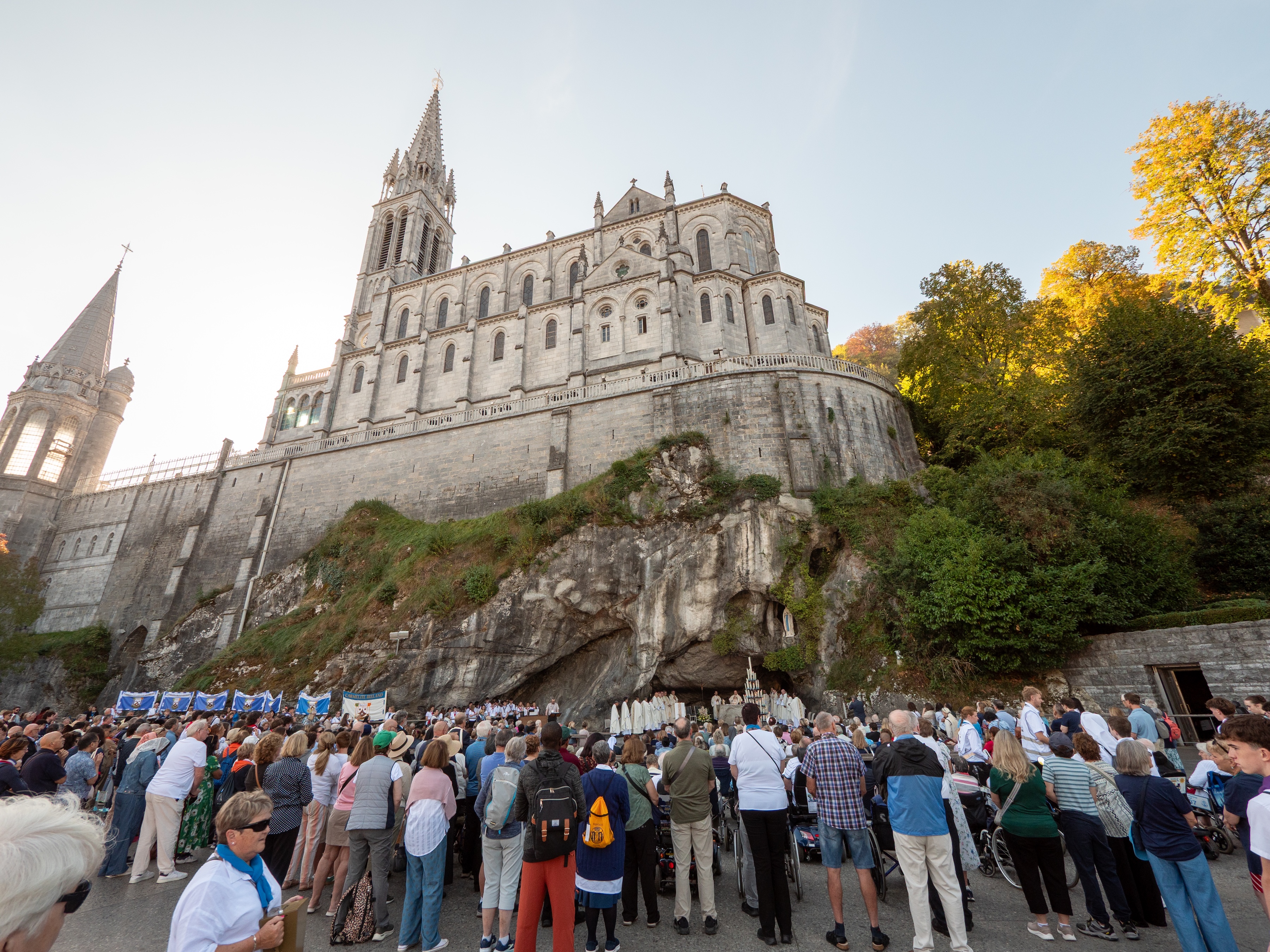
New record in France: More than 20,000 adults and teens baptized at Easter #Catholic This Easter, France recorded more than 20,000 adult and adolescent baptisms, a 20% increase compared with the previous year. A new report published by the French Bishops’ Conference presents the latest statistical data from Easter 2026, during which approximately 8,200 adolescents and 13,200 adults embraced the Catholic faith.The report indicates that the majority of converts are young adults between the ages of 18 and 25, closely followed by the 26-to-40 age group. Women constitute the largest segment, accounting for approximately 62% of the total.In general, the new catechumens have no prior religious tradition, driven primarily by difficult life experiences, a profound search for meaning, or spiritual encounters that left a lasting mark on their lives, according to the report.The ecclesiastical provinces with the highest number of baptisms were Paris, with 3,184, followed by Marseille with 1,437 and Lyon with 1,200. The report highlights a notable increase in the military diocese, headquartered in the French capital, particularly during the military pilgrimage to Lourdes.The ‘magnitude of the thirst for God’Olivier de Germay, archbishop of Lyon and the official responsible for the catechumenate in the country, reflected on this new reality, one that “never ceases to surprise and challenge us.”Although society has long been aware of the world’s failure to provide answers to “the deep aspirations of the human being,” the French prelate expressed his surprise at the “rapidity and magnitude of the thirst for God manifesting itself today.”This phenomenon opens up a new horizon and presents a “major challenge” for the Church, he said, which must offer appropriate guidance for initiation into the Christian life.For De Germay, the situation also calls upon the “seasoned veterans of the Christian life,” who are invited “to once again become aware of how God can break into [a person’s life] and transform it.”Among some new initiatives to address the increasing numbers, the regional council launched by the eight dioceses of the Île-de-France region stands out. Titled “Catechumens and Neophytes: New Perspectives for the Life of Our Church in Our Dioceses,” the council will run until May 2027. After gathering feedback from Catholics, including the newly baptized, the council aims to develop an appropriate response to the growing number of converts and to establish common guidelines at the provincial level.The provincial council is encouraging the other dioceses outside the Île-de-France region to launch other initiatives focused on specific proposals to increase the participation of the newly baptized in the liturgy.This story was first published by ACI Prensa, the Spanish-language sister service of EWTN News. It has been translated and adapted by EWTN News English.

New record in France: More than 20,000 adults and teens baptized at Easter #Catholic This Easter, France recorded more than 20,000 adult and adolescent baptisms, a 20% increase compared with the previous year. A new report published by the French Bishops’ Conference presents the latest statistical data from Easter 2026, during which approximately 8,200 adolescents and 13,200 adults embraced the Catholic faith.The report indicates that the majority of converts are young adults between the ages of 18 and 25, closely followed by the 26-to-40 age group. Women constitute the largest segment, accounting for approximately 62% of the total.In general, the new catechumens have no prior religious tradition, driven primarily by difficult life experiences, a profound search for meaning, or spiritual encounters that left a lasting mark on their lives, according to the report.The ecclesiastical provinces with the highest number of baptisms were Paris, with 3,184, followed by Marseille with 1,437 and Lyon with 1,200. The report highlights a notable increase in the military diocese, headquartered in the French capital, particularly during the military pilgrimage to Lourdes.The ‘magnitude of the thirst for God’Olivier de Germay, archbishop of Lyon and the official responsible for the catechumenate in the country, reflected on this new reality, one that “never ceases to surprise and challenge us.”Although society has long been aware of the world’s failure to provide answers to “the deep aspirations of the human being,” the French prelate expressed his surprise at the “rapidity and magnitude of the thirst for God manifesting itself today.”This phenomenon opens up a new horizon and presents a “major challenge” for the Church, he said, which must offer appropriate guidance for initiation into the Christian life.For De Germay, the situation also calls upon the “seasoned veterans of the Christian life,” who are invited “to once again become aware of how God can break into [a person’s life] and transform it.”Among some new initiatives to address the increasing numbers, the regional council launched by the eight dioceses of the Île-de-France region stands out. Titled “Catechumens and Neophytes: New Perspectives for the Life of Our Church in Our Dioceses,” the council will run until May 2027. After gathering feedback from Catholics, including the newly baptized, the council aims to develop an appropriate response to the growing number of converts and to establish common guidelines at the provincial level.The provincial council is encouraging the other dioceses outside the Île-de-France region to launch other initiatives focused on specific proposals to increase the participation of the newly baptized in the liturgy.This story was first published by ACI Prensa, the Spanish-language sister service of EWTN News. It has been translated and adapted by EWTN News English.

The surge in baptisms of young persons continues in France in 2026, a 20% increase over the already previous record-high number in 2025. The influx represents a major challenge for the French Church.

Read More
Hundreds of adults to be baptized in Paris at Easter as part of national surge #Catholic The Catholic revival that Paris has been experiencing over the past five years continues unabated, even amid the city’s long-running status as a symbol of European secularization.On the night of the Easter Vigil, April 4, more than 700 adults across the French capital will be received into the Catholic Church as part of a sudden nationwide surge.Across France, more than 13,000 adults will be baptized this Easter, according to data released by the French Bishops’ Conference — an increase of 28% compared with 2025.The “boom” in adult baptisms in France is a relatively recent phenomenon. It has intensified over the past decade, with a marked acceleration following the COVID-19 pandemic, reaching record levels since 2024.Within this national picture, Paris stands out as a beating heart of such renewal. According to figures provided by the archdiocese, 788 adult catechumens will be baptized in the city during the Easter Vigil, a 17% increase from the previous year.These baptisms will take place across 94 parishes and several communities, mobilizing more than 1,000 accompanying members, mostly laypeople. The age distribution is characterized by a predominance of younger people, with nearly one-third under the age of 25, about half between the ages of 26 and 40, and 1 in 5 over the age of 40, with candidates ranging in age from 18 to 73.Women remain the majority among catechumens, accounting for 58% in Paris, a proportion consistent with national patterns.The list of Parisian parishes with particularly high numbers of catechumens reveals a landscape that cuts across ecclesial sensibilities and social geographies. Parishes where the Traditional Latin Mass is regularly celebrated such as Saint-Roch in the 1st arrondissement or Saint-Eugène Sainte-Cécile (9th) stand alongside parishes in more working-class or mixed neighborhoods, including Notre-Dame de Clignancourt (18th), Notre-Dame de la Gare (13th), or Saint-Ambroise (11th). Many of these communities, often led by young and dynamic clergy, have become vibrant centers of parish life.Robin, a 30-year-old catechumen preparing to be baptized at Saint-Ambroise this Saturday, embodies this trend. Raised in a nonbelieving family with no religious background, he began his spiritual journey through a gradual process of questioning the purpose of life. “In a world where everything moves so fast, where we lose sight of what matters, the Church has done me a world of good,” he told EWTN News. “It has helped me put the ‘why’ back at the center of everything.”His path has been shaped by a growing desire for silence and contemplation as well as a yearning for beauty. “I would go to churches to find a moment of calm, where time would stop,” he explained. “I was looking for a place where you can listen to yourself and reflect on what you want to do with your life.” “What moves me deeply,” he added, “is the beauty that surrounds my church — its architecture, its music… that’s where I feel something powerful.”Like many catechumens, Robin described an experience of welcome that proved decisive. At an early stage in his journey, he met a young parish priest who, despite a busy schedule, took the time to speak with him. “We talked for an hour. It was incredibly reassuring,” he recalled. He was then introduced to a group of parishioners who accompanied him throughout his catechumenate, forming what he describes as a “deep bond of humanity.”This communal dimension appears to be a key factor in the current surge. While the French model of catechumenate has traditionally been more individual, the growing number of candidates is prompting parishes to rethink their approach, often favoring group dynamics that foster a sense of belonging from the outset.Many catechumens come from families with little or no Christian background, reflecting a broader shift from cultural Catholicism toward a more deliberate, conviction-based faith. On a national level, the number of catechumens identifying as having no religious tradition now represent a proportion comparable with those from Christian backgrounds.The scale of the phenomenon is now prompting serious reflection among French Church leaders. In response to the steady increase in adult baptisms, the eight dioceses of the Île-de-France region, together with the Diocese for the Armed Forces, have convened a provincial council set to open on May 31 at Notre-Dame Cathedral.Under the theme “Catechumens and Neophytes: New Perspectives for the Life of Our Church,” the council will seek to discern how local structures and pastoral practices should adapt to this unexpected growth.

Hundreds of adults to be baptized in Paris at Easter as part of national surge #Catholic The Catholic revival that Paris has been experiencing over the past five years continues unabated, even amid the city’s long-running status as a symbol of European secularization.On the night of the Easter Vigil, April 4, more than 700 adults across the French capital will be received into the Catholic Church as part of a sudden nationwide surge.Across France, more than 13,000 adults will be baptized this Easter, according to data released by the French Bishops’ Conference — an increase of 28% compared with 2025.The “boom” in adult baptisms in France is a relatively recent phenomenon. It has intensified over the past decade, with a marked acceleration following the COVID-19 pandemic, reaching record levels since 2024.Within this national picture, Paris stands out as a beating heart of such renewal. According to figures provided by the archdiocese, 788 adult catechumens will be baptized in the city during the Easter Vigil, a 17% increase from the previous year.These baptisms will take place across 94 parishes and several communities, mobilizing more than 1,000 accompanying members, mostly laypeople. The age distribution is characterized by a predominance of younger people, with nearly one-third under the age of 25, about half between the ages of 26 and 40, and 1 in 5 over the age of 40, with candidates ranging in age from 18 to 73.Women remain the majority among catechumens, accounting for 58% in Paris, a proportion consistent with national patterns.The list of Parisian parishes with particularly high numbers of catechumens reveals a landscape that cuts across ecclesial sensibilities and social geographies. Parishes where the Traditional Latin Mass is regularly celebrated such as Saint-Roch in the 1st arrondissement or Saint-Eugène Sainte-Cécile (9th) stand alongside parishes in more working-class or mixed neighborhoods, including Notre-Dame de Clignancourt (18th), Notre-Dame de la Gare (13th), or Saint-Ambroise (11th). Many of these communities, often led by young and dynamic clergy, have become vibrant centers of parish life.Robin, a 30-year-old catechumen preparing to be baptized at Saint-Ambroise this Saturday, embodies this trend. Raised in a nonbelieving family with no religious background, he began his spiritual journey through a gradual process of questioning the purpose of life. “In a world where everything moves so fast, where we lose sight of what matters, the Church has done me a world of good,” he told EWTN News. “It has helped me put the ‘why’ back at the center of everything.”His path has been shaped by a growing desire for silence and contemplation as well as a yearning for beauty. “I would go to churches to find a moment of calm, where time would stop,” he explained. “I was looking for a place where you can listen to yourself and reflect on what you want to do with your life.” “What moves me deeply,” he added, “is the beauty that surrounds my church — its architecture, its music… that’s where I feel something powerful.”Like many catechumens, Robin described an experience of welcome that proved decisive. At an early stage in his journey, he met a young parish priest who, despite a busy schedule, took the time to speak with him. “We talked for an hour. It was incredibly reassuring,” he recalled. He was then introduced to a group of parishioners who accompanied him throughout his catechumenate, forming what he describes as a “deep bond of humanity.”This communal dimension appears to be a key factor in the current surge. While the French model of catechumenate has traditionally been more individual, the growing number of candidates is prompting parishes to rethink their approach, often favoring group dynamics that foster a sense of belonging from the outset.Many catechumens come from families with little or no Christian background, reflecting a broader shift from cultural Catholicism toward a more deliberate, conviction-based faith. On a national level, the number of catechumens identifying as having no religious tradition now represent a proportion comparable with those from Christian backgrounds.The scale of the phenomenon is now prompting serious reflection among French Church leaders. In response to the steady increase in adult baptisms, the eight dioceses of the Île-de-France region, together with the Diocese for the Armed Forces, have convened a provincial council set to open on May 31 at Notre-Dame Cathedral.Under the theme “Catechumens and Neophytes: New Perspectives for the Life of Our Church,” the council will seek to discern how local structures and pastoral practices should adapt to this unexpected growth.

Across France, more than 13,000 adults will be baptized this Easter, according to data released by the French Bishops’ Conference — an increase of 28% compared with 2025. 

Read More
Adult conversions soar in dioceses across U.S. #Catholic Many U.S. dioceses are expecting heavy increases in people joining the Catholic Church at Easter 2026, including some with record highs, a survey by the National Catholic Register, the sister partner of EWTN News, found.“Something’s happening,” said John Helsey, director of communications for the Archdiocese of Oklahoma City, which is expecting a 57% increase in unbaptized people becoming Catholics at Easter — from 635 in 2025 to nearly 1,000 in 2026.In most places, this year’s increases aren’t a one-off but follow significant increases in recent years.One example is the Archdiocese of Newark, New Jersey, which had record highs attending liturgies several weeks ago that were meant to welcome would-be converts who have been preparing to enter the Church in recent months and to formalize their status.Newark is expecting a 30% jump in converts in 2026 (at 1,701) over 2025 (at 1,305). The 2026 figure is 60% higher than the 1,064 converts in 2019, the year before the COVID-19 pandemic.In the Archdiocese of Mobile, Alabama, the number of converts in 2025 (447) was the highest since at least 2014, and the number in 2026 (603) is 35% higher than in 2025.The Register recently contacted all 175 Latin-rite territorial dioceses in the United States, seeking numbers of people planning to join the Catholic Church at Easter 2026.Seventy-one, or 40% of U.S. dioceses, responded. In some cases, the Register used published sources to supplement the data it used in its analysis. In all cases, the Register attempted to make apples-to-apples comparisons, with the caveat that 2026 numbers aren’t set yet.Just five of the 71 dioceses expected a drop in converts this year, most of them slight. The remaining 66 are expecting increases — in many cases, significant ones.This year’s expected increases in converts in the United States include regions where the Church has been growing rapidly in recent decades, such as Florida, where the Diocese of St. Petersburg is expecting an 84% jump, and Texas, where the Diocese of Austin is expecting a 53% jump.But it also includes highly secularized New England, where the Archdiocese of Boston has 55% more catechumens (unbaptized) this year than last year. The Diocese of Manchester, New Hampshire, reported a 54% increase (including already-baptized and unbaptized); the Diocese of Providence has 76% more converts; and the Diocese of Norwich, Connecticut, is recording a 112% spike.In Pennsylvania, the dioceses of Harrisburg (77%) and Altoona-Johnstown (84%) are seeing big increases. Across the country, the Diocese of Pueblo, Colorado, is expecting a 105% increase.In the Archdiocese of Philadelphia, which is expecting a 60% increase in converts in 2026 over last year, a priest who oversees conversion programs said people seeking to join the Catholic Church tend to come to Mass and have an active prayer life before they ever attend formal sessions with catechists and that they tend to accept Church teachings earlier in the process than their predecessors did.“I have noticed over the last several years that there is a greater commitment to conversion, a greater commitment to the Church, when they arrive,” said Father Dennis Gill, director of the Office for Divine Worship for the Archdiocese of Philadelphia and rector of the Cathedral Basilica of Sts. Peter and Paul.Other factorsAs for why it’s happening, diocesan officials offered various theories.Immigration, particularly from the surge during the Biden administration, is a factor in some places. Some suggest the election in May 2025 of Pope Leo XIV, the first American pope, who describes Church teachings with a native accent unfiltered by translation, might also be a draw for some non-Catholics. Some diocesan officials shared a new emphasis on outreach to non-Catholics.Bishop Frank Dewane, who leads the Diocese of Venice, Florida, which is expecting a 94% increase in converts, noted that some places outside the United States are also seeing big increases this year, including England and France.He told the Register the Church is enjoying what he called “a golden age of Catholic resources,” including podcasts and other online sources that get information about the Church to people who would ordinarily never set foot in it and yet come to find Catholicism unexpectedly attractive.“Our modern culture has not borne good fruits, and I think people see that. They recognize that. They know that,” Dewane said.But ultimately, he and other Church officials the Register spoke with attributed the bountiful harvest to God.“It’s the Holy Spirit,” Dewane emphasized. “Yes, we follow promptings, also. But I think it’s the work of the Holy Spirit right now in society and in the Church.”This story was first published by the National Catholic Register, the sister partner of EWTN News, and has been adapted by EWTN News.

Adult conversions soar in dioceses across U.S. #Catholic Many U.S. dioceses are expecting heavy increases in people joining the Catholic Church at Easter 2026, including some with record highs, a survey by the National Catholic Register, the sister partner of EWTN News, found.“Something’s happening,” said John Helsey, director of communications for the Archdiocese of Oklahoma City, which is expecting a 57% increase in unbaptized people becoming Catholics at Easter — from 635 in 2025 to nearly 1,000 in 2026.In most places, this year’s increases aren’t a one-off but follow significant increases in recent years.One example is the Archdiocese of Newark, New Jersey, which had record highs attending liturgies several weeks ago that were meant to welcome would-be converts who have been preparing to enter the Church in recent months and to formalize their status.Newark is expecting a 30% jump in converts in 2026 (at 1,701) over 2025 (at 1,305). The 2026 figure is 60% higher than the 1,064 converts in 2019, the year before the COVID-19 pandemic.In the Archdiocese of Mobile, Alabama, the number of converts in 2025 (447) was the highest since at least 2014, and the number in 2026 (603) is 35% higher than in 2025.The Register recently contacted all 175 Latin-rite territorial dioceses in the United States, seeking numbers of people planning to join the Catholic Church at Easter 2026.Seventy-one, or 40% of U.S. dioceses, responded. In some cases, the Register used published sources to supplement the data it used in its analysis. In all cases, the Register attempted to make apples-to-apples comparisons, with the caveat that 2026 numbers aren’t set yet.Just five of the 71 dioceses expected a drop in converts this year, most of them slight. The remaining 66 are expecting increases — in many cases, significant ones.This year’s expected increases in converts in the United States include regions where the Church has been growing rapidly in recent decades, such as Florida, where the Diocese of St. Petersburg is expecting an 84% jump, and Texas, where the Diocese of Austin is expecting a 53% jump.But it also includes highly secularized New England, where the Archdiocese of Boston has 55% more catechumens (unbaptized) this year than last year. The Diocese of Manchester, New Hampshire, reported a 54% increase (including already-baptized and unbaptized); the Diocese of Providence has 76% more converts; and the Diocese of Norwich, Connecticut, is recording a 112% spike.In Pennsylvania, the dioceses of Harrisburg (77%) and Altoona-Johnstown (84%) are seeing big increases. Across the country, the Diocese of Pueblo, Colorado, is expecting a 105% increase.In the Archdiocese of Philadelphia, which is expecting a 60% increase in converts in 2026 over last year, a priest who oversees conversion programs said people seeking to join the Catholic Church tend to come to Mass and have an active prayer life before they ever attend formal sessions with catechists and that they tend to accept Church teachings earlier in the process than their predecessors did.“I have noticed over the last several years that there is a greater commitment to conversion, a greater commitment to the Church, when they arrive,” said Father Dennis Gill, director of the Office for Divine Worship for the Archdiocese of Philadelphia and rector of the Cathedral Basilica of Sts. Peter and Paul.Other factorsAs for why it’s happening, diocesan officials offered various theories.Immigration, particularly from the surge during the Biden administration, is a factor in some places. Some suggest the election in May 2025 of Pope Leo XIV, the first American pope, who describes Church teachings with a native accent unfiltered by translation, might also be a draw for some non-Catholics. Some diocesan officials shared a new emphasis on outreach to non-Catholics.Bishop Frank Dewane, who leads the Diocese of Venice, Florida, which is expecting a 94% increase in converts, noted that some places outside the United States are also seeing big increases this year, including England and France.He told the Register the Church is enjoying what he called “a golden age of Catholic resources,” including podcasts and other online sources that get information about the Church to people who would ordinarily never set foot in it and yet come to find Catholicism unexpectedly attractive.“Our modern culture has not borne good fruits, and I think people see that. They recognize that. They know that,” Dewane said.But ultimately, he and other Church officials the Register spoke with attributed the bountiful harvest to God.“It’s the Holy Spirit,” Dewane emphasized. “Yes, we follow promptings, also. But I think it’s the work of the Holy Spirit right now in society and in the Church.”This story was first published by the National Catholic Register, the sister partner of EWTN News, and has been adapted by EWTN News.

The National Catholic Register contacted all 175 Latin-rite territorial dioceses in the United States, seeking numbers of people planning to join the Catholic Church at Easter 2026.

Read More
U.S. bishops hold ecumenical meeting with evangelicals for joint migration initiative #Catholic The U.S. Conference of Catholic Bishops (USCCB) took part in an ecumenical meeting with the National Association of Evangelicals (NAE) to engage in dialogue and collaborate on pastoral solutions to heightened immigration enforcement.The meeting was held on March 24 to launch the Evangelical-Catholic Dialogue on Immigration (ECDI) — a joint initiative focused on the subject.It builds on previous collaborations, particularly a report on how President Donald Trump’s mass deportation plans could affect Christian families. According to a USCCB news release, Catholic and evangelical leaders continue to grapple with pastoral challenges related to the policy, such as an increase in fear and anxiety among members.“I view the ECDI as a means of growing in Christian unity with our evangelical brothers and sisters, while also furthering our shared goal of bringing the message of the Gospel to bear on one of the most pressing issues of our time,” Bishop Brendan Cahill, chair of the USCCB’s Committee on Migration, said in a statement.Cahill co-chairs the ECDI with the Rev. Walter Kim, president of the NAE. It also includes five other Catholic and five other evangelical members and organizational observers.“Whatever theological differences exist between us, Catholics and evangelicals across our country are navigating many of the same complex realities — political and social — and the issue of immigration is an important example,” Cahill said. “Together, we place our hope in Jesus Christ, and we seek to live out his teaching in relation to this challenging topic.”Cahill cited Pope Leo XIV’s emphasis on dialogue being necessary for “peace, understanding, and fraternity, especially between different faith traditions.” He expressed gratitude for Kim’s leadership and “willingness to collaborate in this way and for the commitment of all those participating.”In November, the USCCB voted 216-5 to oppose “the indiscriminate mass deportation of people.” The bishops have expressed concerns that the Department of Homeland Security rescinded guidelines that had previously limited immigration enforcement at “sensitive locations,” including churches.

U.S. bishops hold ecumenical meeting with evangelicals for joint migration initiative #Catholic The U.S. Conference of Catholic Bishops (USCCB) took part in an ecumenical meeting with the National Association of Evangelicals (NAE) to engage in dialogue and collaborate on pastoral solutions to heightened immigration enforcement.The meeting was held on March 24 to launch the Evangelical-Catholic Dialogue on Immigration (ECDI) — a joint initiative focused on the subject.It builds on previous collaborations, particularly a report on how President Donald Trump’s mass deportation plans could affect Christian families. According to a USCCB news release, Catholic and evangelical leaders continue to grapple with pastoral challenges related to the policy, such as an increase in fear and anxiety among members.“I view the ECDI as a means of growing in Christian unity with our evangelical brothers and sisters, while also furthering our shared goal of bringing the message of the Gospel to bear on one of the most pressing issues of our time,” Bishop Brendan Cahill, chair of the USCCB’s Committee on Migration, said in a statement.Cahill co-chairs the ECDI with the Rev. Walter Kim, president of the NAE. It also includes five other Catholic and five other evangelical members and organizational observers.“Whatever theological differences exist between us, Catholics and evangelicals across our country are navigating many of the same complex realities — political and social — and the issue of immigration is an important example,” Cahill said. “Together, we place our hope in Jesus Christ, and we seek to live out his teaching in relation to this challenging topic.”Cahill cited Pope Leo XIV’s emphasis on dialogue being necessary for “peace, understanding, and fraternity, especially between different faith traditions.” He expressed gratitude for Kim’s leadership and “willingness to collaborate in this way and for the commitment of all those participating.”In November, the USCCB voted 216-5 to oppose “the indiscriminate mass deportation of people.” The bishops have expressed concerns that the Department of Homeland Security rescinded guidelines that had previously limited immigration enforcement at “sensitive locations,” including churches.

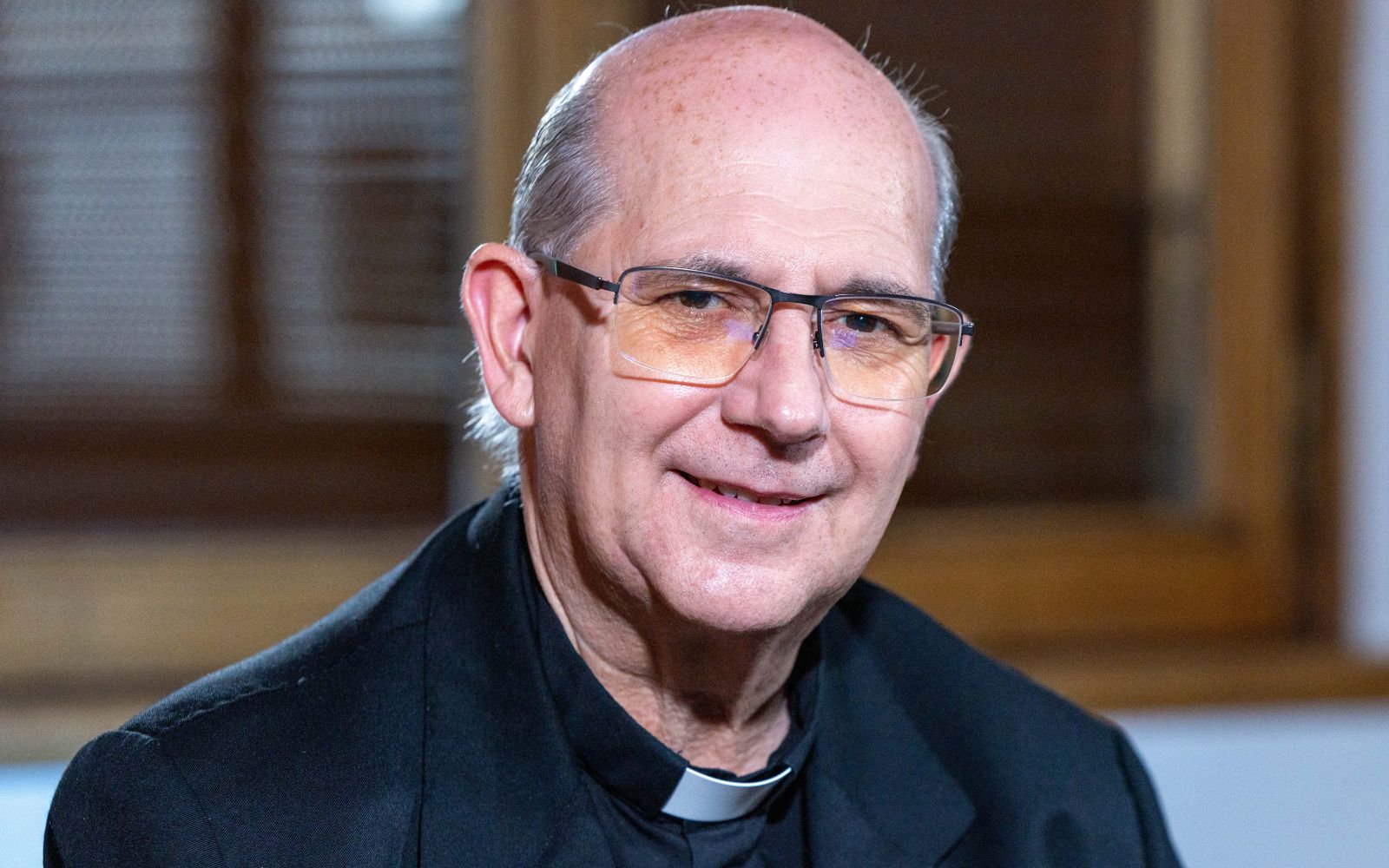
Bishop Brendan Cahill noted the importance of ecumenical approaches to “one of the most pressing issues of our time.”

Read More
Ireland sees modest revival in faith, especially among youth and young adults #Catholic An increase in spirituality and religious practice among young adults in Ireland aged 18 to 30 and confirmation that Ireland is in the “middle range” of religious countries in Europe are among the trends identified in a new report published by the Irish Catholic bishops titled “Turning the Tide.”Archbishop Eamon Martin of Armagh, primate of all Ireland, told EWTN News: “There has been a lot of talk recently about the so-called quiet revival in religious practice in recent years. The [report] looks at some of the research studies that have been carried out north and south of the island of Ireland into religious practice, religious awareness and spirituality, and interest in religion, and asks a question by comparing this with European social studies: Is there actually any uptake [in] religious practice and awareness and interest in Ireland?”Drawing on research from the European Social Survey, the Iona Institute’s two recent surveys conducted by Amárach Research, and a variety of relevant academic studies, the report seeks to provide an integrated, relevant, and current look at religious practice in Ireland.“The report very interestingly points to some type of uptick, as they call it, particularly among young people around the ages of 16 to 30 and the fact that they are taking a new interest in religion and in spirituality.”Encouraged by the positive trends emerging across different studies, Martin sounded a note of caution, highlighting the challenges that these findings pose for the Catholic Church in Ireland.“I don’t think we should get ourselves too enthusiastic thinking this is a complete reversal of the very obvious decline and religious practice over the last 10 or 20 years,” he said. “However, it is saying something on the turning tide.”The archbishop pointed to the implications for the Irish Church: “It’s asking us to reflect on this phenomenon in the light of research, and for instance what does this mean for us as Church, as parishes, as dioceses? How are we responding to this growing body of young people who want to know more more about God, about church, and about religion?”The report, co-authored by Stephen Bullivant, professor of theology and the sociology of religion at St. Mary’s University, Twickenham, and Emily Nelson, a doctoral student of sociology at Queen’s University Belfast, examined the overall religious profile of the island of Ireland, including areas of convergence and divergence between Northern Ireland and the Republic of Ireland.The authors drew together research studies on patterns in belief, practice, and religious identification between generations, with particular attention to differences within young adult cohorts. The work also provided insight on  dimensions of religiosity, religious transmission, and attitudes toward Church teaching and institutions among both men and women.Ireland remains among the more religious countries in Europe, on measures of religious affiliation, religious service attendance, and frequency of prayer. Among western European countries, it is one of few outliers with a relatively high level of overall religiosity. It also ranks toward the higher end of (especially western) European countries on measures of weekly Mass attendance and daily prayer.While key measures of Irish religiosity have declined significantly since the European Social Survey began in 2002-2003, the most recent round in 2023-2024 shows a strong uptick in religious affiliation and religious practice.This effect is most strongly evident among those aged 16–29 years, across both Catholics and Protestants.Northern Ireland is both the most religious region of the United Kingdom, by a large margin, and the most religious part of the island of Ireland, in terms of both affiliation and religious practice.Although women in the Republic of Ireland are equally as likely as men to be religious, they continue to play an influential role in transmitting faith, even as they express higher levels of moral dissent and institutional dissatisfaction. The report revealed that 74% of Irish Catholic women were found to believe that the Church did not treat them with “a lot of respect.”According to the report, 51% of Irish adults — and 27% of Irish young adults —pray at least once a week, and 31% say they attend Mass at least once a week, placing them fourth overall, alongside Italy (32%) but well behind Poland (49%) and Slovakia (46%).There is a significant drop-off among young adults, whose reported religious practice is roughly half that of older adults. Irish 16- to 29-year-olds rank sixth overall compared with other countries, at 17%, though that is at least double the rates of the same age group in Switzerland, Germany, and Belgium, at 5%, and in Austria with less than 1%.The Irish report also pointed to a 2023 Barna study that found in certain respects, Irish teens are more religious than their global peers. Just over 3 in 5 (62%) Irish teens identify as Christian with nearly a third identify as atheist, agnostic, or of no faith.On average, 18- to 24-year-olds in the Republic of Ireland aren’t particularly positive about both Christianity and the Catholic Church in Ireland, but they are more positive than those in the 25–34 age range, and fewer have a negative attitude toward priests and nuns.In 2023, EWTN News’ Colm Flynn traveled to Ireland with the question “Is Ireland still Catholic?” He explored the various reasons for the decline of the faith in Ireland and the challenges the Church faces there today. In the three years since, and after many emails and messages pointing to signs of a “quiet revival” of faith in Ireland, Flynn recently returned to the country to explore those signs of renewal. In his report, he refers to the “Turning the Tide” report:

Ireland sees modest revival in faith, especially among youth and young adults #Catholic An increase in spirituality and religious practice among young adults in Ireland aged 18 to 30 and confirmation that Ireland is in the “middle range” of religious countries in Europe are among the trends identified in a new report published by the Irish Catholic bishops titled “Turning the Tide.”Archbishop Eamon Martin of Armagh, primate of all Ireland, told EWTN News: “There has been a lot of talk recently about the so-called quiet revival in religious practice in recent years. The [report] looks at some of the research studies that have been carried out north and south of the island of Ireland into religious practice, religious awareness and spirituality, and interest in religion, and asks a question by comparing this with European social studies: Is there actually any uptake [in] religious practice and awareness and interest in Ireland?”Drawing on research from the European Social Survey, the Iona Institute’s two recent surveys conducted by Amárach Research, and a variety of relevant academic studies, the report seeks to provide an integrated, relevant, and current look at religious practice in Ireland.“The report very interestingly points to some type of uptick, as they call it, particularly among young people around the ages of 16 to 30 and the fact that they are taking a new interest in religion and in spirituality.”Encouraged by the positive trends emerging across different studies, Martin sounded a note of caution, highlighting the challenges that these findings pose for the Catholic Church in Ireland.“I don’t think we should get ourselves too enthusiastic thinking this is a complete reversal of the very obvious decline and religious practice over the last 10 or 20 years,” he said. “However, it is saying something on the turning tide.”The archbishop pointed to the implications for the Irish Church: “It’s asking us to reflect on this phenomenon in the light of research, and for instance what does this mean for us as Church, as parishes, as dioceses? How are we responding to this growing body of young people who want to know more more about God, about church, and about religion?”The report, co-authored by Stephen Bullivant, professor of theology and the sociology of religion at St. Mary’s University, Twickenham, and Emily Nelson, a doctoral student of sociology at Queen’s University Belfast, examined the overall religious profile of the island of Ireland, including areas of convergence and divergence between Northern Ireland and the Republic of Ireland.The authors drew together research studies on patterns in belief, practice, and religious identification between generations, with particular attention to differences within young adult cohorts. The work also provided insight on  dimensions of religiosity, religious transmission, and attitudes toward Church teaching and institutions among both men and women.Ireland remains among the more religious countries in Europe, on measures of religious affiliation, religious service attendance, and frequency of prayer. Among western European countries, it is one of few outliers with a relatively high level of overall religiosity. It also ranks toward the higher end of (especially western) European countries on measures of weekly Mass attendance and daily prayer.While key measures of Irish religiosity have declined significantly since the European Social Survey began in 2002-2003, the most recent round in 2023-2024 shows a strong uptick in religious affiliation and religious practice.This effect is most strongly evident among those aged 16–29 years, across both Catholics and Protestants.Northern Ireland is both the most religious region of the United Kingdom, by a large margin, and the most religious part of the island of Ireland, in terms of both affiliation and religious practice.Although women in the Republic of Ireland are equally as likely as men to be religious, they continue to play an influential role in transmitting faith, even as they express higher levels of moral dissent and institutional dissatisfaction. The report revealed that 74% of Irish Catholic women were found to believe that the Church did not treat them with “a lot of respect.”According to the report, 51% of Irish adults — and 27% of Irish young adults —pray at least once a week, and 31% say they attend Mass at least once a week, placing them fourth overall, alongside Italy (32%) but well behind Poland (49%) and Slovakia (46%).There is a significant drop-off among young adults, whose reported religious practice is roughly half that of older adults. Irish 16- to 29-year-olds rank sixth overall compared with other countries, at 17%, though that is at least double the rates of the same age group in Switzerland, Germany, and Belgium, at 5%, and in Austria with less than 1%.The Irish report also pointed to a 2023 Barna study that found in certain respects, Irish teens are more religious than their global peers. Just over 3 in 5 (62%) Irish teens identify as Christian with nearly a third identify as atheist, agnostic, or of no faith.On average, 18- to 24-year-olds in the Republic of Ireland aren’t particularly positive about both Christianity and the Catholic Church in Ireland, but they are more positive than those in the 25–34 age range, and fewer have a negative attitude toward priests and nuns.In 2023, EWTN News’ Colm Flynn traveled to Ireland with the question “Is Ireland still Catholic?” He explored the various reasons for the decline of the faith in Ireland and the challenges the Church faces there today. In the three years since, and after many emails and messages pointing to signs of a “quiet revival” of faith in Ireland, Flynn recently returned to the country to explore those signs of renewal. In his report, he refers to the “Turning the Tide” report:

A new report examining surveys and research on the practice of the Catholic faith in Ireland shows an uptick in religious practice and spirituality among younger people.

Read More