santa

Pope Leo XIV honors Our Lady of Almudena with Golden Rose, reflects on Spain’s Christian heritage #Catholic For more than a thousand years, generations of Catholics in Madrid have turned to Our Lady of Almudena in times of celebration, hardship, and prayer. On June 8, that enduring devotion received one of the Church’s highest marks of recognition when Pope Leo XIV bestowed a Golden Rose upon the historic statue.“As a symbol of the pope’s filial love for the Virgin Mary, I will place a Golden Rose at her feet,” Leo said during a ceremony at Madrid’s Cathedral of Santa María la Real de la Almudena.The papal honor — one of the highest distinctions a pope can bestow upon a Marian image or shrine — recognizes the deep devotion generations of Spanish Catholics have shown to the Blessed Virgin under the title of Almudena.The exact origin of the gifting of a Golden Rose is unknown, although it is considered one of the oldest papal traditions. The earliest reliable record dates to 1096, when Pope Urban II sent one to Fulcone d’Angers. Hidden in the citadel wallAddressing the faithful gathered in the cathedral, Leo reflected on the image’s unique place in Madrid’s history.“For centuries, countless generations of Madrileños have venerated this image of the Blessed Virgin Mary holding her divine Son in her arms and presenting him to us,” the pope said.According to long-standing tradition, the devotion dates to the early centuries of Christianity in Spain. When Muslim forces conquered much of the Iberian Peninsula in A.D. 712, Christians in Madrid reportedly concealed the statue within the city’s defensive walls to protect it from destruction. The image remained hidden for centuries as Christian kingdoms gradually sought to reclaim territories across the peninsula during the Reconquista.The wall that fell In 1083, after King Alfonso VI of Castile recaptured Madrid, Christians searched for the long-lost statue. Tradition holds that after days of prayer, a section of the city wall suddenly collapsed, revealing the image preserved within. Witnesses reported seeing lights near the site, and the statue was discovered largely intact despite centuries of concealment.Recalling the story, Leo noted that “during challenging periods for the Christian community, the statue of the Virgin Mary was hidden in a niche of the citadel wall for protection. It remained concealed for some time, until parts of the wall collapsed and it was miraculously discovered intact.”The title “Almudena” derives from the Arabic word “al-mudayna,” meaning “citadel” or “fortress,” a reference to the location where the image was found.A message for today In his homily, the pope used the collapse of the wall as a spiritual lesson for modern society.“It was thanks to a collapsed wall that the Mother was reunited with her people,” Leo said. “This event is providential, because it points to the path that Jesus, through his most holy mother, invites us to follow.”Leo connected that image to challenges facing the modern world, observing that “there are still many walls that do not protect but rather divide, separate, and isolate.”The ceremony also highlighted the popeʼs connection to Spain, a nation whose Catholic heritage has profoundly shaped the history of the Church. By honoring one of Spain’s most beloved Marian images, the pontiff underscored the enduring importance of popular Marian devotion and the Christian roots that continue to influence Spanish culture.Renewing faith and hope Beyond its historical significance, the story of Our Lady of Almudena continues to resonate with Catholics today. The devotion recalls themes of perseverance, hope, and trust in God’s providence, themes Pope Leo himself highlighted as he encouraged the faithful to remain steadfast in faith, charity, and hope.Calling the devotion a source of hope, Leo described it as “a sign of the Christian roots that characterize you and give you life, but also of the great hope which continues to motivate you to move forward.”He concluded by encouraging Catholics to remain steadfast in faith, charity, and hope, asking that the intercession of Our Lady of Almudena strengthen believers in their love for Christ and help them “form bonds and restore the universal language of communion, fraternal love, and harmony.”

Pope Leo XIV honors Our Lady of Almudena with Golden Rose, reflects on Spain’s Christian heritage #Catholic For more than a thousand years, generations of Catholics in Madrid have turned to Our Lady of Almudena in times of celebration, hardship, and prayer. On June 8, that enduring devotion received one of the Church’s highest marks of recognition when Pope Leo XIV bestowed a Golden Rose upon the historic statue.“As a symbol of the pope’s filial love for the Virgin Mary, I will place a Golden Rose at her feet,” Leo said during a ceremony at Madrid’s Cathedral of Santa María la Real de la Almudena.The papal honor — one of the highest distinctions a pope can bestow upon a Marian image or shrine — recognizes the deep devotion generations of Spanish Catholics have shown to the Blessed Virgin under the title of Almudena.The exact origin of the gifting of a Golden Rose is unknown, although it is considered one of the oldest papal traditions. The earliest reliable record dates to 1096, when Pope Urban II sent one to Fulcone d’Angers. Hidden in the citadel wallAddressing the faithful gathered in the cathedral, Leo reflected on the image’s unique place in Madrid’s history.“For centuries, countless generations of Madrileños have venerated this image of the Blessed Virgin Mary holding her divine Son in her arms and presenting him to us,” the pope said.According to long-standing tradition, the devotion dates to the early centuries of Christianity in Spain. When Muslim forces conquered much of the Iberian Peninsula in A.D. 712, Christians in Madrid reportedly concealed the statue within the city’s defensive walls to protect it from destruction. The image remained hidden for centuries as Christian kingdoms gradually sought to reclaim territories across the peninsula during the Reconquista.The wall that fell In 1083, after King Alfonso VI of Castile recaptured Madrid, Christians searched for the long-lost statue. Tradition holds that after days of prayer, a section of the city wall suddenly collapsed, revealing the image preserved within. Witnesses reported seeing lights near the site, and the statue was discovered largely intact despite centuries of concealment.Recalling the story, Leo noted that “during challenging periods for the Christian community, the statue of the Virgin Mary was hidden in a niche of the citadel wall for protection. It remained concealed for some time, until parts of the wall collapsed and it was miraculously discovered intact.”The title “Almudena” derives from the Arabic word “al-mudayna,” meaning “citadel” or “fortress,” a reference to the location where the image was found.A message for today In his homily, the pope used the collapse of the wall as a spiritual lesson for modern society.“It was thanks to a collapsed wall that the Mother was reunited with her people,” Leo said. “This event is providential, because it points to the path that Jesus, through his most holy mother, invites us to follow.”Leo connected that image to challenges facing the modern world, observing that “there are still many walls that do not protect but rather divide, separate, and isolate.”The ceremony also highlighted the popeʼs connection to Spain, a nation whose Catholic heritage has profoundly shaped the history of the Church. By honoring one of Spain’s most beloved Marian images, the pontiff underscored the enduring importance of popular Marian devotion and the Christian roots that continue to influence Spanish culture.Renewing faith and hope Beyond its historical significance, the story of Our Lady of Almudena continues to resonate with Catholics today. The devotion recalls themes of perseverance, hope, and trust in God’s providence, themes Pope Leo himself highlighted as he encouraged the faithful to remain steadfast in faith, charity, and hope.Calling the devotion a source of hope, Leo described it as “a sign of the Christian roots that characterize you and give you life, but also of the great hope which continues to motivate you to move forward.”He concluded by encouraging Catholics to remain steadfast in faith, charity, and hope, asking that the intercession of Our Lady of Almudena strengthen believers in their love for Christ and help them “form bonds and restore the universal language of communion, fraternal love, and harmony.”

The origin of the gifting of a golden rose is unknown, but it is considered one of the oldest papal traditions dating back to 1096.

Read More
Pope Leo XIV in Barcelona calls Catholics to be martyrs of unity #Catholic BARCELONA, Spain — Pope Leo XIV dedicated Tuesday morning to thanking the thousands of volunteers who helped organize his apostolic journey to Spain before heading to Barcelona to touch the ancient traces of the country’s deeply rooted Christian faith.At the Cathedral of the Holy Cross and St. Eulalia, whose construction began at the end of the 13th century on the site of early Christian and Romanesque churches and which became, a century later, one of the most important jewels of European Gothic architecture, the pope prayed Midday Prayer with about 500 faithful.Hundreds more waited outside the cathedral to show their affection, many waving Vatican flags.The crowd erupted with excitement at his arrival. The pontiff was accompanied by Cardinal Juan José Omella, archbishop of Barcelona, who gestured with his hands to indicate to the people waiting outside that the pope had to leave. The plane carrying Leo XIV had landed in the Catalan capital 40 minutes late.During the ceremony, the pope sat in the oldest chair — the cathedra, or bishop’s seat — in the city that is still in use, dating at least to the cathedral’s consecration in 1058, according to recent research.In his homily, Leo XIV called Catholics to be builders of communion.“Dear brothers and sisters: it is in this spirit that we too, in a world torn apart by wars and divisions, in a society that is increasingly fragmented and individualistic, wish to be ‘martyrs’ — that is, witnesses and prophets of unity, of welcome, of harmony and of peace, even at the cost of sacrifice and renunciation,” the pope said.It was the first time during the trip that Leo XIV pronounced several phrases in Catalan, the language proper to Catalonia, co-official with Spanish and the main language of the regional administration.A symbol of Catalan cultural identity, the language to be used by the pontiff during the events scheduled in Barcelona had become the subject of public debate in Catalonia in recent days.The controversy intensified after it emerged that the blessing of the Tower of Jesus Christ at the Sagrada Familia — one of the central moments of the visit — would be conducted mainly in Spanish.In the Congress of Deputies, where the pope delivered an unprecedented address Monday, Junts per Catalunya lawmaker Miriam Nogueras asked him to speak Catalan.“It is important for each of us not to allow anything to destroy the unity in which God has established us and toward whose fullness he leads us day by day,” the pontiff said, alternating Catalan and Spanish in the homily.Leo XIV cited two addresses by his predecessor, Pope Francis, who never visited Spain but often expressed affection for the country.On the occasion of the inauguration of the Tower of the Virgin Mary at the Basilica of the Sagrada Familia on Dec. 8, 2021, Francis sent a message recalling that the Church “is the fruit of an act of love that precedes her and comes from God. Above all, she grows by allowing herself to be loved by him, united, with a humble and grateful heart, because only those who allow themselves to be loved by God can build, together with others, the works of love.”One year later, the Argentine pope told seminarians of the Archdiocese of Barcelona during a pilgrimage to Rome: “Never cease to savor and remember this love of predilection which pours and will pour itself abundantly into your heart.”Leo XIV structured his homily around the image of the Catholic Church as both beloved bride and body, with all believers as members of a single organism.The Spirit, he said, “impels us, as parts of a single living structure, not only to give ourselves unreservedly wherever Providence calls us, but to do so according to God’s designs, in obedience and trust.”Just as in a body, he continued, “so too among us there are members who are stronger and others who are weaker; some are visible, performing functions that are evident to the outside world, while others are hidden, working from within — in some cases without ceasing and carrying out vital functions without anyone taking notice.”The pope said there are many possible images to “illustrate the variety and importance of the roles and missions we find among ourselves,” but the message is always the same.“In the richness of the gifts we have received, we are strong because we are united, and we are united because we are animated by the same Spirit, the Spirit of Christ, who is the Spirit of communion for the salvation of all,” he said.Upon arriving, Leo XIV was received by Omella. After the greeting, the cardinal led him to the Chapel of the Blessed Sacrament for a brief moment of personal prayer.On his way to the altar, the pope passed by the baptismal font, built in 1433. It was in that baptistery that the first six Indigenous people brought from the Americas by Christopher Columbus received the sacrament of entrance into the Church, as a plaque in the chapel recalls.All of this forms part of the cathedral’s history, which inherits a tradition of worship in this part of Barcelona dating back to the fourth century.Leo XIV’s final act inside the cathedral was to descend to the crypt, where the tomb of the Roman martyr St. Eulalia, co-patroness of Barcelona, is located.Before her martyrdom, the young saint was said to have tended geese. For this reason, 13 geese are kept today in the cathedral cloister in her honor, recalling both her 13 tortures and the age at which she died for the Lord.The pontiff also spoke of “so many other martyrs” and called the faithful to respond with “our ‘yes,’ ready if necessary to die to ourselves, to lose ourselves in order to find ourselves again, to renounce the superfluous in order to build upon what is essential and lasts forever.”“This is what the crucified One teaches us,” the pope said. “This is what the Apostle Paul and the examples of the saints invite us to do.”The pope ended his homily by invoking Mary in Catalan: “Santa Maria de la Mercè, pregueu per nosaltres” — “Our Lady of Mercy, pray for us.”This story was first published by ACI Prensa, EWTN News’ Spanish-language sister service. It has been translated and adapted by EWTN News English.

Pope Leo XIV in Barcelona calls Catholics to be martyrs of unity #Catholic BARCELONA, Spain — Pope Leo XIV dedicated Tuesday morning to thanking the thousands of volunteers who helped organize his apostolic journey to Spain before heading to Barcelona to touch the ancient traces of the country’s deeply rooted Christian faith.At the Cathedral of the Holy Cross and St. Eulalia, whose construction began at the end of the 13th century on the site of early Christian and Romanesque churches and which became, a century later, one of the most important jewels of European Gothic architecture, the pope prayed Midday Prayer with about 500 faithful.Hundreds more waited outside the cathedral to show their affection, many waving Vatican flags.The crowd erupted with excitement at his arrival. The pontiff was accompanied by Cardinal Juan José Omella, archbishop of Barcelona, who gestured with his hands to indicate to the people waiting outside that the pope had to leave. The plane carrying Leo XIV had landed in the Catalan capital 40 minutes late.During the ceremony, the pope sat in the oldest chair — the cathedra, or bishop’s seat — in the city that is still in use, dating at least to the cathedral’s consecration in 1058, according to recent research.In his homily, Leo XIV called Catholics to be builders of communion.“Dear brothers and sisters: it is in this spirit that we too, in a world torn apart by wars and divisions, in a society that is increasingly fragmented and individualistic, wish to be ‘martyrs’ — that is, witnesses and prophets of unity, of welcome, of harmony and of peace, even at the cost of sacrifice and renunciation,” the pope said.It was the first time during the trip that Leo XIV pronounced several phrases in Catalan, the language proper to Catalonia, co-official with Spanish and the main language of the regional administration.A symbol of Catalan cultural identity, the language to be used by the pontiff during the events scheduled in Barcelona had become the subject of public debate in Catalonia in recent days.The controversy intensified after it emerged that the blessing of the Tower of Jesus Christ at the Sagrada Familia — one of the central moments of the visit — would be conducted mainly in Spanish.In the Congress of Deputies, where the pope delivered an unprecedented address Monday, Junts per Catalunya lawmaker Miriam Nogueras asked him to speak Catalan.“It is important for each of us not to allow anything to destroy the unity in which God has established us and toward whose fullness he leads us day by day,” the pontiff said, alternating Catalan and Spanish in the homily.Leo XIV cited two addresses by his predecessor, Pope Francis, who never visited Spain but often expressed affection for the country.On the occasion of the inauguration of the Tower of the Virgin Mary at the Basilica of the Sagrada Familia on Dec. 8, 2021, Francis sent a message recalling that the Church “is the fruit of an act of love that precedes her and comes from God. Above all, she grows by allowing herself to be loved by him, united, with a humble and grateful heart, because only those who allow themselves to be loved by God can build, together with others, the works of love.”One year later, the Argentine pope told seminarians of the Archdiocese of Barcelona during a pilgrimage to Rome: “Never cease to savor and remember this love of predilection which pours and will pour itself abundantly into your heart.”Leo XIV structured his homily around the image of the Catholic Church as both beloved bride and body, with all believers as members of a single organism.The Spirit, he said, “impels us, as parts of a single living structure, not only to give ourselves unreservedly wherever Providence calls us, but to do so according to God’s designs, in obedience and trust.”Just as in a body, he continued, “so too among us there are members who are stronger and others who are weaker; some are visible, performing functions that are evident to the outside world, while others are hidden, working from within — in some cases without ceasing and carrying out vital functions without anyone taking notice.”The pope said there are many possible images to “illustrate the variety and importance of the roles and missions we find among ourselves,” but the message is always the same.“In the richness of the gifts we have received, we are strong because we are united, and we are united because we are animated by the same Spirit, the Spirit of Christ, who is the Spirit of communion for the salvation of all,” he said.Upon arriving, Leo XIV was received by Omella. After the greeting, the cardinal led him to the Chapel of the Blessed Sacrament for a brief moment of personal prayer.On his way to the altar, the pope passed by the baptismal font, built in 1433. It was in that baptistery that the first six Indigenous people brought from the Americas by Christopher Columbus received the sacrament of entrance into the Church, as a plaque in the chapel recalls.All of this forms part of the cathedral’s history, which inherits a tradition of worship in this part of Barcelona dating back to the fourth century.Leo XIV’s final act inside the cathedral was to descend to the crypt, where the tomb of the Roman martyr St. Eulalia, co-patroness of Barcelona, is located.Before her martyrdom, the young saint was said to have tended geese. For this reason, 13 geese are kept today in the cathedral cloister in her honor, recalling both her 13 tortures and the age at which she died for the Lord.The pontiff also spoke of “so many other martyrs” and called the faithful to respond with “our ‘yes,’ ready if necessary to die to ourselves, to lose ourselves in order to find ourselves again, to renounce the superfluous in order to build upon what is essential and lasts forever.”“This is what the crucified One teaches us,” the pope said. “This is what the Apostle Paul and the examples of the saints invite us to do.”The pope ended his homily by invoking Mary in Catalan: “Santa Maria de la Mercè, pregueu per nosaltres” — “Our Lady of Mercy, pray for us.”This story was first published by ACI Prensa, EWTN News’ Spanish-language sister service. It has been translated and adapted by EWTN News English.

After an exuberant welcome in the Catalan capital, the pope prayed Midday Prayer in Barcelona’s cathedral and urged the faithful to be “witnesses and prophets of unity.”

Read More
Pope Leo unveils his encyclical: AI has ‘even greater consequences’ than Industrial Revolution #Catholic VATICAN CITY — Pope Leo XIV on Monday personally attended the presentation of his first encyclical, Magnifica Humanitas, in an uncustomary gesture. Upon his arrival at the event, held in the Vaticanʼs Synod Hall, he was greeted with sustained applause from an audience made up of members of the Roman Curia, representatives of academia, and the diplomatic corps.Among the speakers was Canadian Christopher Olah, co-founder of Anthropic, one of the leading artificial intelligence (AI) companies. The firm has recently had tensions with the administration of U.S. President Donald Trump after prohibiting the U.S. Department of Defense from using its software for military purposes.Some observers had raised concerns about including a representative of a major tech company like Anthropic in an event of this kind. The Holy Father himself dispelled any hesitation by thanking Olah for his presence: “What a great sign of hope it is that with our differences we can listen to one another,” he said in his remarks.“This interchange clearly bespeaks the gravity of the moment, as well as confidence that together we can discern the major questions of our time, and so the future of humanity,” he added.In his remarks prior to the pope’s address, Olah echoed the same idea: "That is why, if we want this technology to go well, it is enormously important that there be people outside those incentives — people who care about things going well and insist on safety, who are paying close attention, who are willing to say hard things, who are willing to be our earnest, thoughtful, critics. It is through dialogue and mutual effort, through the push and pull, that humanity will achieve great things. That is what I see in Magnifica Humanitas, and it is why I am grateful to His Holiness and the Church for taking up this work of discernment.”
 
 Christopher Olah, co-founder of AI company Anthropic, says he is grateful to Pope Leo XIV and the Church for “taking up this work of discernment” on artificial intelligence, during his address at the presentation of the encyclical Magnifica Humanitas on May 25, 2026, in the Synod Hall of the Vatican. | Credit: Daniel Ibáñez/EWTN News/Vatican Pool
 
 Olah, who is not a believer, also issued a call to various sectors — religious communities, civil society, academics, and governments — to follow the pope’s example with this document: “to take this seriously, to look closely, and to push events in a better direction. We need informed critics who will tell the labs when we are failing. We need moral voices that the incentives cannot bend.”It is no coincidence that Leo XIV signed his first encyclical on May 15, the same date on which his predecessor Leo XIII promulgated Rerum Novarum (“On New Things”) in 1891 in response to the dehumanization brought about by the Industrial Revolution. As the pope explained, the world today faces a transformation of perhaps even greater scope.“Today we find ourselves facing a transformation of similar magnitude, with perhaps even greater consequences. Artificial intelligence already touches many areas of our lives and affects decisions that shape human coexistence,” he said.The pope expressed particular concern about the impact of new technologies on the conduct of war, which, he warned, is changing dramatically.“Like the earlier Leo, I feel entrusted to look upon another huge transformation with eyes of faith, with lucidity of reason, with openness to mystery, and with cries of the poor and the earth resounding in my heart,” he said.The Holy Father also described the method behind the drafting of this magisterial document, which began in July 2025 at the papal residence in Castel Gandolfo. In it, he seeks to reaffirm what makes us human in a society shaped by technology.He emphasized that Magnifica Humanitas was born from listening: “I have listened to scientists and engineers who work with sincere enthusiasm on technologies capable of alleviating immense suffering, to political leaders and public officials who have perseveringly sought just rules, to parents and teachers who are deeply concerned for the future of younger generations,” he said, without naming individuals.At the same time, he acknowledged hearing “Other very troubling voices have also reached me about increasingly autonomous weapons systems practically beyond any human reach to govern them effectively.”“I hear very troubling accounts of algorithms that can block access to healthcare, employment, and security on the basis of data tainted by prejudice and injustice. And Iʼve heard the silence of those who have no voice when decisions are made — decisions likely to generate new forms of exclusion and suffering,” he lamented.In line with the document — which states that artificial intelligence is not morally neutral — the pope called for AI to be “disarmed.”“The word is strong, I know, but deliberately chosen because this moment needs words capable of attracting attention, awakening consciences, and indicating paths forward for humanity,” he warned.“The Church has long been working for nuclear disarmament, aware that every great technical power can affect peopleʼs lives, and so must be accompanied by adequate moral discernment and public control. Nuclear disarmament remains a service to peace and the dignity of the human family,” he added.Also speaking at the presentation were three cardinals of the Roman Curia: Secretary of State Pietro Parolin; Cardinal Víctor Manuel Fernández, prefect of the Dicastery for the Doctrine of the Faith; and Cardinal Michael Czerny, SJ, prefect of the Dicastery for Promoting Integral Human Development.Two theologians also took the floor: Anna Rowlands, a specialist in Catholic social teaching and migration ethics at Durham University, and Leocadie Lushombo, an expert in political theology and Catholic social thought at the Jesuit School of Theology of Santa Clara University in California.This story was originally published by ACI Prensa, EWTN News' Spanish-language news service. It has been translated and adapted by EWTN News English.

Pope Leo unveils his encyclical: AI has ‘even greater consequences’ than Industrial Revolution #Catholic VATICAN CITY — Pope Leo XIV on Monday personally attended the presentation of his first encyclical, Magnifica Humanitas, in an uncustomary gesture. Upon his arrival at the event, held in the Vaticanʼs Synod Hall, he was greeted with sustained applause from an audience made up of members of the Roman Curia, representatives of academia, and the diplomatic corps.Among the speakers was Canadian Christopher Olah, co-founder of Anthropic, one of the leading artificial intelligence (AI) companies. The firm has recently had tensions with the administration of U.S. President Donald Trump after prohibiting the U.S. Department of Defense from using its software for military purposes.Some observers had raised concerns about including a representative of a major tech company like Anthropic in an event of this kind. The Holy Father himself dispelled any hesitation by thanking Olah for his presence: “What a great sign of hope it is that with our differences we can listen to one another,” he said in his remarks.“This interchange clearly bespeaks the gravity of the moment, as well as confidence that together we can discern the major questions of our time, and so the future of humanity,” he added.In his remarks prior to the pope’s address, Olah echoed the same idea: "That is why, if we want this technology to go well, it is enormously important that there be people outside those incentives — people who care about things going well and insist on safety, who are paying close attention, who are willing to say hard things, who are willing to be our earnest, thoughtful, critics. It is through dialogue and mutual effort, through the push and pull, that humanity will achieve great things. That is what I see in Magnifica Humanitas, and it is why I am grateful to His Holiness and the Church for taking up this work of discernment.” Christopher Olah, co-founder of AI company Anthropic, says he is grateful to Pope Leo XIV and the Church for “taking up this work of discernment” on artificial intelligence, during his address at the presentation of the encyclical Magnifica Humanitas on May 25, 2026, in the Synod Hall of the Vatican. | Credit: Daniel Ibáñez/EWTN News/Vatican Pool Olah, who is not a believer, also issued a call to various sectors — religious communities, civil society, academics, and governments — to follow the pope’s example with this document: “to take this seriously, to look closely, and to push events in a better direction. We need informed critics who will tell the labs when we are failing. We need moral voices that the incentives cannot bend.”It is no coincidence that Leo XIV signed his first encyclical on May 15, the same date on which his predecessor Leo XIII promulgated Rerum Novarum (“On New Things”) in 1891 in response to the dehumanization brought about by the Industrial Revolution. As the pope explained, the world today faces a transformation of perhaps even greater scope.“Today we find ourselves facing a transformation of similar magnitude, with perhaps even greater consequences. Artificial intelligence already touches many areas of our lives and affects decisions that shape human coexistence,” he said.The pope expressed particular concern about the impact of new technologies on the conduct of war, which, he warned, is changing dramatically.“Like the earlier Leo, I feel entrusted to look upon another huge transformation with eyes of faith, with lucidity of reason, with openness to mystery, and with cries of the poor and the earth resounding in my heart,” he said.The Holy Father also described the method behind the drafting of this magisterial document, which began in July 2025 at the papal residence in Castel Gandolfo. In it, he seeks to reaffirm what makes us human in a society shaped by technology.He emphasized that Magnifica Humanitas was born from listening: “I have listened to scientists and engineers who work with sincere enthusiasm on technologies capable of alleviating immense suffering, to political leaders and public officials who have perseveringly sought just rules, to parents and teachers who are deeply concerned for the future of younger generations,” he said, without naming individuals.At the same time, he acknowledged hearing “Other very troubling voices have also reached me about increasingly autonomous weapons systems practically beyond any human reach to govern them effectively.”“I hear very troubling accounts of algorithms that can block access to healthcare, employment, and security on the basis of data tainted by prejudice and injustice. And Iʼve heard the silence of those who have no voice when decisions are made — decisions likely to generate new forms of exclusion and suffering,” he lamented.In line with the document — which states that artificial intelligence is not morally neutral — the pope called for AI to be “disarmed.”“The word is strong, I know, but deliberately chosen because this moment needs words capable of attracting attention, awakening consciences, and indicating paths forward for humanity,” he warned.“The Church has long been working for nuclear disarmament, aware that every great technical power can affect peopleʼs lives, and so must be accompanied by adequate moral discernment and public control. Nuclear disarmament remains a service to peace and the dignity of the human family,” he added.Also speaking at the presentation were three cardinals of the Roman Curia: Secretary of State Pietro Parolin; Cardinal Víctor Manuel Fernández, prefect of the Dicastery for the Doctrine of the Faith; and Cardinal Michael Czerny, SJ, prefect of the Dicastery for Promoting Integral Human Development.Two theologians also took the floor: Anna Rowlands, a specialist in Catholic social teaching and migration ethics at Durham University, and Leocadie Lushombo, an expert in political theology and Catholic social thought at the Jesuit School of Theology of Santa Clara University in California.This story was originally published by ACI Prensa, EWTN News' Spanish-language news service. It has been translated and adapted by EWTN News English.

The pope thanked Anthropic co-founder Christopher Olah for his presence at the presentation: “What a great sign of hope it is that with our differences we can listen to one another.”

Read More
In Italy’s ‘Land of Fires,’ Pope Leo XIV laments ‘the cry of creation and the poor’ #Catholic Pope Leo XIV arrived in Italyʼs “Terra dei Fuochi,” or “Land of Fires,” for a one-day visit on May 23, the first pope in history to meet with this population amid a yearslong battle against illegal waste disposal.The pope arrived in Acerra around 8:45 a.m., landing at the Arcoleo sports field, where he was immediately welcomed by Acerra Bishop Antonio Di Donna.Numerous dignitaries were also present, including Tito d’Errico, the mayor of Acerra.Pope Leo XIVʼs visit to the region also marks the 11th anniversary of the publication of the late Pope Francis’ landmark environmental encyclical Laudato Si'.Pope Francis himself was originally scheduled to visit the area for the encyclical’s fifth anniversary, though the visit was canceled due to the COVID-19 pandemic. From the sports field, Pope Leo XIV traveled immediately by car to the Cathedral of St. Mary of the Assumption in Acerra, where he met with bishops, clergy, members of religious orders, and the families of victims of environmental pollution. Approximately 12,000 faithful were present for the occasion.
 
 Pope Leo XIV greets the faithful at the Cathedral of Santa Maria Assunta in Acerra, Italy, May 23, 2026. The pope was visiting the so-called “Land of Fires” near Naples where illegal waste dumping has created a yearslong health crisis. | Credit: Daniel Ibáñez/EWTN News
 
 "Today we wish to fulfill Pope Francis’ desire, recognizing the great gift that the encyclical Laudato Si’ has represented for the Church’s mission in this land," the Holy Father said."Indeed, the cry of creation and of the poor among you has been felt most dramatically due to a deadly concentration of shadowy interests and indifference toward the common good — forces that have poisoned both the natural and social environments," he said, adding: "It is a cry that calls for conversion!” Di Donna himself recounted the history of the region at the cathedral, stating that the “environmental tragedy” began in the 1980s, “when certain industrialists in the north needed to dispose of vast quantities of toxic waste.”“Over the span of roughly 30 years, hundreds of thousands of tons of toxic waste arrived from numerous industries across northern Italy, only to be dumped in a specific part of this territory,” the bishop said. The environmental crisis triggered “a collapse of the agricultural industry,” the bishop said, describing the “Terra dei Fuochi” label as “a mark of infamy for our region.” Pope Leo XIV told the assembly he had come to listen to those in the region who have lost loved ones to the environmental devastation. The pope said he also wished to “thank those who have responded to evil with good.” 
 
 Pope Leo XIV greets crowds in Acerra, Italy, May 23, 2026. The pope was visiting the so-called “Land of Fires” near Naples where illegal waste dumping has created a yearslong health crisis. | Credit: Daniel Ibáñez/EWTN News
 
 “We suffer because of the devastation that has compromised a marvelous ecosystem — places, histories, and memories,” the pope said. “Faced with this reality, there are two possible attitudes: indifference or responsibility,” he continued. “You have chosen responsibility, and — with God’s help — you have embarked upon a path of commitment and the pursuit of justice.”“Can these lands come back to life?” the pope continued. “Be the answer yourselves: a united community, in faith and in commitment. Then life will multiply.”The pope was scheduled to return to Rome after his visit to Acerra, located a little over 130 miles southeast of Rome. The Holy Father also met with civic leaders and local residents of Acerra. This story was first published by ACI Stampa, the Italian-language sister service of EWTN News. It has been translated and adapted by EWTN News English.

In Italy’s ‘Land of Fires,’ Pope Leo XIV laments ‘the cry of creation and the poor’ #Catholic Pope Leo XIV arrived in Italyʼs “Terra dei Fuochi,” or “Land of Fires,” for a one-day visit on May 23, the first pope in history to meet with this population amid a yearslong battle against illegal waste disposal.The pope arrived in Acerra around 8:45 a.m., landing at the Arcoleo sports field, where he was immediately welcomed by Acerra Bishop Antonio Di Donna.Numerous dignitaries were also present, including Tito d’Errico, the mayor of Acerra.Pope Leo XIVʼs visit to the region also marks the 11th anniversary of the publication of the late Pope Francis’ landmark environmental encyclical Laudato Si'.Pope Francis himself was originally scheduled to visit the area for the encyclical’s fifth anniversary, though the visit was canceled due to the COVID-19 pandemic. From the sports field, Pope Leo XIV traveled immediately by car to the Cathedral of St. Mary of the Assumption in Acerra, where he met with bishops, clergy, members of religious orders, and the families of victims of environmental pollution. Approximately 12,000 faithful were present for the occasion. Pope Leo XIV greets the faithful at the Cathedral of Santa Maria Assunta in Acerra, Italy, May 23, 2026. The pope was visiting the so-called “Land of Fires” near Naples where illegal waste dumping has created a yearslong health crisis. | Credit: Daniel Ibáñez/EWTN News "Today we wish to fulfill Pope Francis’ desire, recognizing the great gift that the encyclical Laudato Si’ has represented for the Church’s mission in this land," the Holy Father said."Indeed, the cry of creation and of the poor among you has been felt most dramatically due to a deadly concentration of shadowy interests and indifference toward the common good — forces that have poisoned both the natural and social environments," he said, adding: "It is a cry that calls for conversion!” Di Donna himself recounted the history of the region at the cathedral, stating that the “environmental tragedy” began in the 1980s, “when certain industrialists in the north needed to dispose of vast quantities of toxic waste.”“Over the span of roughly 30 years, hundreds of thousands of tons of toxic waste arrived from numerous industries across northern Italy, only to be dumped in a specific part of this territory,” the bishop said. The environmental crisis triggered “a collapse of the agricultural industry,” the bishop said, describing the “Terra dei Fuochi” label as “a mark of infamy for our region.” Pope Leo XIV told the assembly he had come to listen to those in the region who have lost loved ones to the environmental devastation. The pope said he also wished to “thank those who have responded to evil with good.” Pope Leo XIV greets crowds in Acerra, Italy, May 23, 2026. The pope was visiting the so-called “Land of Fires” near Naples where illegal waste dumping has created a yearslong health crisis. | Credit: Daniel Ibáñez/EWTN News “We suffer because of the devastation that has compromised a marvelous ecosystem — places, histories, and memories,” the pope said. “Faced with this reality, there are two possible attitudes: indifference or responsibility,” he continued. “You have chosen responsibility, and — with God’s help — you have embarked upon a path of commitment and the pursuit of justice.”“Can these lands come back to life?” the pope continued. “Be the answer yourselves: a united community, in faith and in commitment. Then life will multiply.”The pope was scheduled to return to Rome after his visit to Acerra, located a little over 130 miles southeast of Rome. The Holy Father also met with civic leaders and local residents of Acerra. This story was first published by ACI Stampa, the Italian-language sister service of EWTN News. It has been translated and adapted by EWTN News English.

The Holy Father said Pope Francis’ encyclical Laudato Si’ is a framework for addressing the social and environmental crises of the region.

Read More
Picture of the day


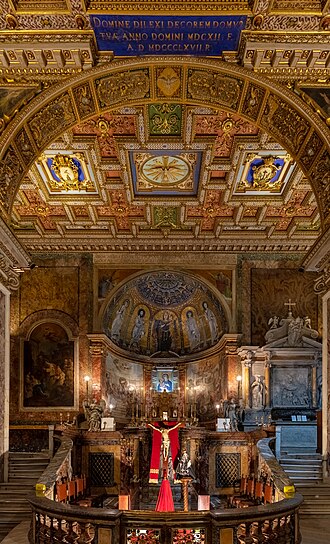
Basilica of Santa Francesca, Rome, Italy. A church at the site was known by the tenth century. It was named Santa Maria Nova (“New St Mary”), to distinguish it from the other church inside the Roman forum devoted to St Mary, Santa Maria Antiqua (“Ancient St Mary”), which had fallen into ruin by then. The relics from the ancient church were moved to this church under Pope Leo. Santa Maria Nuova was enlarged in the second half of the tenth century, and then rebuilt by Pope Honorius III in the thirteenth century, adding the campanile and the apse, as well as being decorated with a mosaic Maestà, a depiction of the Madonna enthroned accompanied by saints (as seen in the picture). Since 1352 the church has been in the care of the Olivetans. In the 16th century, the church was rededicated to Frances of Rome (Francesca Buzzi), who was canonized in 1608 and whose relics are in the crypt. The interior of the church has undergone many refurbishments.
 #ImageOfTheDay
Picture of the day
Basilica of Santa Francesca, Rome, Italy. A church at the site was known by the tenth century. It was named Santa Maria Nova (“New St Mary”), to distinguish it from the other church inside the Roman forum devoted to St Mary, Santa Maria Antiqua (“Ancient St Mary”), which had fallen into ruin by then. The relics from the ancient church were moved to this church under Pope Leo. Santa Maria Nuova was enlarged in the second half of the tenth century, and then rebuilt by Pope Honorius III in the thirteenth century, adding the campanile and the apse, as well as being decorated with a mosaic Maestà, a depiction of the Madonna enthroned accompanied by saints (as seen in the picture). Since 1352 the church has been in the care of the Olivetans. In the 16th century, the church was rededicated to Frances of Rome (Francesca Buzzi), who was canonized in 1608 and whose relics are in the crypt. The interior of the church has undergone many refurbishments.
Read More
Picture of the day


The main altar of Santa Maria della Pace church in Brescia features the altarpiece Presentation at Temple by Pompeo Batoni. The tympanum sculptures are by Antonio Calegari. Celebrated as Candlemas in some places, this event in the life of Jesus is observed today in much of Eastern and Western Christianity.
 #ImageOfTheDay
Picture of the day
The main altar of Santa Maria della Pace church in Brescia features the altarpiece Presentation at Temple by Pompeo Batoni. The tympanum sculptures are by Antonio Calegari. Celebrated as Candlemas in some places, this event in the life of Jesus is observed today in much of Eastern and Western Christianity.
Read More
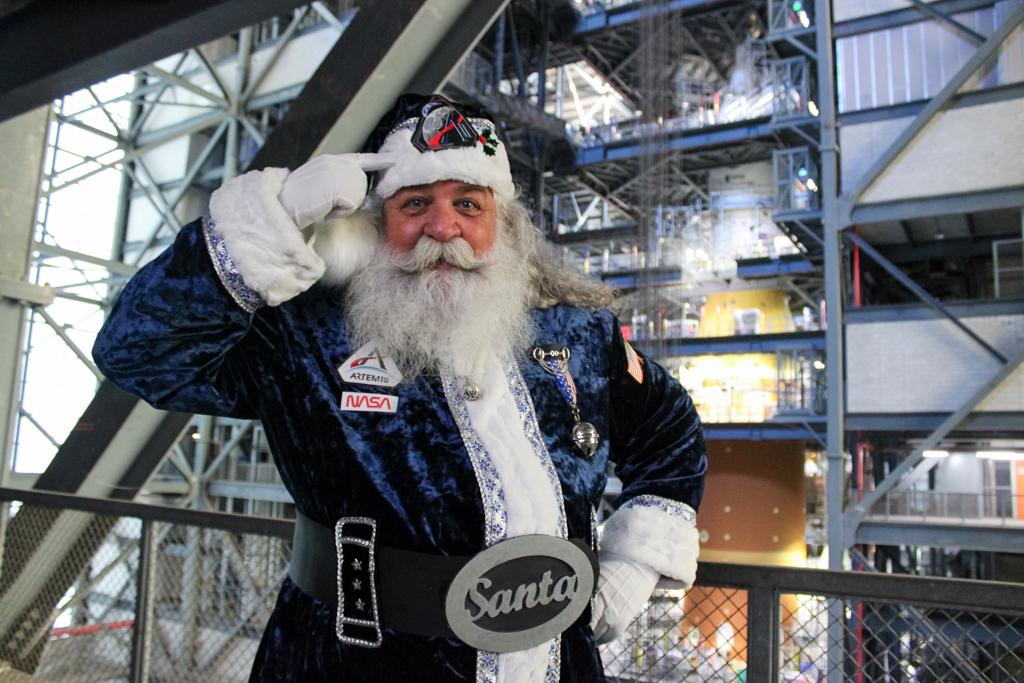
Santa Visits Artemis II Rocket – NASA engineer Guy Naylor poses for a photograph wearing a custom Santa Claus suit on the 19th level of High Bay 4 inside the Vehicle Assembly Building with NASA’s integrated Moon rocket behind him at the agency’s Kennedy Space Center in Florida on Thursday, Dec. 11, 2025.

NASA engineer Guy Naylor poses for a photograph wearing a custom Santa Claus suit on the 19th level of High Bay 4 inside the Vehicle Assembly Building with NASA’s integrated Moon rocket behind him at the agency’s Kennedy Space Center in Florida on Thursday, Dec. 11, 2025.

Read More
Picture of the day


This painting on the ceiling in Santa Maria della Concezione dei Cappuccini, a church on Via Veneto in Rome, depicts the Virgin Mary being assumed body and soul into heaven. Today is the Feast of the Assumption of Mary in much of Western Christianity or the Dormition of the Mother of God in Eastern Christianity.
 #ImageOfTheDay
Picture of the day
This painting on the ceiling in Santa Maria della Concezione dei Cappuccini, a church on Via Veneto in Rome, depicts the Virgin Mary being assumed body and soul into heaven. Today is the Feast of the Assumption of Mary in much of Western Christianity or the Dormition of the Mother of God in Eastern Christianity.
Read More