Sin

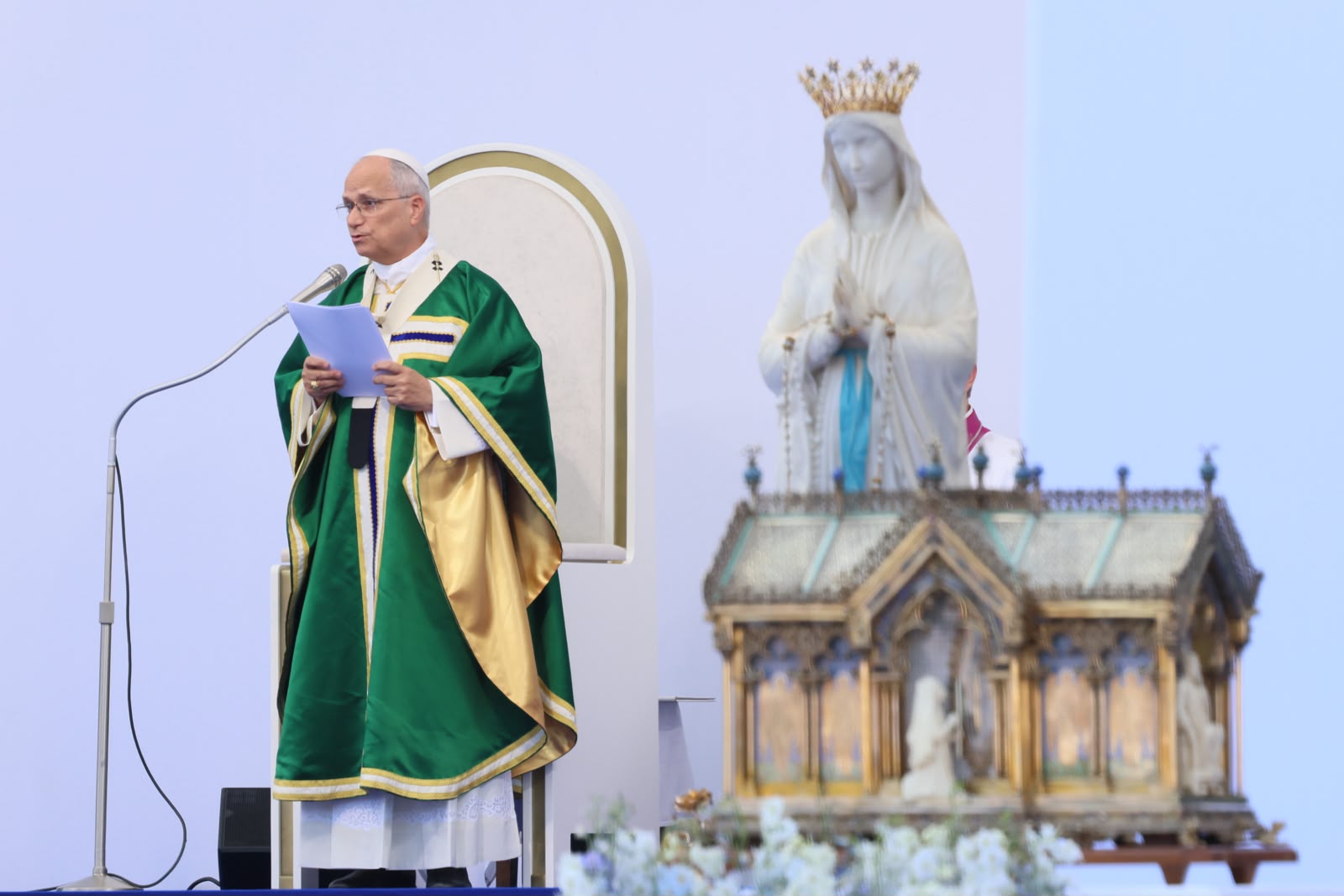
Pope Leo XIV in Algeria: Where there is conflict the Church brings reconciliation #Catholic ANNABA, Algeria — Pope Leo XIV concluded his visit to the land of St. Augustine by celebrating Mass at the Basilica of St. Augustine in Annaba, where he said the Church is continually reborn when it brings hope to the despairing, dignity to the poor, and reconciliation where there is conflict.The basilica, dedicated to the bishop of ancient Hippo, was built between 1881 and 1907 at the initiative of Algiers Archbishop Charles-Martial-Allemand Lavigerie and was elevated to the rank of minor basilica on April 24, 1914, by Pope Pius X. Restoration work was completed in 2013, with support that included a personal donation from Pope Benedict XVI.In his homily, the pope reflected on the Gospel account of Jesus’ nighttime encounter with Nicodemus, presenting it as a summons to renewal for the whole Church and especially for Algeria’s Christian community.“Today we listen to the Gospel, the good news for all time, in this basilica in Annaba dedicated to St. Augustine, bishop of the ancient city of Hippo,” the pope said. “Over the centuries, the names of the places that welcome us have changed, but the saints continue to serve as our patrons and faithful witnesses of a connection to the land that comes from heaven.”Leo said Jesus’ words to Nicodemus — “You must be born from above” — are not a burden but an invitation to freedom and new life in God.“Such is the invitation for every man and woman who seeks salvation!” he said. “Jesus’ invitation gives rise to the mission of the whole Church, and consequently to the Christian community in Algeria: to be born again from above, that is, from God. In this perspective, faith overcomes earthly hardships and the Lord’s grace makes the desert blossom.”The pope acknowledged that Christ’s command can sound impossible at first but said it reveals God’s power to renew human life.“On the contrary, the obligation expressed by Jesus is a gift of freedom for us, because it reveals an unexpected possibility: We can be born anew from above thanks to God,” Leo said. “We should do so, then, according to his loving will, which desires to renew humanity by calling us to a communion of life that begins with faith. While Christ invites us to renew our lives completely, he also gives us the strength to do so.”He then asked whether life can truly begin again and answered with hope rooted in the cross and Resurrection.“Yes! The Lord’s response, so full of love, fills our hearts with hope,” the pope said. “No matter how weighed down we are by pain or sin: The crucified One carries all these burdens with us and for us. No matter how discouraged we are by our own weaknesses: It is precisely then that God manifests his strength, the God who has raised Christ from the dead in order to give life to the world.”“Each one of us can experience the freedom of new life that comes from faith in the Redeemer,” he added. “Once again, St. Augustine offers us an example of this: We revere him for his conversion even more than for his wisdom.”Turning to the Acts of the Apostles, Leo said the life of the early Church remains the model for genuine ecclesial reform.“Even today, we must embrace this apostolic rule and put it into practice, meditating on it as an authentic criterion for ecclesial reform: a reform that must begin in the heart, if it is to be genuine, and must encompass everyone if it is to be effective,” he said.The pope said the first Christian community was not founded on a merely human agreement but on communion in Christ.“The early Church, therefore, was not based on a social contract but rather on the harmony of faith, affections, ideas, and life decisions centered on the love of God who became man to save all the peoples of the earth,” he said.That unity, he said, must bear fruit in charity, especially amid poverty and oppression.“Therefore, in the face of poverty and oppression, the guiding principle above all for Christians is charity: Let us do to those around us, as we would have them do to us,” Leo said. “Inspired by this law, inscribed in our hearts by God, the Church is continually reborn, for where there is despair she kindles hope, where there is misery she brings dignity, and where there is conflict she brings reconciliation.”Addressing bishops and priests, the pope said pastors are called above all to bear witness to God without fear or compromise.“The primary task of pastors as ministers of the Gospel is therefore to bear witness to God before the world with one heart and one soul, not permitting our concerns to lead us astray through fear, nor trends to undermine us through compromise,” he said.“Together with you, brothers in the episcopate and the priesthood, let us constantly renew this mission for the sake of those entrusted to us, so that through her service, the whole Church may be a message of new life for those we encounter,” he added.In his closing appeal, Leo addressed Algeria’s Christians directly, praising their fidelity and urging them to continue witnessing to the Gospel in ordinary life.“Dearest Christians of Algeria, you remain a humble and faithful sign of Christ’s love in this land,” he said. “Bear witness to the Gospel through simple gestures, genuine relationships, and a dialogue lived out day by day: In this way, you bring flavor and light to the places where you live.”He also praised their perseverance through hardship and invoked the example of the martyrs and of St. Augustine.“Your history is one of generous hospitality and resilience in times of trial,” the pope said. “Here the martyrs prayed; here St. Augustine loved his flock, fervently seeking the truth and serving Christ with ardent faith. Be heirs to this tradition, bearing witness through fraternal charity to the freedom of those born from above as a hope of salvation for the world.”Several cardinals concelebrated the Mass with the pope, including Cardinal Jean-Paul Vesco, archbishop of Algiers; Cardinal Cristóbal López Romero, archbishop of Rabat; and curial cardinals Pietro Parolin, George Koovakad, Luis Antonio Tagle, Peter Turkson, and Robert Sarah. Also among the concelebrants were Archbishop Paul Gallagher and Father Joseph Farrell, prior general of the Augustinians.Before the Mass, the pope visited the Augustinian community house and later had lunch with his confreres.At the end of the celebration, Bishop Michel Jean-Paul Guillaud of Constantine offered words of thanks to the pope.“Holy Father, your visit to this place, a source of your Augustinian roots, was brief, but it was an encouragement for us,” Guillaud said. “First of all, it strengthened our Christian community in its faith and in its trust in the goodwill and respect of the Algerian people. We could not have welcomed you without the support and active collaboration of the authorities and the joyful hospitality of our Algerian brothers and sisters.”The exchange of gifts followed: The pope received a ceramic work made by an Algerian artist, and he in turn gave a chalice.Leo then offered brief words of thanks of his own.“This journey has been for me a particular gift of God’s providence, a gift that the Lord has wished to make to the whole Church,” the pope said. “And it seems to me that I can sum it up this way: God is love; he is the Father of all men and women. Let us return to God with humility…”He continued: “We acknowledge that the current situation of the world is caught in a negative spiral that ultimately depends on our pride. We need him, we need his mercy, because only in him is the peace of the human heart found, and with him we will all be able to live together.”This story was first published by ACI Stampa, the Italian-language sister service of EWTN News. It has been translated and adapted by EWTN News English.

Pope Leo XIV in Algeria: Where there is conflict the Church brings reconciliation #Catholic ANNABA, Algeria — Pope Leo XIV concluded his visit to the land of St. Augustine by celebrating Mass at the Basilica of St. Augustine in Annaba, where he said the Church is continually reborn when it brings hope to the despairing, dignity to the poor, and reconciliation where there is conflict.The basilica, dedicated to the bishop of ancient Hippo, was built between 1881 and 1907 at the initiative of Algiers Archbishop Charles-Martial-Allemand Lavigerie and was elevated to the rank of minor basilica on April 24, 1914, by Pope Pius X. Restoration work was completed in 2013, with support that included a personal donation from Pope Benedict XVI.In his homily, the pope reflected on the Gospel account of Jesus’ nighttime encounter with Nicodemus, presenting it as a summons to renewal for the whole Church and especially for Algeria’s Christian community.“Today we listen to the Gospel, the good news for all time, in this basilica in Annaba dedicated to St. Augustine, bishop of the ancient city of Hippo,” the pope said. “Over the centuries, the names of the places that welcome us have changed, but the saints continue to serve as our patrons and faithful witnesses of a connection to the land that comes from heaven.”Leo said Jesus’ words to Nicodemus — “You must be born from above” — are not a burden but an invitation to freedom and new life in God.“Such is the invitation for every man and woman who seeks salvation!” he said. “Jesus’ invitation gives rise to the mission of the whole Church, and consequently to the Christian community in Algeria: to be born again from above, that is, from God. In this perspective, faith overcomes earthly hardships and the Lord’s grace makes the desert blossom.”The pope acknowledged that Christ’s command can sound impossible at first but said it reveals God’s power to renew human life.“On the contrary, the obligation expressed by Jesus is a gift of freedom for us, because it reveals an unexpected possibility: We can be born anew from above thanks to God,” Leo said. “We should do so, then, according to his loving will, which desires to renew humanity by calling us to a communion of life that begins with faith. While Christ invites us to renew our lives completely, he also gives us the strength to do so.”He then asked whether life can truly begin again and answered with hope rooted in the cross and Resurrection.“Yes! The Lord’s response, so full of love, fills our hearts with hope,” the pope said. “No matter how weighed down we are by pain or sin: The crucified One carries all these burdens with us and for us. No matter how discouraged we are by our own weaknesses: It is precisely then that God manifests his strength, the God who has raised Christ from the dead in order to give life to the world.”“Each one of us can experience the freedom of new life that comes from faith in the Redeemer,” he added. “Once again, St. Augustine offers us an example of this: We revere him for his conversion even more than for his wisdom.”Turning to the Acts of the Apostles, Leo said the life of the early Church remains the model for genuine ecclesial reform.“Even today, we must embrace this apostolic rule and put it into practice, meditating on it as an authentic criterion for ecclesial reform: a reform that must begin in the heart, if it is to be genuine, and must encompass everyone if it is to be effective,” he said.The pope said the first Christian community was not founded on a merely human agreement but on communion in Christ.“The early Church, therefore, was not based on a social contract but rather on the harmony of faith, affections, ideas, and life decisions centered on the love of God who became man to save all the peoples of the earth,” he said.That unity, he said, must bear fruit in charity, especially amid poverty and oppression.“Therefore, in the face of poverty and oppression, the guiding principle above all for Christians is charity: Let us do to those around us, as we would have them do to us,” Leo said. “Inspired by this law, inscribed in our hearts by God, the Church is continually reborn, for where there is despair she kindles hope, where there is misery she brings dignity, and where there is conflict she brings reconciliation.”Addressing bishops and priests, the pope said pastors are called above all to bear witness to God without fear or compromise.“The primary task of pastors as ministers of the Gospel is therefore to bear witness to God before the world with one heart and one soul, not permitting our concerns to lead us astray through fear, nor trends to undermine us through compromise,” he said.“Together with you, brothers in the episcopate and the priesthood, let us constantly renew this mission for the sake of those entrusted to us, so that through her service, the whole Church may be a message of new life for those we encounter,” he added.In his closing appeal, Leo addressed Algeria’s Christians directly, praising their fidelity and urging them to continue witnessing to the Gospel in ordinary life.“Dearest Christians of Algeria, you remain a humble and faithful sign of Christ’s love in this land,” he said. “Bear witness to the Gospel through simple gestures, genuine relationships, and a dialogue lived out day by day: In this way, you bring flavor and light to the places where you live.”He also praised their perseverance through hardship and invoked the example of the martyrs and of St. Augustine.“Your history is one of generous hospitality and resilience in times of trial,” the pope said. “Here the martyrs prayed; here St. Augustine loved his flock, fervently seeking the truth and serving Christ with ardent faith. Be heirs to this tradition, bearing witness through fraternal charity to the freedom of those born from above as a hope of salvation for the world.”Several cardinals concelebrated the Mass with the pope, including Cardinal Jean-Paul Vesco, archbishop of Algiers; Cardinal Cristóbal López Romero, archbishop of Rabat; and curial cardinals Pietro Parolin, George Koovakad, Luis Antonio Tagle, Peter Turkson, and Robert Sarah. Also among the concelebrants were Archbishop Paul Gallagher and Father Joseph Farrell, prior general of the Augustinians.Before the Mass, the pope visited the Augustinian community house and later had lunch with his confreres.At the end of the celebration, Bishop Michel Jean-Paul Guillaud of Constantine offered words of thanks to the pope.“Holy Father, your visit to this place, a source of your Augustinian roots, was brief, but it was an encouragement for us,” Guillaud said. “First of all, it strengthened our Christian community in its faith and in its trust in the goodwill and respect of the Algerian people. We could not have welcomed you without the support and active collaboration of the authorities and the joyful hospitality of our Algerian brothers and sisters.”The exchange of gifts followed: The pope received a ceramic work made by an Algerian artist, and he in turn gave a chalice.Leo then offered brief words of thanks of his own.“This journey has been for me a particular gift of God’s providence, a gift that the Lord has wished to make to the whole Church,” the pope said. “And it seems to me that I can sum it up this way: God is love; he is the Father of all men and women. Let us return to God with humility…”He continued: “We acknowledge that the current situation of the world is caught in a negative spiral that ultimately depends on our pride. We need him, we need his mercy, because only in him is the peace of the human heart found, and with him we will all be able to live together.”This story was first published by ACI Stampa, the Italian-language sister service of EWTN News. It has been translated and adapted by EWTN News English.

At the Basilica of St. Augustine, the pontiff urged Christians to bear witness through “simple gestures, genuine relationships and a dialogue lived out day by day.”

Read More
Trump’s comments on Pope Leo called ‘disrespectful’ as Americans react #Catholic Catholic bishops and U.S. elected officials have publicly criticized the president’s statements about Pope Leo XIV.President Donald Trump called Leo “weak on crime and terrible for foreign policy” in a lengthy social media post April 12 that drew response from the United States Conference of Catholic Bishops (USCCB) and elected officials.Bishop Robert Barron of the Diocese of Winona-Rochester, Minnesota, called Trump’s attack on Pope Leo XIV “disrespectful." Barron, who serves on Trump’s Religious Liberty Commission, said in a post on X that Trump’s comments “were entirely inappropriate and disrespectful” and “I think the president owes the pope an apology.”“[Trump’s comments] don’t contribute at all to a constructive conversation,” he said. “It is the pope’s prerogative to articulate Catholic doctrine and the principles that govern the moral life. In regard to the concrete application of those principles, people of goodwill can and do disagree.”Barron encouraged Catholic Trump officials to arrange a meeting with Vatican officials “so that a real dialogue can take place,” saying “this is far preferable to the statements on social media.”Bishop Michael Burbidge of Arlington, Virginia, said in a social media post: “Along with Archbishop [Paul] Coakley, president of the USCCB, and my brother bishops, I was disheartened by recent comments from President Trump concerning Pope Leo XIV and the Church. I pray that civility and respect are fully restored as together, with God’s grace, we work for peace and harmony among all people. May we also be united in our prayer for the end of war and violence so that Christ’s peace reigns throughout the world and in our hearts.”Palm Beach, Florida, Bishop Manuel de Jesús Rodríguez posted on X: “The @DiocesePB stands firm with our Holy Father, @Pontifex, and strongly rejects the disrespectful and violent attacks that Donald J. Trump has directed against the Holy Father.”Buffalo, New York, Bishop Michael Fisher posted on X: “This is not about politics but the very cause of humanity.”The Catholic Association's Ashley McGuire said in a statement: “The Catholic Church does not in any way fit into American political boxes. It will always prioritize the protection of innocent life in all its stages as well as the cause of the poor and marginalized. Insulting the pope, and all Catholics by extension, with the hope of making the Church bend to American political agendas, is discouraging and counterproductive.” McGuire added: “We pray that President Trump apologizes to Pope Leo.”U.S. officials' reaction beginsRepublican Vice President JD Vance, who is Catholic, has not yet commented on the matter, nor has Secretary of State Marco Rubio, also a Catholic.Sen. Mark Kelly, D-Arizona, who is Catholic, posted on X that “I find it abhorrent that the president of the United States would publicly attack the successor of St. Peter.”U.S. House Minority Leader Hakeem Jeffries said on X that Trump “shamefully attacked” the pope. Few Republican elected officials have spoken out.TweetDemocratic California Gov. Gavin Newsom posted on X: “Hey @GOP, you good with your guy directly attacking the pope now?”Rep. Lukas Schubert, a Republican Montana state lawmaker, disputed the presidentʼs statement that the pope is a “liberal person.”“Pope Leo is significantly further to the right than President Trump on abortion, gay marriage, and family values. Also he is more America First on the Iran War,” Schubert said.AI imageTrump also posted an AI-created image on Truth Social that appeared to portray himself as Jesus Christ, healing the sick, which led several Catholics to accuse the president of blasphemy.Edward Feser, a Catholic philosopher and professor at Pasadena City College, posted on X that Trump’s comments illustrate “how utter enslavement to the sin of pride makes a man unsuitable for the presidency.”“For all their faults, previous presidents had the visceral understanding of proper boundaries not to attack the vicar of Christ even when they disagreed with him,” he said.Feser quoted Daniel 11:36-37 in response to Trump’s AI image of himself as Christ, which reads: “And the king shall do according to his will; he shall exalt himself and magnify himself above every god, and shall speak astonishing things against the God of gods … He shall not give heed to any other god, for he shall magnify himself above all.”In reaction to the AI photo, Matt Fradd, the host of “Pints With Aquinas,“ urged Catholics to “offer a rosary today for Donald Trump and all blasphemers. … Seriously. Do it. I will too.”TweetRep. Shontel Brown, D-Ohio, did not directly reference Trumpʼs remarks about the pope but criticized the AI-created image on X: “There aren’t enough words to denounce how wrong this is.”The comments came after Leo criticized the Iran war and Trump’s rhetoric about targeting the entire civilization of Iran. Leo said in response to the post: “I have no fear neither of the Trump administration nor of speaking out loudly about the message of the Gospel.”Marjorie Taylor Greene, a former Republican congresswoman who was a strong ally of Trump before splitting with him on the Iran war and his handling of the Jeffrey Epstein files, posted on X that Trump “attacked the pope because the pope is rightly against Trump’s war in Iran and then he posted this picture of himself as if he is replacing Jesus.”“This comes after last week’s post of his evil tirade on Easter and then threatening to kill an entire civilization,” she said. “I completely denounce this and I’m praying against it!!!”‘Fuels division’Father Robert Sirico, the founder of the Acton Institute, said in a statement that Leo “has both the right and the duty to speak prophetically on matters of war and peace, the dignity of the human person, and the moral limits of force — even when his words discomfort political leaders.”He said Trump’s post does not “strengthen America’s moral standing but “merely fuels division.”Sirico also added that Catholics can disagree with popes on prudential judgments, such as foreign policy or crime, which he said are not infallible: “The Church herself teaches that such applications of principle admit of legitimate debate.”This story was updated at 11:50 a.m. ET on April 13, 2026, with comments from Buffalo, New York, Bishop Michael Fisher and The Catholic Associationʼs Ashley McGuire.

Trump’s comments on Pope Leo called ‘disrespectful’ as Americans react #Catholic Catholic bishops and U.S. elected officials have publicly criticized the president’s statements about Pope Leo XIV.President Donald Trump called Leo “weak on crime and terrible for foreign policy” in a lengthy social media post April 12 that drew response from the United States Conference of Catholic Bishops (USCCB) and elected officials.Bishop Robert Barron of the Diocese of Winona-Rochester, Minnesota, called Trump’s attack on Pope Leo XIV “disrespectful." Barron, who serves on Trump’s Religious Liberty Commission, said in a post on X that Trump’s comments “were entirely inappropriate and disrespectful” and “I think the president owes the pope an apology.”“[Trump’s comments] don’t contribute at all to a constructive conversation,” he said. “It is the pope’s prerogative to articulate Catholic doctrine and the principles that govern the moral life. In regard to the concrete application of those principles, people of goodwill can and do disagree.”Barron encouraged Catholic Trump officials to arrange a meeting with Vatican officials “so that a real dialogue can take place,” saying “this is far preferable to the statements on social media.”Bishop Michael Burbidge of Arlington, Virginia, said in a social media post: “Along with Archbishop [Paul] Coakley, president of the USCCB, and my brother bishops, I was disheartened by recent comments from President Trump concerning Pope Leo XIV and the Church. I pray that civility and respect are fully restored as together, with God’s grace, we work for peace and harmony among all people. May we also be united in our prayer for the end of war and violence so that Christ’s peace reigns throughout the world and in our hearts.”Palm Beach, Florida, Bishop Manuel de Jesús Rodríguez posted on X: “The @DiocesePB stands firm with our Holy Father, @Pontifex, and strongly rejects the disrespectful and violent attacks that Donald J. Trump has directed against the Holy Father.”Buffalo, New York, Bishop Michael Fisher posted on X: “This is not about politics but the very cause of humanity.”The Catholic Association's Ashley McGuire said in a statement: “The Catholic Church does not in any way fit into American political boxes. It will always prioritize the protection of innocent life in all its stages as well as the cause of the poor and marginalized. Insulting the pope, and all Catholics by extension, with the hope of making the Church bend to American political agendas, is discouraging and counterproductive.” McGuire added: “We pray that President Trump apologizes to Pope Leo.”U.S. officials' reaction beginsRepublican Vice President JD Vance, who is Catholic, has not yet commented on the matter, nor has Secretary of State Marco Rubio, also a Catholic.Sen. Mark Kelly, D-Arizona, who is Catholic, posted on X that “I find it abhorrent that the president of the United States would publicly attack the successor of St. Peter.”U.S. House Minority Leader Hakeem Jeffries said on X that Trump “shamefully attacked” the pope. Few Republican elected officials have spoken out.TweetDemocratic California Gov. Gavin Newsom posted on X: “Hey @GOP, you good with your guy directly attacking the pope now?”Rep. Lukas Schubert, a Republican Montana state lawmaker, disputed the presidentʼs statement that the pope is a “liberal person.”“Pope Leo is significantly further to the right than President Trump on abortion, gay marriage, and family values. Also he is more America First on the Iran War,” Schubert said.AI imageTrump also posted an AI-created image on Truth Social that appeared to portray himself as Jesus Christ, healing the sick, which led several Catholics to accuse the president of blasphemy.Edward Feser, a Catholic philosopher and professor at Pasadena City College, posted on X that Trump’s comments illustrate “how utter enslavement to the sin of pride makes a man unsuitable for the presidency.”“For all their faults, previous presidents had the visceral understanding of proper boundaries not to attack the vicar of Christ even when they disagreed with him,” he said.Feser quoted Daniel 11:36-37 in response to Trump’s AI image of himself as Christ, which reads: “And the king shall do according to his will; he shall exalt himself and magnify himself above every god, and shall speak astonishing things against the God of gods … He shall not give heed to any other god, for he shall magnify himself above all.”In reaction to the AI photo, Matt Fradd, the host of “Pints With Aquinas,“ urged Catholics to “offer a rosary today for Donald Trump and all blasphemers. … Seriously. Do it. I will too.”TweetRep. Shontel Brown, D-Ohio, did not directly reference Trumpʼs remarks about the pope but criticized the AI-created image on X: “There aren’t enough words to denounce how wrong this is.”The comments came after Leo criticized the Iran war and Trump’s rhetoric about targeting the entire civilization of Iran. Leo said in response to the post: “I have no fear neither of the Trump administration nor of speaking out loudly about the message of the Gospel.”Marjorie Taylor Greene, a former Republican congresswoman who was a strong ally of Trump before splitting with him on the Iran war and his handling of the Jeffrey Epstein files, posted on X that Trump “attacked the pope because the pope is rightly against Trump’s war in Iran and then he posted this picture of himself as if he is replacing Jesus.”“This comes after last week’s post of his evil tirade on Easter and then threatening to kill an entire civilization,” she said. “I completely denounce this and I’m praying against it!!!”‘Fuels division’Father Robert Sirico, the founder of the Acton Institute, said in a statement that Leo “has both the right and the duty to speak prophetically on matters of war and peace, the dignity of the human person, and the moral limits of force — even when his words discomfort political leaders.”He said Trump’s post does not “strengthen America’s moral standing but “merely fuels division.”Sirico also added that Catholics can disagree with popes on prudential judgments, such as foreign policy or crime, which he said are not infallible: “The Church herself teaches that such applications of principle admit of legitimate debate.”This story was updated at 11:50 a.m. ET on April 13, 2026, with comments from Buffalo, New York, Bishop Michael Fisher and The Catholic Associationʼs Ashley McGuire.

President Donald Trump called Leo “weak on crime and terrible for foreign policy” in a lengthy social media post April 12 that drew response from U.S. bishops and elected officials.

Read More
War forces Latin Patriarchate of Jerusalem to cancel Palm Sunday procession #Catholic Amid the continuing war and restrictions on access to the holy sites, the Latin Patriarchate of Jerusalem has canceled the traditional Palm Sunday procession from the Mount of Olives to Jerusalem, announcing “exceptional measures” regarding this year’s Holy Week and Easter celebrations.The Palm Sunday procession will instead be replaced by a time of prayer for the city in a location yet to be announced.The patriarchate also announced the postponement of the chrism Mass until circumstances allow — most likely during the Easter season after necessary ecclesiastical approvals are obtained.At the same time, it affirmed that the churches of the diocese will remain open and that priests and pastors will work, within the limits of what is possible, to ensure the participation of the faithful in prayers and liturgical celebrations.The patriarchate explained that this year it has not been possible to hold the traditional Lenten pilgrimage in Jerusalem, with its celebrations at the Church of the Holy Sepulchre and the sites associated with Christ’s passion. It noted that, although the faithful have been able to prepare individually, they have felt the absence of the communal journey toward Easter, which is an essential element of the Church’s spiritual life.Continuing restrictionsThe patriarchate said the security conditions linked to the conflict do not suggest any improvement in the near future. It stressed that, in coordination with the other Churches and the relevant authorities, it is continuing to assess possible ways to hold the celebrations within the available framework.Decisions, it said, will be made on a day-by-day basis according to developments on the ground. According to the statement, it has become clear that it will not be possible to organize normal celebrations open to all the faithful, prompting the patriarchate to adopt a set of organizational measures.The patriarchate said this reality constitutes “another wound added to the many wounds caused by the conflict.” The pain, it said, is not limited to the consequences of war but also includes the inability to celebrate Easter together “in a fitting way.” Yet it stressed the need not to surrender to despair and called for perseverance in prayer.In this context, the patriarchate called on the faithful to unite in prayer on Saturday, March 28, by reciting the rosary for peace and reassurance, especially for those suffering because of the conflict. It concluded by affirming that Easter remains, despite every circumstance, a sign of hope, recalling that “no darkness, not even the darkness of war, can have the last word” and that the empty tomb remains a witness to the victory of life over hatred and mercy over sin.This story was first published by ACI MENA, the Arabic-language sister service of EWTN News. It has been translated and adapted by EWTN News English.

War forces Latin Patriarchate of Jerusalem to cancel Palm Sunday procession #Catholic Amid the continuing war and restrictions on access to the holy sites, the Latin Patriarchate of Jerusalem has canceled the traditional Palm Sunday procession from the Mount of Olives to Jerusalem, announcing “exceptional measures” regarding this year’s Holy Week and Easter celebrations.The Palm Sunday procession will instead be replaced by a time of prayer for the city in a location yet to be announced.The patriarchate also announced the postponement of the chrism Mass until circumstances allow — most likely during the Easter season after necessary ecclesiastical approvals are obtained.At the same time, it affirmed that the churches of the diocese will remain open and that priests and pastors will work, within the limits of what is possible, to ensure the participation of the faithful in prayers and liturgical celebrations.The patriarchate explained that this year it has not been possible to hold the traditional Lenten pilgrimage in Jerusalem, with its celebrations at the Church of the Holy Sepulchre and the sites associated with Christ’s passion. It noted that, although the faithful have been able to prepare individually, they have felt the absence of the communal journey toward Easter, which is an essential element of the Church’s spiritual life.Continuing restrictionsThe patriarchate said the security conditions linked to the conflict do not suggest any improvement in the near future. It stressed that, in coordination with the other Churches and the relevant authorities, it is continuing to assess possible ways to hold the celebrations within the available framework.Decisions, it said, will be made on a day-by-day basis according to developments on the ground. According to the statement, it has become clear that it will not be possible to organize normal celebrations open to all the faithful, prompting the patriarchate to adopt a set of organizational measures.The patriarchate said this reality constitutes “another wound added to the many wounds caused by the conflict.” The pain, it said, is not limited to the consequences of war but also includes the inability to celebrate Easter together “in a fitting way.” Yet it stressed the need not to surrender to despair and called for perseverance in prayer.In this context, the patriarchate called on the faithful to unite in prayer on Saturday, March 28, by reciting the rosary for peace and reassurance, especially for those suffering because of the conflict. It concluded by affirming that Easter remains, despite every circumstance, a sign of hope, recalling that “no darkness, not even the darkness of war, can have the last word” and that the empty tomb remains a witness to the victory of life over hatred and mercy over sin.This story was first published by ACI MENA, the Arabic-language sister service of EWTN News. It has been translated and adapted by EWTN News English.

Holy Week observances and events in the Holy Land have been canceled or significantly revised in the face of closures in Jerusalem due to the war with Iran.

Read More
‘God wants to cover us in robes of grace,’ Catholic fashion writer says #Catholic According to Catholic author Mary Harper, the way we dress can be a way to express faith, human dignity, and personal identity.Harper, author of “The Liturgical Style Guide,” in which she explores how faith should influence how we dress, noted that the Bible shows the symbolic importance of clothing: “It’s actually pretty amazing how, throughout both the Old Testament and the New … clothing is mentioned over 100 times... The majority of times, it’s meant to be a sign of God’s mercy and providence.”This symbolism appears from the very beginning of the Bible, she said in a recent interview posted by the Archdiocese of Miami.
 
 Mary Harper, author of “The Liturgical Style Guide,” explores how faith can influence even everyday dress. | Credit: Archdiocese of Miami
 
 After original sin, Adam and Eve tried to cover themselves by sewing together fig leaves, which Harper called “flimsy.”“What does God do? He literally slaughters an animal, the first sacrifice in Scripture. He covers them in leather garments because he wants them to have something that’s worthy, something that’s good, something that’s actually going to protect them and be lasting,” she explained.According to Harper, this biblical image helps us understand human dignity. “God wants to cover us in robes of grace,” she said, also recalling the parable of the prodigal son, when the father “puts a robe on him and a ring on him, as a reminder of his goodness and his dignity and his identity.”That’s why even something as ordinary as getting dressed every day can have a spiritual dimension. “Even through something that we do every day — getting dressed for the day — the Lord is speaking his providence over you. He desires to lavish you in grace. Even getting dressed in the morning is a way to remember putting on Christ, putting on your baptismal garment again, remembering who you are and who you’re called to be in Christ,” she pointed out.Harper grew up Catholic in New Orleans. She earned her master’s and bachelor’s degrees in theology from Ave Maria University and is the founder of LiturgicalStyle.com, a project dedicated to reflecting on the theological significance of clothing based on the Bible, the stories of the saints, and the liturgical calendar.She also writes for litanynyc.com a Catholic made-to-measure clothing company that seeks to apply the Church’s social teaching in its production process.Clothing as a form of Christian witness“Whether I intend it or not, my clothing is going to communicate something. You wear a school uniform, it tells you what school you go to; priests put on vestments that tell you about the liturgical season. Well, there’s great power in that,” she said.From that perspective, she added, clothing can become a form of Christian witness. “I have the capacity to communicate the Gospel through my very garments, through intentionality, creativity, and beauty.”The author also cautioned that the Christian view of modesty avoids two extremes: absolute individualism and fear of the body.“One extreme is, I can wear whatever I want, I don’t care what anyone else thinks about it. At the same time, we don’t want to get to the point of, ‘I don’t know how to dress myself well, and I’m so scared of doing the wrong thing … [and] nothing can show because my body is bad,’” she explained.“The Church has never said that,” Harper added, noting that Christian teaching on the goodness of the human body is developed in depth in St. John Paul II’s theology of the body.More than strict rules, she argued, the key lies in discerning: “What is it that I want to communicate through what I’m wearing?” Harper also explained that modesty involves considering the context and the activity.“It is my responsibility to wear something that makes sense for the activity at hand, for the environment that I’m in, and that allows me to be fully present. That’s a service to everyone around me and to myself,” she stated, citing as an example the impracticality of wearing flip flops to hike in the Rocky Mountains.Drawing inspiration from the saintsHarper also proposed a creative idea for living out one’s faith in everyday life: finding inspiration in the saints when choosing what to wear.This does not mean, she clarified, that we imitate them literally. “I’m not telling you to go around wearing a Carmelite habit,” she joked.Rather, she suggested small symbolic gestures: “If you have Western boots, you can say you’re wearing them in honor of St. Teresa of the Andes,” who loved horseback riding. Or “when you wear jeans, you can think of her, because she just loved to be this great adventurer and going into the mountains” and “I’m going to ask her to pray for me."Creativity and freedom in the Christian lifeFor Harper, the relationship between faith and clothing should not become a source of scrupulosity or pressure.“Sometimes we can get so caught up saying, ‘If I’m a ‘real Catholic,’ then I’m going to dress in this particular way.’ I think it’s really easy to get kind of scrupulous when it comes to clothing,” she reflected.Instead, she recommended bringing the matter to prayer and discernment with trusted individuals. “If you have any concern about, ‘Am I dressing in a way that is good?’, talk to someone who knows your heart,” she advised.Finally, Harper encouraged living out Christian creativity in these everyday details as well: “The Holy Spirit is creative."“When you get dressed for the day, if you just say, ‘Come, Holy Spirit,’ he’s going to show up. It’s going to be awesome and joyful, and it’ll be more fun.”This story was first published by ACI Prensa, the Spanish-language sister service of EWTN News. It has been translated and adapted by EWTN News English.

‘God wants to cover us in robes of grace,’ Catholic fashion writer says #Catholic According to Catholic author Mary Harper, the way we dress can be a way to express faith, human dignity, and personal identity.Harper, author of “The Liturgical Style Guide,” in which she explores how faith should influence how we dress, noted that the Bible shows the symbolic importance of clothing: “It’s actually pretty amazing how, throughout both the Old Testament and the New … clothing is mentioned over 100 times… The majority of times, it’s meant to be a sign of God’s mercy and providence.”This symbolism appears from the very beginning of the Bible, she said in a recent interview posted by the Archdiocese of Miami. Mary Harper, author of “The Liturgical Style Guide,” explores how faith can influence even everyday dress. | Credit: Archdiocese of Miami After original sin, Adam and Eve tried to cover themselves by sewing together fig leaves, which Harper called “flimsy.”“What does God do? He literally slaughters an animal, the first sacrifice in Scripture. He covers them in leather garments because he wants them to have something that’s worthy, something that’s good, something that’s actually going to protect them and be lasting,” she explained.According to Harper, this biblical image helps us understand human dignity. “God wants to cover us in robes of grace,” she said, also recalling the parable of the prodigal son, when the father “puts a robe on him and a ring on him, as a reminder of his goodness and his dignity and his identity.”That’s why even something as ordinary as getting dressed every day can have a spiritual dimension. “Even through something that we do every day — getting dressed for the day — the Lord is speaking his providence over you. He desires to lavish you in grace. Even getting dressed in the morning is a way to remember putting on Christ, putting on your baptismal garment again, remembering who you are and who you’re called to be in Christ,” she pointed out.Harper grew up Catholic in New Orleans. She earned her master’s and bachelor’s degrees in theology from Ave Maria University and is the founder of LiturgicalStyle.com, a project dedicated to reflecting on the theological significance of clothing based on the Bible, the stories of the saints, and the liturgical calendar.She also writes for litanynyc.com a Catholic made-to-measure clothing company that seeks to apply the Church’s social teaching in its production process.Clothing as a form of Christian witness“Whether I intend it or not, my clothing is going to communicate something. You wear a school uniform, it tells you what school you go to; priests put on vestments that tell you about the liturgical season. Well, there’s great power in that,” she said.From that perspective, she added, clothing can become a form of Christian witness. “I have the capacity to communicate the Gospel through my very garments, through intentionality, creativity, and beauty.”The author also cautioned that the Christian view of modesty avoids two extremes: absolute individualism and fear of the body.“One extreme is, I can wear whatever I want, I don’t care what anyone else thinks about it. At the same time, we don’t want to get to the point of, ‘I don’t know how to dress myself well, and I’m so scared of doing the wrong thing … [and] nothing can show because my body is bad,’” she explained.“The Church has never said that,” Harper added, noting that Christian teaching on the goodness of the human body is developed in depth in St. John Paul II’s theology of the body.More than strict rules, she argued, the key lies in discerning: “What is it that I want to communicate through what I’m wearing?” Harper also explained that modesty involves considering the context and the activity.“It is my responsibility to wear something that makes sense for the activity at hand, for the environment that I’m in, and that allows me to be fully present. That’s a service to everyone around me and to myself,” she stated, citing as an example the impracticality of wearing flip flops to hike in the Rocky Mountains.Drawing inspiration from the saintsHarper also proposed a creative idea for living out one’s faith in everyday life: finding inspiration in the saints when choosing what to wear.This does not mean, she clarified, that we imitate them literally. “I’m not telling you to go around wearing a Carmelite habit,” she joked.Rather, she suggested small symbolic gestures: “If you have Western boots, you can say you’re wearing them in honor of St. Teresa of the Andes,” who loved horseback riding. Or “when you wear jeans, you can think of her, because she just loved to be this great adventurer and going into the mountains” and “I’m going to ask her to pray for me."Creativity and freedom in the Christian lifeFor Harper, the relationship between faith and clothing should not become a source of scrupulosity or pressure.“Sometimes we can get so caught up saying, ‘If I’m a ‘real Catholic,’ then I’m going to dress in this particular way.’ I think it’s really easy to get kind of scrupulous when it comes to clothing,” she reflected.Instead, she recommended bringing the matter to prayer and discernment with trusted individuals. “If you have any concern about, ‘Am I dressing in a way that is good?’, talk to someone who knows your heart,” she advised.Finally, Harper encouraged living out Christian creativity in these everyday details as well: “The Holy Spirit is creative."“When you get dressed for the day, if you just say, ‘Come, Holy Spirit,’ he’s going to show up. It’s going to be awesome and joyful, and it’ll be more fun.”This story was first published by ACI Prensa, the Spanish-language sister service of EWTN News. It has been translated and adapted by EWTN News English.

Mary Harper explains the positive dimension of choosing what to wear and what it can express, urging Catholics to invite the Holy Spirit into their fashion choices.

Read More