alone

National Infertility Awareness Week: 4 Catholic ministries walking with couples #Catholic According to the World Health Organization, about 1 in 6 people globally experience infertility in their lifetime. In the United States, 1 in 8 couples deal with infertility.This year, National Infertility Awareness Week (NIAW) runs from April 19–25. Established in 1989 by RESOLVE: The National Infertility Association, NIAW is an annual initiative held each April that raises public awareness, promotes policy change — especially regarding insurance coverage — and fosters open conversations to support those struggling to build their families.RESOLVE: The National Infertility Association was founded in 1974 as a nonprofit dedicated to supporting individuals and couples facing infertility through education, advocacy, and community support.The Catholic Church offers couples struggling with infertility a wide range of resources that aim to address the root of the issue in a holistic manner and in a way that aligns with Church teaching.Here are four Catholic ministries that work with couples carrying the cross of infertility:Springs in the DesertSprings in the Desert is a Catholic infertility ministry founded in 2019 by Kimberly Henkel and Ann Koshute after they recognized how isolating infertility can be and how little pastoral support existed within the Church. The ministry exists to accompany women and couples spiritually and emotionally, helping them encounter God’s love and discover a broader understanding of fruitfulness beyond biological parenthood. Rooted deeply in Catholic teaching on marriage, human dignity, and reproductive ethics, it also works to educate clergy and lay leaders about the unique grief and needs associated with infertility.The ministry offers a wide range of resources, including retreats, small groups, blog reflections, a podcast, and virtual and in-person events designed to foster community and healing.For this year’s National Infertility Awareness Week, Springs in the Desert has partnered with Ascension to launch two free spiritual resources designed specifically for couples experiencing this hardship. They are a 15-part “Scripture and Saints” audio series featuring biblical figures such as Sarah and Abraham, Ruth and Naomi, Hannah and Elkanah, St. Joseph, Elizabeth and Zechariah, the woman with the hemorrhage, and St. Paul who connect the listener to the lived experience of infertility, and a novena inviting couples to pray with titles of Our Lady such as Our Lady of Sorrows and Queen of Families in order to invoke the Blessed Mother during times of grief and loss.Both resources will be available beginning April 19 in the Ascension app.The Fruitful HollowThe Fruitful Hollow is an online Catholic infertility ministry founded in 2021 by Lauren Allen after her own experience of infertility inspired her to create a space rooted in Church teaching and authentic support. The ministry focuses on helping women and couples live out their vocation with purpose during infertility, emphasizing that fruitfulness is not limited to having children but can be lived out in many spiritual and relational ways. It aims to address the lack of conversation and resources within Catholic circles and to guide people toward holiness in the midst of suffering.
 
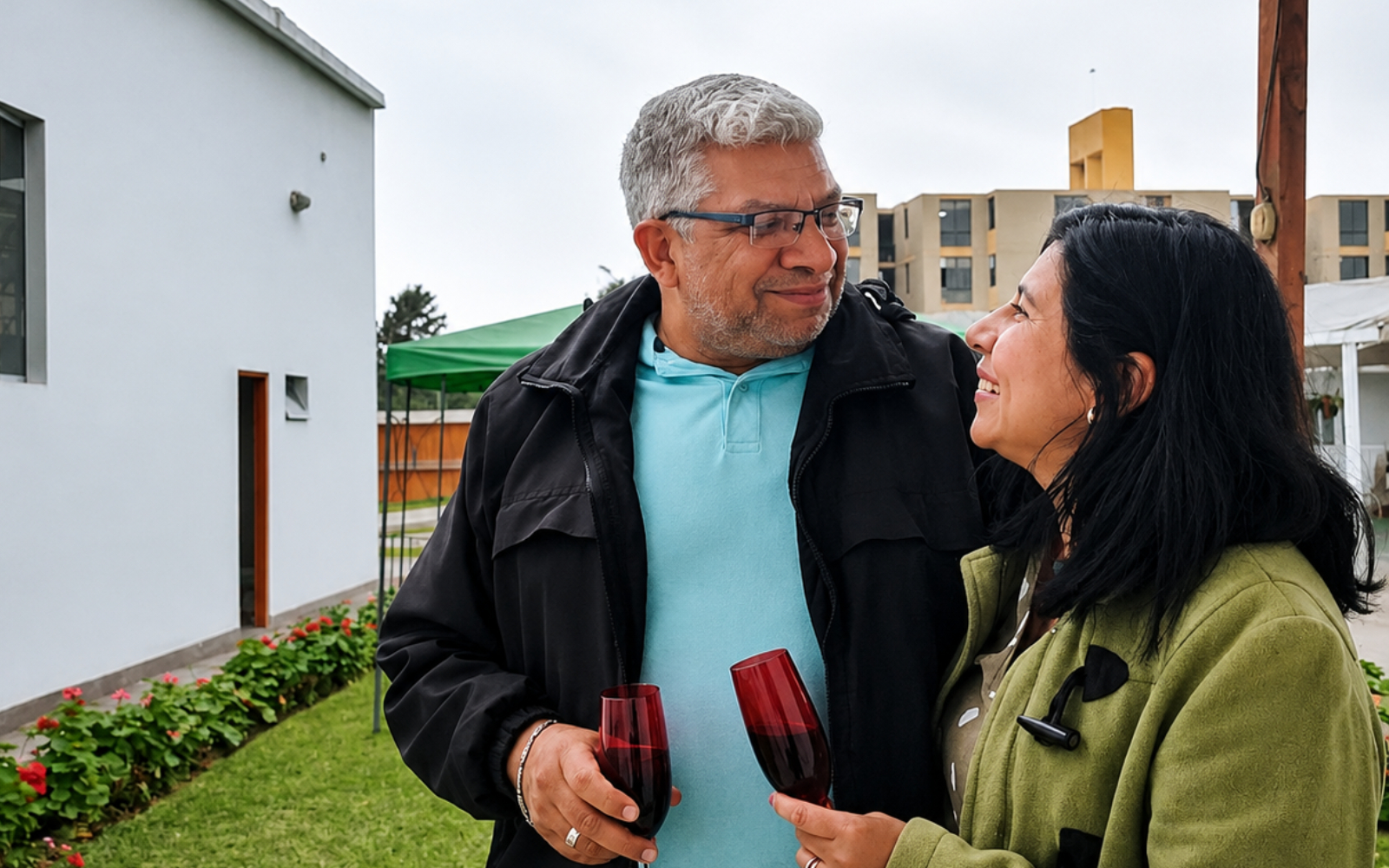
 Lauren Allen, the founder of the Catholic infertility ministry the Fruitful Hollow, with her husband. | Credit: Photo courtesy of Lauren Allen
 
 The ministry provides weekly blog reflections, a mentorship program titled “Sisters of Hannah,” and a wide range of downloadable resources that address grief, medical decisions, marriage, and spiritual growth. It also offers tools for prayer, education on ethical fertility treatments, and even a memorial space for those who have experienced loss.Lily of the ValleyLily of the Valley is a Catholic lay ministry founded in 2022 to support families facing infertility, pregnancy loss, and difficult prenatal or postnatal diagnoses. Rooted in Catholic teaching and devotion — especially to St. Gianna Molla — the ministry’s mission is to accompany those carrying the cross of early-life suffering with prayer, compassion, and spiritual solidarity.The ministry’s work focuses on providing both spiritual and community-based support, particularly through tangible and relational resources. One of its most distinctive offerings is personalized prayer care packages, which include sacramentals, prayer cards, and handwritten notes designed to bring comfort and encourage prayer during difficult times.In addition, Lily of the Valley offers online support groups, curated spiritual resources, and opportunities for prayer accompaniment, helping women and families feel less alone and more supported within a faith-filled community as they navigate infertility and related struggles.Elizabeth MinistryA parish-based Catholic outreach founded in 1991 in Wisconsin, Elizabeth Ministry is designed to support women and families during critical reproductive and family life experiences, including infertility, miscarriage, pregnancy, and adoption. The ministry is inspired by the Visitation of Mary to Elizabeth, emphasizing accompaniment, presence, and shared faith. Its mission is to affirm the dignity of life and provide emotional, spiritual, and practical care to women navigating difficult or unexpected journeys.The ministry operates primarily through local parish chapters, offering one-on-one mentoring, meal support, prayer networks, and companionship for women experiencing infertility or loss. It also provides training materials, spiritual reflections, and structured programs to help parishes build supportive communities.Elizabeth Ministry’s work is especially valuable for women seeking in-person, relational support within their local Catholic community rather than solely online resources.Several parishes and dioceses have their own programs for couples struggling with infertility. For example, the Archdiocese of Denver and the Diocese of Des Moines, Iowa, have a program called Behold Your Child, which offers spiritual and emotional support for those experiencing infertility and hosts memorial Masses for those who have lost a child due to miscarriage, stillbirth, or infant loss.

National Infertility Awareness Week: 4 Catholic ministries walking with couples #Catholic According to the World Health Organization, about 1 in 6 people globally experience infertility in their lifetime. In the United States, 1 in 8 couples deal with infertility.This year, National Infertility Awareness Week (NIAW) runs from April 19–25. Established in 1989 by RESOLVE: The National Infertility Association, NIAW is an annual initiative held each April that raises public awareness, promotes policy change — especially regarding insurance coverage — and fosters open conversations to support those struggling to build their families.RESOLVE: The National Infertility Association was founded in 1974 as a nonprofit dedicated to supporting individuals and couples facing infertility through education, advocacy, and community support.The Catholic Church offers couples struggling with infertility a wide range of resources that aim to address the root of the issue in a holistic manner and in a way that aligns with Church teaching.Here are four Catholic ministries that work with couples carrying the cross of infertility:Springs in the DesertSprings in the Desert is a Catholic infertility ministry founded in 2019 by Kimberly Henkel and Ann Koshute after they recognized how isolating infertility can be and how little pastoral support existed within the Church. The ministry exists to accompany women and couples spiritually and emotionally, helping them encounter God’s love and discover a broader understanding of fruitfulness beyond biological parenthood. Rooted deeply in Catholic teaching on marriage, human dignity, and reproductive ethics, it also works to educate clergy and lay leaders about the unique grief and needs associated with infertility.The ministry offers a wide range of resources, including retreats, small groups, blog reflections, a podcast, and virtual and in-person events designed to foster community and healing.For this year’s National Infertility Awareness Week, Springs in the Desert has partnered with Ascension to launch two free spiritual resources designed specifically for couples experiencing this hardship. They are a 15-part “Scripture and Saints” audio series featuring biblical figures such as Sarah and Abraham, Ruth and Naomi, Hannah and Elkanah, St. Joseph, Elizabeth and Zechariah, the woman with the hemorrhage, and St. Paul who connect the listener to the lived experience of infertility, and a novena inviting couples to pray with titles of Our Lady such as Our Lady of Sorrows and Queen of Families in order to invoke the Blessed Mother during times of grief and loss.Both resources will be available beginning April 19 in the Ascension app.The Fruitful HollowThe Fruitful Hollow is an online Catholic infertility ministry founded in 2021 by Lauren Allen after her own experience of infertility inspired her to create a space rooted in Church teaching and authentic support. The ministry focuses on helping women and couples live out their vocation with purpose during infertility, emphasizing that fruitfulness is not limited to having children but can be lived out in many spiritual and relational ways. It aims to address the lack of conversation and resources within Catholic circles and to guide people toward holiness in the midst of suffering. Lauren Allen, the founder of the Catholic infertility ministry the Fruitful Hollow, with her husband. | Credit: Photo courtesy of Lauren Allen The ministry provides weekly blog reflections, a mentorship program titled “Sisters of Hannah,” and a wide range of downloadable resources that address grief, medical decisions, marriage, and spiritual growth. It also offers tools for prayer, education on ethical fertility treatments, and even a memorial space for those who have experienced loss.Lily of the ValleyLily of the Valley is a Catholic lay ministry founded in 2022 to support families facing infertility, pregnancy loss, and difficult prenatal or postnatal diagnoses. Rooted in Catholic teaching and devotion — especially to St. Gianna Molla — the ministry’s mission is to accompany those carrying the cross of early-life suffering with prayer, compassion, and spiritual solidarity.The ministry’s work focuses on providing both spiritual and community-based support, particularly through tangible and relational resources. One of its most distinctive offerings is personalized prayer care packages, which include sacramentals, prayer cards, and handwritten notes designed to bring comfort and encourage prayer during difficult times.In addition, Lily of the Valley offers online support groups, curated spiritual resources, and opportunities for prayer accompaniment, helping women and families feel less alone and more supported within a faith-filled community as they navigate infertility and related struggles.Elizabeth MinistryA parish-based Catholic outreach founded in 1991 in Wisconsin, Elizabeth Ministry is designed to support women and families during critical reproductive and family life experiences, including infertility, miscarriage, pregnancy, and adoption. The ministry is inspired by the Visitation of Mary to Elizabeth, emphasizing accompaniment, presence, and shared faith. Its mission is to affirm the dignity of life and provide emotional, spiritual, and practical care to women navigating difficult or unexpected journeys.The ministry operates primarily through local parish chapters, offering one-on-one mentoring, meal support, prayer networks, and companionship for women experiencing infertility or loss. It also provides training materials, spiritual reflections, and structured programs to help parishes build supportive communities.Elizabeth Ministry’s work is especially valuable for women seeking in-person, relational support within their local Catholic community rather than solely online resources.Several parishes and dioceses have their own programs for couples struggling with infertility. For example, the Archdiocese of Denver and the Diocese of Des Moines, Iowa, have a program called Behold Your Child, which offers spiritual and emotional support for those experiencing infertility and hosts memorial Masses for those who have lost a child due to miscarriage, stillbirth, or infant loss.

In honor of National Infertility Awareness Week, here are four Catholic ministries helping couples carry the cross of infertility.

Read More
8,645 candles light Finland’s Parliament in pro-life vigil for unborn #Catholic HELSINKI — Thousands of candles illuminated the steps of Finlandʼs Parliament in Helsinki on March 21 as pro-life advocates held a public vigil commemorating children lost to abortion.Organized by the Finnish pro-life group Oikeus elämään ry, the “Muistamme” (“In remembrance”) event featured 8,645 candles, one for each abortion performed in Finland in 2024. Johannes Laitinen, one of the eventʼs organizers, said approximately 100 preselected participants were invited to light the candles, chosen because of their personal connection to the loss of children through abortion. Members of the public were also given the opportunity to take part in the candle lighting during the vigil.
 
 Johannes Laitinen, one of the organizers of the “Muistamme” pro-life vigil held outside Finland’s Parliament in Helsinki on March 21, 2026. | Credit: Miika Soininen
 
 After the candles were lit, participants observed a minute of silence, while volunteers remained through the night as the display continued glowing in central Helsinki.A public witness in the heart of HelsinkiSpeaking to EWTN News, Kirsi Morgan-MacKay, chairman of Finlandʼs Right to Life Association, said the vigil sought both to honor the unborn and to confront the public with the scale of abortion in the country. “The event created a visual that touched peopleʼs hearts and perhaps made them stop and think about how many children are actually lost every year through abortion,” she said.Morgan-MacKay added that the vigil also aimed to acknowledge the often-unspoken grief experienced by women and families affected by abortion.
 
 The full display of 8,645 candles glows on the steps of Finland’s Parliament in Helsinki on the night of March 21, 2026. | Credit: Jaakko Haapanen
 
 She noted that leaders from multiple Christian denominations attended the event, which organizers viewed as an encouraging sign of broader ecclesial engagement. “We have always hoped that churches would come together to defend the lives of unborn children,” she said, explaining that abortion is not merely political but “a spiritual, ethical, and moral issue.”A prayer gathering was also held in connection with the vigil at Luther Church in Helsinki, where clergy from Lutheran, Presbyterian, and Catholic communities offered prayers. Representing the Catholic Church, Jean Claude Kabeza, vicar general of the Diocese of Helsinki, conveyed greetings from Bishop Raimo Goyarrola.Finlandʼs welfare state and the limits of social supportWhile happy about Finlandʼs reputation for its strong social welfare system, Morgan-MacKay noted that many women facing crisis pregnancies still experience profound isolation. “Many women and families are still left alone in the midst of a crisis,” she said, adding that loneliness and lack of support often persist even within families.She also observed that in Finland, the lives of unborn children often go unvalued when a pregnancy is unwanted. She pointed out that women confronted with an unplanned pregnancy, sometimes in shock, may see abortion as an “easy” way out, particularly since medical abortion is frequently presented as a simple “procedure.”
 
 Pro-life advocates carry the “Muistamme” banner through central Helsinki during the candlelit vigil on March 21, 2026. | Credit: Miika Soininen
 
 Morgan-MacKay also drew attention to Finlandʼs liberalized abortion framework, particularly the increased accessibility of medical abortion, arguing that women may be pressured into rushed decisions without adequate counseling.“Sometimes the health care system offers abortion as the only option,” she said. “Many times, these women need space to pause, think everything through, and receive real support.”She added that while Finlandʼs pro-life movement remains relatively small, it is gradually growing, with increased awareness of abortionʼs broader social and personal consequences. She expressed particular encouragement at the involvement of younger supporters, especially young men, saying she believes “God is raising up a new generation of pro-lifers” as more Finns begin speaking openly about the issue.A bishopʼs medical perspective on abortionEWTN News also spoke with Goyarrola, who said he remains hopeful that Finland can become more receptive to pro-life values, despite abortion remaining a sensitive and often taboo topic in public life.Goyarrolaʼs comments carry added weight in Finlandʼs abortion debates because of his medical background. Before entering the priesthood, he trained as a physician, graduating with a degree in medicine and surgery from the University of Navarra in Spain in 1992, and has pursued doctoral research in palliative care at the University of Eastern Finland since 2022.
 
 Spanish Opus Dei priest announced as new Helsinki bishop
 
 Drawing on his medical knowledge, he has also written extensively on social issues for general audiences, authoring “Ihmiselämää äidin kohdussa” (“Human Life in the Womb”), on abortion, and “Arvokas kuolema” (“A Dignified Death”), on euthanasia. Both books were widely praised for making complex bioethical questions accessible to ordinary readers.Reflecting on his experience, Goyarrola said that with regard to discussing abortion, conversations require clarity and compassion rather than confrontation.“I believe that positive language is what truly reaches people and opens hearts to reflection,” he said. “The Church speaks in defense of life by offering real solutions to real problems and proposing ways to prevent abortion.”“No one celebrates abortion as a joyful experience,” he added.Signs of change among younger FinnsAssessing the broader cultural climate, Goyarrola said abortion has historically remained difficult to discuss openly in Finnish society. “Abortion has long been a taboo subject in Finland, and to a large extent it still is,” he said, noting that public discourse is often narrowly framed around “the womanʼs right to her own body.”Yet the bishop said younger generations appear increasingly willing to engage the issue more thoughtfully. “Among young people, the topic is beginning to be discussed more openly, and with many serious questions,” he noted.
 
 Participants light some of the 8,645 candles on the steps of Finlandʼs Parliament in Helsinki on March 21, 2026, one for each abortion performed in Finland in 2024. | Credit: Jaakko Haapanen
 
 Goyarrola explained that because over 90% of abortions in Finland are carried out for social rather than medical reasons, the underlying causes must be addressed socially as well. He called for “better education, access to information, healthier lifestyles, and more personal responsibility and support for marriage and family life.”He added that the Church must continue promoting a concrete vision of family and human dignity, saying: “We aim to promote a culture that values life, family, and hope.” He also noted that the Catholic Church in Finland tries to speak about the “need for more children in society,” not for economic or labor-related reasons but rather for the future of Finnish society itself.“I hope that we can speak about abortion and about life in the motherʼs womb without prejudice, in a rational and thoughtful way,” Goyarrola added. “Only through open and respectful conversation can we better understand the complexity of the issue and seek humane and responsible solutions.”

8,645 candles light Finland’s Parliament in pro-life vigil for unborn #Catholic HELSINKI — Thousands of candles illuminated the steps of Finlandʼs Parliament in Helsinki on March 21 as pro-life advocates held a public vigil commemorating children lost to abortion.Organized by the Finnish pro-life group Oikeus elämään ry, the “Muistamme” (“In remembrance”) event featured 8,645 candles, one for each abortion performed in Finland in 2024. Johannes Laitinen, one of the eventʼs organizers, said approximately 100 preselected participants were invited to light the candles, chosen because of their personal connection to the loss of children through abortion. Members of the public were also given the opportunity to take part in the candle lighting during the vigil. Johannes Laitinen, one of the organizers of the “Muistamme” pro-life vigil held outside Finland’s Parliament in Helsinki on March 21, 2026. | Credit: Miika Soininen After the candles were lit, participants observed a minute of silence, while volunteers remained through the night as the display continued glowing in central Helsinki.A public witness in the heart of HelsinkiSpeaking to EWTN News, Kirsi Morgan-MacKay, chairman of Finlandʼs Right to Life Association, said the vigil sought both to honor the unborn and to confront the public with the scale of abortion in the country. “The event created a visual that touched peopleʼs hearts and perhaps made them stop and think about how many children are actually lost every year through abortion,” she said.Morgan-MacKay added that the vigil also aimed to acknowledge the often-unspoken grief experienced by women and families affected by abortion. The full display of 8,645 candles glows on the steps of Finland’s Parliament in Helsinki on the night of March 21, 2026. | Credit: Jaakko Haapanen She noted that leaders from multiple Christian denominations attended the event, which organizers viewed as an encouraging sign of broader ecclesial engagement. “We have always hoped that churches would come together to defend the lives of unborn children,” she said, explaining that abortion is not merely political but “a spiritual, ethical, and moral issue.”A prayer gathering was also held in connection with the vigil at Luther Church in Helsinki, where clergy from Lutheran, Presbyterian, and Catholic communities offered prayers. Representing the Catholic Church, Jean Claude Kabeza, vicar general of the Diocese of Helsinki, conveyed greetings from Bishop Raimo Goyarrola.Finlandʼs welfare state and the limits of social supportWhile happy about Finlandʼs reputation for its strong social welfare system, Morgan-MacKay noted that many women facing crisis pregnancies still experience profound isolation. “Many women and families are still left alone in the midst of a crisis,” she said, adding that loneliness and lack of support often persist even within families.She also observed that in Finland, the lives of unborn children often go unvalued when a pregnancy is unwanted. She pointed out that women confronted with an unplanned pregnancy, sometimes in shock, may see abortion as an “easy” way out, particularly since medical abortion is frequently presented as a simple “procedure.” Pro-life advocates carry the “Muistamme” banner through central Helsinki during the candlelit vigil on March 21, 2026. | Credit: Miika Soininen Morgan-MacKay also drew attention to Finlandʼs liberalized abortion framework, particularly the increased accessibility of medical abortion, arguing that women may be pressured into rushed decisions without adequate counseling.“Sometimes the health care system offers abortion as the only option,” she said. “Many times, these women need space to pause, think everything through, and receive real support.”She added that while Finlandʼs pro-life movement remains relatively small, it is gradually growing, with increased awareness of abortionʼs broader social and personal consequences. She expressed particular encouragement at the involvement of younger supporters, especially young men, saying she believes “God is raising up a new generation of pro-lifers” as more Finns begin speaking openly about the issue.A bishopʼs medical perspective on abortionEWTN News also spoke with Goyarrola, who said he remains hopeful that Finland can become more receptive to pro-life values, despite abortion remaining a sensitive and often taboo topic in public life.Goyarrolaʼs comments carry added weight in Finlandʼs abortion debates because of his medical background. Before entering the priesthood, he trained as a physician, graduating with a degree in medicine and surgery from the University of Navarra in Spain in 1992, and has pursued doctoral research in palliative care at the University of Eastern Finland since 2022. Spanish Opus Dei priest announced as new Helsinki bishop Drawing on his medical knowledge, he has also written extensively on social issues for general audiences, authoring “Ihmiselämää äidin kohdussa” (“Human Life in the Womb”), on abortion, and “Arvokas kuolema” (“A Dignified Death”), on euthanasia. Both books were widely praised for making complex bioethical questions accessible to ordinary readers.Reflecting on his experience, Goyarrola said that with regard to discussing abortion, conversations require clarity and compassion rather than confrontation.“I believe that positive language is what truly reaches people and opens hearts to reflection,” he said. “The Church speaks in defense of life by offering real solutions to real problems and proposing ways to prevent abortion.”“No one celebrates abortion as a joyful experience,” he added.Signs of change among younger FinnsAssessing the broader cultural climate, Goyarrola said abortion has historically remained difficult to discuss openly in Finnish society. “Abortion has long been a taboo subject in Finland, and to a large extent it still is,” he said, noting that public discourse is often narrowly framed around “the womanʼs right to her own body.”Yet the bishop said younger generations appear increasingly willing to engage the issue more thoughtfully. “Among young people, the topic is beginning to be discussed more openly, and with many serious questions,” he noted. Participants light some of the 8,645 candles on the steps of Finlandʼs Parliament in Helsinki on March 21, 2026, one for each abortion performed in Finland in 2024. | Credit: Jaakko Haapanen Goyarrola explained that because over 90% of abortions in Finland are carried out for social rather than medical reasons, the underlying causes must be addressed socially as well. He called for “better education, access to information, healthier lifestyles, and more personal responsibility and support for marriage and family life.”He added that the Church must continue promoting a concrete vision of family and human dignity, saying: “We aim to promote a culture that values life, family, and hope.” He also noted that the Catholic Church in Finland tries to speak about the “need for more children in society,” not for economic or labor-related reasons but rather for the future of Finnish society itself.“I hope that we can speak about abortion and about life in the motherʼs womb without prejudice, in a rational and thoughtful way,” Goyarrola added. “Only through open and respectful conversation can we better understand the complexity of the issue and seek humane and responsible solutions.”

Organizers of the “Muistamme” vigil lit one candle for each of the 8,645 abortions performed in Finland in 2024, drawing Catholic, Lutheran, and Presbyterian clergy together in central Helsinki.

Read More
Pope Leo XIV: Sport must be a ‘space for encounter’ #Catholic VATICAN CITY — Pope Leo XIV on Thursday praised athletes from the Milan-Cortina 2026 Olympic and Paralympic Games, saying sport “can and must truly become a space for encounter” in a world marked by “polarization, rivalry, and conflicts that escalate into devastating wars.”Speaking in the Clementine Hall at the Vatican on April 9, the Holy Father welcomed the athletes “with joy” shortly after the conclusion of the Winter Games and thanked them for their witness.“Thank you for what you have shown,” the pope said. “Truly, sport, when lived authentically, is not merely a performance: It is a form of language, a narrative made up of gestures, of effort, of anticipation, of falls, and of new beginnings.”Leo XIV said the games revealed not only athletic achievement but also “stories of sacrifice, of discipline, of tenacity.”“In particular, in Paralympic competitions we have seen how a limitation can become a source of revelation: not something that holds a person back but something that can be transformed, even transfigured into newfound qualities,” he said. “You athletes have become life stories that inspire a great number of people.”The pope also emphasized the communal dimension of athletic success, saying: “No one wins alone.”“Your team spirit reminds us that no one wins alone, because behind every victory there are many people involved — from family to teams — as well as many days of training, pressure, and solitude,” he said.Quoting Psalm 18, he added: “It is often precisely in these moments that God reveals himself, as the psalmist sings: ‘Thou didst give a wide place for my steps under me, and my feet did not slip.’”Leo XIV said sport helps mature the human person by fostering discipline, humility, and right relationships.“Sport contributes to the maturing of our character, requires a steadfast spirituality, and is a fruitful form of education,” he said. “By training the mind, along with the limbs, sport is authentic when it remains humane — that is, when it remains faithful to its first vocation: to be a school of life and talent.”“A school in which one learns that true success is measured by the quality of relationships: not by the amount of prizes but by mutual respect, by shared joy in the game,” he continued.Referring to his Feb. 6 apostolic letter “Life in Abundance,” written for the occasion of the Olympics and Paralympics, the pope said the Gospel’s vision of abundant life points to harmony between the physical and interior dimensions of the person.Turning to the present global situation, Leo XIV said the athletes’ witness carries special importance.“At the present time, so marked by polarization, rivalry, and conflicts that escalate into devastating wars, your commitment takes on an even greater value: Sport can and must truly become a space for encounter!” he said. “Not a show of strength but an exercise in relationship.”Recalling the value of the Olympic truce, he thanked the athletes for making visible “this possibility of peace as a prophecy that is by no means rhetorical: breaking the logic of violence to promote that of encounter.”The pope also warned against distortions in sport, including doping, commercialism, and the reduction of athletes to mere spectacle.“We are well aware that sport also brings with it certain temptations: that of performance at any cost, which can lead to doping; that of profit, which transforms the game into a market and the athlete into a star; that of spectacle, which reduces the athlete to an image or a number,” he said. “Against these excesses, your witness is essential.”Leo XIV concluded by thanking the athletes for showing “an honest and beautiful way of inhabiting the world” and urged them to keep the human person at the center of sport in all its forms.Following the audience, several of the athletes spoke to journalists about their experience of the audience and competing in the Winter Games, including speed skater Francesca Lollobrigida, who won two gold medals at Milan-Cortina this year.
 
 Francesca Lollobrigida responds to journalists after a papal audience at the Apostolic Palace in Vatican City on April 9, 2026. | Credit: Ishmael Adibuah/EWTN News
 
 “My goal was just to show that in my sport; I was able to combine, you know, being a mother and a top athlete,“ Lollobrigida told EWTN News. ”Iʼm just doing this for the other women, you know, that maybe at some points during their career they want to stop to focus on the family and then to come back.”Nikko Landeros, an American-born Catholic who lost both his legs in 2007, represented Italy in ice hockey at the latest Paralympic games. He described to EWTN News the role of Catholicism in his athletic journey.“At home, I started pretty much Catholic. You know, I went to Catholic school in the U.S. Weʼve been going to church now… not as much as I should, but, you know, I still pray every day, and Iʼm thankful to be here. You know, if it werenʼt for God, I wouldnʼt be alive. So, you know, Iʼm super thankful,” Landeros said.This story was first published by ACI Stampa, the Italian-language sister service of EWTN News. It has been translated and adapted by EWTN News English.

Pope Leo XIV: Sport must be a ‘space for encounter’ #Catholic VATICAN CITY — Pope Leo XIV on Thursday praised athletes from the Milan-Cortina 2026 Olympic and Paralympic Games, saying sport “can and must truly become a space for encounter” in a world marked by “polarization, rivalry, and conflicts that escalate into devastating wars.”Speaking in the Clementine Hall at the Vatican on April 9, the Holy Father welcomed the athletes “with joy” shortly after the conclusion of the Winter Games and thanked them for their witness.“Thank you for what you have shown,” the pope said. “Truly, sport, when lived authentically, is not merely a performance: It is a form of language, a narrative made up of gestures, of effort, of anticipation, of falls, and of new beginnings.”Leo XIV said the games revealed not only athletic achievement but also “stories of sacrifice, of discipline, of tenacity.”“In particular, in Paralympic competitions we have seen how a limitation can become a source of revelation: not something that holds a person back but something that can be transformed, even transfigured into newfound qualities,” he said. “You athletes have become life stories that inspire a great number of people.”The pope also emphasized the communal dimension of athletic success, saying: “No one wins alone.”“Your team spirit reminds us that no one wins alone, because behind every victory there are many people involved — from family to teams — as well as many days of training, pressure, and solitude,” he said.Quoting Psalm 18, he added: “It is often precisely in these moments that God reveals himself, as the psalmist sings: ‘Thou didst give a wide place for my steps under me, and my feet did not slip.’”Leo XIV said sport helps mature the human person by fostering discipline, humility, and right relationships.“Sport contributes to the maturing of our character, requires a steadfast spirituality, and is a fruitful form of education,” he said. “By training the mind, along with the limbs, sport is authentic when it remains humane — that is, when it remains faithful to its first vocation: to be a school of life and talent.”“A school in which one learns that true success is measured by the quality of relationships: not by the amount of prizes but by mutual respect, by shared joy in the game,” he continued.Referring to his Feb. 6 apostolic letter “Life in Abundance,” written for the occasion of the Olympics and Paralympics, the pope said the Gospel’s vision of abundant life points to harmony between the physical and interior dimensions of the person.Turning to the present global situation, Leo XIV said the athletes’ witness carries special importance.“At the present time, so marked by polarization, rivalry, and conflicts that escalate into devastating wars, your commitment takes on an even greater value: Sport can and must truly become a space for encounter!” he said. “Not a show of strength but an exercise in relationship.”Recalling the value of the Olympic truce, he thanked the athletes for making visible “this possibility of peace as a prophecy that is by no means rhetorical: breaking the logic of violence to promote that of encounter.”The pope also warned against distortions in sport, including doping, commercialism, and the reduction of athletes to mere spectacle.“We are well aware that sport also brings with it certain temptations: that of performance at any cost, which can lead to doping; that of profit, which transforms the game into a market and the athlete into a star; that of spectacle, which reduces the athlete to an image or a number,” he said. “Against these excesses, your witness is essential.”Leo XIV concluded by thanking the athletes for showing “an honest and beautiful way of inhabiting the world” and urged them to keep the human person at the center of sport in all its forms.Following the audience, several of the athletes spoke to journalists about their experience of the audience and competing in the Winter Games, including speed skater Francesca Lollobrigida, who won two gold medals at Milan-Cortina this year. Francesca Lollobrigida responds to journalists after a papal audience at the Apostolic Palace in Vatican City on April 9, 2026. | Credit: Ishmael Adibuah/EWTN News “My goal was just to show that in my sport; I was able to combine, you know, being a mother and a top athlete,“ Lollobrigida told EWTN News. ”Iʼm just doing this for the other women, you know, that maybe at some points during their career they want to stop to focus on the family and then to come back.”Nikko Landeros, an American-born Catholic who lost both his legs in 2007, represented Italy in ice hockey at the latest Paralympic games. He described to EWTN News the role of Catholicism in his athletic journey.“At home, I started pretty much Catholic. You know, I went to Catholic school in the U.S. Weʼve been going to church now… not as much as I should, but, you know, I still pray every day, and Iʼm thankful to be here. You know, if it werenʼt for God, I wouldnʼt be alive. So, you know, Iʼm super thankful,” Landeros said.This story was first published by ACI Stampa, the Italian-language sister service of EWTN News. It has been translated and adapted by EWTN News English.

The pontiff addressed athletes from the Milan-Cortina 2026 Olympic and Paralympic Games.

Read More
Vatican urges Catholics not to leave Pope Leo XIV alone in opposing war #Catholic VATICAN CITY — Vatican Secretary of State Cardinal Pietro Parolin warned that the “logic of the strongest” risks prevailing on the international stage and called on Christians to become “voices of peace” who do not leave Pope Leo XIV standing alone in his opposition to war.In an interview with Dialoghi, a cultural magazine linked to Italian Catholic Action, Parolin said the voice of the pope is “prophetic” but risks becoming “a voice crying in the wilderness if it is not supported and helped concretely.”His remarks also offer a key to understanding the peace prayer vigil Leo XIV has called for April 11 in St. Peter’s Basilica.Parolin recalled the 2003 Iraq war, when St. John Paul II pleaded for the conflict to be avoided but “was left alone.” He therefore stressed the need to support the current pontiff’s appeal for a peace that is “unarmed and disarming” and to reject “the false propaganda of rearmament.”“There is a need for more voices of peace, more voices against the madness of the rush toward rearmament, more voices raised in favor of our poorest brothers and sisters, more voices and more proposals — I am thinking, for example, of the world of Catholic universities — for new economic models inspired by justice and care for the weakest instead of the idolatry of money,” Parolin said.The cardinal described an alarming international climate in which military action appears to impose itself too easily.“I am struck by how much determination — I was about to say ease — with which the military option is presented as decisive, almost inevitable,” he said.According to the Vatican secretary of state, this trend has left diplomacy practically “mute,” unable to activate alternative tools, while awareness of the tragedy of war and the value of shared rules is being lost.Parolin said the root of the problem is a “multi-polarism inspired by the primacy of power,” in which states place greater trust in force than in international law. That, he said, has produced “double standards,” visible in the differing reactions to attacks on civilians in Ukraine and the destruction in Gaza.“Many governments,” Parolin said, “have expressed indignation over attacks against Ukrainian civilians by Russian missiles and drones, imposing sanctions on the aggressors.”“I do not think the same has happened with the tragedy of the destruction of Gaza,” he added.For the cardinal, this is a case of “double standards” tied to the “primacy of power” — the dominance of one’s own country over others — with international law invoked “only when convenient” and ignored in many other cases.“It seems there has been a lack of awareness of the value of peace, awareness of the tragic reality of war, awareness of the importance of shared rules and of respecting them,” he said.Parolin also lamented the weakening of the global diplomatic architecture and said it is “utopian” to think peace can be guaranteed “by weapons and by balances imposed by the strongest rather than by international agreements.”“We cannot surrender to the logic of the strongest,” the cardinal insisted, because that logic “bends international law to its own interests” and weakens multilateral institutions.In that context, he also expressed regret that Europe has been unable to speak with one voice. He said it is necessary “to rekindle in peoples the sense of European belonging and, in leadership, the awareness of the need for common actions without ever failing the principles that are at the foundation of the European Union itself.”Regarding the United Nations, Parolin said the Holy See “continues to believe in its importance,” considering international organizations essential for restraining the logic of the strongest. At the same time, he acknowledged that the use of the veto has limited the U.N.’s ability to act.“We cannot move from the force of law to the law of force,” he warned.Parolin also highlighted the role believers can play, including defending life and human dignity, protecting religious freedom, promoting reforms to the economic and financial system in line with the Church’s social doctrine, and caring for creation.Finally, the cardinal addressed the cultural impact of new technologies, saying hyper-connectivity and the spread of fake news help fuel fear and build new walls.“As Christians, we must oppose this drift with our daily lives,” he concluded.This story was first published by ACI Prensa, the Spanish-language sister service of EWTN News. It has been translated and adapted by EWTN News English.

Vatican urges Catholics not to leave Pope Leo XIV alone in opposing war #Catholic VATICAN CITY — Vatican Secretary of State Cardinal Pietro Parolin warned that the “logic of the strongest” risks prevailing on the international stage and called on Christians to become “voices of peace” who do not leave Pope Leo XIV standing alone in his opposition to war.In an interview with Dialoghi, a cultural magazine linked to Italian Catholic Action, Parolin said the voice of the pope is “prophetic” but risks becoming “a voice crying in the wilderness if it is not supported and helped concretely.”His remarks also offer a key to understanding the peace prayer vigil Leo XIV has called for April 11 in St. Peter’s Basilica.Parolin recalled the 2003 Iraq war, when St. John Paul II pleaded for the conflict to be avoided but “was left alone.” He therefore stressed the need to support the current pontiff’s appeal for a peace that is “unarmed and disarming” and to reject “the false propaganda of rearmament.”“There is a need for more voices of peace, more voices against the madness of the rush toward rearmament, more voices raised in favor of our poorest brothers and sisters, more voices and more proposals — I am thinking, for example, of the world of Catholic universities — for new economic models inspired by justice and care for the weakest instead of the idolatry of money,” Parolin said.The cardinal described an alarming international climate in which military action appears to impose itself too easily.“I am struck by how much determination — I was about to say ease — with which the military option is presented as decisive, almost inevitable,” he said.According to the Vatican secretary of state, this trend has left diplomacy practically “mute,” unable to activate alternative tools, while awareness of the tragedy of war and the value of shared rules is being lost.Parolin said the root of the problem is a “multi-polarism inspired by the primacy of power,” in which states place greater trust in force than in international law. That, he said, has produced “double standards,” visible in the differing reactions to attacks on civilians in Ukraine and the destruction in Gaza.“Many governments,” Parolin said, “have expressed indignation over attacks against Ukrainian civilians by Russian missiles and drones, imposing sanctions on the aggressors.”“I do not think the same has happened with the tragedy of the destruction of Gaza,” he added.For the cardinal, this is a case of “double standards” tied to the “primacy of power” — the dominance of one’s own country over others — with international law invoked “only when convenient” and ignored in many other cases.“It seems there has been a lack of awareness of the value of peace, awareness of the tragic reality of war, awareness of the importance of shared rules and of respecting them,” he said.Parolin also lamented the weakening of the global diplomatic architecture and said it is “utopian” to think peace can be guaranteed “by weapons and by balances imposed by the strongest rather than by international agreements.”“We cannot surrender to the logic of the strongest,” the cardinal insisted, because that logic “bends international law to its own interests” and weakens multilateral institutions.In that context, he also expressed regret that Europe has been unable to speak with one voice. He said it is necessary “to rekindle in peoples the sense of European belonging and, in leadership, the awareness of the need for common actions without ever failing the principles that are at the foundation of the European Union itself.”Regarding the United Nations, Parolin said the Holy See “continues to believe in its importance,” considering international organizations essential for restraining the logic of the strongest. At the same time, he acknowledged that the use of the veto has limited the U.N.’s ability to act.“We cannot move from the force of law to the law of force,” he warned.Parolin also highlighted the role believers can play, including defending life and human dignity, protecting religious freedom, promoting reforms to the economic and financial system in line with the Church’s social doctrine, and caring for creation.Finally, the cardinal addressed the cultural impact of new technologies, saying hyper-connectivity and the spread of fake news help fuel fear and build new walls.“As Christians, we must oppose this drift with our daily lives,” he concluded.This story was first published by ACI Prensa, the Spanish-language sister service of EWTN News. It has been translated and adapted by EWTN News English.

The Vatican Secretary of State said the pope’s appeals for peace need concrete support.

Read More
Release date for Season 6 of ‘The Chosen’ announced #Catholic Prime Video and 5&2 Studios announced April 3 that the sixth season of “The Chosen” will be released in the U.S. and internationally exclusively on Prime Video on Nov. 15.Season 6 of “The Chosen” will include six episodes, the first three of which will debut on Nov. 15, followed by the release of a weekly episode through Dec. 6.The season finale will be a stand-alone theatrical release in spring 2027.The highly anticipated sixth season will portray the 24 hours of Good Friday — culminating in Christ’s crucifixion.“Everyone knows the basics of this part of the story, but not everyone knows the ‘why’ of the crucifixion and the extraordinary events of these 24 hours,” Dallas Jenkins, creator, writer, and director of “The Chosen,” said in a press release. “We realized this not only deserved a season of television but a stand-alone full-length theatrical event as well. We wrote and filmed all of it with this in mind.”The show’s star, actor Jonathan Roumie, has spoken about his experience portraying Jesus’ passion and crucifixion.“For the first few months afterwards going to Mass — and even thinking about it now — I just get weepy. I get emotional. It’s hard. It’s left an indelible impression on me — mentally and emotionally sharing even just a percentage, a micron of a percentage, of the Lord’s passion; playing it and reenacting it has left me absolutely humbled and moved,” he told EWTN News at ChosenCon on Feb. 20.The show’s cast spent three weeks filming the crucifixion in Matera, Italy, in June 2025. In a press conference held at the Vatican at the end of that time, Jenkins called the three weeks “the most challenging and difficult we had in filming,” requiring him to surrender everything to Christ.Abe Bueno-Jallad, the actor who portrays Big James, or James the Great, told EWTN News that during filming, he had “never seen the cast so focused.”He added that the actors were “all there for each other … Everybody is carrying such a heavy burden this season as an actor.”“There’s just been incredible stuff happening on set. I’ve come back to set on days that I don’t work just to watch and I’ve seen stuff that gives me goosebumps,” he shared.In 2025, Amazon MGM Studios and 5&2 Studios signed a deal that made Prime Video the exclusive U.S. streaming partner for “The Chosen.” The deal also provides streaming rights to 5&2 Studios’ future projects including “The Chosen in the Wild with Bear Grylls,” “The Chosen Adventures,” and “Joseph of Egypt.”

Release date for Season 6 of ‘The Chosen’ announced #Catholic Prime Video and 5&2 Studios announced April 3 that the sixth season of “The Chosen” will be released in the U.S. and internationally exclusively on Prime Video on Nov. 15.Season 6 of “The Chosen” will include six episodes, the first three of which will debut on Nov. 15, followed by the release of a weekly episode through Dec. 6.The season finale will be a stand-alone theatrical release in spring 2027.The highly anticipated sixth season will portray the 24 hours of Good Friday — culminating in Christ’s crucifixion.“Everyone knows the basics of this part of the story, but not everyone knows the ‘why’ of the crucifixion and the extraordinary events of these 24 hours,” Dallas Jenkins, creator, writer, and director of “The Chosen,” said in a press release. “We realized this not only deserved a season of television but a stand-alone full-length theatrical event as well. We wrote and filmed all of it with this in mind.”The show’s star, actor Jonathan Roumie, has spoken about his experience portraying Jesus’ passion and crucifixion.“For the first few months afterwards going to Mass — and even thinking about it now — I just get weepy. I get emotional. It’s hard. It’s left an indelible impression on me — mentally and emotionally sharing even just a percentage, a micron of a percentage, of the Lord’s passion; playing it and reenacting it has left me absolutely humbled and moved,” he told EWTN News at ChosenCon on Feb. 20.The show’s cast spent three weeks filming the crucifixion in Matera, Italy, in June 2025. In a press conference held at the Vatican at the end of that time, Jenkins called the three weeks “the most challenging and difficult we had in filming,” requiring him to surrender everything to Christ.Abe Bueno-Jallad, the actor who portrays Big James, or James the Great, told EWTN News that during filming, he had “never seen the cast so focused.”He added that the actors were “all there for each other … Everybody is carrying such a heavy burden this season as an actor.”“There’s just been incredible stuff happening on set. I’ve come back to set on days that I don’t work just to watch and I’ve seen stuff that gives me goosebumps,” he shared.In 2025, Amazon MGM Studios and 5&2 Studios signed a deal that made Prime Video the exclusive U.S. streaming partner for “The Chosen.” The deal also provides streaming rights to 5&2 Studios’ future projects including “The Chosen in the Wild with Bear Grylls,” “The Chosen Adventures,” and “Joseph of Egypt.”

The highly anticipated sixth season will portray the 24 hours of Good Friday — culminating in Christ’s crucifixion.

Read More
Vatican official warns of ‘Christianophobia’ in Muslim world and secular West #Catholic Archbishop Fortunatus Nwachukwu is alarmed about rising hostility toward Christians, both in parts of the Islamic world and in Europe’s increasingly post‑Christian culture.Nwachukwu, who serves as secretary of the Section of First Evangelization at the Vatican’s Dicastery for Evangelization, told EWTN News that any serious conversation about peace and coexistence must begin with clear condemnation of anti‑Christian violence, particularly from Muslim leaders in places where Christians lack full religious freedom.The Nigerian prelate also warned of a growing cultural aversion to Christianity in the West, where Christian expression is often treated with suspicion even as societies insist on defending the religious symbols of others.Pope Leo XIV is scheduled to visit four countries in Africa, including the Muslim-majority Algeria, on his first apostolic journey to the continent April 13–23.A diplomat urges Muslims to confront anti‑Christian violenceDrawing on decades of diplomatic service in Ghana, Paraguay, Algeria, and Switzerland, Nwachukwu described the anti‑Christian discrimination he witnessed firsthand — experiences he believes continue to be overlooked.“I do not criticize Islam; I criticize the way some people practice their Islam,” he said. “People just shout about Islamophobia, but its main cause is not to be sought in the West. It is to be sought in the way some Muslims practice their religion. We are calling our Muslim friends to condemn the wrong use of their religion as a religion of violence.”He recalled that during his service in Algeria, Christians were openly labeled “enemies of Islam.” In one incident, a shopkeeper refused to serve him because he was wearing a Roman collar.“Christians still do not have full liberty to practice their religion,” he said.A West increasingly uncomfortable with its Christian rootsBut Nwachukwu also directed sharp criticism toward Europe, where he sees a growing reluctance to defend Christianity even as Western societies emphasize religious tolerance.“Everybody denounces Islamophobia, but nobody denounces Christianophobia,” he said. “We are in a post‑Christian Europe and a post‑Christian West.”He noted that Christian symbols face discrimination not applied to other religions: “You enter a hall and see a symbol of Buddhism — nobody touches it. You see a Muslim in a hijab — nobody says to remove it. But you see a cross, and they say, ‘Remove it.’ Why?”This, he argued, reflects a cultural embarrassment about Europe’s Christian heritage:“It is like feeling guilty for having a mother who is ugly and then forgetting that she also has rights. The Christianity that gave them their education, culture, and society — they now feel uncomfortable with it.”Reverse missionaries and a hopeful response to Europe’s secular driftNwachukwu said this situation makes the growing presence of African and Asian missionaries in Europe all the more significant, as a hopeful sign that the global Church can help rekindle the continent’s Christian identity.“The West often forgets that we are the result of sacrifices made by their own brothers and sisters who became missionaries,” he said. “But the sheaves — the children of those missionaries — are now returning.”Nwachukwu described this movement as a gift that can strengthen Western Christianity in places where secularism has taken deep root.“We want to see the mother Churches in Europe accept and be proud of their missionary children from the global south.”Encouragement for persecuted ChristiansTo Christians facing persecution — whether under hostile regimes, extremist movements, or secular cultural pressures — Nwachukwu offered a message of strength: “If you are encountering persecution, it means that the message you have is important. If your message were not important, people wouldn’t even think of you. So, the message is: Do not feel you are alone. Know what you are worth.”

Vatican official warns of ‘Christianophobia’ in Muslim world and secular West #Catholic Archbishop Fortunatus Nwachukwu is alarmed about rising hostility toward Christians, both in parts of the Islamic world and in Europe’s increasingly post‑Christian culture.Nwachukwu, who serves as secretary of the Section of First Evangelization at the Vatican’s Dicastery for Evangelization, told EWTN News that any serious conversation about peace and coexistence must begin with clear condemnation of anti‑Christian violence, particularly from Muslim leaders in places where Christians lack full religious freedom.The Nigerian prelate also warned of a growing cultural aversion to Christianity in the West, where Christian expression is often treated with suspicion even as societies insist on defending the religious symbols of others.Pope Leo XIV is scheduled to visit four countries in Africa, including the Muslim-majority Algeria, on his first apostolic journey to the continent April 13–23.A diplomat urges Muslims to confront anti‑Christian violenceDrawing on decades of diplomatic service in Ghana, Paraguay, Algeria, and Switzerland, Nwachukwu described the anti‑Christian discrimination he witnessed firsthand — experiences he believes continue to be overlooked.“I do not criticize Islam; I criticize the way some people practice their Islam,” he said. “People just shout about Islamophobia, but its main cause is not to be sought in the West. It is to be sought in the way some Muslims practice their religion. We are calling our Muslim friends to condemn the wrong use of their religion as a religion of violence.”He recalled that during his service in Algeria, Christians were openly labeled “enemies of Islam.” In one incident, a shopkeeper refused to serve him because he was wearing a Roman collar.“Christians still do not have full liberty to practice their religion,” he said.A West increasingly uncomfortable with its Christian rootsBut Nwachukwu also directed sharp criticism toward Europe, where he sees a growing reluctance to defend Christianity even as Western societies emphasize religious tolerance.“Everybody denounces Islamophobia, but nobody denounces Christianophobia,” he said. “We are in a post‑Christian Europe and a post‑Christian West.”He noted that Christian symbols face discrimination not applied to other religions: “You enter a hall and see a symbol of Buddhism — nobody touches it. You see a Muslim in a hijab — nobody says to remove it. But you see a cross, and they say, ‘Remove it.’ Why?”This, he argued, reflects a cultural embarrassment about Europe’s Christian heritage:“It is like feeling guilty for having a mother who is ugly and then forgetting that she also has rights. The Christianity that gave them their education, culture, and society — they now feel uncomfortable with it.”Reverse missionaries and a hopeful response to Europe’s secular driftNwachukwu said this situation makes the growing presence of African and Asian missionaries in Europe all the more significant, as a hopeful sign that the global Church can help rekindle the continent’s Christian identity.“The West often forgets that we are the result of sacrifices made by their own brothers and sisters who became missionaries,” he said. “But the sheaves — the children of those missionaries — are now returning.”Nwachukwu described this movement as a gift that can strengthen Western Christianity in places where secularism has taken deep root.“We want to see the mother Churches in Europe accept and be proud of their missionary children from the global south.”Encouragement for persecuted ChristiansTo Christians facing persecution — whether under hostile regimes, extremist movements, or secular cultural pressures — Nwachukwu offered a message of strength: “If you are encountering persecution, it means that the message you have is important. If your message were not important, people wouldn’t even think of you. So, the message is: Do not feel you are alone. Know what you are worth.”

A Nigerian archbishop said African missionaries can evangelize a Europe uneasy with its Christian past.

Read More
Pope Leo XIV at Monaco stadium Mass: Wars are ‘the result of the idolatry of power and money’ #Catholic Pope Leo XIV on March 28 condemned all military conflicts, which he argued are the result of the “idolatry of power and money” and which “bloody” Godʼs gift of grace to men.Godʼs grace “illuminates our present, because the wars that bloody it are the result of the idolatry of power and money,” said Leo in the homily he delivered during the Mass at the Louis II Stadium in Monaco.Four months after his first apostolic trip to Turkey and Lebanon, the pontiff ended his lightning visit to the Principality of Monaco with the Mass in the stadium dedicated to Prince Louis II, who reigned between 1922 and 1949.The stadium has a capacity for more than 18,000 spectators, which makes it a prominent place for sporting and entertainment events, in addition to being an ideal place for the papal Mass.Upon his arrival, Leo toured the venue in a golf cart, from which he greeted and blessed the cheering faithful who were waiting for him while waving flags of the Vatican City and of Monaco.The logic of power versus innocenceIn his homily, the pope highlighted the biblical account in which the members of the Sanhedrin decide to kill Jesus. From this passage, he explained that the face of God is revealed alongside those who, moved by power interests, are willing to eliminate the innocent.As he pointed out, Caiphas' verdict is born from a political calculation based on fear: “Forgetting Godʼs promise to his people, they want to kill the innocent, because behind their fear is the attachment to power.”“Isnʼt that what happens today?” the pope asked. “Even today, how many calculations are made in the world to kill innocent people; how many false reasons are used to get them out of the way!”Not getting used to warThe pontiff called for the purification of the “idolatry” that feeds wars and turns men into slaves of other men, while urging the faithful to not get used to violence.“Every truncated life is a wound to the body of Christ. Letʼs not get used to the rumble of weapons or the images of war!” he exclaimed.In this sense, he stressed that peace cannot be reduced to a balance of power: “It is not a mere balance of forces, but the work of purified hearts, of those who see in the other a brother to take care of, not an enemy to bring down.”Mercy, response to evilFaced with the persistence of evil, the pope recalled that Godʼs justice acts as a source of hope and renewal: “The Lord frees from pain by infusing hope, he converts the hardness of the heart by transforming power into service, precisely while manifesting the true name of his omnipotence: mercy.”In this way, he assured that it is “mercy that saves the world” because it takes charge of all human existence, “in each of its weaknesses, from the moment it is conceived in the womb until it ages,” he added.A message on the eve of EasterThe popeʼs visit to Monaco, just eight hours long, was made at the invitation of Albert II of Monaco. It took place on the eve of Holy Week, a context to which the pope referred during his homily. “The Lord changes the history of the world by calling us from idolatry to true faith, from death to life,” he said.In this context, he also evoked the prophet Jeremiah: “In the face of the numerous injustices that destroy the peoples and the war that plagues the nations, the voice of the prophet Jeremiah is constantly raised: I will change their mourning into joy, I will make them happy and I will console them with their affliction” (Jer 31,13).The joy that is born of charityFinally, the pontiff called the faithful to be witnesses of hope, making “many happy with their faith” and sharing a joy that is not acquired as a prize, but is born of charity.“The source of this joy is the love of God: love for the nascent and fragile life, which must always be welcomed and cared for; love for young and old life, which must be encouraged in the trials of each stage; love for healthy and sick life, sometimes alone, always in need of being accompanied with care,” he concluded.At the end of the celebration, the Archbishop of Monaco, Monsignor Dominique-Marie David, thanked Pope Leo XIV for his visit, emphasizing that God is “the source of all good” and that the pontiff, as the successor of Peter, has come to remind the local Church of this.In this sense, he stressed that the pope has encouraged the faithful to face “fearlessly” the current challenges, aware that they have “a treasure capable of sustaining hope, ours and that of the world.”On the eve of Holy Week, David said that the popeʼs visit has served to “confirm the faith of his brothers,” reinforcing the commitment of the Christian community.Pope Leo XIV gave the Archdiocese of Monaco a contemporary sculpture by St. Francis of Assisi. The work represents the Italian saint, one of the most beloved figures of the Christian tradition and universally recognized as a messenger of peace, fraternity and reconciliation.Francis in the sculpture appears dressed in the simple Franciscan habit, a symbol of evangelical poverty and inner freedom, girded by the characteristic cord with three knots.In the sculpture the saint holds a white dove in his left hand, while the right hand opens in a gesture of welcome and donation.This story was first published by ACI Prensa, the Spanish-language sister service of EWTN News. It has been translated and adapted by EWTN News English.

Pope Leo XIV at Monaco stadium Mass: Wars are ‘the result of the idolatry of power and money’ #Catholic Pope Leo XIV on March 28 condemned all military conflicts, which he argued are the result of the “idolatry of power and money” and which “bloody” Godʼs gift of grace to men.Godʼs grace “illuminates our present, because the wars that bloody it are the result of the idolatry of power and money,” said Leo in the homily he delivered during the Mass at the Louis II Stadium in Monaco.Four months after his first apostolic trip to Turkey and Lebanon, the pontiff ended his lightning visit to the Principality of Monaco with the Mass in the stadium dedicated to Prince Louis II, who reigned between 1922 and 1949.The stadium has a capacity for more than 18,000 spectators, which makes it a prominent place for sporting and entertainment events, in addition to being an ideal place for the papal Mass.Upon his arrival, Leo toured the venue in a golf cart, from which he greeted and blessed the cheering faithful who were waiting for him while waving flags of the Vatican City and of Monaco.The logic of power versus innocenceIn his homily, the pope highlighted the biblical account in which the members of the Sanhedrin decide to kill Jesus. From this passage, he explained that the face of God is revealed alongside those who, moved by power interests, are willing to eliminate the innocent.As he pointed out, Caiphas' verdict is born from a political calculation based on fear: “Forgetting Godʼs promise to his people, they want to kill the innocent, because behind their fear is the attachment to power.”“Isnʼt that what happens today?” the pope asked. “Even today, how many calculations are made in the world to kill innocent people; how many false reasons are used to get them out of the way!”Not getting used to warThe pontiff called for the purification of the “idolatry” that feeds wars and turns men into slaves of other men, while urging the faithful to not get used to violence.“Every truncated life is a wound to the body of Christ. Letʼs not get used to the rumble of weapons or the images of war!” he exclaimed.In this sense, he stressed that peace cannot be reduced to a balance of power: “It is not a mere balance of forces, but the work of purified hearts, of those who see in the other a brother to take care of, not an enemy to bring down.”Mercy, response to evilFaced with the persistence of evil, the pope recalled that Godʼs justice acts as a source of hope and renewal: “The Lord frees from pain by infusing hope, he converts the hardness of the heart by transforming power into service, precisely while manifesting the true name of his omnipotence: mercy.”In this way, he assured that it is “mercy that saves the world” because it takes charge of all human existence, “in each of its weaknesses, from the moment it is conceived in the womb until it ages,” he added.A message on the eve of EasterThe popeʼs visit to Monaco, just eight hours long, was made at the invitation of Albert II of Monaco. It took place on the eve of Holy Week, a context to which the pope referred during his homily. “The Lord changes the history of the world by calling us from idolatry to true faith, from death to life,” he said.In this context, he also evoked the prophet Jeremiah: “In the face of the numerous injustices that destroy the peoples and the war that plagues the nations, the voice of the prophet Jeremiah is constantly raised: I will change their mourning into joy, I will make them happy and I will console them with their affliction” (Jer 31,13).The joy that is born of charityFinally, the pontiff called the faithful to be witnesses of hope, making “many happy with their faith” and sharing a joy that is not acquired as a prize, but is born of charity.“The source of this joy is the love of God: love for the nascent and fragile life, which must always be welcomed and cared for; love for young and old life, which must be encouraged in the trials of each stage; love for healthy and sick life, sometimes alone, always in need of being accompanied with care,” he concluded.At the end of the celebration, the Archbishop of Monaco, Monsignor Dominique-Marie David, thanked Pope Leo XIV for his visit, emphasizing that God is “the source of all good” and that the pontiff, as the successor of Peter, has come to remind the local Church of this.In this sense, he stressed that the pope has encouraged the faithful to face “fearlessly” the current challenges, aware that they have “a treasure capable of sustaining hope, ours and that of the world.”On the eve of Holy Week, David said that the popeʼs visit has served to “confirm the faith of his brothers,” reinforcing the commitment of the Christian community.Pope Leo XIV gave the Archdiocese of Monaco a contemporary sculpture by St. Francis of Assisi. The work represents the Italian saint, one of the most beloved figures of the Christian tradition and universally recognized as a messenger of peace, fraternity and reconciliation.Francis in the sculpture appears dressed in the simple Franciscan habit, a symbol of evangelical poverty and inner freedom, girded by the characteristic cord with three knots.In the sculpture the saint holds a white dove in his left hand, while the right hand opens in a gesture of welcome and donation.This story was first published by ACI Prensa, the Spanish-language sister service of EWTN News. It has been translated and adapted by EWTN News English.

The Holy Father during his homily at Monaco’s Louis II Stadium urged the faithful to “not get used to the rumble of weapons or the images of war.”

Read More
Catholic bishops in Africa release final report addressing pastoral challenge of polygamy #Catholic NAIROBI, Kenya — Catholic bishops in Africa have released a final report addressing the pastoral challenge of polygamy across Africa. The 25-page document responds directly to the mandate that the multiyear XVI Ordinary General Assembly of the Synod of Bishops, the Synod on Synodality, gave to members of the Symposium of Episcopal Conferences of Africa and Madagascar (SECAM) “to promote theological and pastoral discernment on the issue of polygamy.”Compiled by a SECAM commission made up of selected theologians and professionals from relevant ecclesiastical disciplines, the report presents a structured reflection on the phenomenon through what it describes as a process of “quadruple listening”: attentive engagement with African cultural realities, sacred Scripture, Church teaching on Christian marriage, and pastoral practices already operative within ecclesial communities across the continent.Polygamy within the context of the African familyThe report begins by situating polygamy within the broader cultural and religious context of the African family. According to the SECAM commission: “The African family is built on the covenant: an alliance between human groups, an alliance with ancestors, and an alliance with God.”Within this worldview, the birth of children is central. The commission members explained that “at the heart of this family, the child represents an inestimable treasure, a divine blessing. He perpetuates the name of the lineage while helping to consolidate the present life.”It is within this framework that members of the SECAM commission situated polygamy, defined as “a marital regime in which an individual is linked at the same time to several spouses.” They clarified that although the term technically includes both polyandry and polygyny, the latter — a man married to multiple women — remains by far the most common form in Africa.Historically, the practice emerged from specific social needs. In early agrarian and nomadic societies, large families provided economic stability and security, they noted, recalling: “Polygamous marriages were practiced not only for the sake of large families, but also for reasons of solidarity, alliances, and political objectives.”Marriage in traditional African societies also carried communal and spiritual dimensions that made divorce rare, they further noted, recalling that marriage ceremonies involved not only the spouses but entire families and even calling upon ancestors, reflecting a deeply communal understanding of family life.
 
 SECAM president Cardinal Fridolin Ambongo (left) and secretary-general Father Rafael Simbine Junior (right). | Credit: ACI Africa
 
 Biblical discernmentTurning to Scripture, the SECAM commission members noted that the Bible itself reflects diverse marital practices. In the Old Testament world, “forms of marriage varied, from polygamy to monogamy,” and several biblical figures lived in polygamous unions.Nevertheless, the commission members stressed in the report that monogamy gradually emerged as the biblical ideal. They pointed to the Book of Tobit as a text that strongly “exalts monogamy,” describing families that are “strictly monogamous” and characterized by fidelity and religious devotion.The commission members interpreted this development as part of what they call a “divine pedagogy.” According to their report, God allowed polygamy historically but ultimately revealed the ideal of monogamous marriage through Christ.“In his Son, he shows that polygamy is not the ideal couple desired by God,” they said, emphasizing Jesus’ teaching that marriage is a union between “one man and one woman.”This biblical reflection also addressed one of the most common cultural motivations for polygamy — infertility. The commission insisted that biological impediments to fertility do not justify polygamy.They explained that biblical tradition broadens the understanding of motherhood and fatherhood beyond biological reproduction. True fruitfulness, the commission members wrote, can consist in fidelity to God and virtuous life rather than biological offspring alone.Ethical questions raised by polygamyThe report on the pastoral challenges of polygamy raised ethical questions about whether the core meaning of Christian marriage can be reconciled with polygamous unions. The commission highlighted the Christian understanding of marriage as a total mutual gift between two persons.“If marriage translates into ‘the gift of oneself to another,’ one might wonder how a man or woman can experience this ‘gift of self’ by giving themselves to several wives or husbands at the same time,” they observed.Commission members also raised questions about emotional and psychological dimensions, asking whether shared marital relationships risk undermining authentic communion between spouses.The Christian understanding of marriage, they noted, is further illuminated by the apostle Paul’s comparison of marriage with the relationship between Christ and the Church — a singular and exclusive covenant of love.Pastoral challenges: Baptism and sacramental lifeThe commission acknowledged that polygamy has long posed pastoral challenges for the Church in Africa, especially when individuals living in polygamous unions seek baptism or integration into Catholic communities.Historically, missionaries often approached the issue by requiring monogamy as a condition for baptism, they recalled, adding that “monogamous marriage was therefore a requirement for being or becoming a Christian.”Today, however, pastoral practice has evolved in many African dioceses, they said, identifying several pastoral approaches currently used within local churches.One approach requires a man seeking full sacramental participation to choose one spouse while continuing to provide for the other women and their children.Another response is the “permanent catechumenate,” in which a polygamous individual participates in catechetical formation and community life without receiving baptism or the other sacraments due to the continuing marital situation.A third practice involves baptizing the first wife when she has been placed in a polygamous relationship without her consent. In such cases, she may be fully integrated into the Christian community while remaining within her family environment.Position on baptism for polygamistsOne of the clearest conclusions of the SECAM commission concerned the sacrament of baptism. The commission argued that baptizing someone who intends to remain in a polygamous union risks undermining the theological meaning of baptism itself.“Baptizing a polygamist who will continue to remain so would give every appearance of legitimizing this irregularity and could distort or even devalue baptism of its substance,” they stated.For this reason, the commission recommended that baptism should normally follow a clear commitment to monogamous marriage.According to their report, polygamous catechumens should undergo thorough preparation and be ready to “accept the Gospel message, adhere to the Christian ideal, and commit to monogamous marriage before receiving baptism.”Implications for Catholics living in polygamous familiesAt the pastoral level, the members of the commission stressed accompaniment rather than exclusion. The Church, the report says, must practice “a pastoral approach of proximity, listening, and accompaniment.”This approach acknowledges that many polygamous families cannot easily dissolve existing marital bonds. In such cases, pastoral accompaniment may maintain the family structure while gradually introducing the Christian vision of marriage.The commission noted that some members of polygamous families — particularly the first wife and children — may meet the conditions for full sacramental participation, while others may live their faith “in a penitent manner and in the hope of full integration into the community of Jesus’ disciples.”Ultimately, the commission members framed the issue as part of a broader process of inculturation. The challenge for the Church in Africa, they concluded, is to present the Gospel within cultural realities while remaining faithful to the Christian understanding of marriage.This story was first published by ACI Africa, the sister service of EWTN News in Africa, and has been adapted by EWTN News.

Catholic bishops in Africa release final report addressing pastoral challenge of polygamy #Catholic NAIROBI, Kenya — Catholic bishops in Africa have released a final report addressing the pastoral challenge of polygamy across Africa. The 25-page document responds directly to the mandate that the multiyear XVI Ordinary General Assembly of the Synod of Bishops, the Synod on Synodality, gave to members of the Symposium of Episcopal Conferences of Africa and Madagascar (SECAM) “to promote theological and pastoral discernment on the issue of polygamy.”Compiled by a SECAM commission made up of selected theologians and professionals from relevant ecclesiastical disciplines, the report presents a structured reflection on the phenomenon through what it describes as a process of “quadruple listening”: attentive engagement with African cultural realities, sacred Scripture, Church teaching on Christian marriage, and pastoral practices already operative within ecclesial communities across the continent.Polygamy within the context of the African familyThe report begins by situating polygamy within the broader cultural and religious context of the African family. According to the SECAM commission: “The African family is built on the covenant: an alliance between human groups, an alliance with ancestors, and an alliance with God.”Within this worldview, the birth of children is central. The commission members explained that “at the heart of this family, the child represents an inestimable treasure, a divine blessing. He perpetuates the name of the lineage while helping to consolidate the present life.”It is within this framework that members of the SECAM commission situated polygamy, defined as “a marital regime in which an individual is linked at the same time to several spouses.” They clarified that although the term technically includes both polyandry and polygyny, the latter — a man married to multiple women — remains by far the most common form in Africa.Historically, the practice emerged from specific social needs. In early agrarian and nomadic societies, large families provided economic stability and security, they noted, recalling: “Polygamous marriages were practiced not only for the sake of large families, but also for reasons of solidarity, alliances, and political objectives.”Marriage in traditional African societies also carried communal and spiritual dimensions that made divorce rare, they further noted, recalling that marriage ceremonies involved not only the spouses but entire families and even calling upon ancestors, reflecting a deeply communal understanding of family life. SECAM president Cardinal Fridolin Ambongo (left) and secretary-general Father Rafael Simbine Junior (right). | Credit: ACI Africa Biblical discernmentTurning to Scripture, the SECAM commission members noted that the Bible itself reflects diverse marital practices. In the Old Testament world, “forms of marriage varied, from polygamy to monogamy,” and several biblical figures lived in polygamous unions.Nevertheless, the commission members stressed in the report that monogamy gradually emerged as the biblical ideal. They pointed to the Book of Tobit as a text that strongly “exalts monogamy,” describing families that are “strictly monogamous” and characterized by fidelity and religious devotion.The commission members interpreted this development as part of what they call a “divine pedagogy.” According to their report, God allowed polygamy historically but ultimately revealed the ideal of monogamous marriage through Christ.“In his Son, he shows that polygamy is not the ideal couple desired by God,” they said, emphasizing Jesus’ teaching that marriage is a union between “one man and one woman.”This biblical reflection also addressed one of the most common cultural motivations for polygamy — infertility. The commission insisted that biological impediments to fertility do not justify polygamy.They explained that biblical tradition broadens the understanding of motherhood and fatherhood beyond biological reproduction. True fruitfulness, the commission members wrote, can consist in fidelity to God and virtuous life rather than biological offspring alone.Ethical questions raised by polygamyThe report on the pastoral challenges of polygamy raised ethical questions about whether the core meaning of Christian marriage can be reconciled with polygamous unions. The commission highlighted the Christian understanding of marriage as a total mutual gift between two persons.“If marriage translates into ‘the gift of oneself to another,’ one might wonder how a man or woman can experience this ‘gift of self’ by giving themselves to several wives or husbands at the same time,” they observed.Commission members also raised questions about emotional and psychological dimensions, asking whether shared marital relationships risk undermining authentic communion between spouses.The Christian understanding of marriage, they noted, is further illuminated by the apostle Paul’s comparison of marriage with the relationship between Christ and the Church — a singular and exclusive covenant of love.Pastoral challenges: Baptism and sacramental lifeThe commission acknowledged that polygamy has long posed pastoral challenges for the Church in Africa, especially when individuals living in polygamous unions seek baptism or integration into Catholic communities.Historically, missionaries often approached the issue by requiring monogamy as a condition for baptism, they recalled, adding that “monogamous marriage was therefore a requirement for being or becoming a Christian.”Today, however, pastoral practice has evolved in many African dioceses, they said, identifying several pastoral approaches currently used within local churches.One approach requires a man seeking full sacramental participation to choose one spouse while continuing to provide for the other women and their children.Another response is the “permanent catechumenate,” in which a polygamous individual participates in catechetical formation and community life without receiving baptism or the other sacraments due to the continuing marital situation.A third practice involves baptizing the first wife when she has been placed in a polygamous relationship without her consent. In such cases, she may be fully integrated into the Christian community while remaining within her family environment.Position on baptism for polygamistsOne of the clearest conclusions of the SECAM commission concerned the sacrament of baptism. The commission argued that baptizing someone who intends to remain in a polygamous union risks undermining the theological meaning of baptism itself.“Baptizing a polygamist who will continue to remain so would give every appearance of legitimizing this irregularity and could distort or even devalue baptism of its substance,” they stated.For this reason, the commission recommended that baptism should normally follow a clear commitment to monogamous marriage.According to their report, polygamous catechumens should undergo thorough preparation and be ready to “accept the Gospel message, adhere to the Christian ideal, and commit to monogamous marriage before receiving baptism.”Implications for Catholics living in polygamous familiesAt the pastoral level, the members of the commission stressed accompaniment rather than exclusion. The Church, the report says, must practice “a pastoral approach of proximity, listening, and accompaniment.”This approach acknowledges that many polygamous families cannot easily dissolve existing marital bonds. In such cases, pastoral accompaniment may maintain the family structure while gradually introducing the Christian vision of marriage.The commission noted that some members of polygamous families — particularly the first wife and children — may meet the conditions for full sacramental participation, while others may live their faith “in a penitent manner and in the hope of full integration into the community of Jesus’ disciples.”Ultimately, the commission members framed the issue as part of a broader process of inculturation. The challenge for the Church in Africa, they concluded, is to present the Gospel within cultural realities while remaining faithful to the Christian understanding of marriage.This story was first published by ACI Africa, the sister service of EWTN News in Africa, and has been adapted by EWTN News.

SECAM has issued a 25-page final report addressing the pastoral challenge of polygamy across Africa, a direct response to a mandate given at the Synod on Synodality.

Read More
Nigerian archbishop to Trump: Give our nation intel and weapons to combat violence #Catholic Archbishop Ignatius Ayau Kaigama of Abuja, Nigeria, has requested intelligence assets and weaponry from U.S. President Donald Trump to combat violence in the country.The Nigerian prelate made his remarks during an informational briefing in Madrid, where the pontifical foundation Aid to the Church in Need (ACN) presented the campaign “May Persecution Not Have the Last Word: Heal Nigeria,” which aims to strengthen faith, heal the trauma caused by violence, and protect the persecuted.
 
 Ignatius Ayau Kaigama, archbishop of Abuja, Nigeria, at Aid to the Church in Need headquarters in Spain. | Credit: Nicolás de Cárdenas/ACI Prensa
 
 Kaigama noted that the U.S. president was “the first head of state to declare as a global leader, clearly and unequivocally, that Christians in Nigeria are being persecuted.”“We thank him,” noted the archbishop, who lamented that for years, only organizations like ACN had spoken out against the situation amid the silence of Western nations.“I was glad when I heard Donald Trump say, ‘We are going to go to Nigeria; we are going to put an end to Boko Haram’ … at Christmas, we received a gift — a bomb that fell on Nigerian soil — and, truth be told, I could not say whether it did any good,” the prelate commented.He explained that, initially, they welcomed Trump’s condemnation of the violence but in the long run it has proven counterproductive: “We thought he would come to strike at the root of the problem, utilizing intelligence, equipment, everything necessary to eradicate Boko Haram and allow us to live in peace. But a single bomb hasn’t accomplished much.” “On the contrary, these people are now more emboldened; they attack with regular frequency and are making things worse,” he said. “That incident, coupled with Donald Trump’s words, has greatly inflamed the passions of the Islamists in that territory. The number of attacks, the number of kidnappings carried out by Boko Haram and other groups, has been rising ever since.”
 
 The Catholic Church in Nigeria is under constant threat and attack from Islamic groups and other gangs. | Credit: ACN Spain
 
 “So we say to Donald Trump: Give us intelligence reports, give us weapons, collaborate with our government, and then find a way to eradicate all these military groups,” stated the prelate, who also sent a message to the leaders of other Western nations: “Stop ignoring what is happening in Africa, especially in Nigeria.”Deliberate Islamist effort to reduce Christian presence“Nigeria is bleeding,” Kaigama continued. “Nigeria is wounded. Nigeria is being destroyed by multiple factors. And we must ask God to help us heal Nigeria.”“There is a deliberate program by Islamists to reduce the Christian presence in this country,” he continued. “They are instilling fear into the laity who gather to celebrate Mass — bombarding them, shooting at them, threatening them, and preventing them from assembling.” He charged that “there is a deliberate strategy to thwart the growth of the Church, as well as the expansion of evangelization in Nigeria.”The archbishop warned that “if this continues, we will be in danger of losing our faith and also of being unable to remain strong enough to promote the faith and identity of our Church.”“If we are left alone, we will become sickened in mind and spirit. We are suffering,” he lamented.Heal NigeriaDuring the campaign launch, José María Garrido, the director of ACN Spain, described the dire situation facing Nigeria, where Boko Haram’s terrorism in the north is compounded by the criminal actions of extremist Fulani herdsmen groups and kidnapping gangs.From 2015 to 2025 alone, more than 200 priests were kidnapped across 70% of the country’s dioceses. Of these, 183 were released, 12 were murdered, and three others died as a result of the conditions of their captivity.
 
 From 2015 to 2025, more than 200 priests were kidnapped in Nigeria. | Credit: ACN Spain
 
 More than 80 communities have been attacked, and there are over 3 million internally displaced persons in the country due to the violence.To strengthen the faith of persecuted Christians, ACN Spain is fundraising for the construction of centers for psychological and spiritual assistance in the dioceses of Makurdi and Abuja.Furthermore, aid has been planned for the seminary in Kaduna — one of the dioceses hardest hit by kidnappings — to ensure that one of the universal Church’s greatest sources of vocations can carry on despite the prevailing fear and hardships.ACN Spain also seeks to provide support through various security projects, including the installation of alarm systems in parish centers and the provision of vehicles, enabling priests to minister to rural communities without the risk of being kidnapped.ACN Spain supports the persecuted Church in Nigeria through contributions that have steadily increased in recent years — exceeding 3 million euros (.48 million) in 2025 — and which the organization aims to sustain through its “Heal Nigeria” campaign.This story was first published by ACI Prensa, the Spanish-language sister service of EWTN News. It has been translated and adapted by EWTN News English.

Nigerian archbishop to Trump: Give our nation intel and weapons to combat violence #Catholic Archbishop Ignatius Ayau Kaigama of Abuja, Nigeria, has requested intelligence assets and weaponry from U.S. President Donald Trump to combat violence in the country.The Nigerian prelate made his remarks during an informational briefing in Madrid, where the pontifical foundation Aid to the Church in Need (ACN) presented the campaign “May Persecution Not Have the Last Word: Heal Nigeria,” which aims to strengthen faith, heal the trauma caused by violence, and protect the persecuted. Ignatius Ayau Kaigama, archbishop of Abuja, Nigeria, at Aid to the Church in Need headquarters in Spain. | Credit: Nicolás de Cárdenas/ACI Prensa Kaigama noted that the U.S. president was “the first head of state to declare as a global leader, clearly and unequivocally, that Christians in Nigeria are being persecuted.”“We thank him,” noted the archbishop, who lamented that for years, only organizations like ACN had spoken out against the situation amid the silence of Western nations.“I was glad when I heard Donald Trump say, ‘We are going to go to Nigeria; we are going to put an end to Boko Haram’ … at Christmas, we received a gift — a bomb that fell on Nigerian soil — and, truth be told, I could not say whether it did any good,” the prelate commented.He explained that, initially, they welcomed Trump’s condemnation of the violence but in the long run it has proven counterproductive: “We thought he would come to strike at the root of the problem, utilizing intelligence, equipment, everything necessary to eradicate Boko Haram and allow us to live in peace. But a single bomb hasn’t accomplished much.” “On the contrary, these people are now more emboldened; they attack with regular frequency and are making things worse,” he said. “That incident, coupled with Donald Trump’s words, has greatly inflamed the passions of the Islamists in that territory. The number of attacks, the number of kidnappings carried out by Boko Haram and other groups, has been rising ever since.” The Catholic Church in Nigeria is under constant threat and attack from Islamic groups and other gangs. | Credit: ACN Spain “So we say to Donald Trump: Give us intelligence reports, give us weapons, collaborate with our government, and then find a way to eradicate all these military groups,” stated the prelate, who also sent a message to the leaders of other Western nations: “Stop ignoring what is happening in Africa, especially in Nigeria.”Deliberate Islamist effort to reduce Christian presence“Nigeria is bleeding,” Kaigama continued. “Nigeria is wounded. Nigeria is being destroyed by multiple factors. And we must ask God to help us heal Nigeria.”“There is a deliberate program by Islamists to reduce the Christian presence in this country,” he continued. “They are instilling fear into the laity who gather to celebrate Mass — bombarding them, shooting at them, threatening them, and preventing them from assembling.” He charged that “there is a deliberate strategy to thwart the growth of the Church, as well as the expansion of evangelization in Nigeria.”The archbishop warned that “if this continues, we will be in danger of losing our faith and also of being unable to remain strong enough to promote the faith and identity of our Church.”“If we are left alone, we will become sickened in mind and spirit. We are suffering,” he lamented.Heal NigeriaDuring the campaign launch, José María Garrido, the director of ACN Spain, described the dire situation facing Nigeria, where Boko Haram’s terrorism in the north is compounded by the criminal actions of extremist Fulani herdsmen groups and kidnapping gangs.From 2015 to 2025 alone, more than 200 priests were kidnapped across 70% of the country’s dioceses. Of these, 183 were released, 12 were murdered, and three others died as a result of the conditions of their captivity. From 2015 to 2025, more than 200 priests were kidnapped in Nigeria. | Credit: ACN Spain More than 80 communities have been attacked, and there are over 3 million internally displaced persons in the country due to the violence.To strengthen the faith of persecuted Christians, ACN Spain is fundraising for the construction of centers for psychological and spiritual assistance in the dioceses of Makurdi and Abuja.Furthermore, aid has been planned for the seminary in Kaduna — one of the dioceses hardest hit by kidnappings — to ensure that one of the universal Church’s greatest sources of vocations can carry on despite the prevailing fear and hardships.ACN Spain also seeks to provide support through various security projects, including the installation of alarm systems in parish centers and the provision of vehicles, enabling priests to minister to rural communities without the risk of being kidnapped.ACN Spain supports the persecuted Church in Nigeria through contributions that have steadily increased in recent years — exceeding 3 million euros ($3.48 million) in 2025 — and which the organization aims to sustain through its “Heal Nigeria” campaign.This story was first published by ACI Prensa, the Spanish-language sister service of EWTN News. It has been translated and adapted by EWTN News English.

Archbishop Ignatius Ayau Kaigama appealed for U.S. assistance in combatting Islamic terrorism.

Read More